

Fish Identification for South Florida
Meet fish and other marine life of Florida, with Palm Beach context identified where it is verified. Start with an animal group, body shape or memorable feature.
Staff sea-creature entries are fictional parody profiles. Their red “WILL HUNT YOU” tag is a joke, not a threat, biological classification or wildlife harvest rule.
Harvest navigation key
RED · NO FOOD HARVEST / CAUTIONYELLOW · RESTRICTIONS / VERIFYGREEN · NO SCHEDULED ANNUAL CLOSURERULES UNVERIFIED
- RED
Protected, closed to ordinary take, or a separately explained food-safety warning. Read the category and profile to learn why. - YELLOW
Seasonal, live-collection-only, conditional, restricted or unresolved. Check the applicable jurisdiction and current rules. - GREEN
Reviewed official evidence of no scheduled annual closure in the stated jurisdiction. It is not an open-now, safe-to-eat or unrestricted-harvest badge. - RULES UNVERIFIED
Exact harvest rules are not confirmed for this species and location. A review may exist, but uncertainty remains. Verify current rules before acting.
Vero Beach to Key Largo: state and federal rules differ. Blue Heron Bridge, Biscayne National Park, John Pennekamp and Florida Keys sanctuary zones have site-specific restrictions. Tags do not authorize spearing or other methods. Verify exact boundaries, emergency closures, licenses, permits, seasons, sizes and bag limits. Local menu presence is a separate claim requiring a dated restaurant menu source; it is not inferred from a recipe or legal harvest.
Check the current Florida Fish and Wildlife Conservation Commission saltwater rules and Florida Department of Health fish-consumption advice before collecting or eating marine life. Cooking does not remove all marine toxins.
Browse 546 profiles: 527 marine-life guides, two named individuals, and 17 fictional staff sea-creature profiles. Each listing opens a detailed guide.
Featured in the fish challenge: Spotted drum · Try Identify This Fish · Play daily scuba trivia
Explore Florida marine life
Browse fish, rays, lobsters, snails and other animals. Each category contains only completed identification guides.
Combine a name or clue with any filters. Clear filters to see the whole archive.
Vero Beach to Key Largo. Tags are a starting point, not permission to harvest or proof that a species is safe to eat. Check the profile, current state or federal rules, exact site, season, size, bag, license and method. Protected areas can prohibit take, and a tag never permits spearing. No scheduled annual closure does not mean open today. Restaurant menu use is unverified unless a dated menu source is supplied.
Explore the species
546 published profiles
Size clues: Small: under 6 inches · Medium: 6–18 inches · Large: over 18 inches. These are approximate adult browsing bands, not strict limits. Each guide explains the relevant body, shell or disc measurement. Juveniles may be much smaller. Never approach wildlife to measure it.
Corals
Angular Sea Whip
Shape not assigned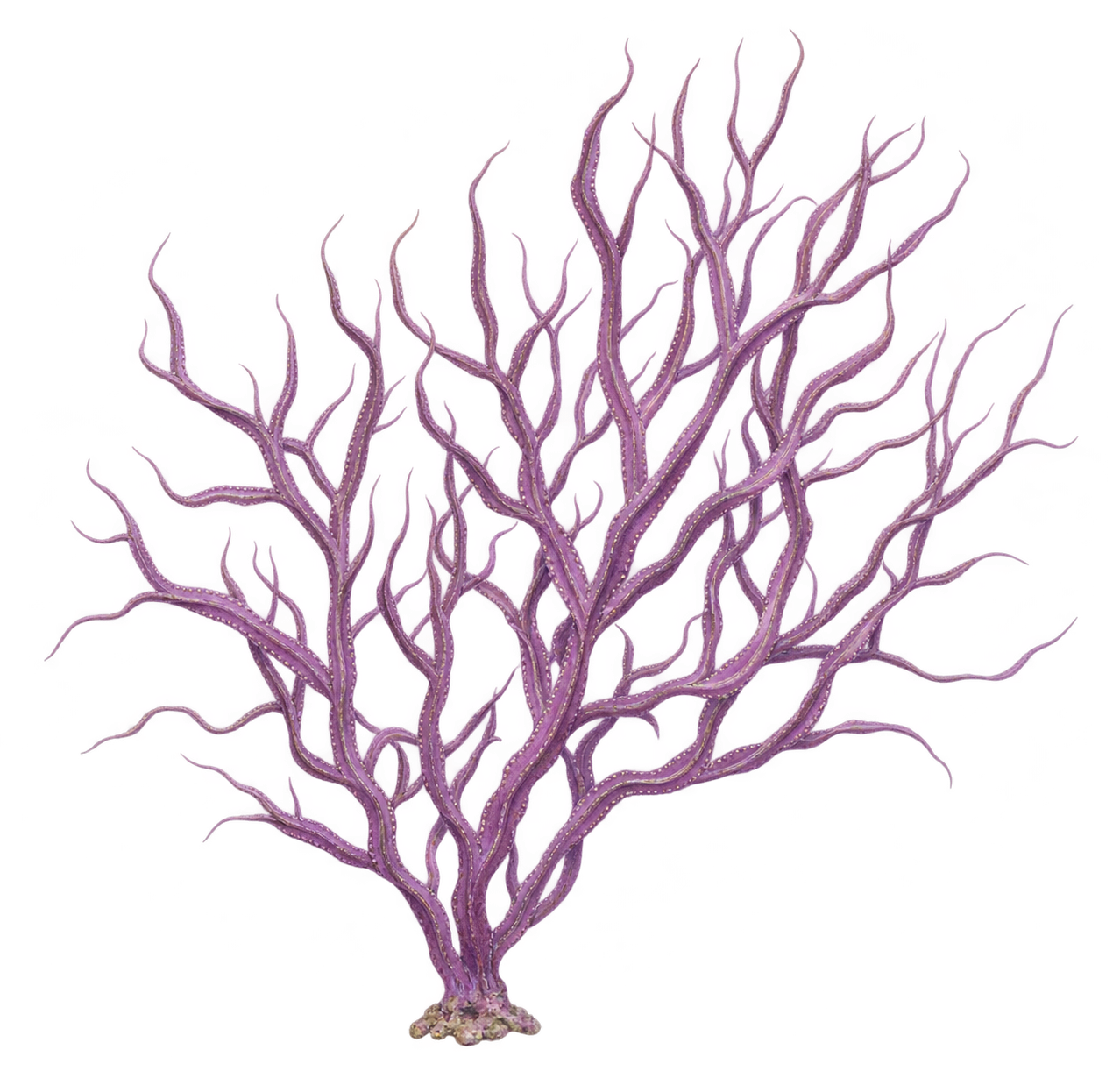
Size: The field guide reports 1 to 2 ft. (30 to 60 cm). Its measurement axis and sampling scope are not specified, so this is not presented as a verified maximum or life-stage range.
Bushy branches have three or four blade-like flanges, producing a Y- or X-shaped cross section. Polyps emerge along shared edge grooves.
Read the guide’s location, season and eating cautions before acting.
Bent Sea Rod
Shape not assigned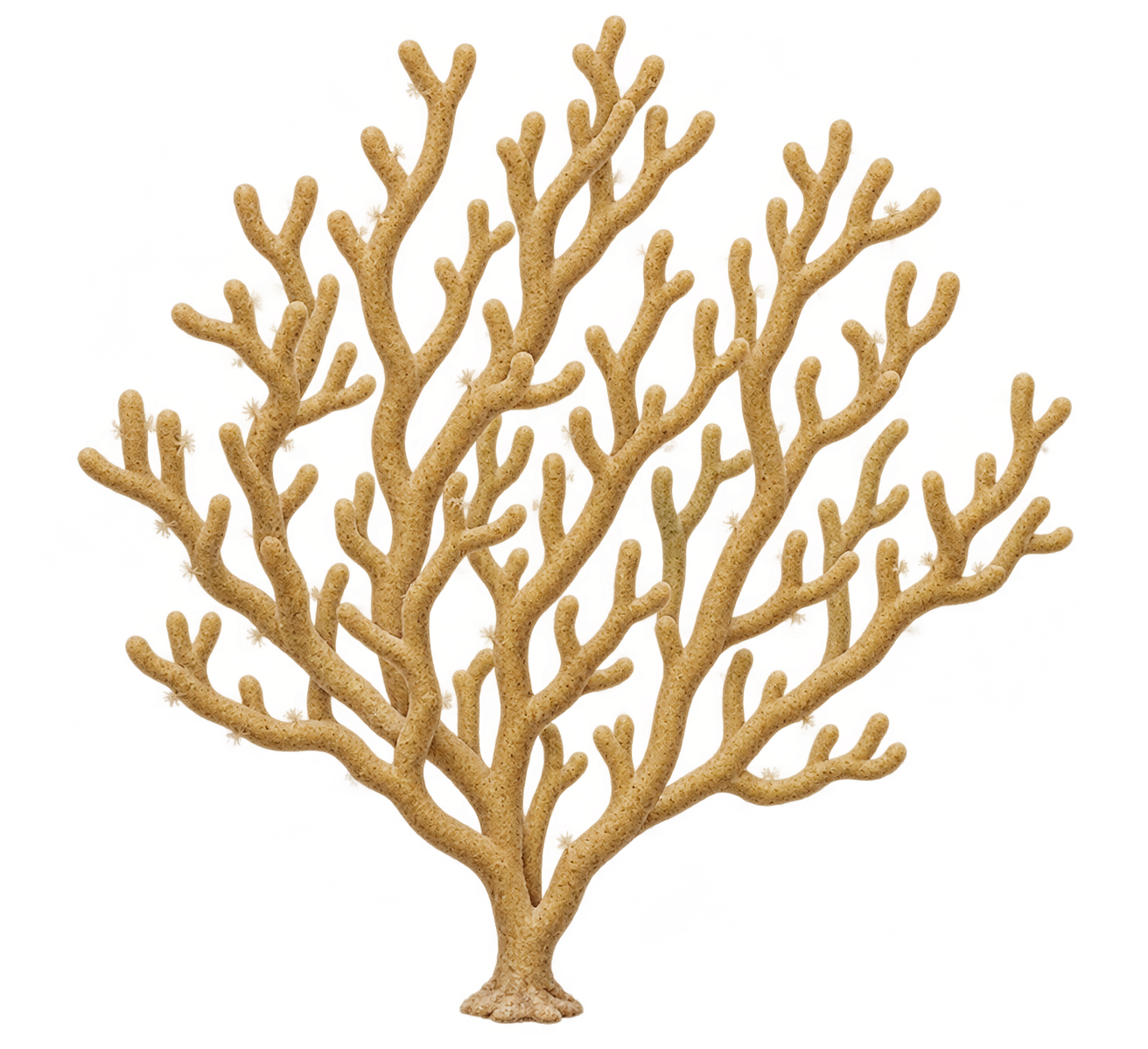
Size: The field guide reports 6 in. to 1.5 ft. (15 to 45 cm). Its measurement axis and sampling scope are not specified, so this is not presented as a verified maximum or life-stage range.
A bushy or candelabrum-shaped sea rod with abundant short terminal branches that maintain similar thickness along their length. Usually beige or ochre; other colors occur.
Read the guide’s location, season and eating cautions before acting.
Blushing Star Coral
Shape not assigned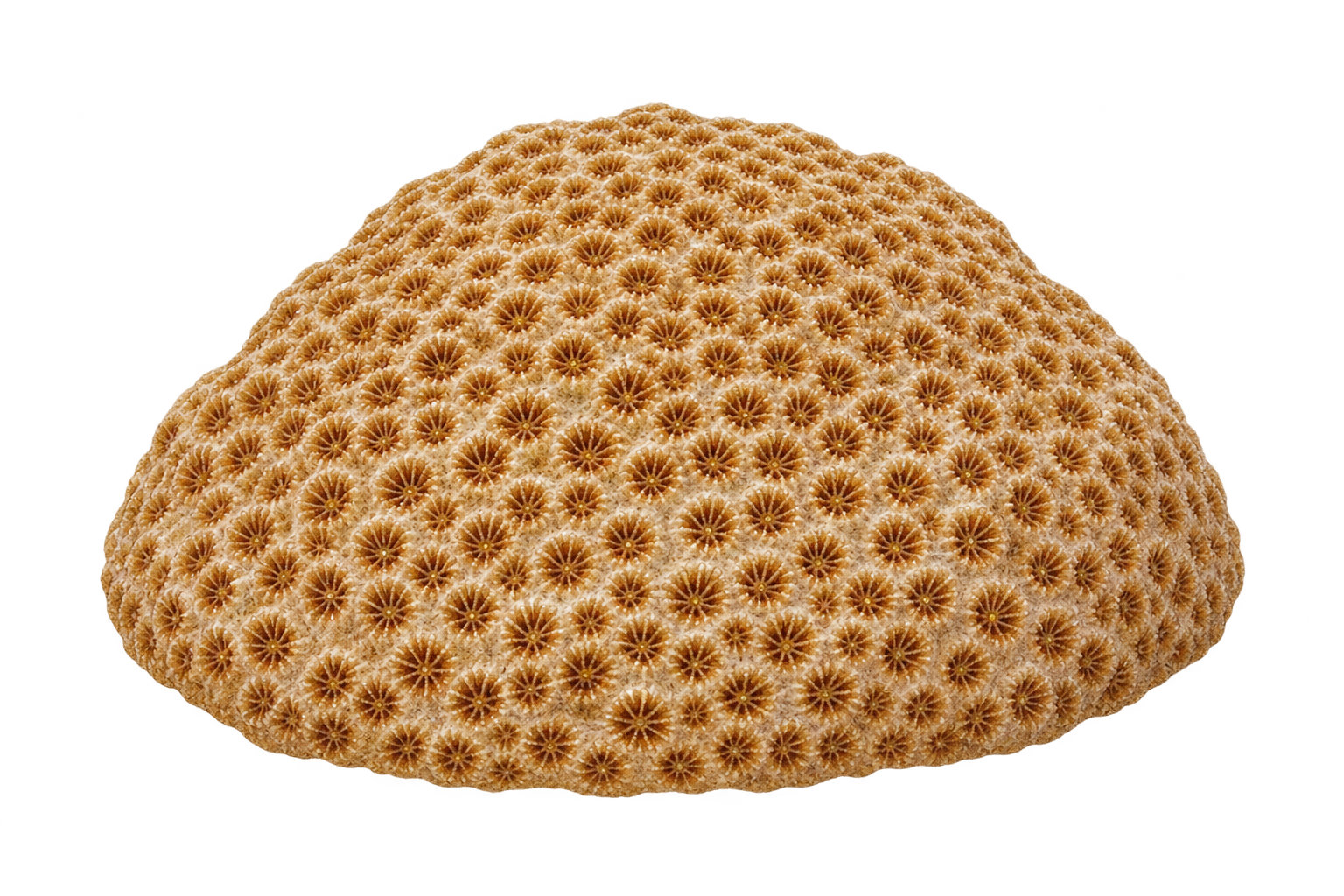
Size: A numerical size range is withheld because the cited field guide gives inconsistent imperial and metric values. No silent conversion or replacement with a different measurement axis is made.
Small coral cups contain a distinctive oval, pin-head-like central columella. The contrast between the polyps and surrounding surface can change quickly as the polyps withdraw.
Read the guide’s location, season and eating cautions before acting.
Boulder Brain Coral
Colonial coral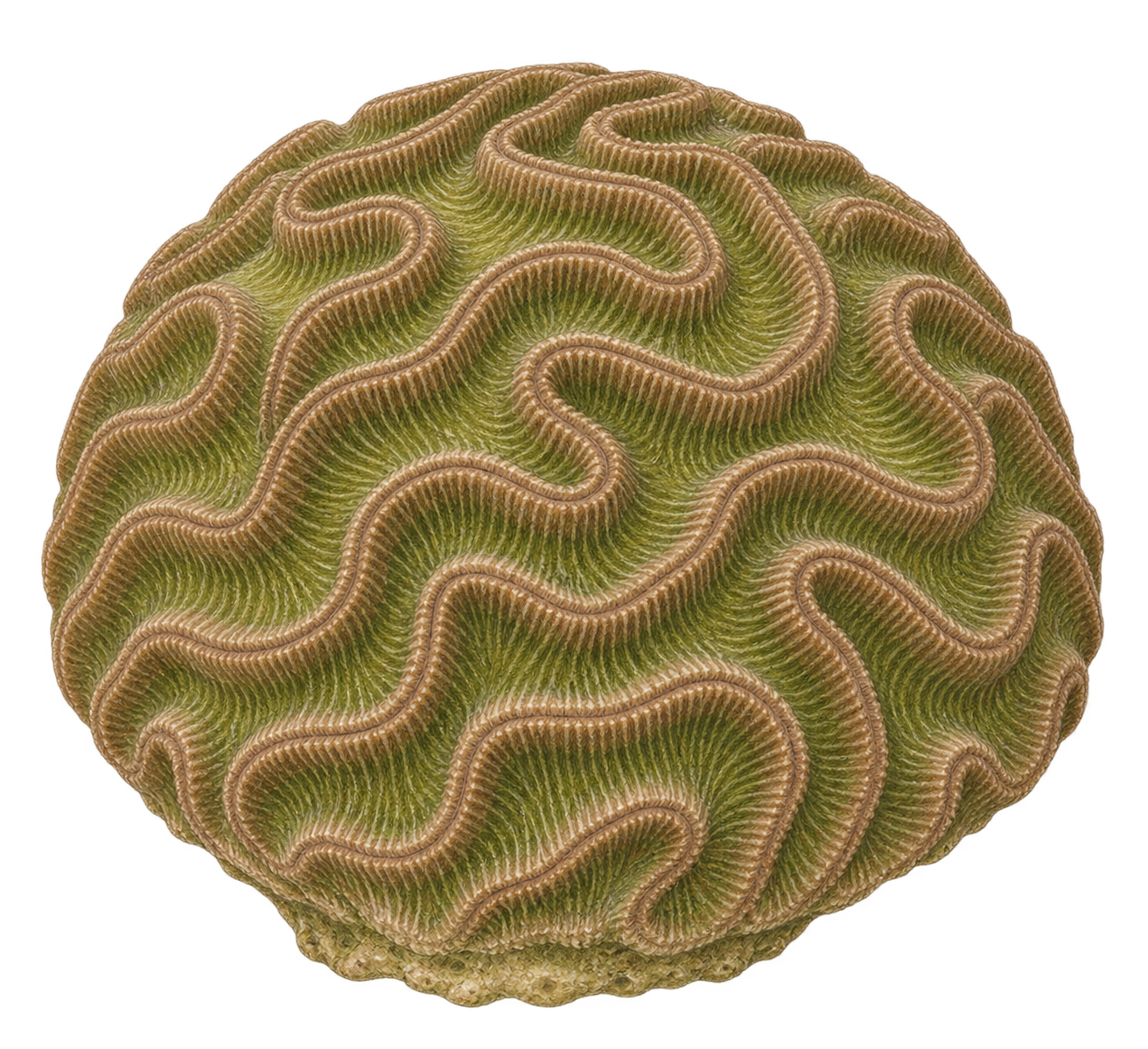
Size: Colonies can be large and rounded, but a reliable maximum diameter was not established in the selected account. Coral diameter is not fish-style body length, so the size filter stays unassigned.
A boulder-like or encrusting colony with broad, winding valleys. Walls can be brown or gray, with matching or green valley floors; finely toothed septa and a narrow groove along wall tops are useful close-view clues.
Read the guide’s location, season and eating cautions before acting.
Clubtip Finger Coral
Shape not assigned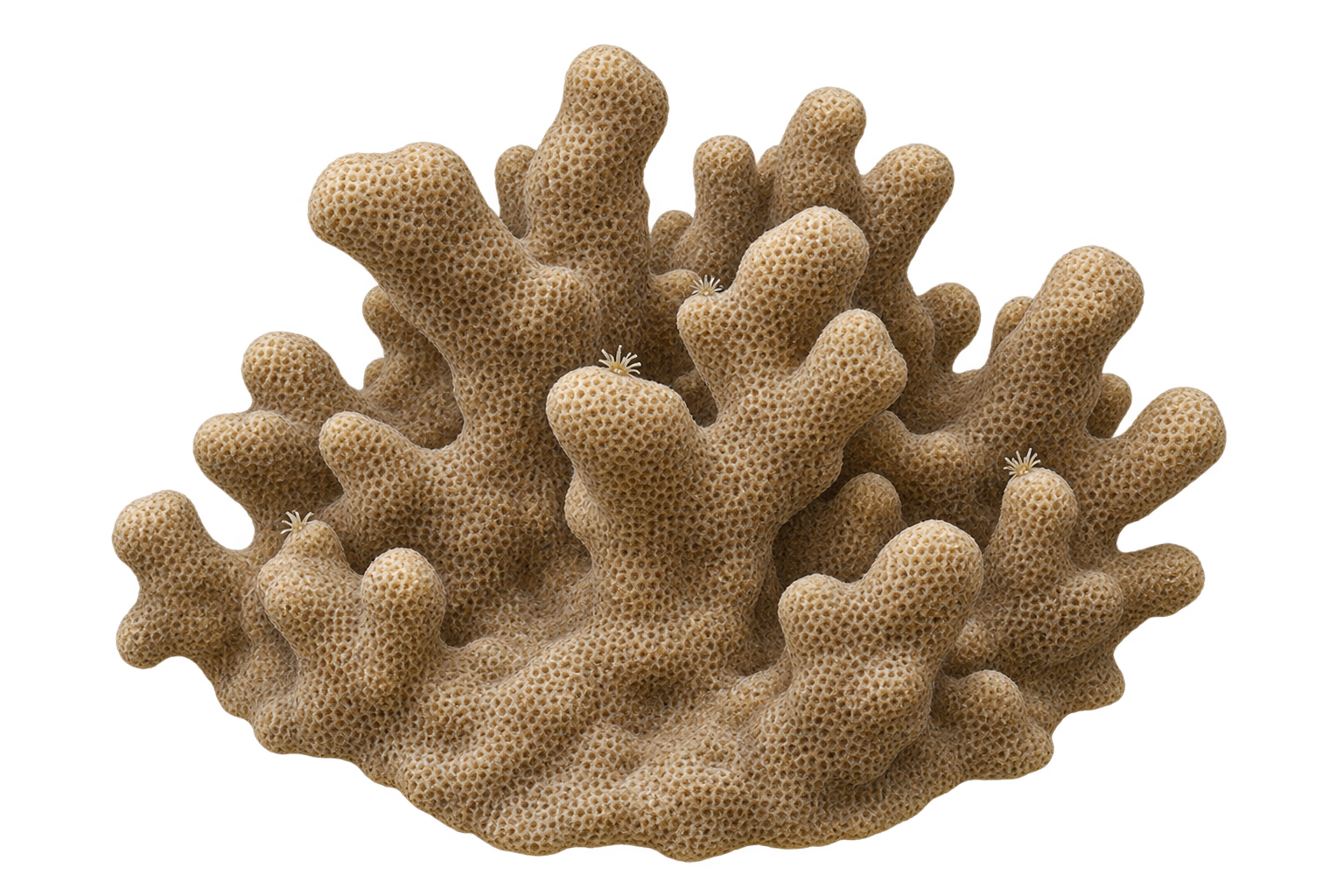
Size: A numerical size range is withheld because the cited field guide gives inconsistent imperial and metric values. No silent conversion or replacement with a different measurement axis is made.
Stout fused branches end in rounded tips. Deeply recessed coral cups and coarse intervening skeleton create a rough surface.
Read the guide’s location, season and eating cautions before acting.
Common Sea Fan
Fan-shaped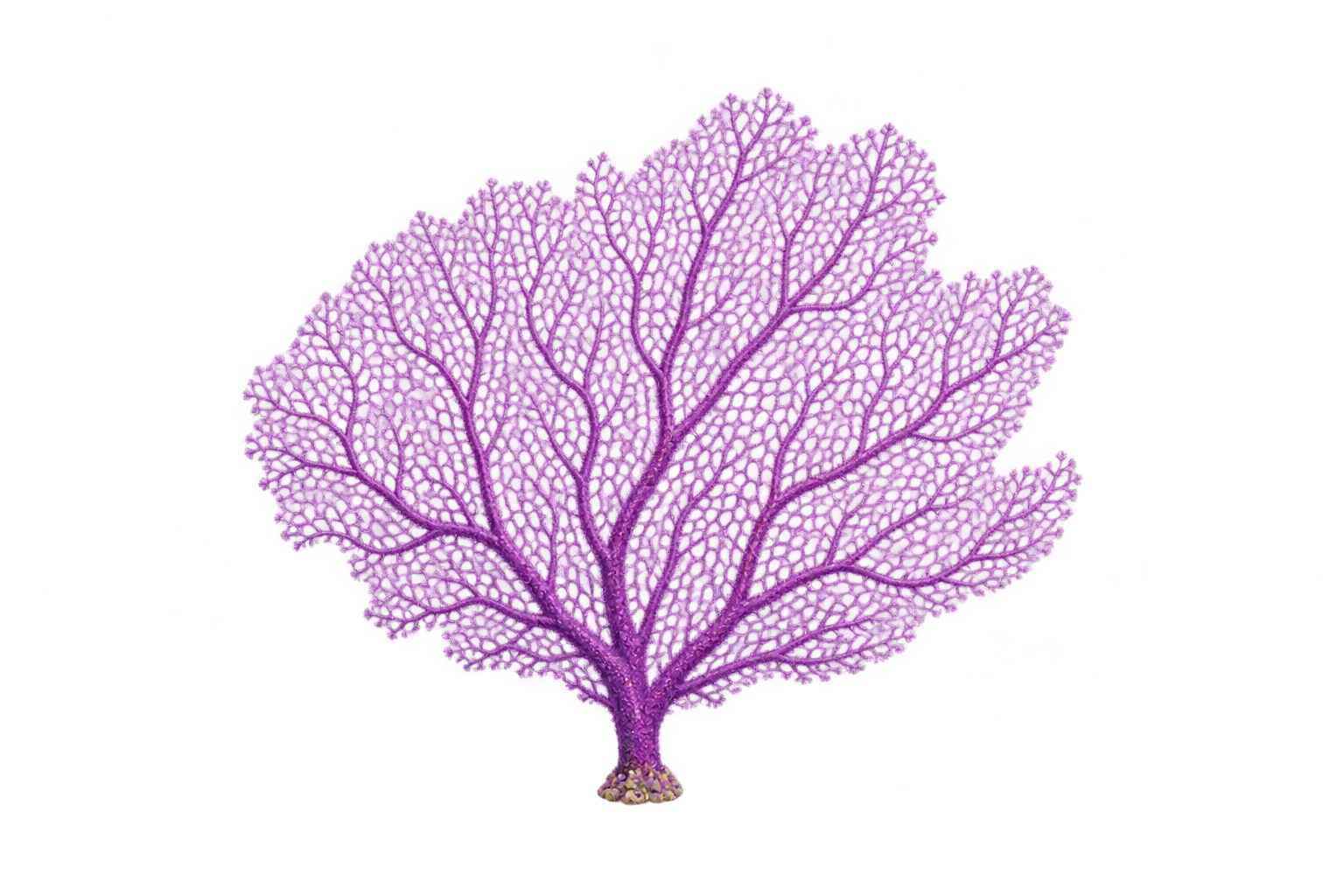
Size: Nova Southeastern University describes fans at least 1 m across. That is a colony width, not a maximum body length, so it is not converted to a fish length band.
A broad, mesh-like fan, usually purple in Florida. Main branches taper upward; connecting branchlets form irregular or roughly square openings, with small polyp openings mainly along their sides.
Read the guide’s location, season and eating cautions before acting.
Corky Sea Finger
Shape not assigned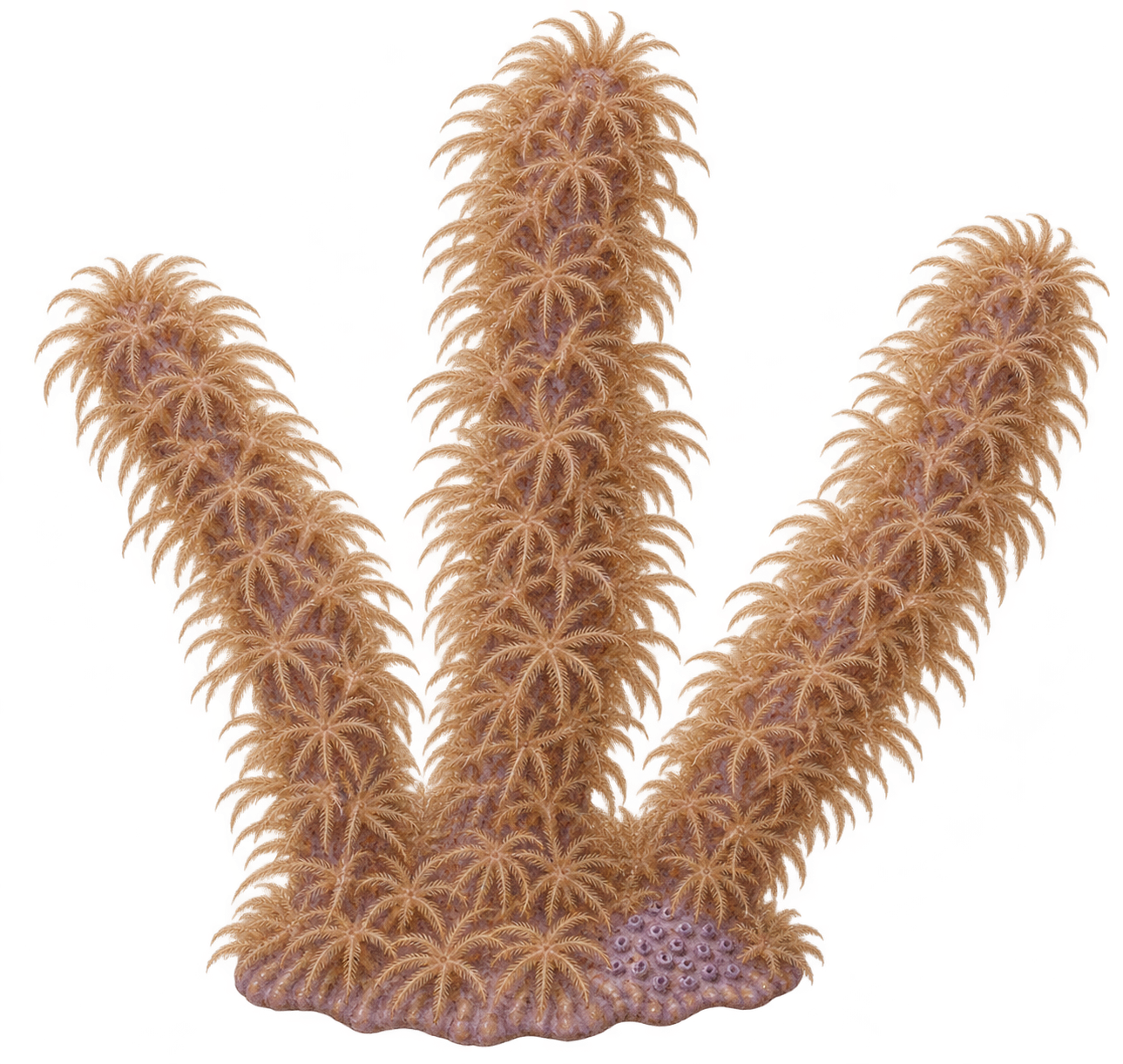
Size: The field guide reports 0.5 to 2 ft. (15 to 60 cm). Its measurement axis and sampling scope are not specified, so this is not presented as a verified maximum or life-stage range.
One or several upright, unbranched rods rise from a shared encrusting base. Long extended polyps give the rods a furry outline.
Read the guide’s location, season and eating cautions before acting.
Deepwater Sea Fan
Shape not assigned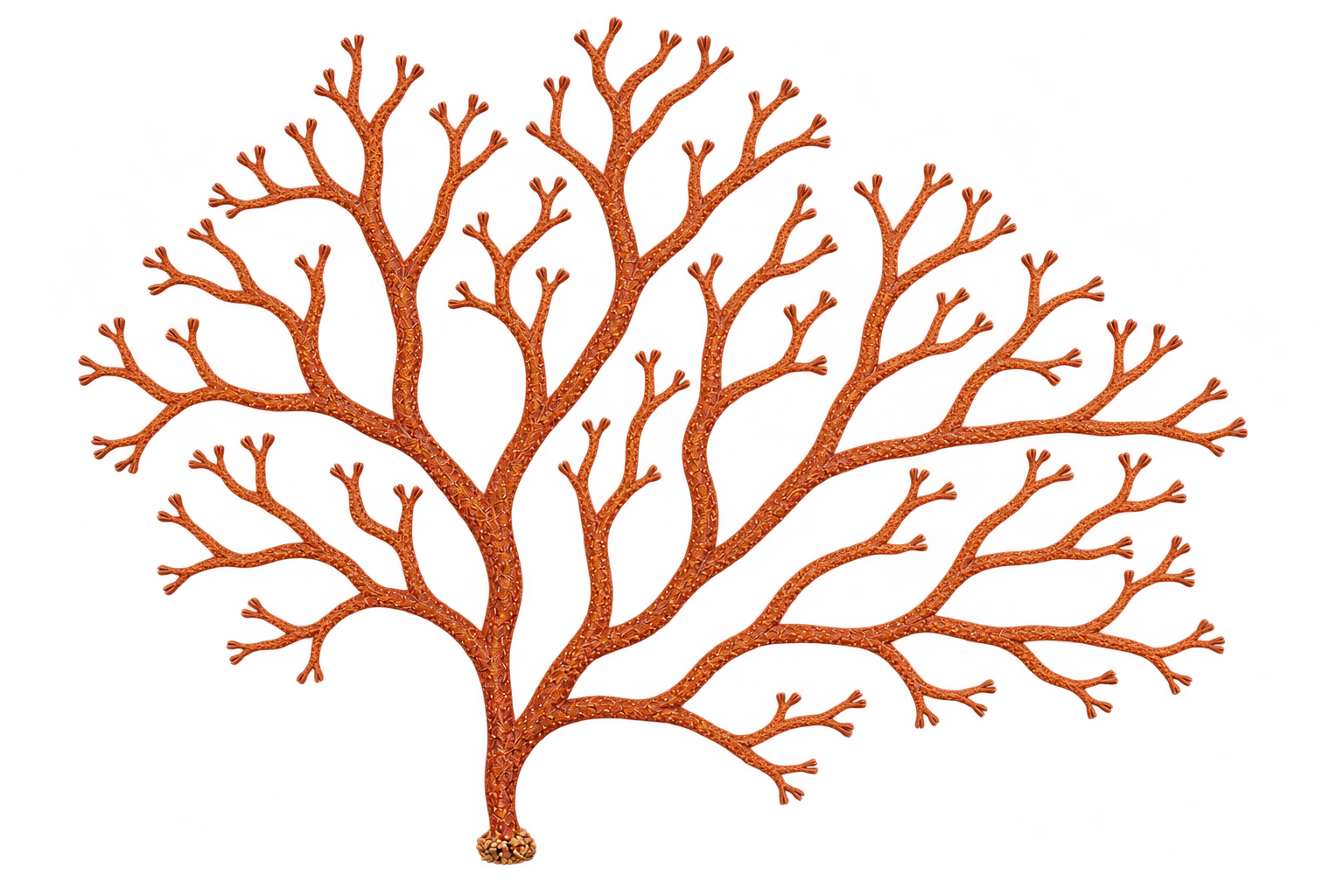
Size: The field guide reports 1 to 4 ft. (30 to 120 cm). Its measurement axis and sampling scope are not specified, so this is not presented as a verified maximum or life-stage range.
A stiff, flat fan with flattened branches that fork but do not reconnect. Terminal tips are indented or grooved.
Read the guide’s location, season and eating cautions before acting.
Diffuse Ivory Bush Coral
Shape not assigned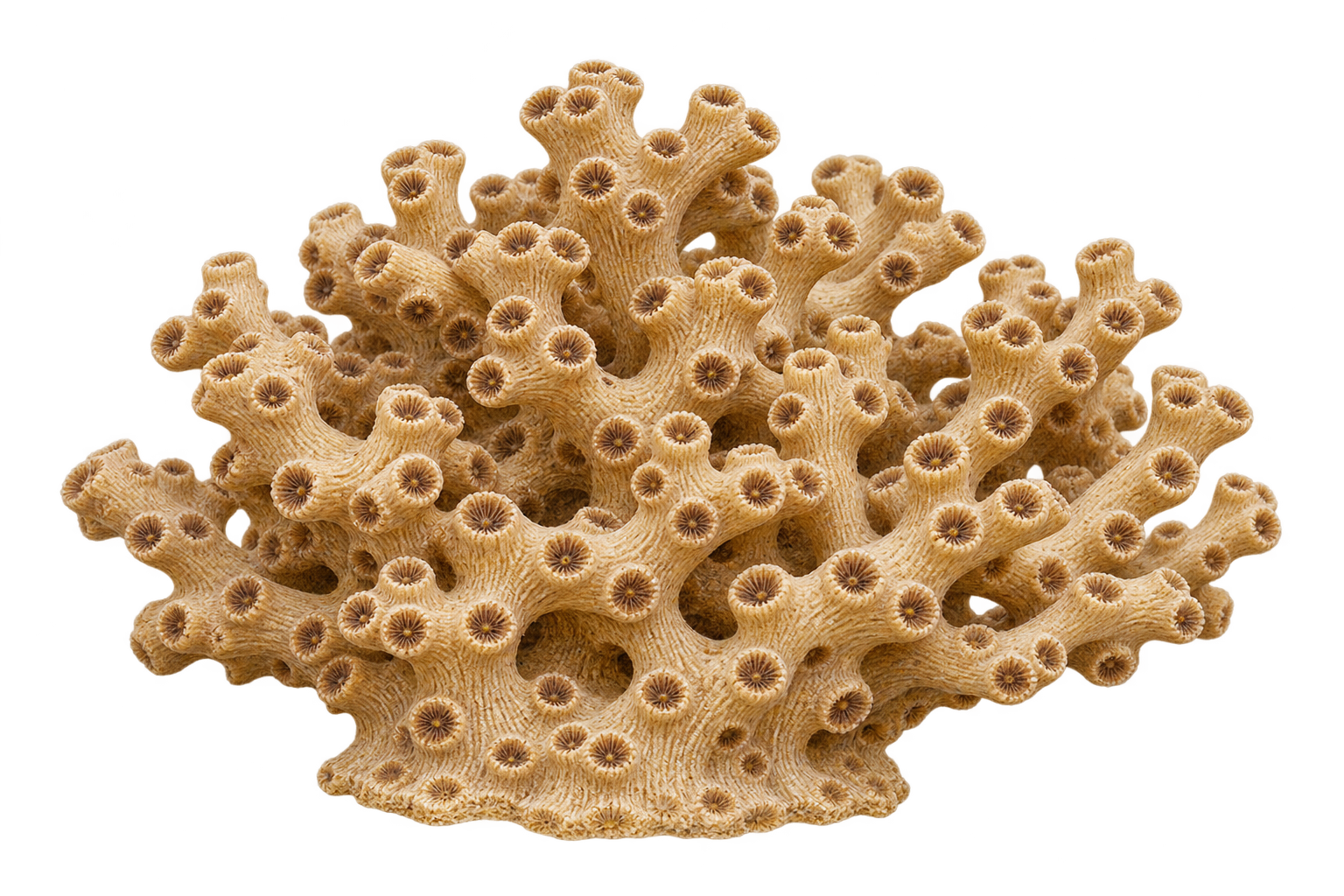
Size: The field guide reports Colony 1 to 12 in. (2.5 to 30 cm). Its measurement axis and sampling scope are not specified, so this is not presented as a verified maximum or life-stage range.
Compact, sometimes low-lying clumps of thin branches fuse together. Small circular coral cups project above the branch surface.
Read the guide’s location, season and eating cautions before acting.
Elkhorn Coral
Colonial coral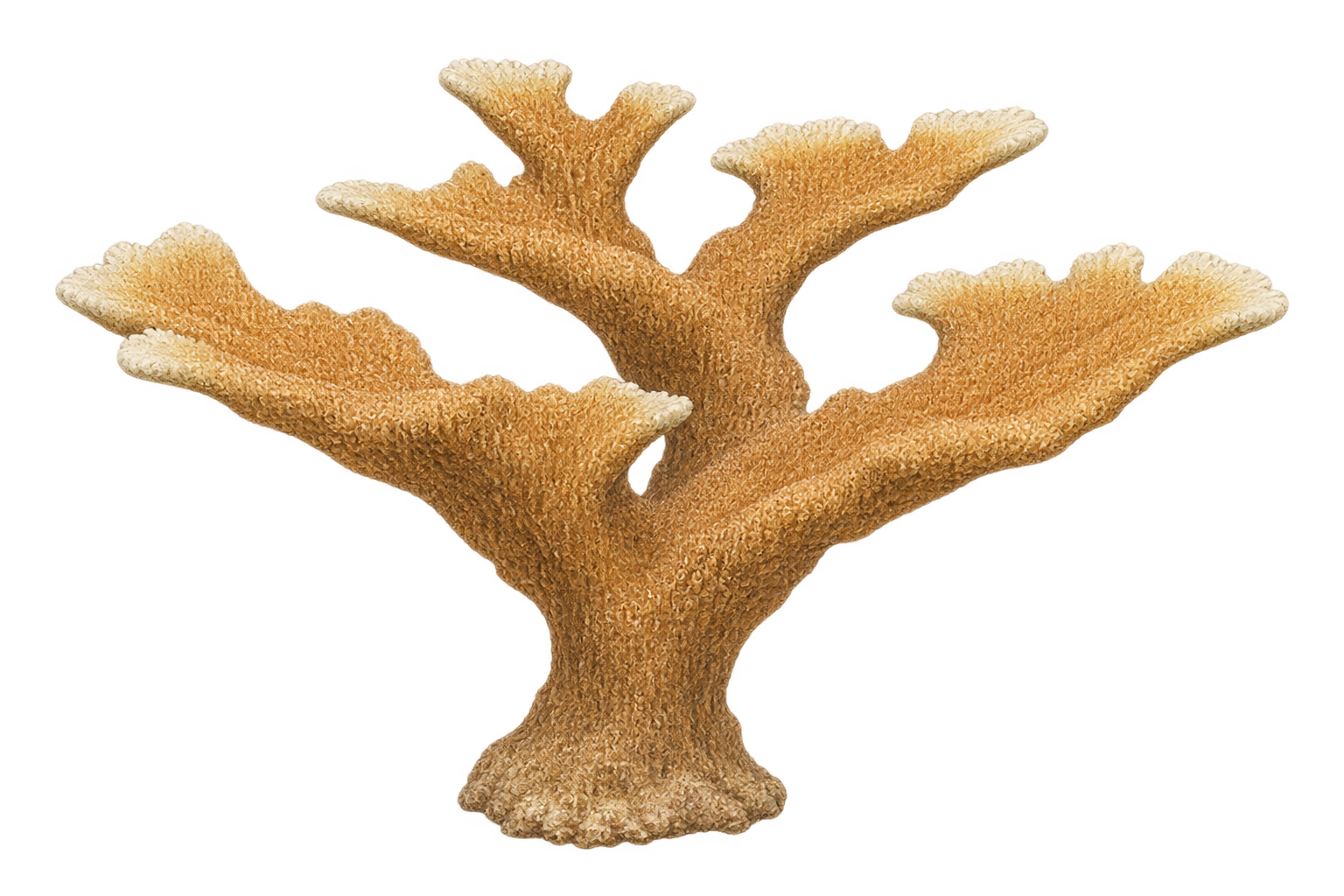
Size: NOAA reports colonies reaching at least 6 ft high and 12 ft across. These are height and diameter, not fish-style body length, so the directory size band remains unassigned.
Broad, flattened antler-like branches rise from a central base. Living colonies are commonly golden tan or light brown with pale tips; the wide branches distinguish the familiar elkhorn form from slender staghorn.
Read the guide’s location, season and eating cautions before acting.
Elliptical Star Coral
Shape not assigned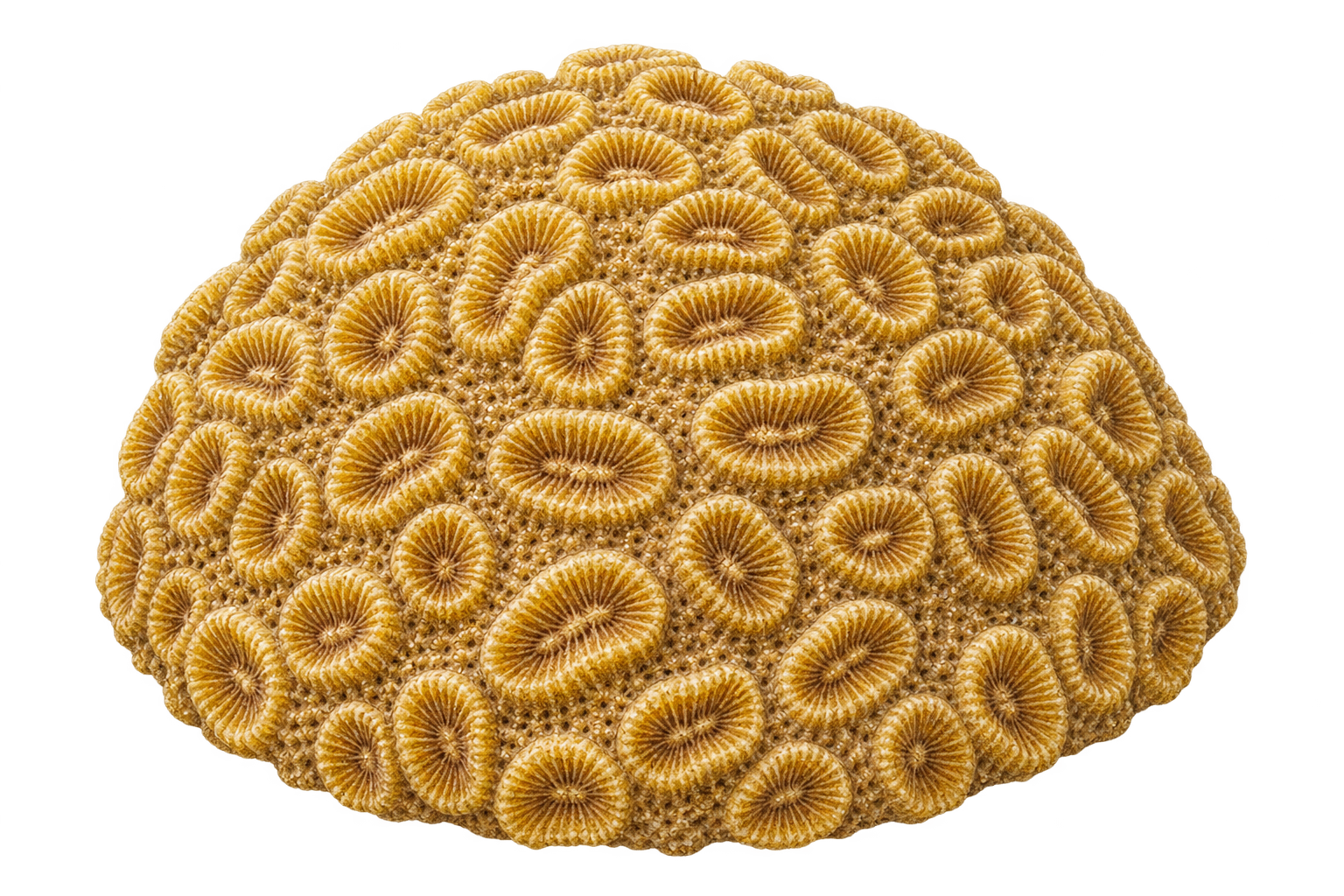
Size: The field guide reports 4 to 15 in. (10 to 38 cm). Its measurement axis and sampling scope are not specified, so this is not presented as a verified maximum or life-stage range.
Massive rounded colonies or thick plates have evenly spaced coral cups. The fine skeletal ridges usually alternate neatly in two size orders.
Read the guide’s location, season and eating cautions before acting.
Great star coral
Colonial coral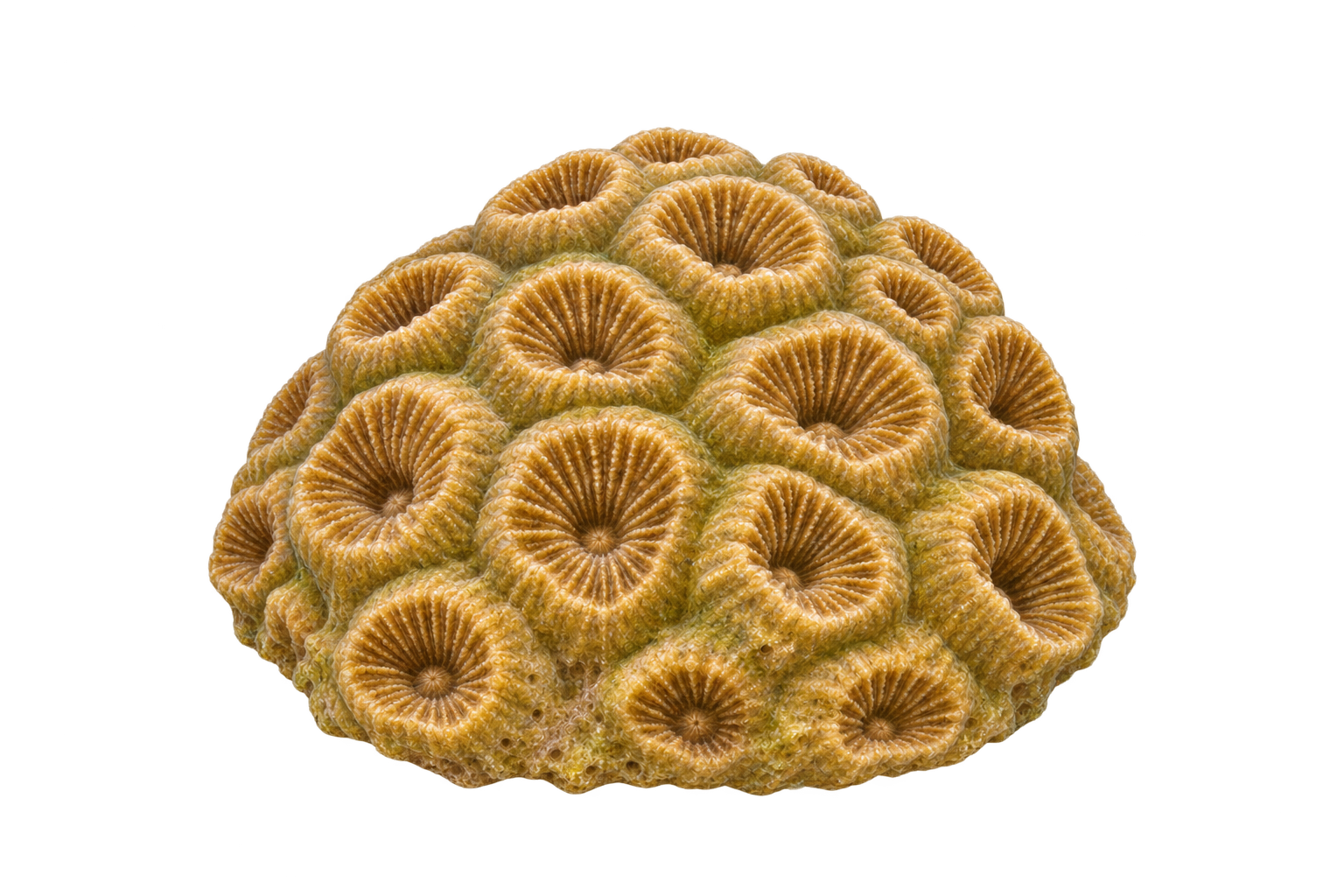
Size: Colonies can exceed 2 m across; individual skeletal cups are only millimeters wide.
Massive or plate-like colony with distinct raised cup-like corallites; compare the repeated cup structure rather than color alone.
Read the guide’s location, season and eating cautions before acting.
Grooved Brain Coral
Colonial coral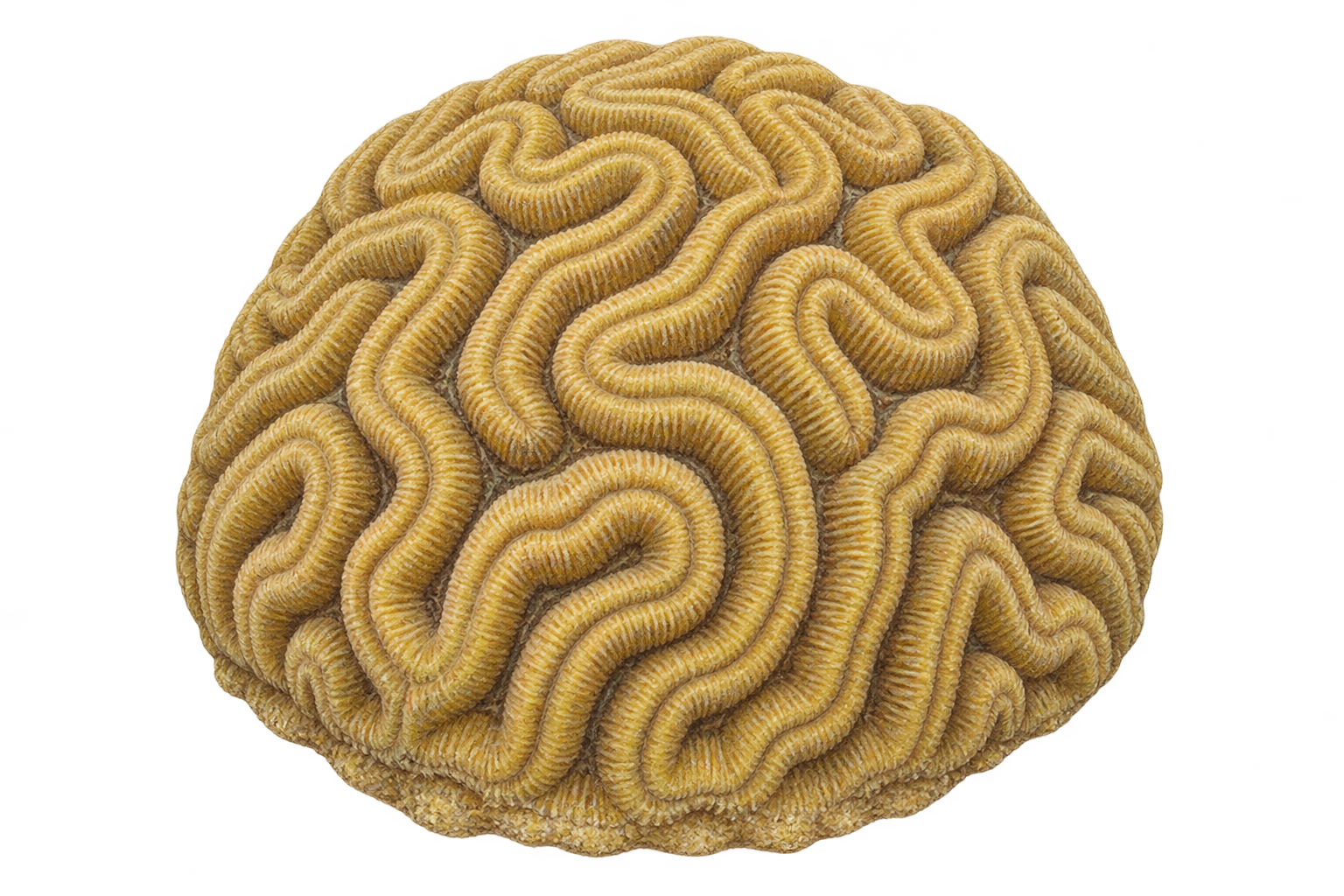
Size: True valleys are described as roughly 5–8 mm wide. The neighboring ridge-top grooves vary in width even on one colony, so do not interpret every channel as a polyp valley.
Look for rounded brain-like colonies with deep winding valleys and conspicuously grooved ridge tops. The ridge-top grooves may look like a second set of valleys; tan to gray-brown or yellow-brown colors occur.
Read the guide’s location, season and eating cautions before acting.
Grooved-Blade Sea Whip
Shape not assigned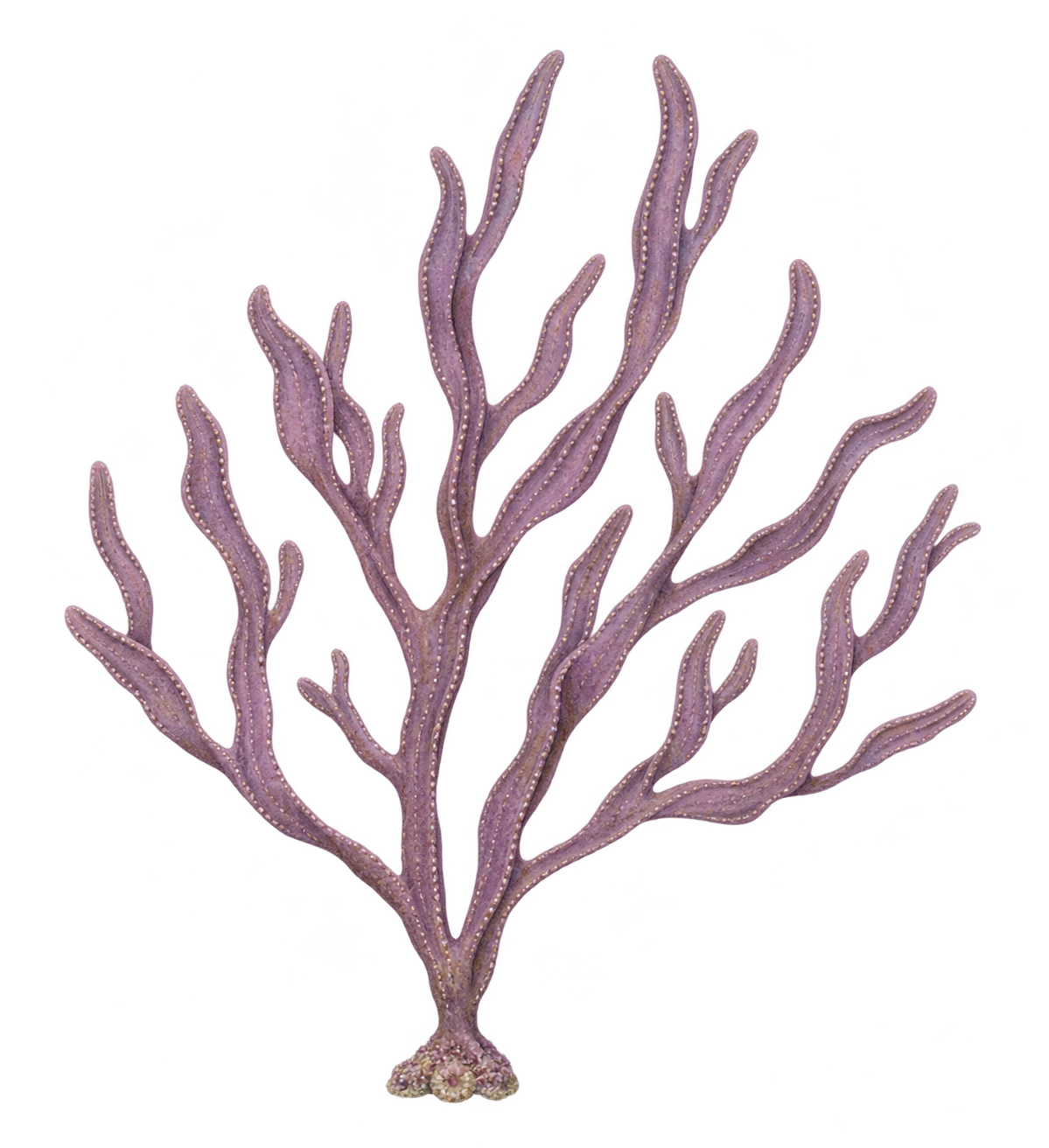
Size: The field guide reports 0.5 to 2 ft. (15 to 60 cm). Its measurement axis and sampling scope are not specified, so this is not presented as a verified maximum or life-stage range.
Flattened blades tend to branch in one plane; NSU contrasts these with the multi-flanged branches of angular sea whip.
Read the guide’s location, season and eating cautions before acting.
Hidden Cup Coral
Shape not assigned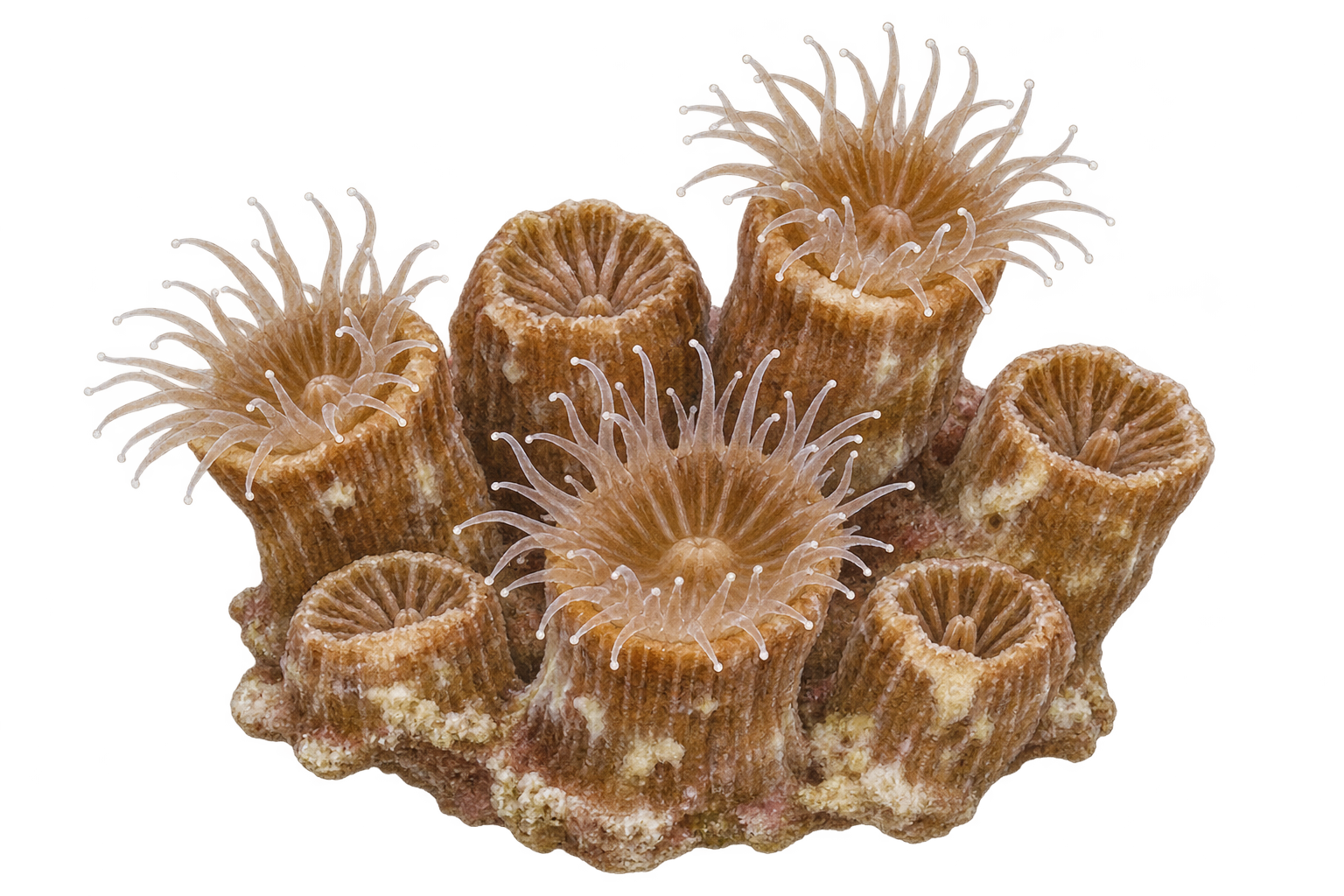
Size: The field guide reports 0.25 to 1 in. (0.7 to 2.5 cm). Its measurement axis and sampling scope are not specified, so this is not presented as a verified maximum or life-stage range.
Small encrusting groups have round, deeply cupped corallites with prominent skeletal partitions.
Read the guide’s location, season and eating cautions before acting.
Knobby Cactus Coral
Shape not assigned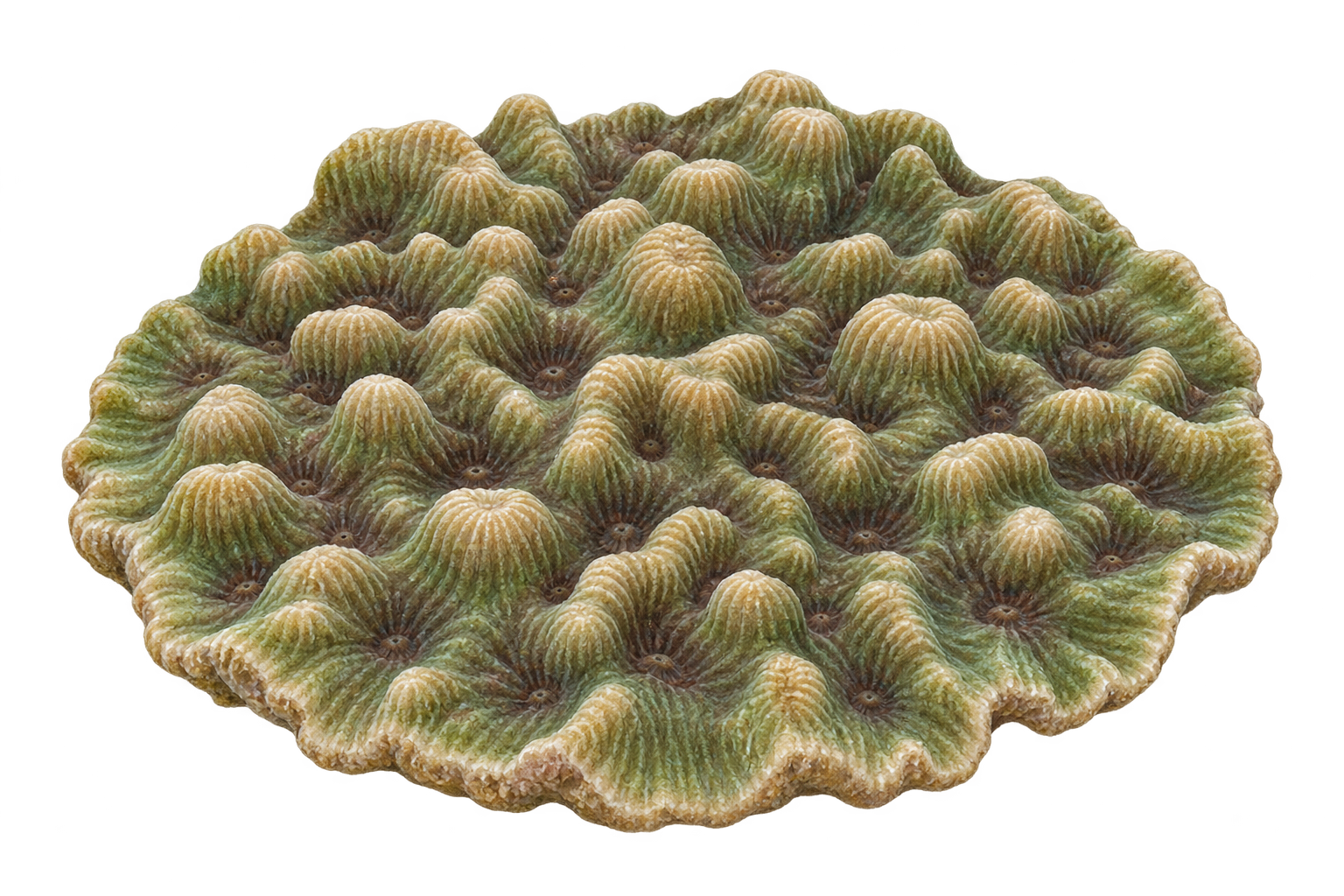
Size: The field guide reports 6 to 18 in. (15 to 45 cm). Its measurement axis and sampling scope are not specified, so this is not presented as a verified maximum or life-stage range.
Often circular plates with little valley development near the center. Thick toothed skeletal ridges surround mouths, sometimes in more than one row.
Read the guide’s location, season and eating cautions before acting.
Lesser Starlet Coral
Colonial coral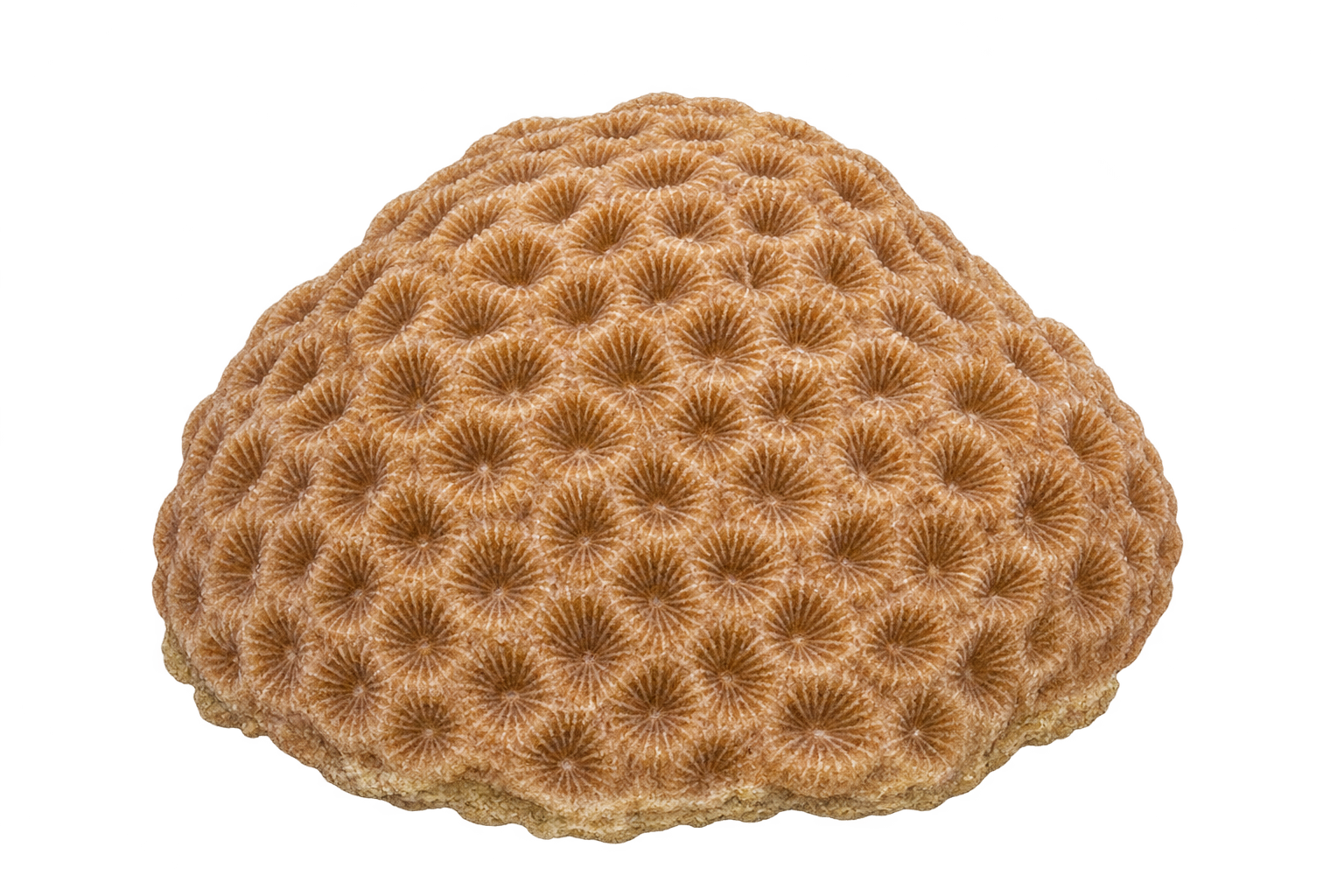
Size: The Coralpedia description emphasizes small colonies but provides no verified maximum. The directory therefore leaves its size band unassigned rather than guessing from a photograph.
Usually a small, pale gray or tan encrusting colony with dark, sunken corallite centers. Thick, readily visible septa descend steeply into the cups; some colonies form free-living rounded balls.
Read the guide’s location, season and eating cautions before acting.
Lobed Star Coral
Colonial coral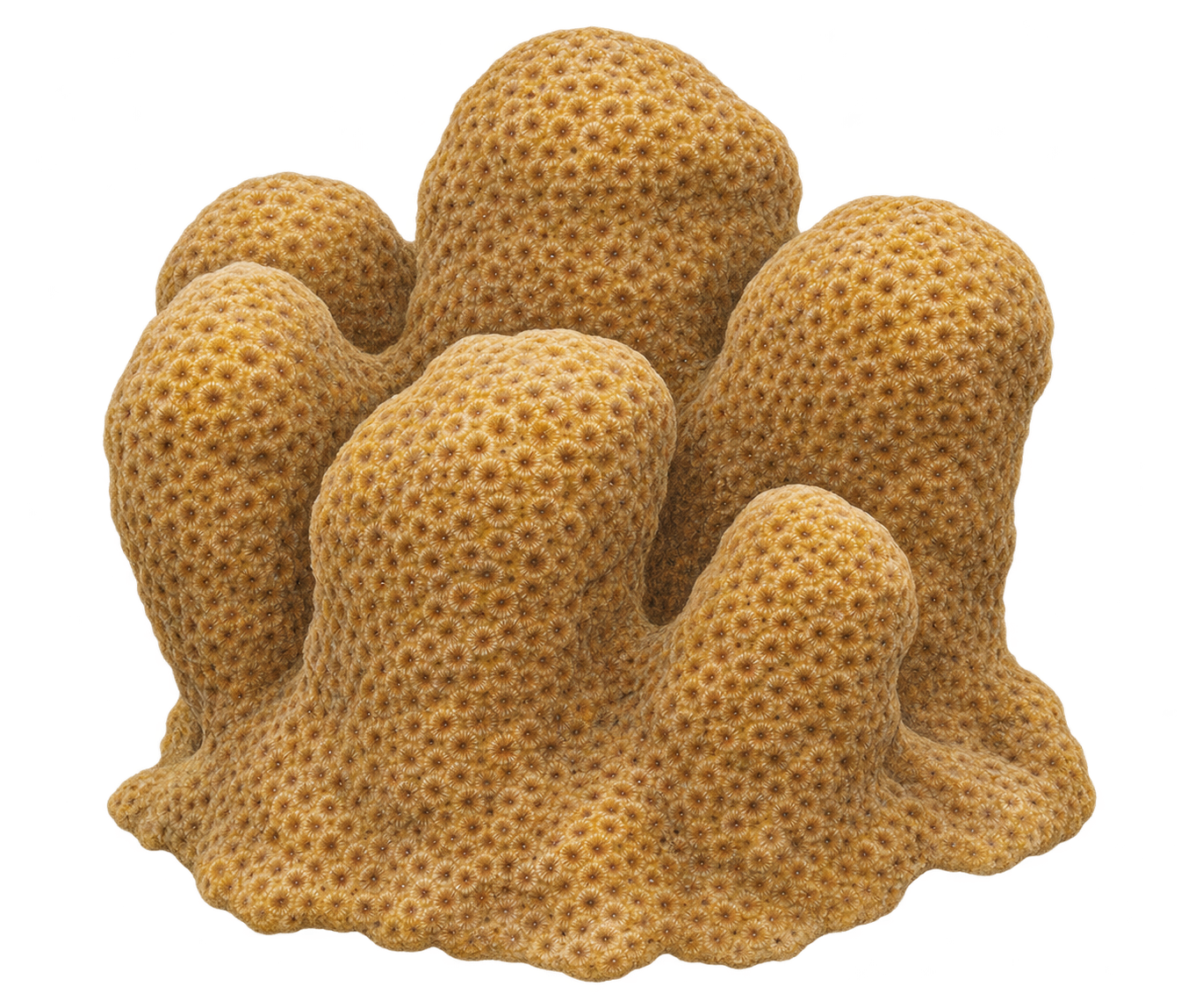
Size: NOAA places reproductive maturity at around 10 cm and typical growth near 1 cm per year. Neither value is a maximum colony diameter; no whole-animal length band is assigned.
A lobed or column-forming star coral. Compare the overall growth form with the closely related mountainous and boulder star corals; an attractive color photograph alone may not settle this species complex.
Read the guide’s location, season and eating cautions before acting.
Massive Starlet Coral
Shape not assigned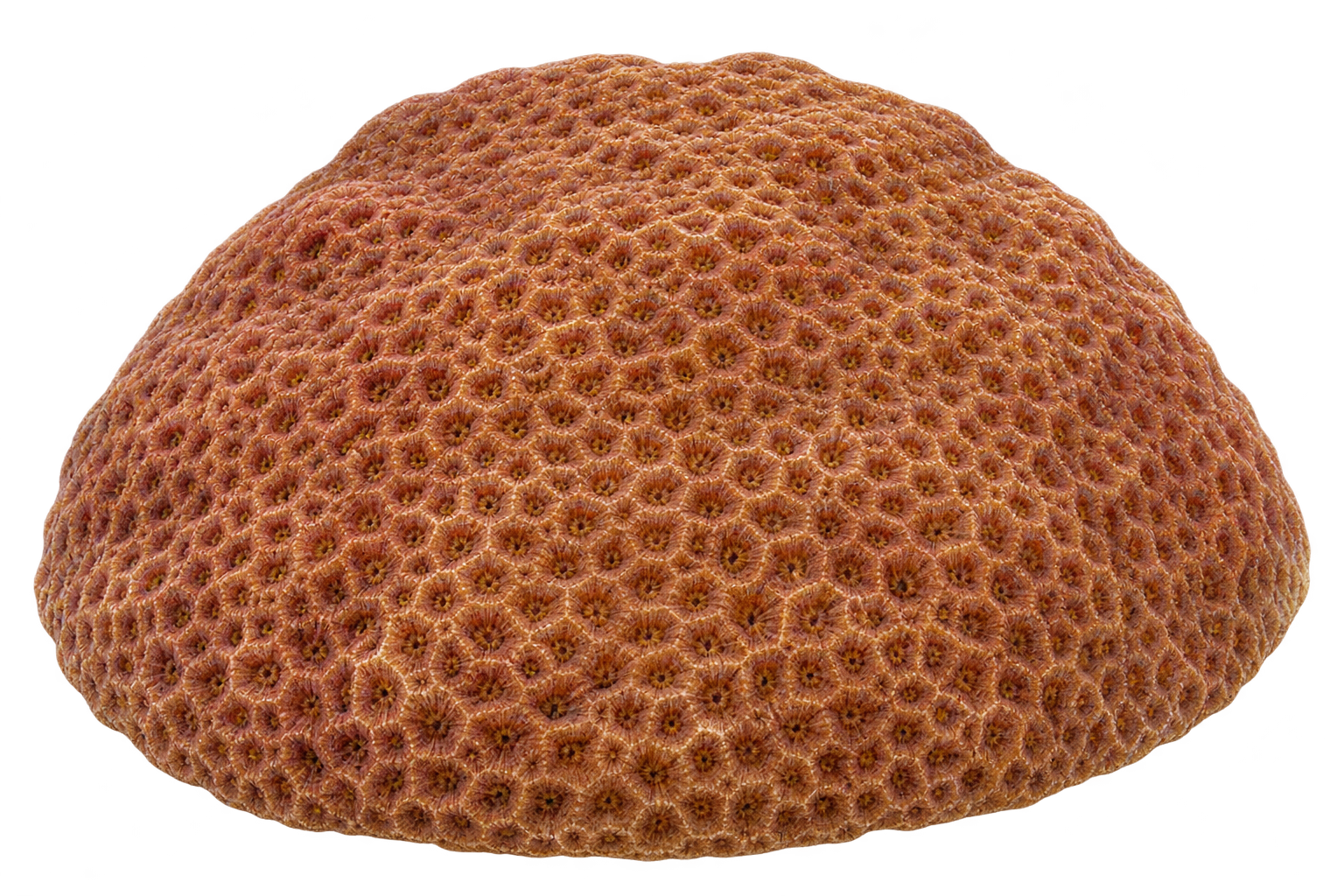
Size: The field guide reports 1 to 6 ft. (0.3 to 2 m). Its measurement axis and sampling scope are not specified, so this is not presented as a verified maximum or life-stage range.
Encrusting or massive colonies, often reddish brown. Closely spaced skeletal partitions give the small coral cups a relatively smooth appearance.
Read the guide’s location, season and eating cautions before acting.
Maze Coral
Shape not assigned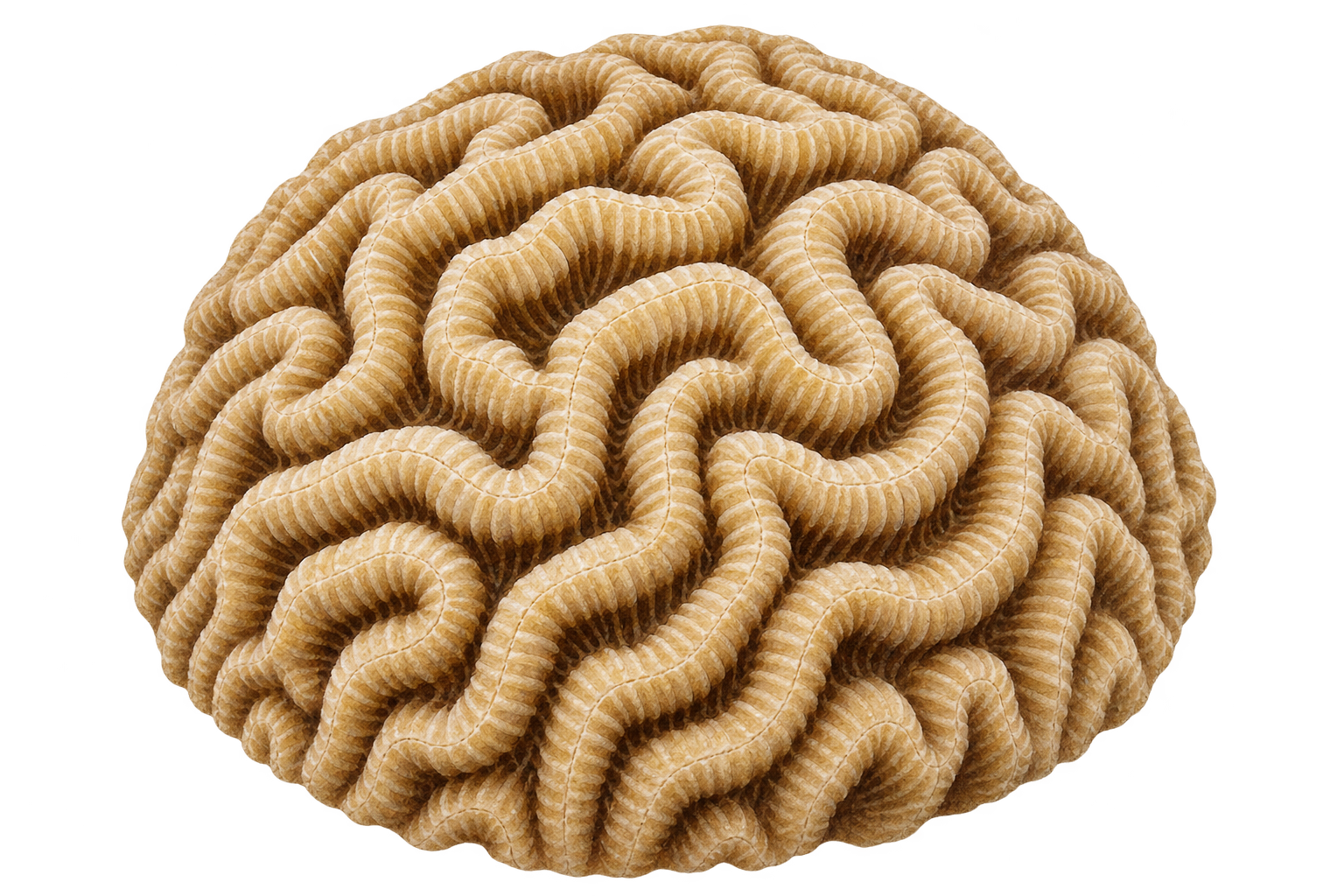
Size: The field guide reports Colony 1 to 3 ft. (30 to 90 cm). Its measurement axis and sampling scope are not specified, so this is not presented as a verified maximum or life-stage range.
Thick plates or low masses have valleys radiating from the original growth point and repeatedly dividing while keeping similar widths.
Read the guide’s location, season and eating cautions before acting.
Mountainous Star Coral
Colonial coral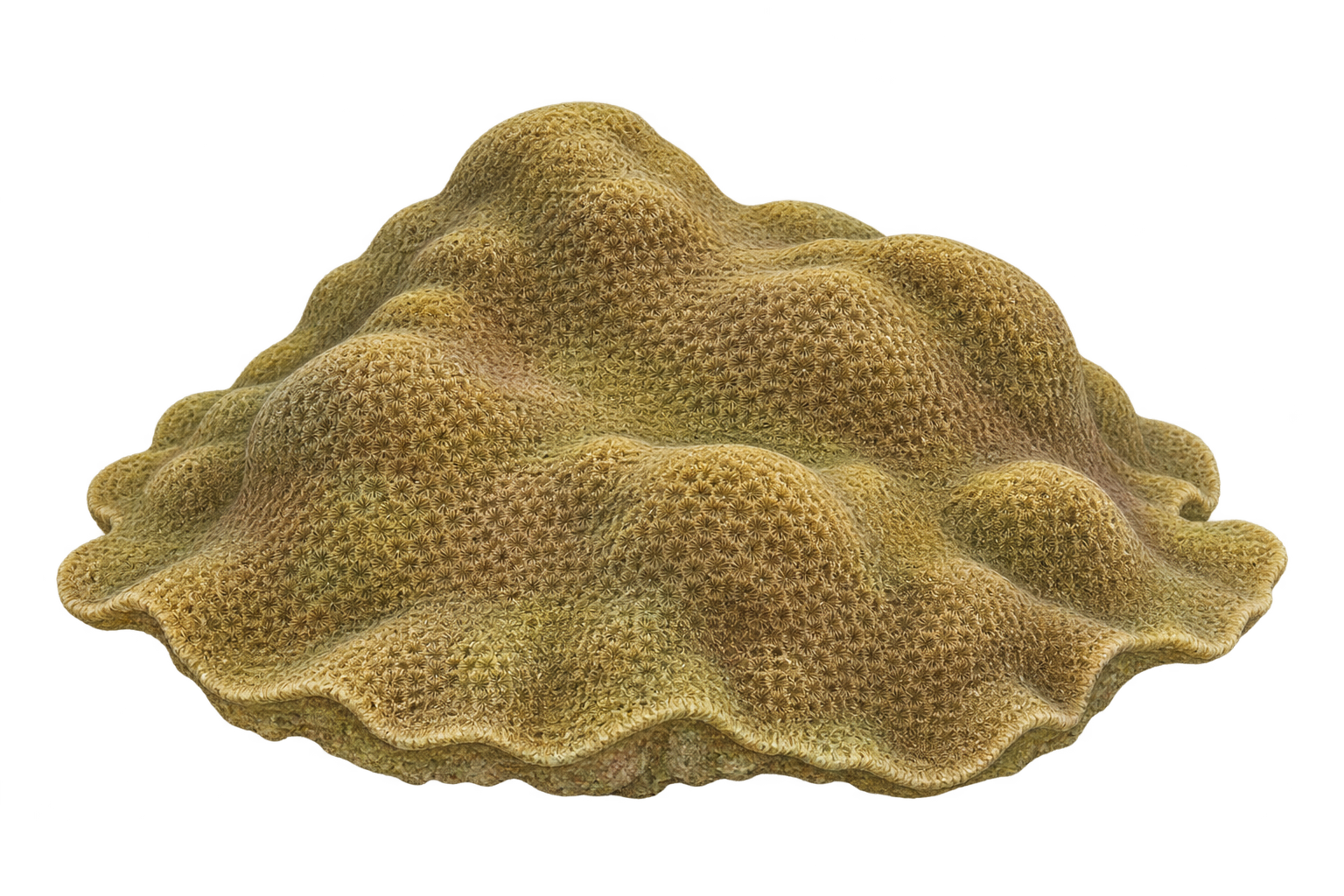
Size: NOAA reports maturity at roughly 10 cm and slow growth near 1 cm per year. These are developmental and growth measures, not a maximum diameter or a diver’s size-limit rule.
A massive mound with an uneven, rolling surface, smaller lobes and sometimes a skirt-like edge. Growth form supports identification, but compare other members of the Orbicella star-coral complex.
Read the guide’s location, season and eating cautions before acting.
Mustard Hill Coral
Shape not assigned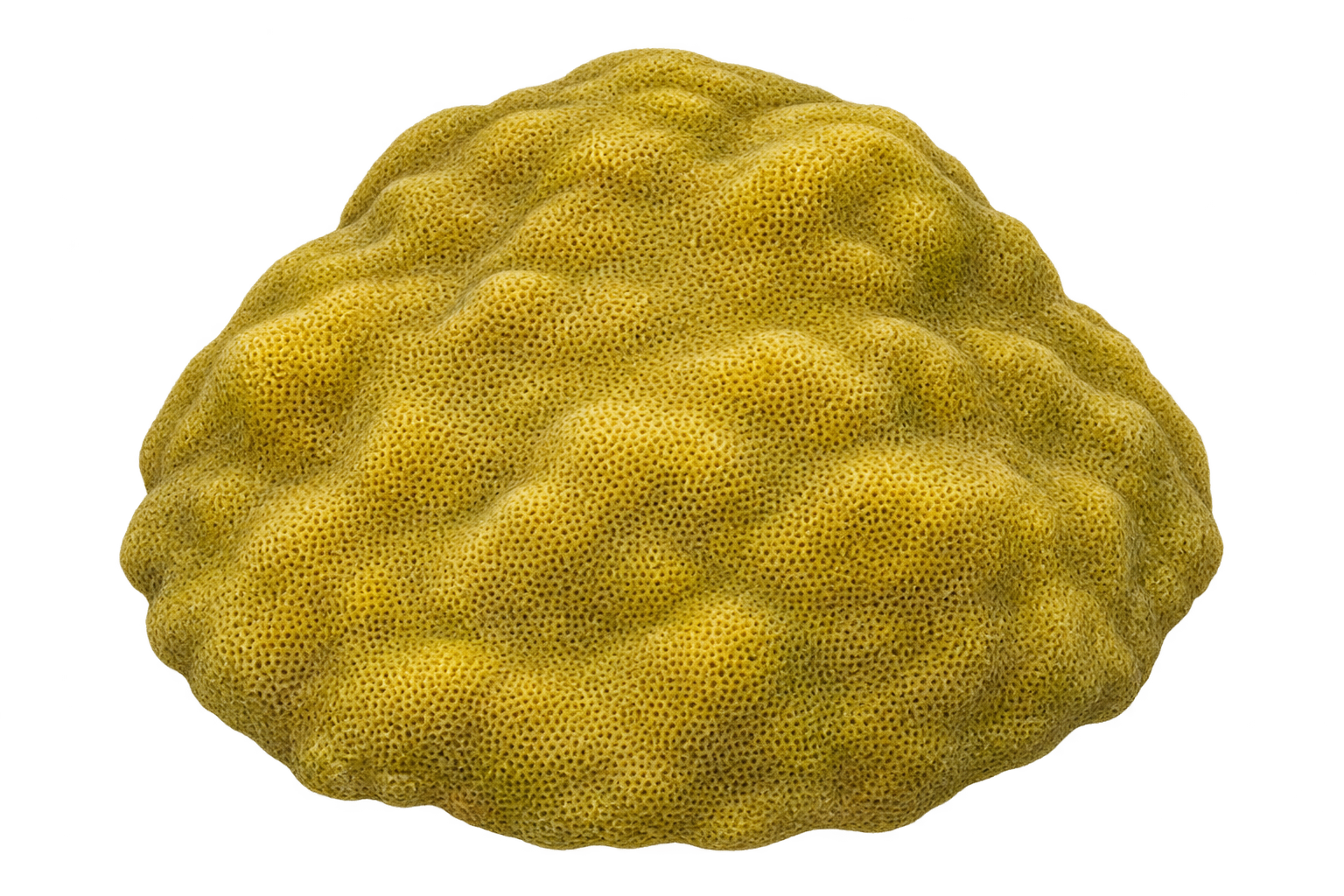
Size: The field guide reports 6 in. to 2 ft. (15 to 60 cm). Its measurement axis and sampling scope are not specified, so this is not presented as a verified maximum or life-stage range.
A lumpy mound or encrusting sheet, often yellow but also gray-brown or green. Tiny coral cups give a finer texture than many star corals.
Read the guide’s location, season and eating cautions before acting.
Ridged Cactus Coral
Shape not assigned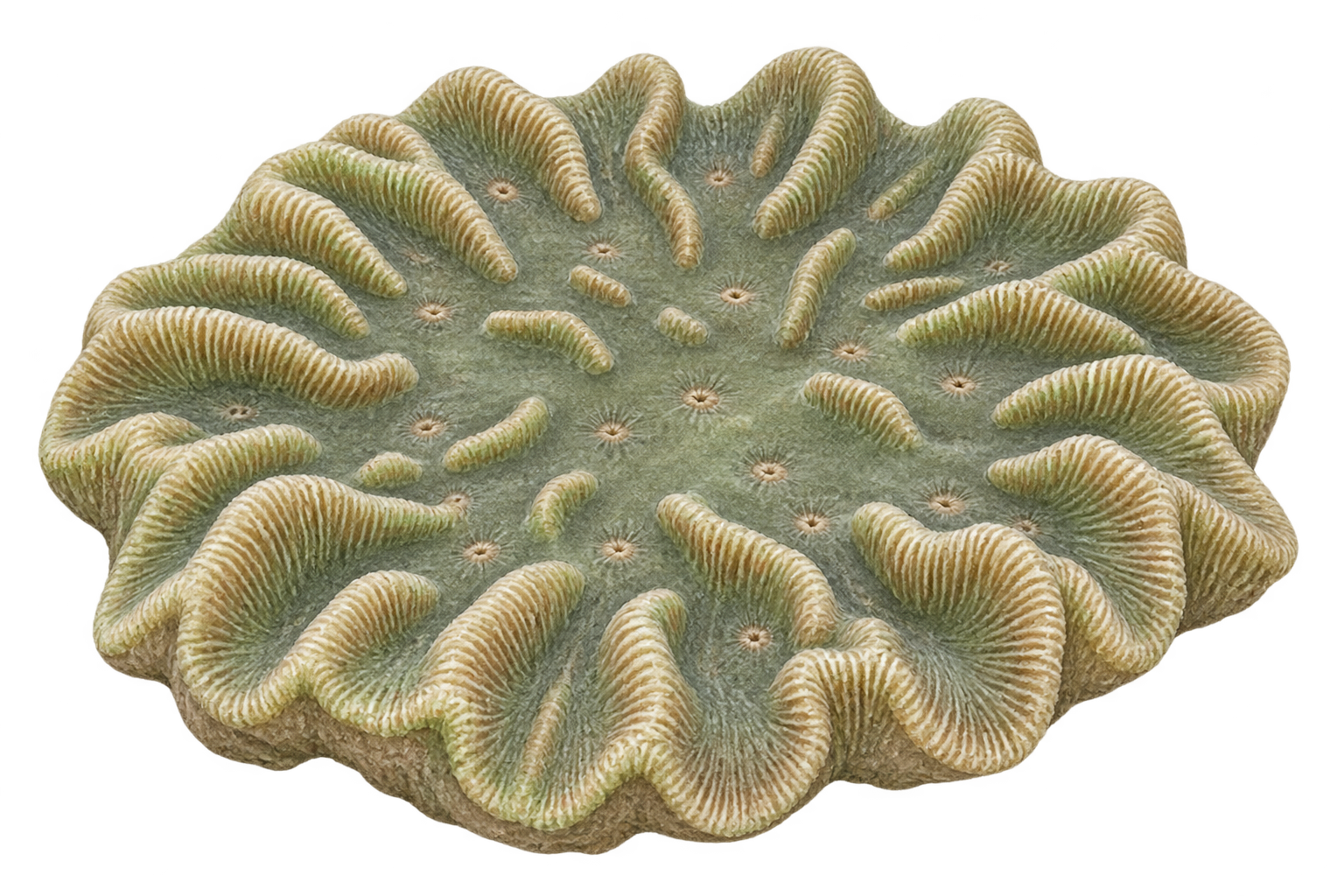
Size: The field guide reports 4 to 15 in. (10 to 38 cm). Its measurement axis and sampling scope are not specified, so this is not presented as a verified maximum or life-stage range.
Solid rounded plates have broad shallow valleys spreading outward from the growth center, with one row of mouths in each valley.
Read the guide’s location, season and eating cautions before acting.
Rose Coral
Shape not assigned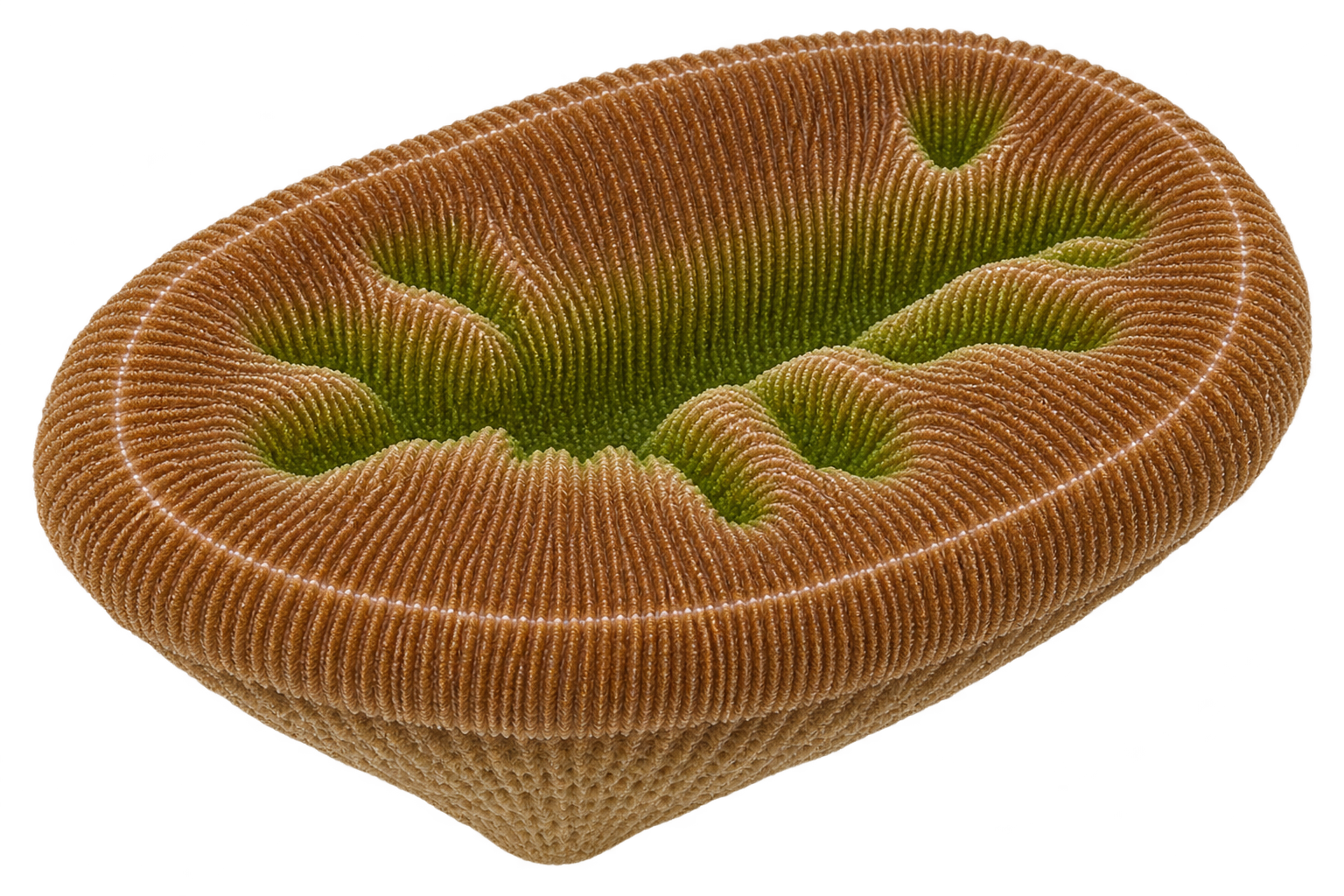
Size: The local identification guide lists Colony 2 to 6 in. (5 to 15 cm). Its measurement axis and life-stage basis are not stated, so this is a guide value rather than a verified maximum, test diameter, arm span or harvest size.
A small meandroid coral, with winding valleys rather than isolated star-like cups. Adult colonies may be free-living on sediment instead of remaining cemented to reef rock.
Read the guide’s location, season and eating cautions before acting.
Rough Cactus Coral
Shape not assigned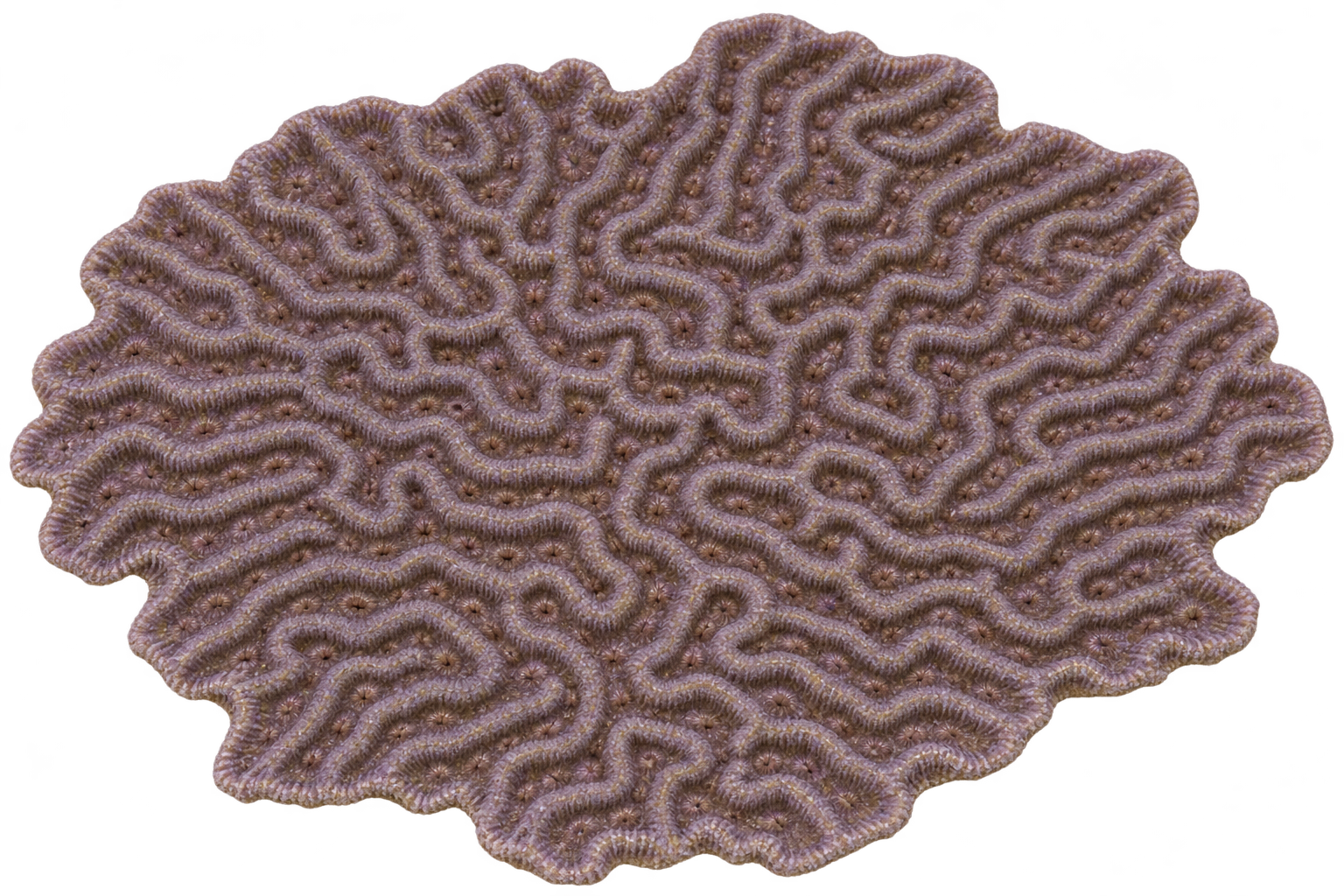
Size: NOAA reports a maximum colony size of 50 cm. The local guide instead lists 30–60 cm without a clear measurement axis. These figures are retained as different source claims, not silently reconciled.
An encrusting plate made of many polyps. NOAA describes grey and brown colonies, with reddish or green individuals also possible.
Read the guide’s location, season and eating cautions before acting.
Smooth Flower Coral
Colonial coral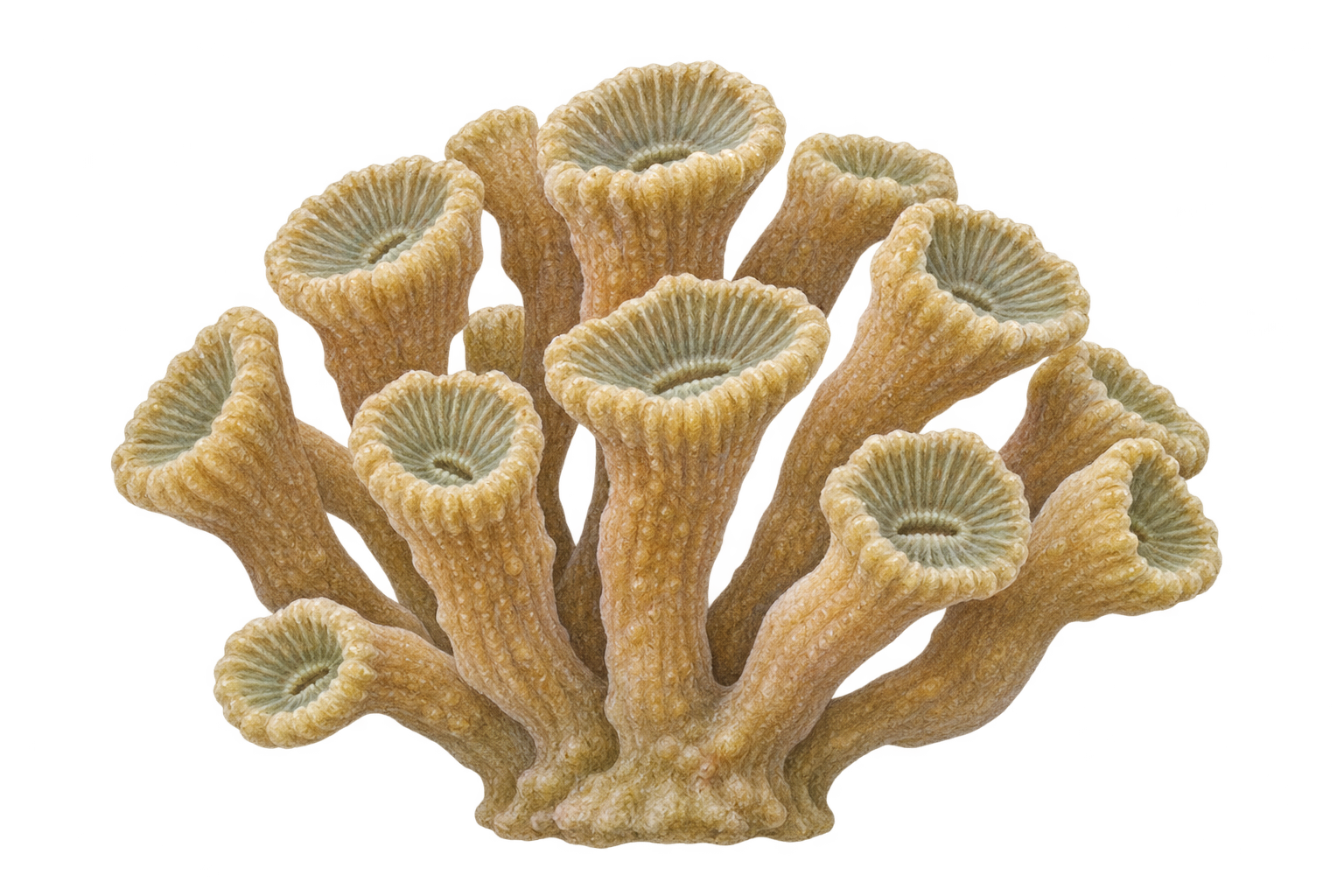
Size: The account describes colony and corallite architecture but gives no verified maximum colony diameter. Its separated tubes are not separate species or a fish-style length measurement.
A cluster of widely separated tubular corallites forms a low dome. The colony is commonly yellow-brown or gray; skeletal septa alternate in two size orders, with the larger set projecting above the rim.
Read the guide’s location, season and eating cautions before acting.
Smooth Star Coral
Shape not assigned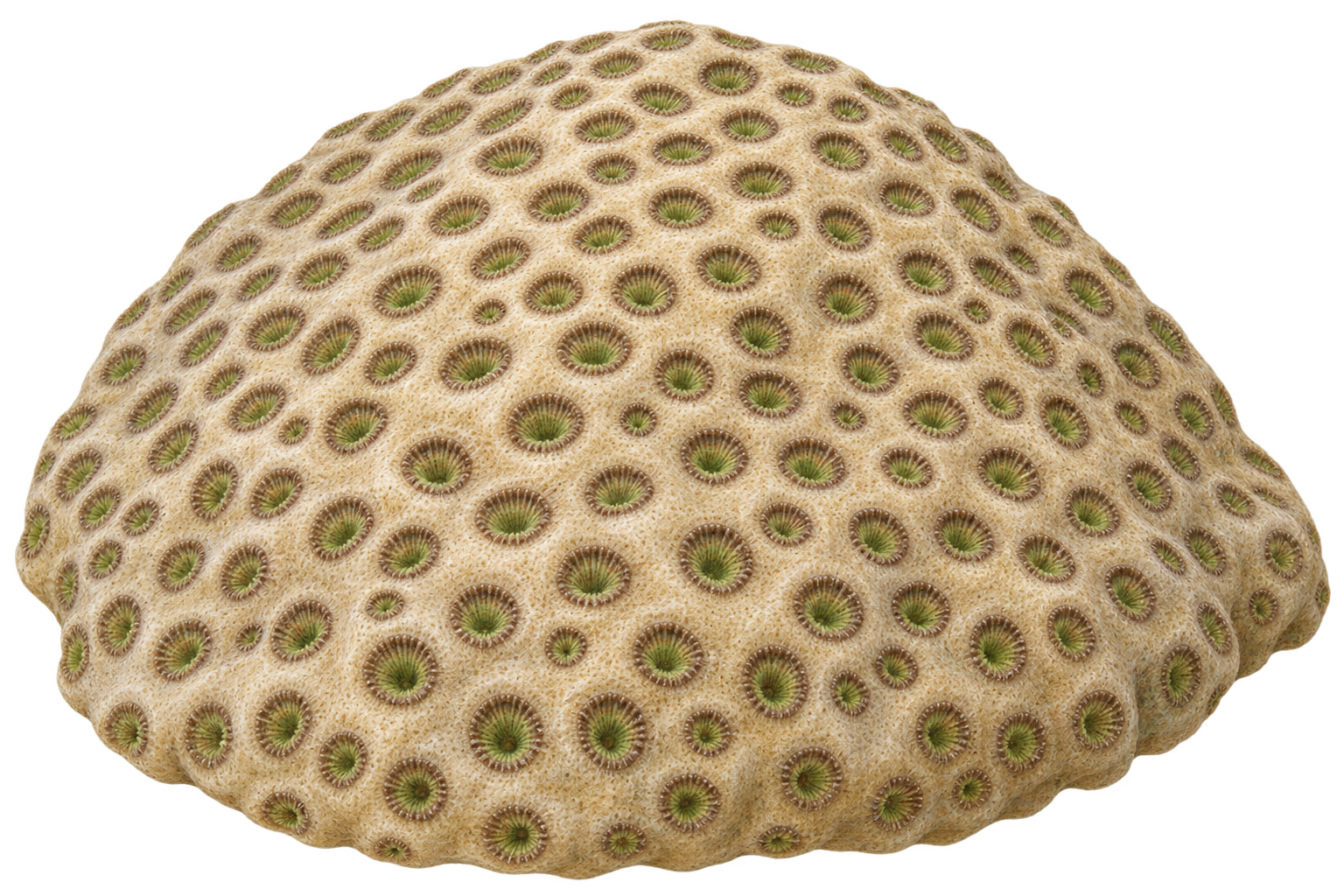
Size: The local identification guide lists 4 to 18 in. (10 to 45 cm). Its measurement axis and life-stage basis are not stated, so this is a guide value rather than a verified maximum, test diameter, arm span or harvest size.
Massive domed colonies have conspicuous round corallite rims. Cream or tan surfaces can bear contrasting green or nearly colourless polyps.
Read the guide’s location, season and eating cautions before acting.
Symmetrical Brain Coral
Colonial coral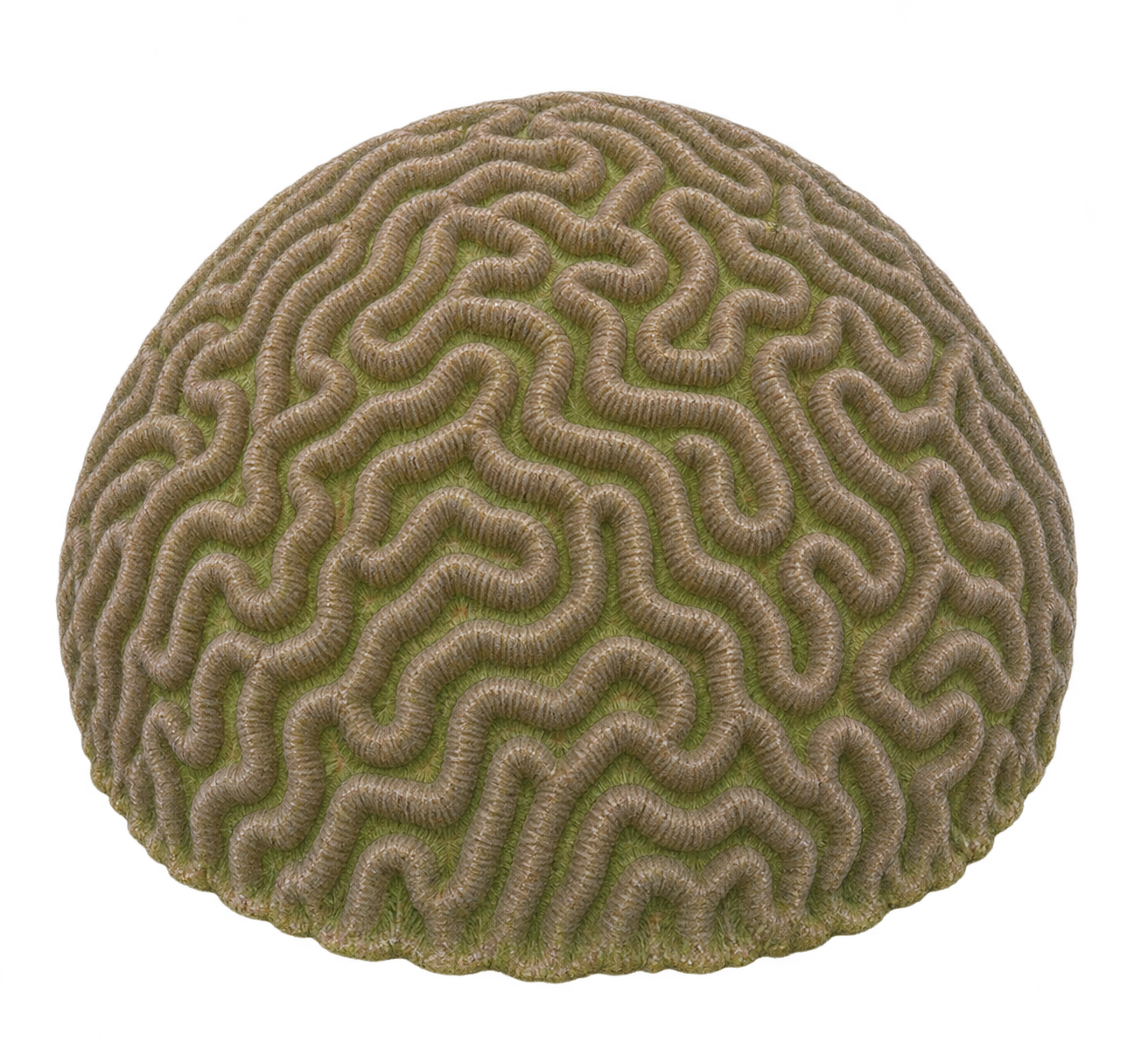
Size: The cited description gives valley widths of about 6–9 mm. This is a small skeletal feature, not a colony diameter or a whole-animal size limit.
An evenly contoured brain coral with winding valleys, usually without a conspicuous groove across the ridge tops. Gray, greenish and purple-brown colonies occur, and valley floors can contrast with the walls.
Read the guide’s location, season and eating cautions before acting.
Orange Cup Coral
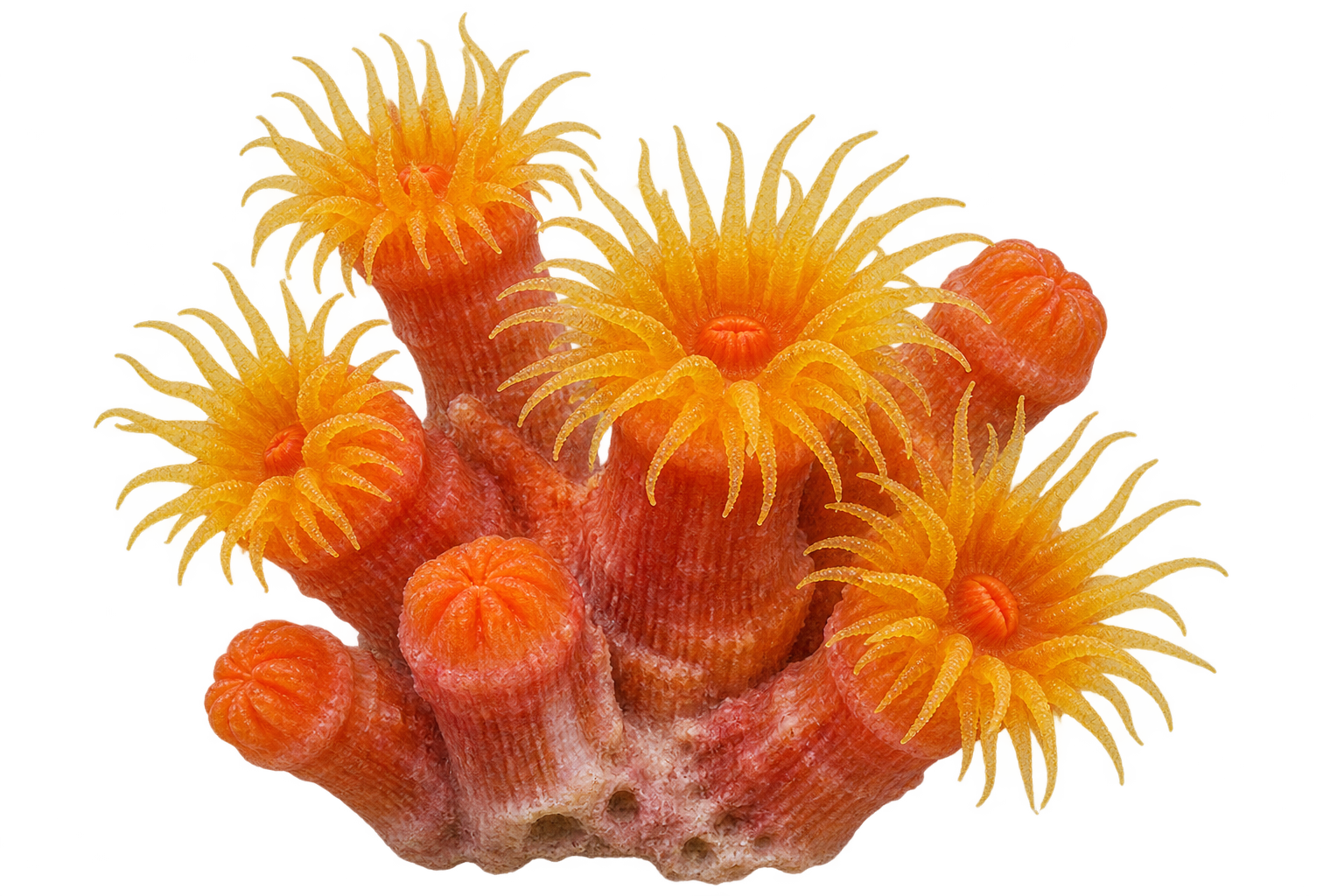
Orange-red skeletal cups bear yellow tentacles; an introduced non-photosynthetic coral.
Protected: no recreational harvest; observe without handling or disturbance.
Explore the orange cup coral guide →Crabs and shrimp
Banded Coral Shrimp
Shrimp-shaped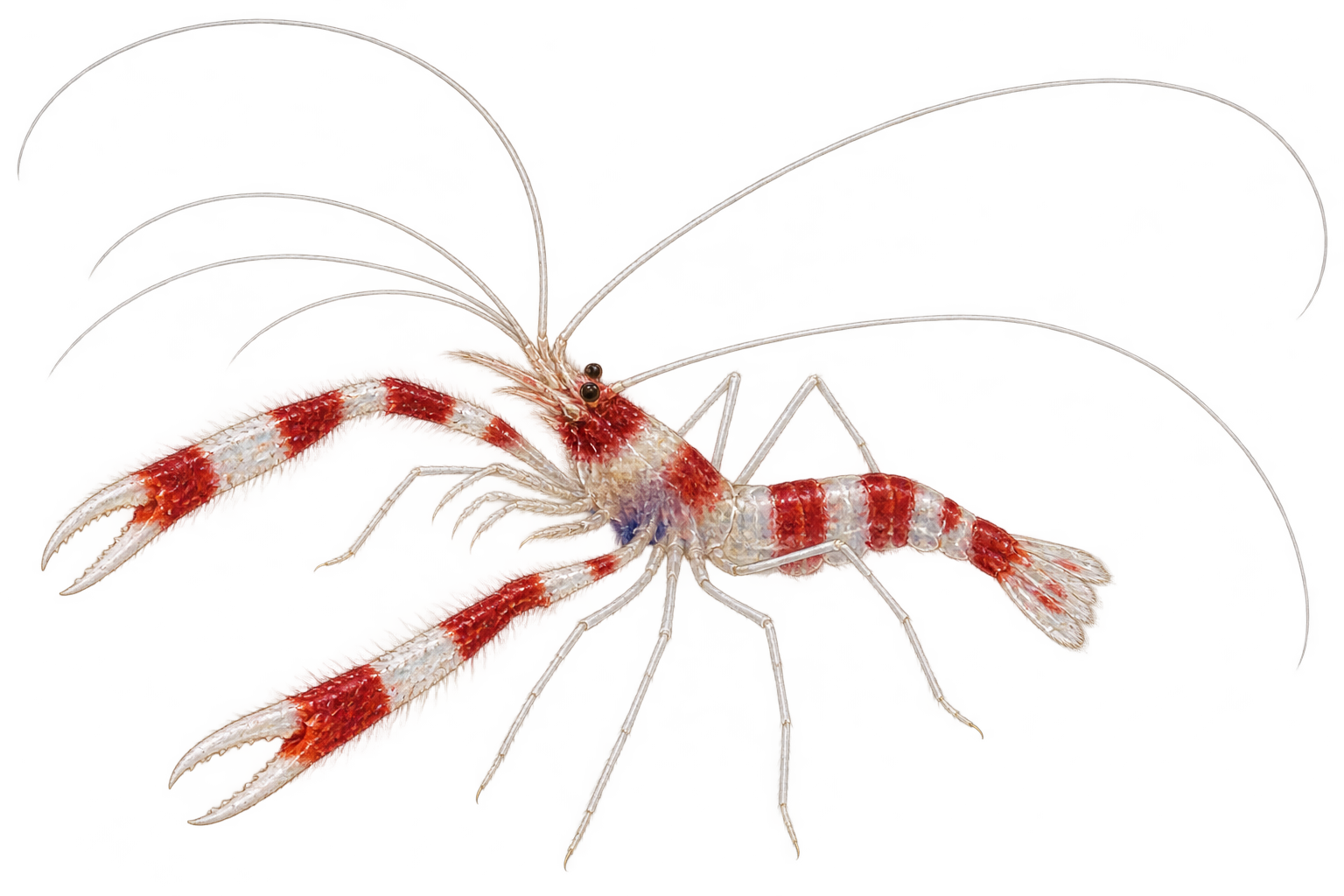
Size: Body commonly 2–5 cm, reaching about 6 cm; antennae extend much farther.
Red-and-white bands, long white antennae and enlarged front-facing claws give this shrimp a memorable barber-pole look.
Restricted marine life: live collection only; Blue Heron Bridge closed
Explore the banded coral shrimp guide →Blackpoint Sculling Crab
Shape not assigned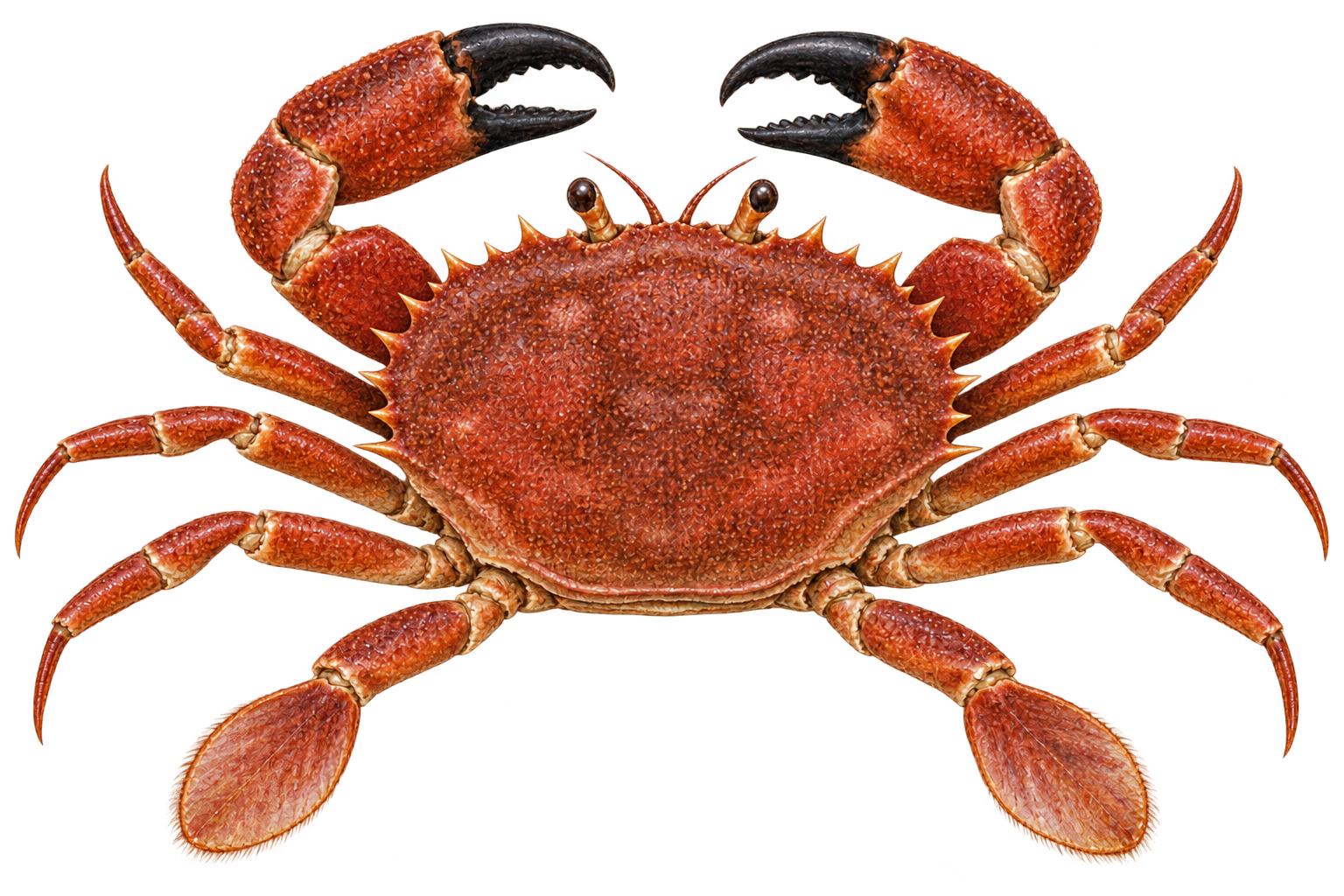
Size: The field guide reports Up to 3.5 in. (9 cm). Its measurement axis and sampling scope are not specified, so this is not presented as a verified maximum or life-stage range.
The FAO identification account describes a purplish-red crab with paler marbling and dark tips on claws and numerous spines.
Read the guide’s location, season and eating cautions before acting.
Channel Clinging Crab
Crab-shaped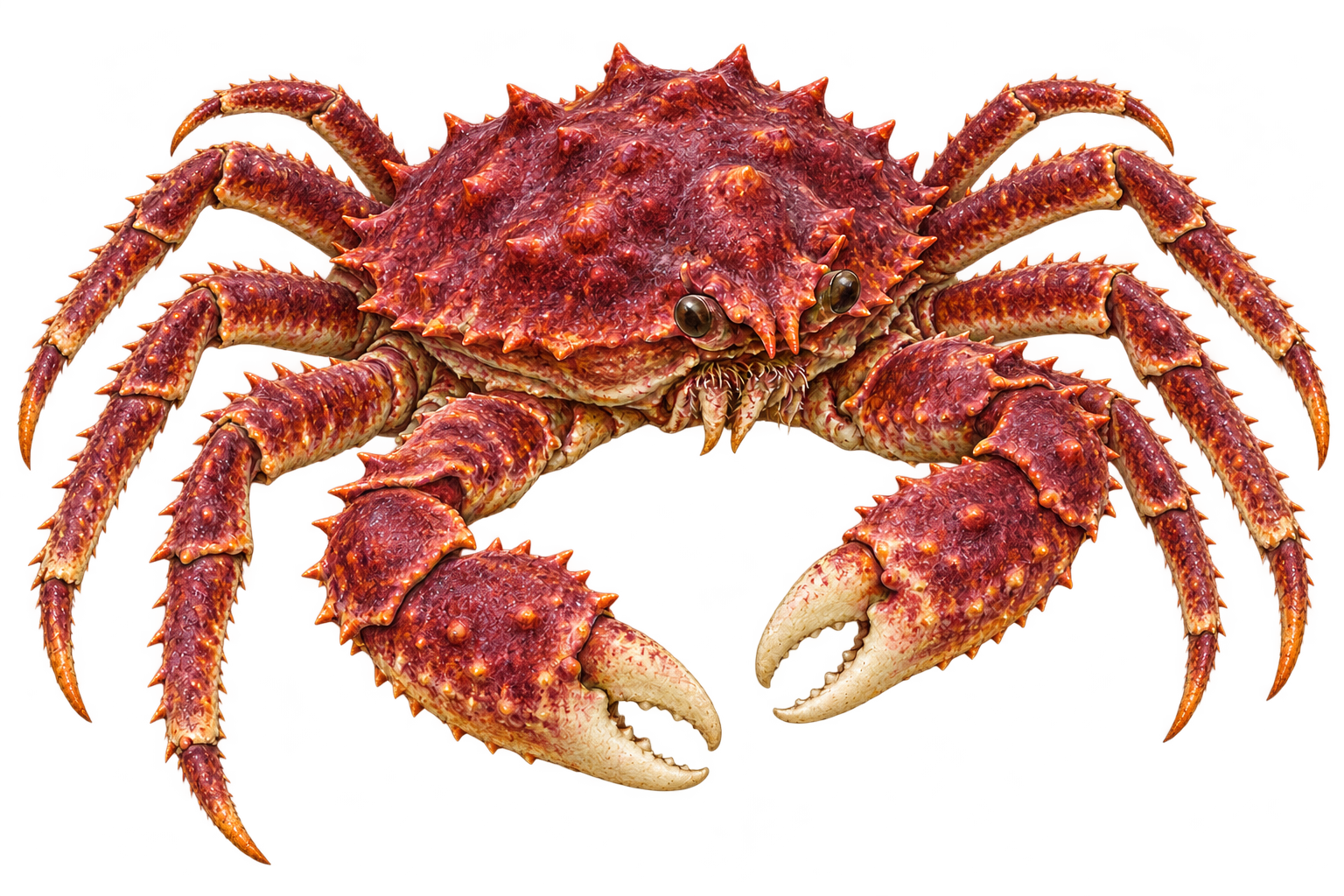
Size: Large adults can have a carapace around 15–18 cm wide; legs extend beyond it.
This large spider crab has a heavy, spiny shell, robust walking legs and substantial claws.
General harvest rules; not the stone-crab claw fishery
Explore the channel clinging crab guide →Common mantis shrimp
Shrimp-shaped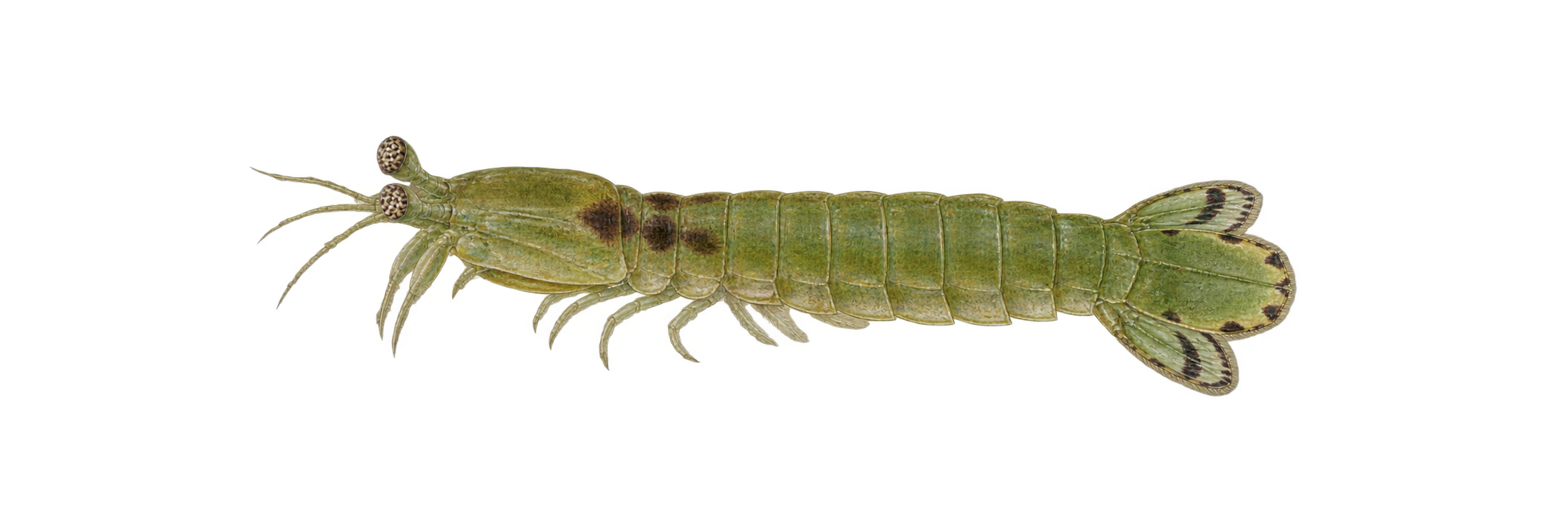
Size: Reported upper size 9.5 cm; measurement basis is described in the profile, not a typical local size.
A checkerboard pattern on the stalked eyes is a useful clue.
Read the guide’s location, season and eating cautions before acting.
Coral clinging crab
Crab-shaped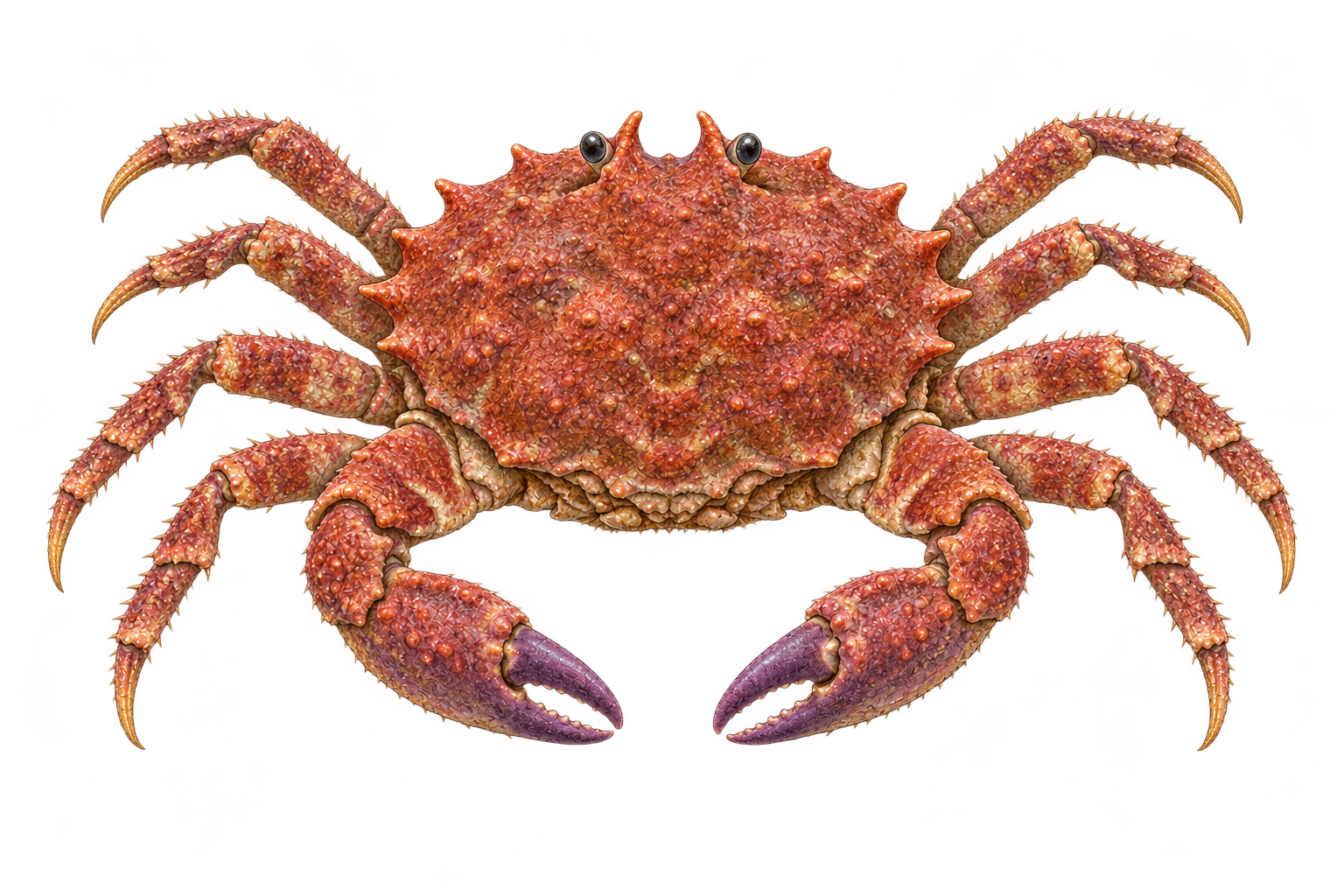
Size: No reliable whole-animal maximum established in this review; size filter left unassigned.
A bulky crab with a reddish-brown shell, prominent side spines and hairy legs that may show yellow bands.
Read the guide’s location, season and eating cautions before acting.
Cuban stone crab
Crab-shaped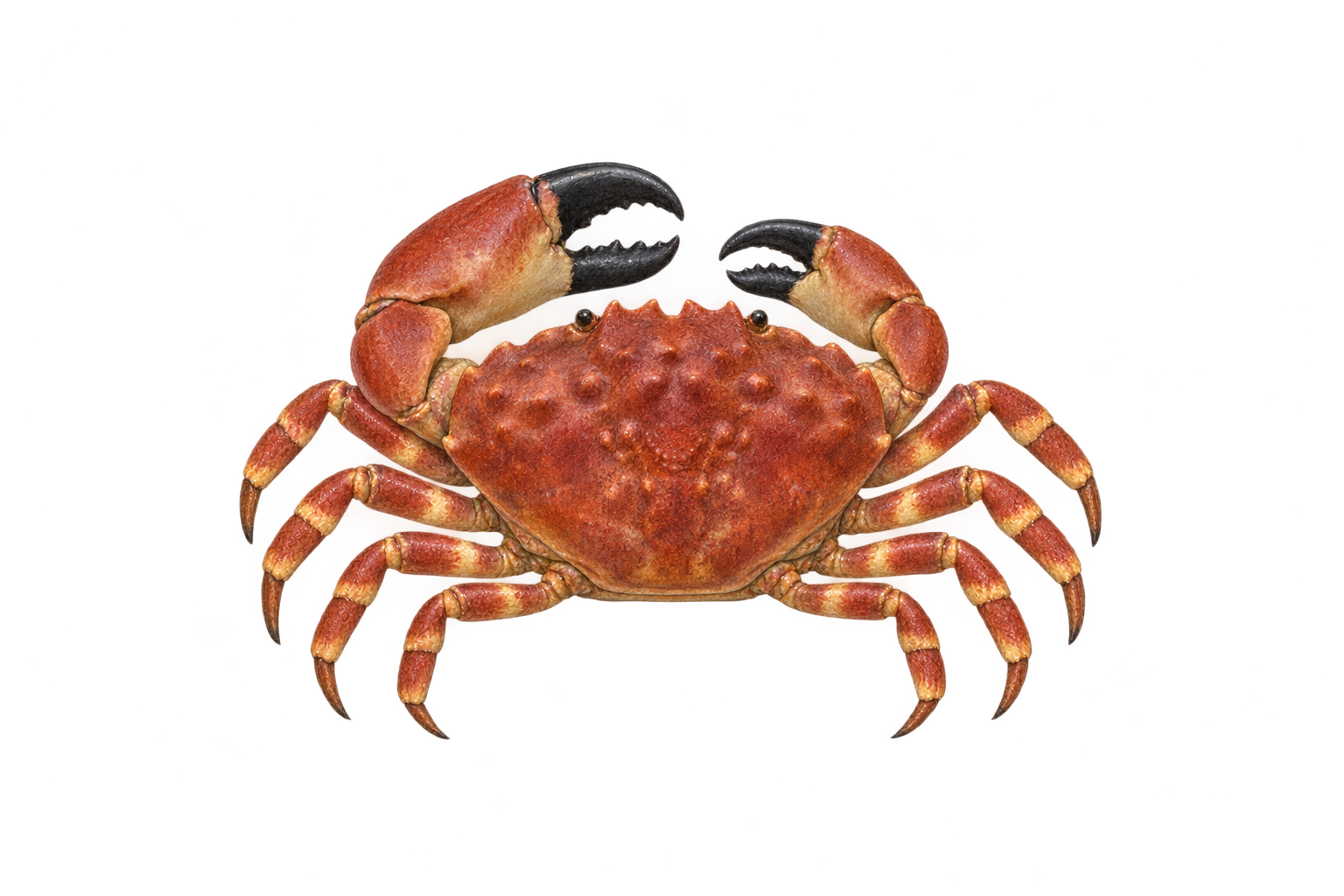
Size: No reliable whole-animal maximum established in this review; size filter left unassigned.
A stocky crab with large, powerful claws is a starting clue.
Read the guide’s location, season and eating cautions before acting.
Flame box crab
Crab-shaped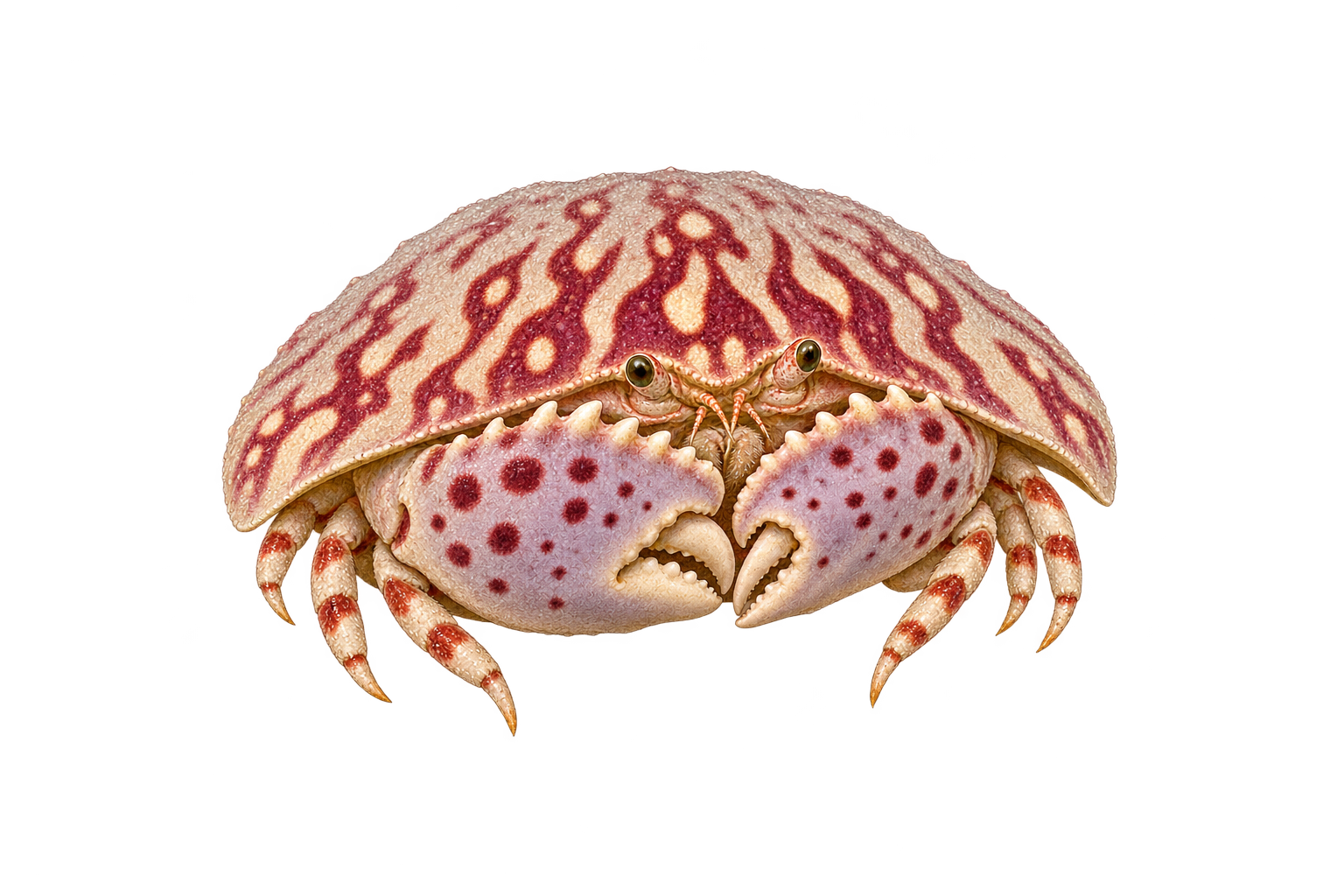
Size: Up to 15 cm (5.9 in) carapace width in the Gray’s Reef guide; other guides report smaller limits.
Broad shell with irregular lengthwise flame-like streaks and large claws with toothed upper edges.
Read the guide’s location, season and eating cautions before acting.
Florida Stone Crab
Crab-shaped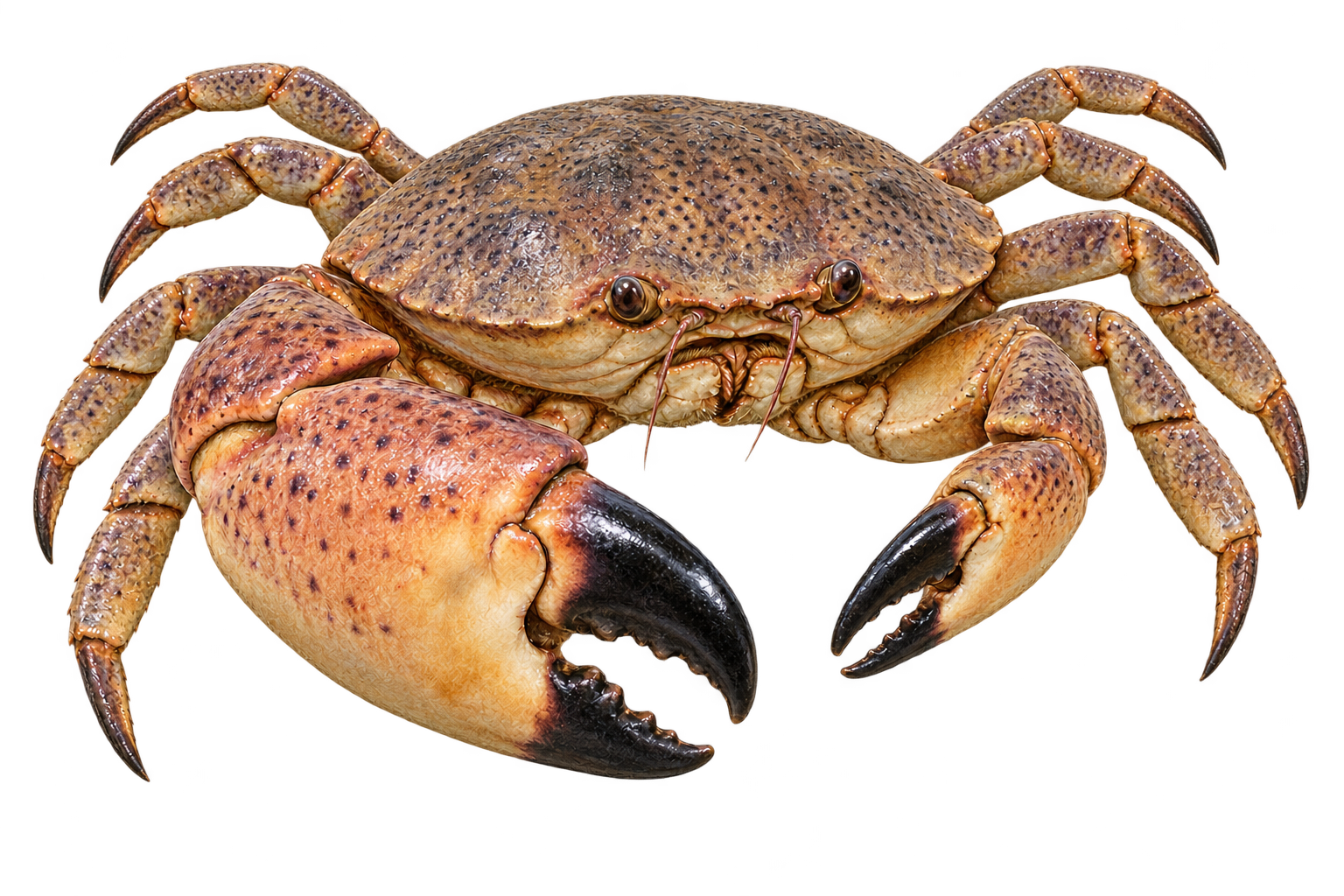
Size: Carapace width can reach roughly 13 cm; claw length is a separate legal measurement.
Large, powerful claws with dark tips dominate the appearance of a Florida stone crab.
Seasonal claw-only harvest: October 15–May 1; egg-bearing crabs protected
Explore the florida stone crab guide →Giant Hermit Crab
Shelled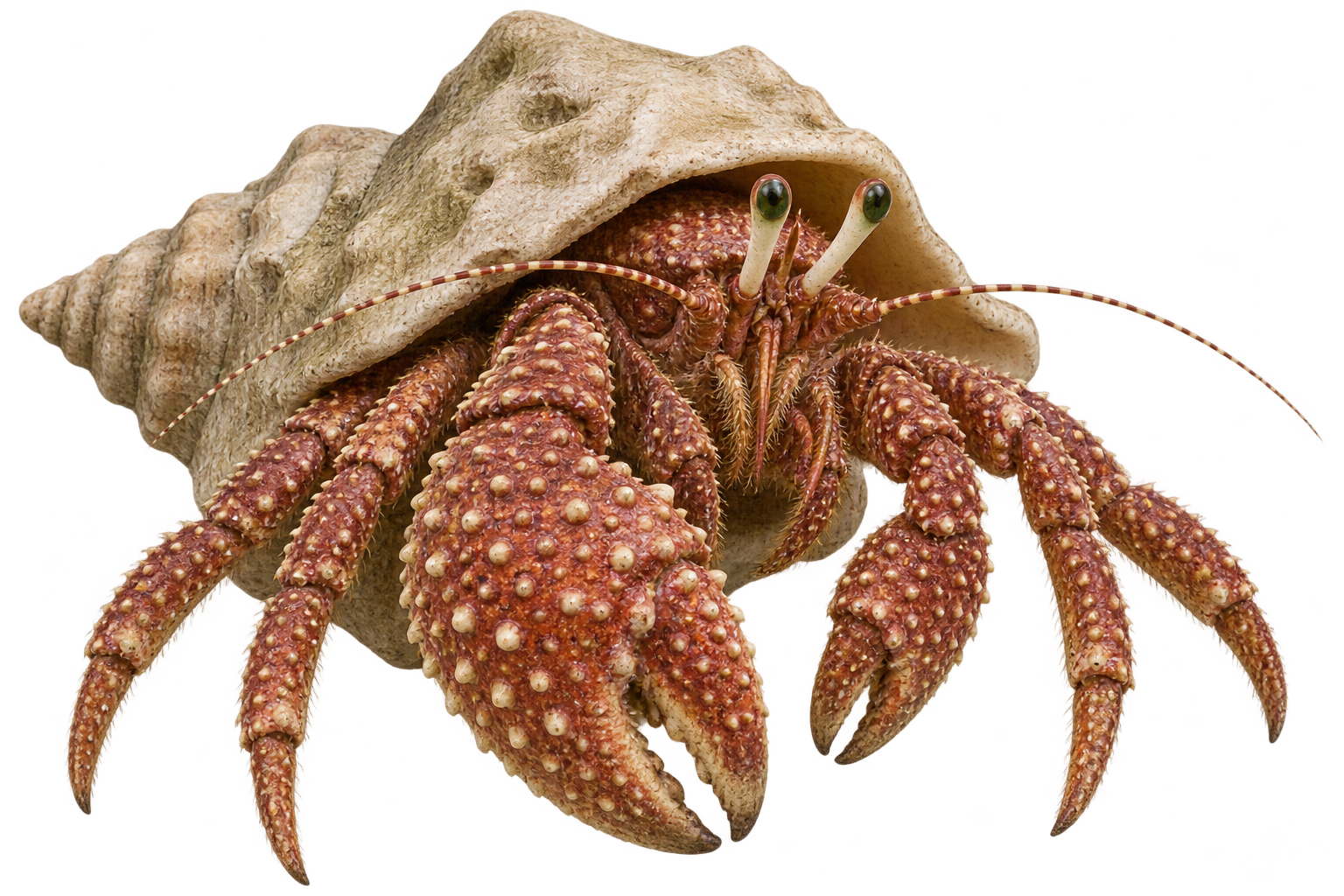
Size: Overall displayed extent can reach tens of centimeters; shell length is not body length.
Large reddish hermit with cream beadlike bumps and a larger right claw.
Read the guide’s location, season and eating cautions before acting.
Golden coral shrimp
Shrimp-shaped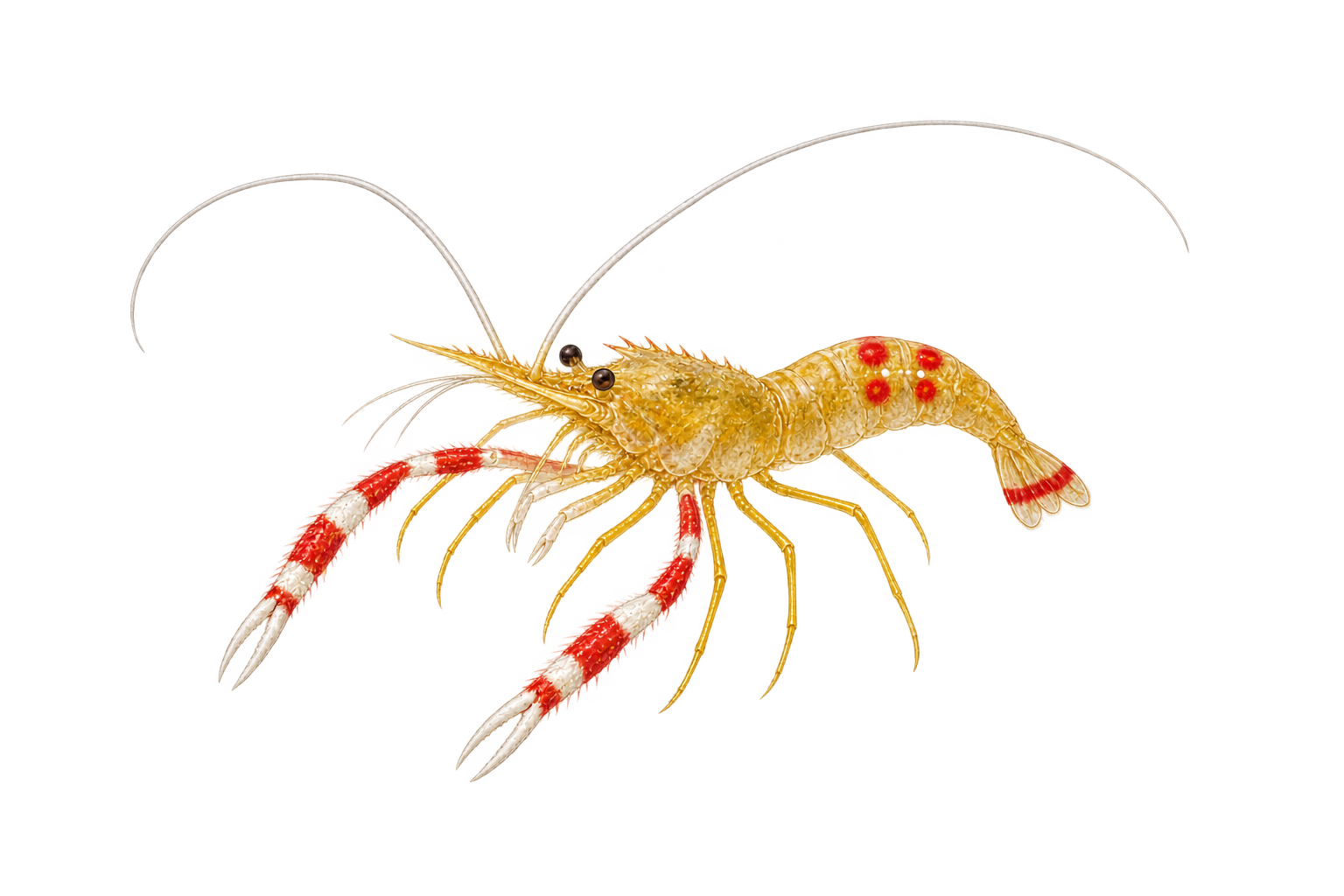
Size: Body length up to about 4 cm (1.6 in); antennae are excluded.
Yellowish-green translucent body, long white antennae and enlarged third-leg claws with reddish-orange markings and pale joints.
Read the guide’s location, season and eating cautions before acting.
Heart Urchin Pea Crab
Shape not assigned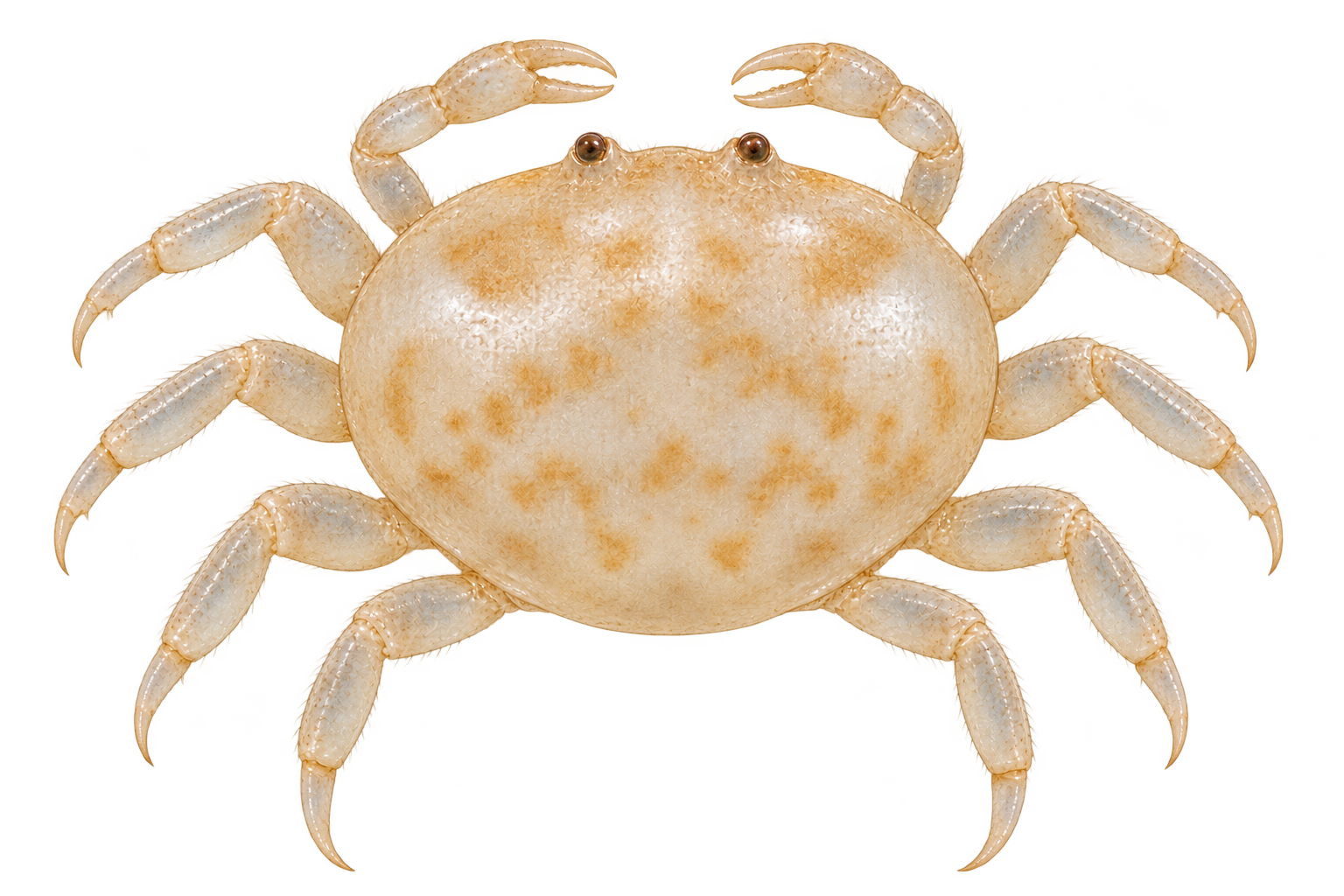
Size: The field guide reports Up to 0.5 in. (1.2 cm). Its measurement axis and sampling scope are not specified, so this is not presented as a verified maximum or life-stage range.
A small pea crab associated with heart urchins. Species identification needs closer comparison than host identity alone.
Read the guide’s location, season and eating cautions before acting.
Indo-Pacific swimming crab
Crab-shaped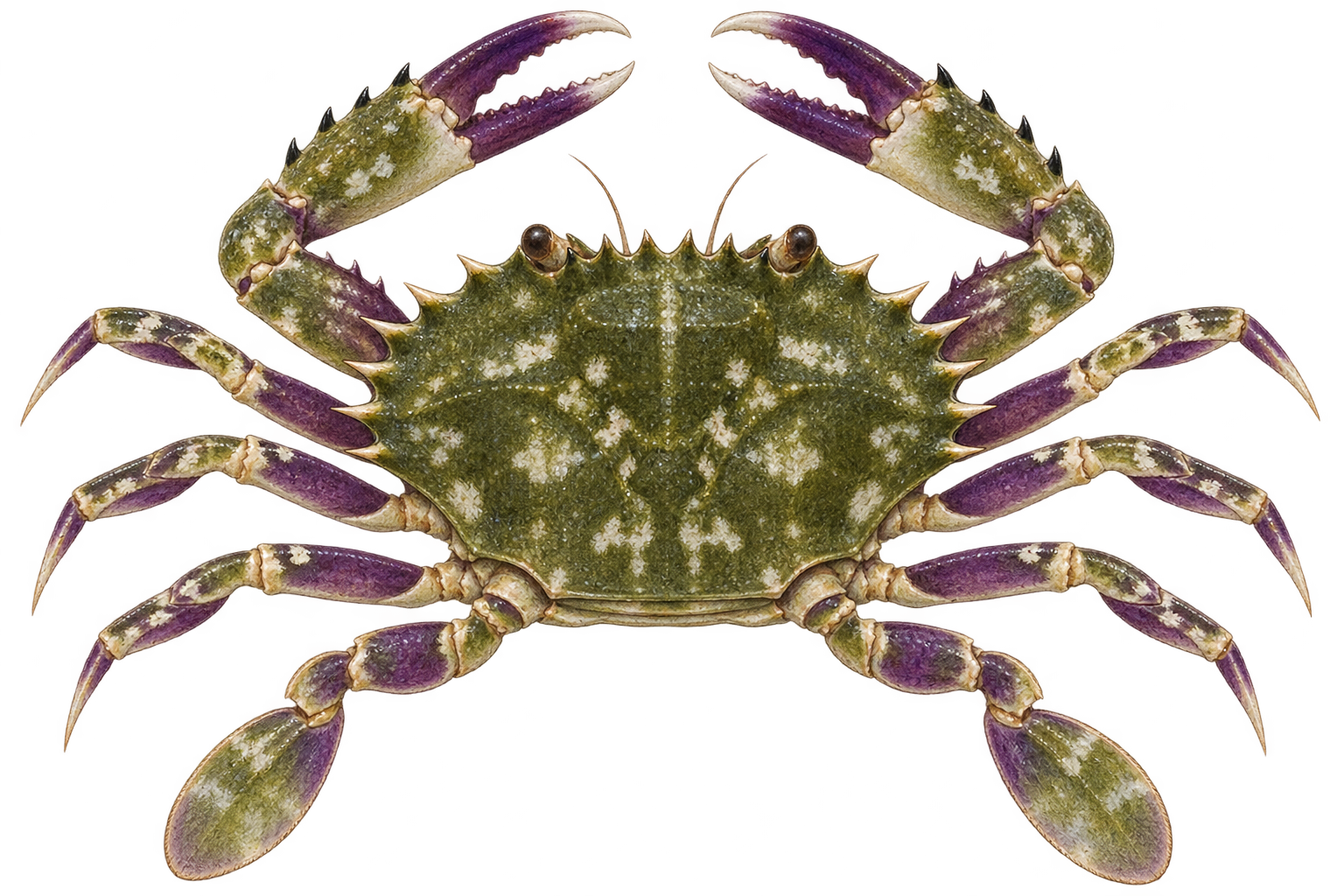
Size: Reported female shell width 7.8 cm; no whole-animal length filter assigned.
A broad, roughly hexagonal shell has six teeth along each front-side edge.
Read the guide’s location, season and eating cautions before acting.
Pederson Cleaner Shrimp
Shrimp-shaped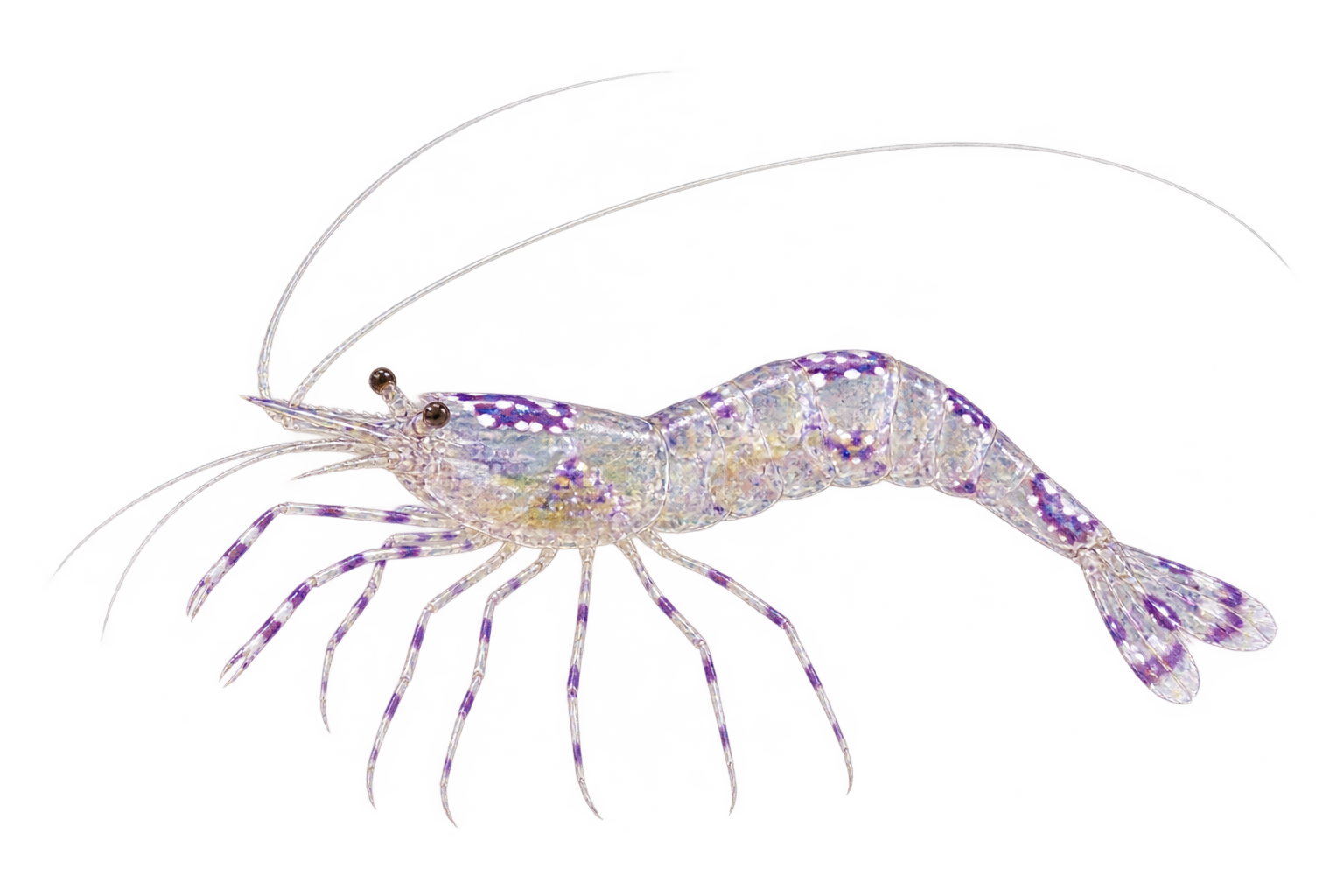
Size: Body about 2–3 cm long; long white antennae extend beyond it.
A nearly transparent body carries delicate blue, violet and white markings, with long white antennae extending forward.
Restricted marine life: live collection only; Blue Heron Bridge closed
Explore the pederson cleaner shrimp guide →Rafael's peppermint shrimp
Shape not assigned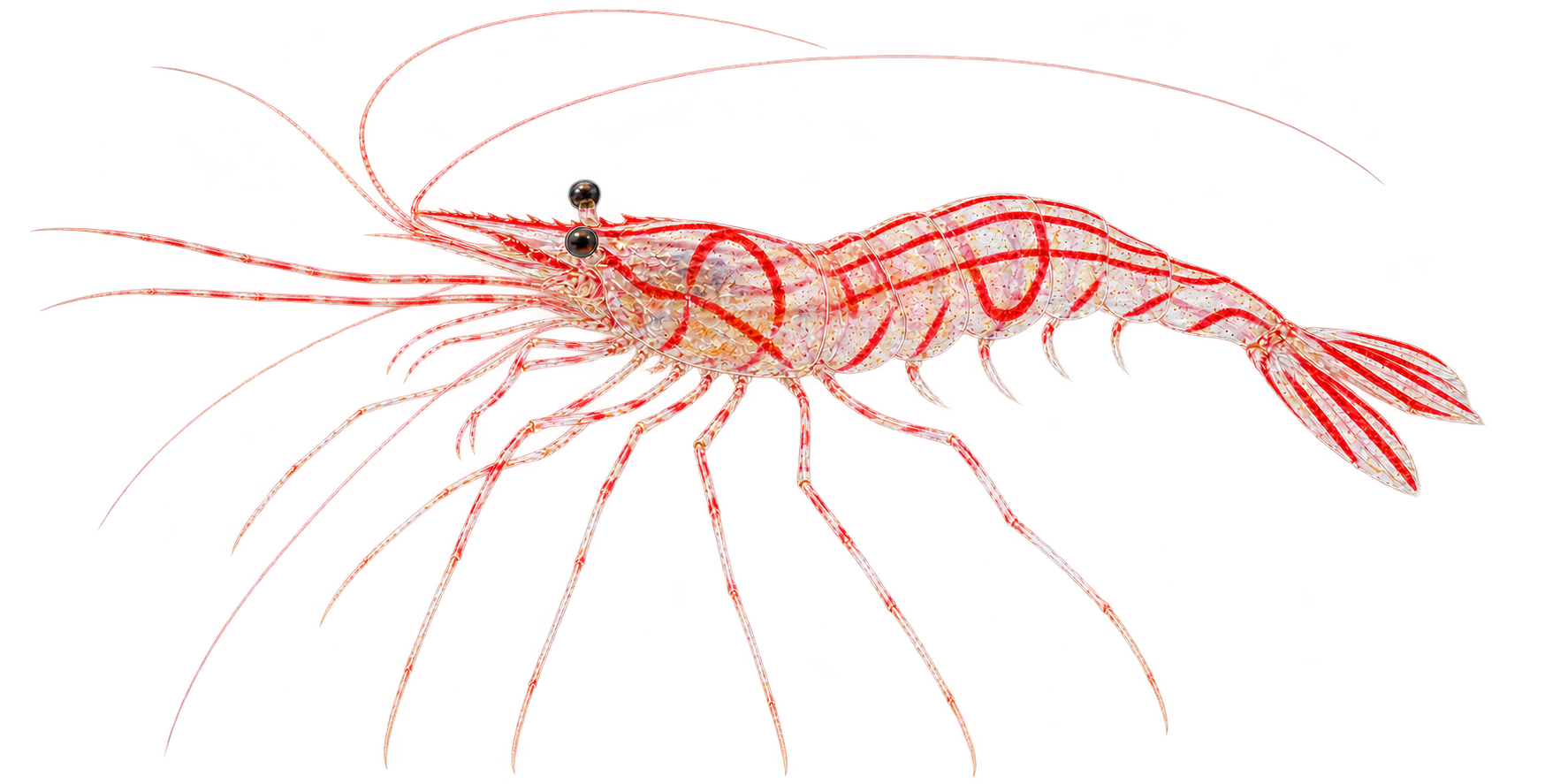
Size: A reliable numerical size with a defined measurement basis was not established from the accessed sources. Do not turn a photograph’s apparent scale or observation depth into body length.
The original description highlights exceptionally long walking legs and third maxillipeds for a shallow-water shrimp. Exact identification also uses rostral teeth, leg spines and segmented appendages.
Read the guide’s location, season and eating cautions before acting.
Scaly-tailed mantis shrimp
Shrimp-shaped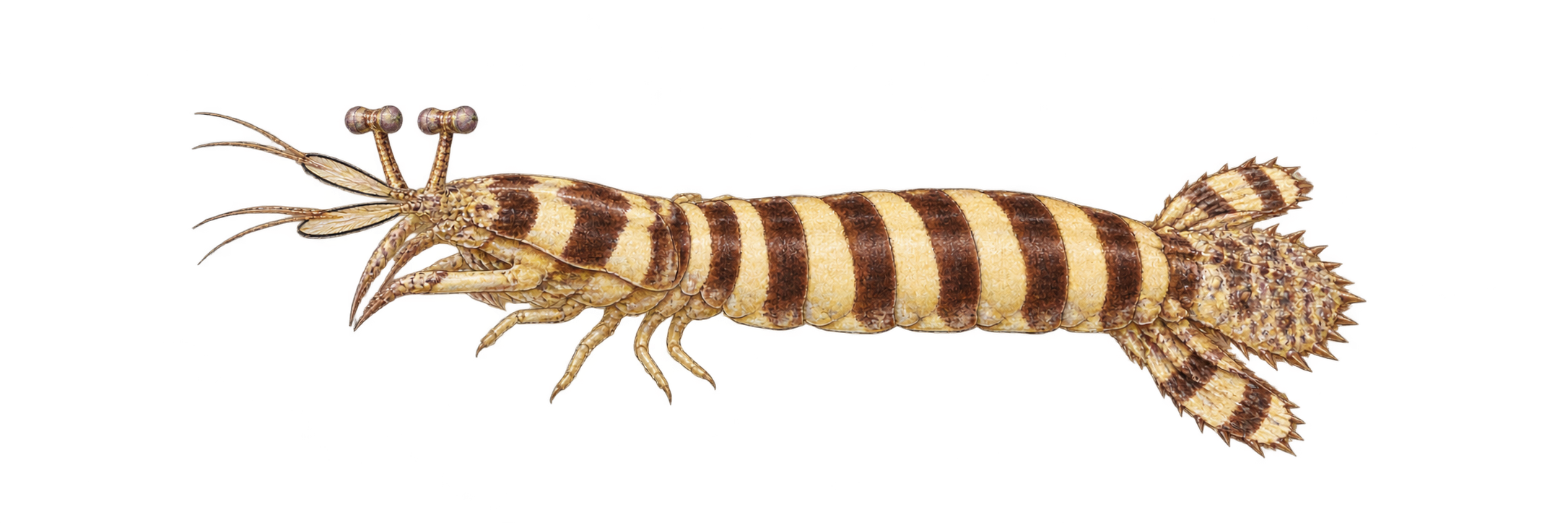
Size: No reliable whole-animal maximum established in this review; size filter left unassigned.
Usually only the front of this burrow-dwelling stomatopod is visible.
Read the guide’s location, season and eating cautions before acting.
Shameface heart crab
Crab-shaped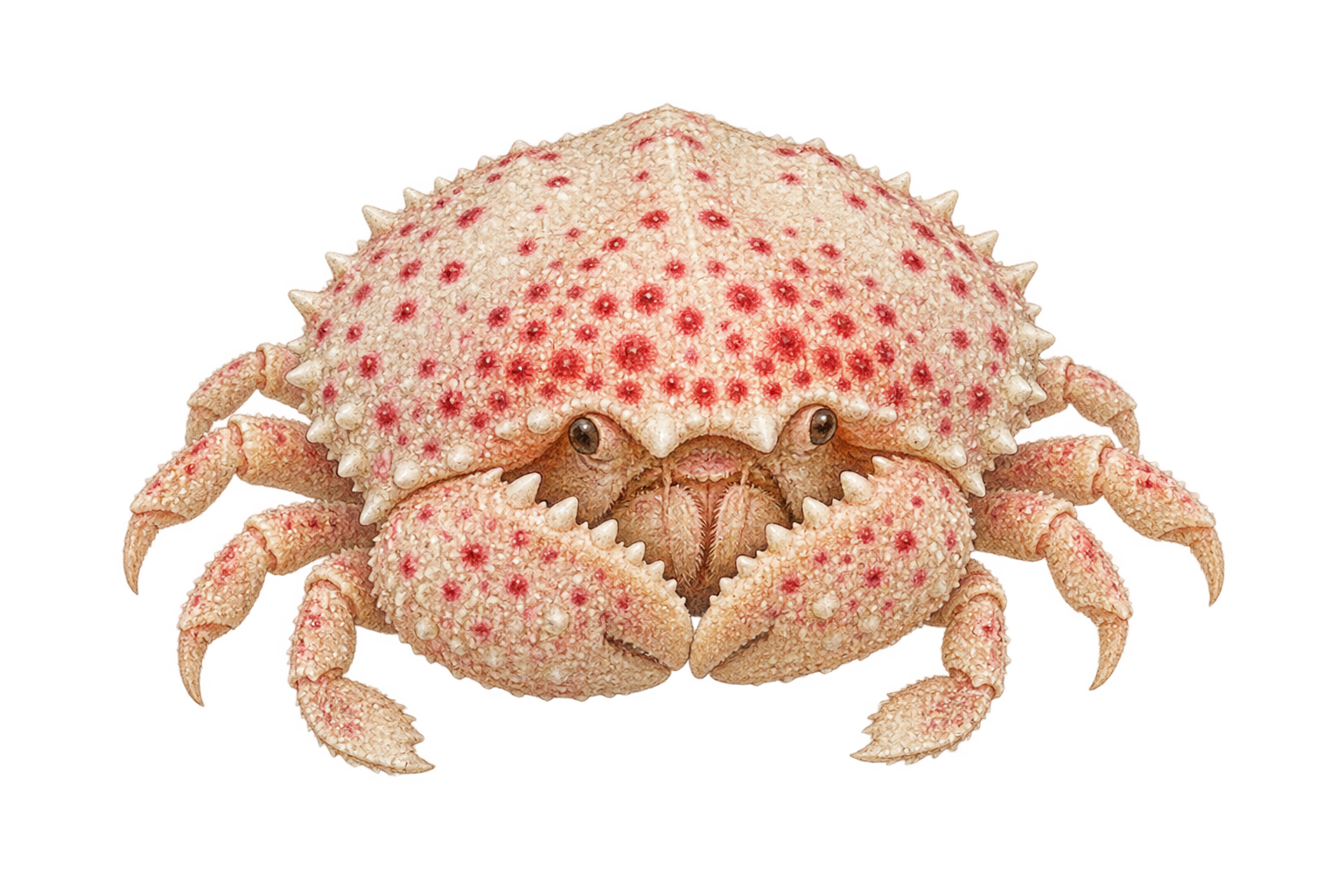
Size: Published carapace measurement is not a maximum whole-animal length; size filter unassigned.
Compact domed granular shell, prominent branchial bumps and short curved lateral spine.
Read the guide’s location, season and eating cautions before acting.
Speckled Swimming Crab
Shape not assigned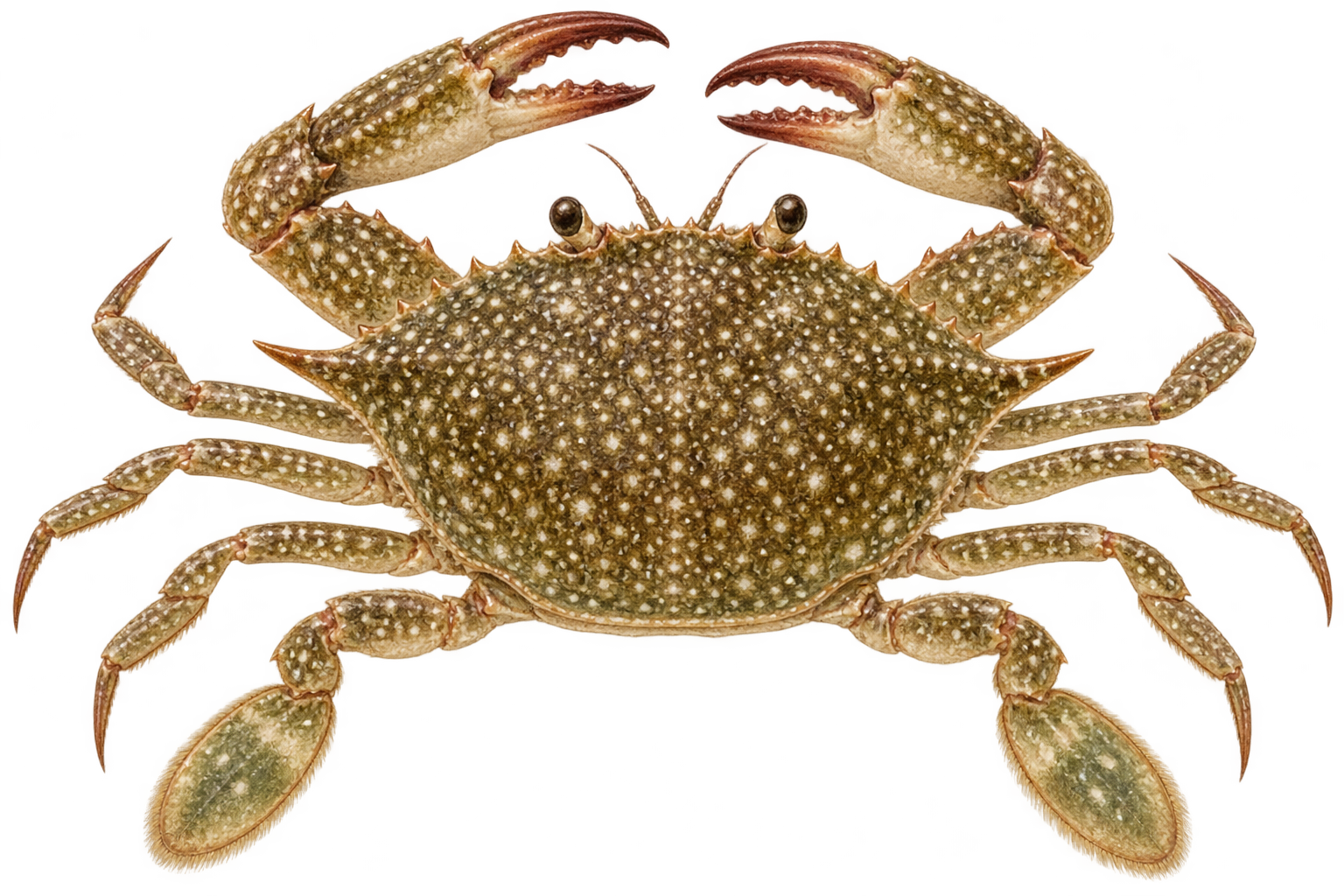
Size: The field guide reports Up to 5 in. (12 cm). Its measurement axis and sampling scope are not specified, so this is not presented as a verified maximum or life-stage range.
A broad, flattened brown to olive-brown shell is peppered with small white spots. The last legs are flattened into paddles. Nine spines line each anterolateral edge when the outer orbital spine is included; the rearmost lateral spine is longest.
Read the guide’s location, season and eating cautions before acting.
Thinstripe Hermit Crab
Shelled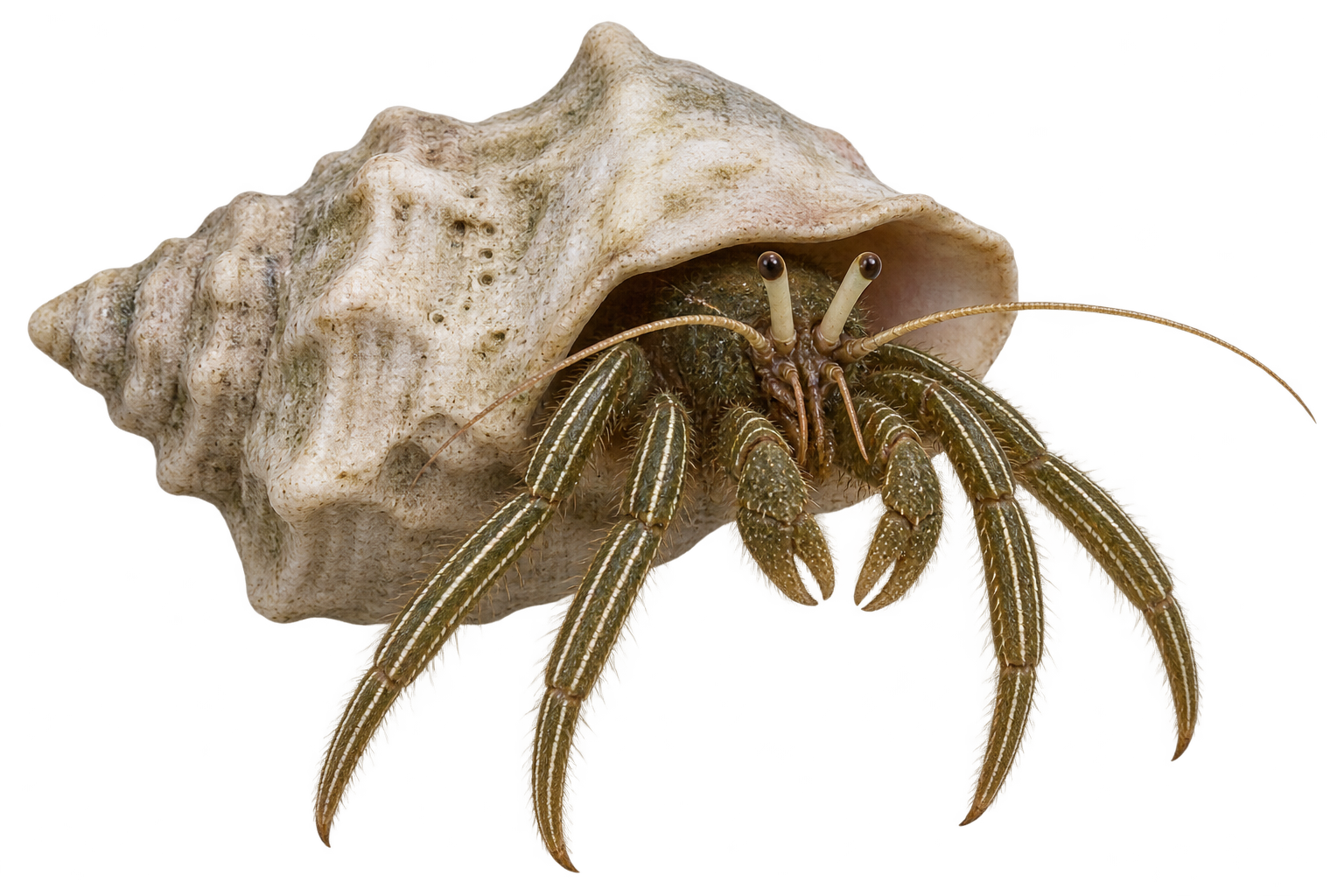
Size: Body about3.1 cm; overall extent with legs about7.5 cm in Smithsonian account.
Small brown-green hermit with fine pale stripes along its walking legs.
Read the guide’s location, season and eating cautions before acting.
Tortuga box crab
Crab-shaped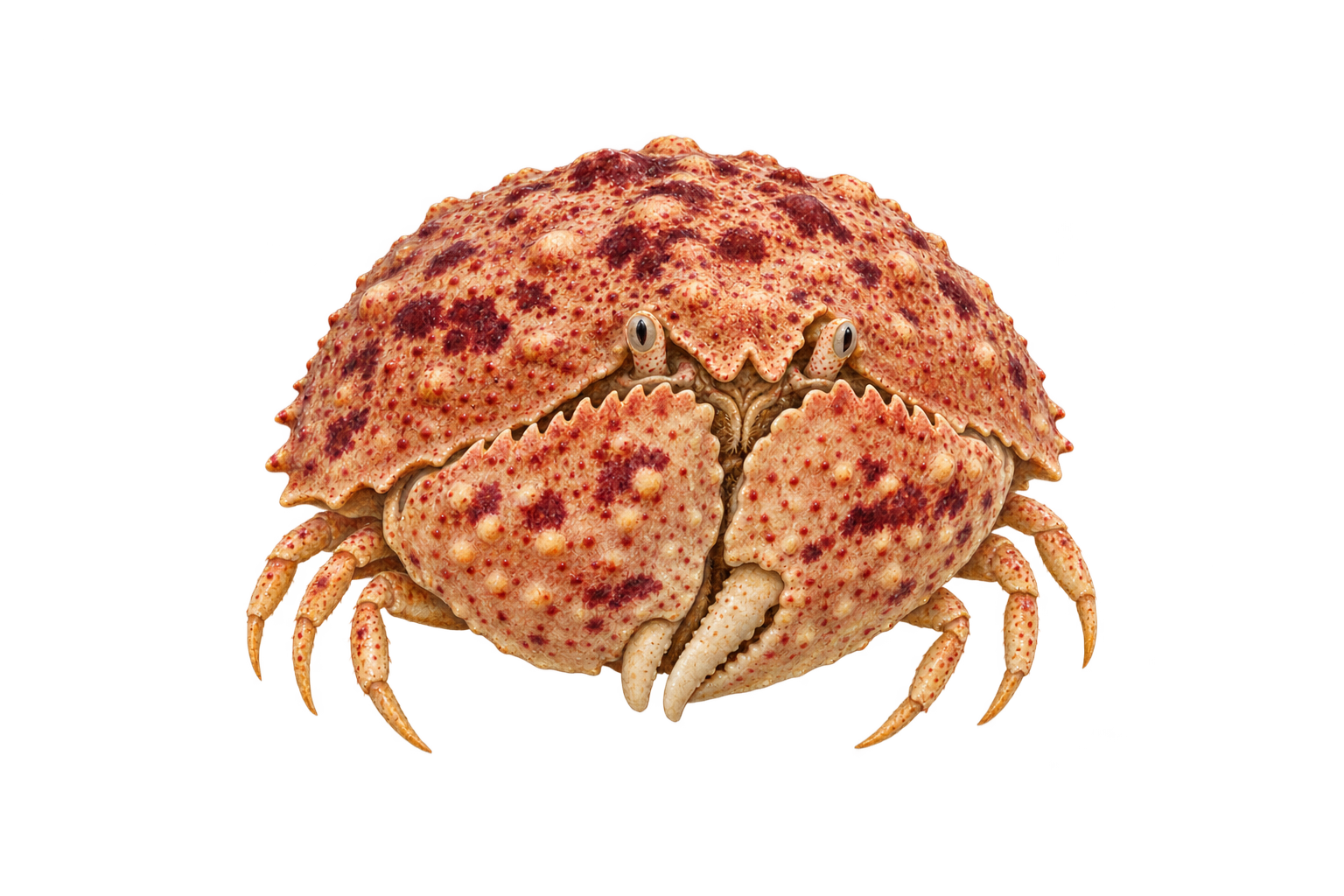
Size: A studied male measured 4.48 cm (1.76 in) across the rear shell projections; not a universal maximum.
Domed shell with prominent bumps and grooves, raised eye sockets and toothed rear-corner extensions.
Read the guide’s location, season and eating cautions before acting.
Yellow box crab
Crab-shaped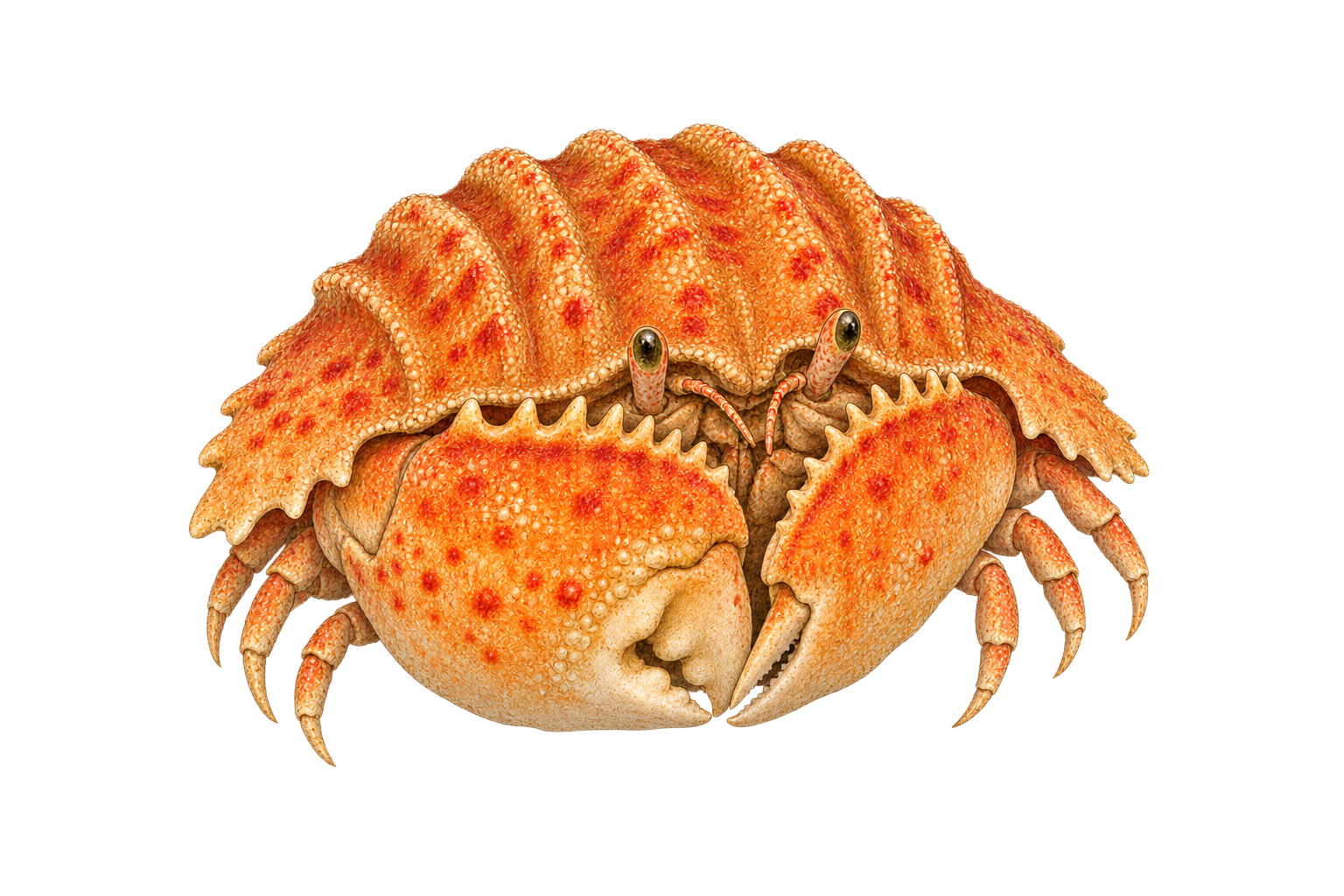
Size: Up to 14.5 cm (5.7 in) carapace width.
Broad oval shell, spined side margins and oversized flattened claws folded across the front; color is not reliably yellow.
Read the guide’s location, season and eating cautions before acting.
Yellowline Arrow Crab
Crab-shaped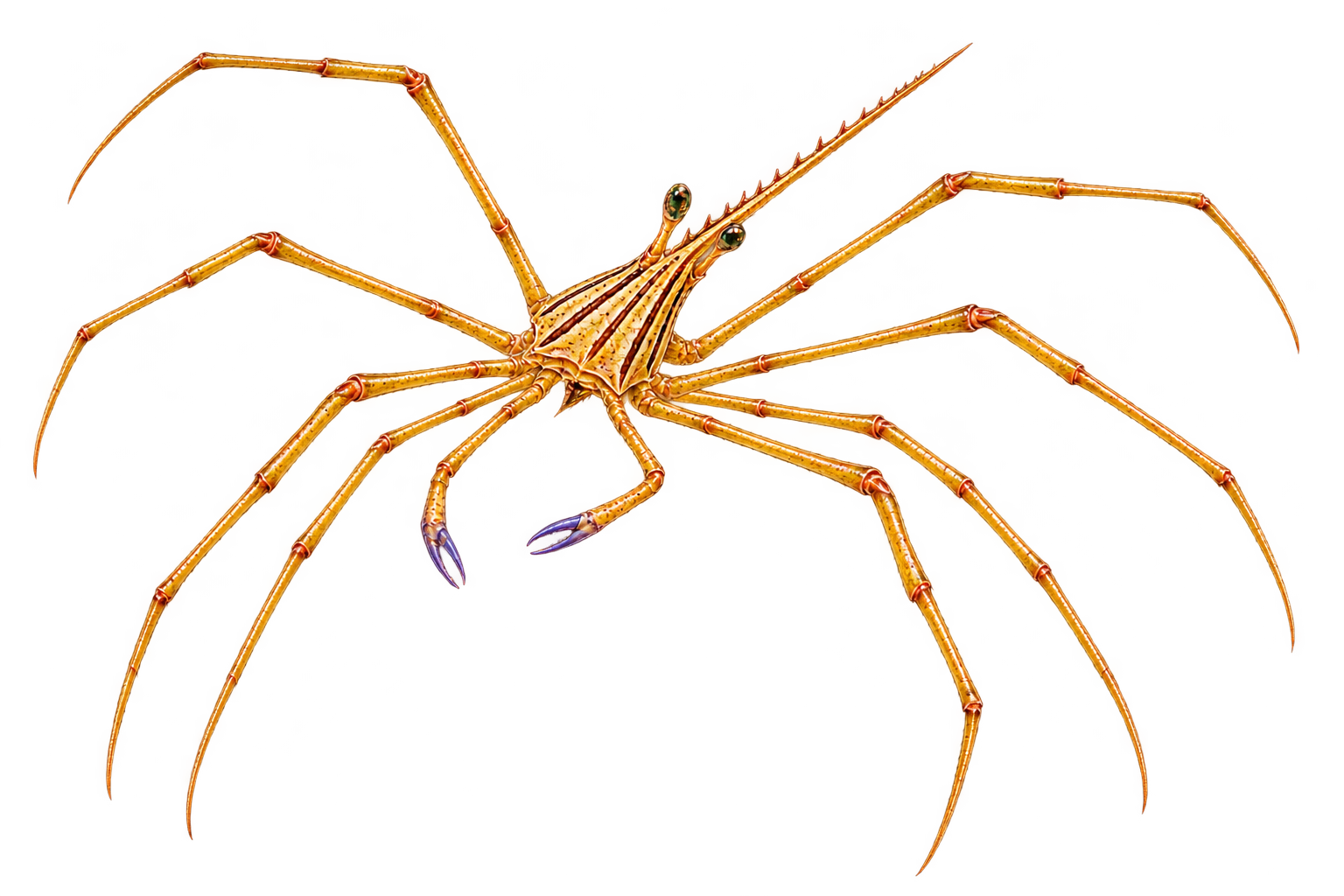
Size: Body about 3–6 cm long; the slender legs extend much farther.
A pointed triangular body perched on extremely long, thin legs gives this crab a distinctive spiderlike silhouette.
Restricted marine life: live collection only; Blue Heron Bridge closed
Explore the yellowline arrow crab guide →Blue Crab
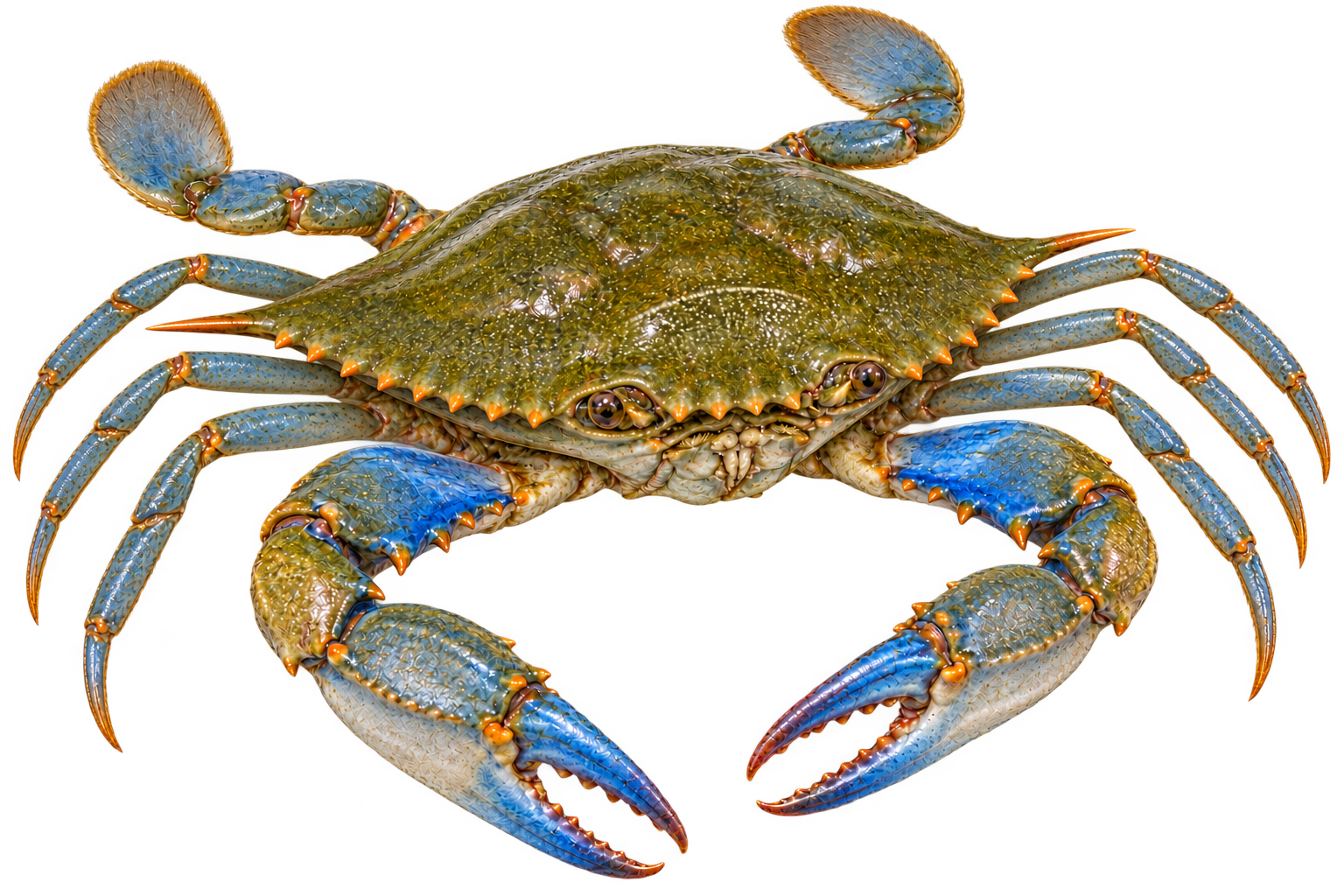
Broad swimming-crab shell with long lateral spines and paddle-shaped rear legs.
Verify current species, gear, area and jurisdiction rules. Identification is not harvest permission or food-safety clearance.
Explore the blue crab guide →Pink Shrimp
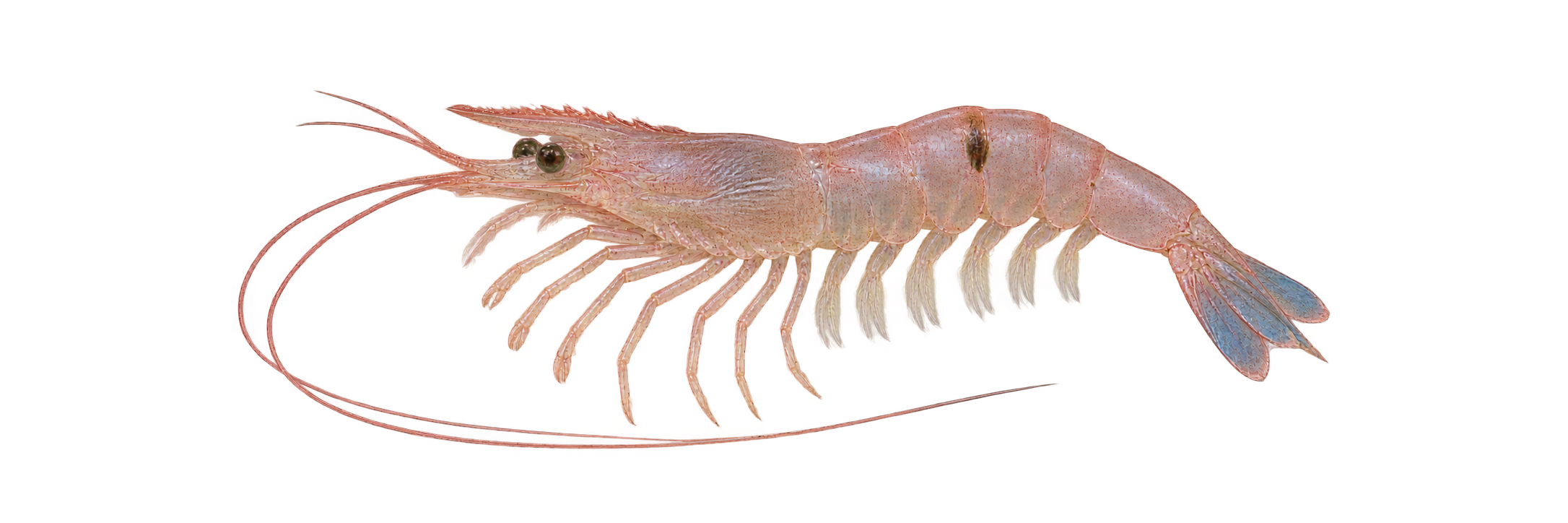
Grooved carapace and a dark abdominal side spot help distinguish this bottom-associated shrimp.
Verify current species, gear, area and jurisdiction rules. Identification is not harvest permission or food-safety clearance.
Explore the pink shrimp guide →Brown Shrimp
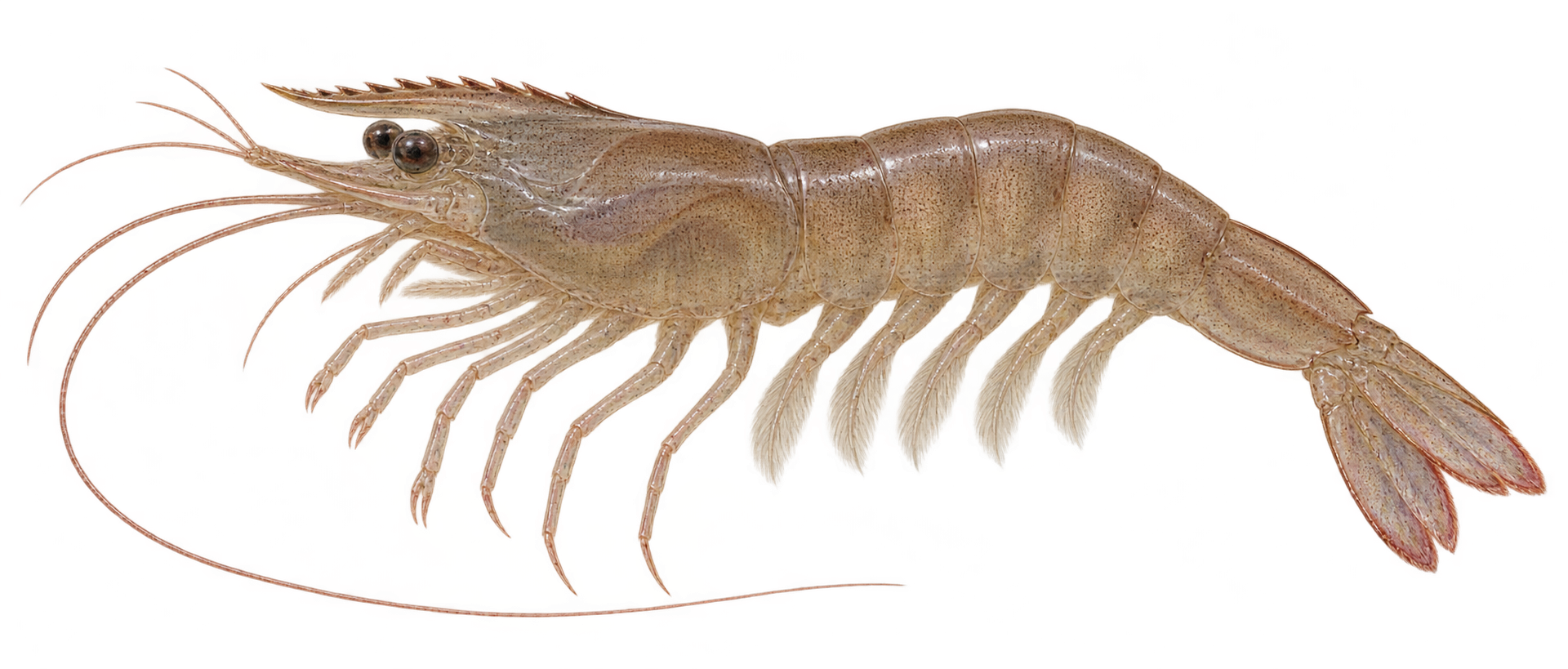
Grooved carapace and tail-base grooves distinguish this shrimp; it lacks the typical pink-shrimp side spot.
Verify current species, gear, area and jurisdiction rules. Identification is not harvest permission or food-safety clearance.
Explore the brown shrimp guide →White Shrimp
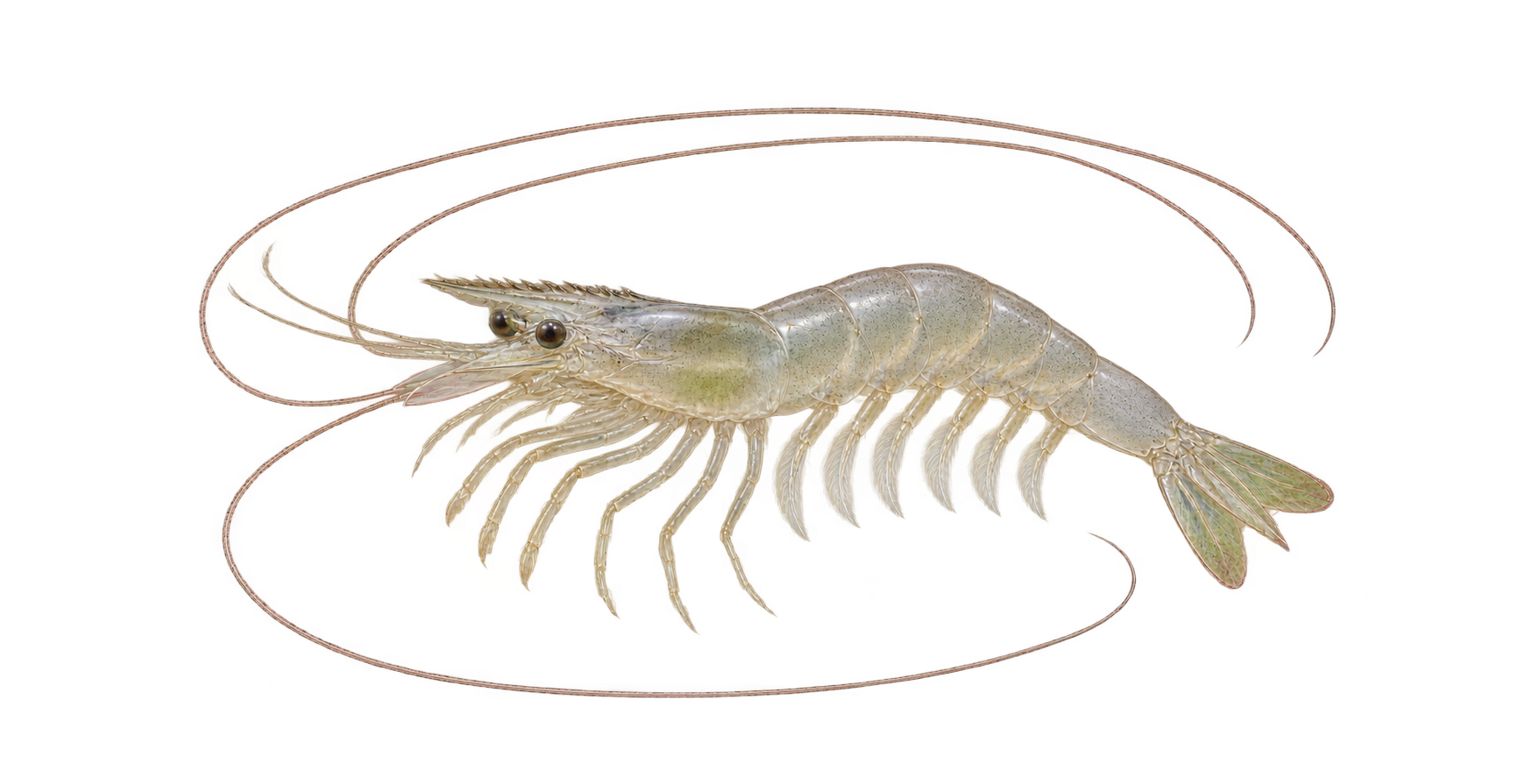
Smooth carapace and very long antennae; Atlantic range reaches St. Lucie Inlet, not the entire Keys corridor.
Verify current species, gear, area and jurisdiction rules. Identification is not harvest permission or food-safety clearance.
Explore the white shrimp guide →Brown Rock Shrimp
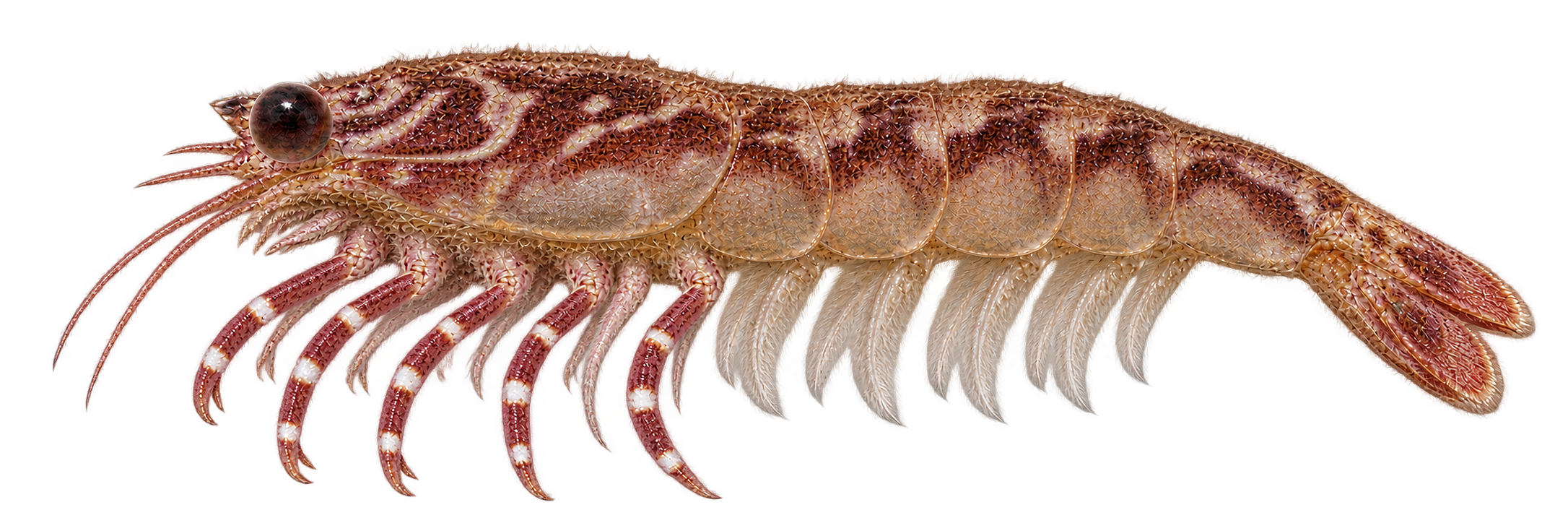
Rigid rough shell, short rostrum and large dark eyes distinguish this sandy-bottom offshore shrimp.
Verify current species, gear, area and jurisdiction rules. Identification is not harvest permission or food-safety clearance.
Explore the brown rock shrimp guide →Atlantic Ghost Crab
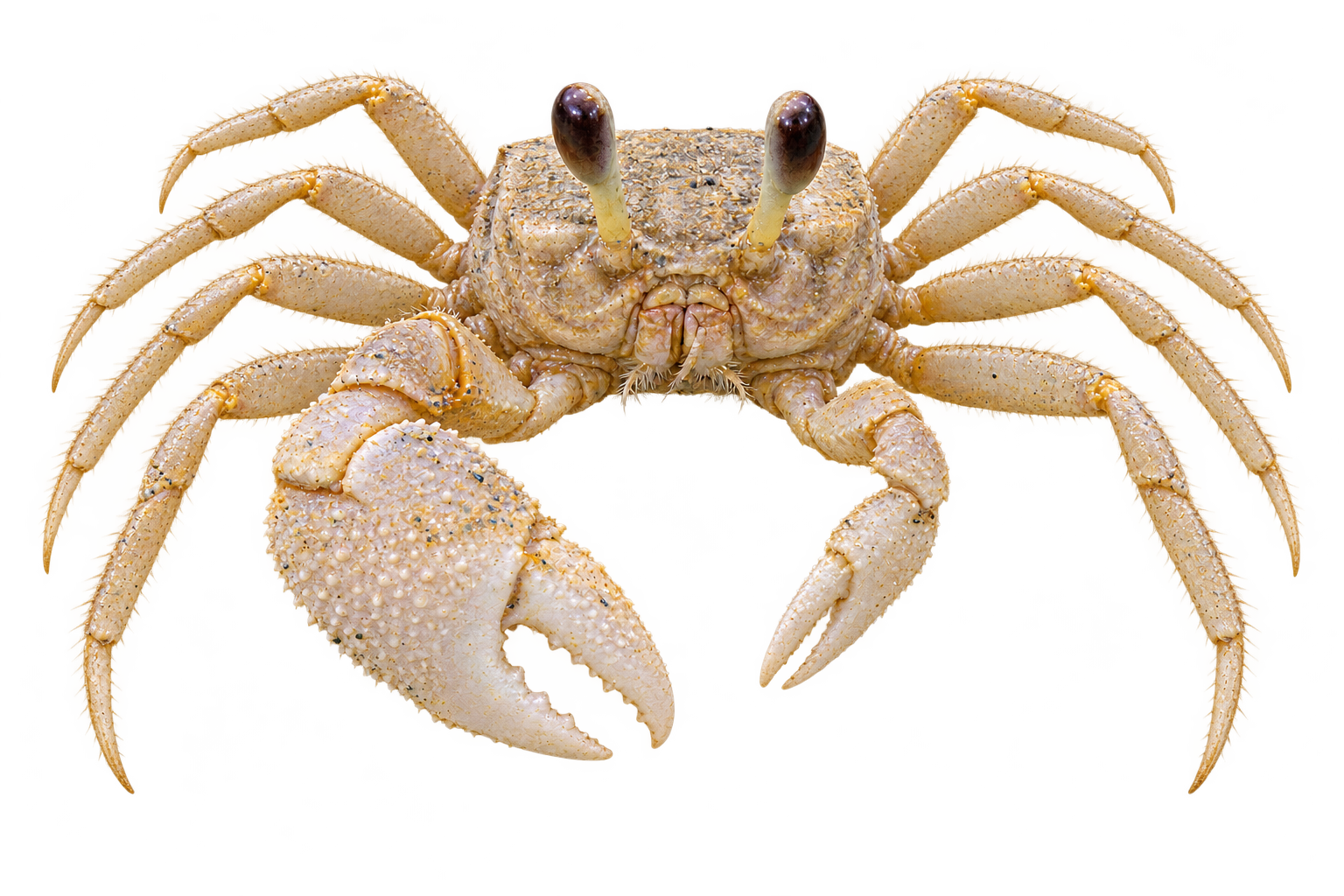
Pale square-bodied beach crab with tall eyes, unequal claws and walking legs rather than swimming paddles.
Verify current species, gear, area and jurisdiction rules. Identification is not harvest permission or food-safety clearance.
Explore the atlantic ghost crab guide →Spotted Cleaner Shrimp
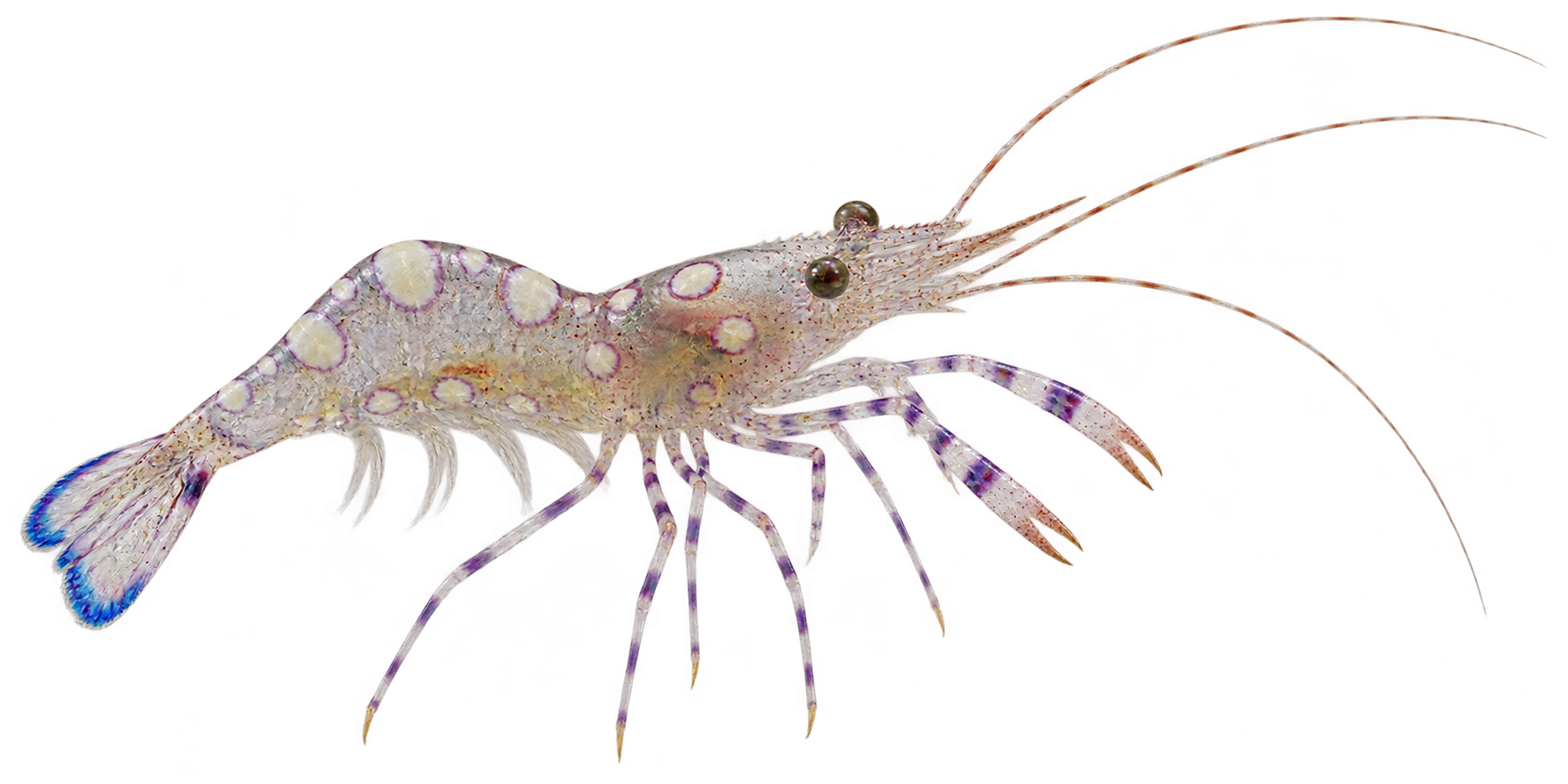
Transparent shrimp with pale patches, banded legs and blue tail accents, often near anemones.
Verify current species, gear, area and jurisdiction rules. Identification is not harvest permission or food-safety clearance.
Explore the spotted cleaner shrimp guide →Fish
Jasper the Goliath Grouper
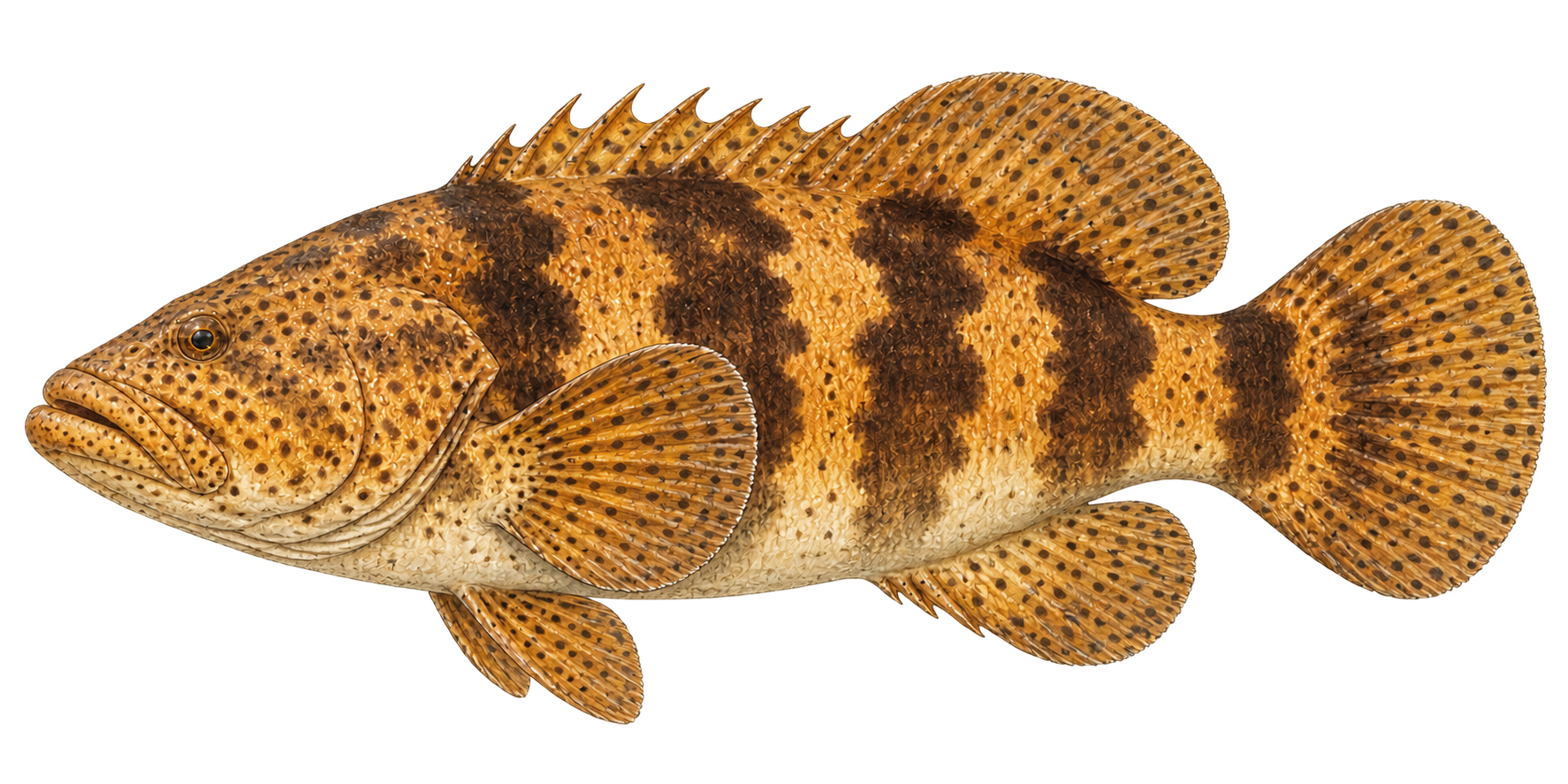
DO NOT HUNT or MOLEST
Breakers reef system, West Palm Beach. The local seafood inspector. Friendly-seeming, but still wild: DON’T FEED OR PET.
Individual profile, not an additional species. Reported locally as a juvenile; exact size and individual markings are unverified.
Meet Jasper →Jayden the Goliath Grouper
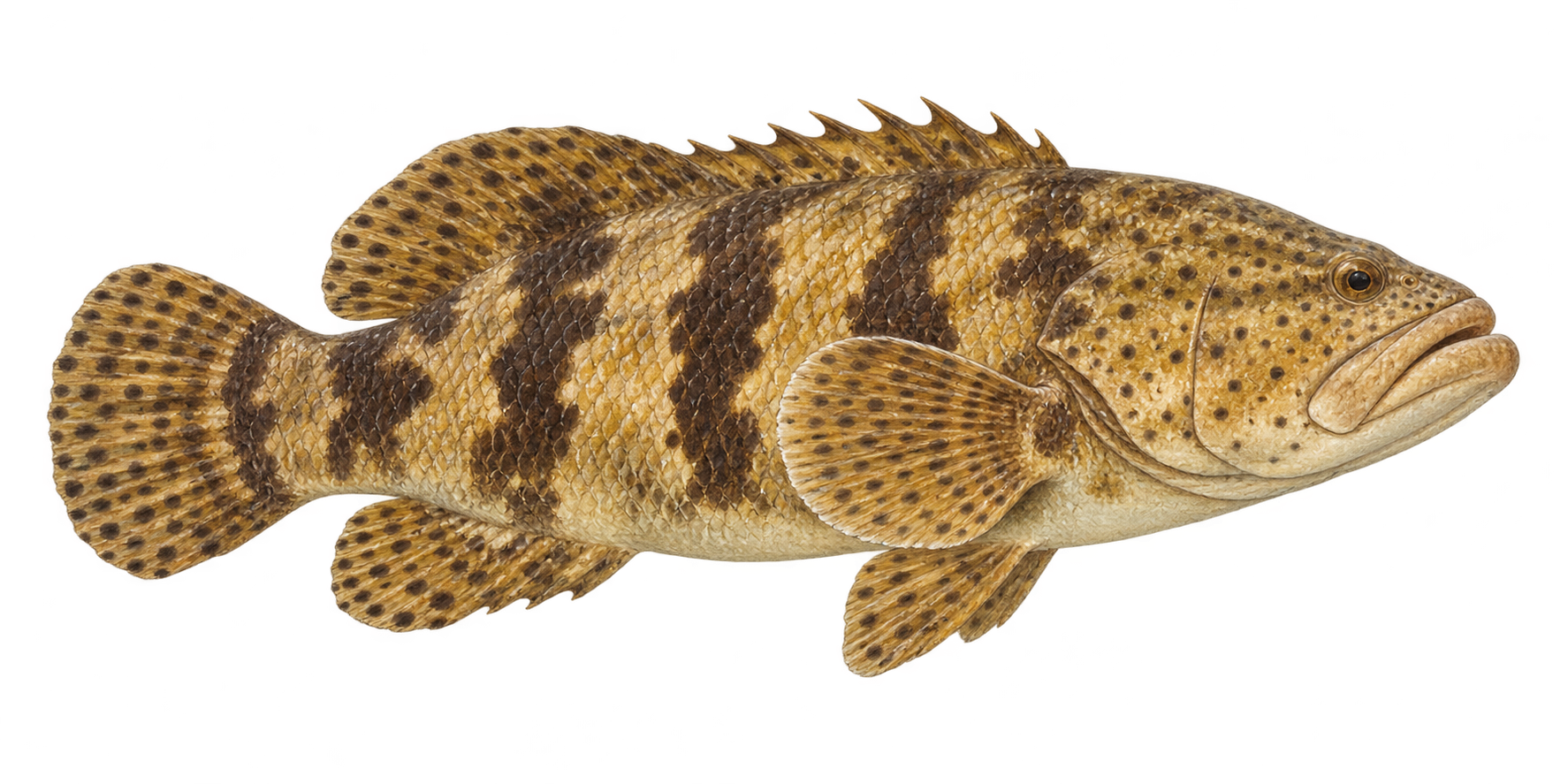
DO NOT HUNT or MOLEST
Breakers reef system, West Palm Beach. The local catch auditor. Friendly-seeming, but still wild: DON’T FEED OR PET.
Individual profile, not an additional species. Reported locally as a juvenile; exact size and individual markings are unverified.
Meet Jayden →African Pompano
Deep-bodied & oval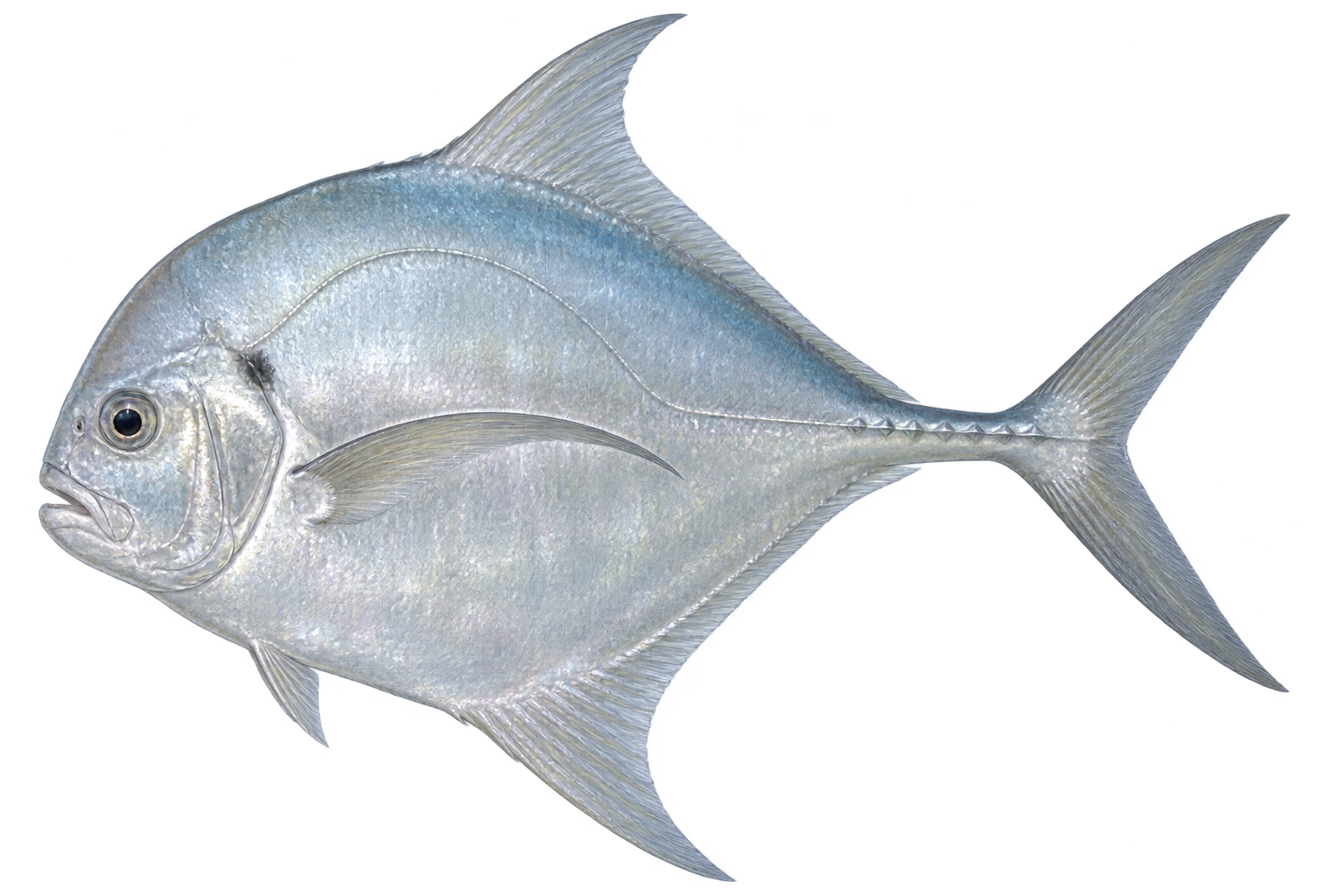
Size: The source reports a maximum of 150 cm (4.9 feet). The body becomes more elongated with growth, while juvenile fin filaments should not be treated as adult proportions. Browsing bands are approximate, not harvest limits.
A strongly flattened, silvery jack with a steep rounded forehead, tall front lobes of the dorsal and anal fins and a deeply forked tail. Juveniles carry exceptionally long fin filaments and chevron-like body bars.
Read the guide’s location, season and eating cautions before acting.
Almaco Jack
Streamlined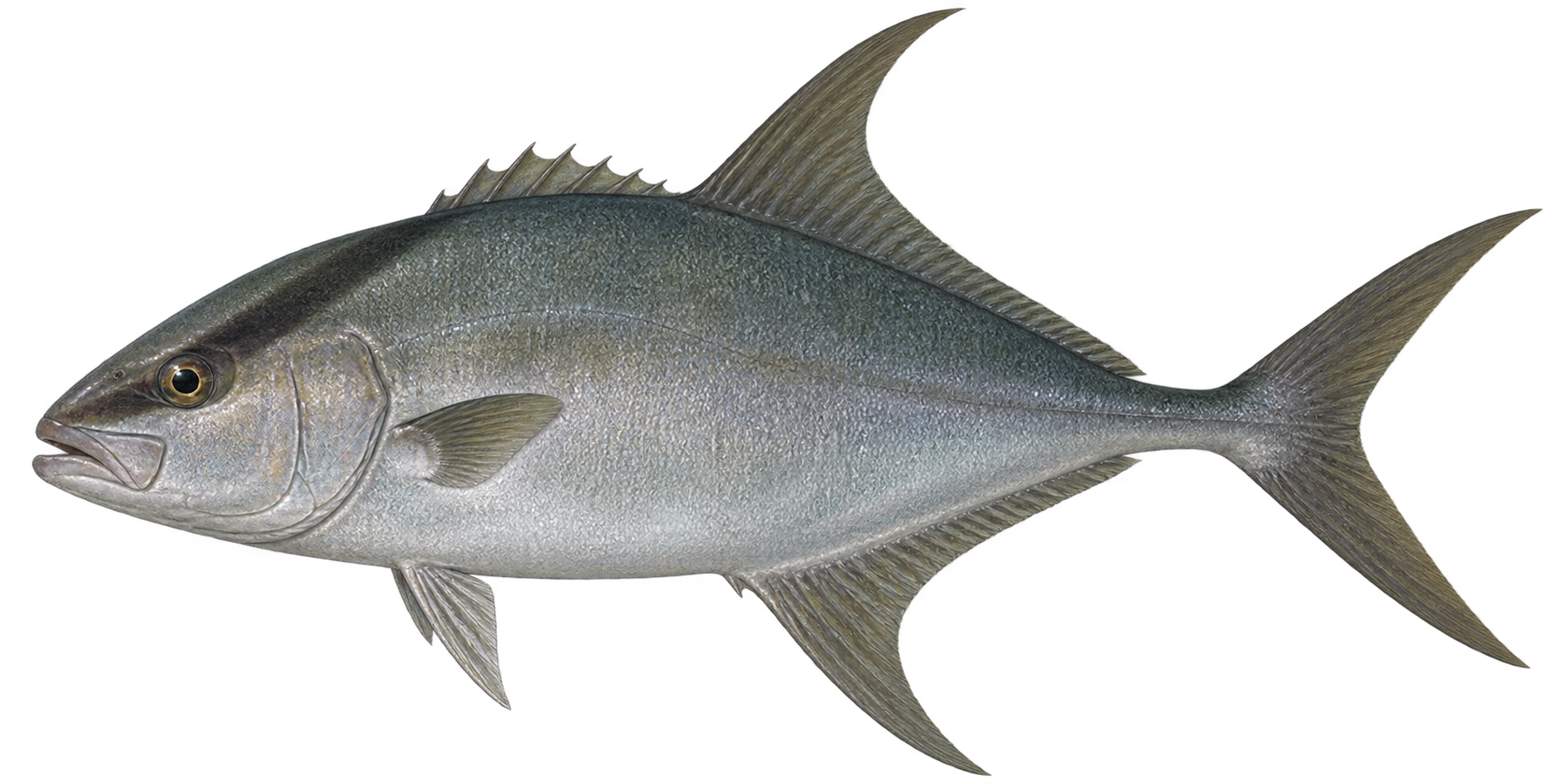
Size: Reported to at least 63 inches (160 cm) total length.
Deep high-backed body and tall sickle-shaped second-dorsal lobe.
Harvest may be allowed; limits and site restrictions apply
Explore the almaco jack guide →American Shad
Shape not assigned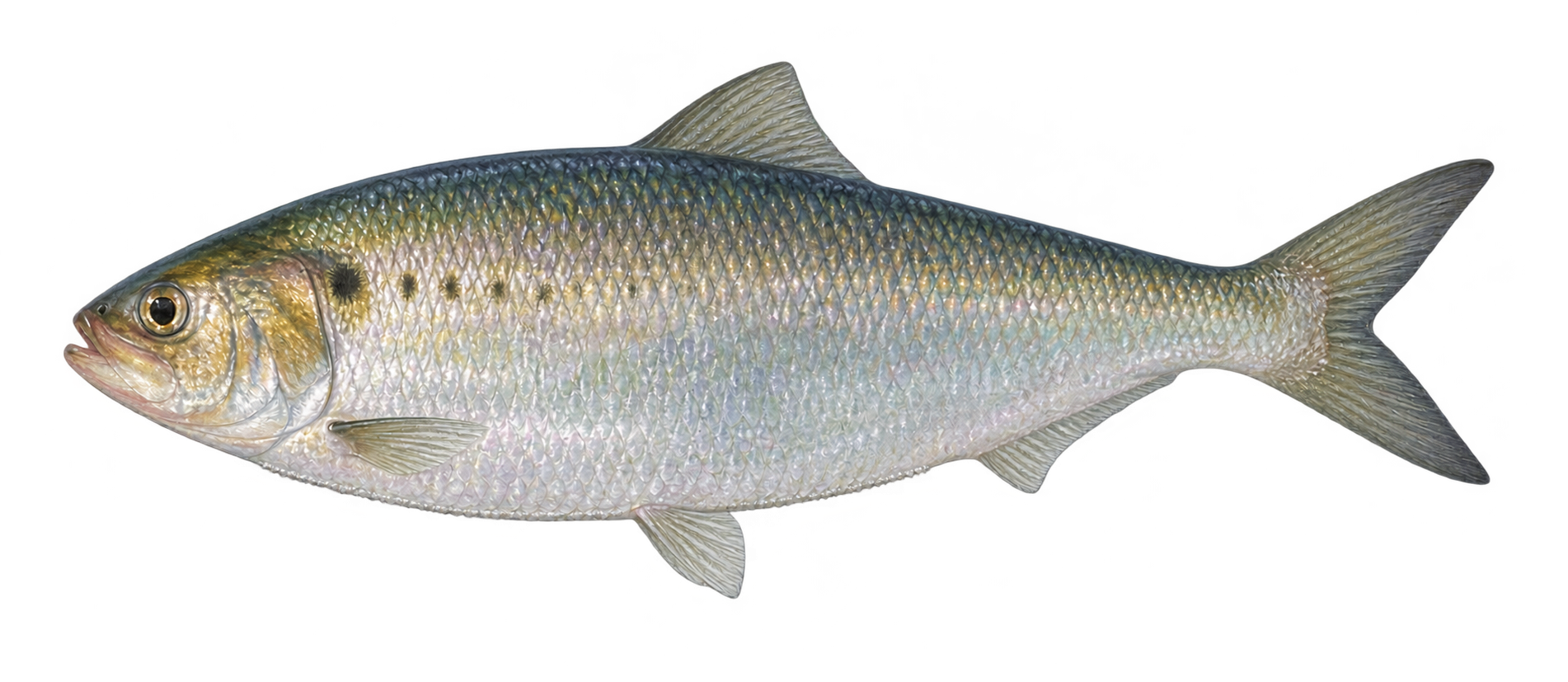
Size: The Smithsonian account reports 76 cm. It does not explicitly specify total, fork or standard length for this value; do not compare it directly with a length-labeled measurement.
A compressed silvery fish with a metallic blue-green back, a dark spot behind the gill cover and sometimes further spots along the side. The belly has a line of sharp-edged scales.
Read the guide’s location, season and eating cautions before acting.
Atlantic Bigeye
Deep-bodied & oval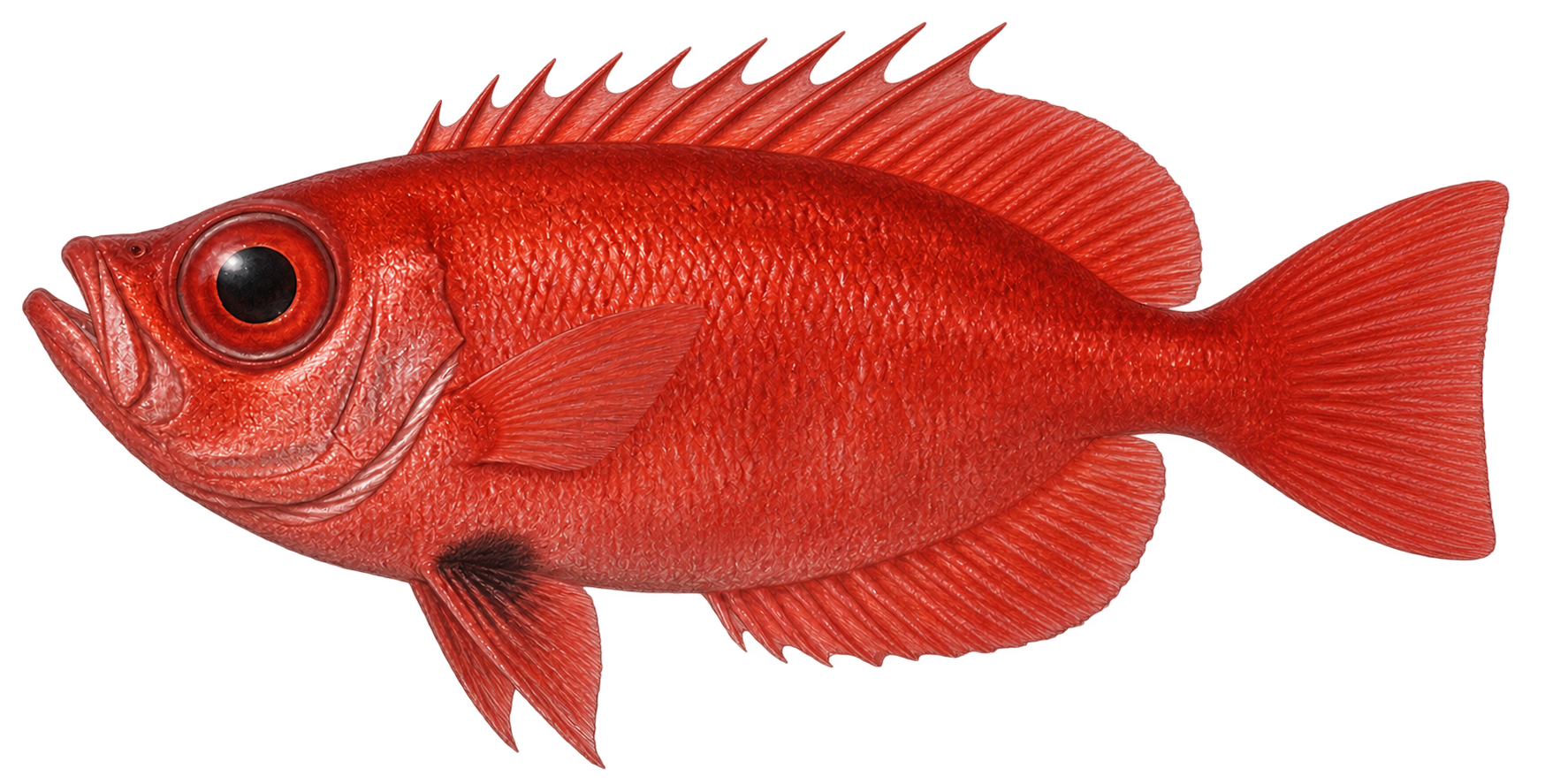
Size: Reported maximum 45 cm (about 18 in).
Red, very large-eyed fish with an upturned mouth and a slightly concave tail; lacks the oval dark spots on the glasseye’s rear fins.
Read the guide’s location, season and eating cautions before acting.
Atlantic Glasseye
Deep-bodied & oval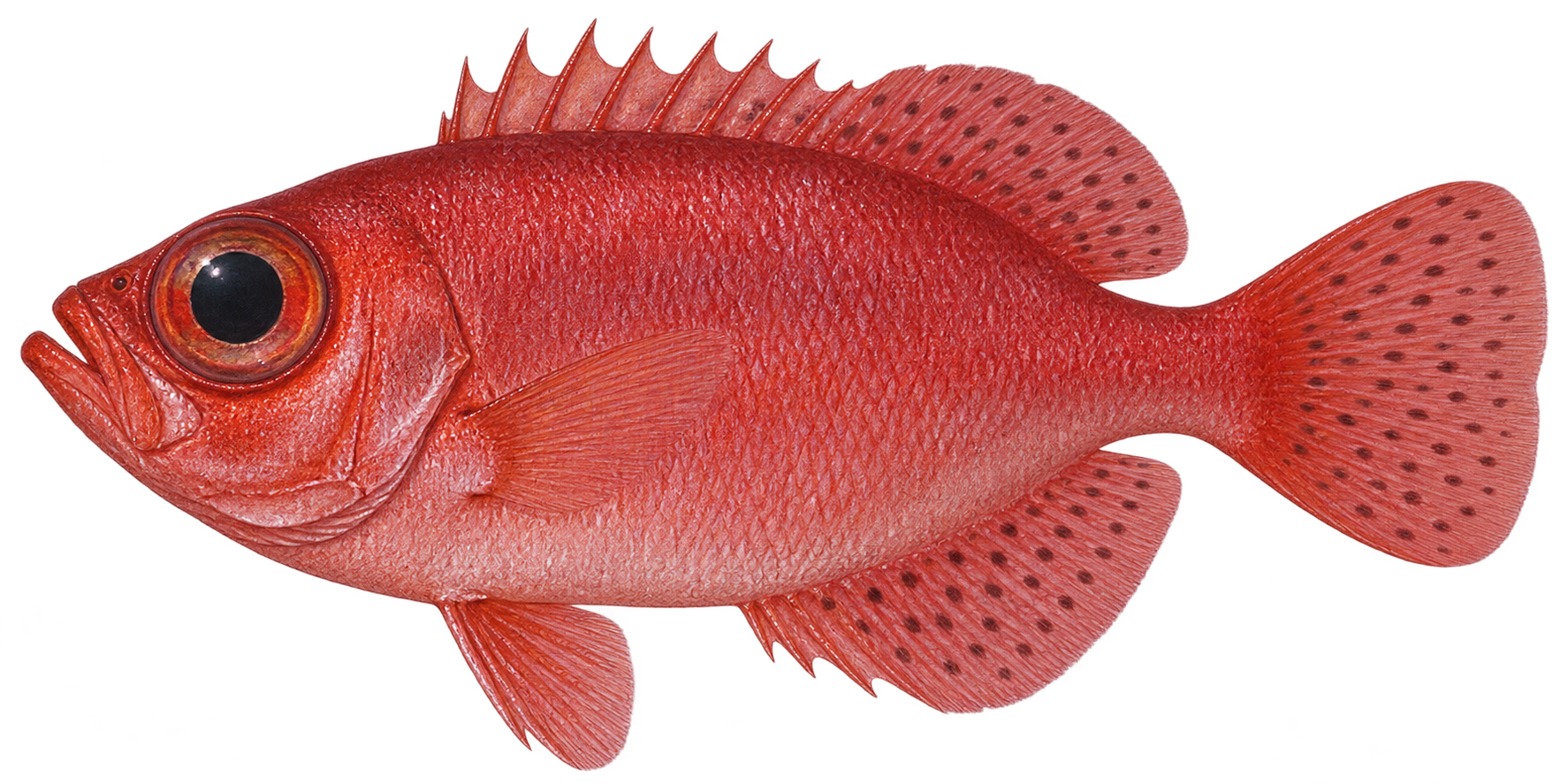
Size: Reported maximum 51 cm (about 20 in).
Pink/red large-eyed fish with dark oval specks on the soft dorsal, anal and tail fins; tail is slightly rounded.
Read the guide’s location, season and eating cautions before acting.
Atlantic Leatherjack
Elongated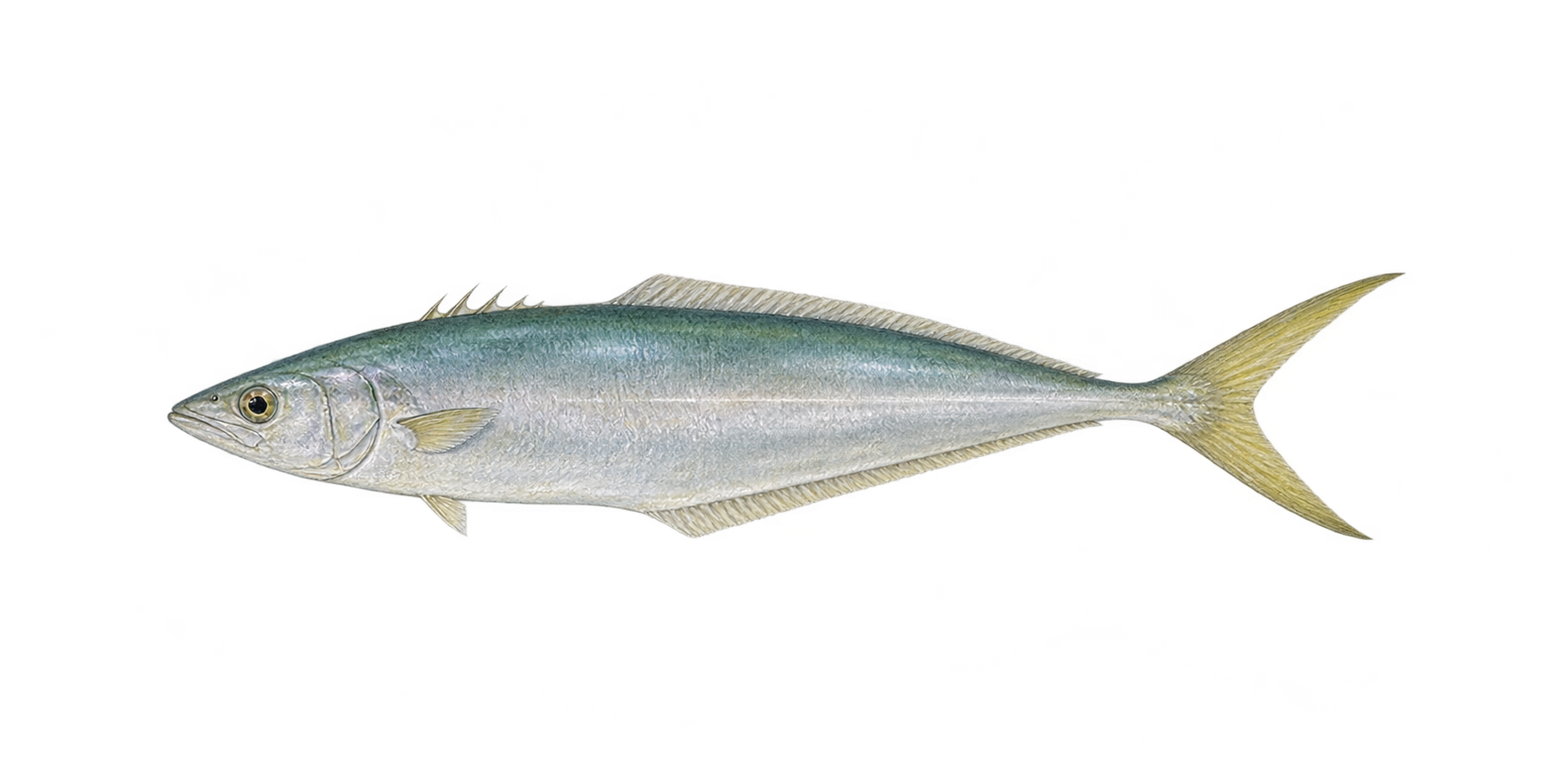
Size: Smithsonian reports a maximum of 35 cm, not a typical local encounter size.
Slender silvery fish with pointed snout, deeply forked tail and a bluish-green back; scales are needle-like.
Read the guide’s location, season and eating cautions before acting.
Atlantic Spadefish
Deep-bodied & oval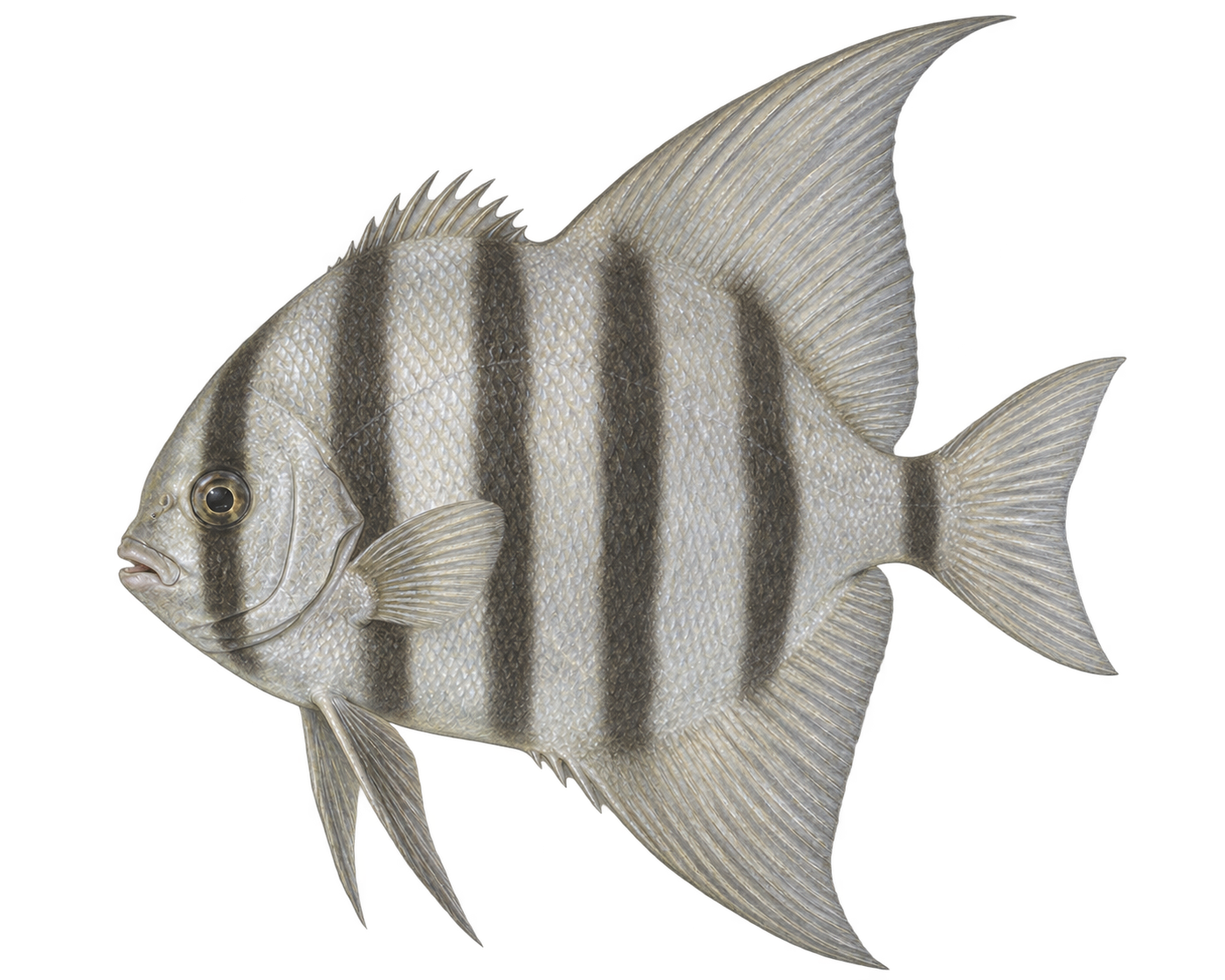
Size: Published maximum about 91 cm to 1 m.
Deep silver body with dark bars and long soft dorsal and anal fins.
Harvest allowed under recreational limits
Explore the atlantic spadefish guide →Balloonfish
Deep-bodied & oval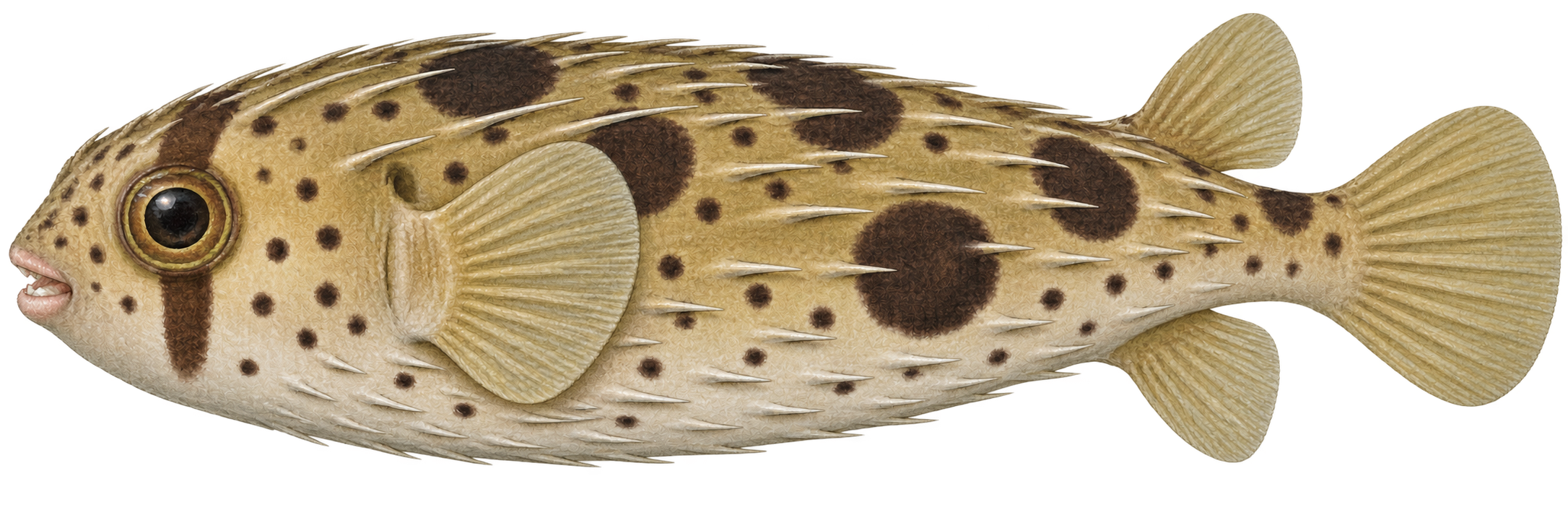
Size: Often about 8–14 inches in field references; maximum roughly 20 inches.
Large dark body blotches, bars through the eyes, long folded spines and unspotted fins.
Restricted marine life: live collection only; no spearing
Explore the balloonfish guide →Ballyhoo
Shape not assigned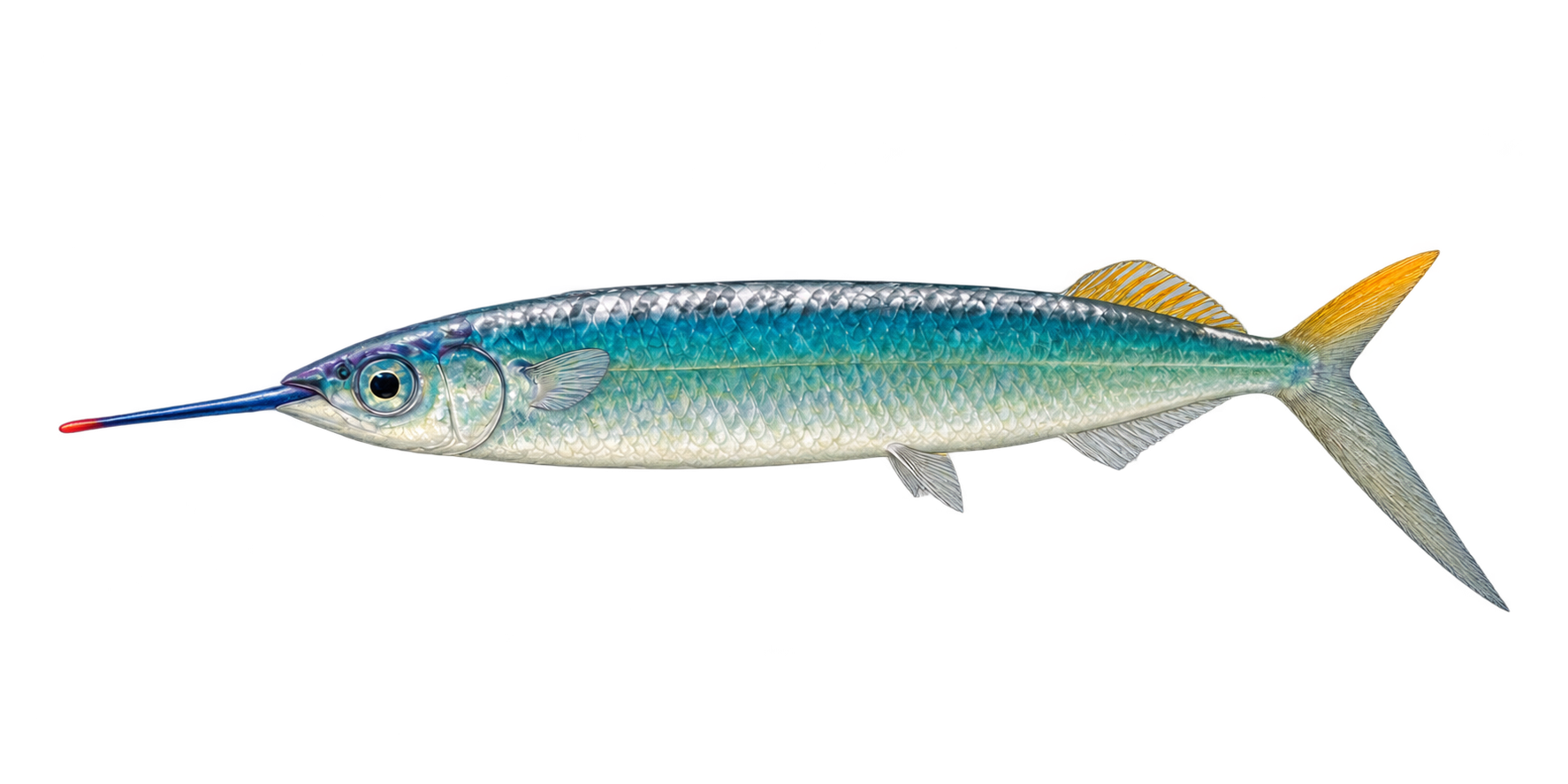
Size: Smithsonian reports a maximum of 41 cm. The entry does not explicitly identify total, fork or standard length for this maximum. Juvenile size and beak development are not documented in the accessed entry.
A slender surface fish with a greatly extended lower jaw and short upper jaw. The beak tip is red; the upper tail lobe is yellow-orange and the lower lobe larger.
Read the guide’s location, season and eating cautions before acting.
Banded Butterflyfish
Deep-bodied & oval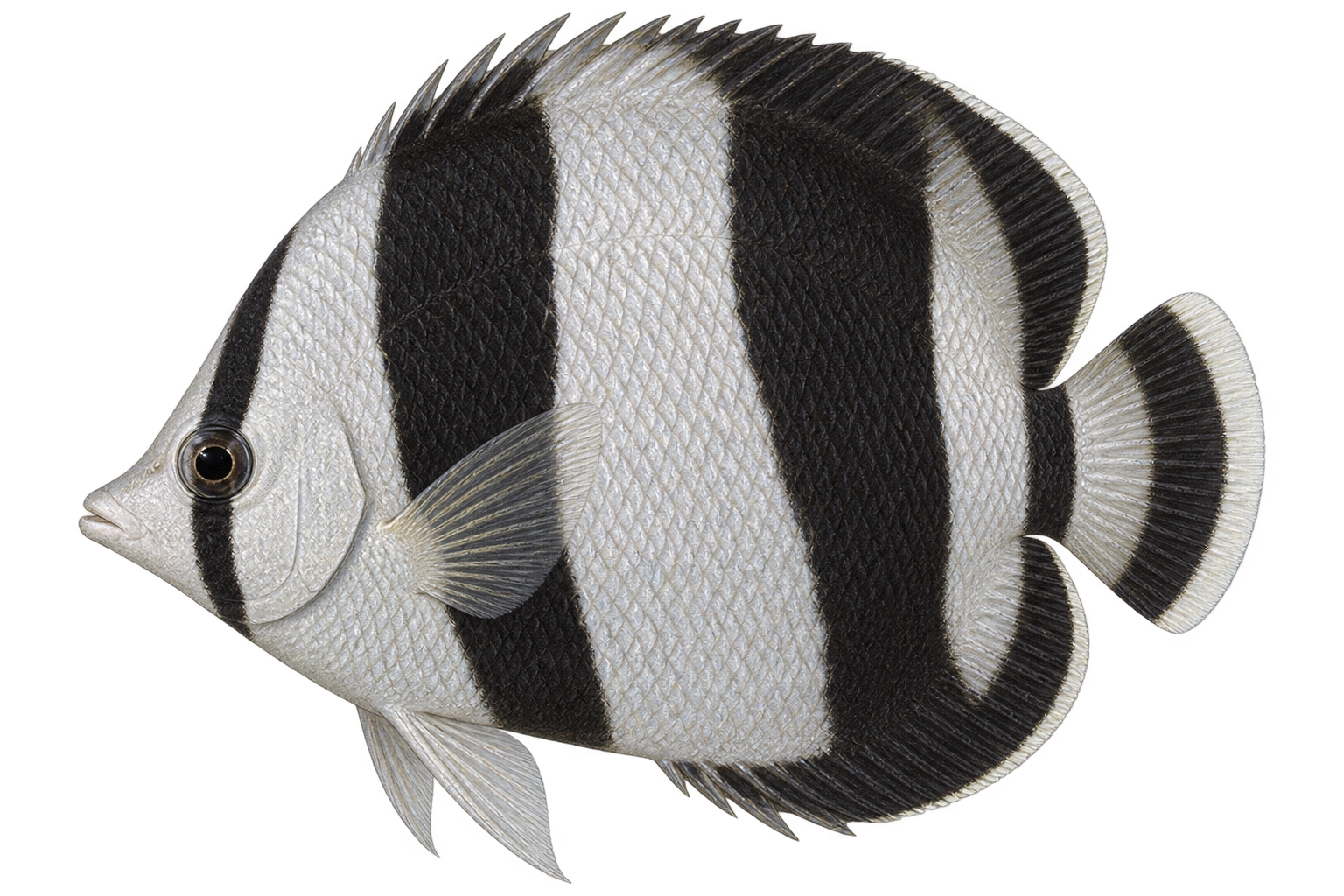
Size: Published maxima differ: 15–20 cm.
Banded Butterflyfish look like small silver disks crossed by bold black bars.
Restricted marine life: live collection only; spearing prohibited
Explore the banded butterflyfish guide →Banded Jawfish
Elongated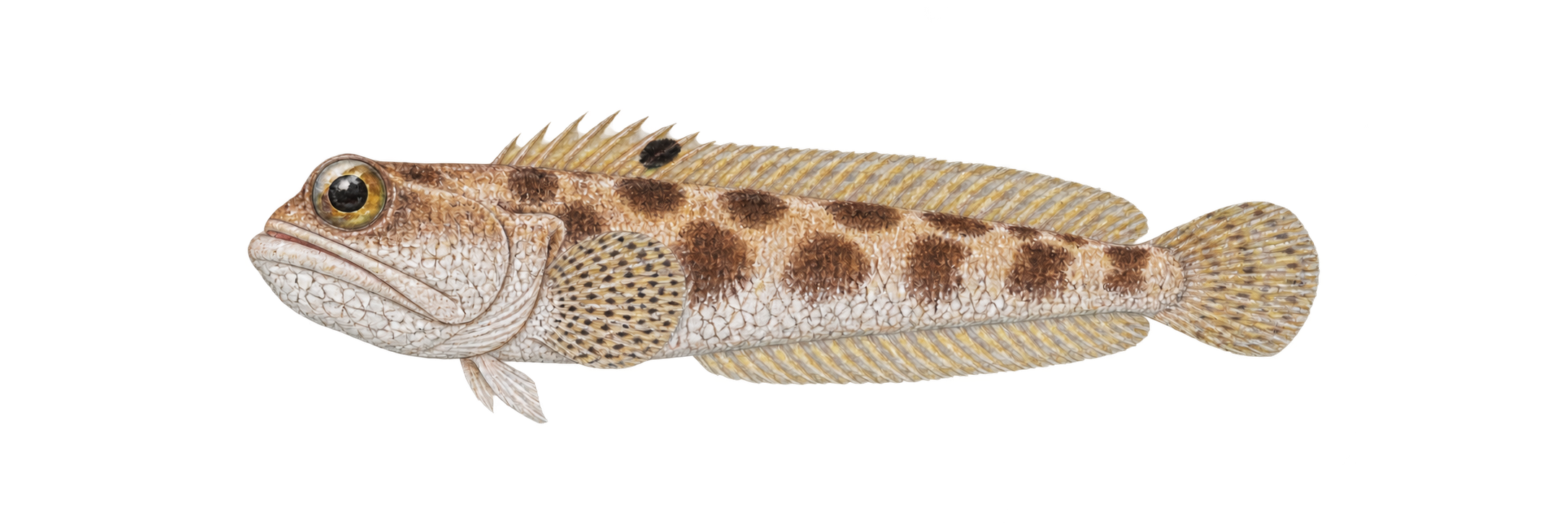
Size: Smithsonian reports a maximum length of 20 cm. This is a regional upper record, not a typical local encounter size.
Large-headed tan jawfish with rows of dark body blotches, a prominent black dorsal spot and finely speckled pectoral fins.
Read the guide’s location, season and eating cautions before acting.
Bandtail Puffer
Deep-bodied & oval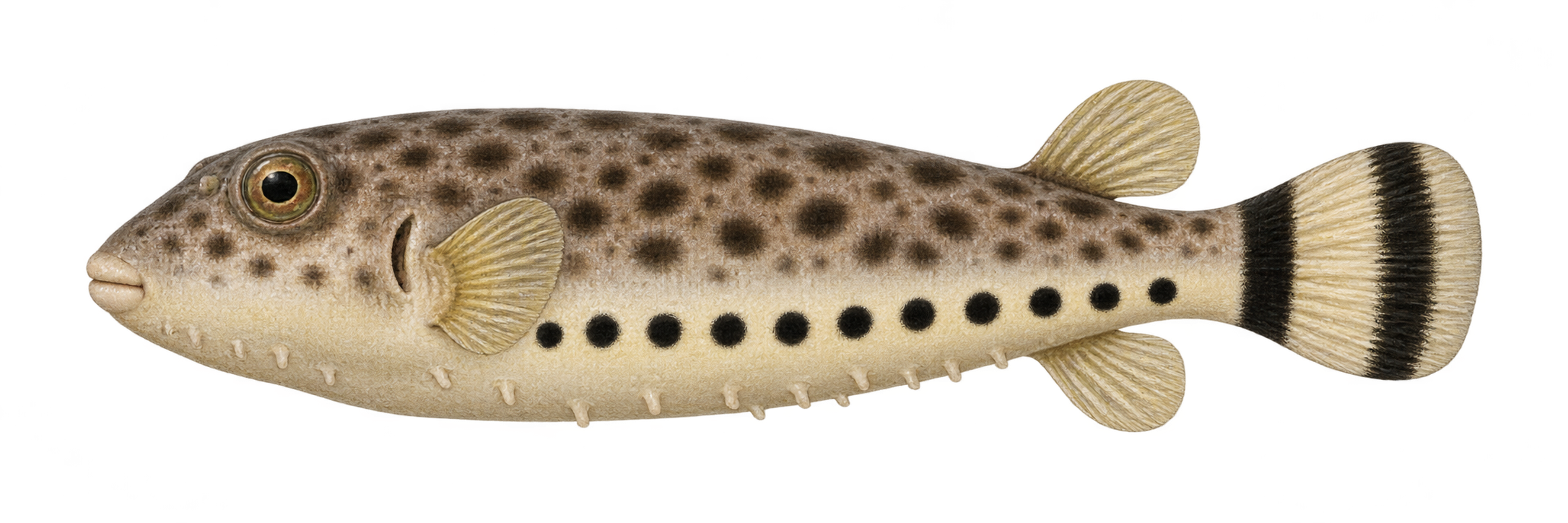
Size: Regional Smithsonian size: 16 cm; broader compilations differ.
Round black spots in a lower-side row, small rear-body skin flaps and two dark bands across the tail.
Read the guide’s location, season and eating cautions before acting.
Bandtail Searobin
Elongated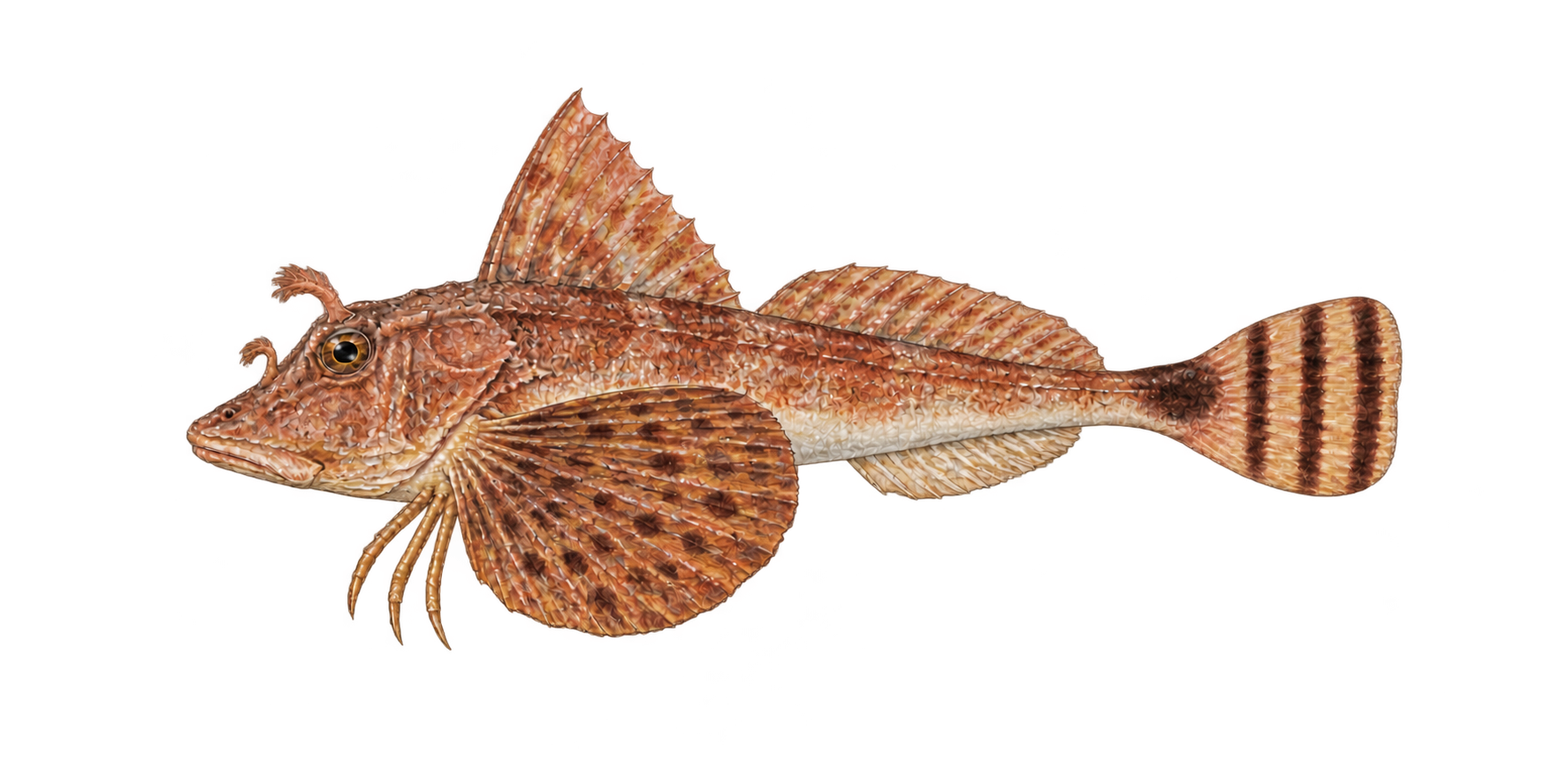
Size: Smithsonian reports a maximum of 20 cm, not a typical local encounter size.
Coppery searobin with broad dark bars, cirri above eyes and nostrils, and three dark tail bands.
Read the guide’s location, season and eating cautions before acting.
Banner Goby
Elongated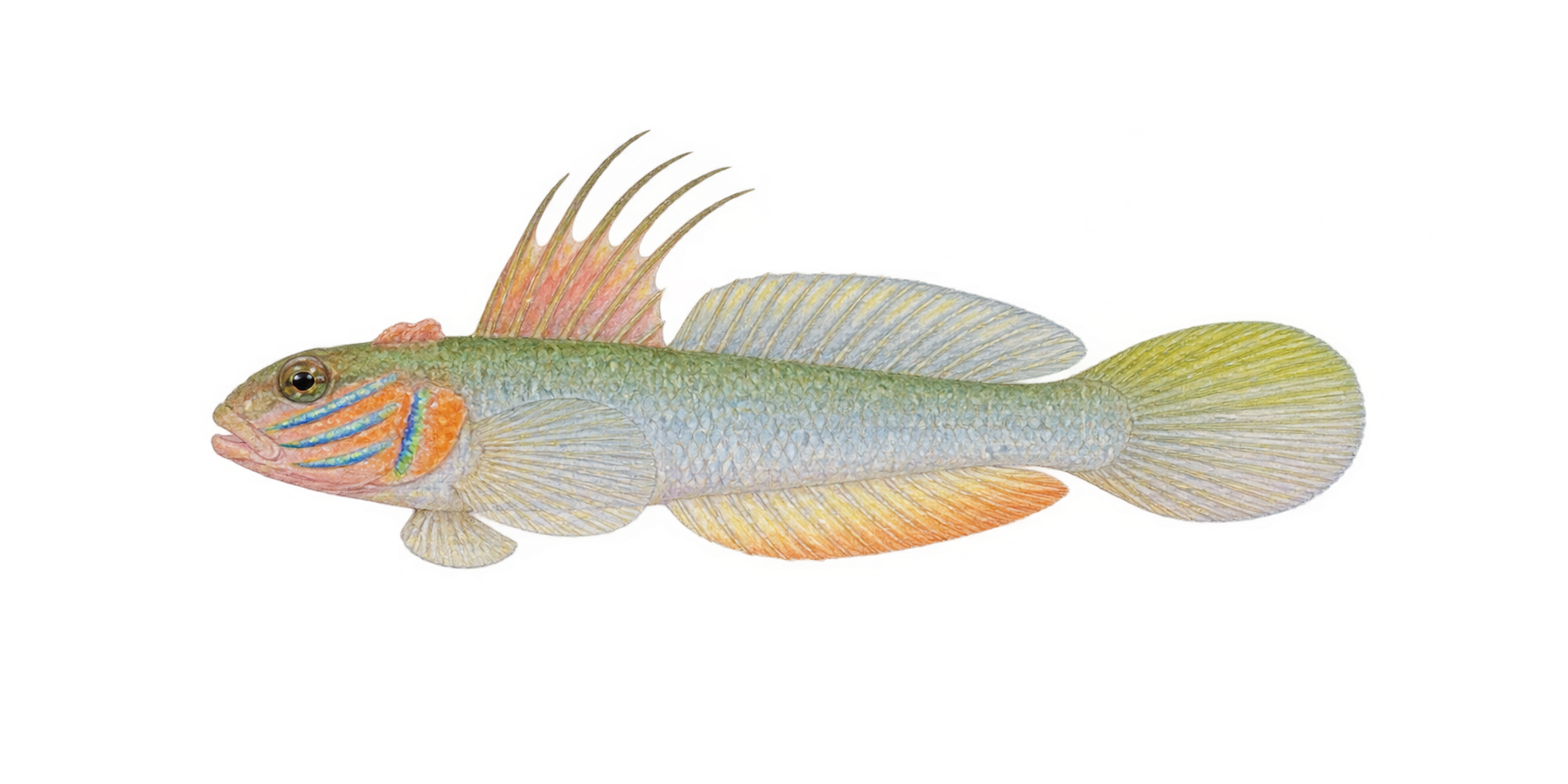
Size: Smithsonian reports a maximum length of 5 cm. This is a regional upper record, not a typical local encounter size.
Small blue-grey goby with long dorsal spines and iridescent blue cheek stripes. Females can show a dark flank stripe.
Read the guide’s location, season and eating cautions before acting.
Bar Jack
Streamlined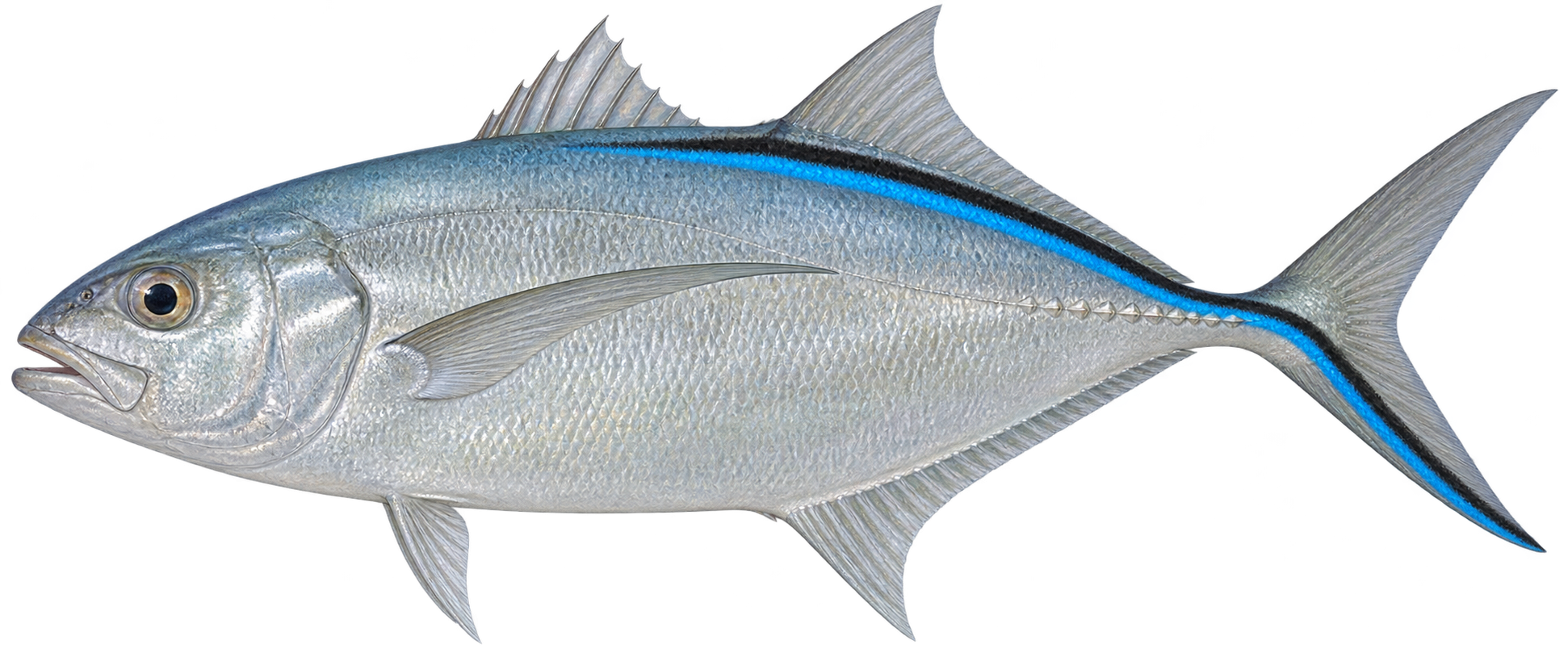
Size: Up to about 27 inches (69 cm) total length.
Blue-edged dark back stripe curves into the lower tail lobe.
Harvest may be allowed; limits and site restrictions apply
Explore the bar jack guide →Barbfish
Stocky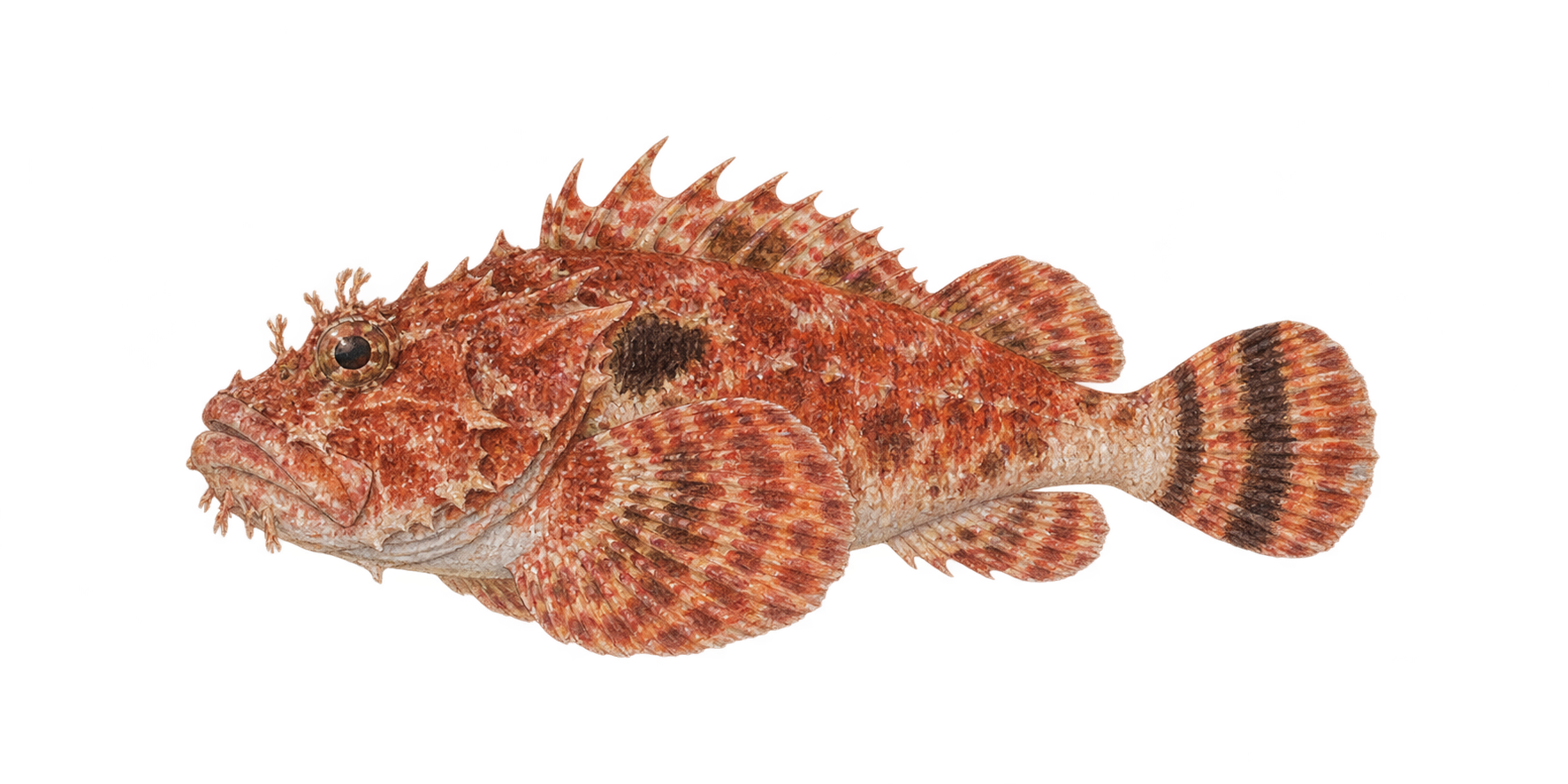
Size: Smithsonian reports a maximum of 35 cm, not a typical local encounter size.
Spiny-headed fish with branched eye cirri, a deep pit behind the eyes and small dark spots on the lower head.
Read the guide’s location, season and eating cautions before acting.
Barred Blenny
Streamlined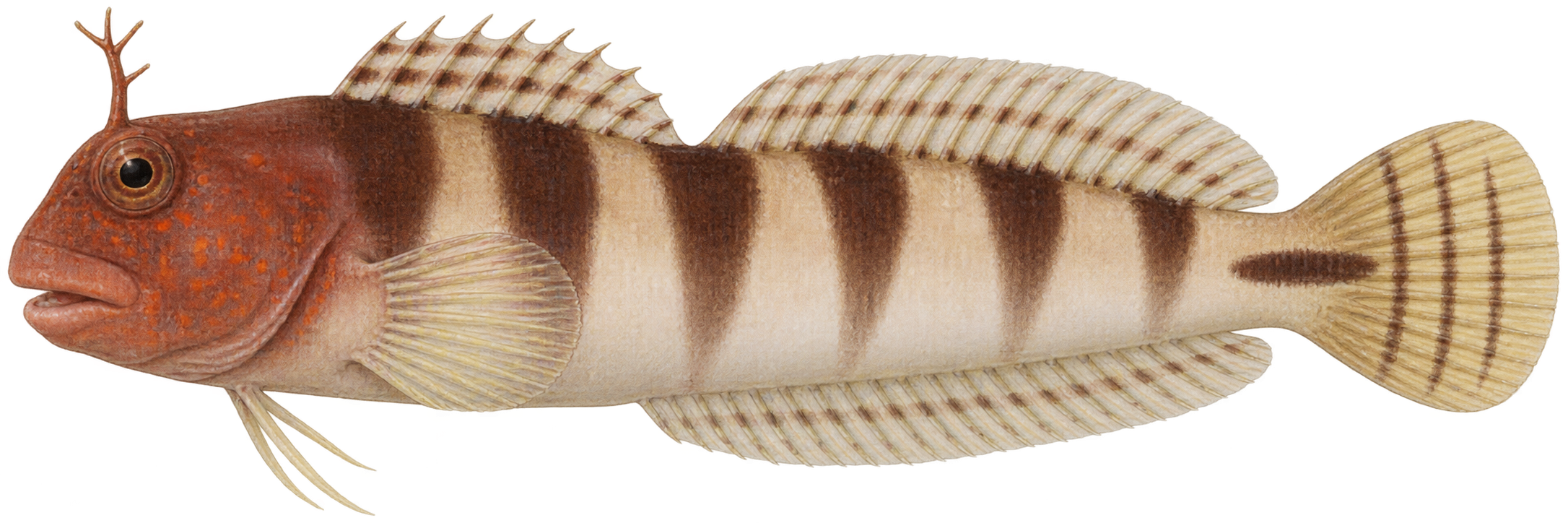
Size: Maximum about 12 cm (4.7 inches).
A reddish-brown head, often carrying orange spots, meets a pale body crossed by about six dark bars.
Restricted marine life: live collection only; no spearing
Explore the barred blenny guide →Barred Cardinalfish
Oval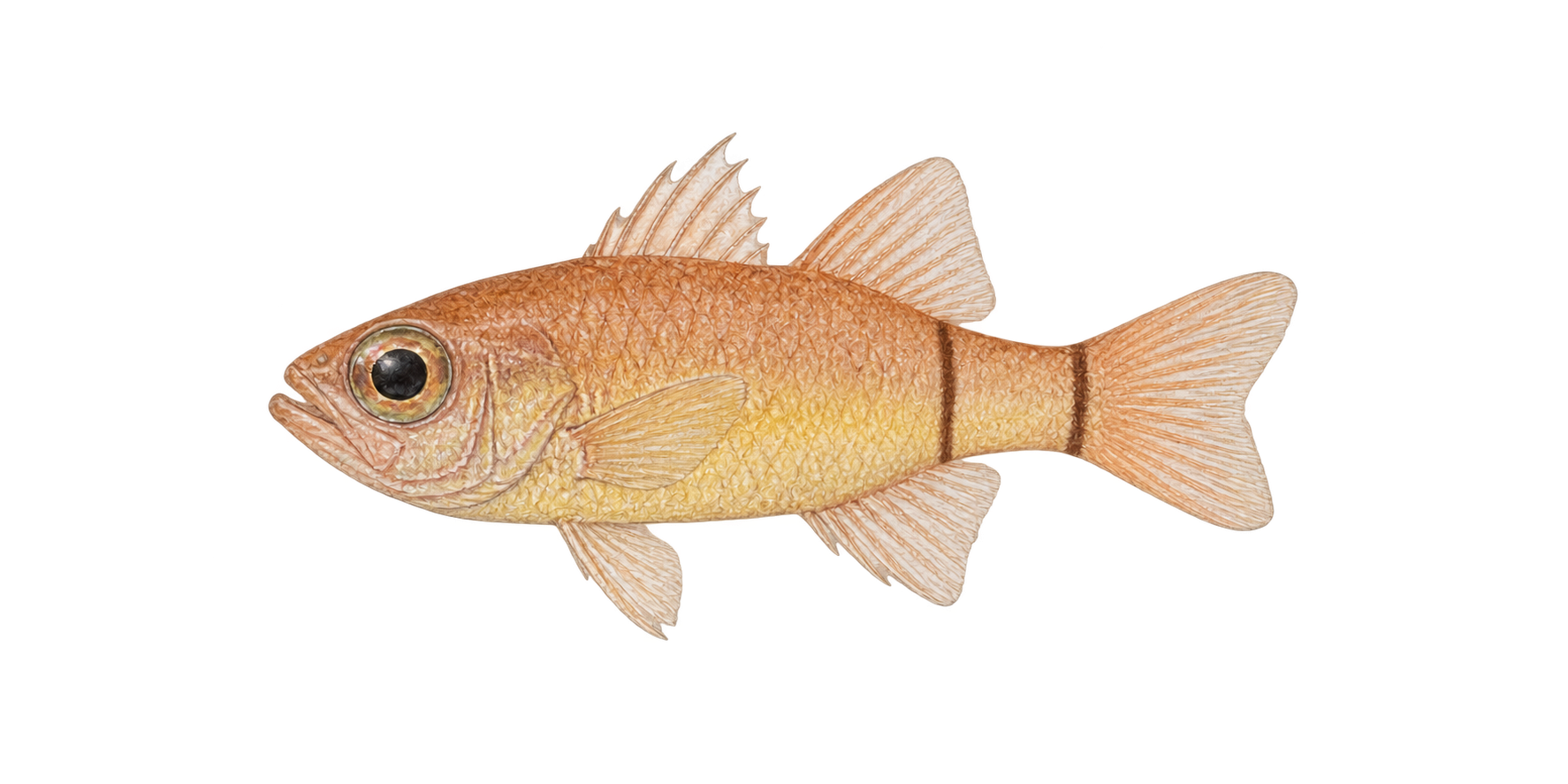
Size: Smithsonian reports a maximum length of 15 cm. This is a regional upper record, not a typical local encounter size.
Pale bronze with a yellowish belly and two narrow dark bars: one behind the second dorsal-fin base, another across the tail base.
Read the guide’s location, season and eating cautions before acting.
Barred Hamlet
Deep-bodied & oval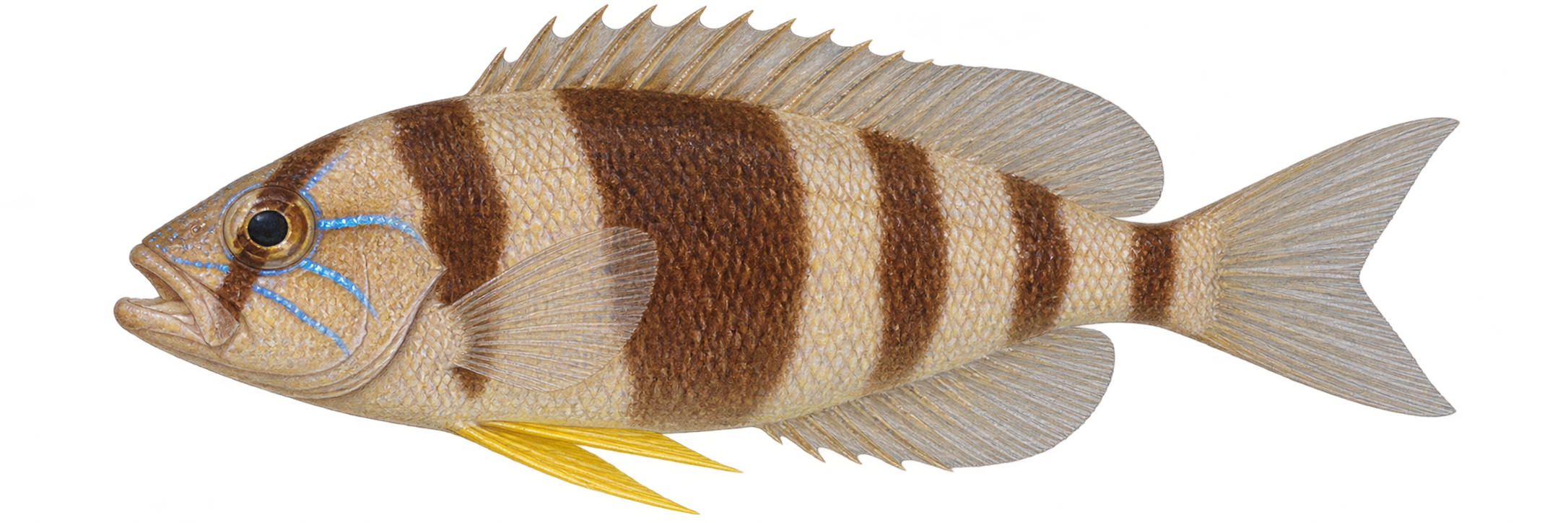
Size: Maximum about 16.7 cm (6.6 inches) total length.
Deep-bodied pale hamlet with unequal brown bars, fine blue face lines and long pelvic fins.
Restricted live collection only; no spearing; protected collection areas apply
Explore the barred hamlet guide →Beaugregory
Deep-bodied & oval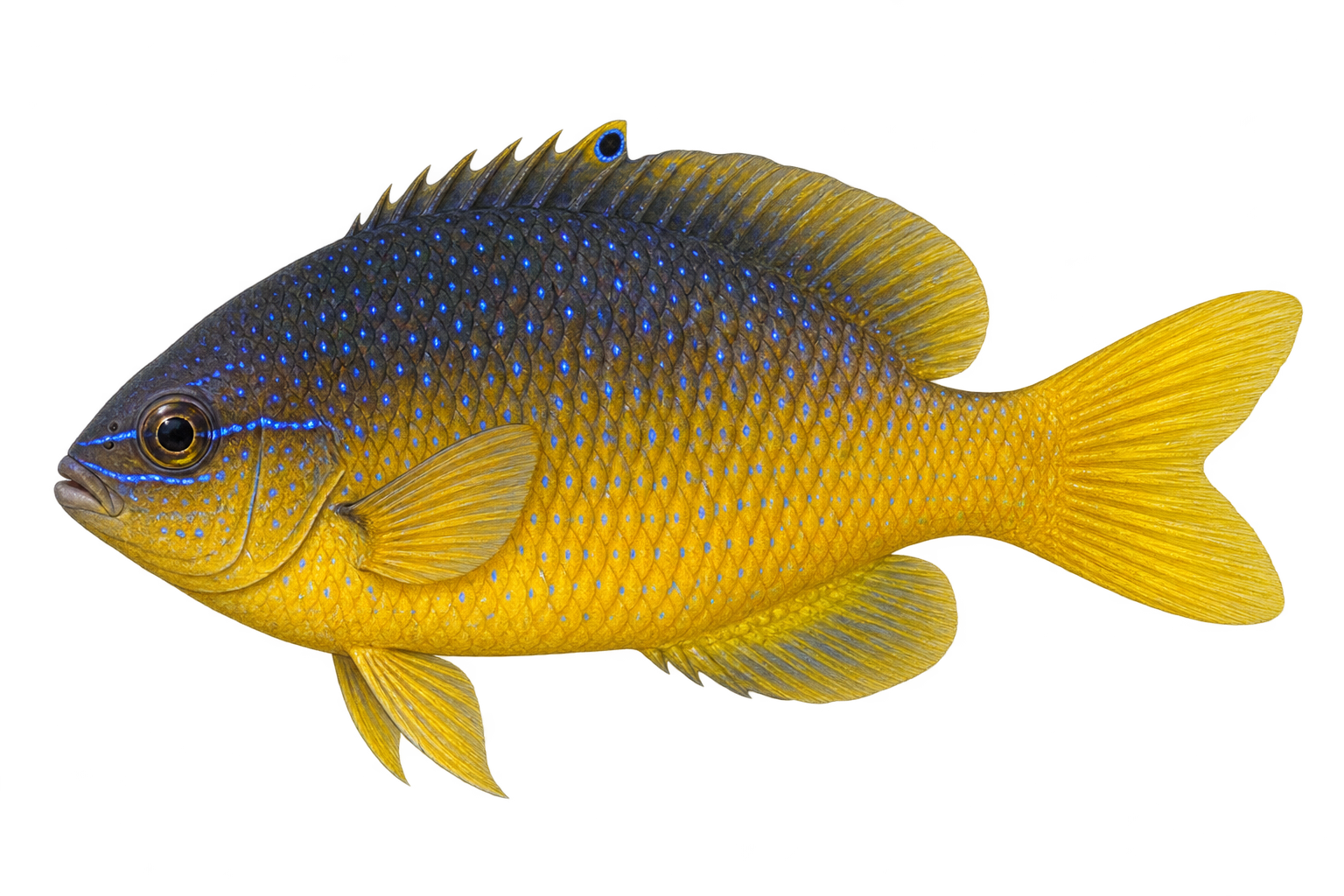
Size: Maximum about 12 cm.
Blue-spotted compact damselfish; small dorsal eyespot stays on the fin.
Restricted marine life: live collection only; no spearing
Explore the beaugregory guide →Belted Cardinalfish
Shape not assigned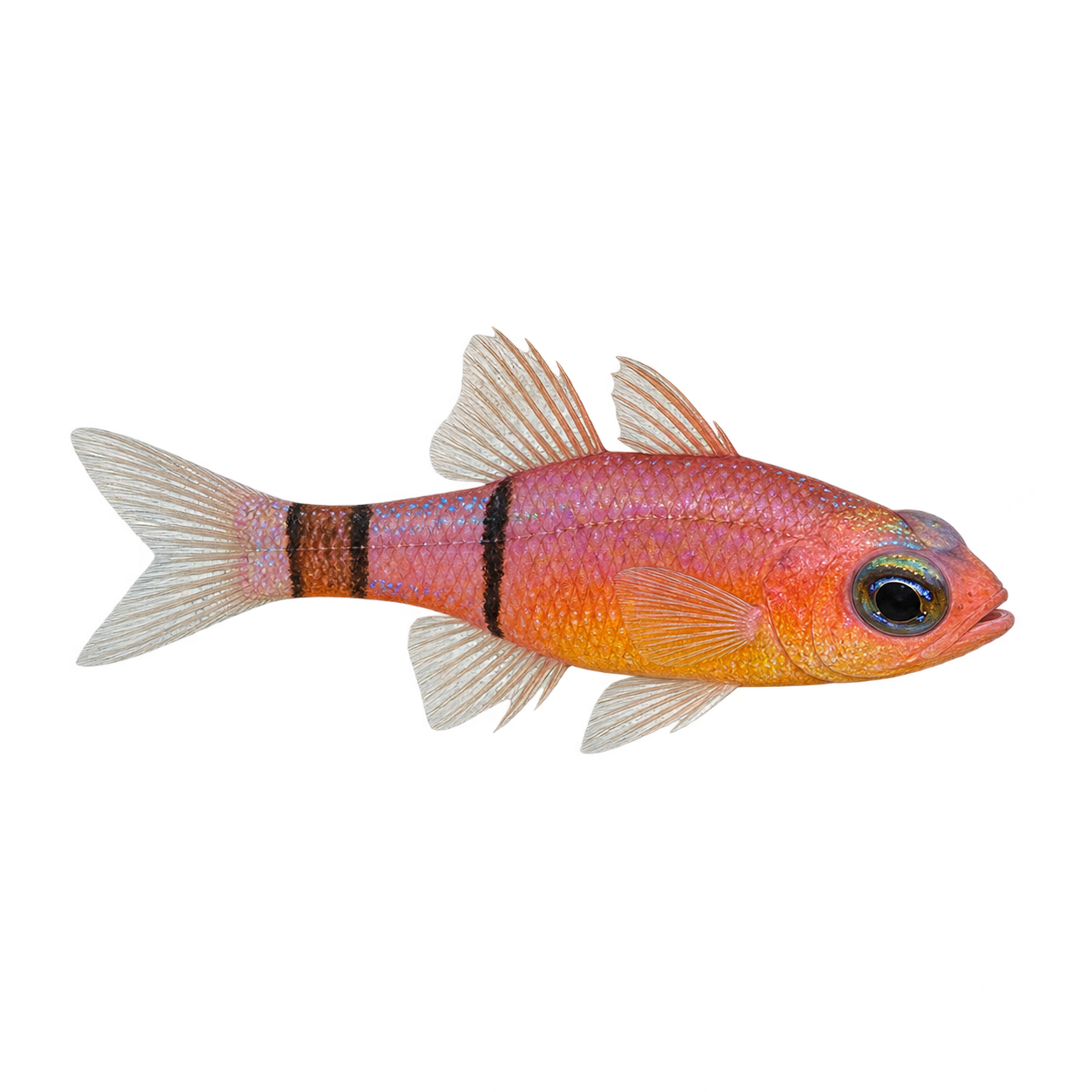
Size: Smithsonian reports a maximum of 8.5 cm. The entry does not explicitly identify total, fork or standard length for this maximum. No juvenile measurement series is supplied in the accessed account.
A pink-orange cardinalfish with one narrow dark body bar near the rear fins and two fine bars at the tail base. Its eyes are large and its tail forked.
Read the guide’s location, season and eating cautions before acting.
Belted Sandfish
Streamlined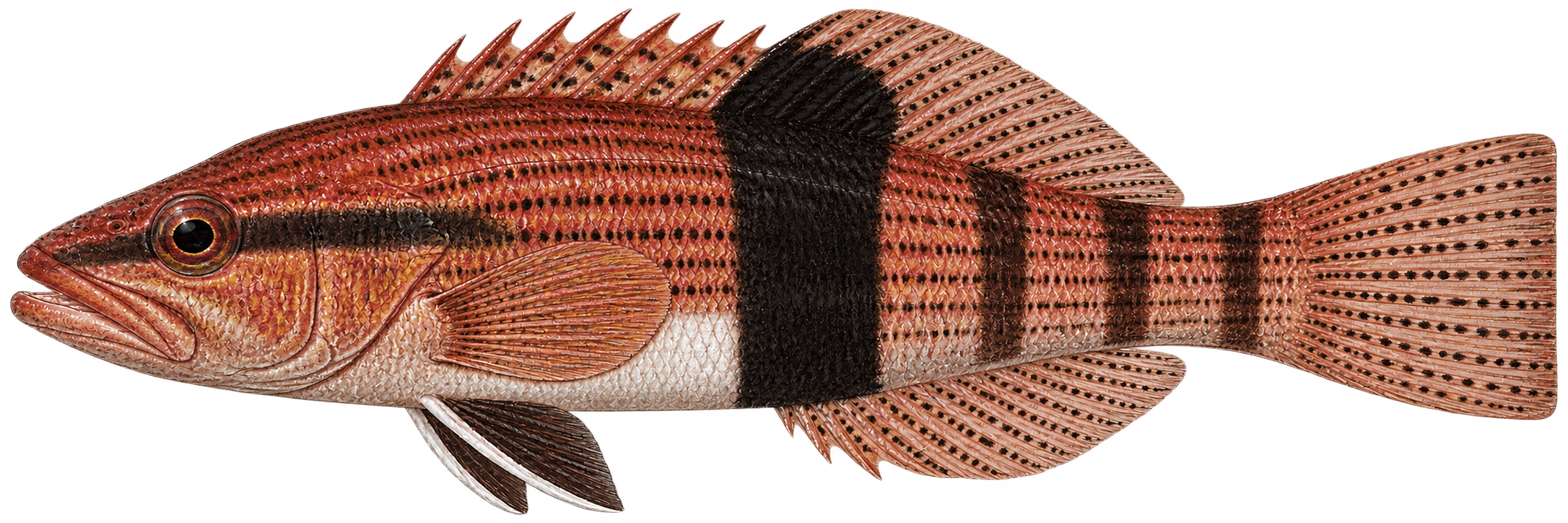
Size: Maximum about 10 cm (3.9 inches) total length.
Brown little bass with a bright white belly bar immediately before a strong dark midbody belt.
Restricted live collection only; no spearing; protected collection areas apply
Explore the belted sandfish guide →Bicolor Damselfish
Deep-bodied & oval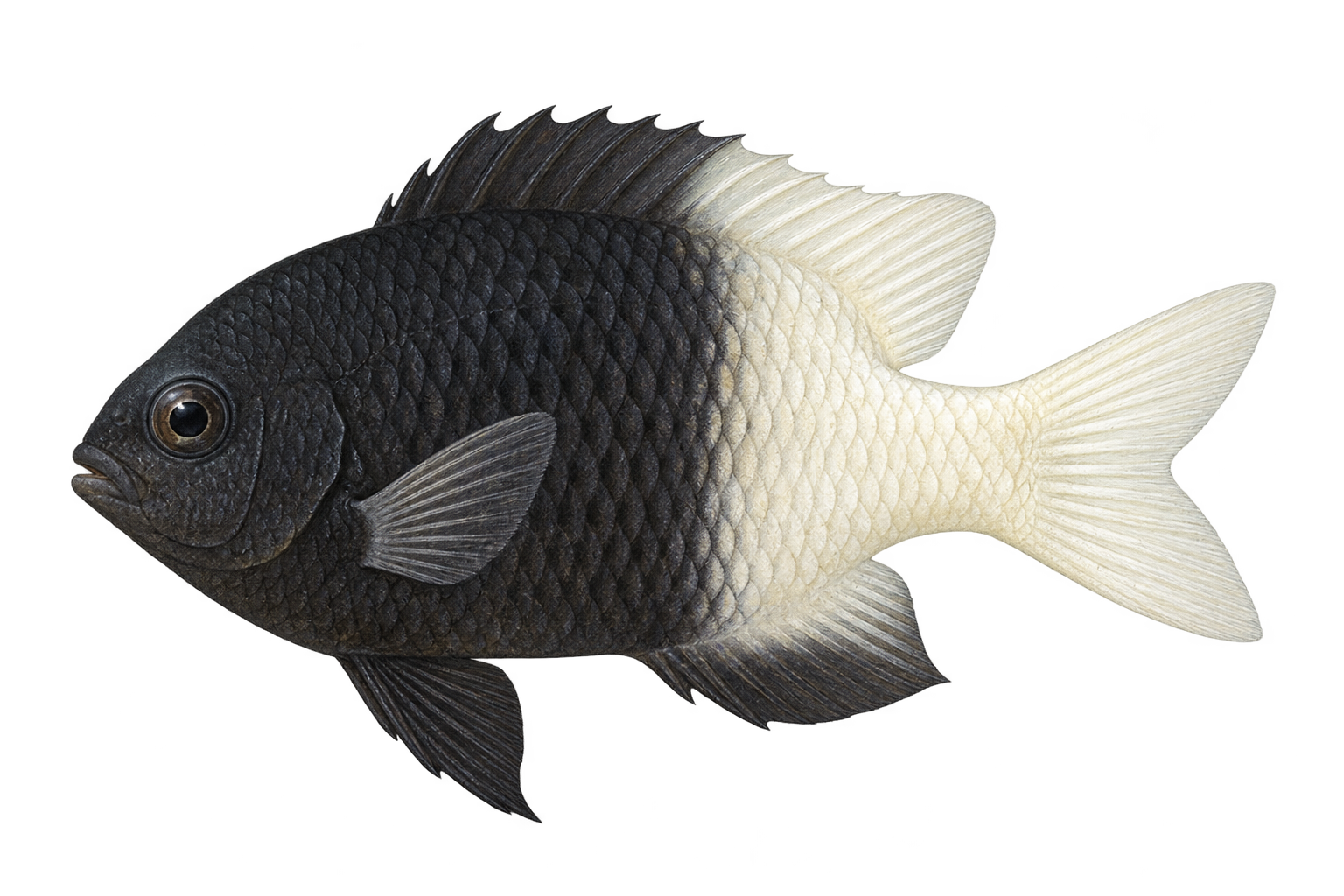
Size: Maximum about 10 cm.
Compact dark-front, pale-rear damselfish; color patterns vary.
Restricted marine life: live collection only; no spearing
Explore the bicolor damselfish guide →Bigeye Scad
Shape not assigned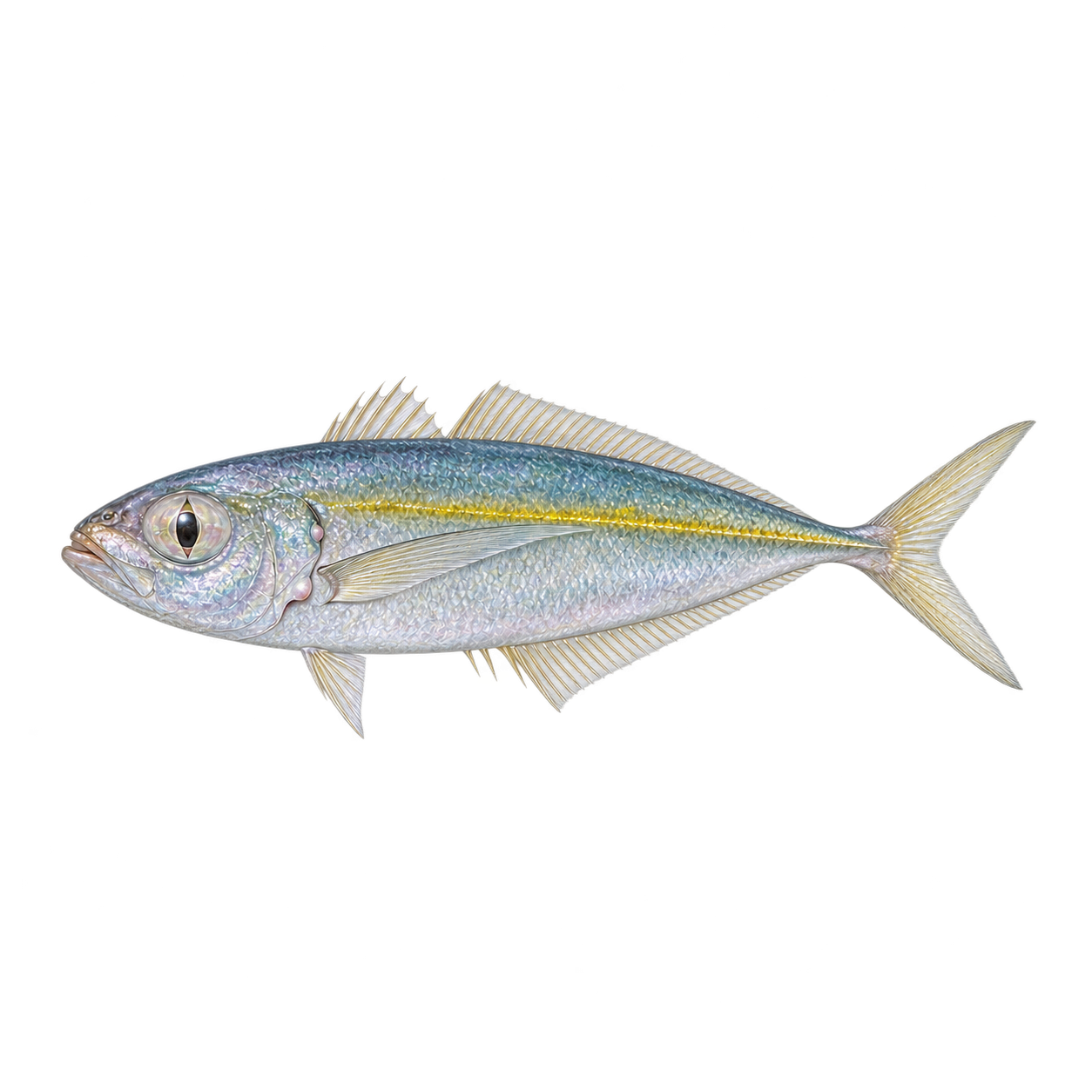
Size: Smithsonian reports a maximum of 30 cm. The entry does not explicitly identify total, fork or standard length for this maximum. Separate juvenile measurements were not established in the accessed account.
A streamlined silver fish with a blue-green back, very large eye and deeply forked tail. Unlike mackerel scad, it has no detached finlets behind the dorsal or anal fins.
Read the guide’s location, season and eating cautions before acting.
Black Durgon
Deep-bodied & oval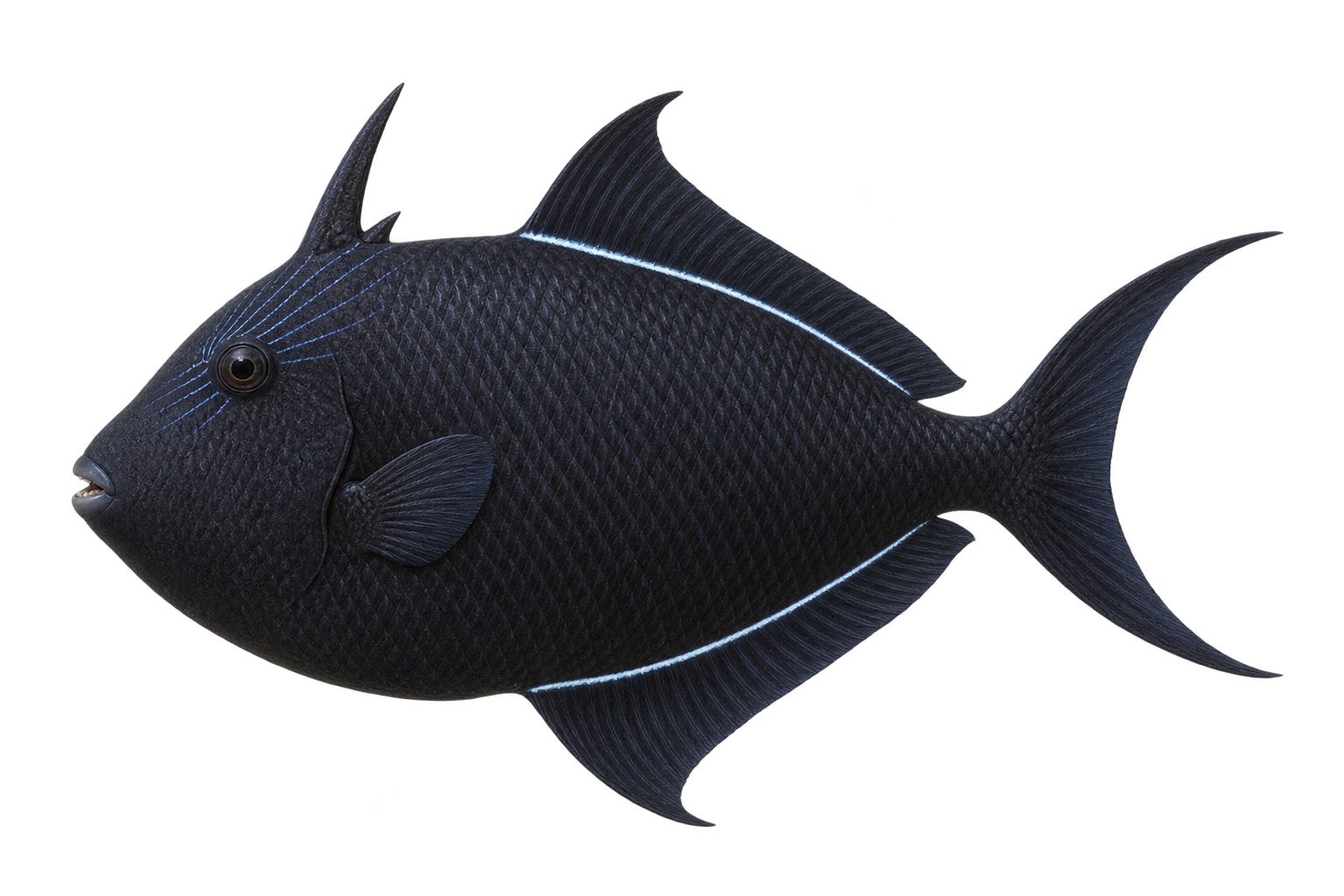
Size: The Smithsonian reports a maximum of 50 cm (19.7 inches). A dark silhouette without scale or fin detail is not enough to determine size or species. Browsing bands are approximate, not harvest limits.
A dark blue-black triggerfish with narrow pale blue-white lines along the bases of the soft dorsal and anal fins. The head may look yellowish, and fine blue lines radiate from the eye.
Read the guide’s location, season and eating cautions before acting.
Black Grouper
Streamlined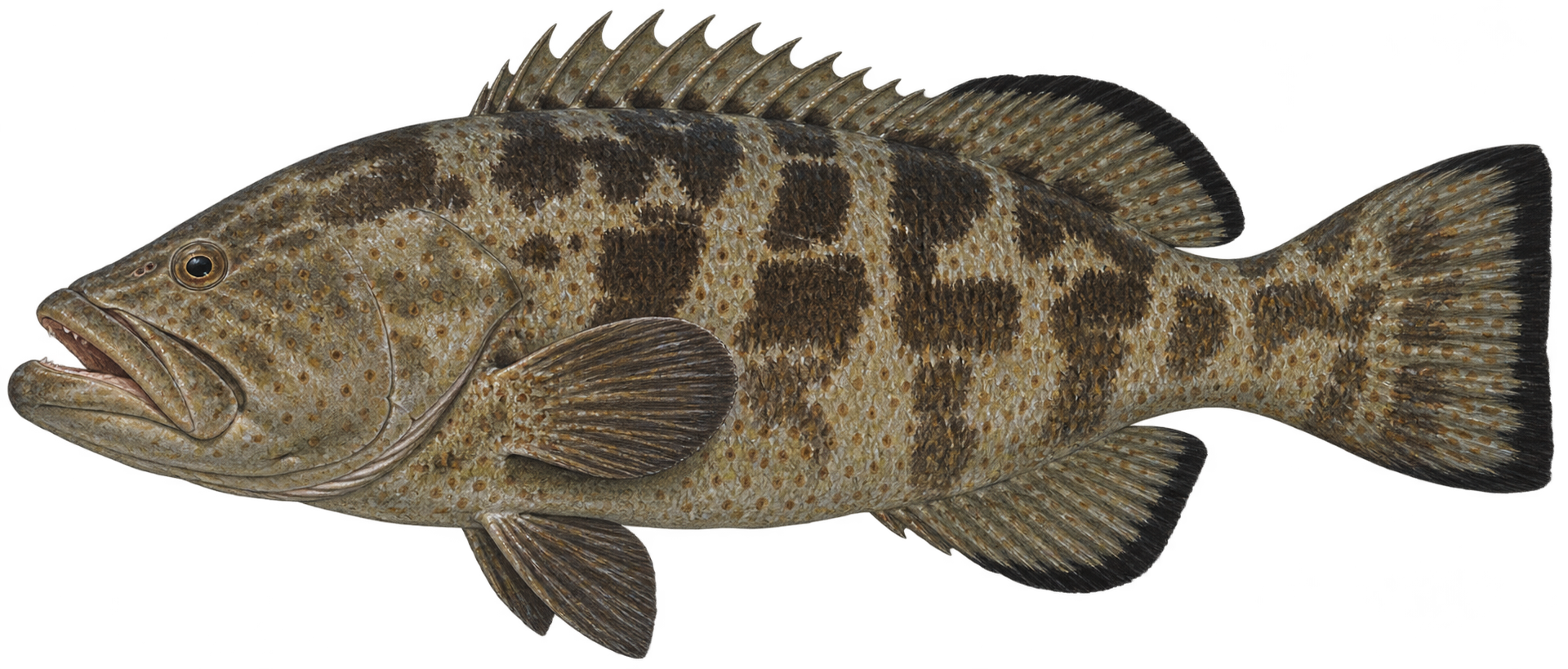
Size: Often around 28 inches; reported maximum about 59 inches.
Rectangular dark blotches, bronze spotting and dark borders on the rear fins.
Regulated recreational harvest; restrictions apply
Explore the black grouper guide →Black Hamlet
Deep-bodied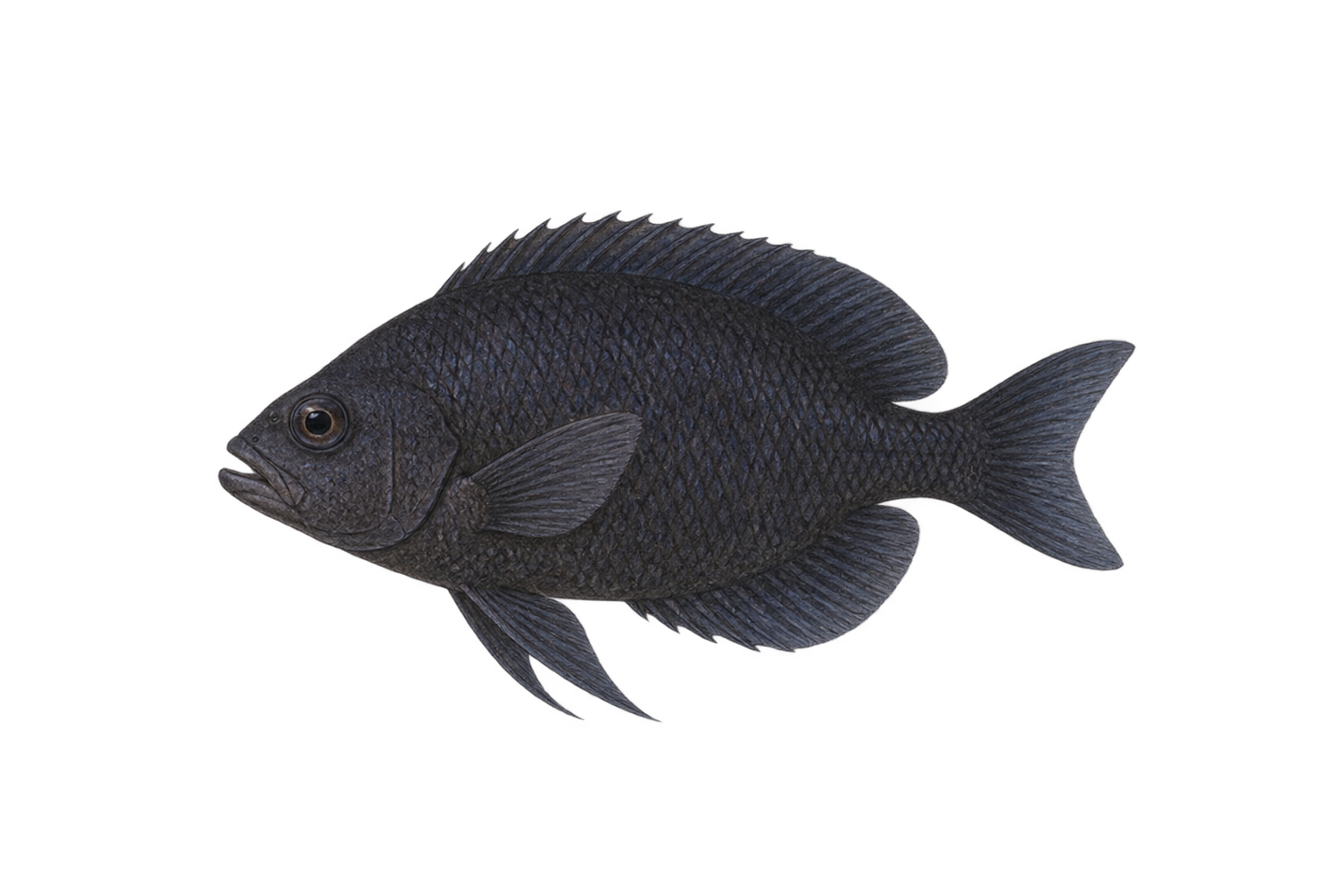
Size: Smithsonian reports a maximum of 15.3 cm, not a typical local encounter size.
Deep-bodied hamlet with black, dark brown or grey head and body; most fins match, sometimes with a blue cast.
Read the guide’s location, season and eating cautions before acting.
Black Margate
Deep-bodied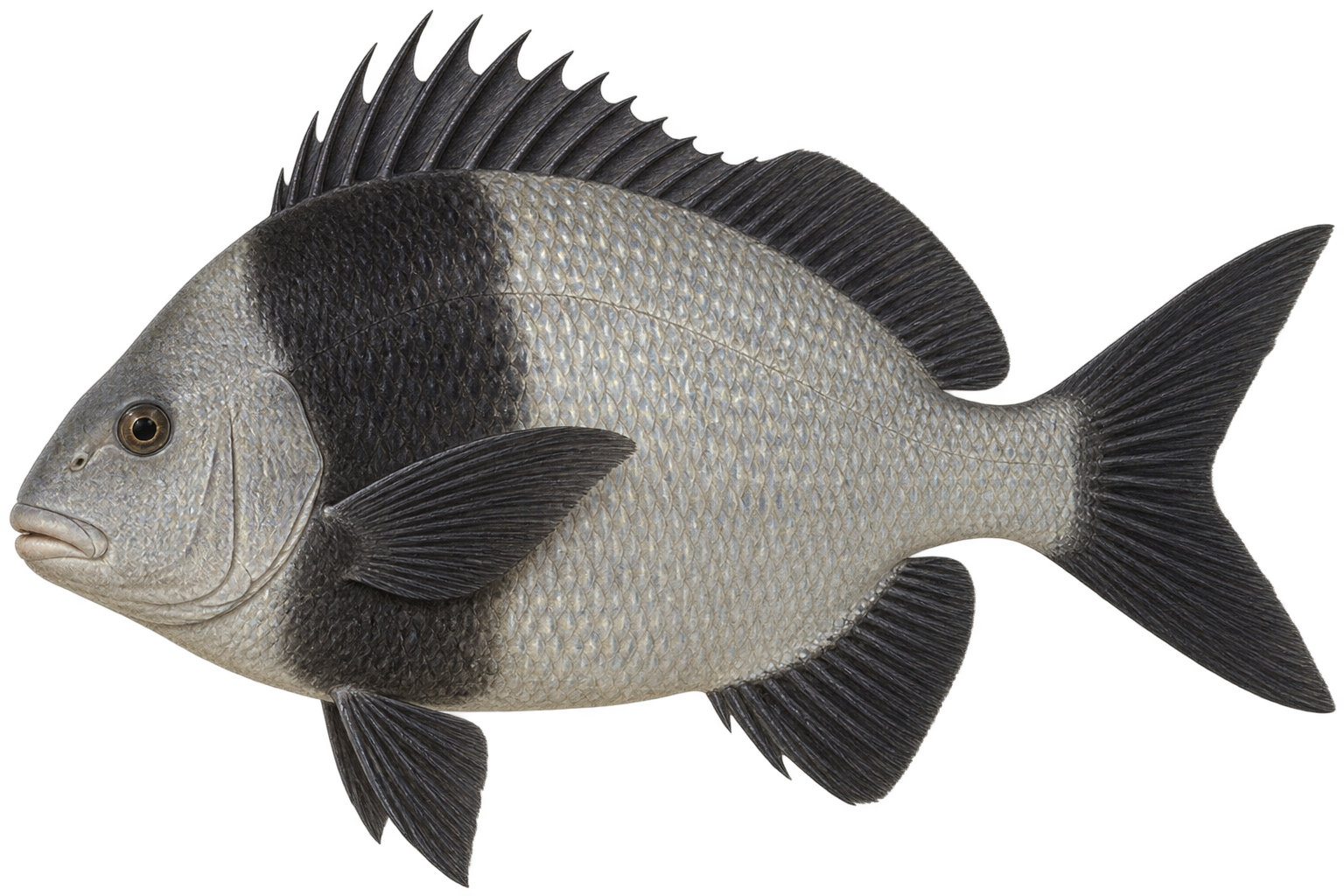
Size: Up to about 30 inches (76 cm) total length.
Deep gray body, broad dark forward-body band, dark fins and fleshy lips.
Harvest may be allowed; limits and site restrictions apply
Explore the black margate guide →Black Sea Bass
Robust reef fish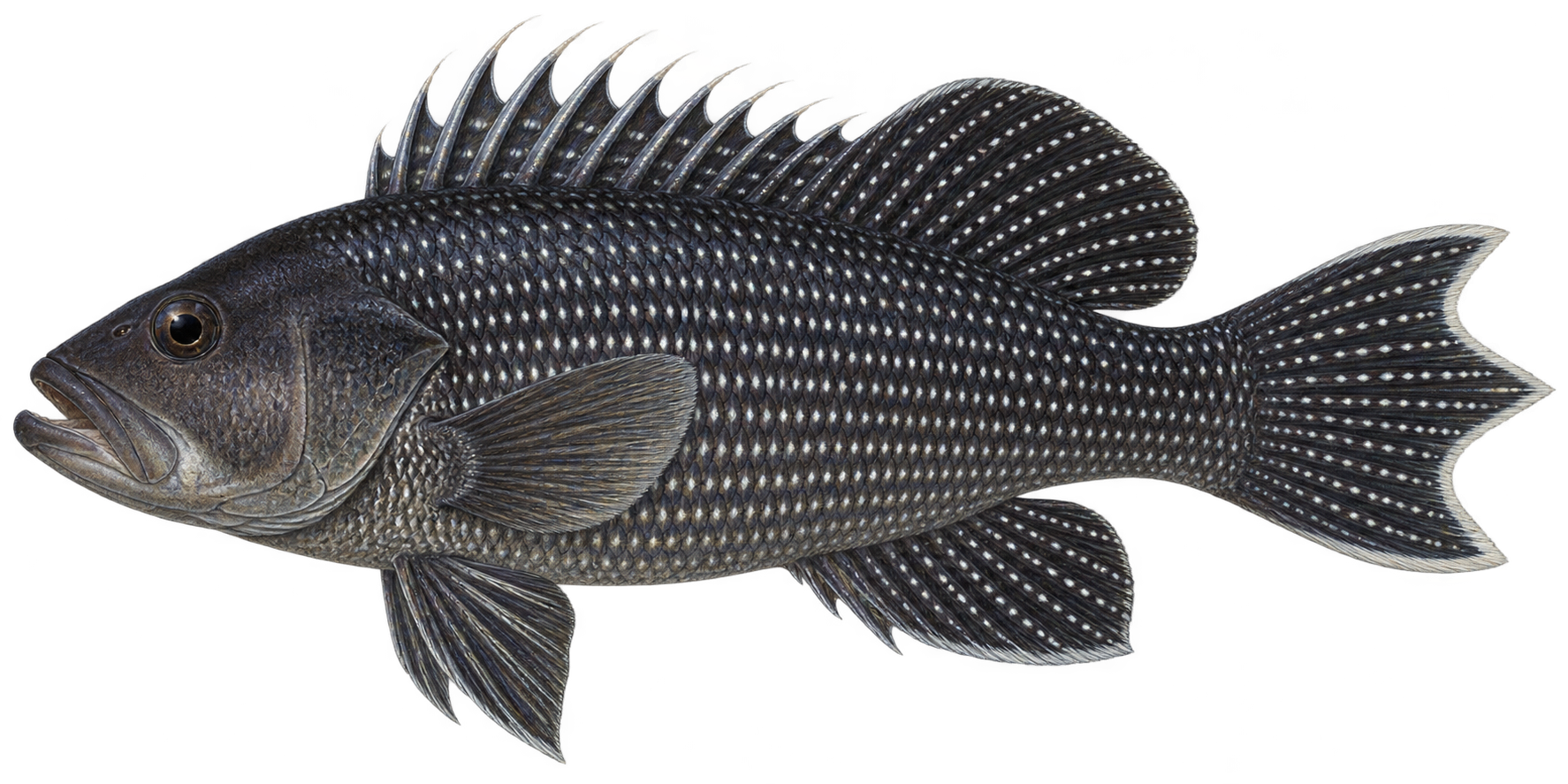
Size: Reported regional maximum 66 cm; not a typical encounter size.
Pale scale spots; three-lobed tail edge; dark body.
Read the guide’s location, season and eating cautions before acting.
Blackbar Soldierfish
Deep-bodied & oval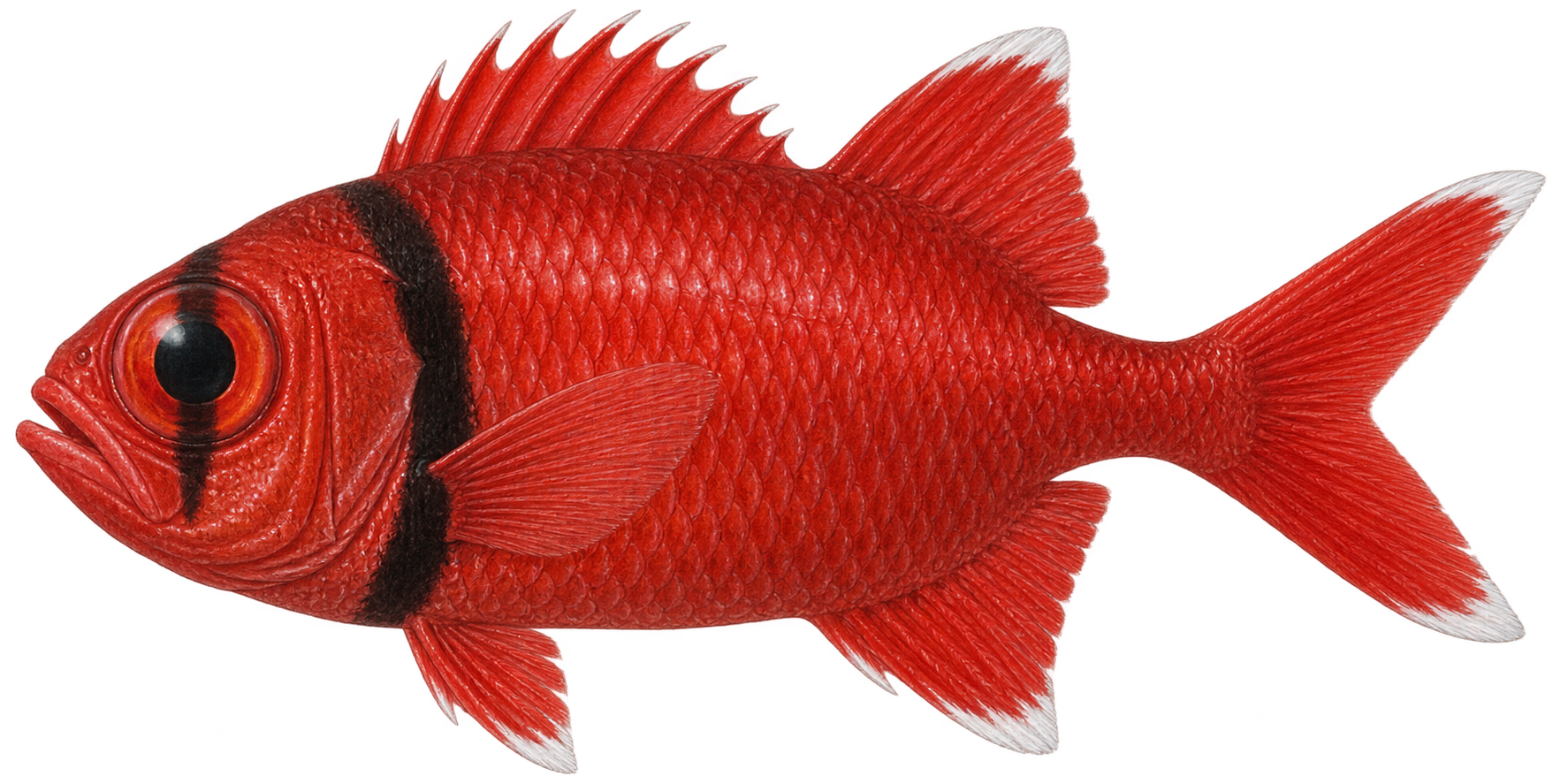
Size: Maximum about 25 cm (9.8 inches) total length.
Red, deep-bodied fish with huge eyes and a broad black band along the rear gill cover.
Restricted live collection only; no spearing; protected collection areas apply
Explore the blackbar soldierfish guide →Blackear Wrasse
Streamlined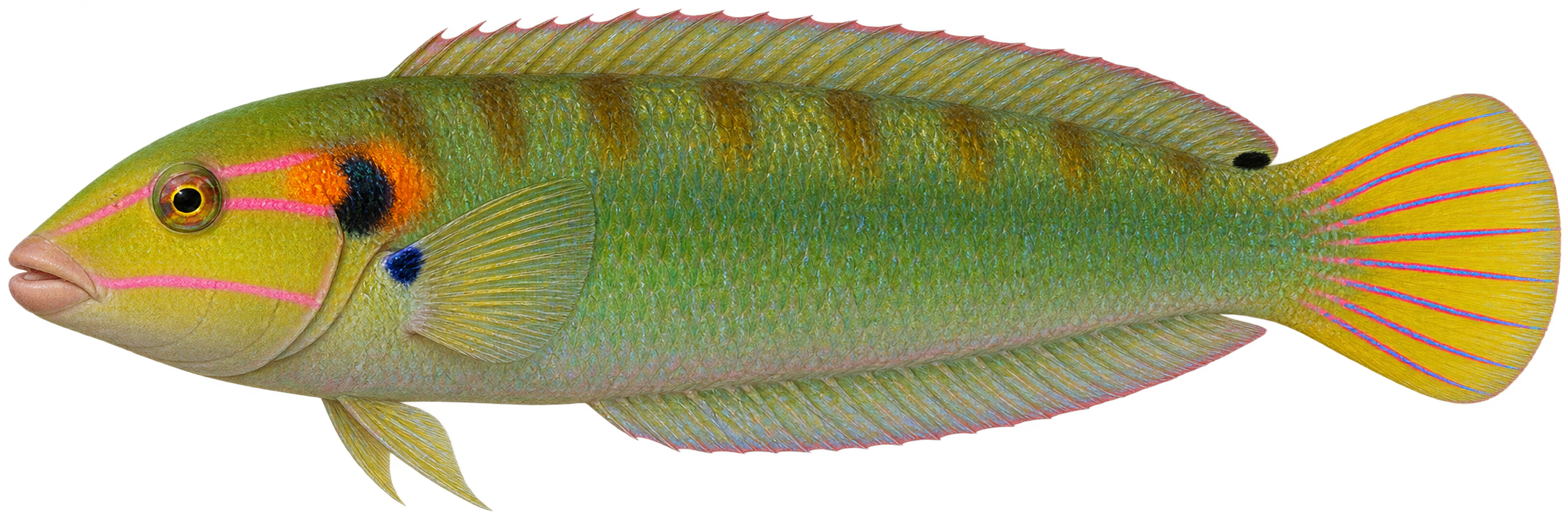
Size: Maximum about 20 cm (7.9 inches) total length.
Green wrasse with a dark orange-edged spot directly behind the eye and fine pink head lines.
Restricted live collection only; no spearing; protected collection areas apply
Explore the blackear wrasse guide →Blackfin Snapper
Shape not assigned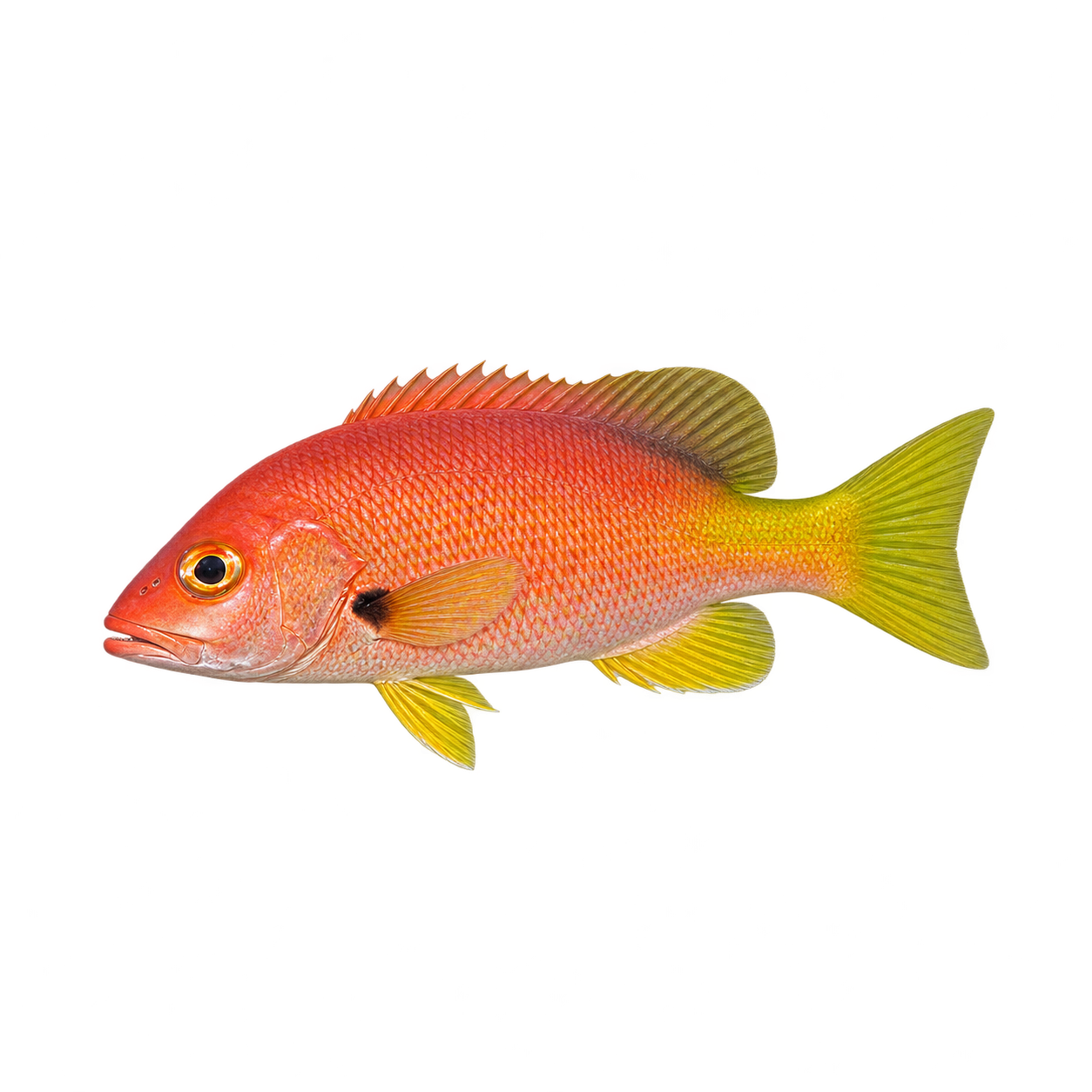
Size: Smithsonian reports a maximum of 75 cm. The entry does not explicitly identify total, fork or standard length for this maximum. Juveniles are gray-brown with yellow tails. The source places juveniles mainly at 35–50 m and adults below 60 m.
Adults are orange-red with yellowish rear fins and a strong black patch at the pectoral base. The tail edge is only slightly indented.
Read the guide’s location, season and eating cautions before acting.
Blackwing Searobin
Shape not assigned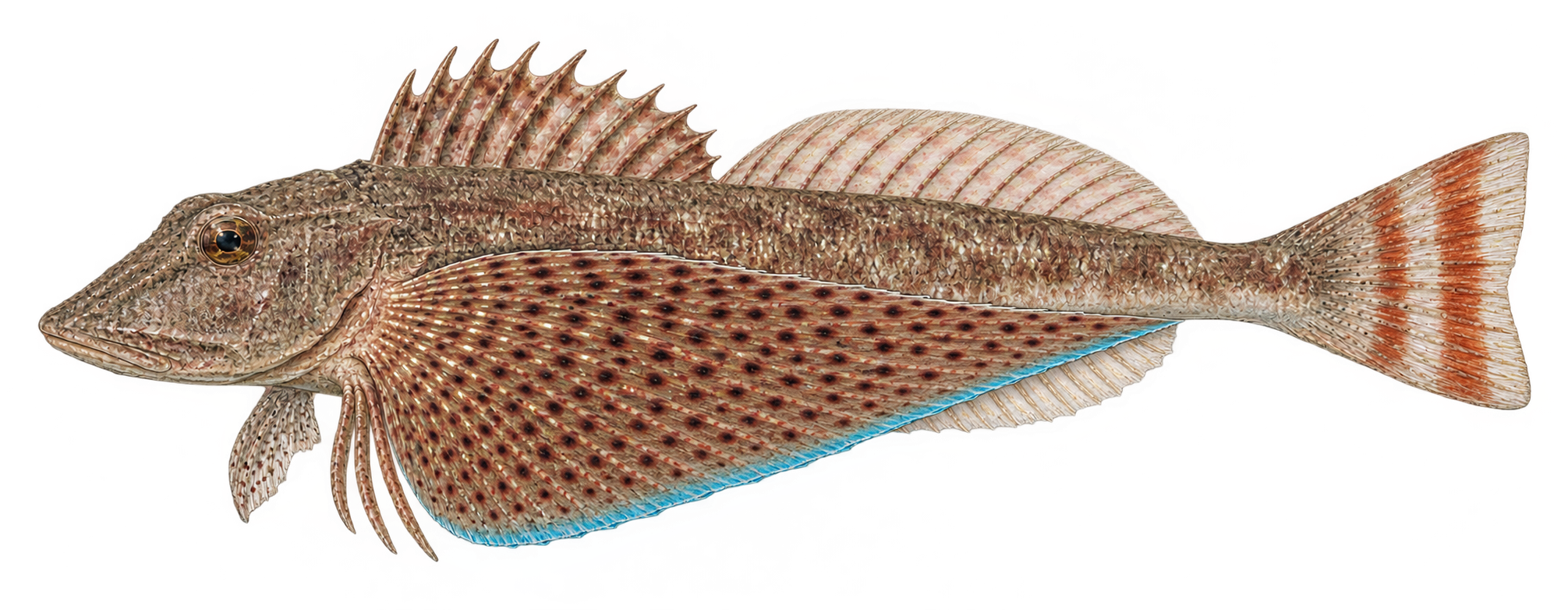
Size: Smithsonian gives 23 cm as the maximum. Its narrative does not explicitly specify total, standard or fork length.
A searobin with broad dark pectoral fins and three separate lower pectoral rays. Identification should be checked against the full head, fin and scale diagnosis, not wing color alone.
Read the guide’s location, season and eating cautions before acting.
Blue Angelfish
Deep-bodied & oval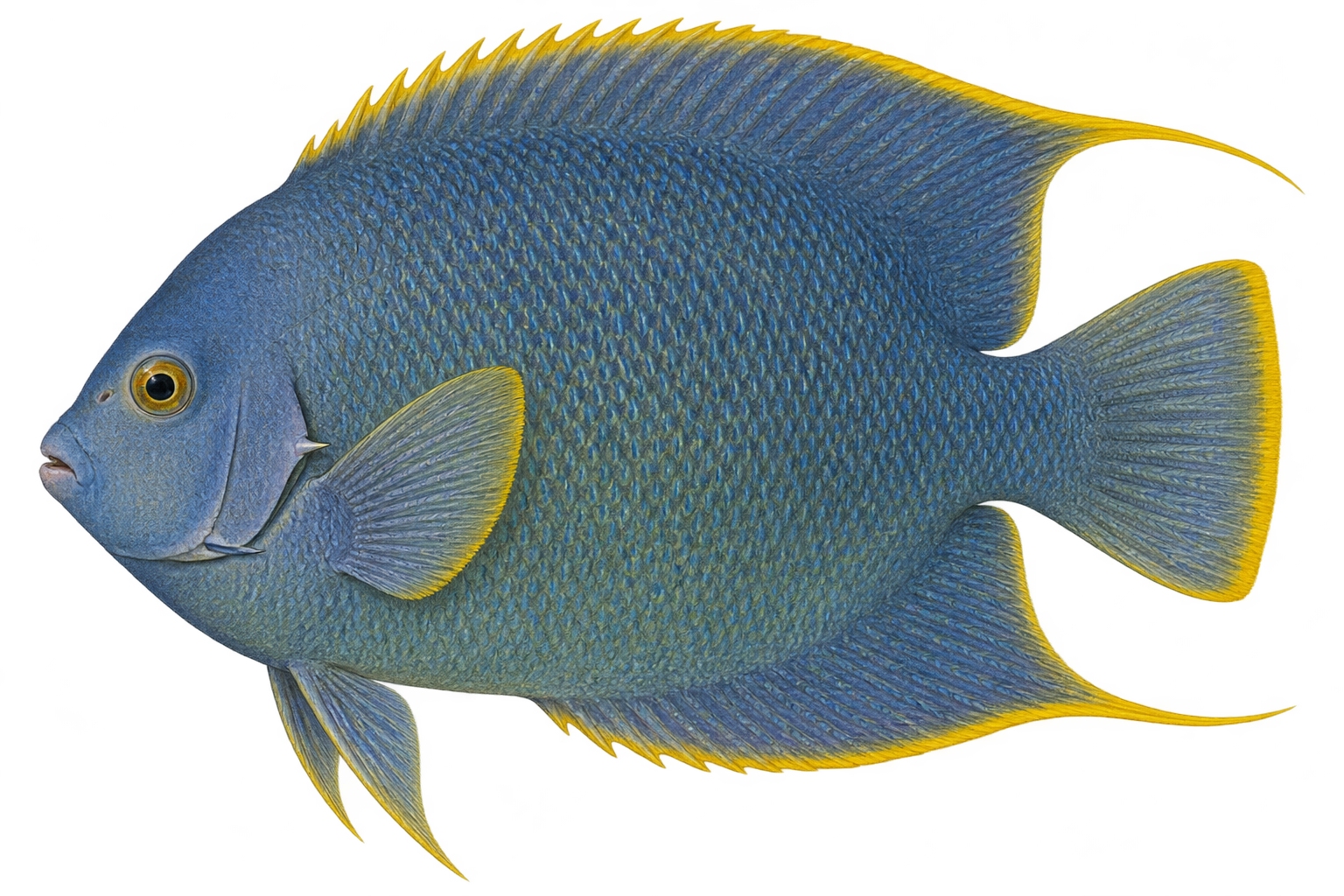
Size: Reported maximum 45 cm.
Blue-green adult with trailing dorsal and anal fins; lacks the queen’s distinct forehead crown.
Restricted marine life: live collection only; no spearing
Explore the blue angelfish guide →Blue Chromis
Deep-bodied & oval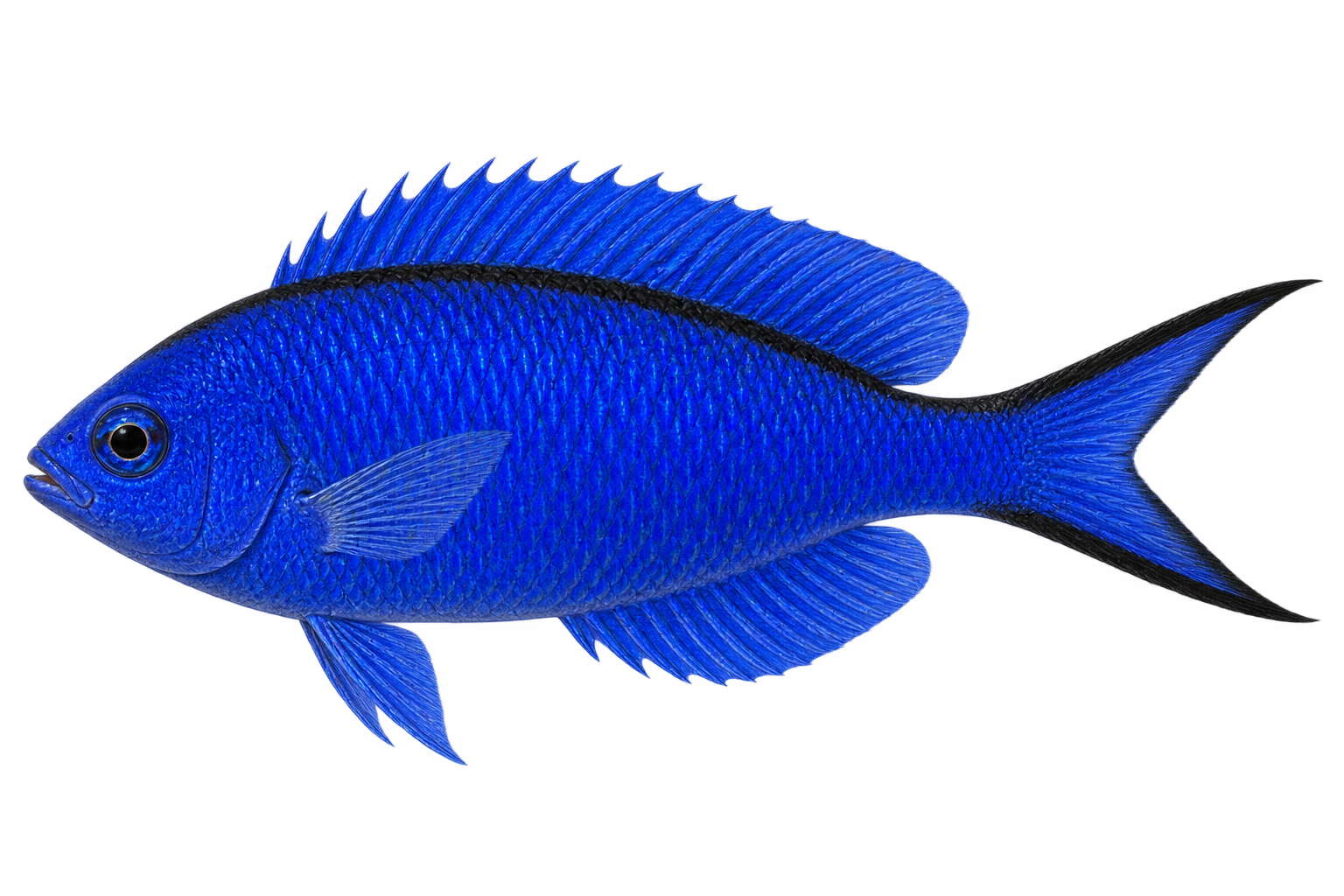
Size: Maximum about 15 cm.
Electric-blue elongated fish with black-edged, deeply forked tail.
Restricted marine life: live collection only; no spearing
Explore the blue chromis guide →Blue Dartfish (Blue Goby)
Elongated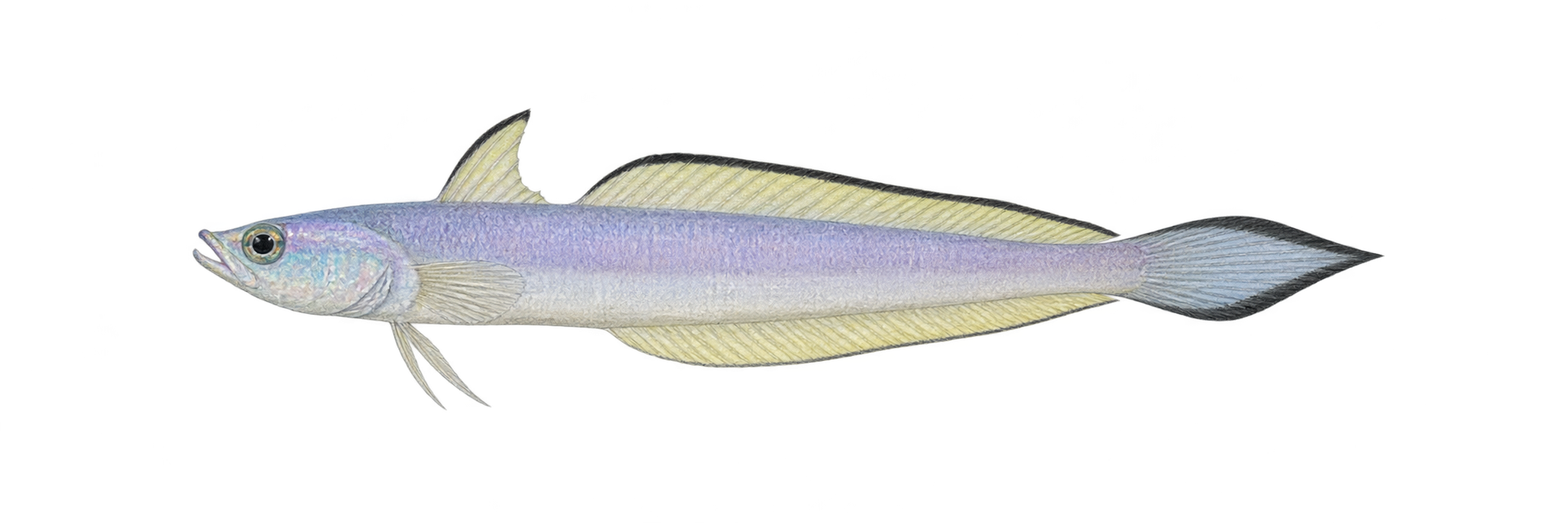
Size: Smithsonian reports a maximum length of 12.5 cm. This is a regional upper record, not a typical local encounter size.
Slender blue-grey to lavender fish with a long pointed tail and black edging on the dorsal fins.
Read the guide’s location, season and eating cautions before acting.
Blue Hamlet
Deep-bodied & oval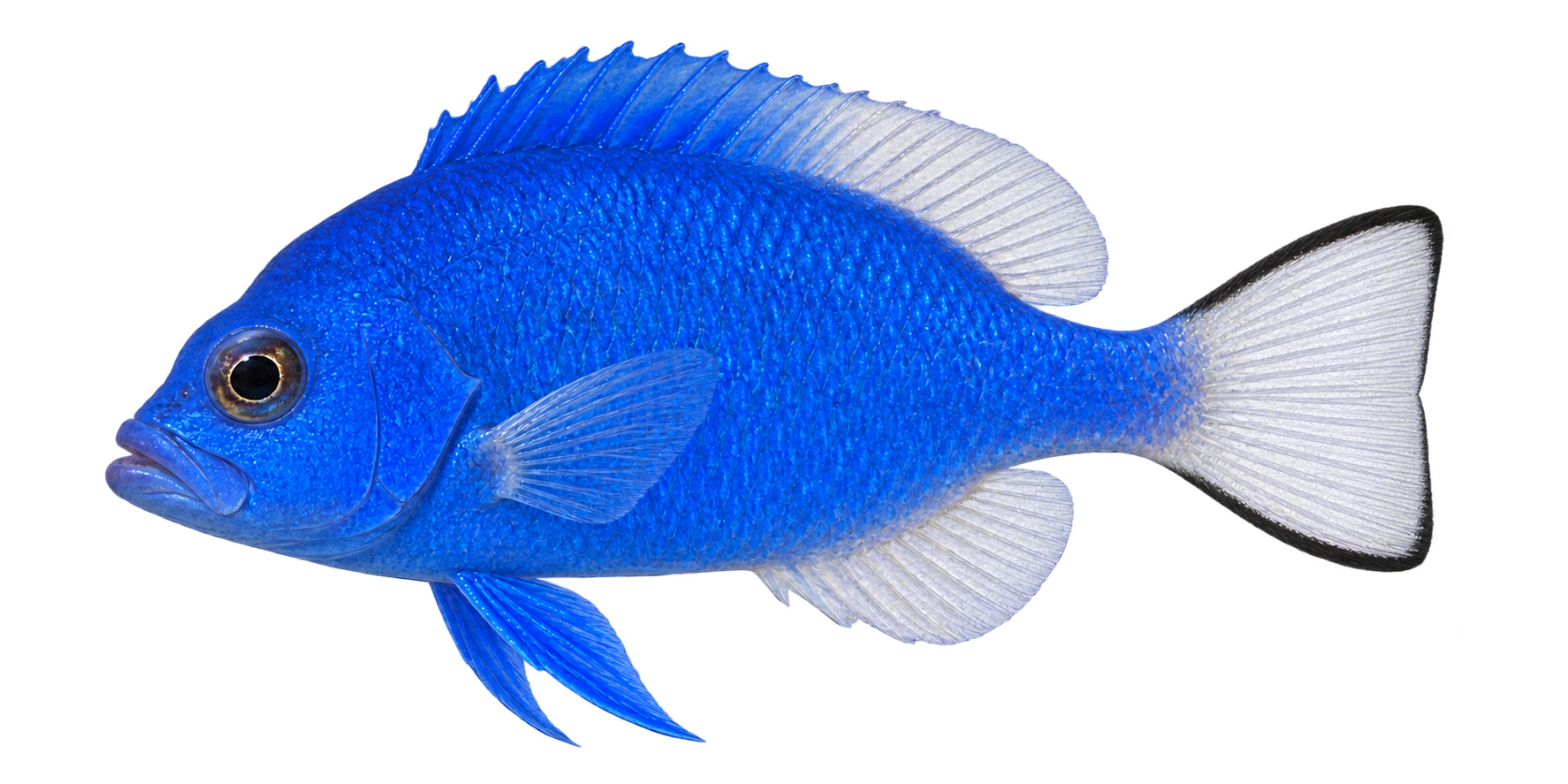
Size: The regional reference gives 13 cm (5.1 inches) as the maximum. Treat this as a published size record, not a typical length for every local sighting. Browsing bands are approximate, not harvest limits.
Look for a bright-blue head and body with a mostly clear tail bordered in black above and below. The body is deep and flattened from side to side, with a continuous dorsal fin.
Read the guide’s location, season and eating cautions before acting.
Blue Parrotfish
Elongate & oval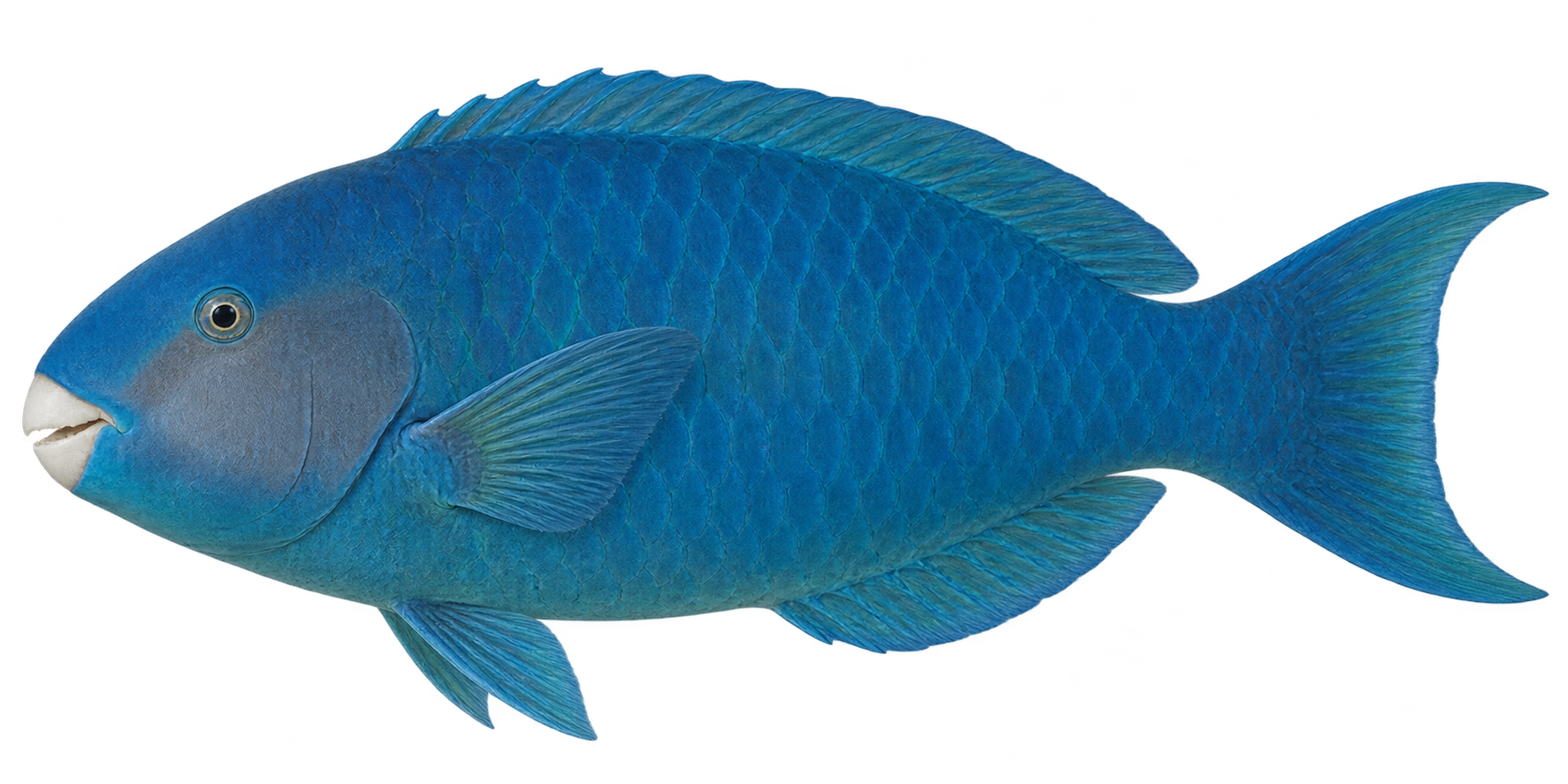
Size: Reported maximum 120 cm; maximum is not a typical sighting size.
Adults are broadly blue to green-blue with a gray cheek area; young fish have yellow across the upper head and front of the back.
Read the guide’s location, season and eating cautions before acting.
Blue Runner
Streamlined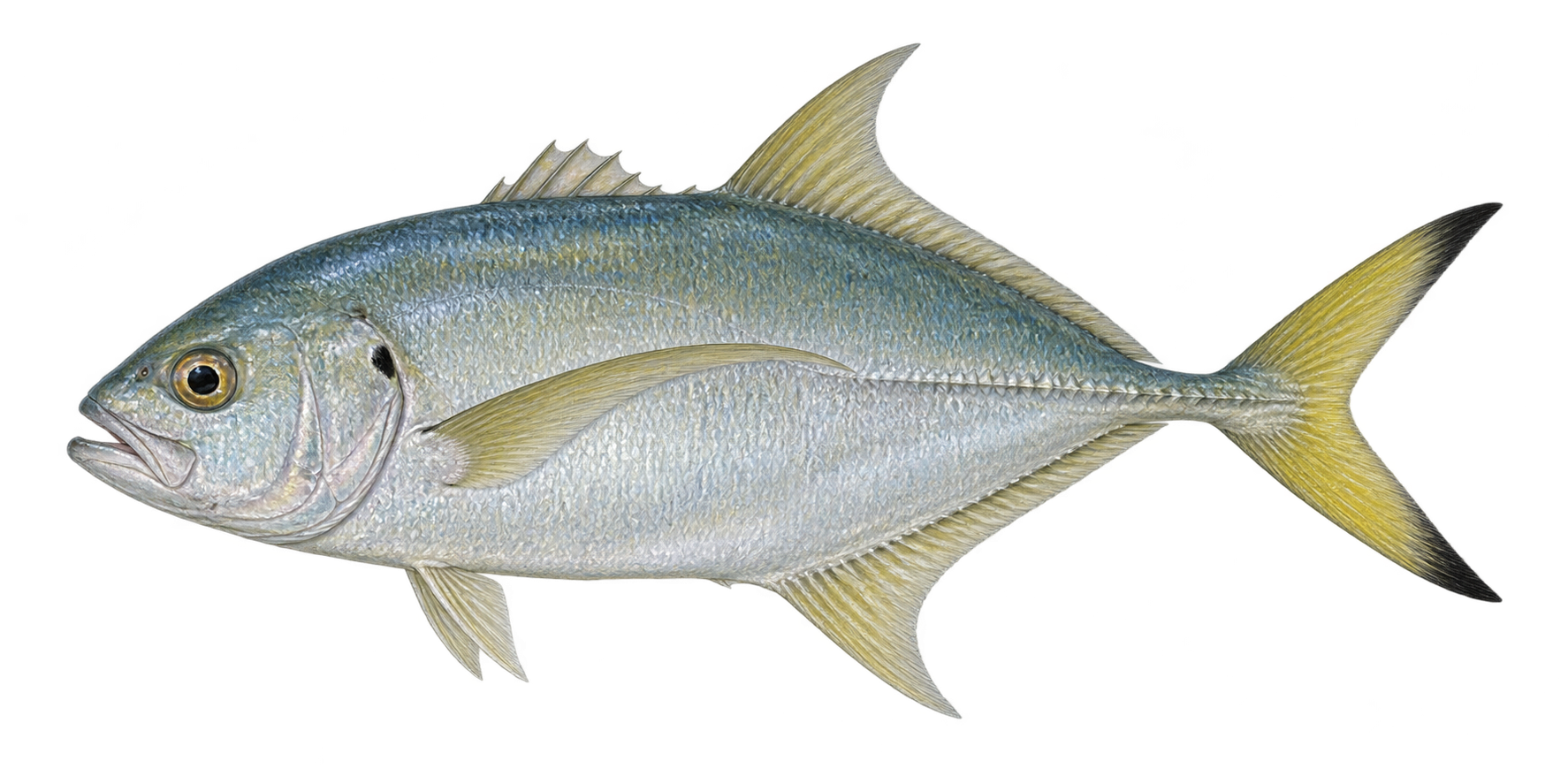
Size: Reported regional maximum 76 cm; not a typical encounter size.
Dark gill-cover spot; dark tail tips; forked tail.
Read the guide’s location, season and eating cautions before acting.
Blue Tang
Deep-bodied & oval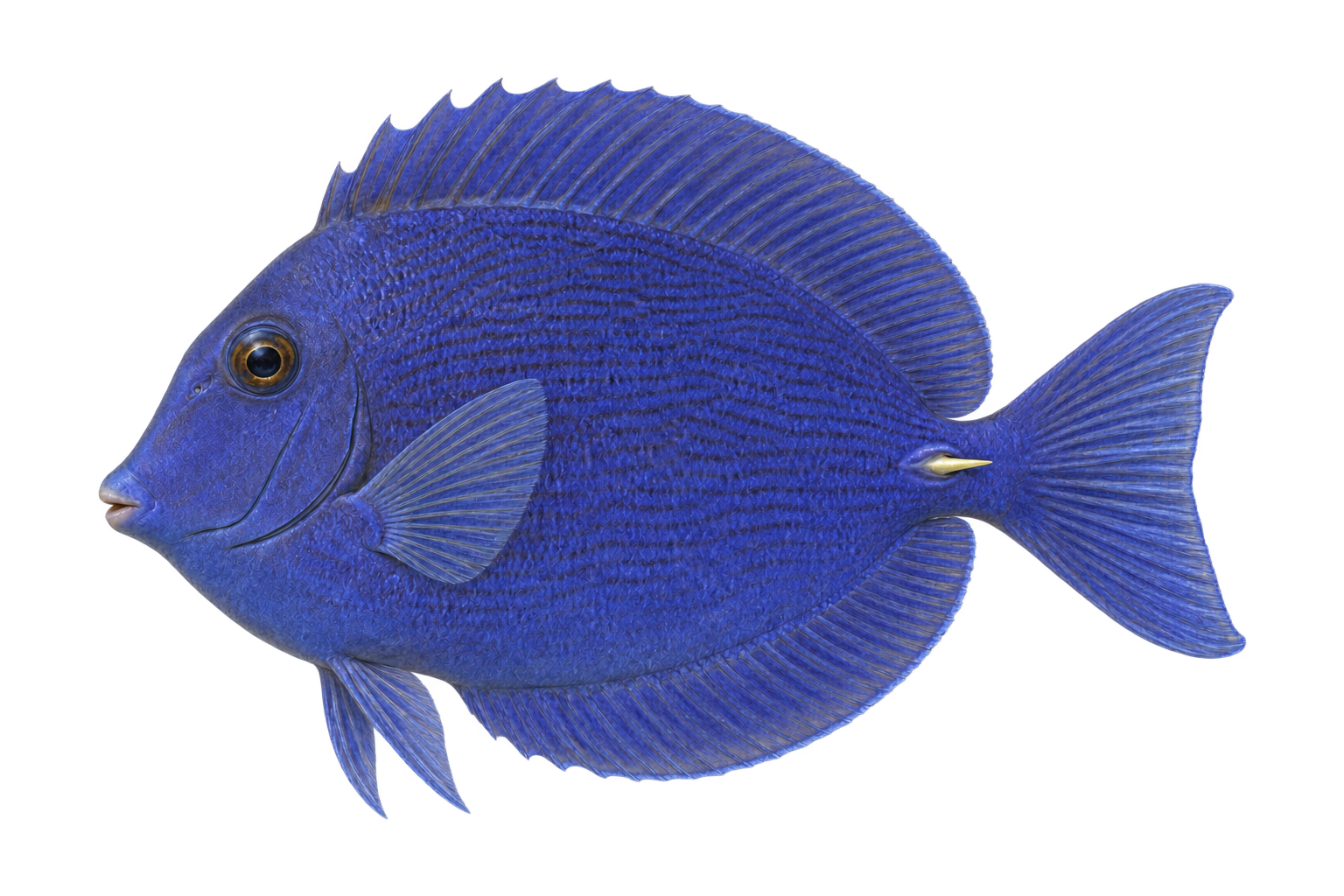
Size: Around 30 cm; reported maximum 36–37 cm.
Deep-blue adult with yellow tail-base spine; juveniles may be yellow.
Restricted marine life: live collection only; no spearing
Explore the blue tang guide →Bluehead Wrasse
Streamlined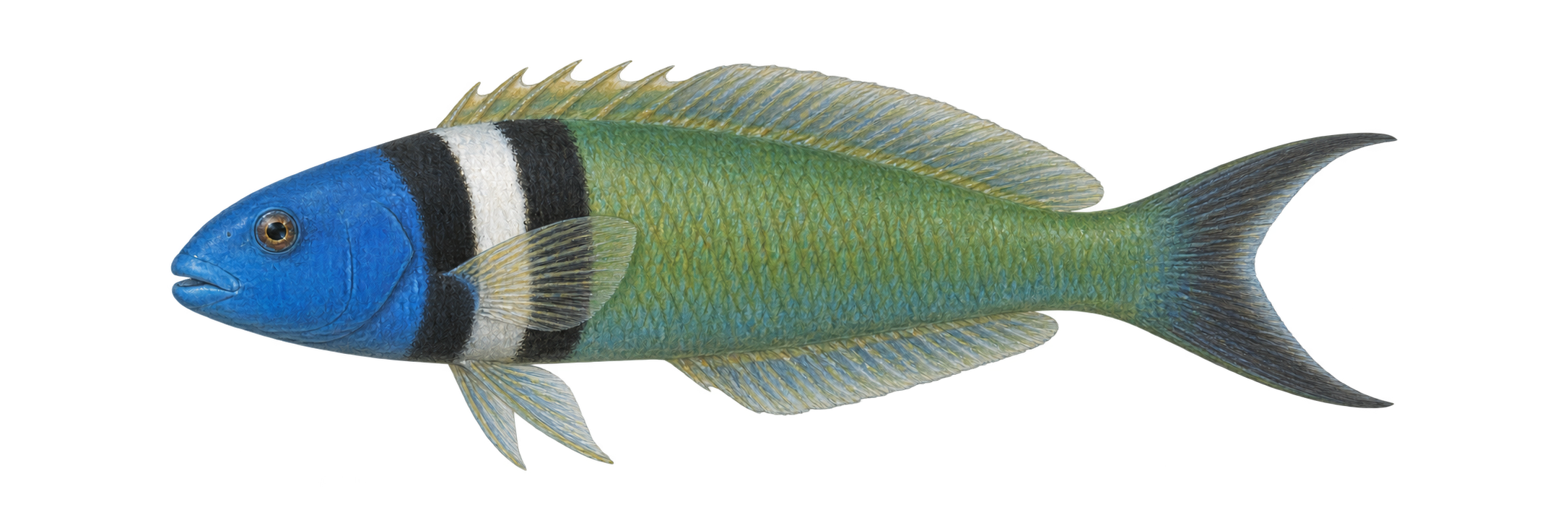
Size: Size summaries differ:15 cm Smithsonian;25 cm museum maximum.
Terminal male has a blue head and two dark bars separated by white; younger phases differ.
Restricted marine life: live collection only; no spearing
Explore the bluehead wrasse guide →Bluelip Parrotfish
Streamlined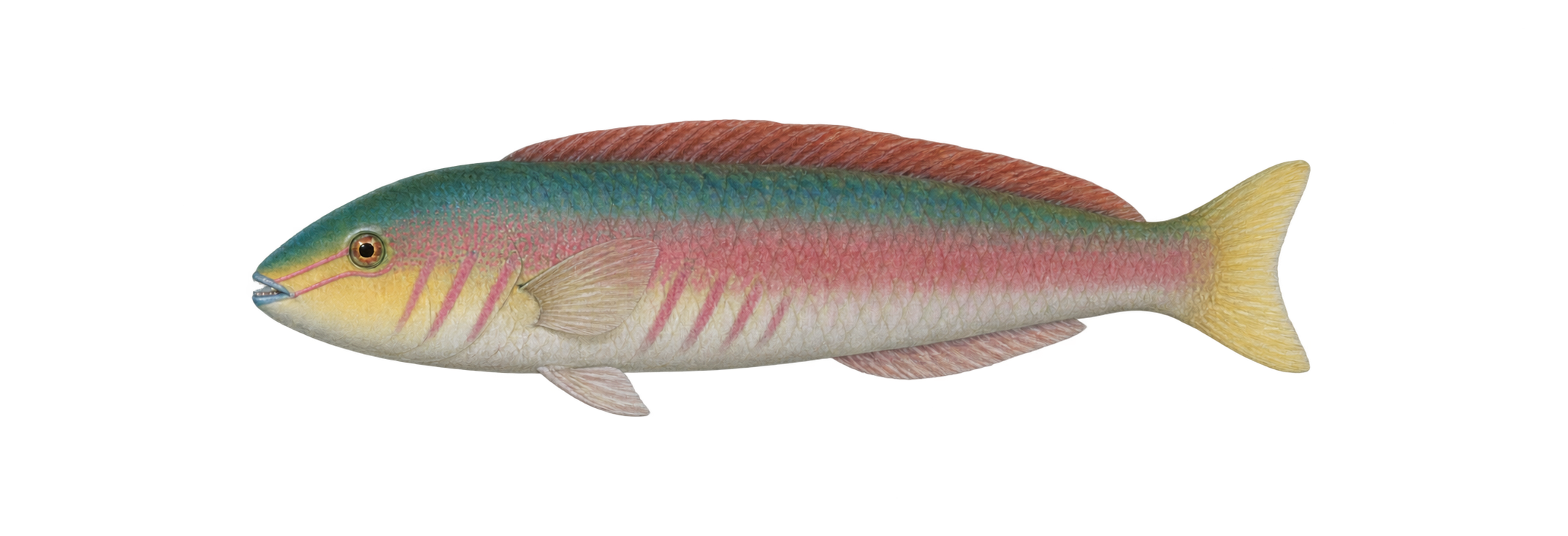
Size: Common length around 10 cm; reported maximum 13 cm.
Slender cigar-shaped body and pointed snout; muted striped initial phase contrasts with the green-and-pink terminal phase.
Read the guide’s location, season and eating cautions before acting.
Bluespotted Cornetfish
Long & eel-like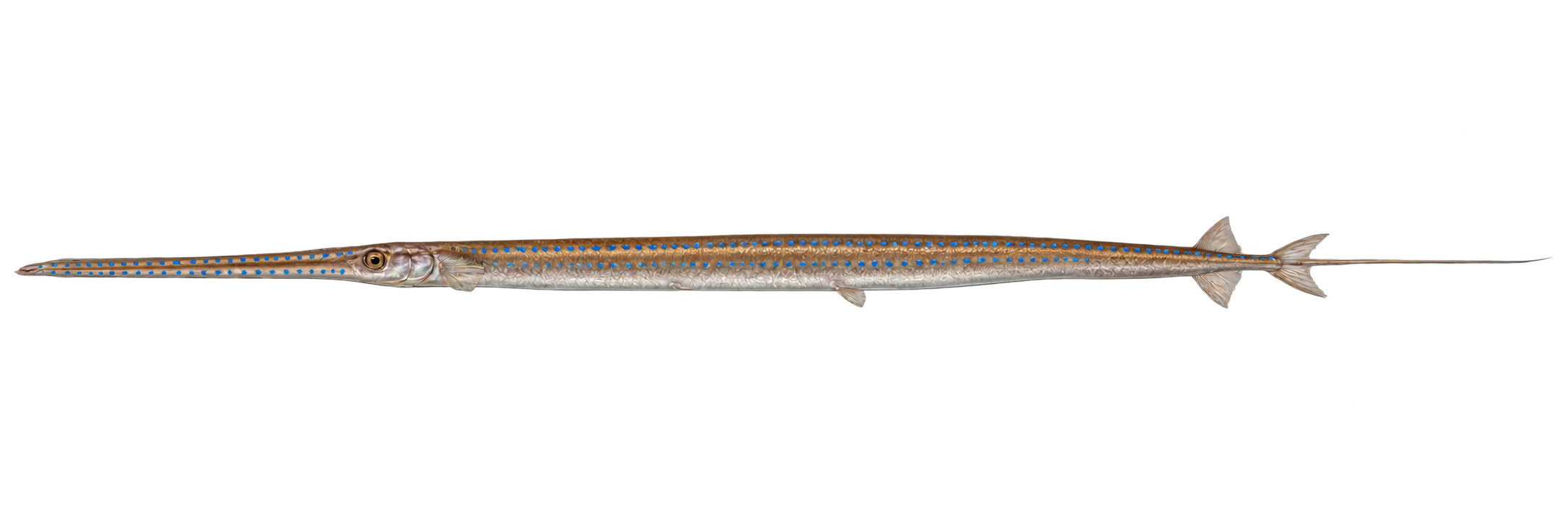
Size: Reported maximum about 200 cm; see profile for life-stage and measurement notes.
An extremely long tube snout, blue spot rows and a thread extending from the center of the tail identify this cornetfish.
Read the guide’s location, season and eating cautions before acting.
Bluestriped Grunt
Streamlined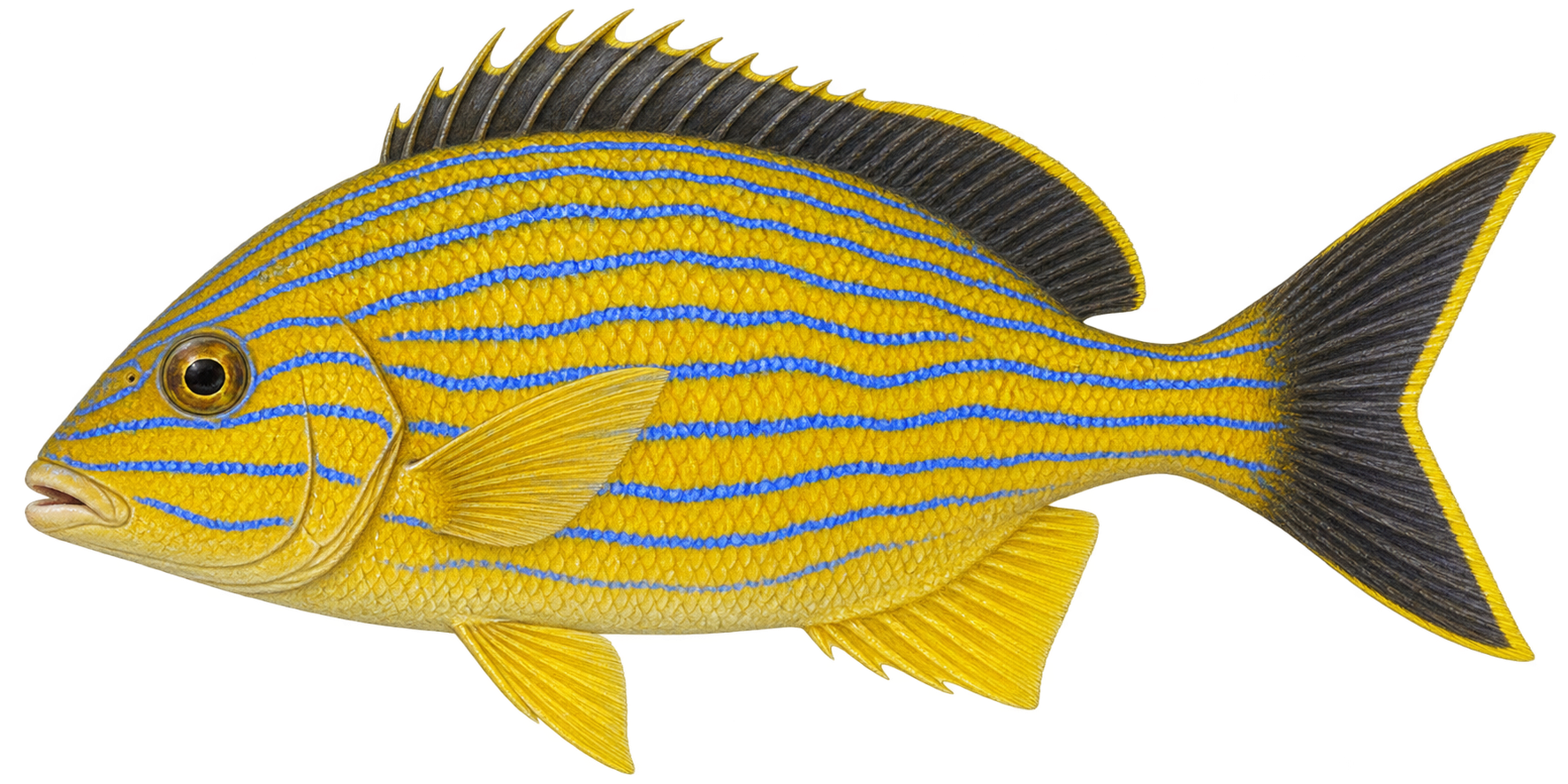
Size: Up to about 18 inches (46 cm) total length.
Blue horizontal stripes on yellow; dark soft dorsal and forked tail.
Harvest may be allowed; limits and site restrictions apply
Explore the bluestriped grunt guide →Bluethroat Pikeblenny
Elongated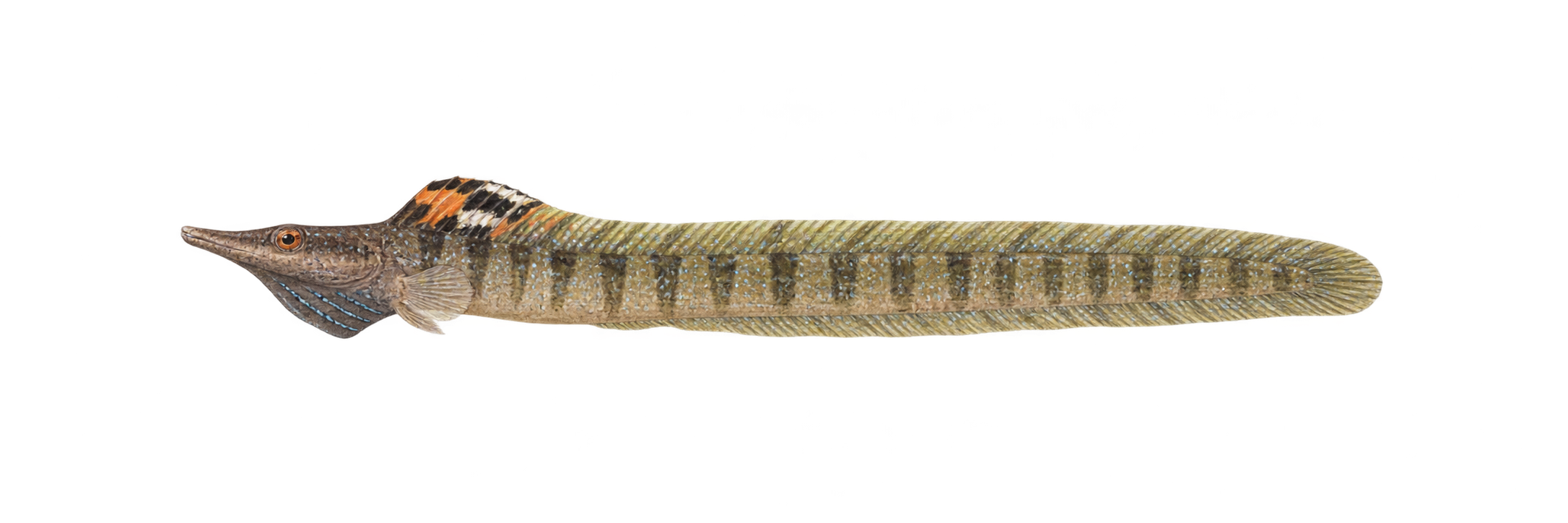
Size: Smithsonian reports a maximum length of 12.3 cm. This is a regional upper record, not a typical local encounter size.
Very slender, pointed-snouted fish; males show blue ridges on dark throat membranes. The head lacks cirri.
Read the guide’s location, season and eating cautions before acting.
Boga
Shape not assigned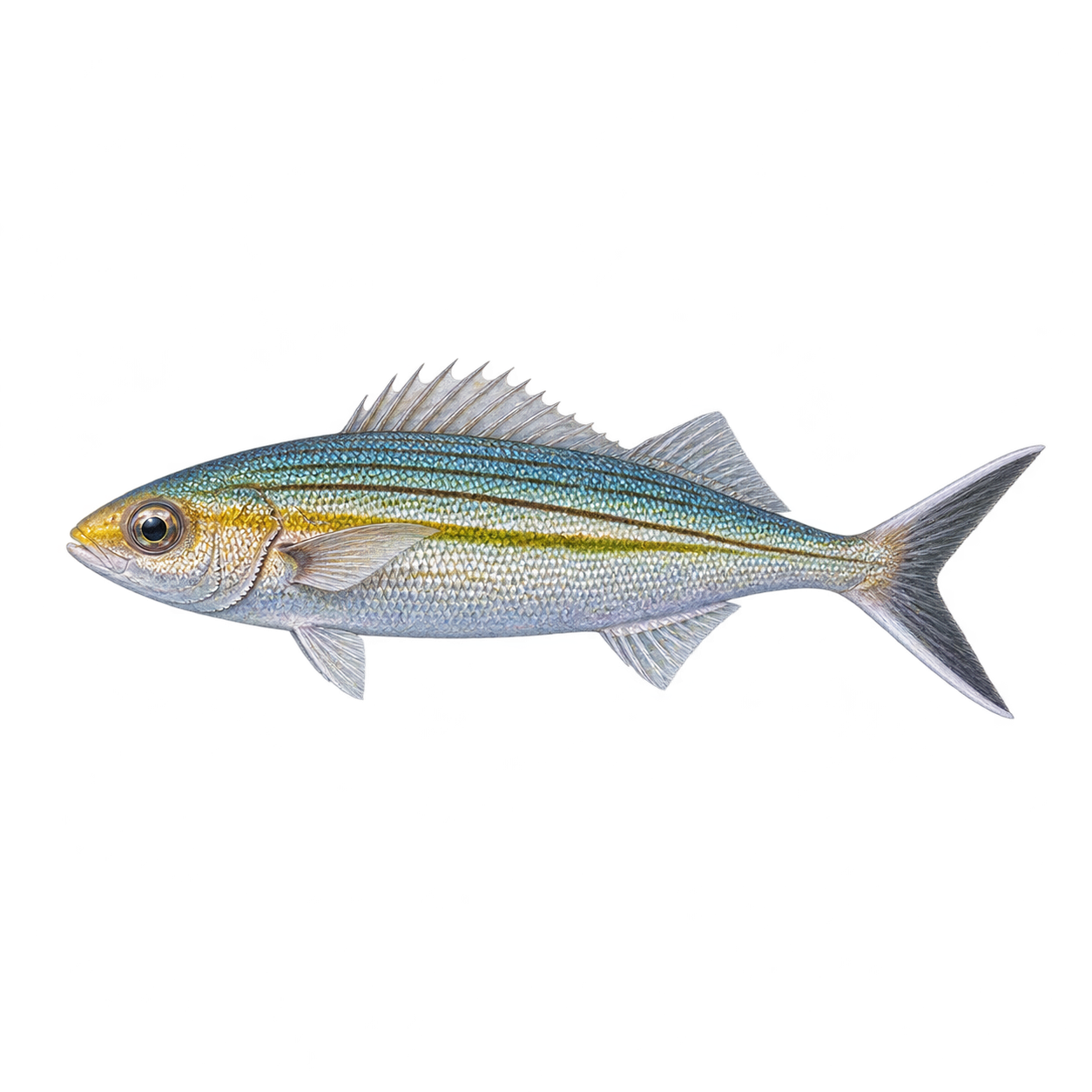
Size: Smithsonian reports a maximum of 22.5 cm. The entry does not explicitly identify total, fork or standard length for this maximum. The accessed entry does not supply separate juvenile measurements.
A streamlined blue-green fish with a broad greenish middle stripe and finer upper stripes. The small mouth protrudes; the deeply forked tail has dark lobes with pale outer borders.
Read the guide’s location, season and eating cautions before acting.
Brassy Chub
Oval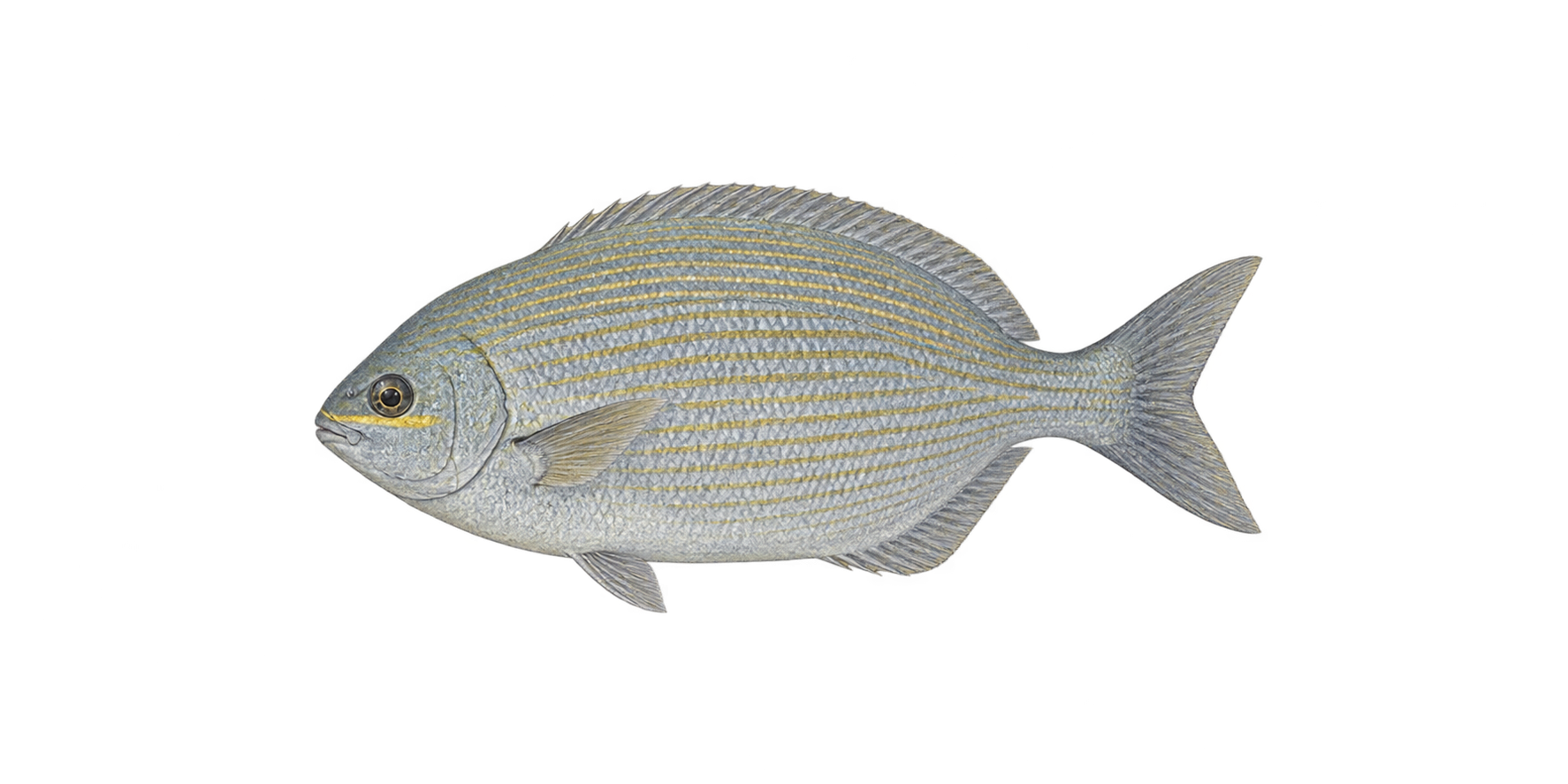
Size: Smithsonian reports a maximum length of 48 cm. This is a regional upper record, not a typical local encounter size.
Oval blue-grey chub with numerous brassy longitudinal stripes and a gold line beneath the eye. The forehead lacks a conspicuous bump.
Read the guide’s location, season and eating cautions before acting.
Bridled Goby
Streamlined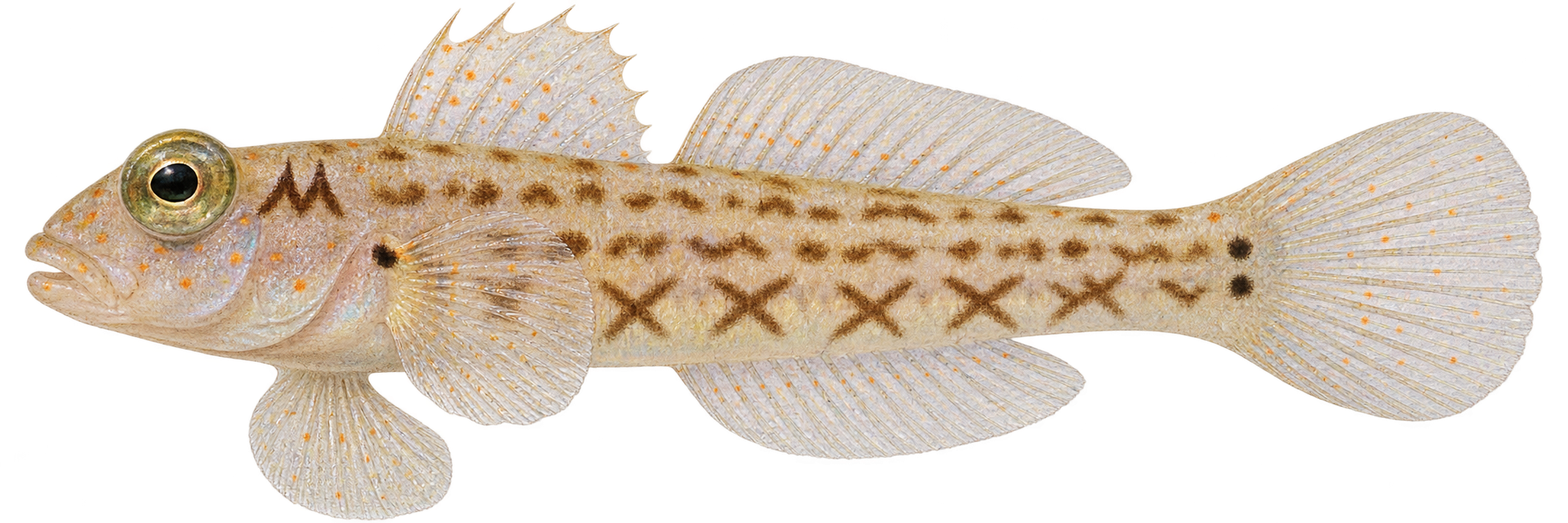
Size: Maximum about 8 cm (3.1 inches).
A dark double-peaked triangular mark above the gill cover is a useful first clue.
Restricted marine life: live collection only; no spearing
Explore the bridled goby guide →Brown Chromis
Deep-bodied & oval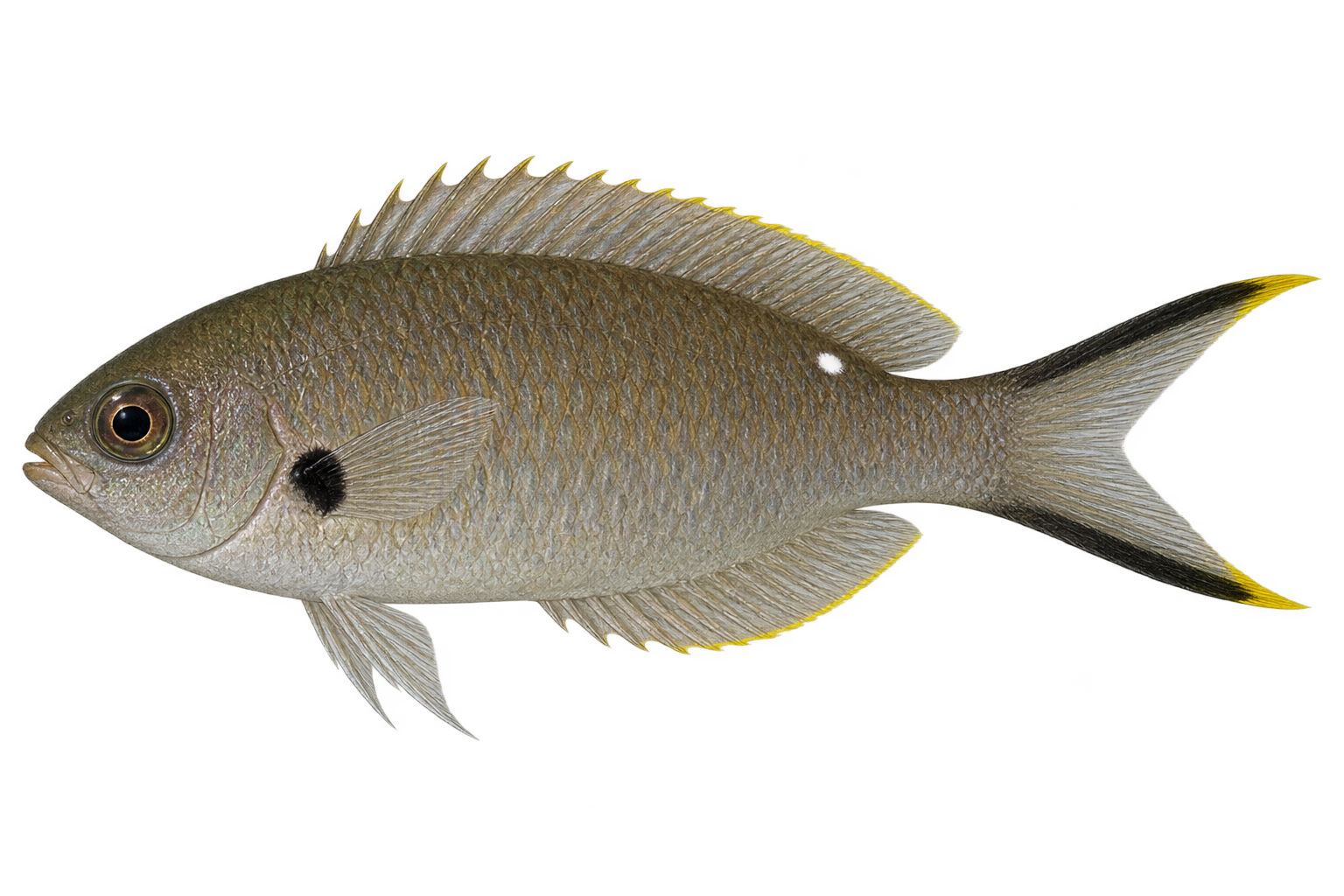
Size: Commonly about 12 cm; maximum 20 cm.
Gray-brown schooling fish; white spot behind dorsal and dark pectoral base.
Restricted marine life: live collection only; no spearing
Explore the brown chromis guide →Brown Garden Eel
Long & eel-like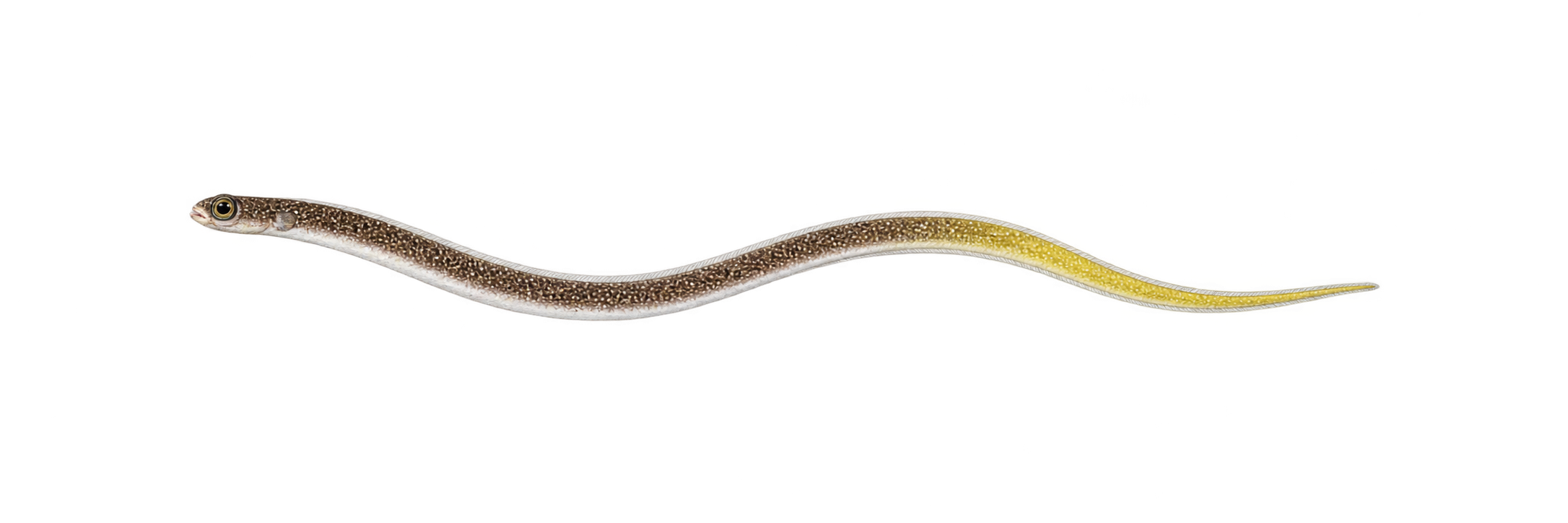
Size: Smithsonian reports a maximum length of 51 cm. This is a regional upper record, not a typical local encounter size.
Long, slender eel with brown upper body, many small pale flecks and pale throat; coloration grades yellow toward the rear.
Read the guide’s location, season and eating cautions before acting.
Bucktooth Parrotfish
Elongate & oval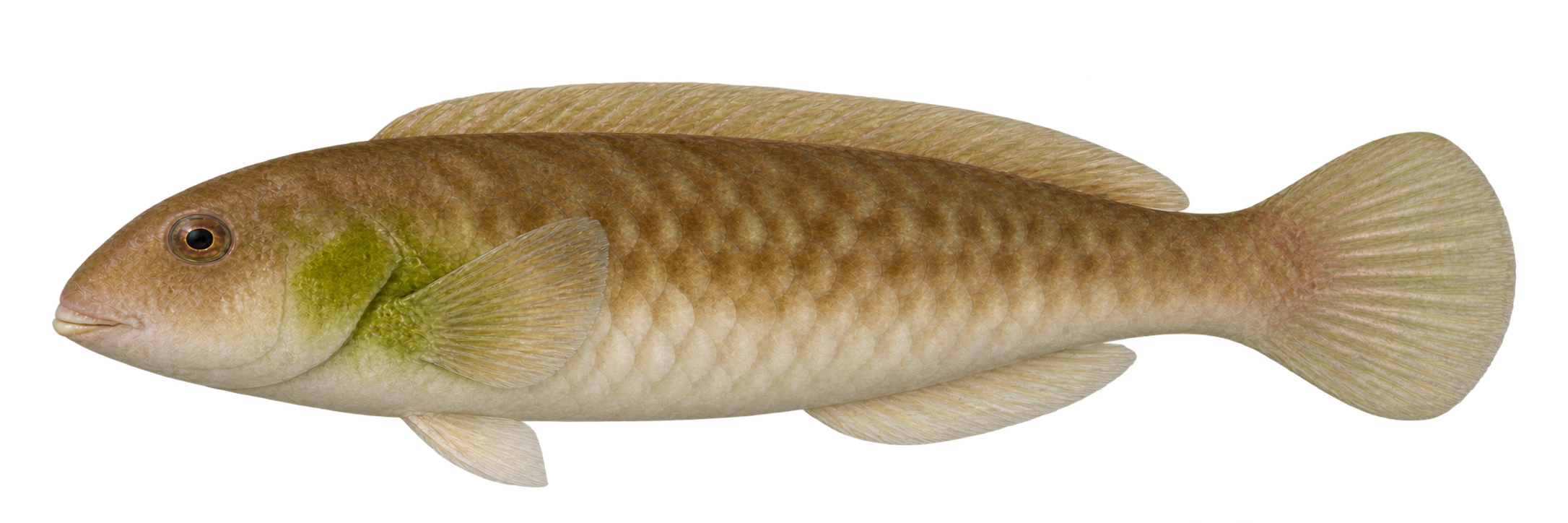
Size: Reported maximum 20 cm; maximum is not a typical sighting size.
Small, usually green-brown parrotfish; lower jaw projects beyond upper at the front and the tail is rounded. Terminal males have dark fin edges and an opalescent spot behind the eye.
Read the guide’s location, season and eating cautions before acting.
Butter Hamlet
Deep-bodied & oval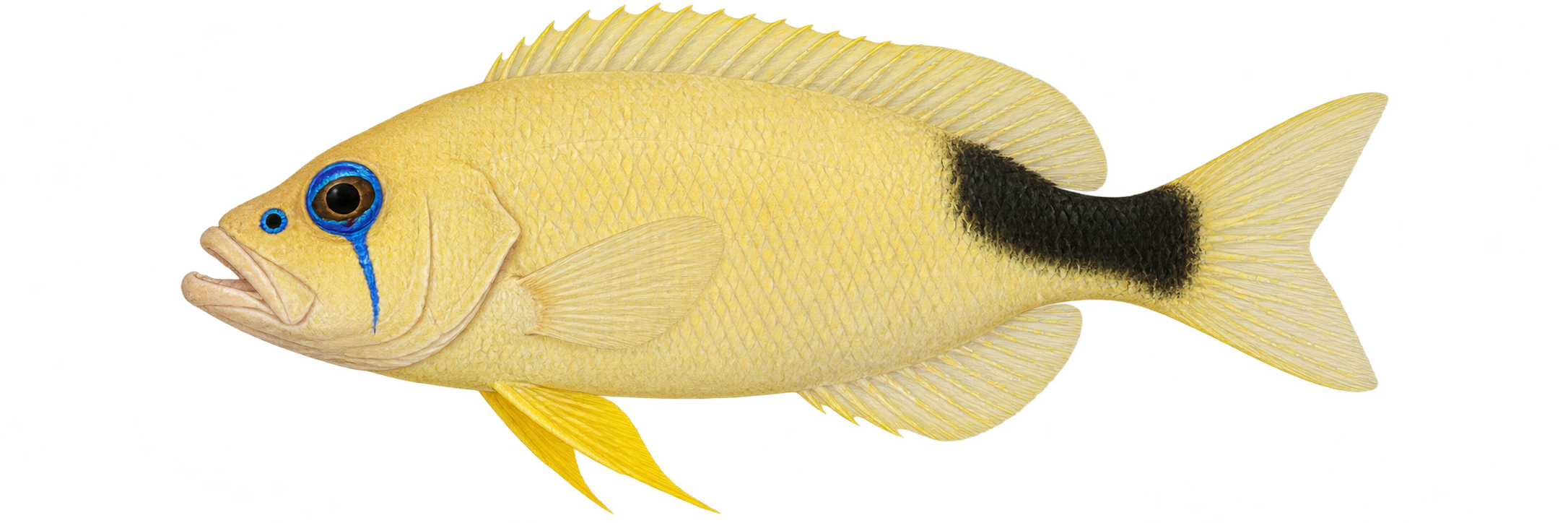
Size: Maximum about 13 cm (5.1 inches) total length.
Pale yellow hamlet with bright yellow pelvic fins and a large black saddle on the upper tail base.
Restricted live collection only; no spearing; protected collection areas apply
Explore the butter hamlet guide →Caesar Grunt
Deep-bodied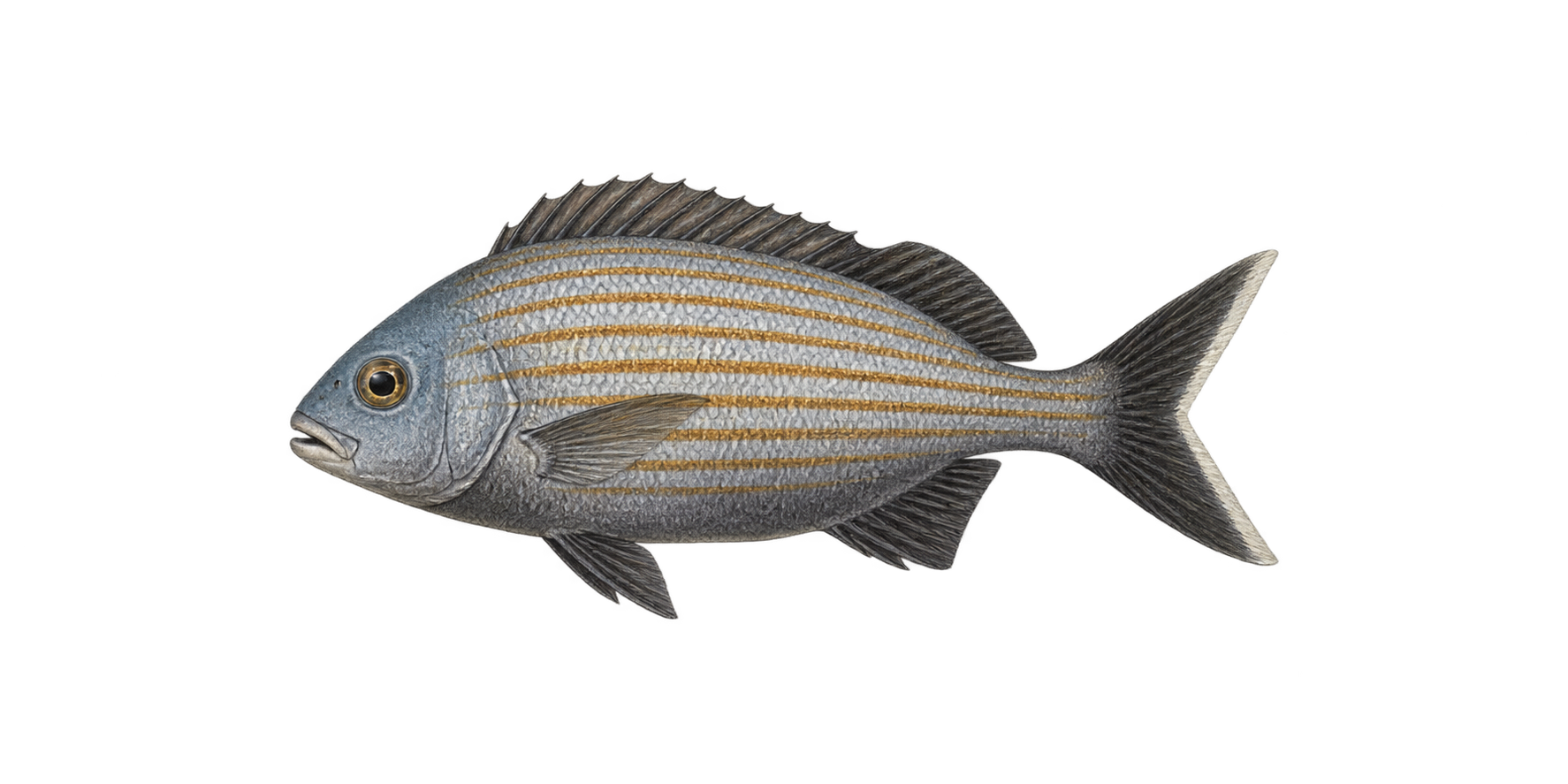
Size: Smithsonian reports a maximum of 40 cm, not a typical local encounter size.
Silvery-grey grunt with thin coppery body stripes, steel-blue head and dark fins; the belly may be very dusky.
Read the guide’s location, season and eating cautions before acting.
Cero Mackerel
Streamlined & torpedo-shaped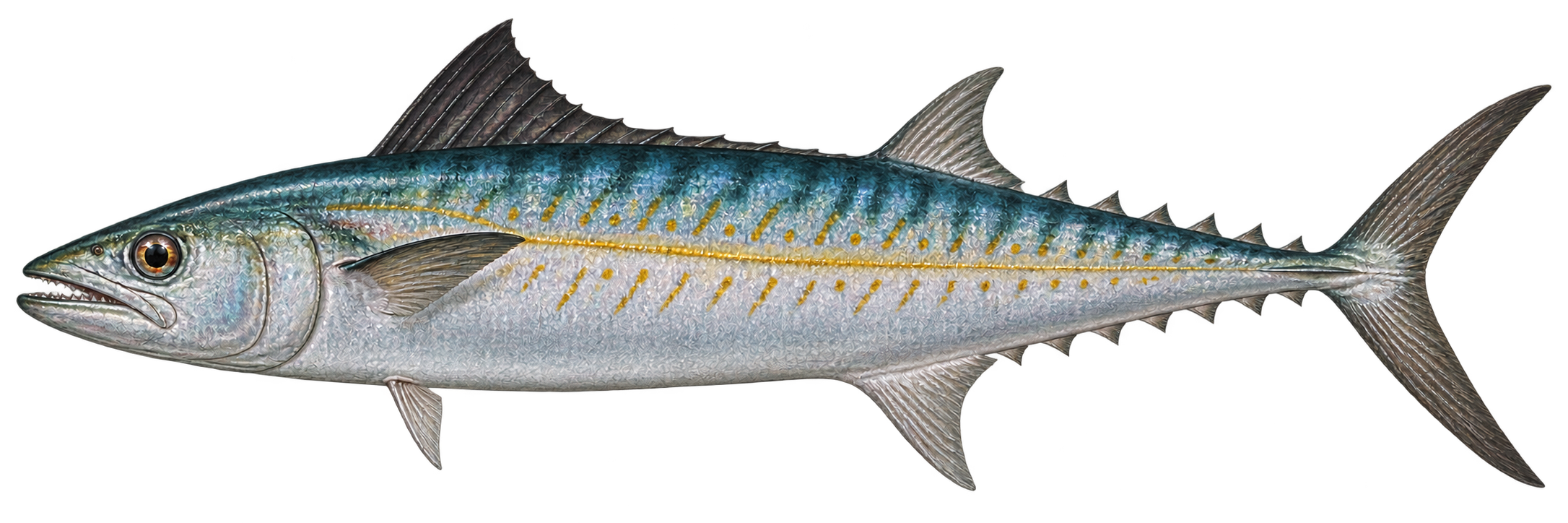
Size: FWC lists up to 36 in (91 cm); published maximum-size estimates differ. See size notes.
Streamlined silver mackerel with yellow-gold spots and a yellowish stripe along the side; the stripe helps separate it from Spanish mackerel.
Read the guide’s location, season and eating cautions before acting.
Chalk Bass
Streamlined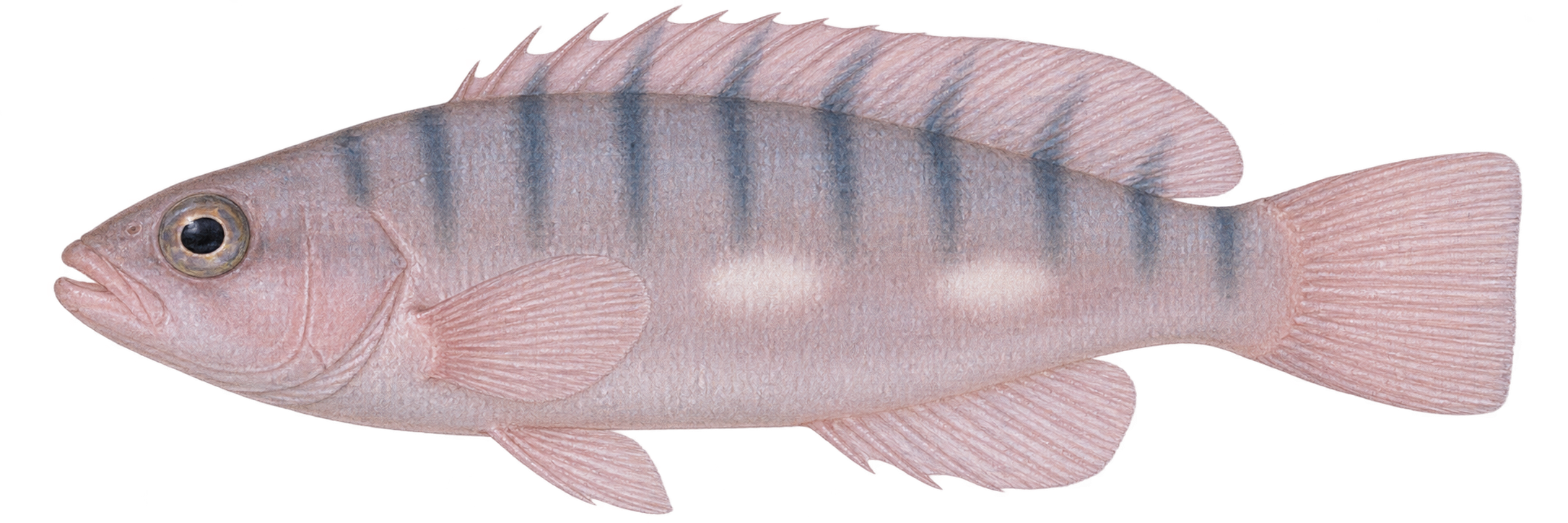
Size: Maximum about 8 cm (3.1 inches) total length.
Small pinkish to blue-grey bass with thin upper-body bars and a blunt-edged tail.
Restricted live collection only; no spearing; protected collection areas apply
Explore the chalk bass guide →Channel Flounder
Shape not assigned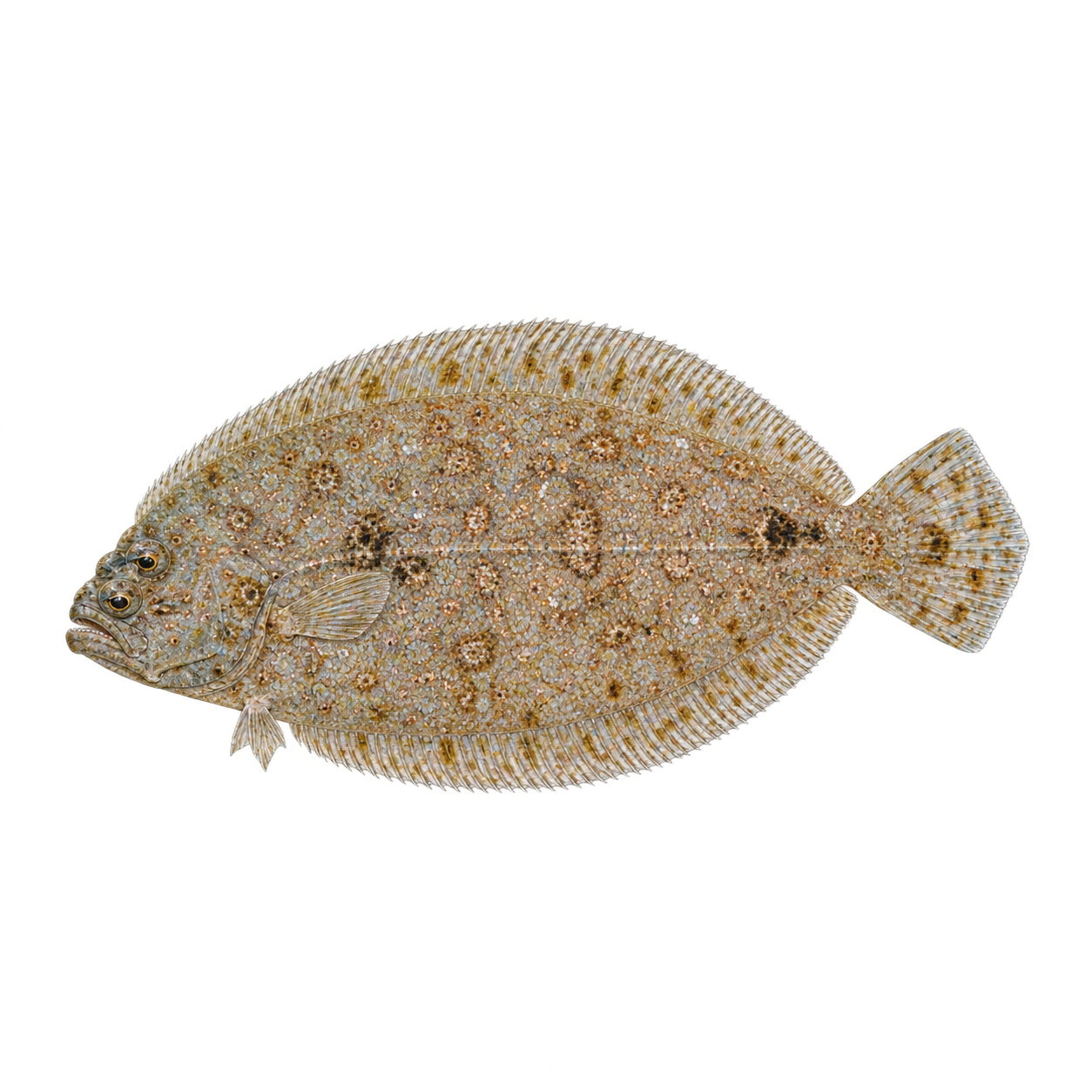
Size: Smithsonian reports a maximum of 30 cm. The entry does not explicitly identify total, fork or standard length for this maximum. Sex affects eye spacing; large males also have elongated upper pectoral rays. No growth timetable is provided.
A flattened oval fish with both eyes on its left side. The lower eye sits farther forward; females may show two diffuse dark patches along the lateral line.
Read the guide’s location, season and eating cautions before acting.
Cherubfish
Deep-bodied & oval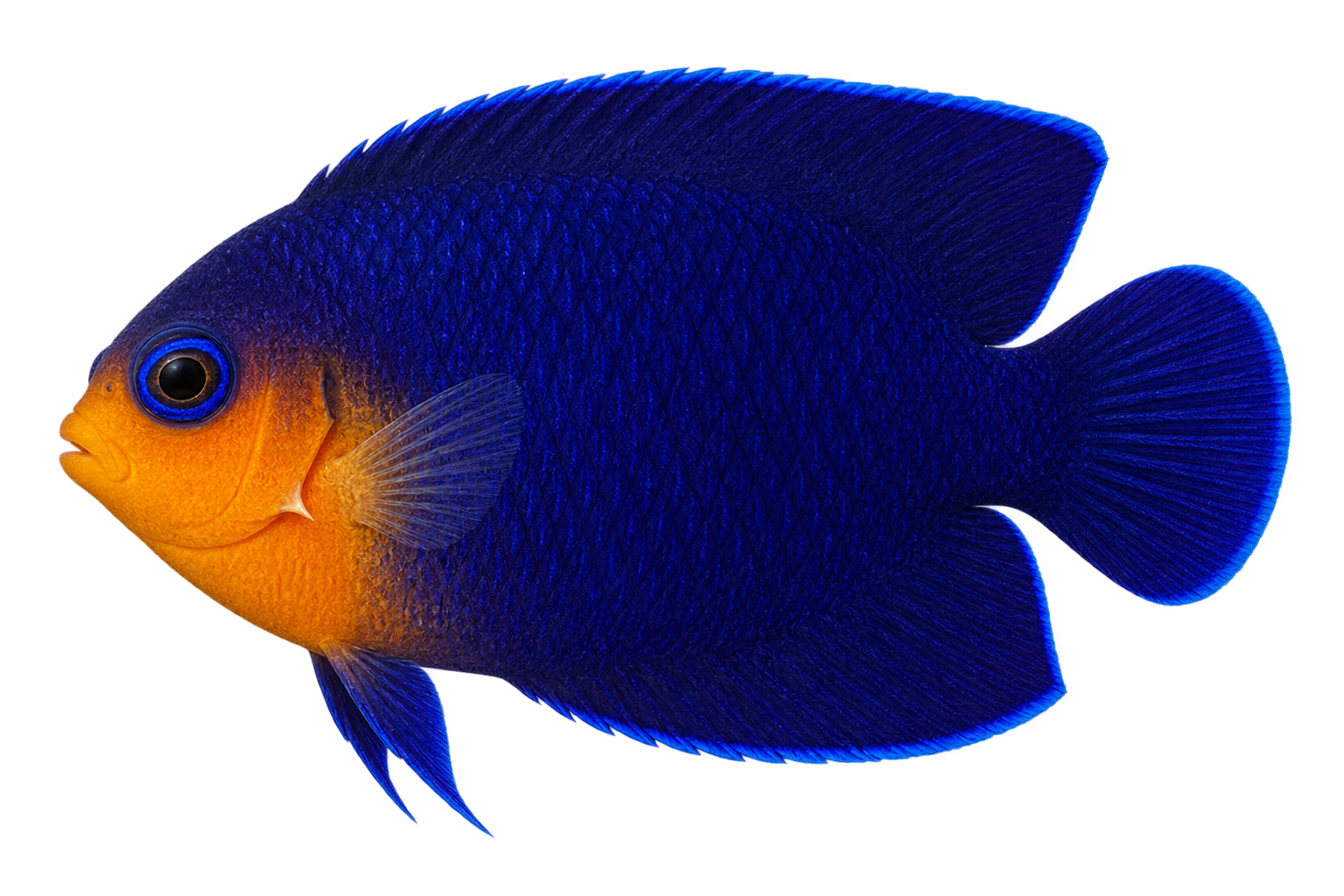
Size: The regional account gives about 5 cm (2 inches) as the maximum. Its small size is normal for this angelfish, not proof that it is a juvenile of a larger species. Browsing bands are approximate, not harvest limits.
A tiny, deep-blue angelfish with a yellow-orange lower face and chest and a blue ring around the eye. The body is oval and flattened, with a short blunt snout.
Read the guide’s location, season and eating cautions before acting.
Clown Wrasse
Streamlined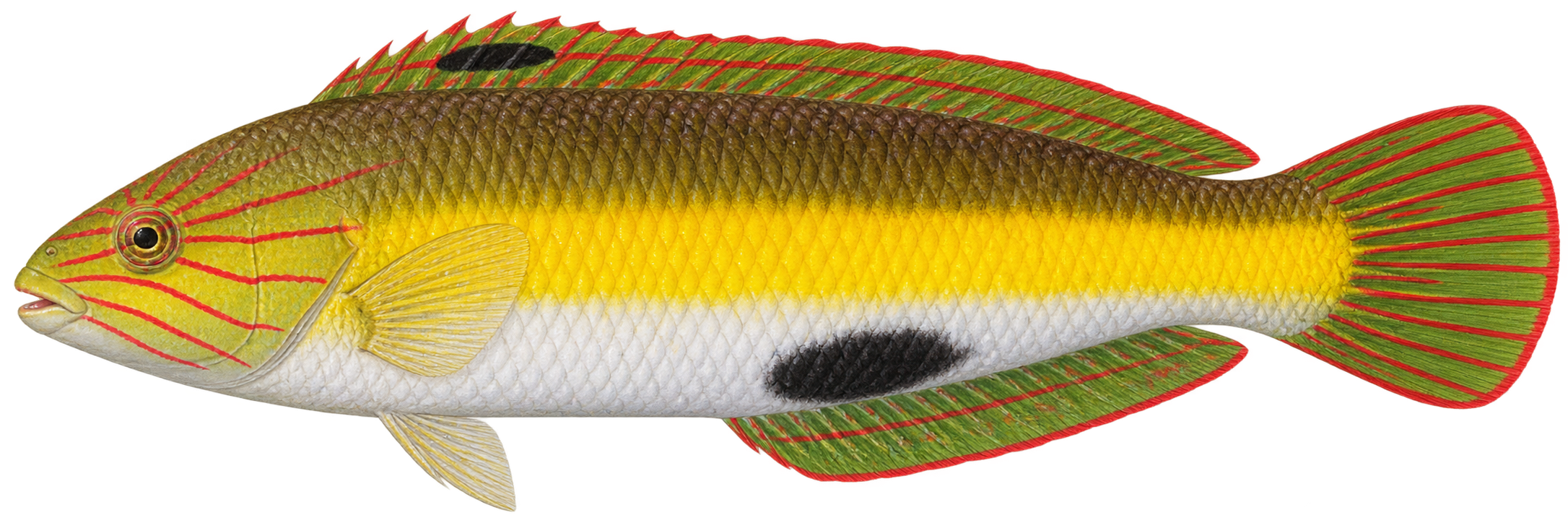
Size: Maximum about 15 cm (5.9 inches) total length.
Adult yellow side stripe, red facial lines, black dorsal spot and a conspicuous dark belly blotch.
Restricted live collection only; no spearing; protected collection areas apply
Explore the clown wrasse guide →Cobia
Streamlined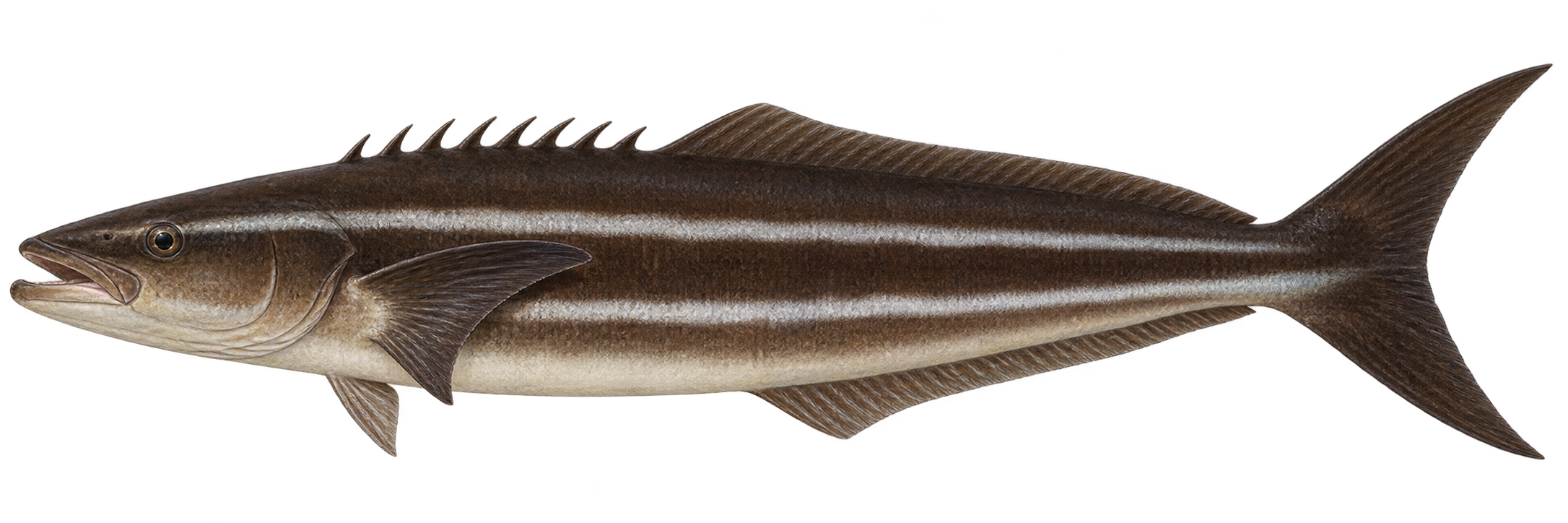
Size: Smithsonian gives a maximum of 200 cm (6.6 feet). Adults have a concave tail; juveniles have a rounder tail. Do not read the published maximum as an expected dive encounter. Browsing bands are approximate, not harvest limits.
An elongate, almost cylindrical fish with a broad flattened head, projecting lower jaw and dark body with pale lengthwise stripes. Several short, separate dorsal spines precede the long soft dorsal fin.
Read the guide’s location, season and eating cautions before acting.
Cocoa Damselfish
Deep-bodied & oval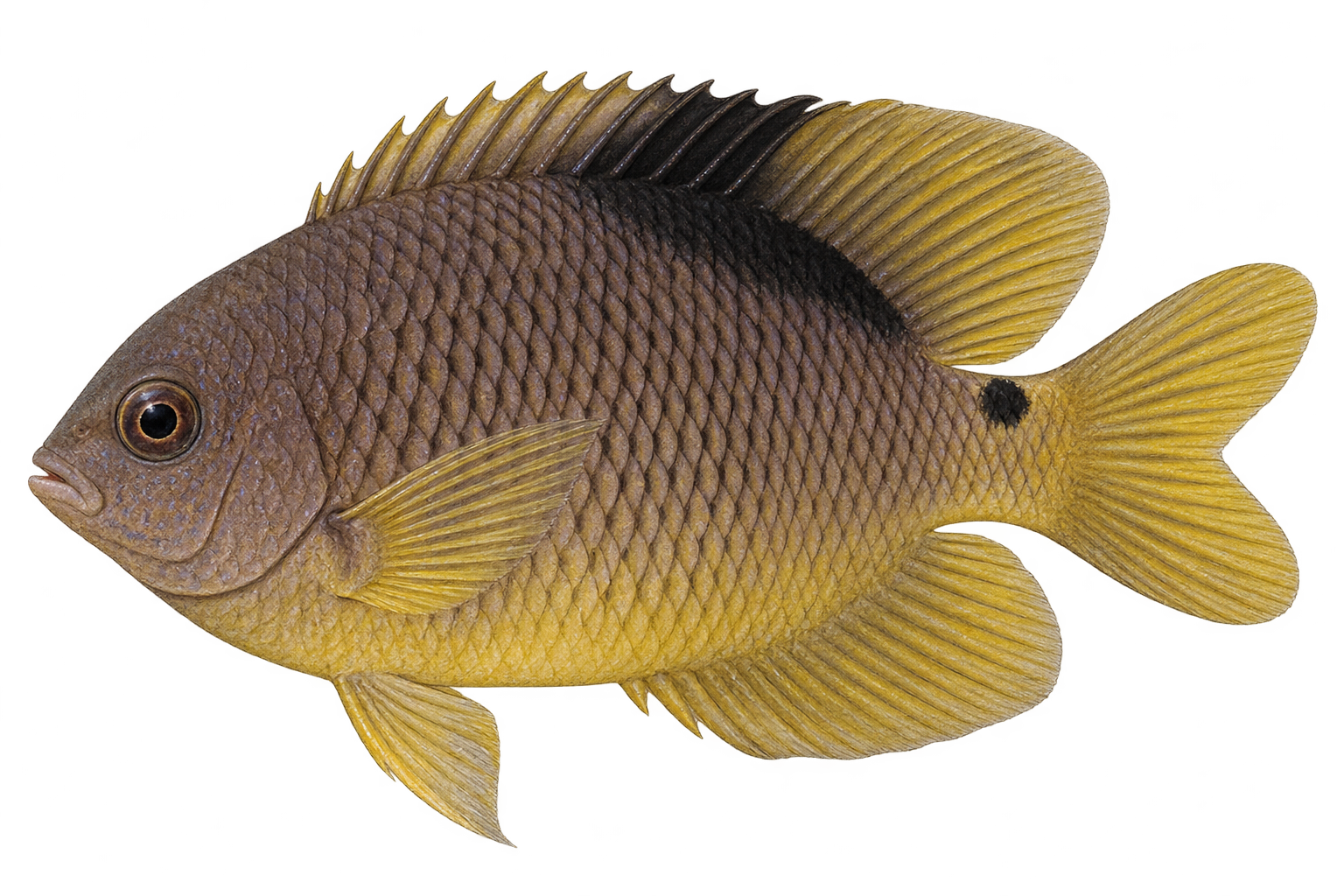
Size: Smithsonian reports maximum 12 cm.
Brown adult with diagonal scale lines; dark dorsal patch extends onto back.
Restricted marine life: live collection only; no spearing
Explore the cocoa damselfish guide →Colon Goby
Streamlined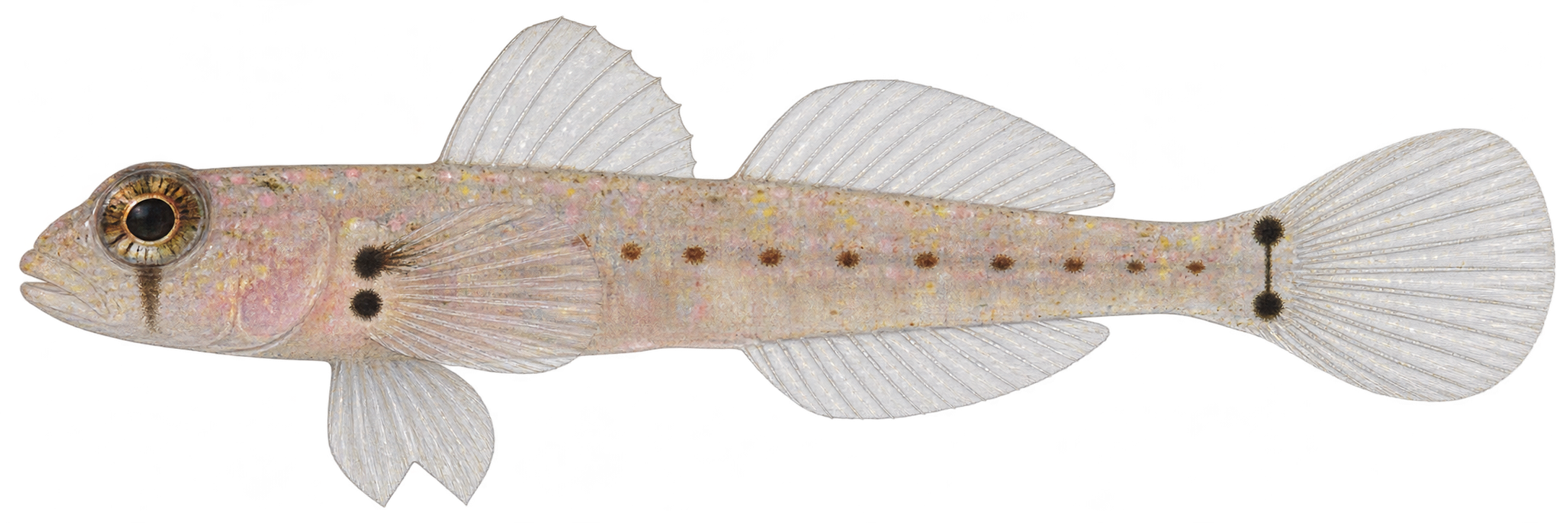
Size: Maximum about 5 cm (2.0 inches).
Two dark dots at the pectoral-fin base resemble a punctuation colon.
Restricted marine life: live collection only; no spearing
Explore the colon goby guide →Common Snook
Streamlined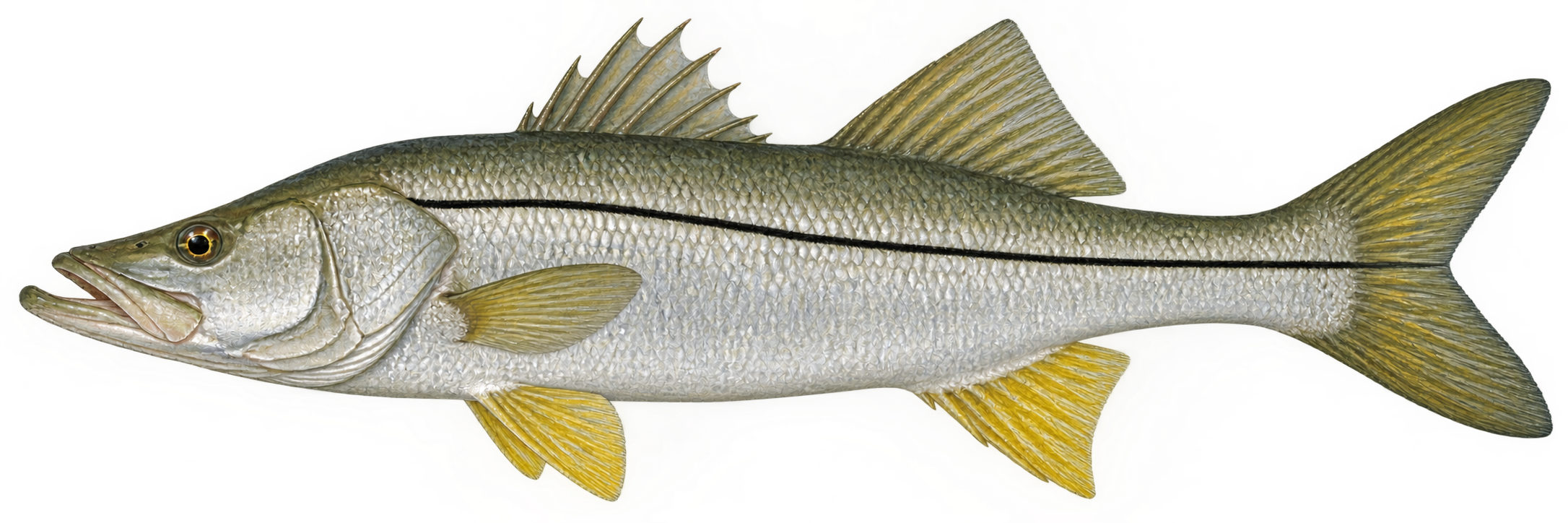
Size: Adults can exceed 3 feet; maximum reports exceed 4 feet.
Bold black lateral stripe, large mouth with projecting lower jaw and two separate dorsal fins.
Seasonal harvest; hook-and-line only
Explore the common snook guide →Coney
Robust reef fish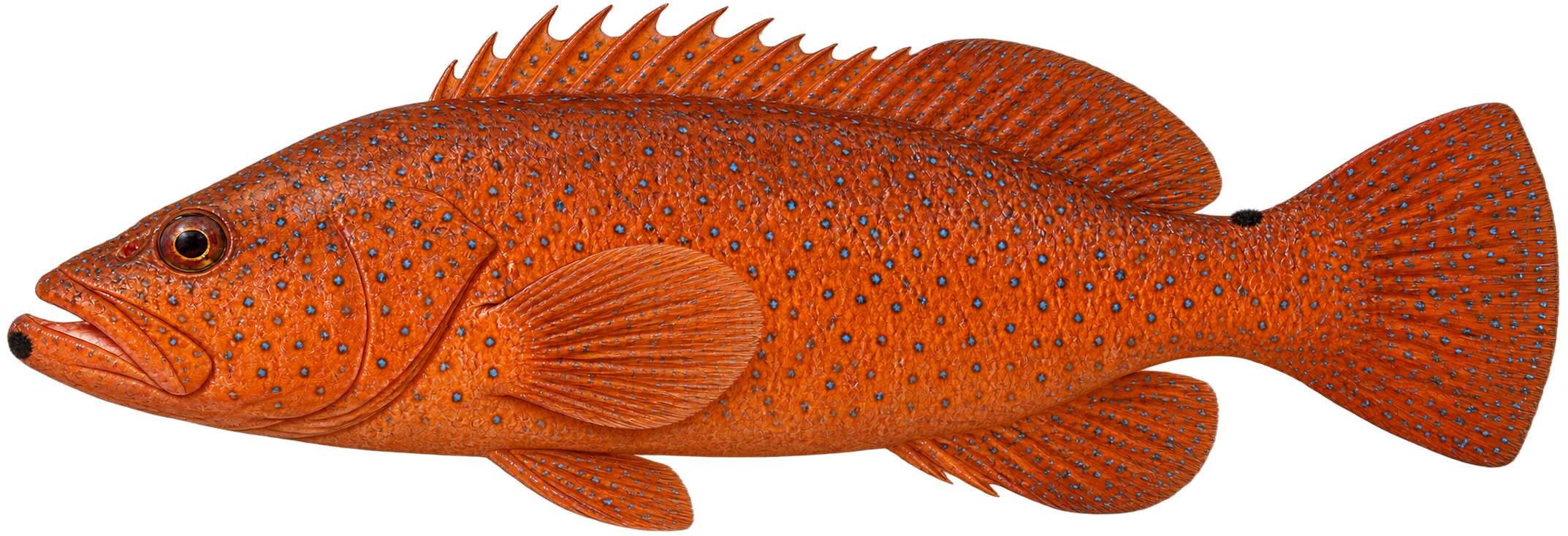
Size: Reported maximum 39 cm; maximum is not a typical sighting size.
Small grouper with blue speckles and paired dark spots at the top of the tail base; additional dark marks occur at the lower-jaw tip.
Read the guide’s location, season and eating cautions before acting.
Cottonwick
Streamlined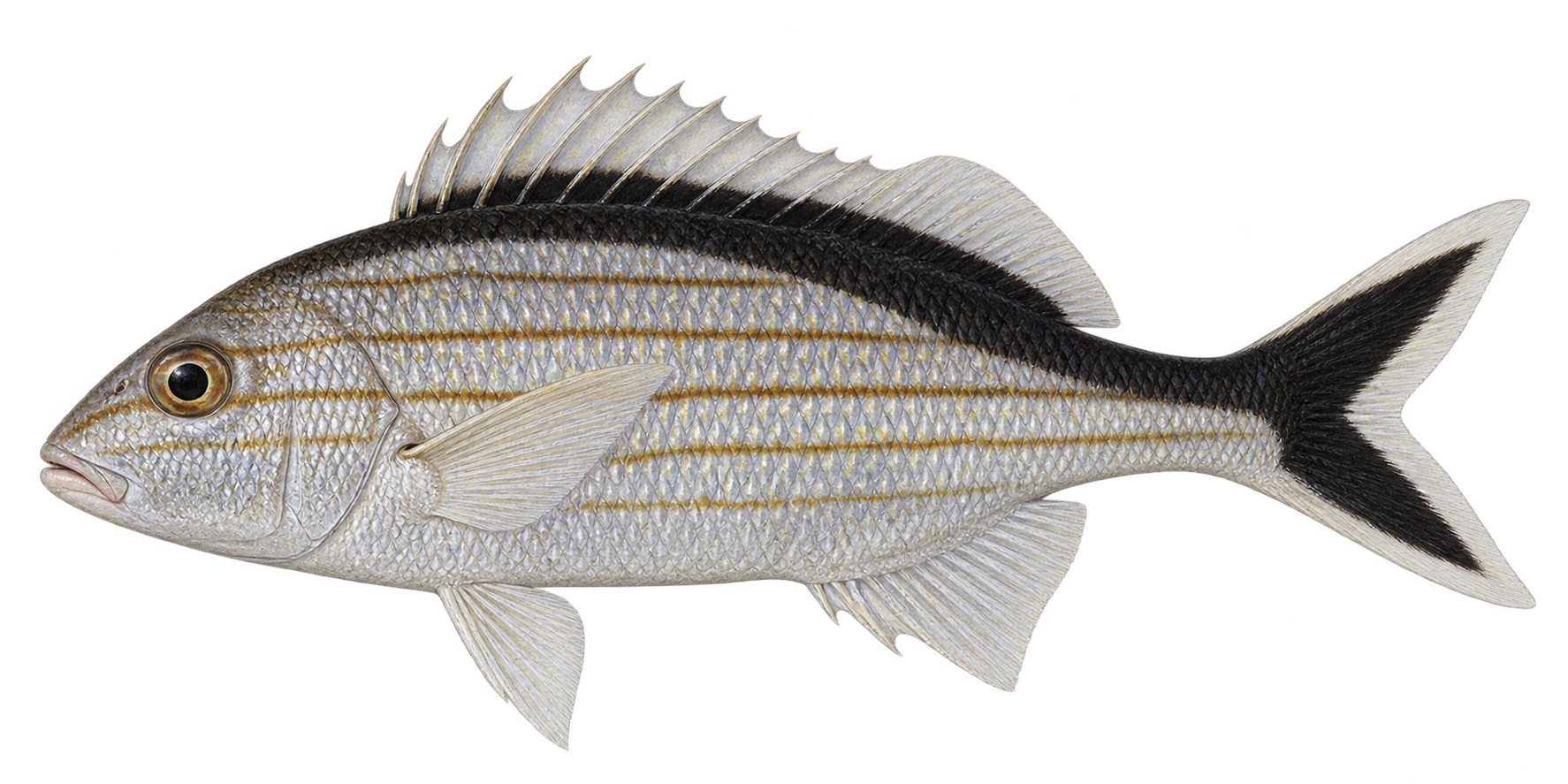
Size: Up to about 14 inches (35 cm) total length.
Broad dark upper-back stripe flows into a black V in the tail.
Harvest may be allowed; limits and site restrictions apply
Explore the cottonwick guide →Creole Wrasse
Streamlined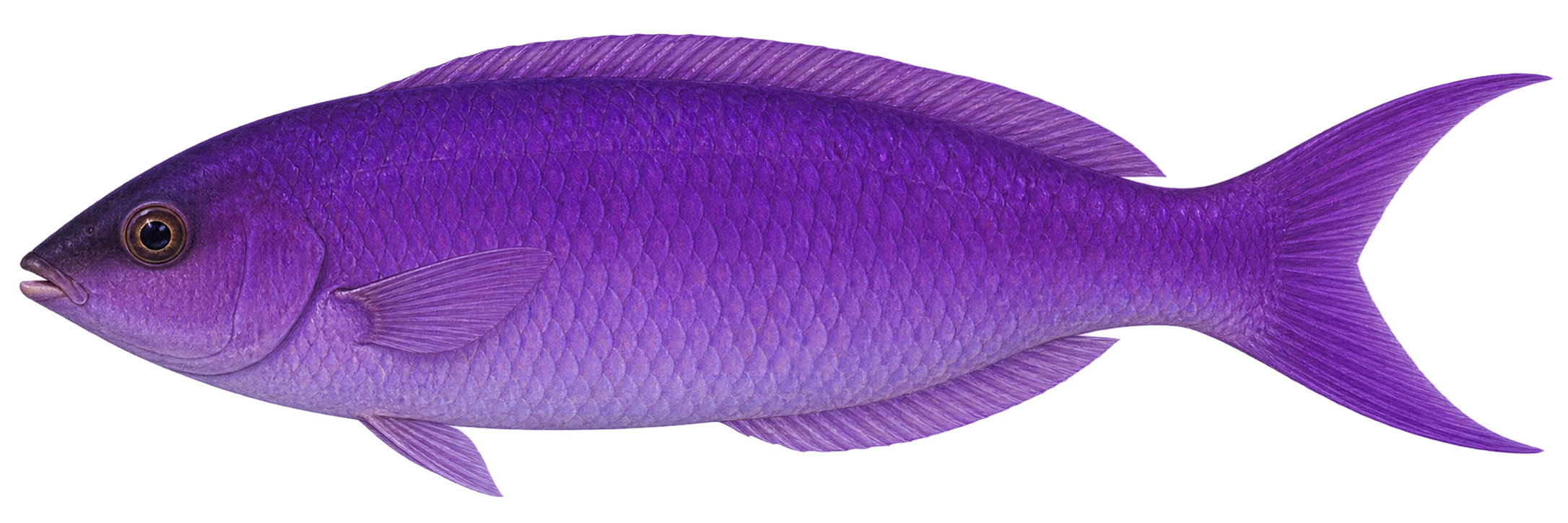
Size: Maximum about 30 cm (11.8 inches) total length.
Purple schooling wrasse with a small dark snout and deeply concave tail.
Restricted live collection only; no spearing; protected collection areas apply
Explore the creole wrasse guide →Creolefish (Atlantic)
Shape not assigned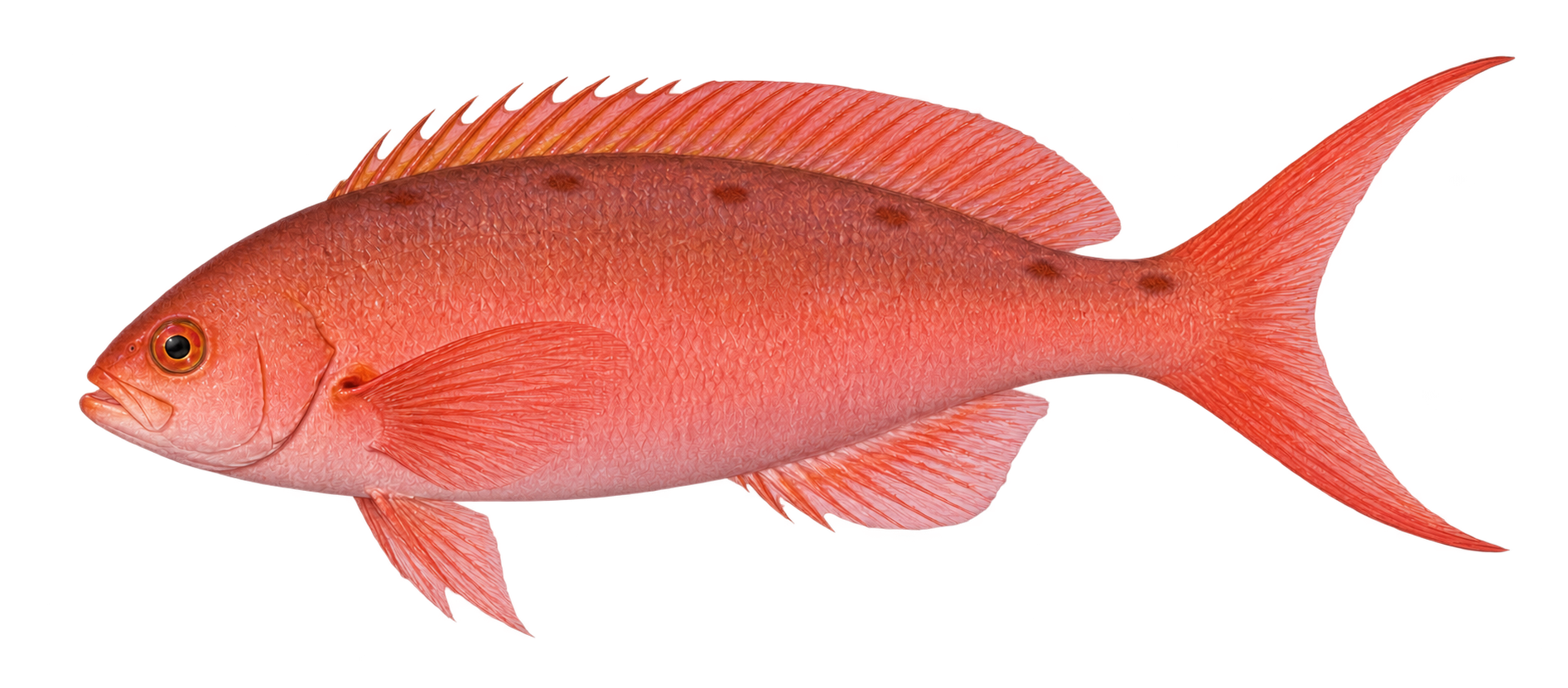
Size: The Smithsonian account reports 40 cm. It does not explicitly specify total, fork or standard length for this value; do not compare it directly with a length-labeled measurement.
A streamlined reddish to purplish reef fish with a deeply concave tail. Young fish may be bright yellow, with dark spots along the upper back.
Read the guide’s location, season and eating cautions before acting.
Crevalle Jack
Streamlined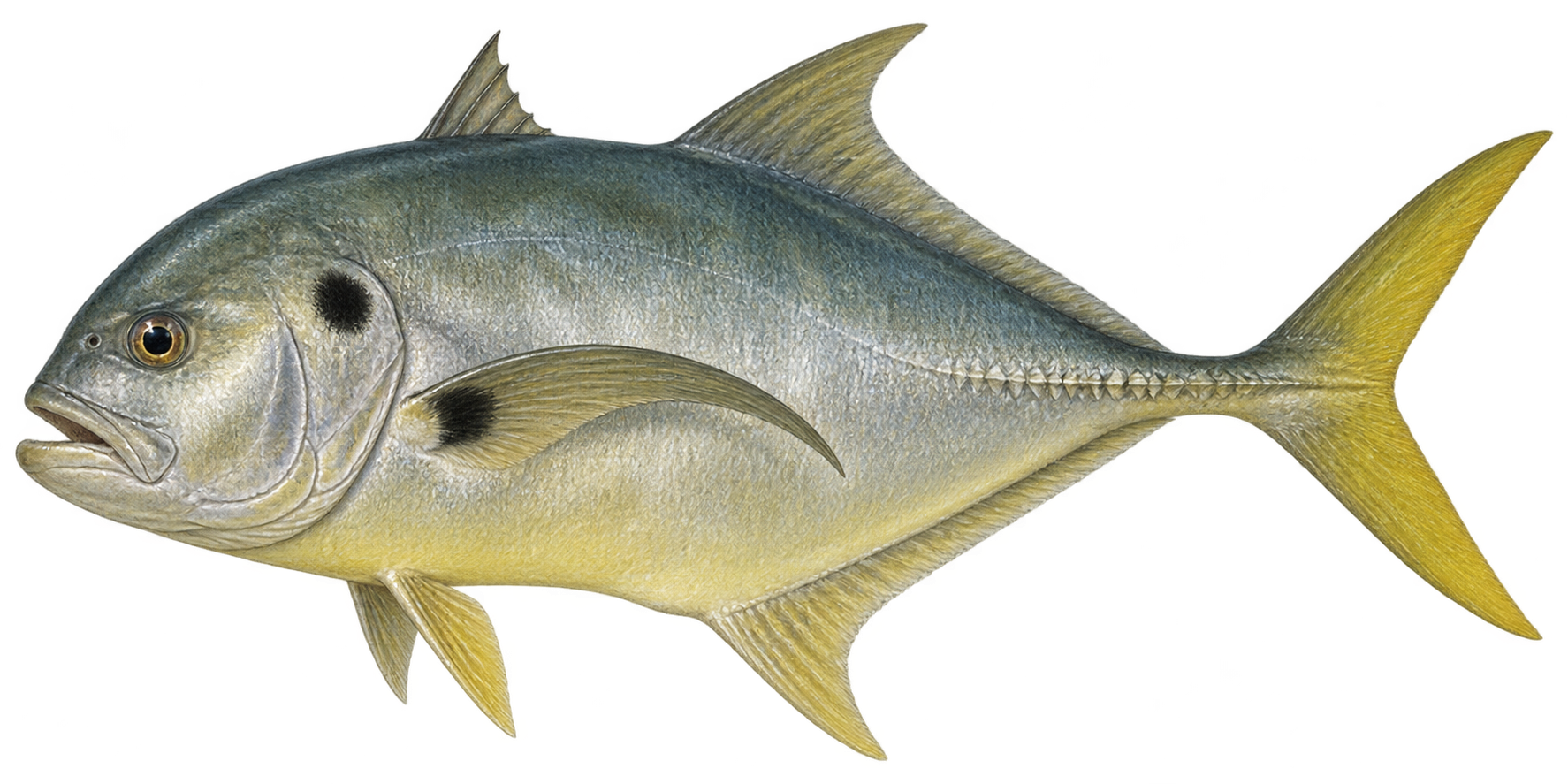
Size: Often about 2–2.5 feet; reported maximum roughly 4 feet.
Steep forehead, dark gill-cover and pectoral marks, strong forked yellowish tail.
Harvest allowed under default recreational rules
Explore the crevalle jack guide →Cubbyu
Deep-bodied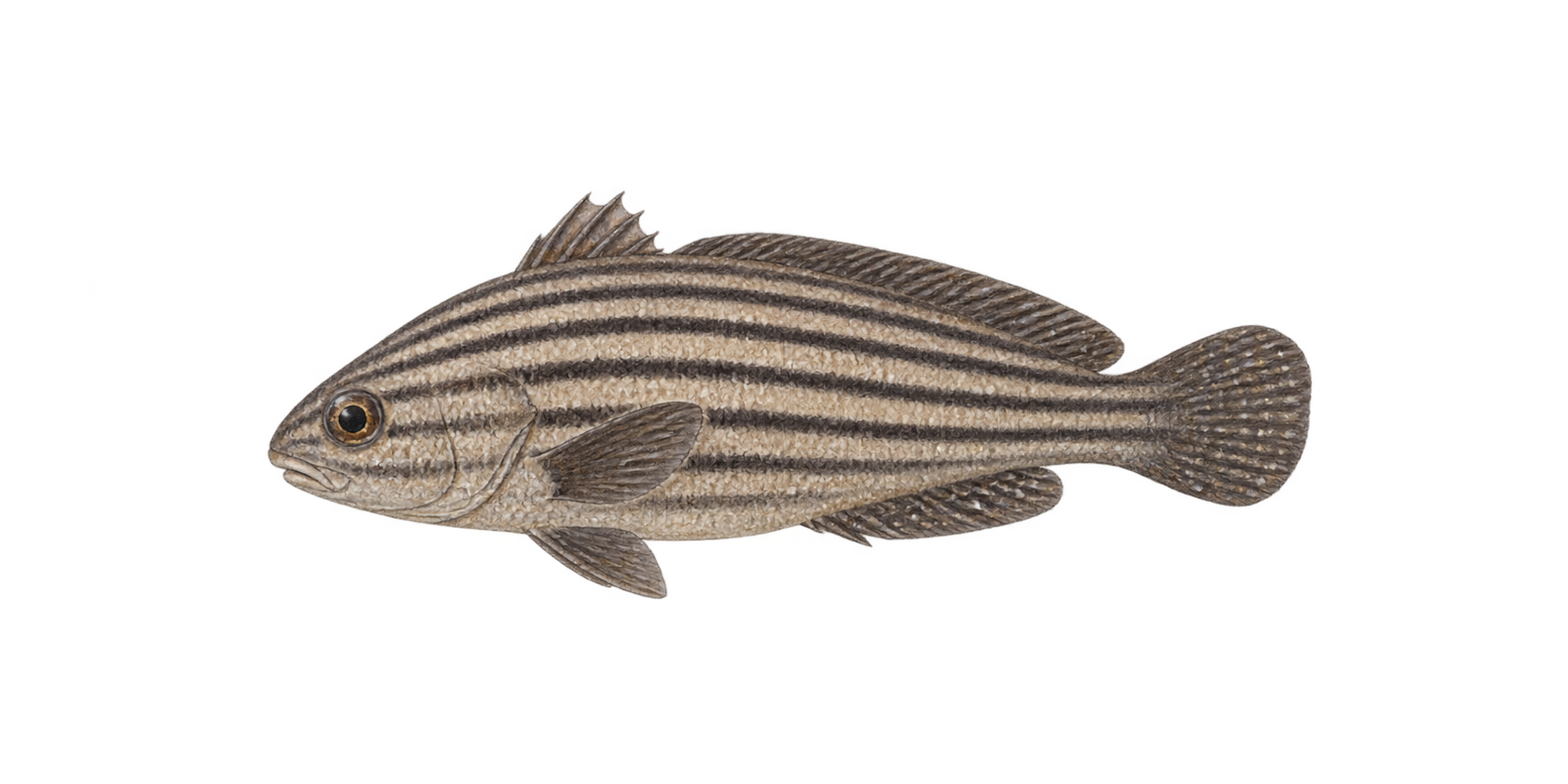
Size: Smithsonian reports a maximum of 20 cm, not a typical local encounter size.
Deep, arched-backed drum; adults have dark grey fins and body crossed by many narrow black stripes.
Read the guide’s location, season and eating cautions before acting.
Cubera Snapper
Elongated & robust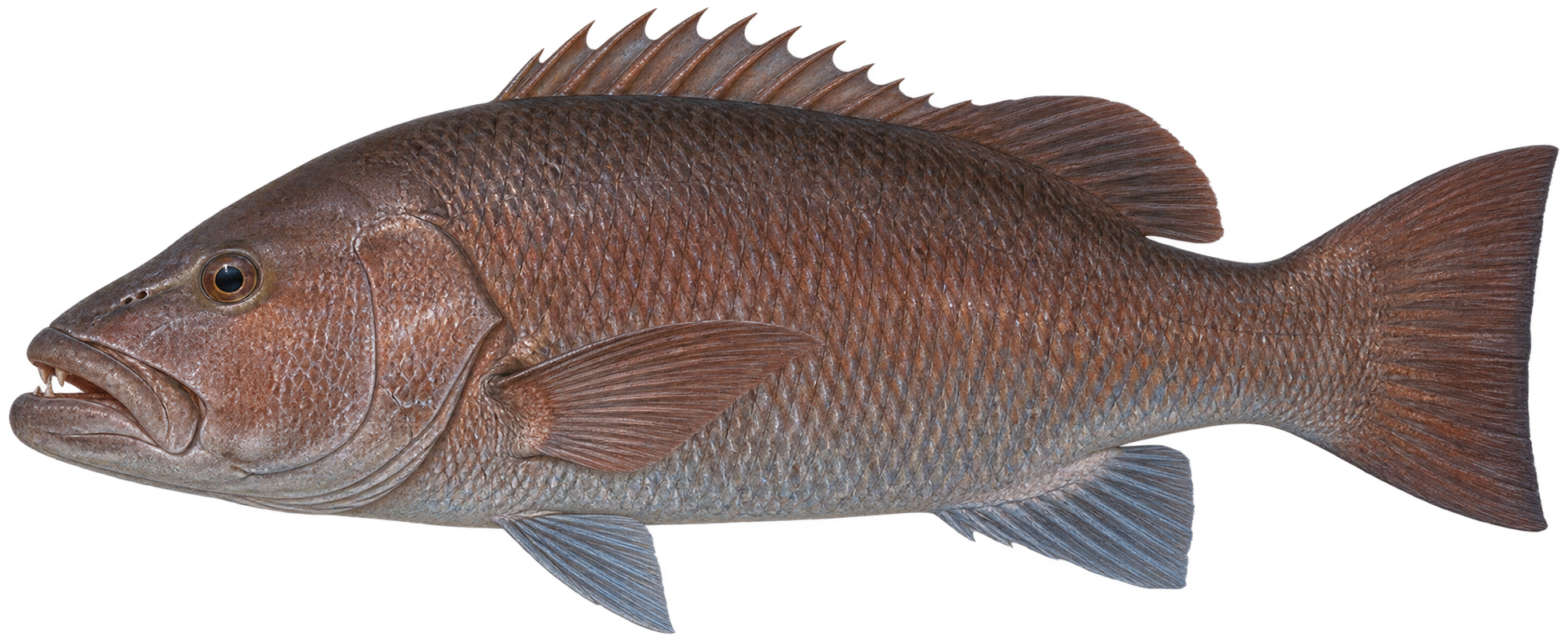
Size: Large adults may be around 90 cm (3 ft); maximum withheld pending source reconciliation.
Large gray to brown snapper with robust, conspicuous canine teeth and a substantial head.
Read the guide’s location, season and eating cautions before acting.
Dash Goby
Elongated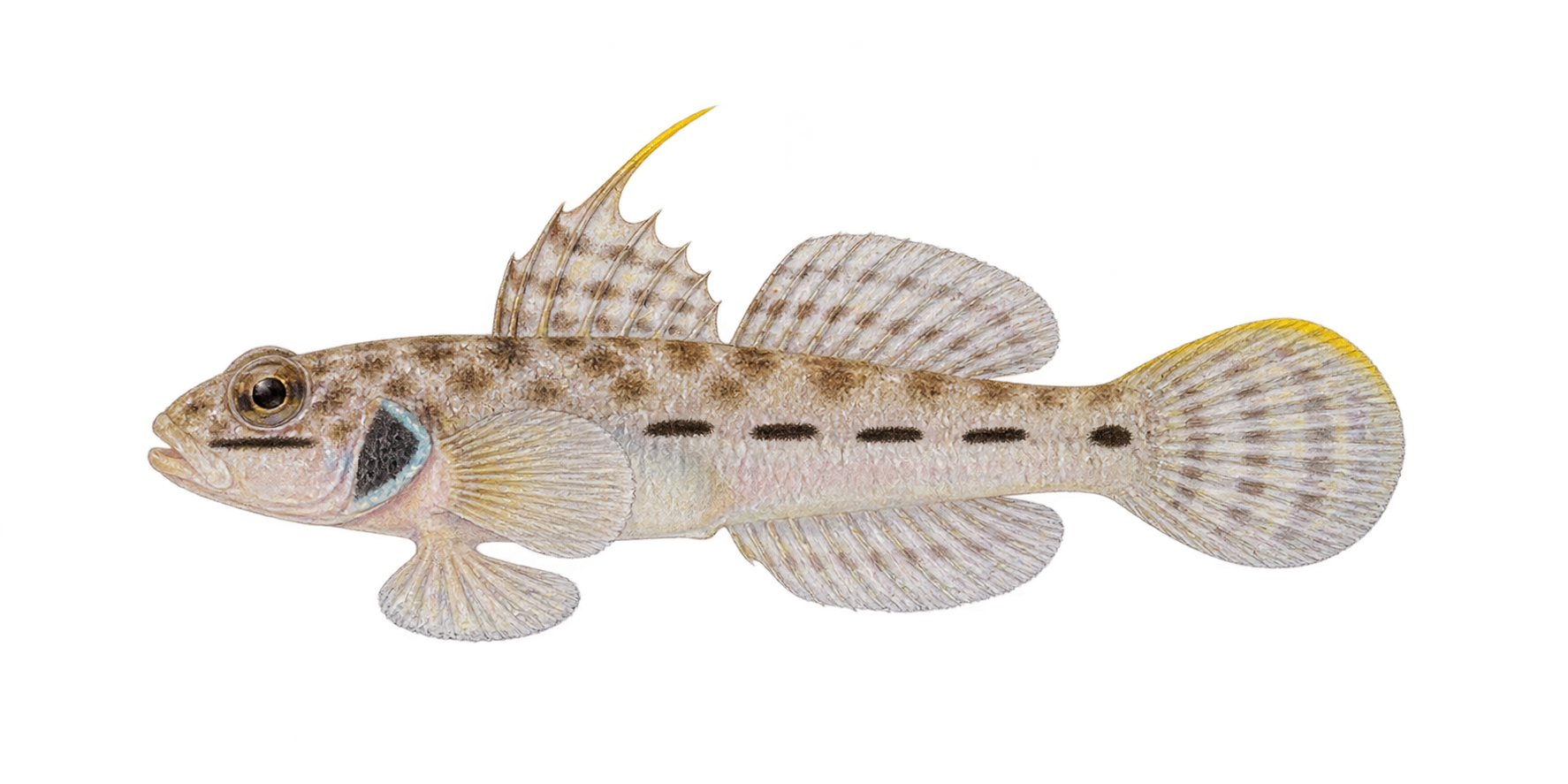
Size: Smithsonian reports a maximum length of 5 cm. This is a regional upper record, not a typical local encounter size.
Translucent goby with a dark bar below the eye, blue-edged cheek-region blotch and five black dashes or spots along the flank.
Read the guide’s location, season and eating cautions before acting.
Doctorfish
Deep-bodied & oval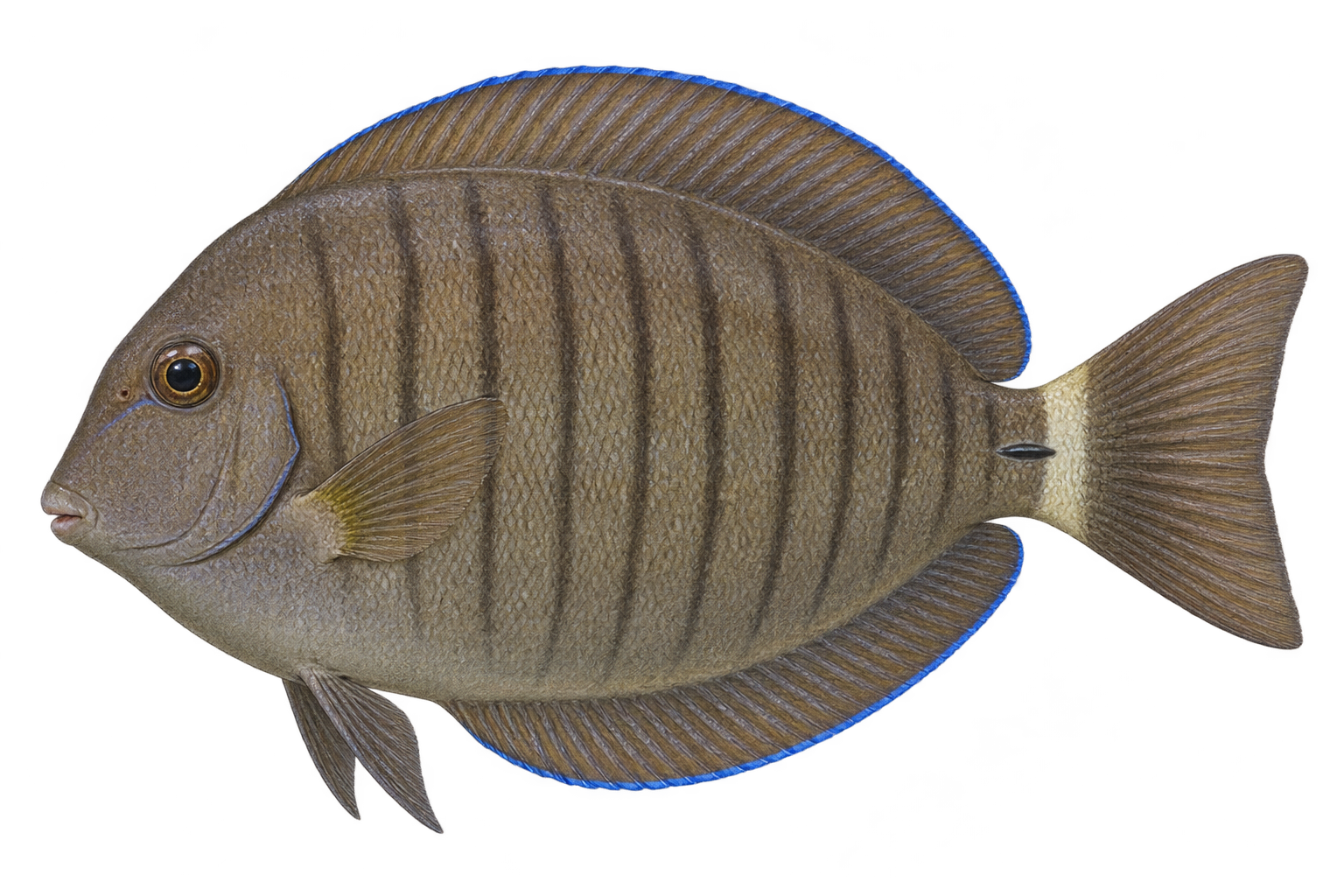
Size: About 34–35 cm maximum.
Doctorfish have a deep, flattened gray-brown body marked by roughly eight to twelve narrow dark vertical bars.
Restricted marine life: live collection only; spearing prohibited
Explore the doctorfish guide →Dog Snapper
Elongated & robust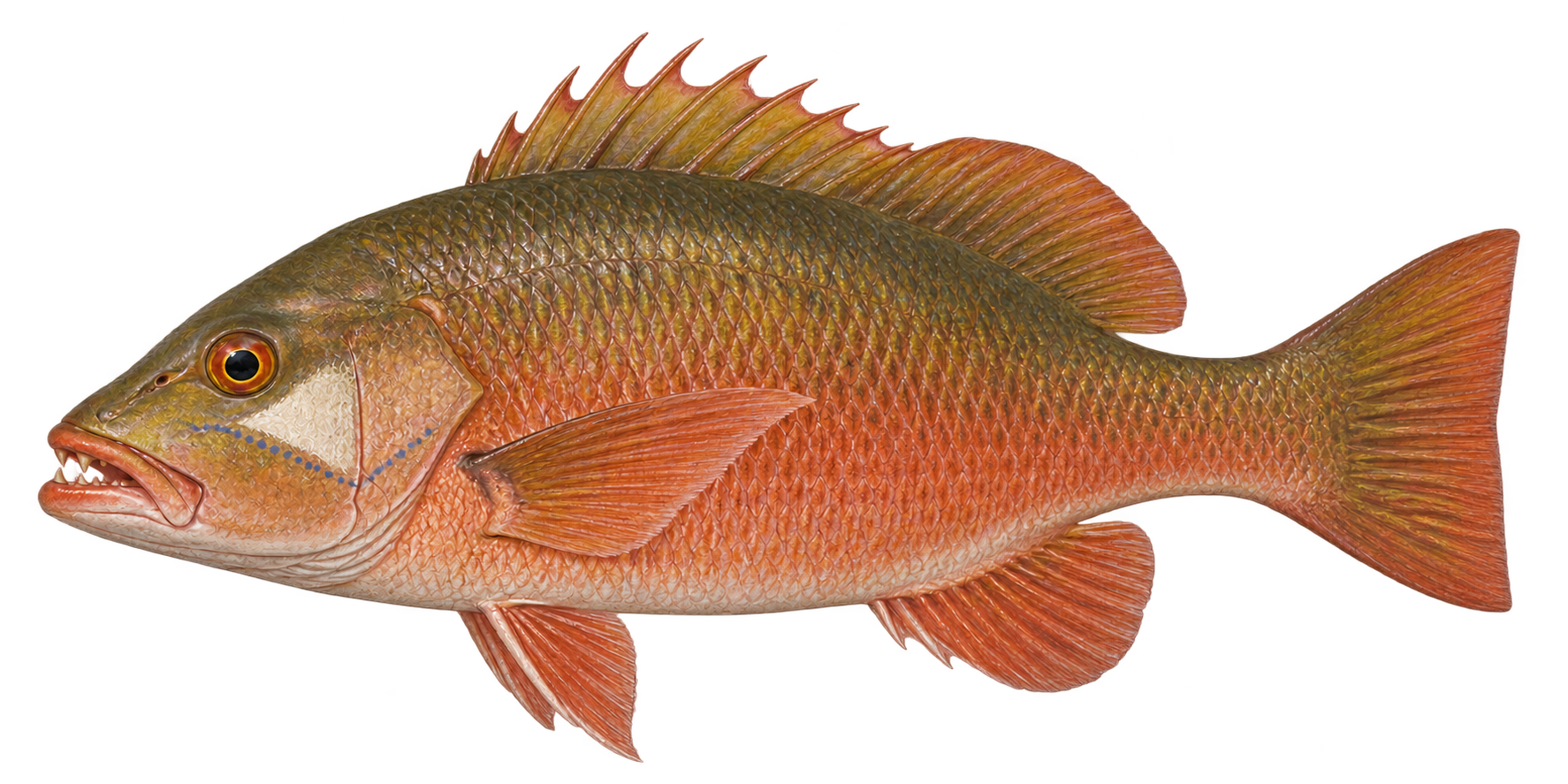
Size: Reported maximum: 128 cm (about 50 in), following Smithsonian; published sources differ.
A pale triangular cheek mark below the eye and strong canine teeth; olive above, paler or coppery below.
Read the guide’s location, season and eating cautions before acting.
Downy Blenny
Elongated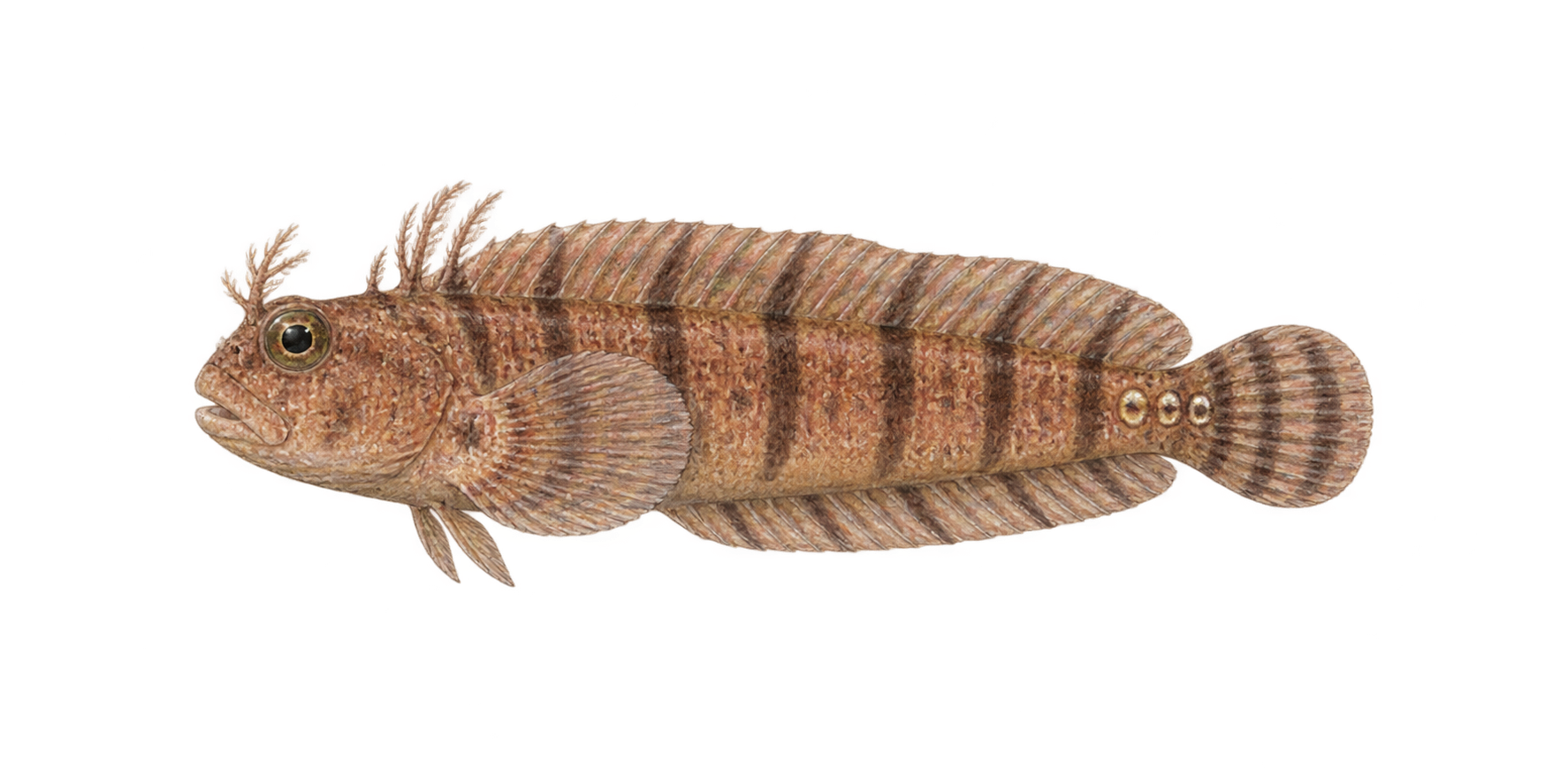
Size: Smithsonian reports a maximum of 8.3 cm, not a typical local encounter size.
Stocky mottled blenny with branched head cirri, six or seven body bars and three pale ringed spots at the tail base.
Read the guide’s location, season and eating cautions before acting.
Dusky Damselfish
Deep-bodied & oval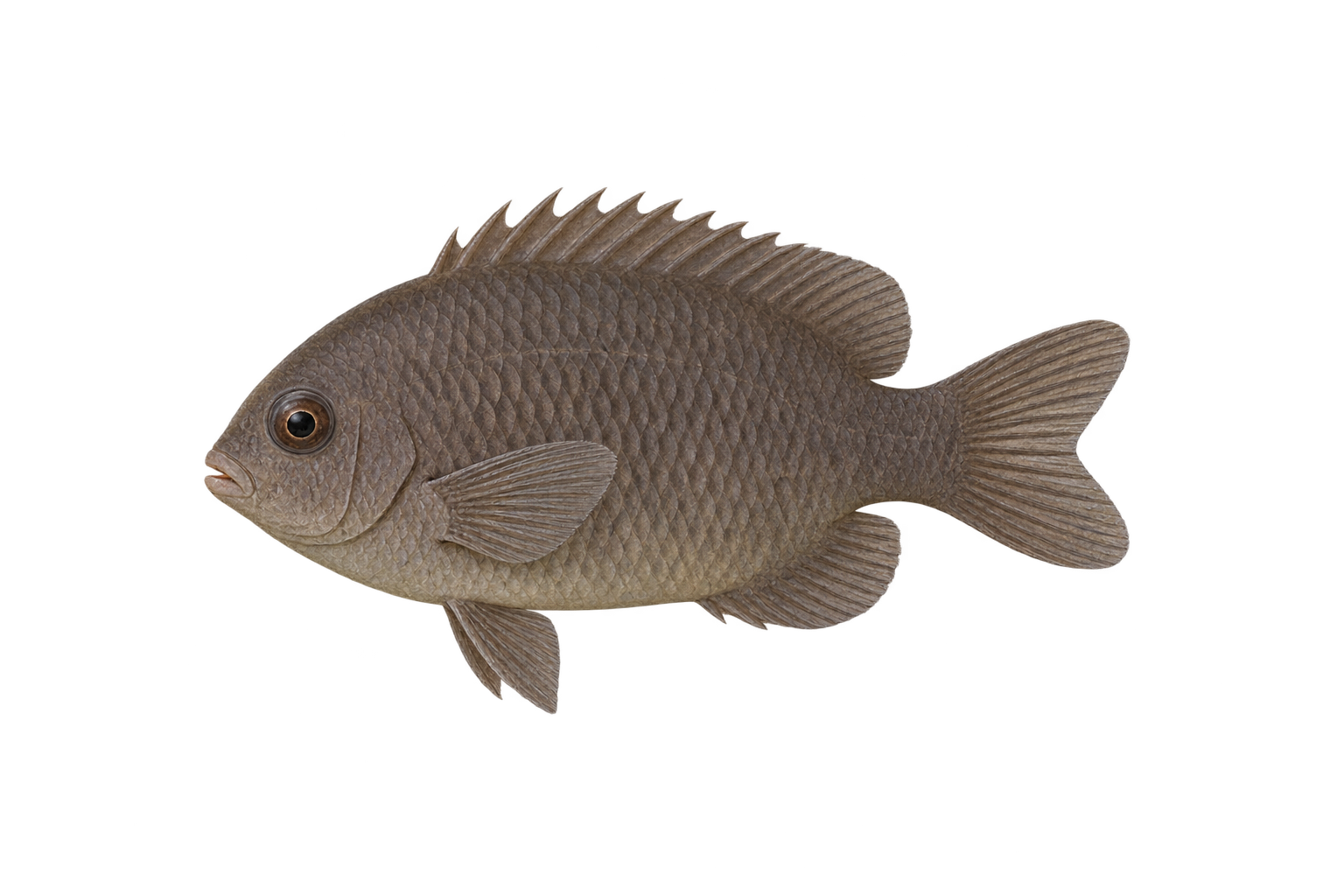
Size: Regional account to 10.5 cm; other compilations list larger maxima.
Brown adults with short rear fins; juveniles have an orange-red upper wash, blue markings and dark dorsal and tail-base spots.
Read the guide’s location, season and eating cautions before acting.
Dusky Jawfish
Elongated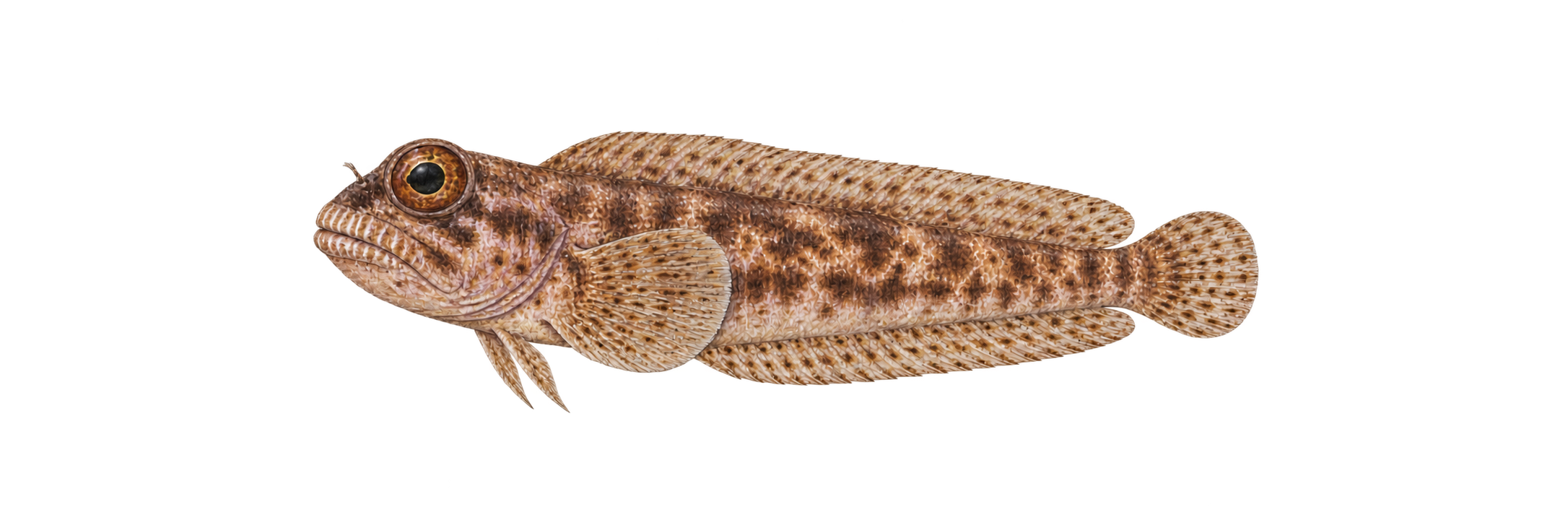
Size: Smithsonian reports a maximum of 7.8 cm. This is a source-specific upper length, not a typical local sighting size.
A mottled brown jawfish with a large head, white bars on the upper lip and a dark bar between the eyes.
Read the guide’s location, season and eating cautions before acting.
Dusky Squirrelfish
Shape not assigned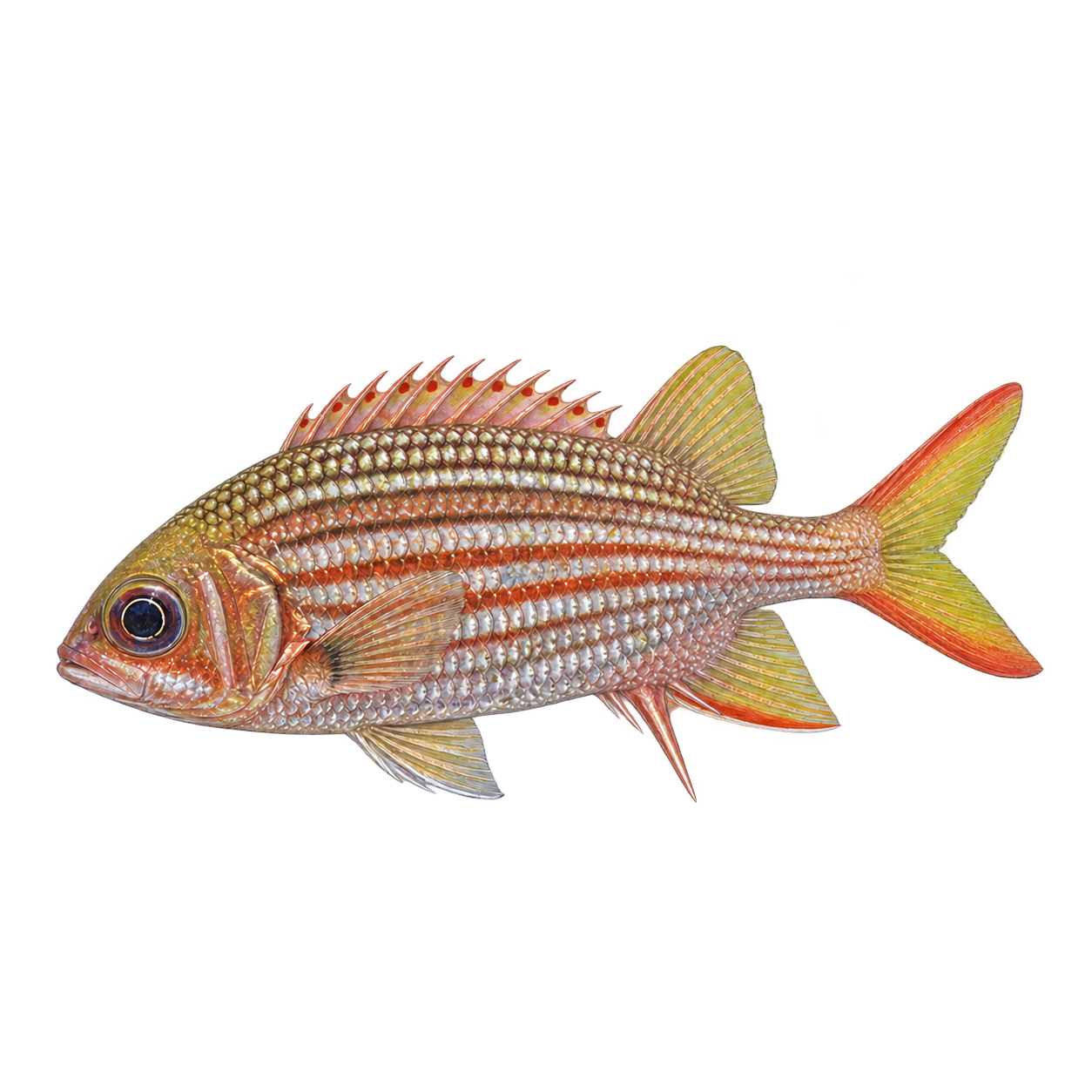
Size: Smithsonian reports a maximum of 17.2 cm. The entry does not explicitly identify total, fork or standard length for this maximum. The source does not establish separate juvenile size limits.
A reddish-brown squirrelfish with broad silver stripes edged dark. Red spots follow the tips of the pink spiny dorsal; the inside of the pectoral base is dark.
Read the guide’s location, season and eating cautions before acting.
Dwarf Sand Perch
Streamlined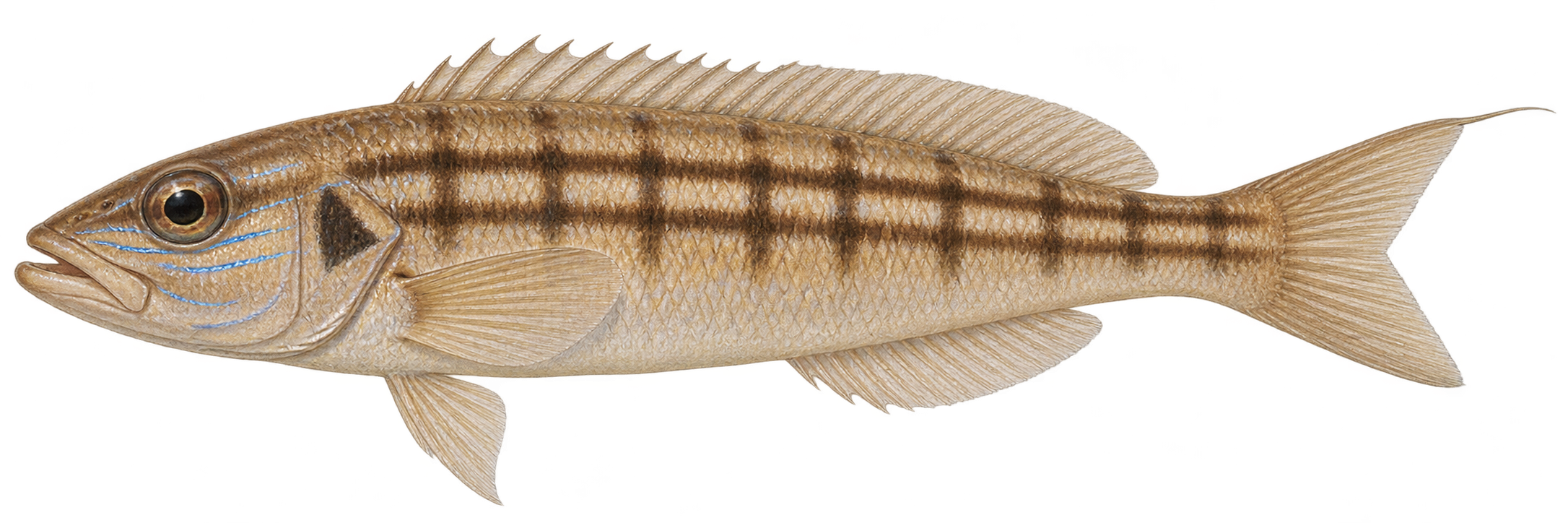
Size: Maximum about 25 cm (9.8 inches) total length.
Slender bass with two dark side stripes, irregular paired bars and a single cheek-spine cluster.
Harvest conditionally allowed; default state limits and protected areas apply
Explore the dwarf sand perch guide →Eyed Flounder
Flat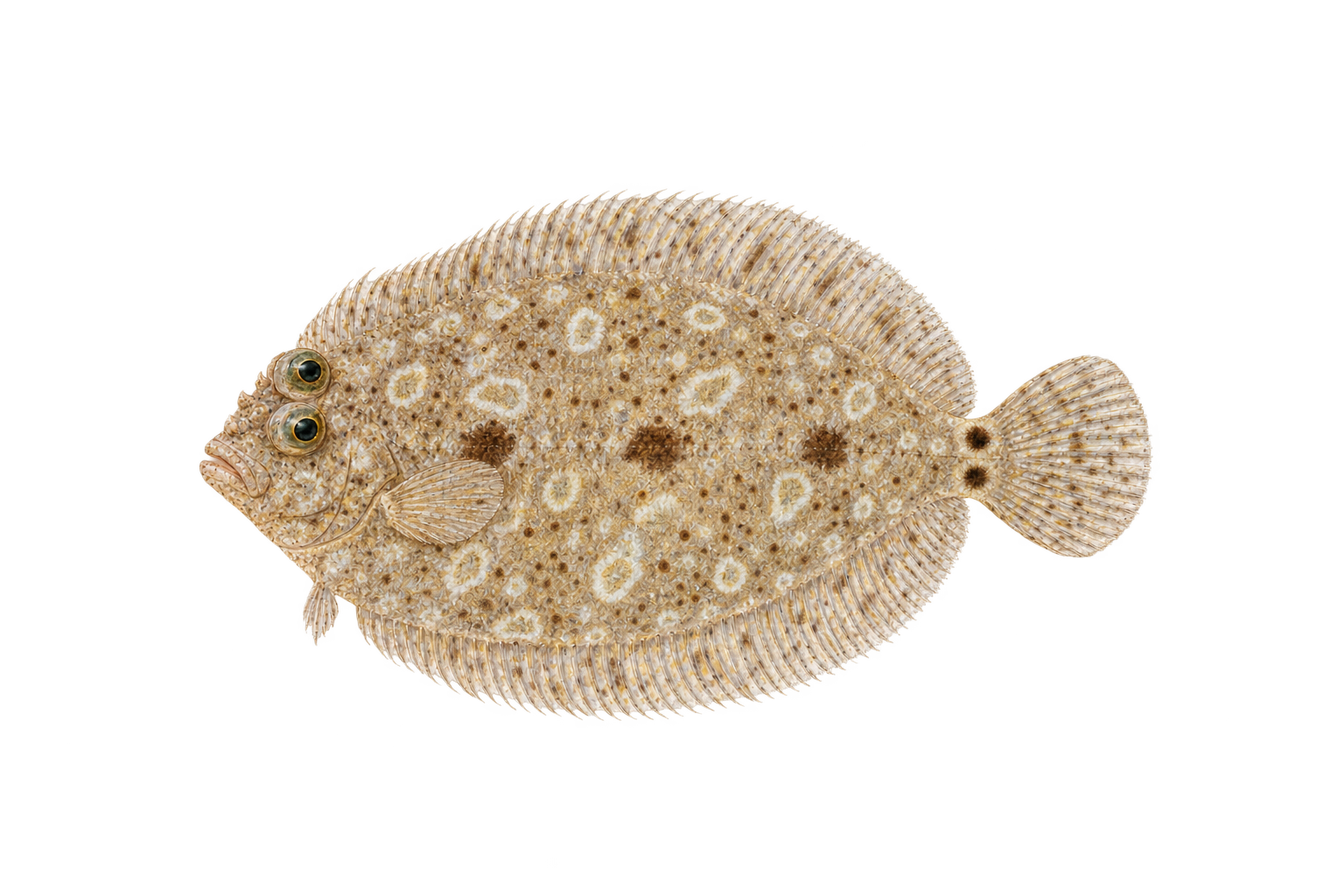
Size: Smithsonian reports a maximum of 16 cm. This is a source-specific upper length, not a typical local sighting size.
A broad oval flatfish with brown rosettes, three darker clusters along the lateral line and paired dark marks at the tail-fin base.
Read the guide’s location, season and eating cautions before acting.
Fairy Basslet
Elongate & oval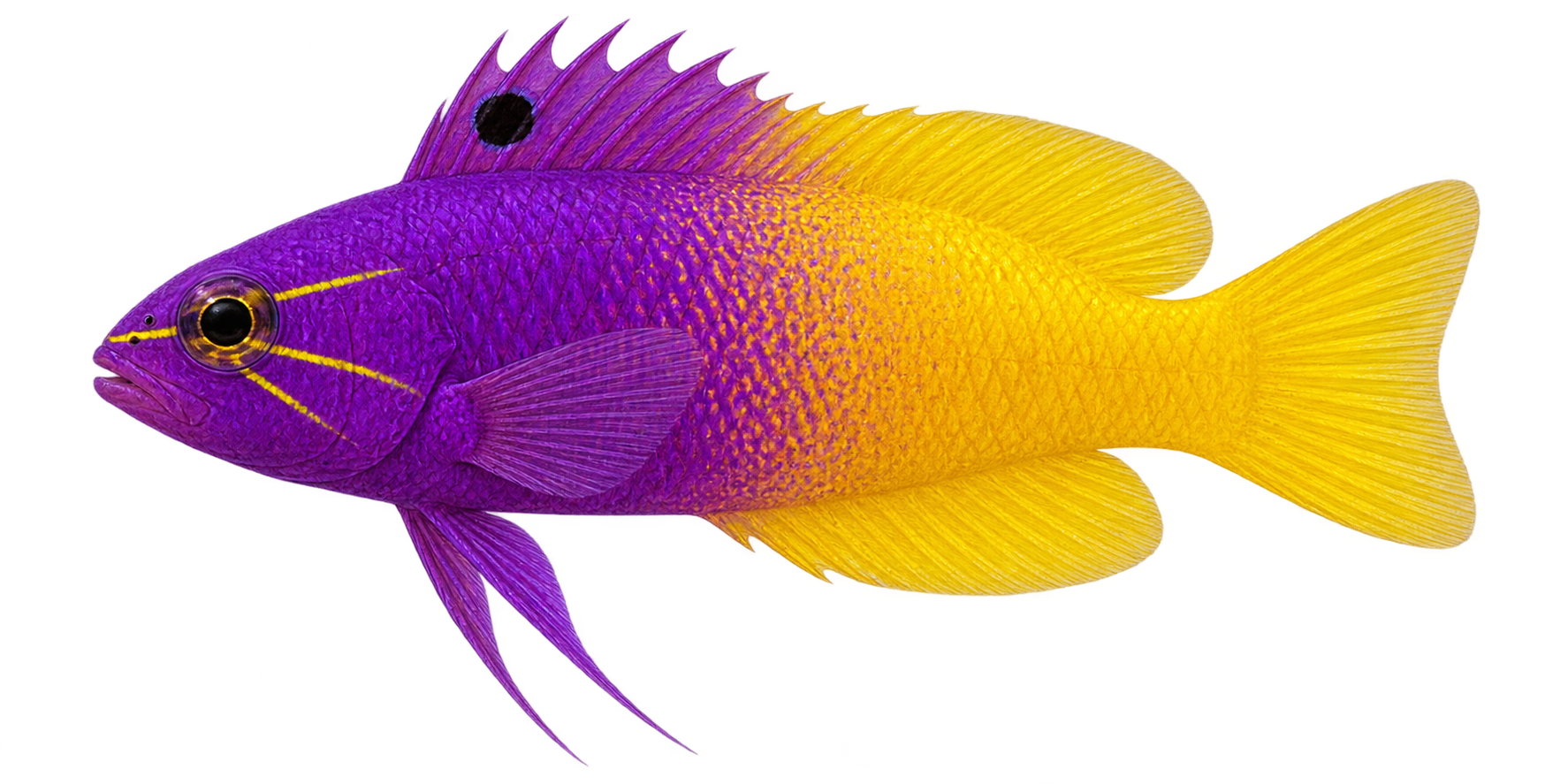
Size: The regional reference reports 8 cm (3.1 inches). Tiny individuals need the same color and fin checks; apparent size changes with distance and camera angle. Browsing bands are approximate, not harvest limits.
The front half is purple and the rear half yellow. A black spot marks the front of the dorsal fin, and fine yellow lines extend from the eye. Obtain a full side view of the color boundary.
Read the guide’s location, season and eating cautions before acting.
Flagfin Mojarra
Oval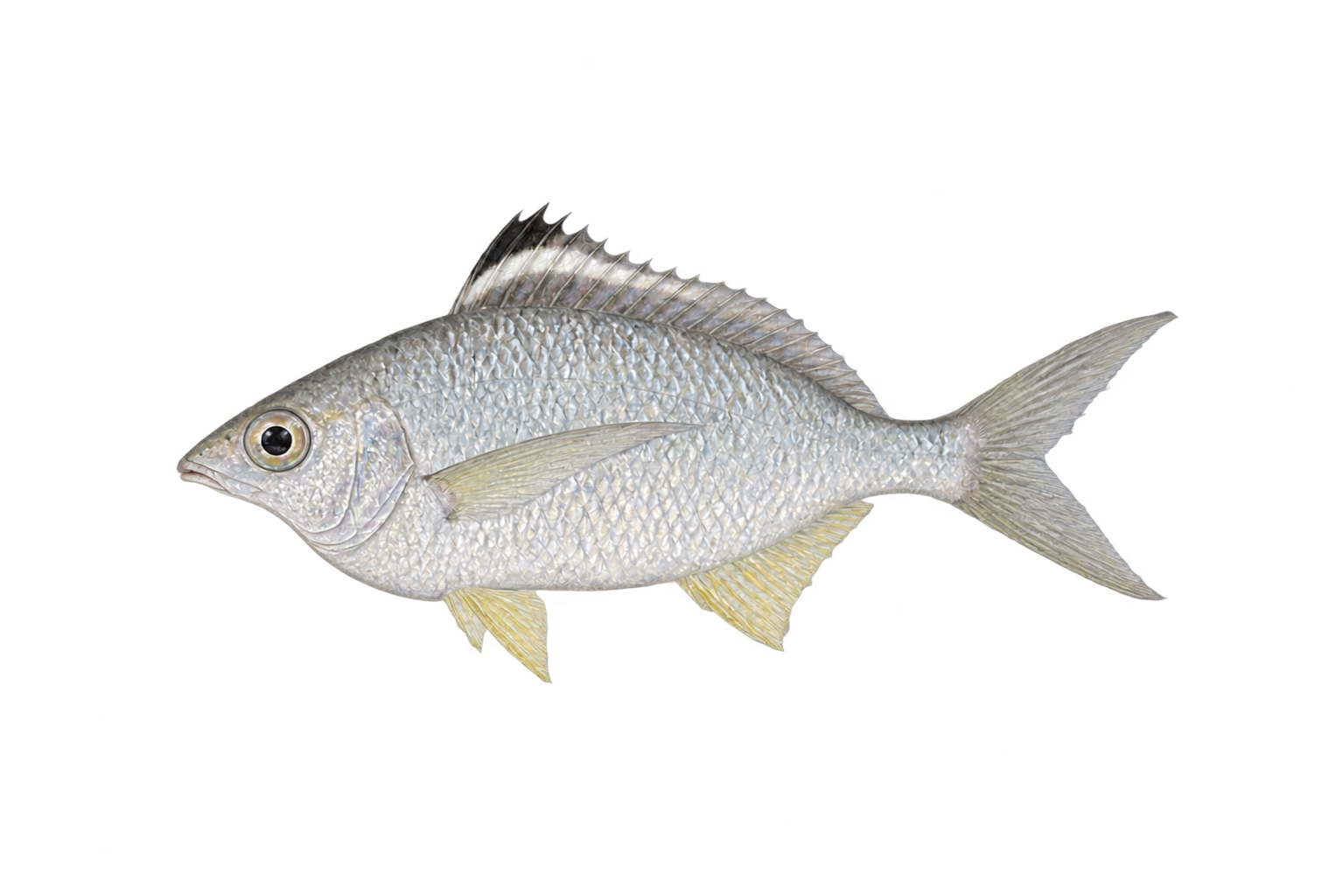
Size: Smithsonian reports a maximum length of 19.3 cm. This is a regional upper record, not a typical local encounter size.
Mostly unmarked silver body; the spiny dorsal has a black outer patch, white band beneath it and dusky base.
Read the guide’s location, season and eating cautions before acting.
Flamefish
Elongate & oval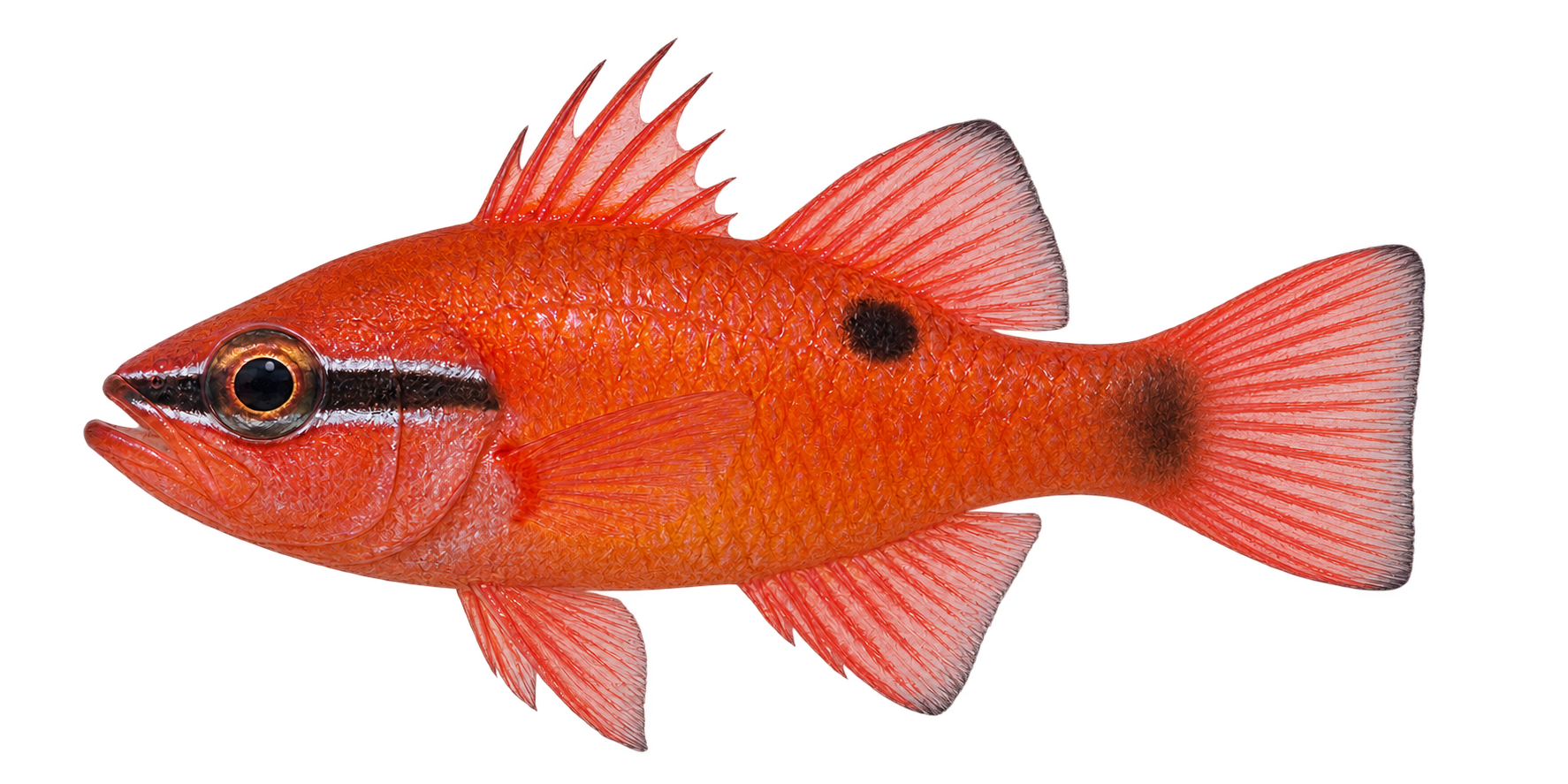
Size: Reported regional maximum 11.1 cm; not a typical encounter size.
Orange-red body; dark spot beneath second dorsal; dark eye stripe.
Read the guide’s location, season and eating cautions before acting.
Flat Needlefish
Shape not assigned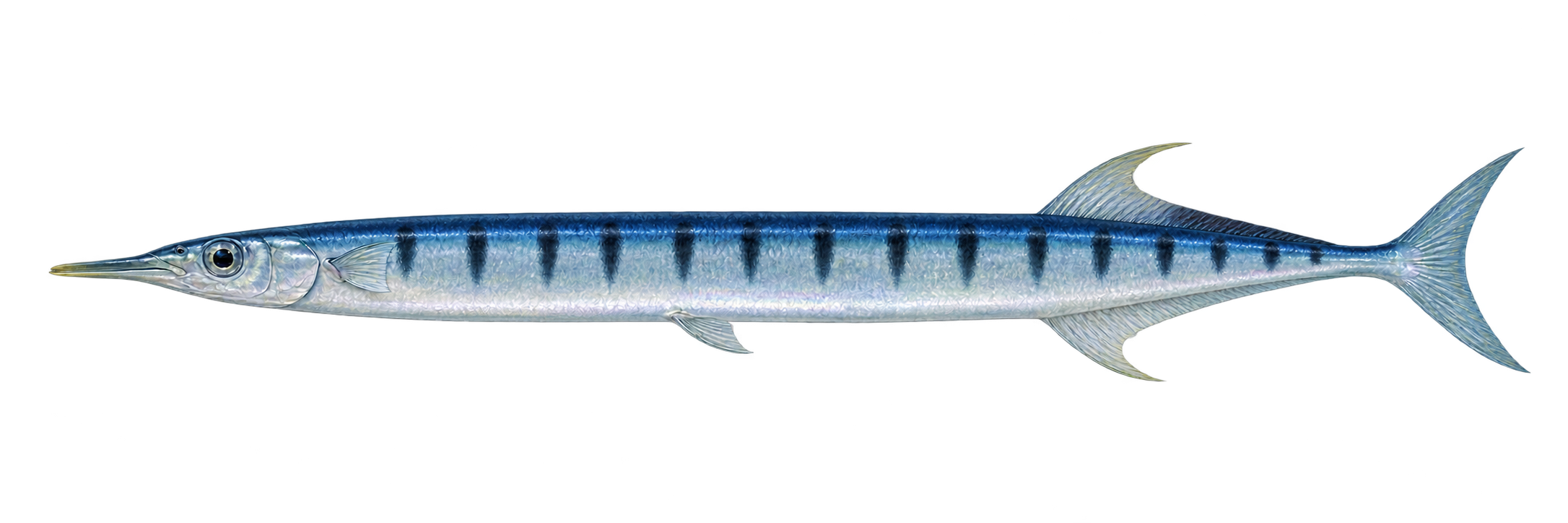
Size: The Smithsonian account reports 120 cm. It does not explicitly specify total, fork or standard length for this value; do not compare it directly with a length-labeled measurement.
A very flattened needlefish with long toothed jaws and about a dozen dark bars or elongated marks along its silvery sides. The body is blue above and pale below.
Read the guide’s location, season and eating cautions before acting.
Florida Pompano
Streamlined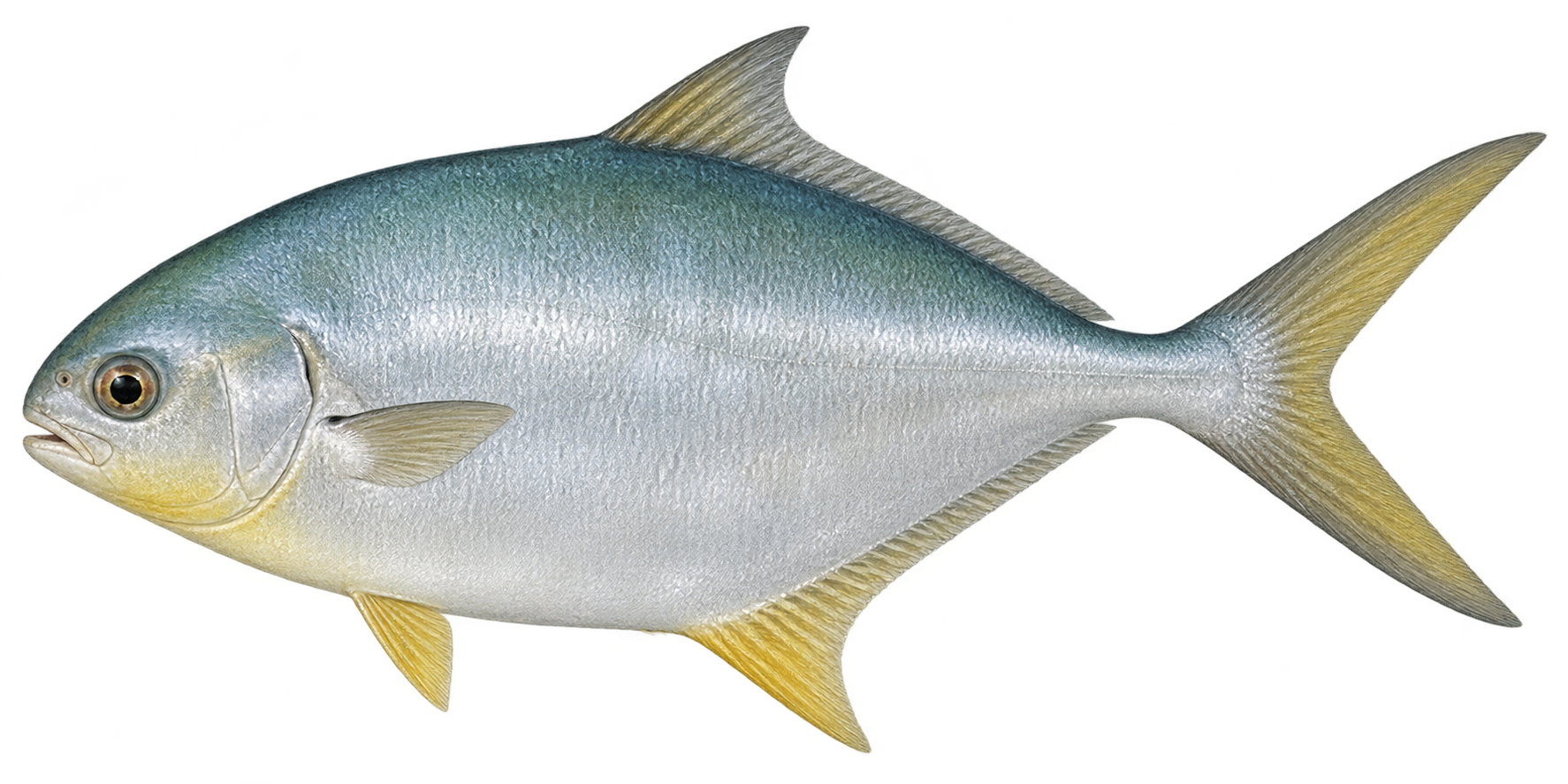
Size: Reported maximum about 64 cm; see profile for life-stage and measurement notes.
Plain silver, blunt-headed pompano with a short pectoral fin and moderately raised dorsal and anal lobes.
Read the guide’s location, season and eating cautions before acting.
Flying Gurnard
Fan-finned & spiny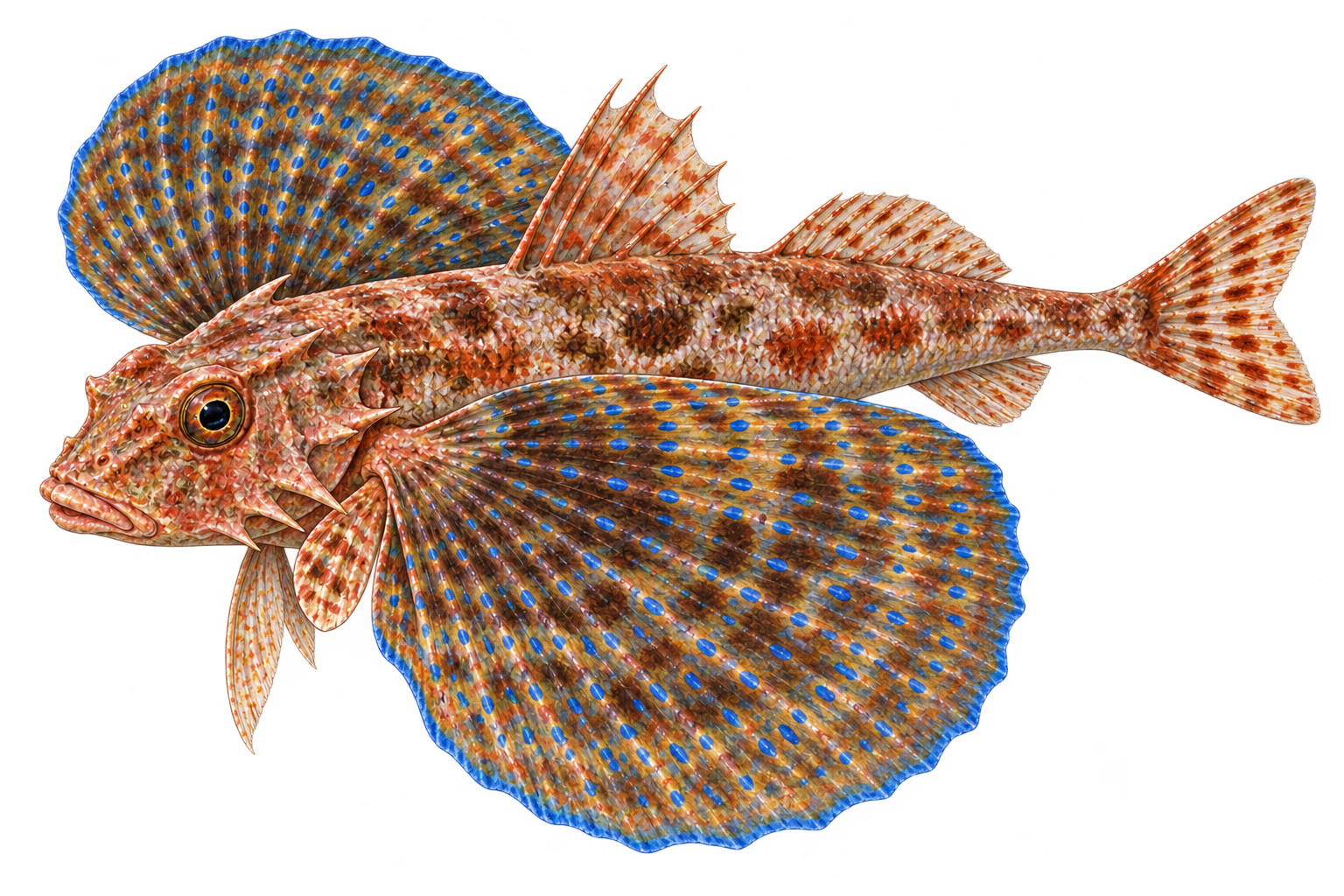
Size: Often 6–14 inches; larger records depend on length convention and reference.
Large armored head and enormous pectoral fans with blue markings when spread.
General Florida harvest rules; local restrictions apply
Explore the flying gurnard guide →Foureye Butterflyfish
Deep-bodied & oval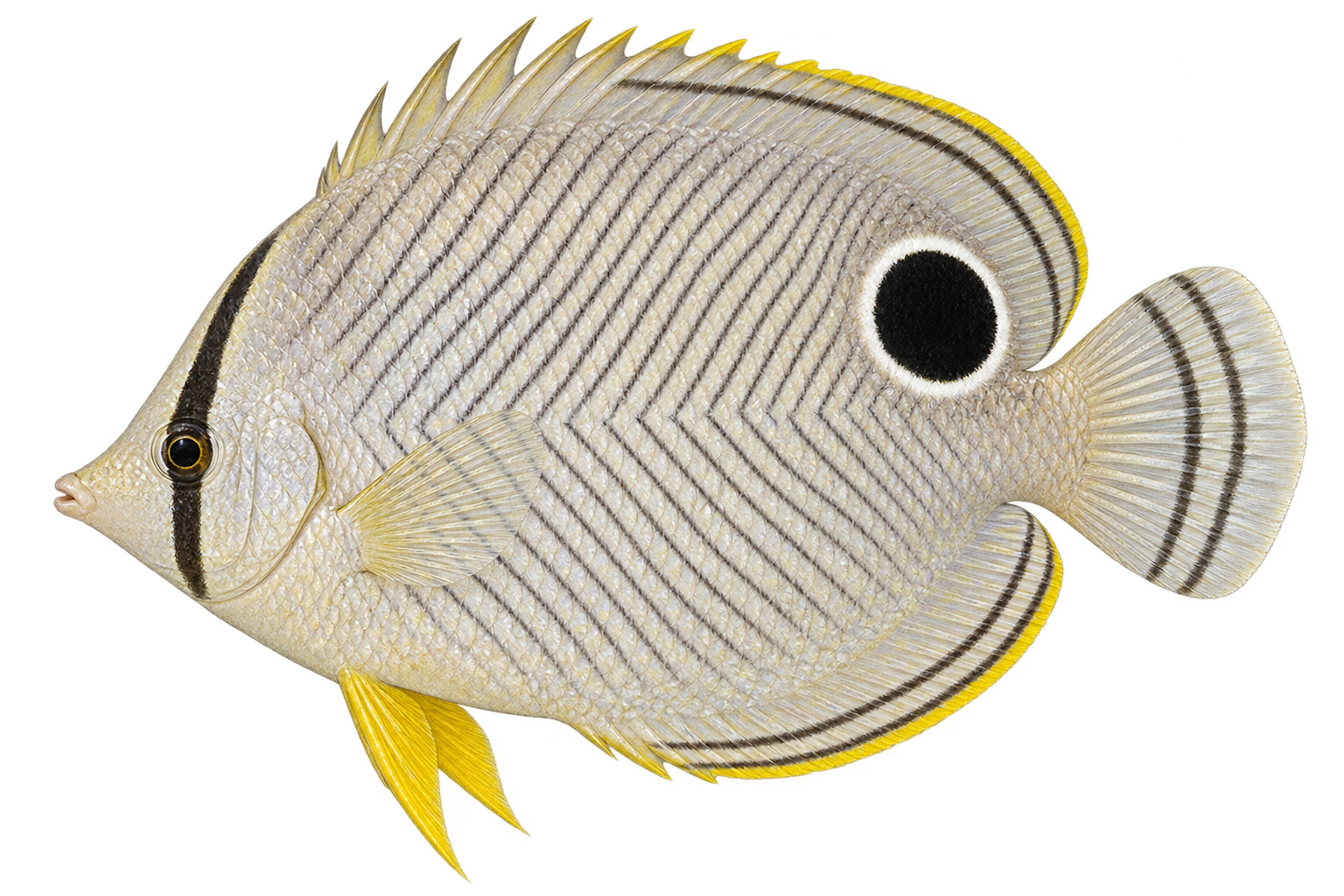
Size: Up to 15 cm; often under 10 cm.
The Foureye Butterflyfish wears a striking white-ringed black spot on each rear flank, creating the impression of an extra pair of eyes.
Restricted marine life: live collection only; spearing prohibited
Explore the foureye butterflyfish guide →Freckled Soapfish
Shape not assigned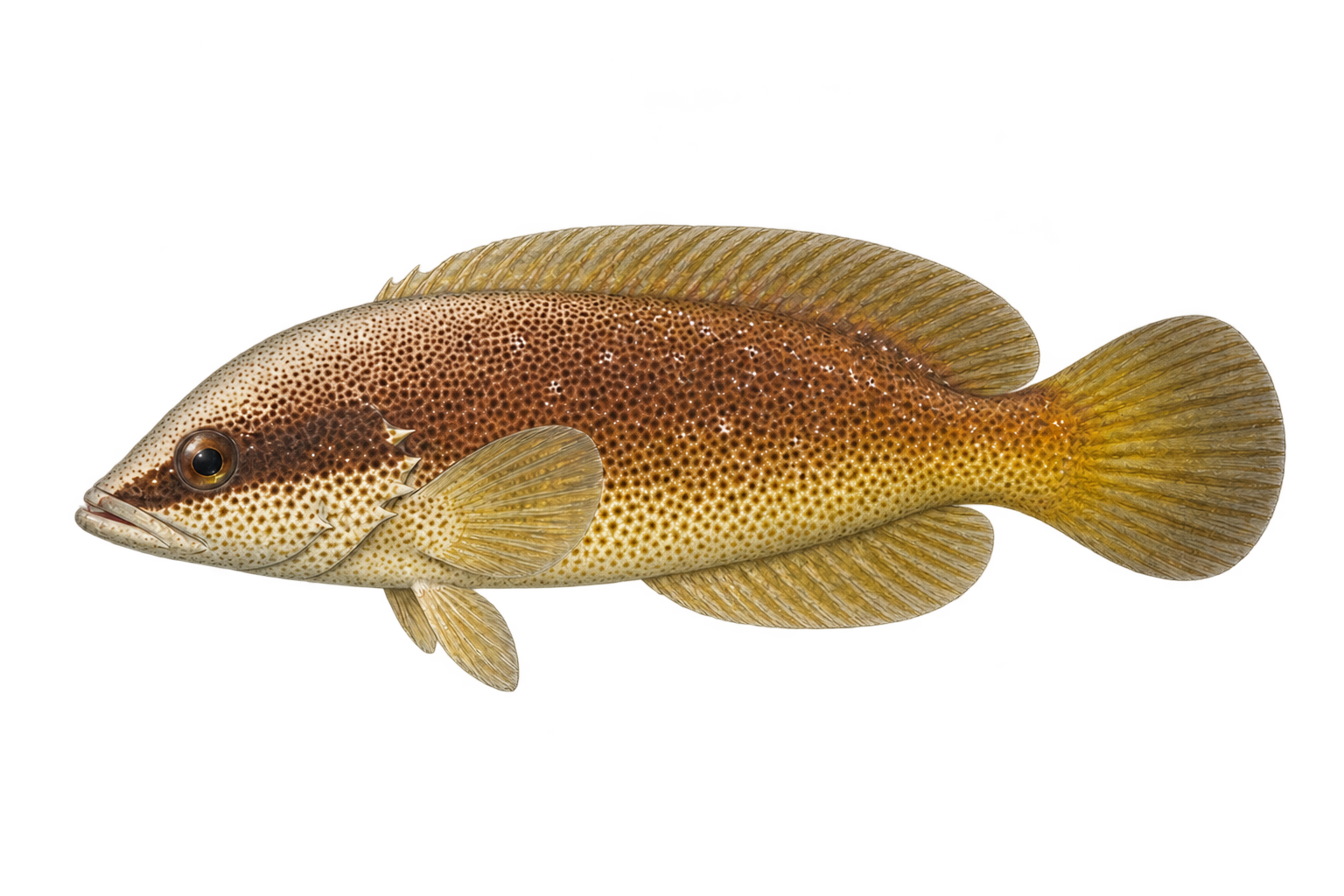
Size: Smithsonian reports a maximum of 15 cm. The entry does not explicitly identify total, fork or standard length for this maximum. The accessed account does not provide separate juvenile measurements.
A narrow, strongly flattened fish covered in dense small brown spots. A darker stripe crosses the eye and broadens along the back; the tail and fleshy fins are rounded.
Read the guide’s location, season and eating cautions before acting.
French Angelfish
Deep-bodied & oval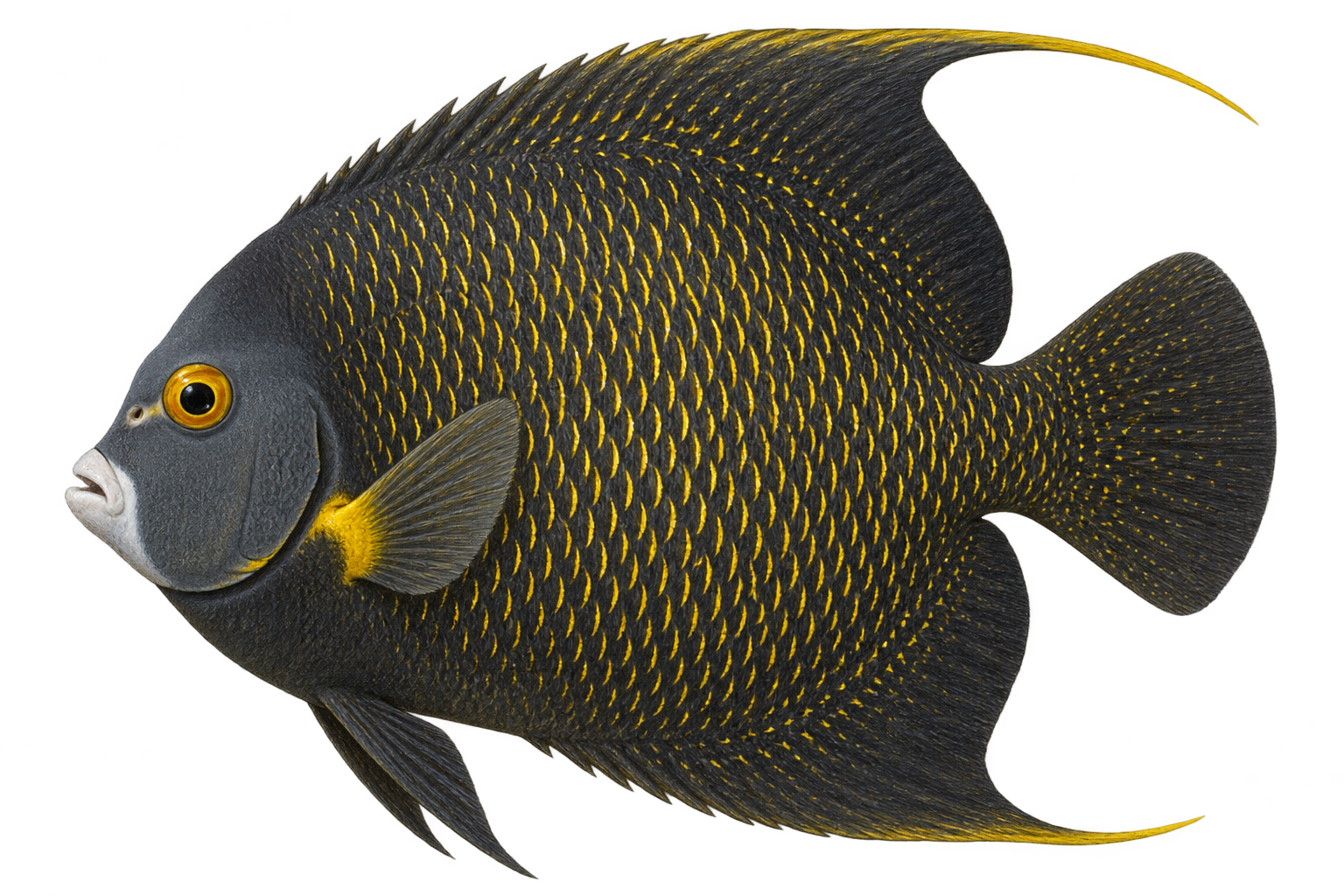
Size: Common length 28 cm; FishBase maximum 41.1 cm.
Dark adult with yellow-edged scales, pale mouth and yellow pectoral-fin base.
Restricted marine life: live collection only; no spearing
Explore the french angelfish guide →French Grunt
Streamlined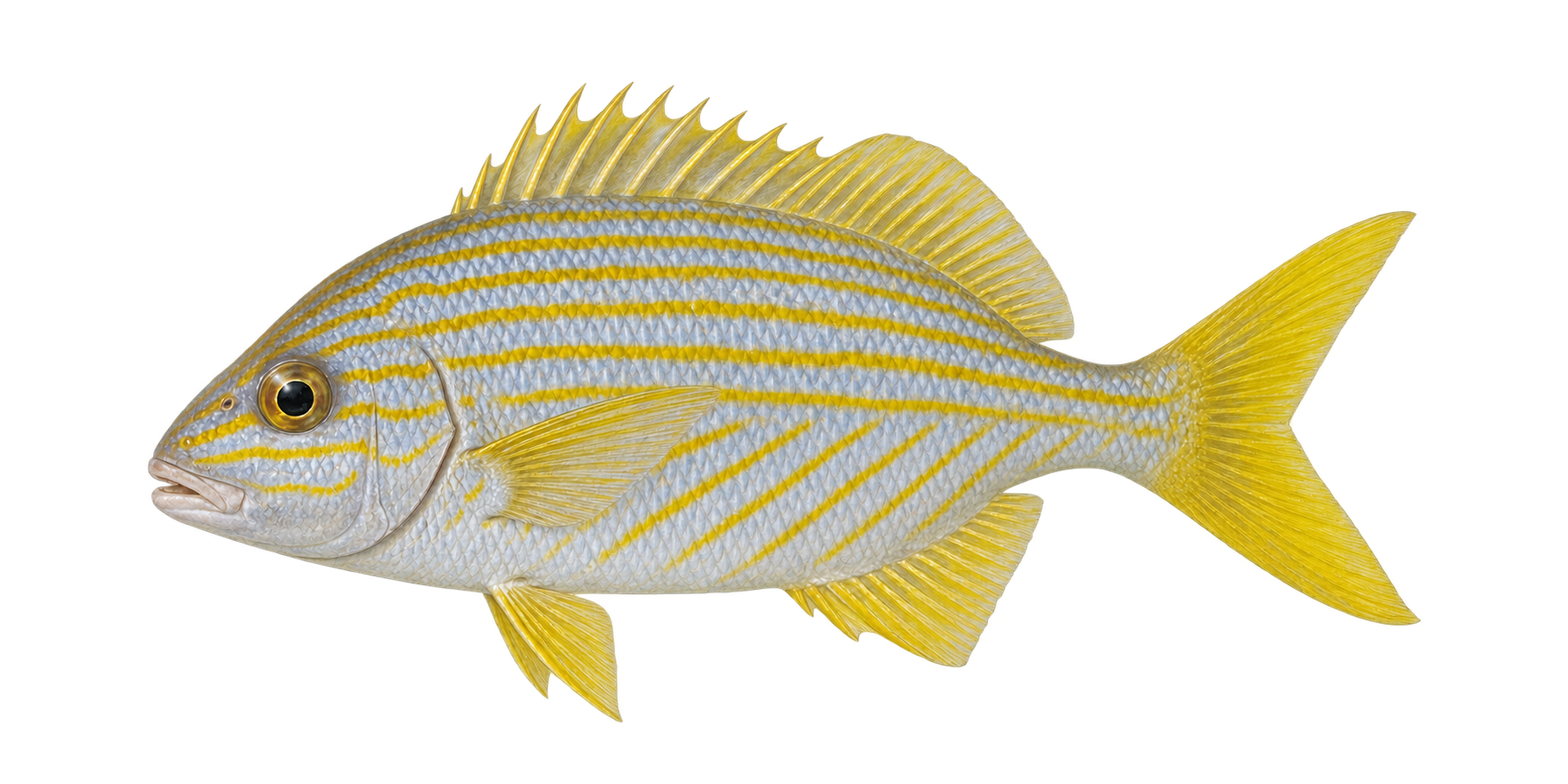
Size: Commonly 17 cm; reported maximum 30 cm.
Yellow stripes, with lower-body stripes diagonal; yellow fins.
General Florida harvest rules; local restrictions apply
Explore the french grunt guide →Frillfin Goby
Streamlined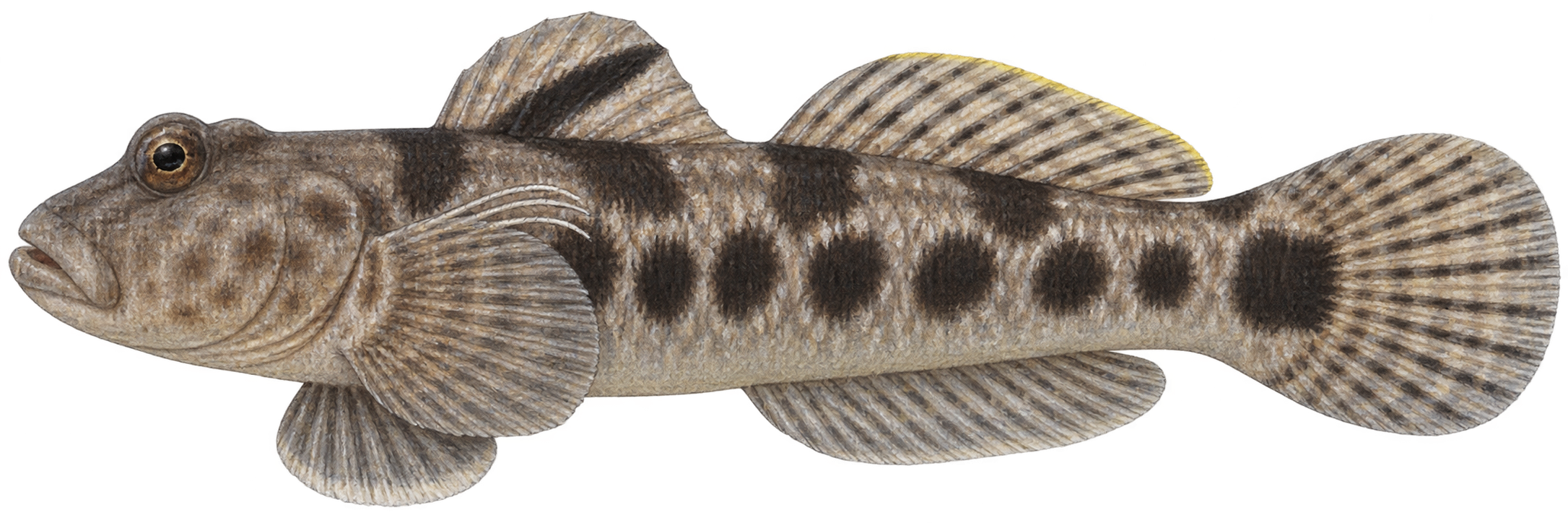
Size: Maximum about 15 cm (5.9 inches).
A broad, flattened head and robust body distinguish it from many slender reef gobies.
Restricted marine life: live collection only; no spearing
Explore the frillfin goby guide →Fringed Filefish
Deep-bodied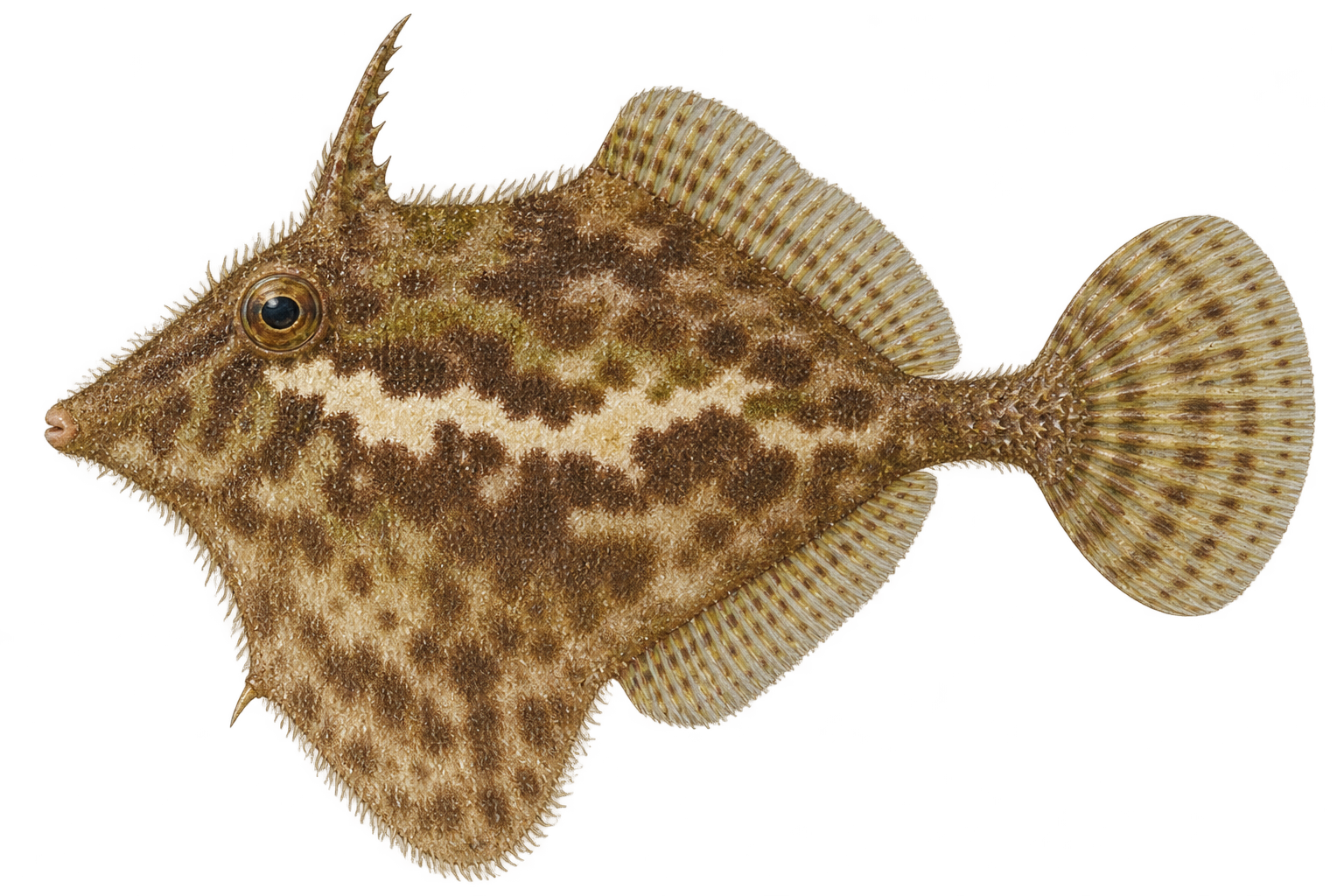
Size: Smithsonian reports to about 5 inches (12.7 cm); other references report larger maxima.
Mottled deep body, pale flank patch, dorsal spine and large belly flap.
Restricted marine life: live collection only; no spearing
Explore the fringed filefish guide →Gag
Elongated & robust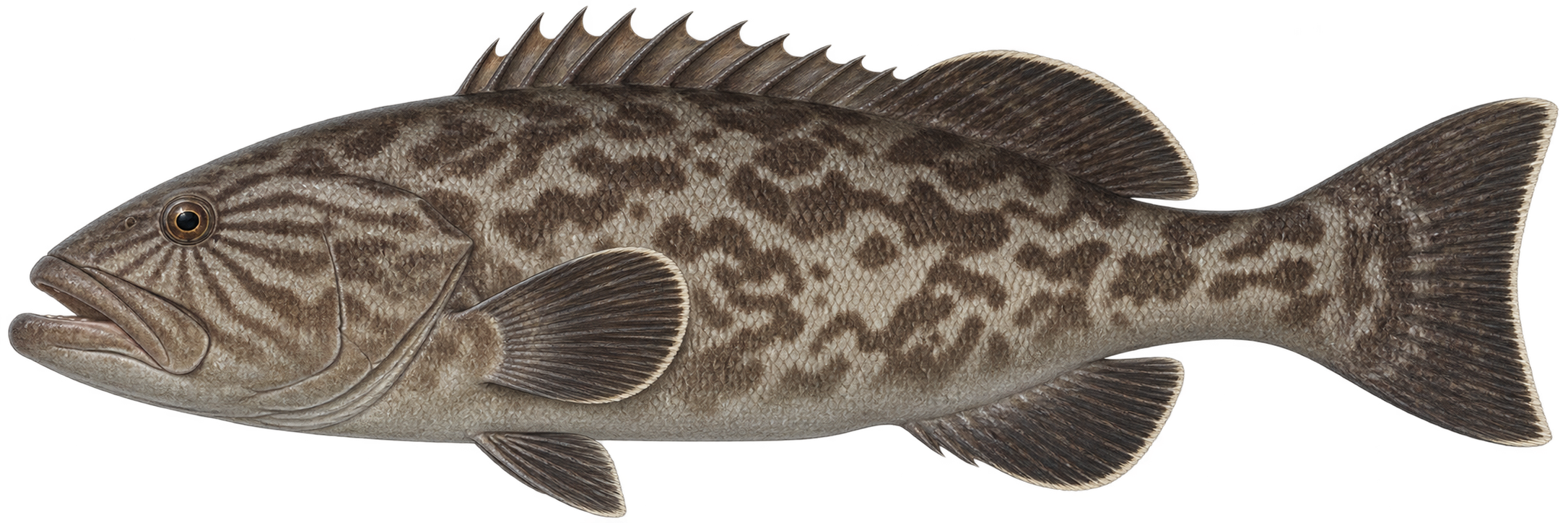
Size: Reported maximum 145 cm (about 4.8 ft).
Brown-gray body with wormlike darker markings; dark fins have pale edges on the tail and anal fin.
Read the guide’s location, season and eating cautions before acting.
Glass Goby
Streamlined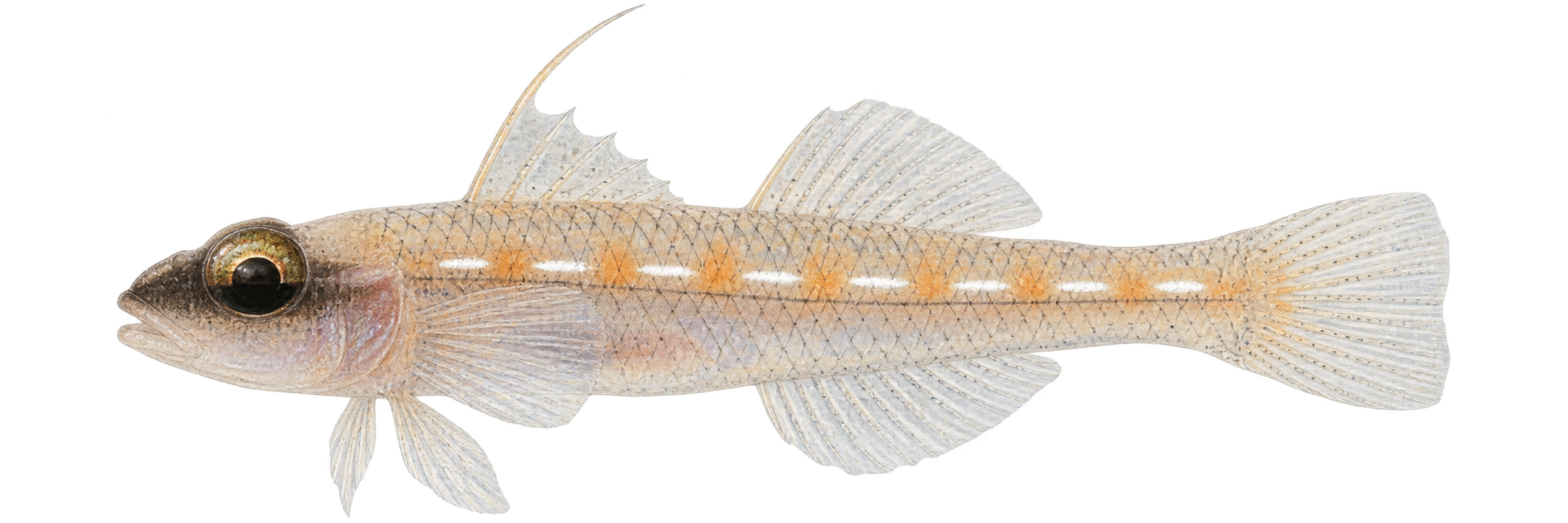
Size: Maximum about 4 cm (1.6 inches).
A transparent body and dark face mask resemble those of the masked goby.
Restricted marine life: live collection only; no spearing
Explore the glass goby guide →Glassy Sweeper
Deep-bodied & oval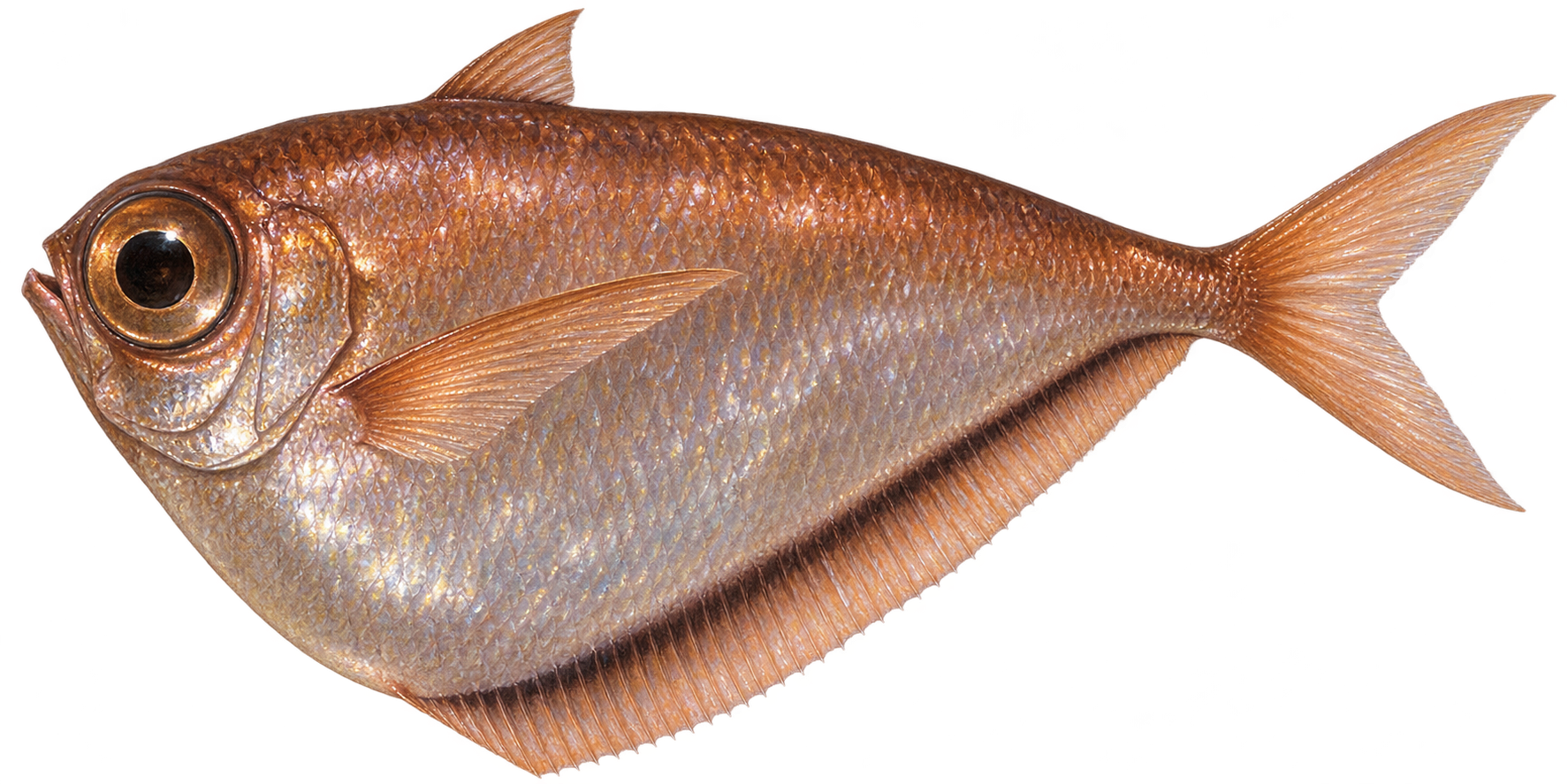
Size: Maximum about 15 cm (5.9 inches) total length.
Coppery, deep-bodied fish with a huge eye, tiny dorsal and very long anal-fin base.
Restricted live collection only; no spearing; protected collection areas apply
Explore the glassy sweeper guide →Goldentail Moray
Long & eel-like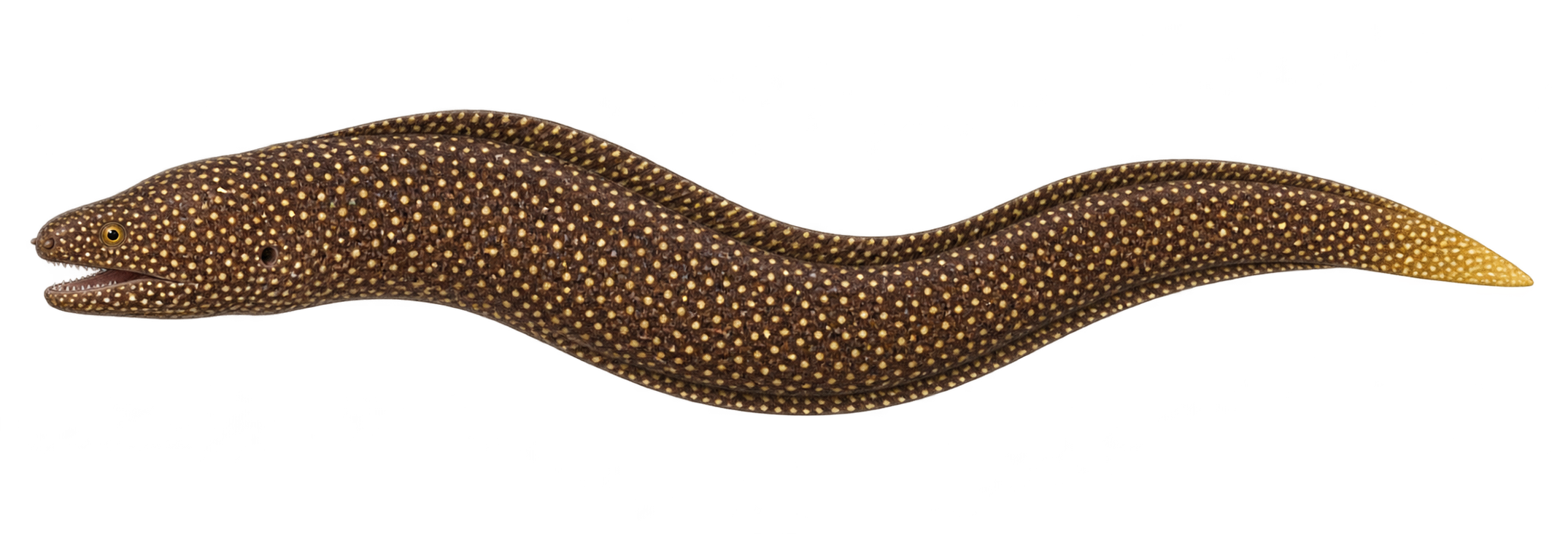
Size: Maximum about 28 inches (70 cm) total length.
Typical form has dense yellow spots on brown skin and a pale golden tail tip; no pectoral fins.
Restricted marine life: live collection only; no spearing
Explore the goldentail moray guide →Goldspot Goby
Streamlined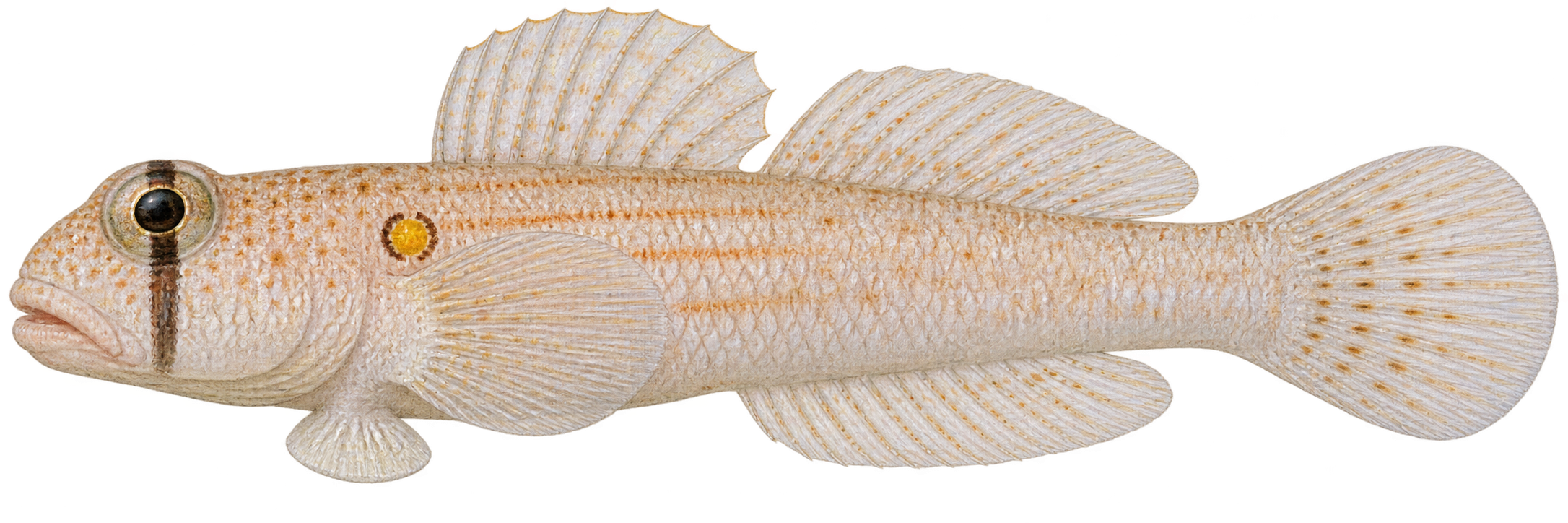
Size: Maximum about 8.2 cm (3.2 inches).
The small golden spot above the pectoral base is the signature mark.
Restricted marine life: live collection only; no spearing
Explore the goldspot goby guide →Goliath Grouper
Streamlined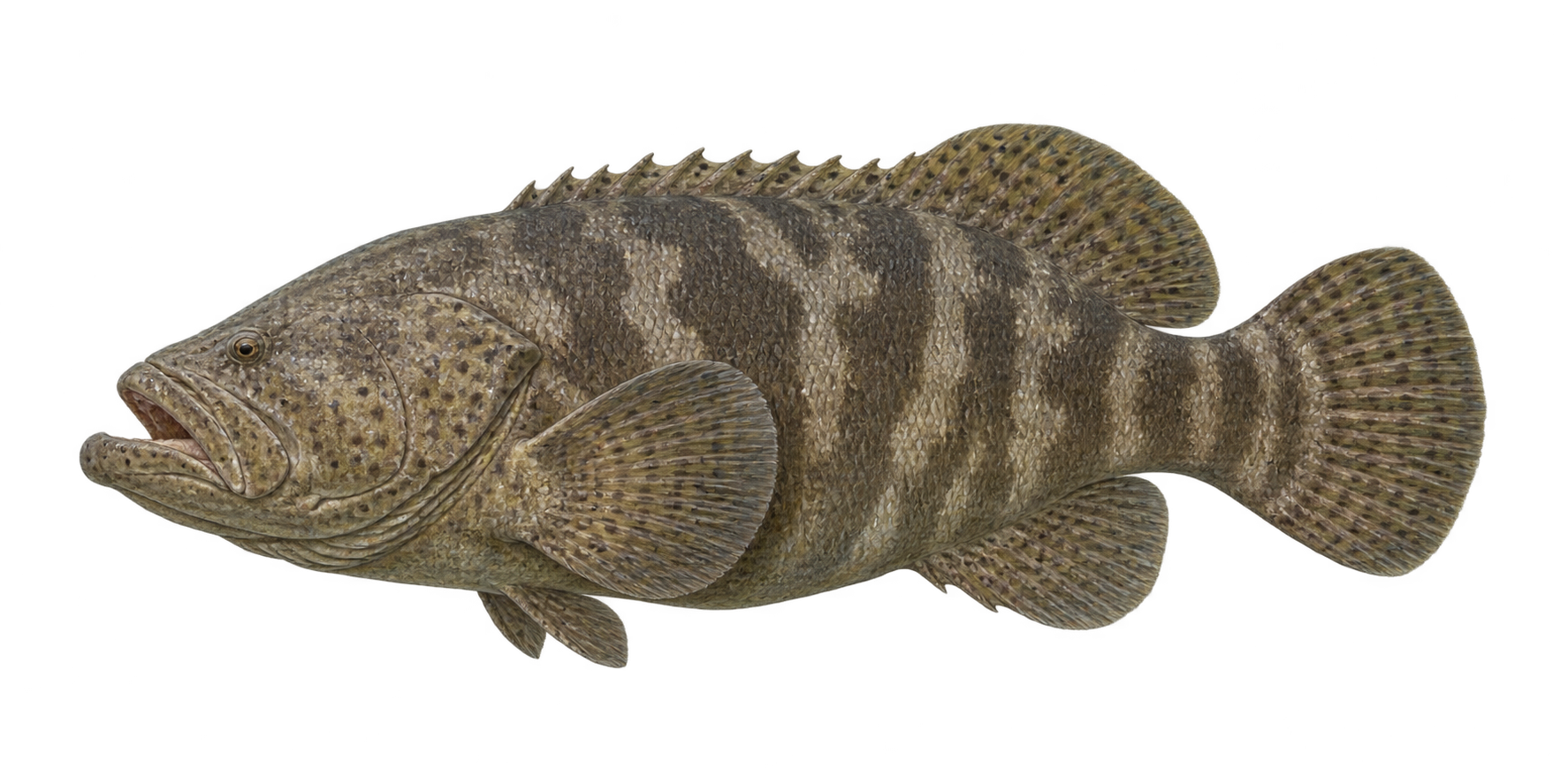
Size: Reported maximum about 2.5 m; juveniles are much smaller.
Huge broad head and small eyes; Rounded tail; Low dorsal spines.
Protected; limited permit-only harvest exception
Explore the goliath grouper guide →Grass Porgy
Deep-bodied & oval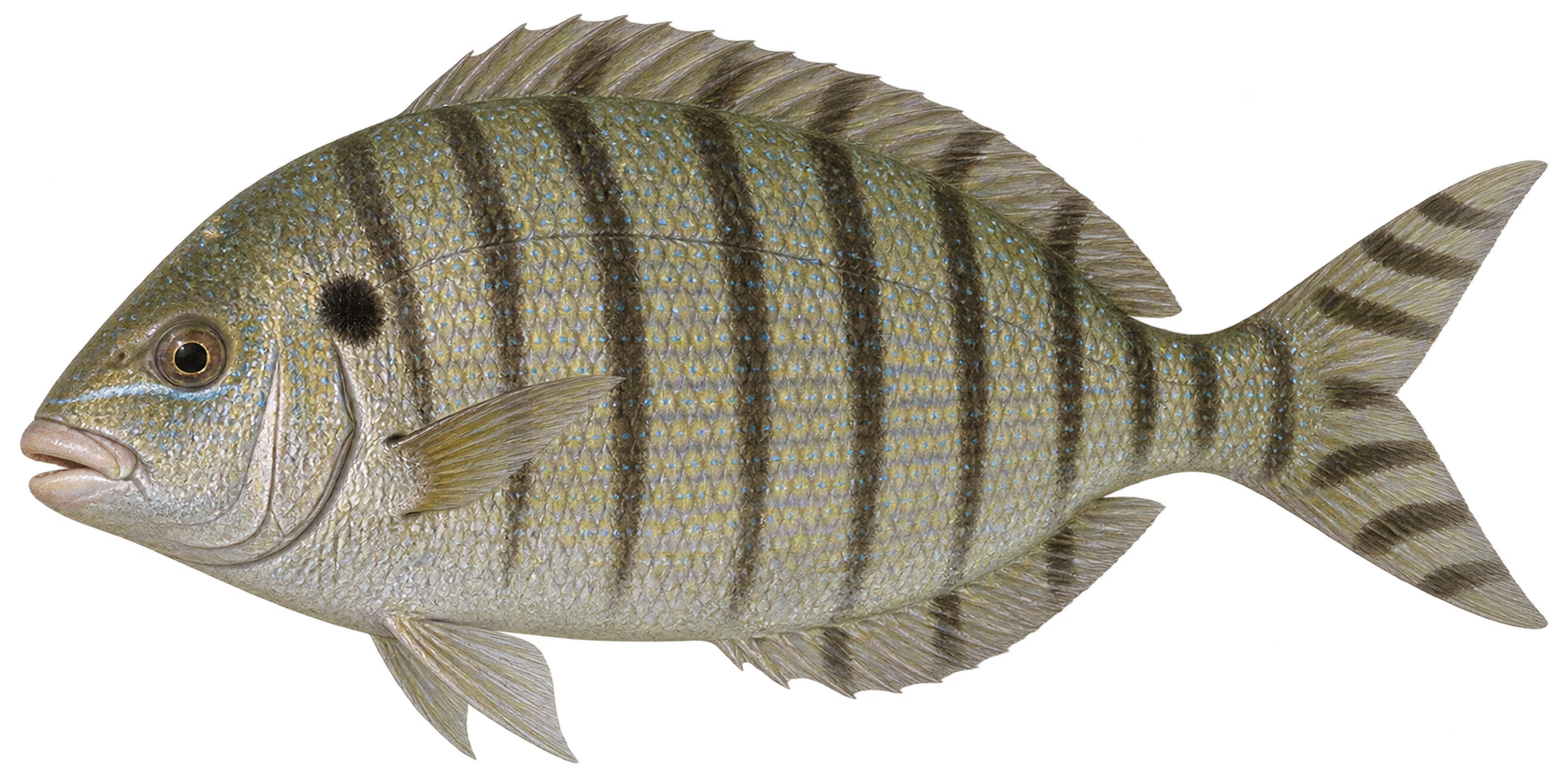
Size: Reported maximum about 25 cm; see profile for life-stage and measurement notes.
A small olive porgy with a large dark shoulder blotch, barred tail and a relatively short pectoral fin.
Read the guide’s location, season and eating cautions before acting.
Gray Angelfish
Deep-bodied & oval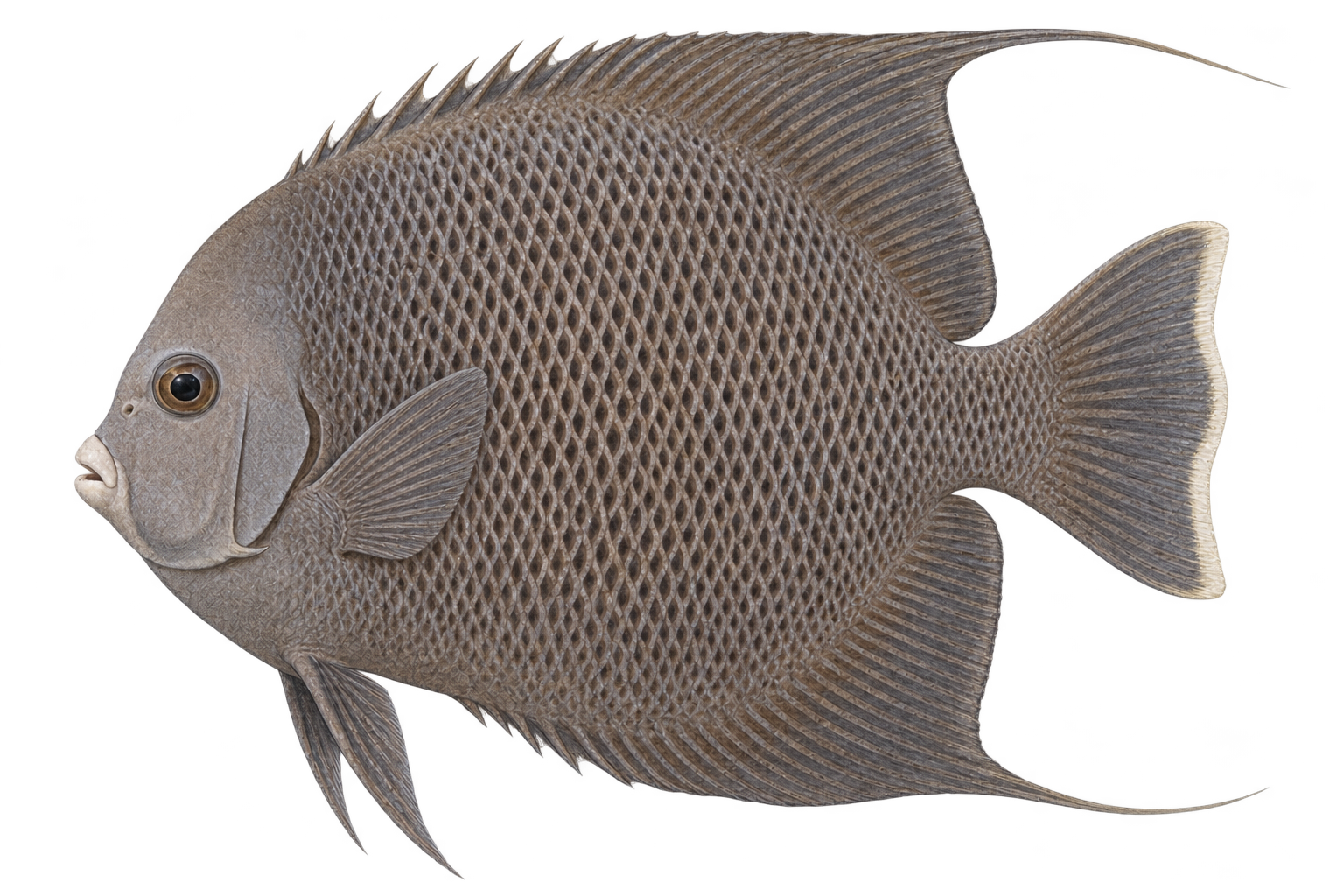
Size: Commonly 43–48 cm; reported maximum 60 cm.
Gray-brown adult, pale mouth and pale-edged tail; dark-centered scales.
Restricted marine life: live collection only; no spearing
Explore the gray angelfish guide →Gray Snapper
Streamlined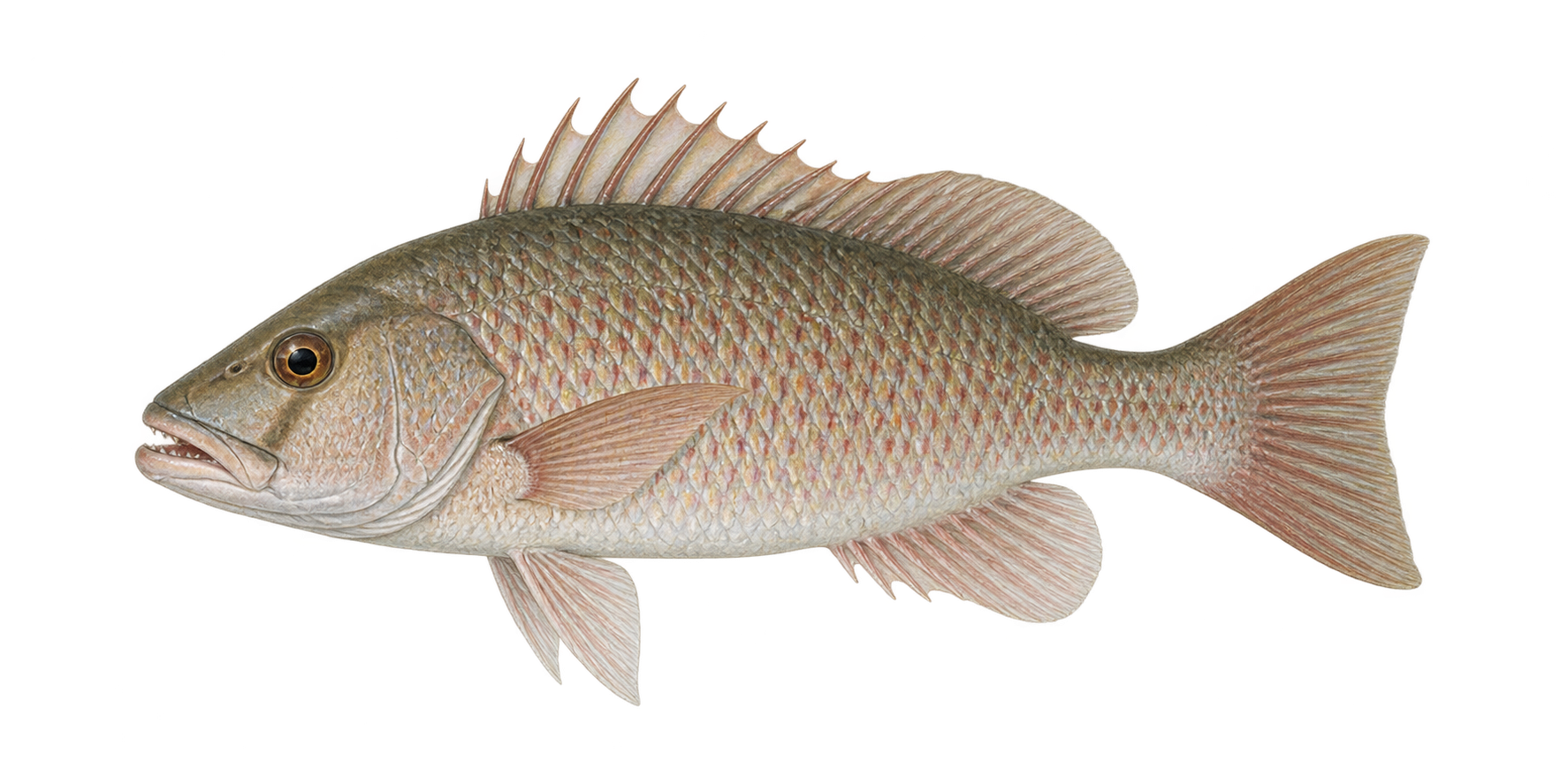
Size: Often below 45 cm; Smithsonian maximum about 66 cm.
Gray to greenish body with reddish flecks; juveniles have a dark eye stripe; no flank spot.
Regulated recreational harvest; restrictions apply
Explore the gray snapper guide →Gray Triggerfish
Deep-bodied & oval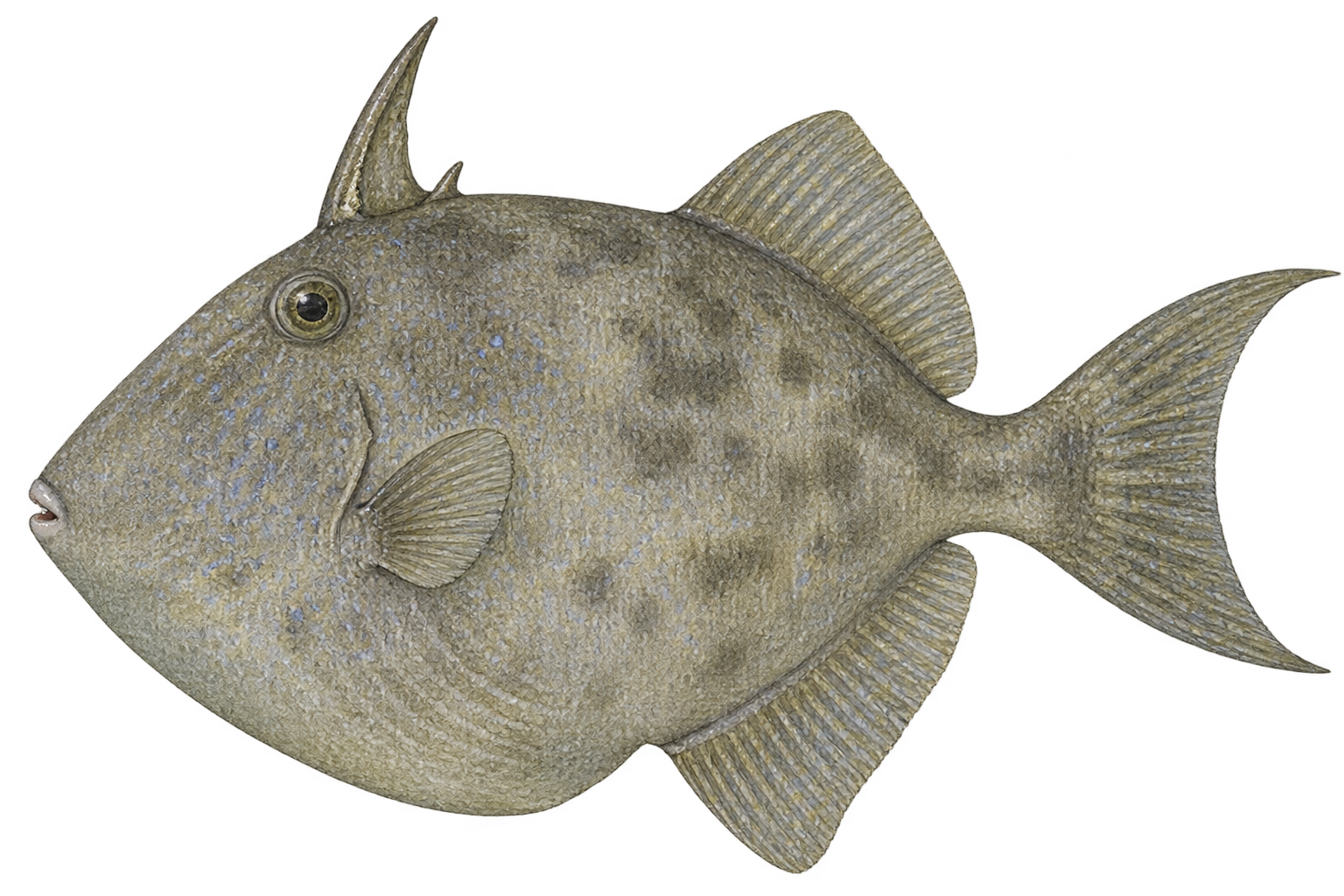
Size: Maximum about 30 inches (76 cm) total length.
Gray-olive compressed body, high eye, locking dorsal spine and pointed tail lobes.
Regulated food fish: Gulf seasonal closures; Atlantic rules differ
Explore the gray triggerfish guide →Graysby
Robust reef fish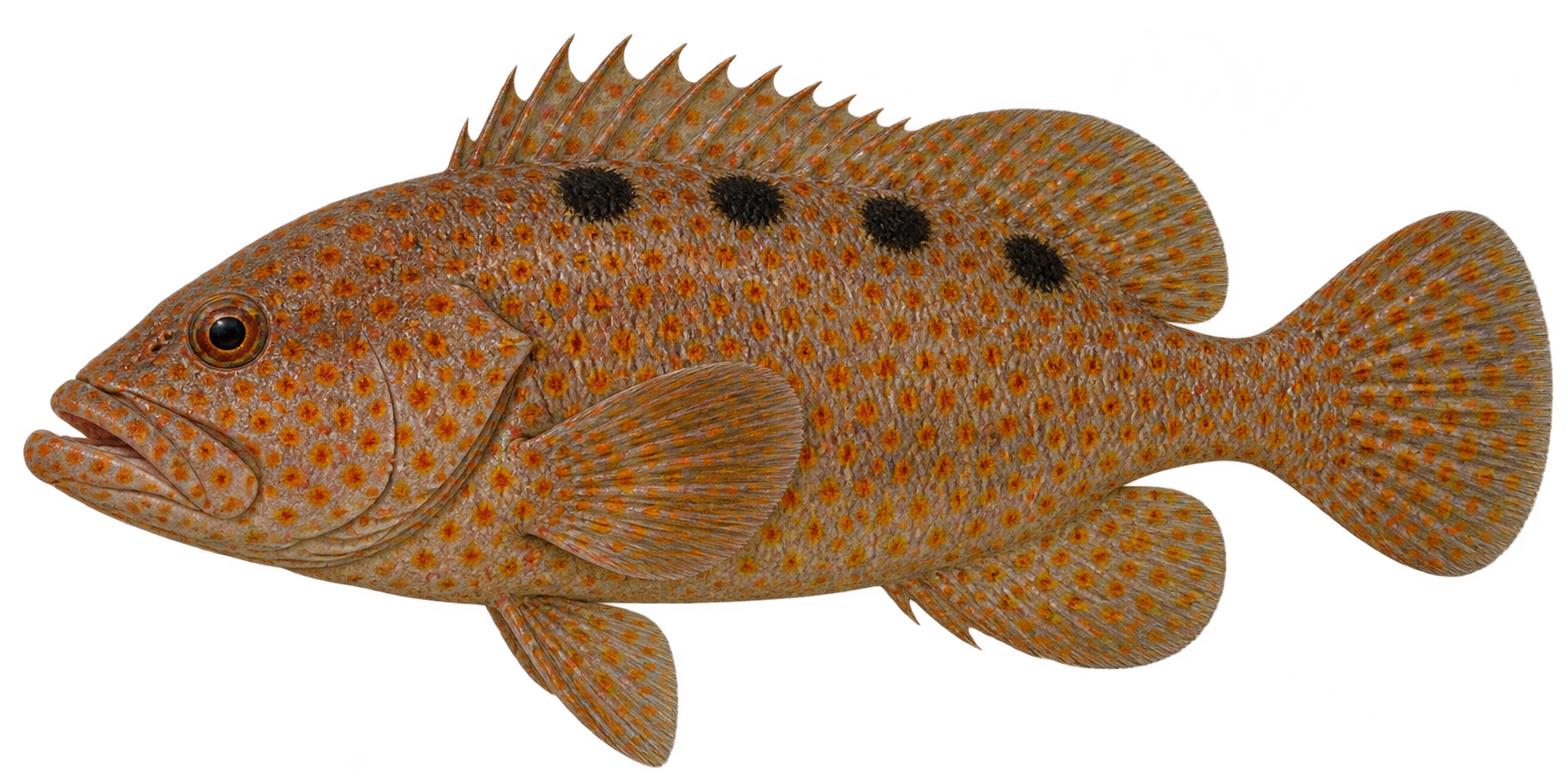
Size: Reported maximum 33 cm; maximum is not a typical sighting size.
Orange-brown spotting on a gray, brown or olive grouper, plus four contrasting spots along the upper back that can appear black or white.
Read the guide’s location, season and eating cautions before acting.
Great Barracuda
Streamlined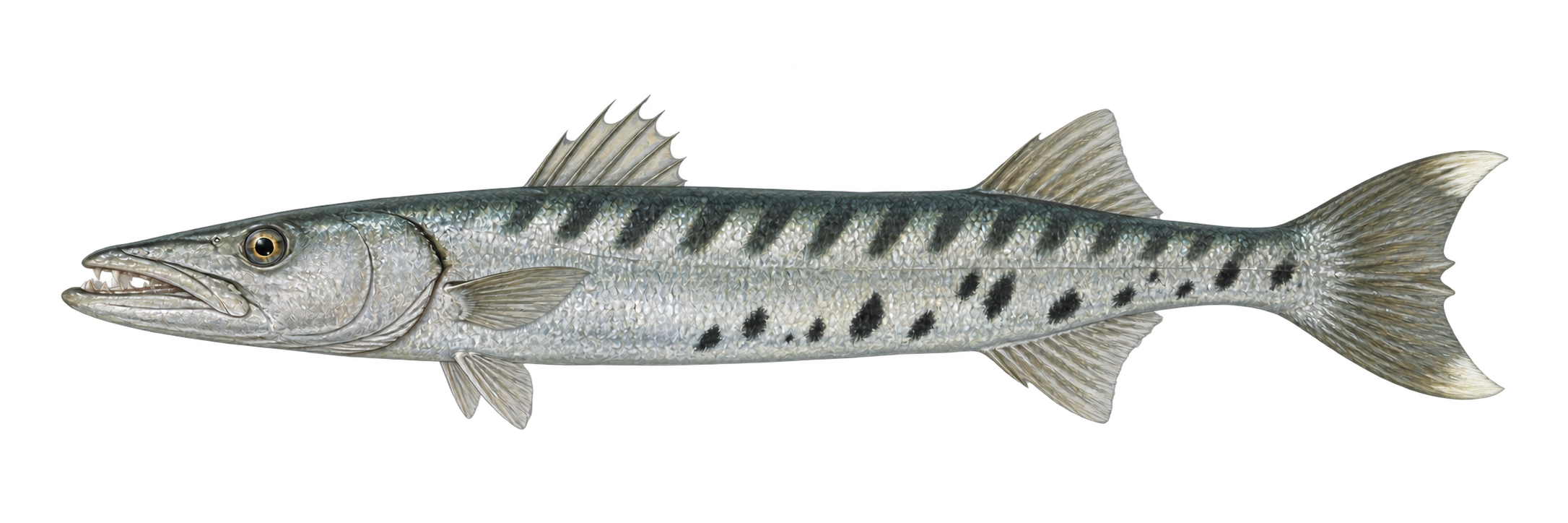
Size: Over 150 cm is very large; reported maximum about 200 cm.
Long silver body, projecting lower jaw, separated dorsal fins and dark lower-side blotches.
Regulated harvest; ciguatera caution
Explore the great barracuda guide →Greater Amberjack
Streamlined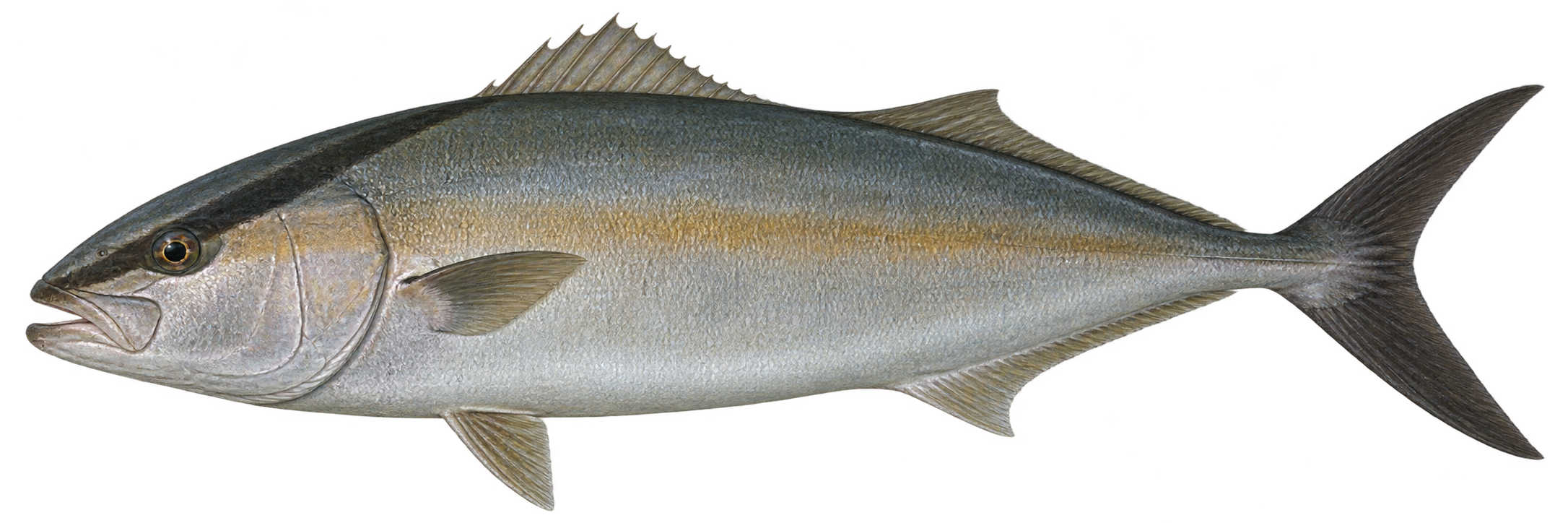
Size: Up to about 75 inches (190 cm) total length.
Long muscular body, angled dark eye band and low second-dorsal lobe.
Seasonal fishery: Gulf closed now; Atlantic closed each April
Explore the greater amberjack guide →Greater Soapfish
Streamlined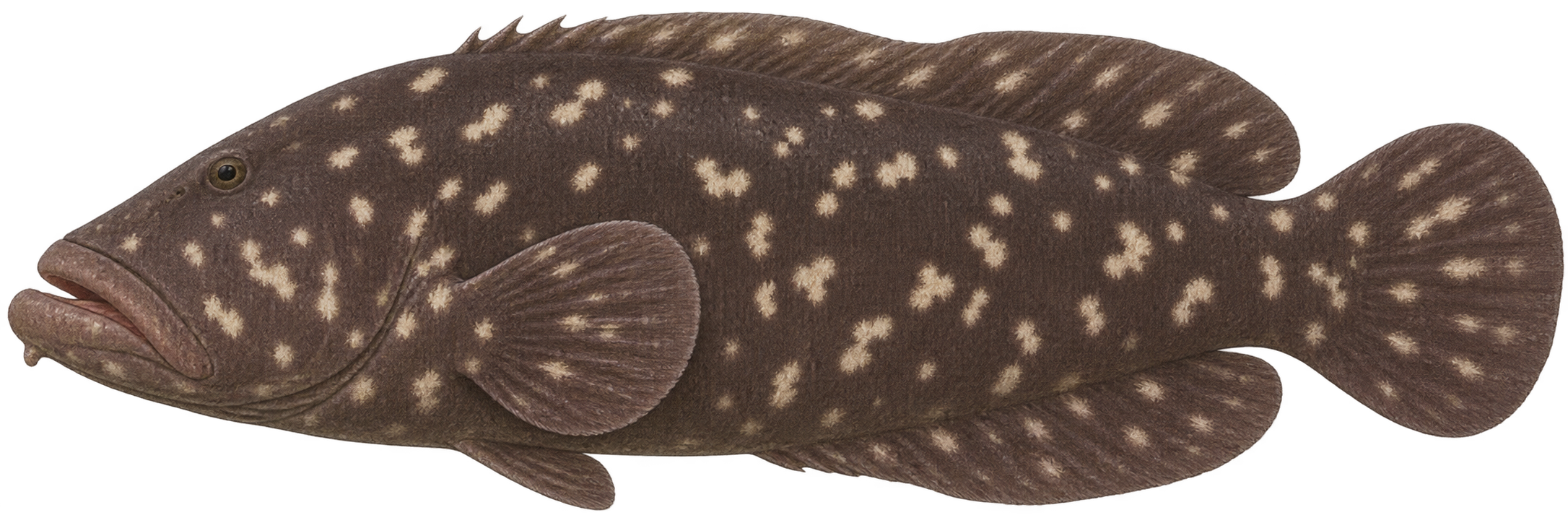
Size: Maximum about 35 cm (13.8 inches) total length.
Brown-grey soapfish with numerous small pale blotches, a projecting lower jaw and rounded fleshy fins.
Restricted live collection only; no spearing; protected collection areas apply
Explore the greater soapfish guide →Green Moray
Long & eel-like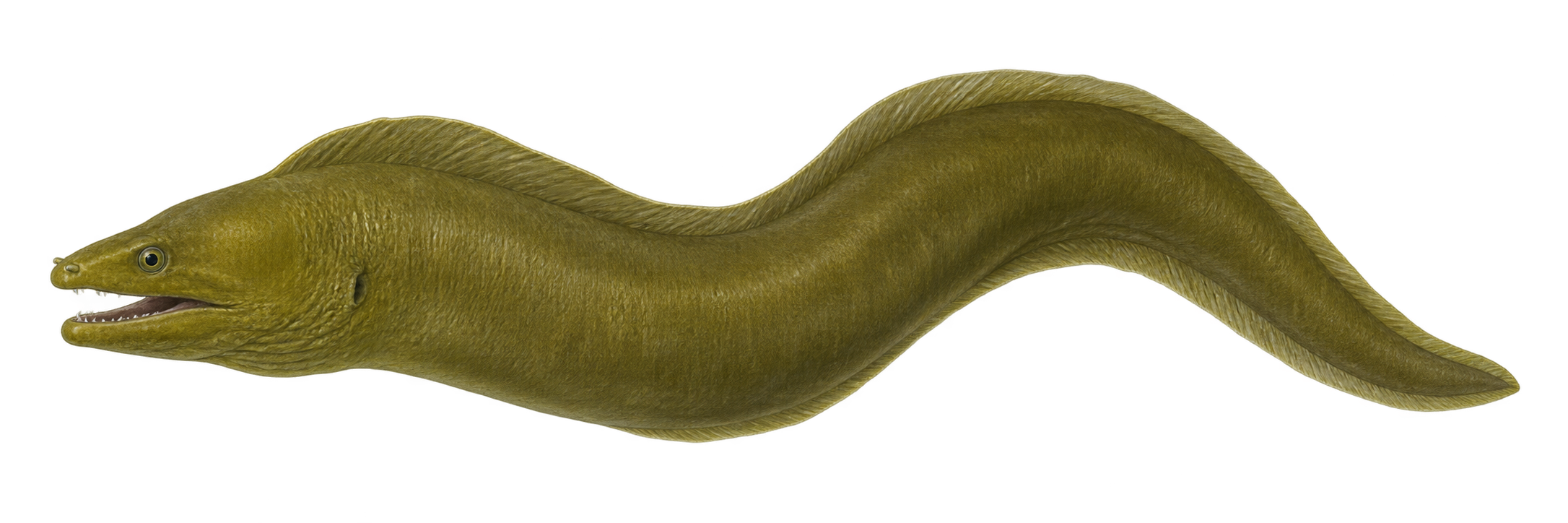
Size: Large adults around 1.5–1.8 m; reported maximum about 2.5 m.
Uniform olive-green body; Tube-like nostrils; Long continuous fin edge.
Restricted marine life: live collection only; no spearing
Explore the green moray guide →Green Razorfish
Elongate & oval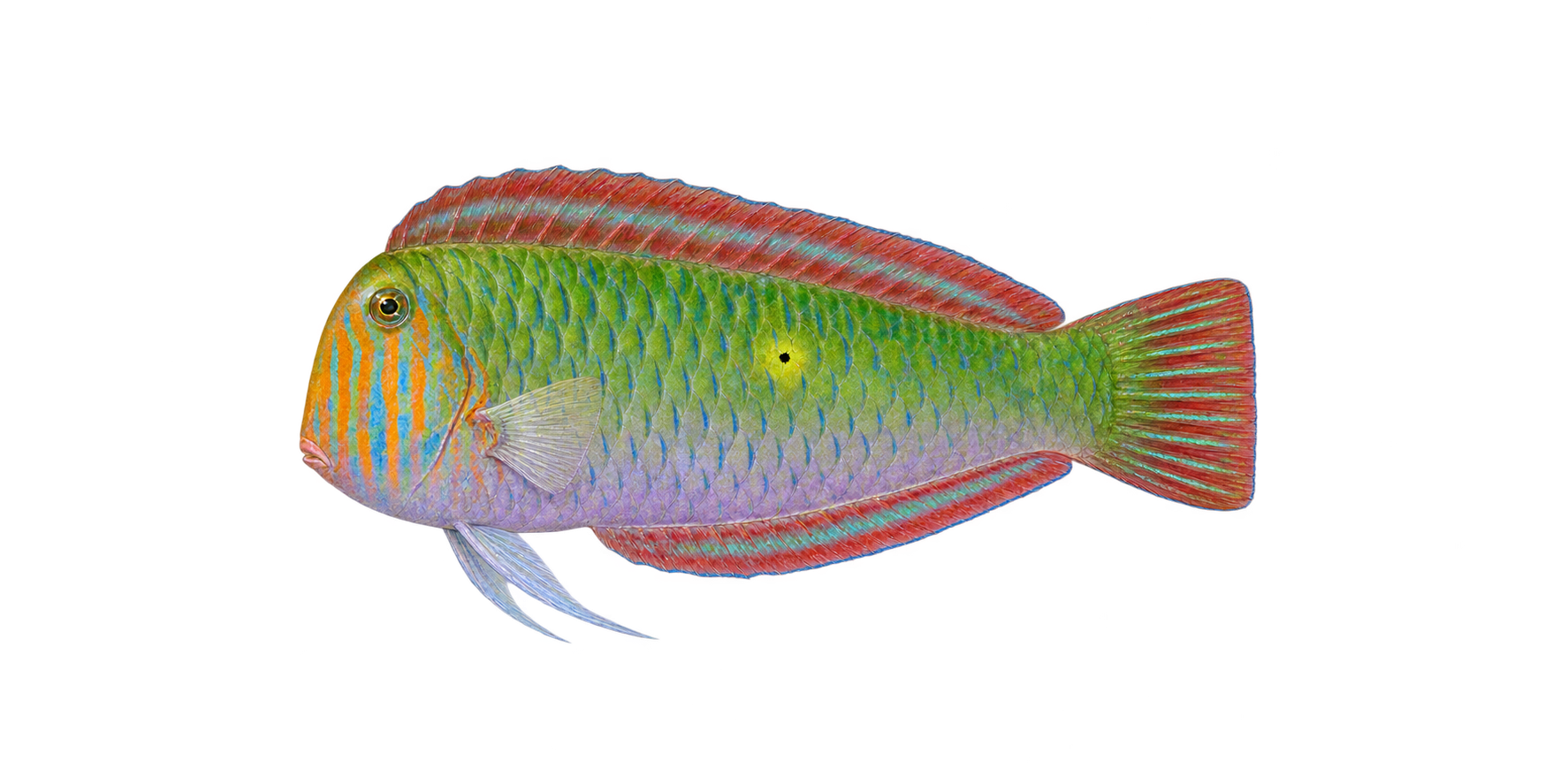
Size: Regional reported maximum 15 cm; smaller fish are common in guide examples.
Thin, flattened body and blunt snout. Males are green with blue-rimmed dark flank spots; females and juveniles can look quite different.
Read the guide’s location, season and eating cautions before acting.
Greenblotch Parrotfish
Elongated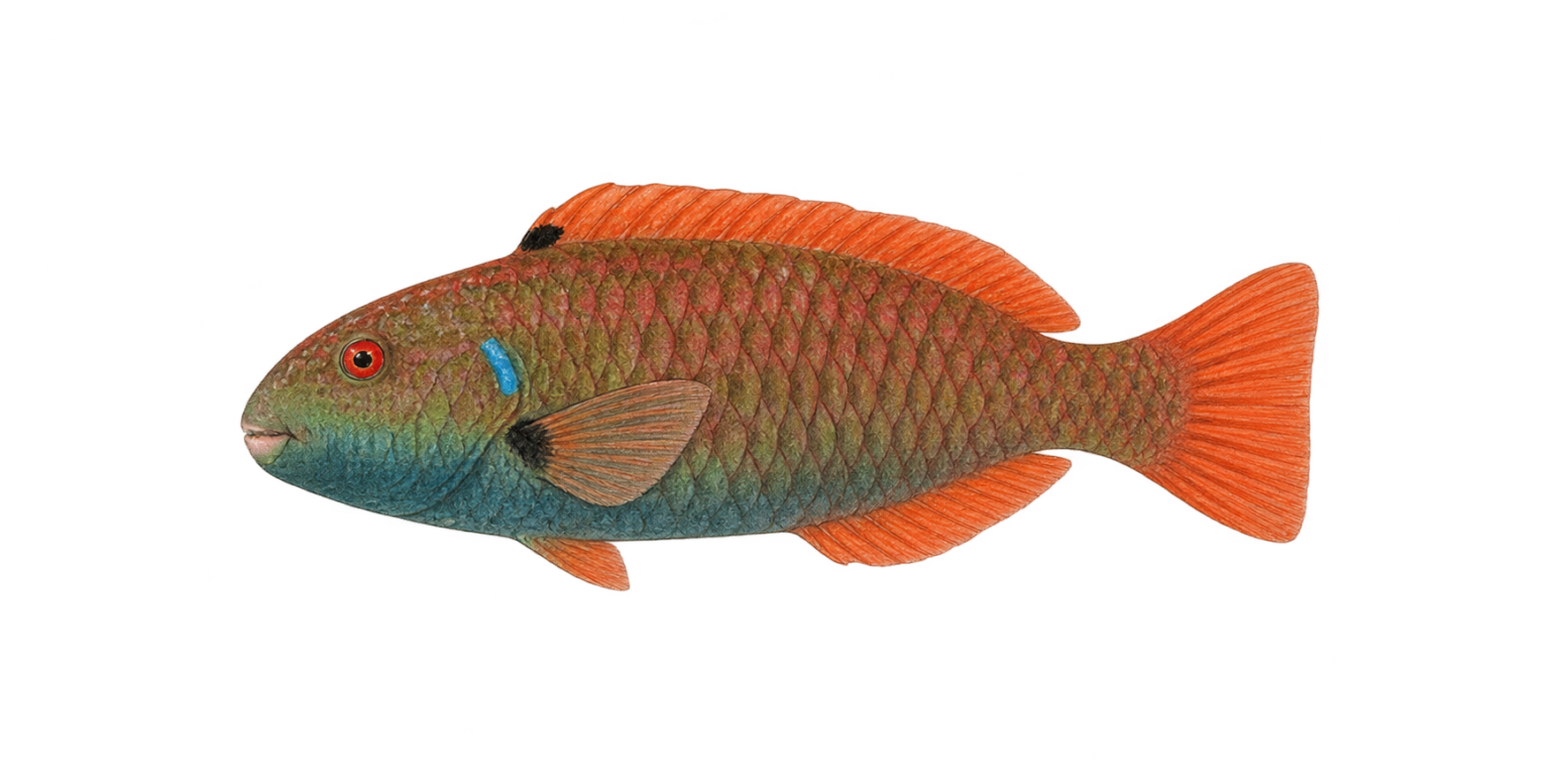
Size: Smithsonian reports a maximum length of 15 cm. This is a regional upper record, not a typical local encounter size.
Small parrotfish with strongly different color phases. Initial fish are reddish above and pale below; terminal fish have a dark blue-green lower body.
Read the guide’s location, season and eating cautions before acting.
Guaguanche
Shape not assigned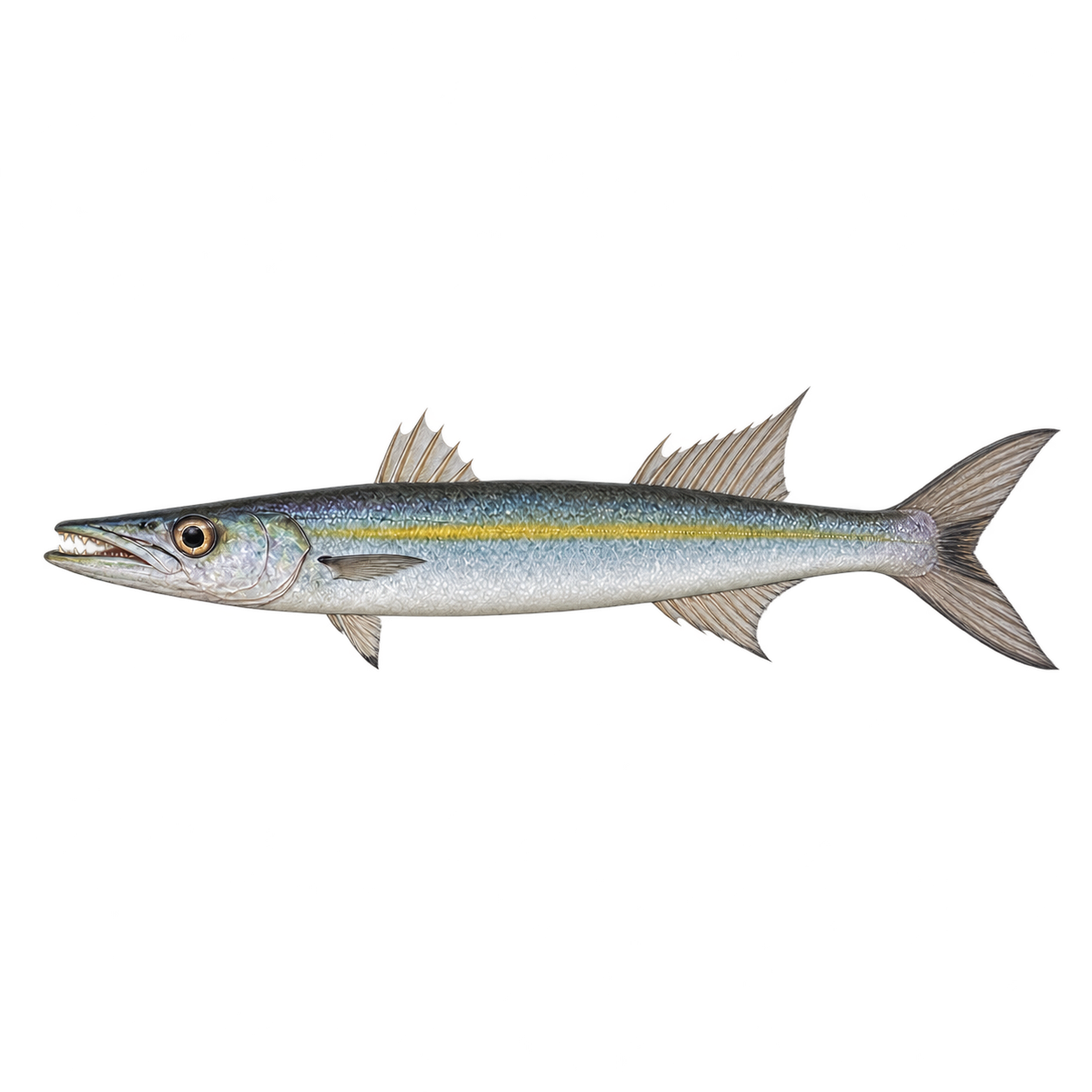
Size: Smithsonian reports a maximum of 50 cm. The entry does not explicitly identify total, fork or standard length for this maximum. Juvenile bars disappear from the adult pattern, so age must be considered during identification.
A slender barracuda with a projecting lower jaw and a gold-yellow side stripe. Adults lack dark body bars; small juveniles have three broad encircling dark bars.
Read the guide’s location, season and eating cautions before acting.
Gulf Flounder
Shape not assigned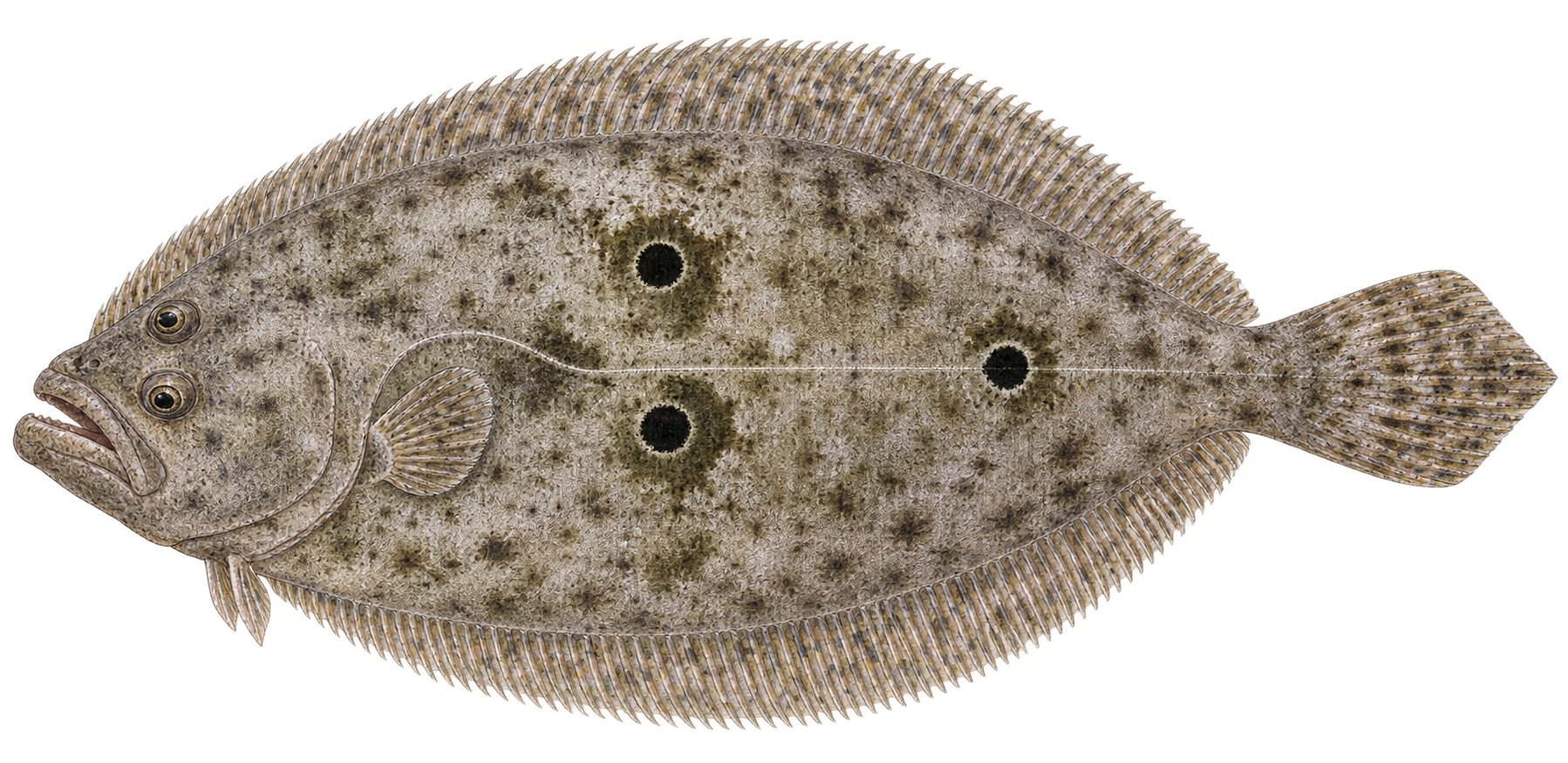
Size: The Smithsonian account reports 71 cm. It does not explicitly specify total, fork or standard length for this value; do not compare it directly with a length-labeled measurement.
A left-eyed flounder with three conspicuous dark ringed spots arranged as a triangle. The brown eyed side is mottled; both eyes lie on the same side.
Read the guide’s location, season and eating cautions before acting.
Hardhead Sea Catfish
Shape not assigned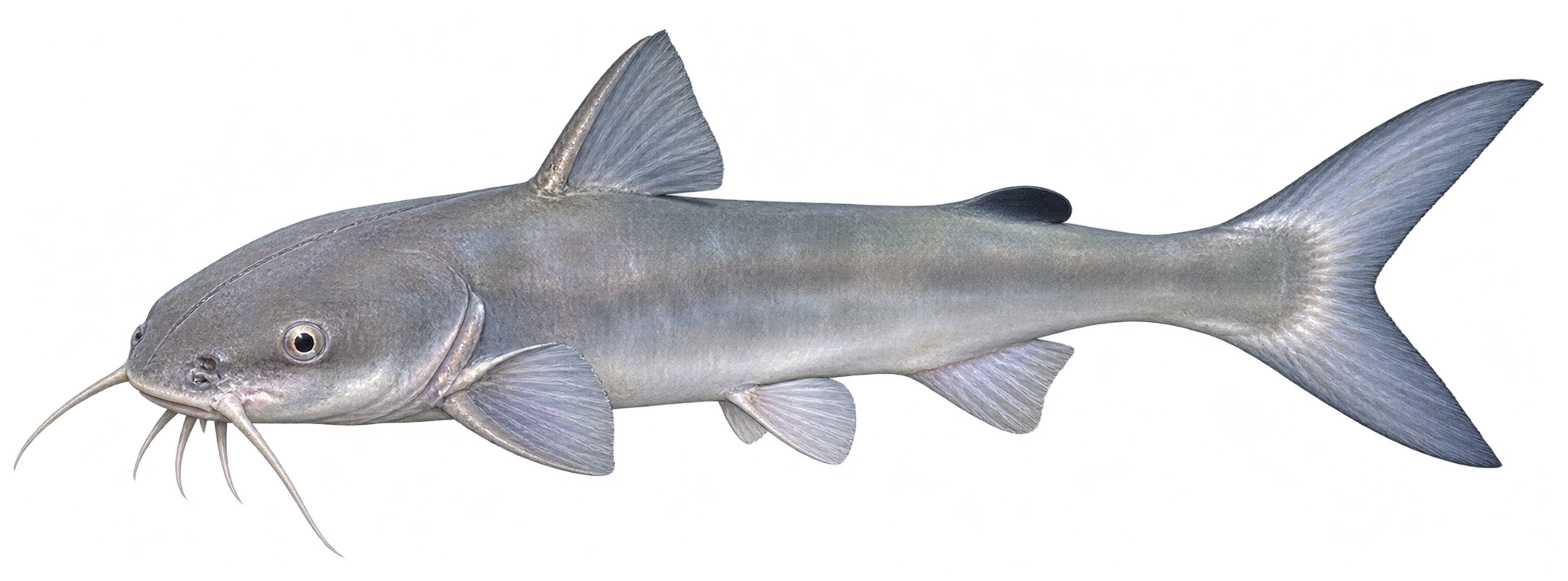
Size: The Smithsonian account reports 70 cm. It does not explicitly specify total, fork or standard length for this value; do not compare it directly with a length-labeled measurement.
A scaleless catfish with barbels around the mouth, a forked tail and a dark upper body fading to a pale belly. Distinguish the full fin and head shape rather than relying on the barbels alone.
Read the guide’s location, season and eating cautions before acting.
Harlequin Bass
Streamlined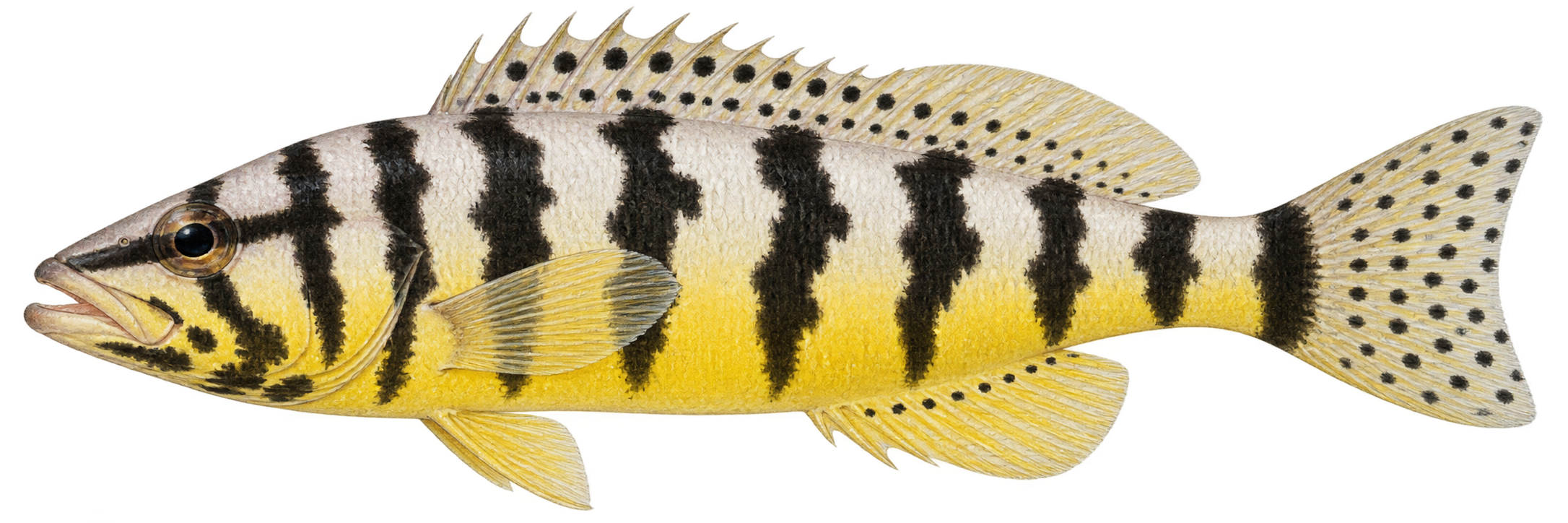
Size: Maximum about 12.3 cm (4.8 inches) total length.
White above and yellow below with bold black bars, black throat blotches and a spotted tail.
Restricted live collection only; no spearing; protected collection areas apply
Explore the harlequin bass guide →Hogfish
Deep-bodied & oval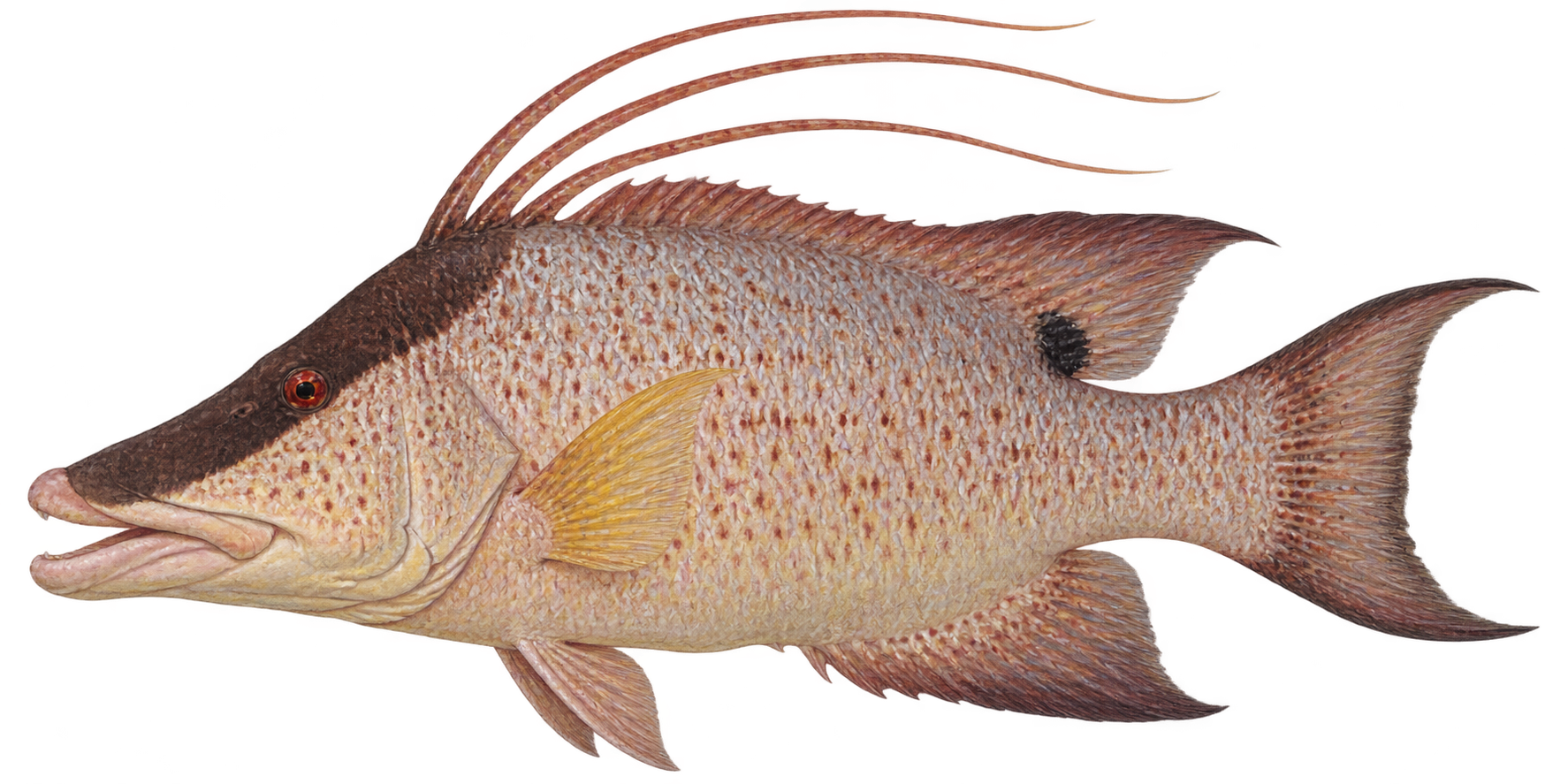
Size: Maximum around 3 feet (91 cm) total length.
Piglike snout, deep oval body and three long trailing front dorsal spines.
Regulated food fish: Atlantic/Keys seasonal closure; Gulf limits differ
Explore the hogfish guide →Honeycomb Cowfish
Deep-bodied & oval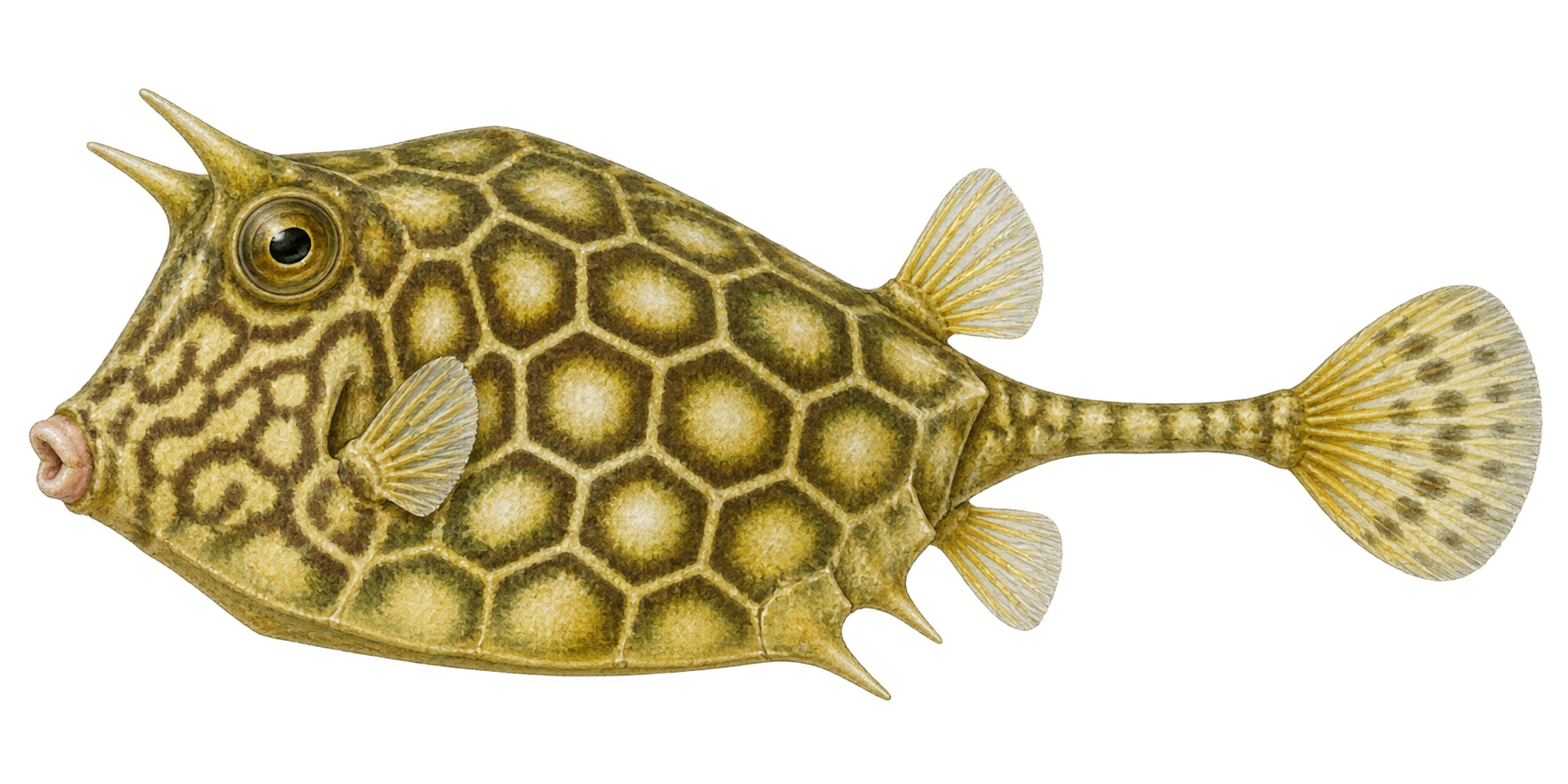
Size: Often about 10 inches; museum maximum about 20 inches (50 cm) total length.
Short eye horns and dark honeycomb rings on a rigid triangular body.
Restricted marine life: live collection only; no spearing
Explore the honeycomb cowfish guide →Horse-eye Jack
Streamlined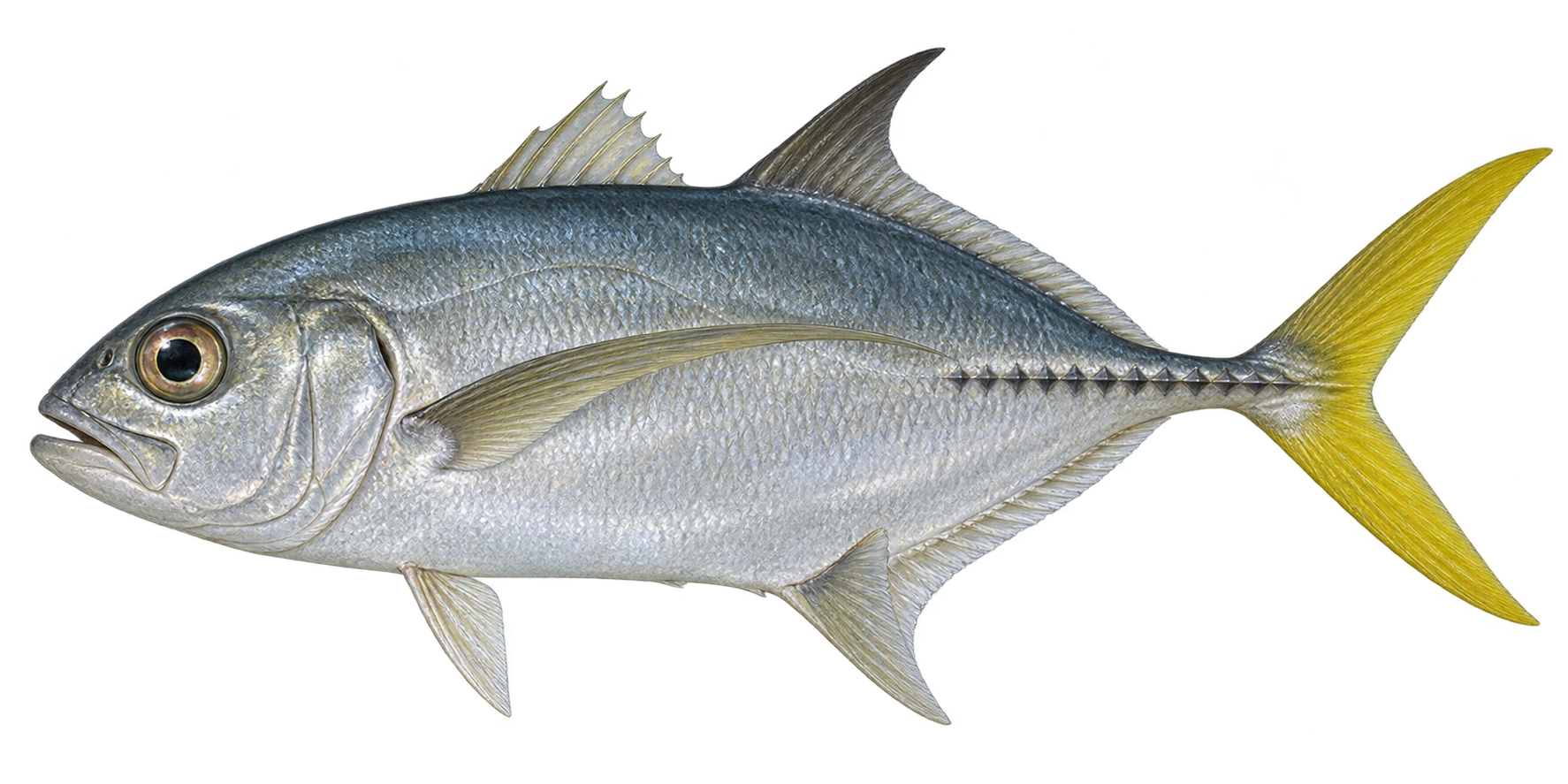
Size: Reported maximum about 101 cm; see profile for life-stage and measurement notes.
Large-eyed silver jack with a yellow forked tail, dark dorsal lobe and dark rear lateral-line scutes.
Read the guide’s location, season and eating cautions before acting.
Houndfish
Long & eel-like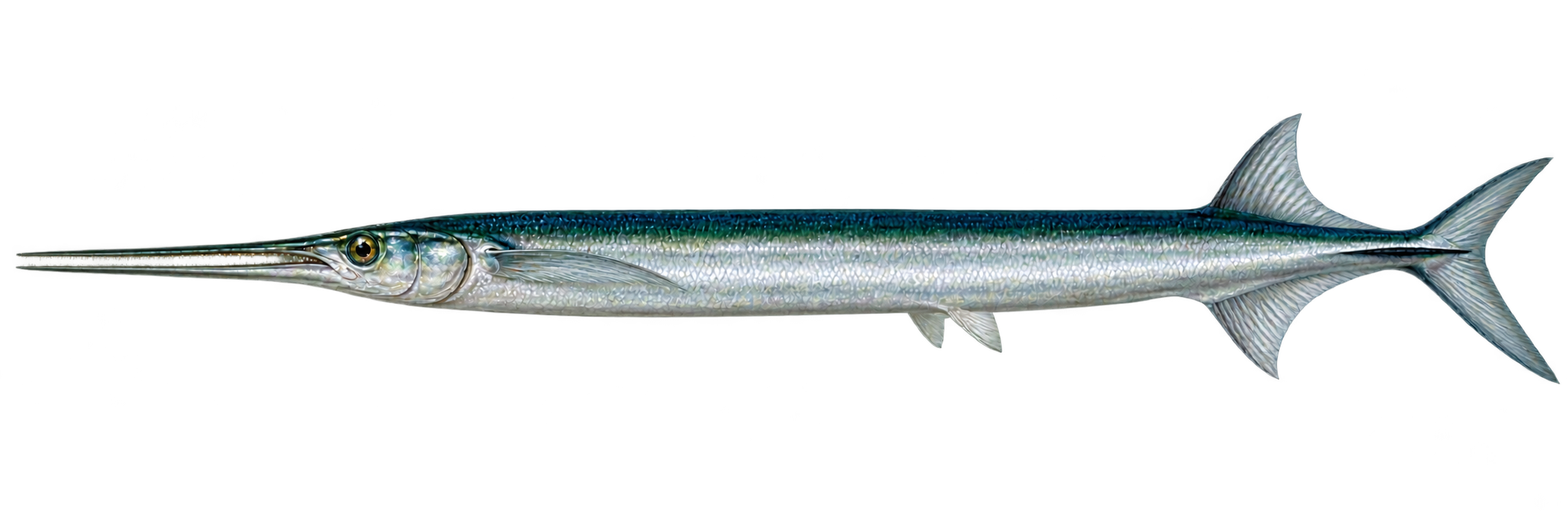
Size: Reported maximum about 125 cm; see profile for life-stage and measurement notes.
A robust surface needlefish with a stout toothed beak, high rear fin lobes and a black keel on the tail base.
Read the guide’s location, season and eating cautions before acting.
Indigo Hamlet
Shape not assigned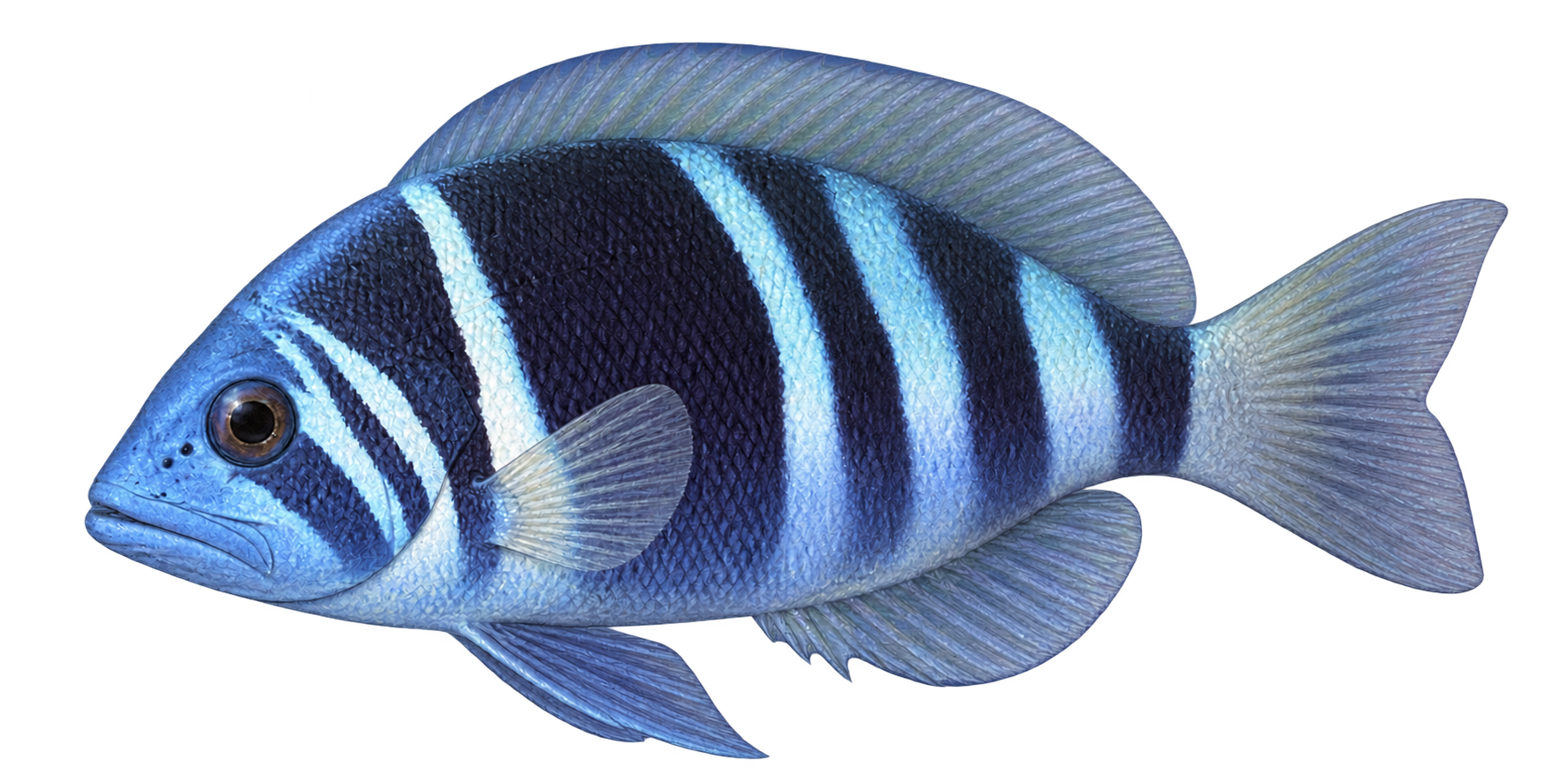
Size: The Smithsonian account reports 16.1 cm. It does not explicitly specify total, fork or standard length for this value; do not compare it directly with a length-labeled measurement.
A pale blue to whitish hamlet crossed by dark blue-black bars, including bars beneath the eye and at the gill cover. Most fins are blue-gray; the pectorals are clear.
Read the guide’s location, season and eating cautions before acting.
Jackknife Fish
Tall dorsal fin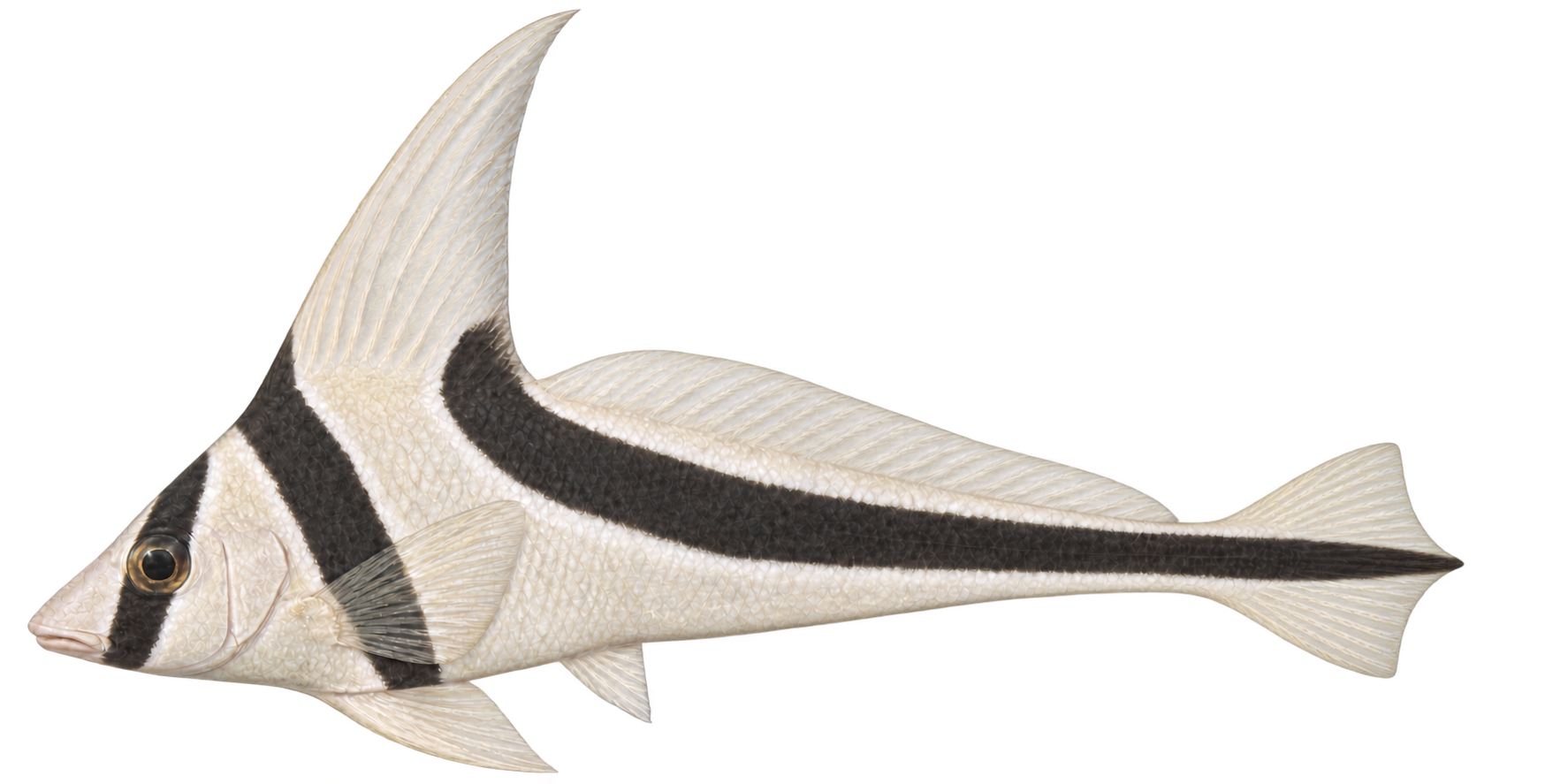
Size: Reported maximum 30 cm; maximum is not a typical sighting size.
Tall first dorsal and black oblique bars, with the rear stripe continuing through the tail; lacks the adult spotted drum’s spotted rear fins.
Read the guide’s location, season and eating cautions before acting.
Jolthead Porgy
Deep-bodied & oval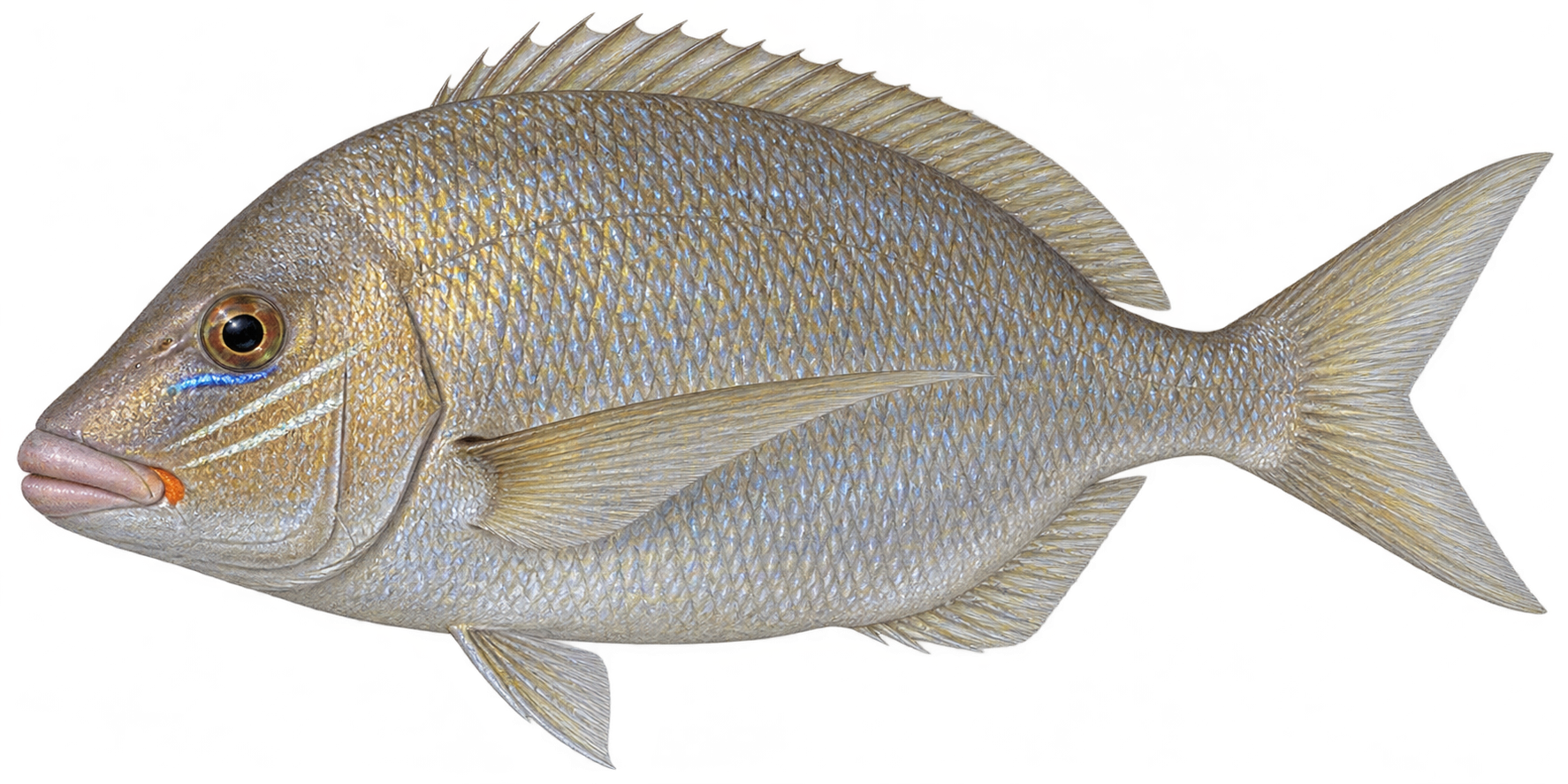
Size: Reported maximum about 68 cm; see profile for life-stage and measurement notes.
Brassy silver porgy with a long sloping snout, blue line below the eye and orange mouth corner.
Read the guide’s location, season and eating cautions before acting.
Kuna Goby
Streamlined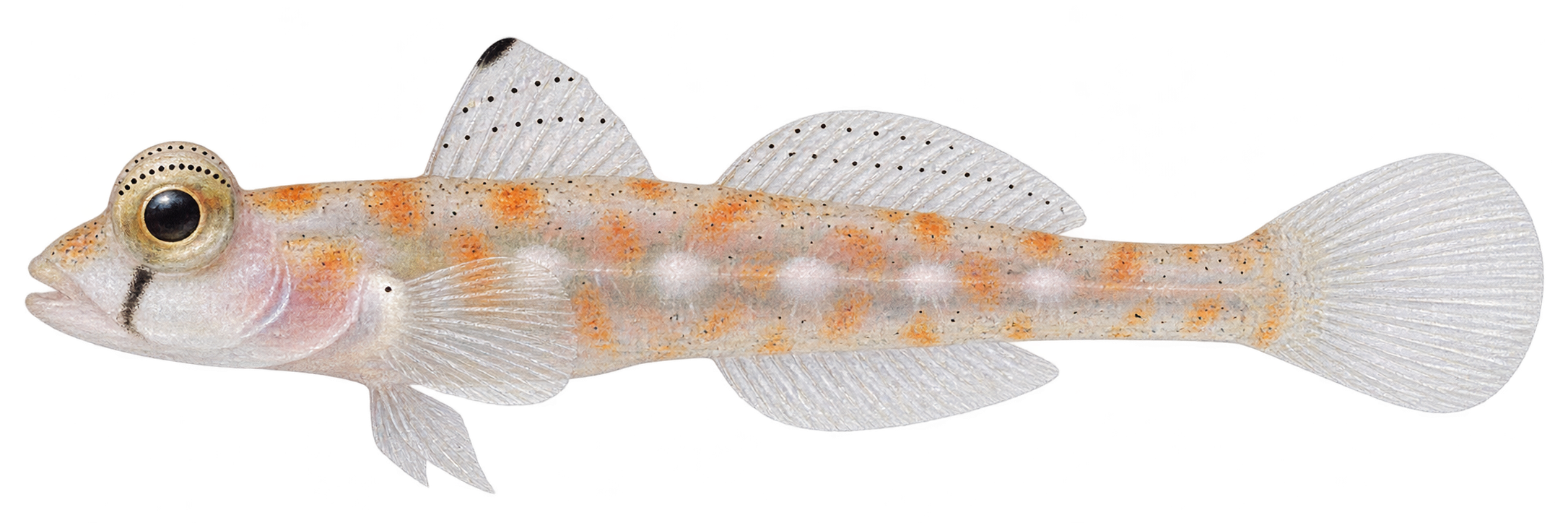
Size: Maximum about 2.5 cm (1.0 inches).
Look for a very small translucent goby with orange blotches and fine black spots.
Restricted marine life: live collection only; no spearing
Explore the kuna goby guide →Lancer Dragonet
Elongated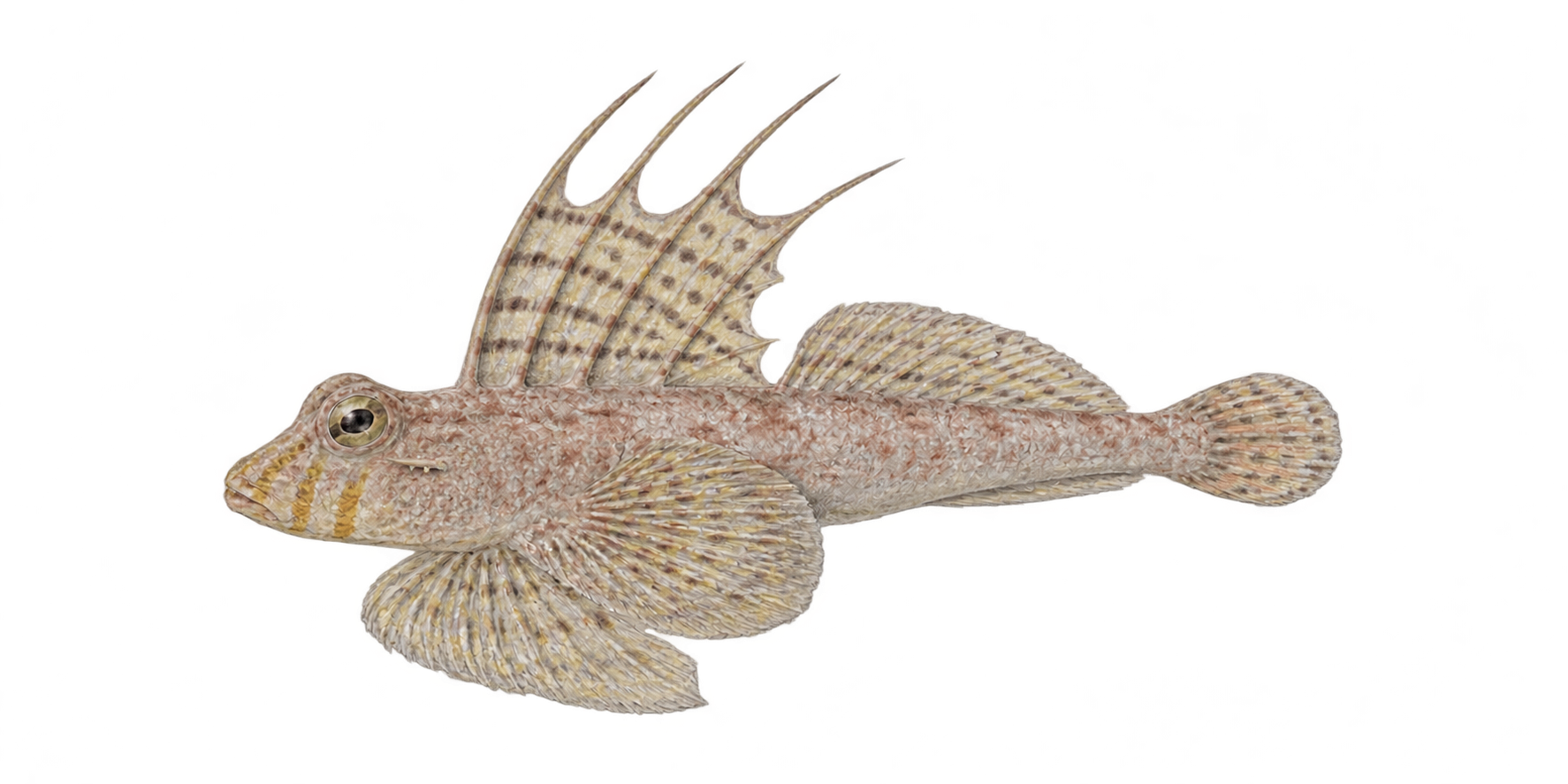
Size: Smithsonian reports a maximum of 11.4 cm, not a typical local encounter size.
Pale mottled dragonet with barred cheeks, large paired fins and a tall flag-like first dorsal.
Read the guide’s location, season and eating cautions before acting.
Lane Snapper
Streamlined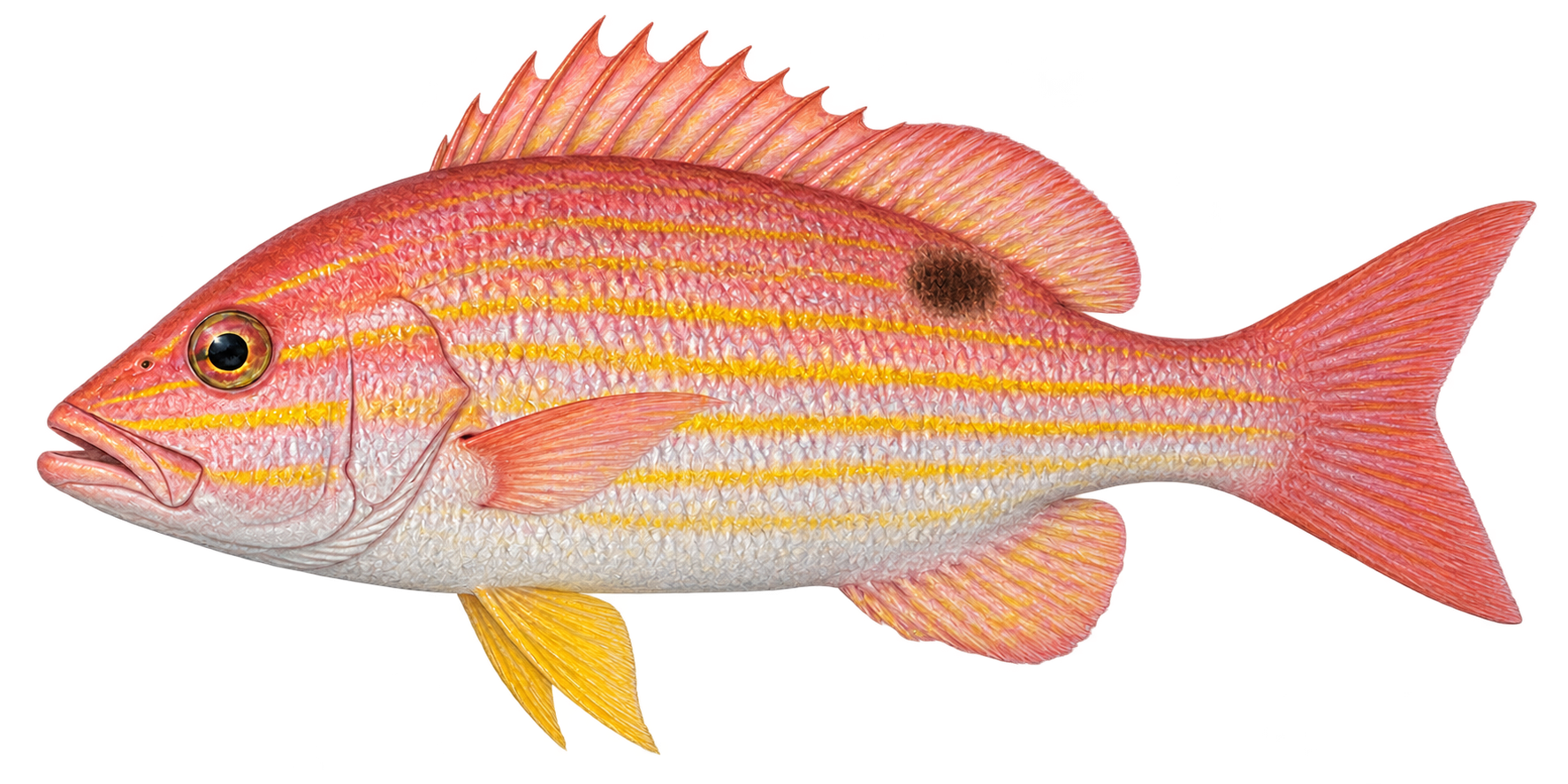
Size: Often around 10–14 inches; exceptional fish can approach 24 inches.
Yellow horizontal stripes over pink-silver sides and a dark spot below the soft dorsal fin.
Regulated recreational harvest; restrictions apply
Explore the lane snapper guide →Lantern Bass
Streamlined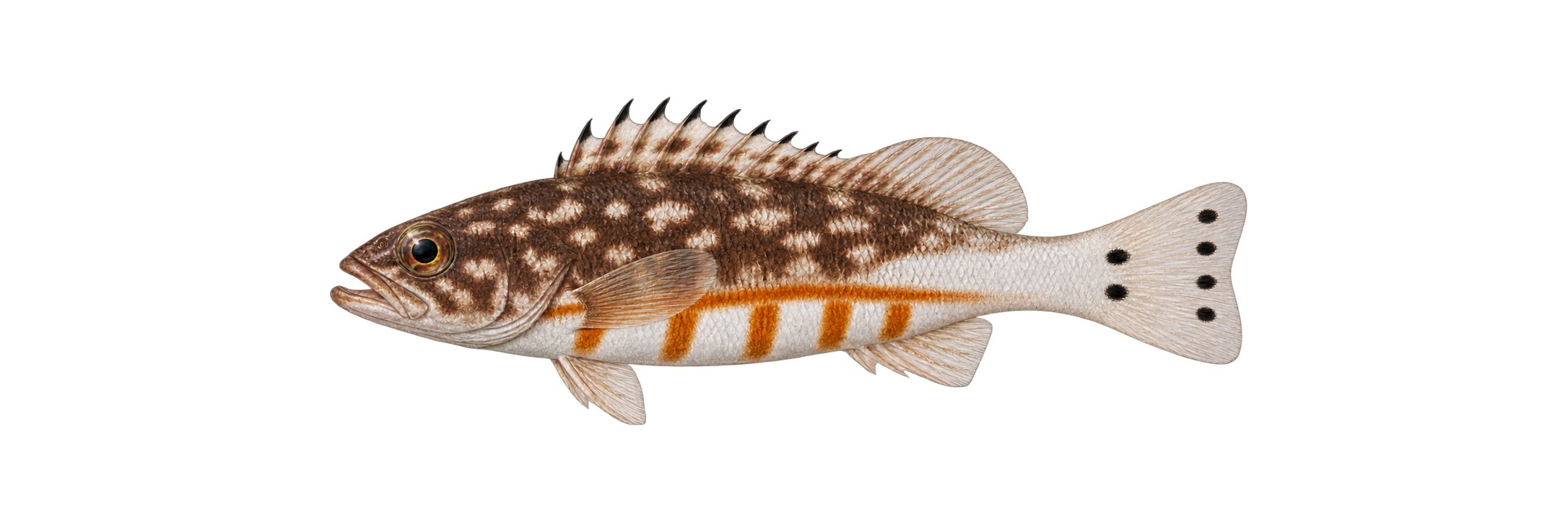
Size: Small seabass; regional account 7.4 cm maximum, broader account 12 cm.
Mottled dark front upper body, pale rear body, orange-brown lower bars and two vertical rows of dark tail spots.
Read the guide’s location, season and eating cautions before acting.
Leopard Searobin
Elongated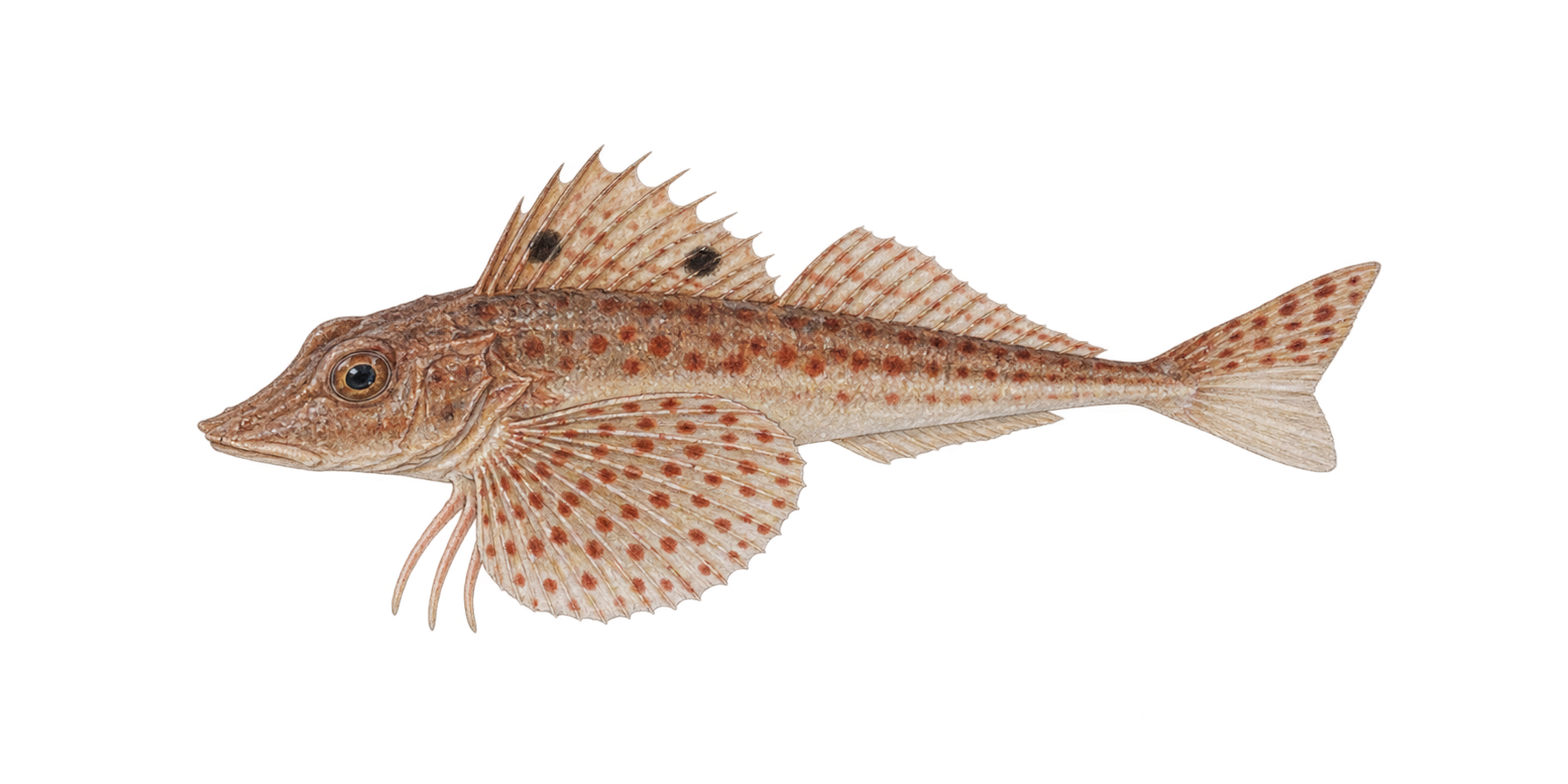
Size: Smithsonian reports a maximum of 25 cm, not a typical local encounter size.
Brown above with reddish spots, pale below; pale spotted pectorals and two separate dark marks on the first dorsal.
Read the guide’s location, season and eating cautions before acting.
Lined Seahorse
Seahorses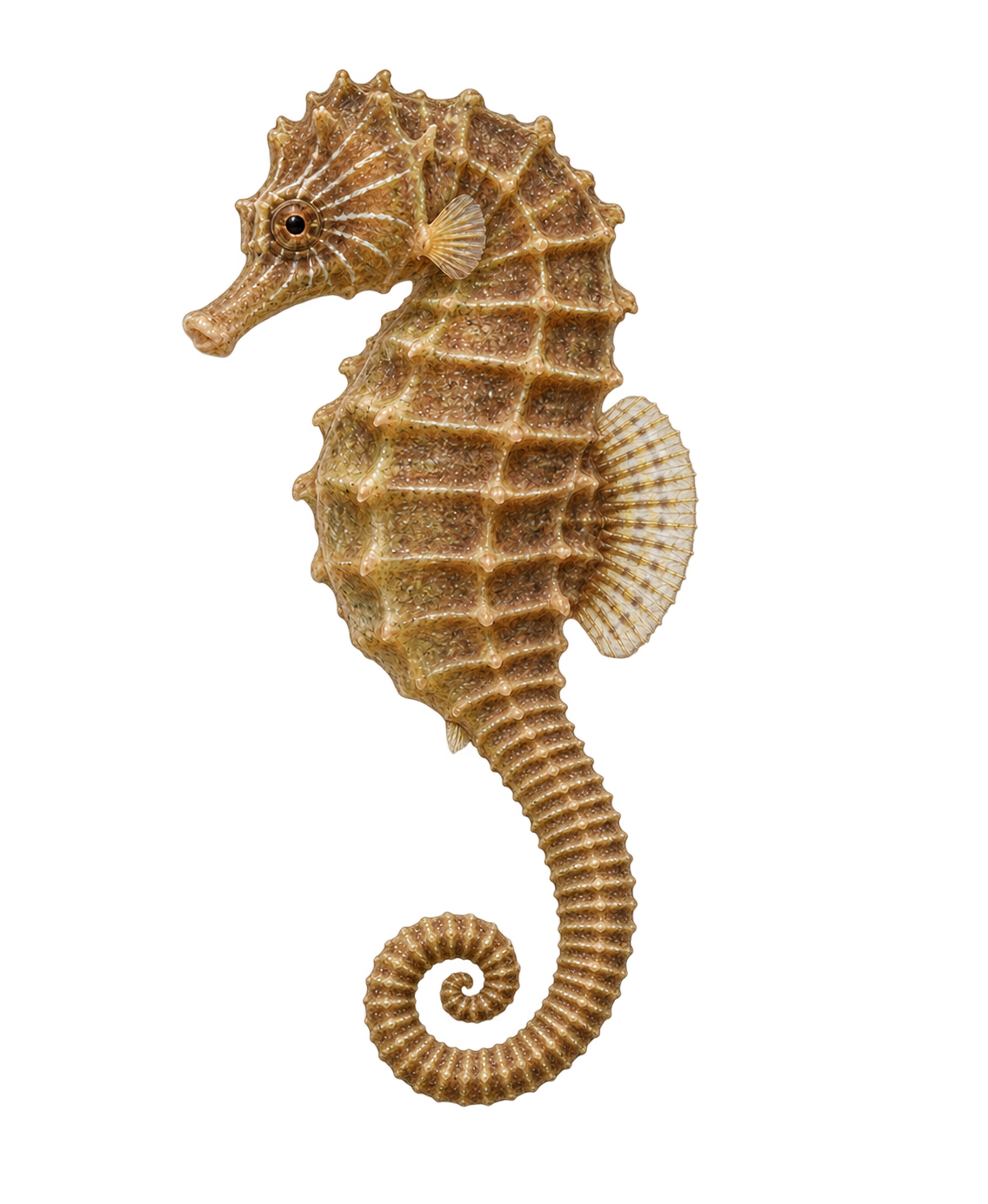
Size: Reported maximum 19 cm; curved posture complicates estimates.
Robust chest, bony body rings and often pale lines along the neck.
Restricted marine life: live collection only; no spearing
Explore the lined seahorse guide →Lionfish
Fan-finned & spiny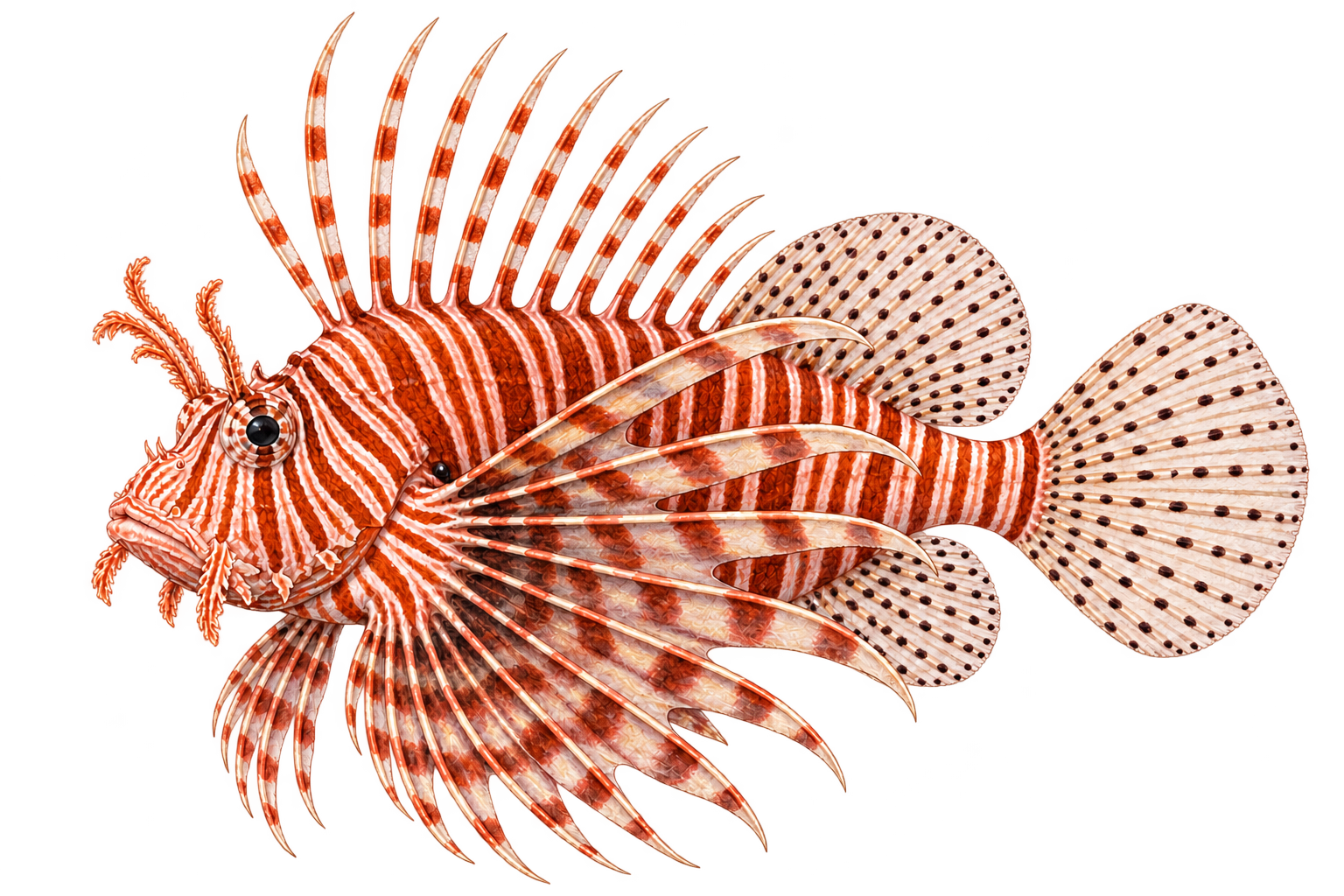
Size: Often 12–15 inches; some exceed 18 inches.
Contrasting bands, spreading pectoral fins and prominent dorsal spines.
Invasive; recreational removal encouraged
Explore the lionfish guide →Littlehead Porgy
Deep-bodied & oval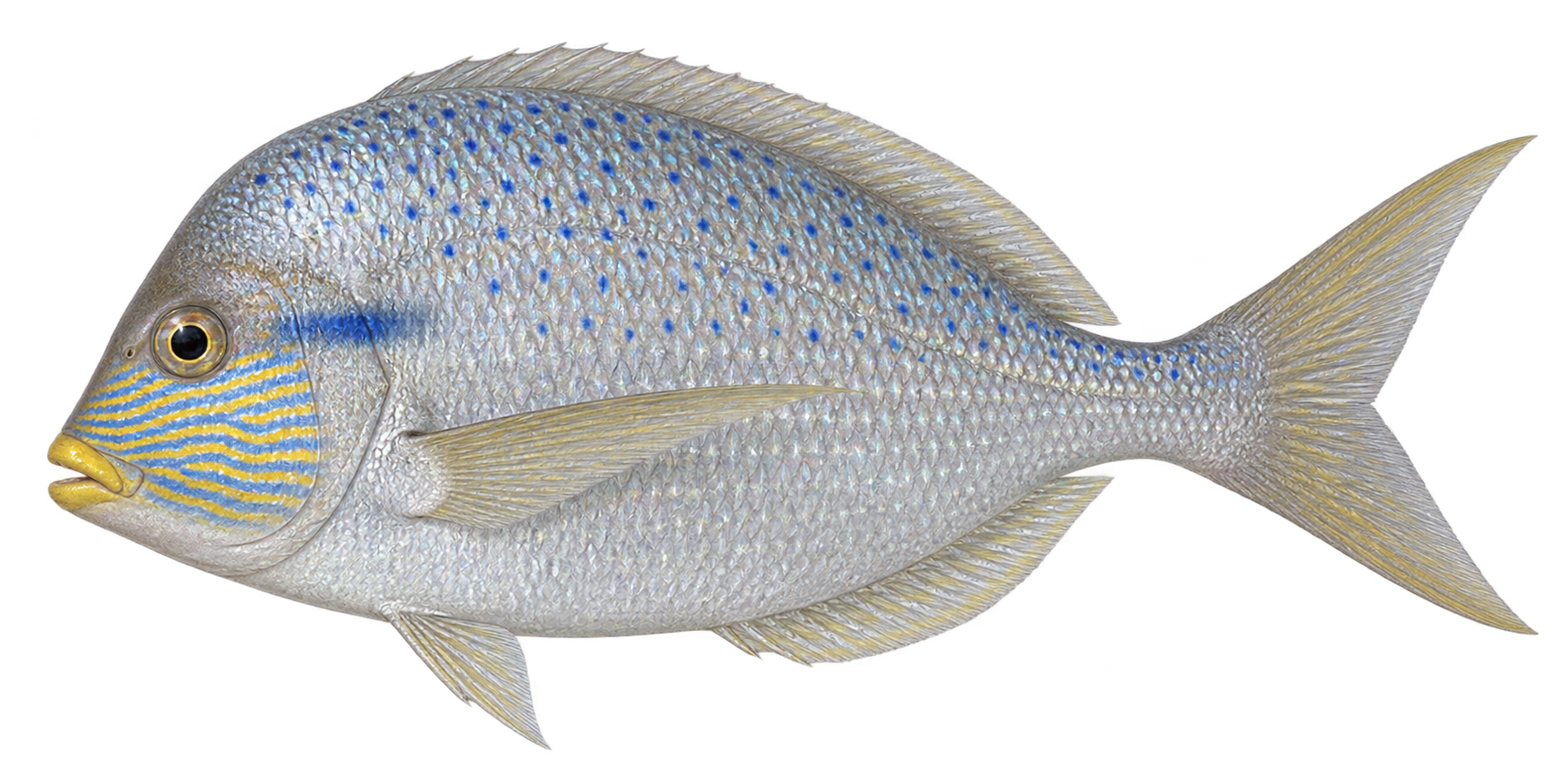
Size: Reported maximum about 46 cm; see profile for life-stage and measurement notes.
A steep-headed silver porgy with blue scale spots, blue-yellow cheek lines and a long pointed pectoral fin.
Read the guide’s location, season and eating cautions before acting.
Longfin Damselfish
Deep-bodied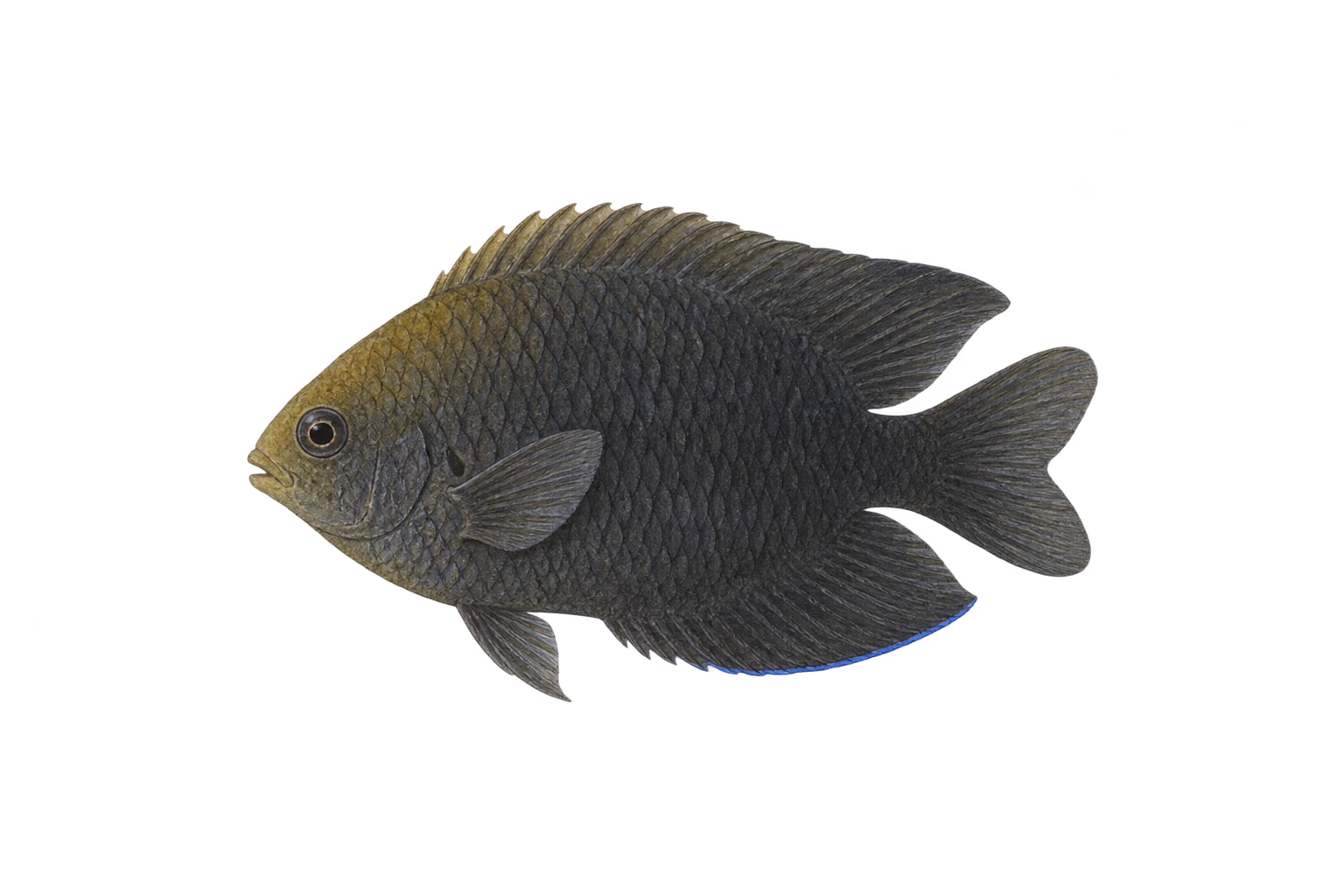
Size: Smithsonian reports a maximum of 12.5 cm, not a typical local encounter size.
Deep oval adult, grey to black, with elongated rounded dorsal and anal fins and a thin blue anal margin.
Read the guide’s location, season and eating cautions before acting.
Longsnout Butterflyfish
Deep-bodied & oval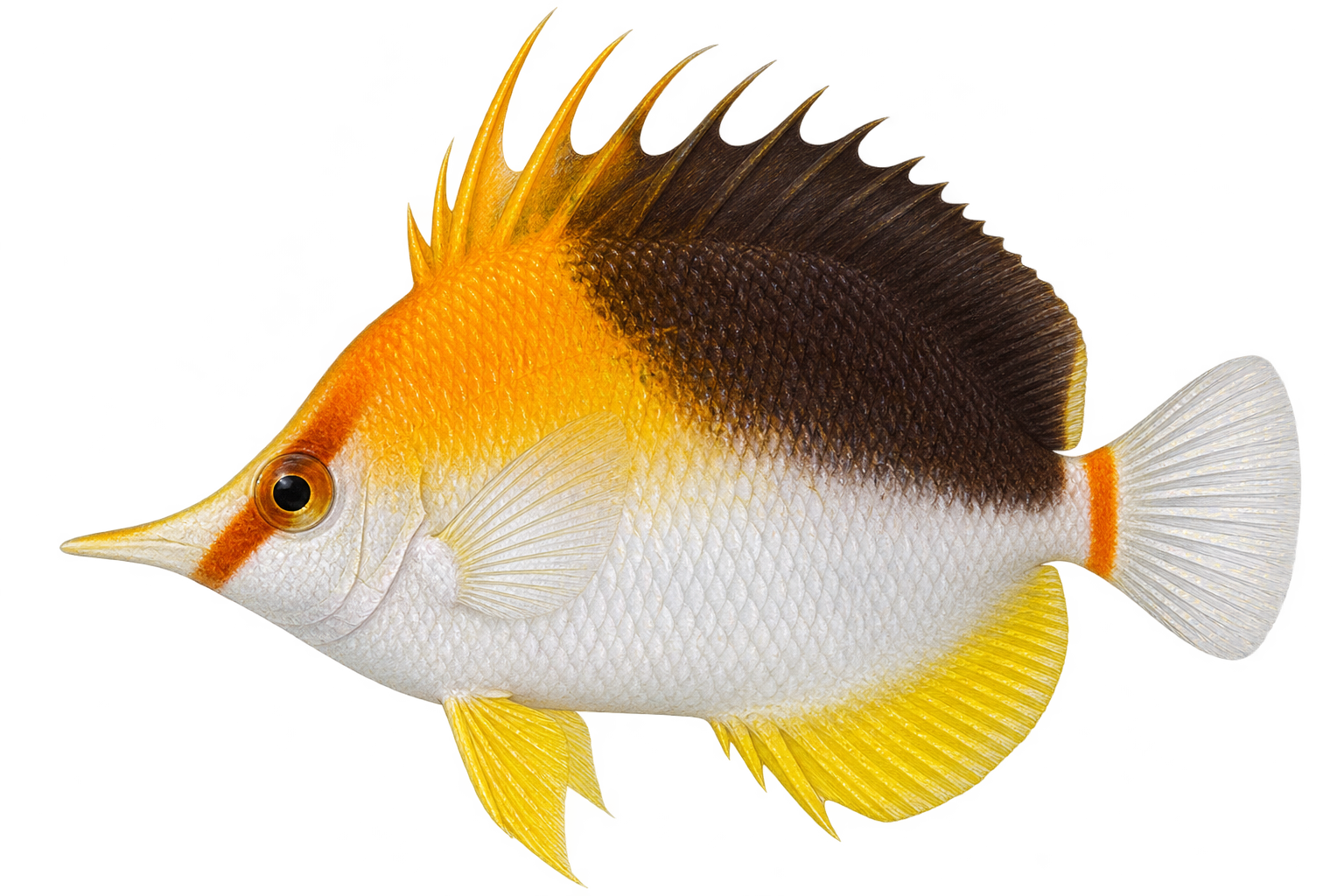
Size: Reported maximum about 9.5 cm; see profile for life-stage and measurement notes.
Tiny disc-shaped butterflyfish with a pointed snout, tall triangular dorsal and dark upper-back patch.
Read the guide’s location, season and eating cautions before acting.
Longsnout Seahorse
Seahorses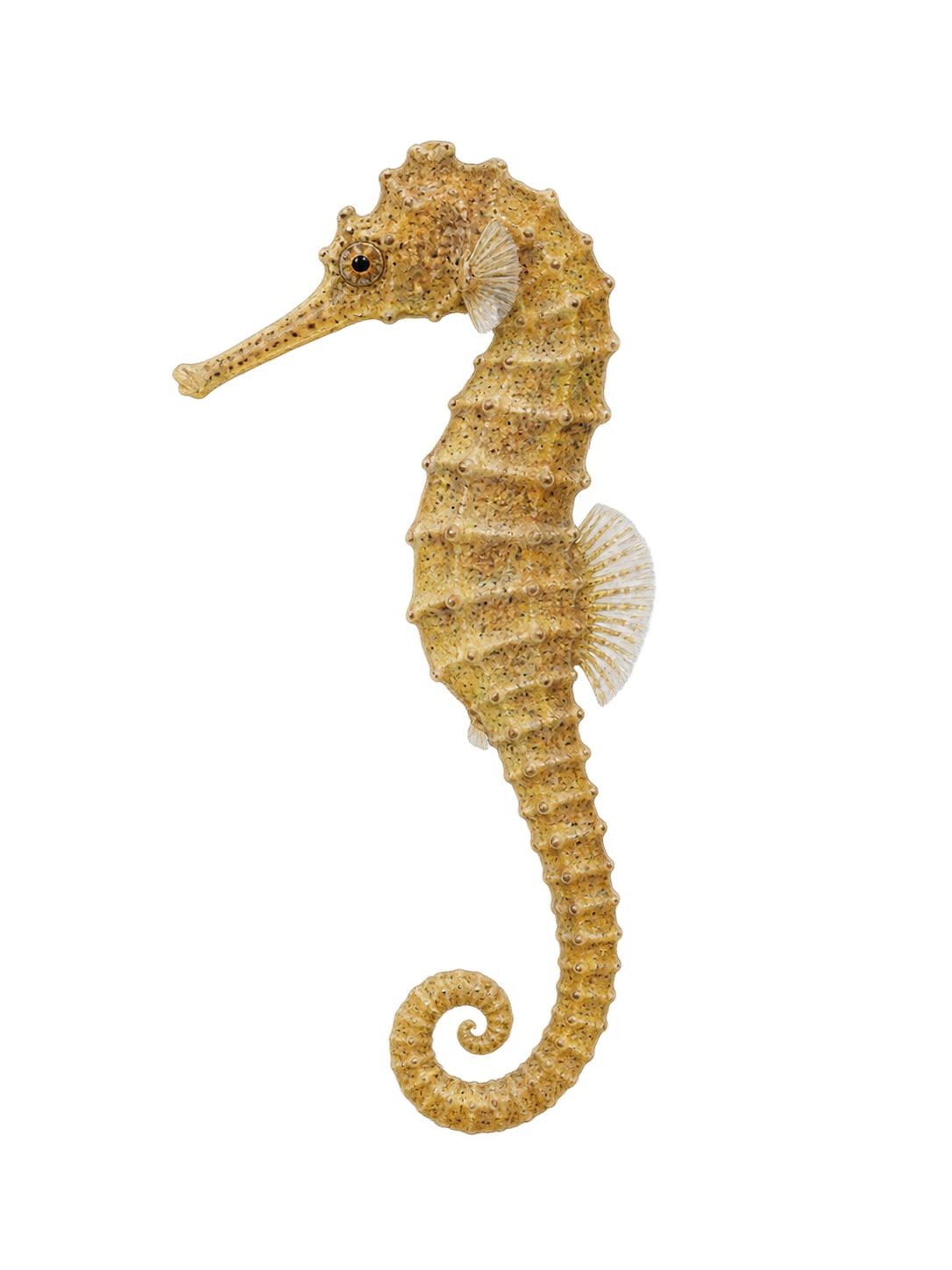
Size: Maximum reference height 17.5 cm; curled posture looks smaller.
Slender body, long snout and rounded, convoluted coronet.
Restricted marine life: live collection only; no spearing
Explore the longsnout seahorse guide →Longspine Squirrelfish
Streamlined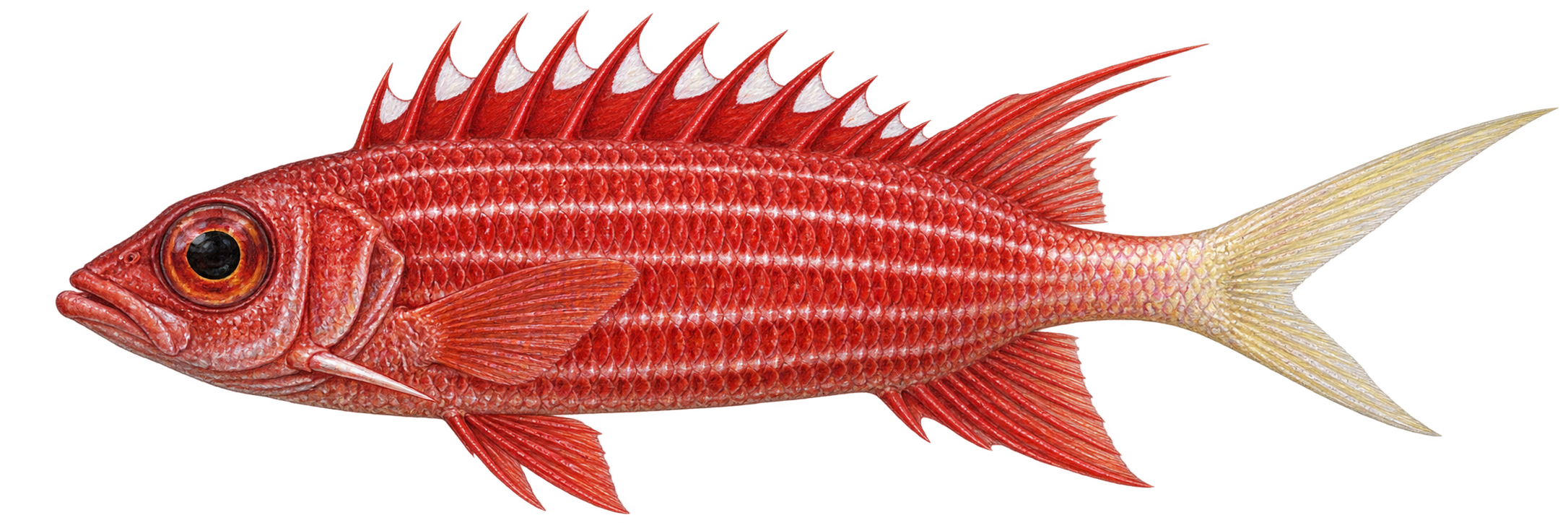
Size: Maximum about 44 cm (17.3 inches) total length.
Red squirrelfish with white triangular patches behind dorsal spine tips and a pale yellow-white tail.
No spearing; no take in John Pennekamp Coral Reef State Park
Explore the longspine squirrelfish guide →Lookdown
Deep-bodied & oval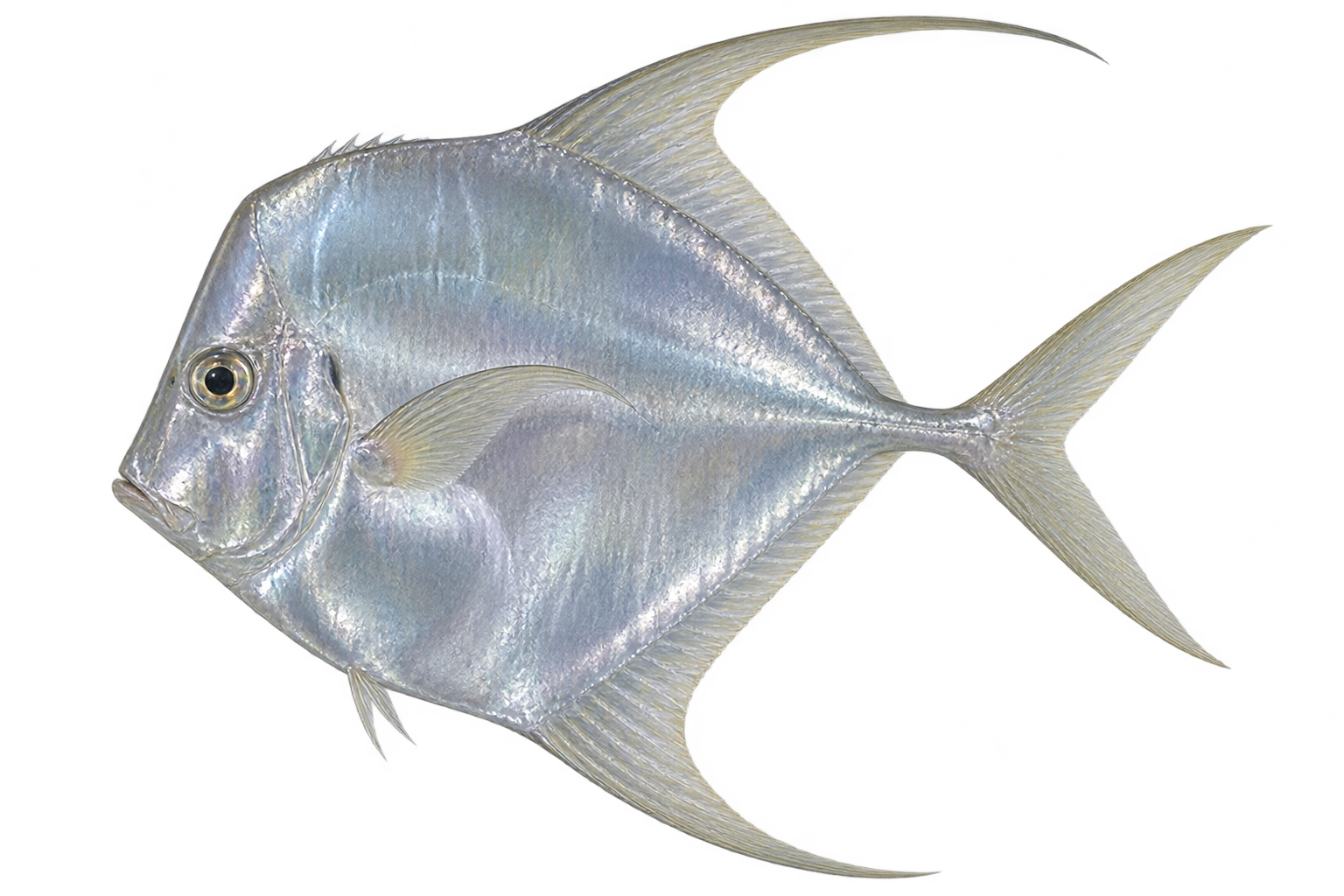
Size: Commonly around 14 inches; reported maximum about 19 inches.
Extremely thin silver body, steep sloping forehead and long sickle-shaped rear fins.
Harvest allowed under default recreational rules
Explore the lookdown guide →Mahogany Snapper
Elongated & robust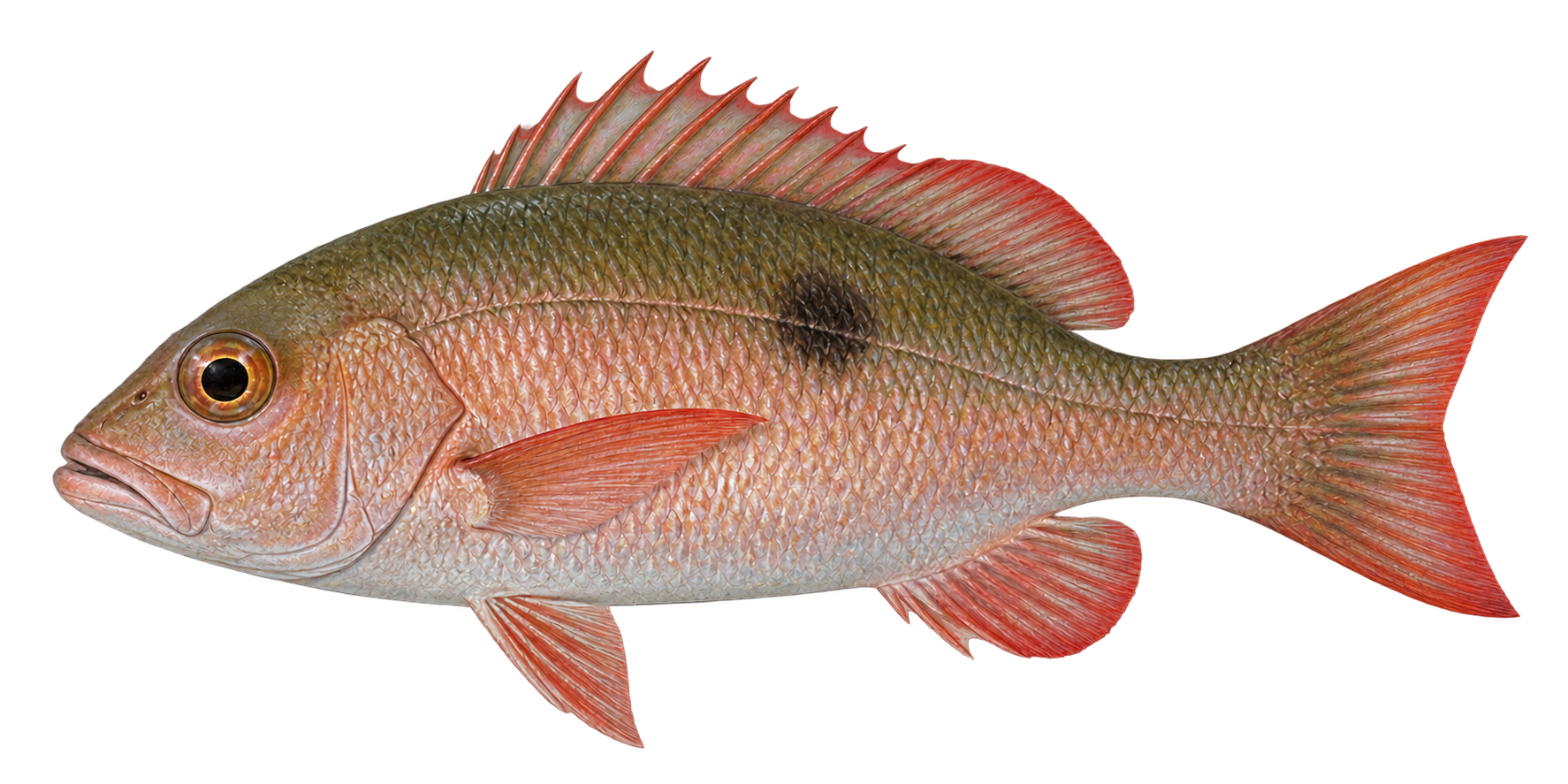
Size: Reported maximum 48 cm (about 19 in).
Olive-gray upper body, reddish fins and a pronounced dark spot below the front of the soft dorsal fin.
Read the guide’s location, season and eating cautions before acting.
Margate
Streamlined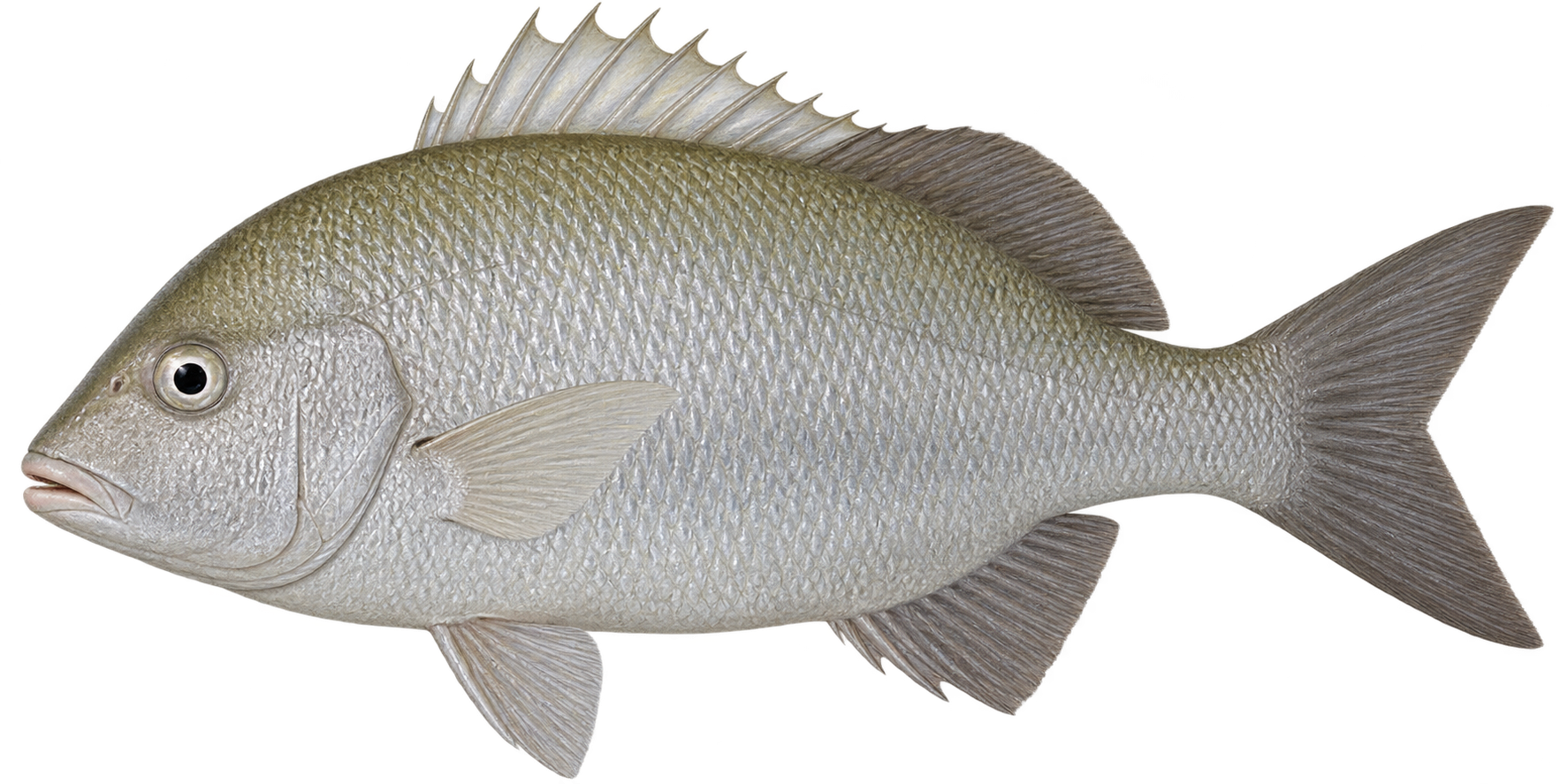
Size: Up to about 31 inches (79 cm) total length.
Large pearly-gray grunt with pale iris, blunt head and dusky rear fins.
Harvest may be allowed; limits and site restrictions apply
Explore the margate guide →Masked Goby
Streamlined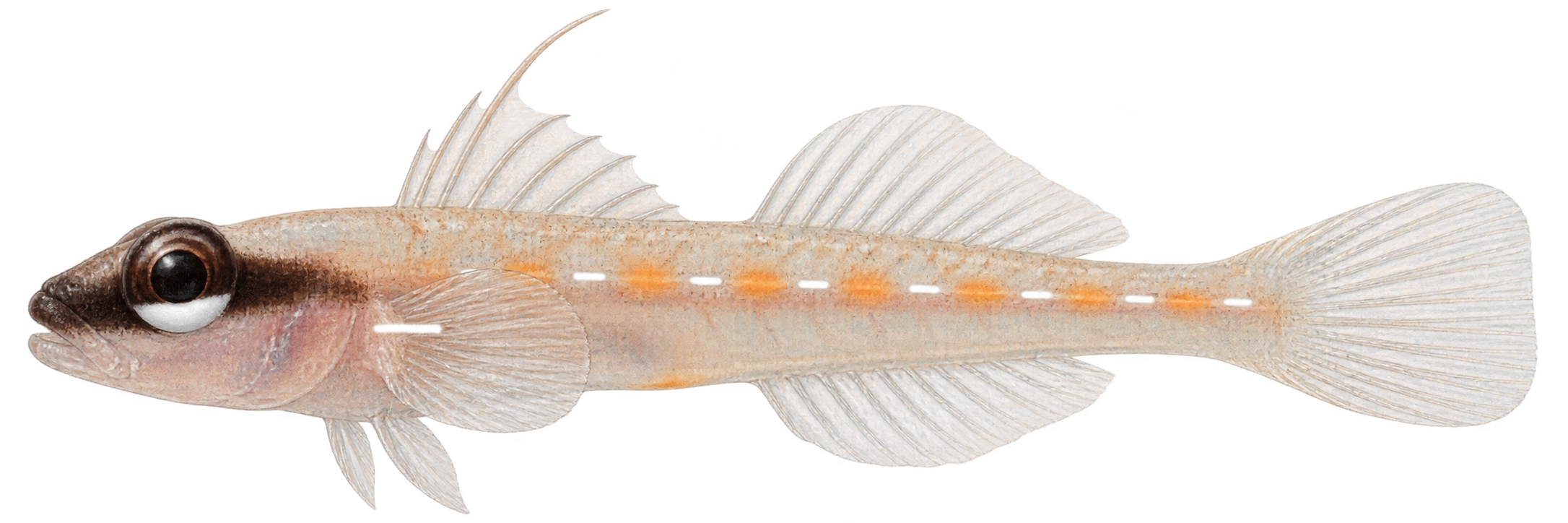
Size: Maximum about 4 cm (1.6 inches).
The body is translucent and the snout and eye region form a dark mask.
Restricted marine life: live collection only; no spearing
Explore the masked goby guide →Midnight Parrotfish
Elongate & oval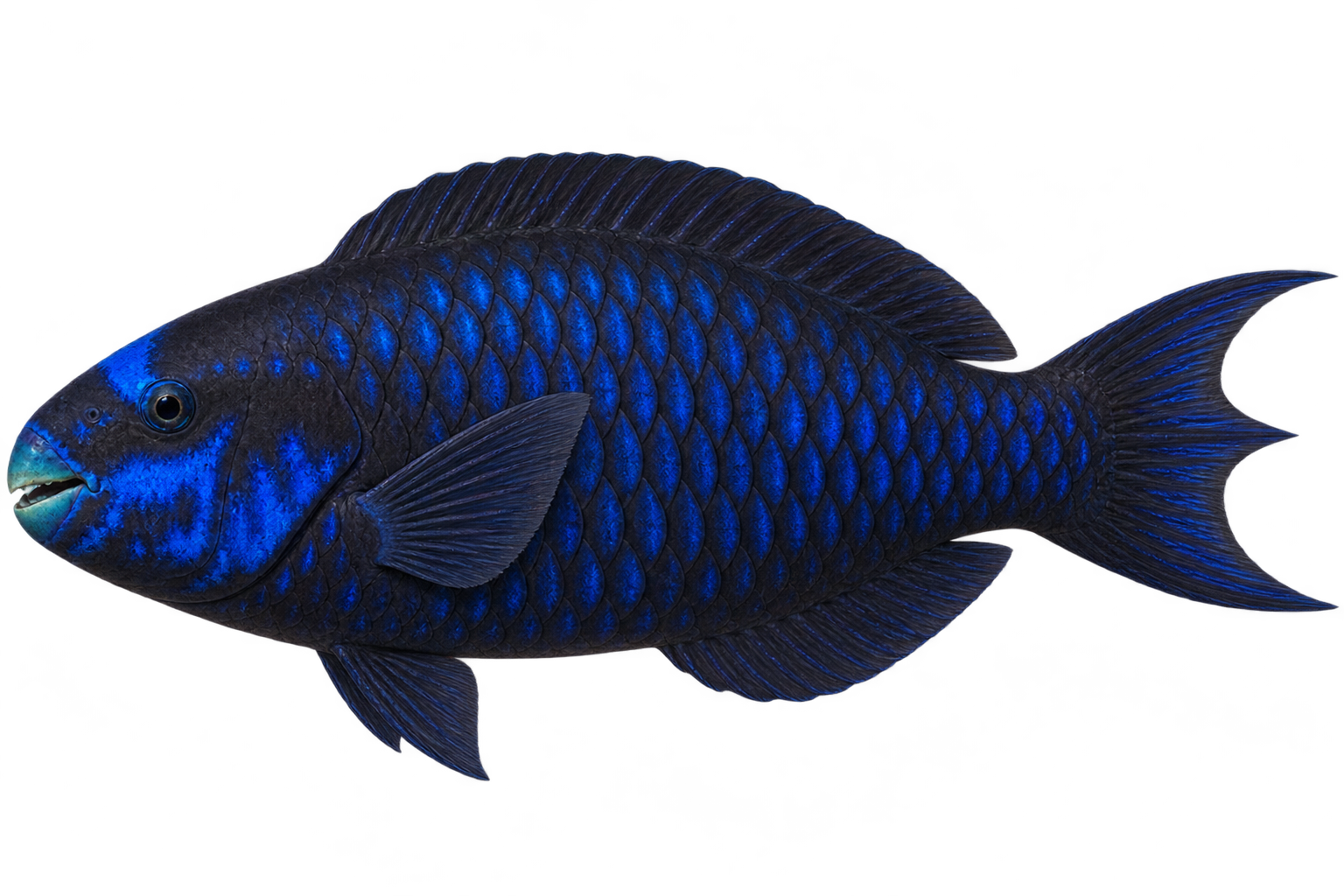
Size: Both major species accounts give a maximum length of 77 cm, with FishBase listing about 50 cm as a common length.
Midnight Parrotfish are dark, but not plain: bright blue centers punctuate the black body scales, and blue covers unscaled areas of the head.
Restricted marine life: live collection only; no spearing
Explore the midnight parrotfish guide →Molly Miller
Streamlined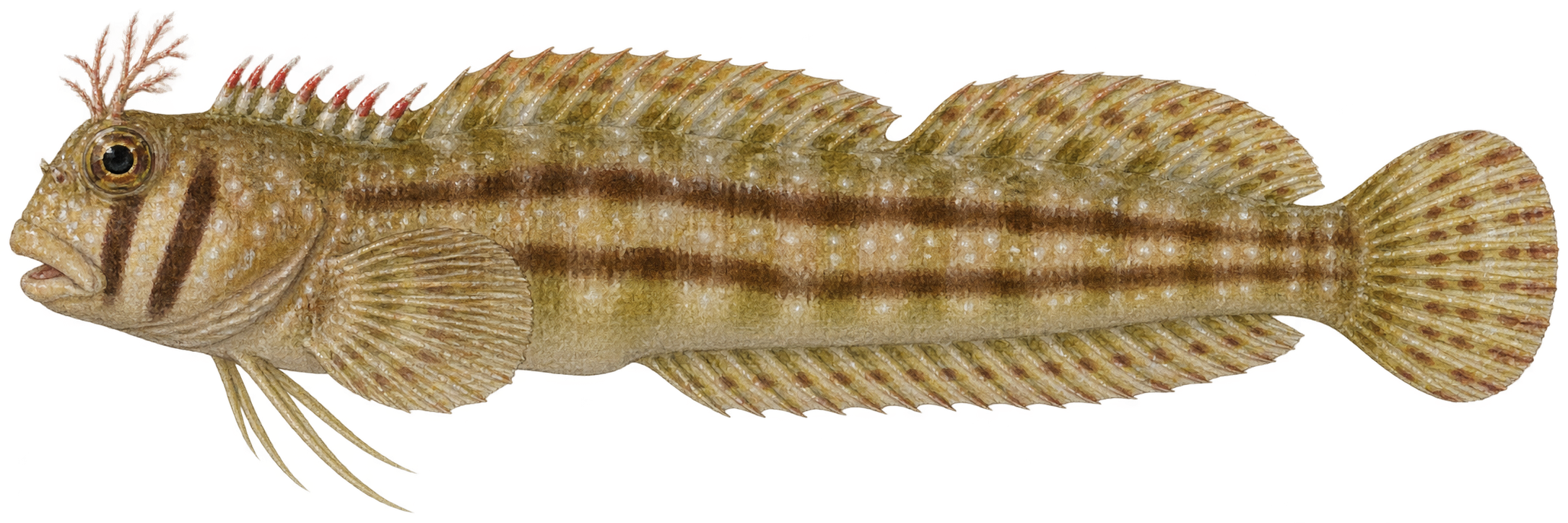
Size: Maximum about 10 cm (3.9 inches).
The best clue is the pair of rows of short cirri along the nape, often banded red and white.
Restricted marine life: live collection only; no spearing
Explore the molly miller guide →Mottled Jawfish
Shape not assigned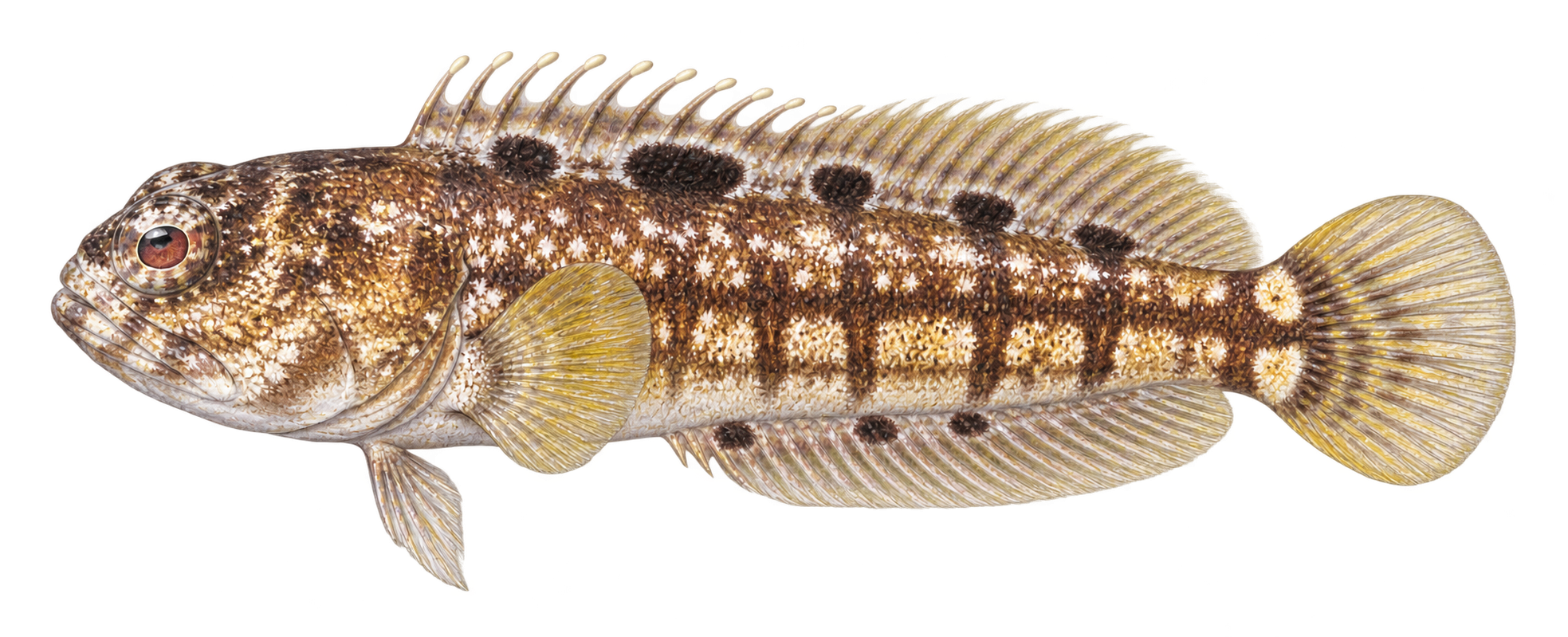
Size: The Smithsonian account reports 15.3 cm. It does not explicitly specify total, fork or standard length for this value; do not compare it directly with a length-labeled measurement.
A brown-and-white jawfish with a checkerboard-like flank pattern. Dark body bars meet blotches along the dorsal-fin base, with the strongest dorsal blotch farther back than the front of the fin.
Read the guide’s location, season and eating cautions before acting.
Mottled Mojarra
Streamlined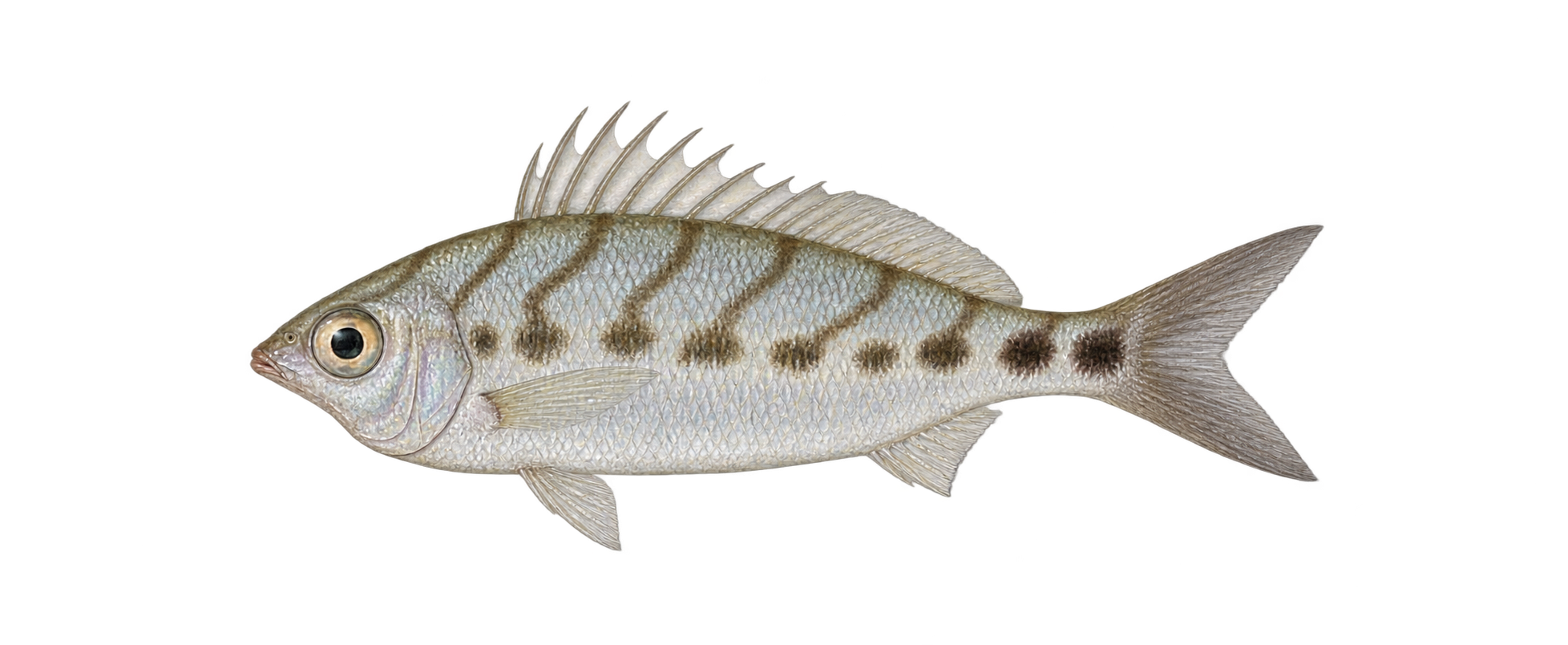
Size: Regional reported maximum 23 cm; older guides list smaller limits.
Slender silver body, wavy slanting bars and dark rear-side blotches; deeply forked tail and a mouth that projects downward.
Read the guide’s location, season and eating cautions before acting.
Mutton Snapper
Streamlined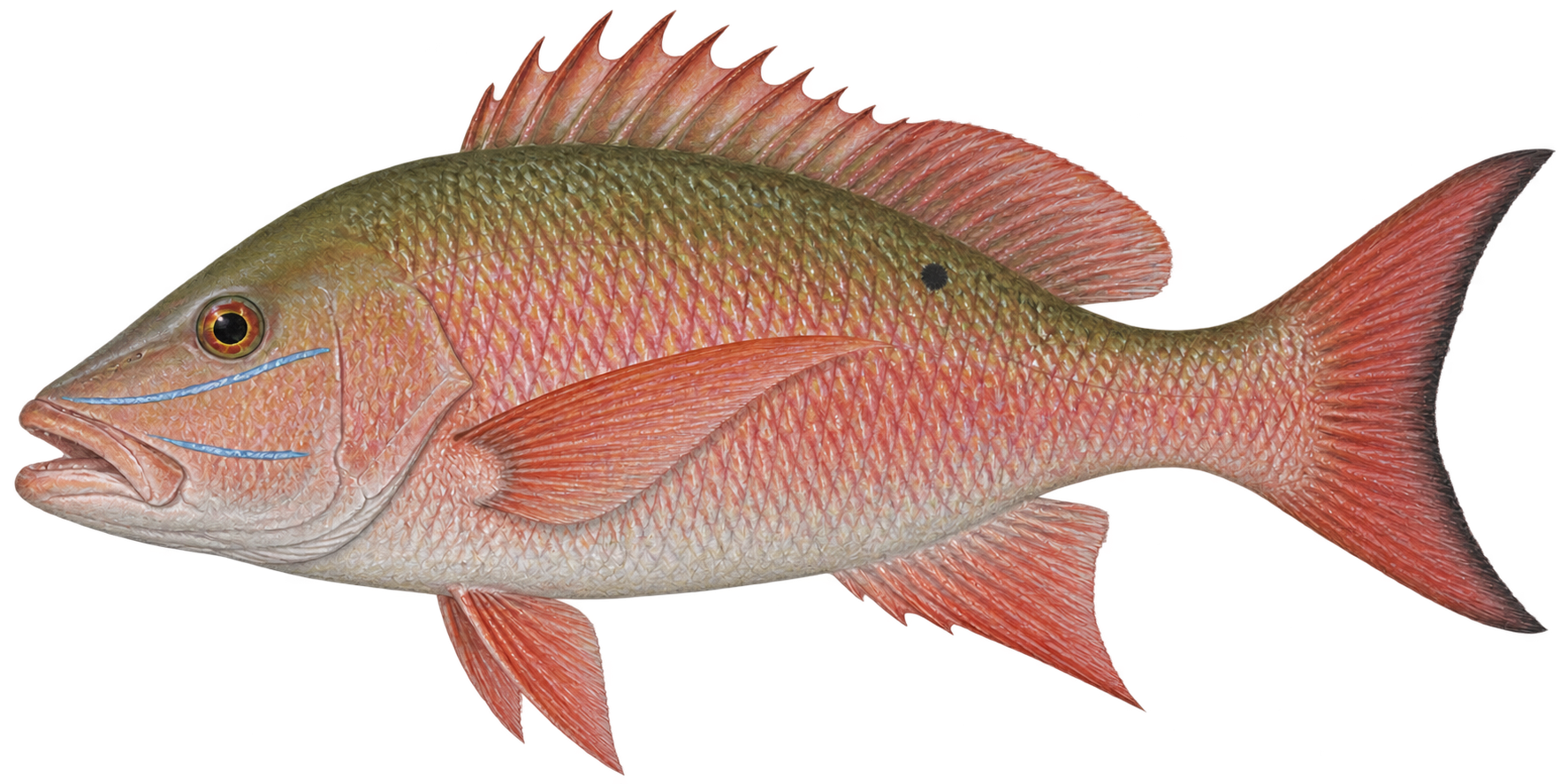
Size: Commonly about 20 inches; large fish can exceed 3 feet.
Olive back, pink-red lower body, blue cheek lines and a black upper-side spot.
Regulated recreational harvest; restrictions apply
Explore the mutton snapper guide →Nassau Grouper
Elongated & robust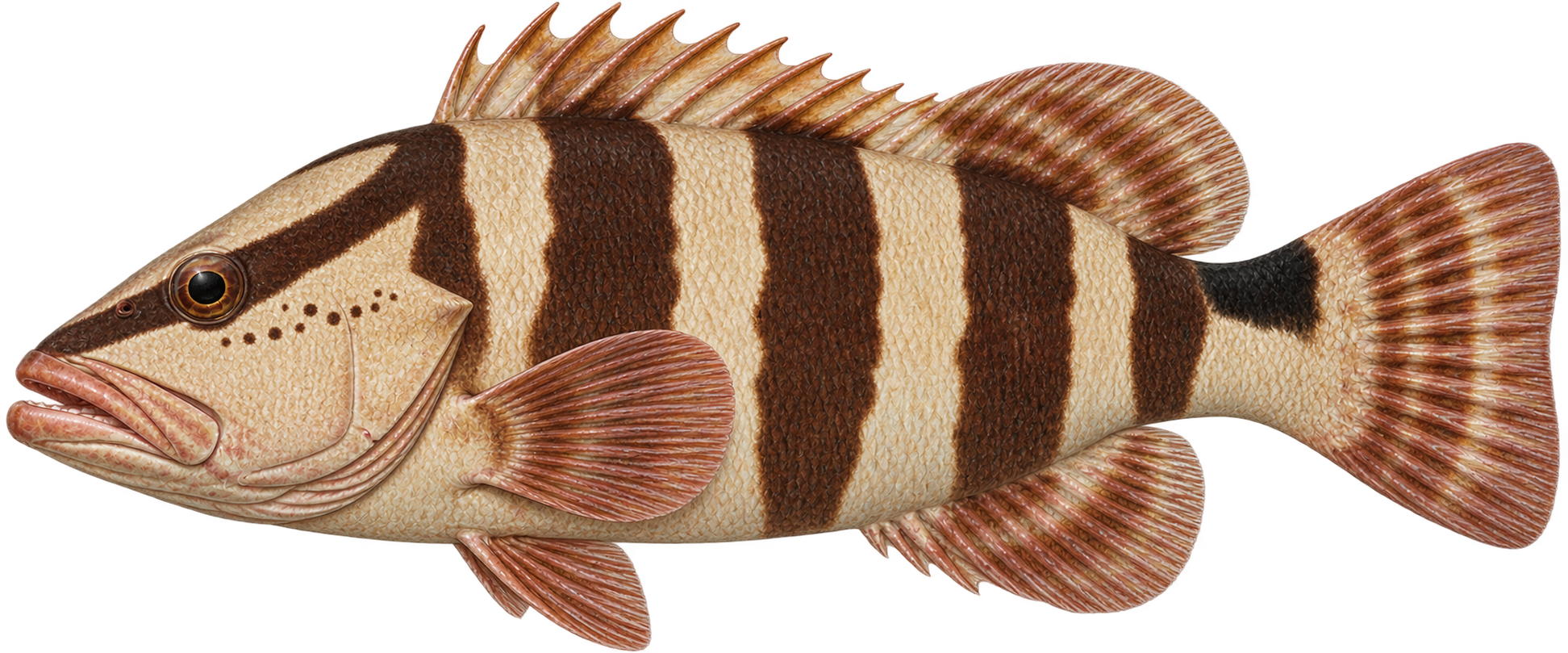
Size: Maturity commonly near 51 cm (20 in); not a maximum-size claim.
Five dark body bars, a black saddle on the tail base, and a dark tuning-fork-shaped marking across the forehead.
Read the guide’s location, season and eating cautions before acting.
Neon Goby
Streamlined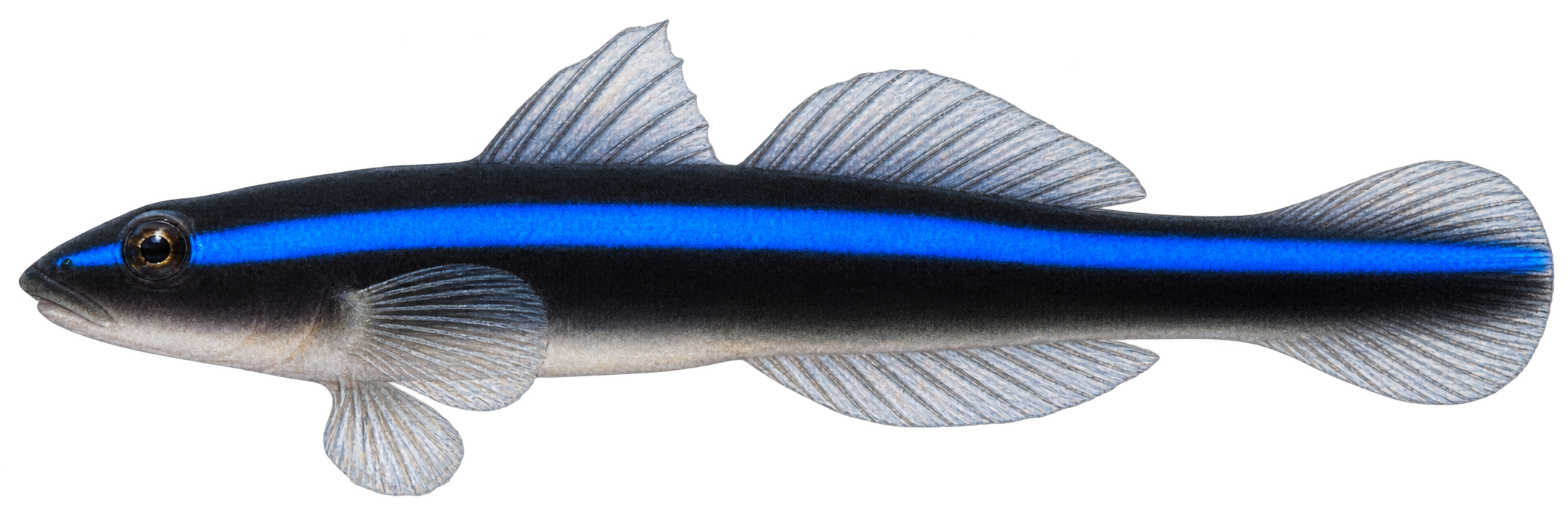
Size: Maximum about 5 cm (2.0 inches).
A brilliant blue stripe runs from just before the eye to near the end of the tail fin, against a blue-black body.
Restricted marine life: live collection only; no spearing
Explore the neon goby guide →Ocean Surgeonfish
Deep-bodied & oval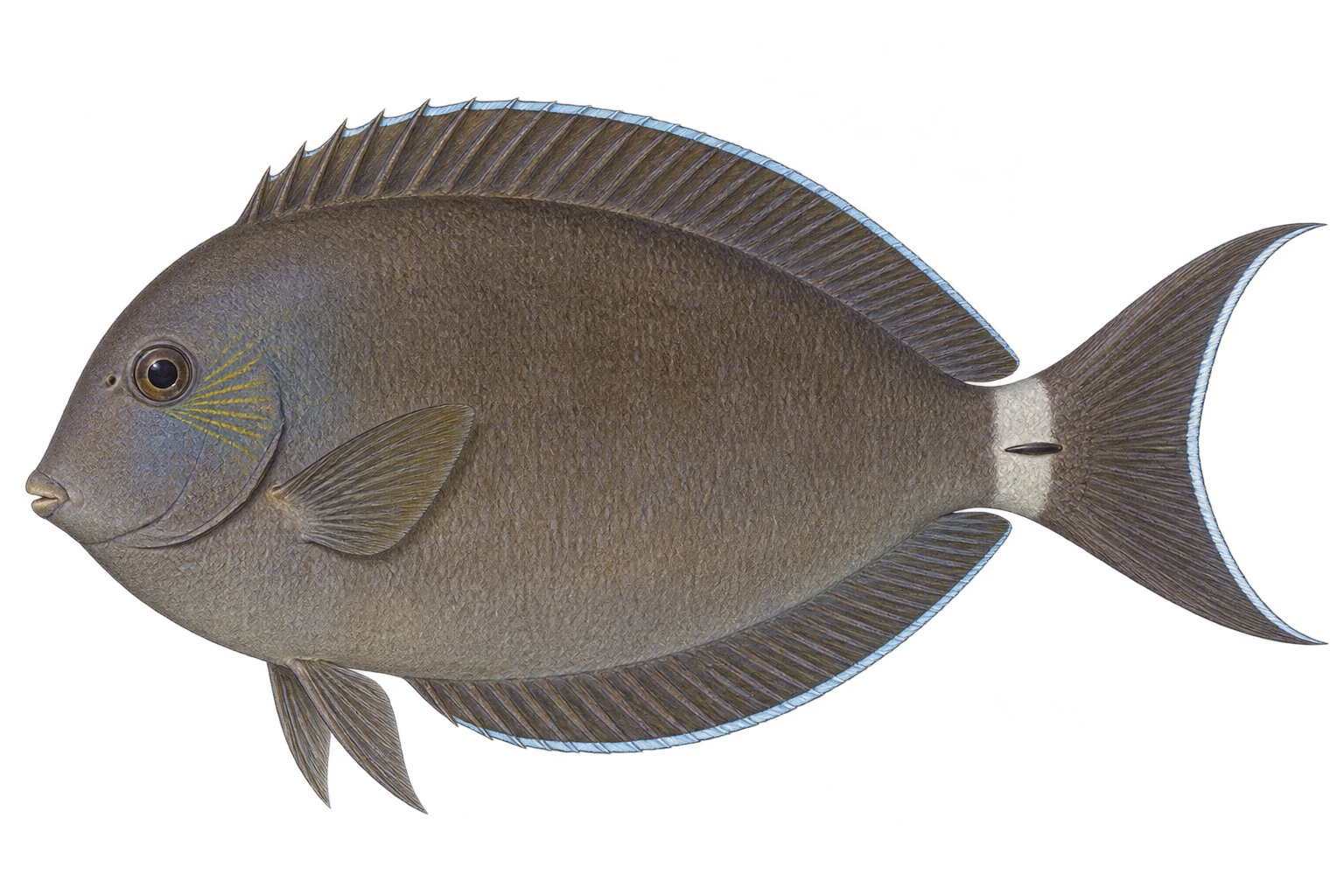
Size: 35 cm maximum in Smithsonian account.
An adult Ocean Surgeonfish is a flattened, elongated oval with a steep forehead and a little mouth set low on the face.
Restricted marine life: live collection only; spearing prohibited
Explore the ocean surgeonfish guide →Ocean Triggerfish
Deep-bodied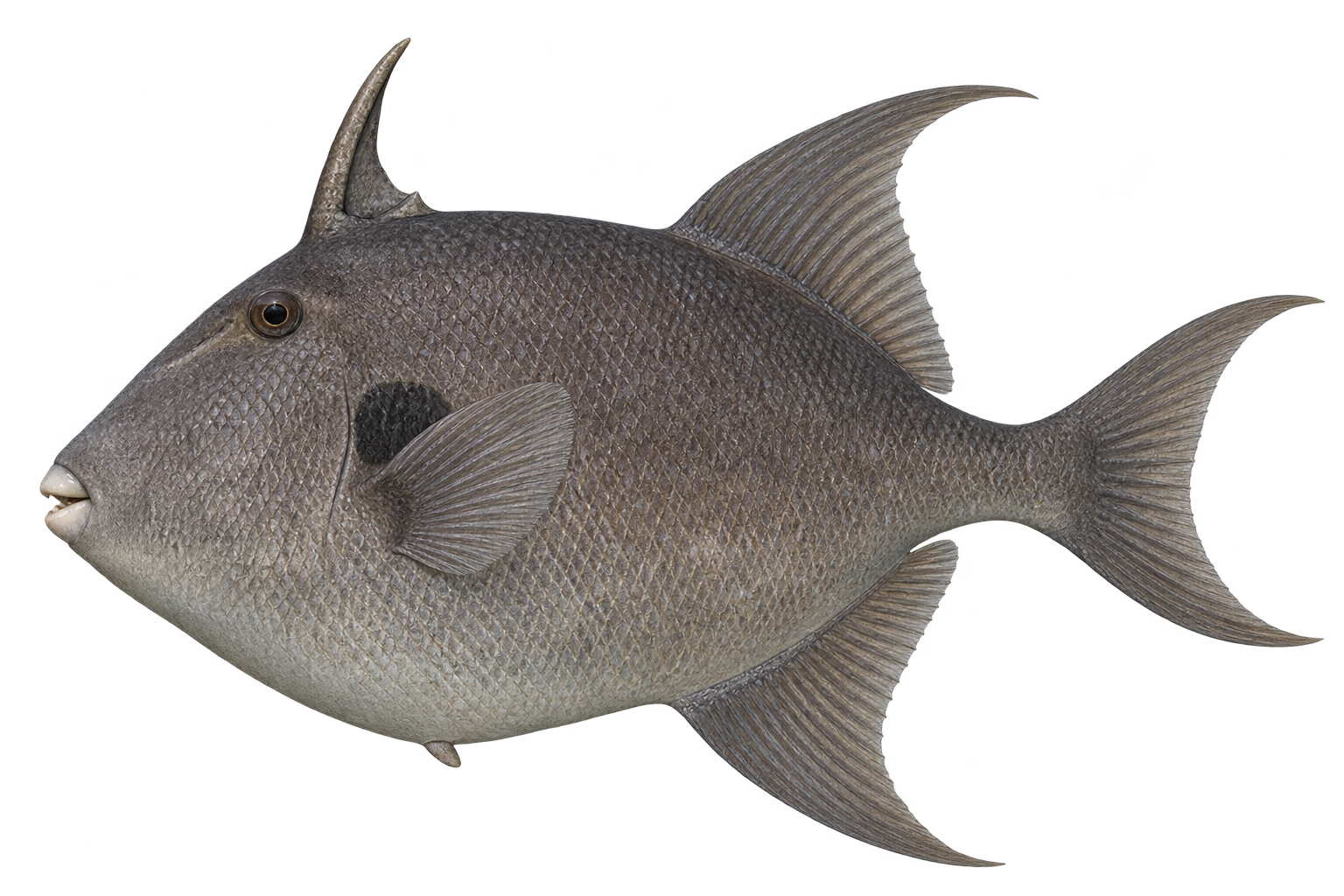
Size: Up to about 26 inches (65 cm) total length.
Gray deep body, dark pectoral-base blotch and tall curved soft fins.
Harvest restricted by site: no take or possession in Pennekamp
Explore the ocean triggerfish guide →Orange Filefish
Shape not assigned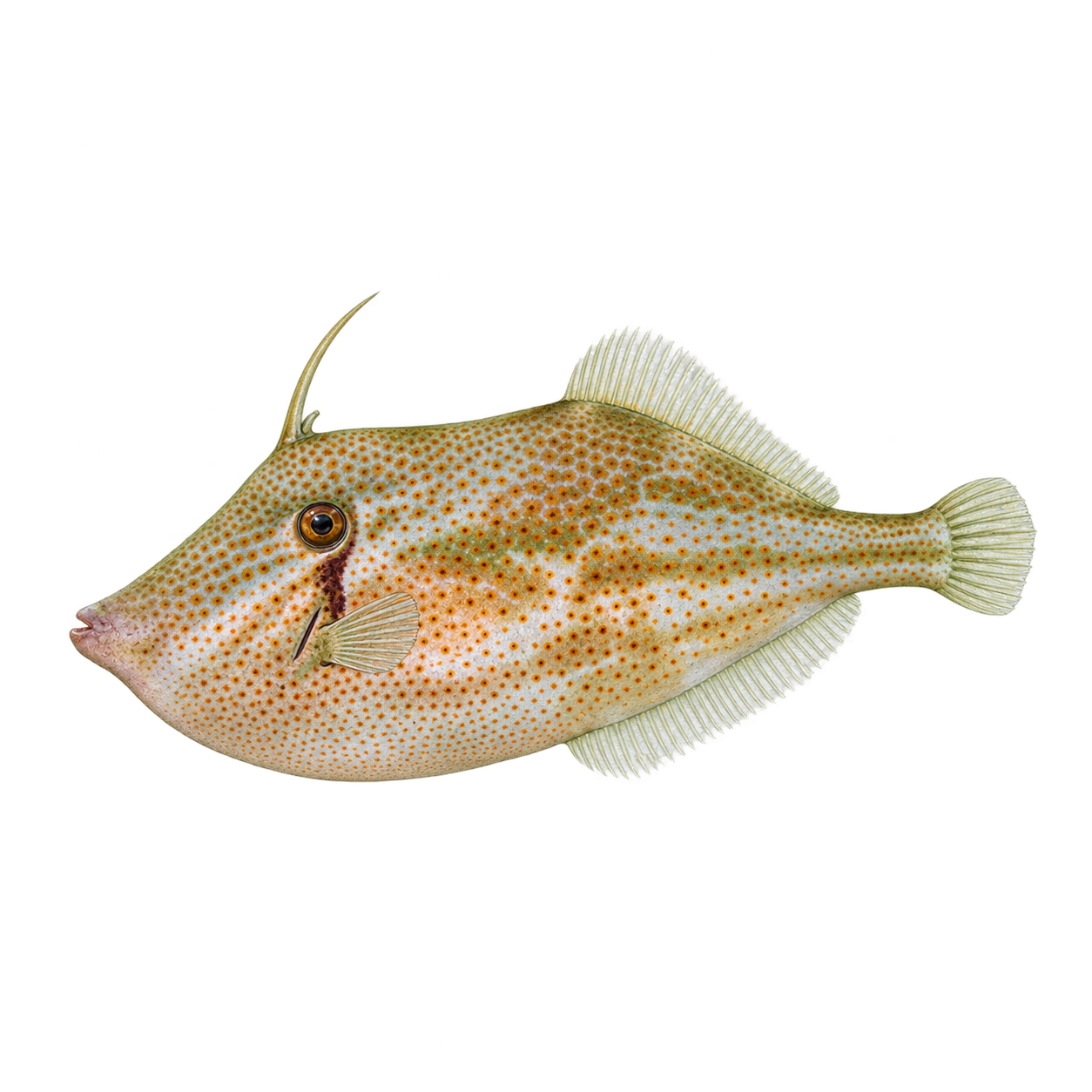
Size: Smithsonian reports a maximum of 60 cm. The entry does not explicitly identify total, fork or standard length for this maximum. No juvenile measurement series was established in the account.
A very flattened filefish with a long snout, concave forehead and small upturned mouth. Numerous orange specks cover a gray body; the first dorsal spine is slender.
Read the guide’s location, season and eating cautions before acting.
Orangeback Bass
Shape not assigned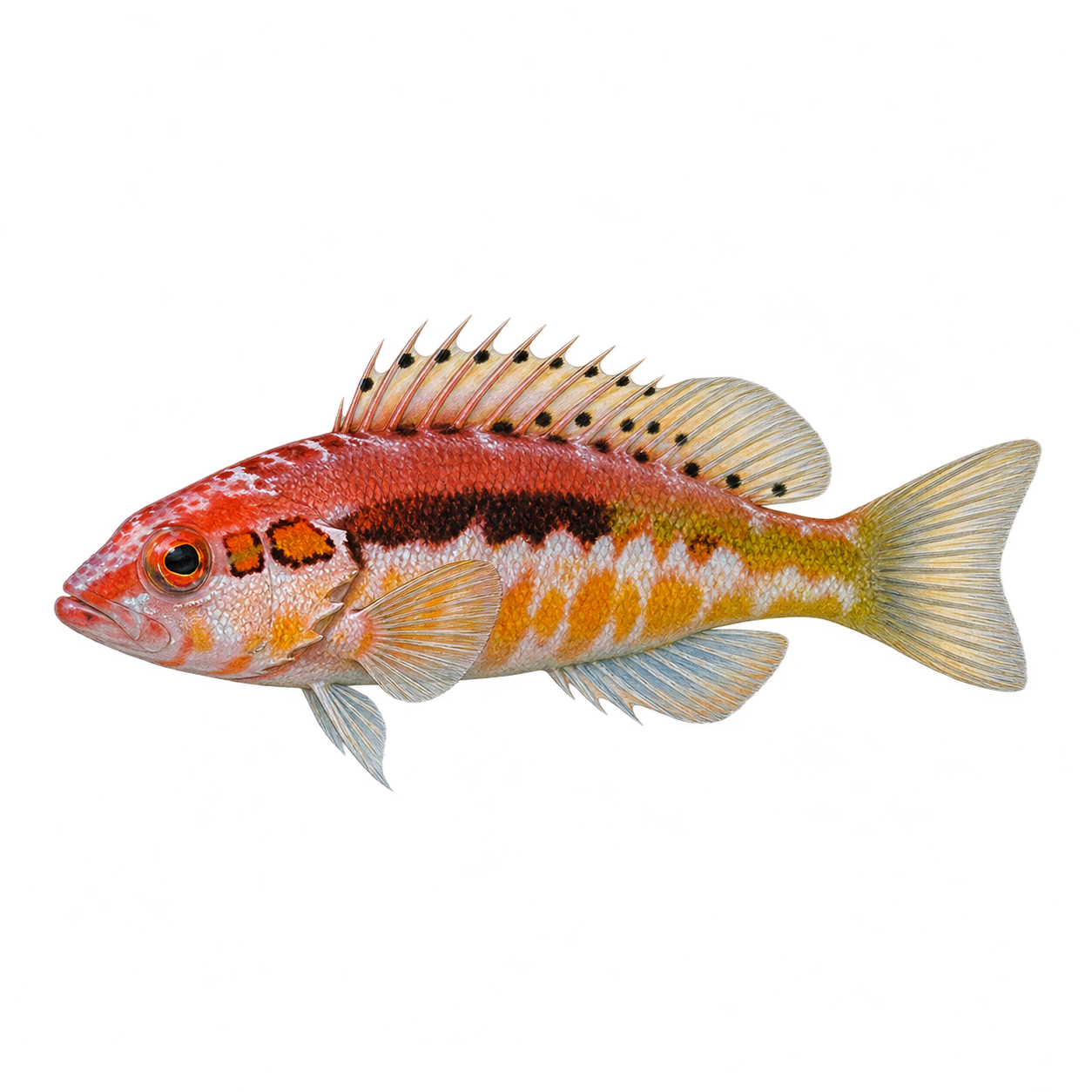
Size: Smithsonian reports a maximum of 9 cm. The entry does not explicitly identify total, fork or standard length for this maximum. No separate juvenile size series was established.
A small bass with a reddish-brown upper third and mostly white lower body. Two dark-bordered orange rectangles sit behind the eye; pale orange marks break up the lower flank.
Read the guide’s location, season and eating cautions before acting.
Orangespotted Filefish
Deep-bodied & oval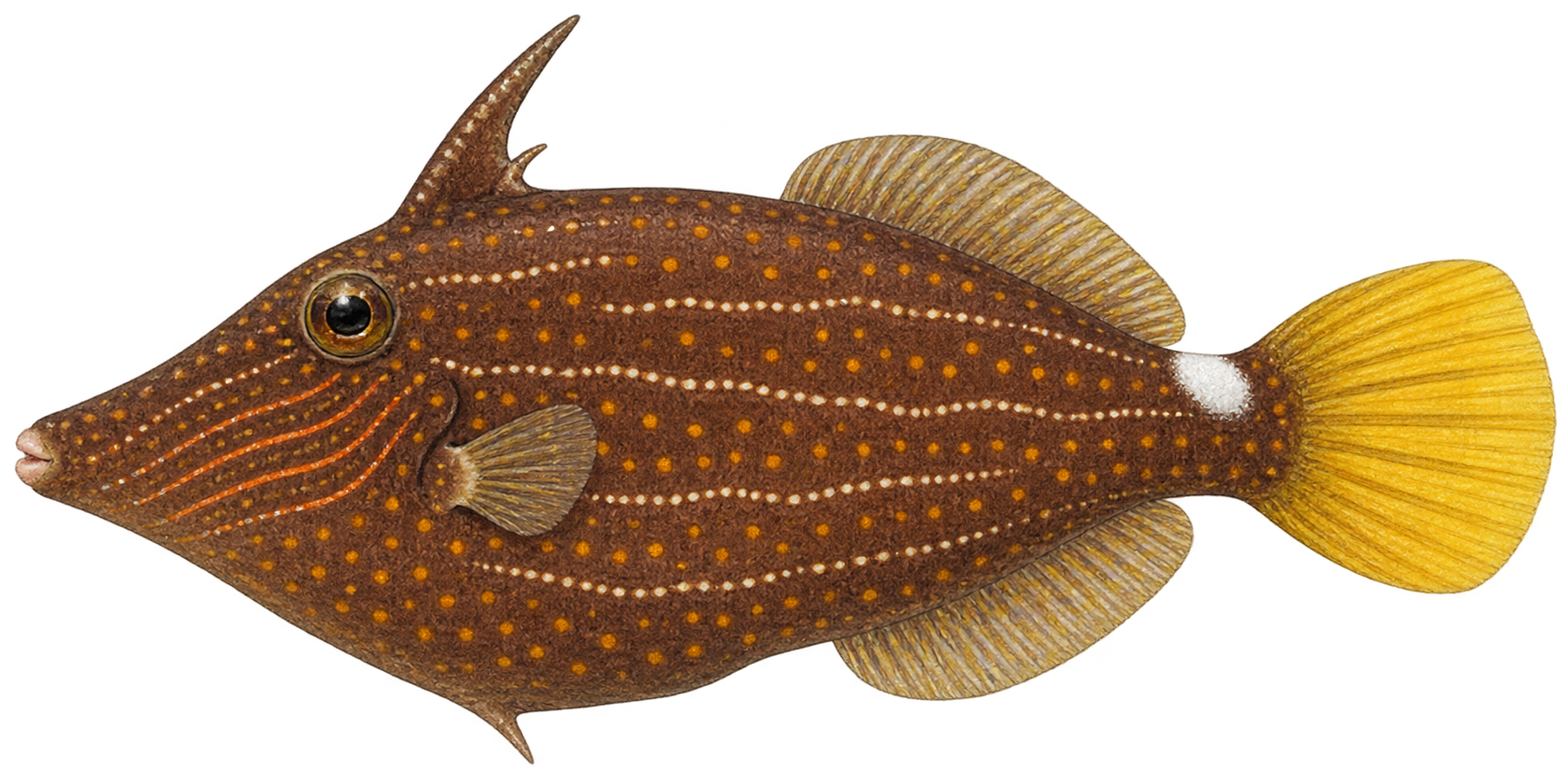
Size: Maximum about 8 inches (20 cm) total length.
Brown with orange spots and a distinct white blotch atop the tail base.
Restricted marine life: live collection only; no spearing
Explore the orangespotted filefish guide →Orangespotted Goby
Elongated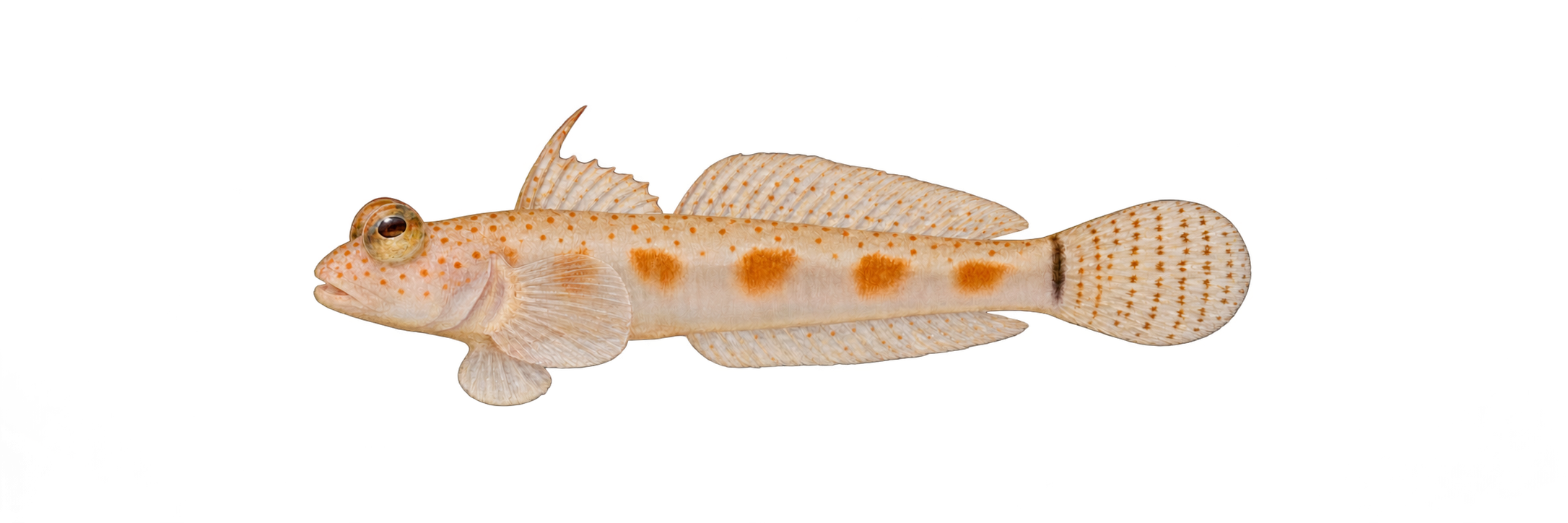
Size: Smithsonian reports a maximum of 10 cm. This is a source-specific upper length, not a typical local sighting size.
A slim, sand-colored goby with protruding eyes, orange-brown spotting and three or four paired blotches along its side.
Read the guide’s location, season and eating cautions before acting.
Palometa
Deep-bodied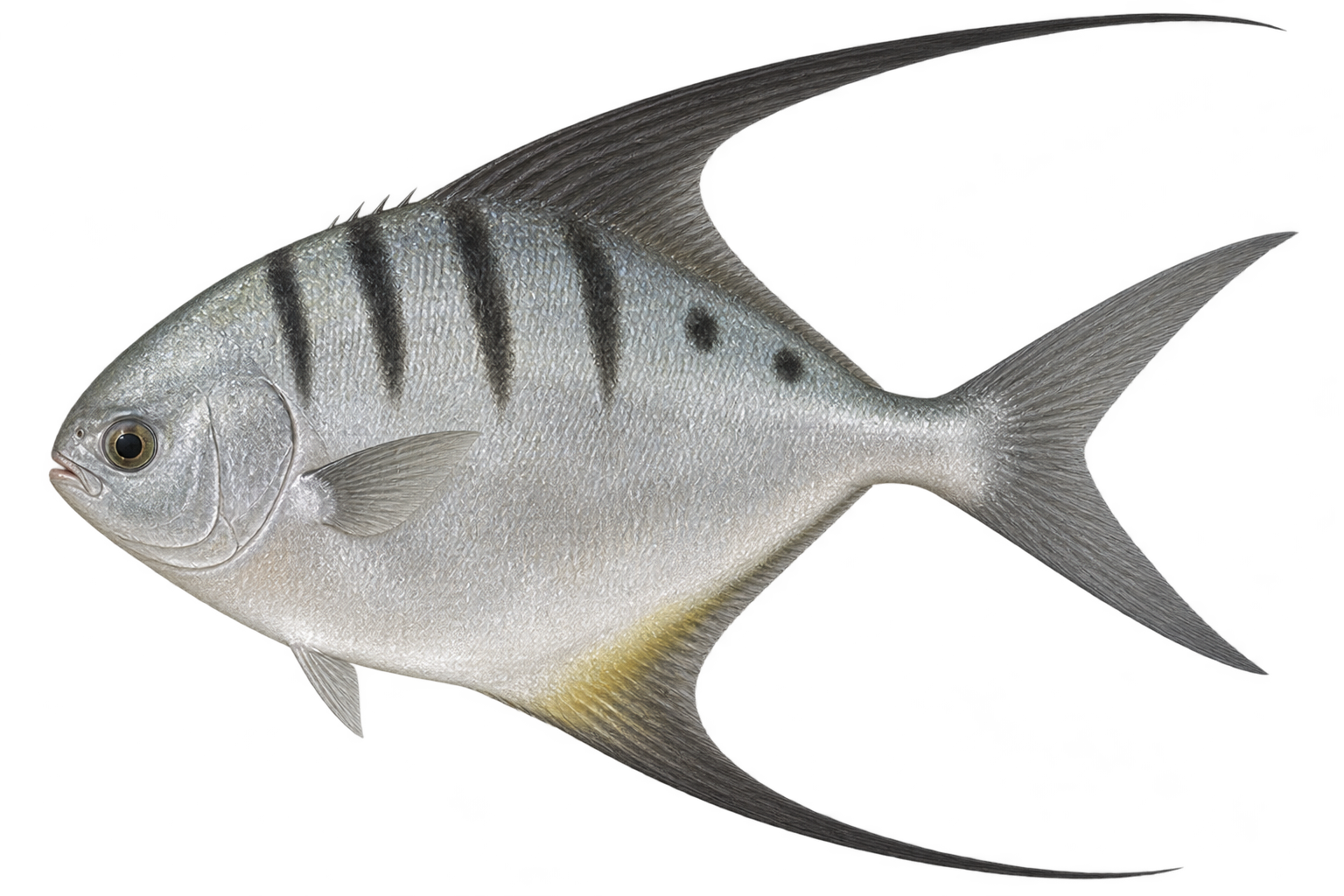
Size: Up to about 20 inches (50.6 cm) total length.
Silver triangular body, narrow dark bars and very long dark fin lobes.
Harvest may be allowed; limits and site restrictions apply
Explore the palometa guide →Peacock Flounder
Flattened & bottom-dwelling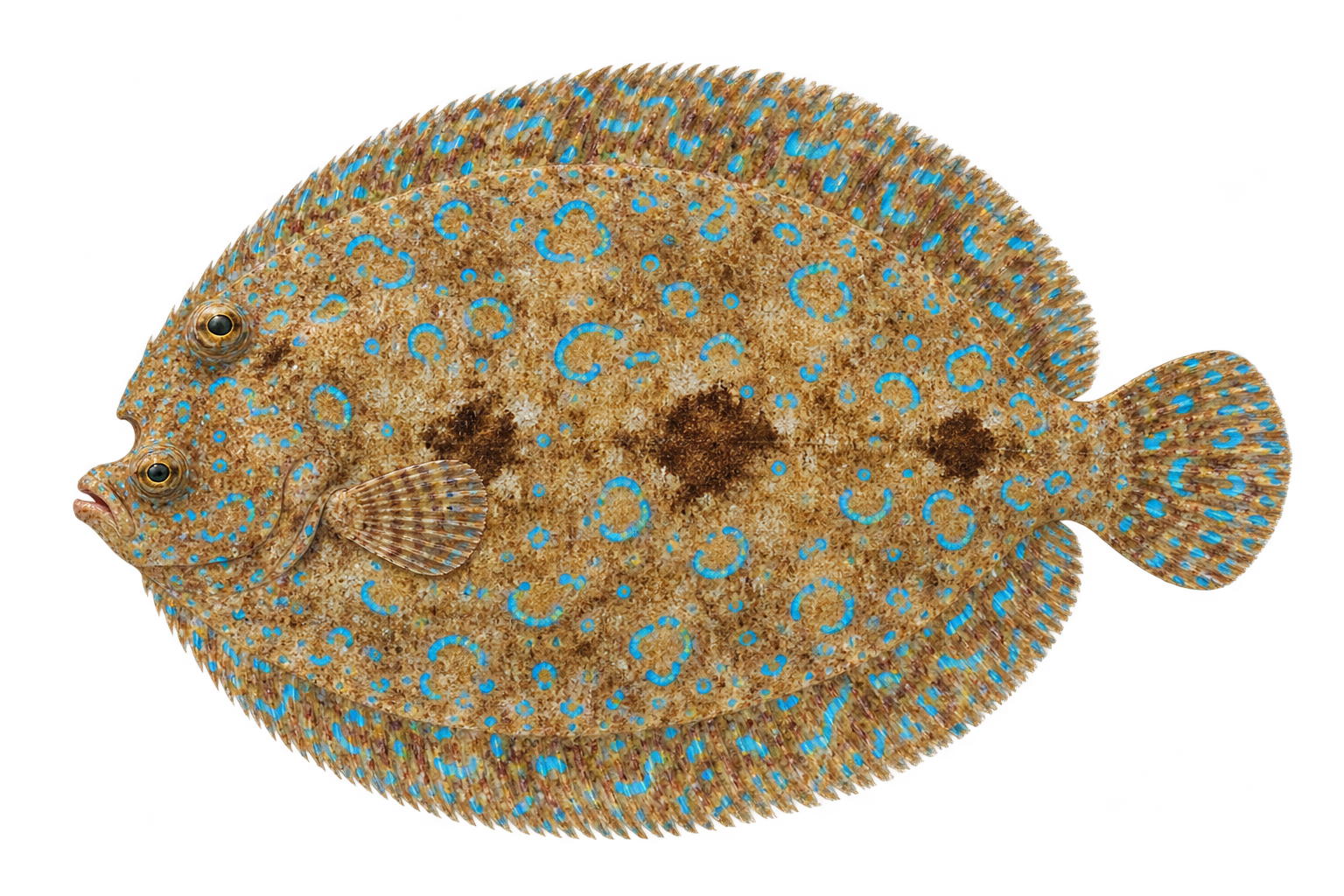
Size: Reported regional maximum 45 cm; not a typical encounter size.
Blue rings; both eyes on left side; deep flat body.
Read the guide’s location, season and eating cautions before acting.
Pearly Razorfish
Elongate & oval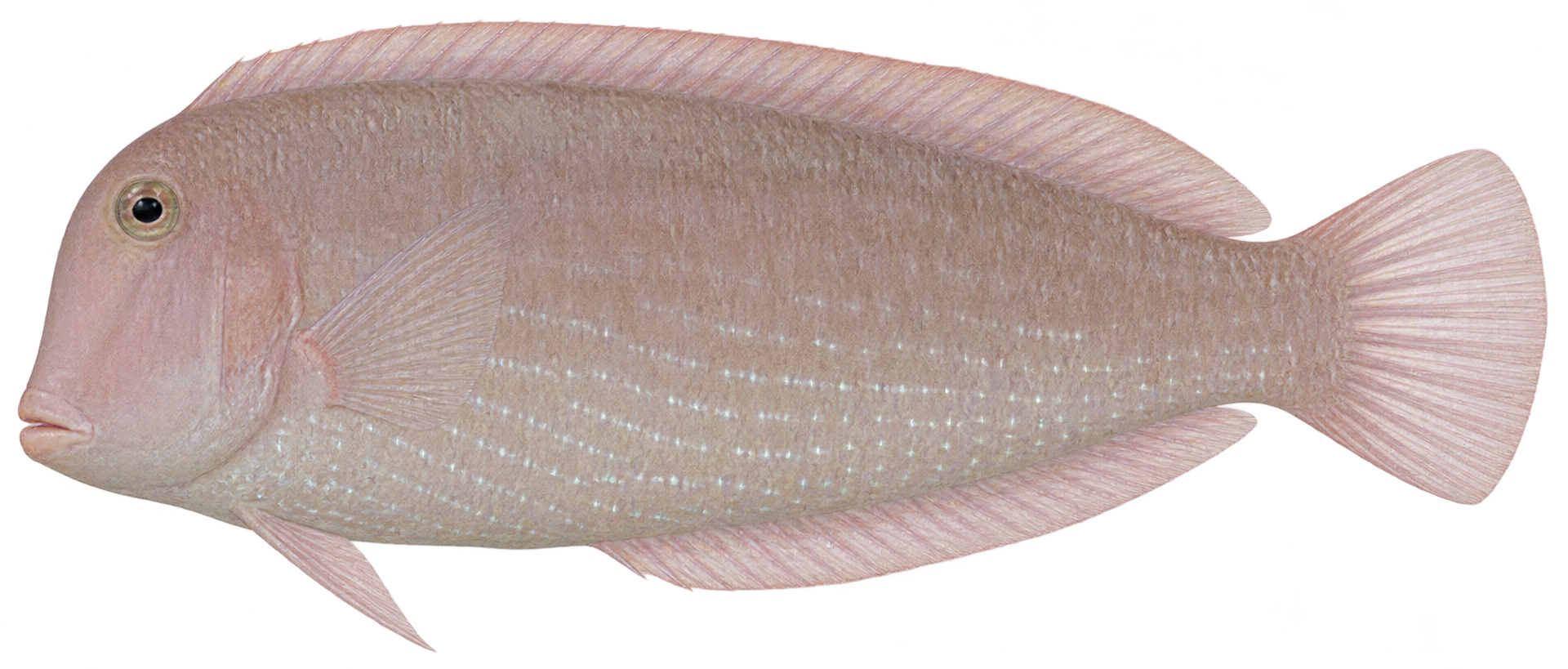
Size: Reported regional maximum 25 cm; not a typical encounter size.
Steep forehead; pearly belly marks; blue bars in male.
Read the guide’s location, season and eating cautions before acting.
Peppermint Basslet
Shape not assigned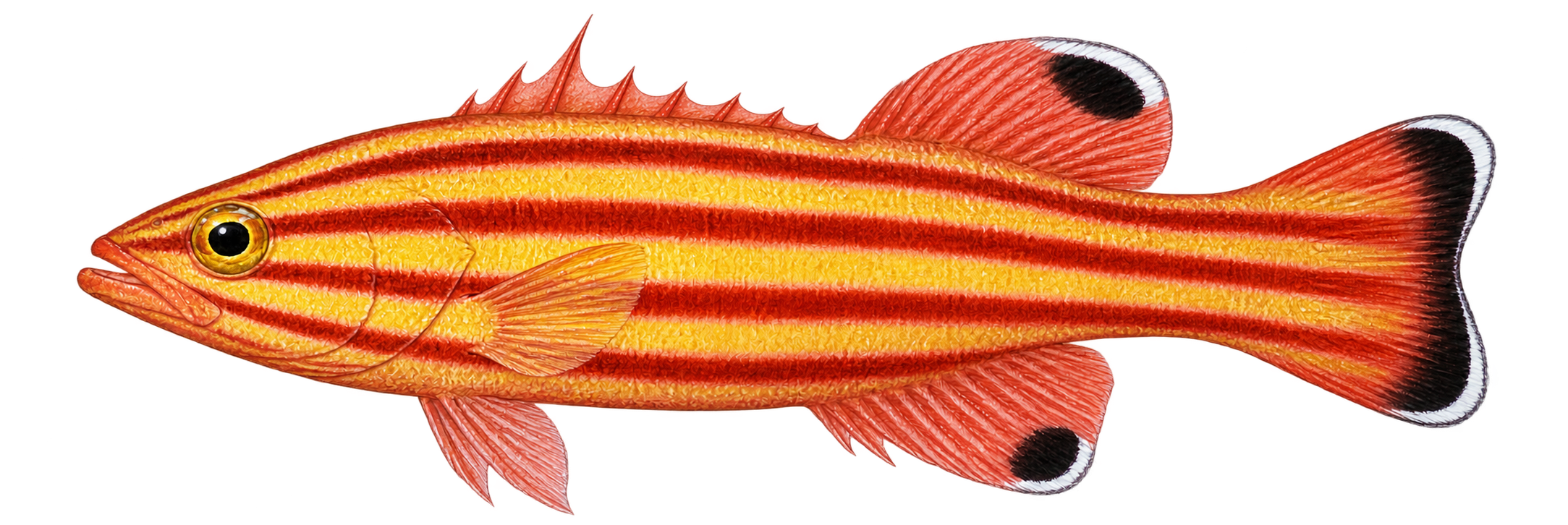
Size: The Smithsonian account reports 6 cm. It does not explicitly specify total, fork or standard length for this value; do not compare it directly with a length-labeled measurement.
Five reddish-brown lengthwise stripes cross a yellow-brown body. Two touching, pale-edged black marks occupy the tail lobes; black spots also mark the soft dorsal and anal fins.
Read the guide’s location, season and eating cautions before acting.
Permit
Deep-bodied & oval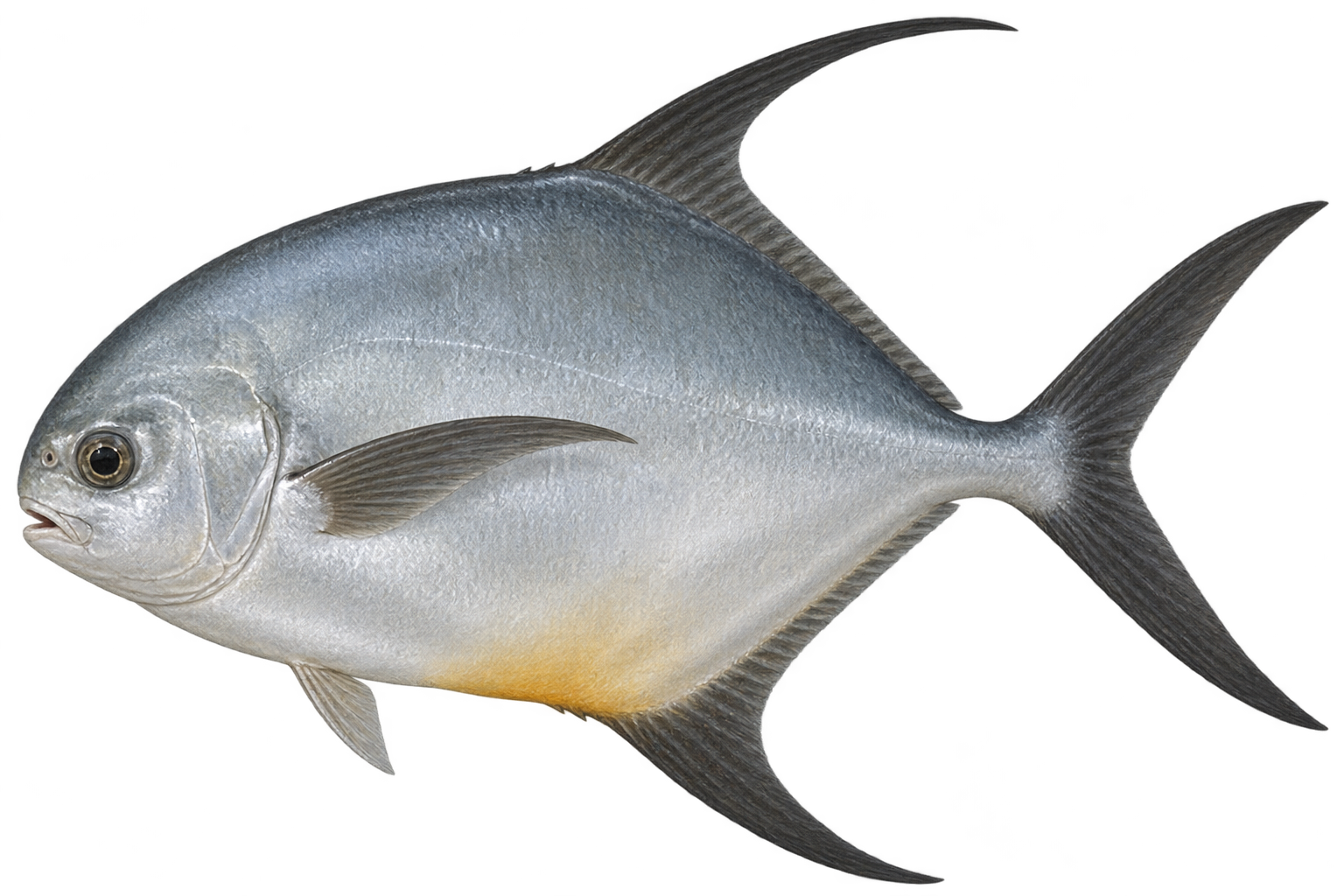
Size: Large adults can exceed 3 feet; exceptional records approach 4 feet.
Deep silver body, long dark sickle-shaped dorsal and anal lobes, and a deeply forked tail.
Regulated harvest; seasonal southern zone
Explore the permit guide →Pigfish
Shape not assigned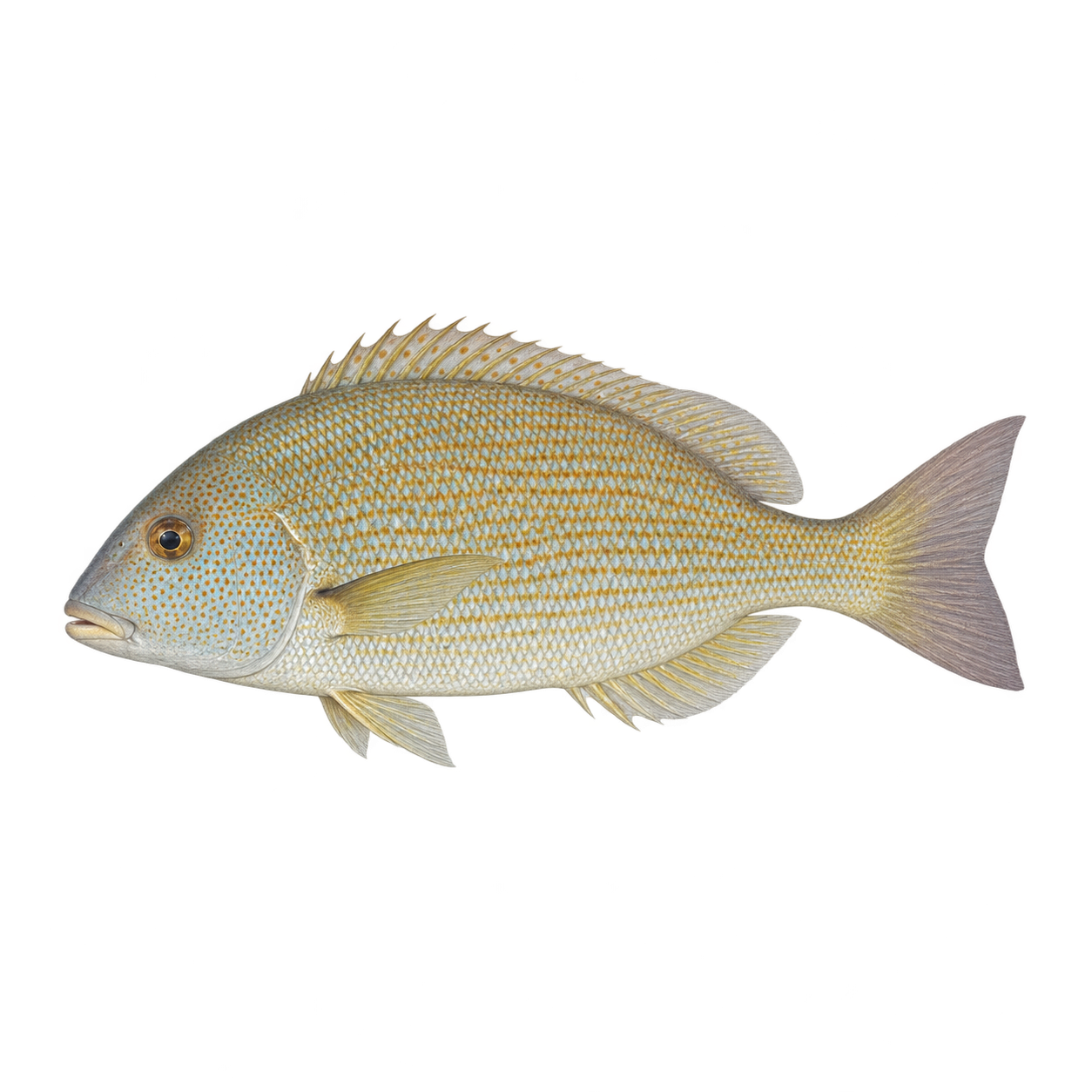
Size: Smithsonian reports a maximum of 46 cm. The entry does not explicitly identify total, fork or standard length for this maximum. The account gives no separate juvenile growth series; color markings are variable.
A silver-gray grunt with bronze-orange scale-edge spots forming slanted lines. Bronze dots mark the head and dorsal fin; some fish also show faint bars or stripes.
Read the guide’s location, season and eating cautions before acting.
Pinfish
Deep-bodied & oval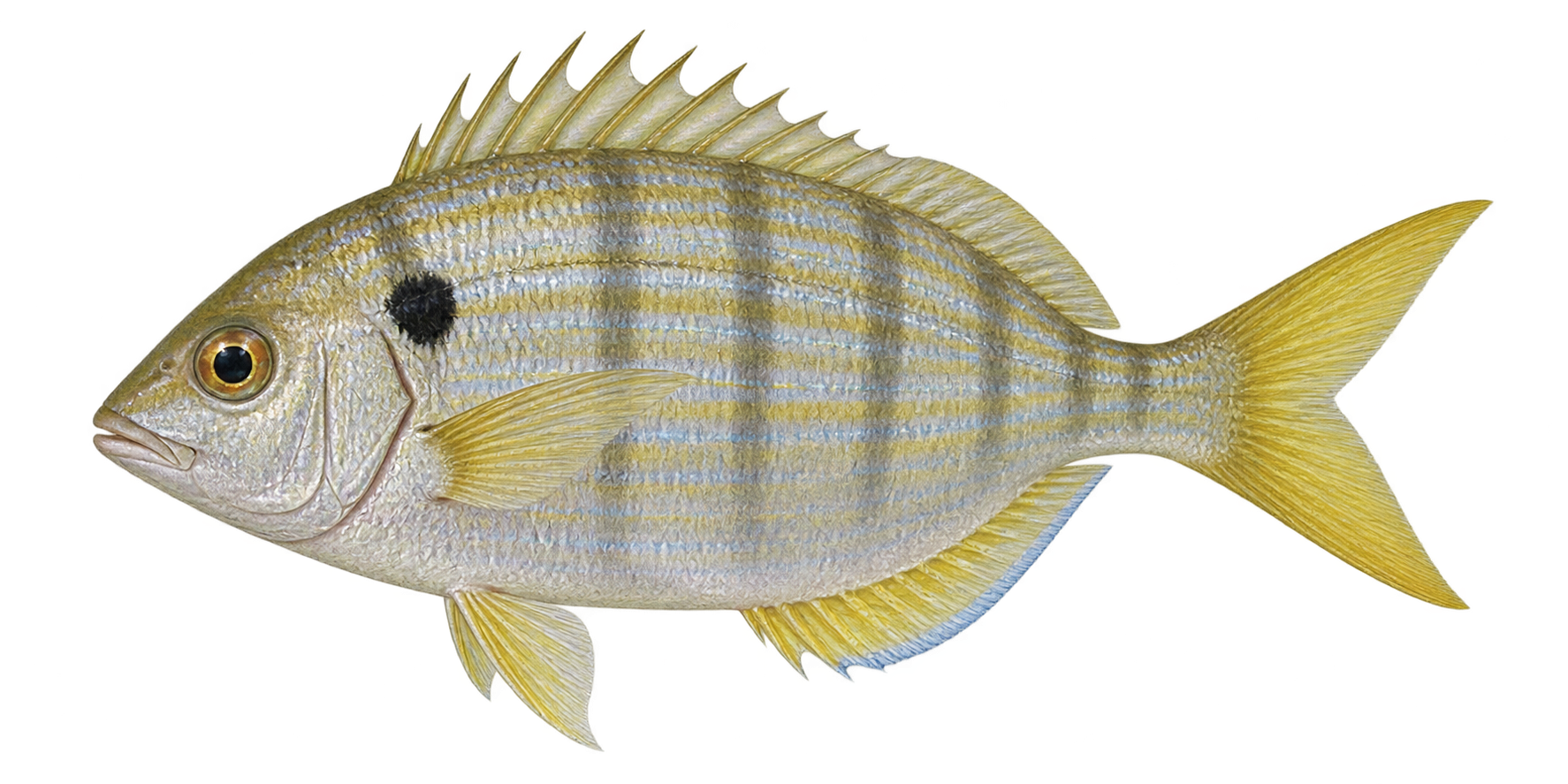
Size: Reported regional maximum 40 cm; not a typical encounter size.
Shoulder spot; thin blue stripes; yellow fins.
Read the guide’s location, season and eating cautions before acting.
Planehead Filefish
Deep-bodied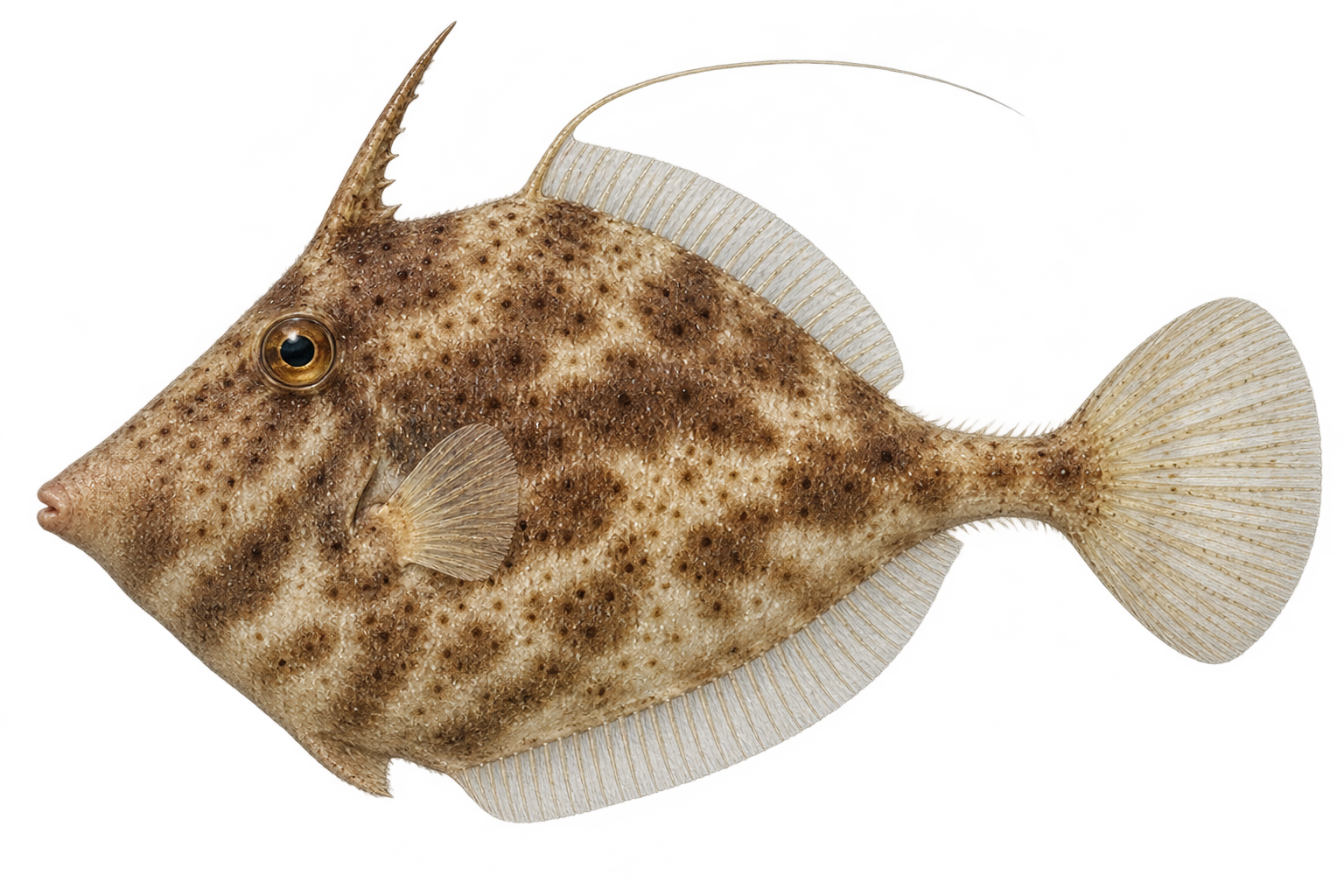
Size: Up to about 11 inches (27.5 cm) total length.
Straight sloping forehead, brown mottling, dorsal spine and small belly flap.
Restricted marine life: live collection only; no spearing
Explore the planehead filefish guide →Polka-dot Batfish
Flattened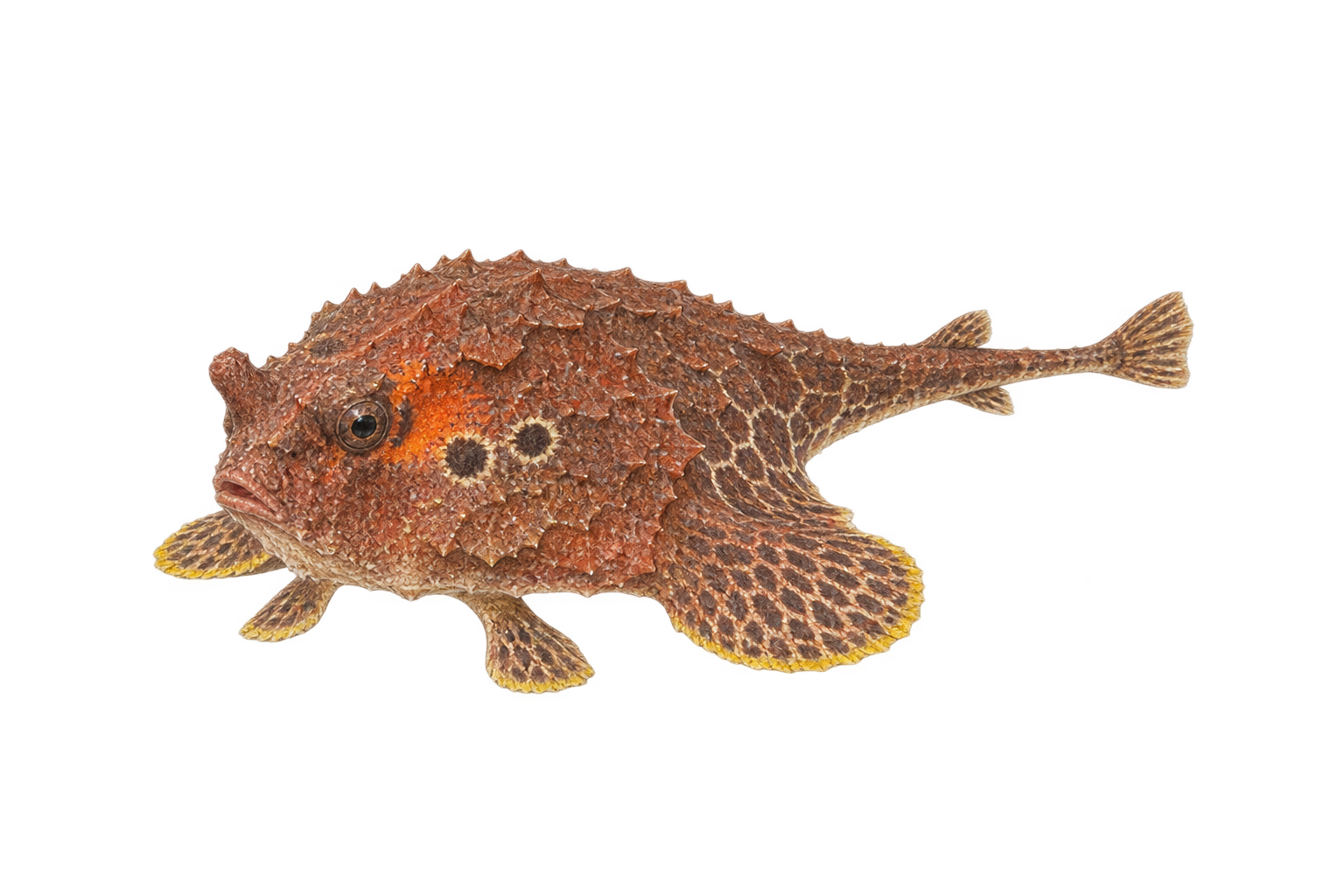
Size: Smithsonian reports a maximum length of 38 cm. This is a regional upper record, not a typical local encounter size.
Triangular-bodied bottom fish with limb-like paired fins, a raised head and patterned pectoral fins. Adult coloration mixes brown, copper and orange.
Read the guide’s location, season and eating cautions before acting.
Porcupinefish
Deep-bodied & oval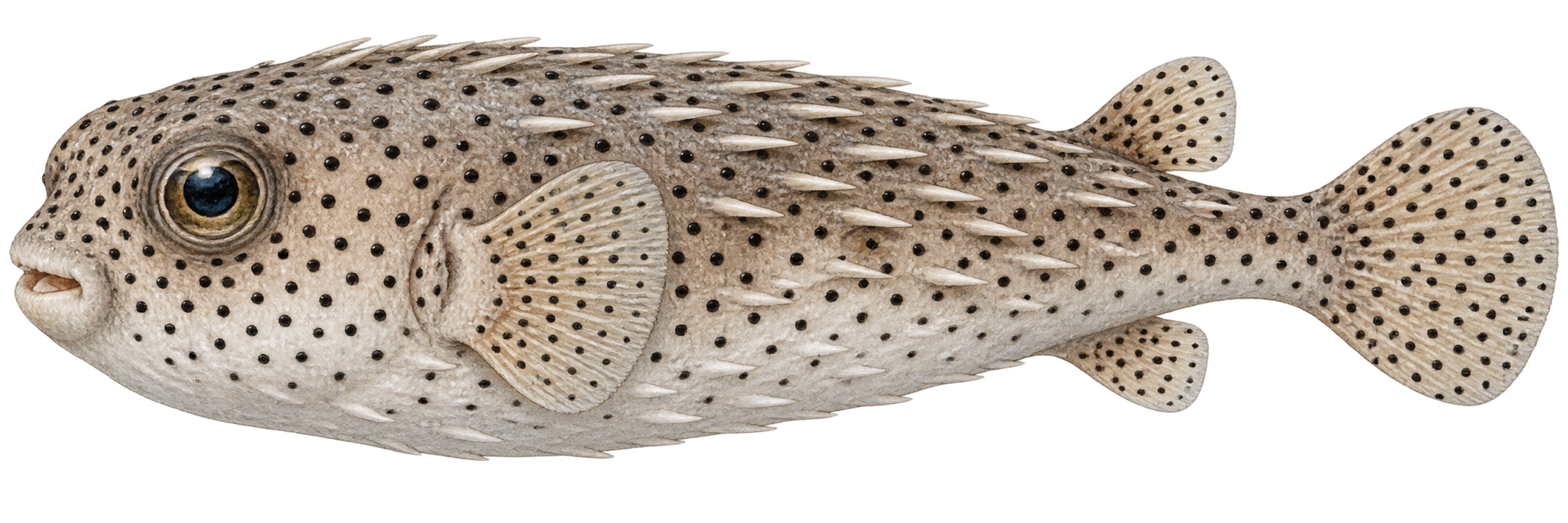
Size: Maximum about 36 inches (91 cm) total length.
Small black spots on body and fins; folding spines, broad head, no large dark body blotches.
Restricted marine life: live collection only; no spearing
Explore the porcupinefish guide →Porkfish
Deep-bodied & oval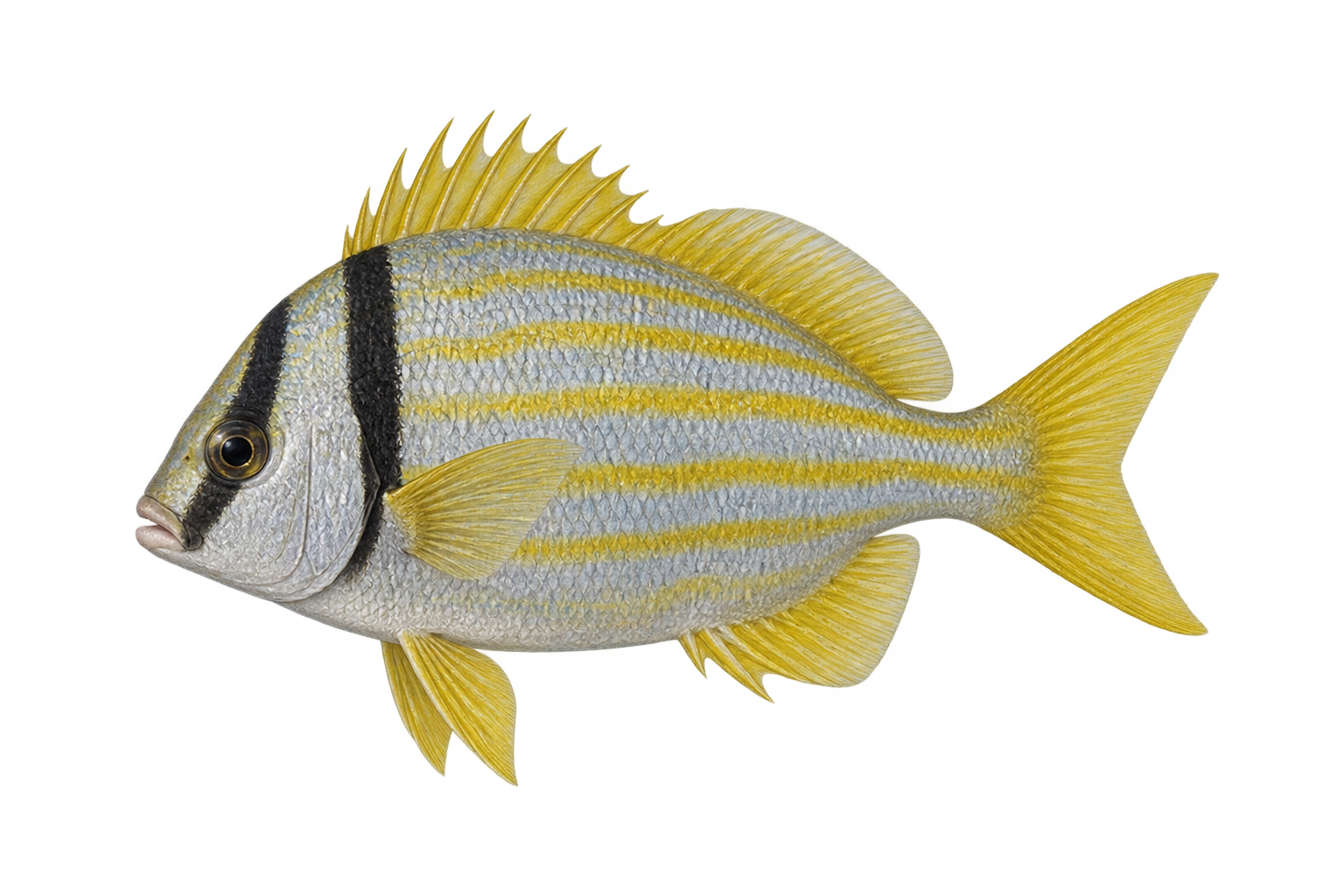
Size: Reported maximum about 38–40 cm.
Yellow fins and stripes with two conspicuous black bars at the front.
Restricted marine life: live collection only; no spearing
Explore the porkfish guide →Princess Parrotfish
Elongate & oval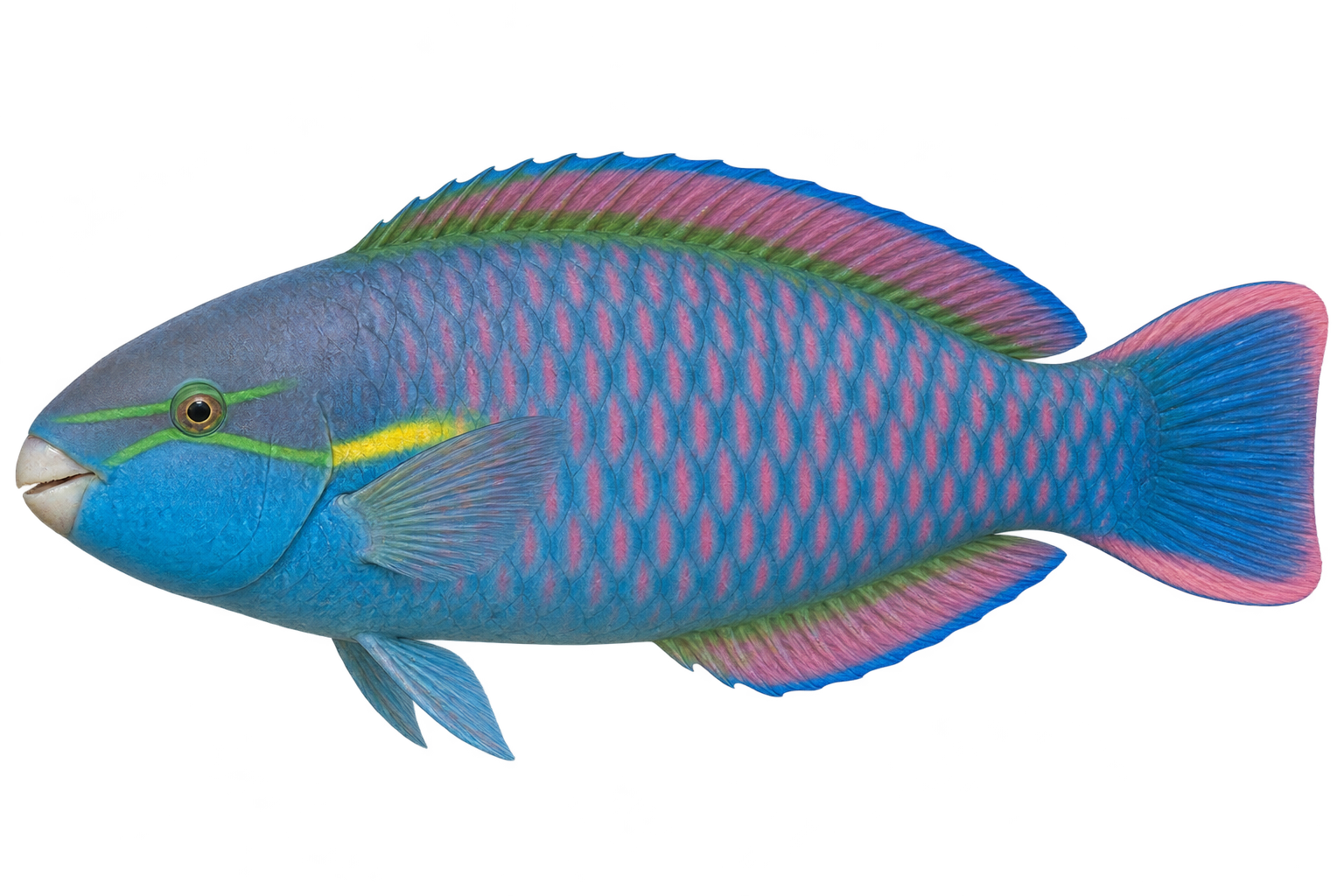
Size: Smithsonian reports 30 cm as a maximum; FishBase lists 35 cm total length and a common length around 22 cm.
Terminal-phase Princess Parrotfish are blue with pink accents and a short yellow dash above the pectoral fin.
Restricted marine life: live collection only; no spearing
Explore the princess parrotfish guide →Puddingwife
Streamlined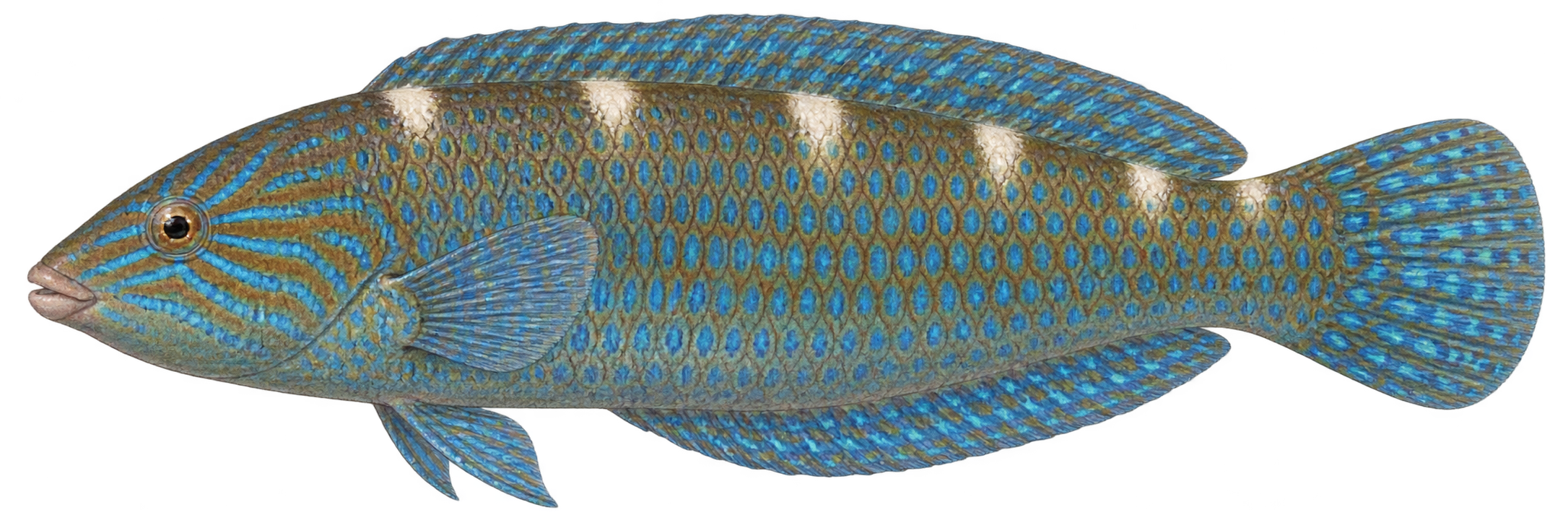
Size: Maximum about 20 inches (51 cm) total length.
Blue scale spots, radiating cheek lines and pale saddles along the back in adults.
Restricted marine life: live collection only; no spearing
Explore the puddingwife guide →Purple Reeffish
Deep-bodied & oval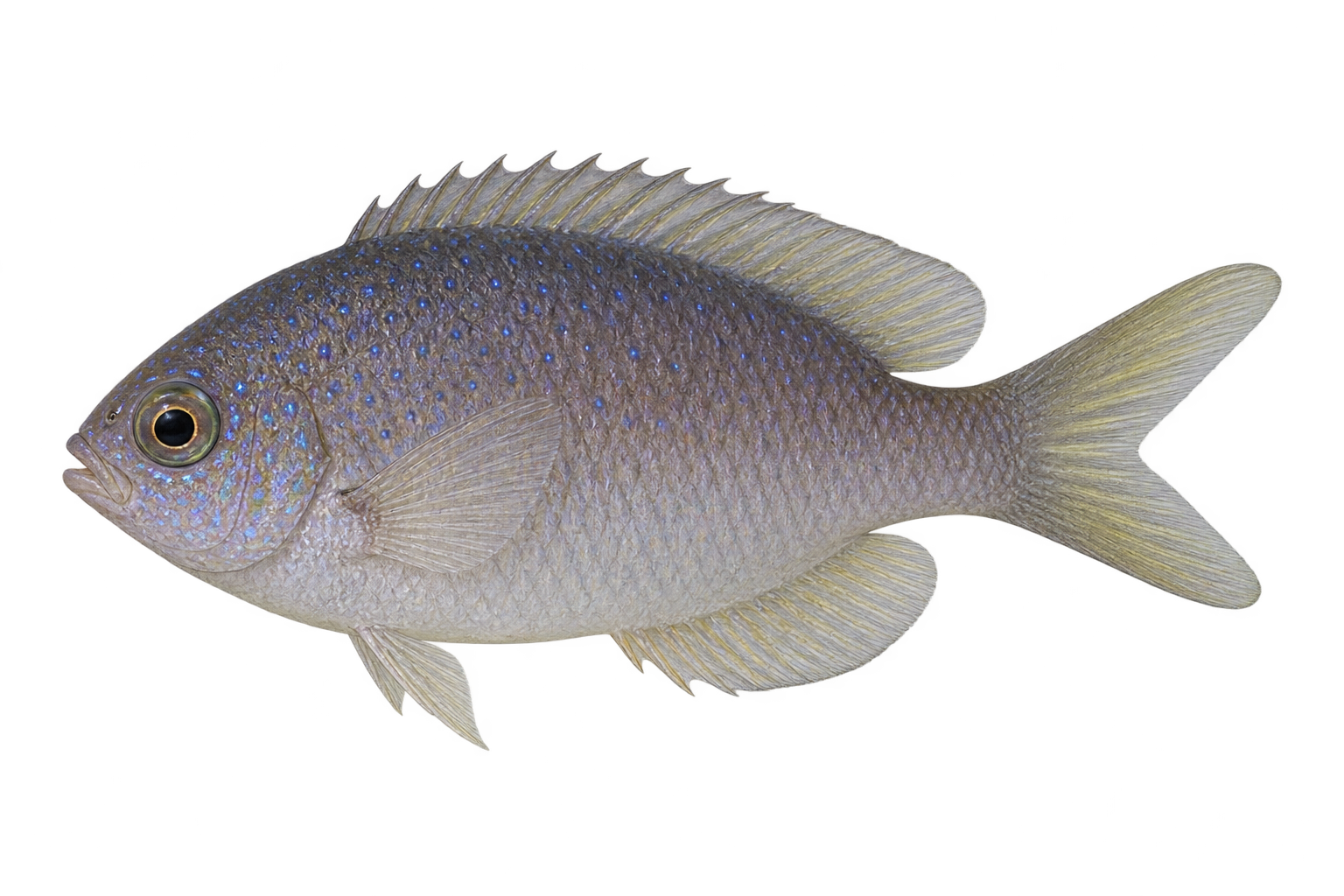
Size: Maximum about 10 cm.
Gray-brown adult with blue markings, pale underside and forked tail.
Restricted marine life: live collection only; no spearing
Explore the purple reeffish guide →Purplemouth Moray
Long & eel-like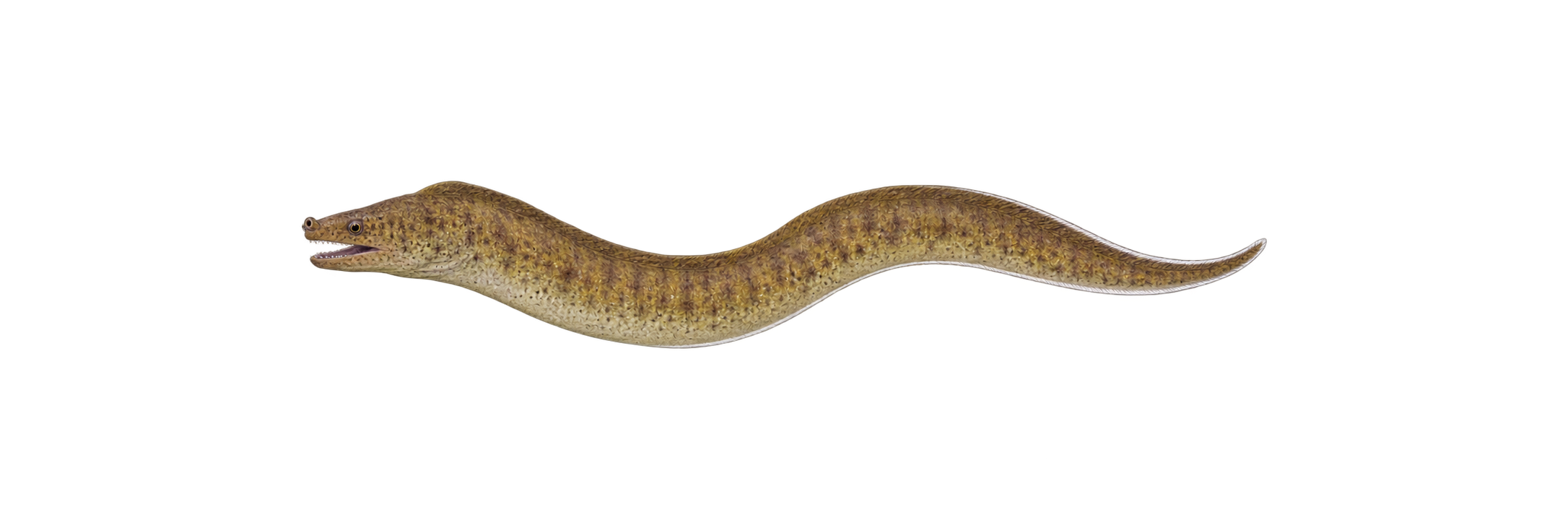
Size: Smithsonian reports a maximum of 122 cm. This is a source-specific upper length, not a typical local sighting size.
A variably colored, densely spotted moray with a purple mouth interior, gold iris and dark fin edges narrowly bordered in white.
Read the guide’s location, season and eating cautions before acting.
Pygmy Filefish
Deep-bodied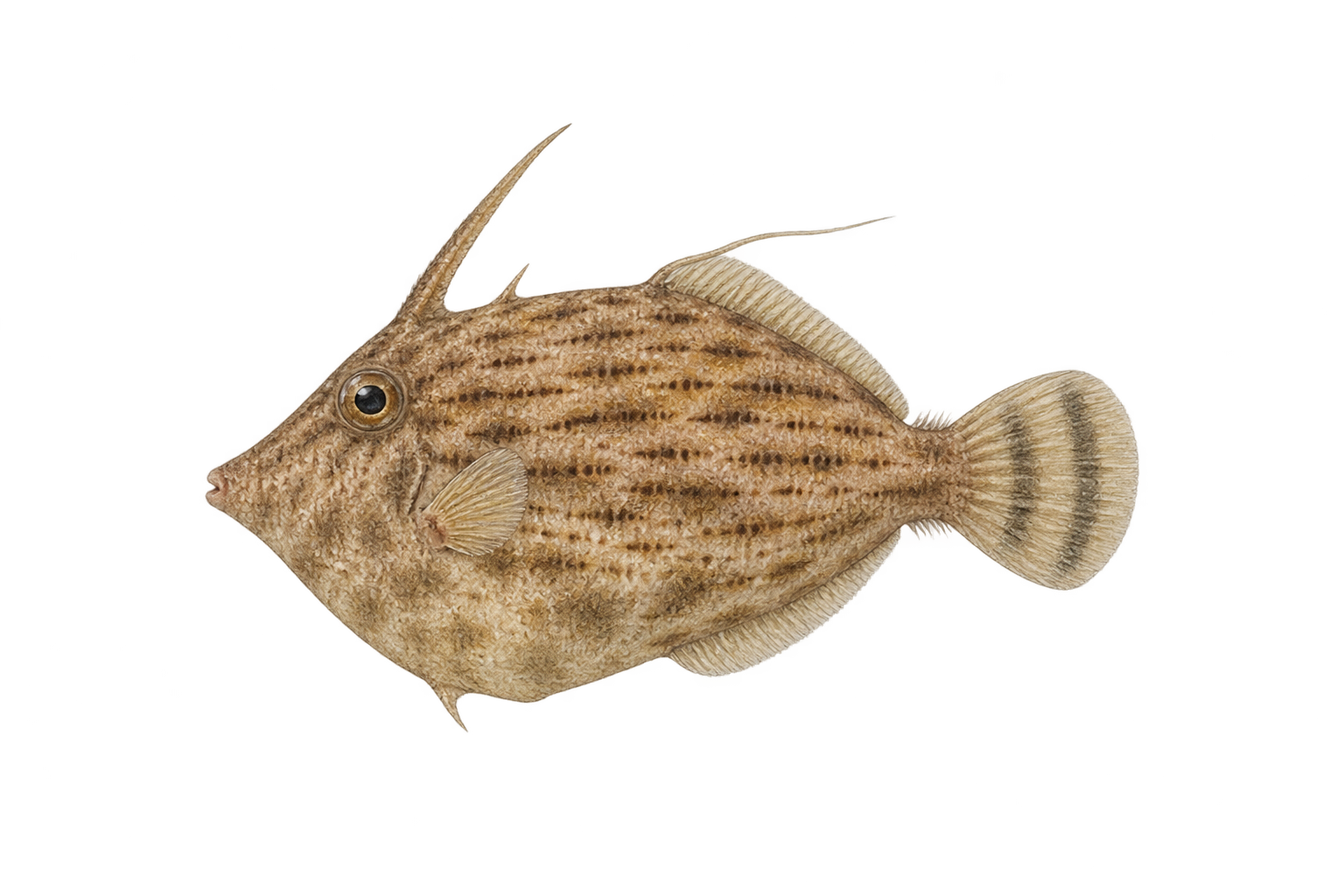
Size: Smithsonian reports a maximum of 18 cm, not a typical local encounter size.
Deep, flattened body; short concave snout; mottled tan-brown sides with broken dark lines and two faint tail bars.
Read the guide’s location, season and eating cautions before acting.
Pygmy Sea Bass
Shape not assigned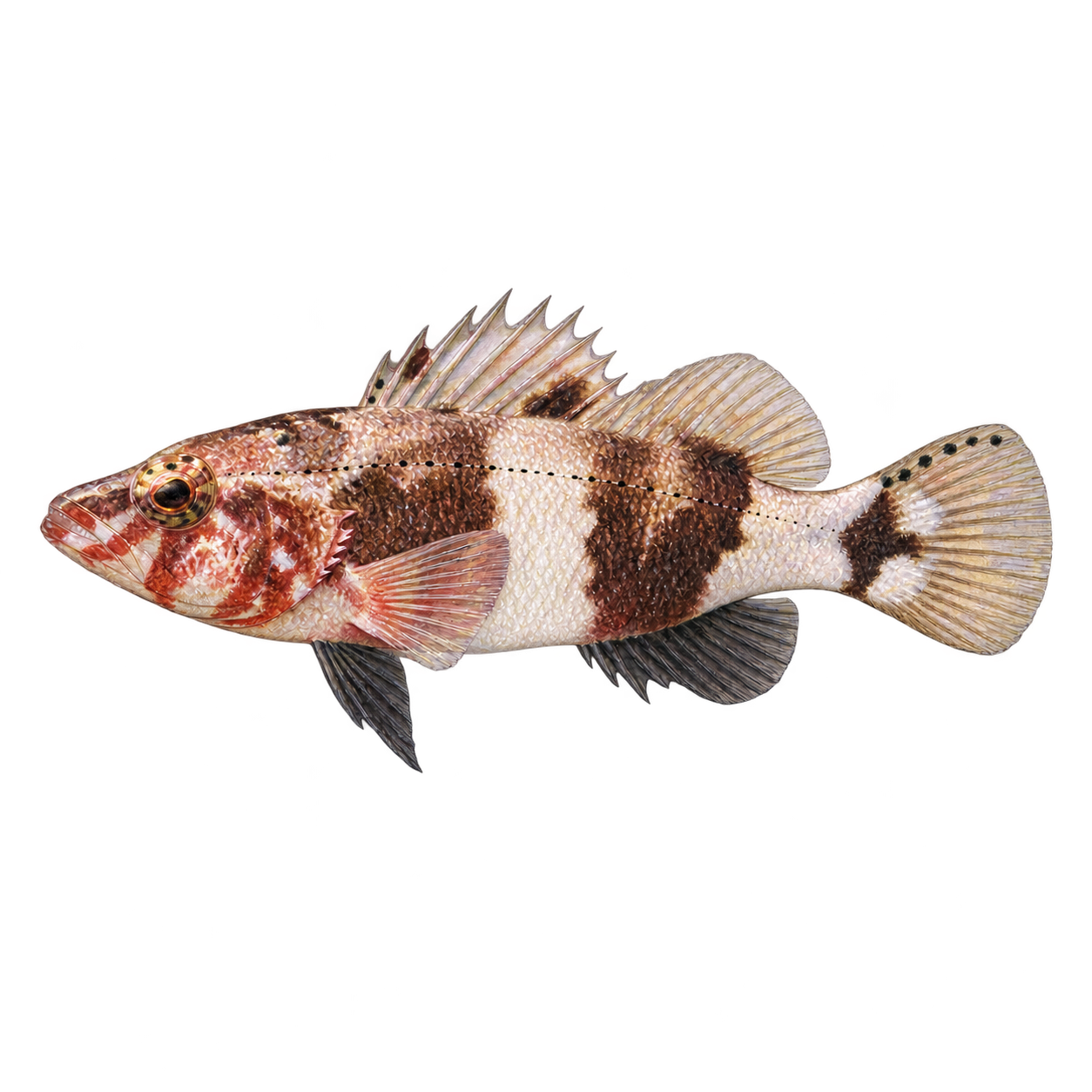
Size: Smithsonian reports a maximum of 8.6 cm. The entry does not explicitly identify total, fork or standard length for this maximum. No separate juvenile growth series was verified.
A tiny mottled bass with two broad irregular body bars, a pale belly band and an abruptly white tail base. Dark spots line the flank and parts of the tail.
Read the guide’s location, season and eating cautions before acting.
Queen angelfish
Deep-bodied & oval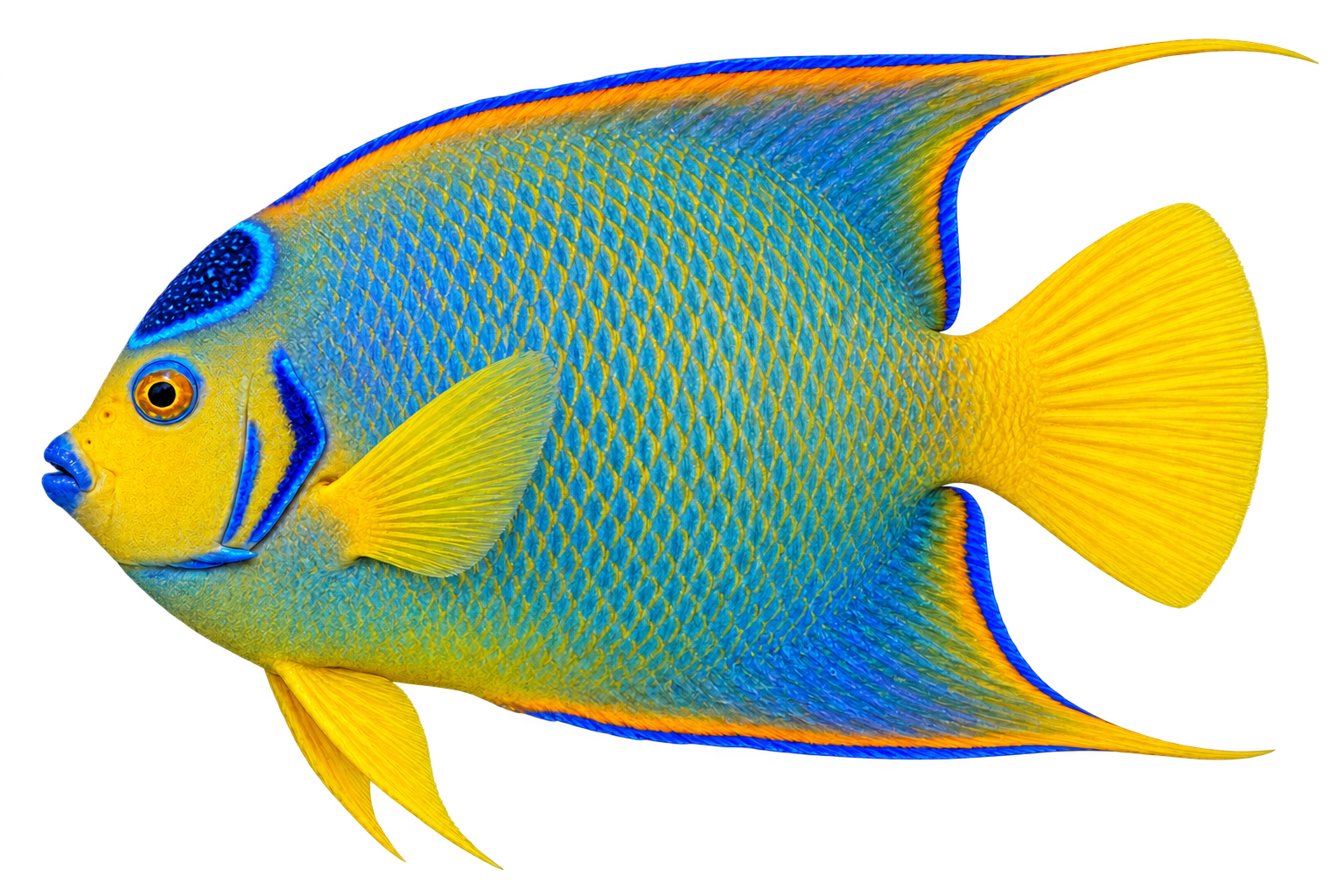
Size: Usually 8–14 inches; maximum about 18 inches.
Blue-ringed forehead crown, an all-yellow tail and a tall oval body.
Restricted marine life: live collection only; no spearing
Explore the queen angelfish guide →Queen Parrotfish
Elongate & oval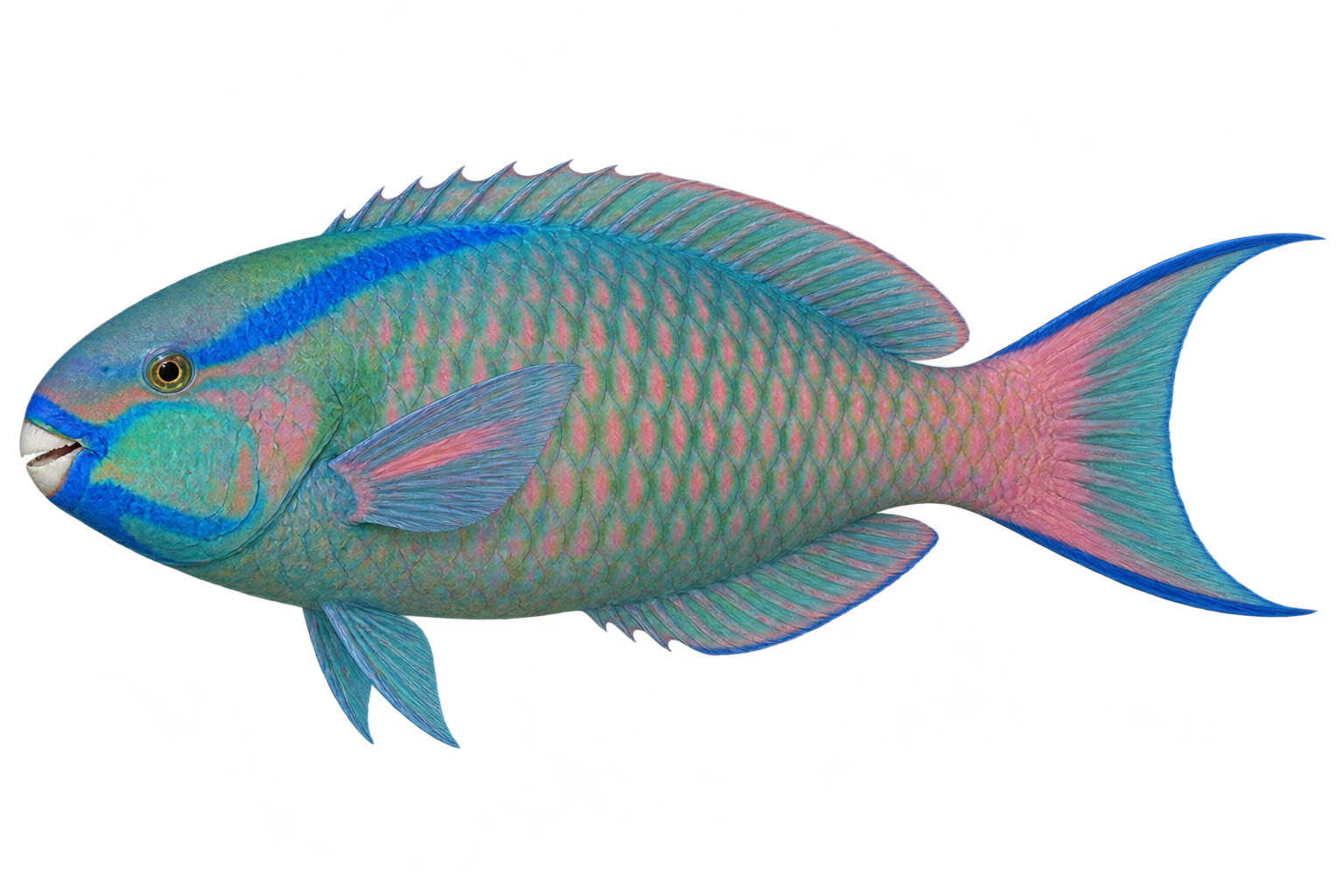
Size: Published maxima differ: Smithsonian 50 cm; FishBase 61 cm total length.
The terminal-phase Queen Parrotfish combines blue-green coloring with pink accents and a broad diagonal blue band rising from the nape toward the middle of the back.
Restricted marine life: live collection only; no spearing
Explore the queen parrotfish guide →Queen Triggerfish
Deep-bodied & oval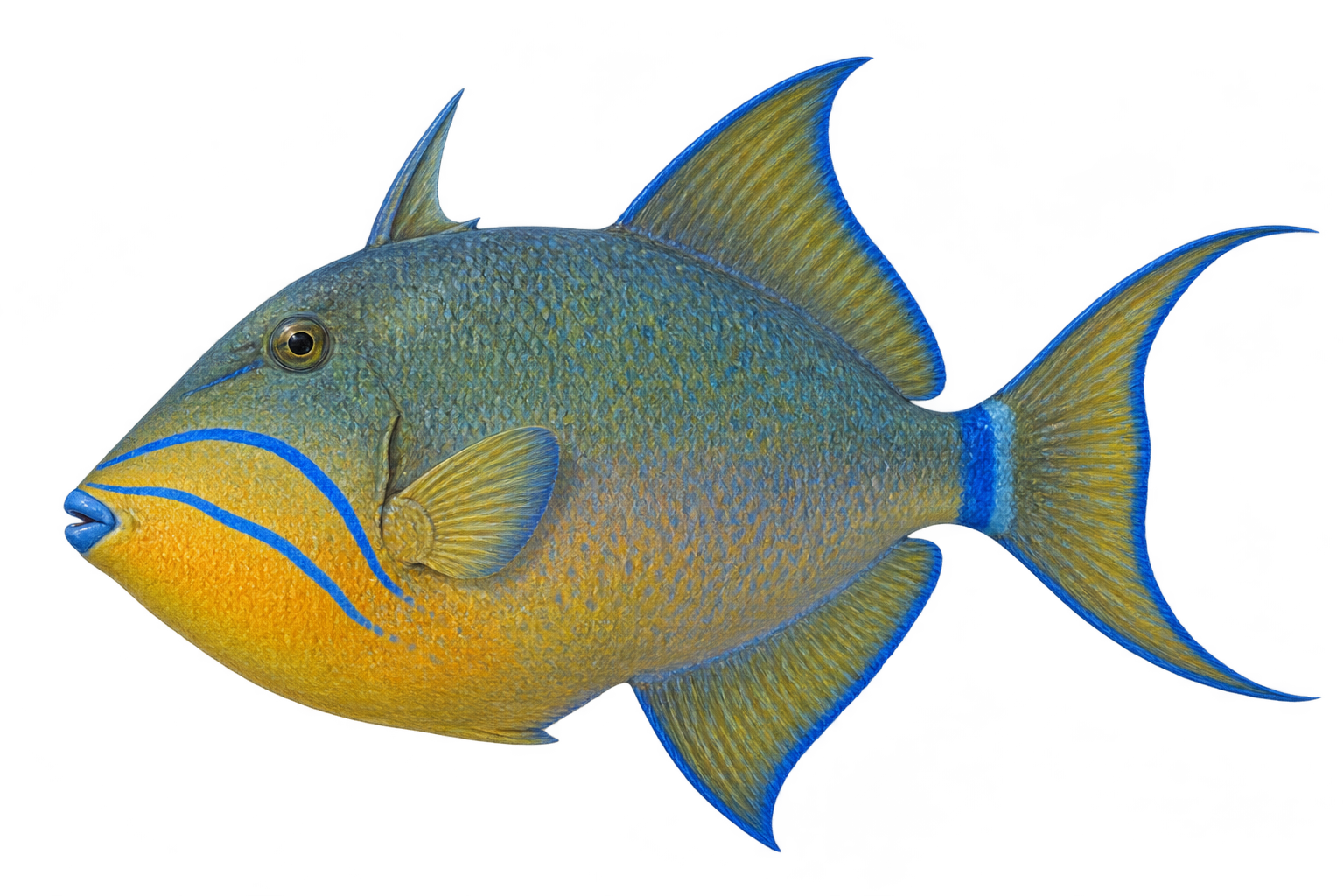
Size: Commonly about 12 inches; maximum around 24 inches.
Two curved blue facial bands, orange-yellow lower face and a crescent tail with trailing tips.
Restricted marine life: live collection only; no spearing
Explore the queen triggerfish guide →Rainbow Parrotfish
Elongate & oval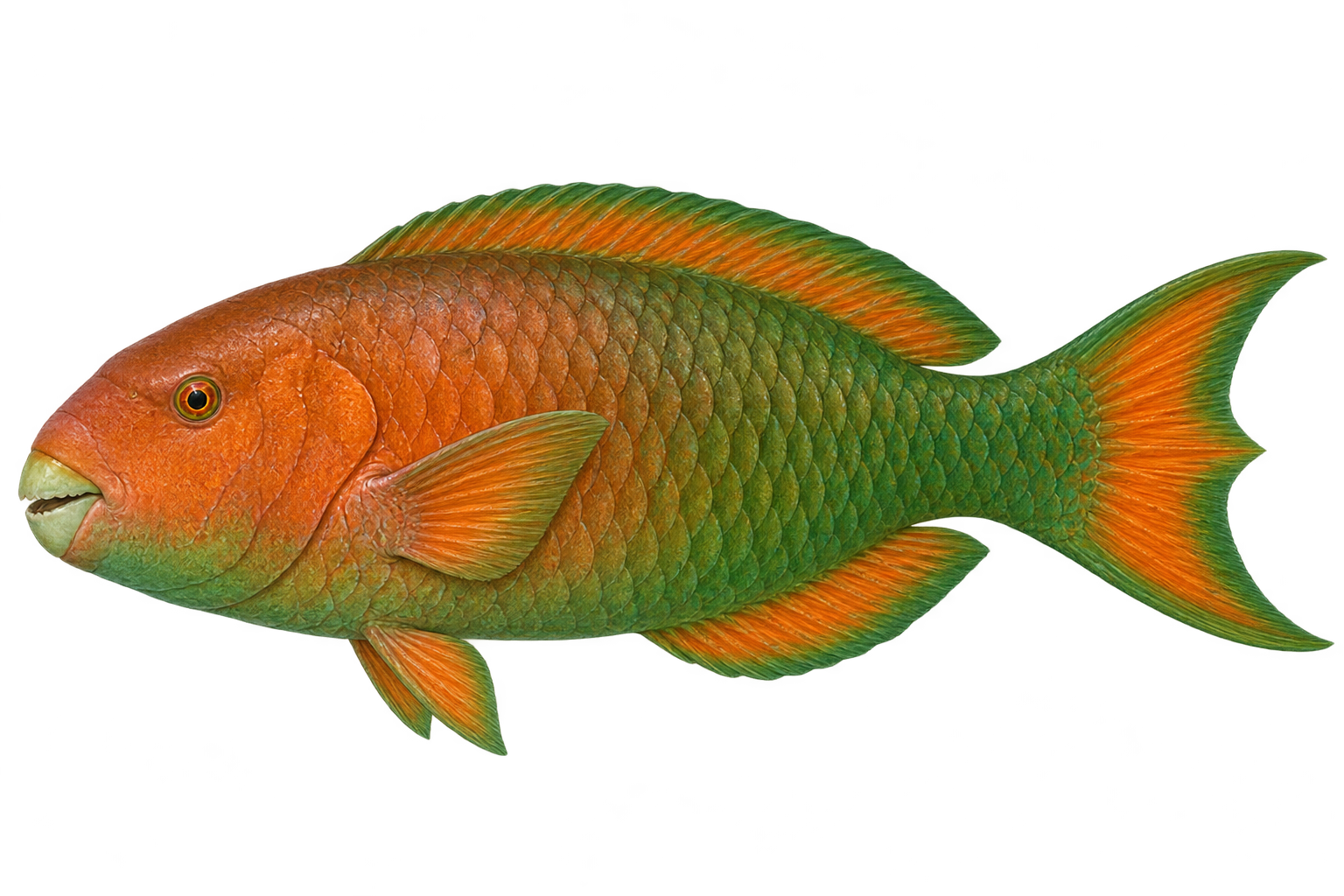
Size: Smithsonian and FishBase give a maximum length of 120 cm, making this one of the largest parrotfishes in the western Atlantic.
A large Rainbow Parrotfish is a two-tone heavyweight: bronze across the head and front of the body, green toward the rear, with orange and green in the fins.
Restricted marine life: live collection only; no spearing
Explore the rainbow parrotfish guide →Rainbow Runner
Streamlined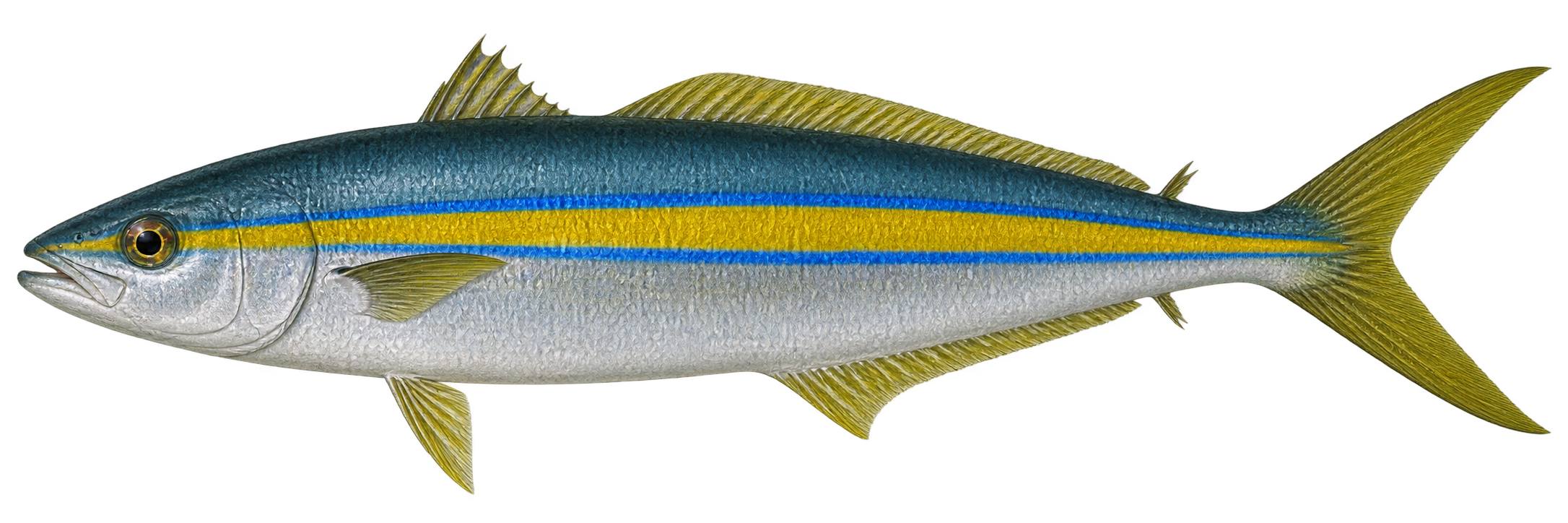
Size: Reported maximum about 180 cm; see profile for life-stage and measurement notes.
Slender torpedo-shaped jack with two blue side stripes enclosing yellow and one finlet behind each rear fin.
Read the guide’s location, season and eating cautions before acting.
Red Grouper
Streamlined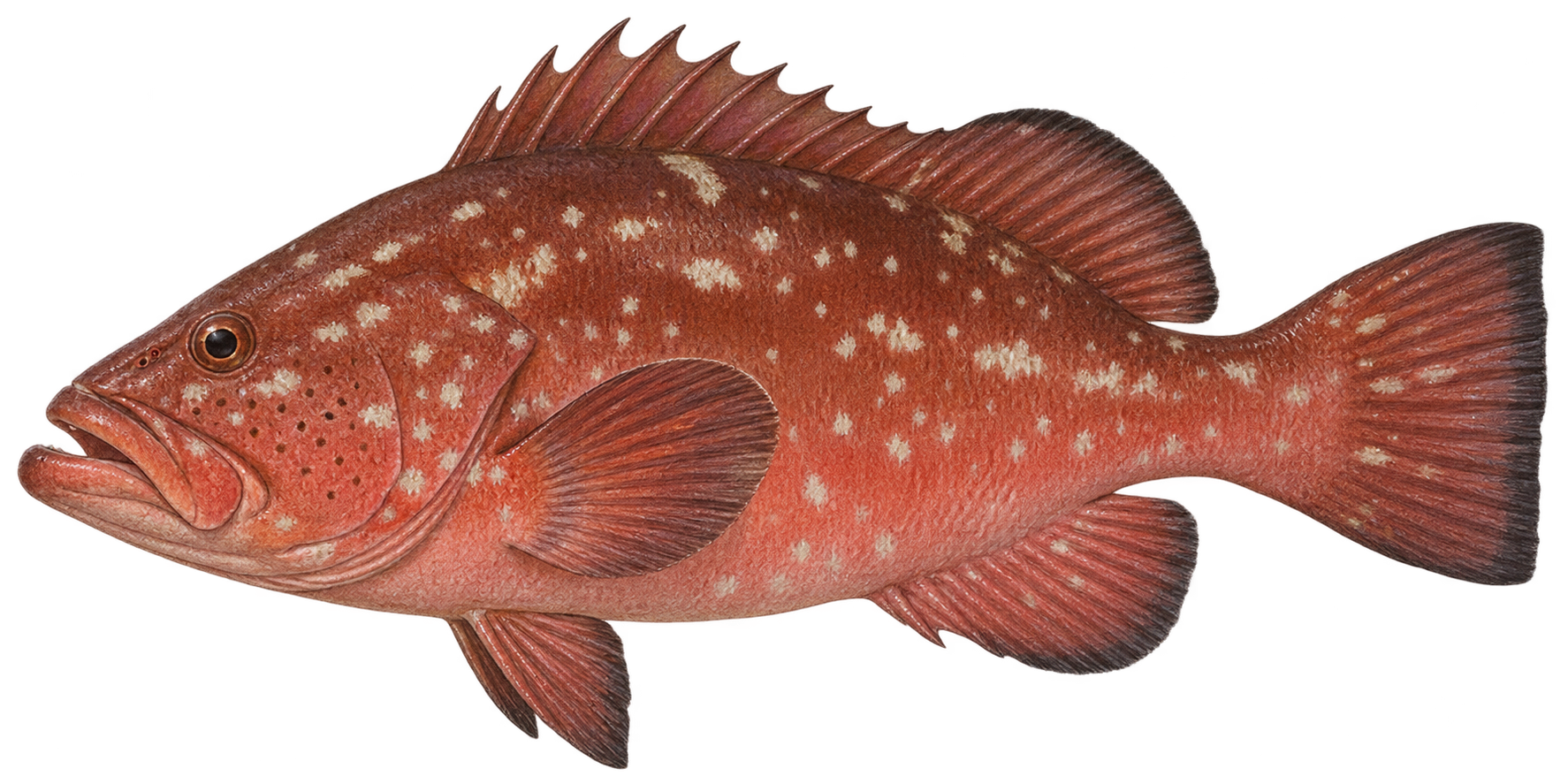
Size: Large adults can approach 4 feet; smaller individuals are common.
Robust reddish-brown body, pale blotches, small dark cheek spots and a nearly squared tail.
Regulated recreational harvest; restrictions apply
Explore the red grouper guide →Red Hind
Robust reef fish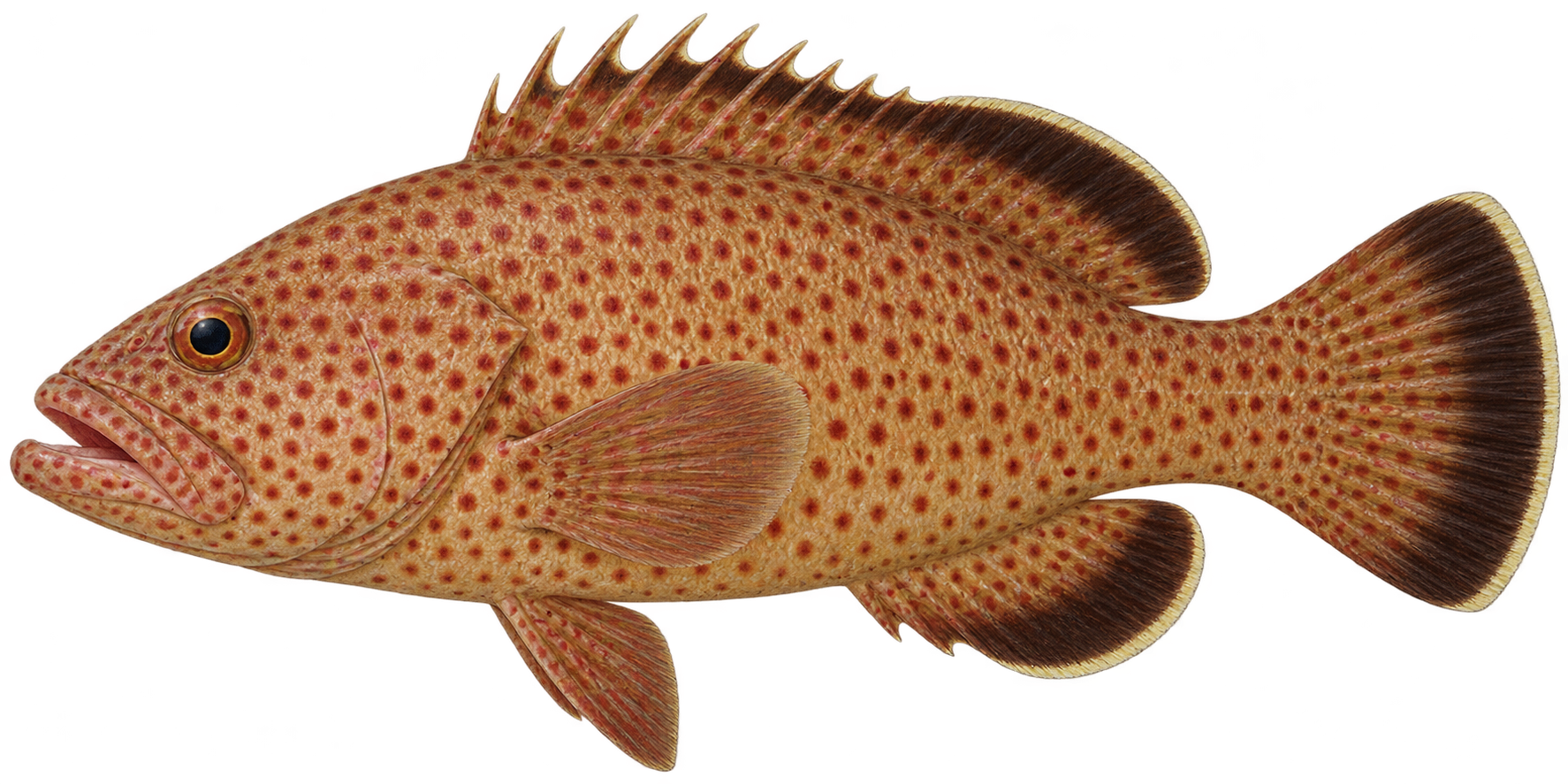
Size: Reported maximum 76 cm; maximum is not a typical sighting size.
Red-brown spots; soft dorsal, anal and tail have broad dark bands near their edges and narrow pale outer edging.
Read the guide’s location, season and eating cautions before acting.
Redband Parrotfish
Elongate & oval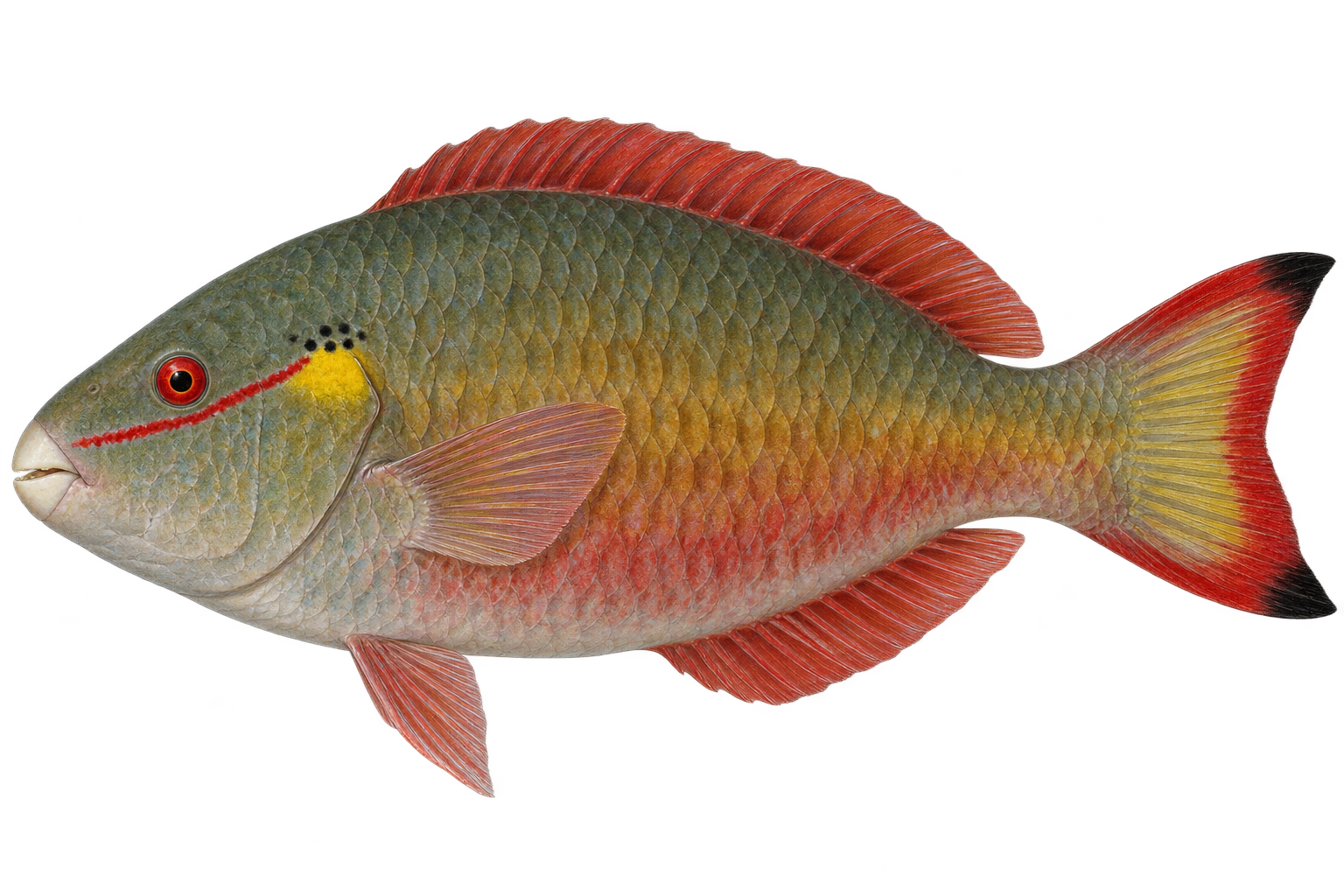
Size: Both Smithsonian and FishBase report a maximum length of 28 cm; FishBase gives about 20 cm as a common length.
A terminal-phase Redband Parrotfish has a reddish line running from the mouth beneath the eye, a red iris and a yellow shoulder blotch topped by small black spots.
Restricted marine life: live collection only; no spearing
Explore the redband parrotfish guide →Redear Sardine (Redear Herring)
Elongated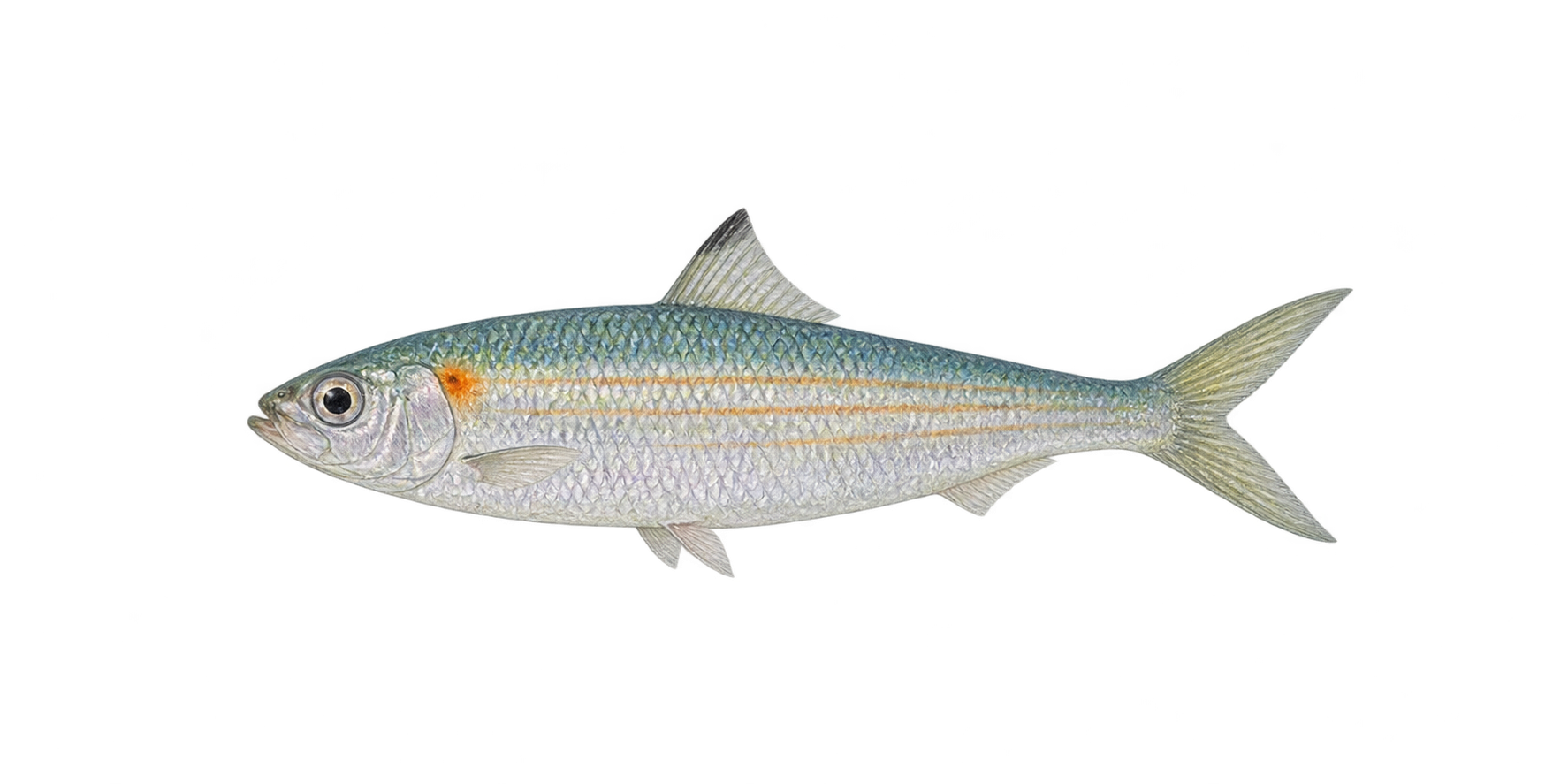
Size: Smithsonian reports a maximum of 26.5 cm, not a typical local encounter size.
Silvery sardine with blue-green back, orange shoulder spot, narrow orange side lines and dark front dorsal tips.
Read the guide’s location, season and eating cautions before acting.
Redfin Needlefish
Long & eel-like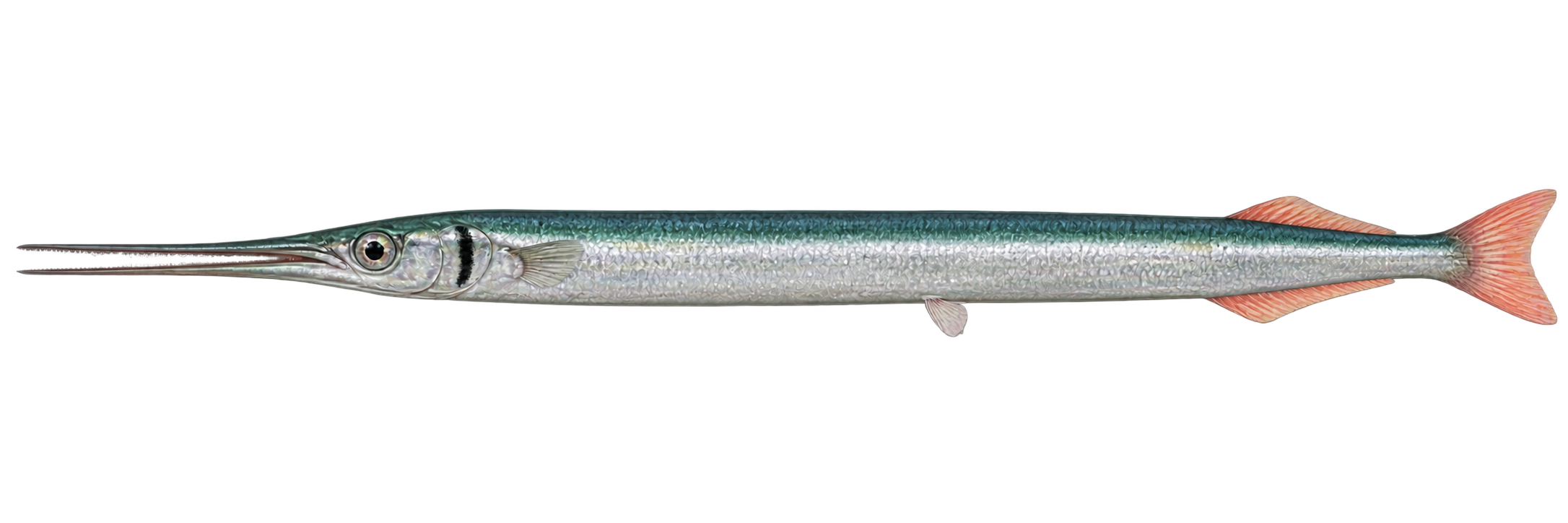
Size: Reported maximum about 45 cm; see profile for life-stage and measurement notes.
A small slender needlefish with a dark rear-cheek bar, pink-orange rear fins and no tail-base keel.
Read the guide’s location, season and eating cautions before acting.
Redlip Blenny
Streamlined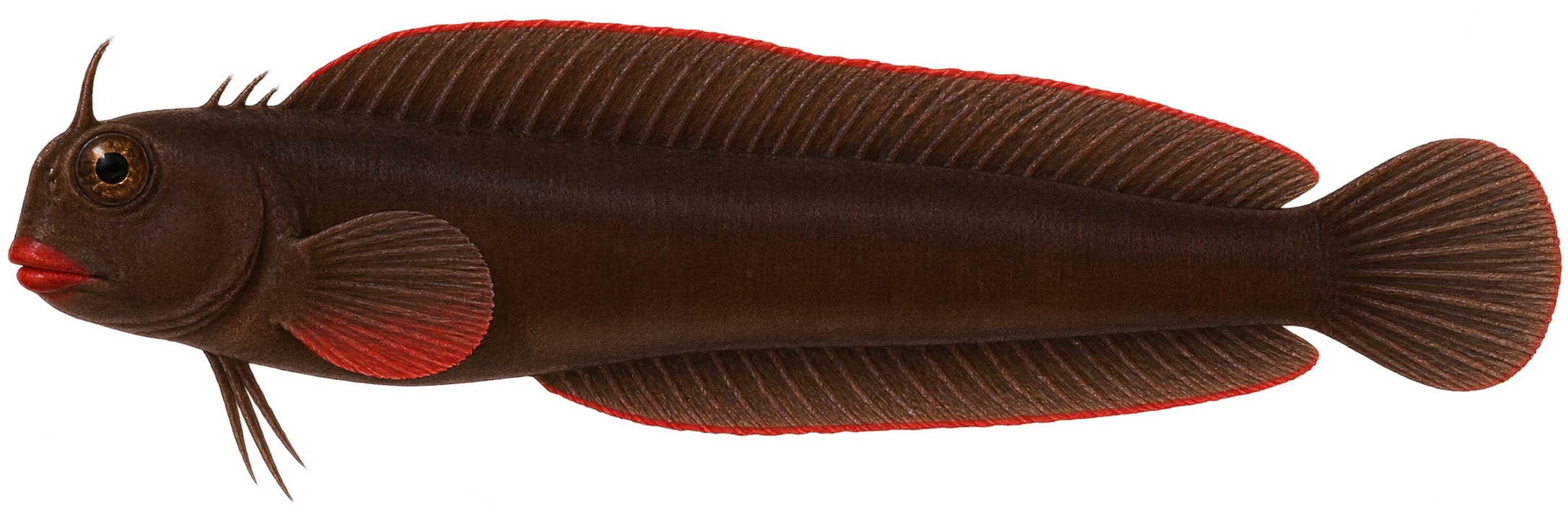
Size: Maximum about 12.5 cm (4.9 inches).
A dark brown body carries a conspicuous red lower lip, red on the lower pectoral fin, and red borders on the dorsal and anal fins.
Restricted marine life: live collection only; no spearing
Explore the redlip blenny guide →Redspotted Hawkfish
Small perching fish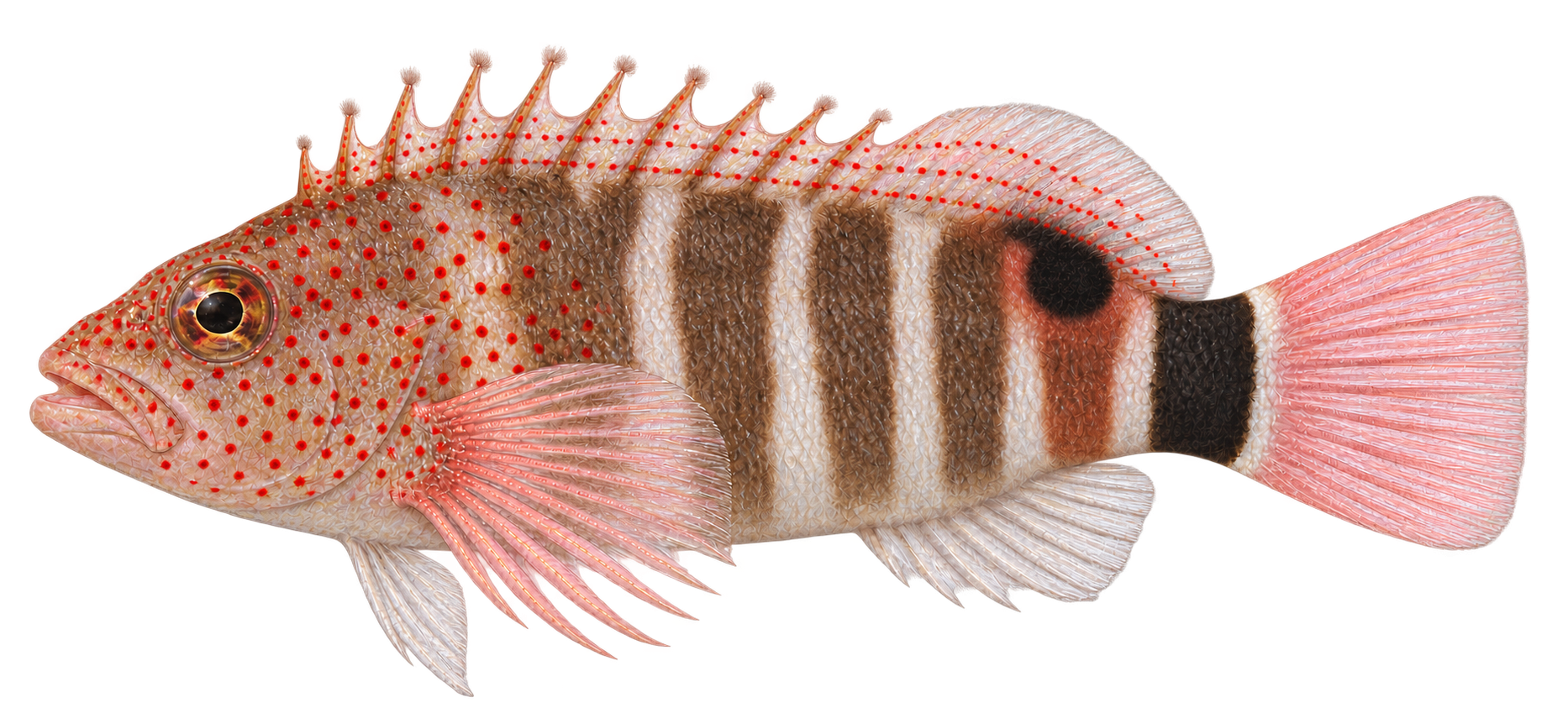
Size: Reported maximum 9.5 cm; maximum is not a typical sighting size.
Small perching fish with red head spots, dark body bars, a black tail-base band and tufted dorsal-spine tips.
Read the guide’s location, season and eating cautions before acting.
Redtail Parrotfish
Streamlined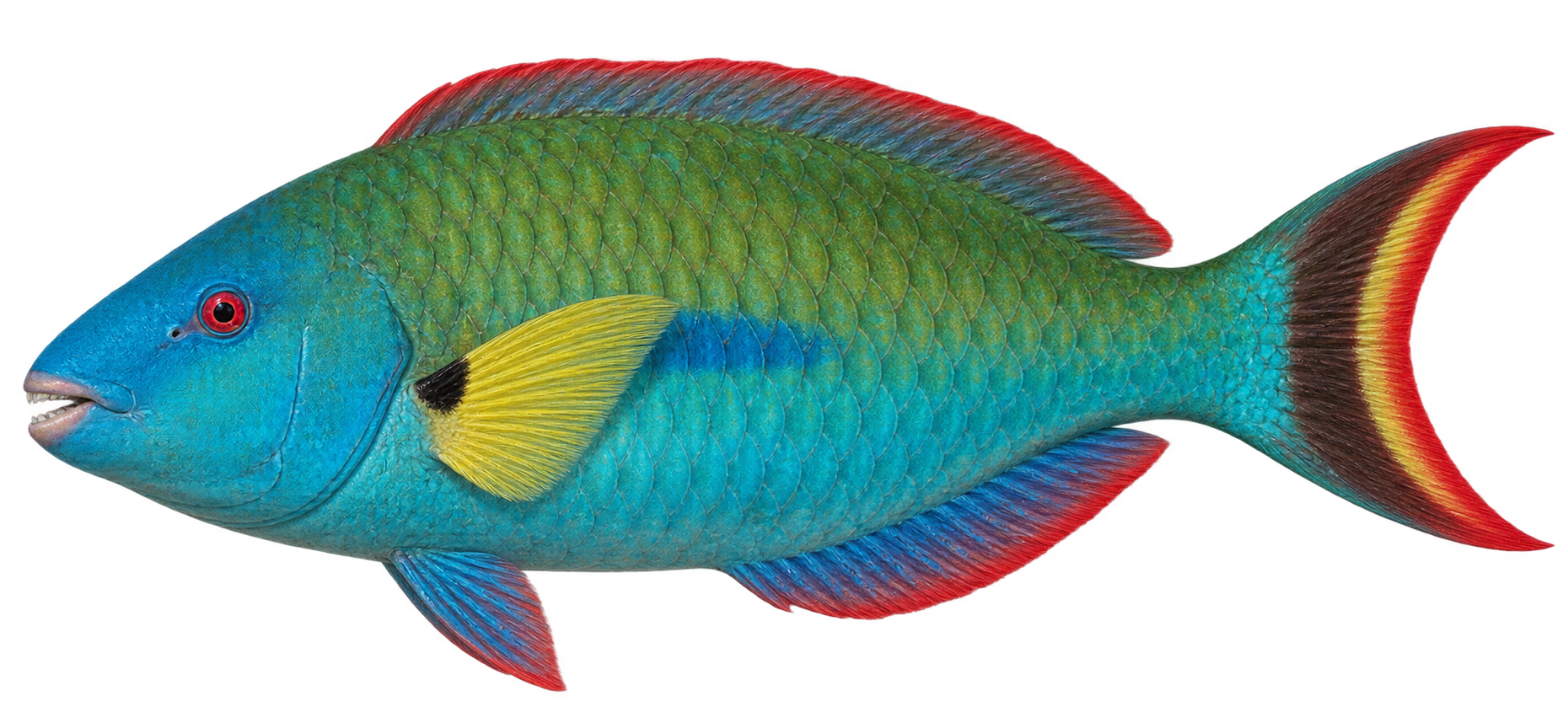
Size: Reported maximum about 46 cm; see profile for life-stage and measurement notes.
Terminal-phase fish combine a black upper pectoral-base spot, blue flank patch and red-edged crescent tail.
Read the guide’s location, season and eating cautions before acting.
Reef Butterflyfish
Deep-bodied & oval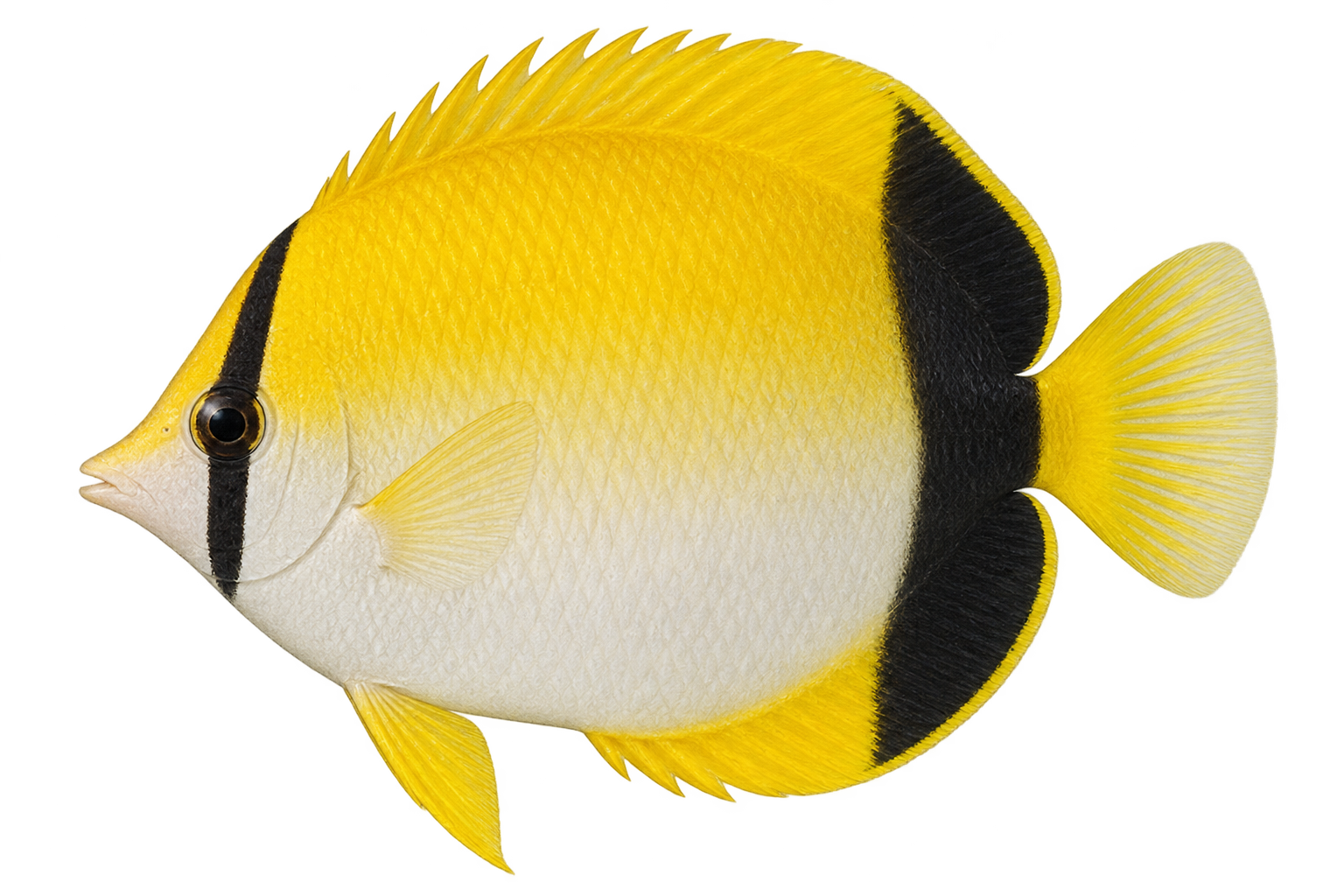
Size: Reported maximum about 18 cm; see profile for life-stage and measurement notes.
Yellow-white disc with a black eye band and a broad black wedge across the rear dorsal and anal fins.
Read the guide’s location, season and eating cautions before acting.
Reef Croaker
Shape not assigned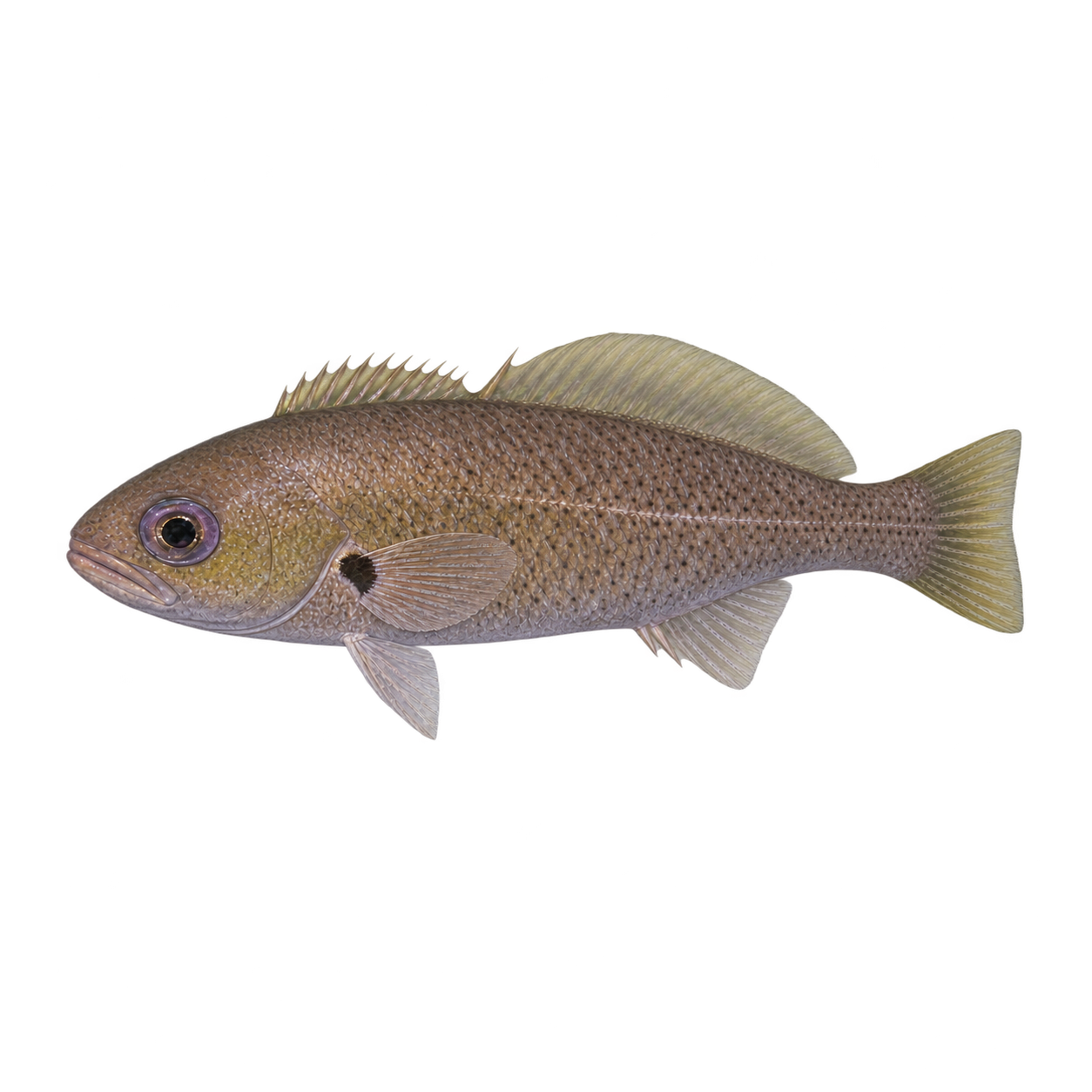
Size: Smithsonian reports a maximum of 30 cm. The entry does not explicitly identify total, fork or standard length for this maximum. The account does not supply juvenile measurements or a growth schedule.
A stocky gray fish with large eyes, dark scale dots and a conspicuous black pectoral-base patch. The chin lacks a barbel; the lower jaw projects slightly.
Read the guide’s location, season and eating cautions before acting.
Rock Beauty
Deep-bodied & oval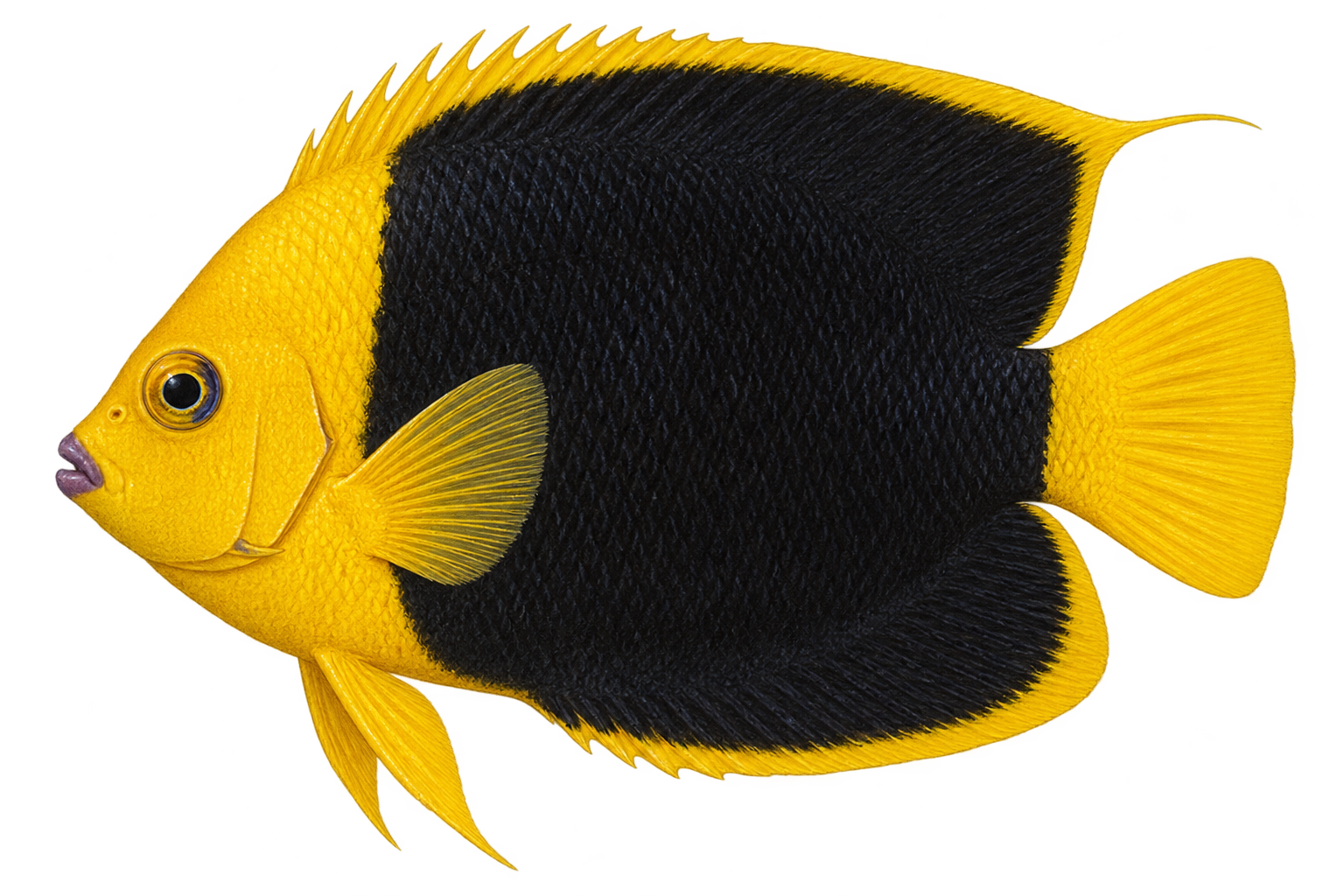
Size: Size accounts differ: about 25 cm; reported maximum 35 cm.
Yellow head and tail surrounding a large black body patch.
Restricted marine life: live collection only; no spearing
Explore the rock beauty guide →Rock Hind
Robust reef fish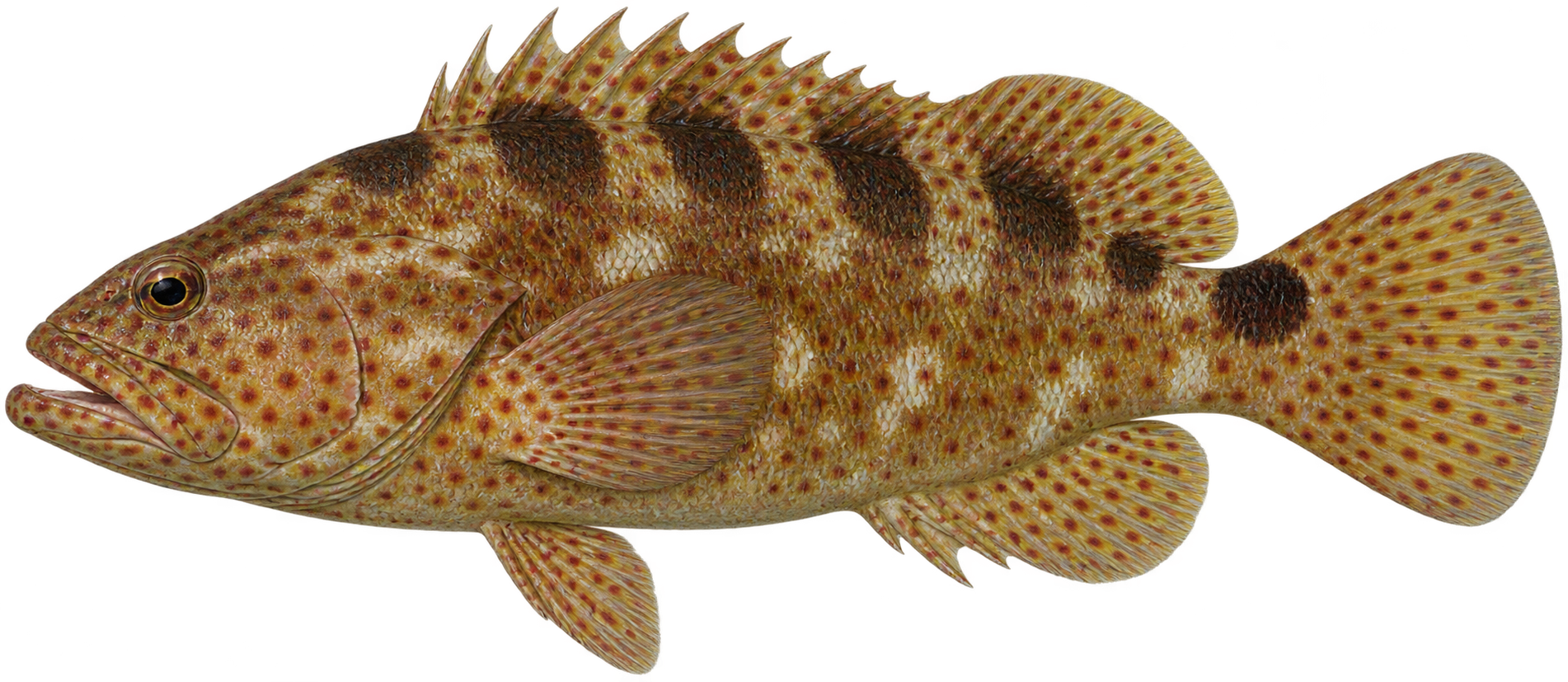
Size: Reported maximum 62 cm; maximum is not a typical sighting size.
Red-brown spotting with dark saddles along the upper back and a dark blotch on the upper tail base.
Read the guide’s location, season and eating cautions before acting.
Rosy Blenny
Elongated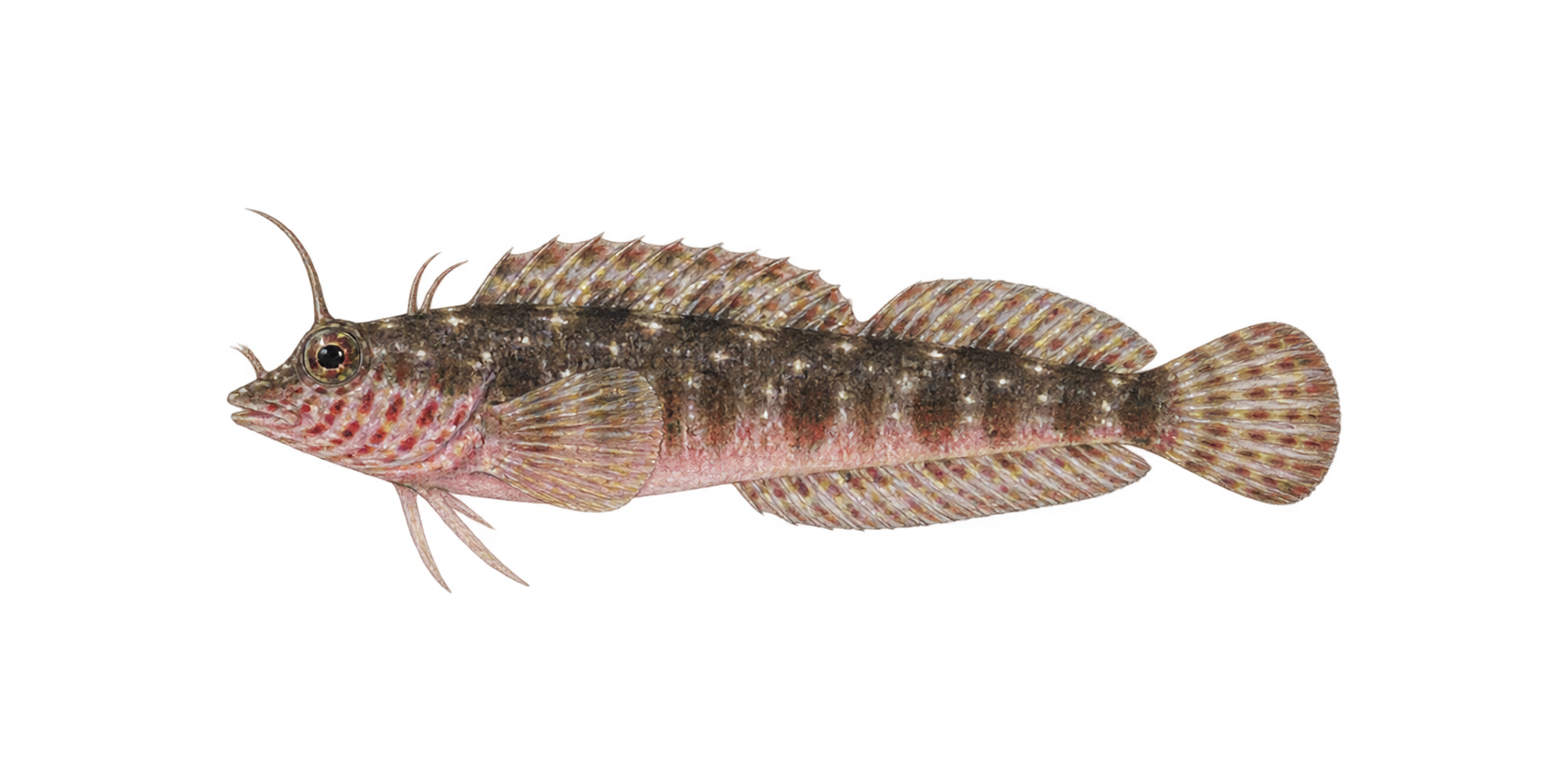
Size: Smithsonian reports a maximum length of 5.2 cm. This is a regional upper record, not a typical local encounter size.
Small, narrow-headed blenny with a pointed snout and long simple eye cirri. Males can be pink below; females are finely spotted.
Read the guide’s location, season and eating cautions before acting.
Rosy Razorfish
Compressed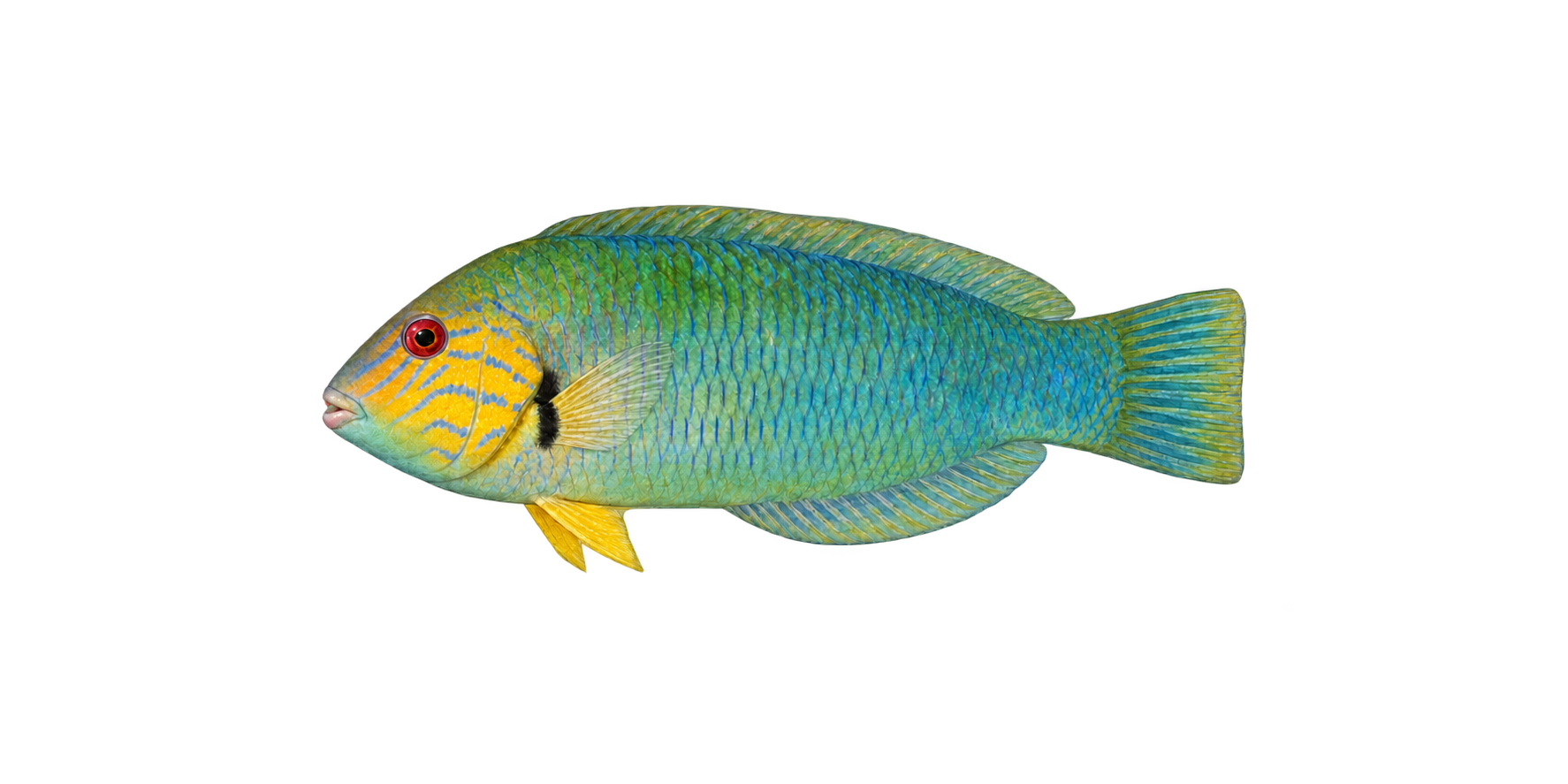
Size: Smithsonian reports a maximum of 15 cm. This is a source-specific upper length, not a typical local sighting size.
A compressed wrasse with a rounded forehead. Initial-phase fish have a dark cheek patch; terminal-phase fish are blue-green with gold-and-blue cheeks.
Read the guide’s location, season and eating cautions before acting.
Round Scad
Streamlined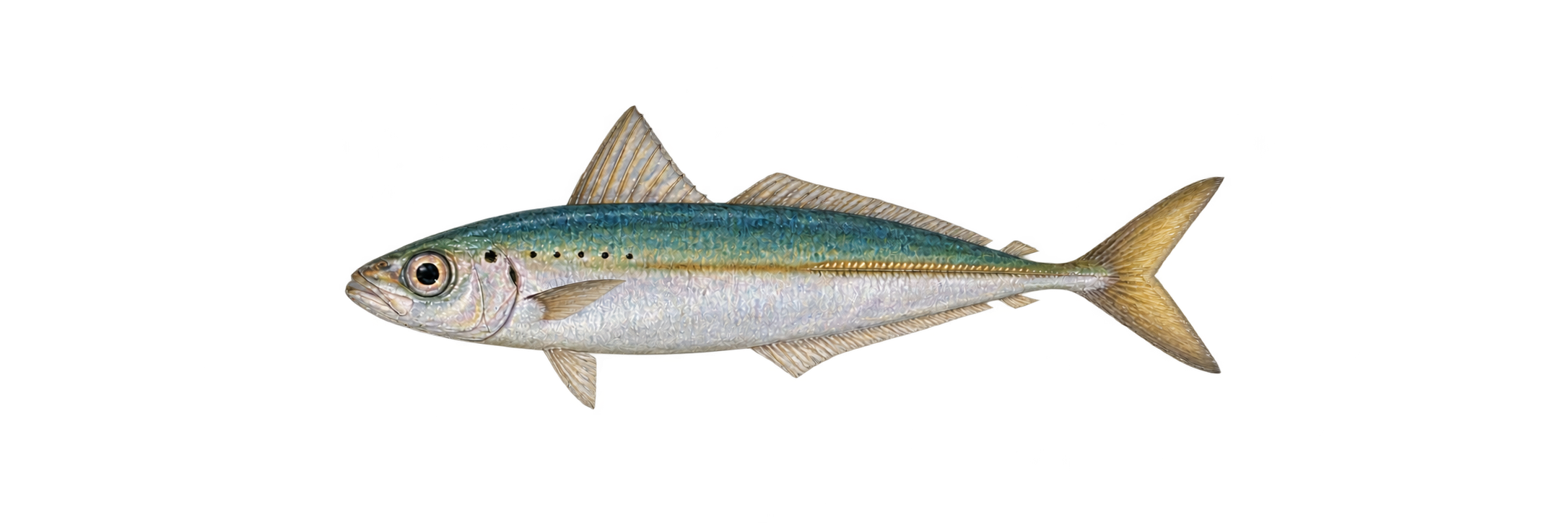
Size: Smithsonian reports a maximum of 36 cm. This is a source-specific upper length, not a typical local sighting size.
A slender cylindrical jack with a forked tail, greenish back, silver belly and small dark gill-cover mark.
Read the guide’s location, season and eating cautions before acting.
Rusty Goby
Streamlined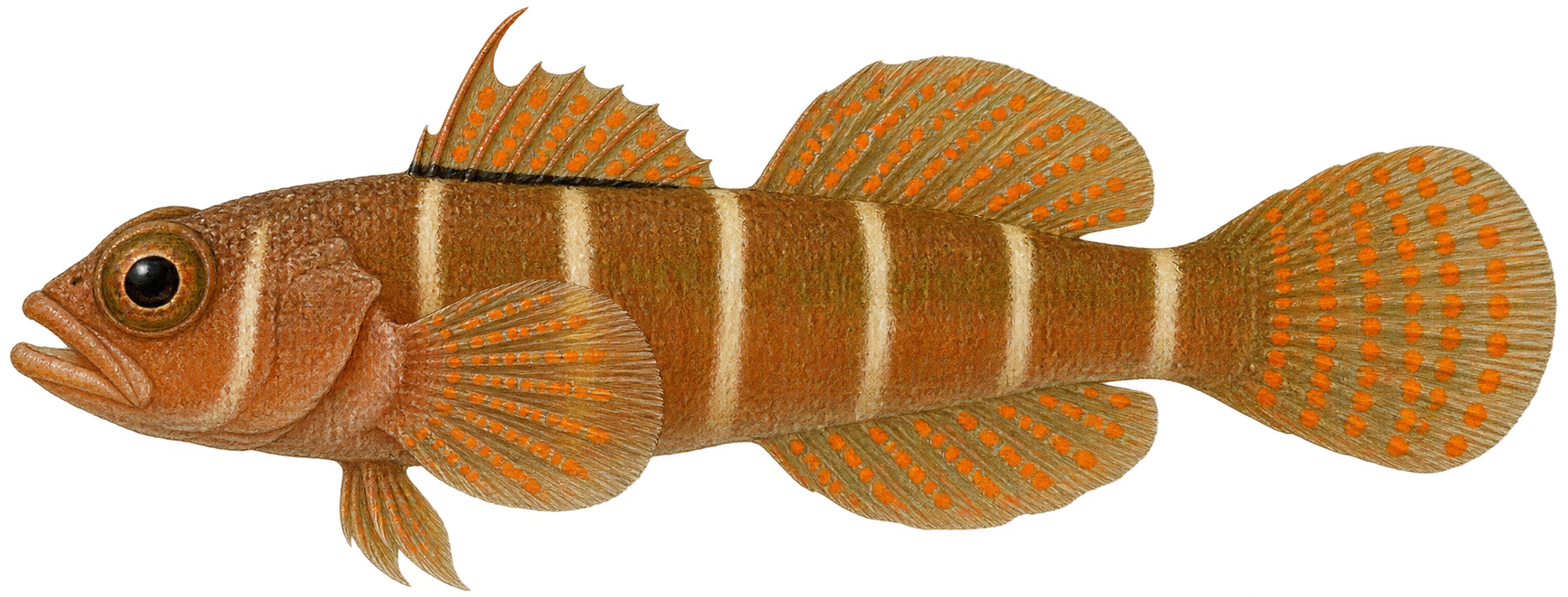
Size: Maximum about 4 cm (1.6 inches).
The body is compact and rusty orange to olive, with about seven narrow pale bars.
Restricted marine life: live collection only; no spearing
Explore the rusty goby guide →Saddled Blenny
Streamlined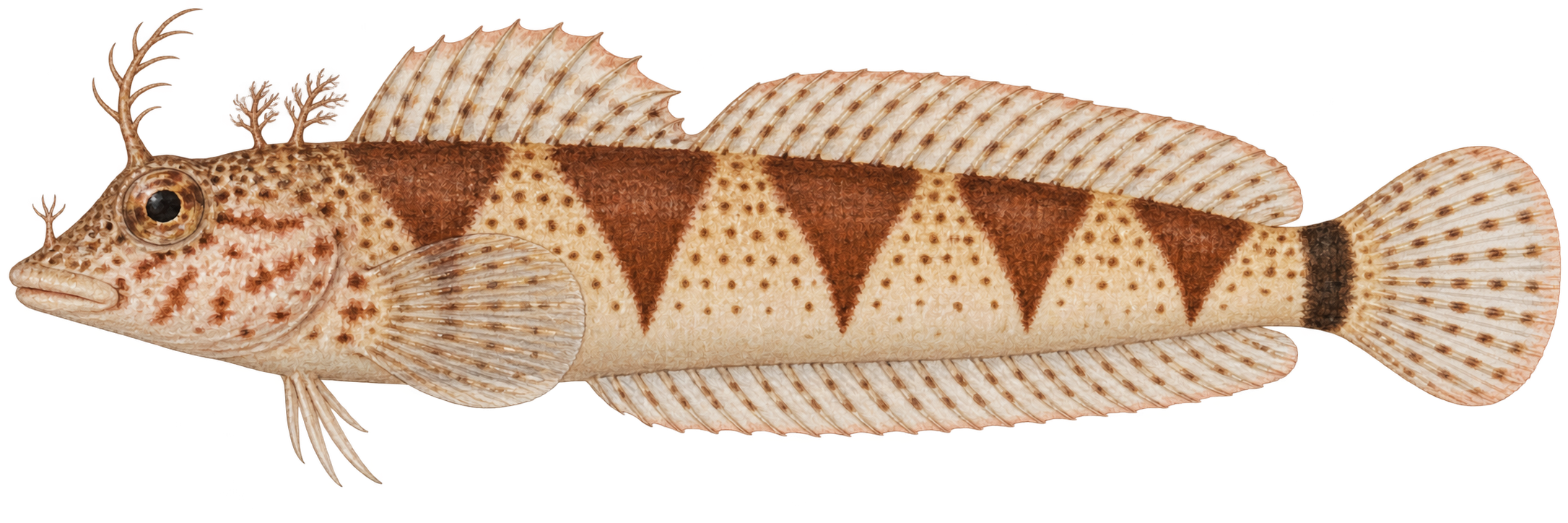
Size: Maximum about 5.8 cm (2.3 inches).
The characteristic pattern is a series of dark, downward-pointing triangular saddles on a pale body.
Restricted marine life: live collection only; no spearing
Explore the saddled blenny guide →Sailfin Blenny
Streamlined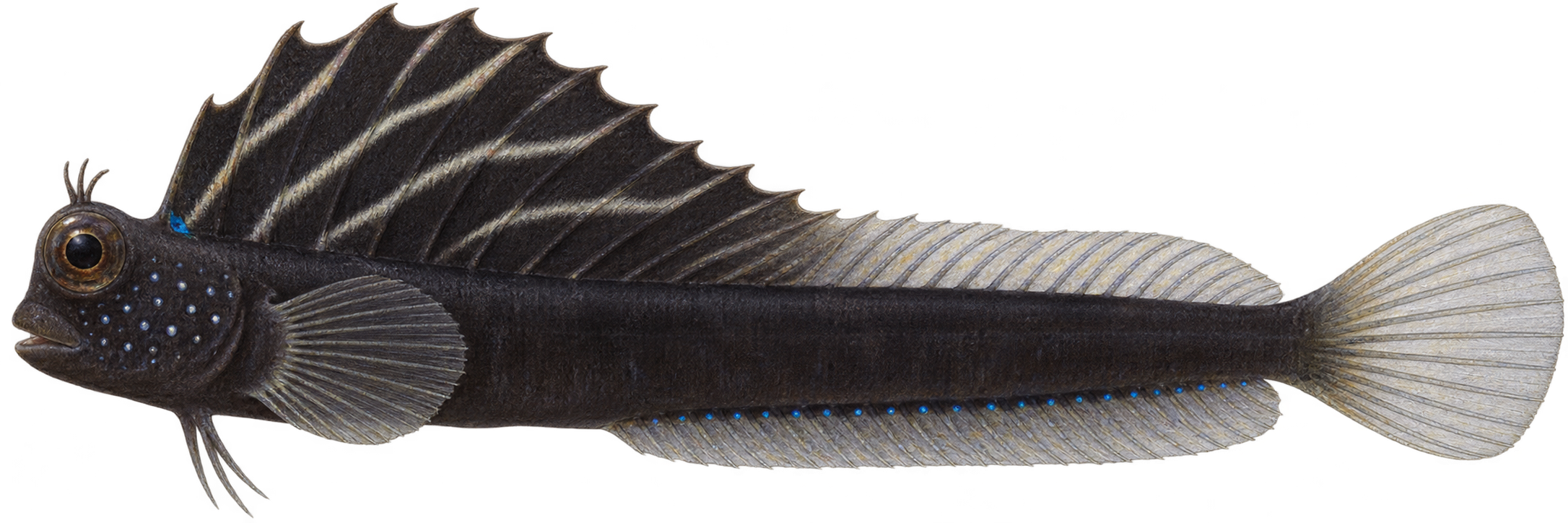
Size: Maximum about 7 cm (2.8 inches).
A male with his fin raised looks like a miniature sailboat.
Restricted marine life: live collection only; no spearing
Explore the sailfin blenny guide →Sailors Choice
Elongate & oval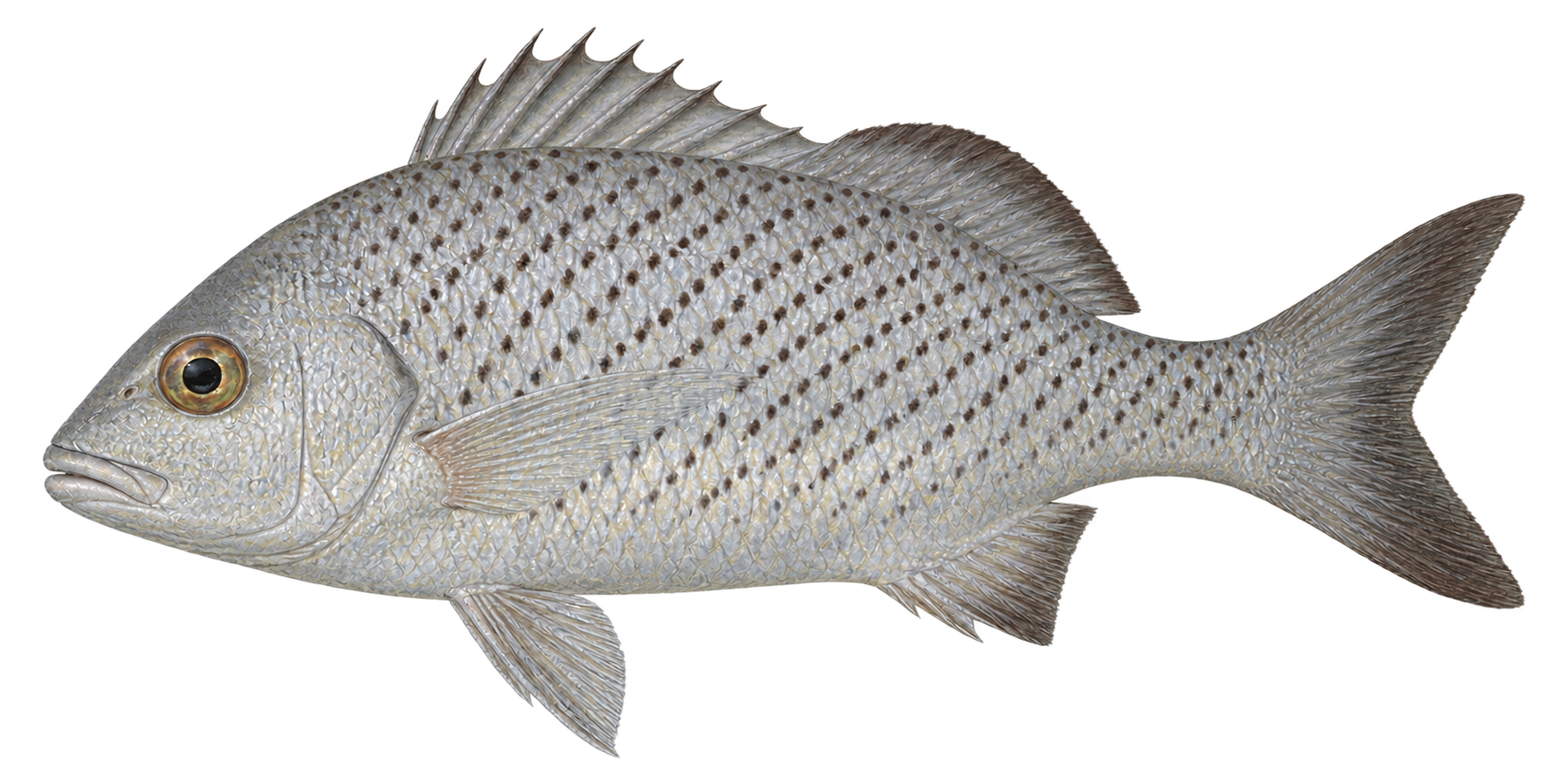
Size: Reported maximum 41.2 cm.
Adults have dotted, often slanting dark lines along silver scale rows; juveniles have lengthwise dark stripes and a tail-base spot.
Read the guide’s location, season and eating cautions before acting.
Sand Diver
Elongated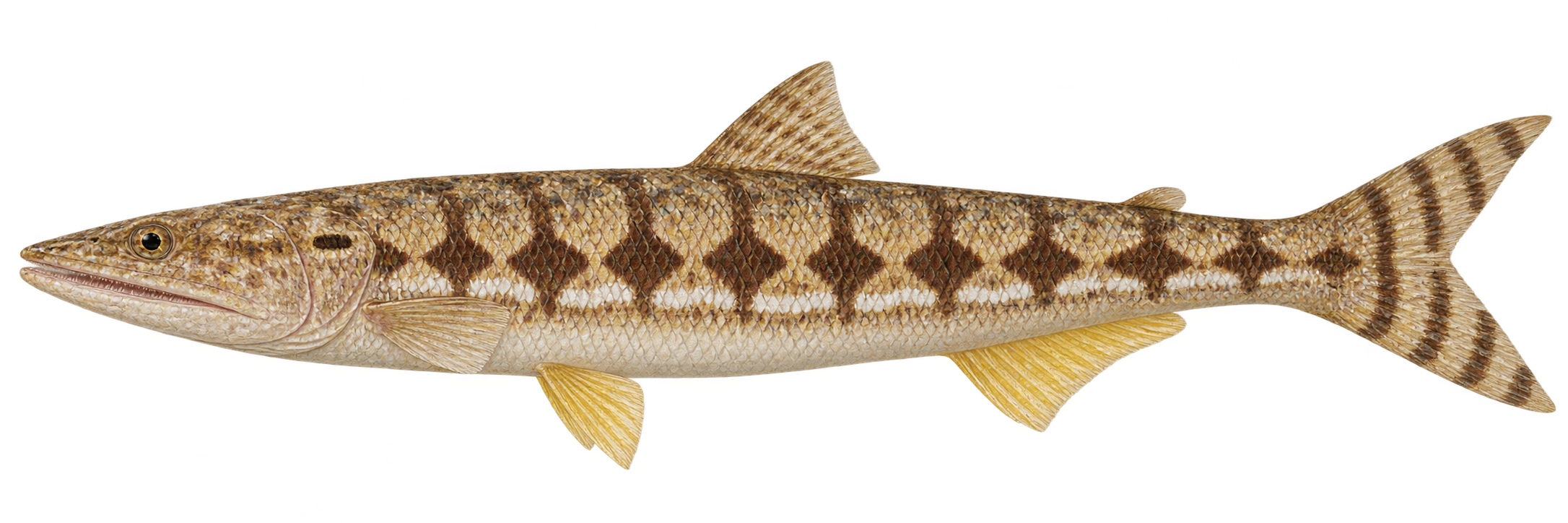
Size: Reported regional maximum 44 cm; not a typical encounter size.
Small rectangular shoulder mark; hourglass bars; barred tail.
Read the guide’s location, season and eating cautions before acting.
Sand Perch
Streamlined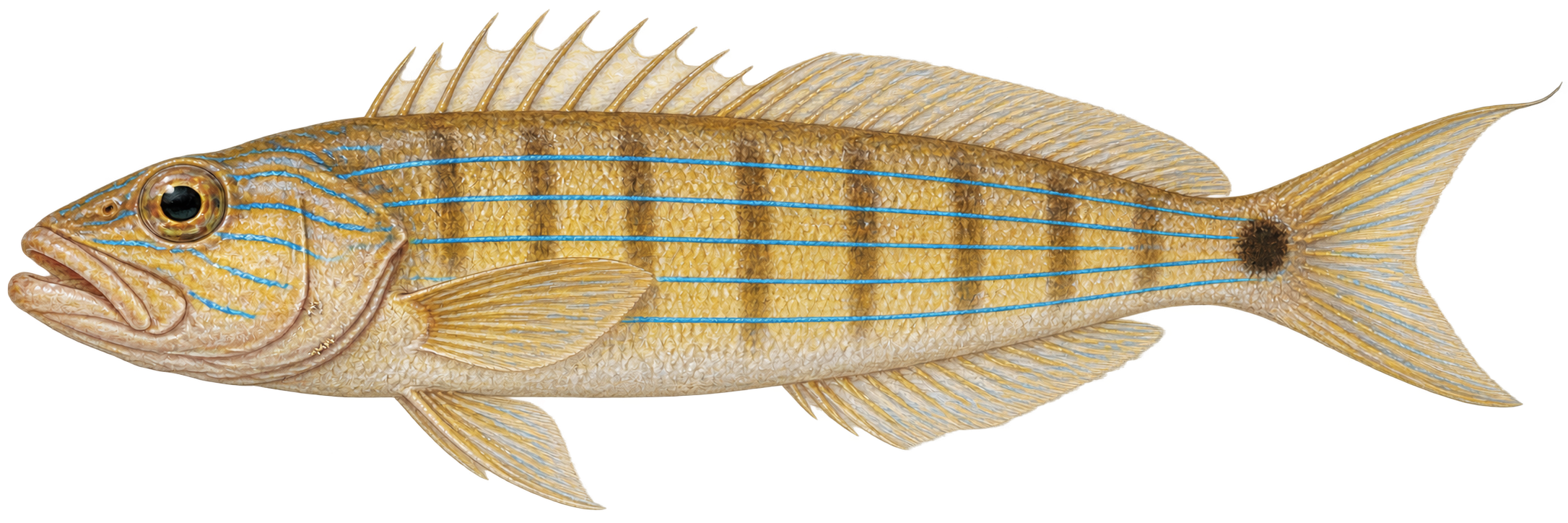
Size: Maximum about 30 cm (11.8 inches) total length.
Elongate sand-bottom bass with fine blue head/body lines and two clusters of cheek-corner spines.
Harvest conditionally allowed; default state limits and protected areas apply
Explore the sand perch guide →Sand Tilefish
Elongate & oval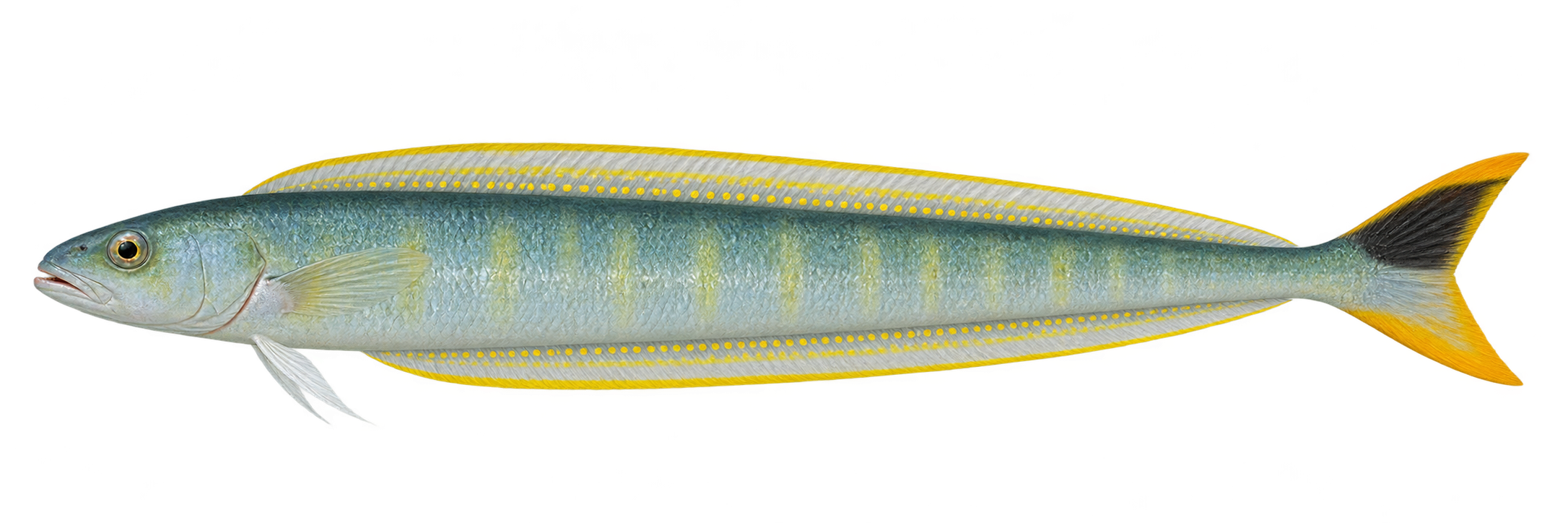
Size: The regional reference reports 60 cm (23.6 inches). This maximum is not a typical local encounter size. Record an estimated length separately from an identification. Browsing bands are approximate, not harvest limits.
A very slender, pale blue-green fish with long dorsal and anal fins. The tail has yellow-orange upper and lower edges and a dark area in its upper front portion; juveniles may show an orange rear-flank stripe.
Read the guide’s location, season and eating cautions before acting.
Sargassumfish
Deep-bodied & oval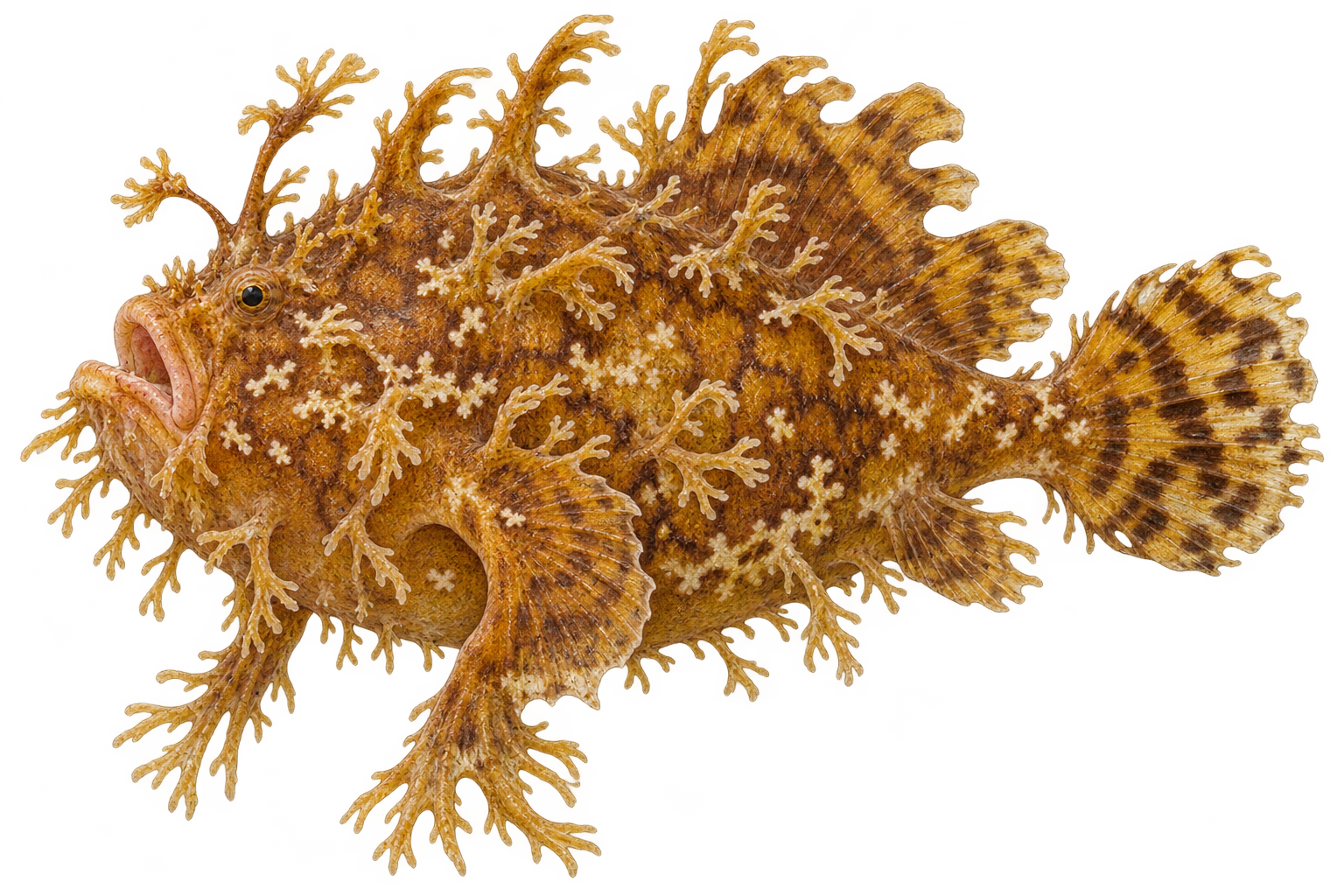
Size: Reported maximum about 20 cm; see profile for life-stage and measurement notes.
A mottled, weed-fringed frogfish with an upturned mouth and limb-like fins hides in floating Sargassum.
Read the guide’s location, season and eating cautions before acting.
Saucereye Porgy
Deep-bodied & oval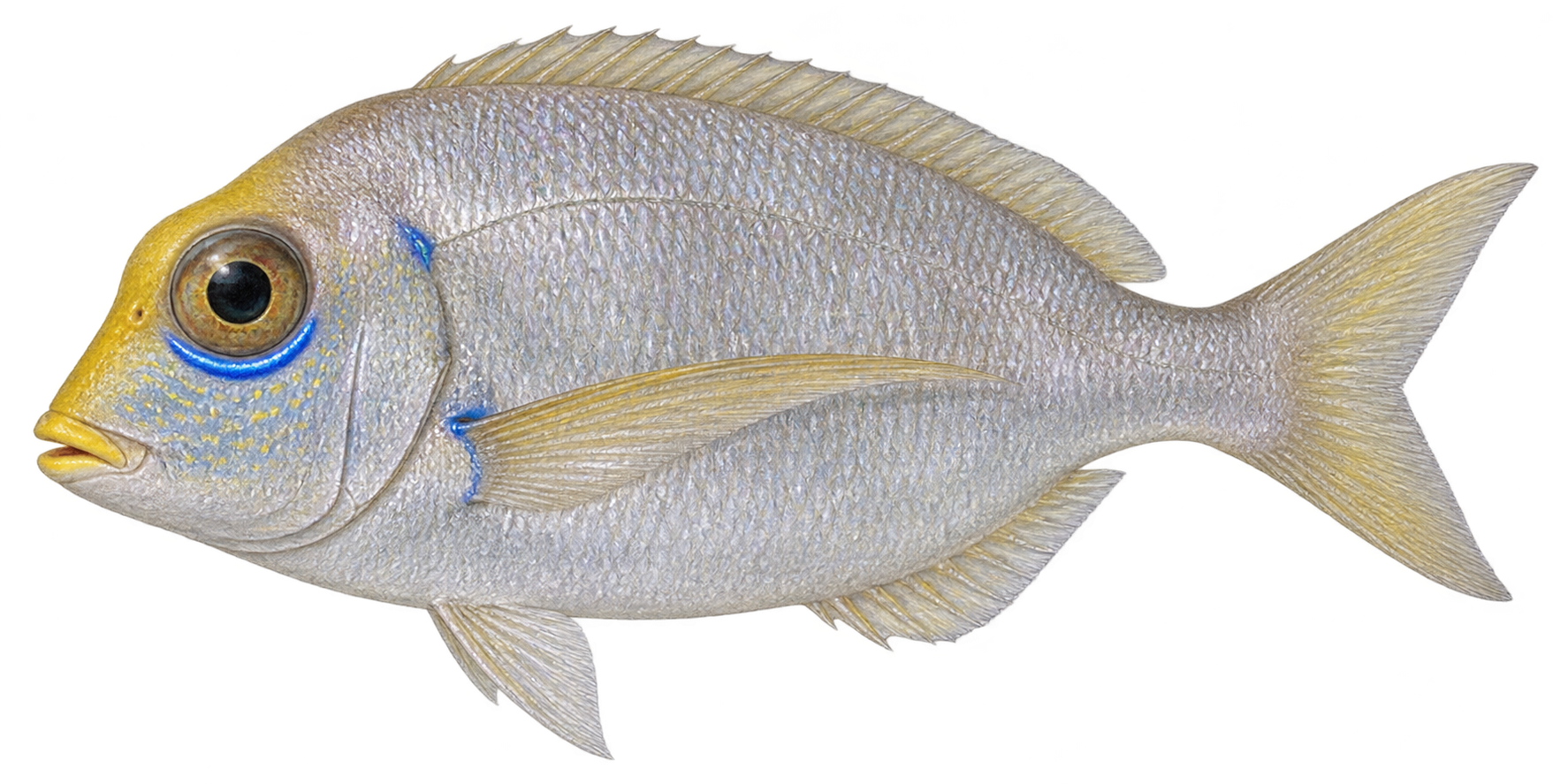
Size: Maximum about 22 inches (56 cm) total length.
Large eye with blue crescent underneath, steep forehead and long pectoral fin.
Harvest allowed; Florida state and Atlantic federal limits differ
Explore the saucereye porgy guide →Scaled Sardine
Streamlined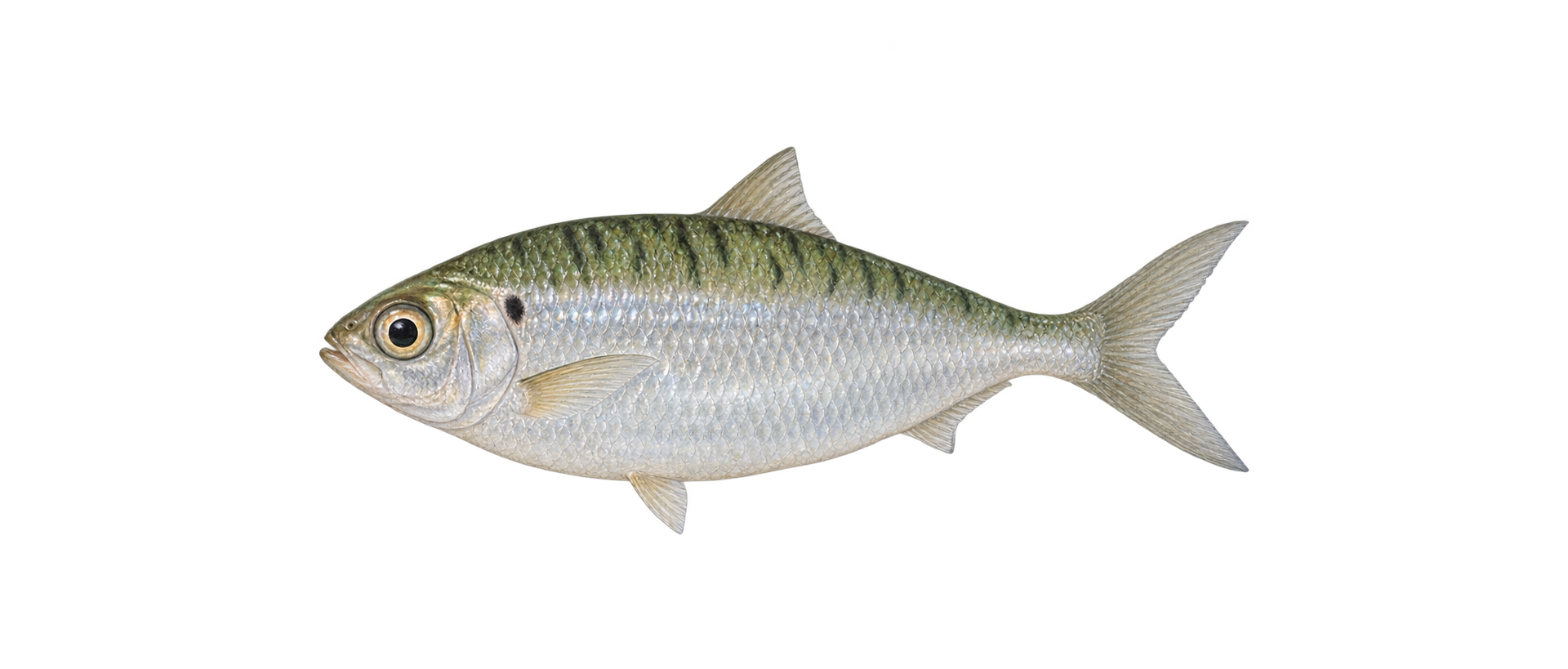
Size: Smithsonian reports a maximum of 27.5 cm. This is a source-specific upper length, not a typical local sighting size.
A moderately deep silver herring with a dark back, clear fins and a dark spot behind the upper gill-cover corner.
Read the guide’s location, season and eating cautions before acting.
Scamp
Elongated & robust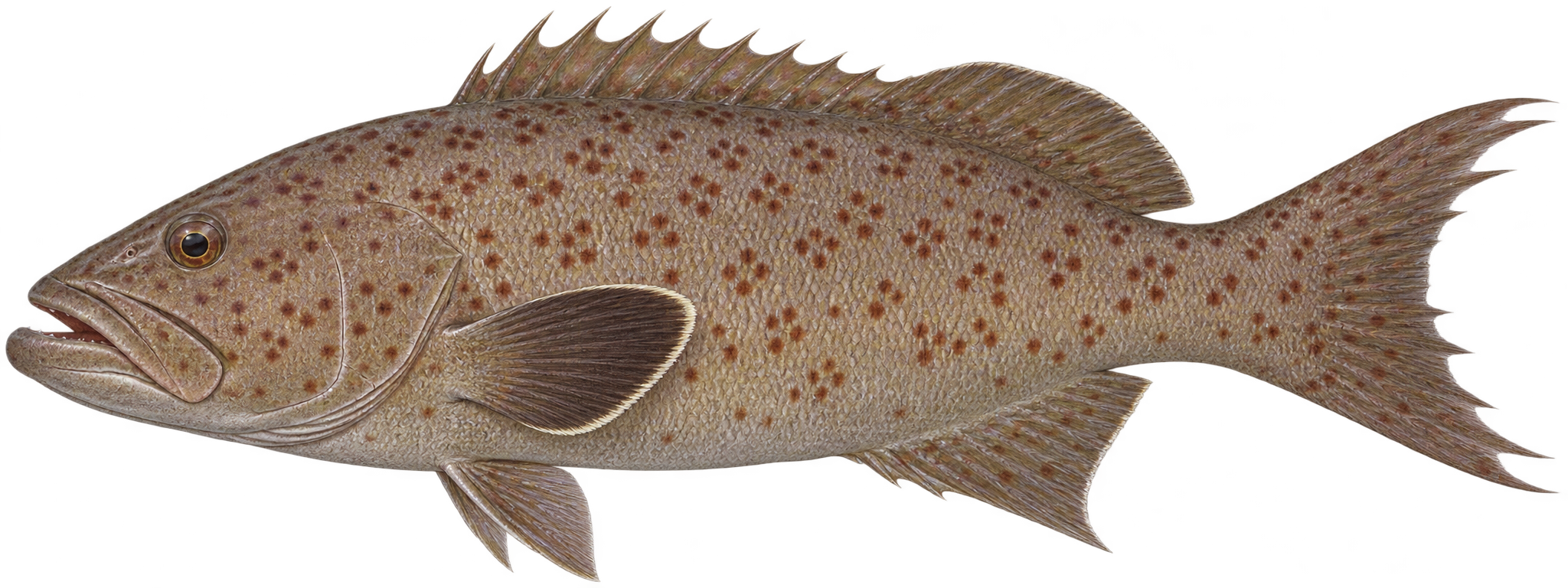
Size: Reported maximum 107 cm (about 42 in).
Brown or gray grouper with reddish-brown spots or rosettes and extended upper/lower tail rays in adults.
Read the guide’s location, season and eating cautions before acting.
Schoolmaster
Streamlined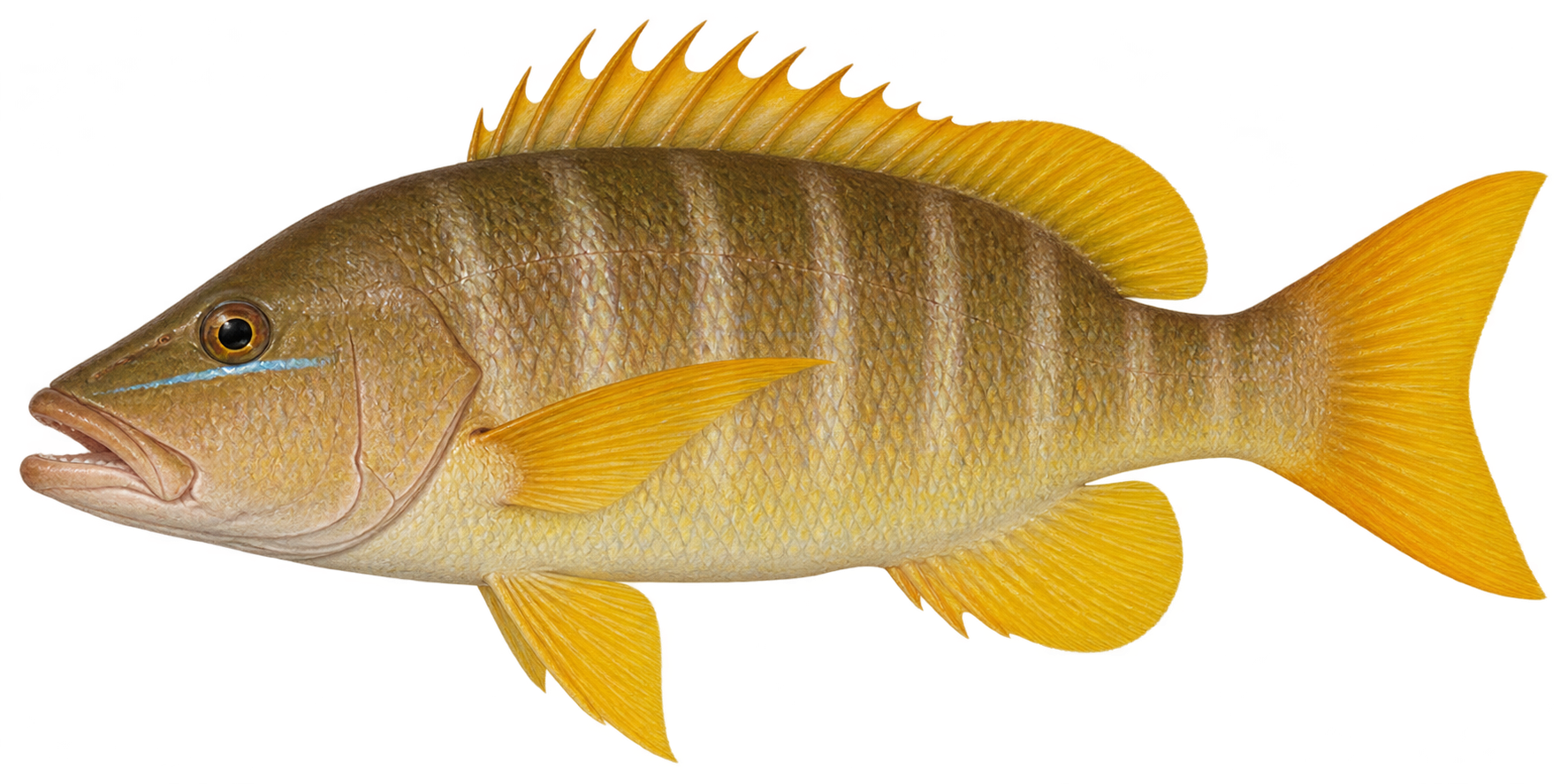
Size: Often around 14 inches; larger individuals can exceed 2 feet.
Yellow fins, olive-brown body and pale vertical bars that can fade in large adults.
Regulated recreational harvest; restrictions apply
Explore the schoolmaster guide →Scrawled Cowfish
Deep-bodied & oval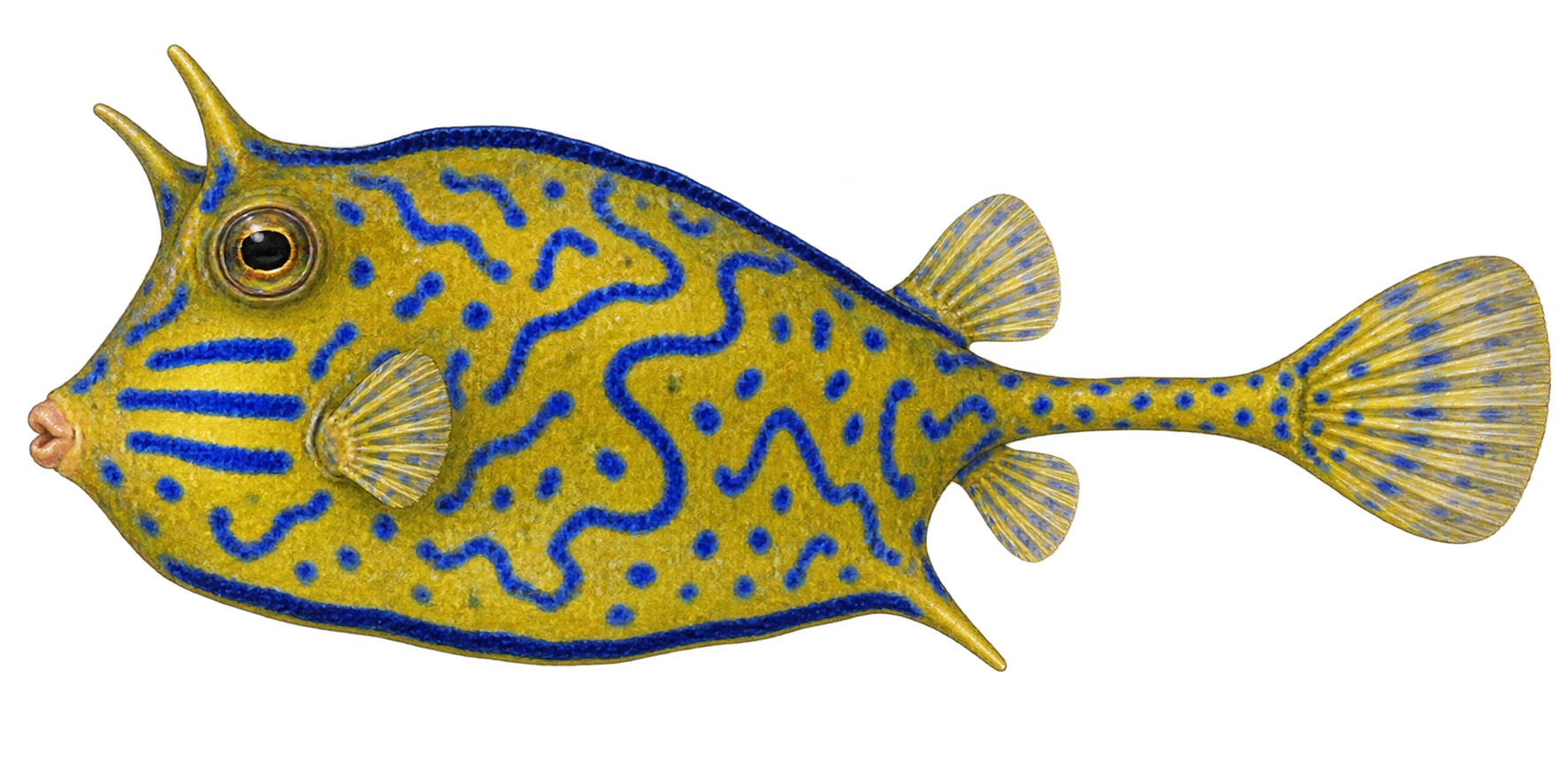
Size: Often about 8 inches; maximum about 22 inches (55 cm) total length.
Eye horns, rear corner spines, blue cheek stripes and irregular blue body scribbles.
Restricted marine life: live collection only; no spearing
Explore the scrawled cowfish guide →Scrawled Filefish
Deep-bodied & oval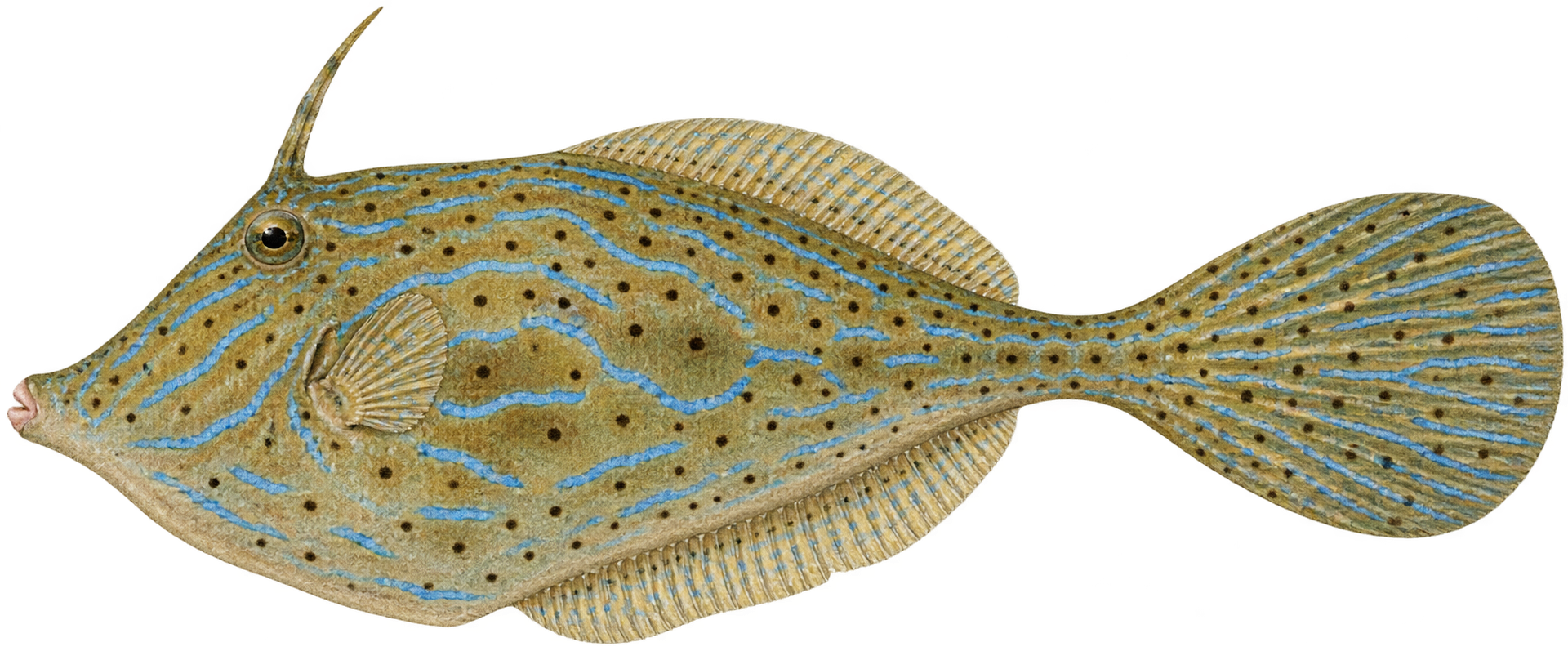
Size: Often about 22 inches; maximum about 43 inches (110 cm) total length.
Long flattened body, blue scribbles, narrow dorsal spine and very long rounded tail.
Restricted marine life: live collection only; no spearing
Explore the scrawled filefish guide →Sea Bream
Shape not assigned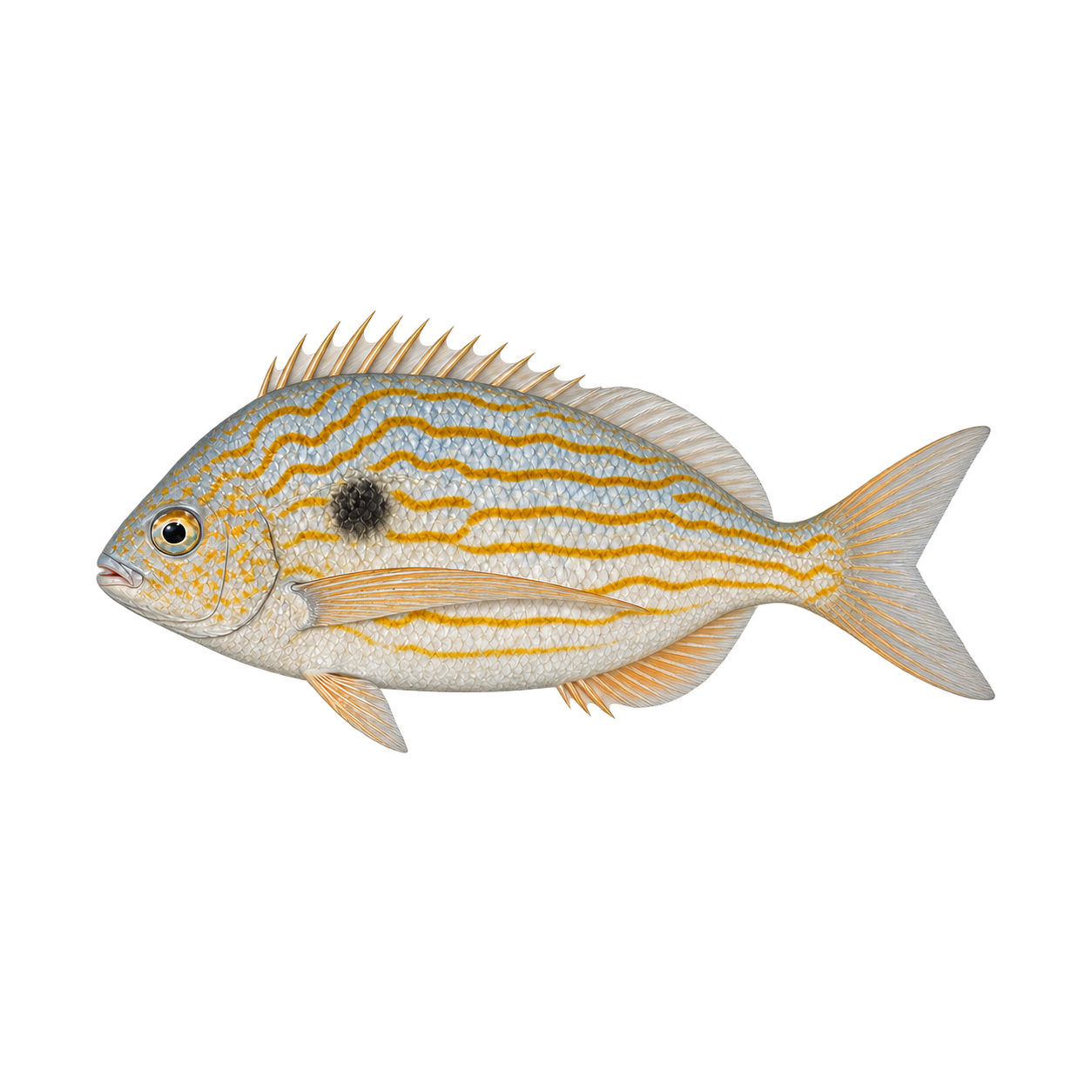
Size: Smithsonian reports a maximum of 33 cm. The entry does not explicitly identify total, fork or standard length for this maximum. The accessed account gives no separate juvenile measurement series.
An oval silver fish with a humped back, golden side stripes and a strong dark shoulder patch above the pectoral fin. The head is small and pointed.
Read the guide’s location, season and eating cautions before acting.
Seaweed Blenny
Streamlined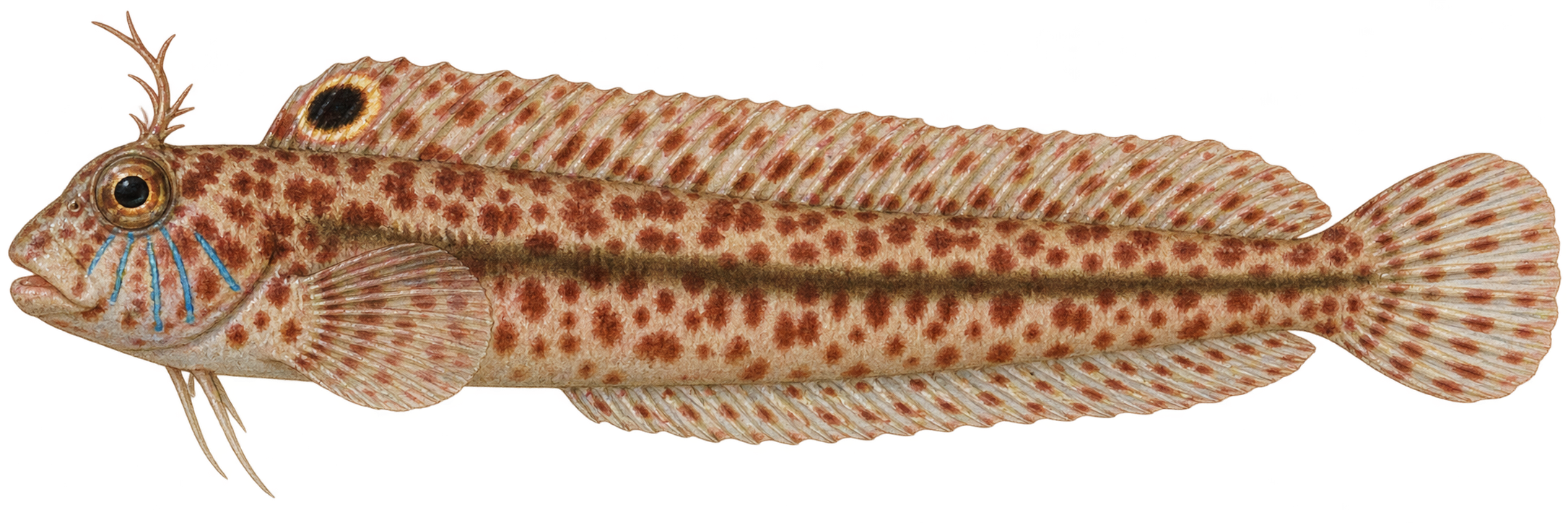
Size: Maximum about 10.8 cm (4.3 inches).
Look for a blenny with a long, branched cirrus above each eye, delicate blue lines descending from the eye, and an eyespot near the front of the long dorsal fin.
Restricted marine life: live collection only; no spearing
Explore the seaweed blenny guide →Seminole Goby
Shape not assigned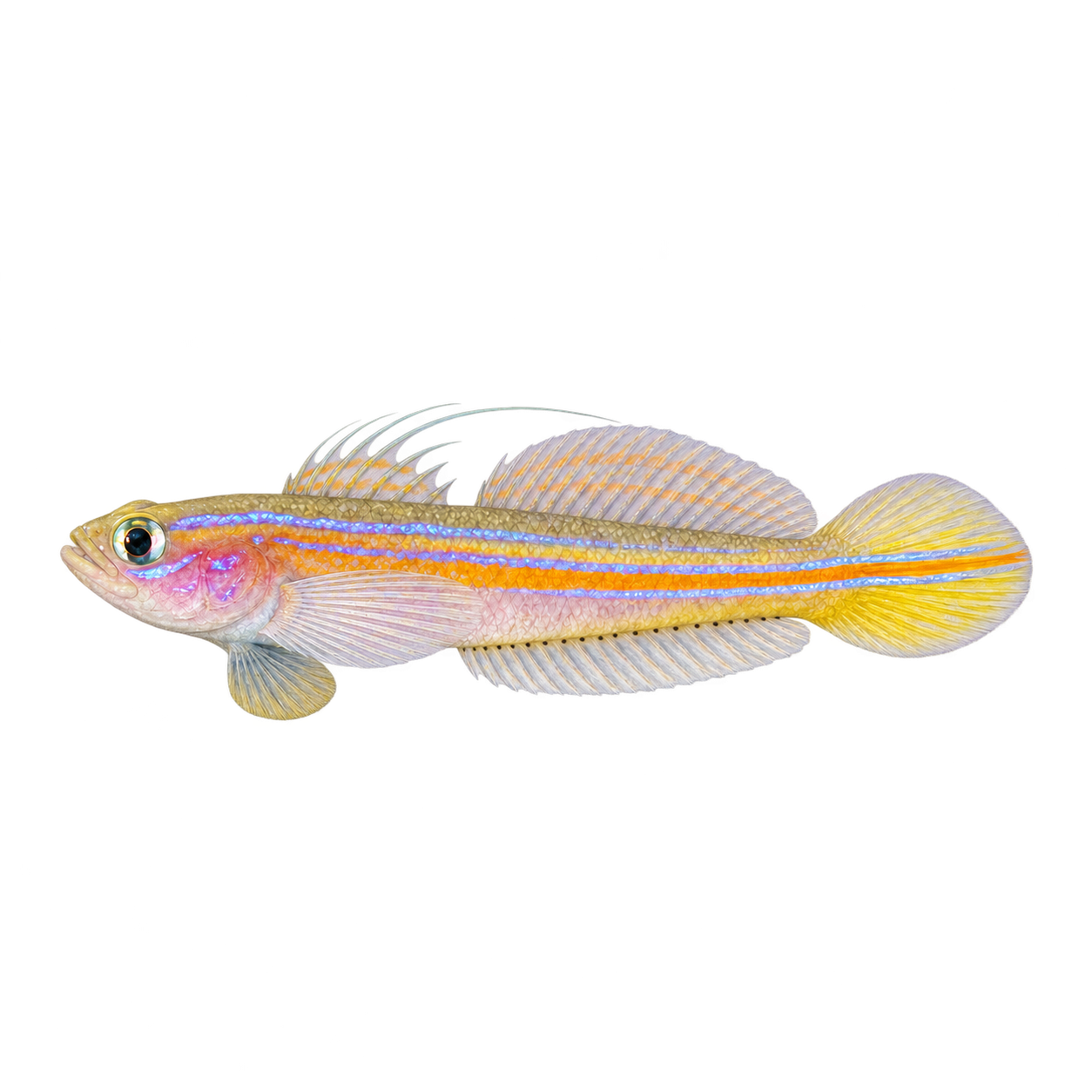
Size: Smithsonian reports a maximum of 7.5 cm. The entry does not explicitly identify total, fork or standard length for this maximum. Both sexes carry extended dorsal spines; males have a slightly larger upper jaw.
A slender pale goby with an orange-yellow middle stripe bordered blue, additional fine upper stripes and long dorsal filaments. Blue markings also decorate the cheek and eye area.
Read the guide’s location, season and eating cautions before acting.
Sergeant Major
Deep-bodied & oval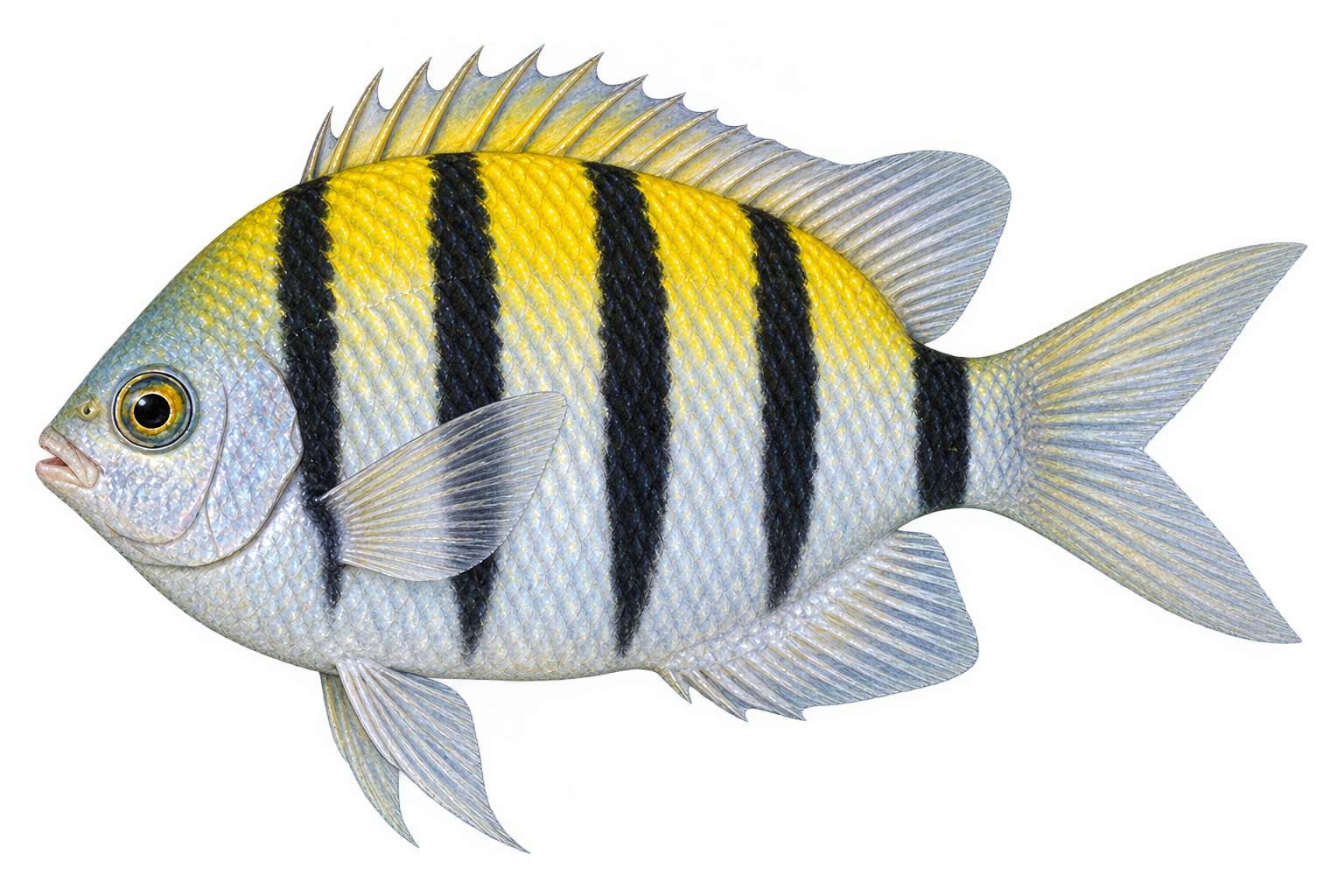
Size: Reported maximum 23 cm.
Five strong dark vertical bars; pale body with yellow upper back.
Restricted marine life: live collection only; no spearing
Explore the sergeant major guide →Sharksucker
Long & eel-like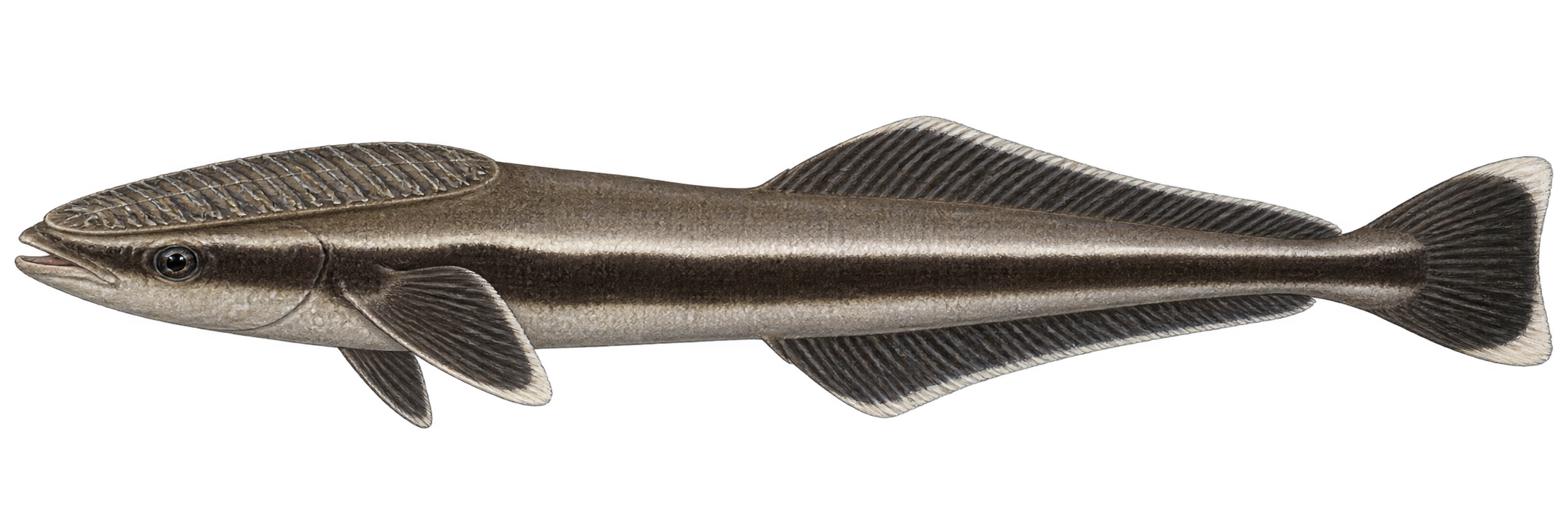
Size: Can reach about 43 inches.
Long slim remora with a striped body and oval suction disc on top of its head.
General Florida harvest rules; local restrictions apply
Explore the sharksucker guide →Sharpnose Puffer
Deep-bodied & oval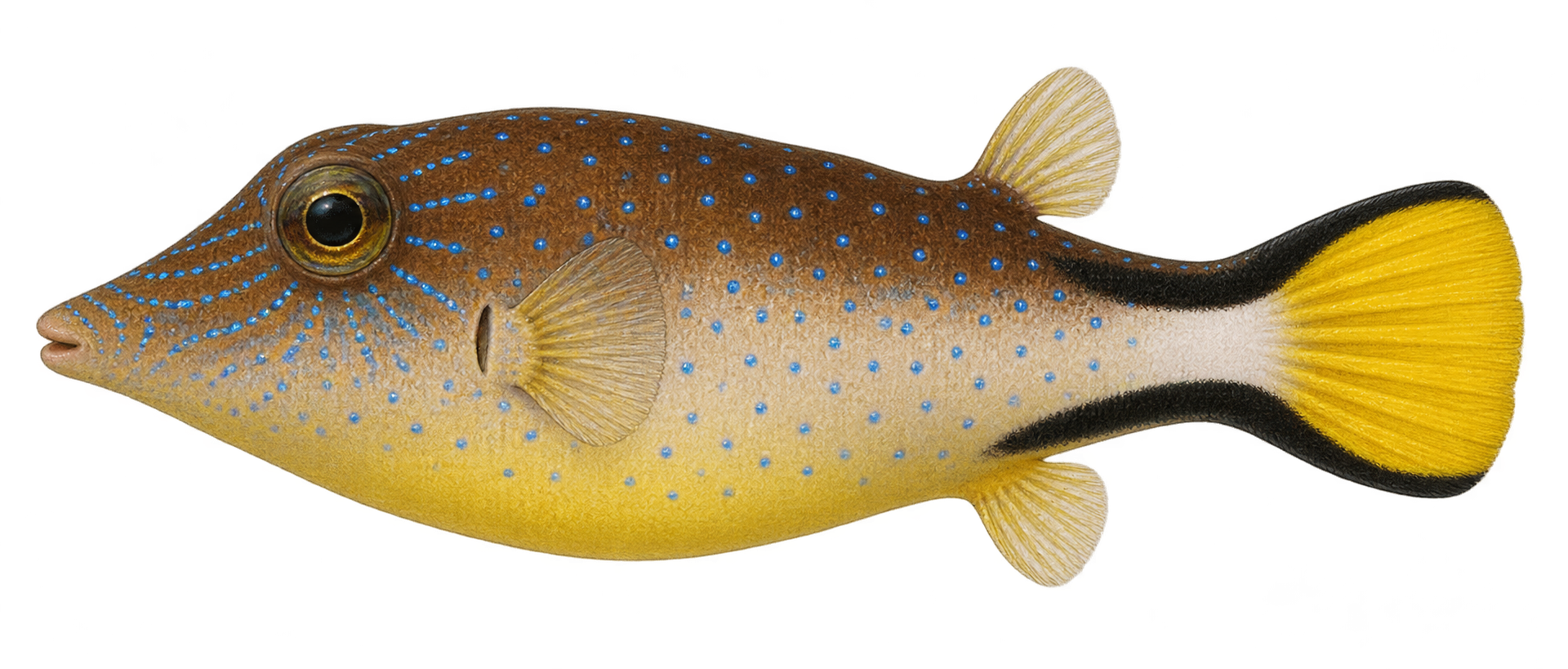
Size: Typically illustrated at 5–10 cm; reported maximum 12 cm.
Pointed snout, blue spots and facial lines, and a yellow tail with broad black upper and lower borders.
Read the guide’s location, season and eating cautions before acting.
Sharptail Eel
Long & eel-like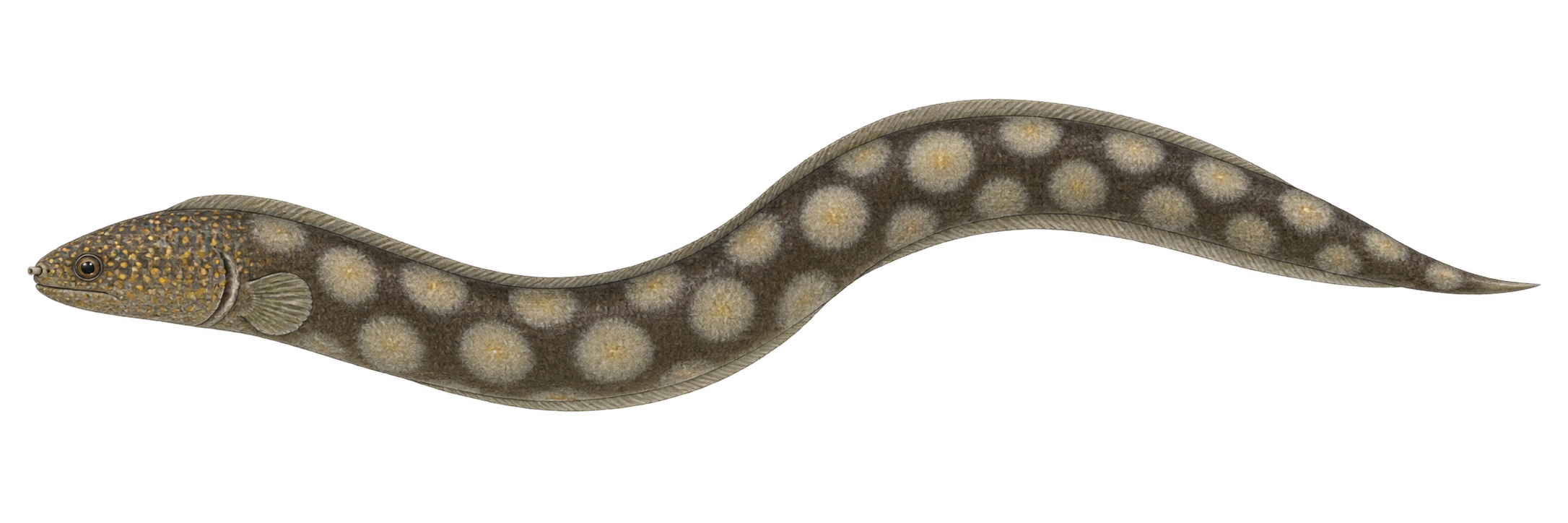
Size: Maximum about 40 inches (102 cm) total length.
Large pale round body spots, smaller yellow head spots, small pectoral fins and hard finless tail tip.
Restricted marine life: live collection only; no spearing
Explore the sharptail eel guide →Sheepshead
Deep-bodied & oval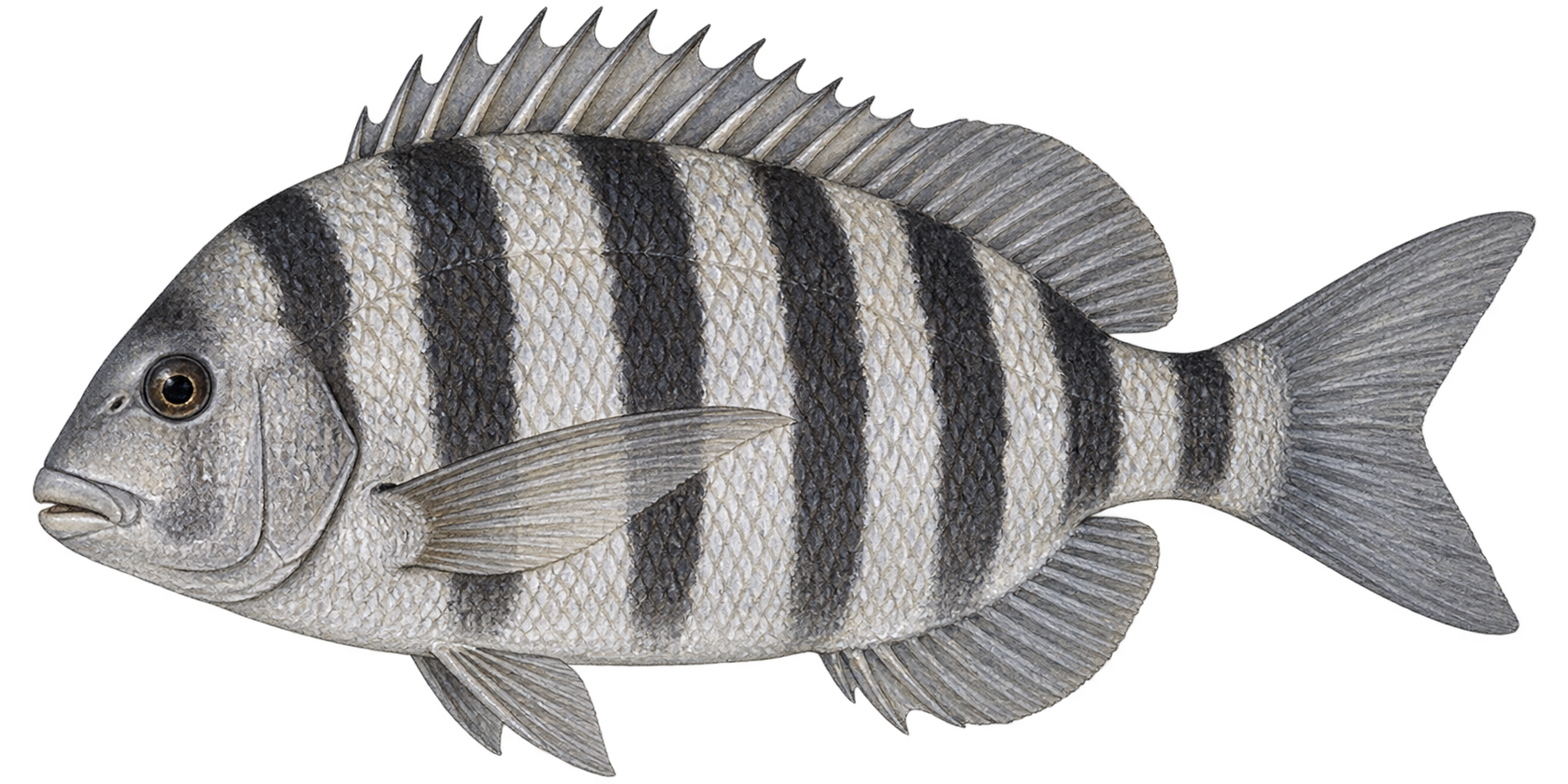
Size: Often 14–18 inches; published maximum about 30 inches (76 cm) total length.
Five or six dark vertical bars on a deep silver body; blunt head without chin barbels.
Regulated food fish: year-round with size, bag and spring vessel limits
Explore the sheepshead guide →Sheepshead Porgy
Deep-bodied & oval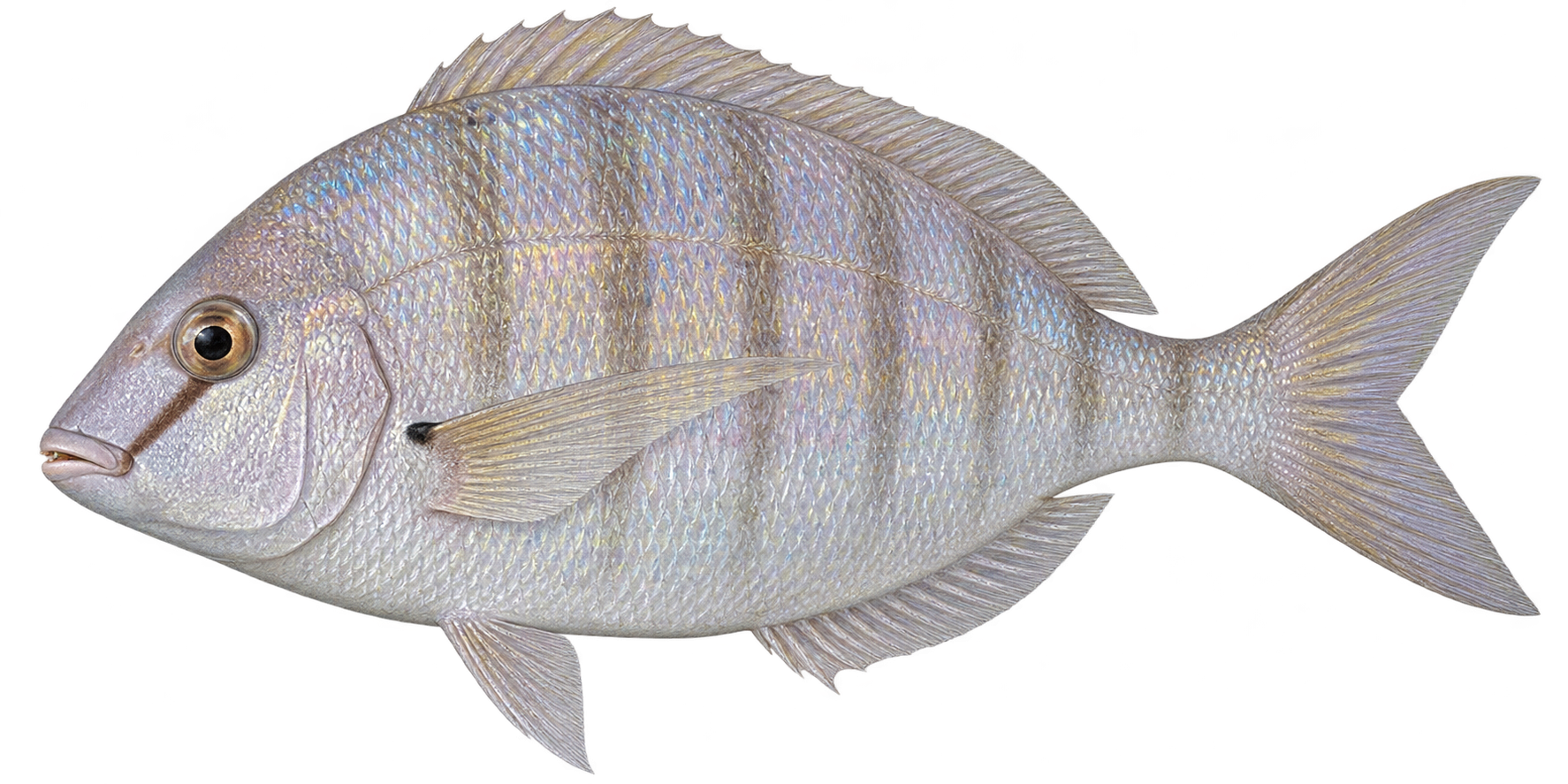
Size: Reported maximum about 46 cm; see profile for life-stage and measurement notes.
Silver porgy with a dark bar below the eye and a tiny black spot at the upper pectoral base.
Read the guide’s location, season and eating cautions before acting.
Shortfin Pipefish
Elongated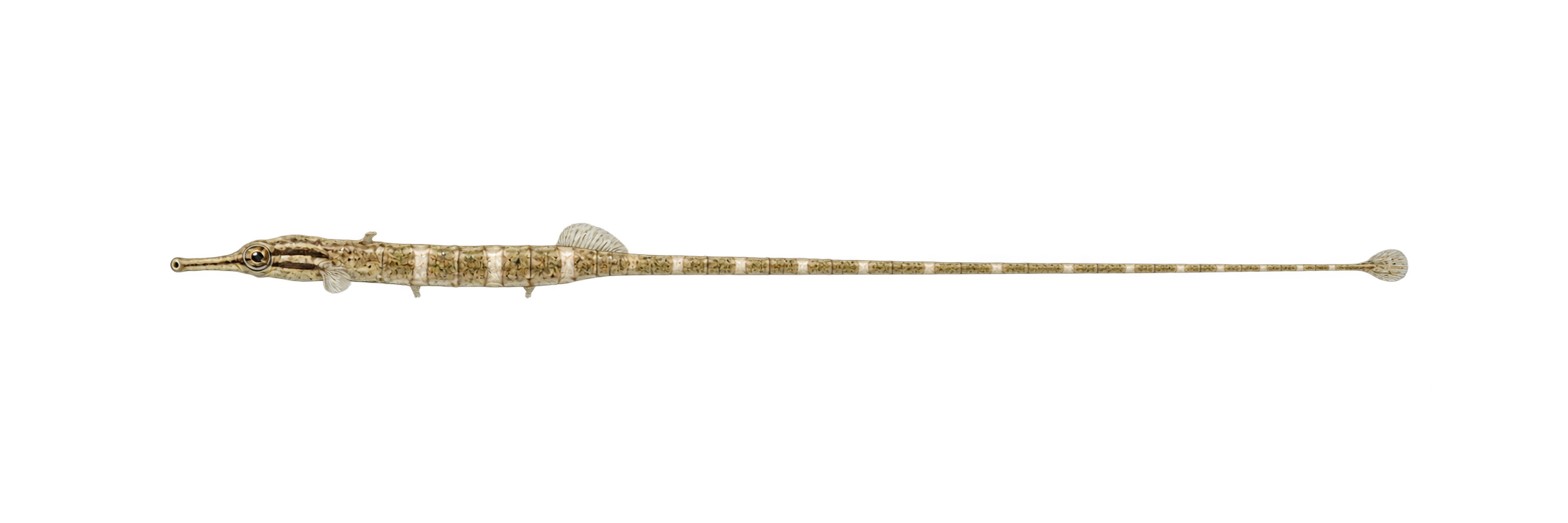
Size: Smithsonian reports a maximum of 17 cm, not a typical local encounter size.
Slender, ringed pipefish with a long narrow snout, widely spaced pale body bars and two dark lines behind the eye.
Read the guide’s location, season and eating cautions before acting.
Shortnose Batfish
Flattened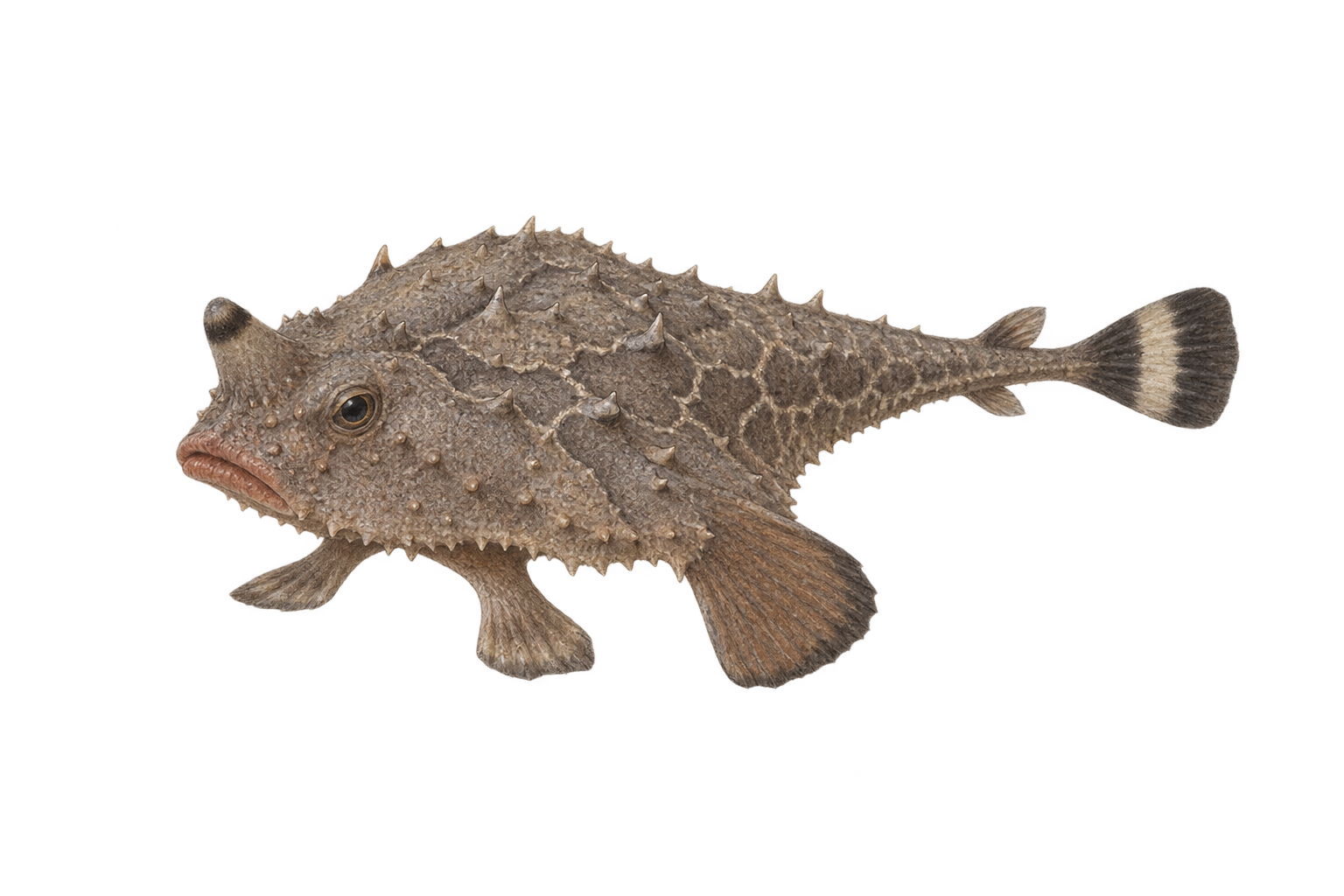
Size: Smithsonian reports a maximum of 38 cm, not a typical local encounter size.
Flattened triangular body, variable snout horn, plain pectorals and a dark tail crossed by a broad pale band.
Read the guide’s location, season and eating cautions before acting.
Shy Hamlet
Shape not assigned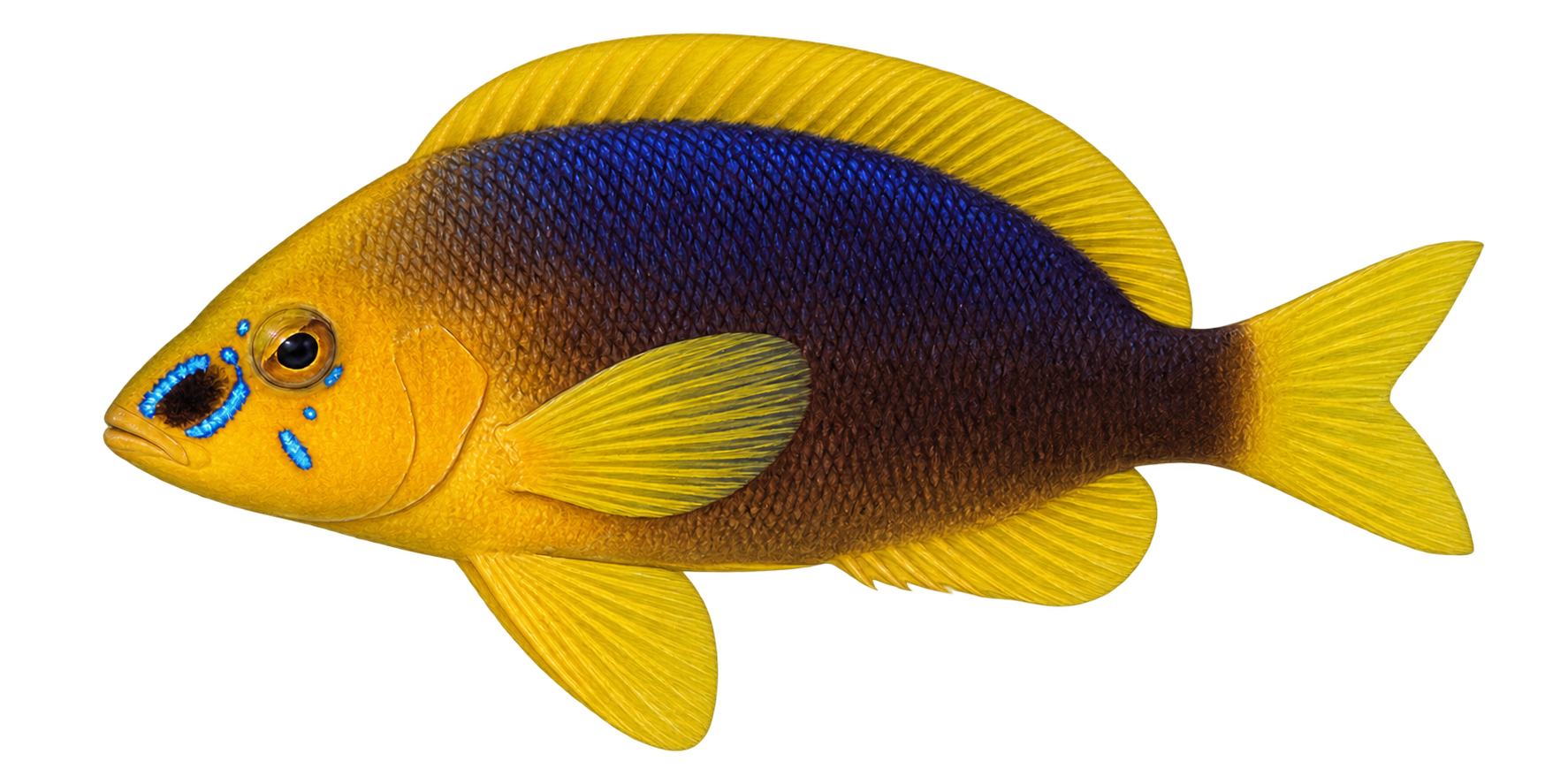
Size: The Smithsonian account reports 15 cm. It does not explicitly specify total, fork or standard length for this value; do not compare it directly with a length-labeled measurement.
A dark brown hamlet with yellow head and fins. A conspicuous black mark edged in blue sits on the side of the snout, with blue spots around the eye and cheek.
Read the guide’s location, season and eating cautions before acting.
Silver Jenny
Oval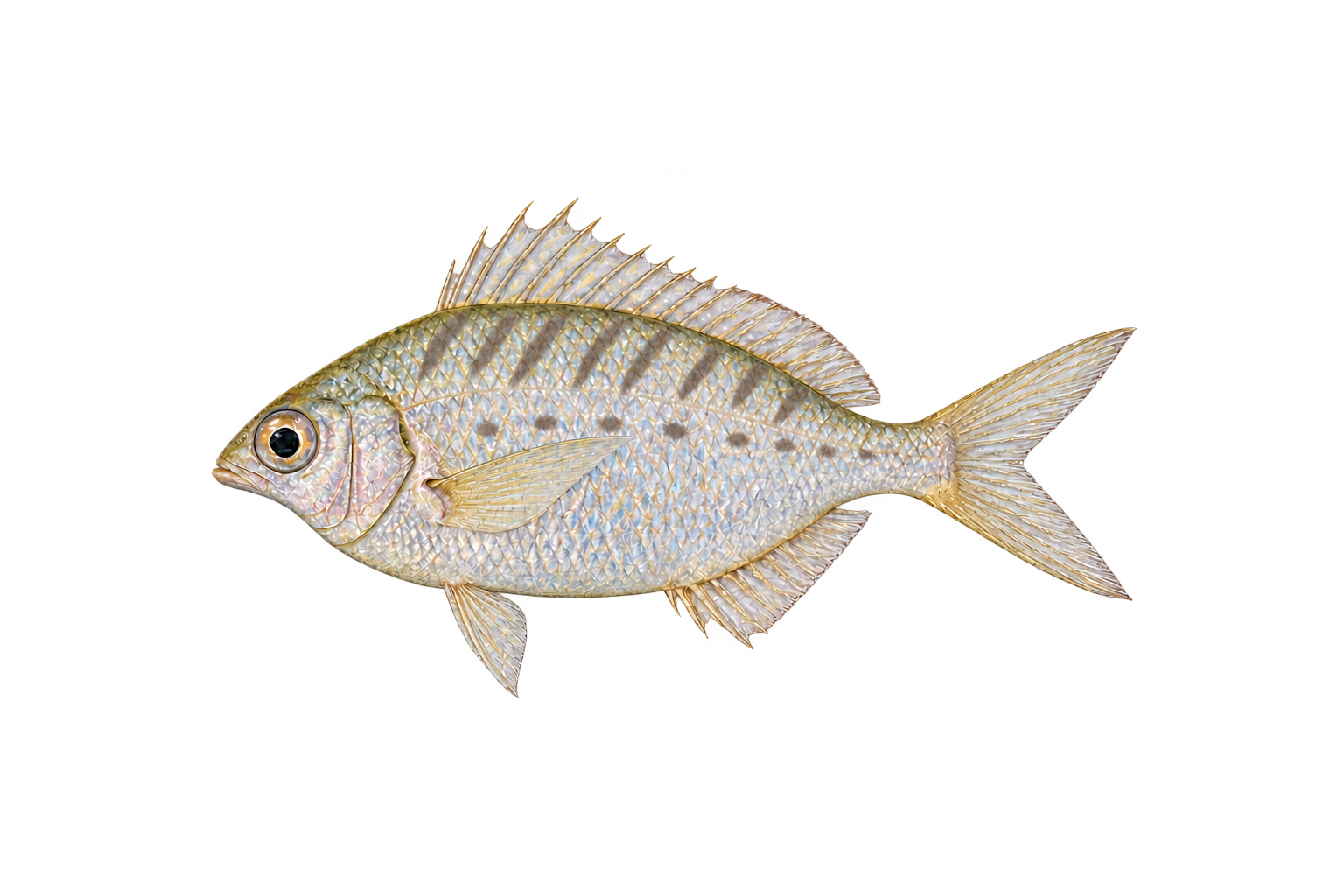
Size: Smithsonian reports a maximum length of 22.7 cm. This is a regional upper record, not a typical local encounter size.
Silvery and deep-bodied, with bluish reflections, dark side spots and oblique upper-body bars. The spiny dorsal is only lightly dusky.
Read the guide’s location, season and eating cautions before acting.
Silver Porgy
Deep-bodied & oval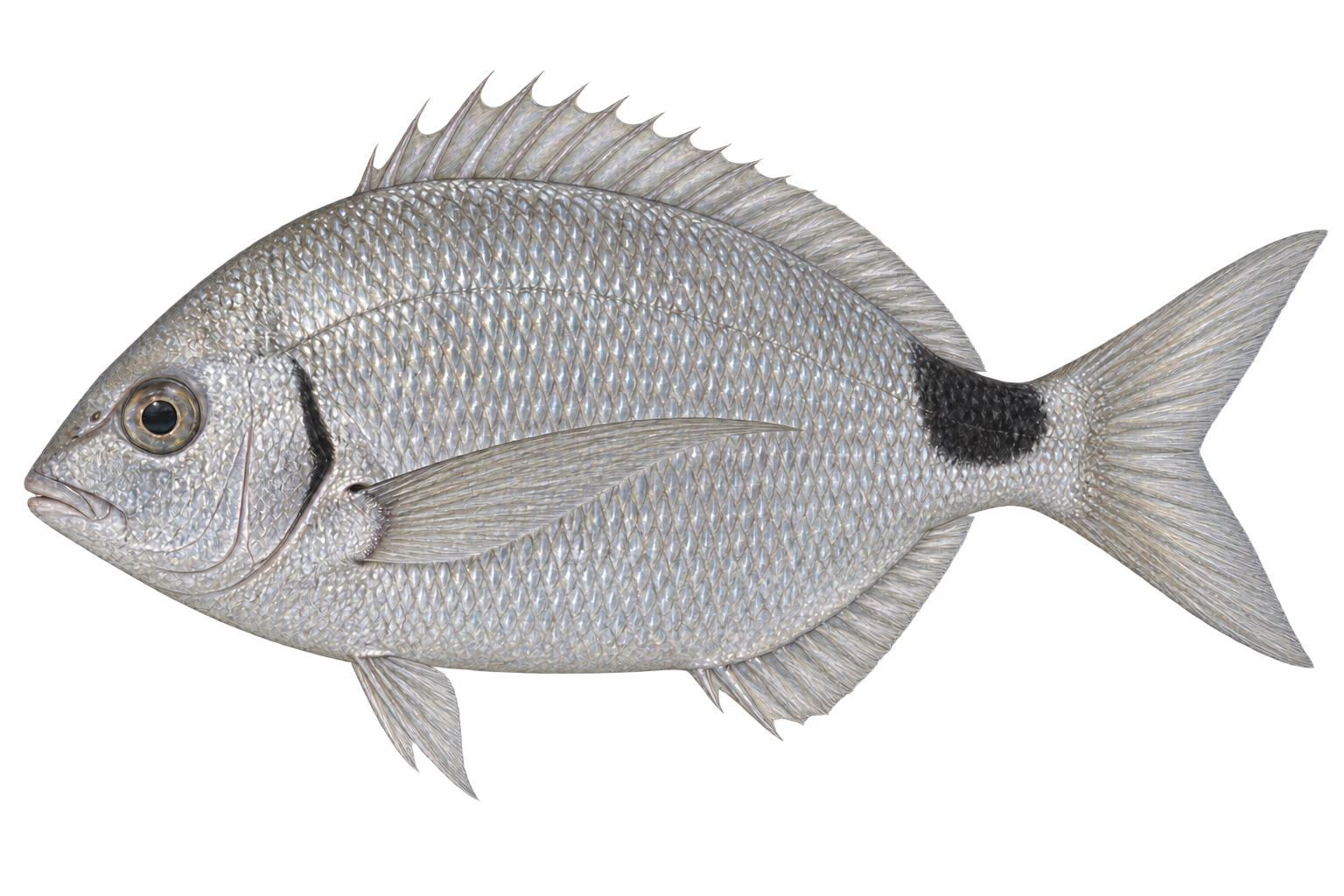
Size: Reported maximum 30 cm.
Deep silver body and a dark tail-base blotch concentrated above the lateral line; smaller fish can show faint bars.
Read the guide’s location, season and eating cautions before acting.
Slender Filefish
Shape not assigned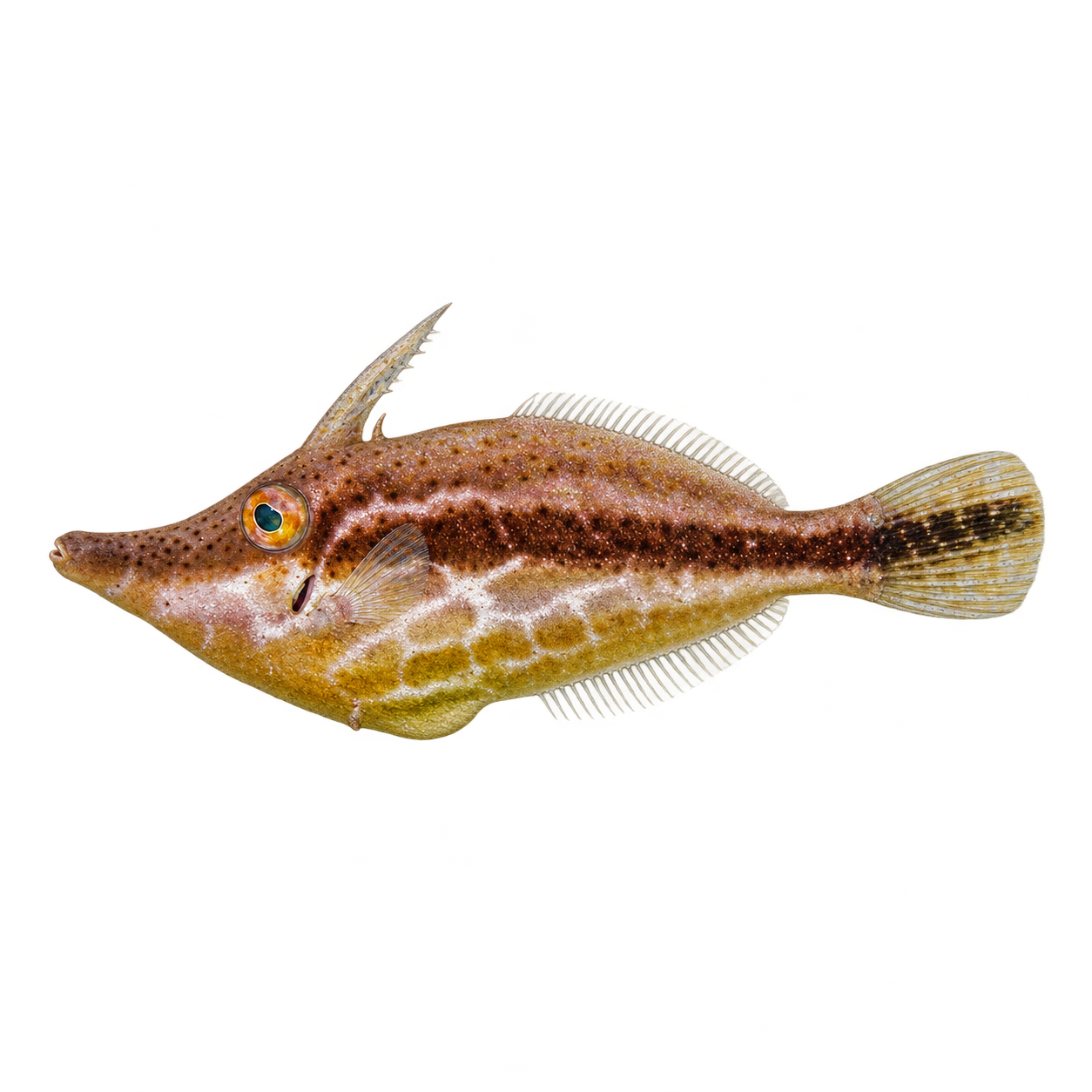
Size: Smithsonian reports a maximum of 9 cm. The entry does not explicitly identify total, fork or standard length for this maximum. Large males develop bristles around curved spiny scales at the tail base.
A narrow, flattened filefish with an upturned snout and variable brown to reddish coloration. It may show a dark stripe behind the eye and fine pale network markings.
Read the guide’s location, season and eating cautions before acting.
Slippery Dick
Streamlined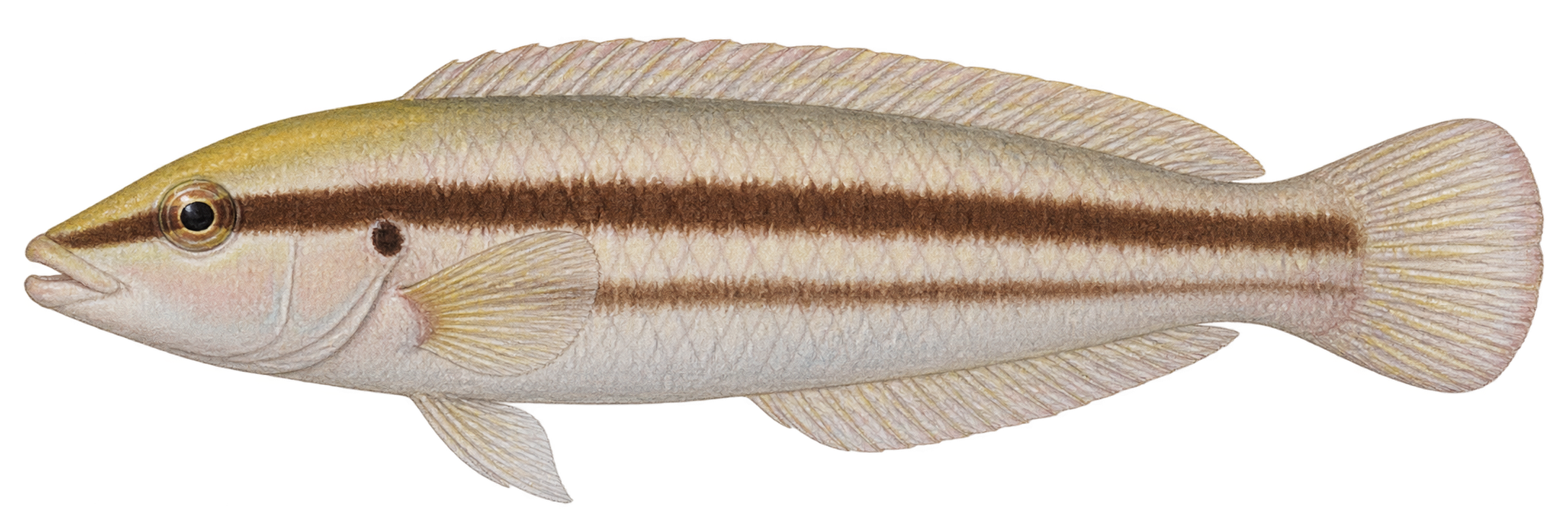
Size: Maximum about 14 inches (35 cm) total length.
Initial phase has two dark lengthwise stripes; terminal fish become green and pink.
Restricted marine life: live collection only; no spearing
Explore the slippery dick guide →Smallmouth Grunt
Streamlined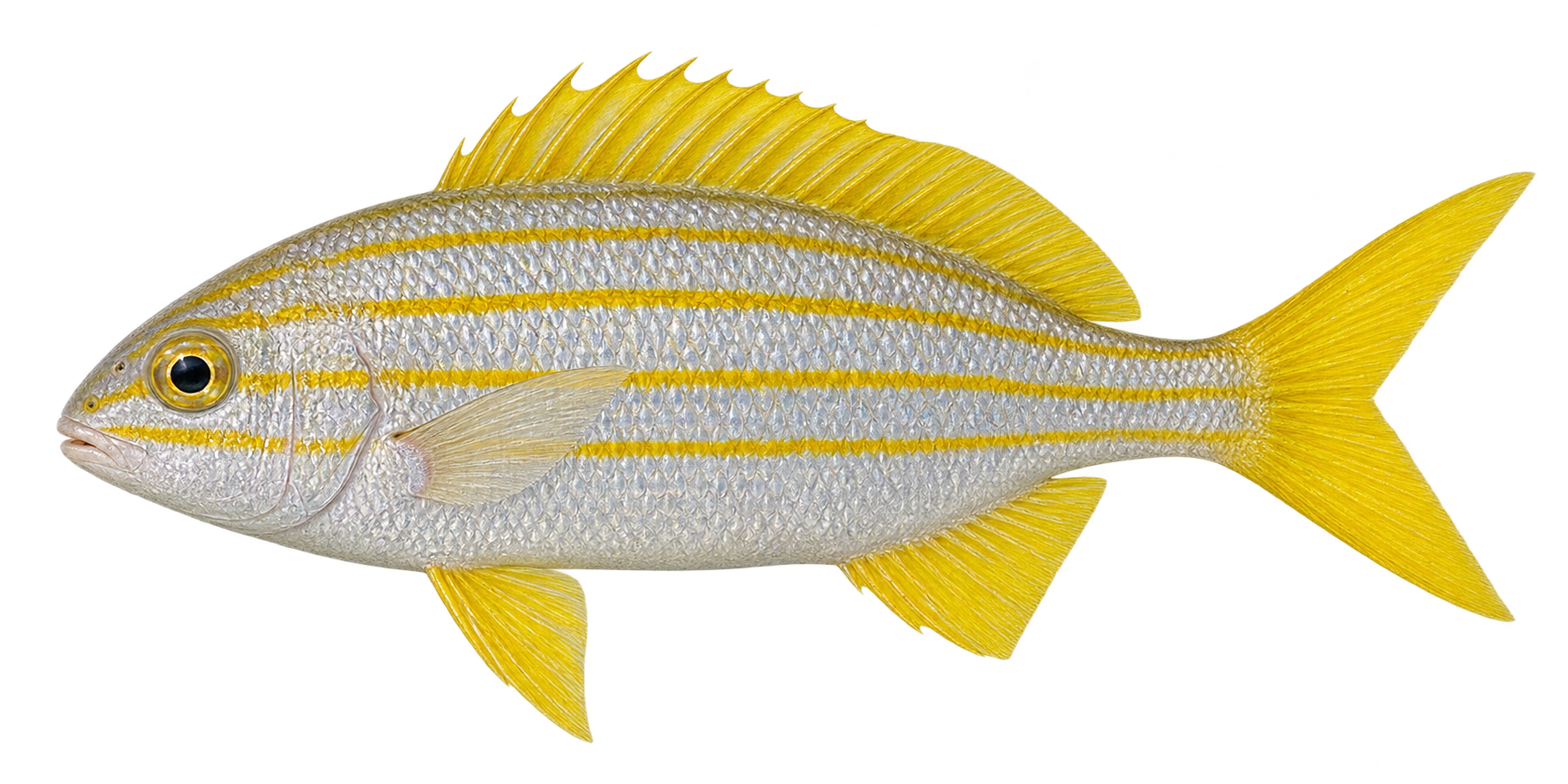
Size: Up to about 9 inches (23 cm) total length.
Five or six straight yellow stripes, slender silver body and yellow tail.
Harvest may be allowed; limits and site restrictions apply
Explore the smallmouth grunt guide →Smooth Trunkfish
Deep-bodied & oval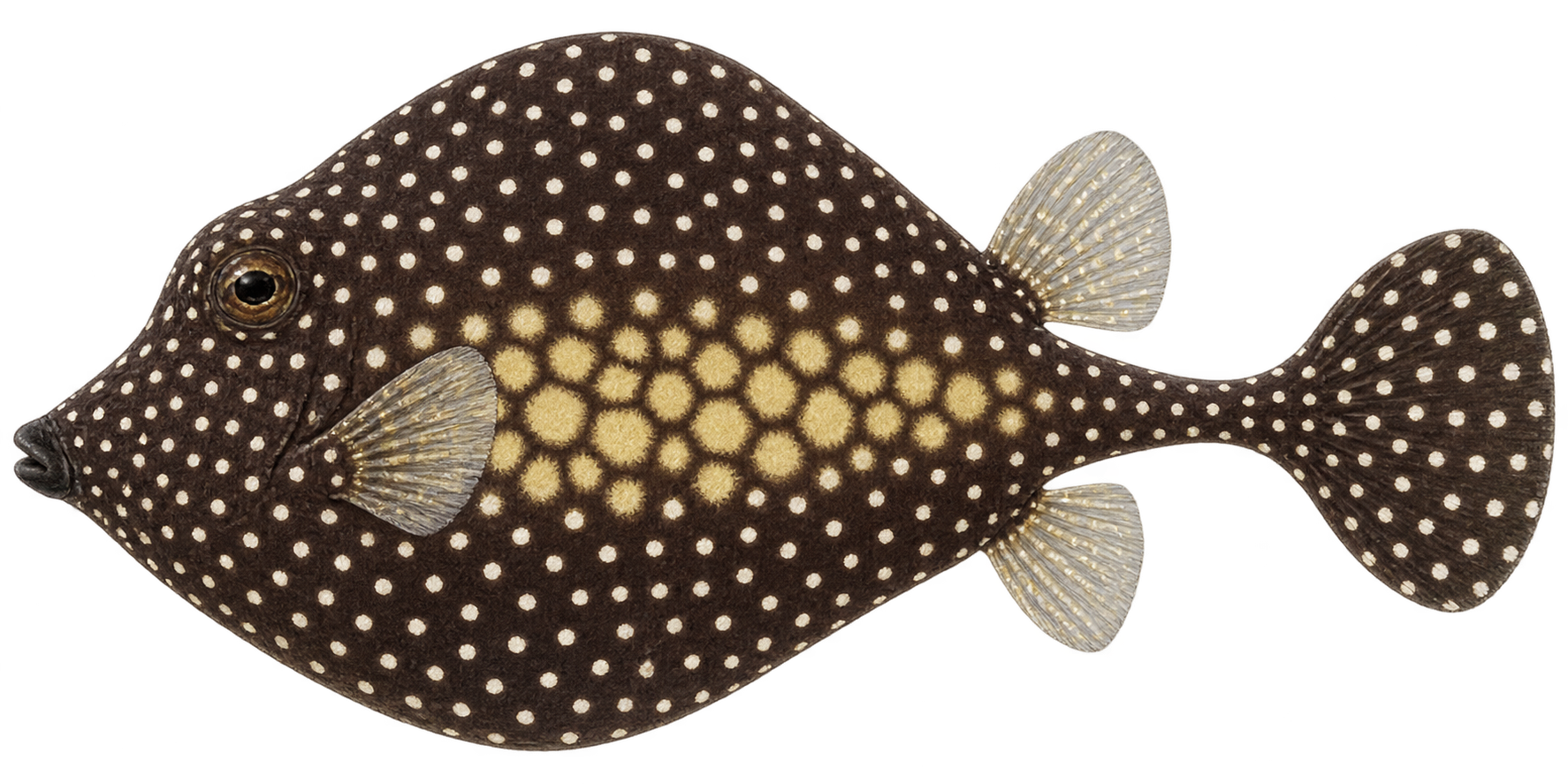
Size: Smithsonian guide reports up to about 12 inches (30 cm) total length.
Dark armored body with pale spots and blackish lips; no horns or rear corner spines.
Restricted marine life: live collection only; no spearing
Explore the smooth trunkfish guide →Southern Puffer
Shape not assigned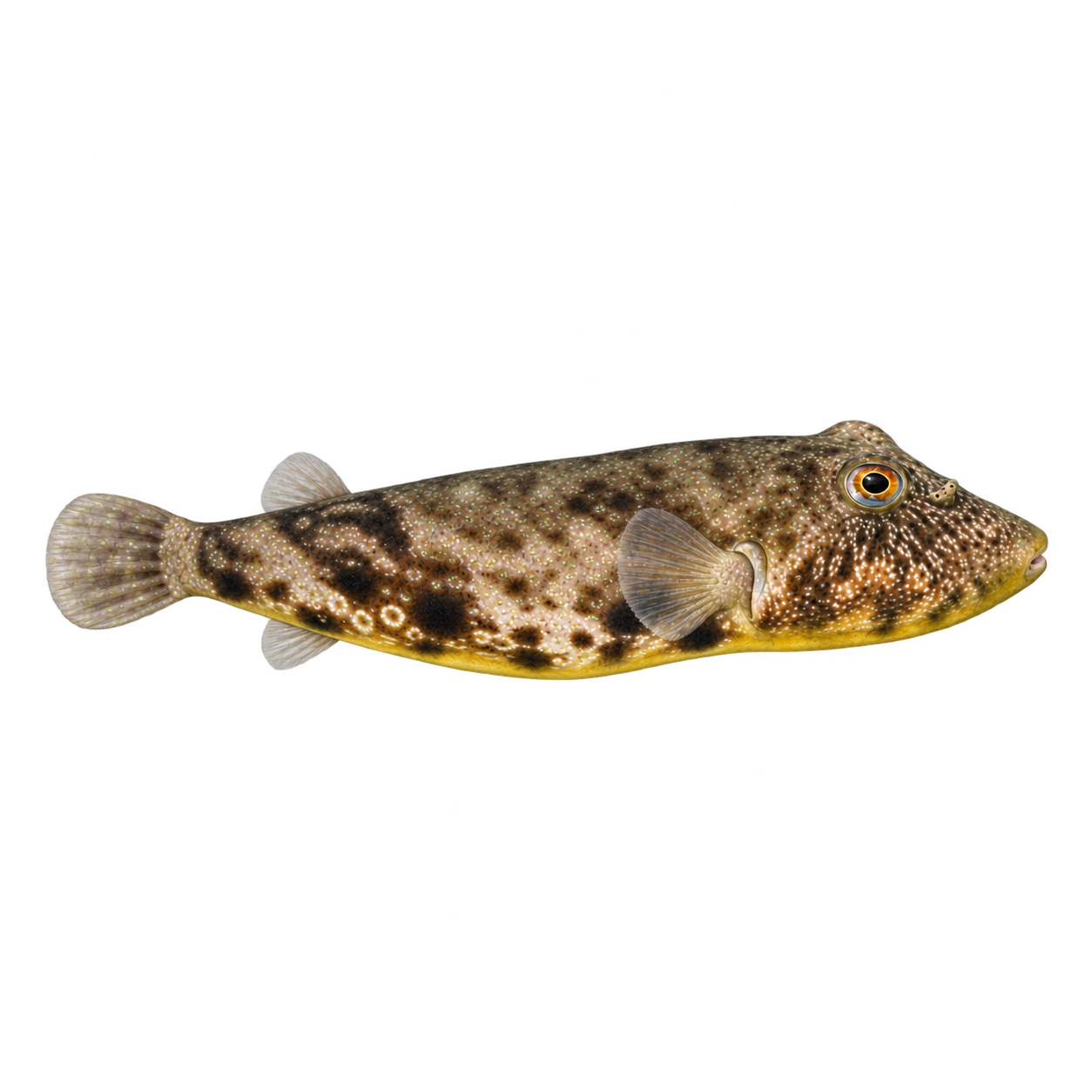
Size: Smithsonian reports a maximum of 26 cm. The entry does not explicitly identify total, fork or standard length for this maximum. Breeding males may develop tiny orange or red spots; this is not a universal adult color.
A blunt puffer with dark rounded flank spots and small pale rosettes over a brown back. It lacks the skin flaps seen on some similar puffers.
Read the guide’s location, season and eating cautions before acting.
Spanish Grunt
Streamlined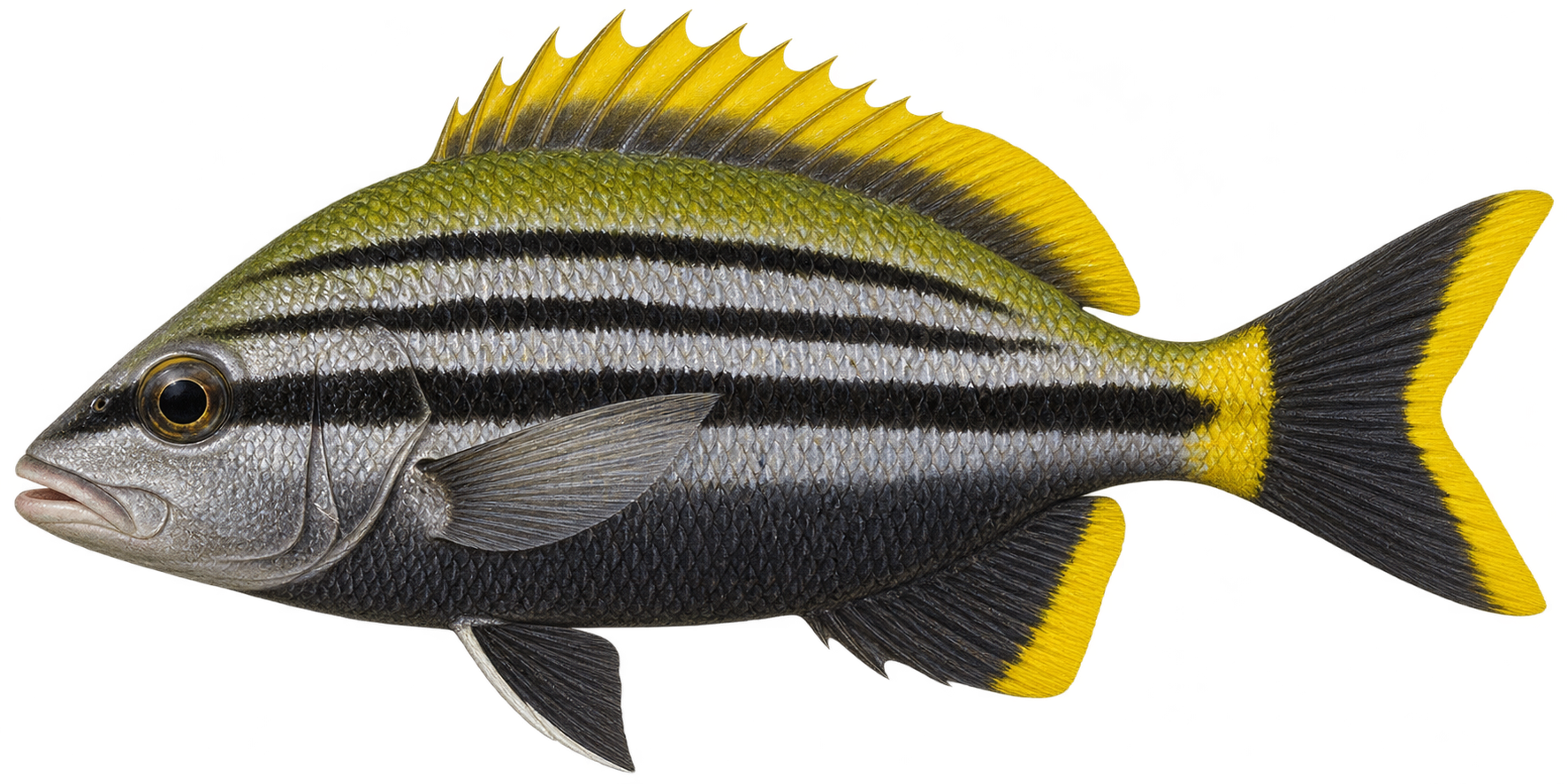
Size: Up to about 18 inches (45 cm) total length.
Black horizontal upper-body stripes, dark belly and yellow-edged dark fins.
Harvest may be allowed; limits and site restrictions apply
Explore the spanish grunt guide →Spanish Hogfish
Deep-bodied & oval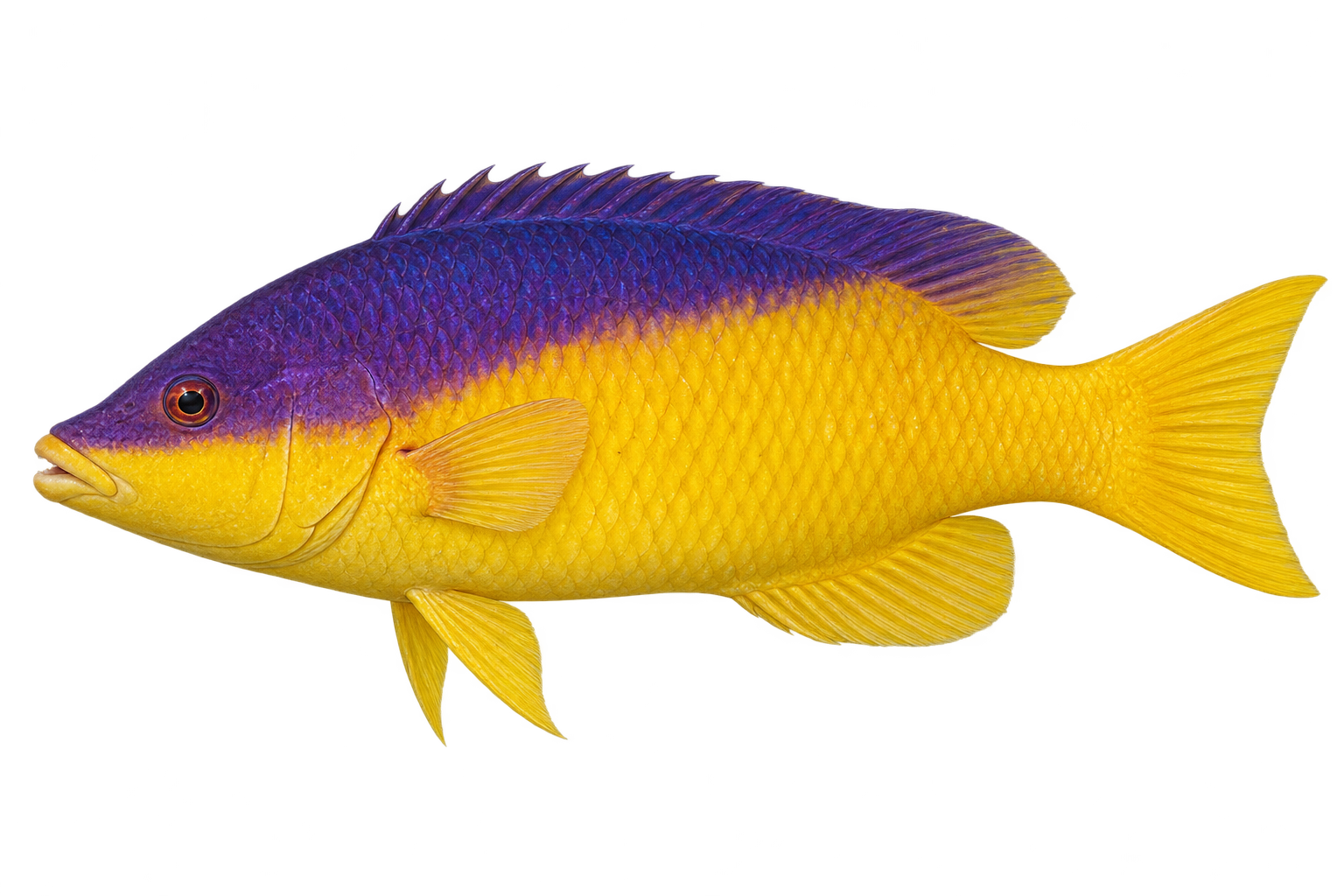
Size: Maximum about 50 cm.
Yellow wrasse with purple-blue upper front body; no long dorsal streamers.
Restricted marine life: live collection only; no spearing
Explore the spanish hogfish guide →Spanish Mackerel
Streamlined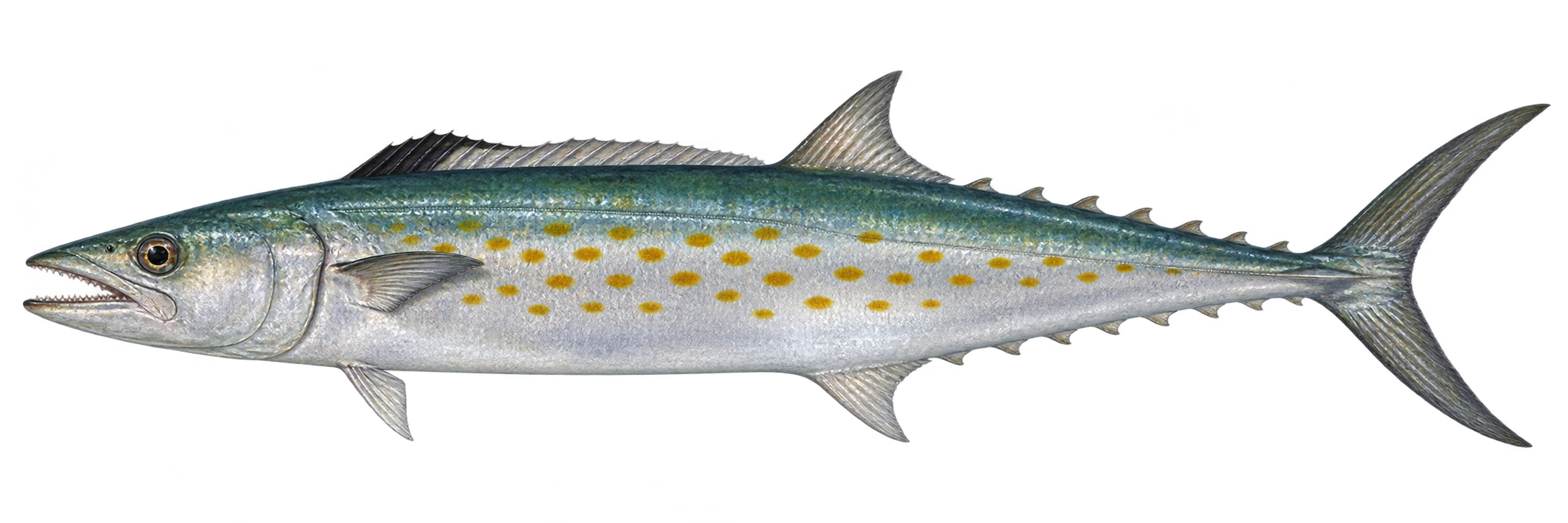
Size: Smithsonian reports 101 cm (39.8 inches); FWC summarizes a maximum of 36 inches. These differing summaries should not be treated as a precise typical local size. Browsing bands are approximate, not harvest limits.
A streamlined silver fish with a blue-green back, scattered golden spots and a dark front portion of the first dorsal fin. The lateral line descends gradually toward the deeply forked tail.
Read the guide’s location, season and eating cautions before acting.
Spanish Sardine
Streamlined
Size: Smithsonian reports a maximum of 35.5 cm. This is a source-specific upper length, not a typical local sighting size.
A slim, nearly cylindrical silver fish with a blue back, faint golden side stripe and usually a black upper gill-cover spot.
Read the guide’s location, season and eating cautions before acting.
Spotfin Butterflyfish
Deep-bodied & oval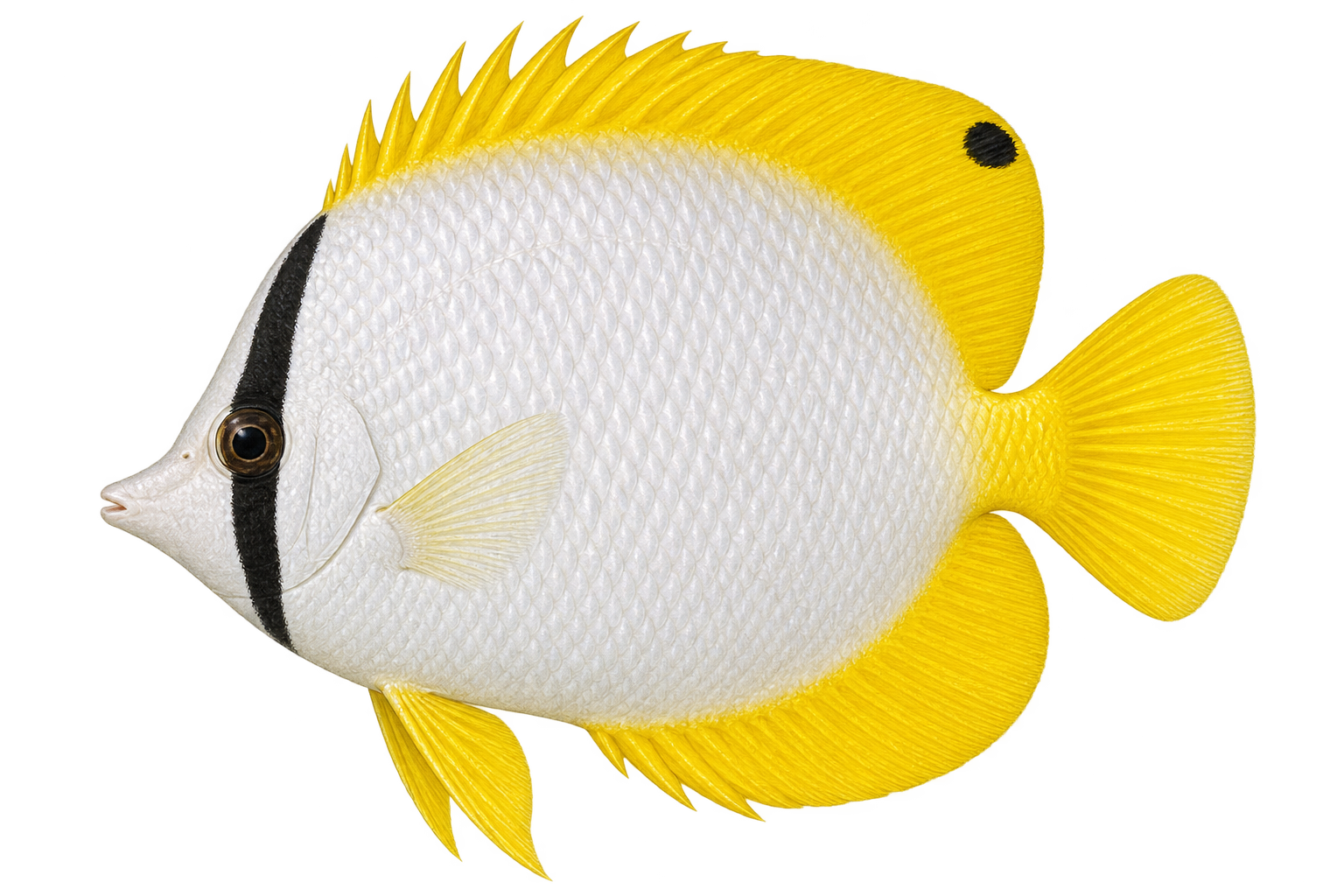
Size: Up to 20 cm; often about 8–15 cm.
A white body, yellow fins and a black eye bar make the adult Spotfin Butterflyfish easy to notice.
Restricted marine life: live collection only; spearing prohibited
Explore the spotfin butterflyfish guide →Spotfin Hogfish
Streamlined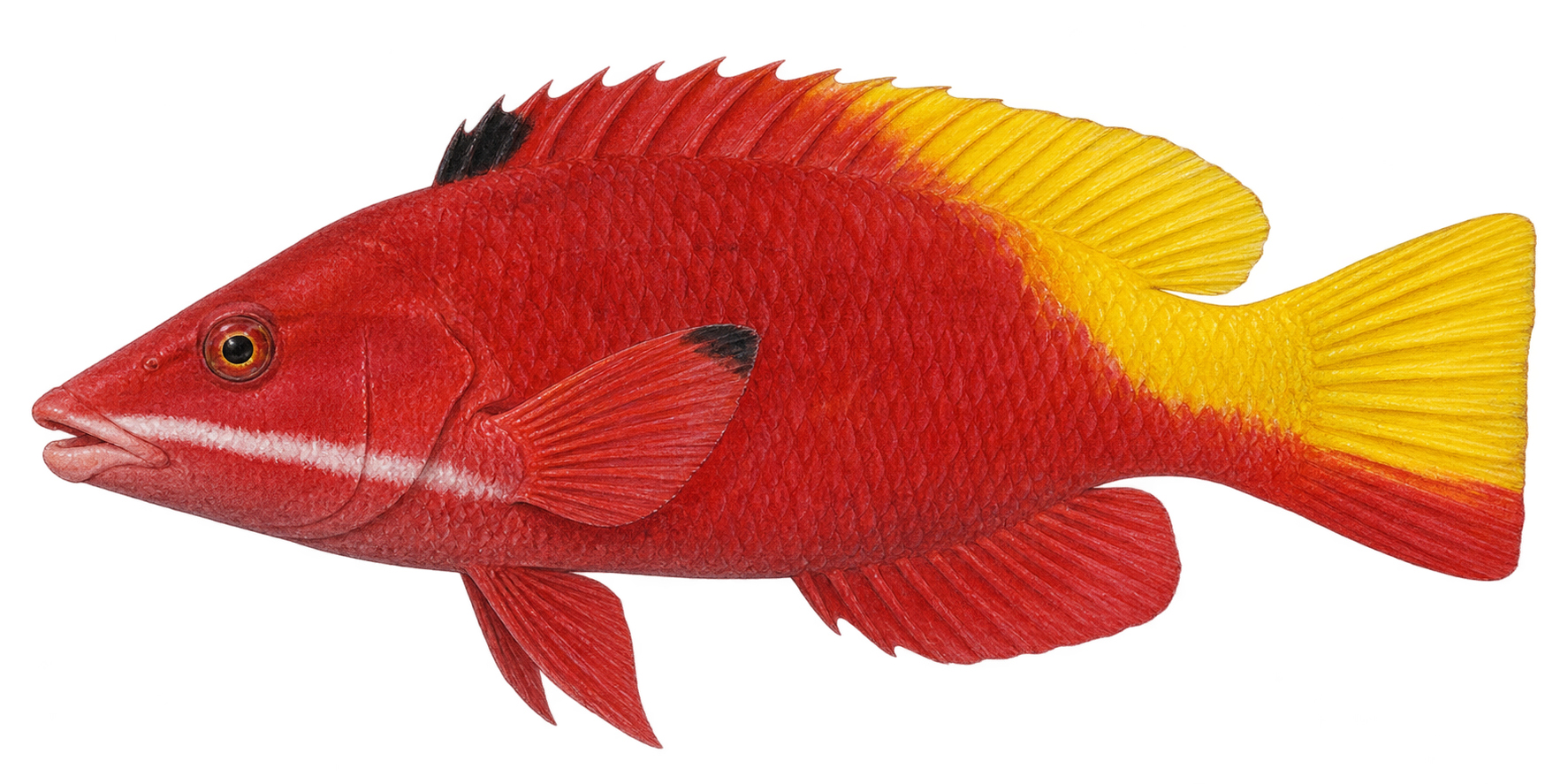
Size: Maximum about 11 inches (29 cm) total length.
Red adult with yellow rear dorsal and tail plus a black blotch at the front of the dorsal fin.
Restricted marine life: live collection only; no spearing
Explore the spotfin hogfish guide →Spotfin Jawfish
Shape not assigned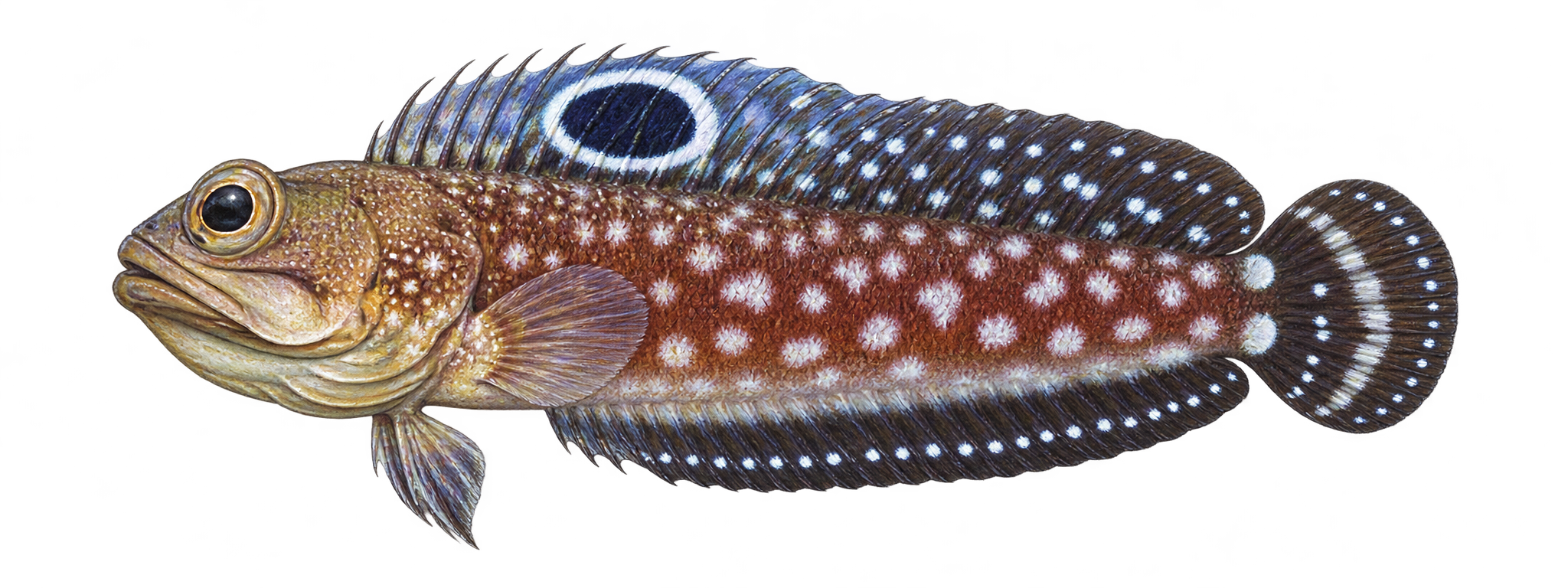
Size: The Smithsonian account reports 15.9 cm. It does not explicitly specify total, fork or standard length for this value; do not compare it directly with a length-labeled measurement.
A dark, white-speckled jawfish with a large white-ringed eyespot toward the front of its long dorsal fin. The head is broad and the mouth reaches behind the eye.
Read the guide’s location, season and eating cautions before acting.
Spottail Goby
Elongated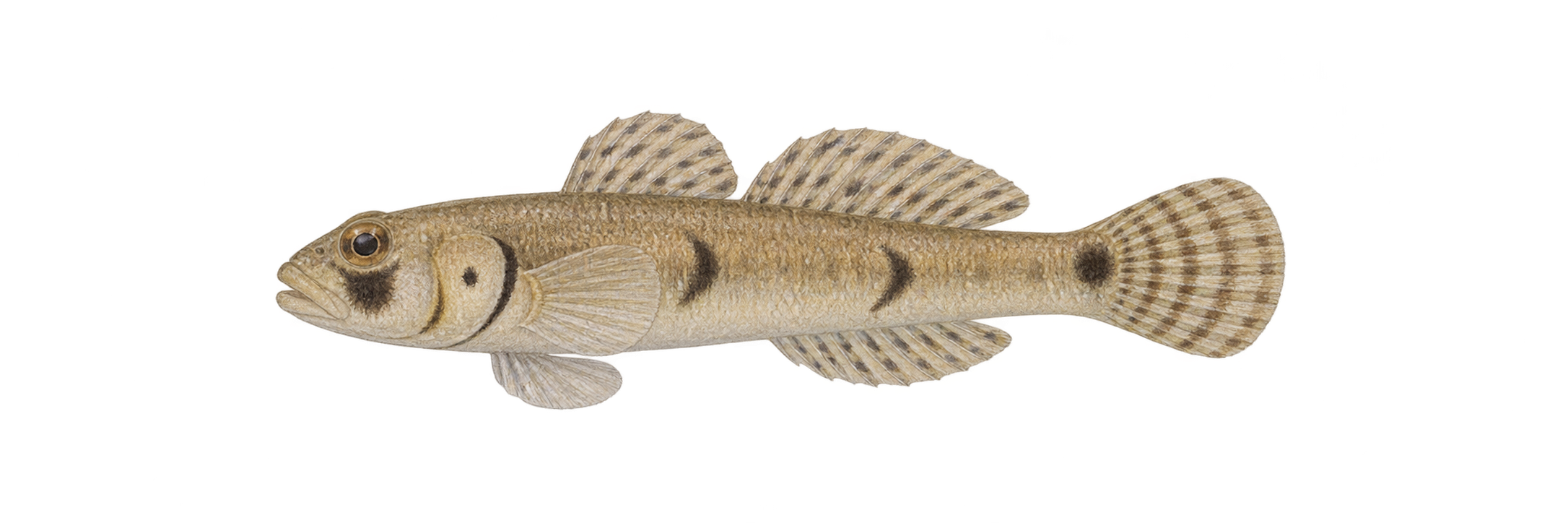
Size: Smithsonian reports a maximum length of 6.5 cm. This is a regional upper record, not a typical local encounter size.
Tan goby with dark comma-shaped side blotches, a dark tail-base spot and a barred tail. The preopercular edge is noticeably dark.
Read the guide’s location, season and eating cautions before acting.
Spottail Pinfish
Deep-bodied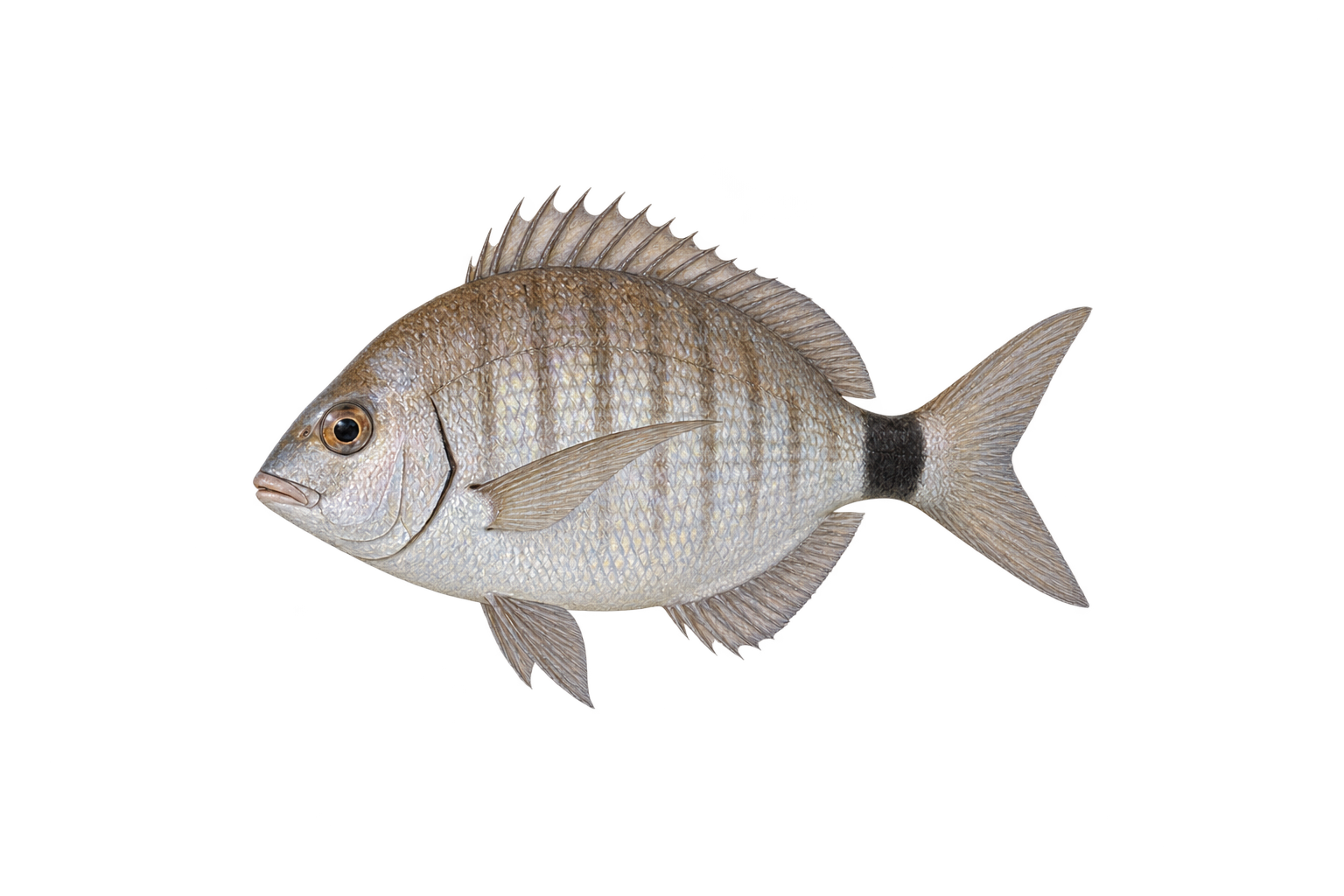
Size: Smithsonian reports a maximum of 46 cm. This is a source-specific upper length, not a typical local sighting size.
A deep silver fish with a steel-blue back and a large black tail-base blotch extending below the lateral line.
Read the guide’s location, season and eating cautions before acting.
Spotted Drum
Tall dorsal fin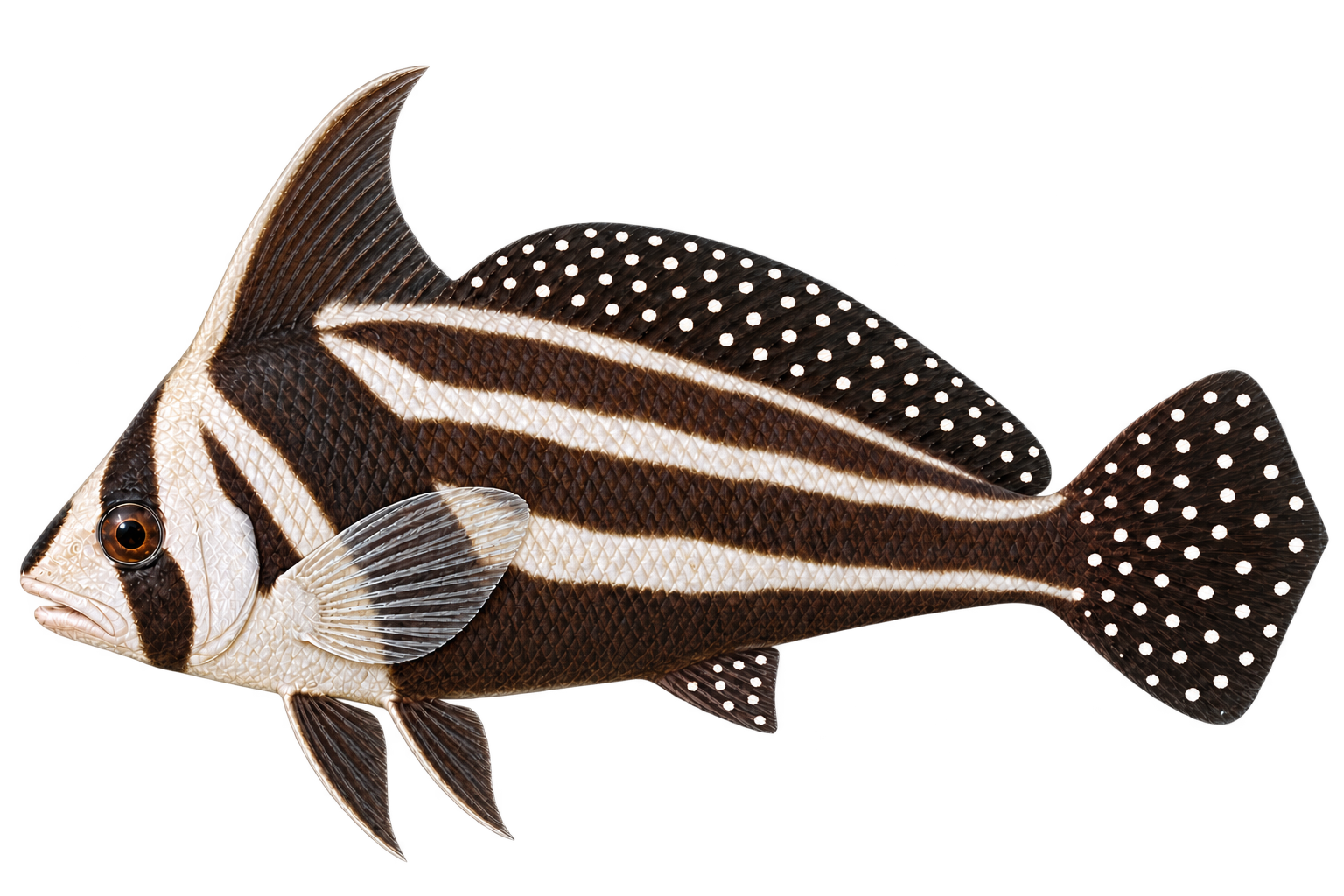
Size: Reported maximum 25 cm; maximum is not a typical sighting size.
Three bold black bars on a white body; adults have pale spots on the dark rear dorsal and tail fins.
Read the guide’s location, season and eating cautions before acting.
Spotted Goatfish
Streamlined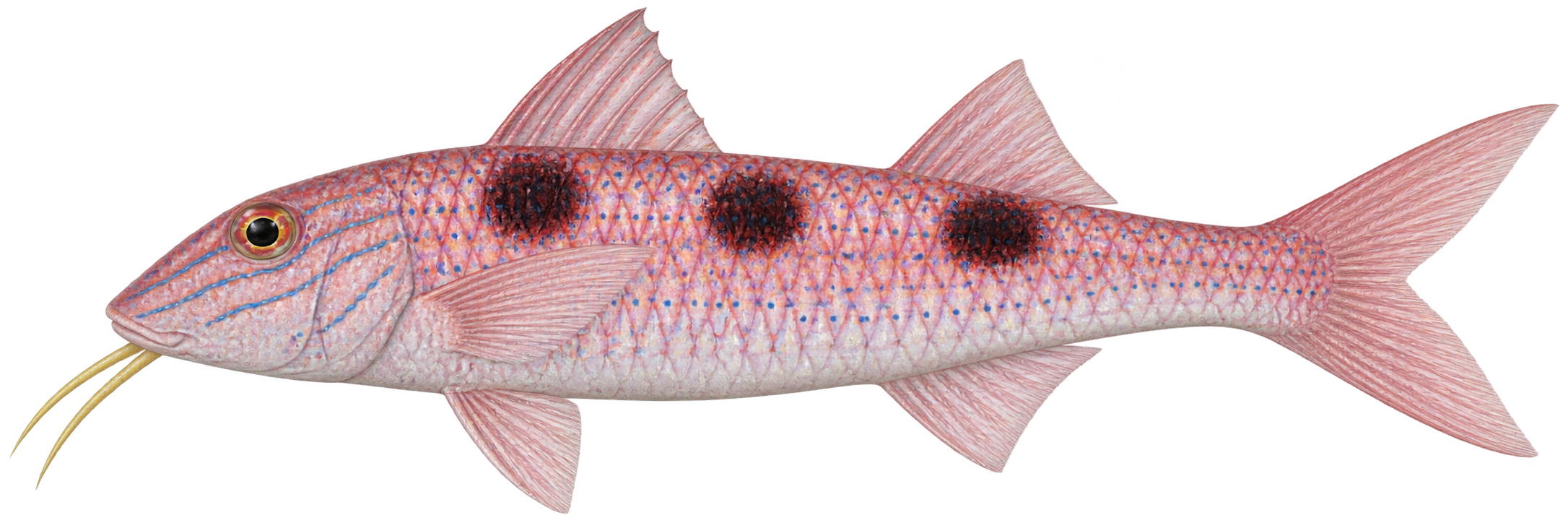
Size: Reported maximum about 30 cm; see profile for life-stage and measurement notes.
Two chin barbels and a row of three large dark flank blotches identify this pinkish-white goatfish.
Read the guide’s location, season and eating cautions before acting.
Spotted Moray
Long & eel-like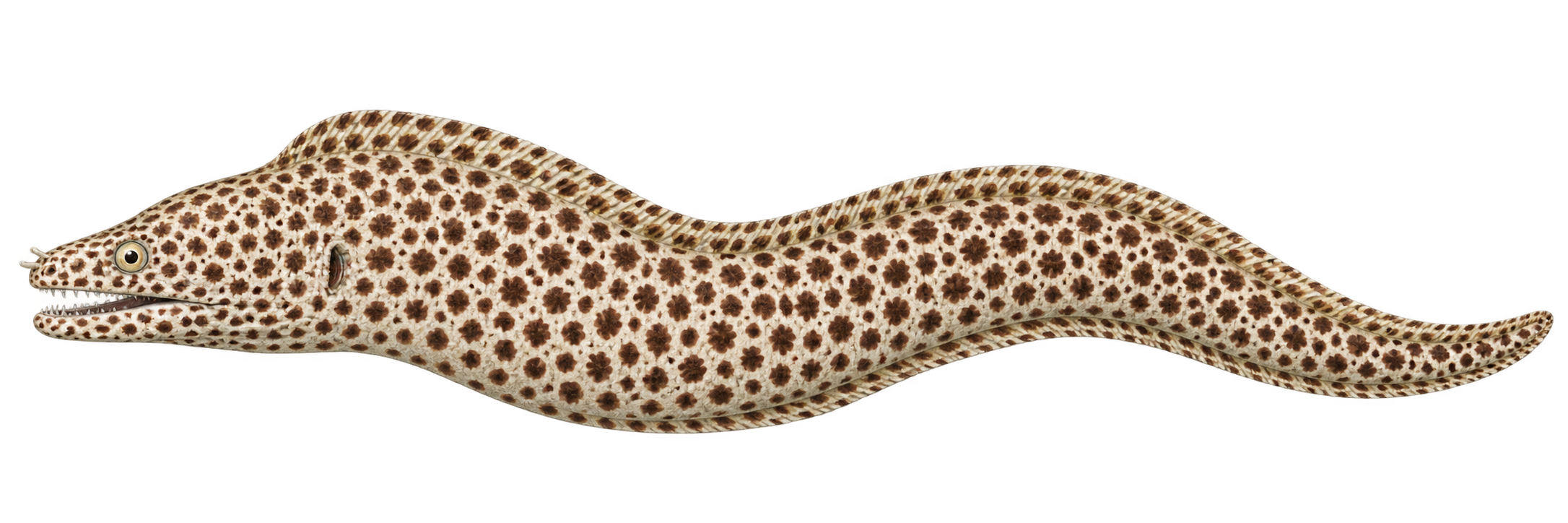
Size: Many are under 3 feet; exceptionally large records approach or exceed 6 feet.
Cream background with dense irregular brown spots; long jaws and no paired fins.
Restricted marine life: live collection only; no spearing
Explore the spotted moray guide →Spotted Scorpionfish
Fan-finned & spiny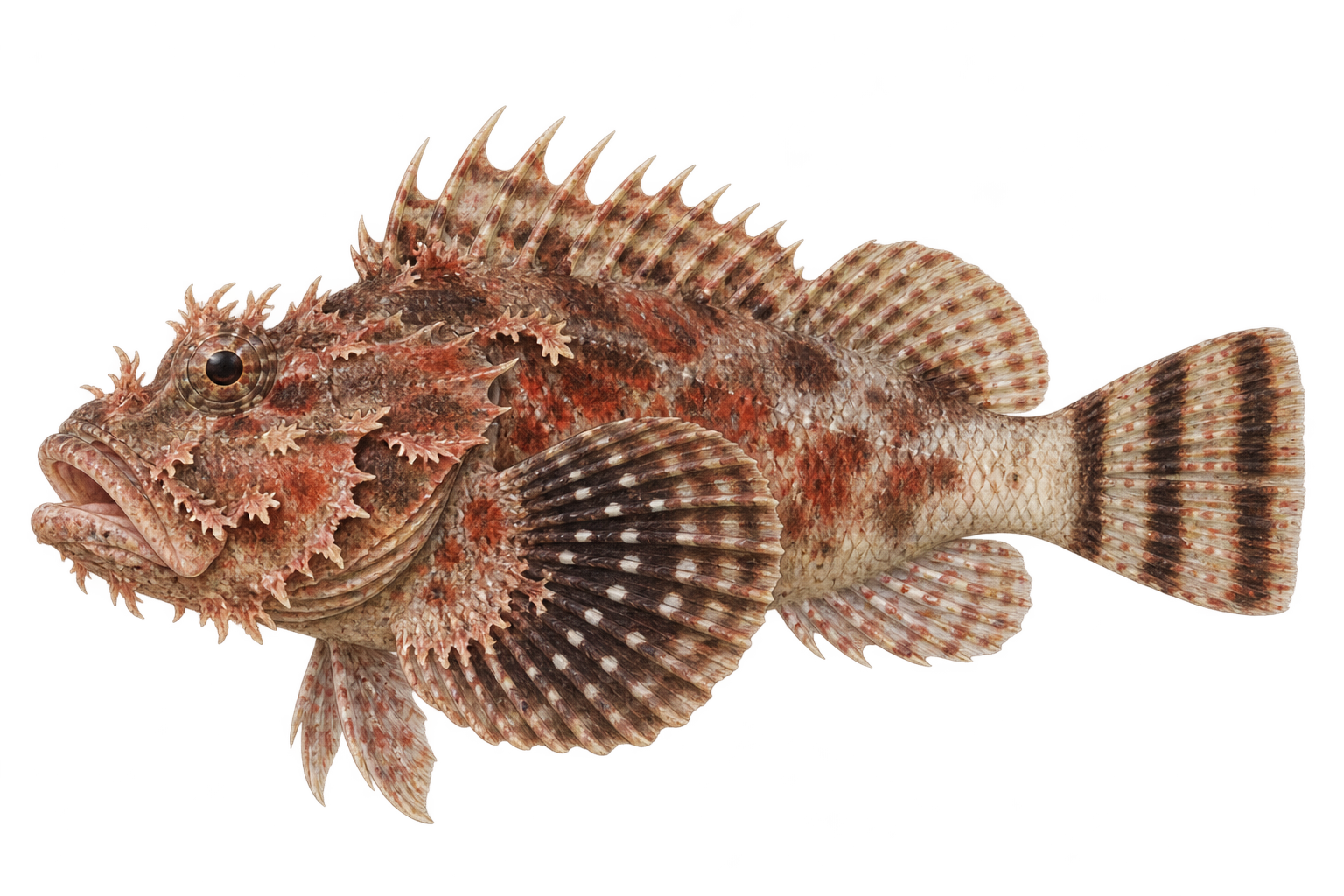
Size: Commonly 18–36 cm; reported maximum 45 cm.
Mottled bulky body, head flaps and white spots on black inner pectoral fins.
General Florida harvest rules; local restrictions apply
Explore the spotted scorpionfish guide →Spotted Soapfish
Streamlined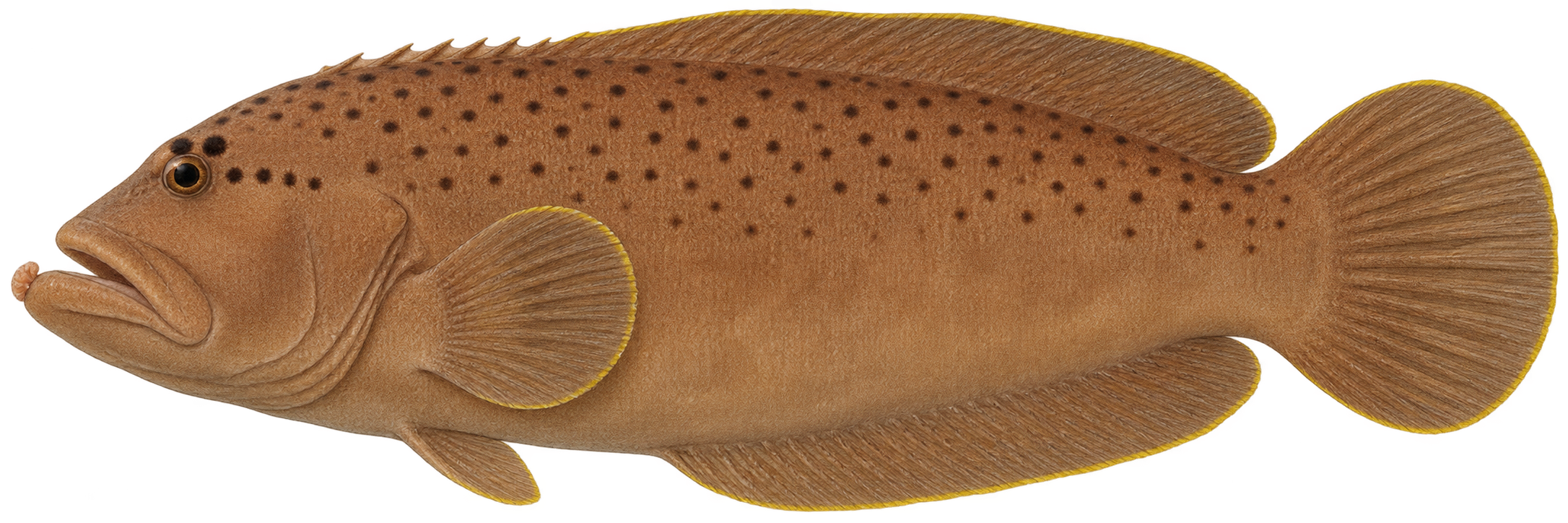
Size: Maximum about 18 cm (7.1 inches) total length.
Brown soapfish with dark spots, an unspotted belly and two diagnostic marks near the upper eye.
Restricted live collection only; no spearing; protected collection areas apply
Explore the spotted soapfish guide →Spotted Trunkfish
Deep-bodied & oval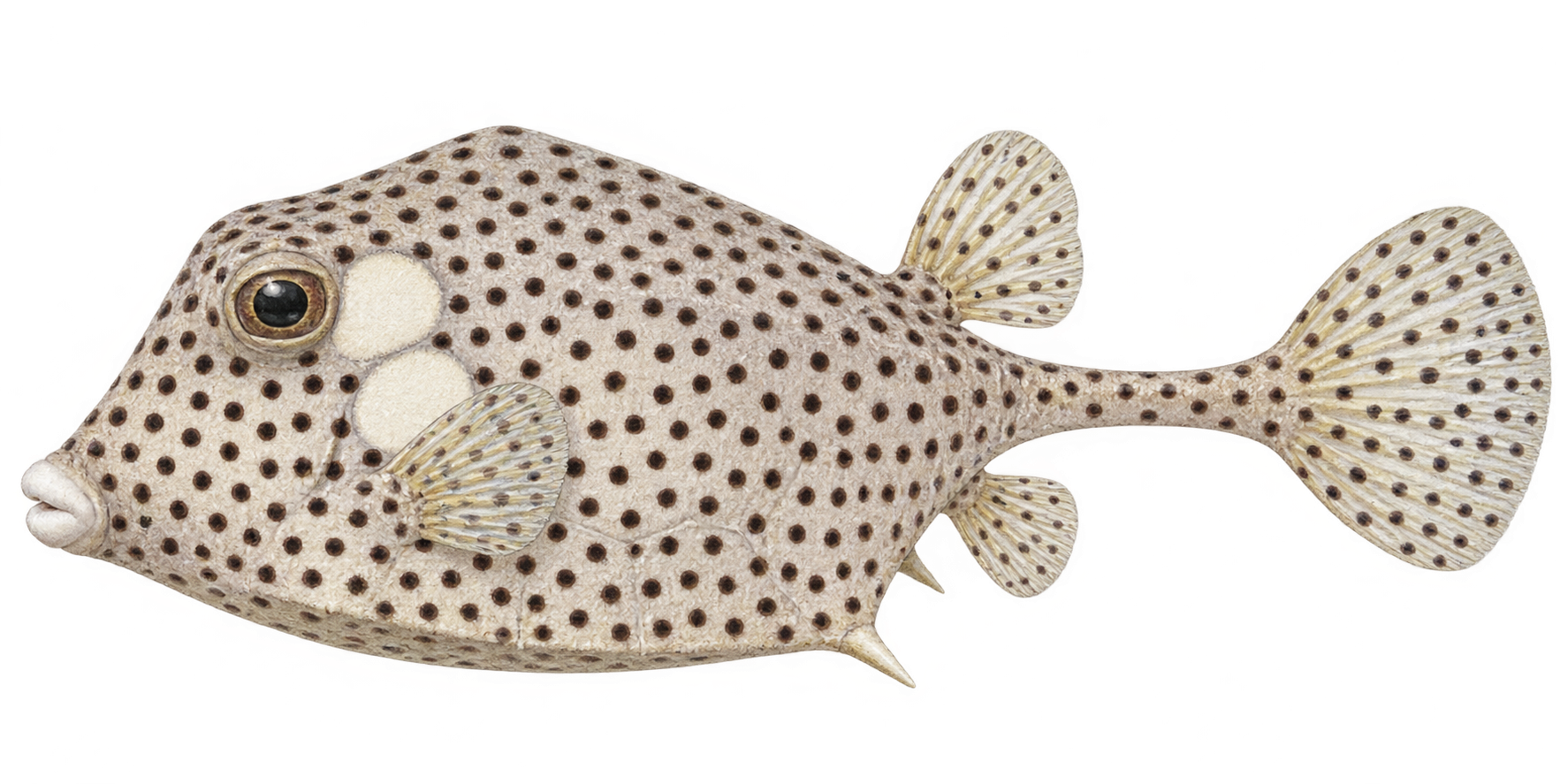
Size: Maximum about 19 inches (48 cm) total length.
Pale armored body with dark dots and pale lips; no eye horns, rear lower spines in adults.
Restricted marine life: live collection only; no spearing
Explore the spotted trunkfish guide →Squirrelfish
Streamlined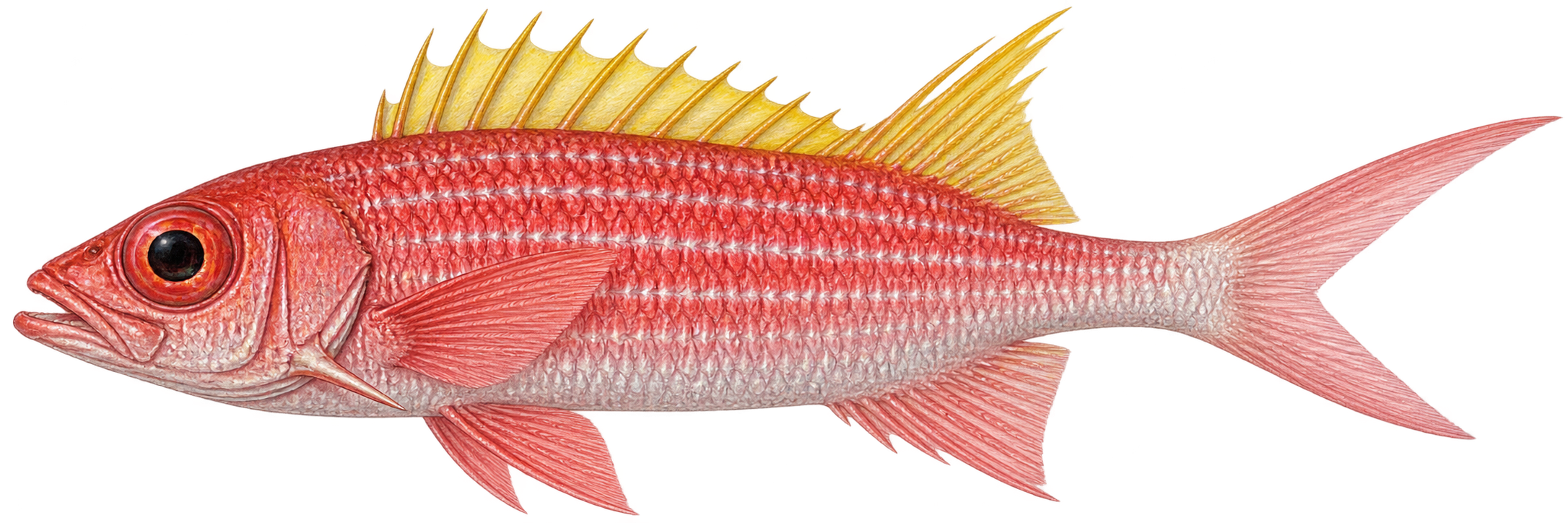
Size: Maximum about 45 cm (17.7 inches) total length.
Large-eyed pink-red fish with a yellowish spiny dorsal lacking white triangular patches.
No spearing; no take in John Pennekamp Coral Reef State Park
Explore the squirrelfish guide →Stoplight Parrotfish
Elongate & oval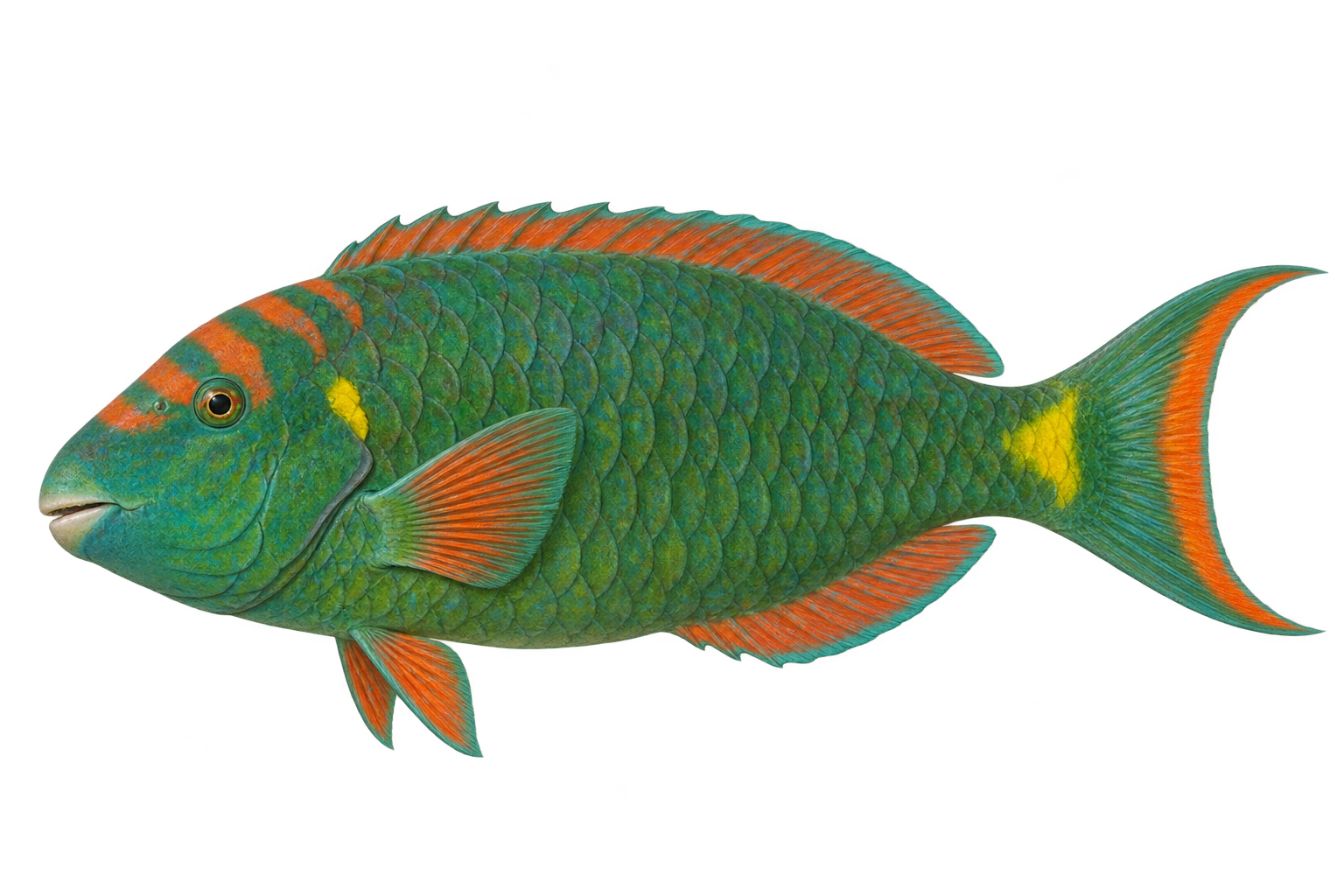
Size: Published maxima differ: Florida Museum gives about 55 cm, while Smithsonian lists 64 cm.
A terminal-phase Stoplight Parrotfish wears green, with warm-colored diagonal markings on the head and a conspicuous yellow patch near the upper gill opening.
Restricted marine life: live collection only; no spearing
Explore the stoplight parrotfish guide →Striated Frogfish
Flattened & bottom-dwelling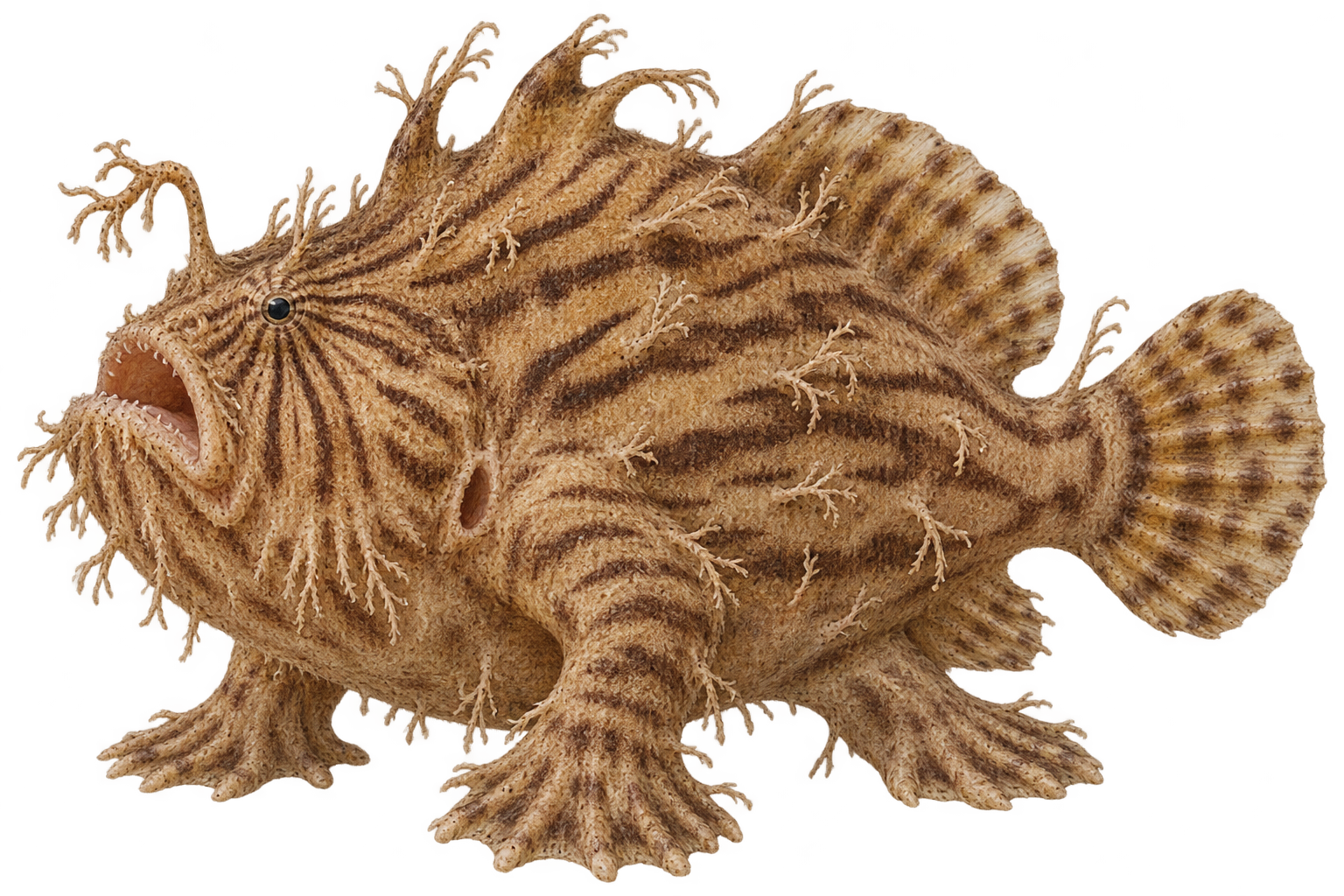
Size: Commonly about 4 inches; maximum about 10 inches.
Stocky body with dark streaks, skin tassels and a wormlike lure above a large upturned mouth.
Restricted marine life: live collection only; no spearing
Explore the striated frogfish guide →Striped Burrfish
Spiny and round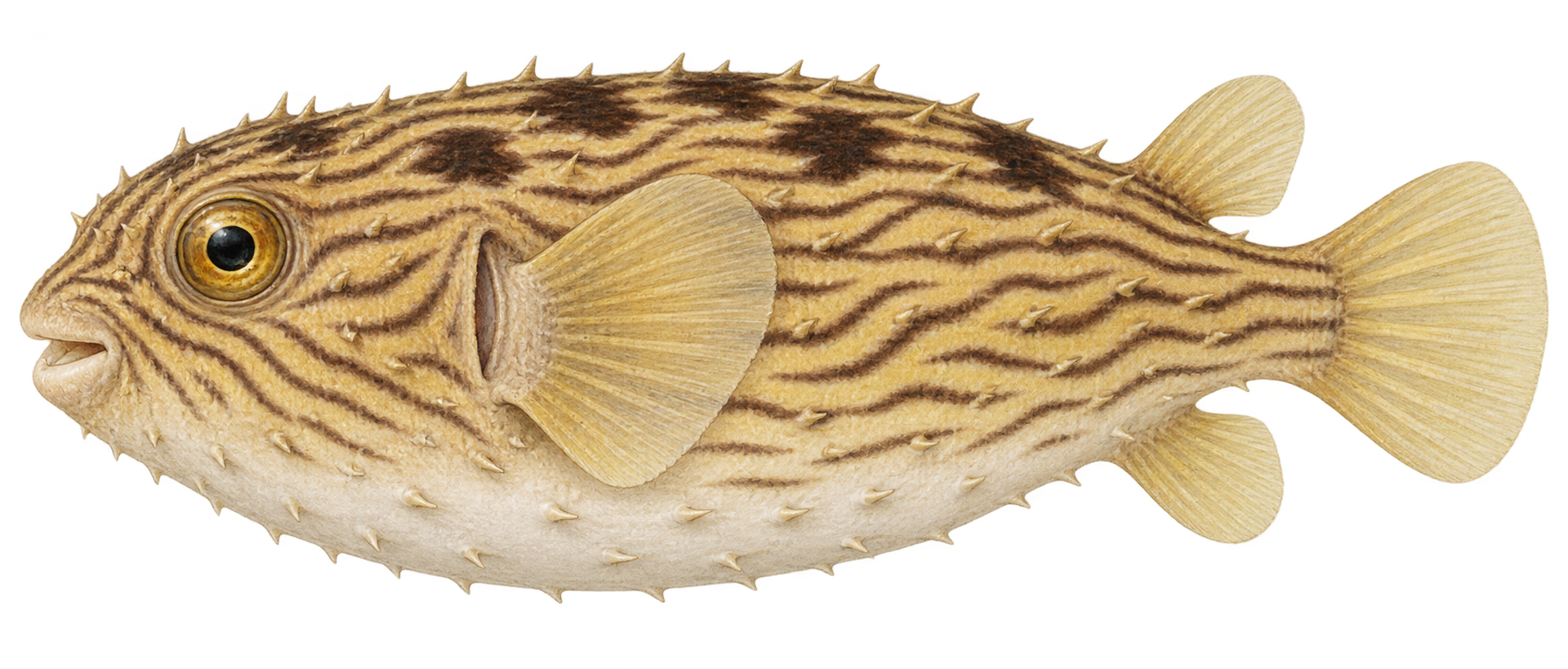
Size: Reported regional maximum 33 cm; not a typical encounter size.
Wavy dark lines; short fixed spines; blunt face.
Read the guide’s location, season and eating cautions before acting.
Striped Grunt
Shape not assigned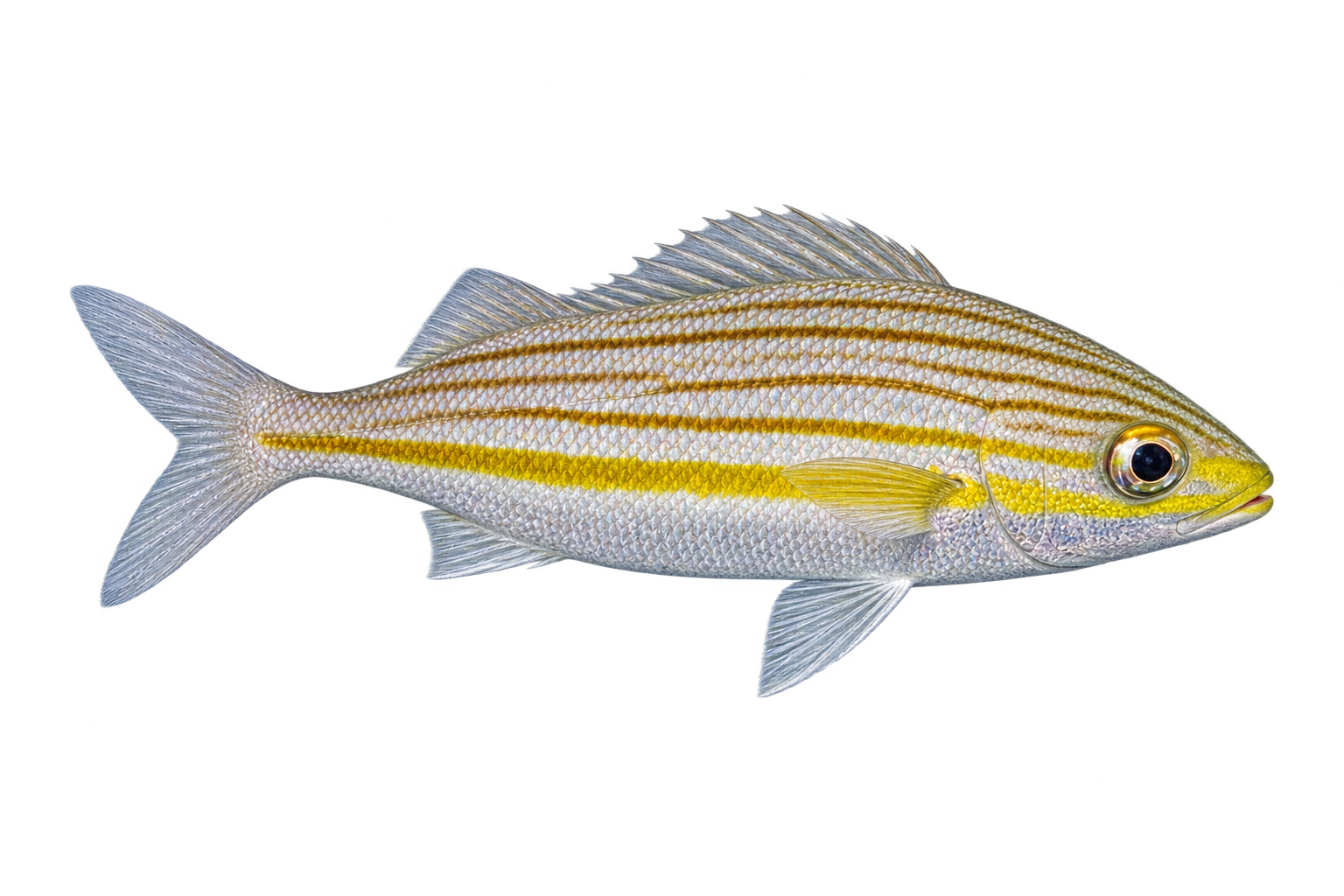
Size: Smithsonian reports a maximum of 28 cm. The entry does not explicitly identify total, fork or standard length for this maximum. Young fish have two long dark stripes and a shorter stripe behind the eye.
A slender grunt with five brown-bronze stripes across the upper head and body. Adults have pale fins and a red mouth lining; the tail is forked.
Read the guide’s location, season and eating cautions before acting.
Striped Parrotfish
Elongate & oval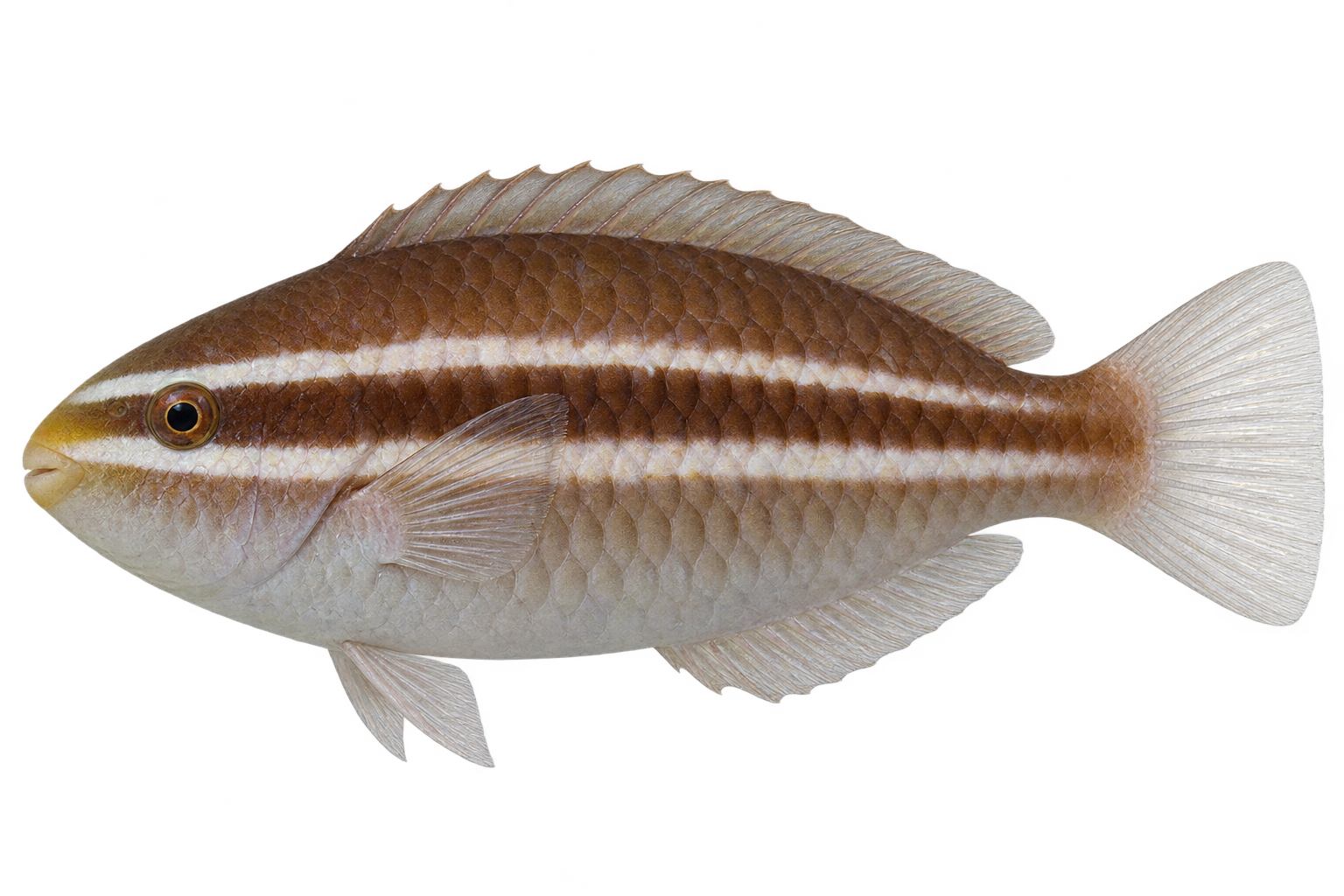
Size: FishBase gives a maximum of 35 cm total length and a common length around 18 cm.
The illustrated initial-phase Striped Parrotfish has a brownish upper body crossed by pale horizontal stripes, a yellowish snout and a clear tail.
Restricted marine life: live collection only; no spearing
Explore the striped parrotfish guide →Sunshinefish
Deep-bodied & oval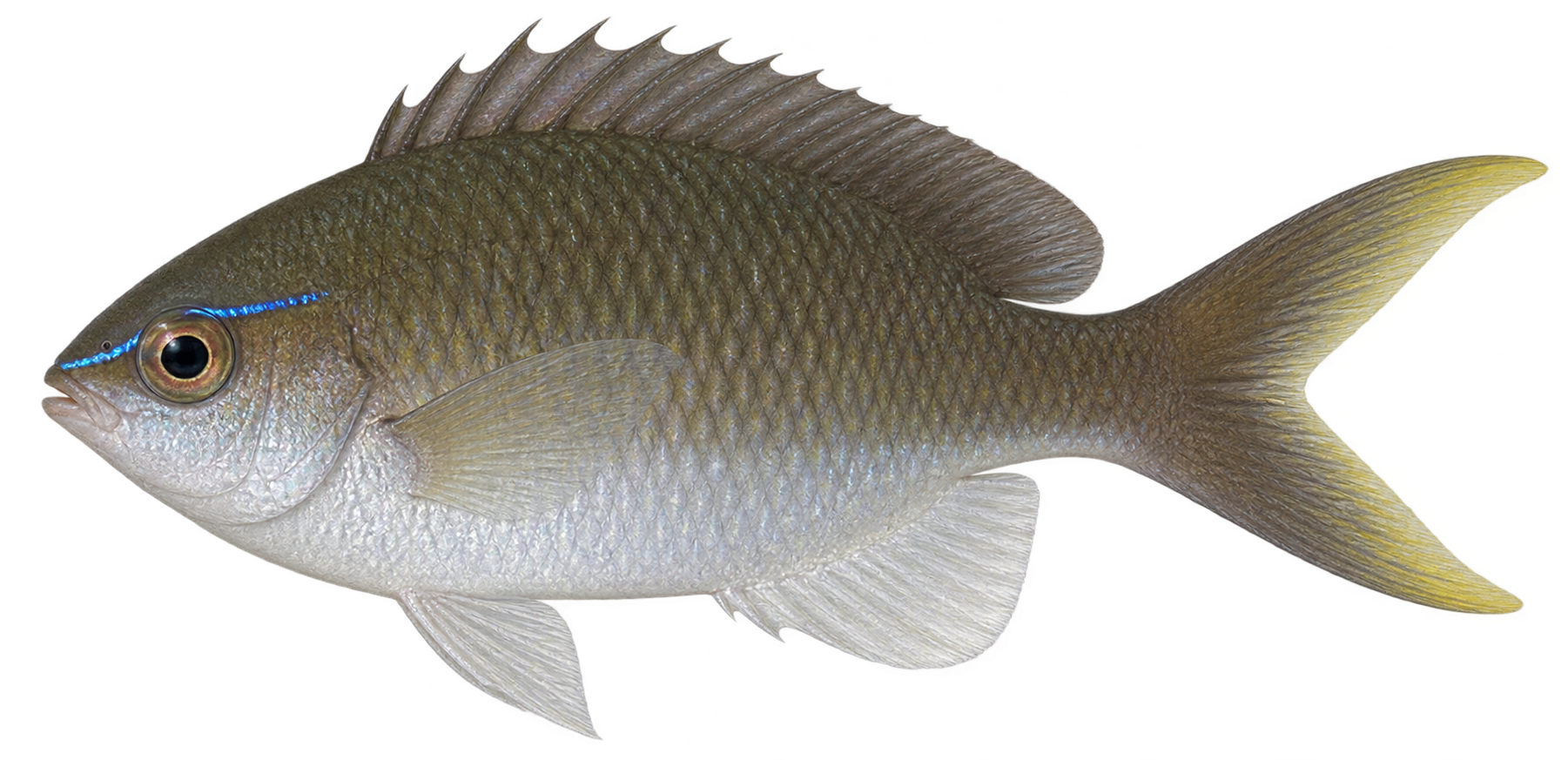
Size: The Smithsonian account reports a maximum of 16 cm (6.3 inches). Juvenile colors differ markedly from adult colors; size alone does not establish maturity. Browsing bands are approximate, not harvest limits.
Adults have a gray-brown upper body and white underside, with a shining blue line from the upper lip through the top of the eye. Juveniles are yellow above and violet below. Check the strongly forked tail as well as the color boundary.
Read the guide’s location, season and eating cautions before acting.
Tarpon
Streamlined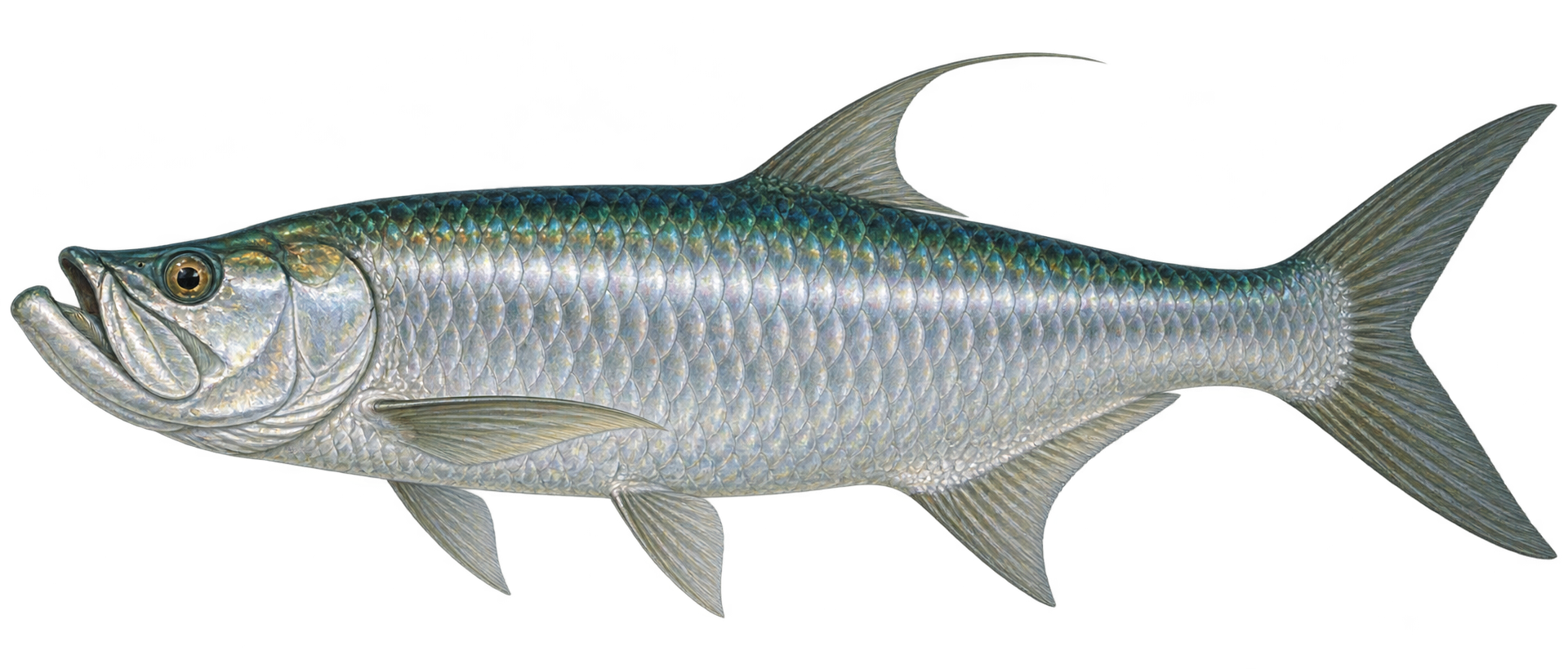
Size: Large adults can exceed 6 feet; maximum reports exceed 8 feet.
Huge reflective scales, upturned mouth, deeply forked tail and a trailing dorsal-fin ray.
Protected catch-and-release fishery; narrow record-tag exception
Explore the tarpon guide →Threespot Damselfish
Deep-bodied & oval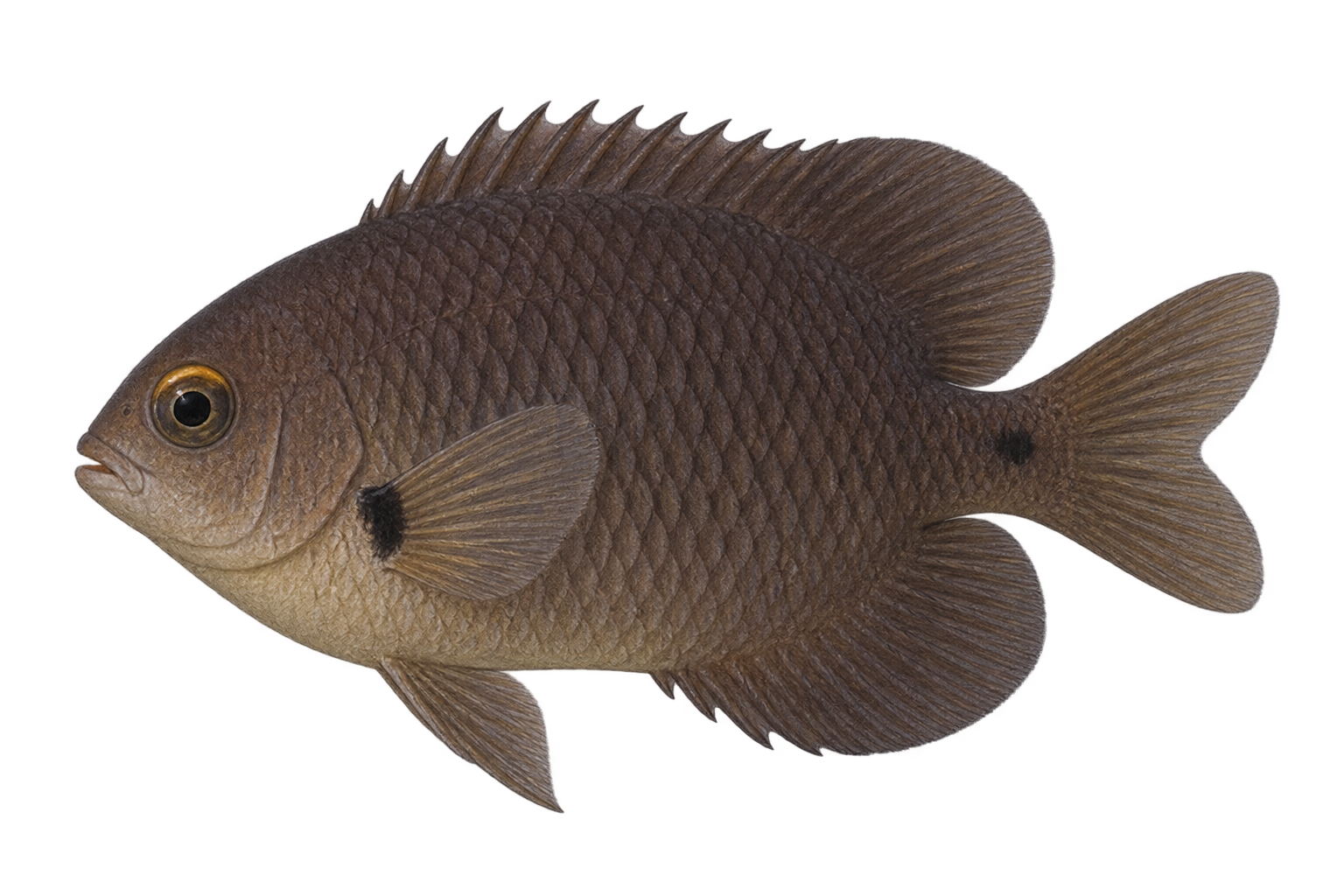
Size: Reported regional maximum 12.5 cm; not a typical encounter size.
Yellow juvenile; dorsal-base spot; pectoral-base spot in adult.
Read the guide’s location, season and eating cautions before acting.
Tiger Goby
Streamlined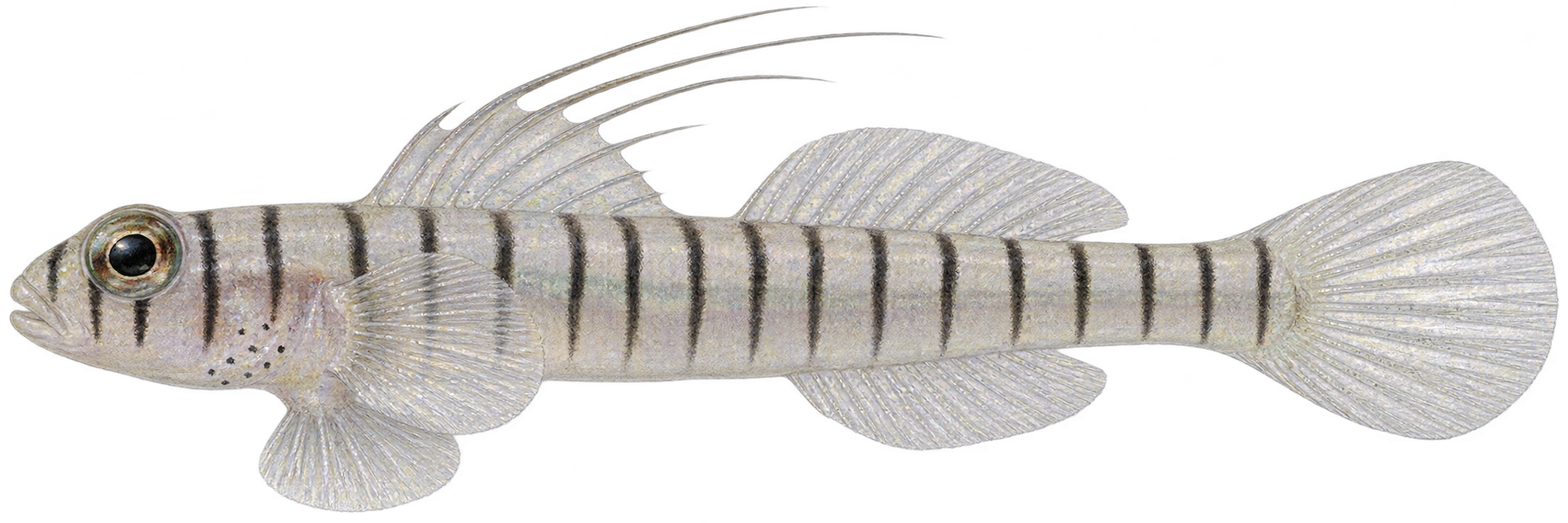
Size: Maximum about 5 cm (2.0 inches).
A pale grayish body is crossed by roughly thirteen or fourteen narrow black bars, with three more on the head.
Restricted marine life: live collection only; no spearing
Explore the tiger goby guide →Tiger Grouper
Elongated & robust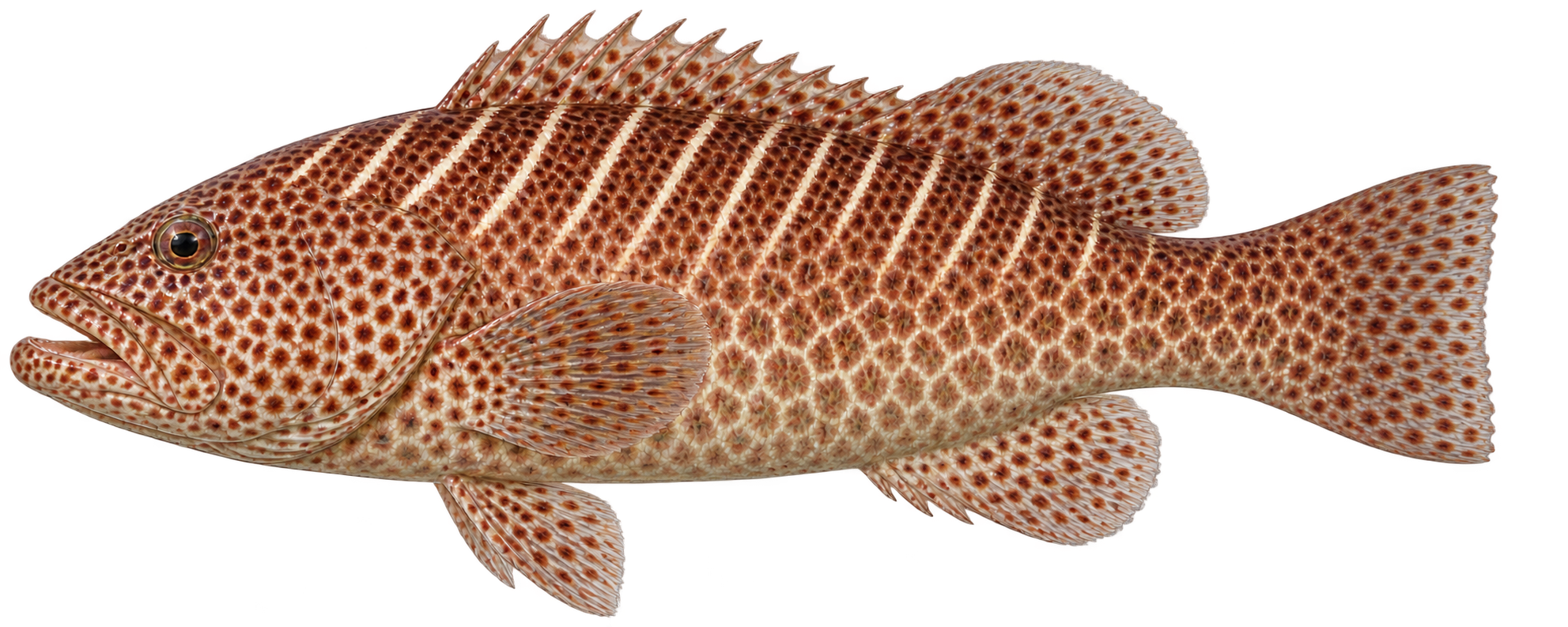
Size: Reported maximum 101 cm (about 40 in).
Dense reddish-brown spotting with narrow, strongly oblique pale bars; outer pectoral fin can be yellowish and the inside of the mouth orange.
Read the guide’s location, season and eating cautions before acting.
Tomtate
Streamlined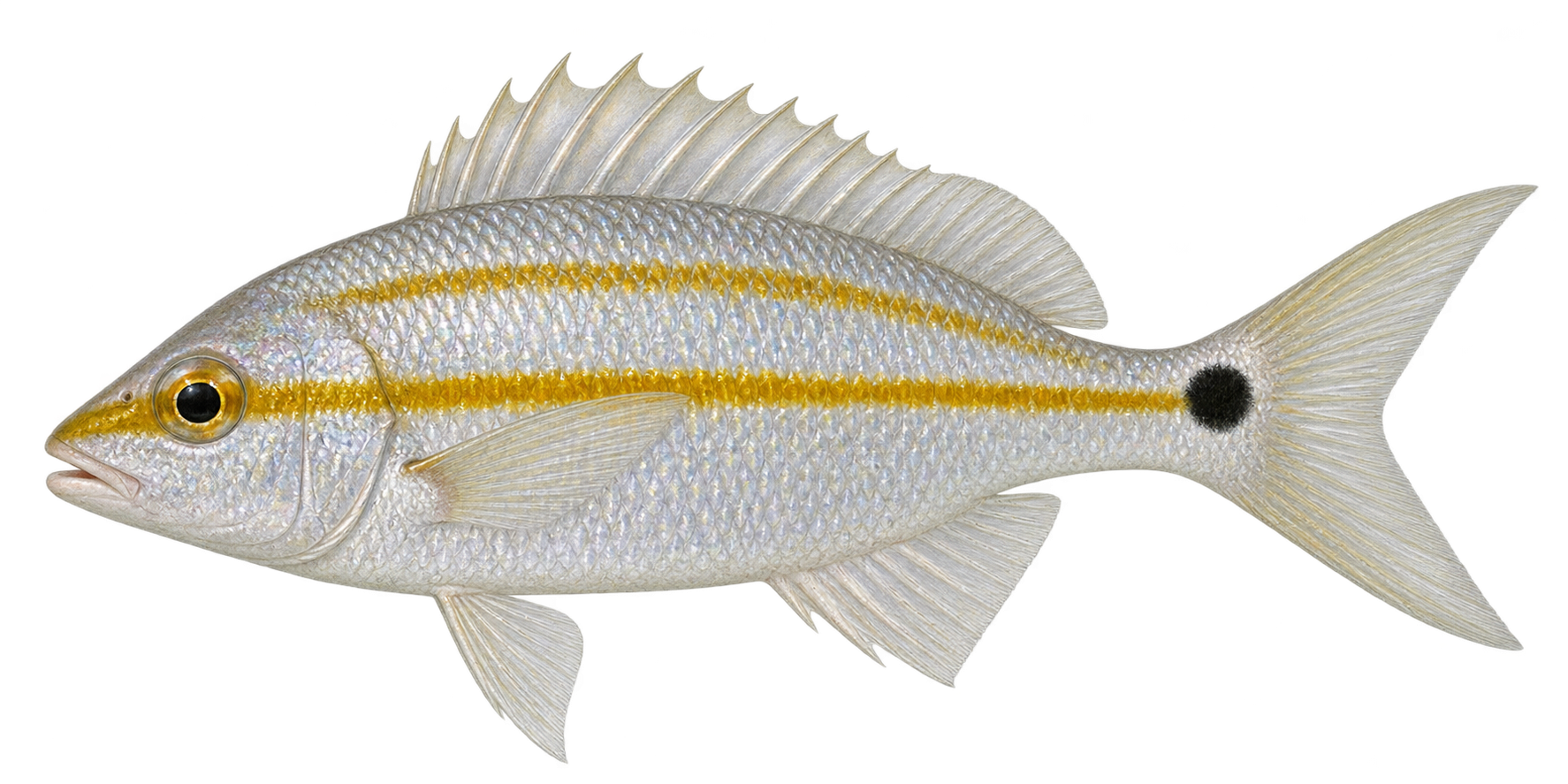
Size: Up to about 10 inches (25 cm) total length.
Silver body, two main yellowish stripes and a black tail-base blotch.
Harvest may be allowed; limits and site restrictions apply
Explore the tomtate guide →Trumpetfish
Long & eel-like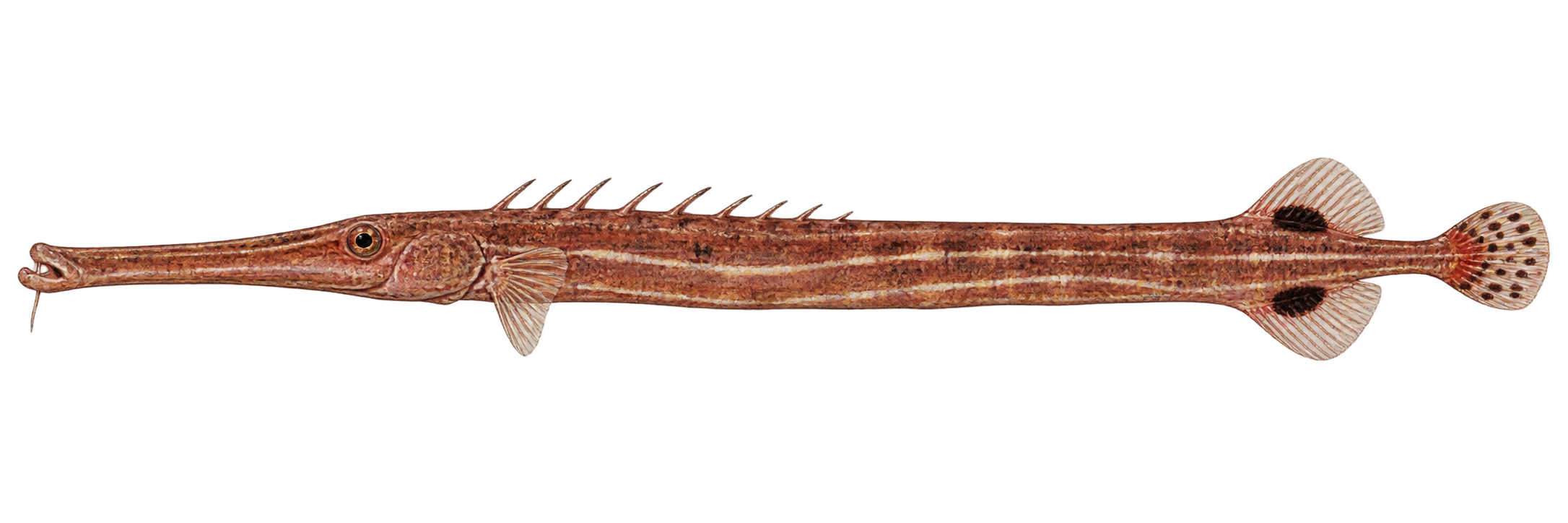
Size: Commonly about 24 inches; maximum roughly 39 inches.
Long tube-shaped snout, chin barbel, separate short dorsal spines and a rounded tail.
Restricted marine life: live collection only; no spearing
Explore the trumpetfish guide →Trunkfish
Deep-bodied & oval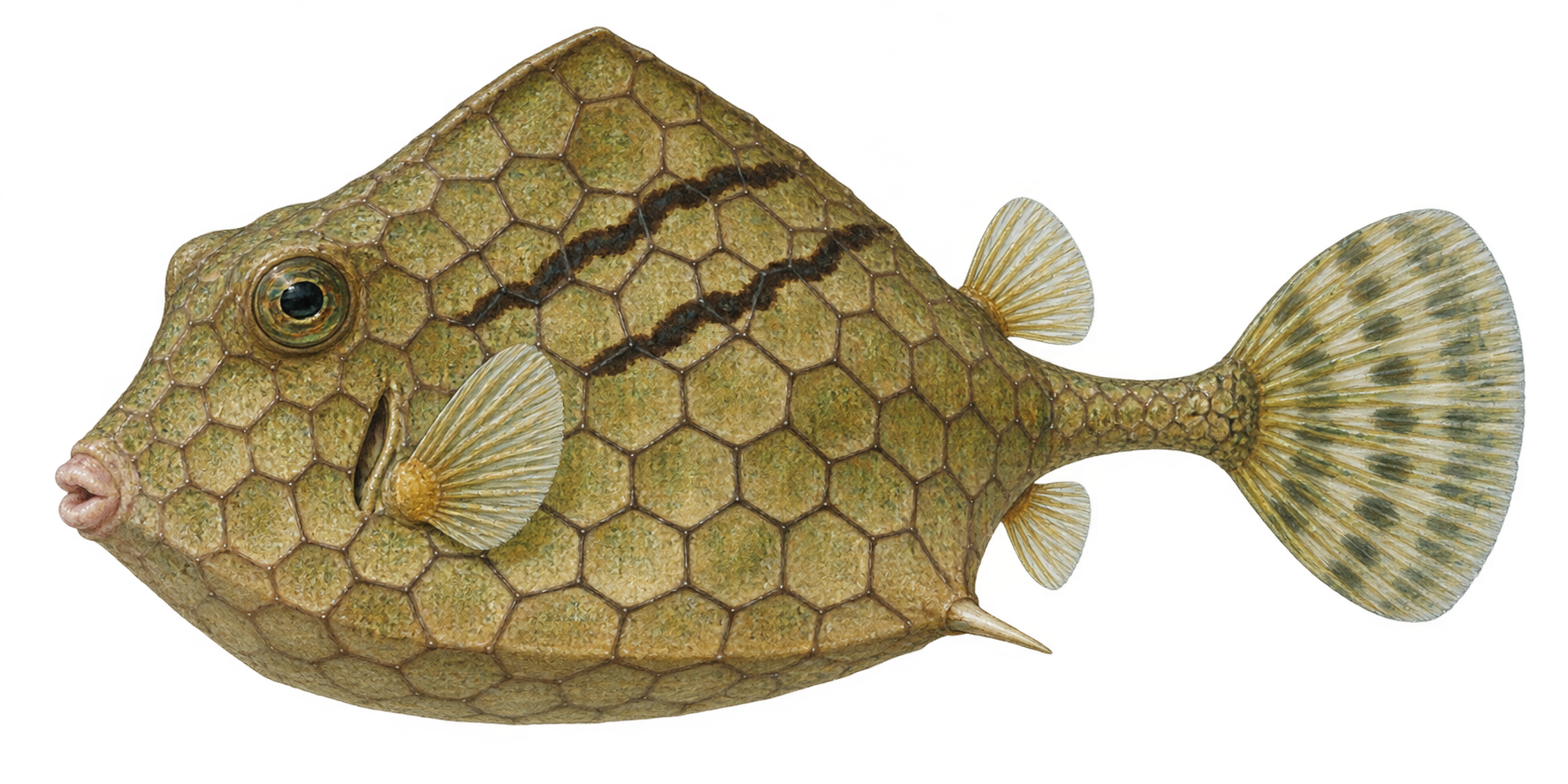
Size: Reported regional maximum 55 cm; not a typical encounter size.
Humped back; rear lower spines; honeycomb plates.
Read the guide’s location, season and eating cautions before acting.
Twospot Cardinalfish
Oval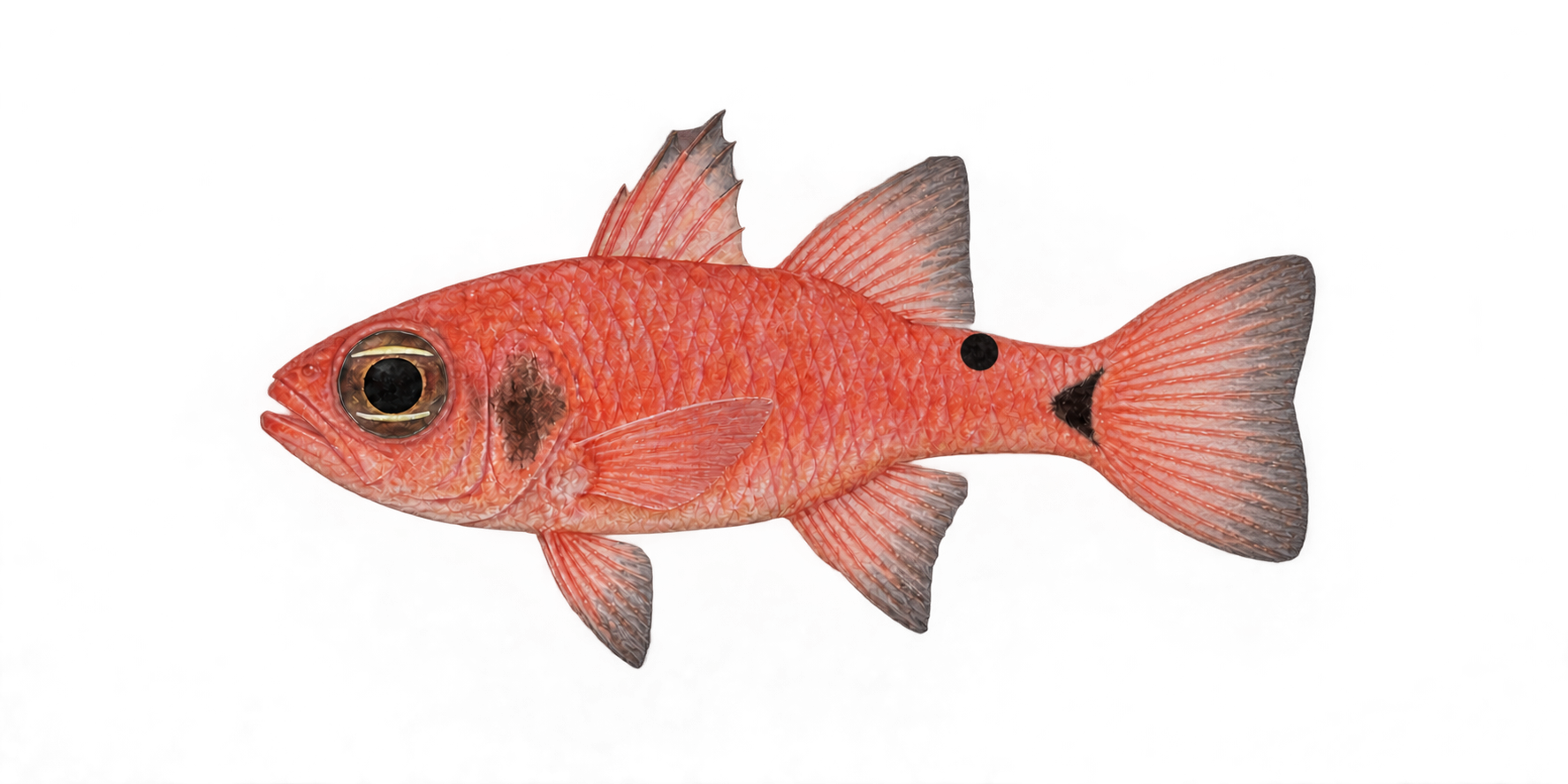
Size: Smithsonian reports a maximum length of 11 cm. This is a regional upper record, not a typical local encounter size.
Red to salmon, with a dark spot below the rear dorsal fin and a separate sharply defined tail-base spot or teardrop.
Read the guide’s location, season and eating cautions before acting.
White Grunt
Streamlined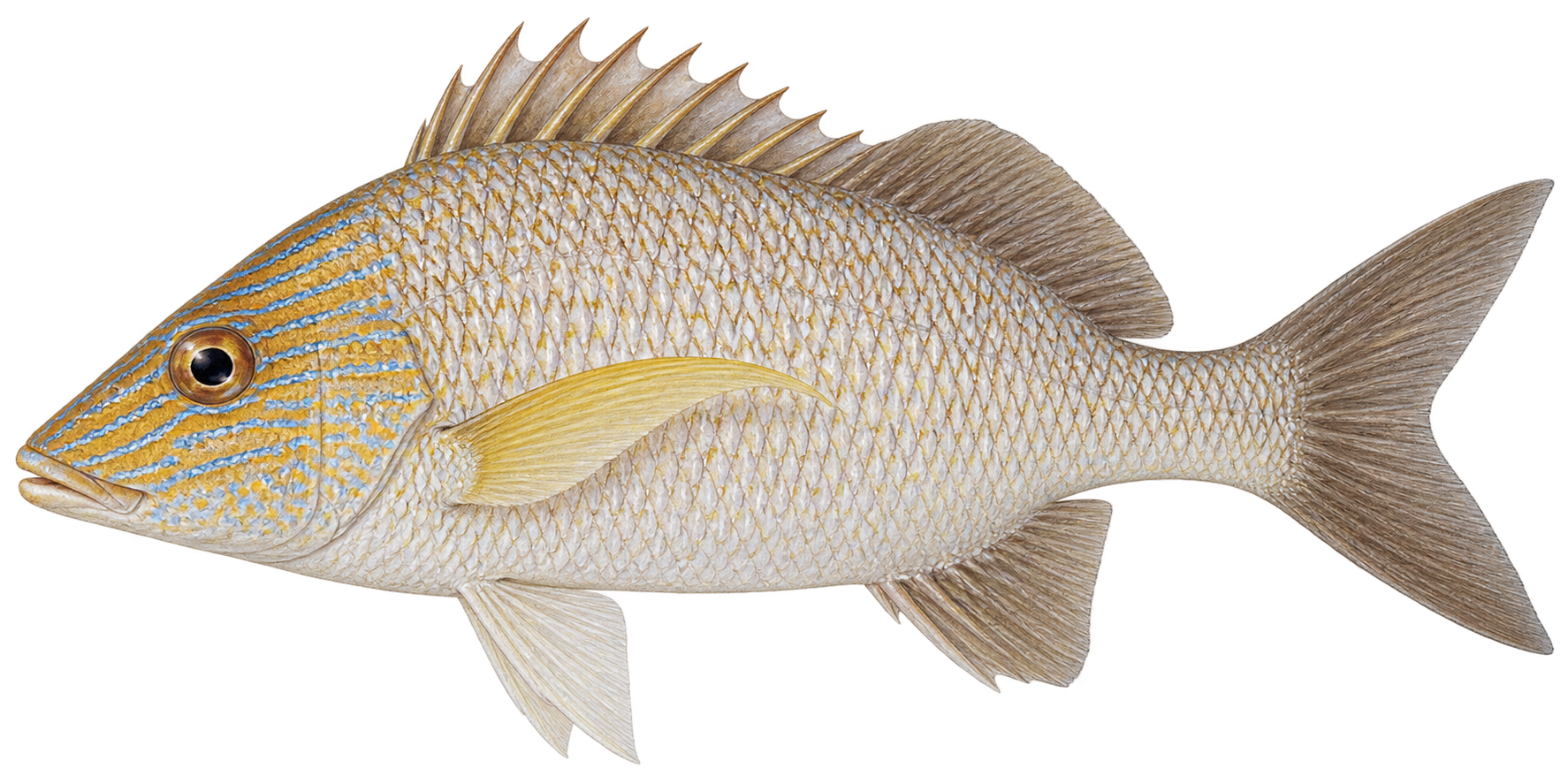
Size: Commonly around 12 inches; exceptional fish can exceed 20 inches.
Blue head lines on a pale silvery body with bronze-edged scales and darker rear fins.
Harvest regulated; state and federal limits differ
Explore the white grunt guide →White Mullet
Elongated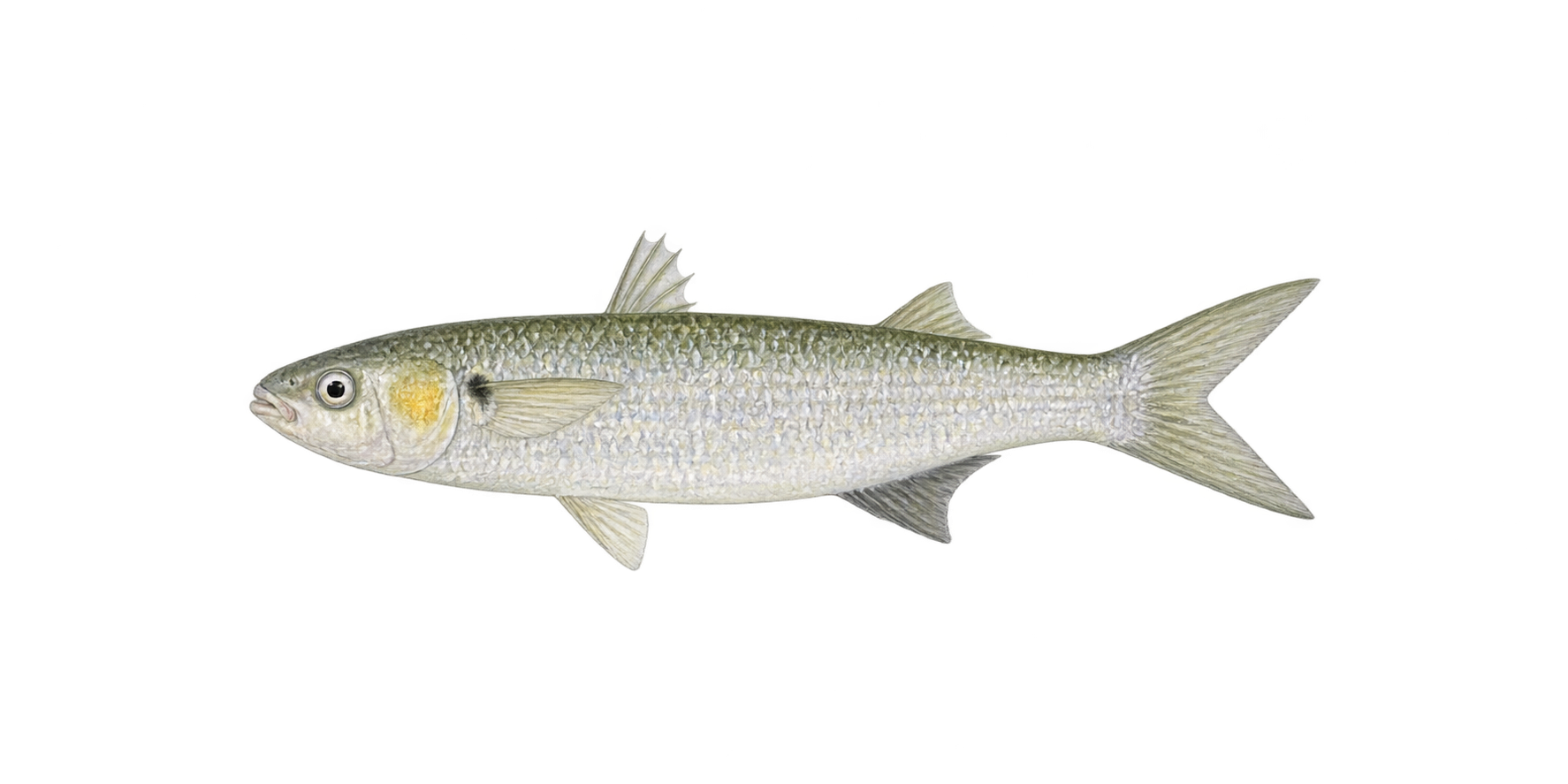
Size: Smithsonian reports a maximum of 91 cm, not a typical local encounter size.
Silvery robust mullet with a white iris, gold gill-cover patch, dark upper pectoral base and separated dorsal fins.
Read the guide’s location, season and eating cautions before acting.
Whitenose Pipefish
Shape not assigned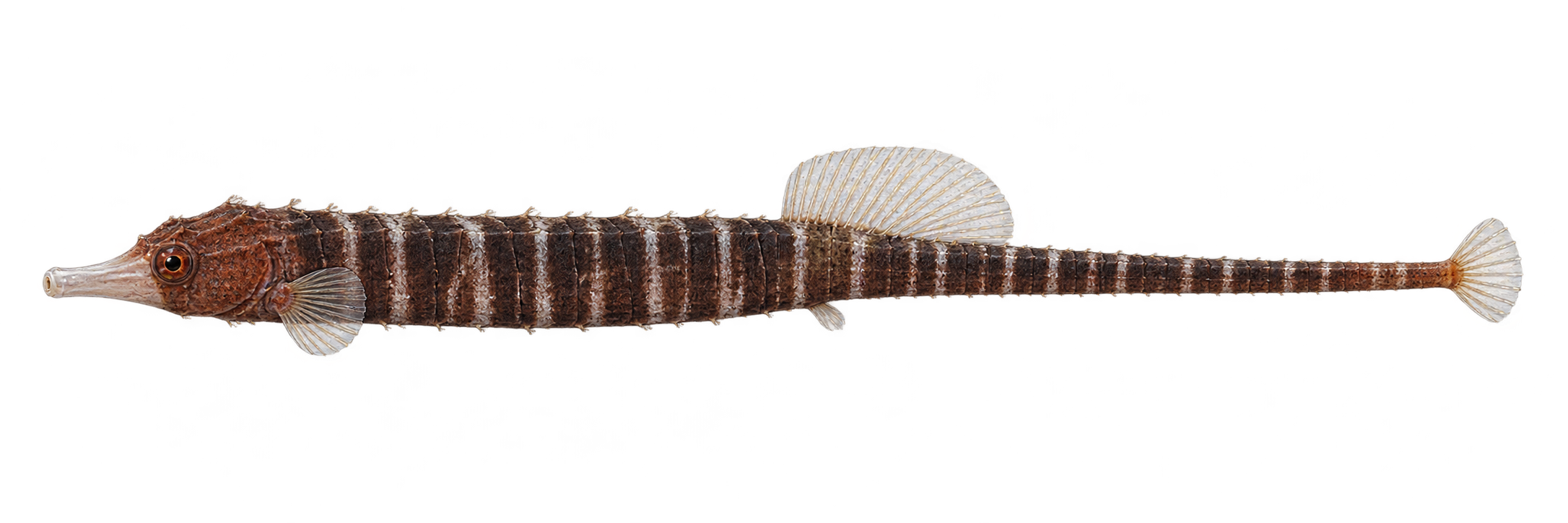
Size: The Smithsonian account reports 21 cm. It does not explicitly specify total, fork or standard length for this value; do not compare it directly with a length-labeled measurement.
A stout, angular pipefish with a pale or unpigmented snout, strong head ridges and usually skin flaps. Light and brown crossbars may interrupt the body.
Read the guide’s location, season and eating cautions before acting.
Whitespotted Filefish
Deep-bodied & oval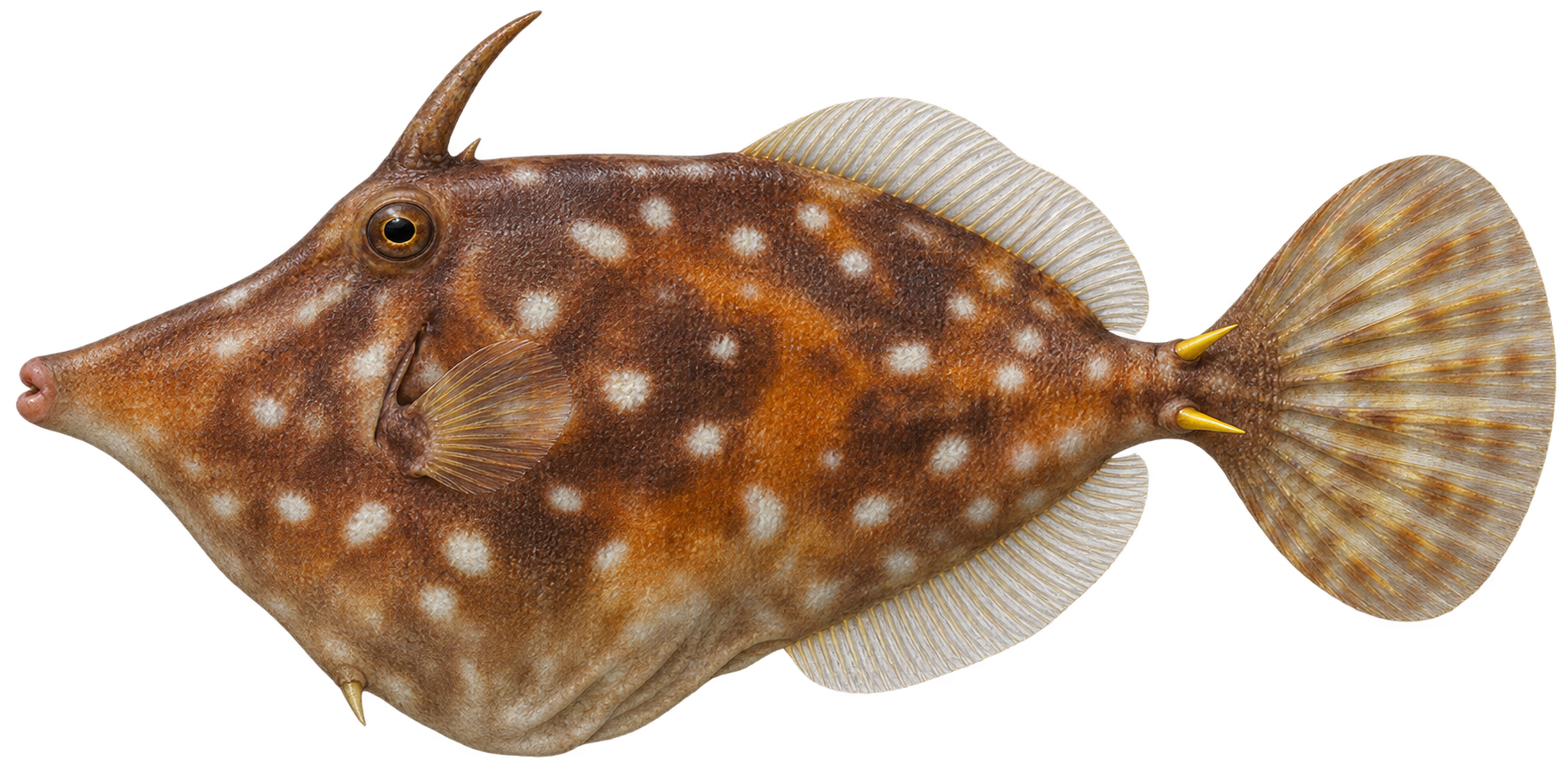
Size: The reference reports 40 cm (15.7 inches). Juveniles are black with numerous pale spots, so they should not be expected to match every adult color pattern. Browsing bands are approximate, not harvest limits.
A deep, flattened filefish with an extended pointed snout. Brown and orange patches may carry white spots, but spotting varies. Two pairs of strong yellow spines on the tail base are a valuable confirming feature.
Read the guide’s location, season and eating cautions before acting.
Wrasse Blenny
Shape not assigned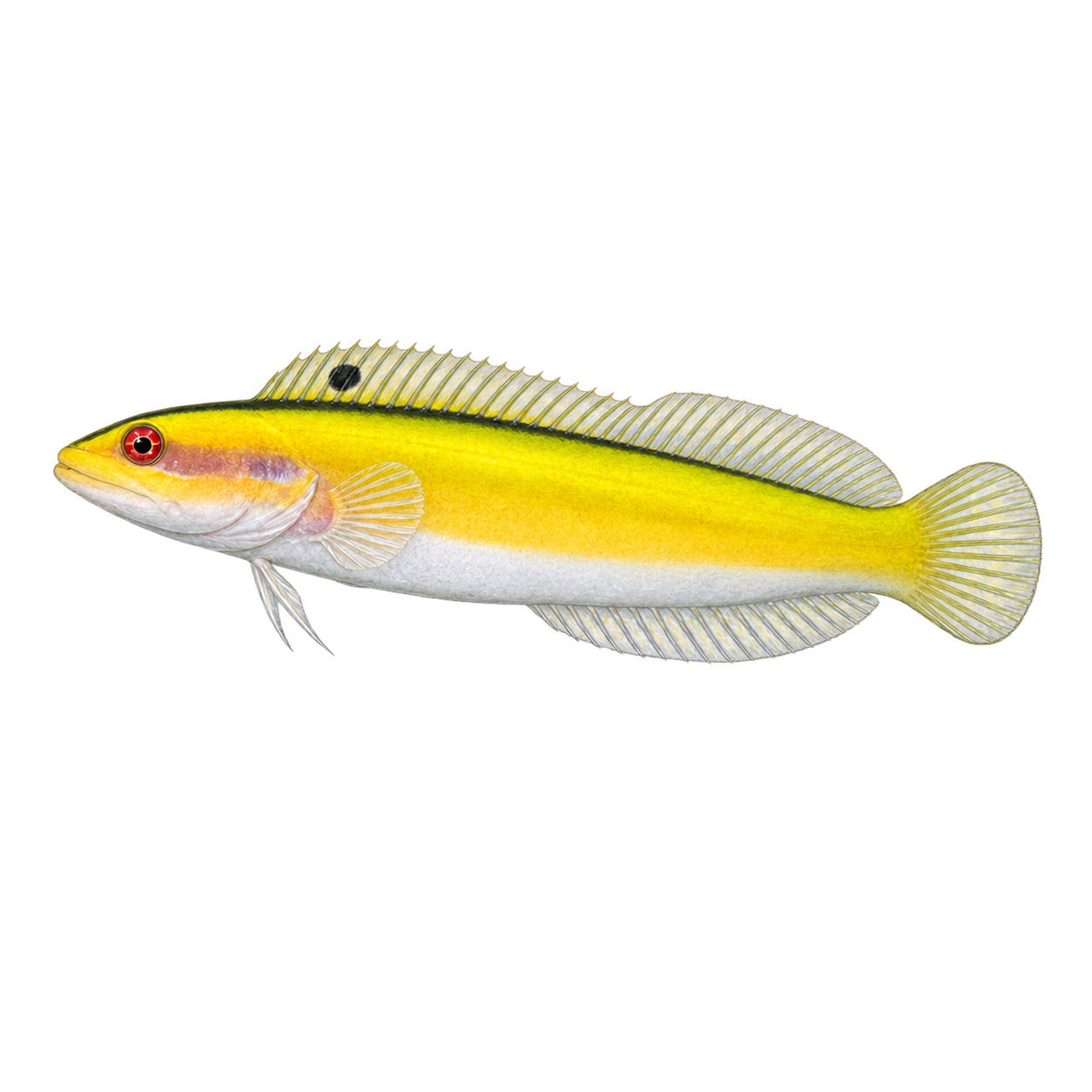
Size: Smithsonian reports a maximum of 11.3 cm. The entry does not explicitly identify total, fork or standard length for this maximum. Juveniles are translucent with a dark stripe; adults vary substantially in color.
A long pointed-headed blenny, sometimes with a broad dark stripe ending in a round tail-base spot. A dark mark sits near the front dorsal edge; the eye is red.
Read the guide’s location, season and eating cautions before acting.
Yellow Garden Eel
Long & eel-like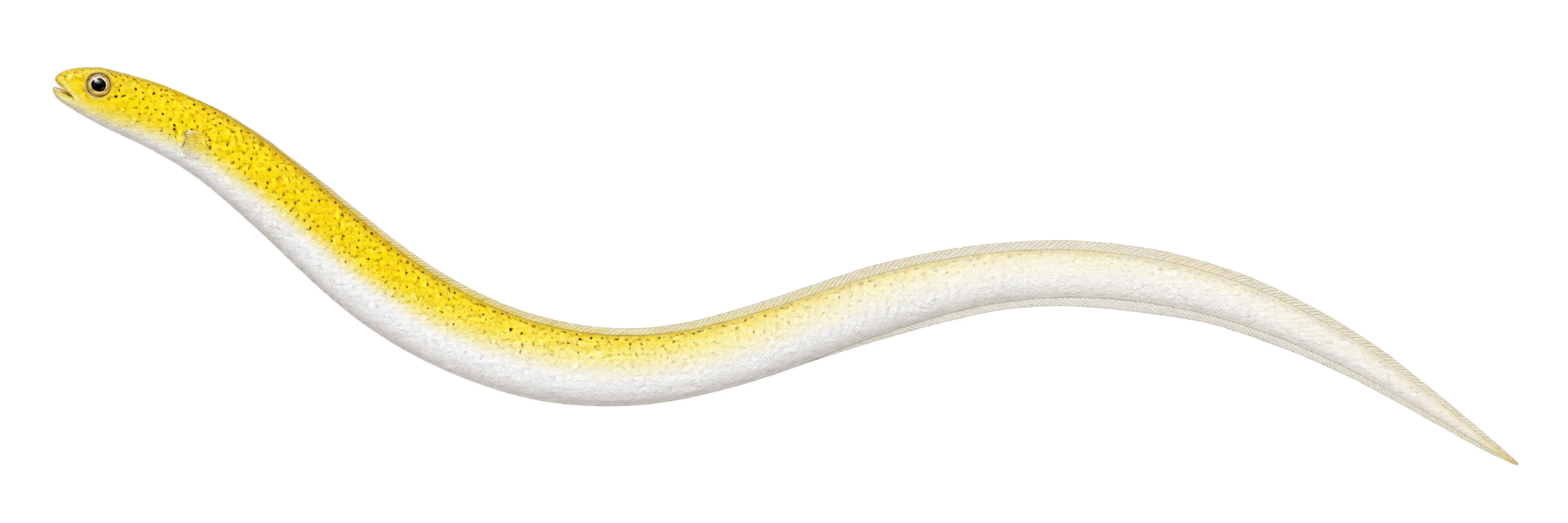
Size: Smithsonian reports a maximum of 50 cm. This is a source-specific upper length, not a typical local sighting size.
Extremely slender, with a yellow upper head and forebody, tiny dark dots and an abruptly white underside.
Read the guide’s location, season and eating cautions before acting.
Yellow Goatfish
Streamlined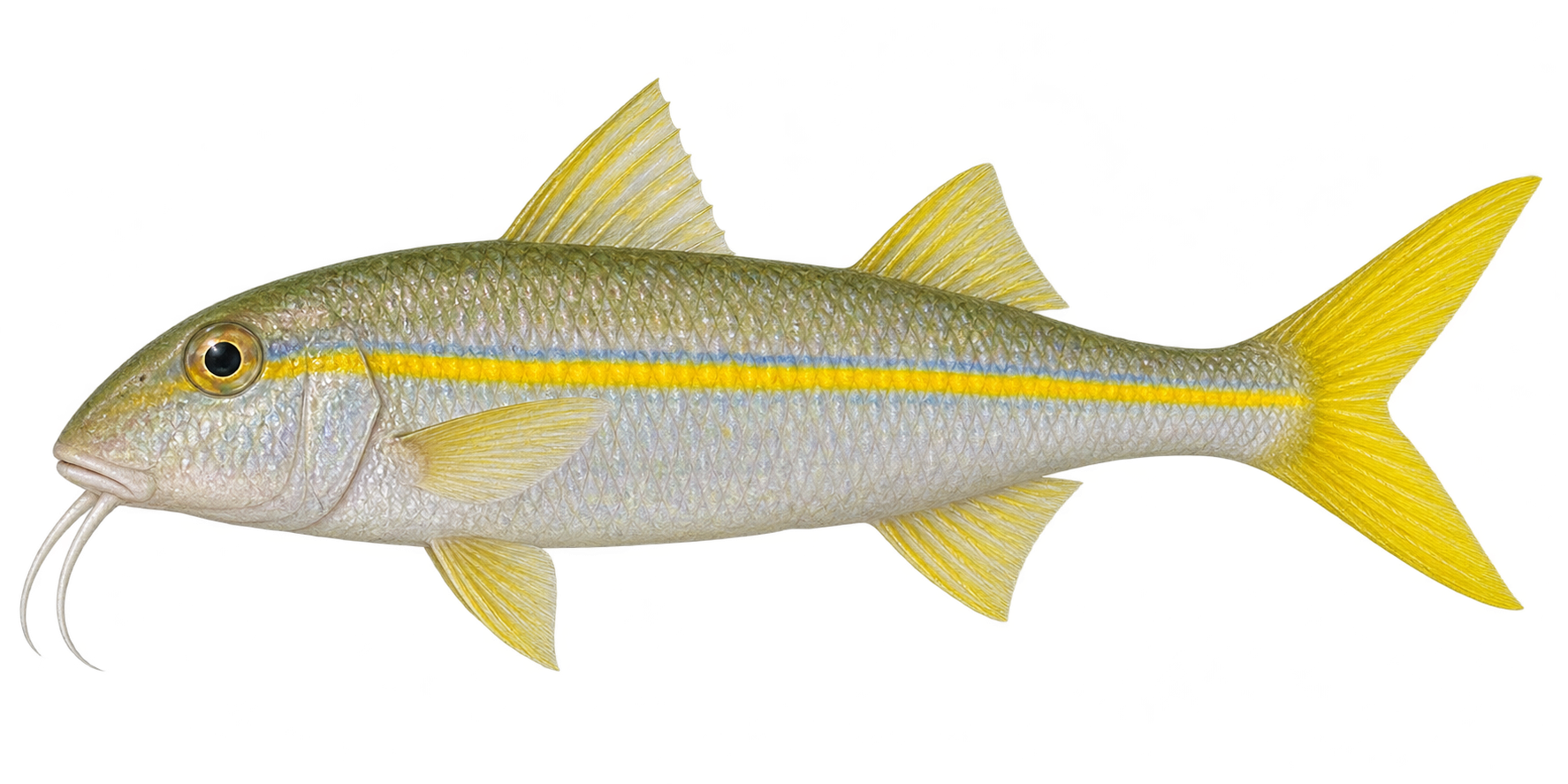
Size: Reported maximum about 40 cm; see profile for life-stage and measurement notes.
A yellow stripe joins the eye to a bright yellow forked tail; two long chin barbels distinguish it from striped snappers.
Read the guide’s location, season and eating cautions before acting.
Yellow Jack
Streamlined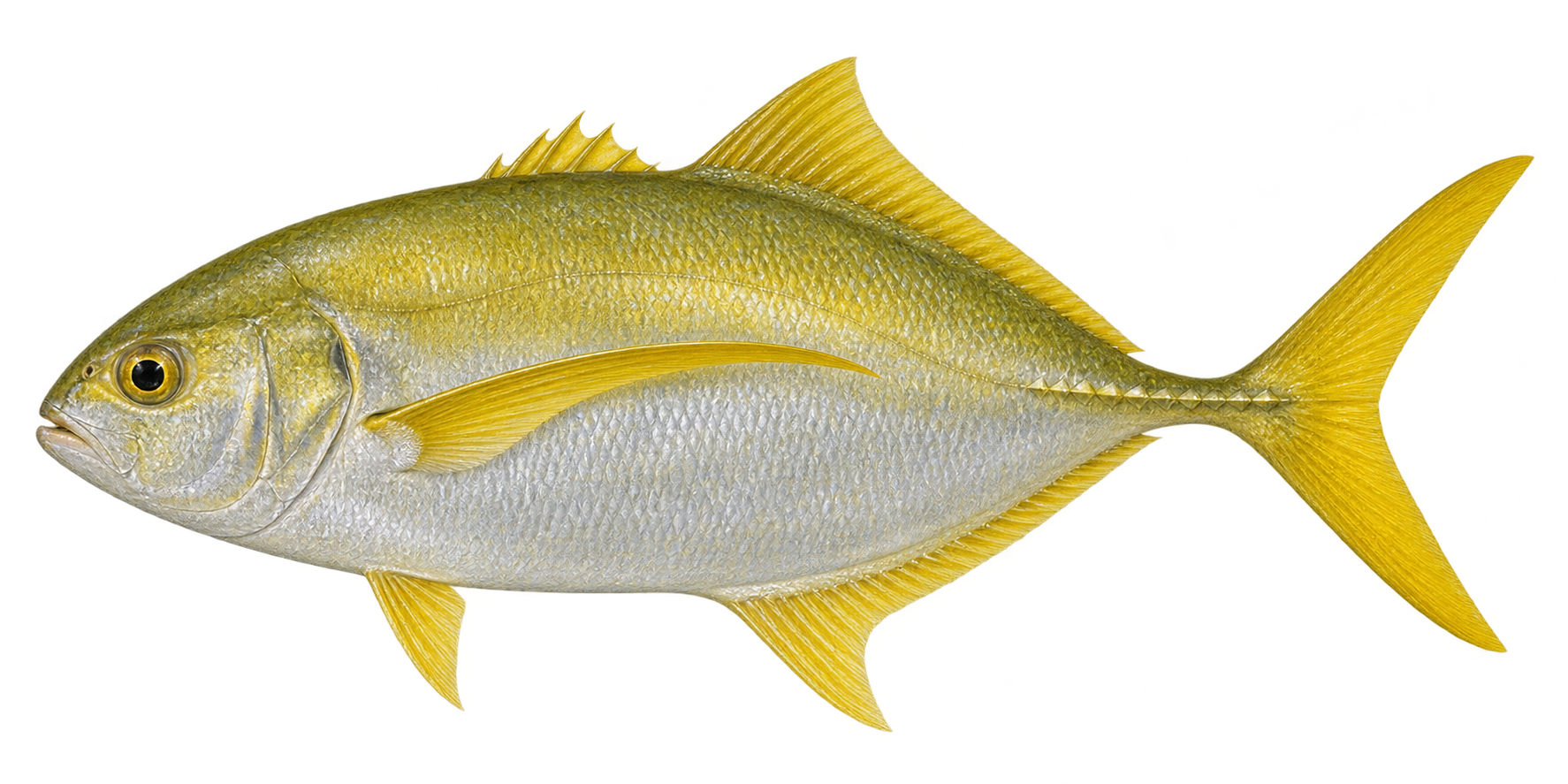
Size: Up to about 39 inches (100 cm) total length.
Plain silvery-yellow body, yellow fins, long pectoral and deeply forked tail.
Harvest may be allowed; limits and site restrictions apply
Explore the yellow jack guide →Yellowface Pikeblenny
Shape not assigned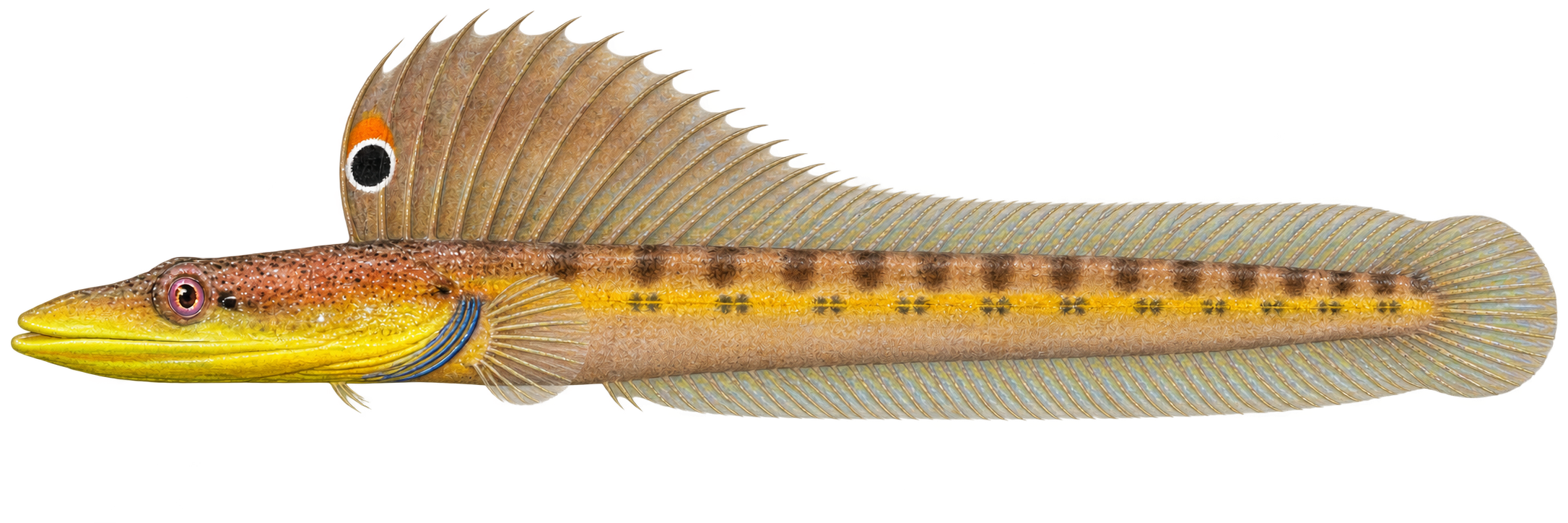
Size: The Smithsonian account reports 8.2 cm. It does not explicitly specify total, fork or standard length for this value; do not compare it directly with a length-labeled measurement.
An elongated pikeblenny whose males have a yellow face and a pale-ringed black spot at the front of the dorsal fin, with orange above it. Females are more subdued.
Read the guide’s location, season and eating cautions before acting.
Yellowfin Mojarra
Deep-bodied & oval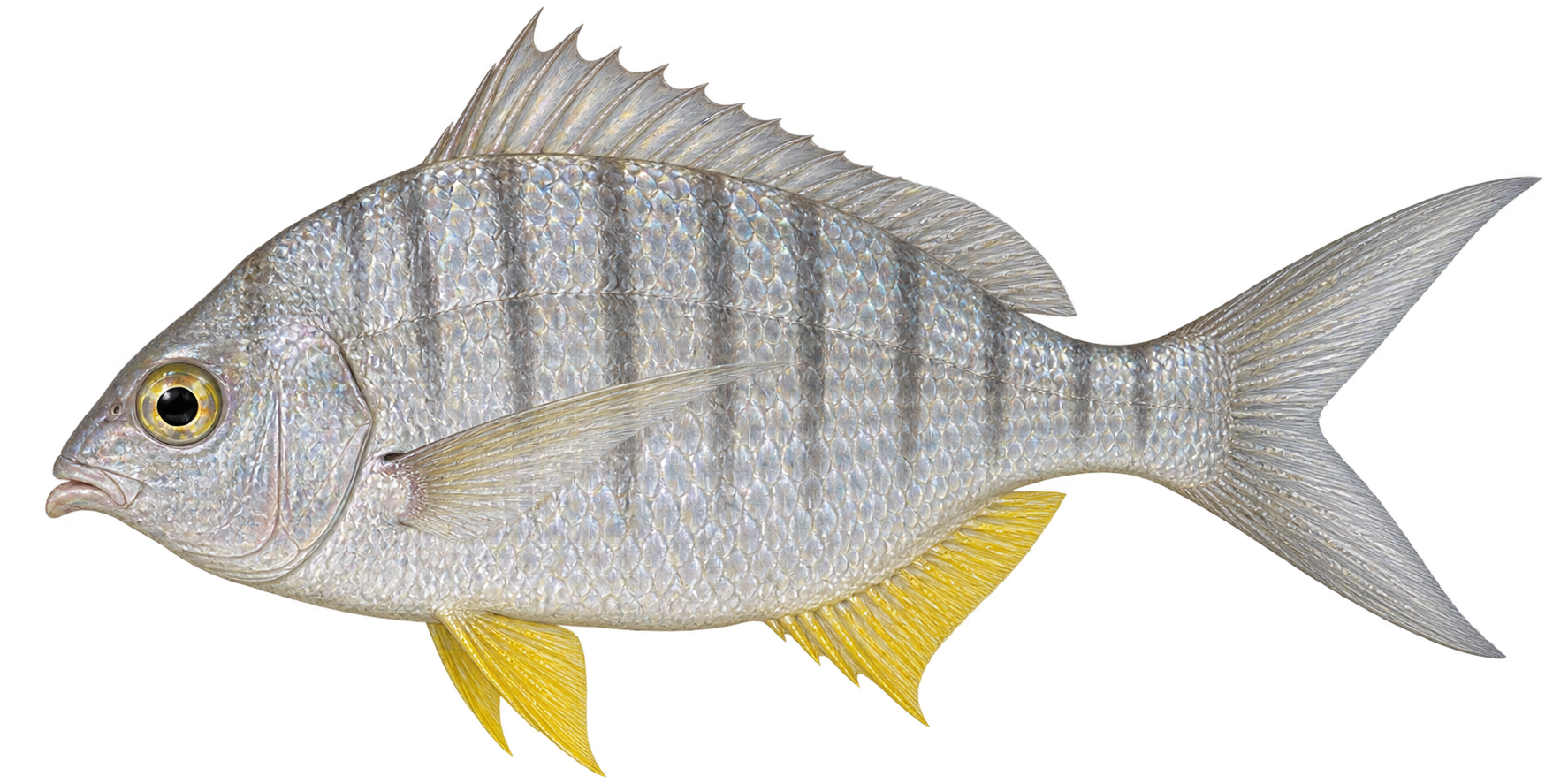
Size: Reported maximum about 41 cm; see profile for life-stage and measurement notes.
A silvery deep-bodied fish with faint bars, yellow pelvic and anal fins, and a mouth that protrudes downward.
Read the guide’s location, season and eating cautions before acting.
Yellowhead Jawfish
Streamlined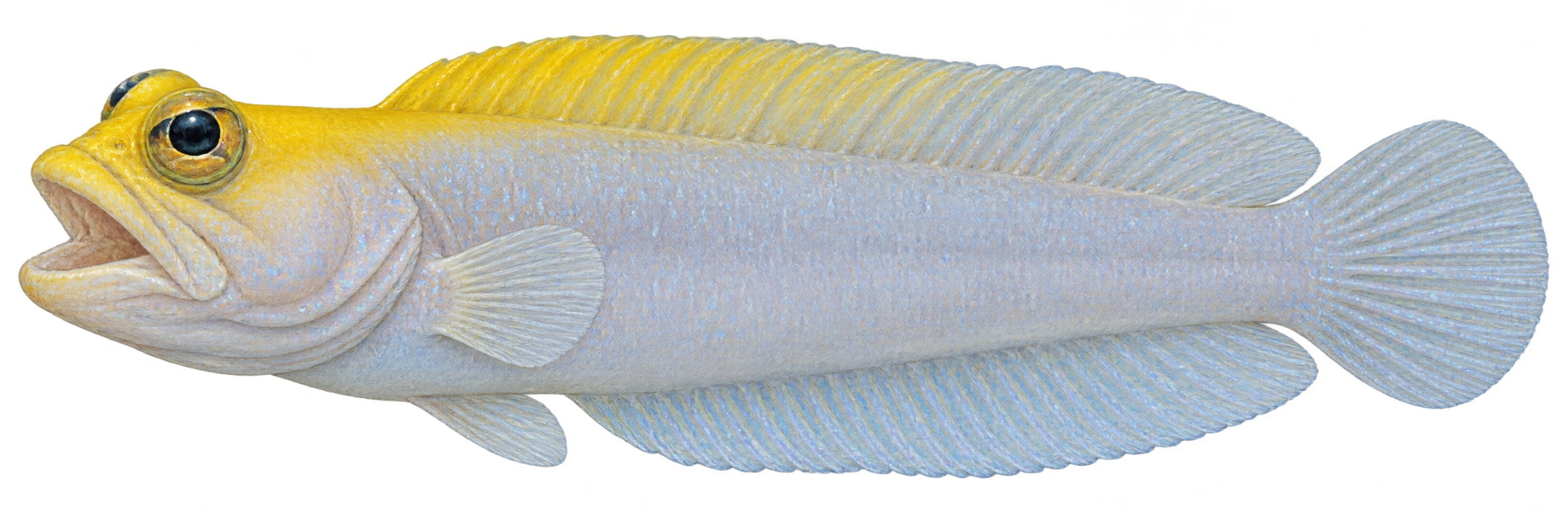
Size: Up to about 4 inches.
Yellow head, pale blue body and an oversized mouth beside a sand burrow.
Restricted marine life: live collection only; no spearing
Explore the yellowhead jawfish guide →Yellowhead Wrasse
Streamlined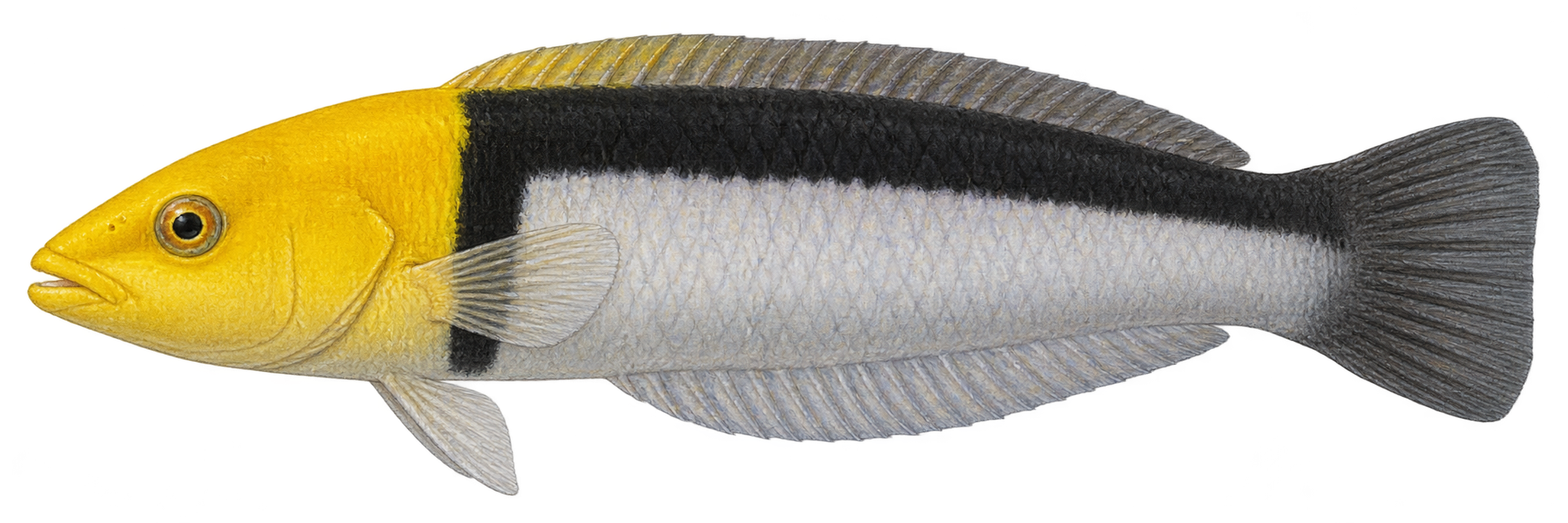
Size: Maximum about 12 inches (30 cm) total length.
Terminal phase: yellow head, black T-shaped marking and pale lower body.
Restricted marine life: live collection only; no spearing
Explore the yellowhead wrasse guide →Yellowtail (Redfin) Parrotfish
Elongate & oval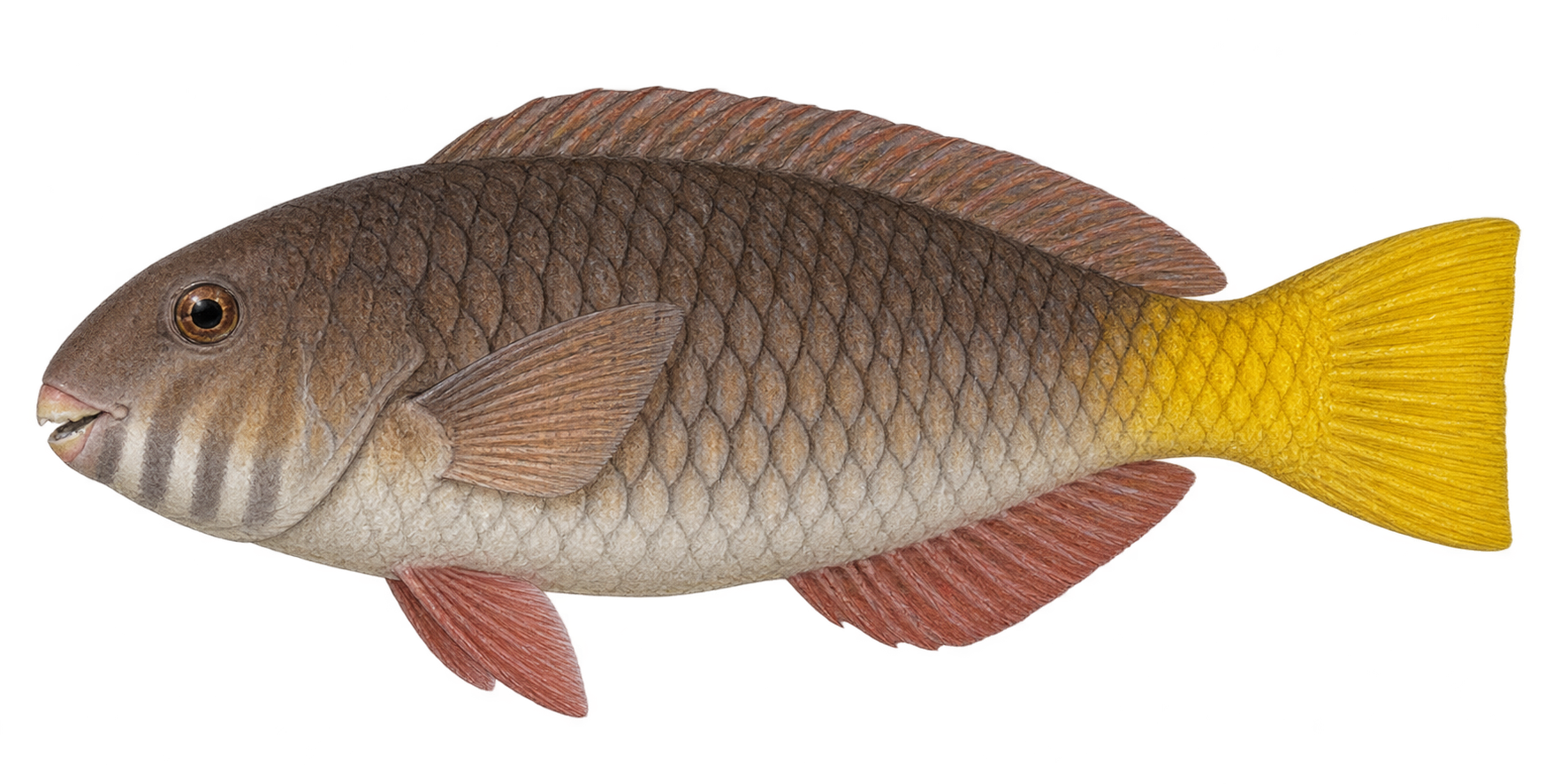
Size: Reported maximum 48 cm; juveniles resemble the initial phase.
Initial phase: gray-brown scales, yellow tail base and tail, reddish lower fins. Terminal phase: greener with red iris and dark pectoral-base spot.
Read the guide’s location, season and eating cautions before acting.
Yellowtail Damselfish
Deep-bodied & oval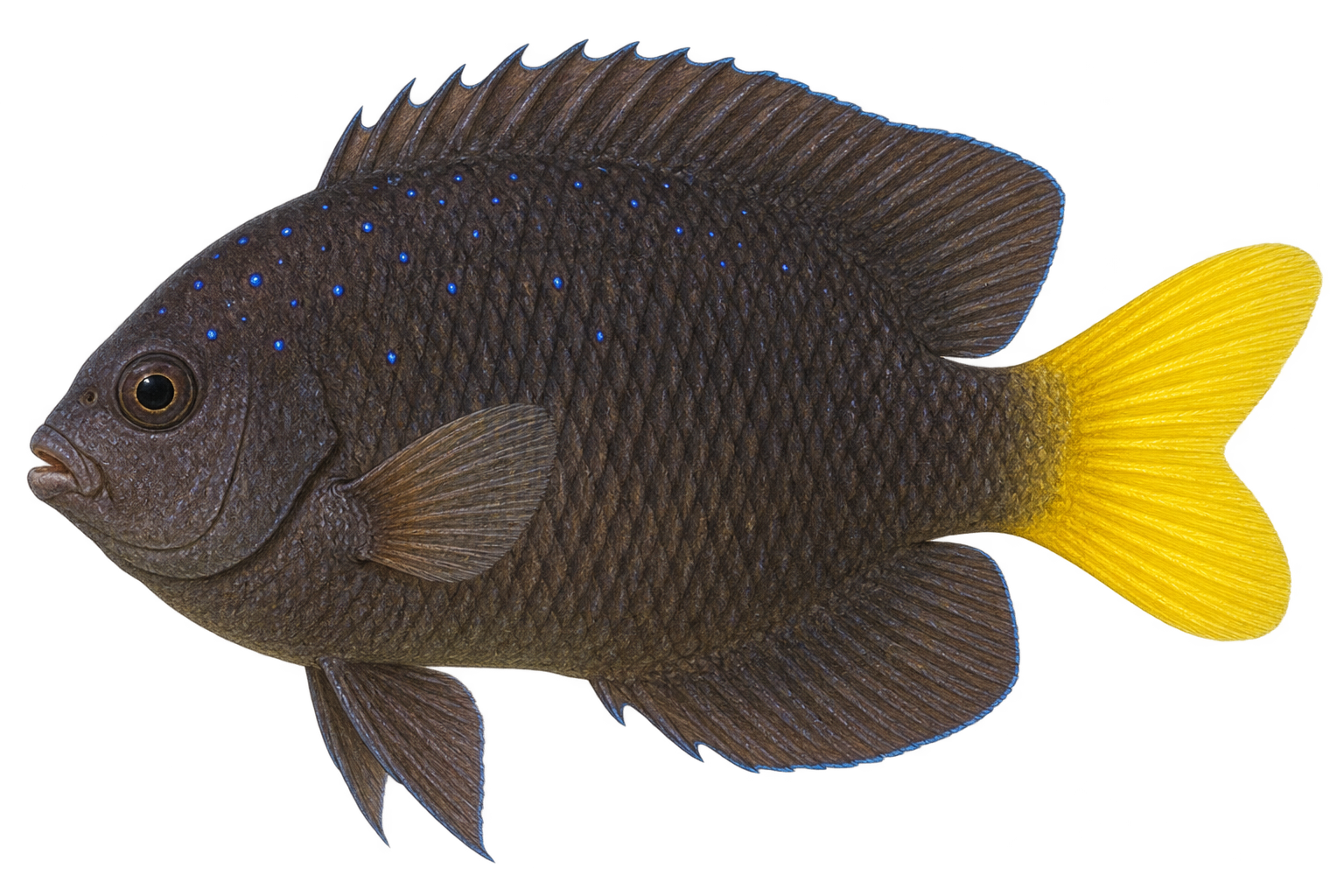
Size: Commonly about 15 cm; maximum 21 cm.
Dark chunky adult with a pale-to-yellow tail and scattered blue spots.
Restricted marine life: live collection only; no spearing
Explore the yellowtail damselfish guide →Yellowtail Snapper
Streamlined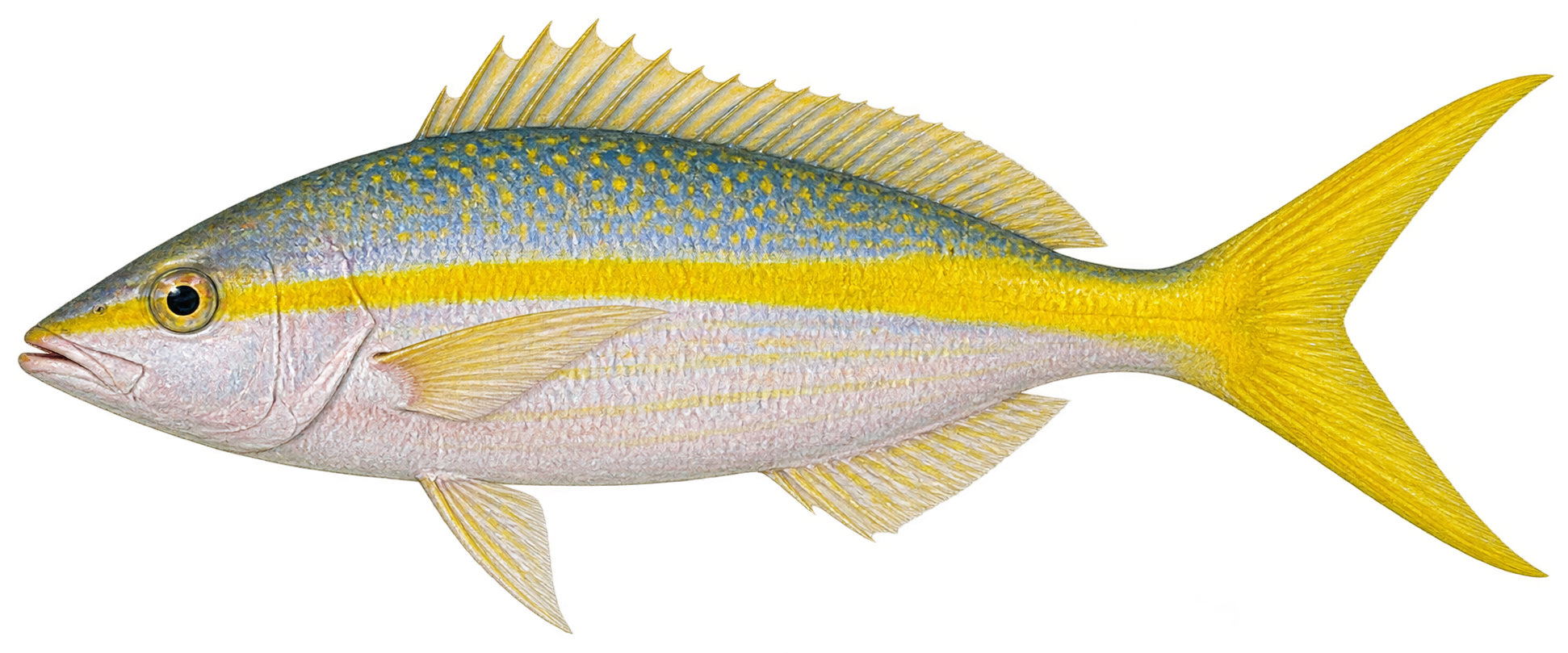
Size: Maximum about 30 inches (75 cm) total length.
Yellow side stripe widens into a deeply forked yellow tail; no dark side spot.
Regulated food fish: size and combined snapper limits apply
Explore the yellowtail snapper guide →Wahoo
Streamlined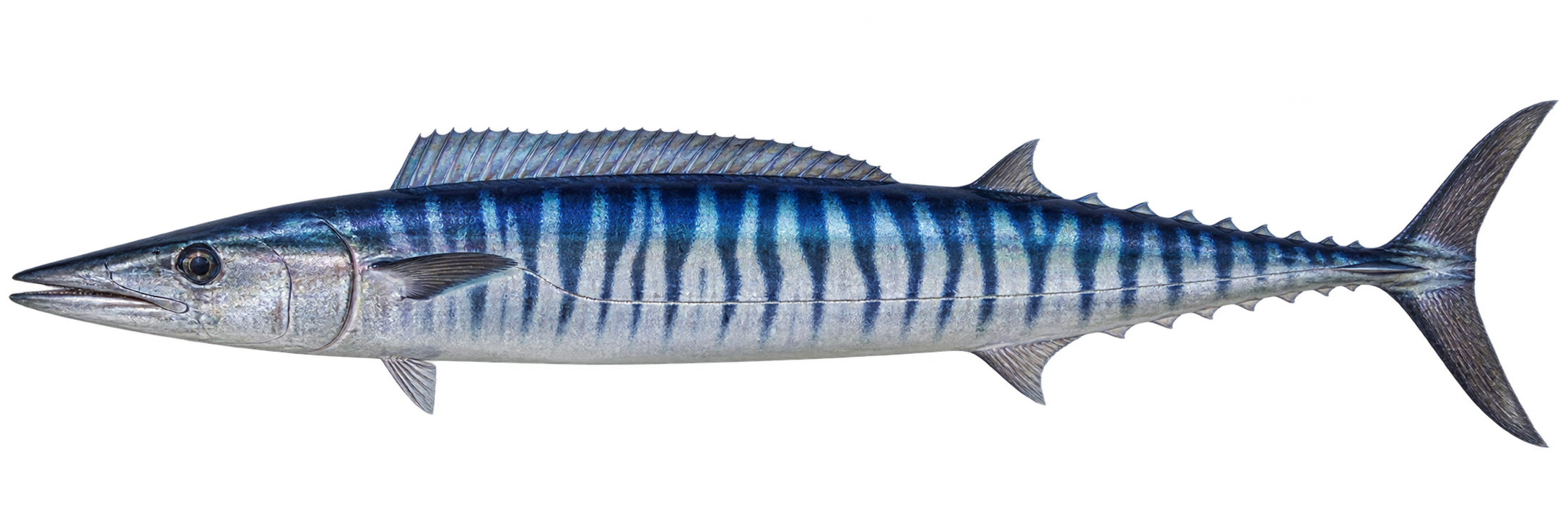
A slender blue-backed predator with an elongated snout, cobalt vertical bars, a long first dorsal fin and small finlets approaching the deeply forked tail.
Restrictions apply; verify current rules and health advice
Explore the wahoo guide →King Mackerel
Streamlined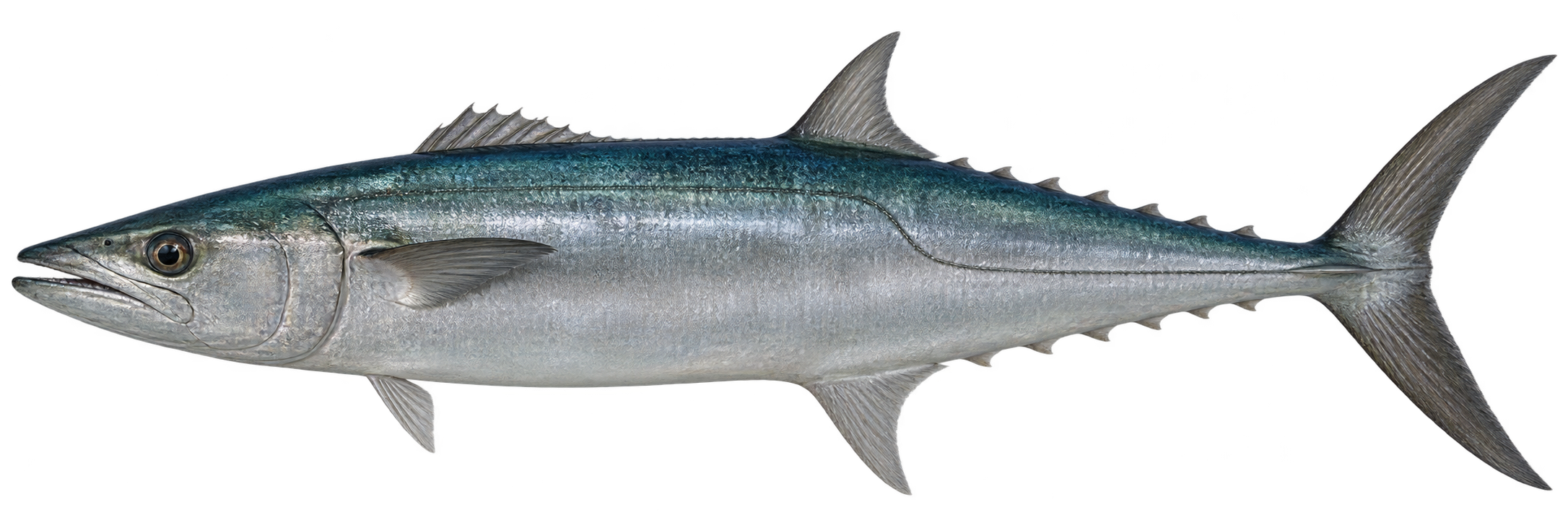
Adults are blue-green above and silver below. The lateral line drops abruptly beneath the second dorsal fin; the front of the first dorsal lacks the dark patch typical of Spanish mackerel.
Restrictions apply; verify current rules and health advice
Explore the king mackerel guide →Bonefish
Streamlined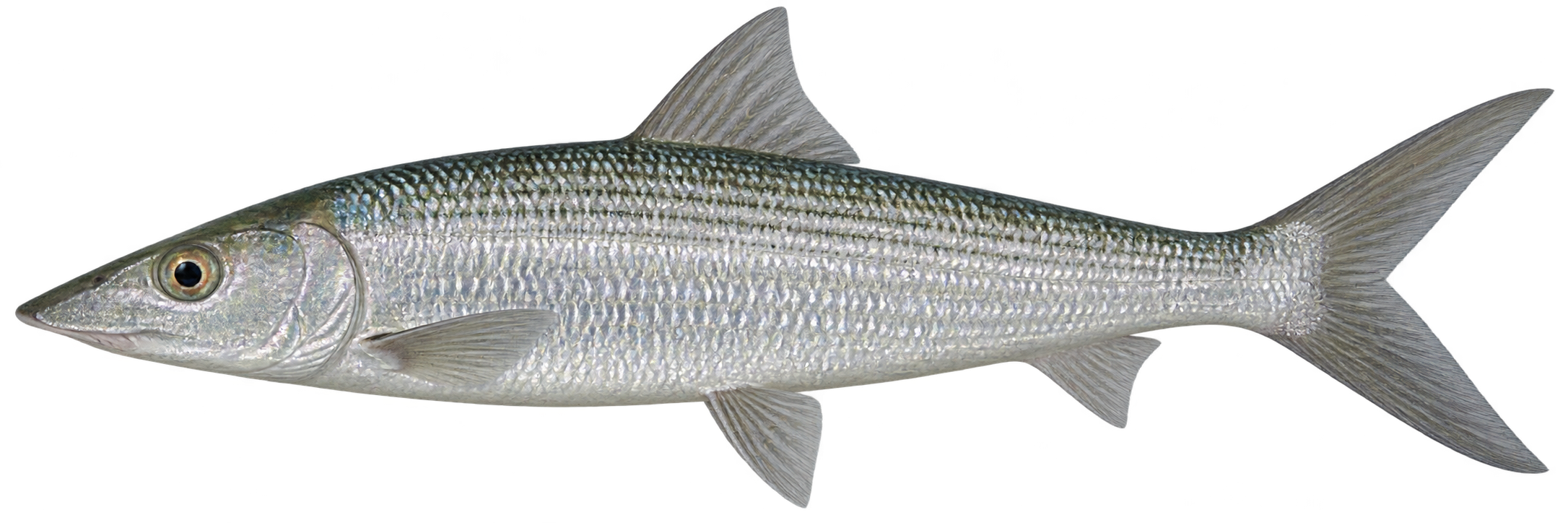
A streamlined silver fish with a green-blue back and a pointed snout overhanging the lower jaw. The deeply forked tail and faint upper-body streaks help separate it from ladyfish.
Catch and release only; no food harvest
Explore the bonefish guide →Red Drum
Streamlined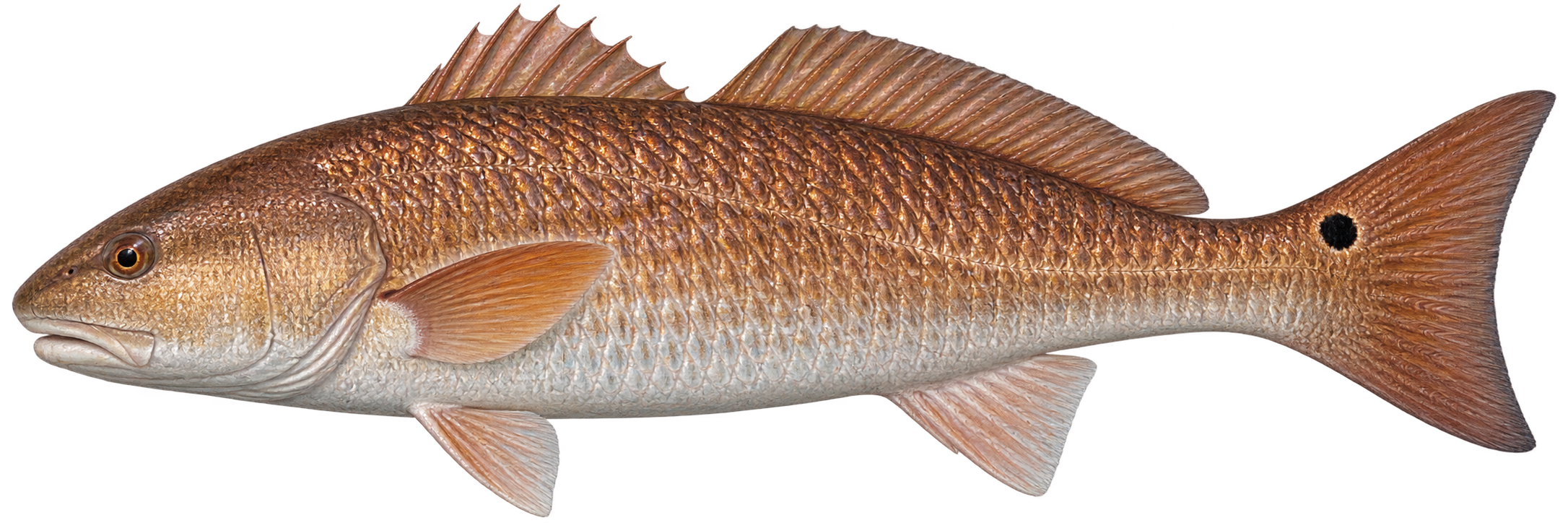
A copper-colored drum with large scales, no chin barbels and usually one or more dark spots near the tail base. A missing spot does not automatically exclude red drum.
Restrictions apply; verify current rules and health advice
Explore the red drum guide →Mahi-mahi
Streamlined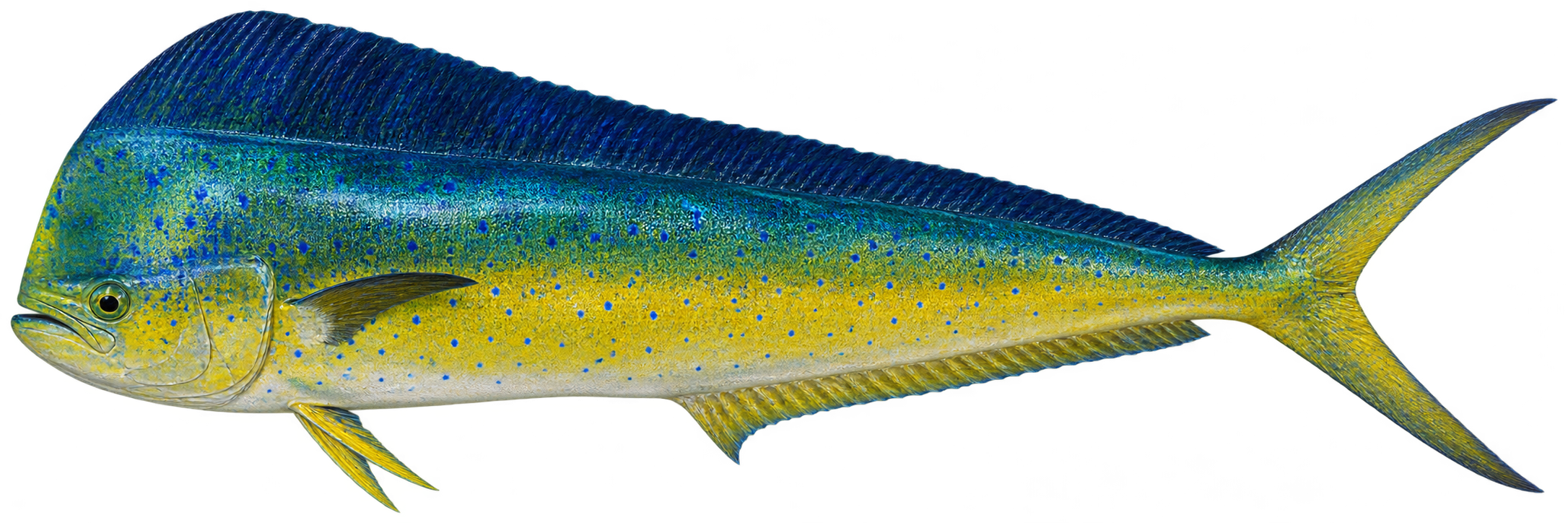
A long, compressed body tapers toward a deeply forked tail. A continuous dark dorsal fin starts above the eye; the back glows blue-green and the sides yellow. Mature males have a steep forehead, while females have a sloping profile.
Restrictions apply; verify current rules and health advice
Explore the mahi-mahi guide →Black Drum
Streamlined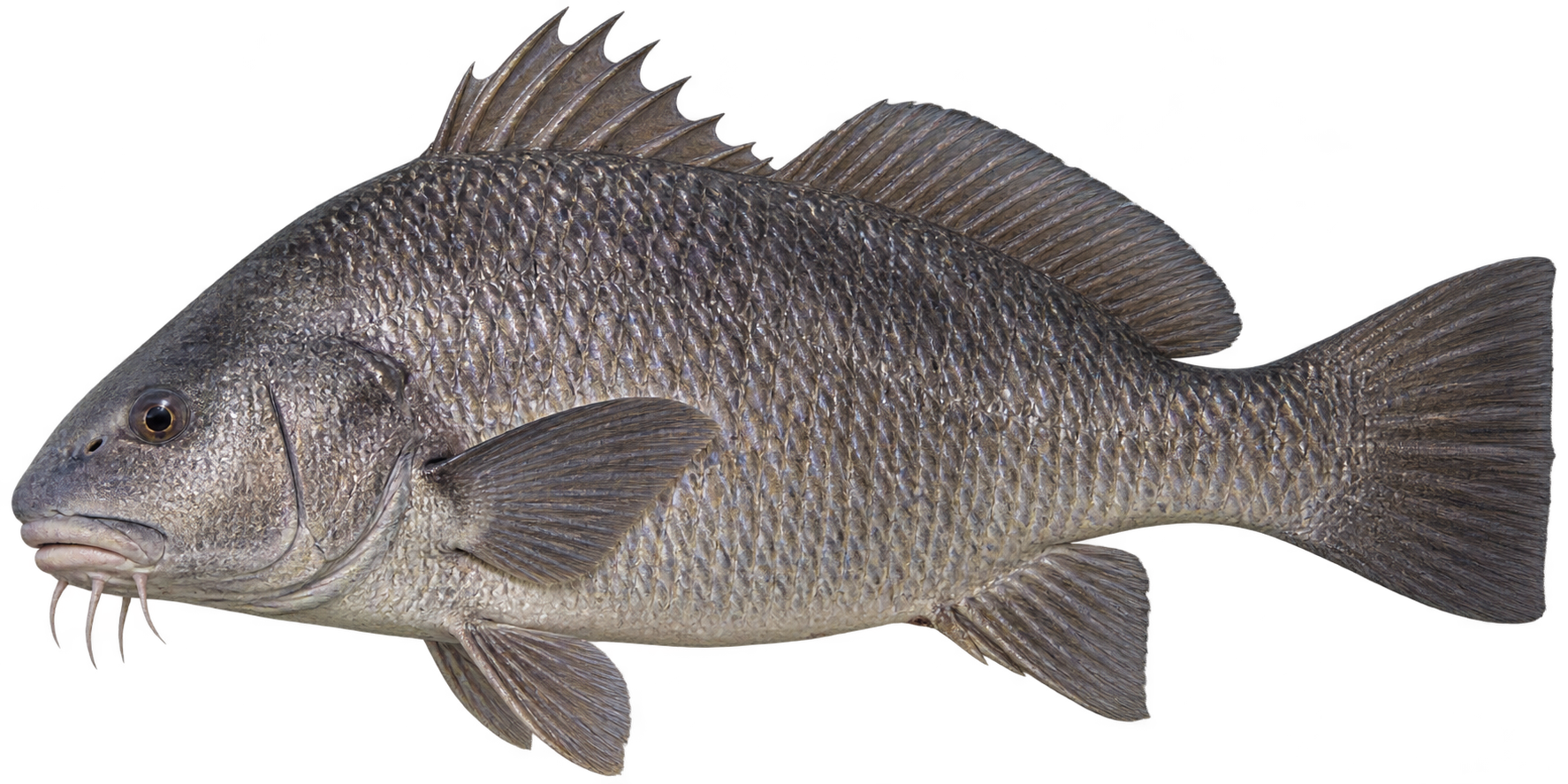
A high arched back, large scales and chin barbels distinguish black drum. Young fish carry broad vertical bars that fade with age.
Restrictions apply; verify current rules and health advice
Explore the black drum guide →Spotted Seatrout
Streamlined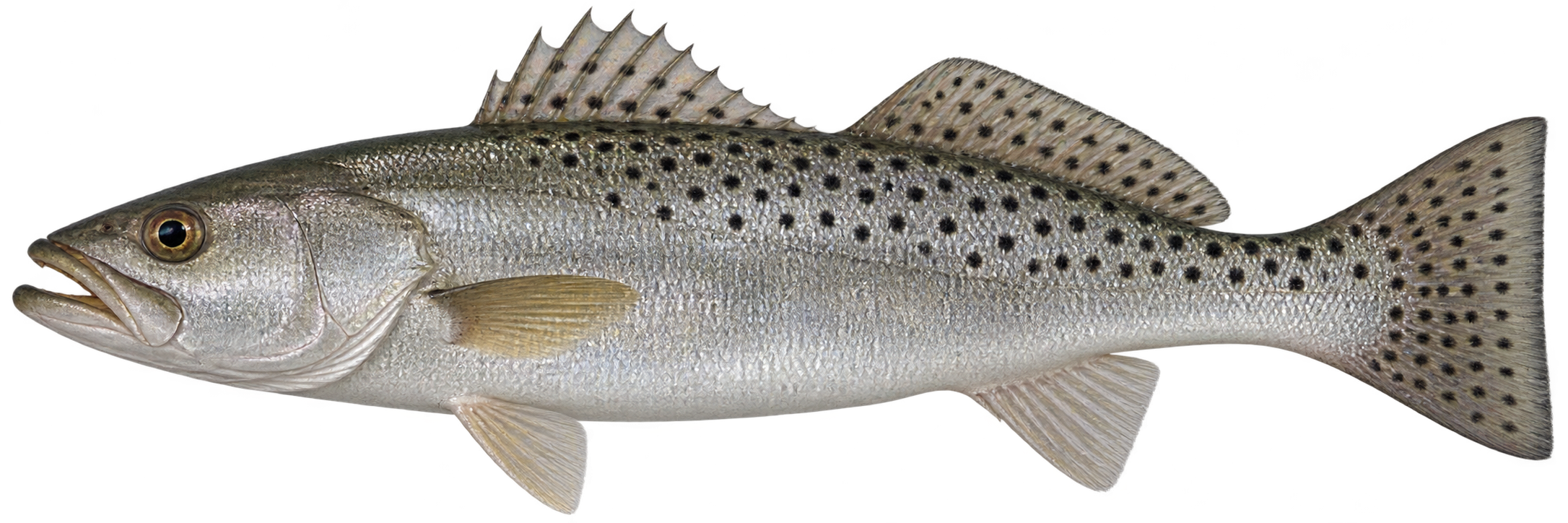
A gray-green back bears clear black spots continuing onto dorsal fins and tail. A pair of large upper-jaw canine teeth separates it from harmless-looking small silver fishes.
Indian River Lagoon harvest closed November–December; Southeast region rules differ
Explore the spotted seatrout guide →Ladyfish
Streamlined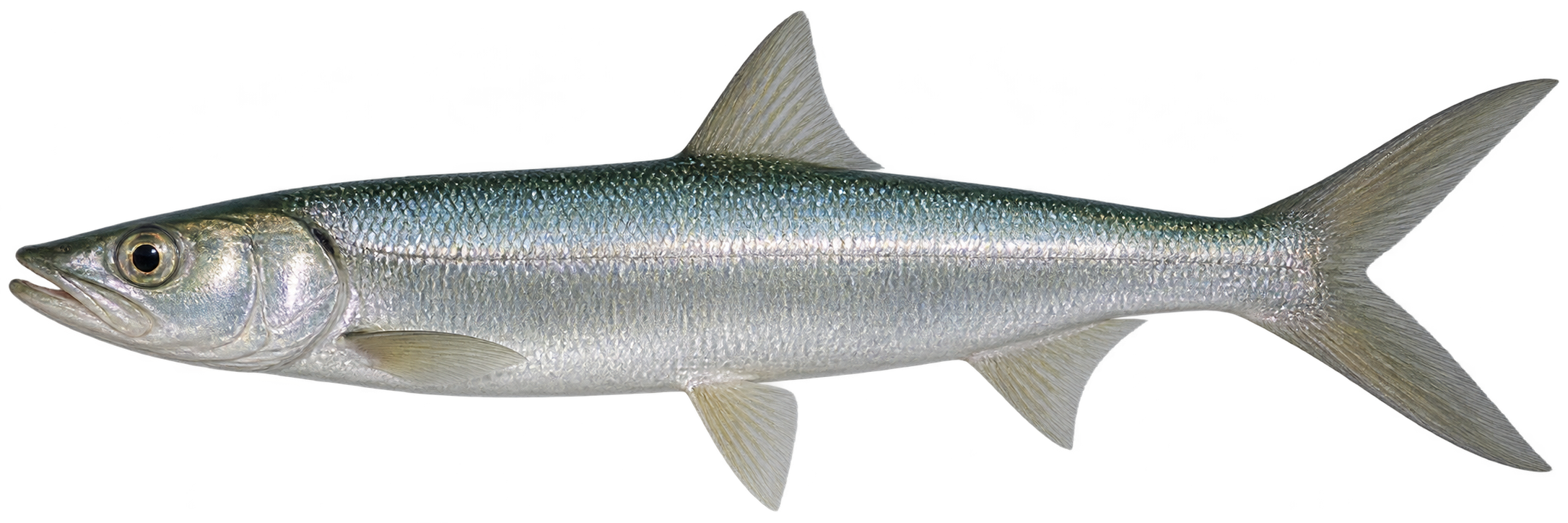
A slender silver fish with a blue back, pointed head and terminal mouth. The final dorsal ray does not form the long filament seen in tarpon.
Restrictions apply; verify current rules and health advice
Explore the ladyfish guide →Striped Mullet
Streamlined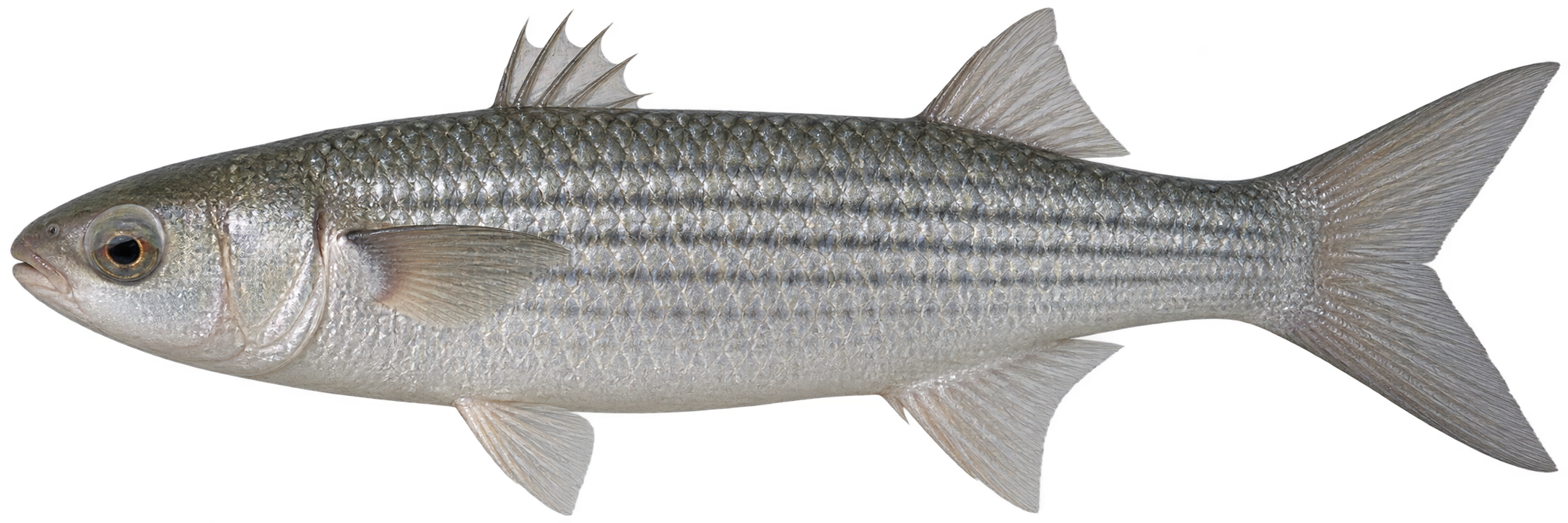
A blunt-nosed silver fish with faint horizontal stripes and no dark pectoral-base spot. The second dorsal begins roughly above the anal-fin origin.
Restrictions apply; verify current rules and health advice
Explore the striped mullet guide →Gafftopsail Catfish
Streamlined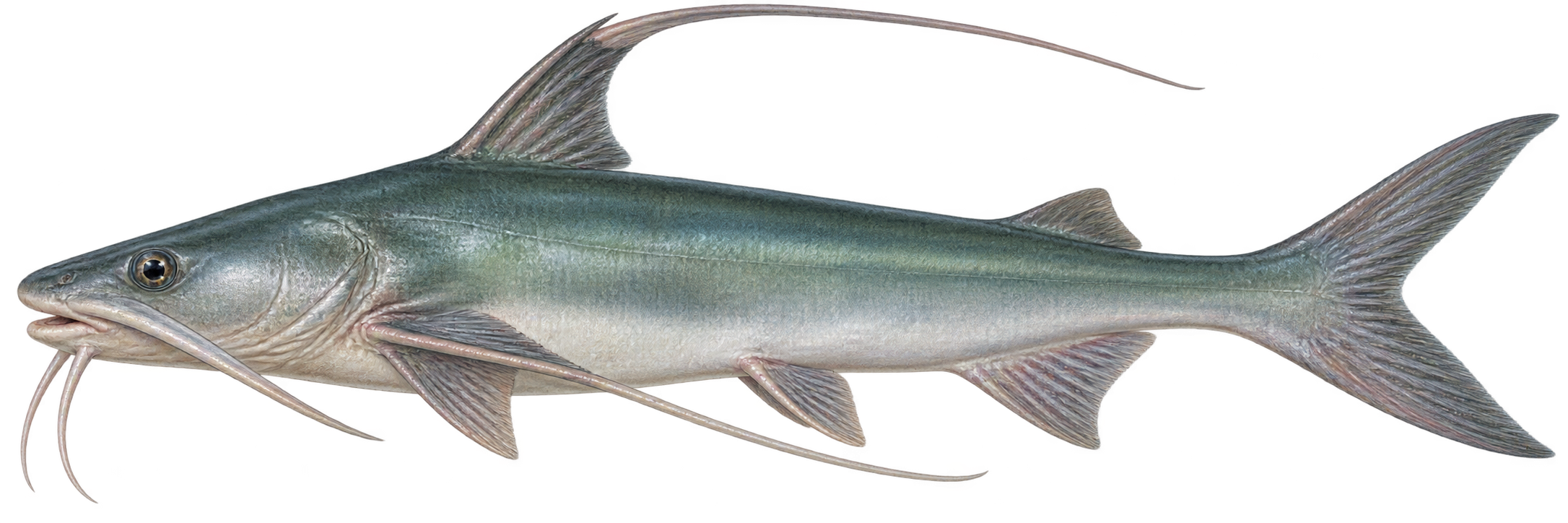
A blue-green marine catfish with very long flattened mouth-corner barbels and two chin barbels. Dorsal and pectoral spines carry long fleshy extensions.
Restrictions apply; verify current rules and health advice
Explore the gafftopsail catfish guide →Tripletail
Deep-bodied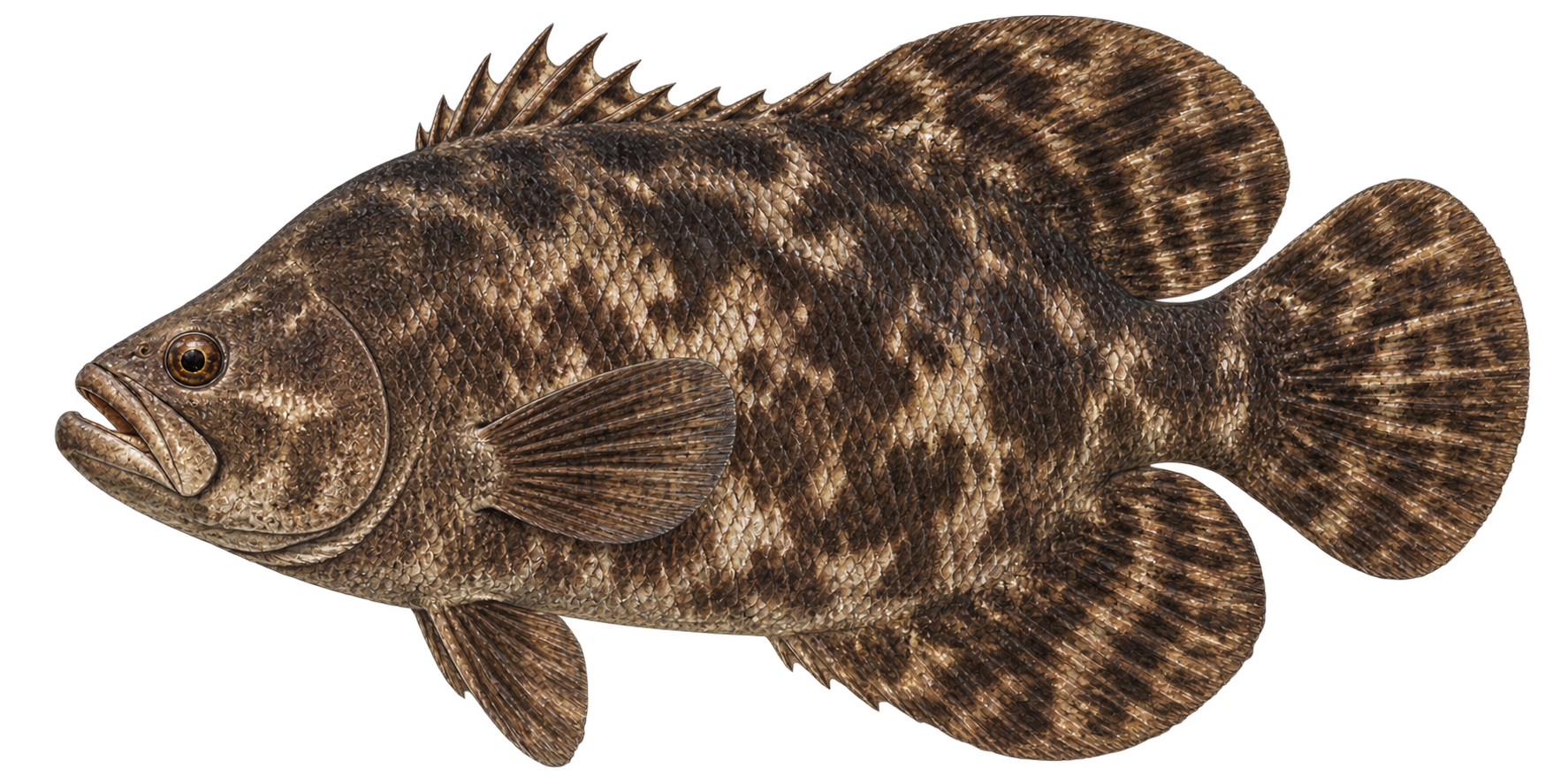
A deep mottled brown fish whose rear dorsal and anal fins resemble extra tails. The nape becomes concave and the cheek edge is serrated.
Restrictions apply; verify current rules and health advice
Explore the tripletail guide →Blackfin Tuna
Streamlined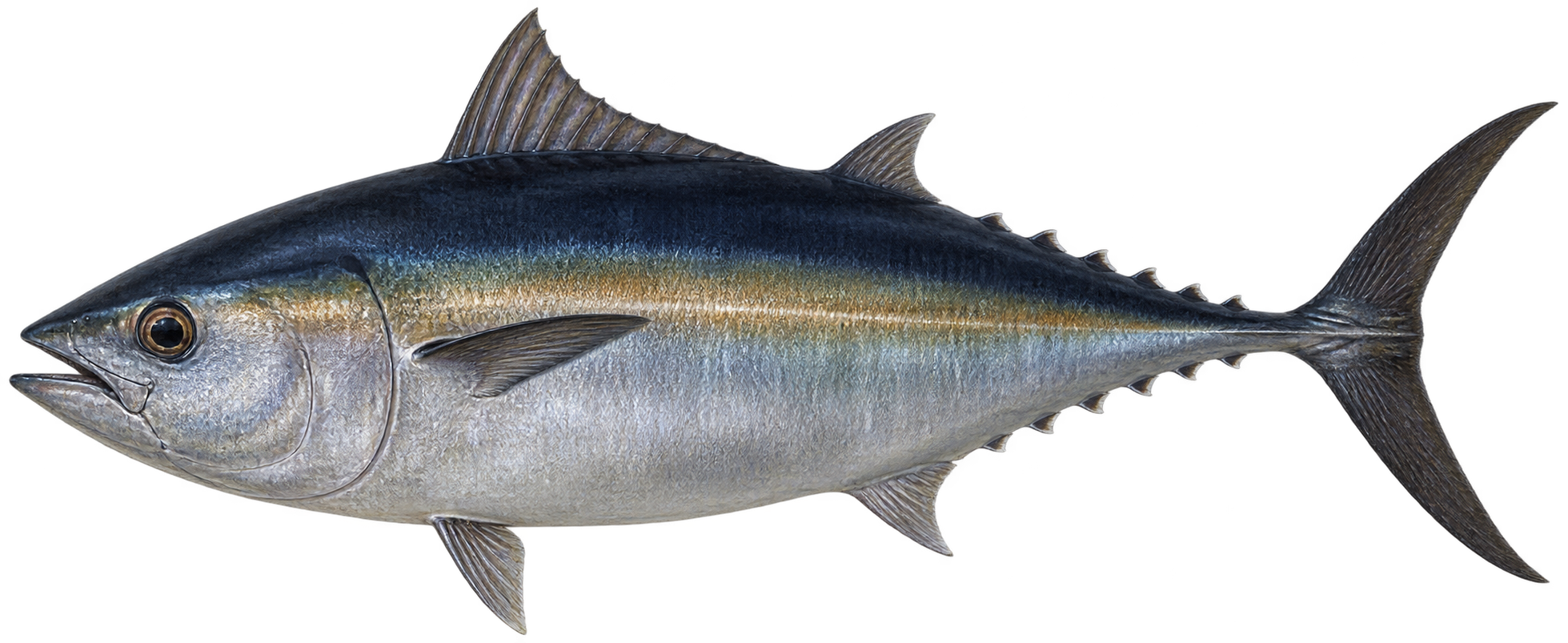
Look for a compact tuna with a bronze side stripe, dark finlets edged in white and a dusky second dorsal fin. The second dorsal and anal fins are not stretched into long sickles.
Restrictions apply; verify current rules and health advice
Explore the blackfin tuna guide →Sailfish
Streamlined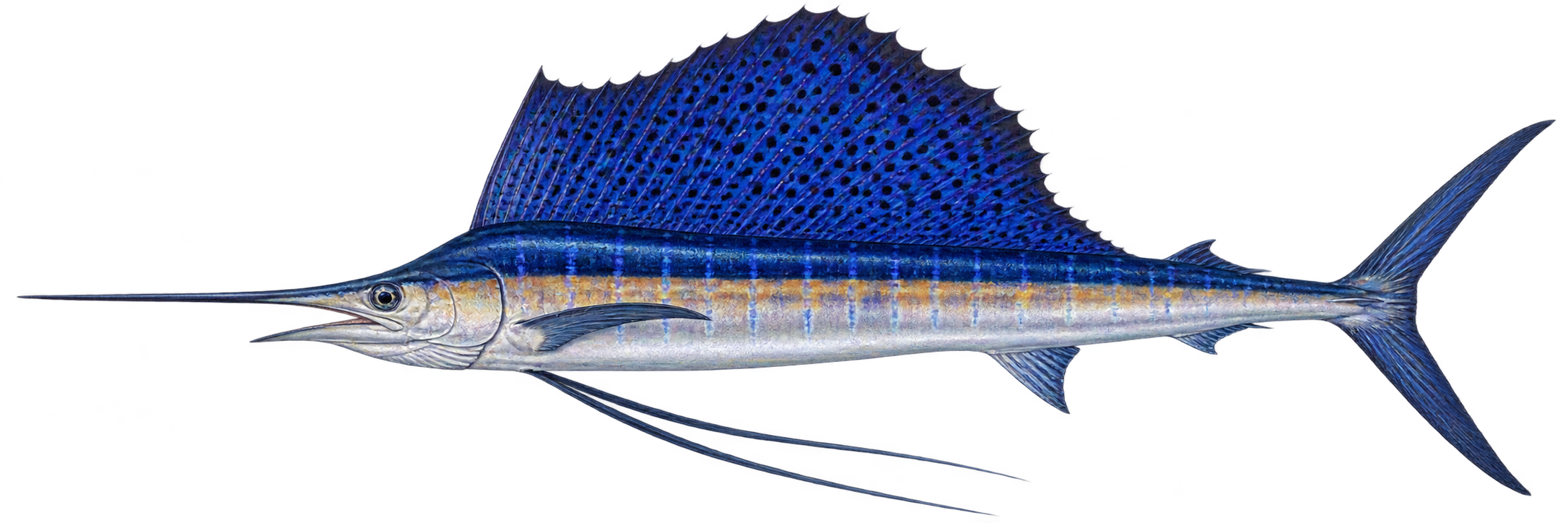
A huge spotted dorsal sail, long narrow pelvic fins and an elongated upper-jaw bill distinguish this blue-backed billfish from marlins.
Restrictions apply; verify current rules and health advice
Explore the sailfish guide →Yellowfin Tuna
Streamlined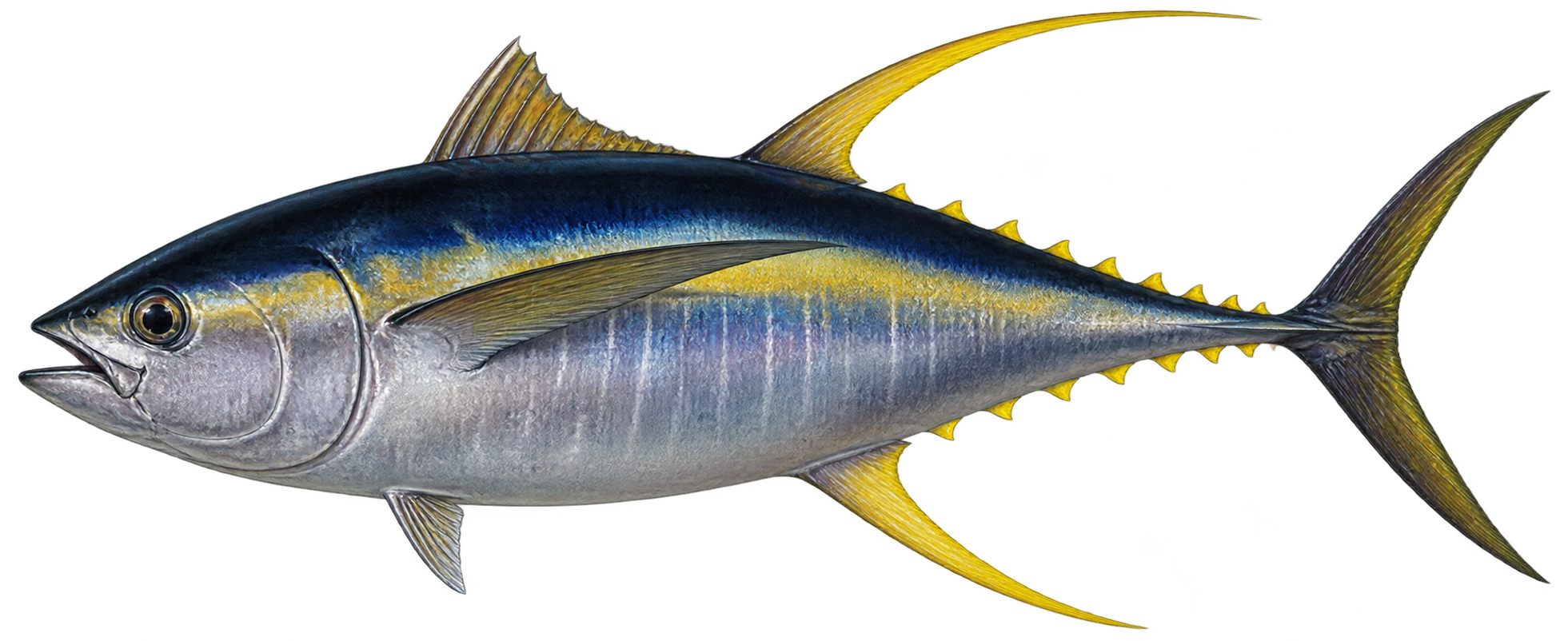
Long second-dorsal and anal-fin lobes, yellow finlets and a gold side stripe distinguish large yellowfin. Pectoral fins extend toward the second dorsal origin.
Restrictions apply; verify current rules and health advice
Explore the yellowfin tuna guide →Skipjack Tuna
Streamlined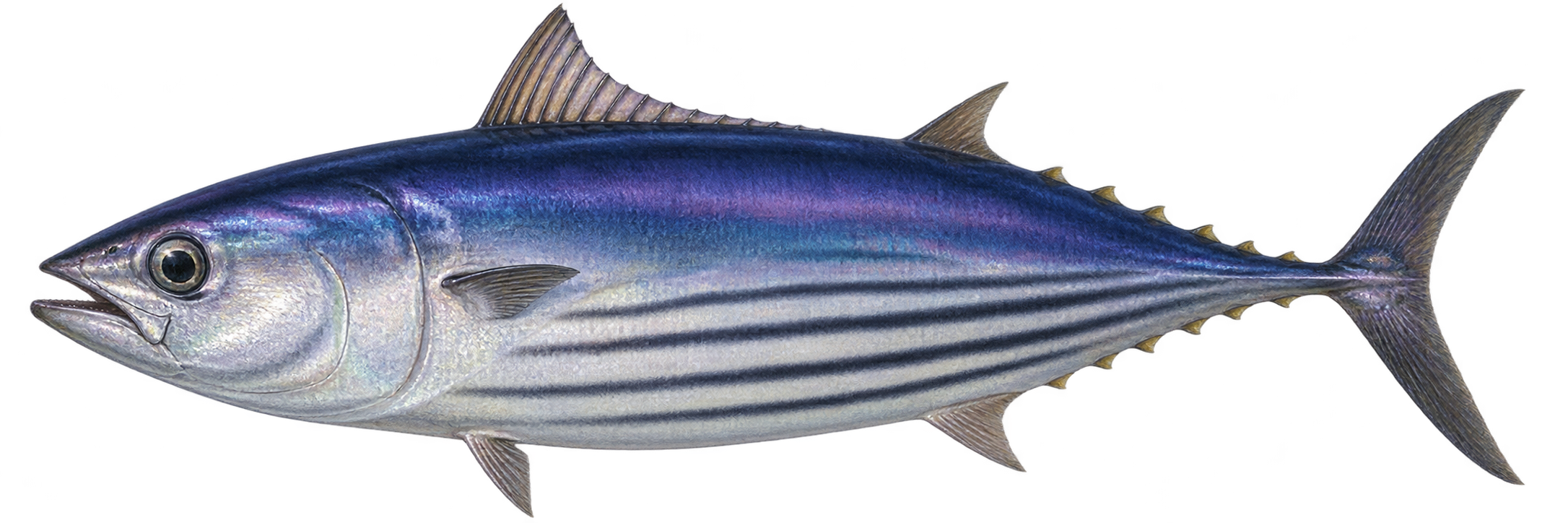
Four to six dark horizontal stripes run along the lower sides beneath a purple-blue back. The pectoral fins are relatively short.
Restrictions apply; verify current rules and health advice
Explore the skipjack tuna guide →Little Tunny
Streamlined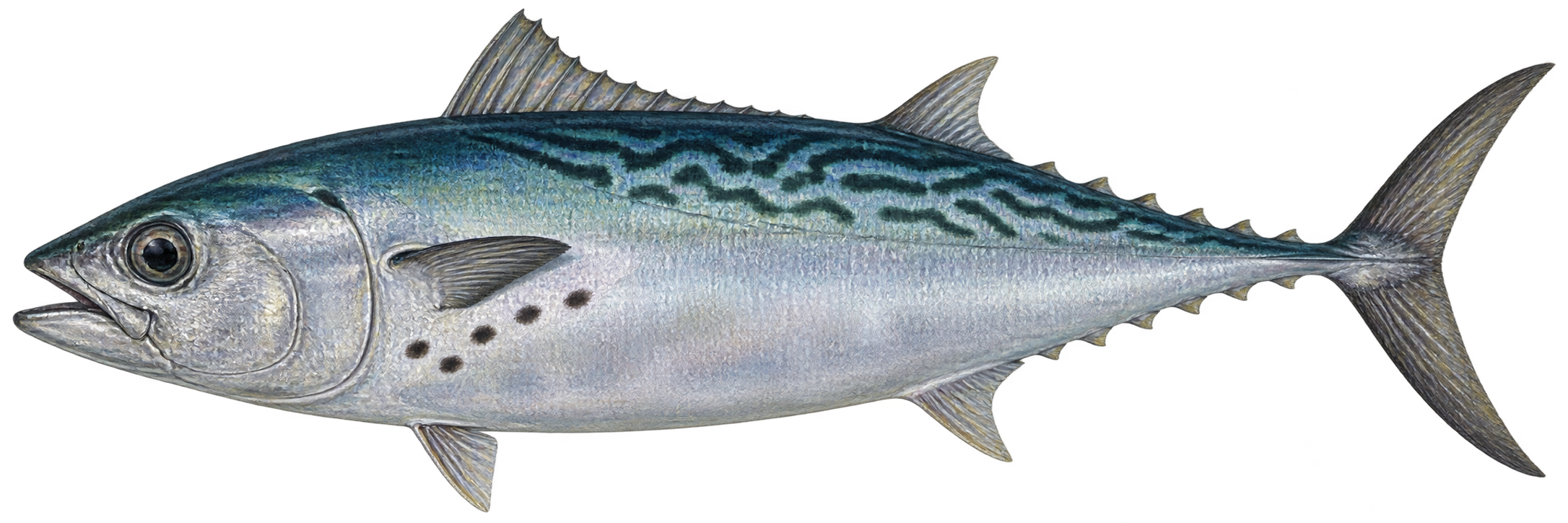
Broken, wavy dark markings cover the upper rear body. Several dark spots sit below each short pectoral fin; the belly lacks skipjack-style stripes.
Restrictions apply; verify current rules and health advice
Explore the little tunny guide →Bluefish
Streamlined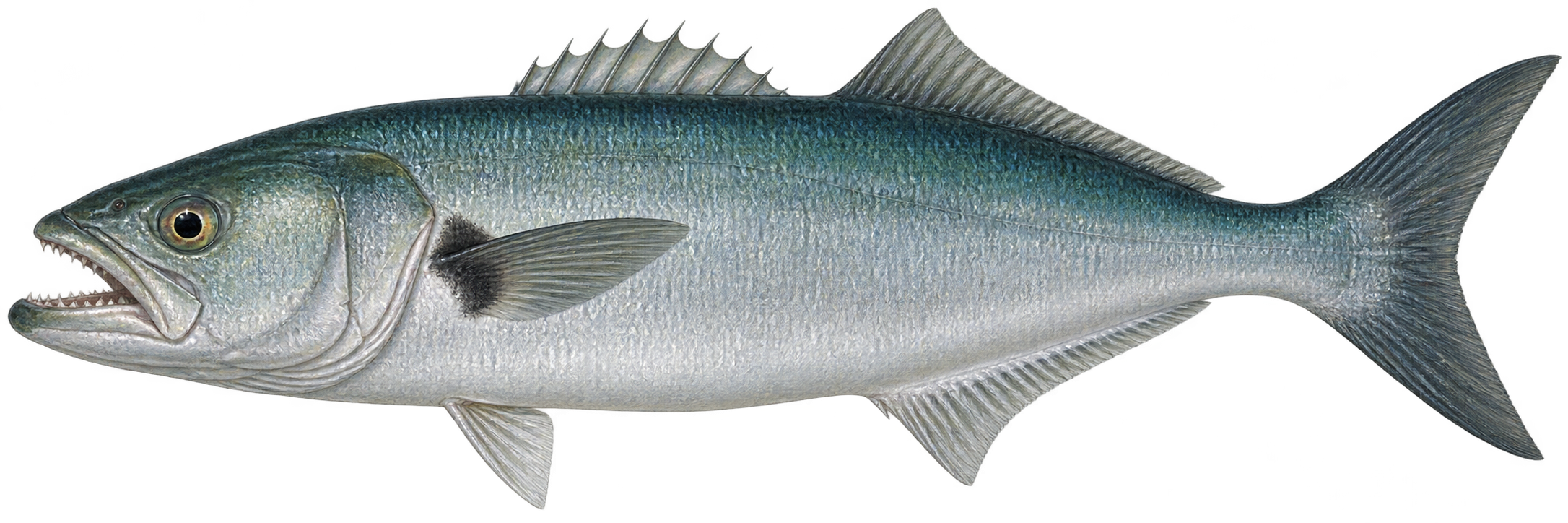
A blue-green back, silver sides, large toothed mouth and dark pectoral-base patch identify this schooling predator.
Restrictions apply; verify current rules and health advice
Explore the bluefish guide →Southern Kingfish
Streamlined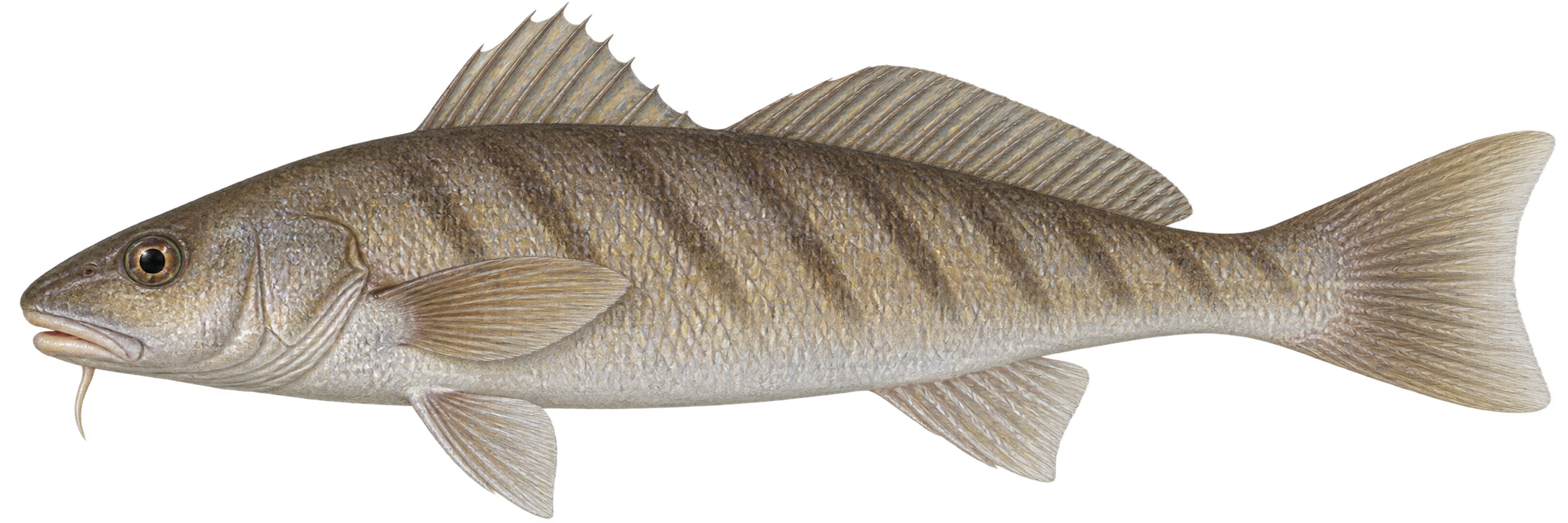
Seven or eight muted diagonal dark marks cross a gray-brown body. A single chin barbel and pale tail tip help separate it from other whiting.
Restrictions apply; verify current rules and health advice
Explore the southern kingfish guide →Gulf Kingfish
Streamlined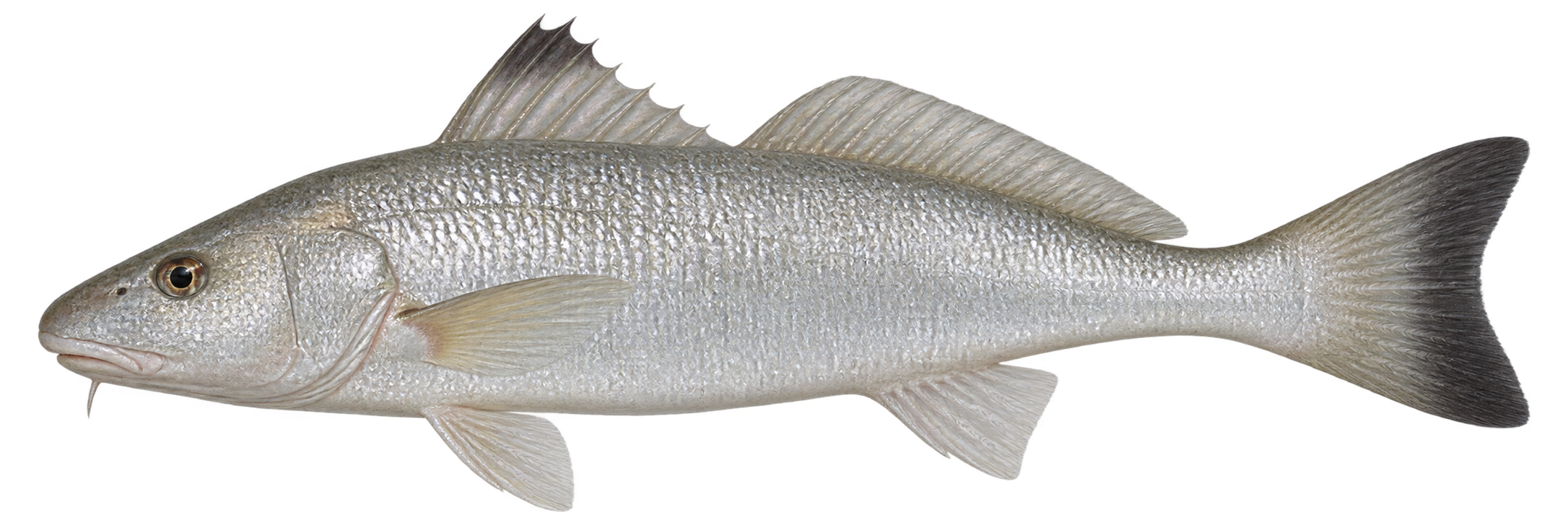
A mostly unmarked silver drum with one chin barbel, a blackish tail tip and often a dusky first-dorsal tip.
Restrictions apply; verify current rules and health advice
Explore the gulf kingfish guide →Atlantic Croaker
Streamlined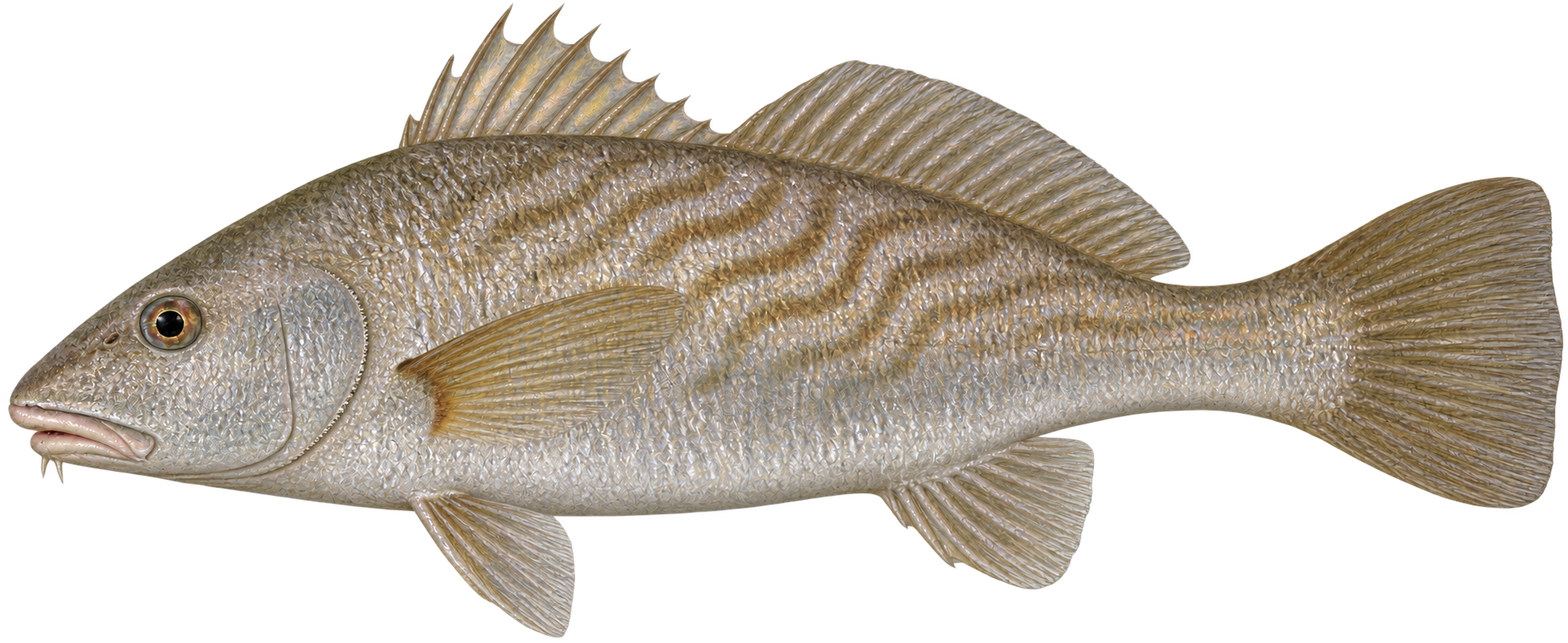
A silver-bronze drum with vague wavy side markings, small chin barbels and a strongly toothed edge to the cheek bone.
Restrictions apply; verify current rules and health advice
Explore the atlantic croaker guide →Red Snapper
Streamlined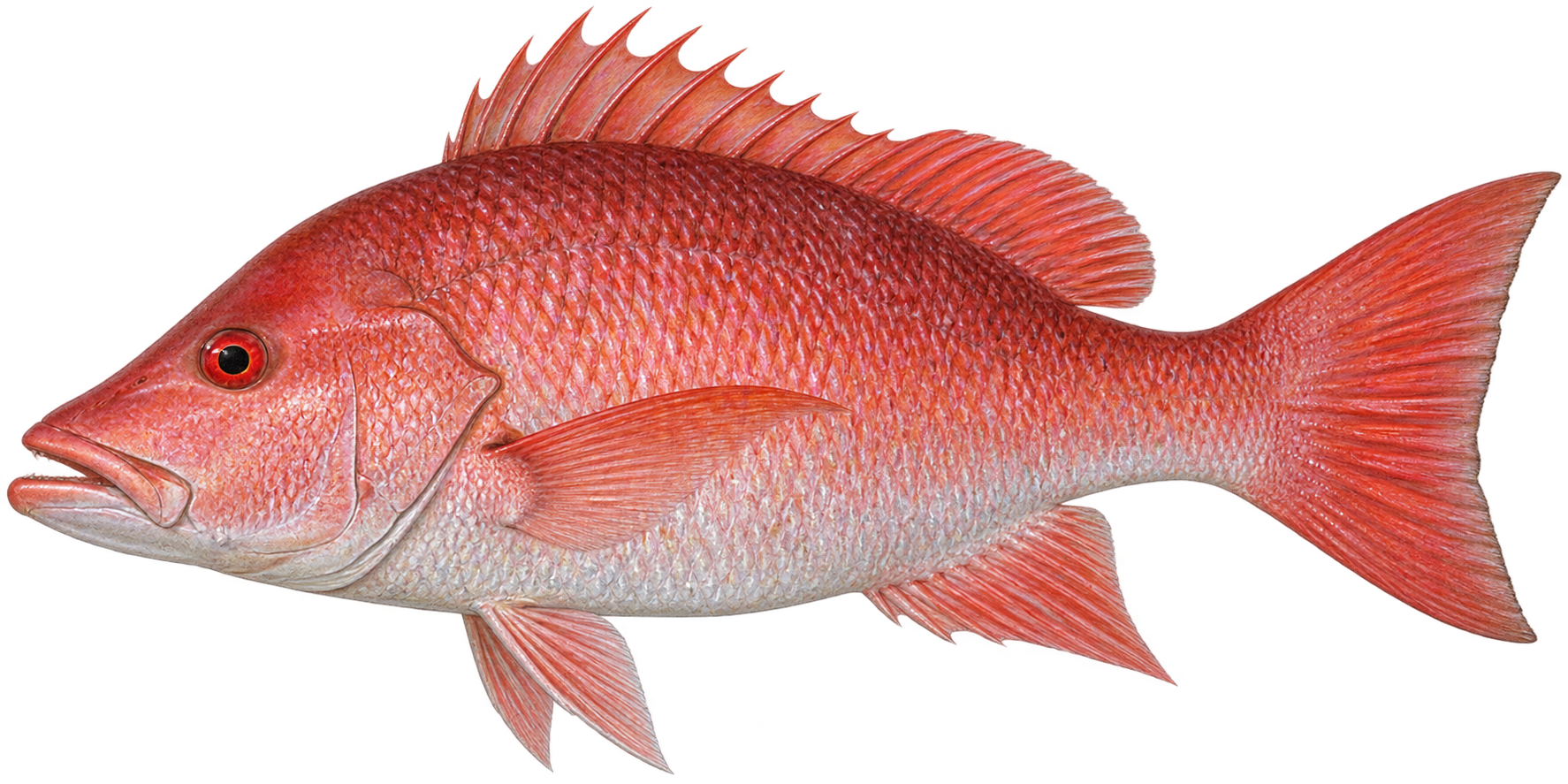
Pink-red body, a red iris, long triangular snout and pointed rear anal fin distinguish adults. Adult sides lack a large dark blotch.
Atlantic recreational harvest closed at November 12 check; verify current rules
Explore the red snapper guide →Vermilion Snapper
Streamlined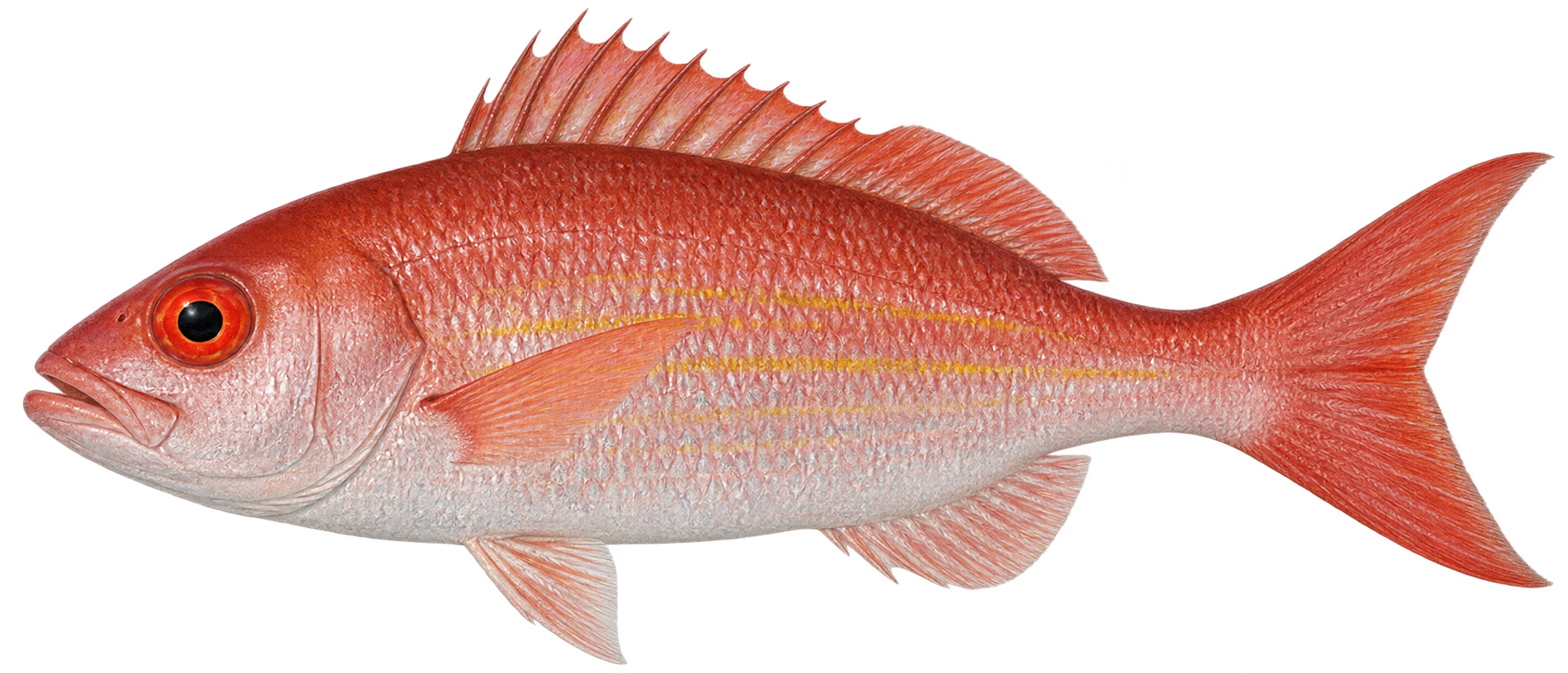
A rosy fish with large red eyes, a gently rounded anal-fin outline and no large canine teeth. Faint yellow side streaks can appear.
Restrictions apply; verify current rules and health advice
Explore the vermilion snapper guide →Silk Snapper
Streamlined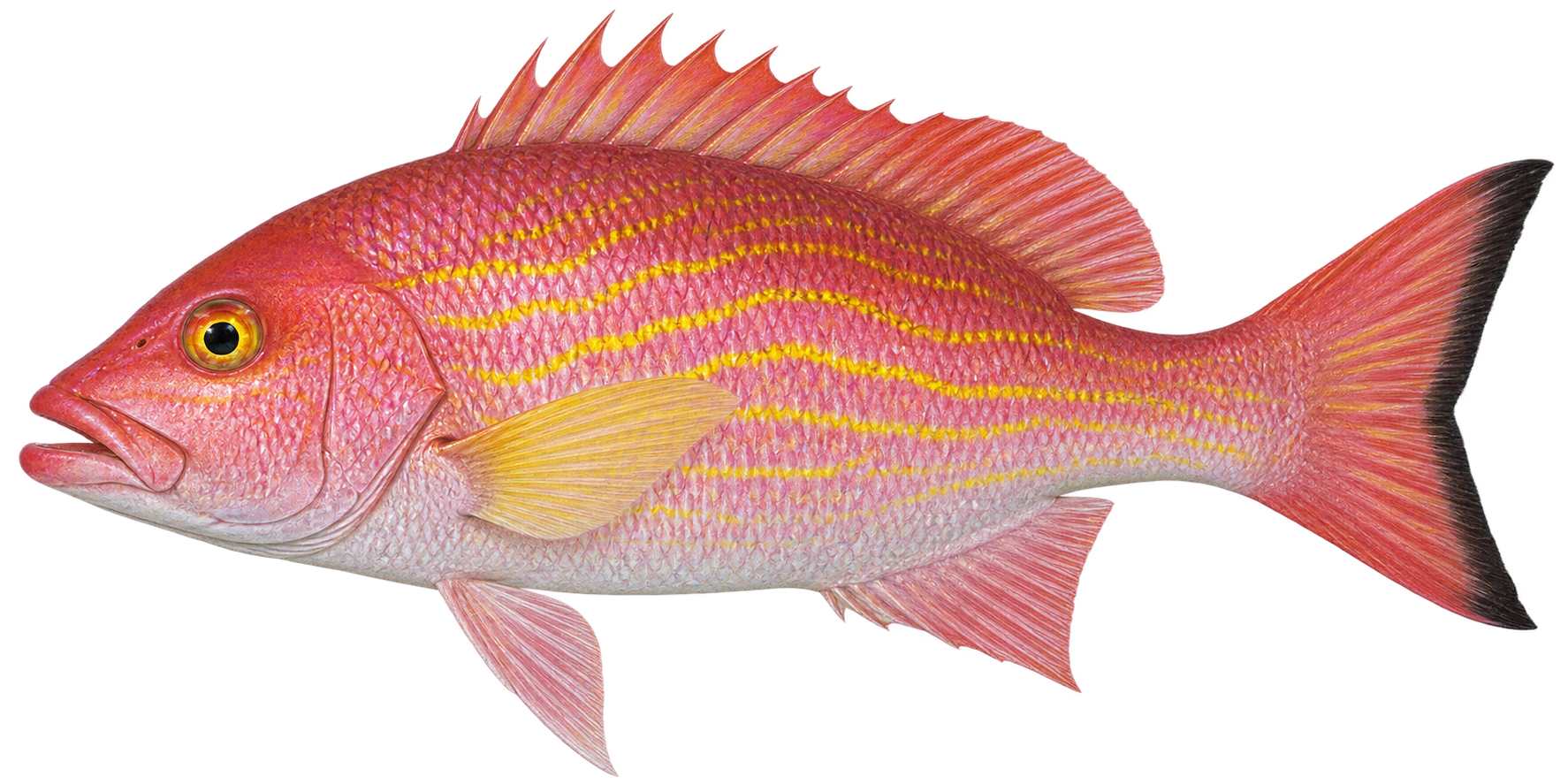
A pink-red snapper with a yellow iris, wavy yellow side lines, pale yellow pectoral fins and a black-trimmed tail edge.
Restrictions apply; verify current rules and health advice
Explore the silk snapper guide →Queen Snapper
Streamlined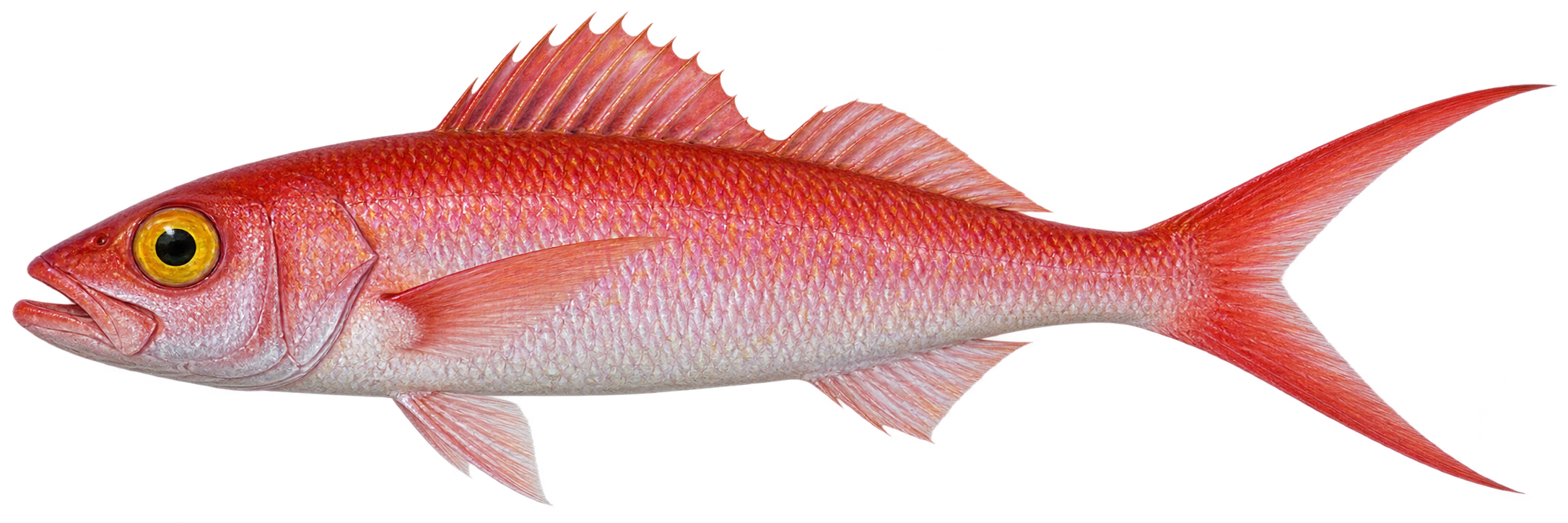
A slender red snapper with very large yellow eyes, a deeply forked tail and a notched dorsal fin.
Restrictions apply; verify current rules and health advice
Explore the queen snapper guide →Spot
Streamlined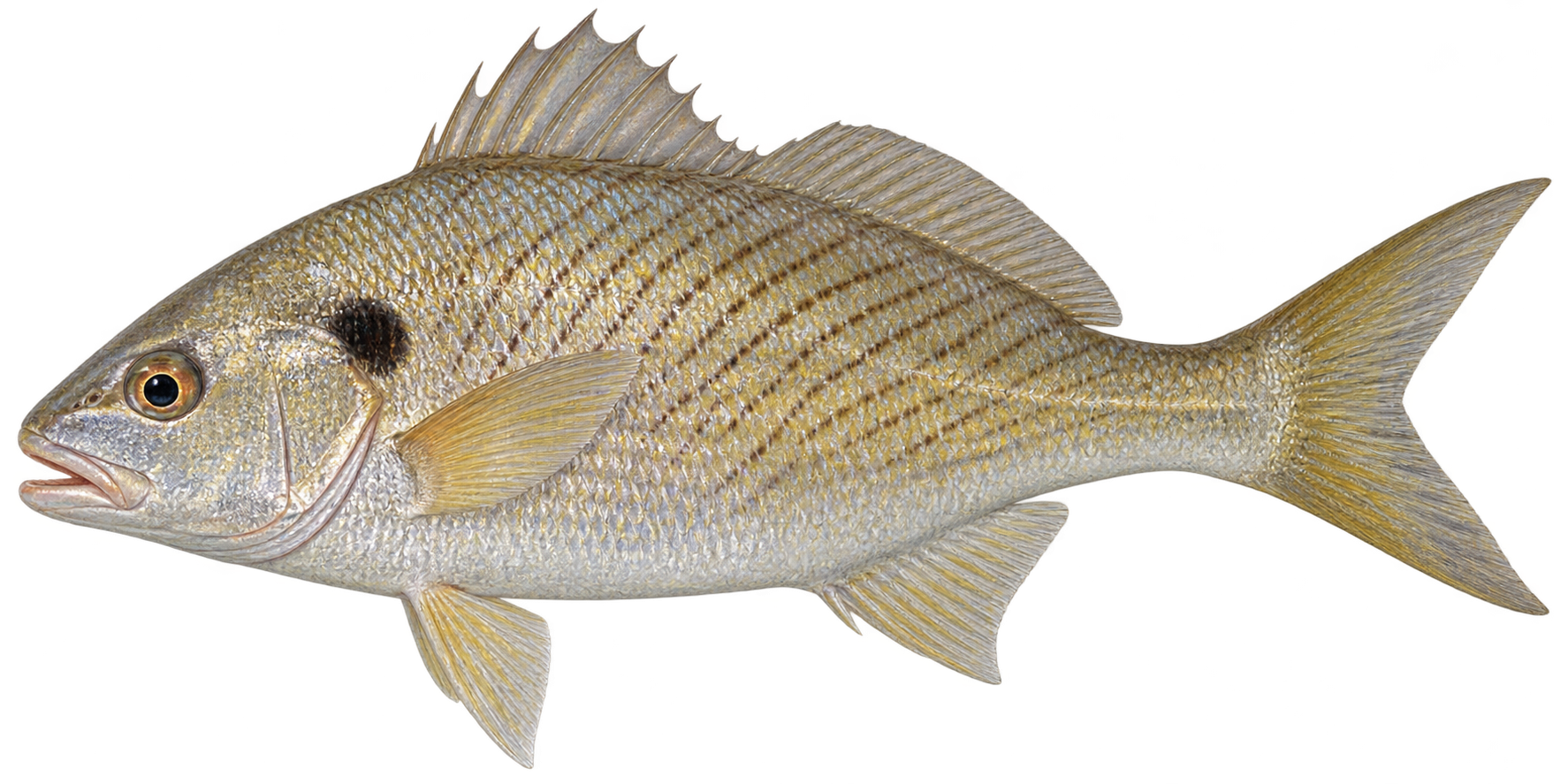
A conspicuous dark blotch behind the gill cover sits above brassy sides with slanting dark lines. A forked tail distinguishes it from Florida’s other drums.
Restrictions apply; verify current rules and health advice
Explore the spot guide →Weakfish
Streamlined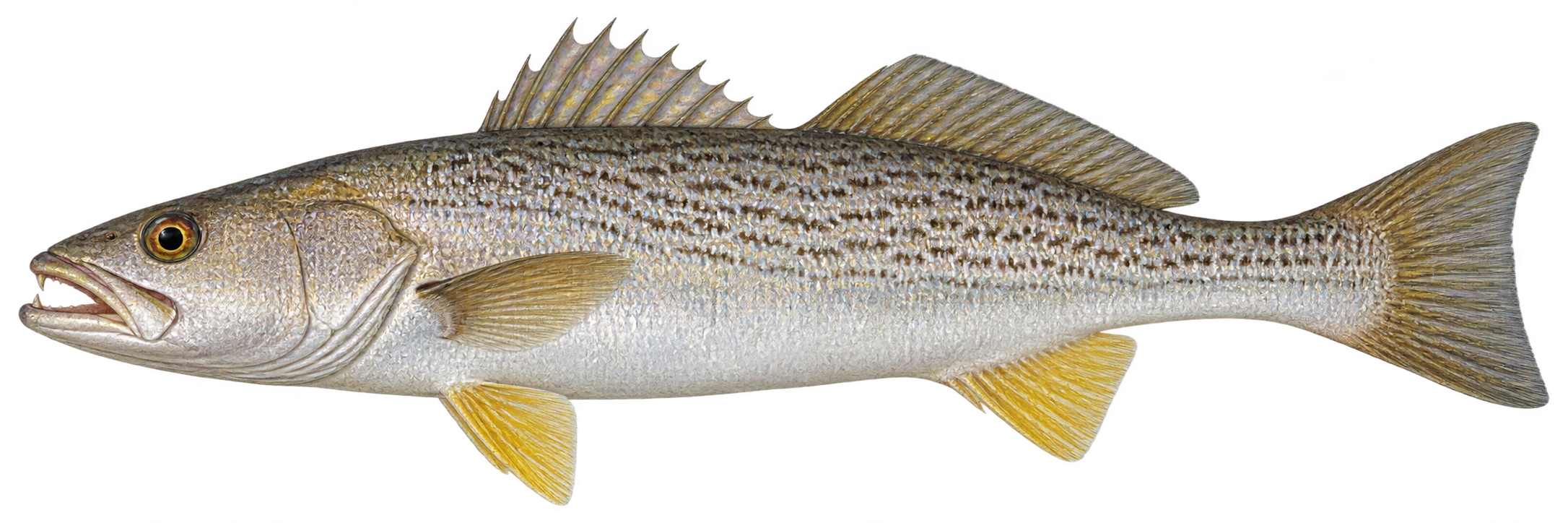
Small irregular markings form wavy rows across the upper sides. Look for yellowish pelvic and anal fins, two upper-jaw canines and no chin barbels.
Restrictions apply; verify current rules and health advice
Explore the weakfish guide →Sand Seatrout
Streamlined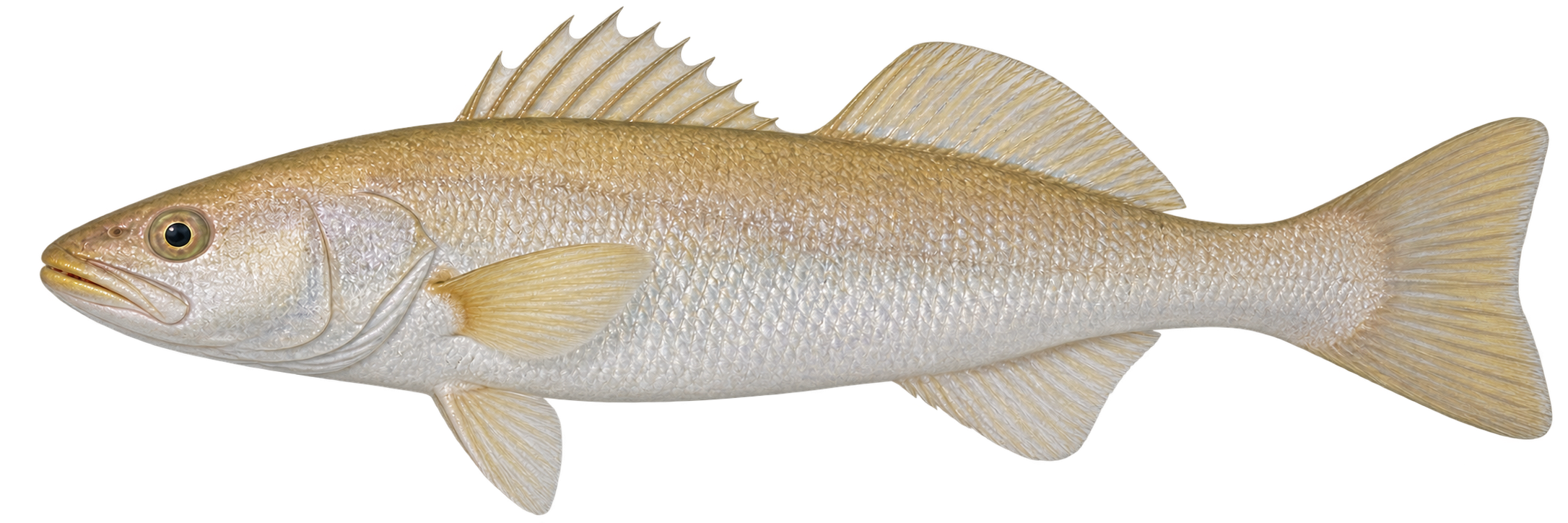
A pale fish with a yellowish or tan back, yellow mouth interior and large upper-jaw canine teeth. Dark back spots and chin barbels are absent.
Restrictions apply; verify current rules and health advice
Explore the sand seatrout guide →Blueline Tilefish
Streamlined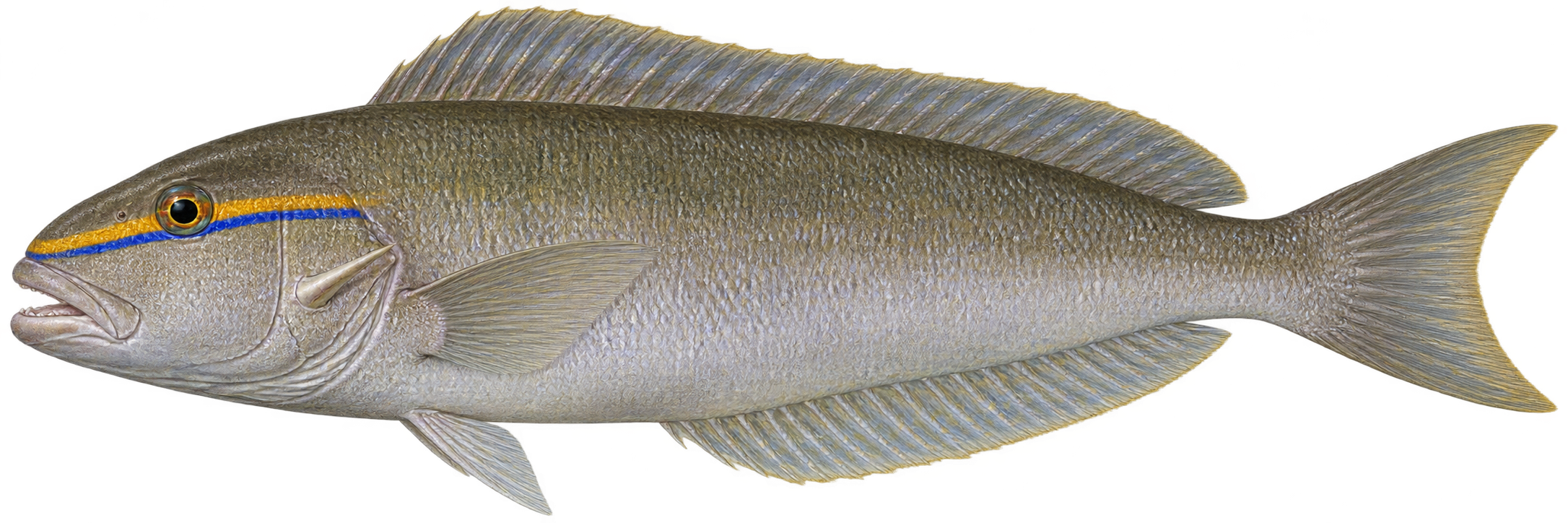
An olive-gray tilefish with a gold snout-to-eye stripe underlined in blue, long dorsal and anal fins and no fleshy forehead crest.
South Atlantic federal recreational harvest closed; state-water rules and vessel restrictions require separate review
Explore the blueline tilefish guide →Golden Tilefish
Streamlined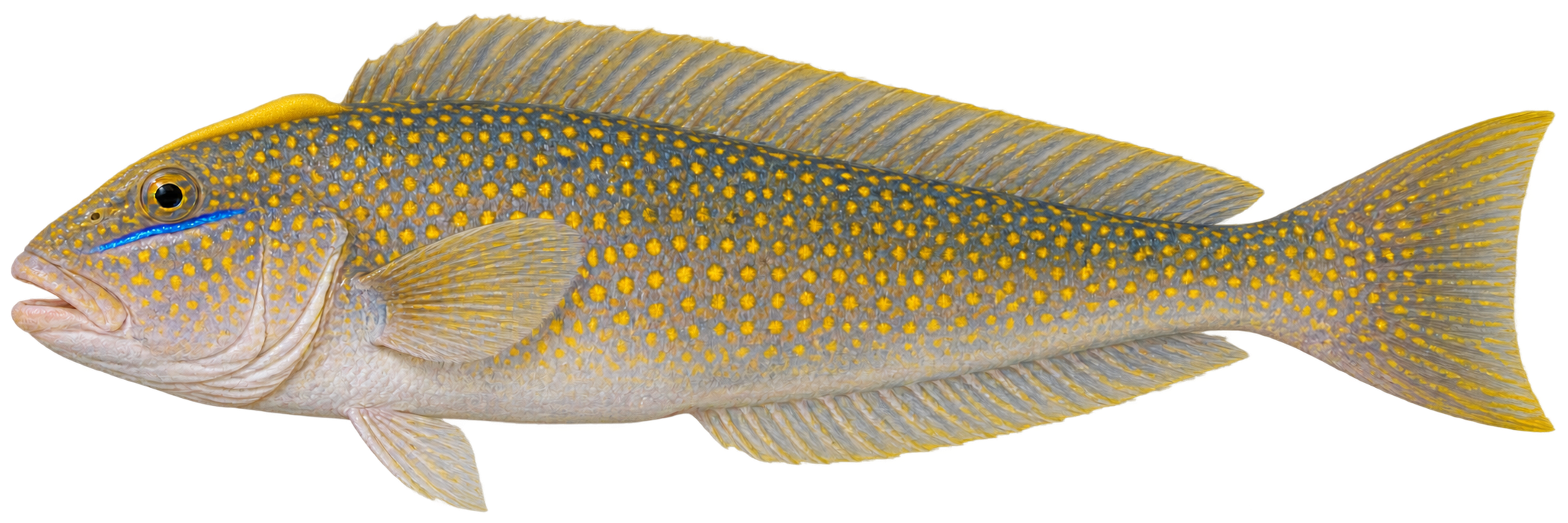
Bright yellow spots cover a blue-olive body. A large yellowish fleshy crest rises above the head and a blue line lies below the eye.
South Atlantic federal recreational harvest closed; state-water rules and vessel restrictions require separate review
Explore the golden tilefish guide →Pompano Dolphinfish
Streamlined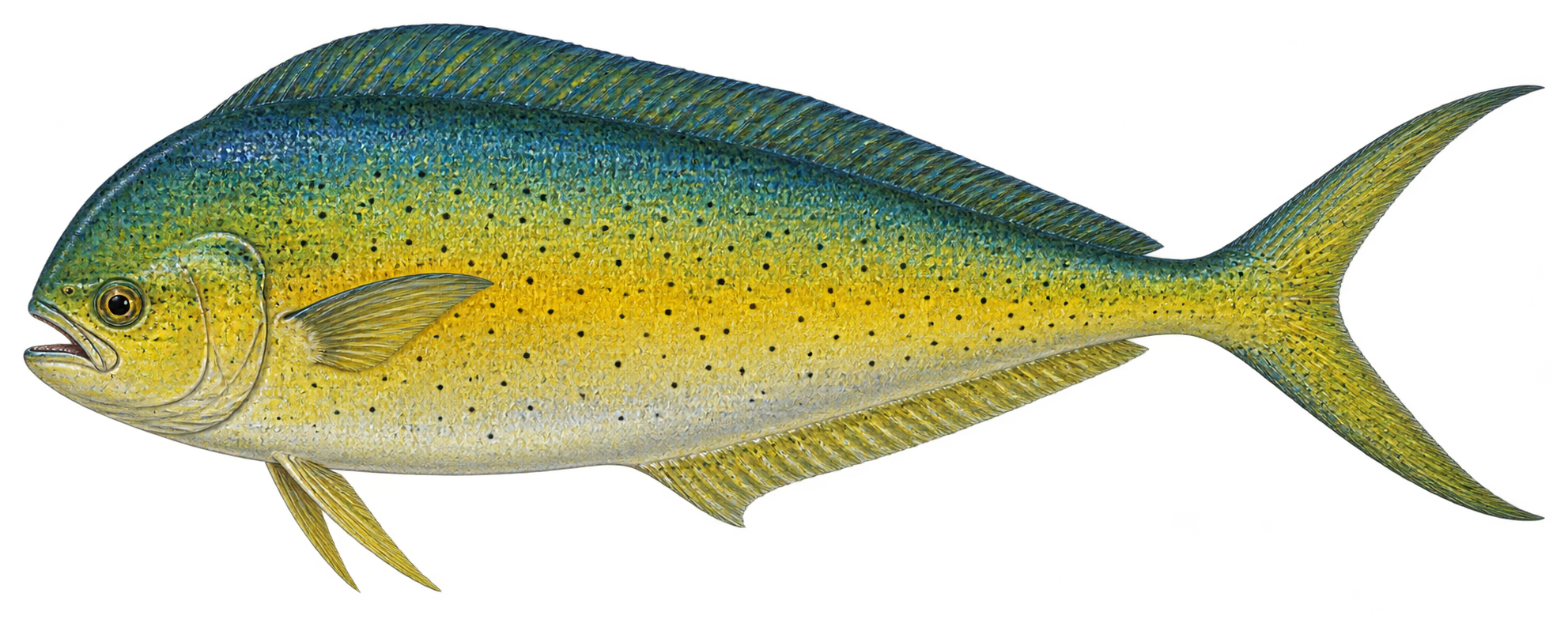
A deep-bodied dolphinfish with a long dorsal fin and deeply forked tail; photographs may not separate it reliably from young mahi-mahi.
Restrictions apply; verify current rules and health advice
Explore the pompano dolphinfish guide →Chain Moray
Long & eel-like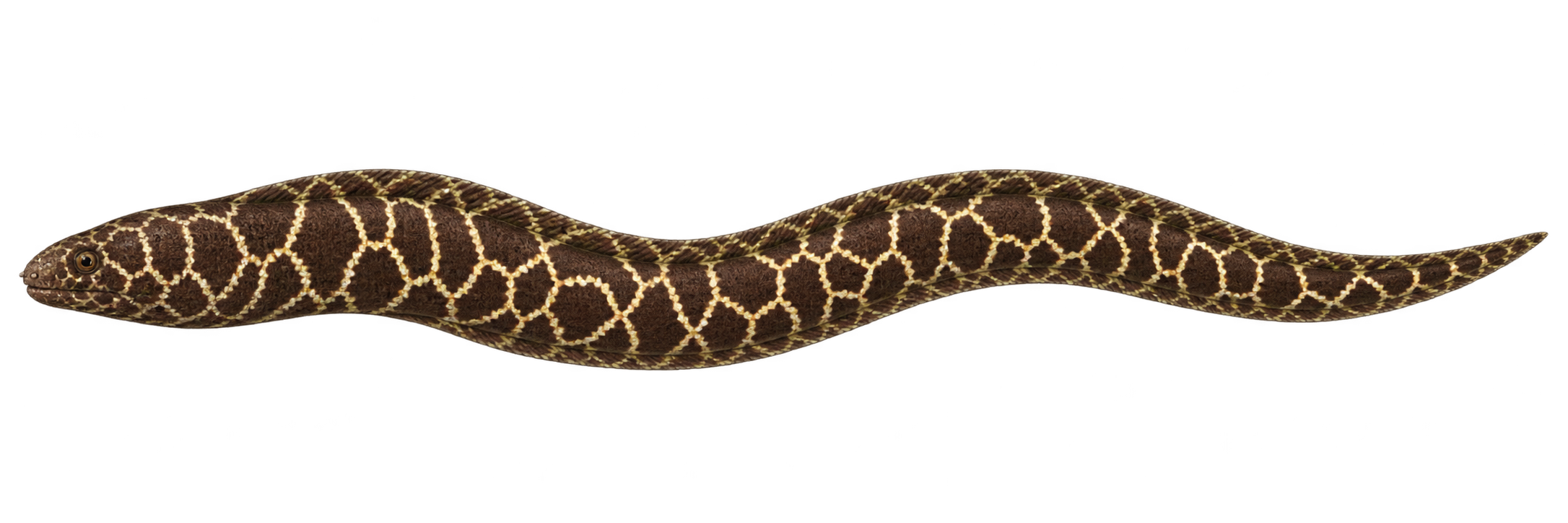
Pale chain-like lines divide a dark eel-shaped body into irregular patches.
Observe without handling; collection and protected-site restrictions require verification
Explore the chain moray guide →Longlure Frogfish
Stocky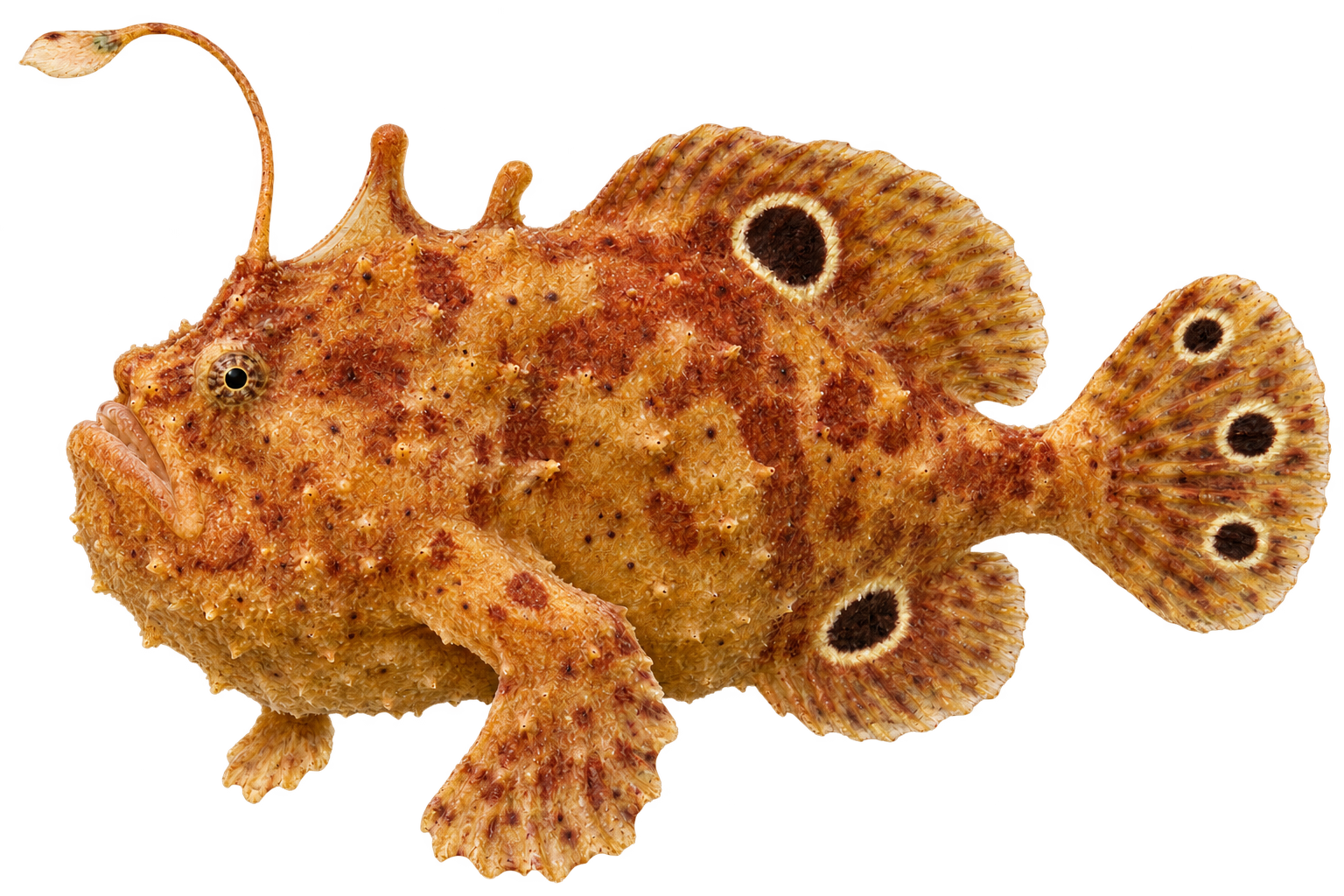
A long lure, eye-like spots and limb-like fins distinguish this variable-color ambush fish.
Observe without handling; collection and protected-site restrictions require verification
Explore the longlure frogfish guide →Gulf Toadfish
Flattened & bottom-dwelling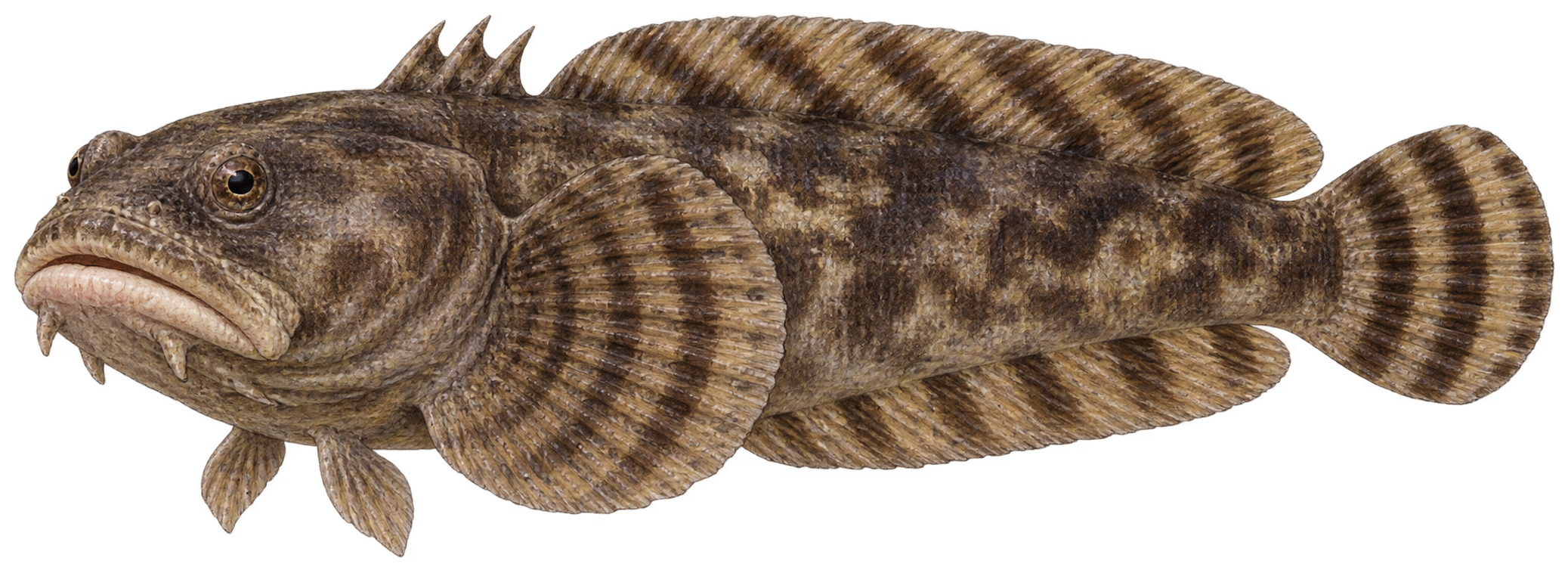
A broad flattened head, fleshy jaw tabs and mottled body help this coastal fish blend into shelter.
Observe without handling; collection and protected-site restrictions require verification
Explore the gulf toadfish guide →Southern Stargazer
Flattened & bottom-dwelling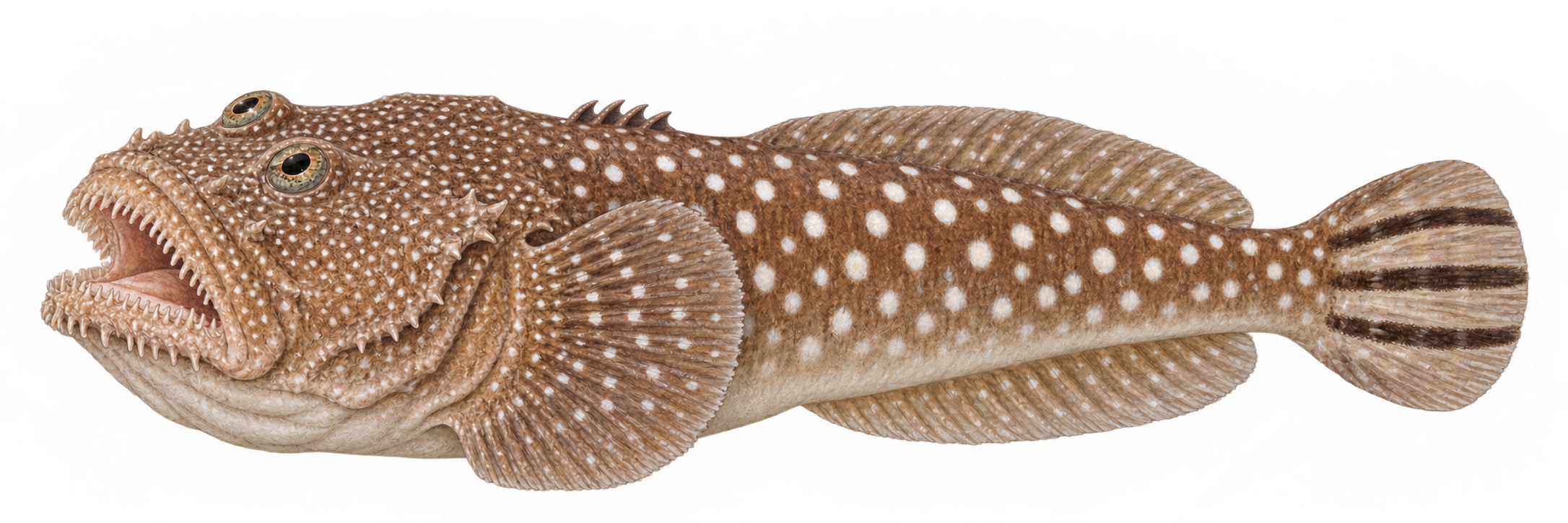
Upward-facing eyes, pale body spots and a striped tail characterize this sand-burying fish.
Electrical defense; do not touch or uncover buried fish. Verify collection and site rules
Explore the southern stargazer guide →Mangrove Rivulus
Elongated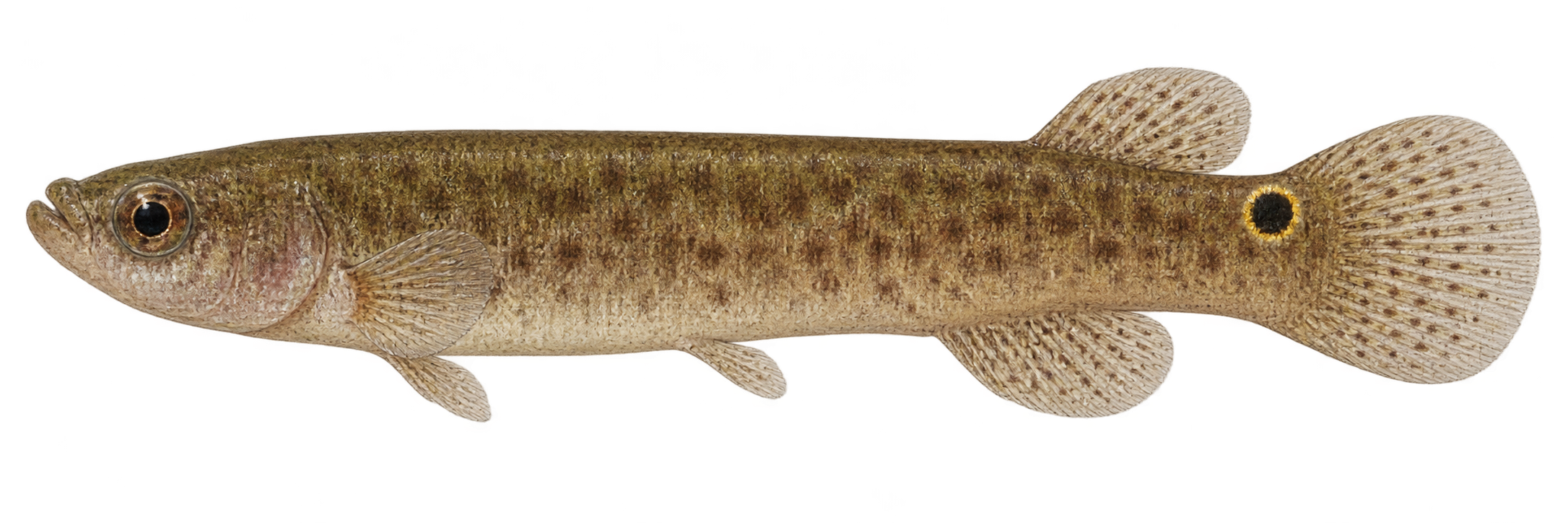
A small olive-brown fish of mangrove pools and damp refuges, sometimes with a dark tail-base spot.
Protect mangrove refuges; delisting is not collection permission
Explore the mangrove rivulus guide →Inshore Lizardfish
Elongated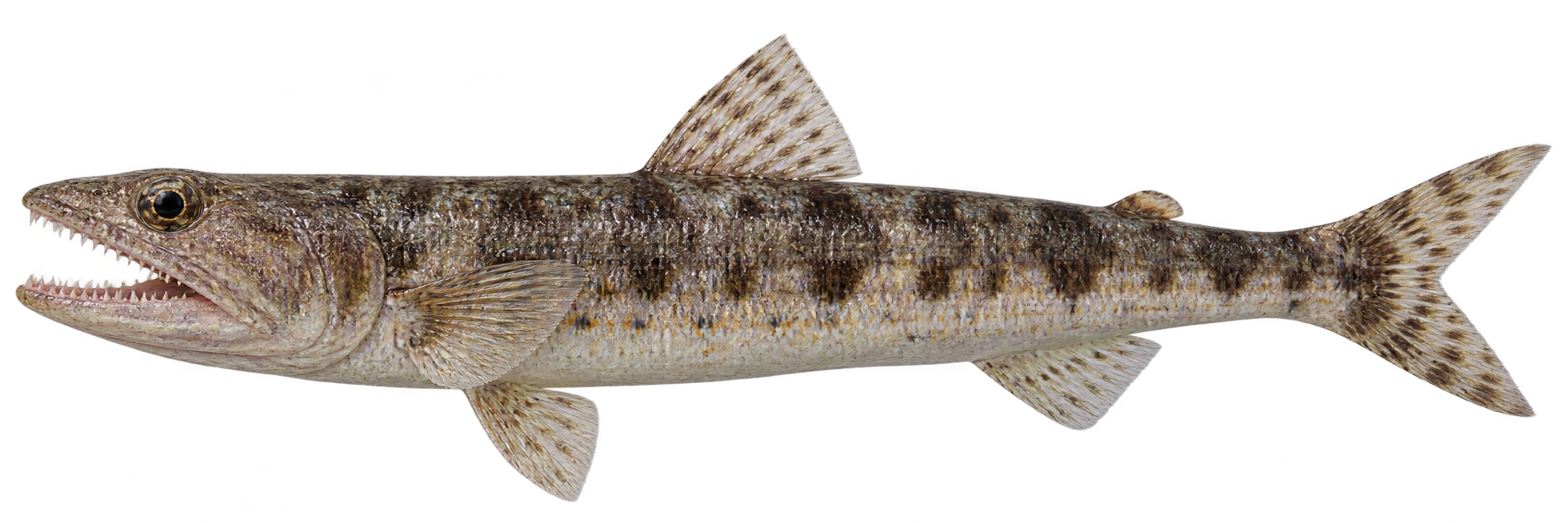
Slender mottled bottom fish with a large toothed mouth and a small adipose fin behind the main dorsal.
Observe without handling; check current collection rules and protected-area restrictions
Explore the inshore lizardfish guide →Checkered Puffer
Stocky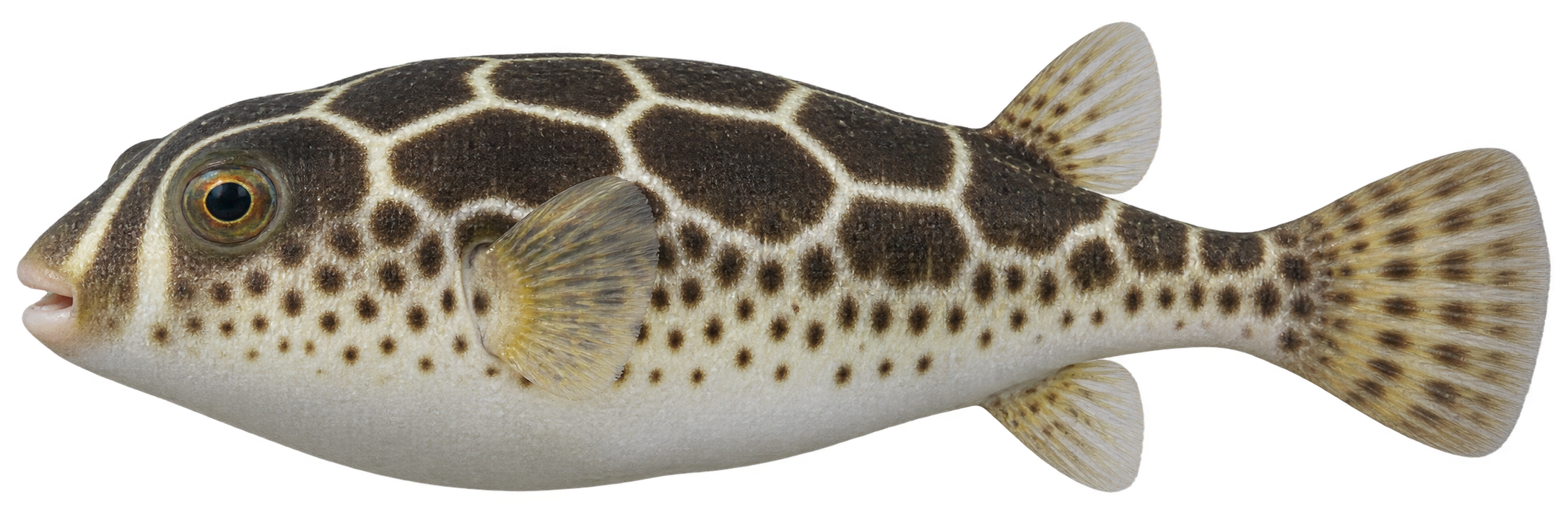
Uninflated puffer with pale geometric markings over dark back patches, spotted sides and no pelvic fins.
Do not eat puffers; local harvest prohibitions and poisoning risk apply
Explore the checkered puffer guide →Dwarf Seahorse
Seahorses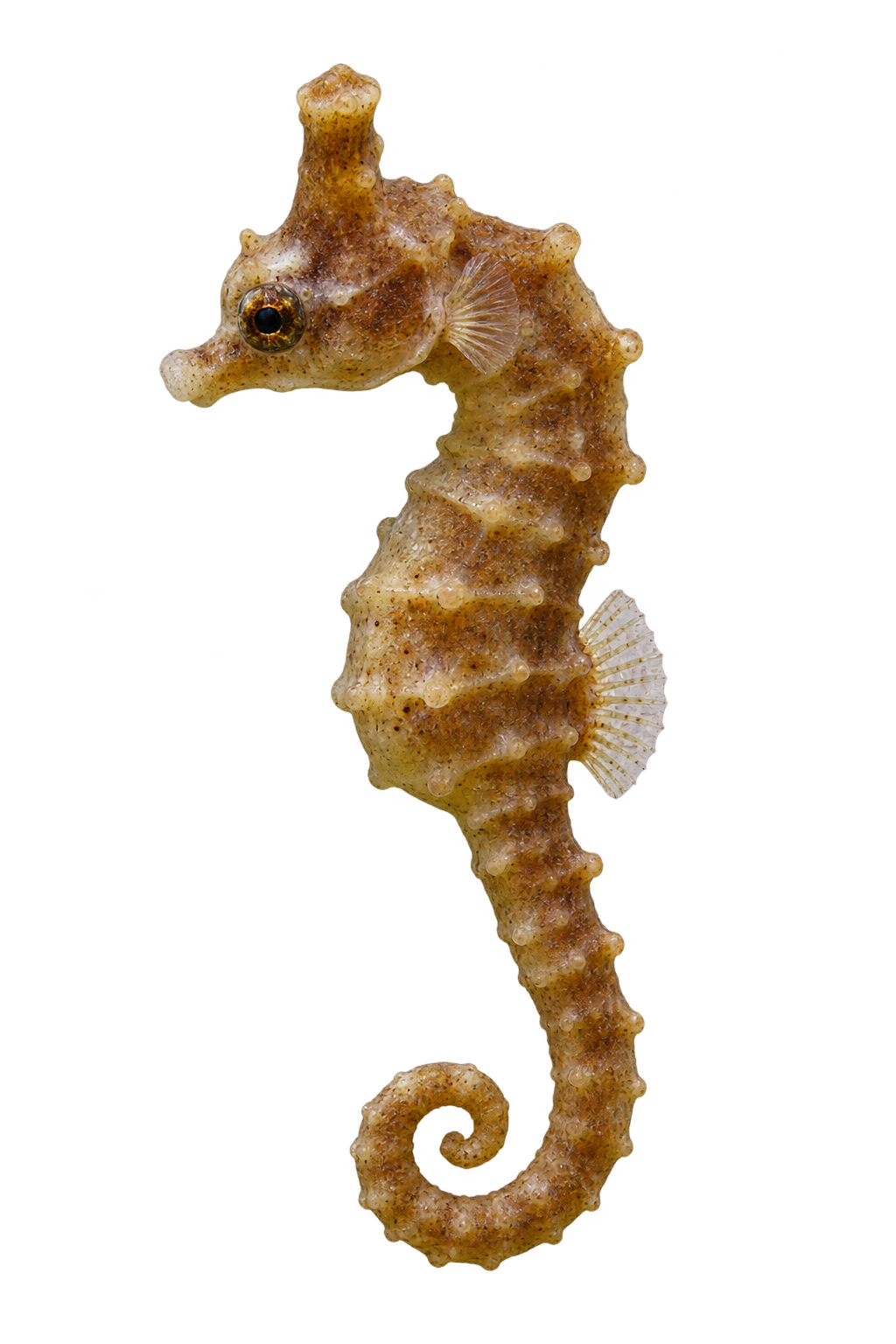
Small seahorse with a short snout, tall coronet and grasping tail; size alone does not confirm the species.
Observe without handling; check current collection rules and protected-area restrictions
Explore the dwarf seahorse guide →Florida Blenny
Small perching fish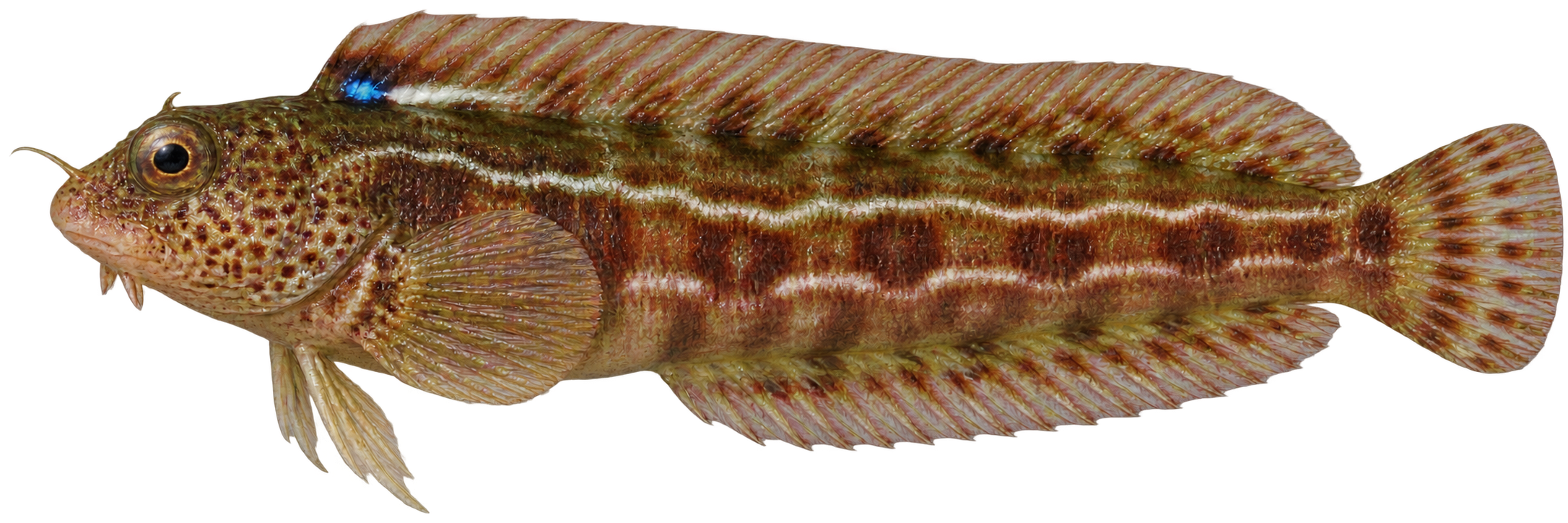
Compact blenny with eye cirri, chin flaps and cheek dots; adult males may show a blue anterior dorsal patch.
Observe without handling; check current collection rules and protected-area restrictions
Explore the florida blenny guide →Emerald Clingfish
Flattened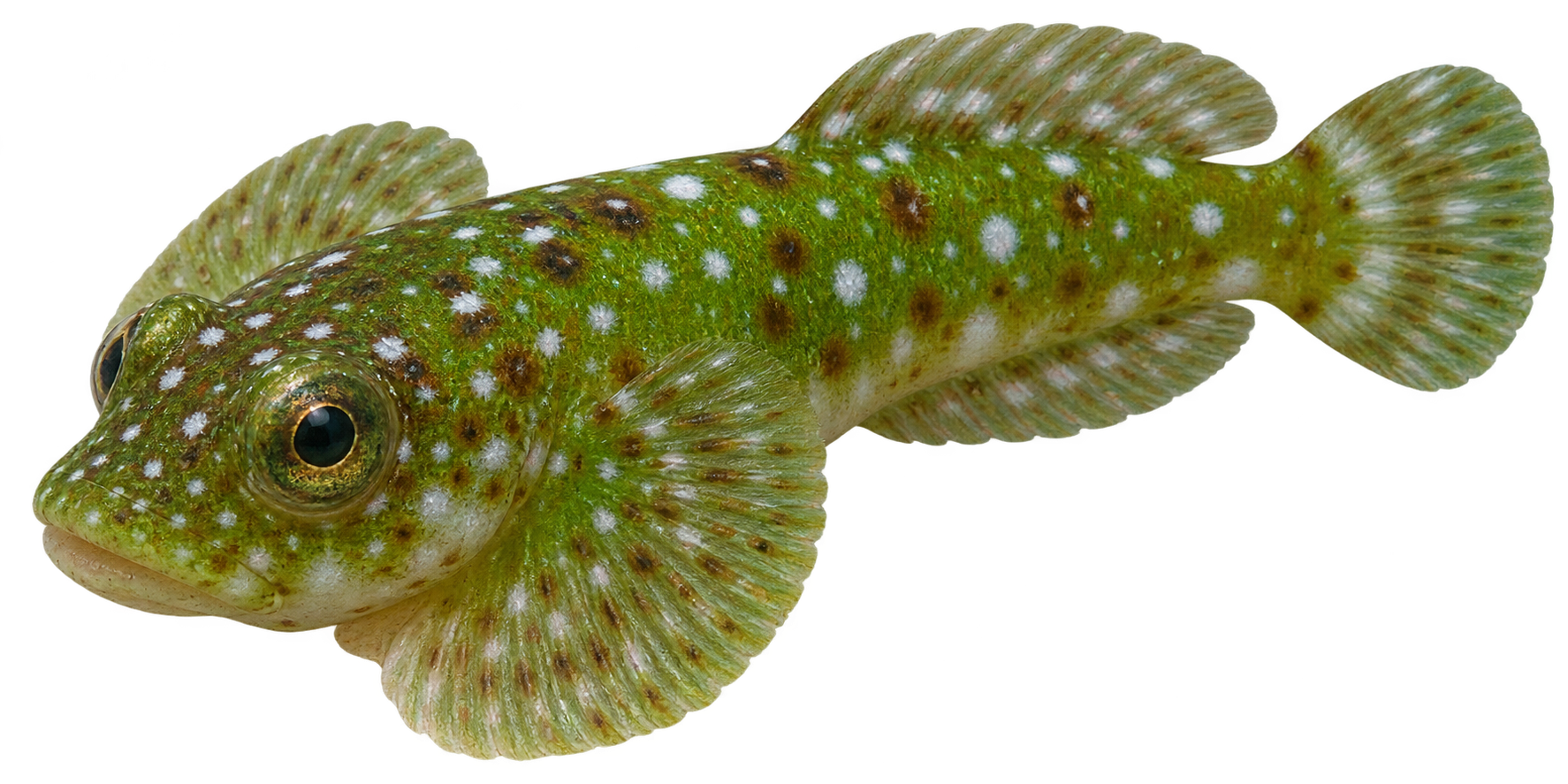
Tiny green-patterned fish with a broad head, large eyes and an adhesive disc underneath the body.
Observe without handling; check current collection rules and protected-area restrictions
Explore the emerald clingfish guide →Northern Sennet
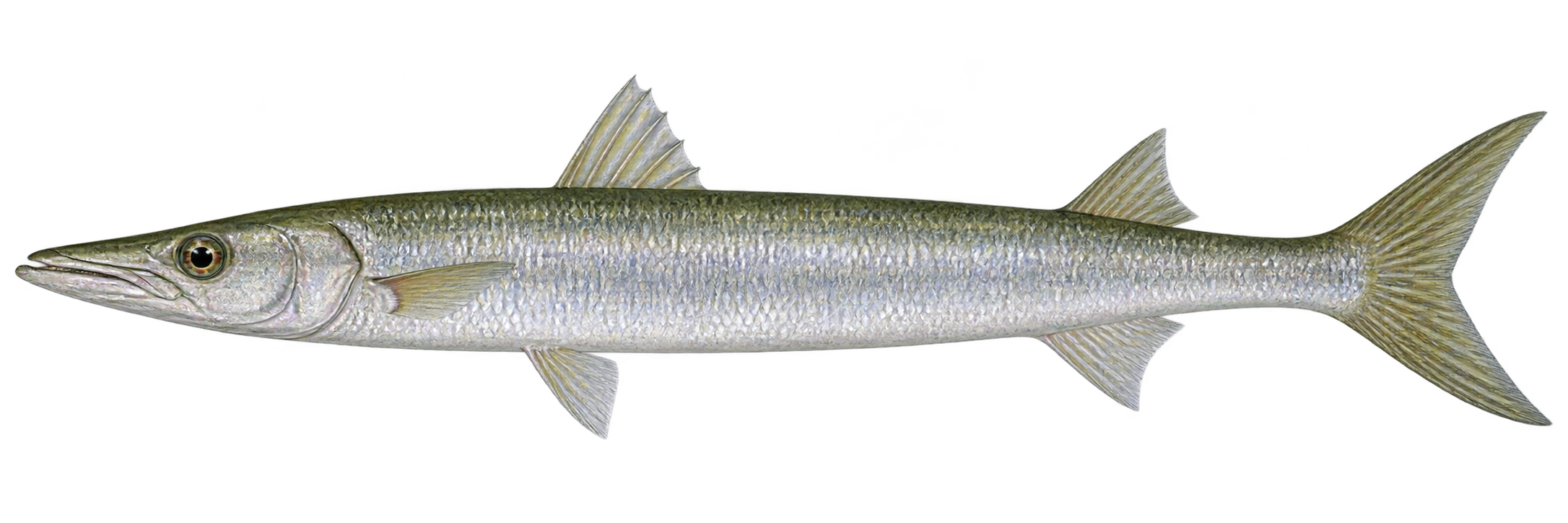
A slender barracuda relative with a pointed snout and widely separated dorsal fins.
Verify current species, gear, area and jurisdiction rules. Identification is not harvest permission or food-safety clearance.
Explore the northern sennet guide →Swordfish
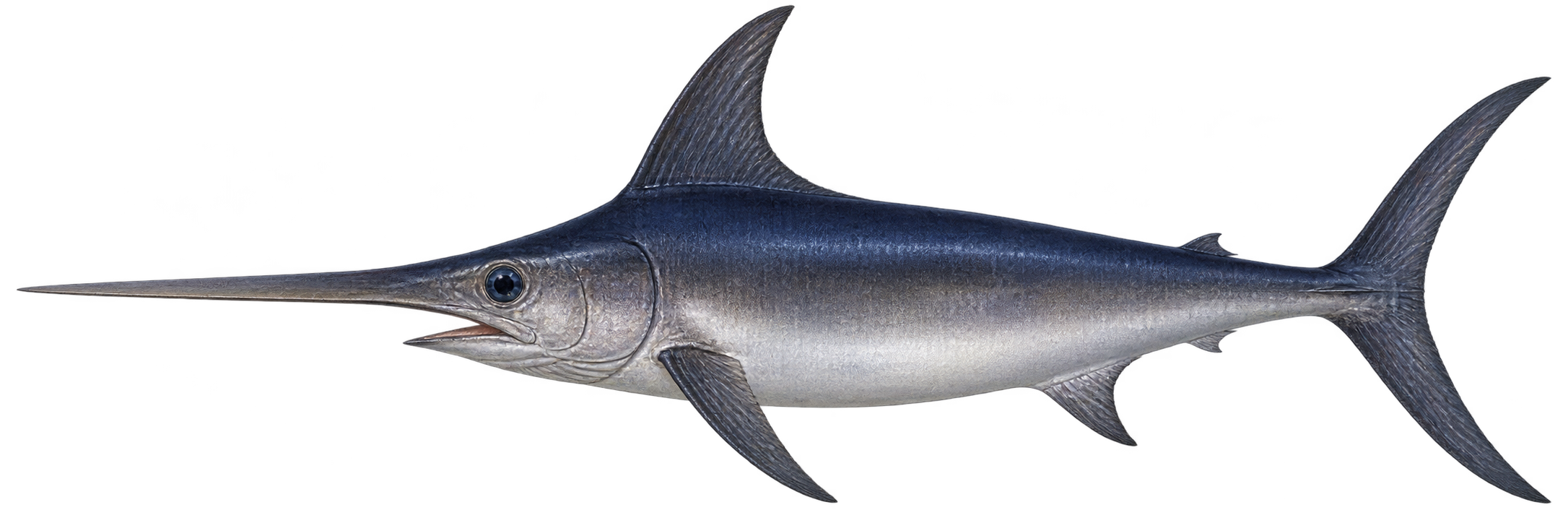
A broad flattened bill and powerful streamlined body distinguish adult swordfish.
Verify current species, gear, area and jurisdiction rules. Identification is not harvest permission or food-safety clearance.
Explore the swordfish guide →Silver Perch
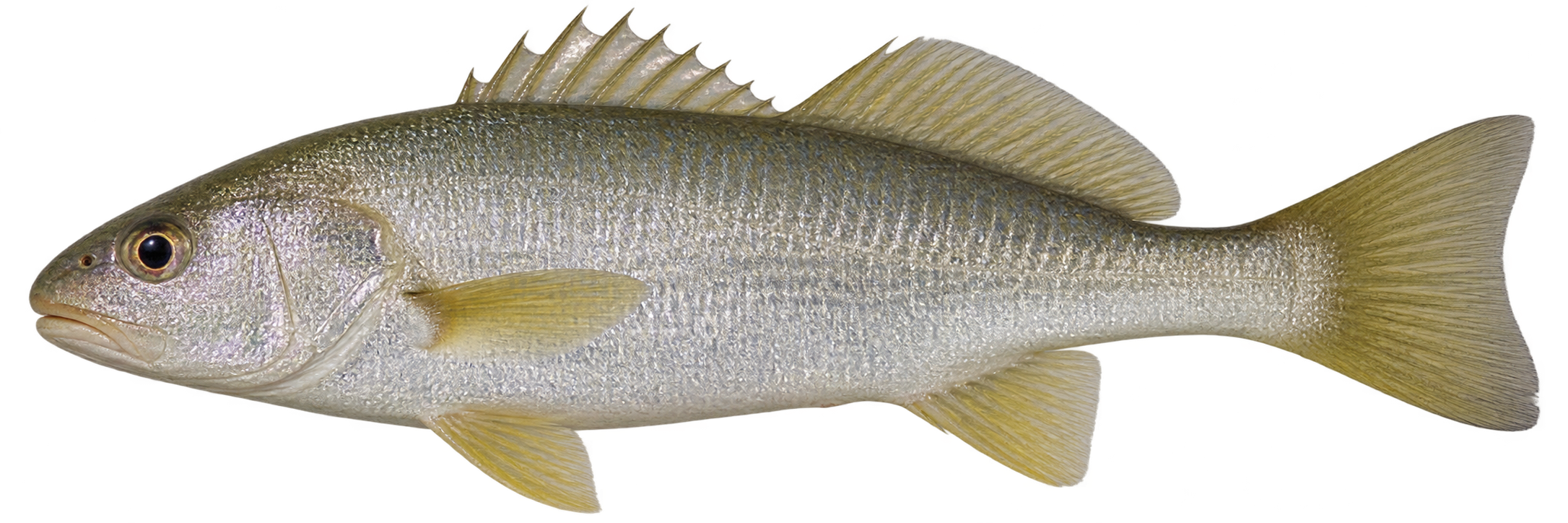
A small silvery coastal drum with a yellowish lower body and fins.
Verify current species, gear, area and jurisdiction rules. Identification is not harvest permission or food-safety clearance.
Explore the silver perch guide →Feather Blenny
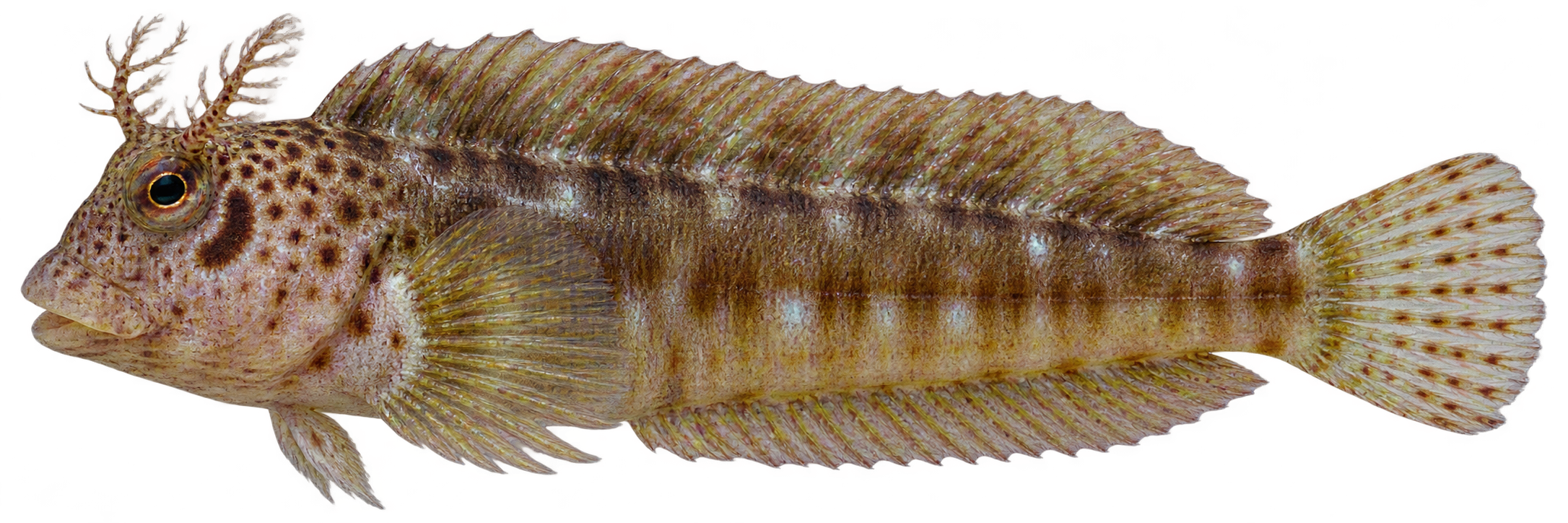
Branched head appendages, steep forehead and a curved dark cheek blotch help identify this small shelter-dweller.
Verify current species, gear, area and jurisdiction rules. Identification is not harvest permission or food-safety clearance.
Explore the feather blenny guide →Skilletfish
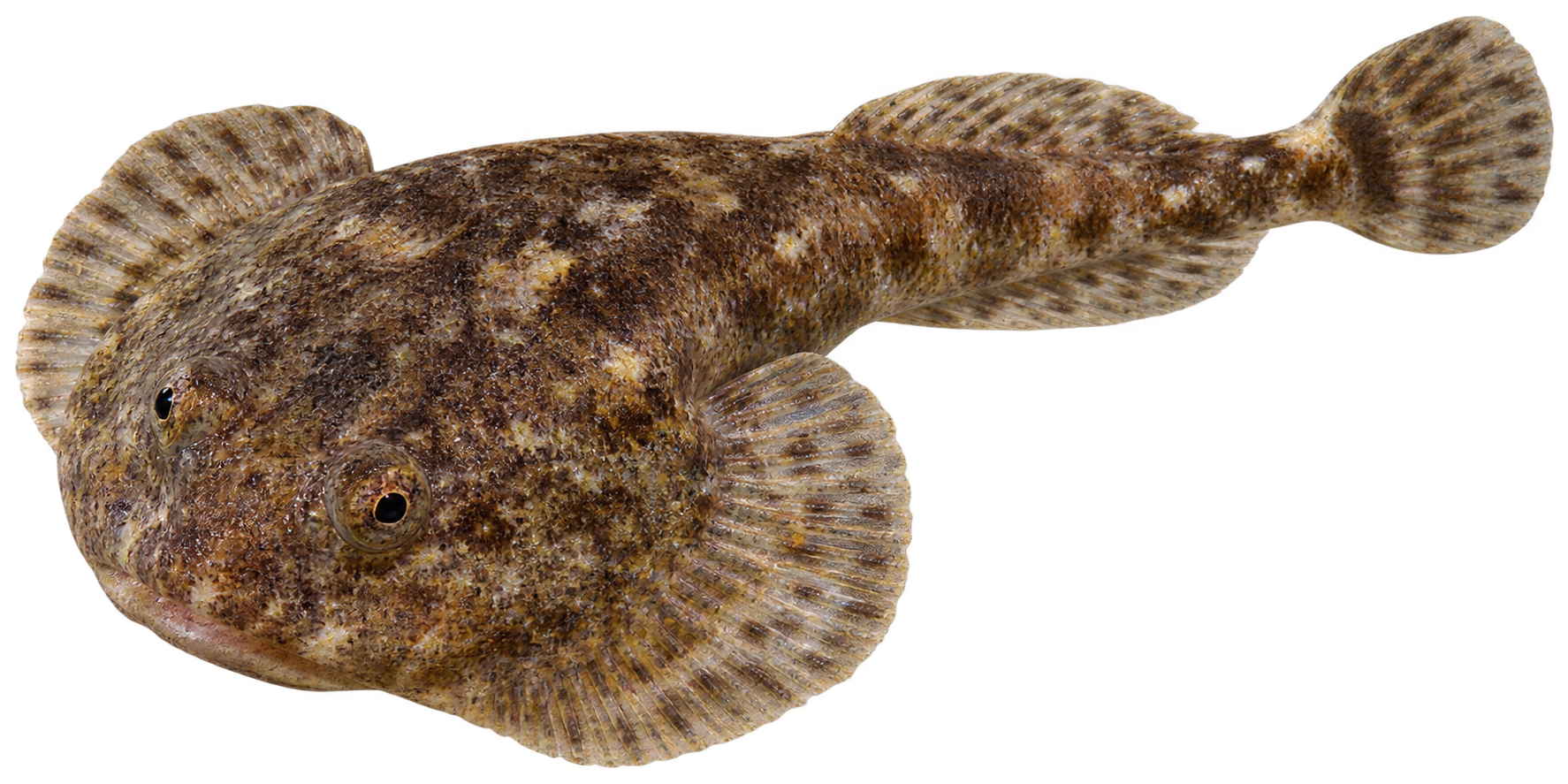
Flattened rounded head and a pelvic suction disc distinguish this small clingfish.
Verify current species, gear, area and jurisdiction rules. Identification is not harvest permission or food-safety clearance.
Explore the skilletfish guide →Oyster Toadfish
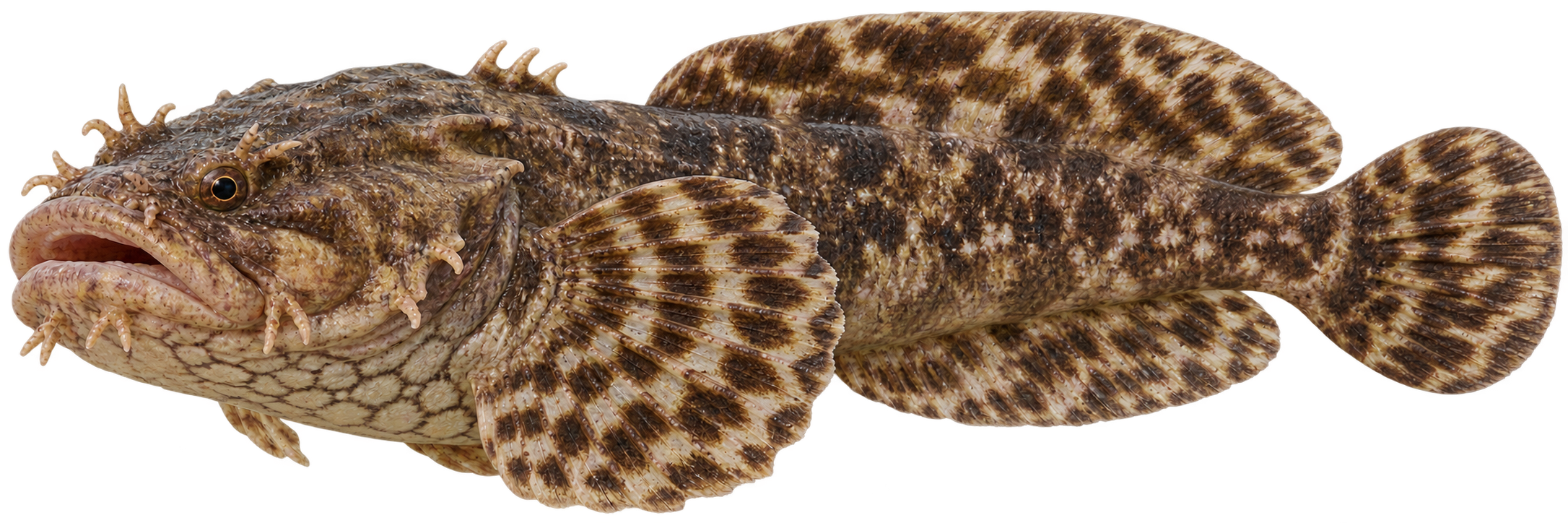
Broad flattened head, large mouth and mottled body characterize this sheltering toadfish.
Verify current species, gear, area and jurisdiction rules. Identification is not harvest permission or food-safety clearance.
Explore the oyster toadfish guide →Spotted Dragonet
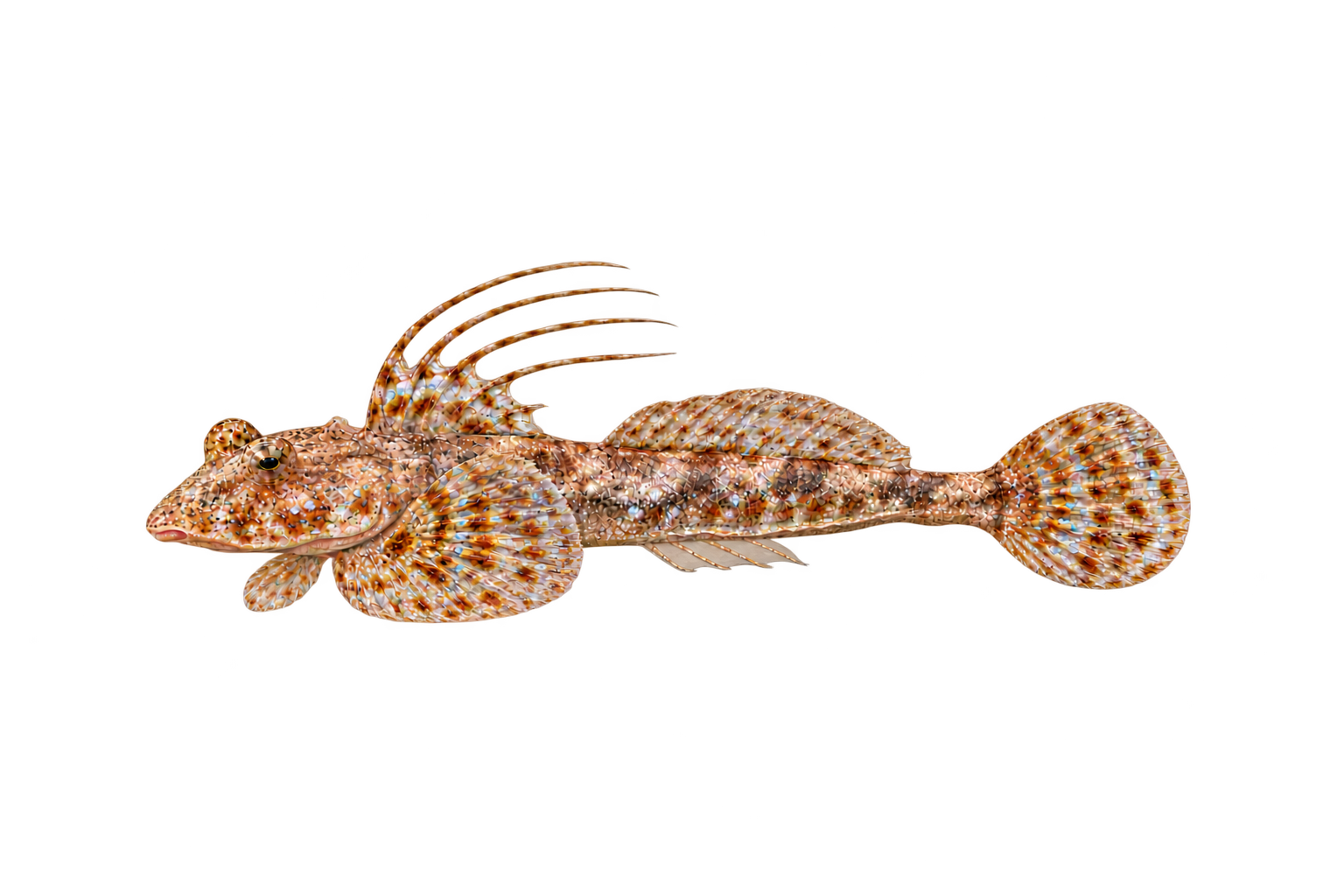
High-set eyes, flattened head and male dorsal filaments distinguish this tiny dragonet.
Verify current species, gear, area and jurisdiction rules. Identification is not harvest permission or food-safety clearance.
Explore the spotted dragonet guide →Dusky Pipefish
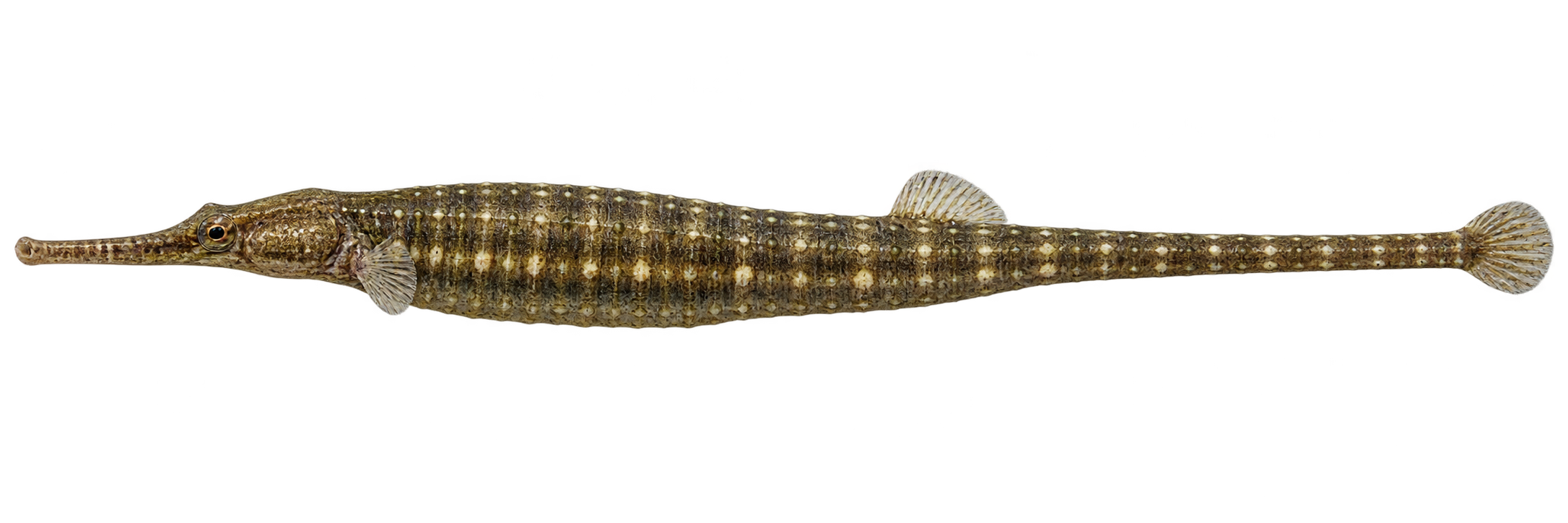
A slender armored pipefish whose exact identification requires more than color alone.
Verify current species, gear, area and jurisdiction rules. Identification is not harvest permission or food-safety clearance.
Explore the dusky pipefish guide →Chain Pipefish
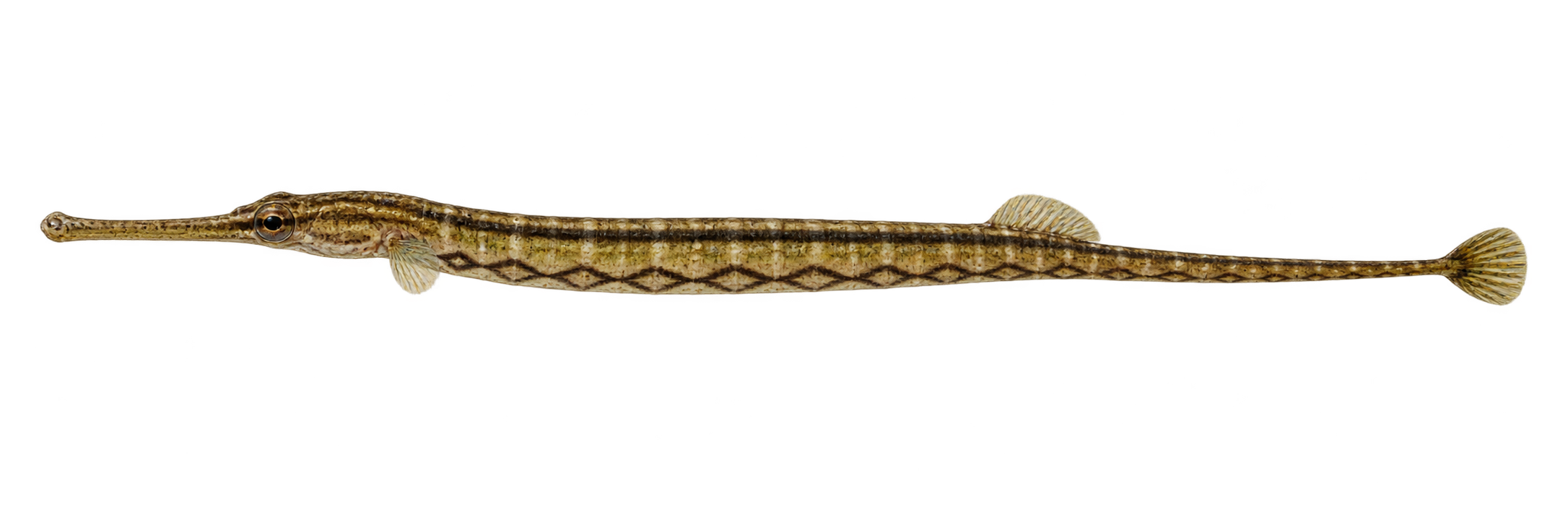
An elongated pipefish with markings that must be checked alongside diagnostic proportions.
Verify current species, gear, area and jurisdiction rules. Identification is not harvest permission or food-safety clearance.
Explore the chain pipefish guide →Lobsters
Caribbean Spiny Lobster
Lobster-shaped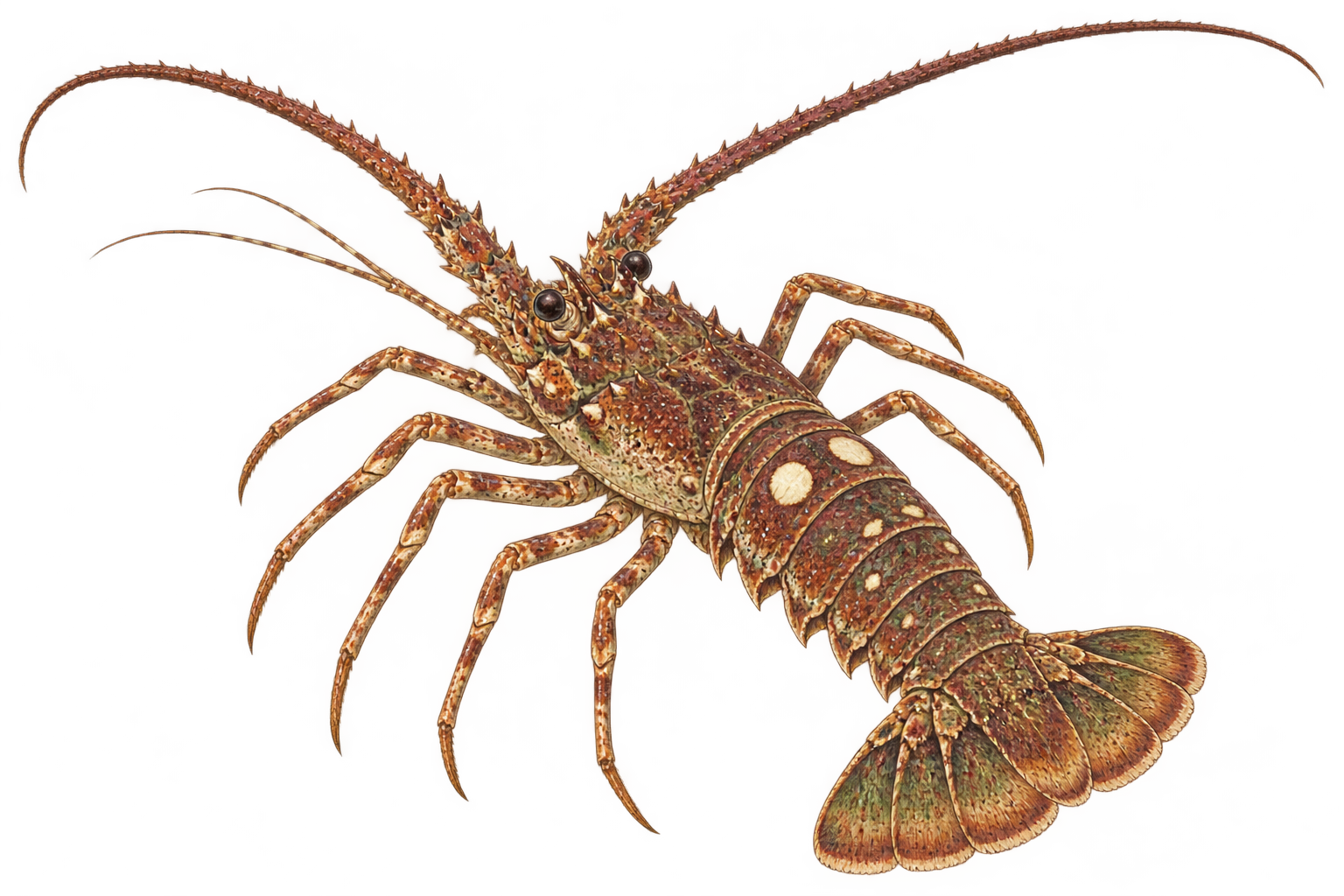
Size: Adults may approach 60 cm total body length; antennae are excluded.
Long, stiff antennae, a spiny reddish-brown shell and pale spots identify the familiar Florida spiny lobster.
Seasonal harvest only: size, bag and egg-bearing protections apply
Explore the caribbean spiny lobster guide →Spanish Slipper Lobster
Lobster-shaped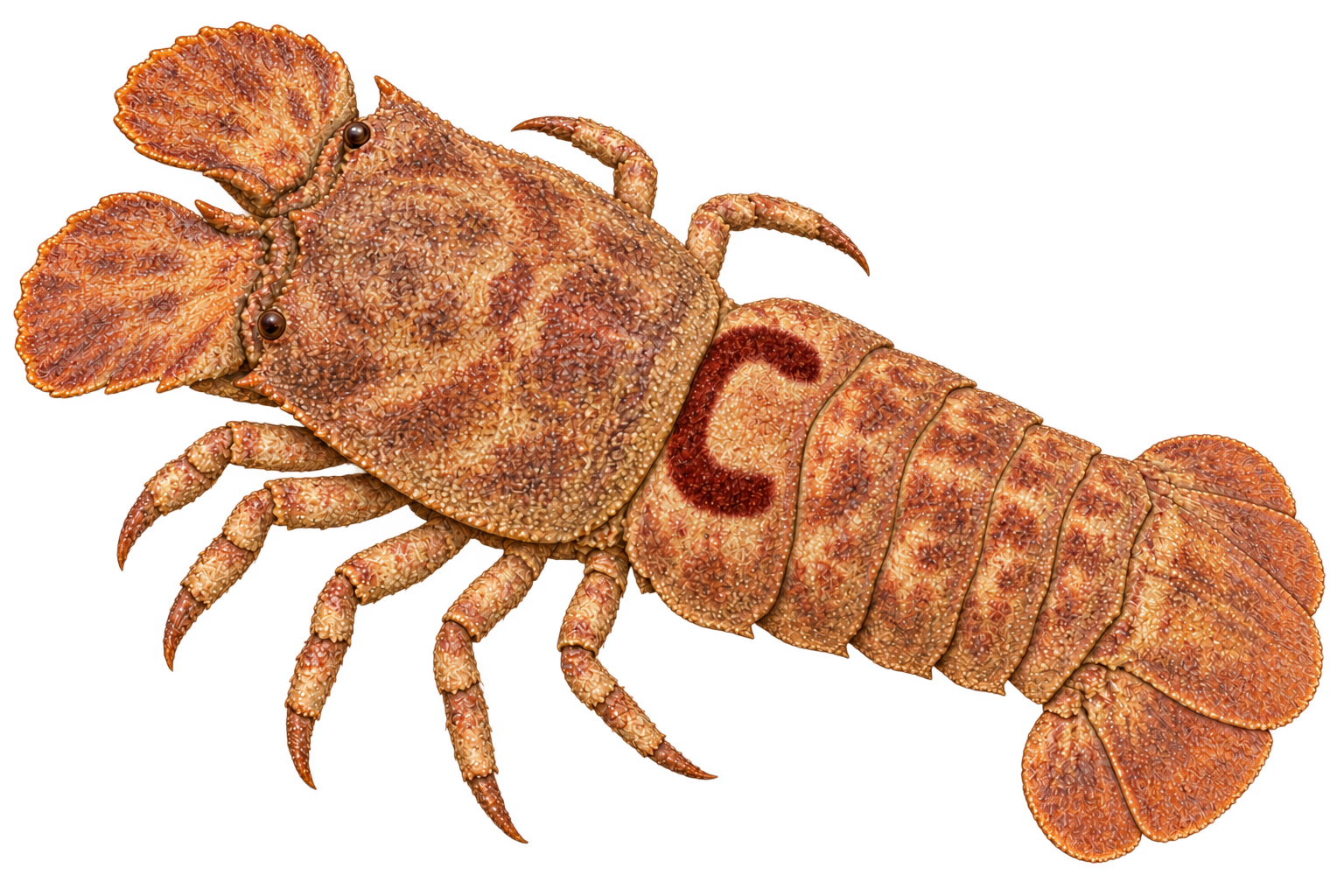
Size: About 15–30 cm total body length; large examples exceed 30 cm.
This lobster looks broad and armored, with flattened antennae forming plates in front of the head.
Egg-bearing lobsters protected; general harvest rules apply
Explore the spanish slipper lobster guide →Spotted Spiny Lobster
Lobster-shaped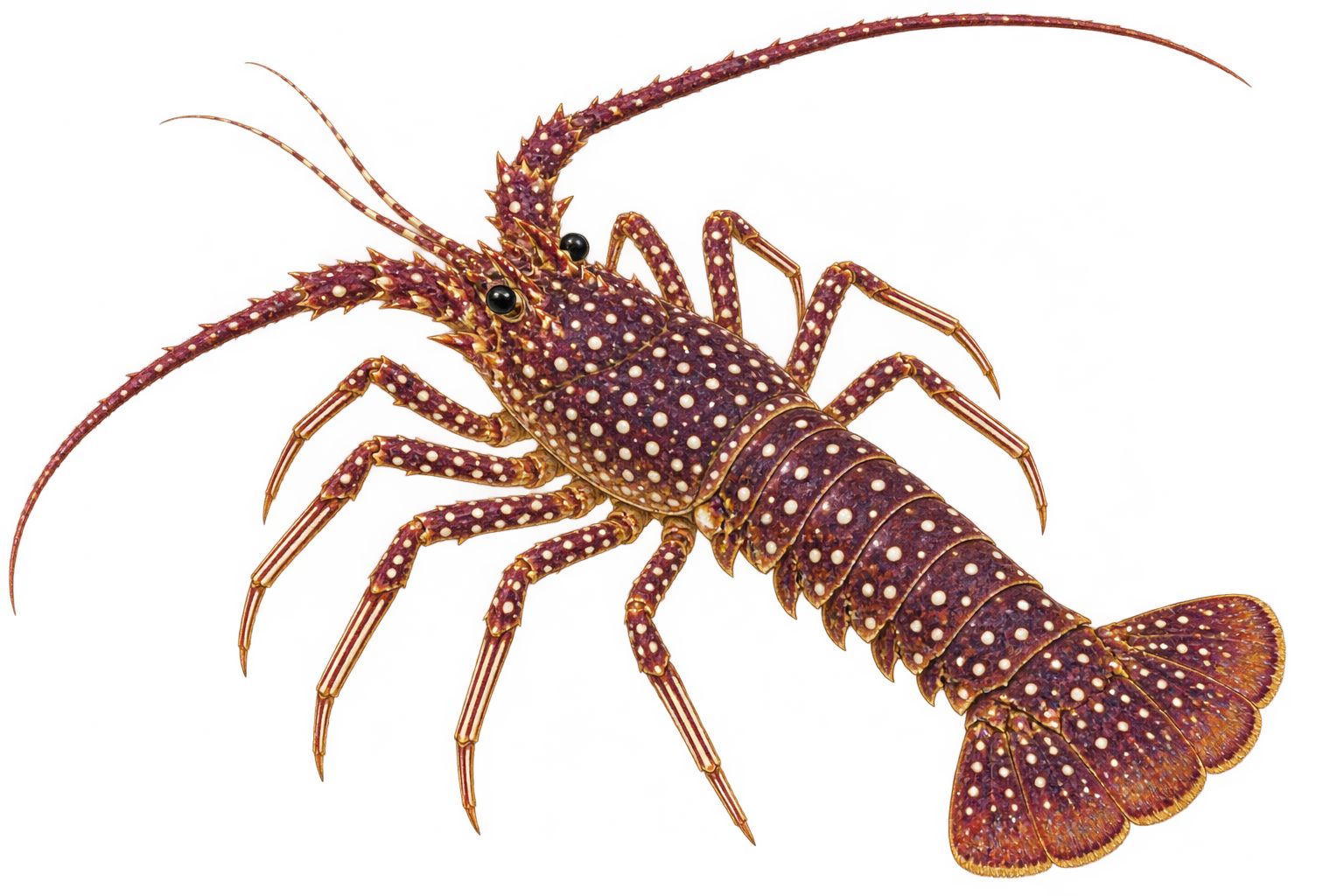
Size: Typically a small lobster; maximum total body length about 20 cm.
Numerous small white spots cover the darker shell of this compact spiny lobster.
Egg-bearing lobsters protected; general harvest rules apply
Explore the spotted spiny lobster guide →Mammals
West Indian Manatee
Marine Mammal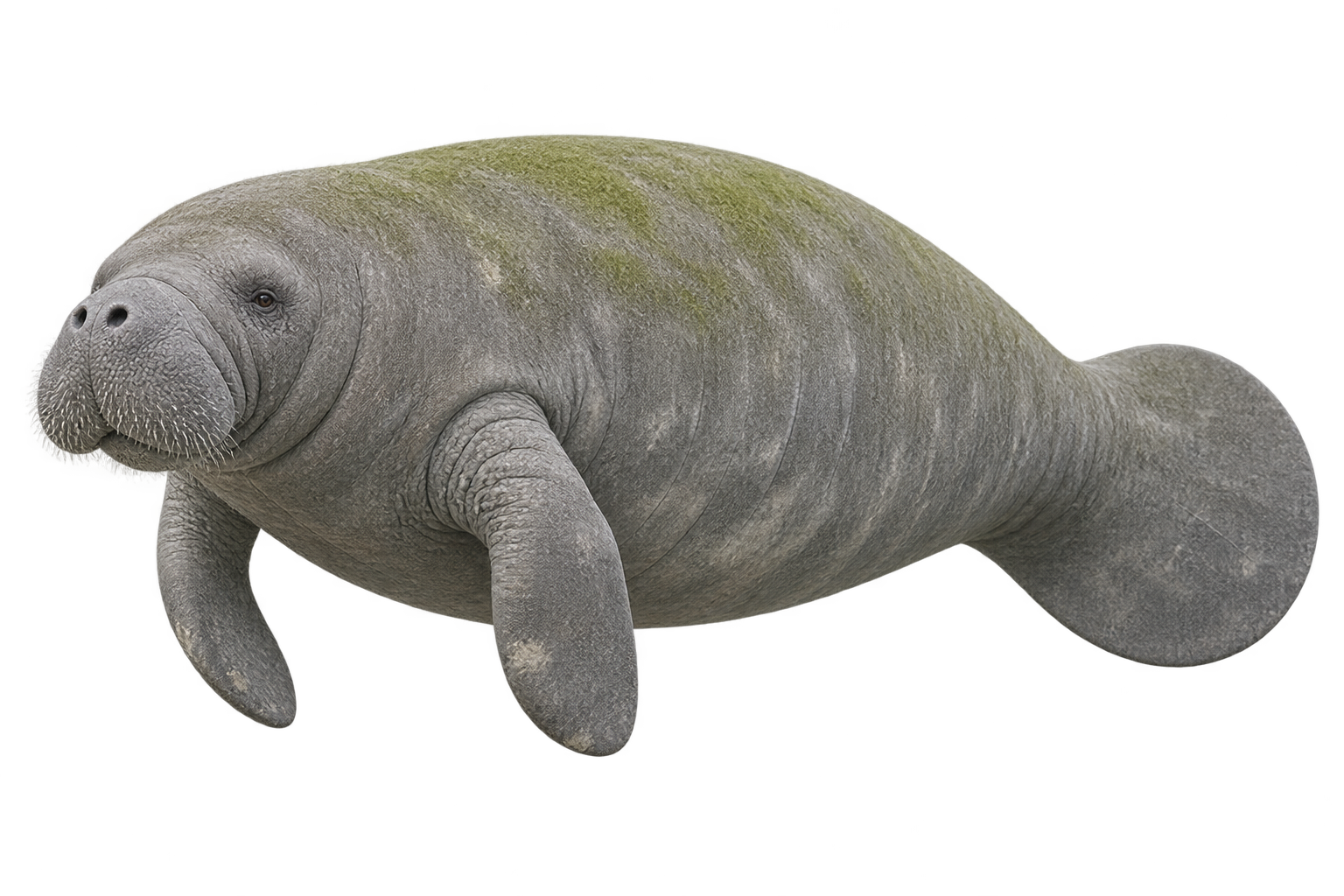
Size: Typical adult snout-to-tail length 2.7–3 m (9–10 ft).
Florida's native manatee is Trichechus manatus latirostris, a subspecies of the West Indian manatee.
Read the guide’s location, season and eating cautions before acting.
Octopuses and squid
Atlantic Brief Squid
Shape not assigned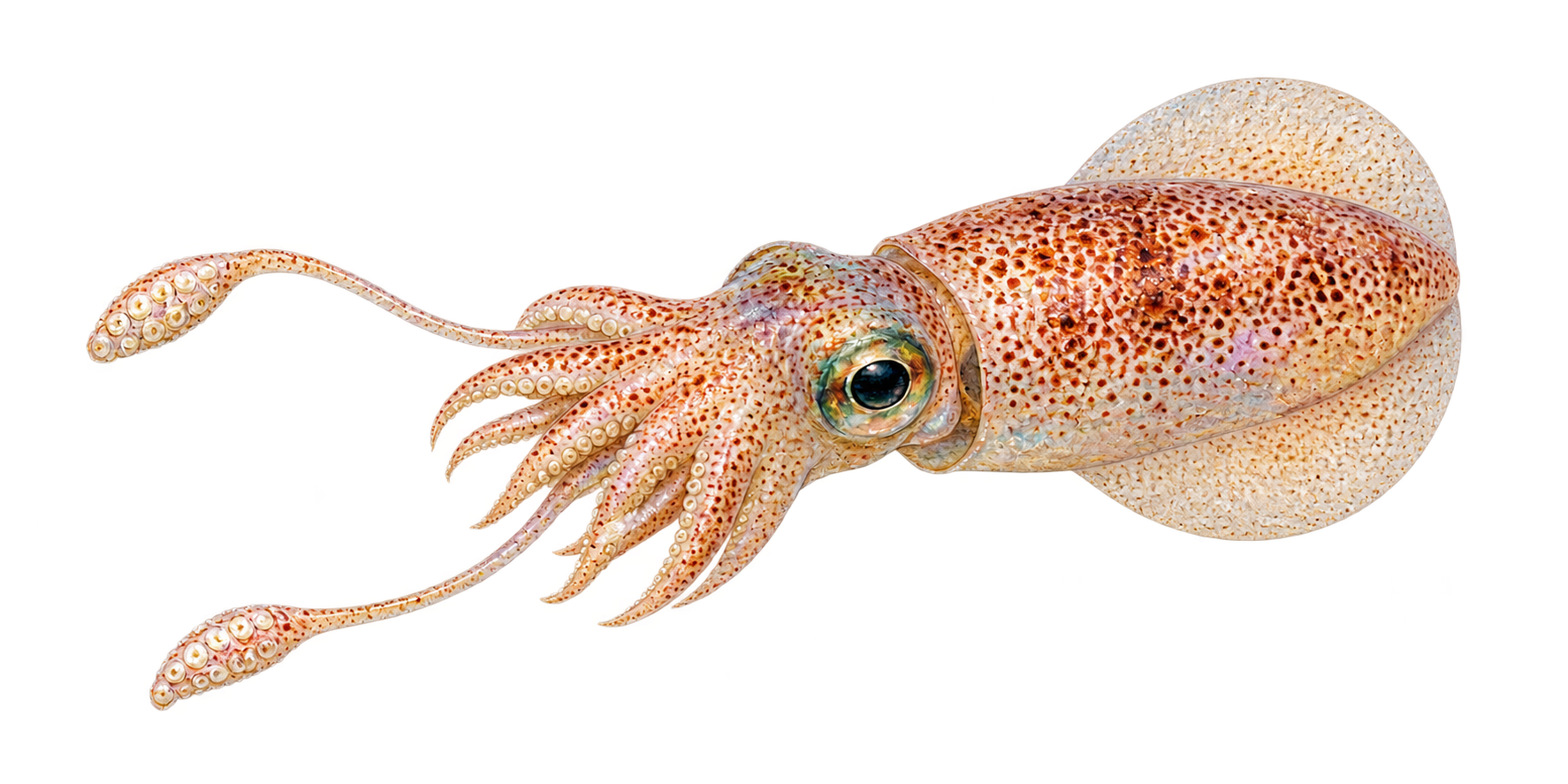
Size: The field guide reports Up to 5 in. (13 cm). Its measurement axis and sampling scope are not specified, so this is not presented as a verified maximum or life-stage range.
The 1973 Sea Grant guide describes a short, chunky squid with broad rounded fins and a narrow dark line along the back.
Read the guide’s location, season and eating cautions before acting.
Atlantic Longfin Squid
Soft-bodied and tentacled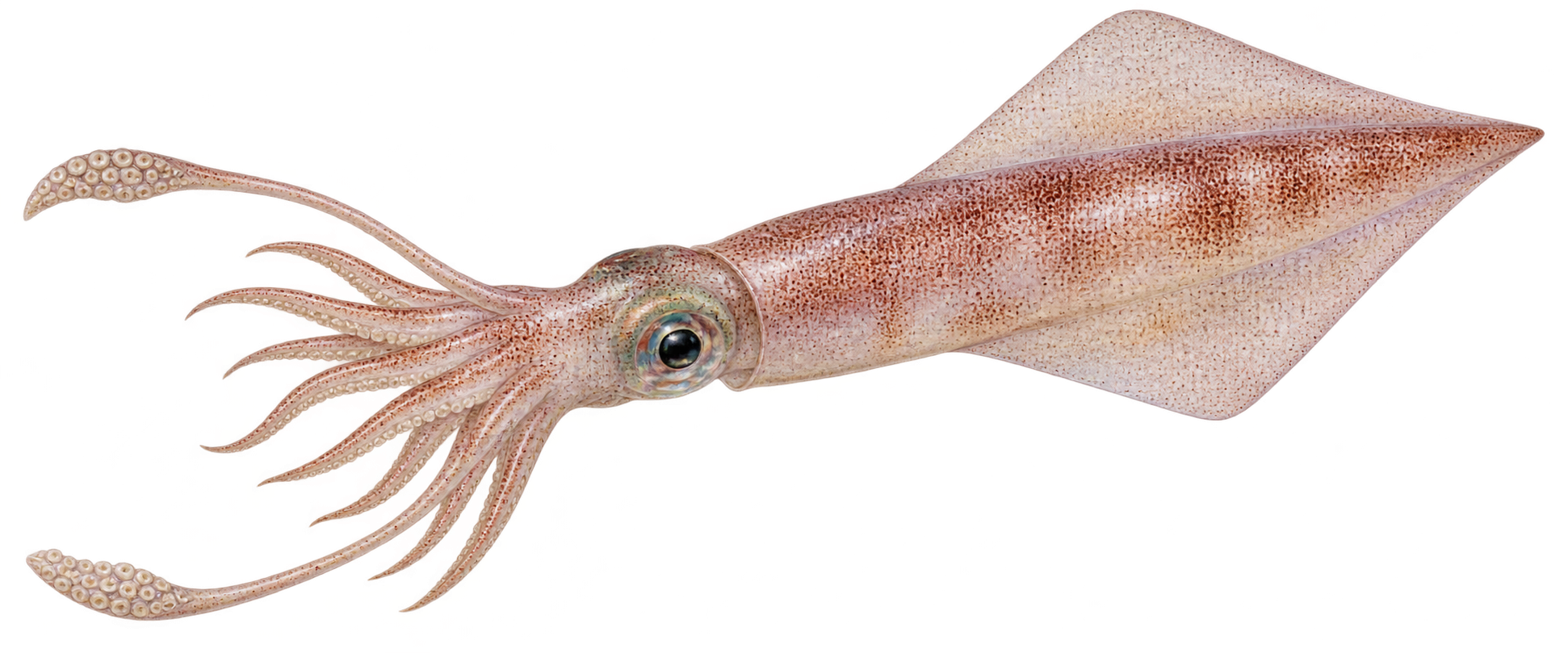
Size: Mantle usually under 30 cm; large males may reach about 50 cm mantle length.
A slender, pointed mantle and paired fins extending along much of its rear half give this squid a streamlined outline.
General Florida harvest rules; no species-specific statewide closed season identified
Explore the atlantic longfin squid guide →Caribbean Reef Octopus
Soft-bodied and tentacled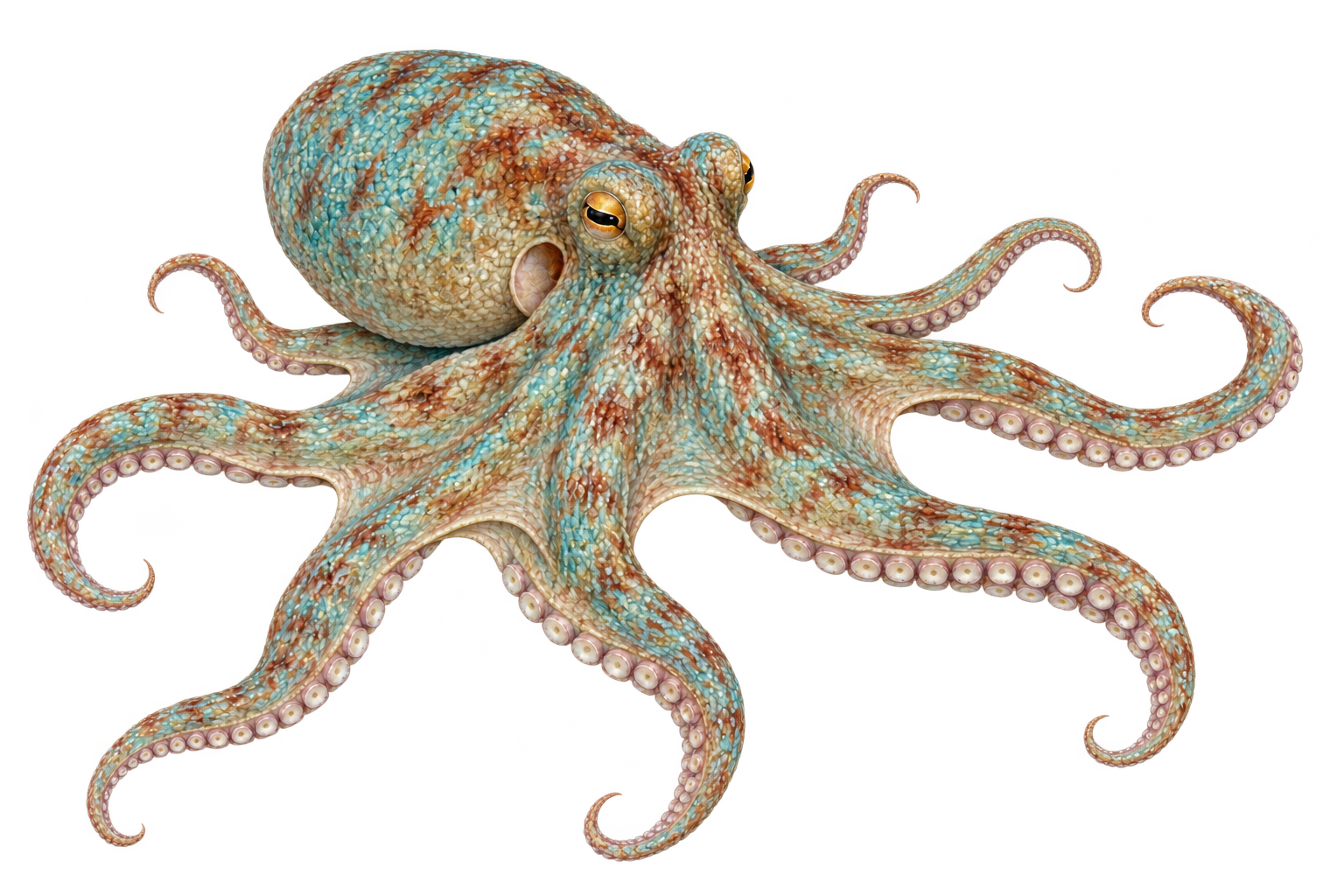
Size: Mantle to about 12 cm; flexible arms make total spread much larger.
Look for eight long arms, a soft rounded mantle and skin that can shift through blue-green, brown and mottled patterns.
Restricted marine life: live collection only; Blue Heron Bridge closed
Explore the caribbean reef octopus guide →Caribbean Reef Squid
Soft-bodied and tentacled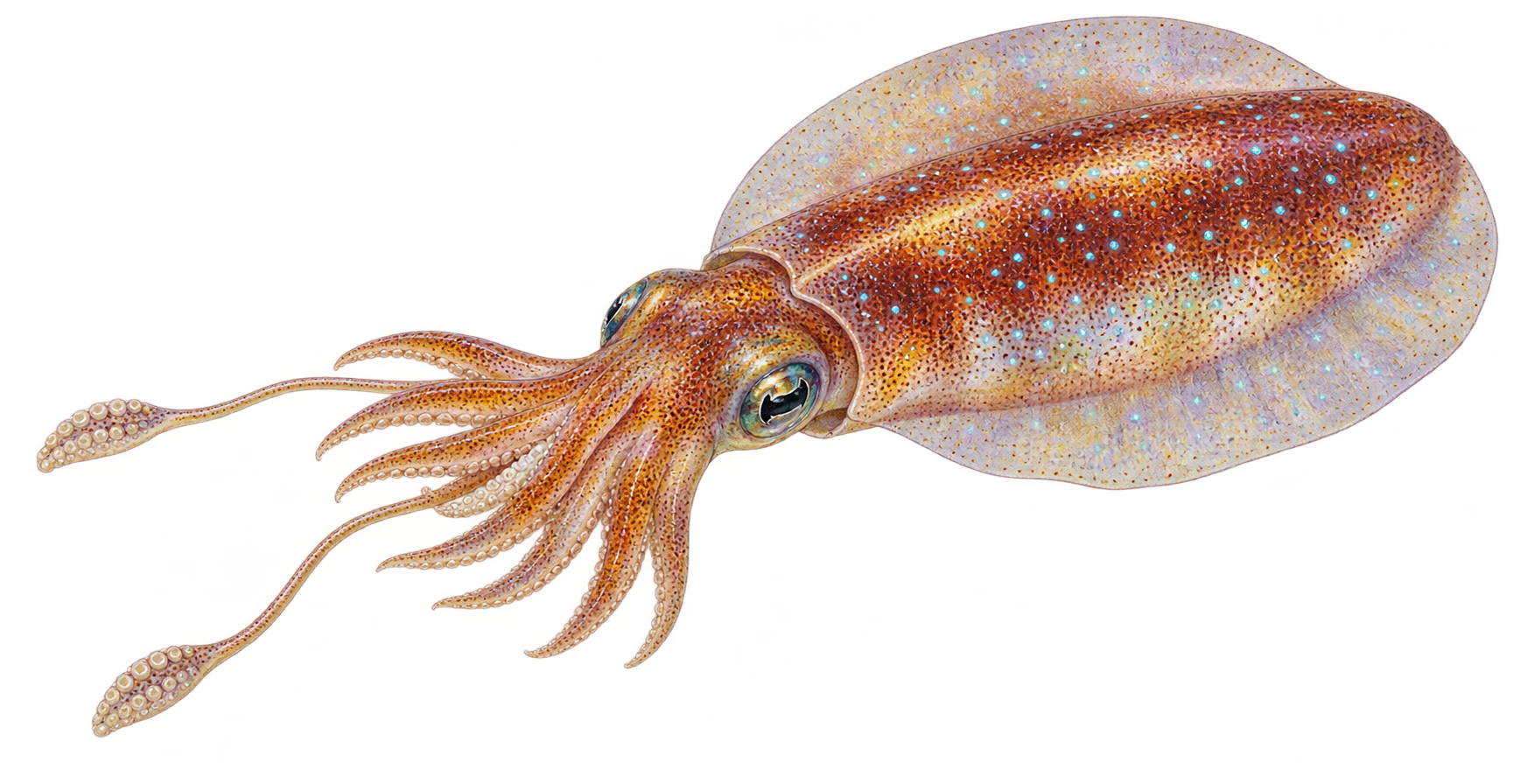
Size: Mantle to about 20 cm; head, arms and tentacles add to overall length.
Broad fins extend along nearly the entire mantle, giving this squid a flattened, leaflike outline.
General Florida harvest rules; no species-specific statewide closed season identified
Explore the caribbean reef squid guide →Rays
Atlantic Guitarfish
Flattened & bottom-dwelling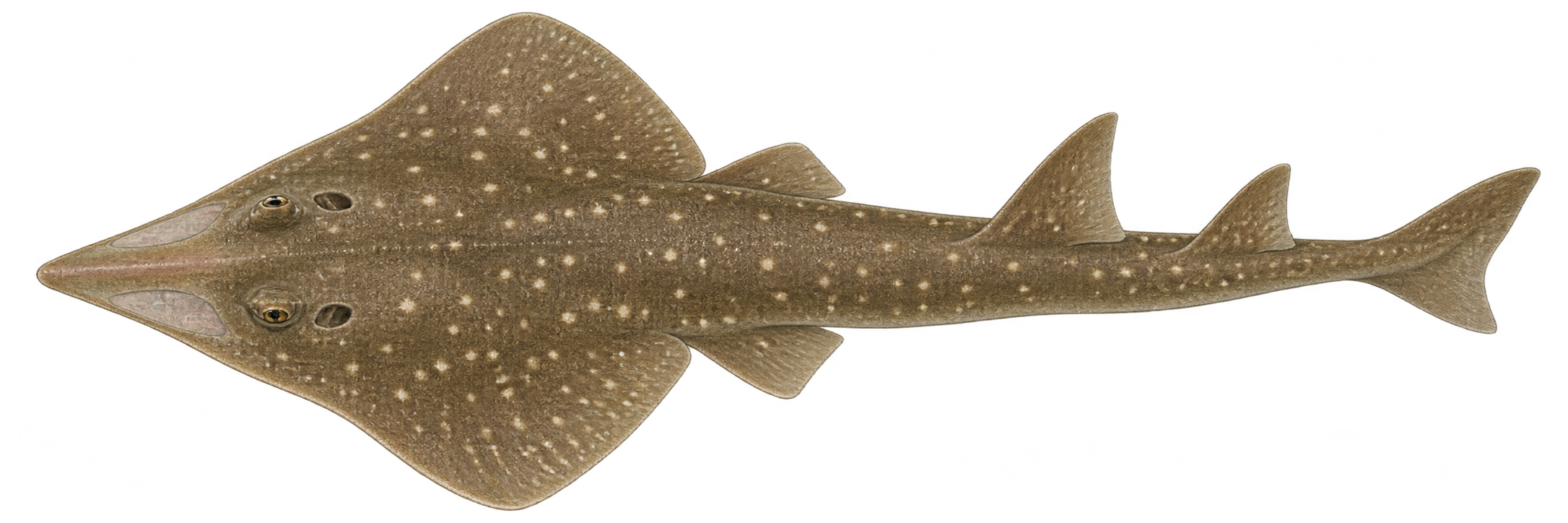
Size: Up to about 30 in (75 cm) total length, including the thick tail.
Pointed flattened disc; pale freckles; thick sharklike tail with two dorsal fins.
Read the guide’s location, season and eating cautions before acting.
Atlantic Stingray
Flattened & bottom-dwelling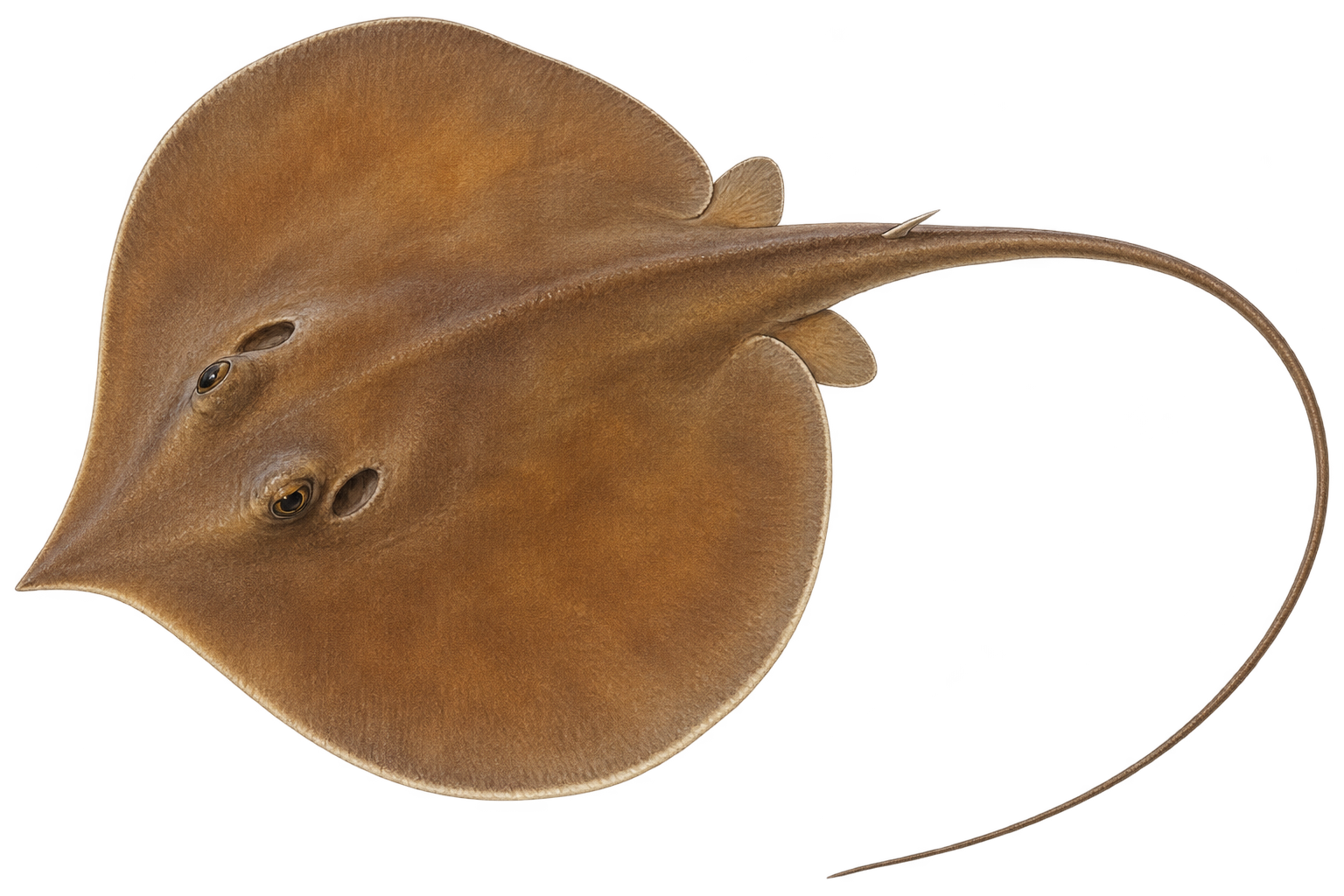
Size: FWC reports up to 2 feet (61 cm) disc width; many Florida lagoon adults are much smaller.
Rounded disc corners, strongly projecting pointed snout and long slender tail.
Harvest allowed under default limits; not a protected manta or eagle ray
Explore the atlantic stingray guide →Bluntnose Stingray
Flattened & bottom-dwelling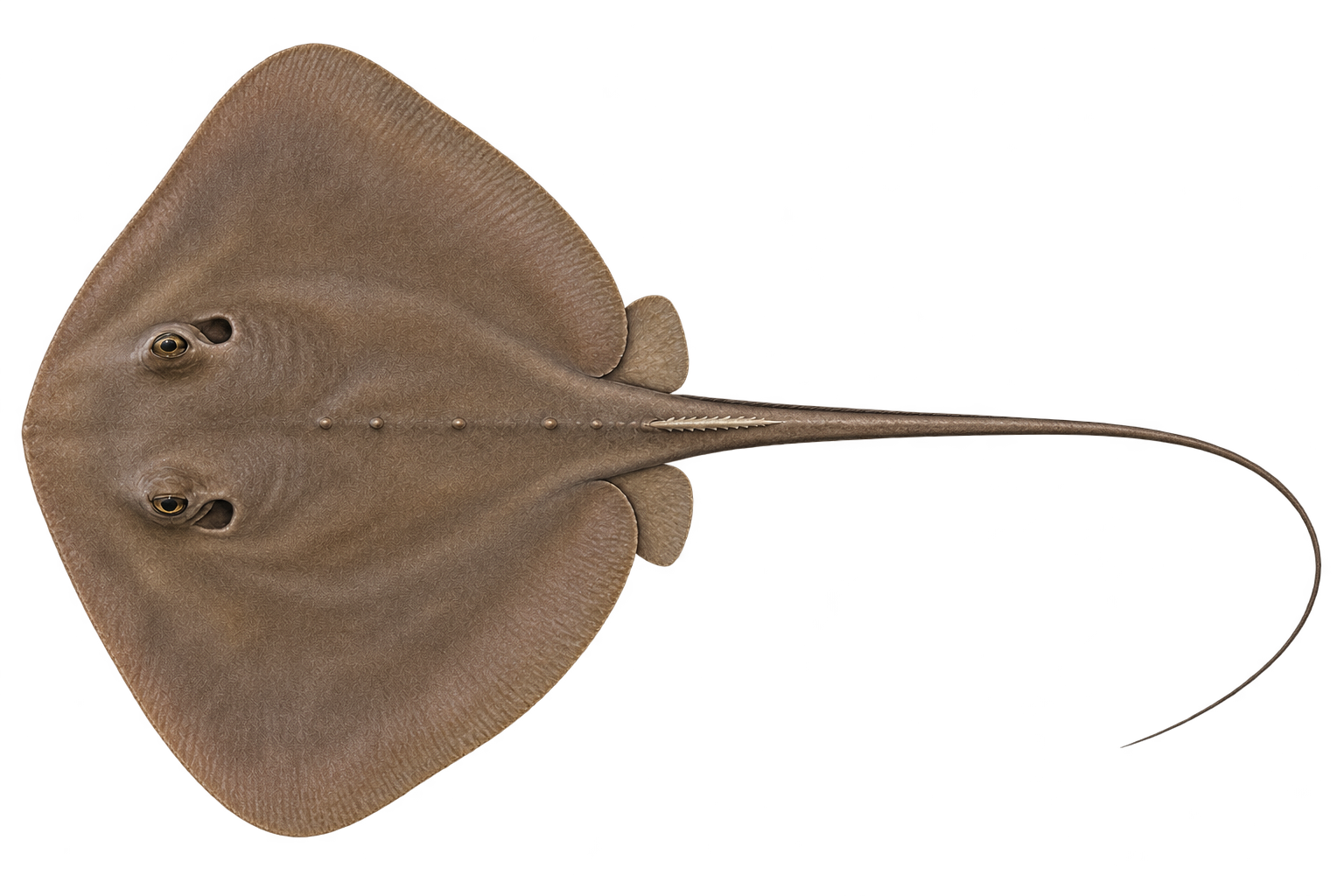
Size: Large individuals about 3–3.3 ft (0.9–1 m) disc width, excluding the tail.
Short blunt snout; rounded diamond disc; midline tubercles; upper and lower tail folds.
Read the guide’s location, season and eating cautions before acting.
Cownose Ray
Flattened & bottom-dwelling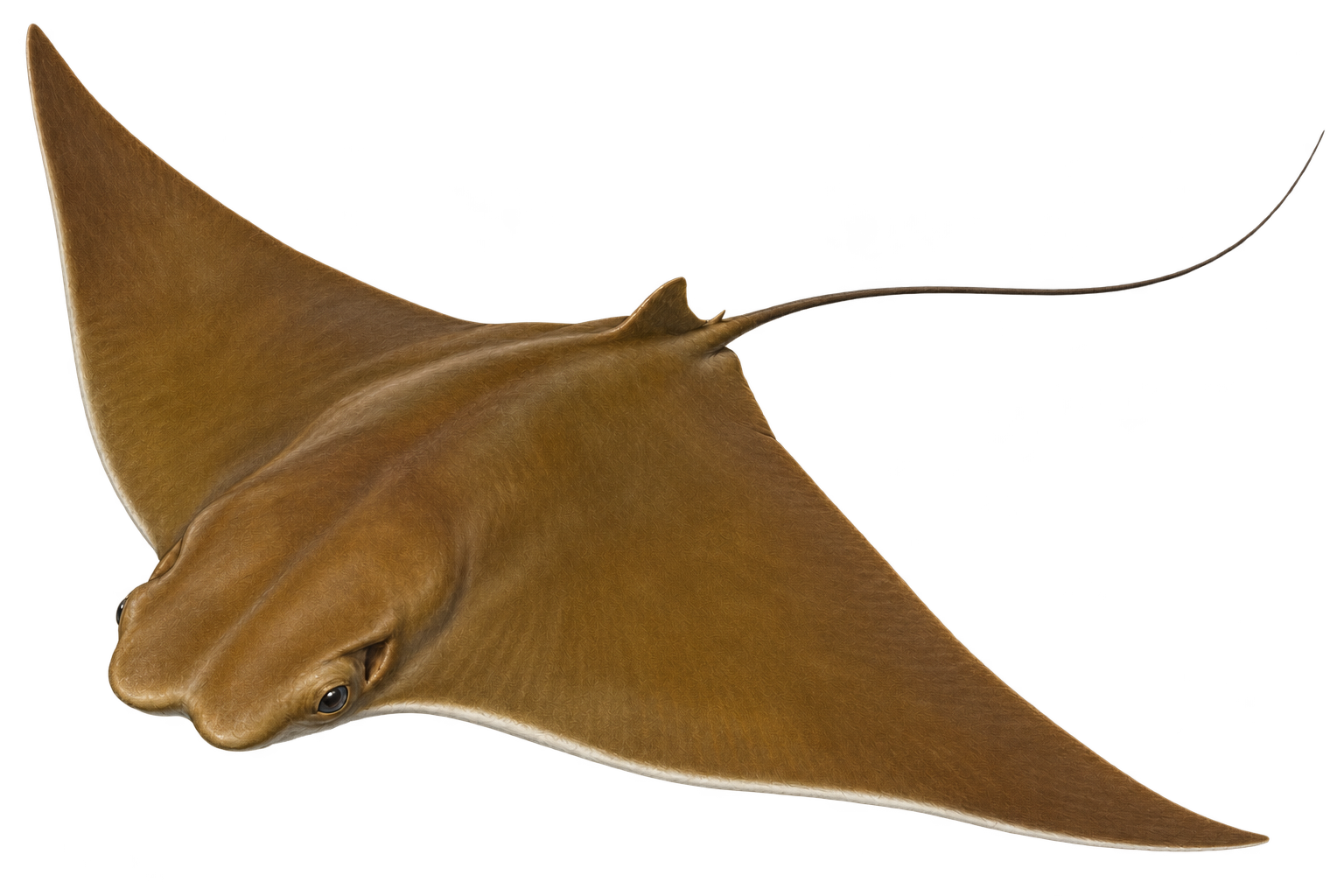
Size: Up to about 4 ft (1.2 m) disc width, measured wingtip to wingtip.
Plain brown angular wings; projecting two-lobed notched snout; whip tail with basal spine.
Read the guide’s location, season and eating cautions before acting.
Lesser Devil Ray
Flattened & bottom-dwelling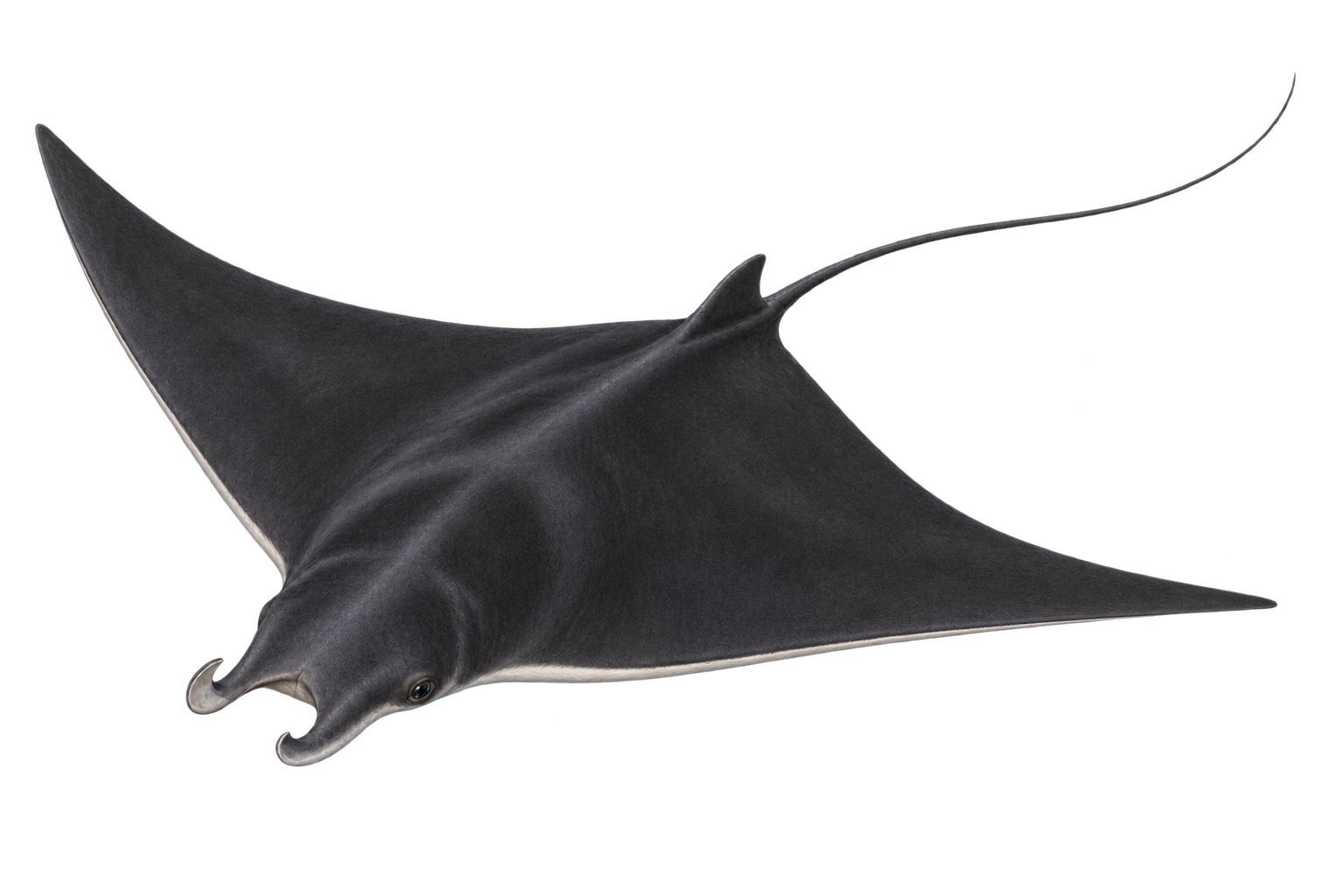
Size: Up to about 4 ft (1.2 m) disc width, excluding the tail.
Dark pointed wings; short paired cephalic horns; mouth under head; no tail spine.
Read the guide’s location, season and eating cautions before acting.
Southern Stingray
Flattened & bottom-dwelling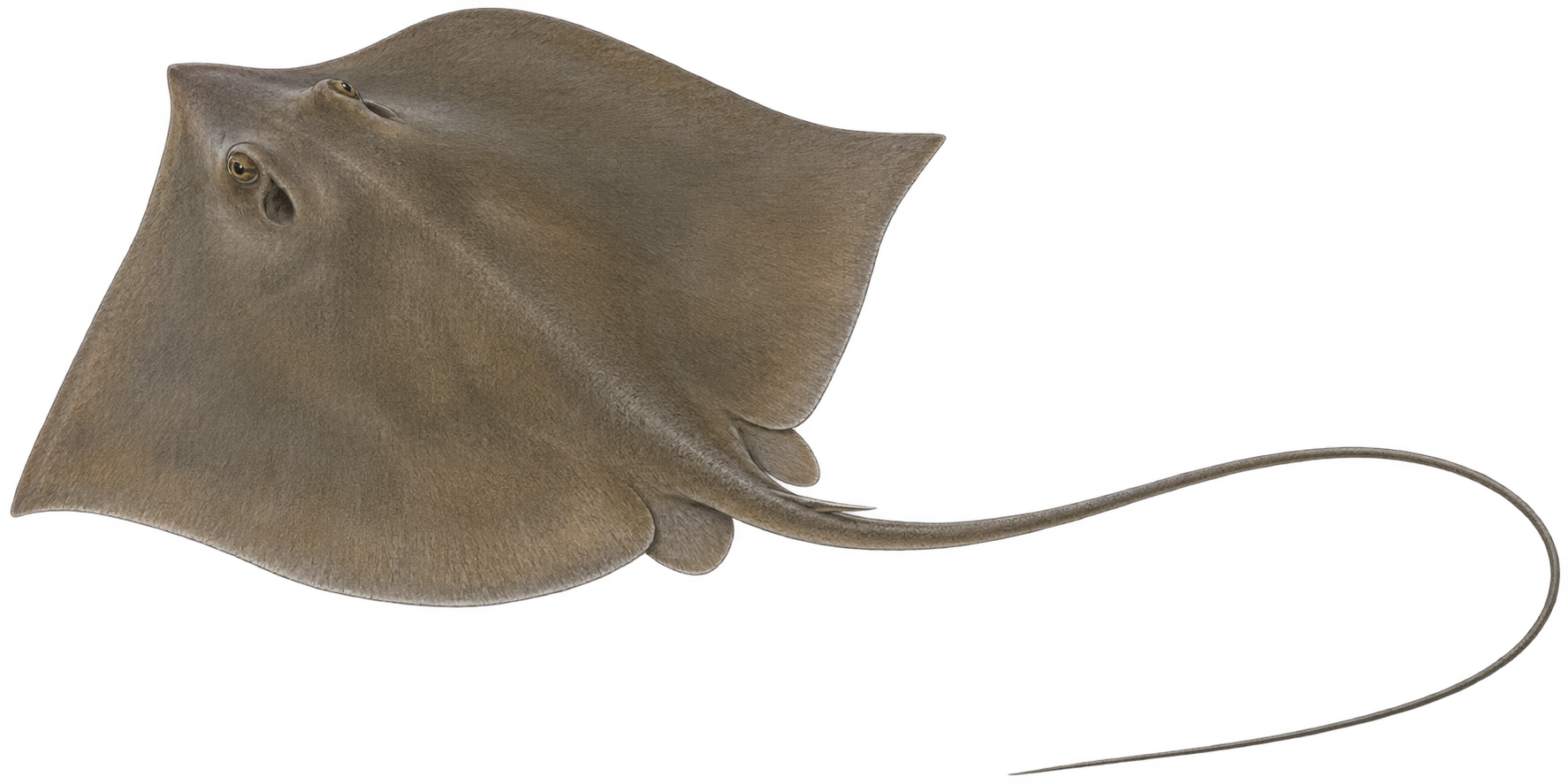
Size: Large females may reach around 5 feet across; some references report up to 6.5 feet (2 m) disc width.
Angular diamond-shaped disc, plain gray-brown back and a long whip tail.
Harvest allowed under default limits; not a protected manta or eagle ray
Explore the southern stingray guide →Spotted Eagle Ray
Flattened & bottom-dwelling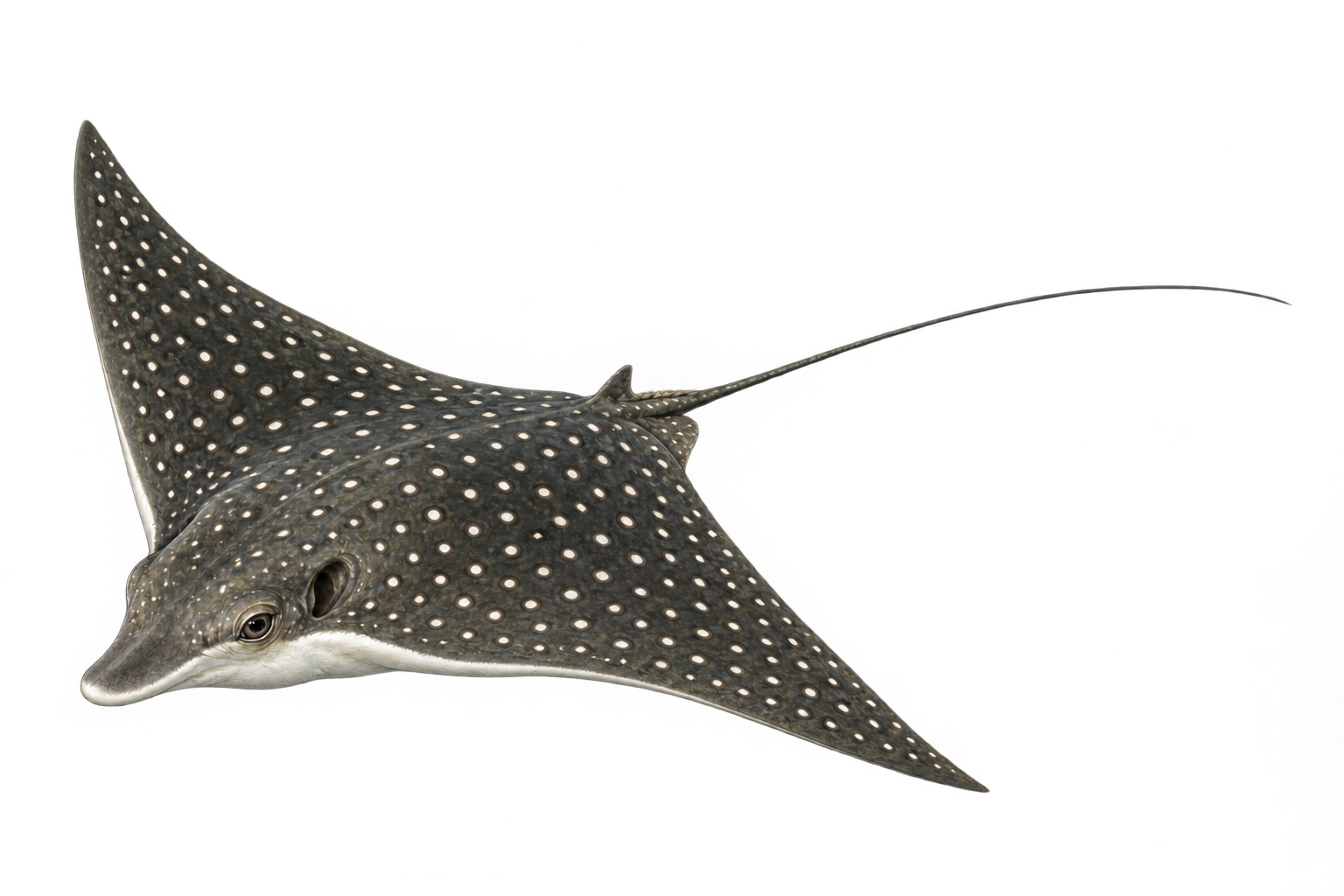
Size: Large Atlantic females reported around 2.3 m disc width.
White spots on dark wings; Projecting duck-like snout; Long whip tail.
Protected; recreational harvest prohibited
Explore the spotted eagle ray guide →Yellow Stingray
Flattened & bottom-dwelling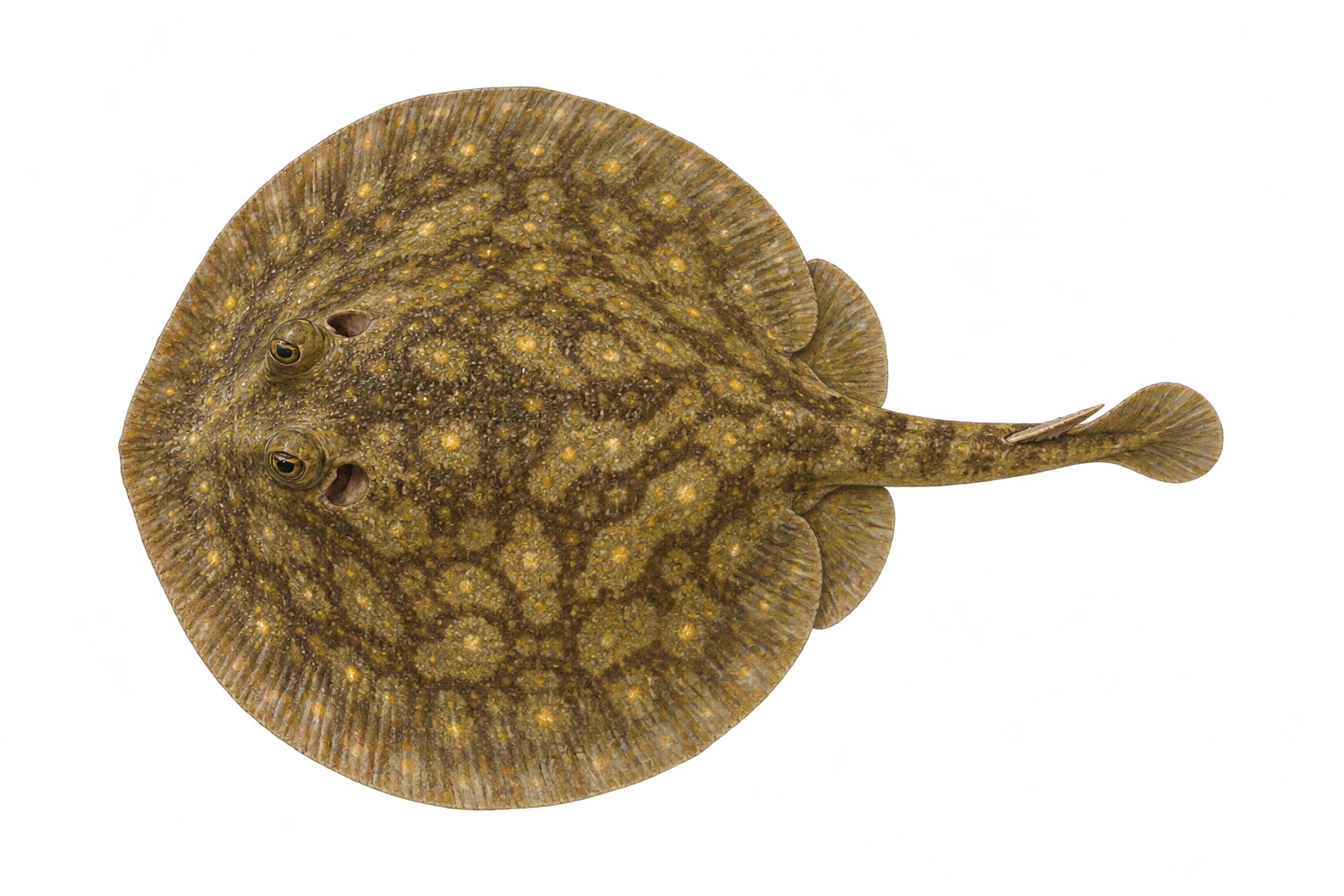
Size: Research review: average about 33.5 cm total length, 16 cm disc width; older large maxima disputed.
Rounded mottled disc; Short tail with tail fin; No dorsal fin.
Aquarium live collection only; no food harvest
Explore the yellow stingray guide →Lesser Electric Ray
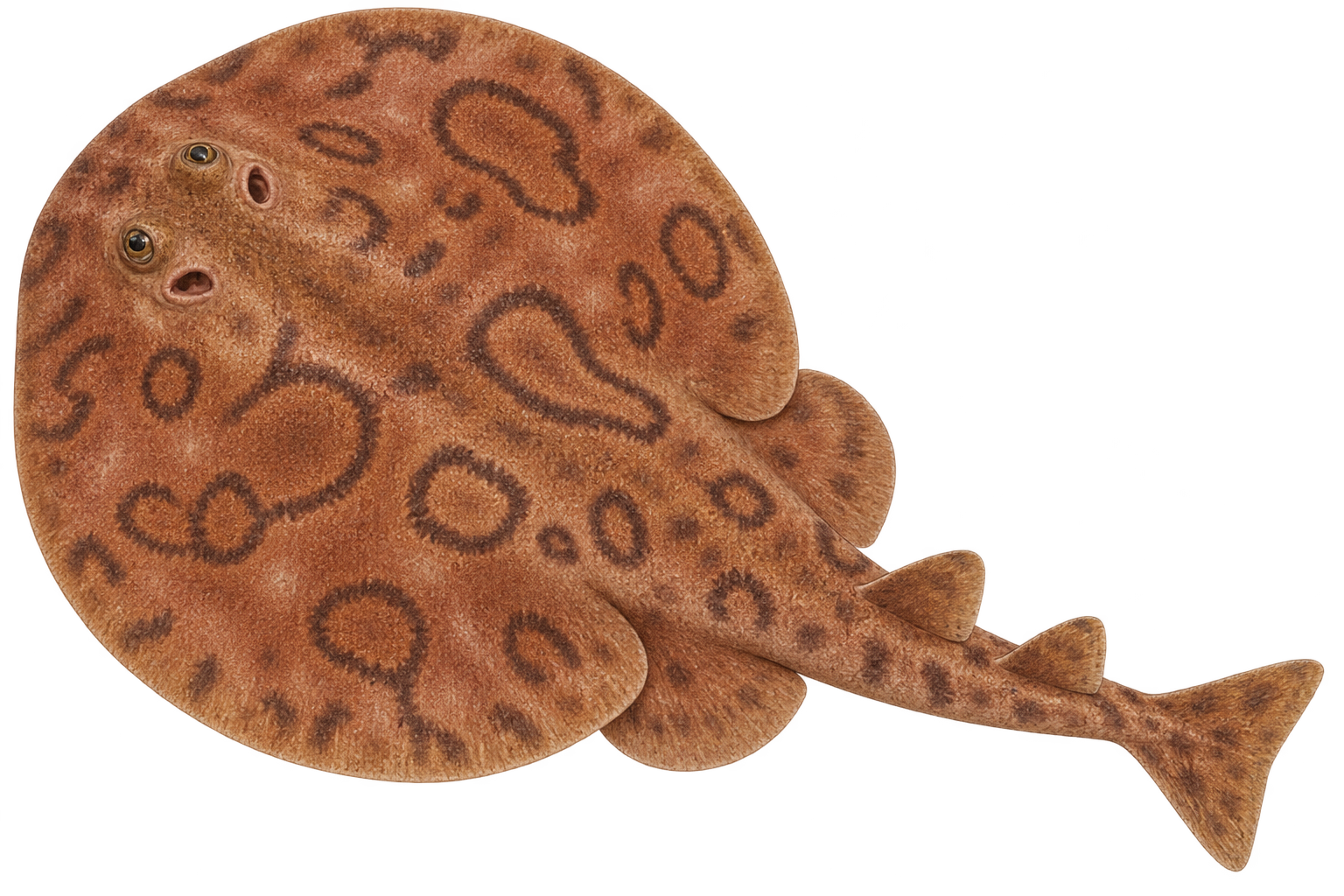
Rounded disc, stout tail and two small dorsal fins identify this electric ray outline.
Verify current species, gear, area and jurisdiction rules. Identification is not harvest permission or food-safety clearance.
Explore the lesser electric ray guide →Bullnose Ray
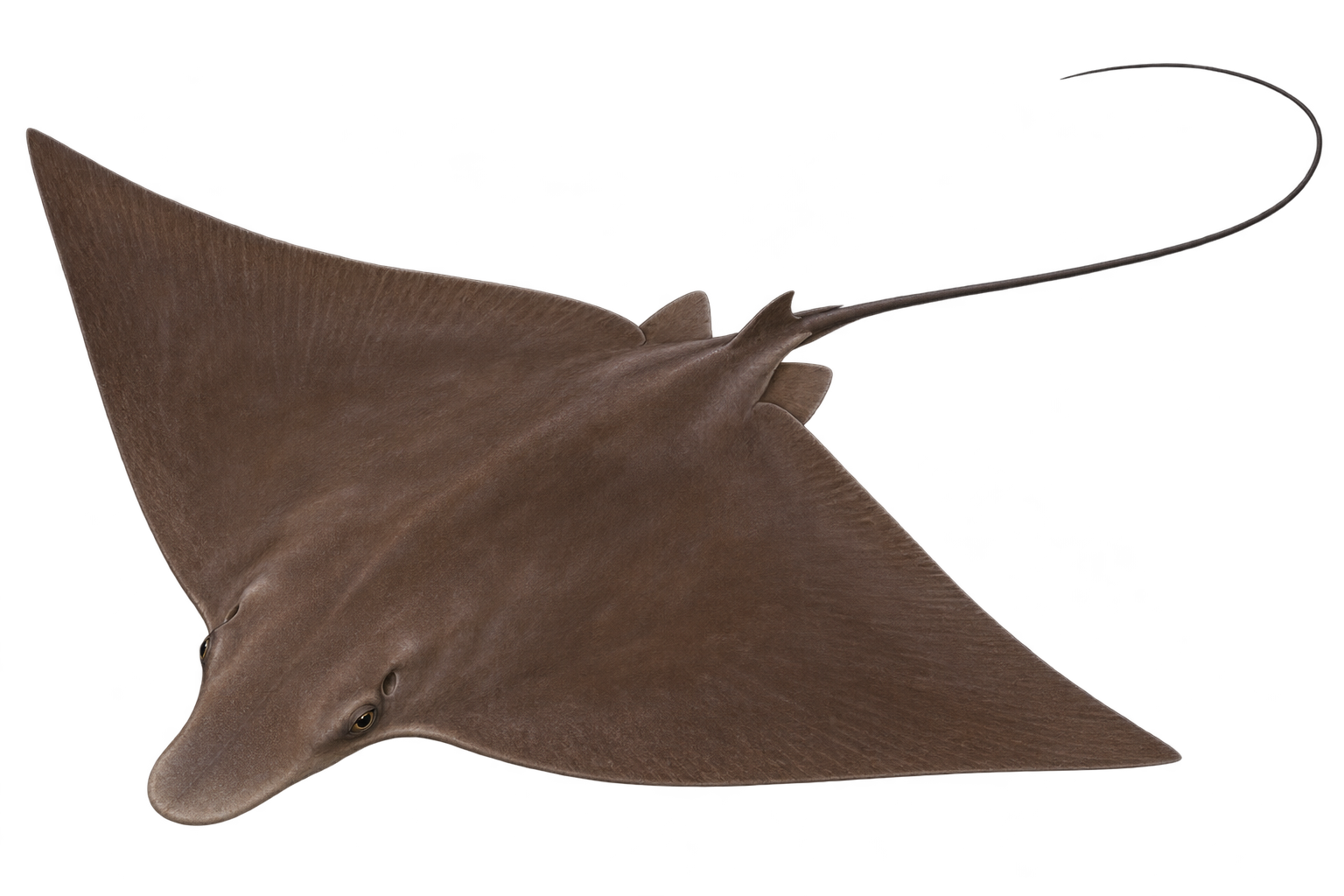
Broad pointed wings and a projecting rounded snout distinguish the bullnose profile.
Verify current species, gear, area and jurisdiction rules. Identification is not harvest permission or food-safety clearance.
Explore the bullnose ray guide →Roughtail Stingray
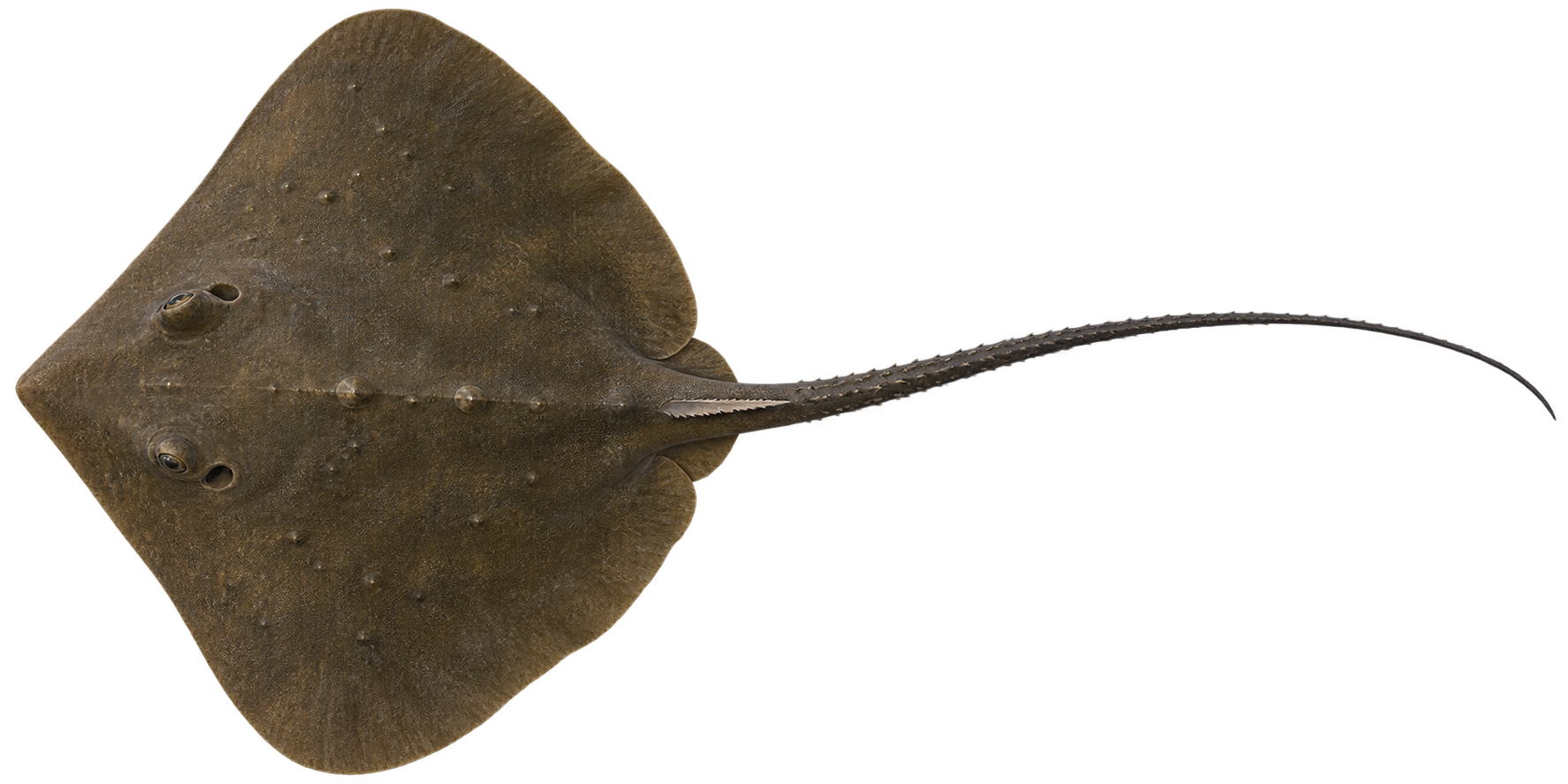
A large angular disc and conspicuous thorny tail distinguish this stingray.
Verify current species, gear, area and jurisdiction rules. Identification is not harvest permission or food-safety clearance.
Explore the roughtail stingray guide →Atlantic Butterfly Ray
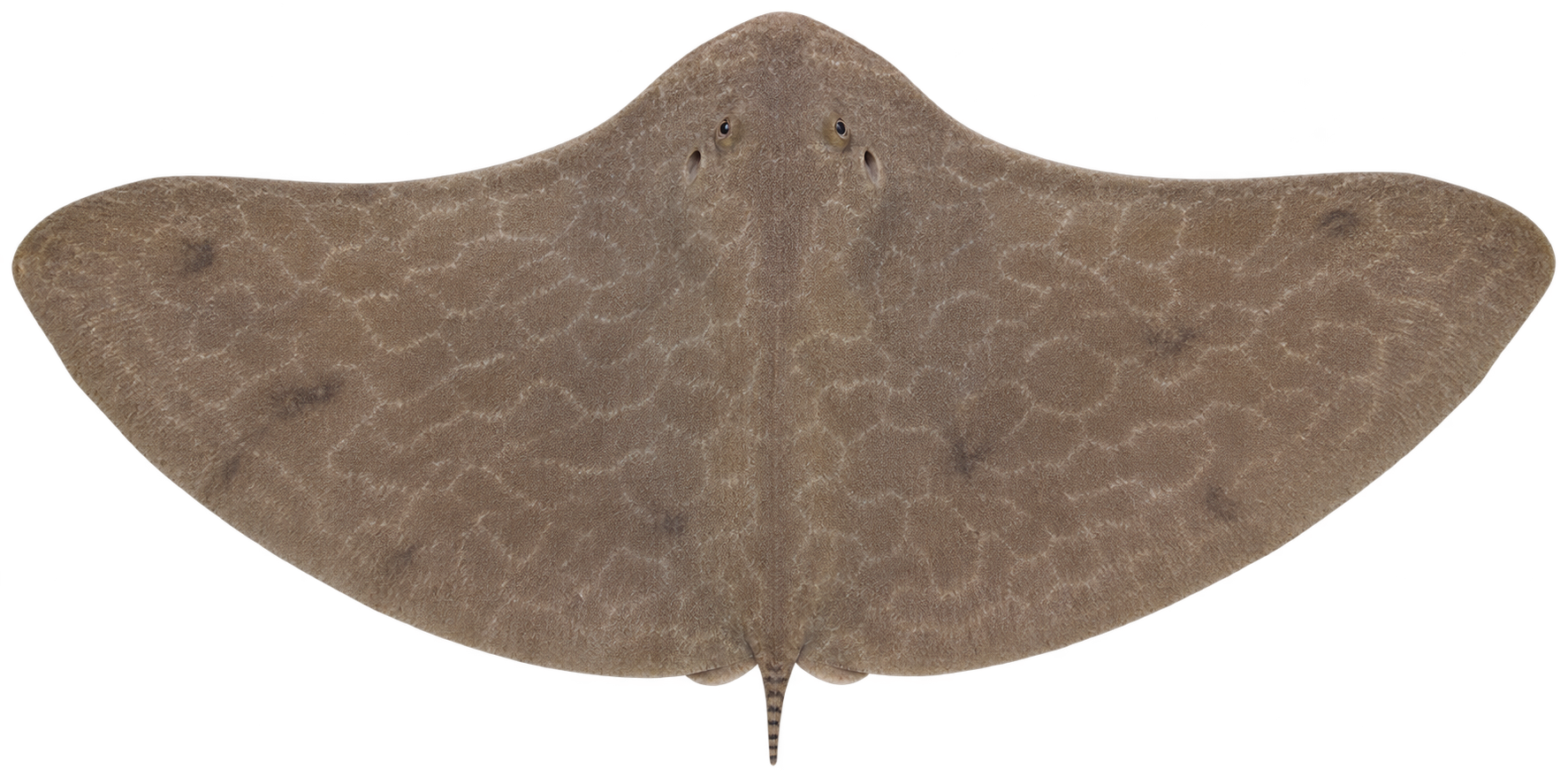
Very broad butterfly-shaped disc and short barred tail without a spine.
Verify current species, gear, area and jurisdiction rules. Identification is not harvest permission or food-safety clearance.
Explore the atlantic butterfly ray guide →Clearnose Skate
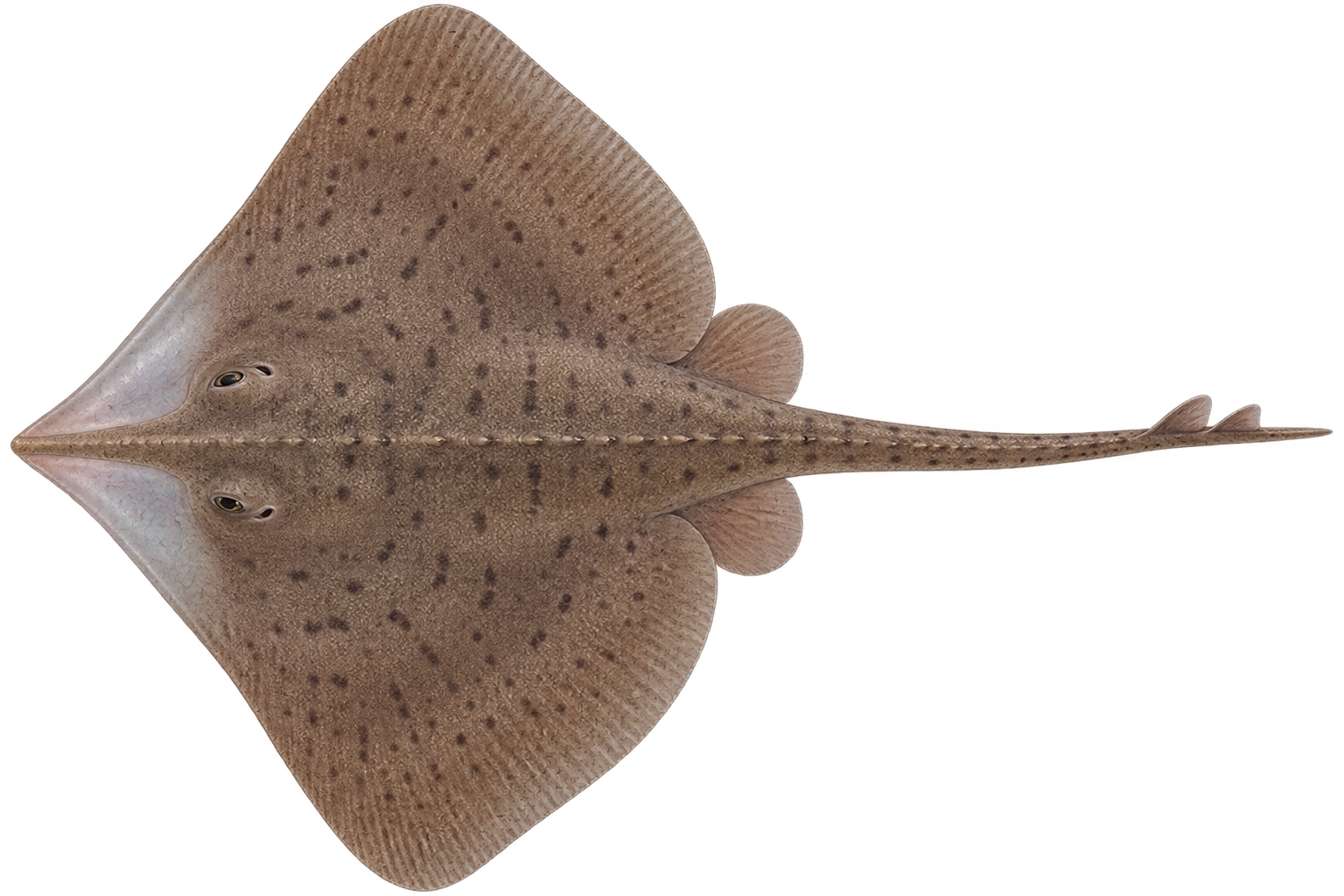
Transparent patches beside the snout and a thorny midline help identify this skate.
Verify current species, gear, area and jurisdiction rules. Identification is not harvest permission or food-safety clearance.
Explore the clearnose skate guide →Smalltooth Sawfish
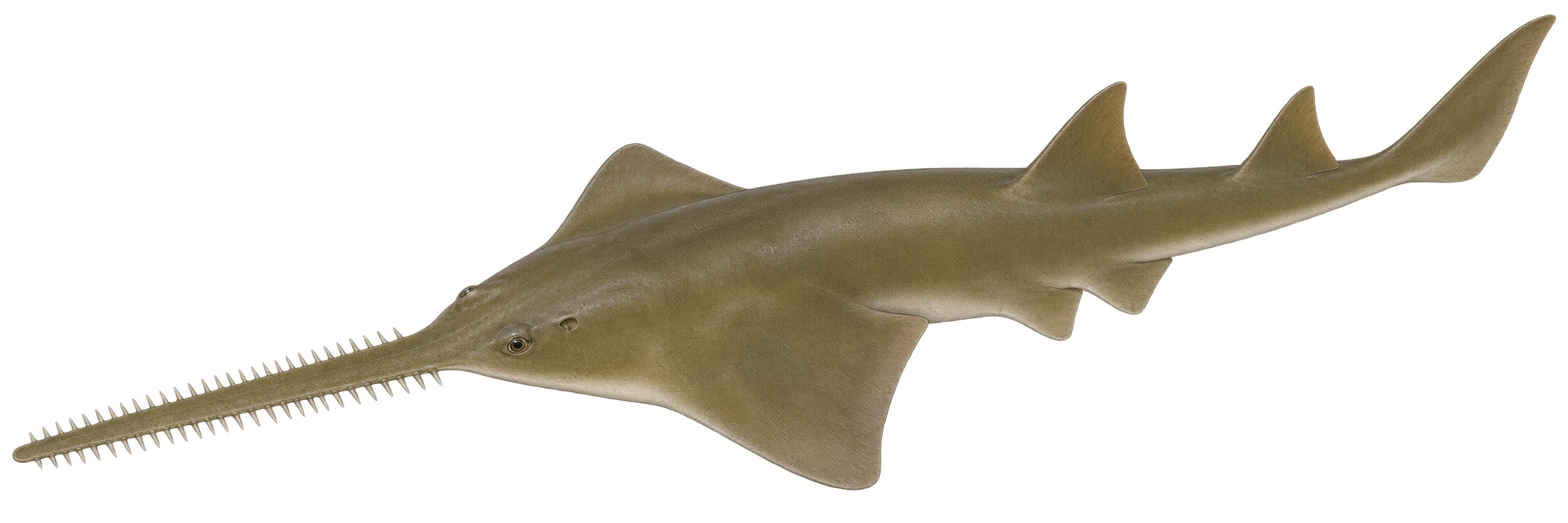
A toothed saw-like snout and flattened shark-like body identify this endangered ray.
Protected: no recreational harvest; observe without handling or disturbance.
Explore the smalltooth sawfish guide →Western Atlantic Torpedo
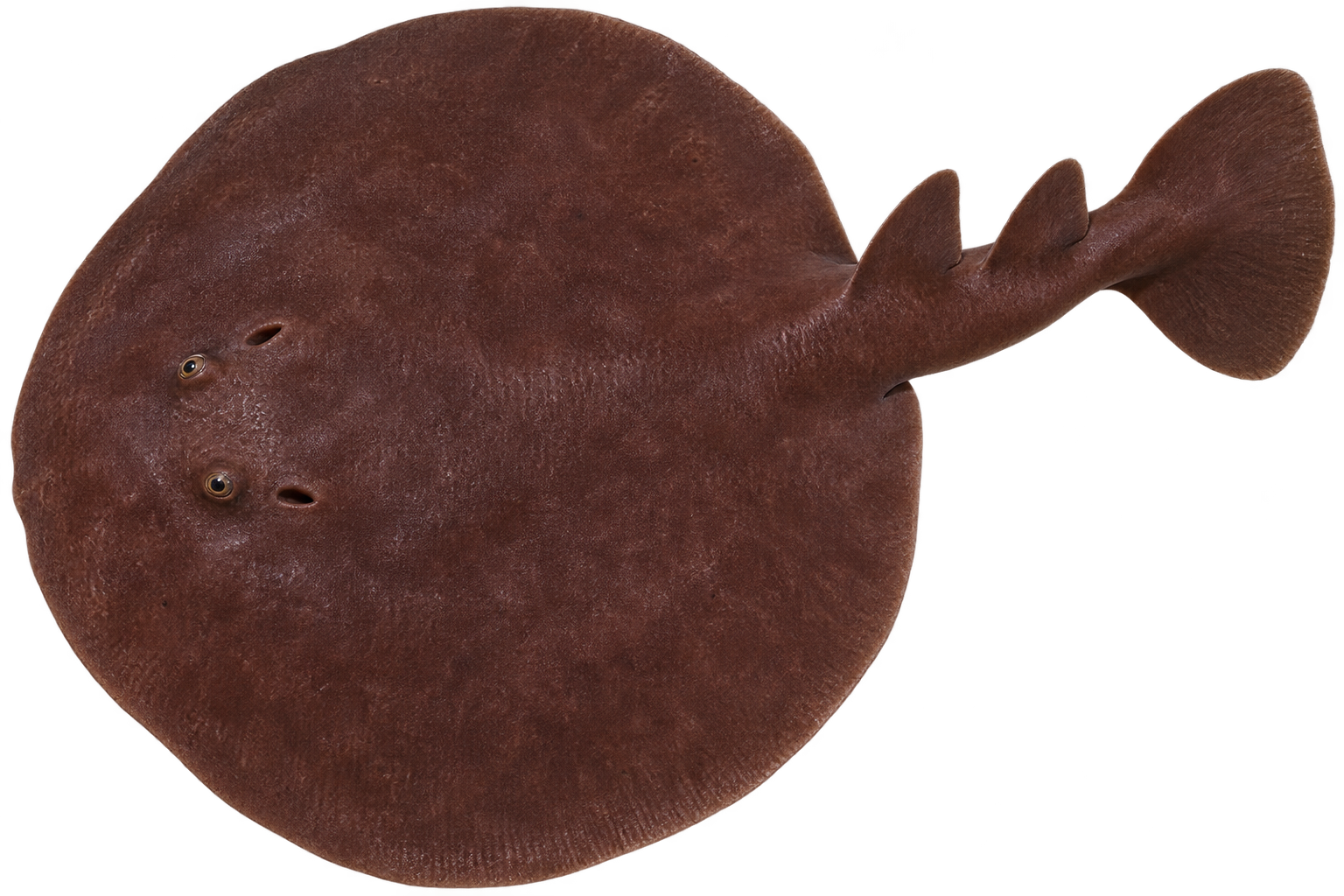
A broad nearly round disc and stout tail characterize this Western Atlantic electric ray.
Verify current species, gear, area and jurisdiction rules. Identification is not harvest permission or food-safety clearance.
Explore the western atlantic torpedo guide →Reptiles
Green Sea Turtle
Turtle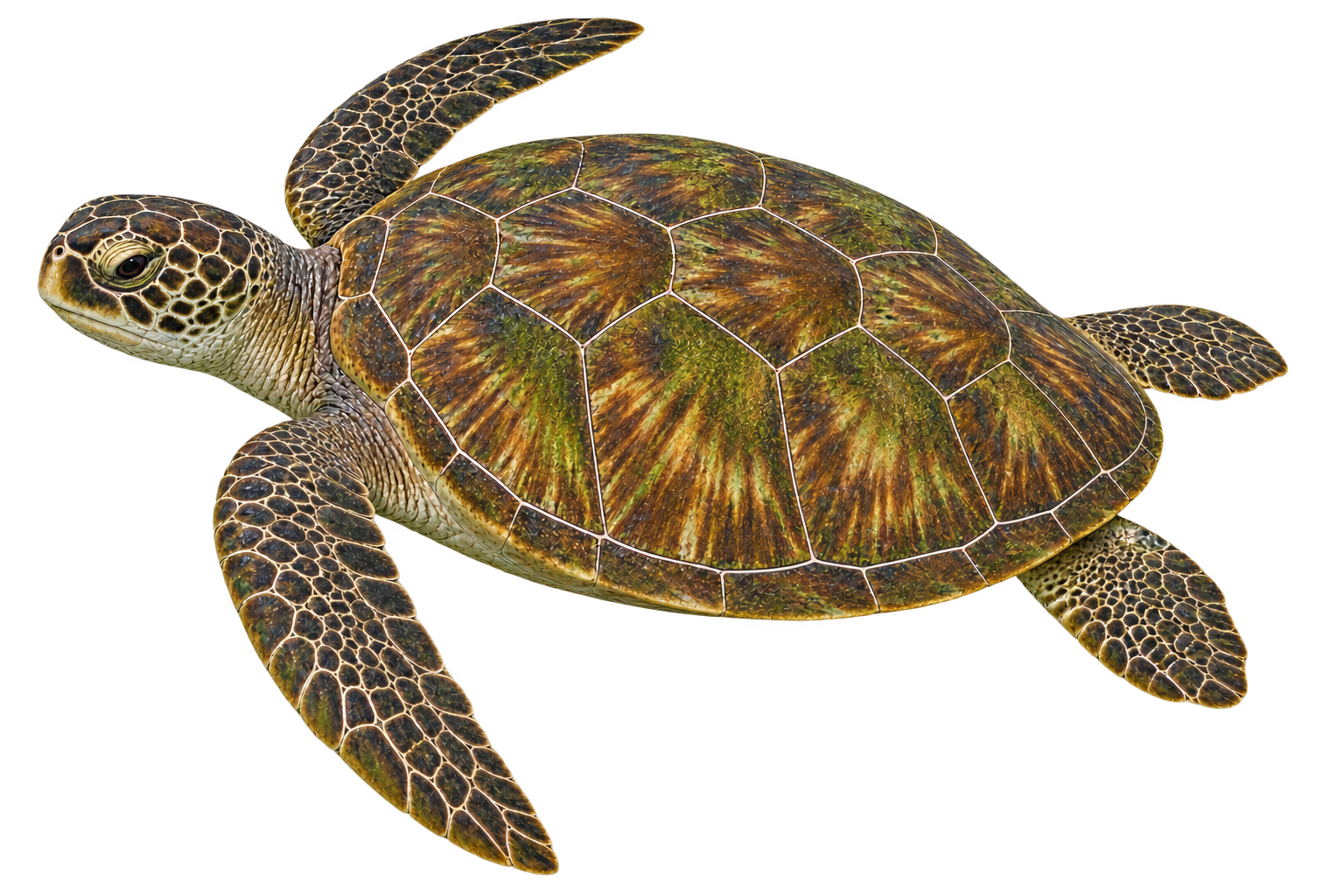
Size: Adult carapace about 90–122 cm (3–4 ft).
The small head, smooth-looking oval shell and one pair of large scales between the eyes distinguish a green turtle.
Read the guide’s location, season and eating cautions before acting.
Hawksbill Sea Turtle
Turtle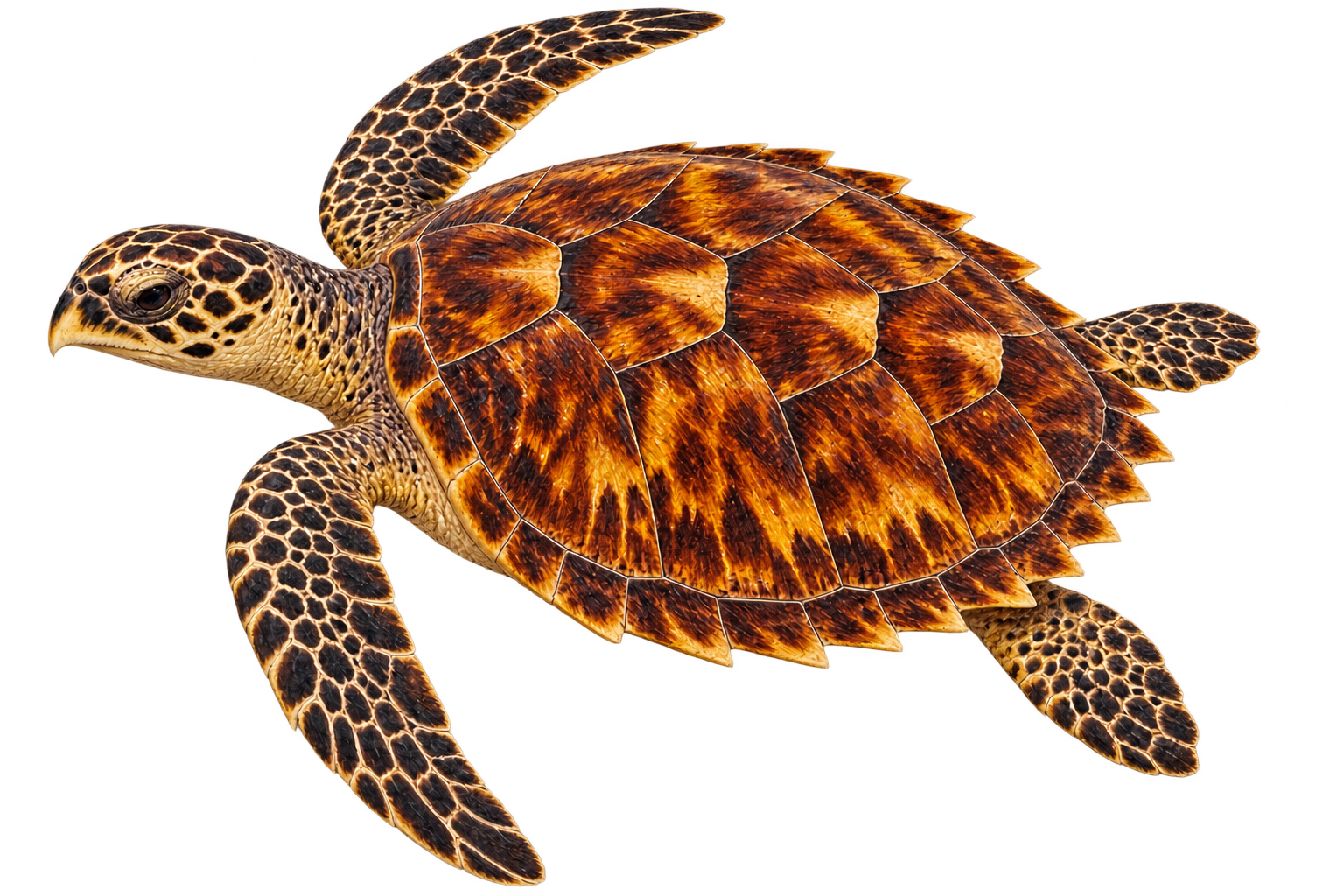
Size: Typical mature shell length about 61–91 cm (2–3 ft).
Look for a narrow head ending in a projecting hawk-like beak.
Read the guide’s location, season and eating cautions before acting.
Kemp’s Ridley Sea Turtle
Turtle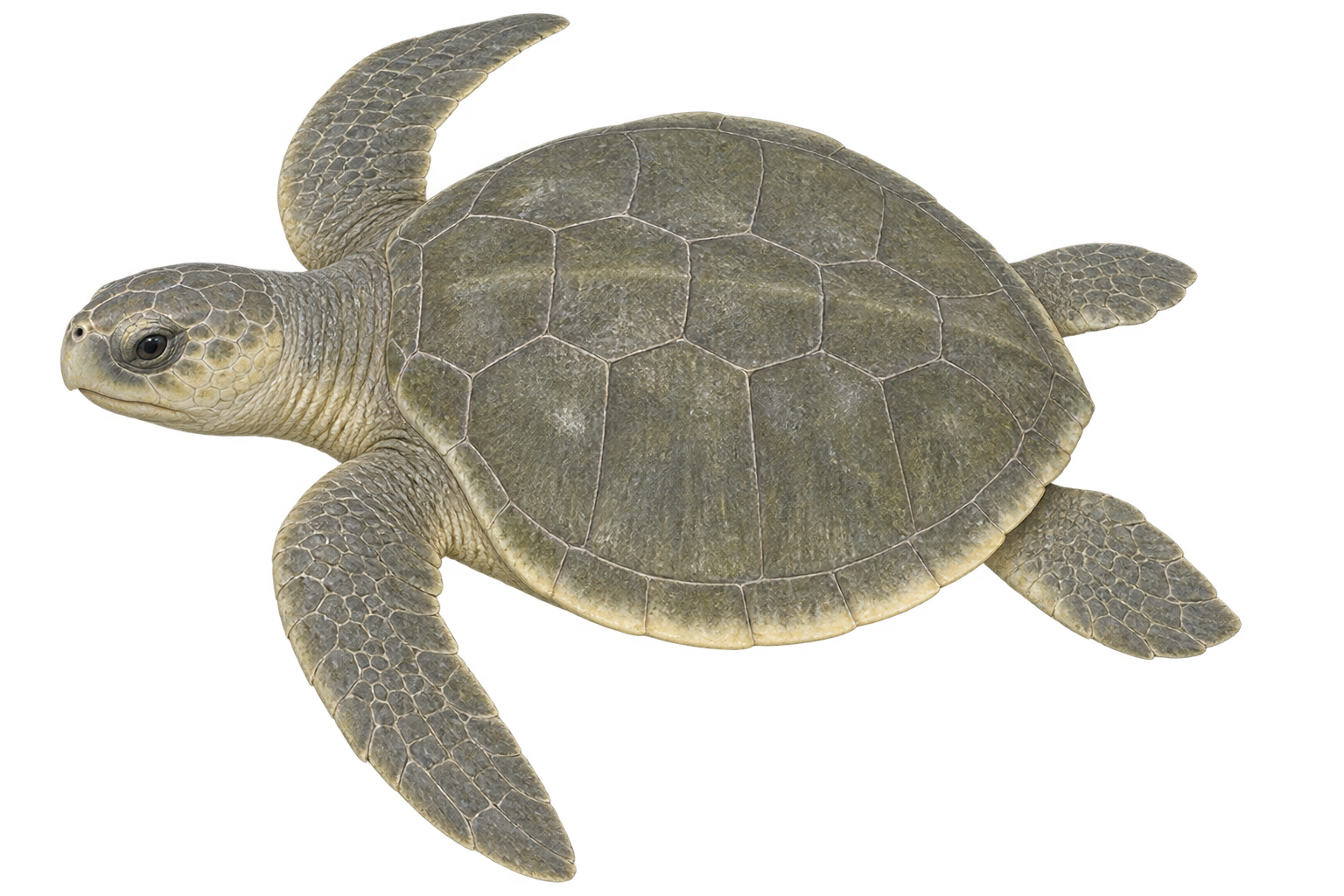
Size: Adult carapace about 60–70 cm (24–28 in); typical weight 70–100 lb.
Adults have a gray-green upper shell and pale yellowish underside.
Read the guide’s location, season and eating cautions before acting.
Leatherback Sea Turtle
Turtle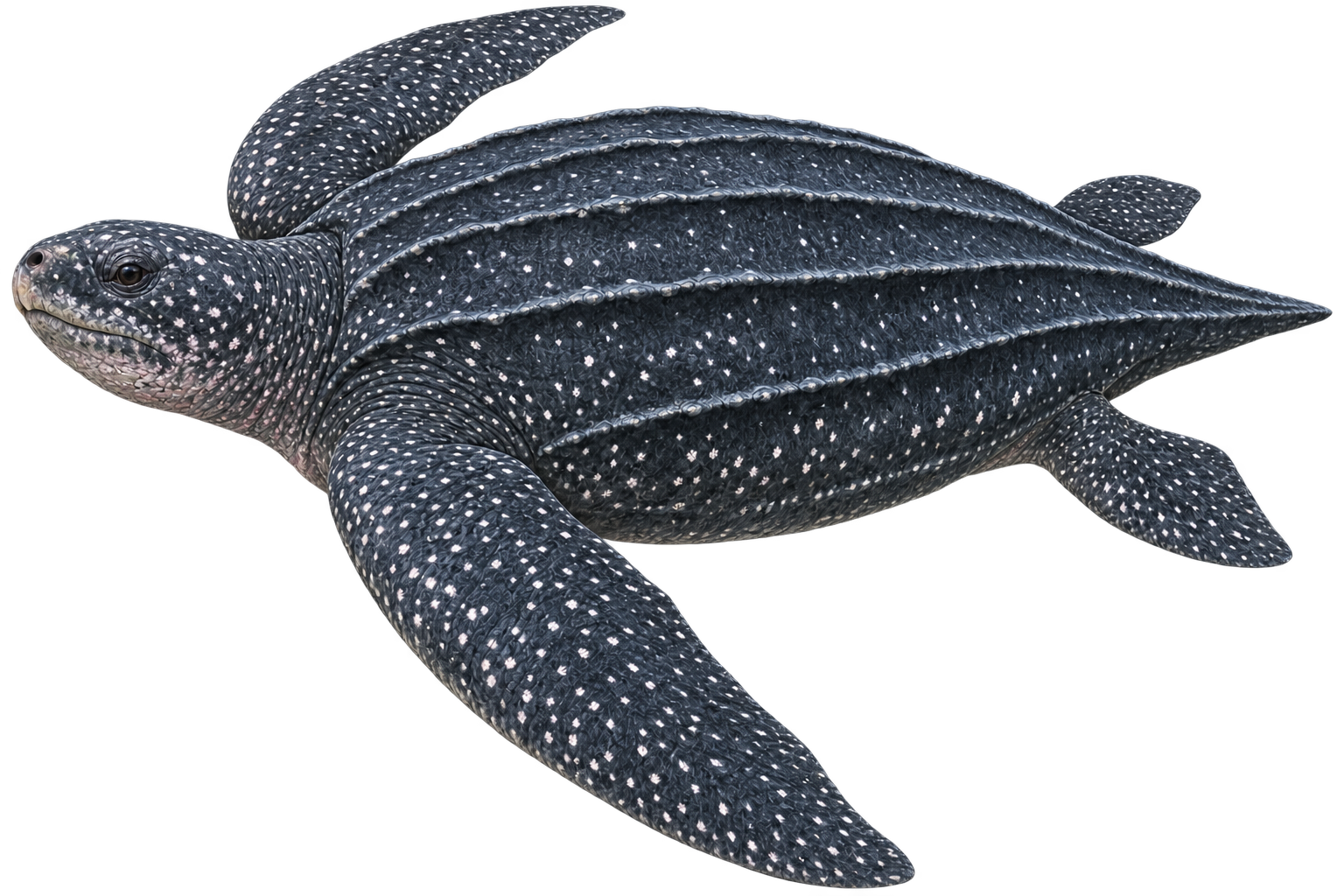
Size: Adult carapace about 121–244 cm (4–8 ft); typical adults are smaller than the upper end.
Seven lengthwise ridges run along the dark, leathery upper shell.
Read the guide’s location, season and eating cautions before acting.
Loggerhead Sea Turtle
Turtle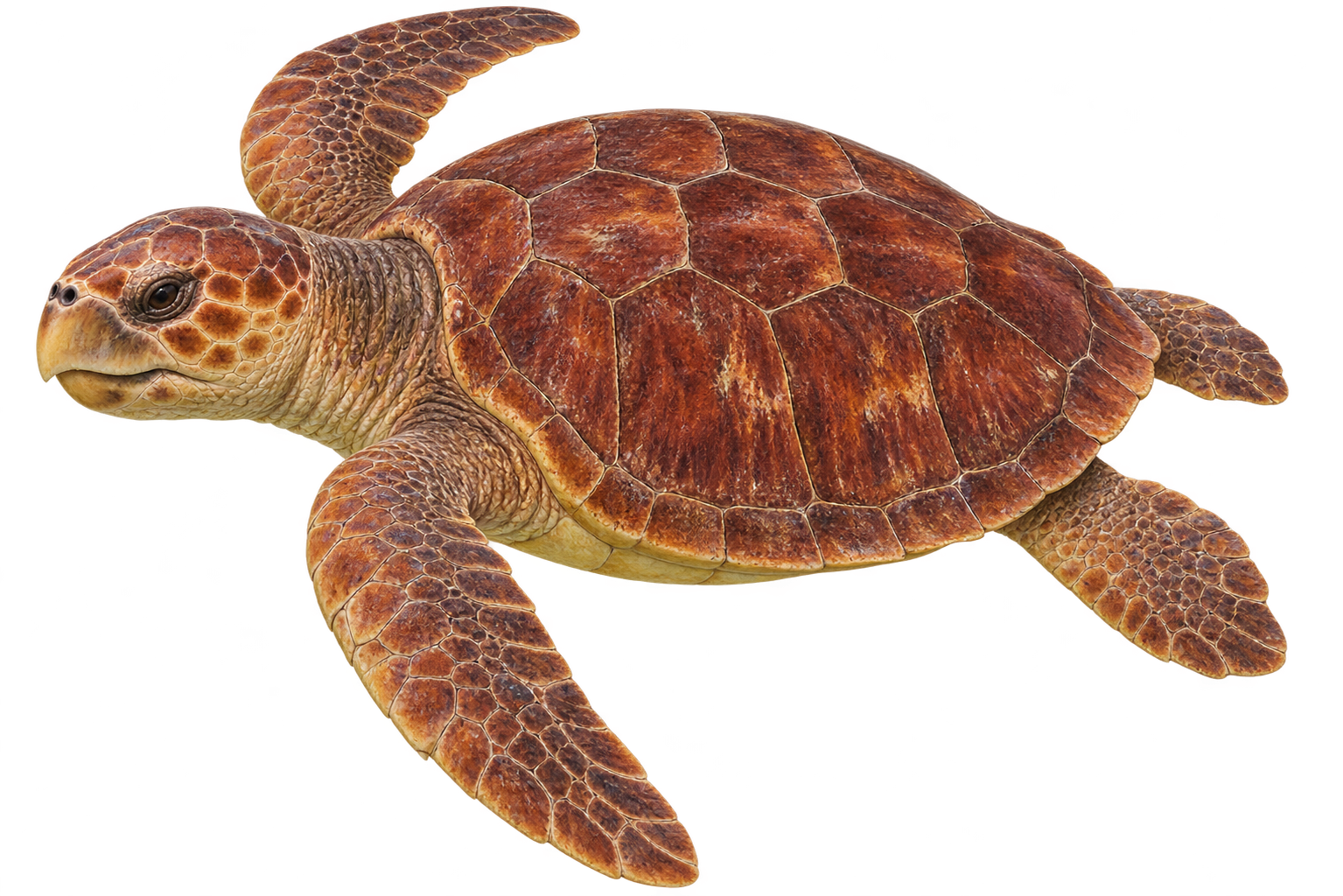
Size: Average adult shell about 91 cm (3 ft); average weight about 275 lb.
A disproportionately large, blocky head is the first clue.
Read the guide’s location, season and eating cautions before acting.
Sharks
Atlantic Sharpnose Shark
Sharks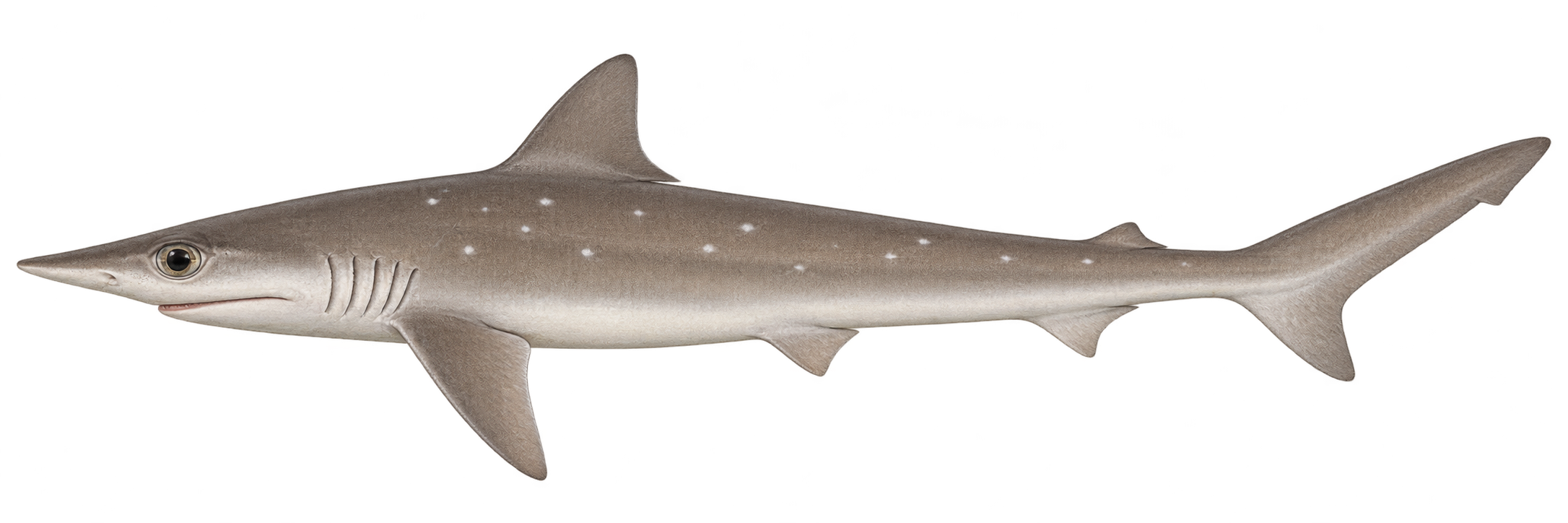
Size: Rarely exceeds about 3.5 ft (1.1 m) total length.
Long pointed snout; pale adult spots; second dorsal starts late relative to anal fin.
Read the guide’s location, season and eating cautions before acting.
Blacknose Shark
Sharks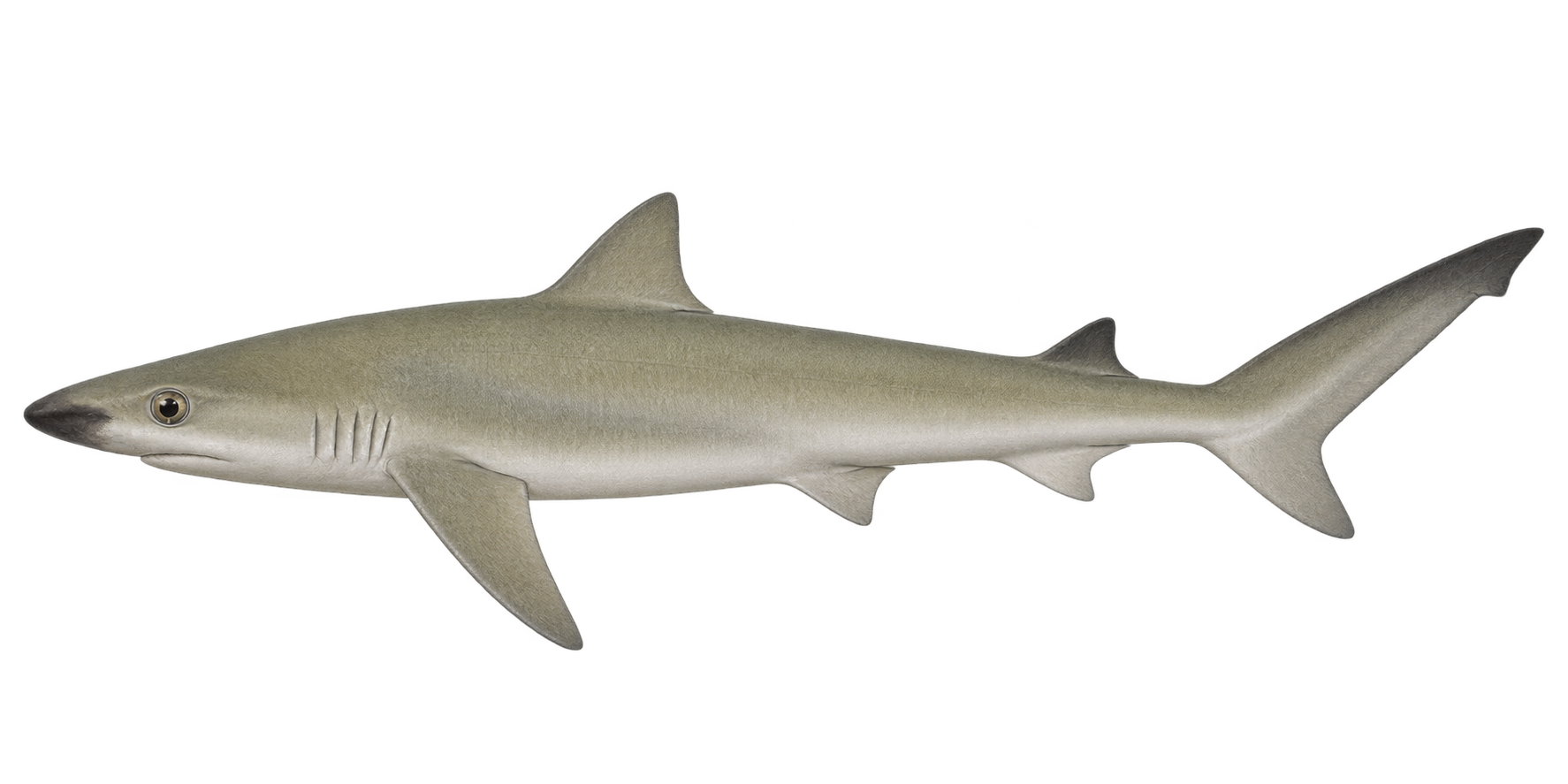
Size: Large individuals about 4.5–5 ft (1.4–1.5 m) total length.
Dark snout-tip blotch, strongest in juveniles; small first dorsal; no interdorsal ridge.
Read the guide’s location, season and eating cautions before acting.
Blacktip shark
Sharks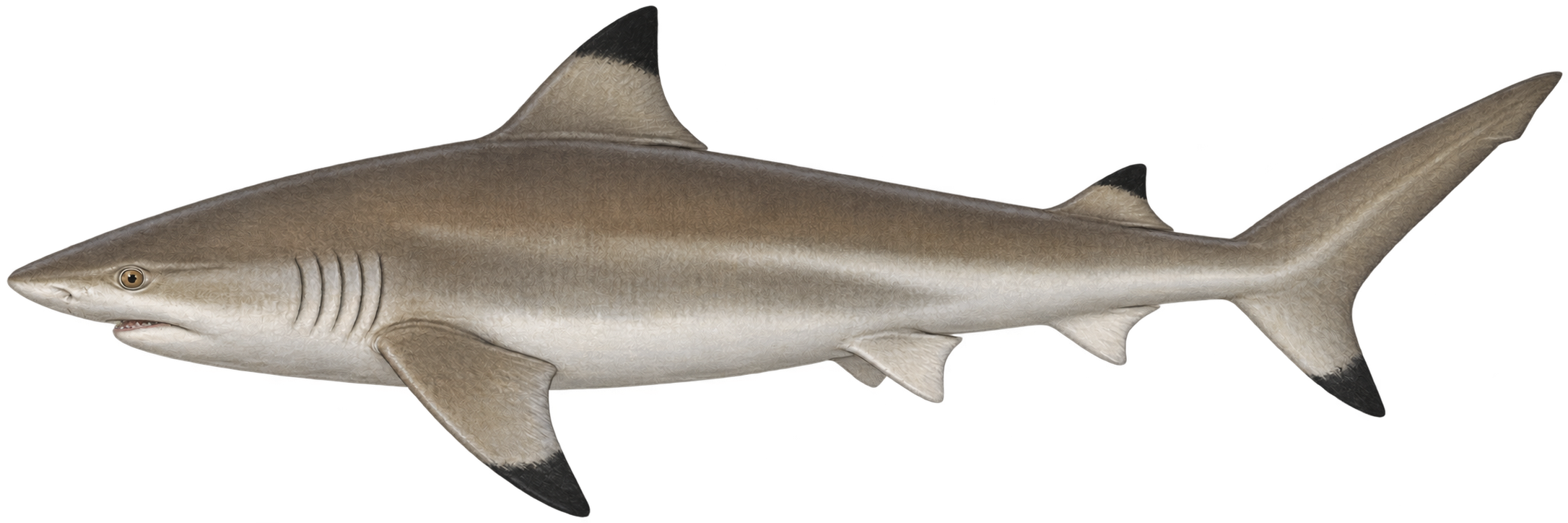
Size: Average adult length about 5 feet.
Dark fin tips, pointed snout and a usually pale anal fin. Compare with spinner sharks.
Regulated harvest; not a prohibited shark species
Explore the blacktip shark guide →Bonnethead
Sharks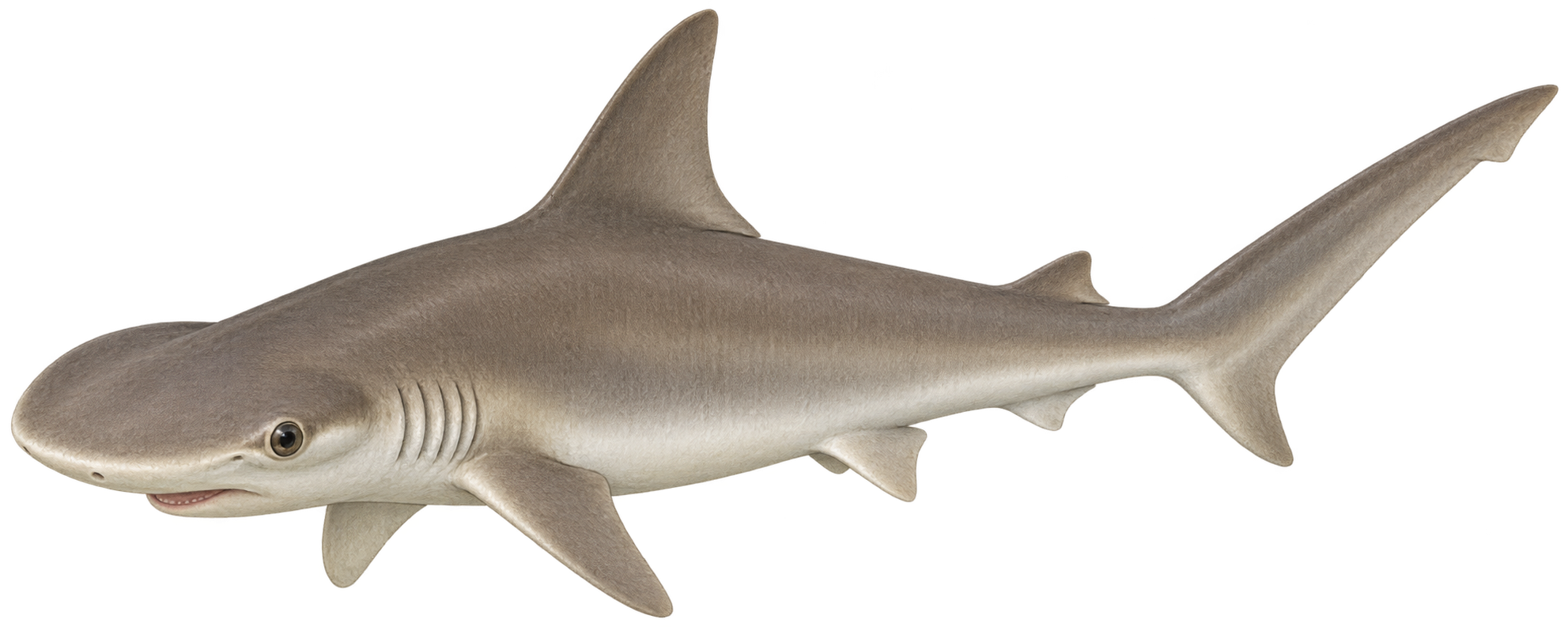
Size: Commonly 3–4 ft (0.9–1.2 m); maximum near 5 ft (1.5 m) total length.
Smooth rounded shovel head, without a central notch; small coastal hammerhead.
Read the guide’s location, season and eating cautions before acting.
Bull Shark
Sharks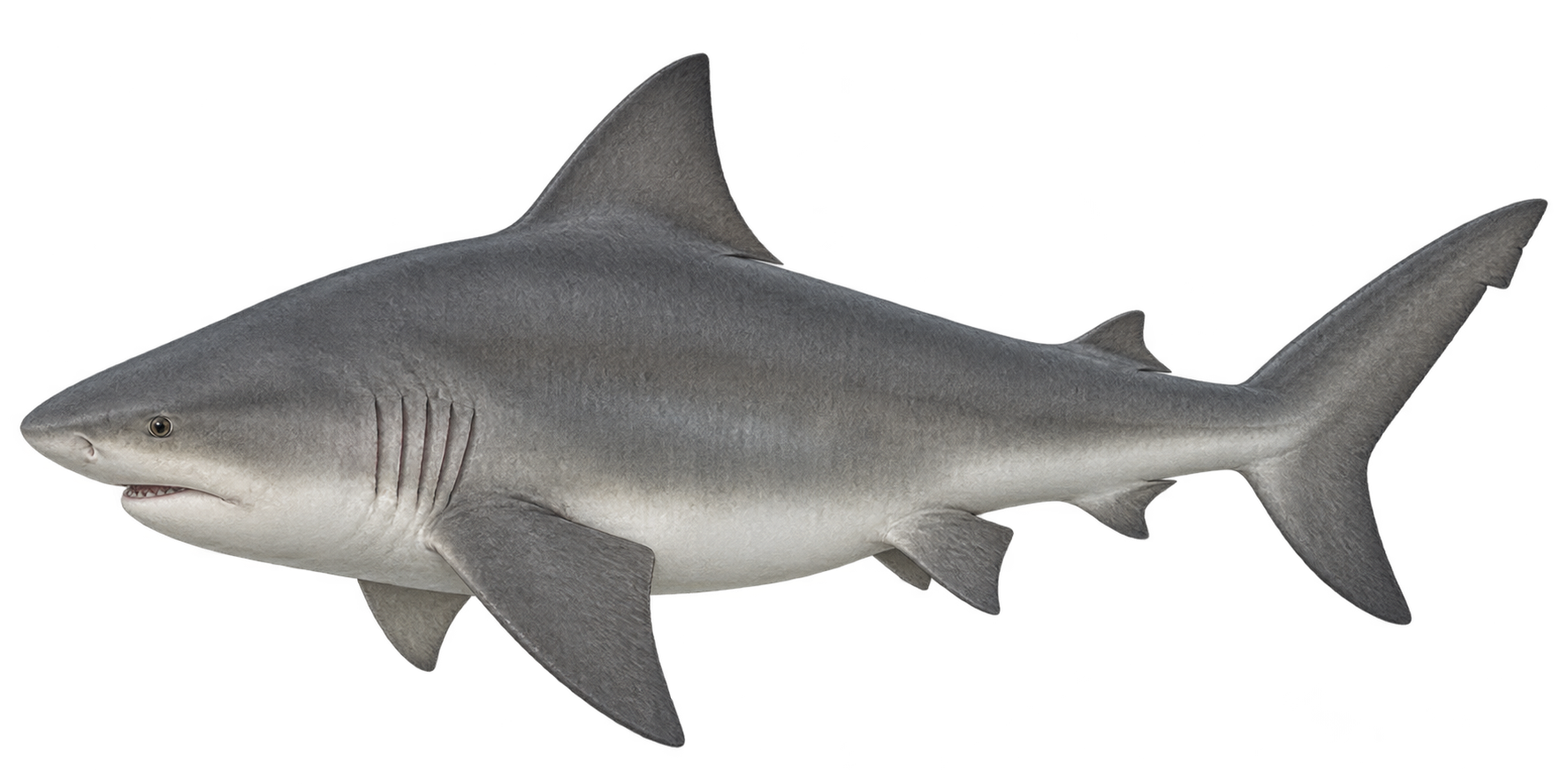
Size: Large adults reach about 11 feet; exceptional published reports reach 13 feet.
Stocky body, very short rounded snout, small eyes and a much smaller second dorsal fin.
Regulated harvest; not a prohibited shark species
Explore the bull shark guide →Caribbean Reef Shark
Sharks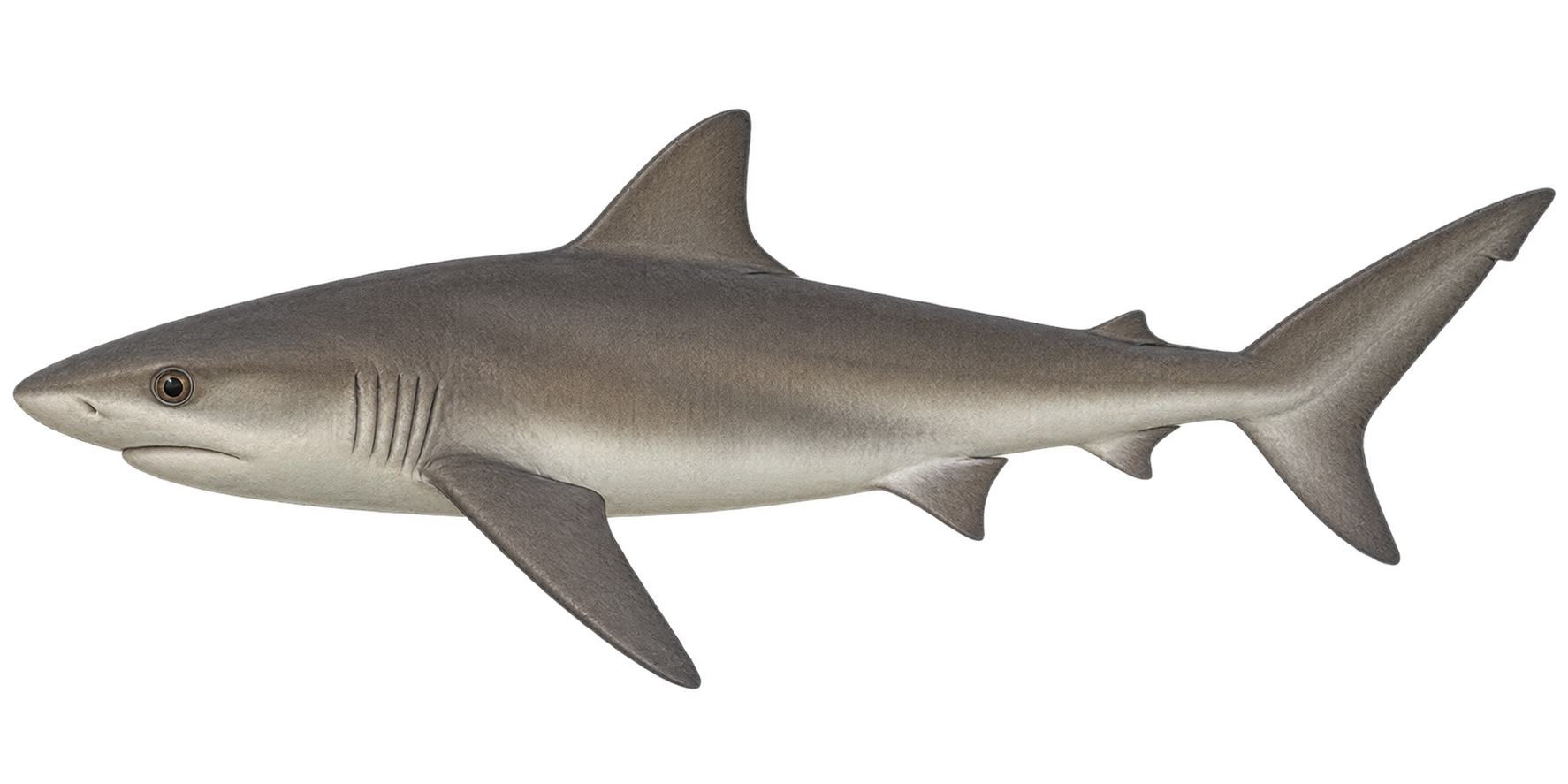
Size: Up to about 9.7 ft (3 m) total length.
Rounded snout; interdorsal ridge; long pectorals; gray body and dusky fin undersides.
Read the guide’s location, season and eating cautions before acting.
Finetooth Shark
Sharks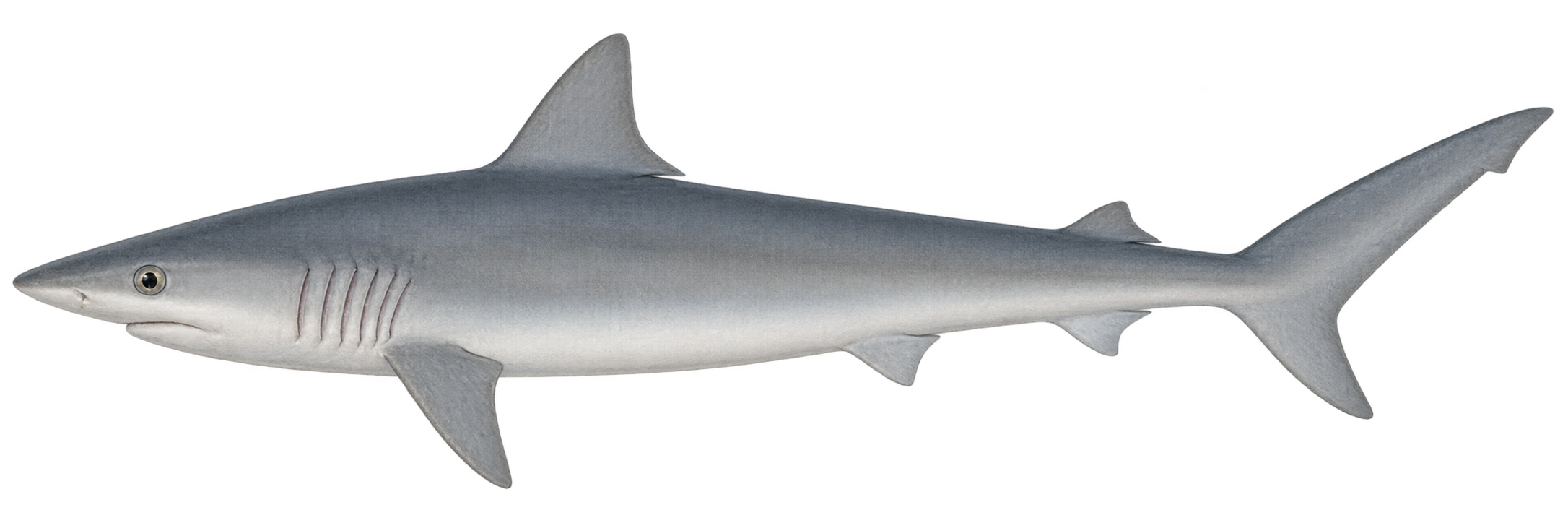
Size: Up to roughly 5–6 ft (1.5–1.8 m) total length, following FWC.
Long gill slits; slender blue-gray body; plain fin tips; no interdorsal ridge.
Read the guide’s location, season and eating cautions before acting.
Great Hammerhead
Sharks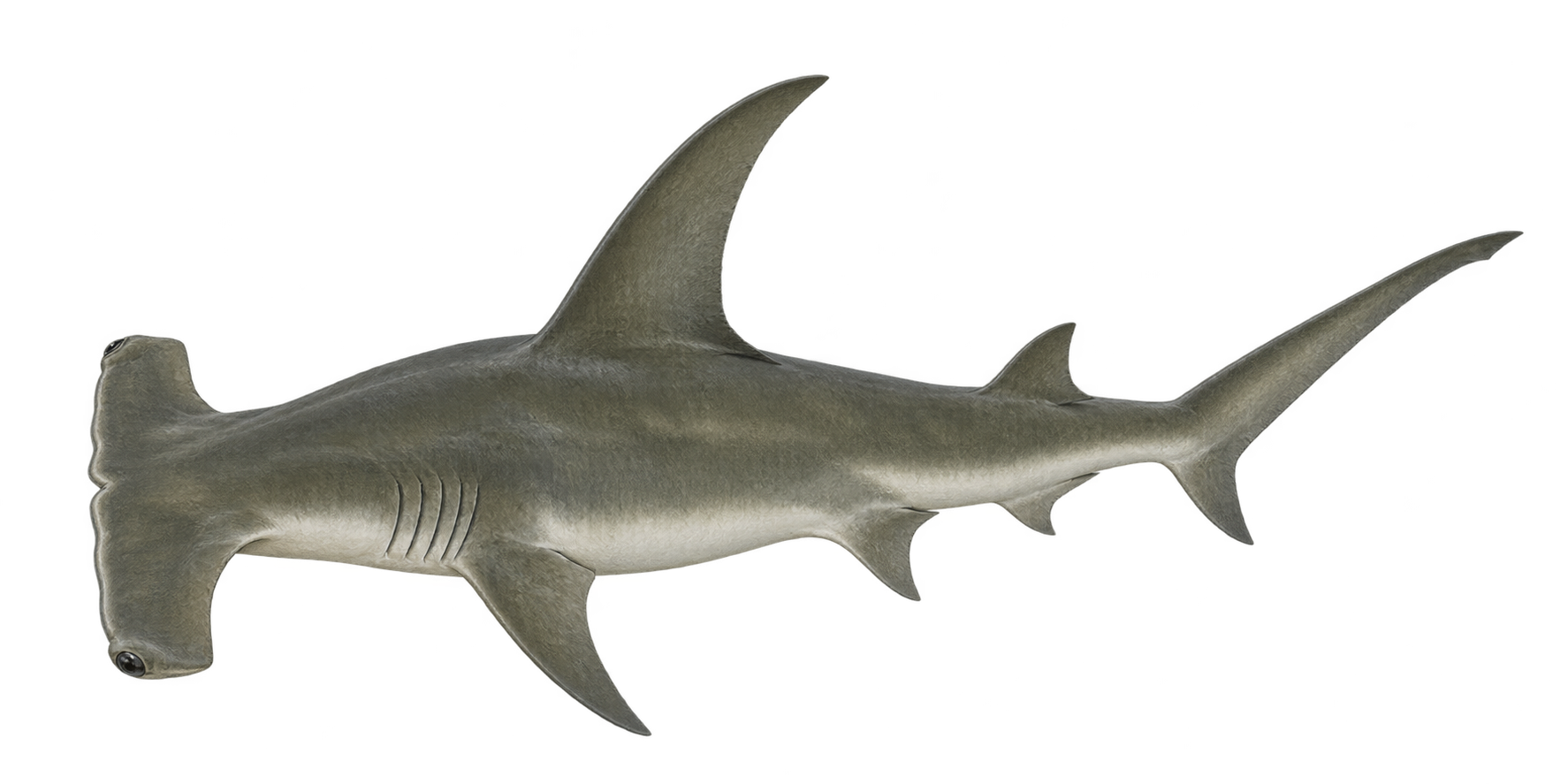
Size: Can approach 20 ft (6 m) total length.
Nearly straight T-shaped adult head with central notch; very tall sickle-shaped first dorsal.
Read the guide’s location, season and eating cautions before acting.
Lemon Shark
Sharks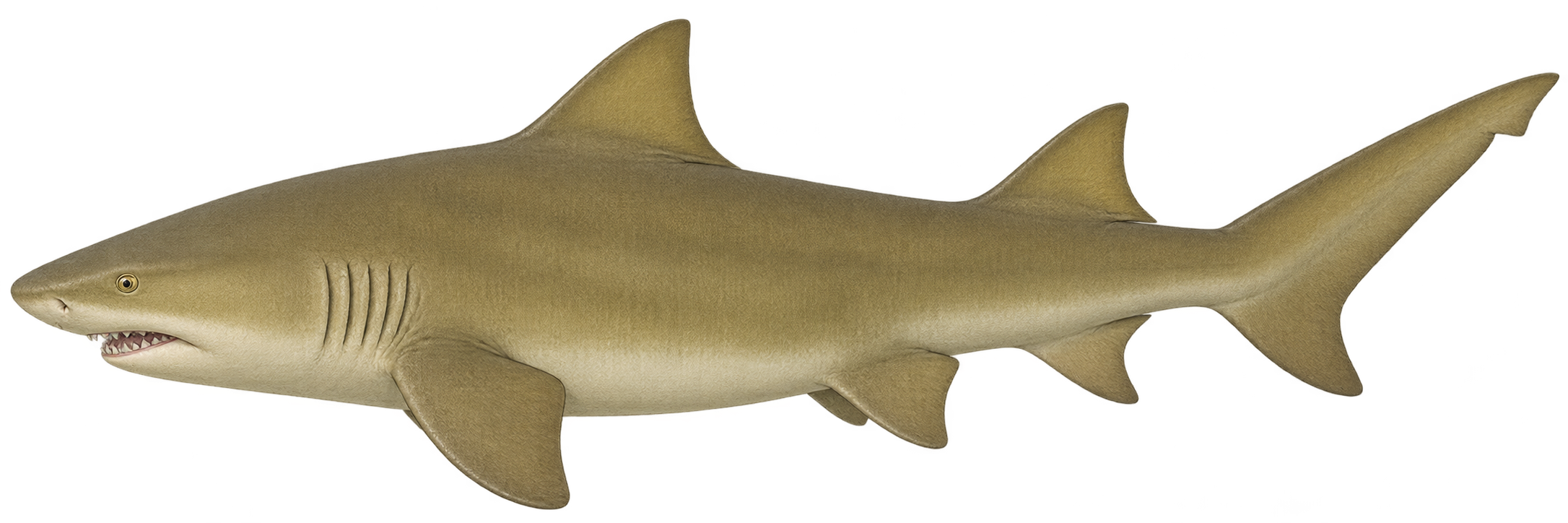
Size: Adults commonly 8–10 ft (2.4–3 m); reported maximum about 10.5 ft (3.2 m) total length.
Blunt snout; two nearly equal dorsal fins; unmarked yellow-brown or olive body.
Read the guide’s location, season and eating cautions before acting.
Nurse Shark
Sharks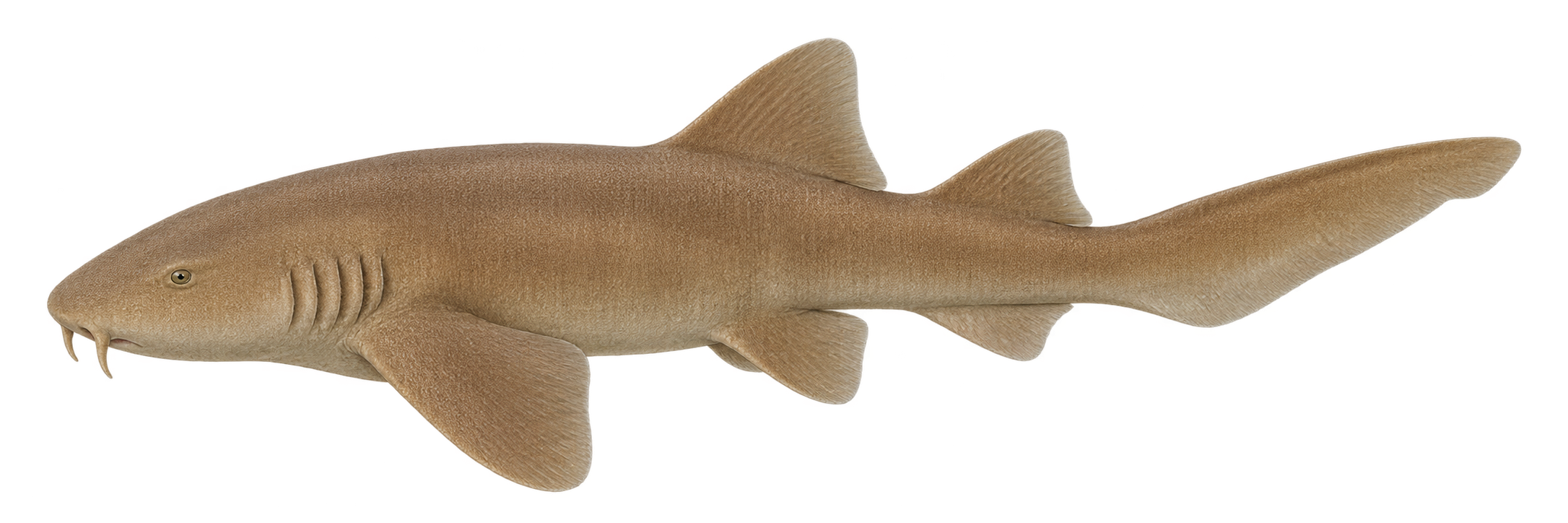
Size: Newborns about 27–30 cm; large adults around 3 m.
Nasal barbels; Rounded dorsal fins; Very long tail.
Regulated harvest; not a prohibited shark species
Explore the nurse shark guide →Sand Tiger Shark
Sharks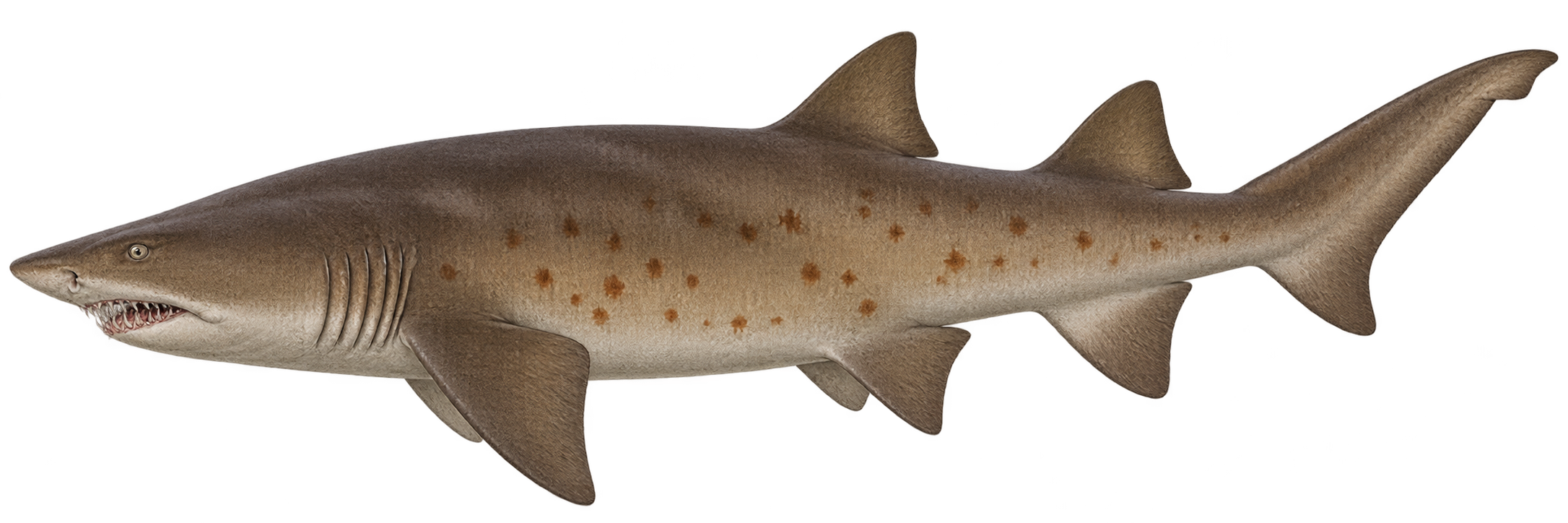
Size: Up to about 10.5 ft (3.2 m) total length; pups roughly 3 ft (0.9 m).
Protruding needlelike teeth; pointed snout; two nearly equal rearward dorsal fins.
Read the guide’s location, season and eating cautions before acting.
Sandbar Shark
Sharks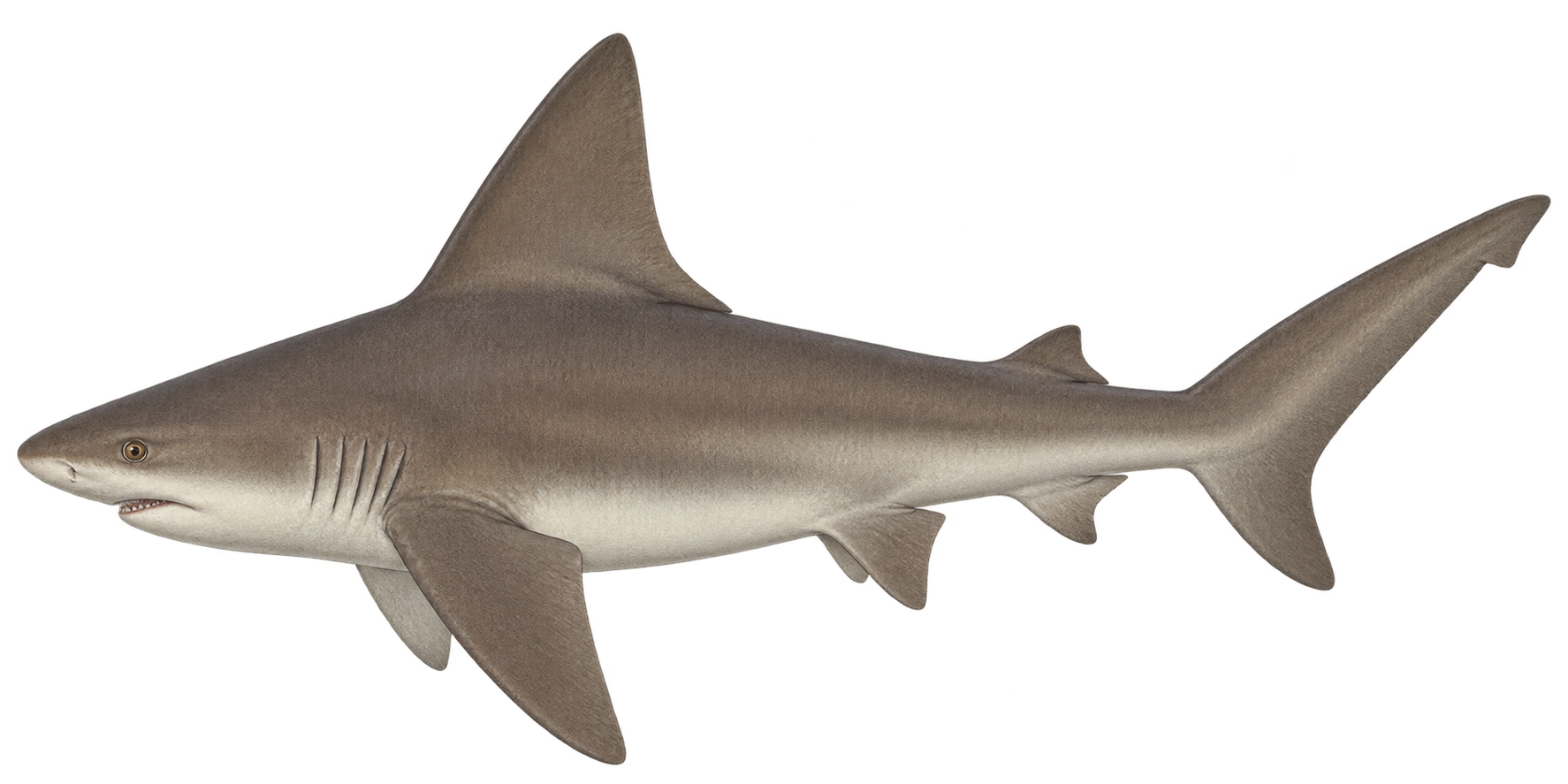
Size: About 7.5–8 ft (2.3–2.4 m) maximum total length in FWC/NOAA summaries.
Very tall triangular first dorsal, set forward; short snout; interdorsal ridge.
Read the guide’s location, season and eating cautions before acting.
Scalloped Hammerhead
Sharks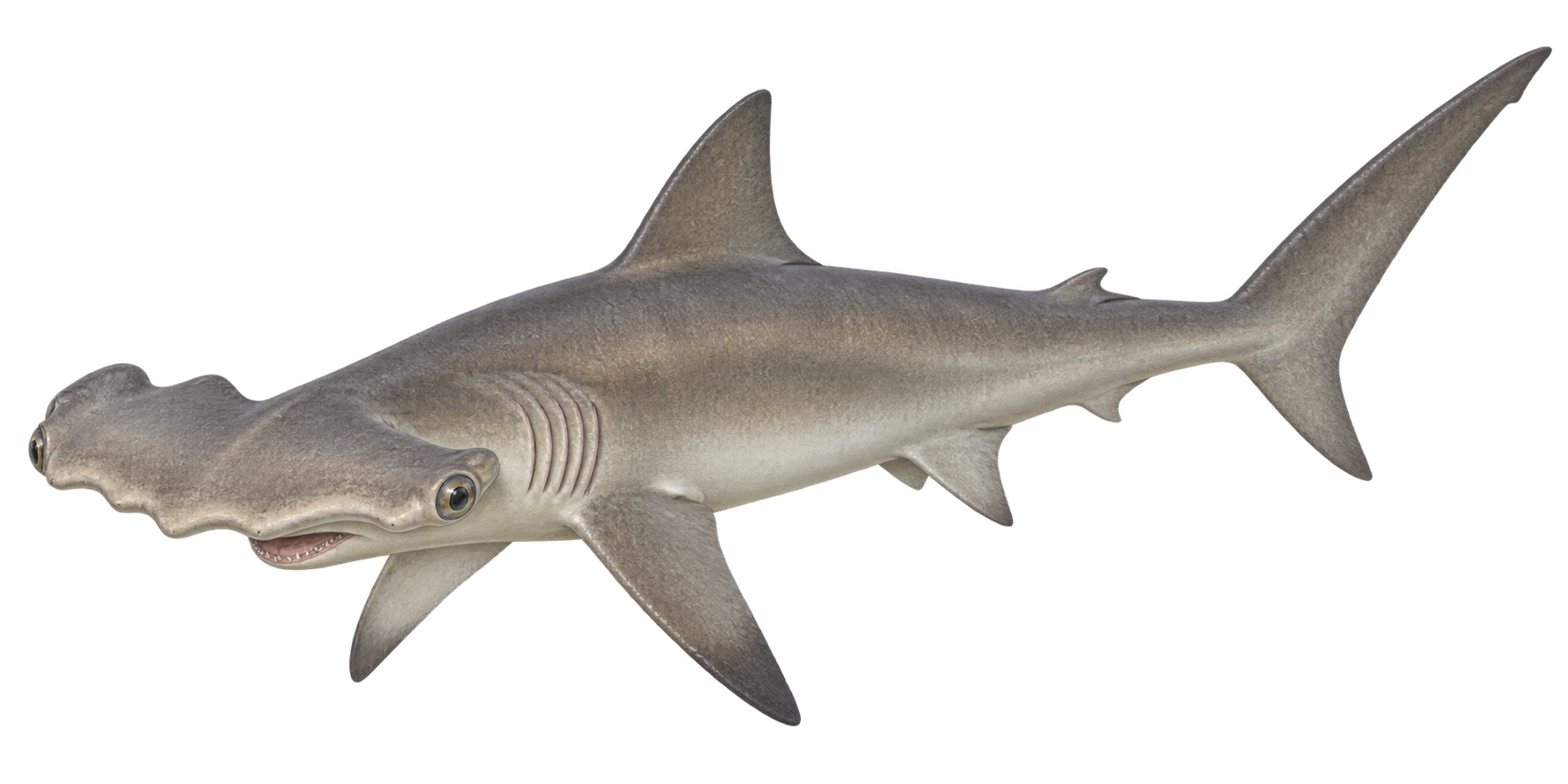
Size: Up to about 14 ft (4.3 m) total length.
Curved scalloped head front with central notch; small second dorsal with long rear tip.
Read the guide’s location, season and eating cautions before acting.
Spinner Shark
Sharks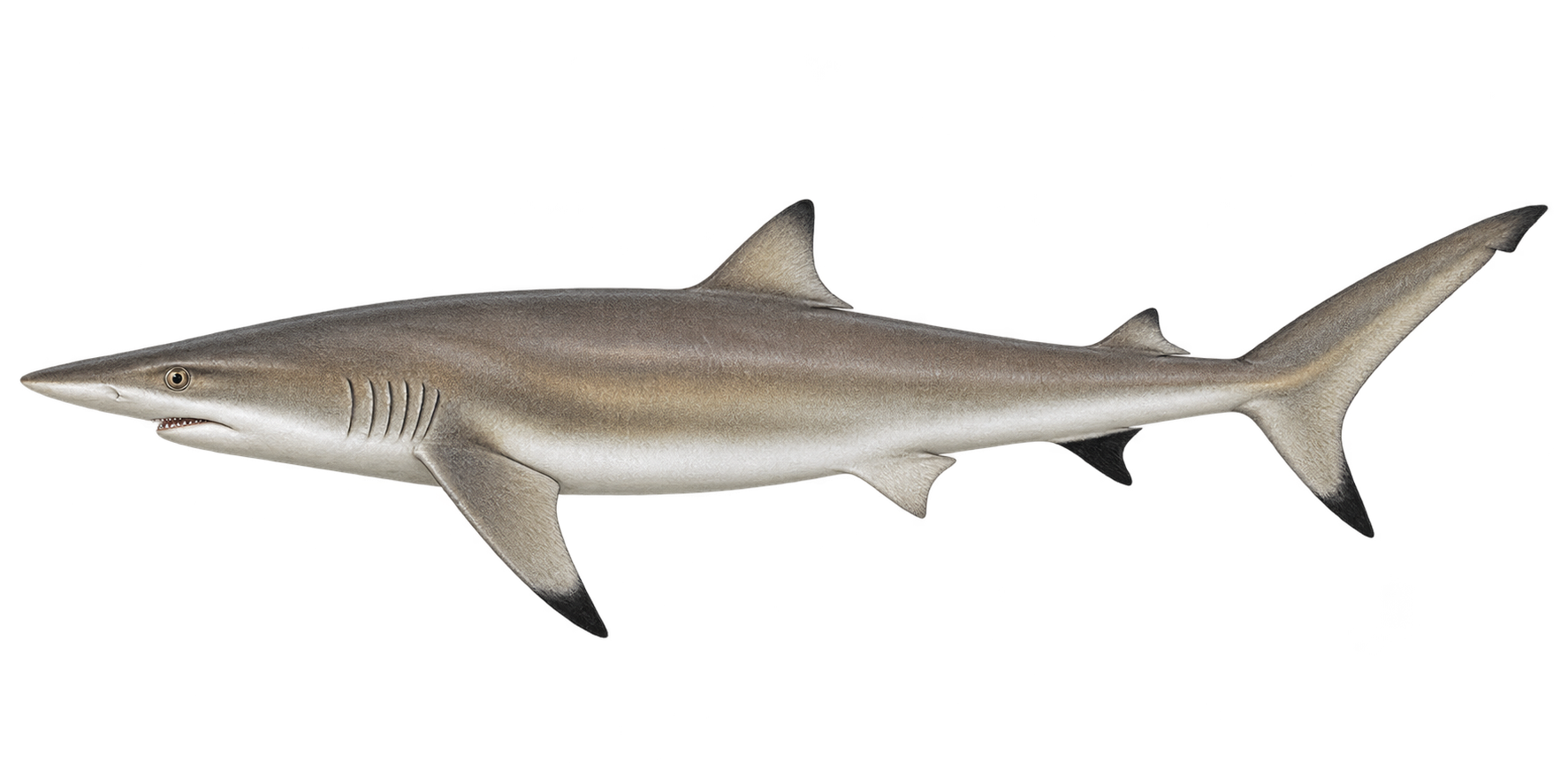
Size: Up to roughly 7–8 ft (2.1–2.4 m) total length.
Slim pointed snout; rearward first dorsal; adult anal fin has a black tip.
Read the guide’s location, season and eating cautions before acting.
Tiger Shark
Sharks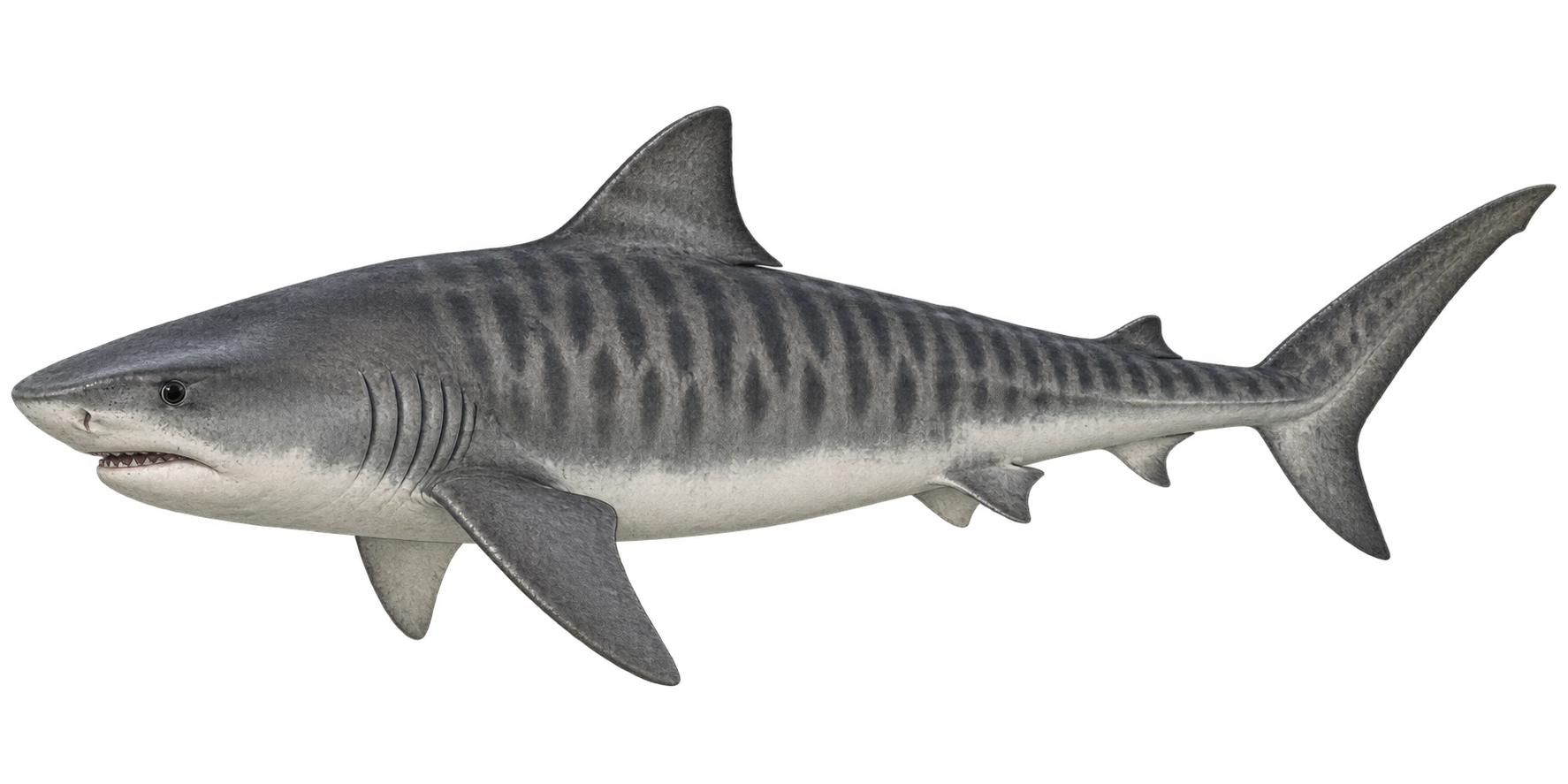
Size: Can reach about 15–18 ft (4.6–5.5 m) total length.
Broad blunt head; dark vertical bars, especially in younger animals; long upper tail lobe.
Read the guide’s location, season and eating cautions before acting.
Whale Shark
Sharks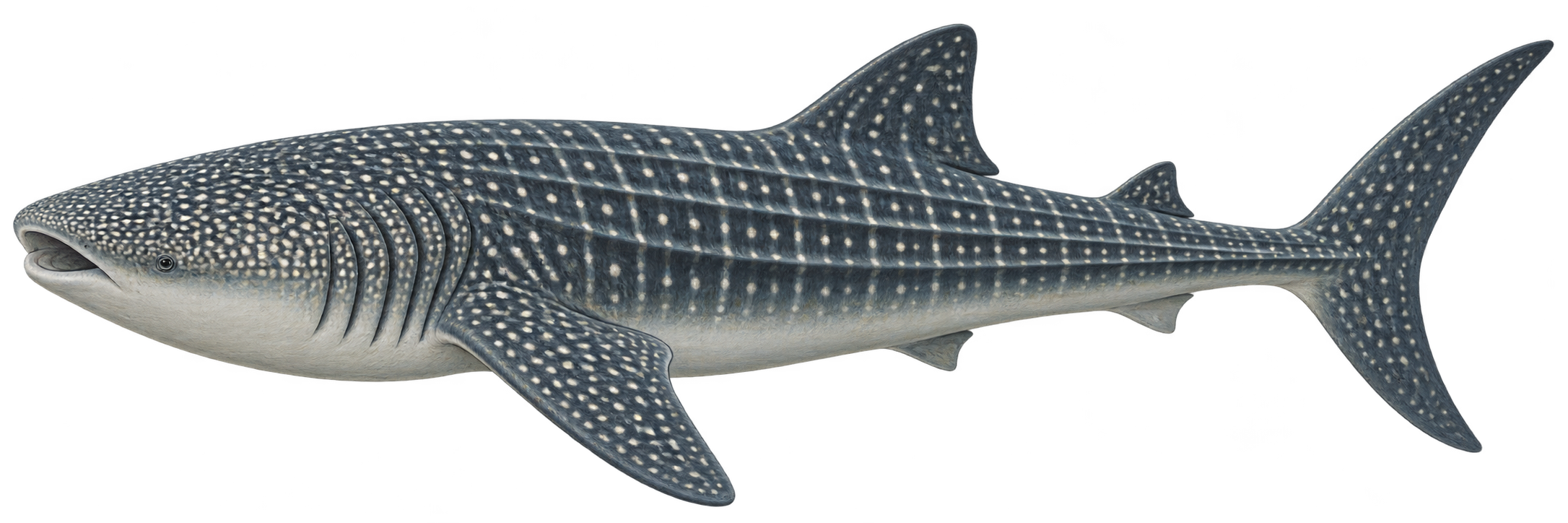
Size: The largest living fish; large individuals can exceed 40 ft (12 m) total length.
Broad flat head with front-facing mouth; white spot-and-line pattern; long body ridges.
Read the guide’s location, season and eating cautions before acting.
White Shark
Sharks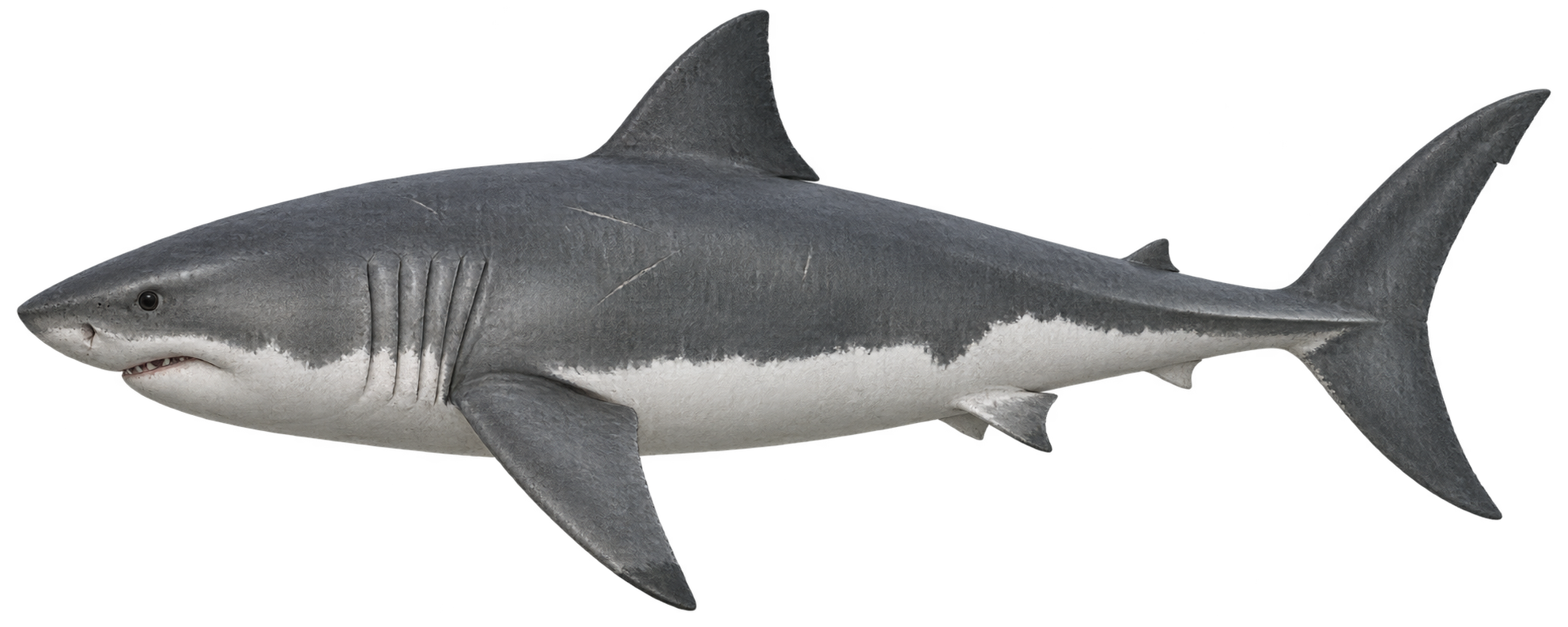
Robust shark with a conical snout, triangular dorsal fin and sharply contrasting pale underside.
Recreational retention prohibited; release without removing from water
Explore the white shark guide →Shortfin Mako
Sharks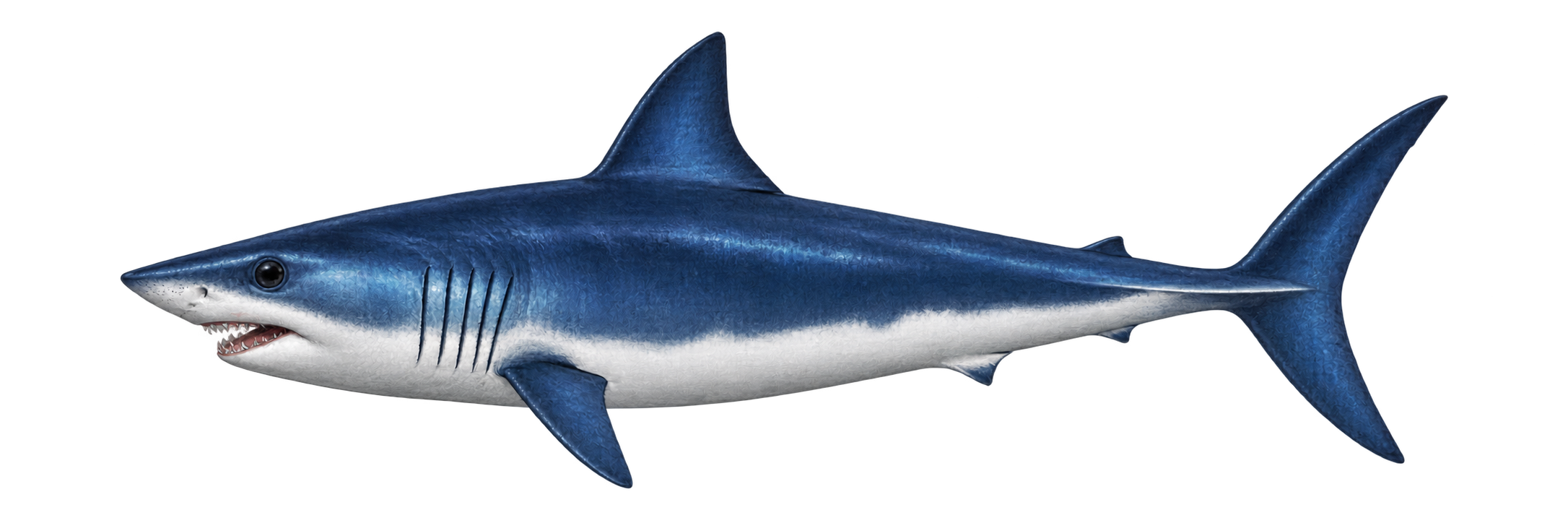
Streamlined shark with a pointed snout, short pectoral fins and a powerful crescent-shaped tail.
Recreational retention prohibited; release without removing from water
Explore the shortfin mako guide →Longfin Mako
Sharks
Slender mako with exceptionally long pectoral fins and a dusky adult snout underside.
Recreational retention prohibited; release without removing from water
Explore the longfin mako guide →Common Thresher Shark
Sharks
A thresher with a very long upper tail lobe, moderate lateral eyes and no deep head grooves.
Conditional harvest rules differ by jurisdiction; verify current permits, size, vessel and gear limits
Explore the common thresher shark guide →Bigeye Thresher
Sharks
Large upward-directed eyes and deep head grooves help distinguish this long-tailed thresher.
Recreational retention prohibited; release without removing from water
Explore the bigeye thresher guide →Oceanic Whitetip Shark
Sharks
Broad rounded dorsal and pectoral fins often carry pale mottled tips.
Recreational retention prohibited; release without removing from water
Explore the oceanic whitetip shark guide →Silky Shark
Sharks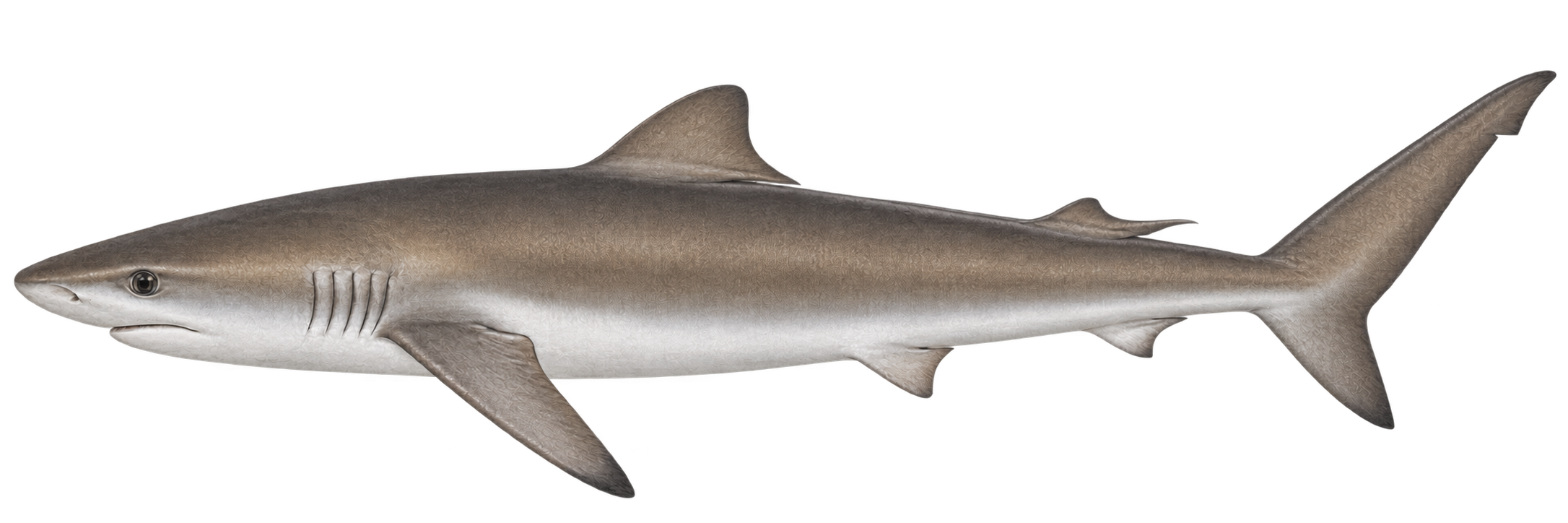
Slender shark with a rounded snout and low first dorsal behind the pectoral rear tips.
Recreational retention prohibited; release without removing from water
Explore the silky shark guide →Dusky Shark
Sharks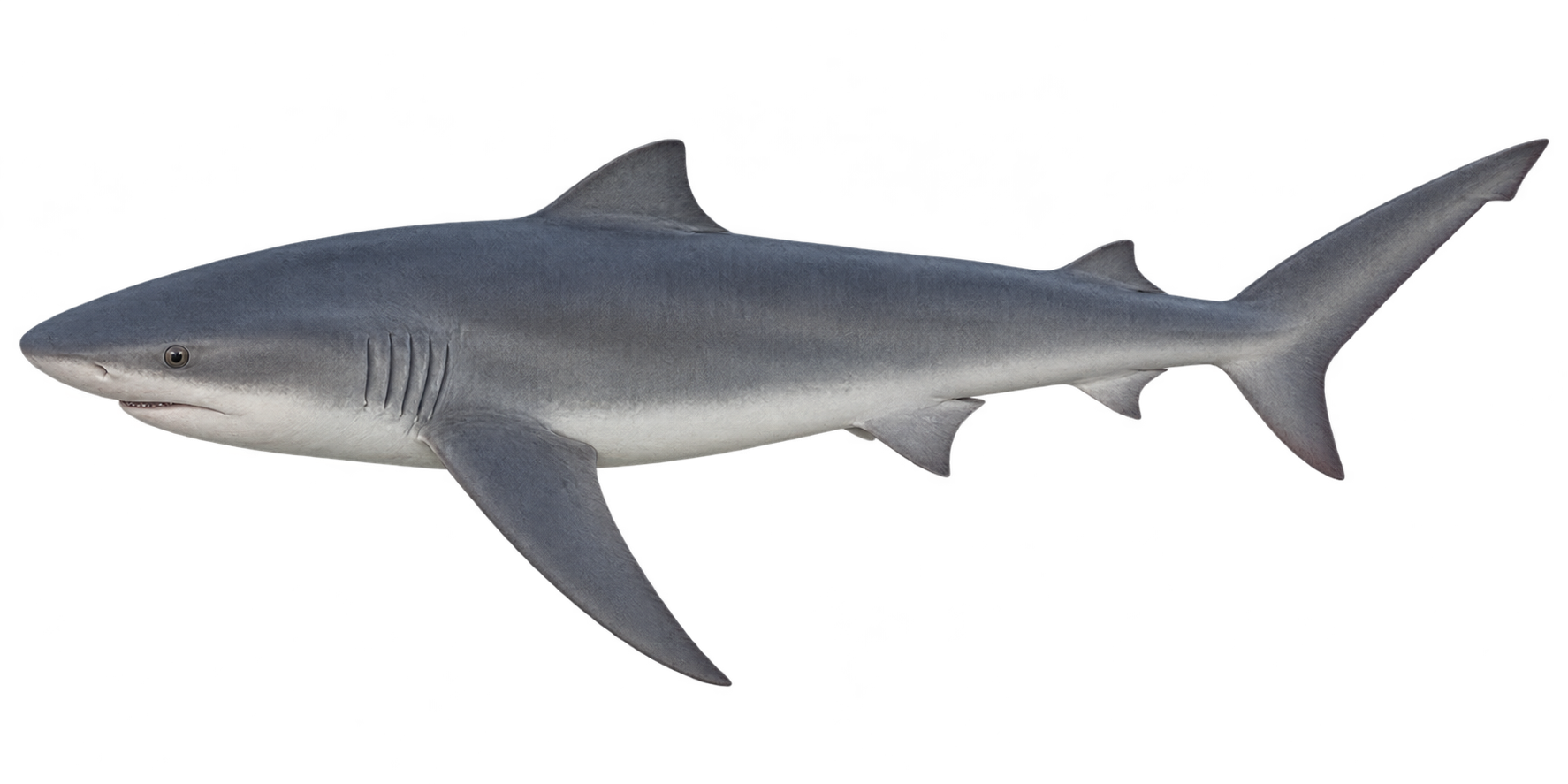
Large gray requiem shark with a sloping first dorsal; similar species require careful comparison.
Recreational retention prohibited; release without removing from water
Explore the dusky shark guide →Bignose Shark
Sharks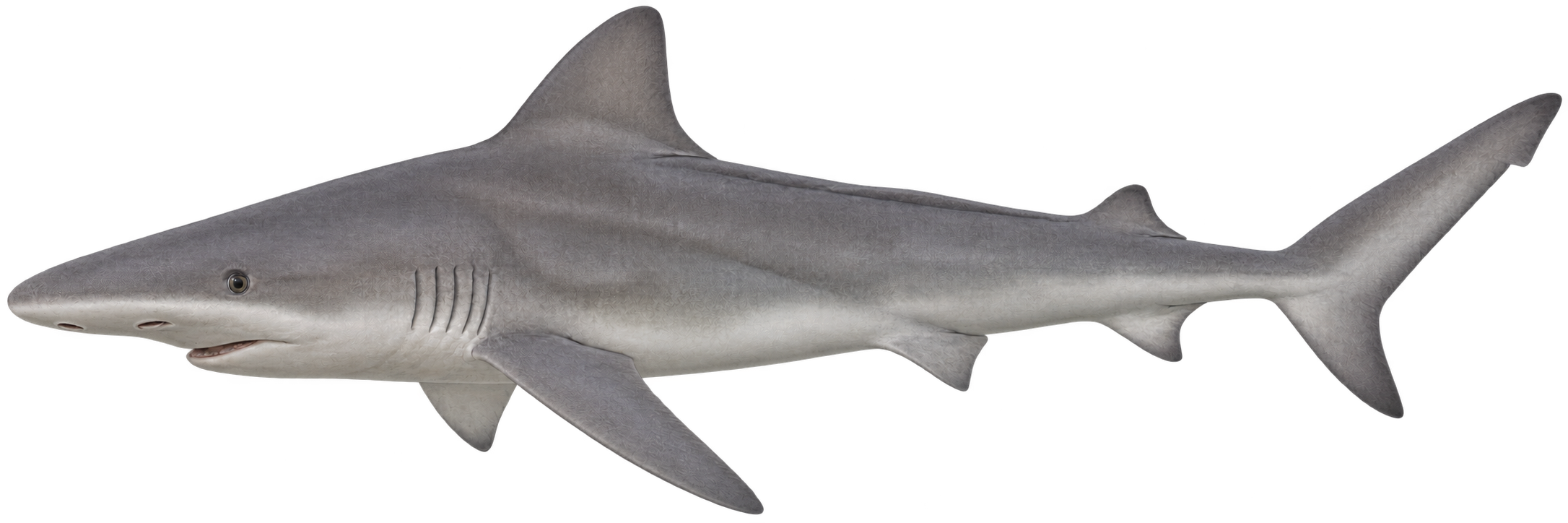
Broad elongated snout, fairly straight pectorals and a substantial first dorsal.
Recreational retention prohibited; release without removing from water
Explore the bignose shark guide →Night Shark
Sharks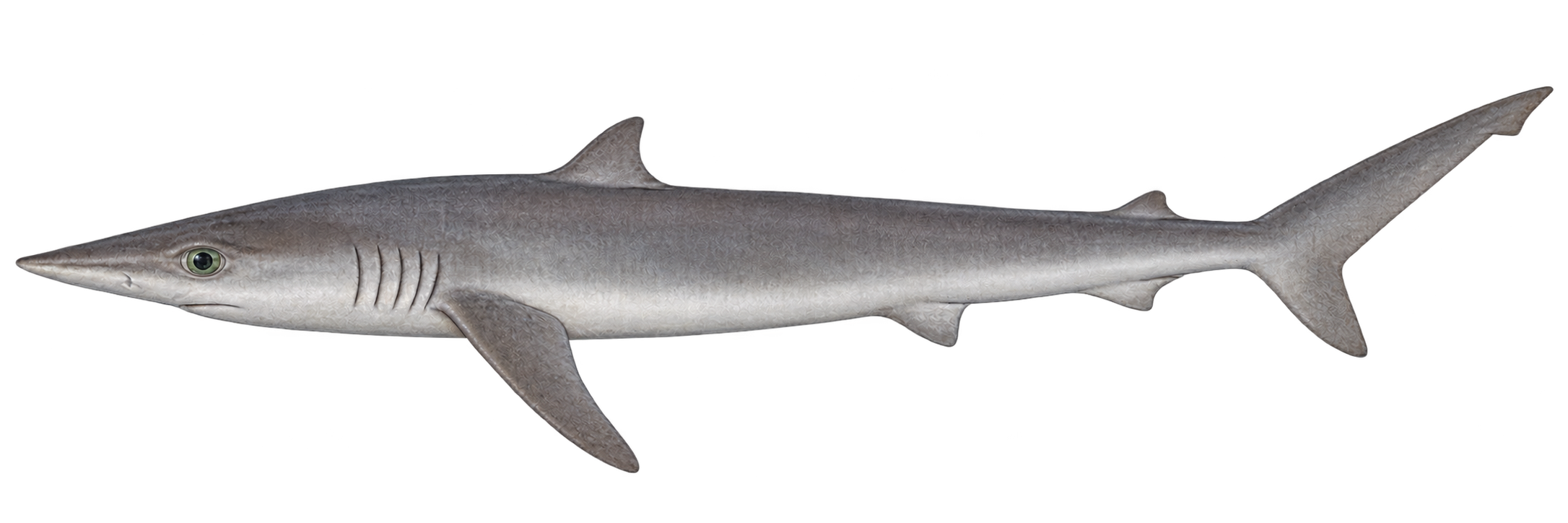
Large eyes, pointed snout and a relatively small first dorsal characterize this deeper-water shark.
Recreational retention prohibited; release without removing from water
Explore the night shark guide →Blue Shark
Sharks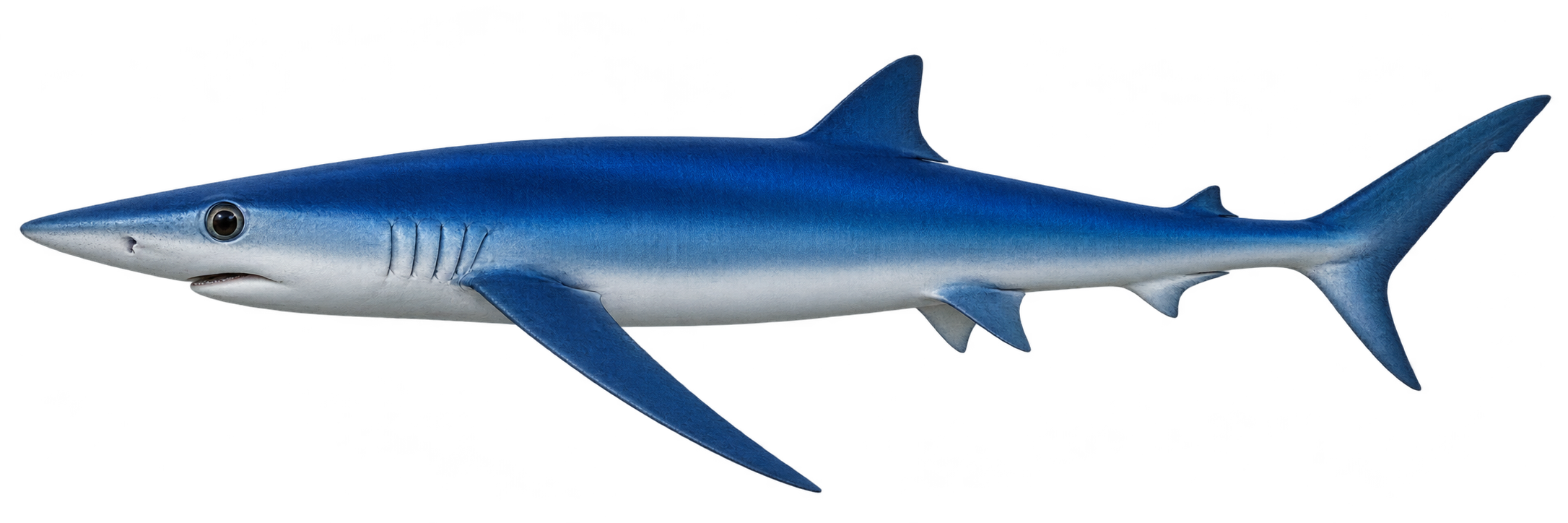
Slender blue-backed shark with long pointed pectoral fins and a rear-set first dorsal.
No harvest clearance: confirm species, jurisdiction, current restrictions and vessel rules
Explore the blue shark guide →Smooth Hammerhead
Sharks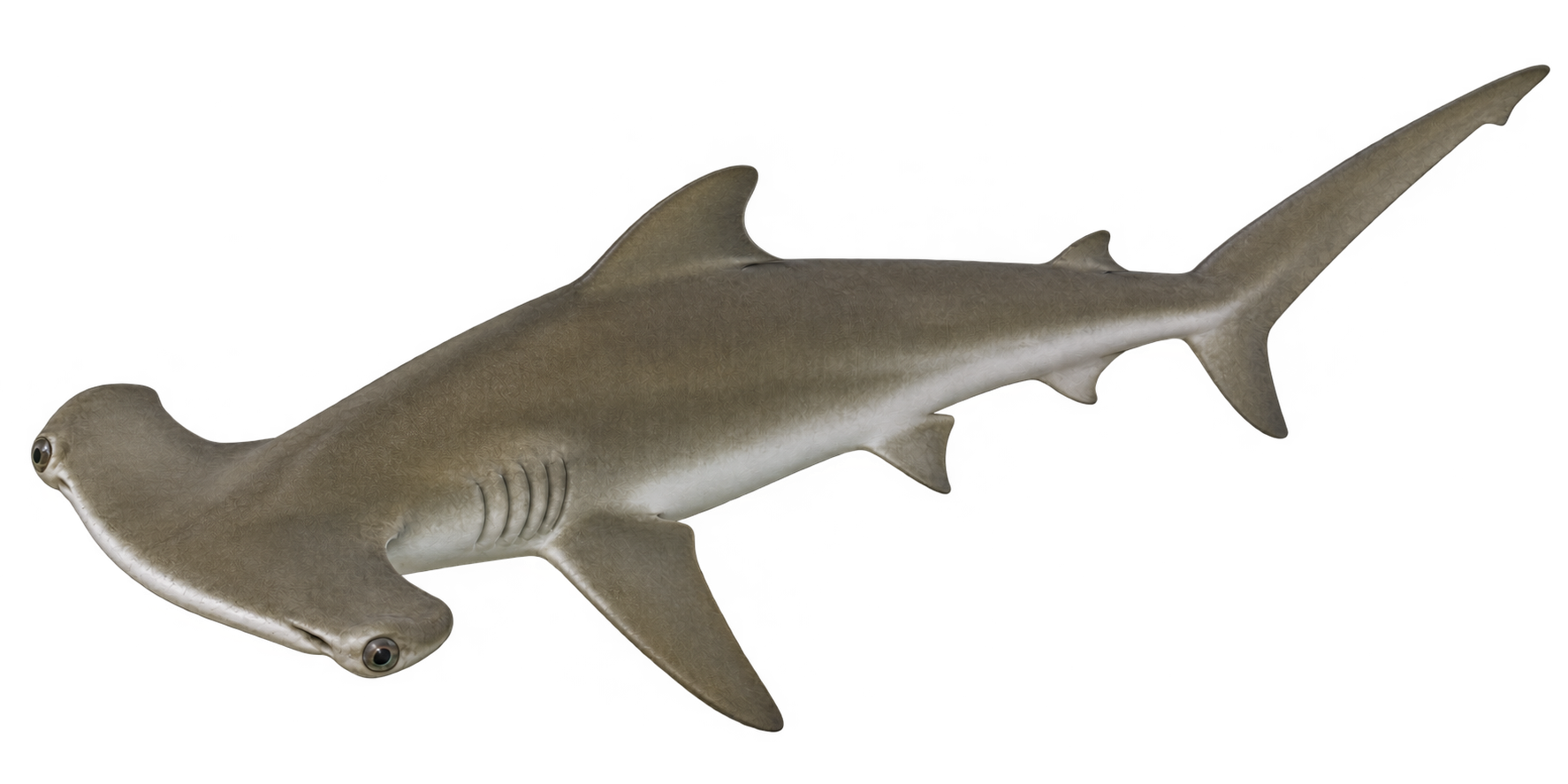
Hammer-shaped head lacks the central notch typical of other large hammerheads.
Florida harvest prohibited; federal conditions differ. Check exact jurisdiction
Explore the smooth hammerhead guide →Smooth Dogfish
Sharks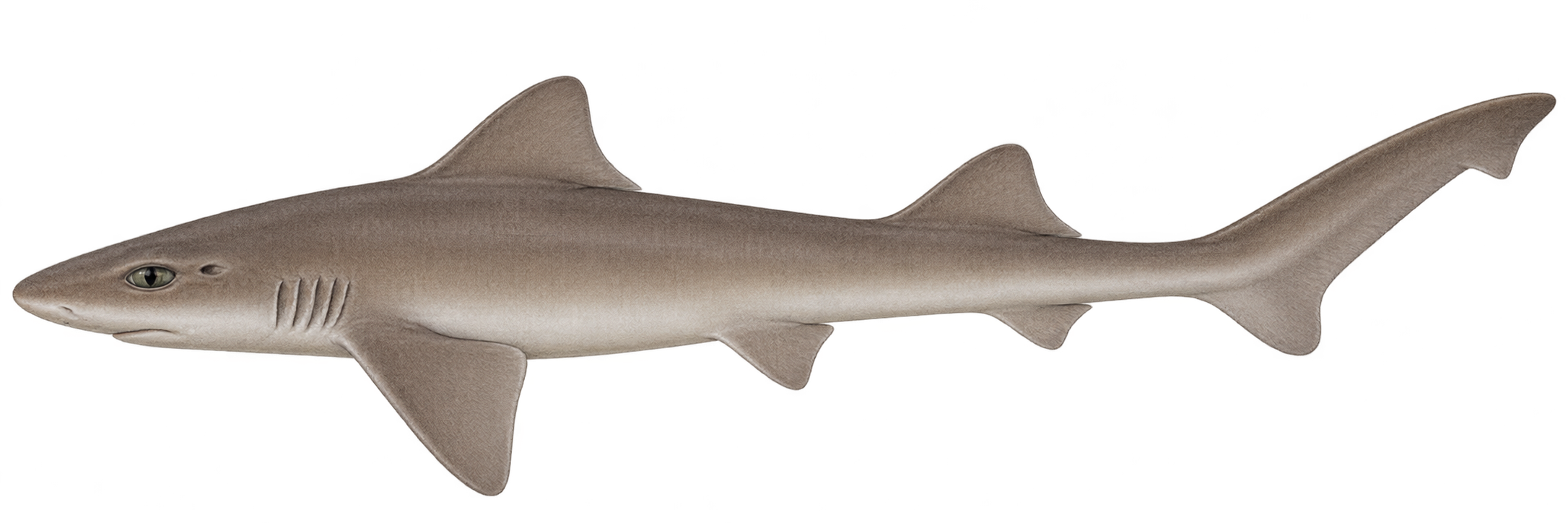
Two large spineless dorsal fins and an anal fin distinguish this slender dogfish.
No harvest clearance: confirm species, jurisdiction, current restrictions and vessel rules
Explore the smooth dogfish guide →Chain Dogfish
Sharks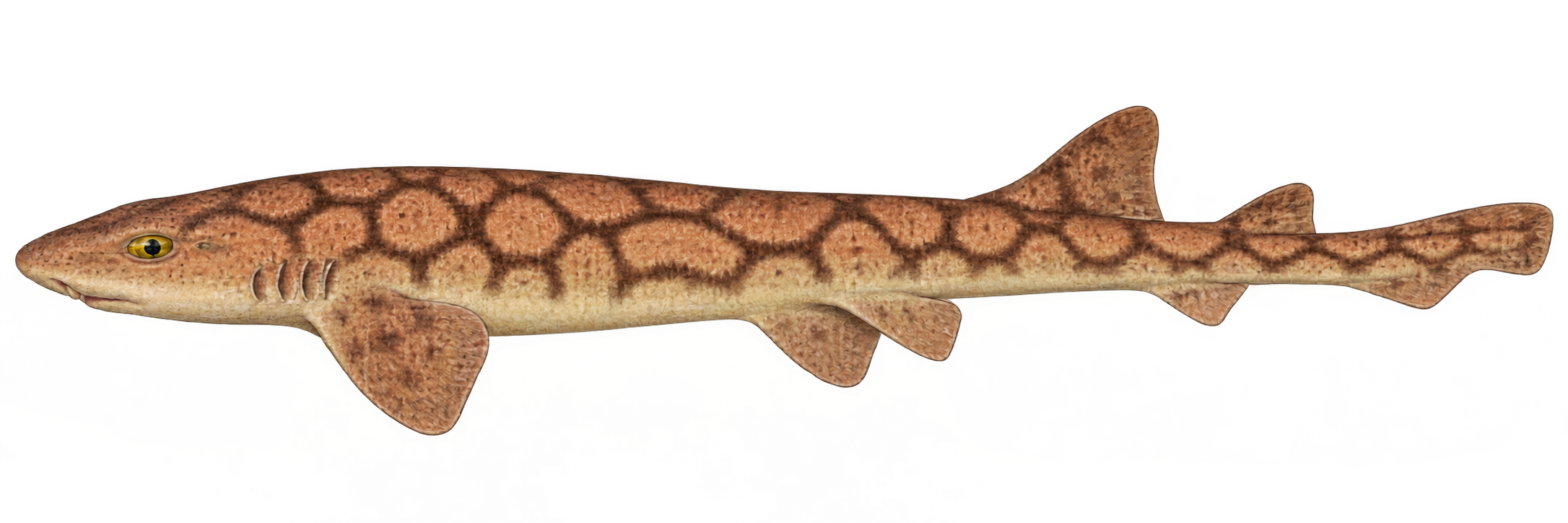
A dark chain-like network covers this small slender catshark.
No harvest clearance: confirm species, jurisdiction, current restrictions and vessel rules
Explore the chain dogfish guide →Cuban Dogfish
Sharks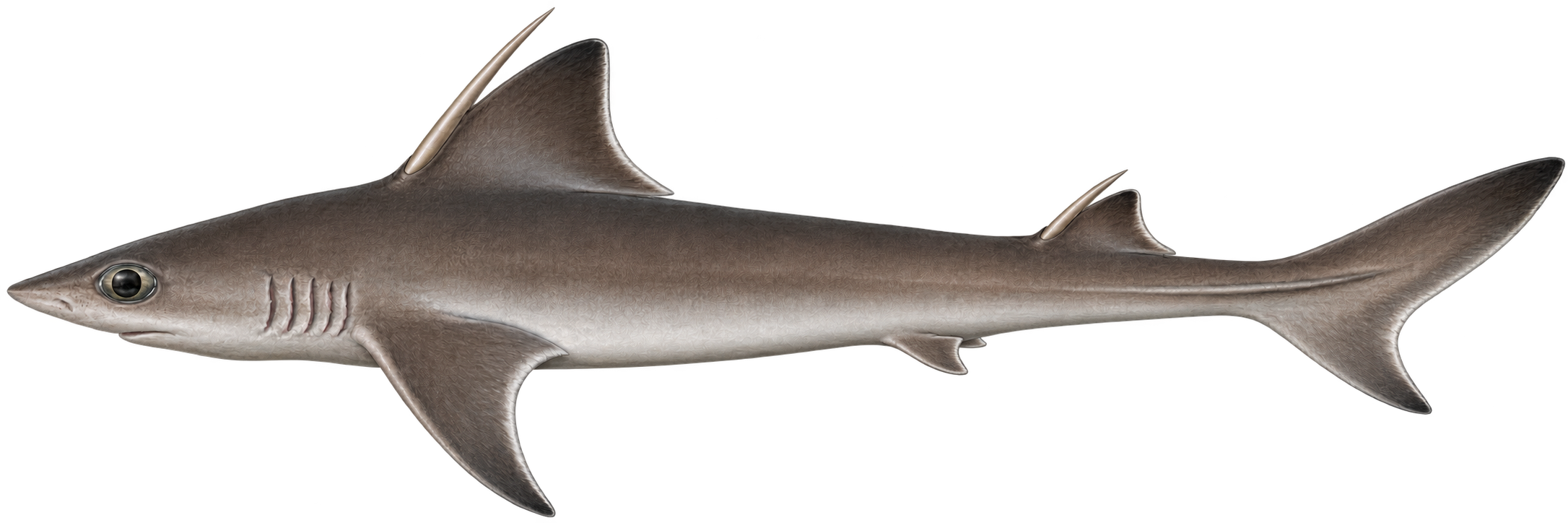
A spine precedes each dorsal fin and no anal fin is present.
No harvest clearance: confirm species, jurisdiction, current restrictions and vessel rules
Explore the cuban dogfish guide →Snails and sea slugs
Caribbean Spanish Dancer
Nudibranch / sea slugOrange-to-red body, broad mantle skirt and six branching gills. Commonly reported to 12 cm, with some reports to 20 cm.
West Palm Beach Spanish-dancer sighting is user-reported; species identification remains unverified. Observe without touching or provoking swimming. Check current collection rules.
Explore the Caribbean Spanish dancer guide →Antilles oxynoe
Shape not assigned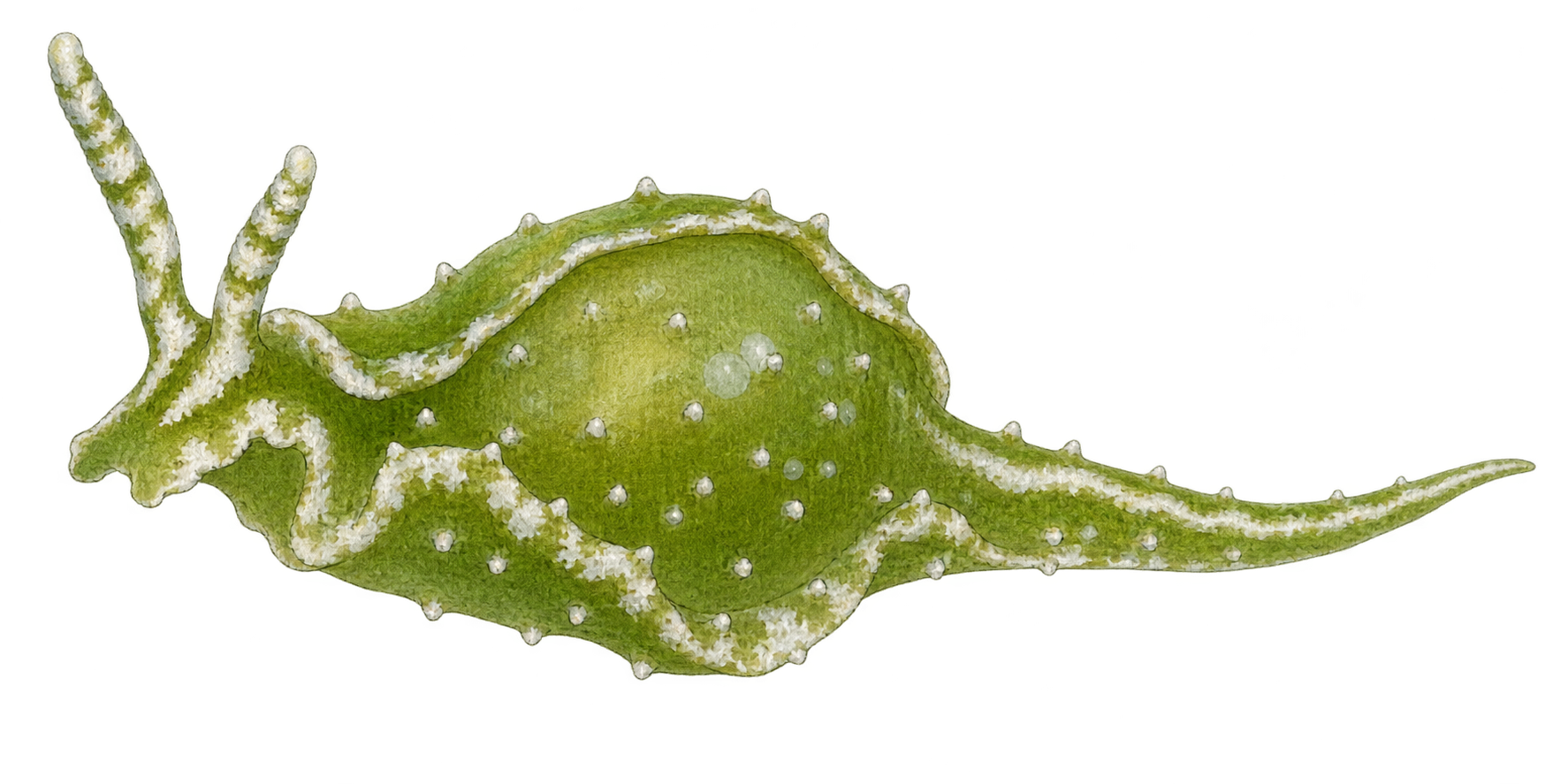
Size: A reliable numerical size with a defined measurement basis was not established from the accessed sources. Do not turn a photograph’s apparent scale or observation depth into body length.
A green body has mottled pale markings, including bands extending from the rhinophores along the head. Pale edging follows the parapodia and foot, and scattered papillae may also be white.
Read the guide’s location, season and eating cautions before acting.
Atlantic Deer Cowrie
Coiled shells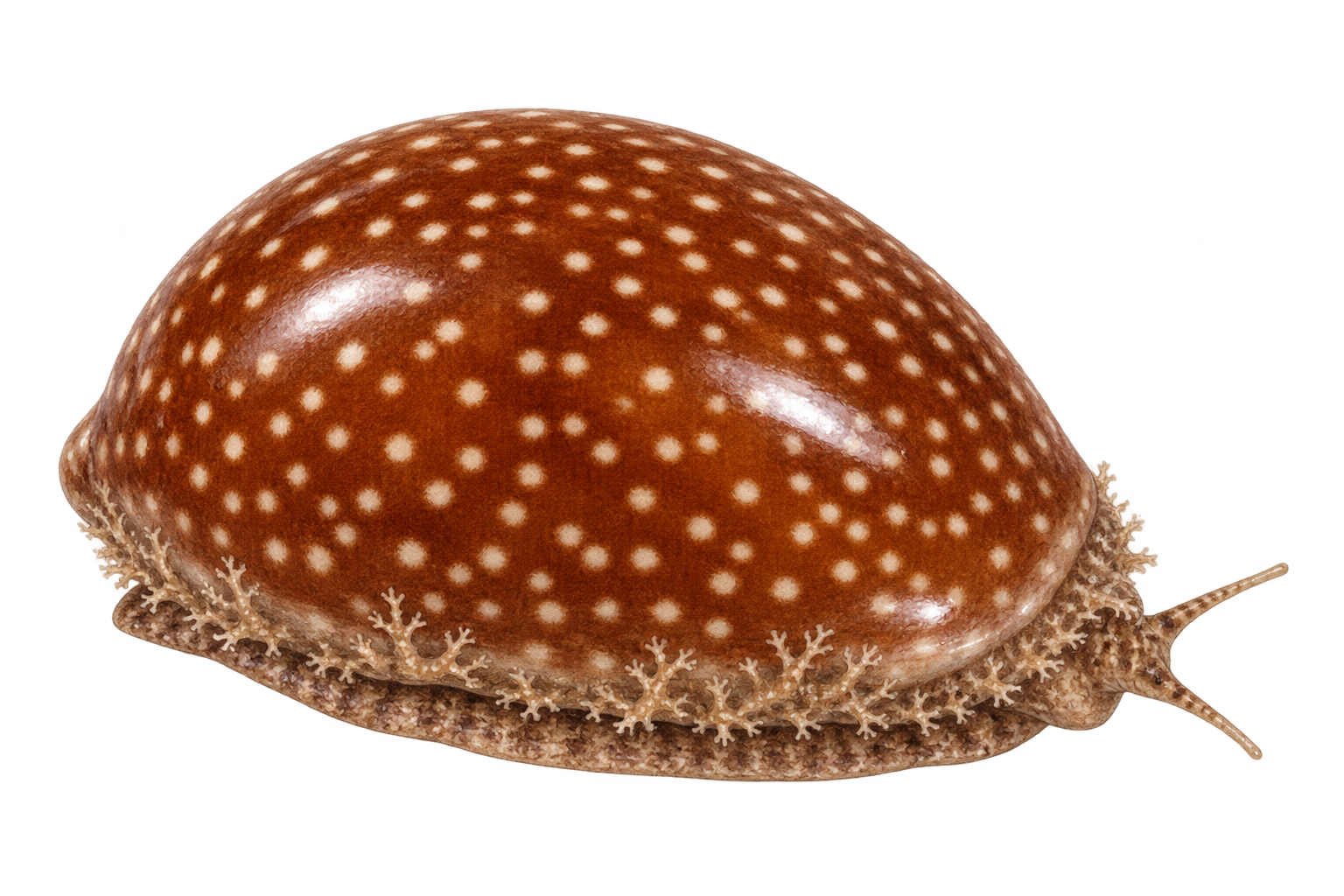
Size: Large shells may approach 19 cm; many adults are smaller.
The adult shell is glossy, elongated and brown with numerous pale spots reminiscent of a fawn’s coat.
Live-shell collection restrictions apply; not the queen-conch rule
Explore the atlantic deer cowrie guide →Atlantic Triton’s Trumpet
Shelled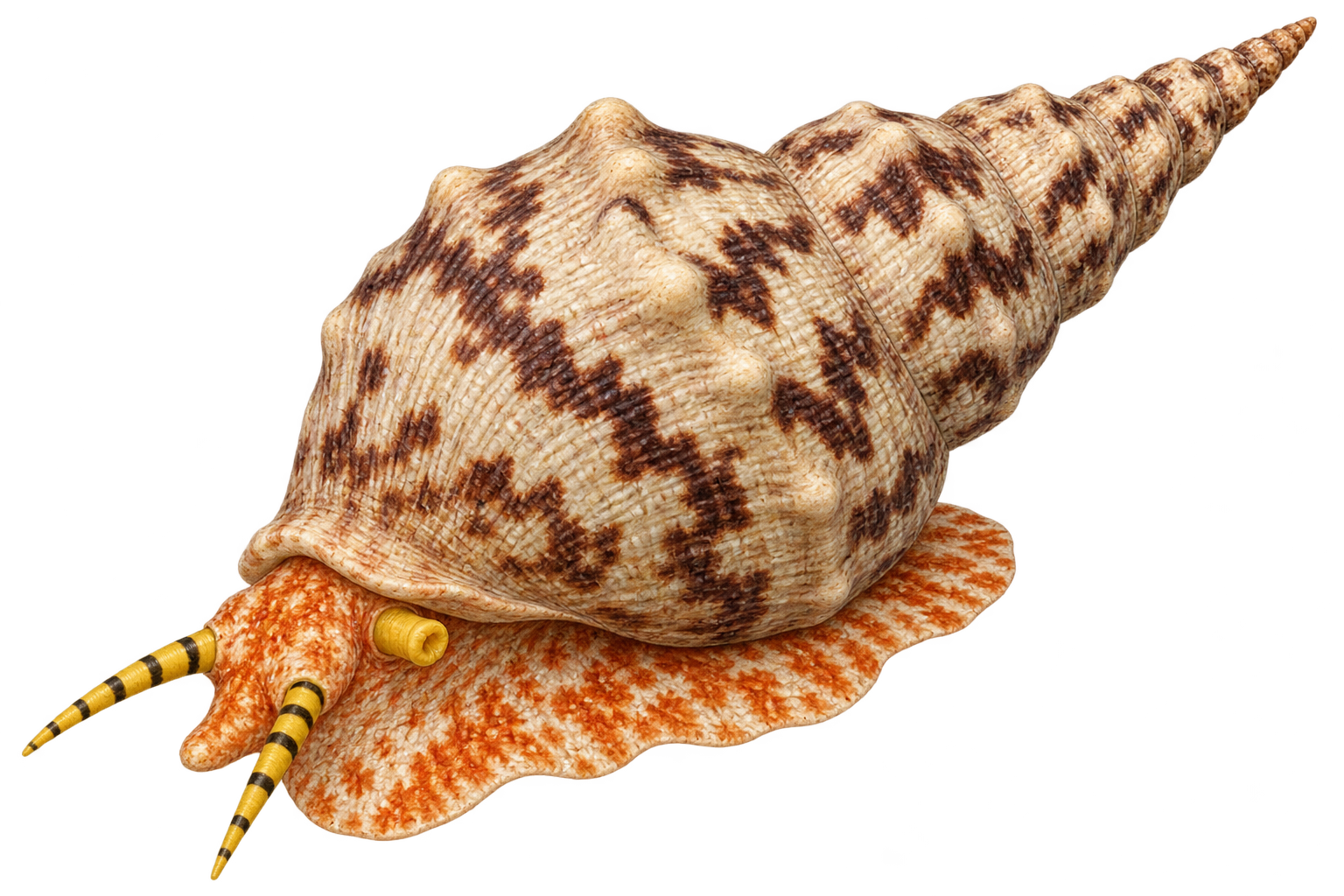
Size: Shell length to33 cm(13 in) in FAO identification account.
Heavy patterned triton shell with short front canal and white folds and teeth inside the aperture.
Read the guide’s location, season and eating cautions before acting.
Berghia creutzbergi
Shape not assigned
Size: The original account discussed by the museum described a living 15 mm animal from Curaçao. A later Bahamian example was 4.5 mm. These are individual records, not a growth series or a Florida maximum.
The museum discussion describes a brownish animal with extensive white spots or pigment and bumpy, rather than regularly ringed, head tentacles. The identification history is cautious: close detail of the head tentacles matters more than an overall white-spotted appearance.
Read the guide’s location, season and eating cautions before acting.
Berghia marcusi
Shape not assigned
Size: A reliable numerical size with a defined measurement basis was not established from the accessed sources. Do not turn a photograph’s apparent scale or observation depth into body length.
A slender translucent-white aeolid with a white median band and a bright orange boomerang-shaped mark on each side of the head. The rhinophores have red bases, cream tips and dense posterior papillae.
Read the guide’s location, season and eating cautions before acting.
Cadlina rumia
Shape not assigned
Size: The primary Caribbean guide reports up to 15 mm. That is the guide’s reported value, not a measured limit for the local population. A Florida life-stage series is not available in the reviewed evidence.
A flattened, pale oval nudibranch with tiny bumps and yellow mantle glands. Head tentacles and gills may be yellow-brown. A close view of these features is more useful than calling any small white dorid this species.
Read the guide’s location, season and eating cautions before acting.
Camachoaglaja berolina
Shape not assigned
Size: A reliable numerical size with a defined measurement basis was not established from the accessed sources. Do not turn a photograph’s apparent scale or observation depth into body length.
A dark, elongate cylindrical headshield slug with opaque turquoise circular spots and ciliary tufts beside the mouth. Its paired tail lobes differ in length, with the left lobe longer and pointed.
Read the guide’s location, season and eating cautions before acting.
Colorful Moon Snail
Shape not assigned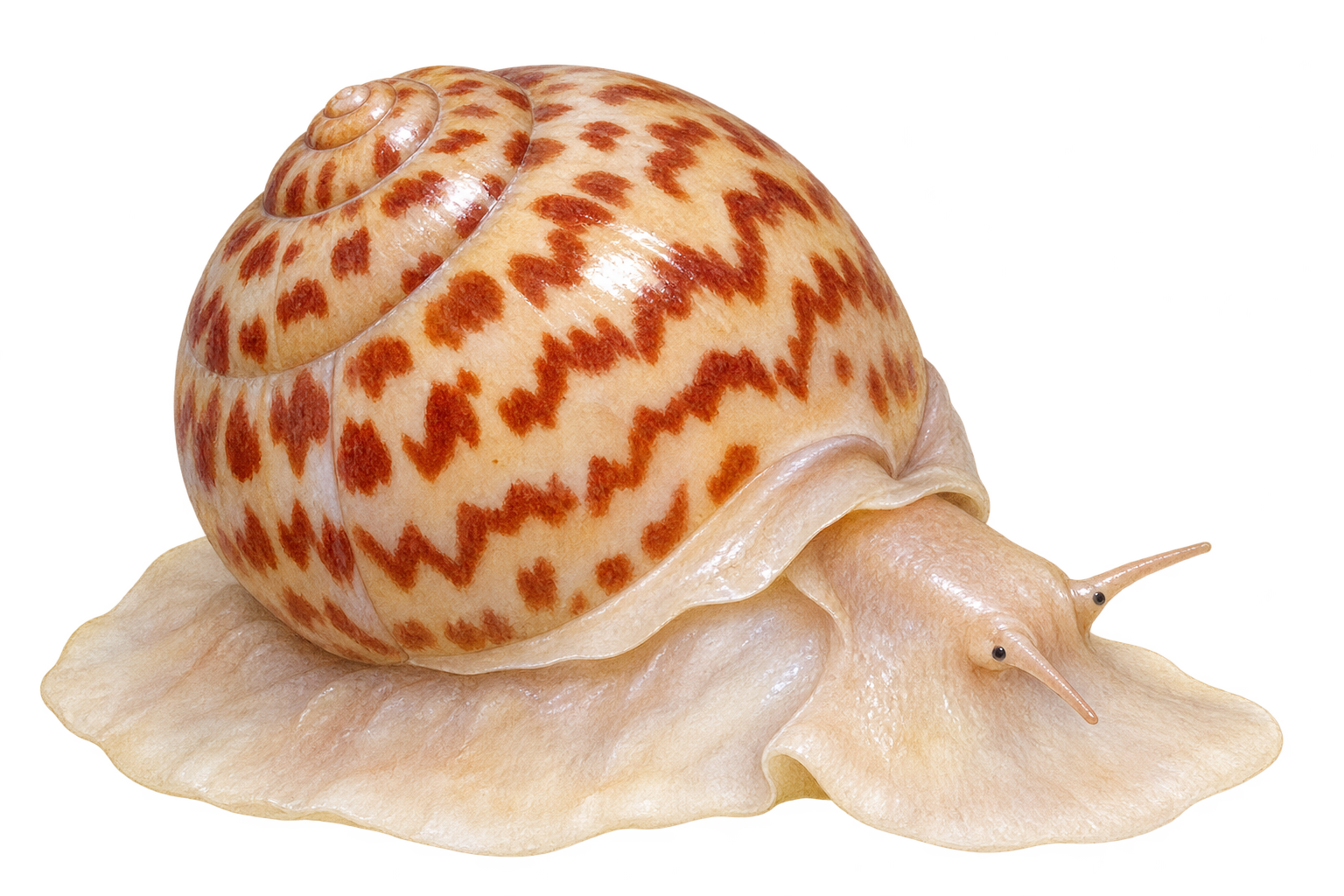
Size: The museum account gives shell size to 38 mm. This is a shell measurement, not the length of the extended living animal.
A rounded, thin-walled shell has a deep underside hollow partly filled by a white callus. Its white operculum has strong spiral ridges.
Read the guide’s location, season and eating cautions before acting.
Common Atlantic Marginella
Shape not assigned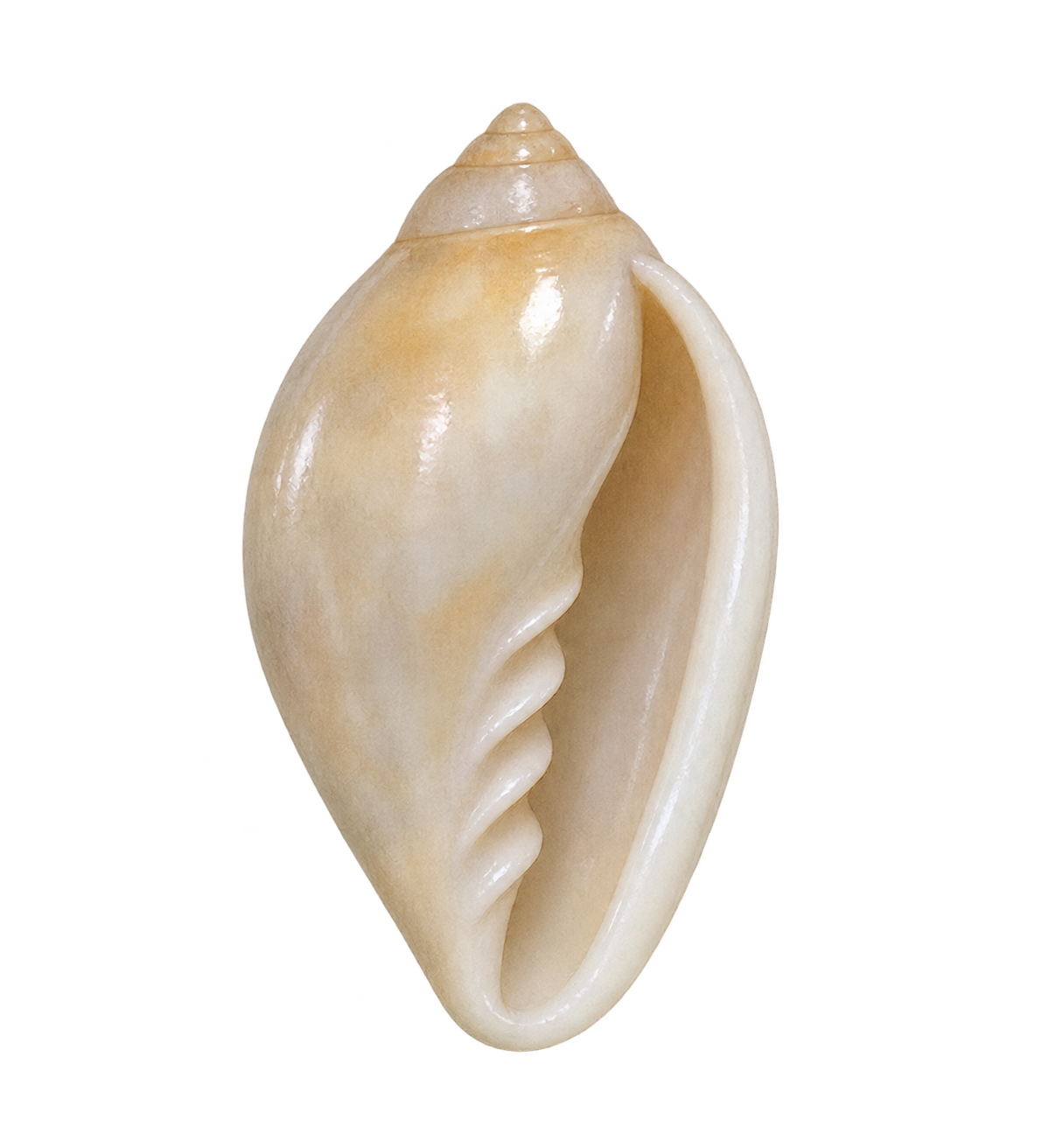
Size: The museum account gives shell size to 10 mm. This is not the extended animal’s length.
A glossy pear-shaped shell with a narrow opening and thick outer lip. Four folds lie on the columella; the outer lip usually has two brown spots.
Read the guide’s location, season and eating cautions before acting.
Costasiella arenaria
Shape not assigned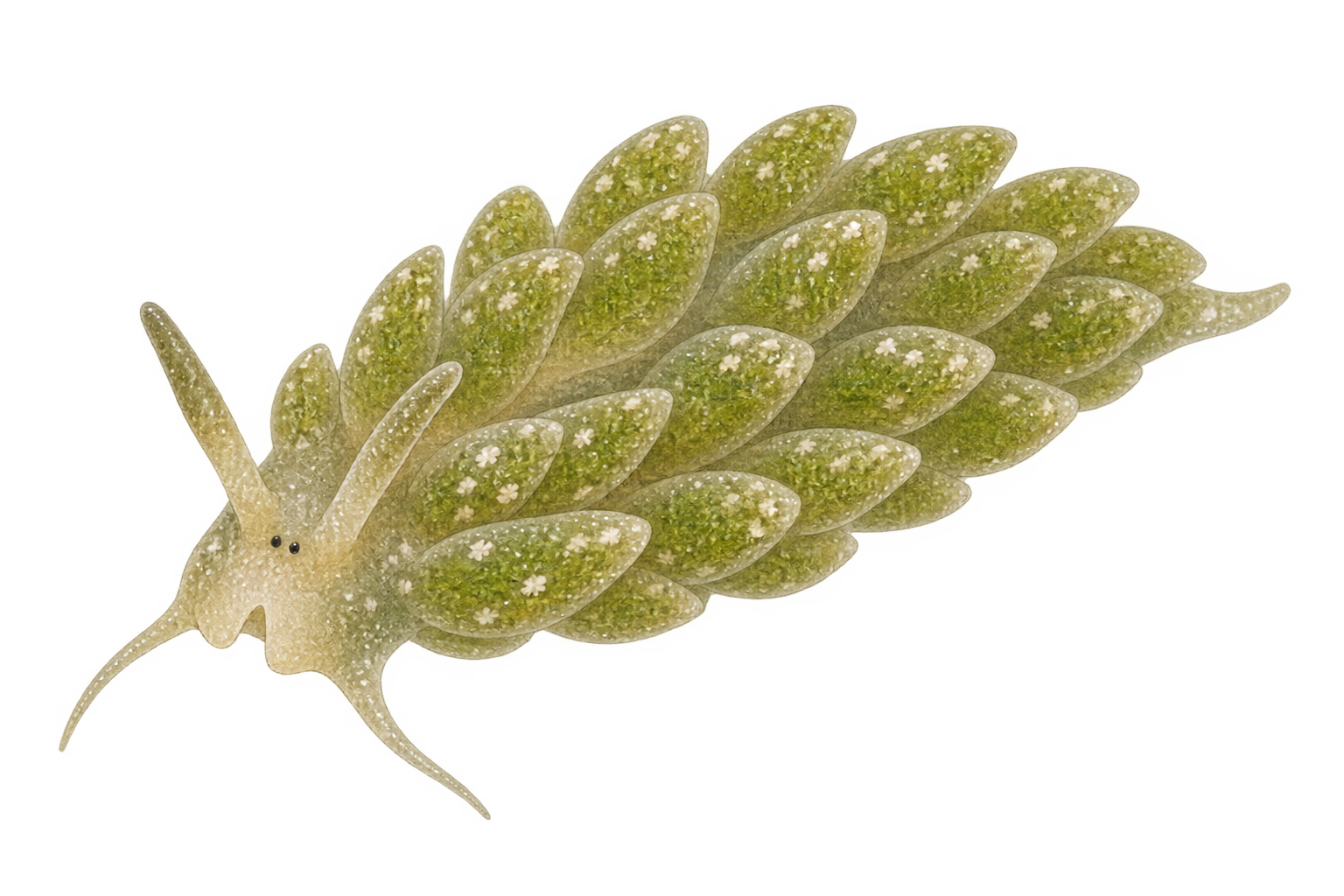
Size: The description records crawling animals 5–8 mm long and preserved animals 2–3 mm long. Preservation and live measurements must remain separate.
A small sacoglossan with closely spaced central eyes, a deeply notched head and inflated cerata arranged in three or four longitudinal rows on each side.
Read the guide’s location, season and eating cautions before acting.
Dondice juansanchezi
Soft-bodied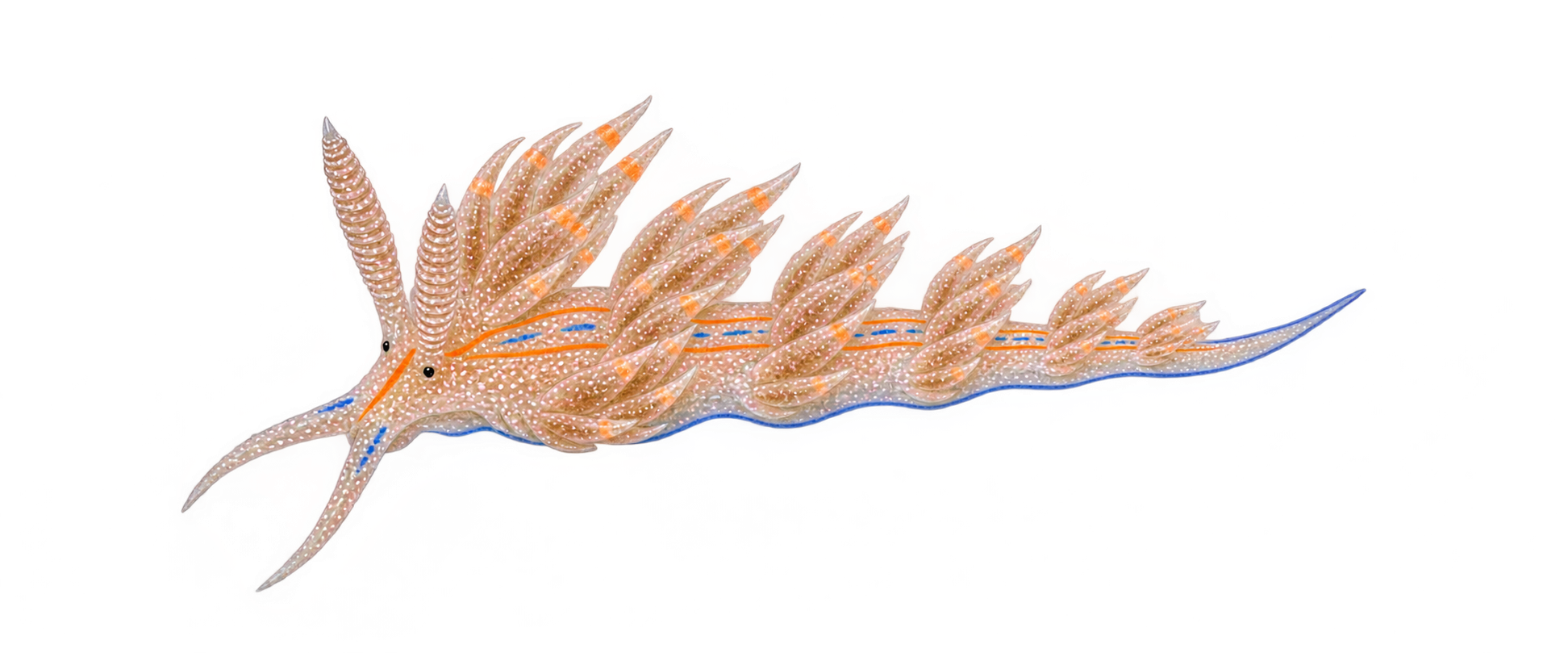
Size: Illustrated living specimens 10–14 mm; maximum not established here.
Slender aeolid with pinkish-white speckles, a broken blue dorsal line, paired orange helix-like markings and ringed rhinophores.
Read the guide’s location, season and eating cautions before acting.
Doto torrelavega
Shape not assigned
Size: A reliable numerical size with a defined measurement basis was not established from the accessed sources. Do not turn a photograph’s apparent scale or observation depth into body length.
The original-description abstract characterizes a golden-yellow body with white papillae, lobed rhinophore sheaths, gold rings on the ceratal tubercles and a conspicuous pseudobranch.
Read the guide’s location, season and eating cautions before acting.
Doto varaderoensis
Shape not assigned
Size: A reliable numerical size with a defined measurement basis was not established from the accessed sources. Do not turn a photograph’s apparent scale or observation depth into body length.
The museum species account describes a translucent, white-flecked body, pink-orange viscera and ceratal cores, and rounded inflated tubercles without pigment spots. White-flecked rhinophore sheaths have an anterior triangular extension and an apparent posterior V-shaped notch; the museum treats the notch cautiously.
Read the guide’s location, season and eating cautions before acting.
Dushia flabellina
Soft-bodied
Size: Published living length to 15 mm; local observations about 8–14 mm.
Tiny pale aeolid with red, orange or yellow digestive branches in the cerata and relatively short, smooth rhinophores.
Read the guide’s location, season and eating cautions before acting.
Elysia cornigera
Shape not assigned
Size: A reliable numerical size with a defined measurement basis was not established from the accessed sources. Do not turn a photograph’s apparent scale or observation depth into body length.
The guide describes rolled rhinophores, numerous pale papillae and red specks on a whitish-to-green body.
Read the guide’s location, season and eating cautions before acting.
Elysia pawliki
Shape not assigned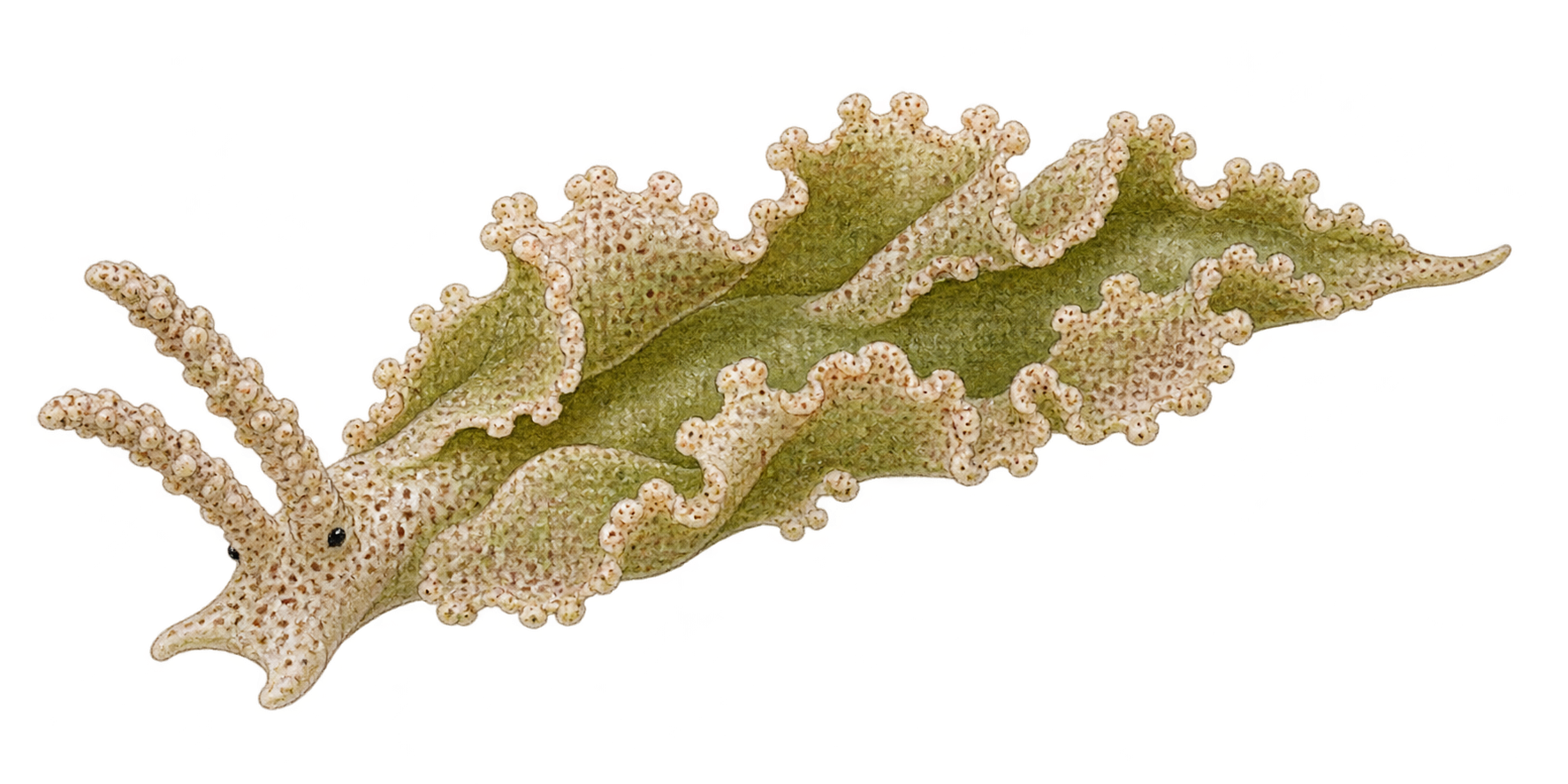
Size: Two Brazilian individuals in the accessed treatment had a body length of 25 mm. This is a measured sample, not a Florida maximum.
An olive-green Elysia with a light beige head, rhinophores and parapodia, and scattered brown dots. The conspicuous head bears small black eyes. Long rolled rhinophores bear tubercles, giving them a curly texture.
Read the guide’s location, season and eating cautions before acting.
Elysia zuleicae
Shape not assigned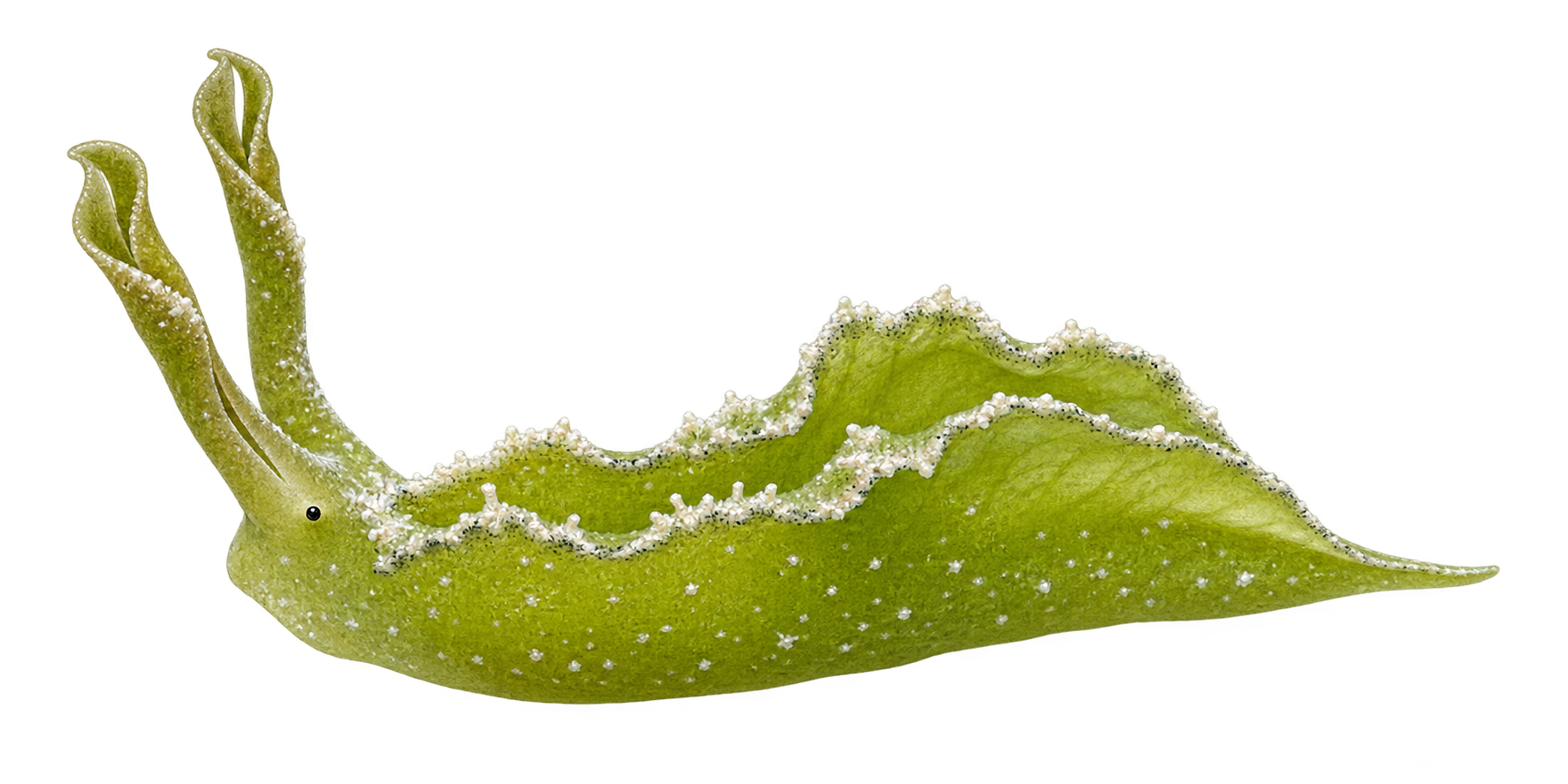
Size: A secure maximum is not provided here. Juveniles in the primary study were darker green and held their flaps flat against the food alga.
A green sacoglossan with rolled head tentacles and white specks or small white projections along thin side flaps. The margins can be uneven, but the primary description does not give it the siphonal openings of some similar Elysia.
Read the guide’s location, season and eating cautions before acting.
Eveline's learchis
Shape not assigned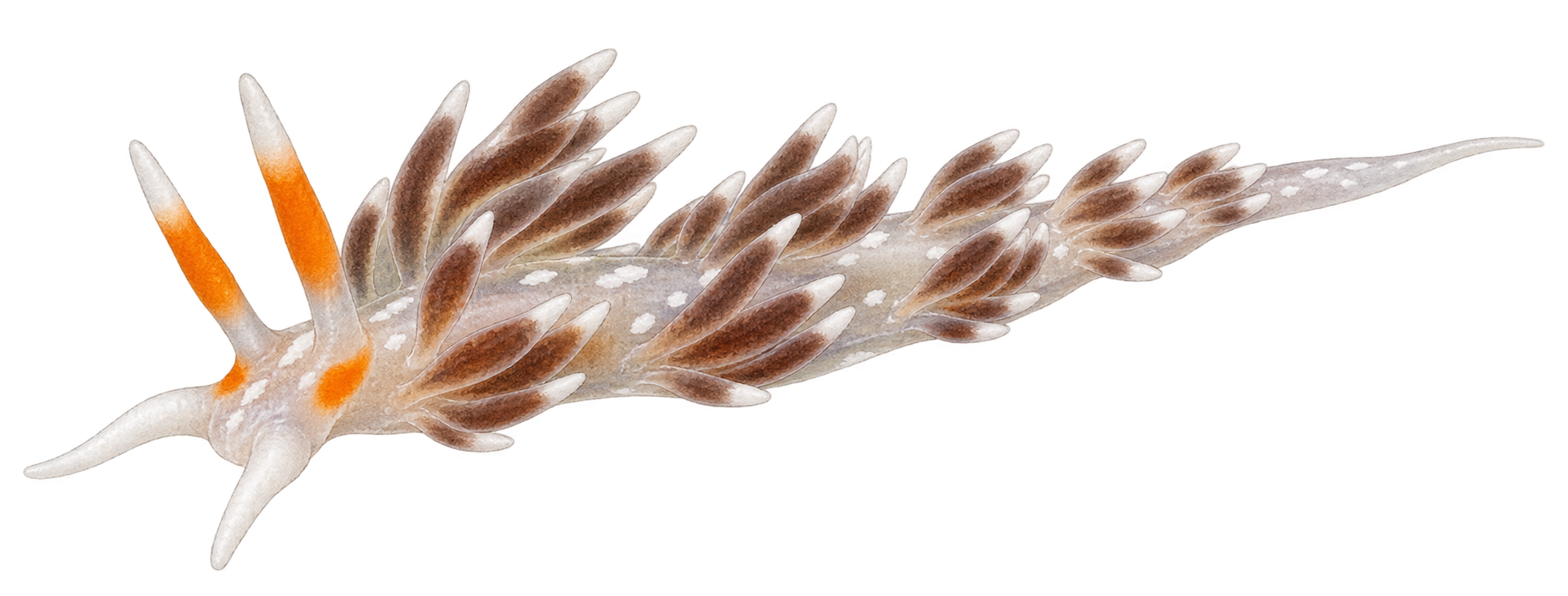
Size: The museum account documents a roughly 20 mm living Florida animal and 3–9 mm Barbados specimens. These are individual observations, not a measured maximum.
Look for a translucent aeolid with white speckling. Smooth rhinophores have a clear base, orange middle and white tip; the oral tentacles are mostly white.
Read the guide’s location, season and eating cautions before acting.
Felimida binza
Shape not assigned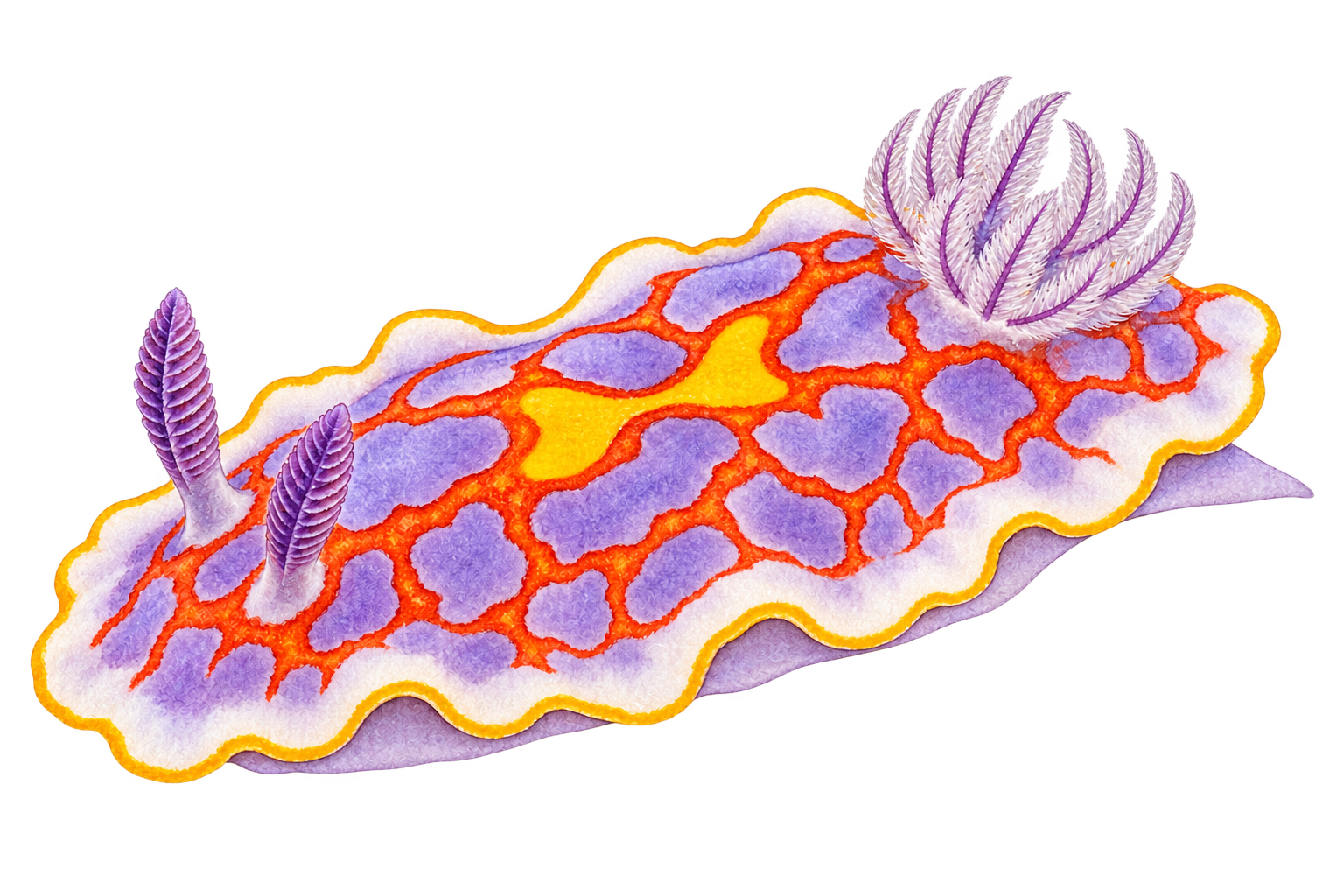
Size: The local photographer estimated 20 mm for the illustrated individual. This is a photographic observation, not an adult maximum or a population size range.
The museum identification account describes an irregular red network surrounding pale blue patches, with a yellow hourglass-like dorsal pattern.
Read the guide’s location, season and eating cautions before acting.
Flamingo Tongue
Coiled shells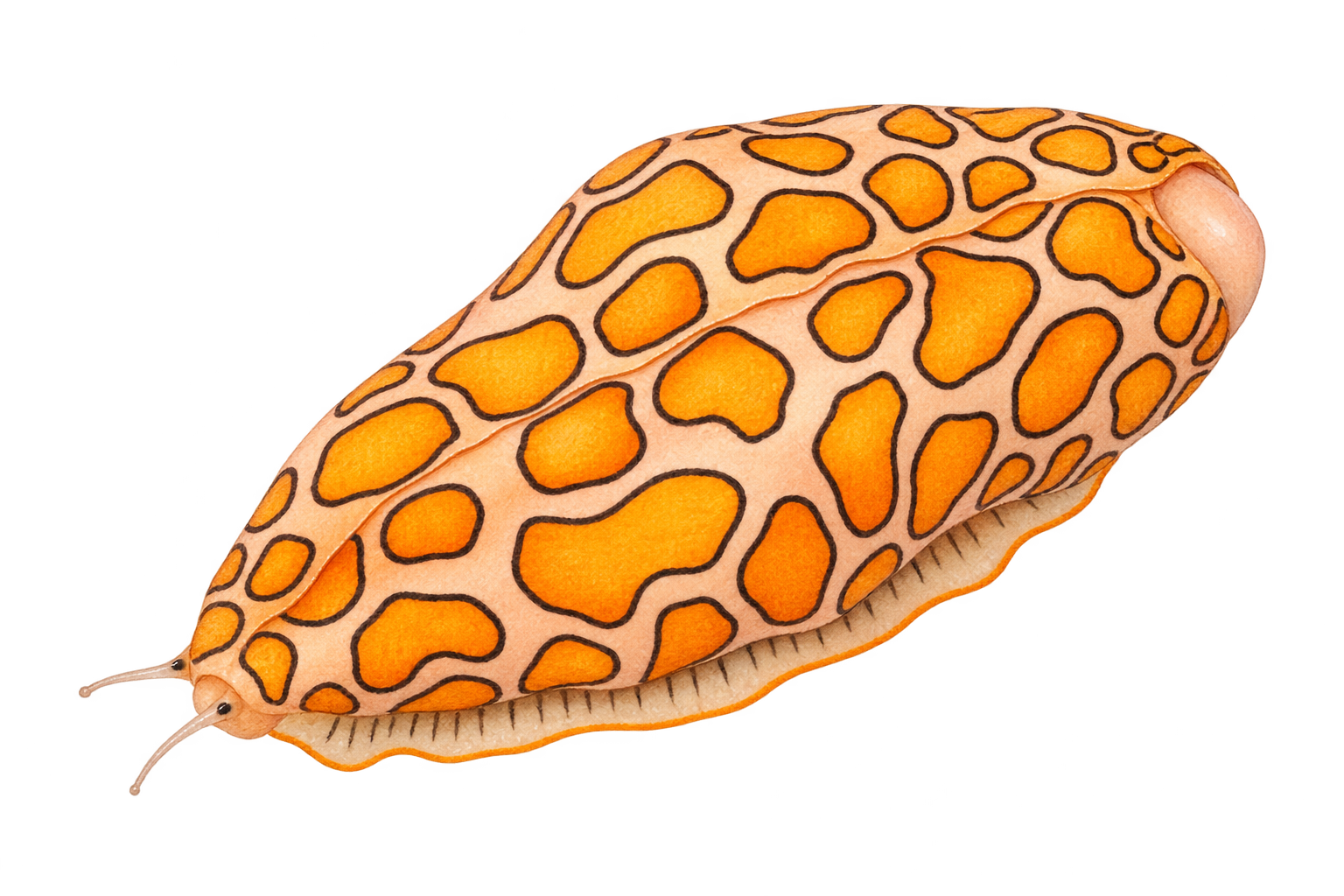
Size: Shell usually about 2–3 cm long.
Cream, orange and black markings make the flamingo tongue look like a tiny decorated shell.
Live-shell collection restrictions apply; not the queen-conch rule
Explore the flamingo tongue guide →Florida Fighting Conch
Coiled shells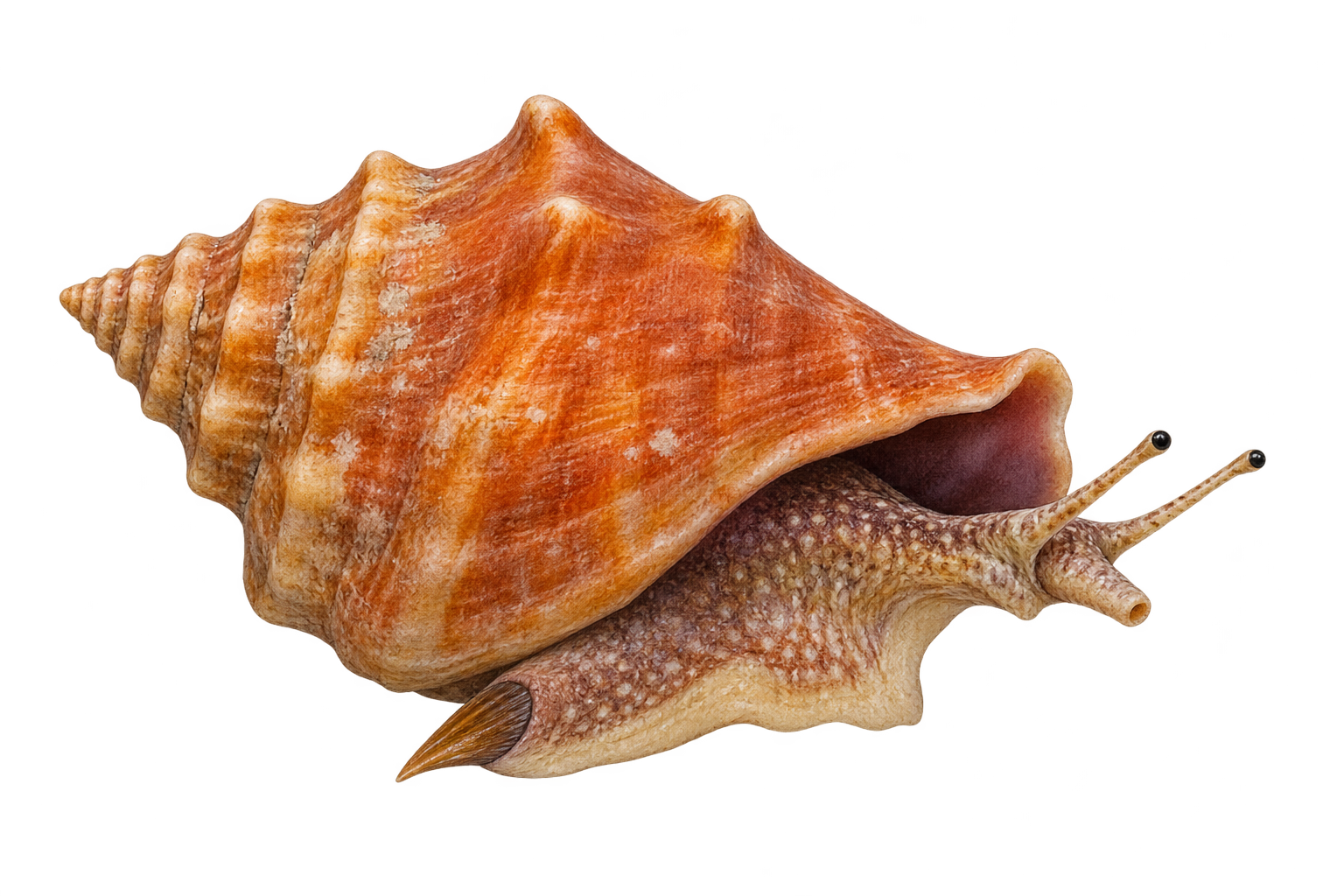
Size: Shell usually several centimeters long, reaching about 10 cm.
This small true conch has a thick spiral shell with a pointed spire, shoulder knobs and an expanded adult outer lip.
Live-shell collection restrictions apply; not the queen-conch rule
Explore the florida fighting conch guide →Frond Oyster
Shape not assigned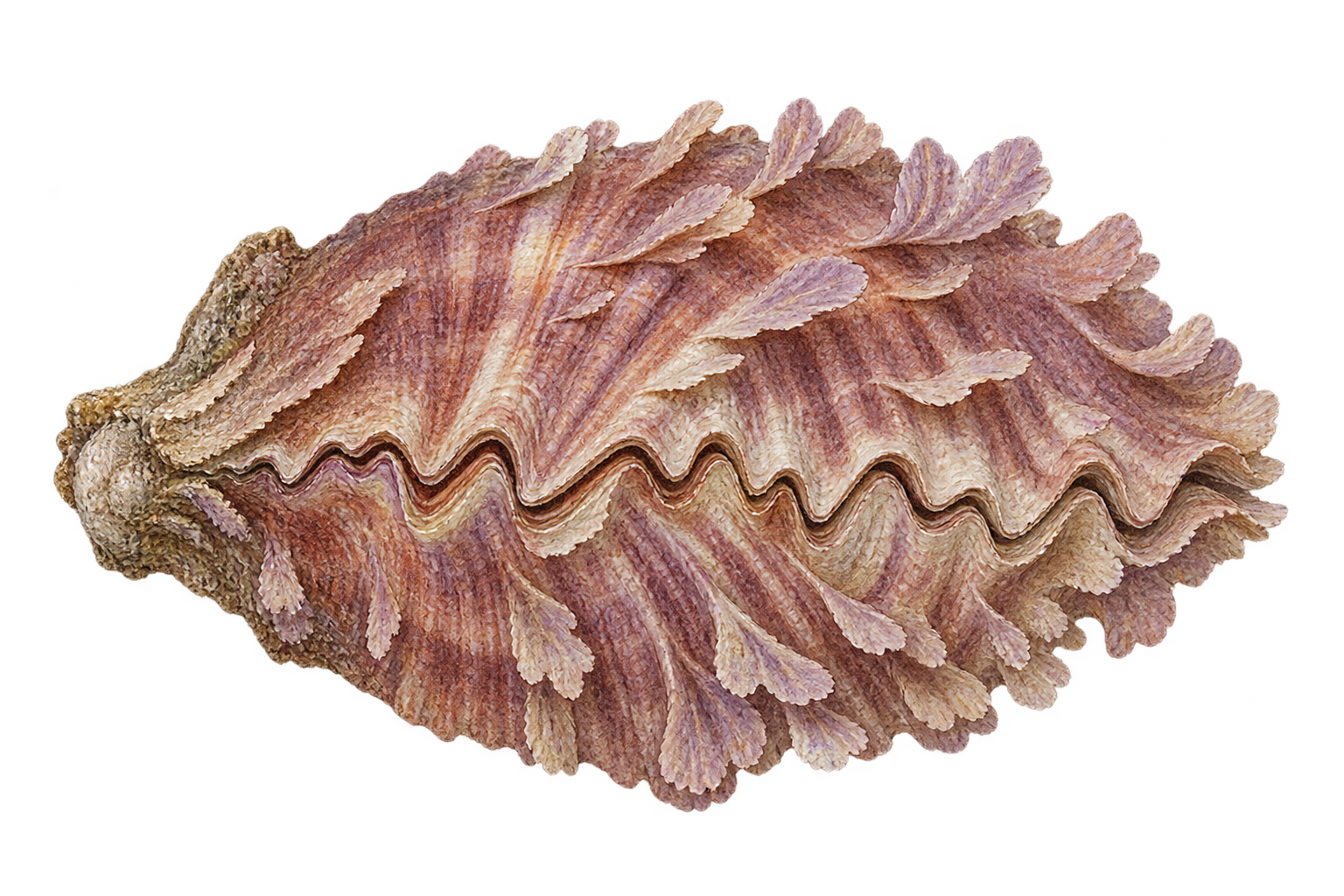
Size: The museum account gives shell size to 45 mm; outline varies with attachment surface.
A reddish to dark-brown oyster with a variable outline. Shells on sea whips tend to be elongated; those on rock can be rounded.
Read the guide’s location, season and eating cautions before acting.
Giant Eastern Murex
Shape not assigned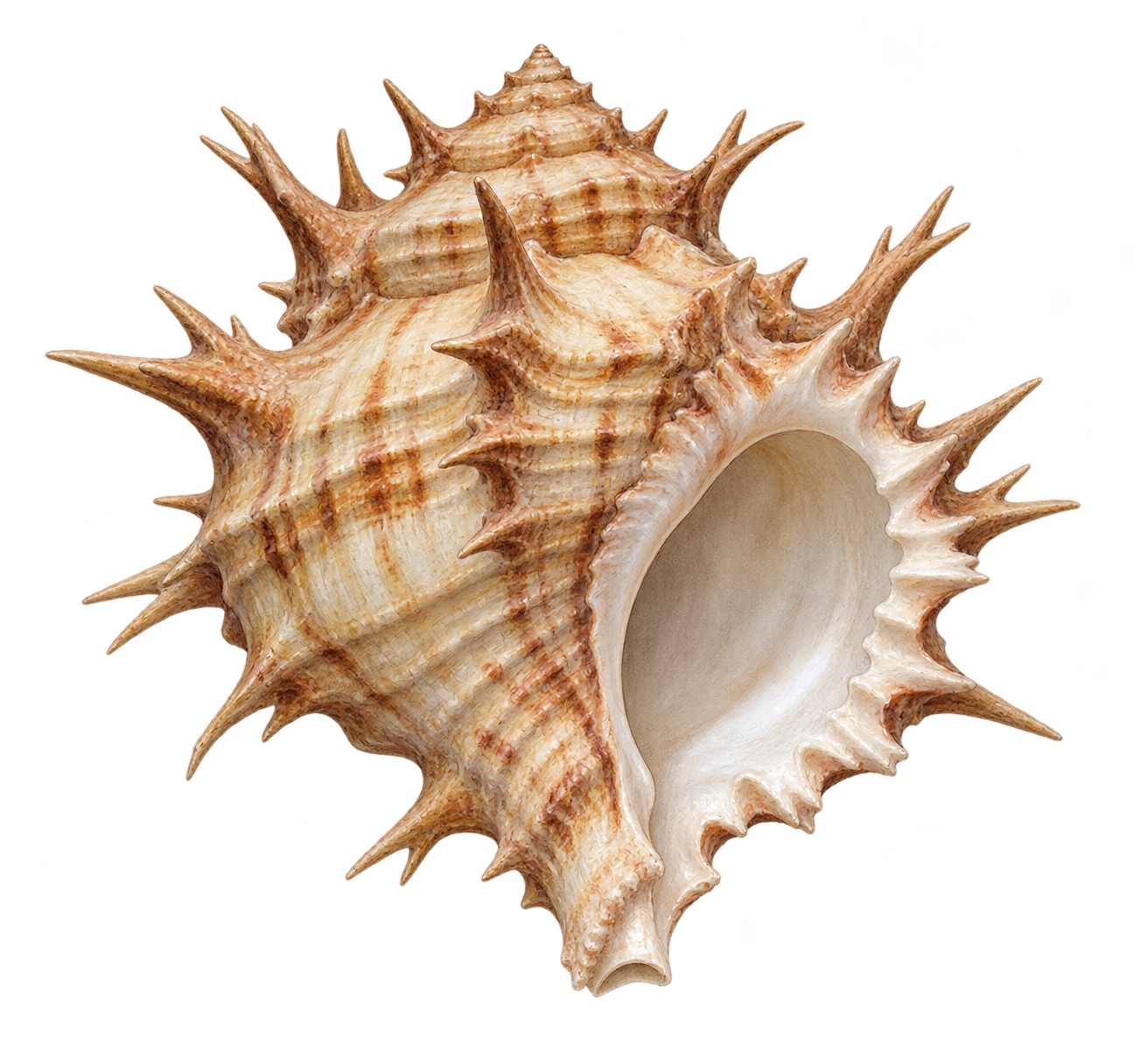
Size: The museum reports shells exceeding 213 mm in length. This is a shell dimension, not the length of the extended living animal.
A massive shell bears prominent pointed spines. Color varies through tawny brown, yellow-brown, orange and cream; a pale specimen is not necessarily a different species.
Read the guide’s location, season and eating cautions before acting.
Gold-lined sea goddess
Shape not assigned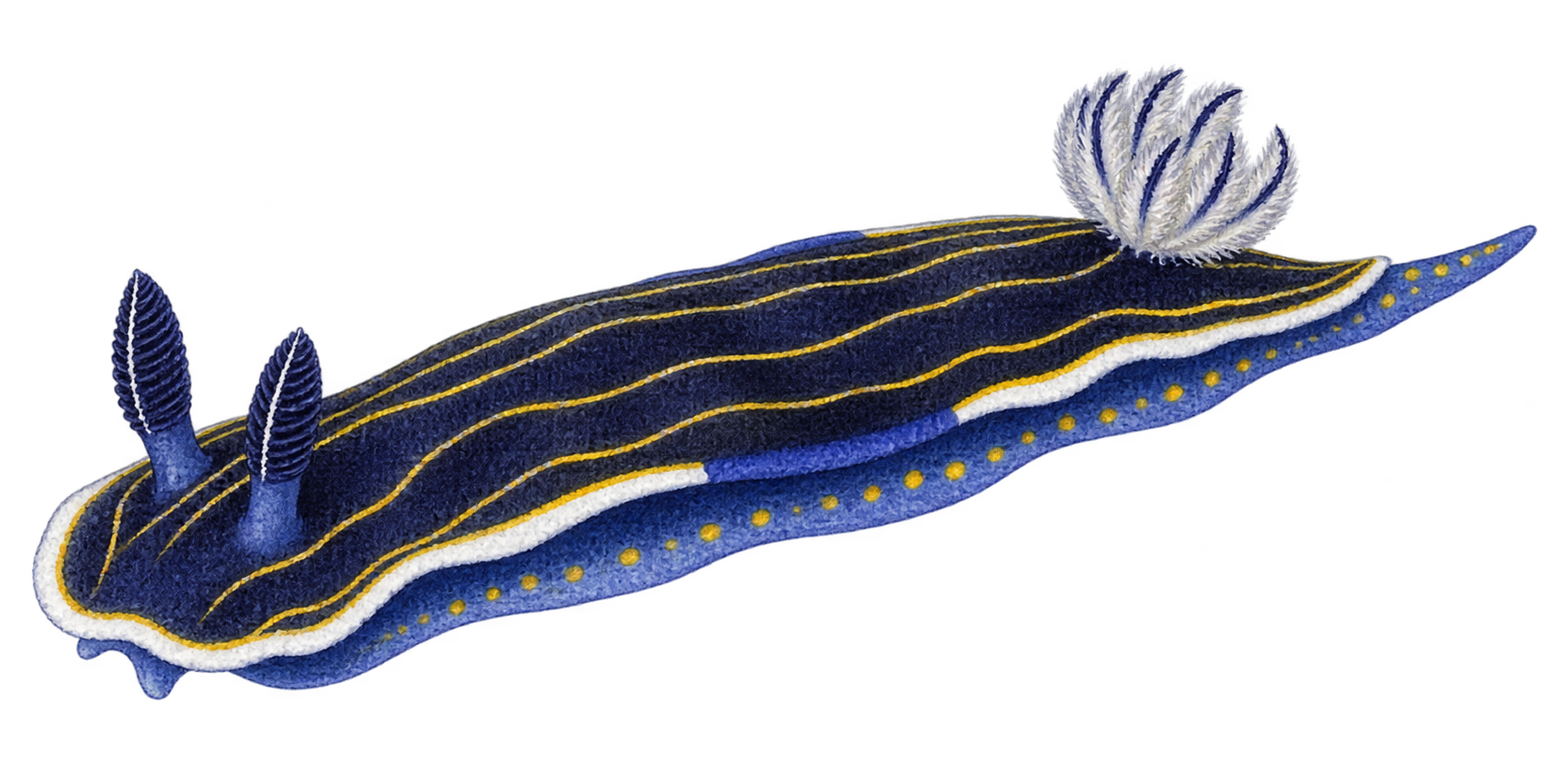
Size: The museum account reports body length of at least 25 mm, explicitly noting that published records were sparse.
A blue-black mantle carries yellow lines and a pale border interrupted around the middle of each side. The number of longitudinal lines can increase as the animal grows.
Read the guide’s location, season and eating cautions before acting.
Harlequin blue doris
Shape not assigned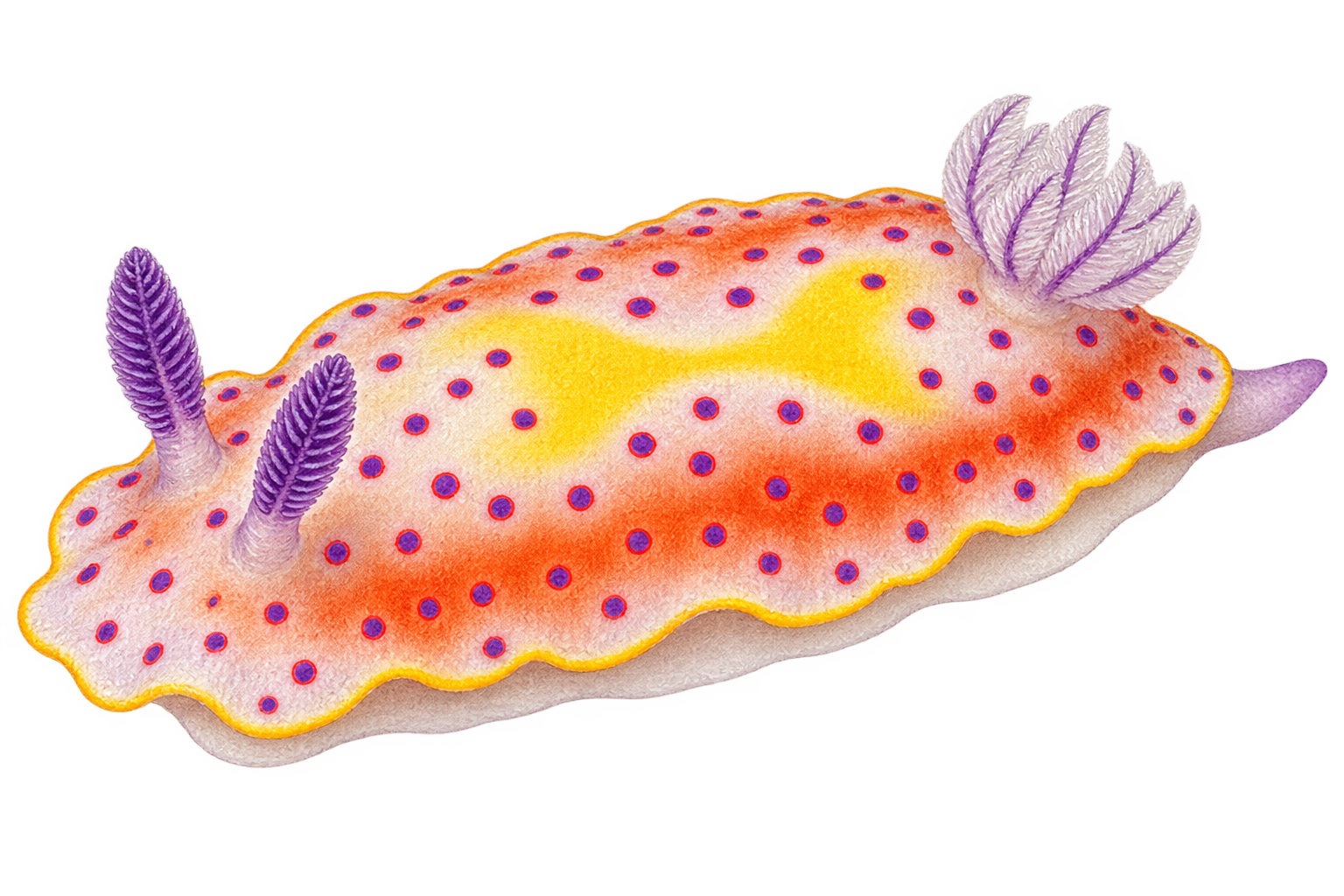
Size: The local photographer estimated 20 mm for the illustrated individual. This is a photographic observation, not an adult maximum or a population size range.
The older museum comparison emphasizes rounded violet dorsal patches outlined by fine red lines, with a yellow hourglass-like pattern.
Read the guide’s location, season and eating cautions before acting.
Horse Conch
Coiled shells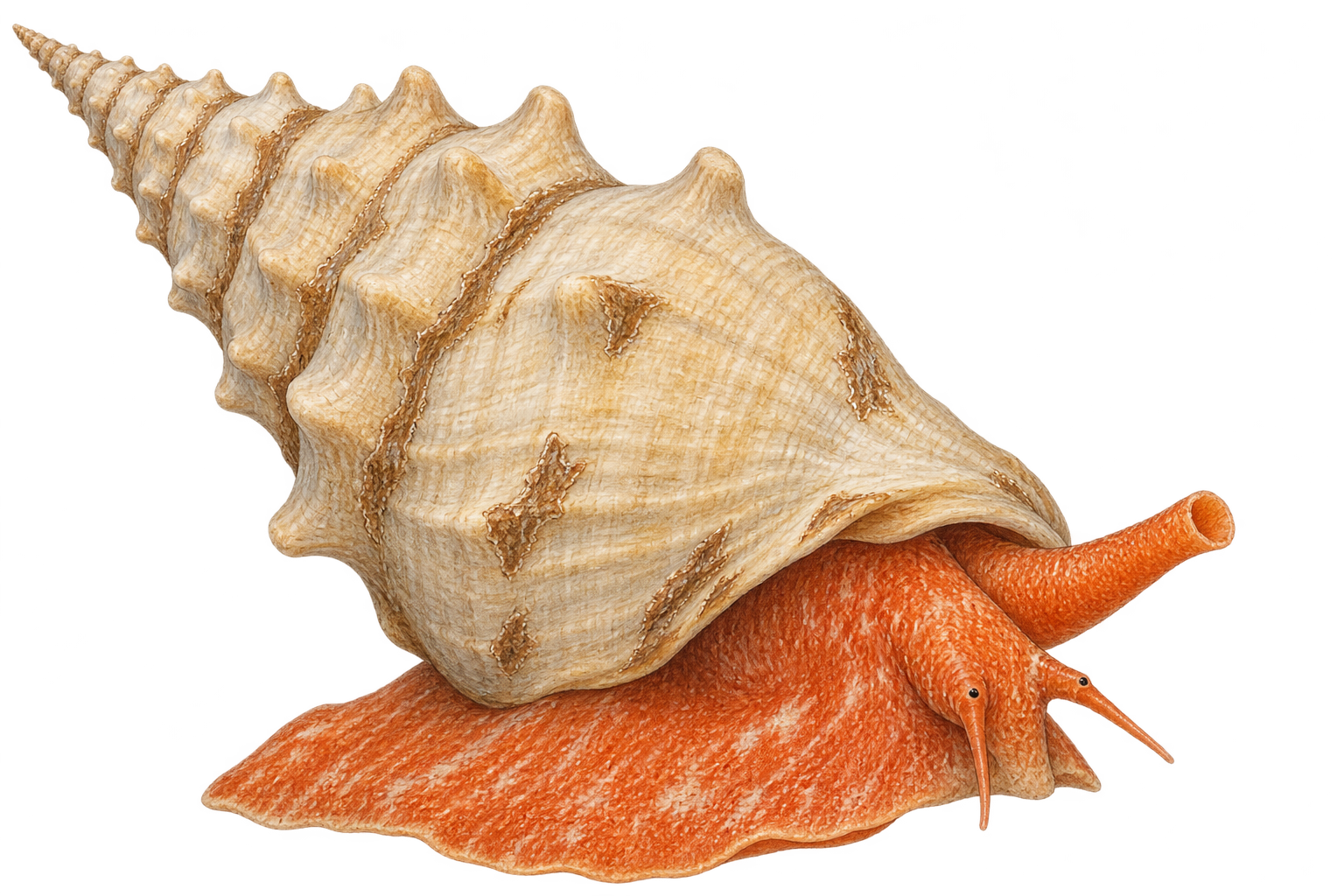
Size: Exceptional shells approach 60 cm; most encountered animals are smaller.
A long, spindle-shaped shell with a high spire and extended siphonal canal houses this impressive predatory snail.
Live-shell collection restrictions apply; not the queen-conch rule
Explore the horse conch guide →Lemon-drop doris
Shape not assigned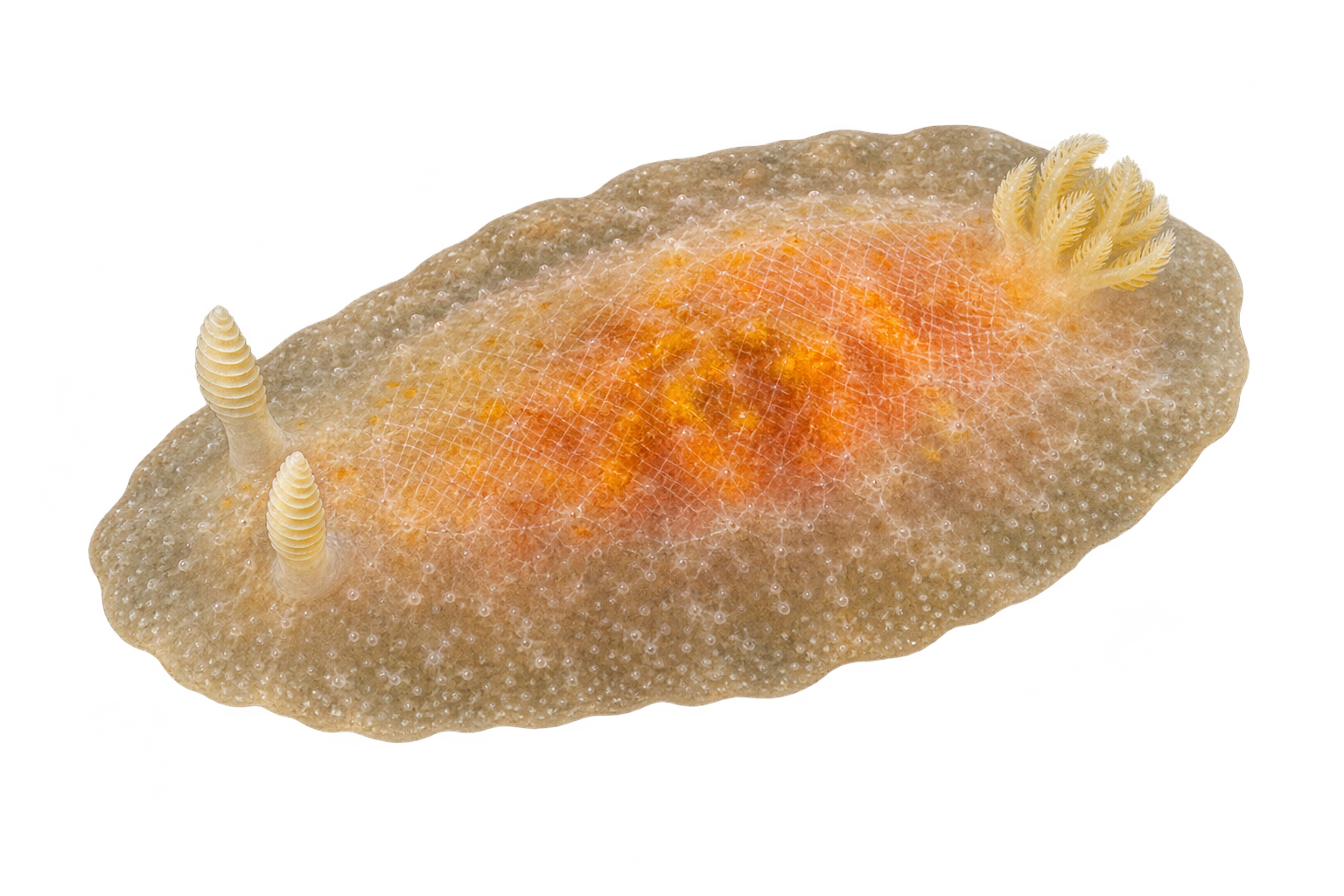
Size: Nine adults in the Long Island Sound study averaged 11 mm. That small sample is not a maximum, a juvenile growth curve or a size measurement of the Florida photograph.
A small, flattened oval nudibranch, described as bright yellow-orange in a 2025 primary study. Specialists used body shape and the arrangement of gills and head tentacles as well as color. The local page uses the synonym Cariopsilla pharpa; color alone is not a secure diagnosis.
Read the guide’s location, season and eating cautions before acting.
Lightning Whelk
Coiled shells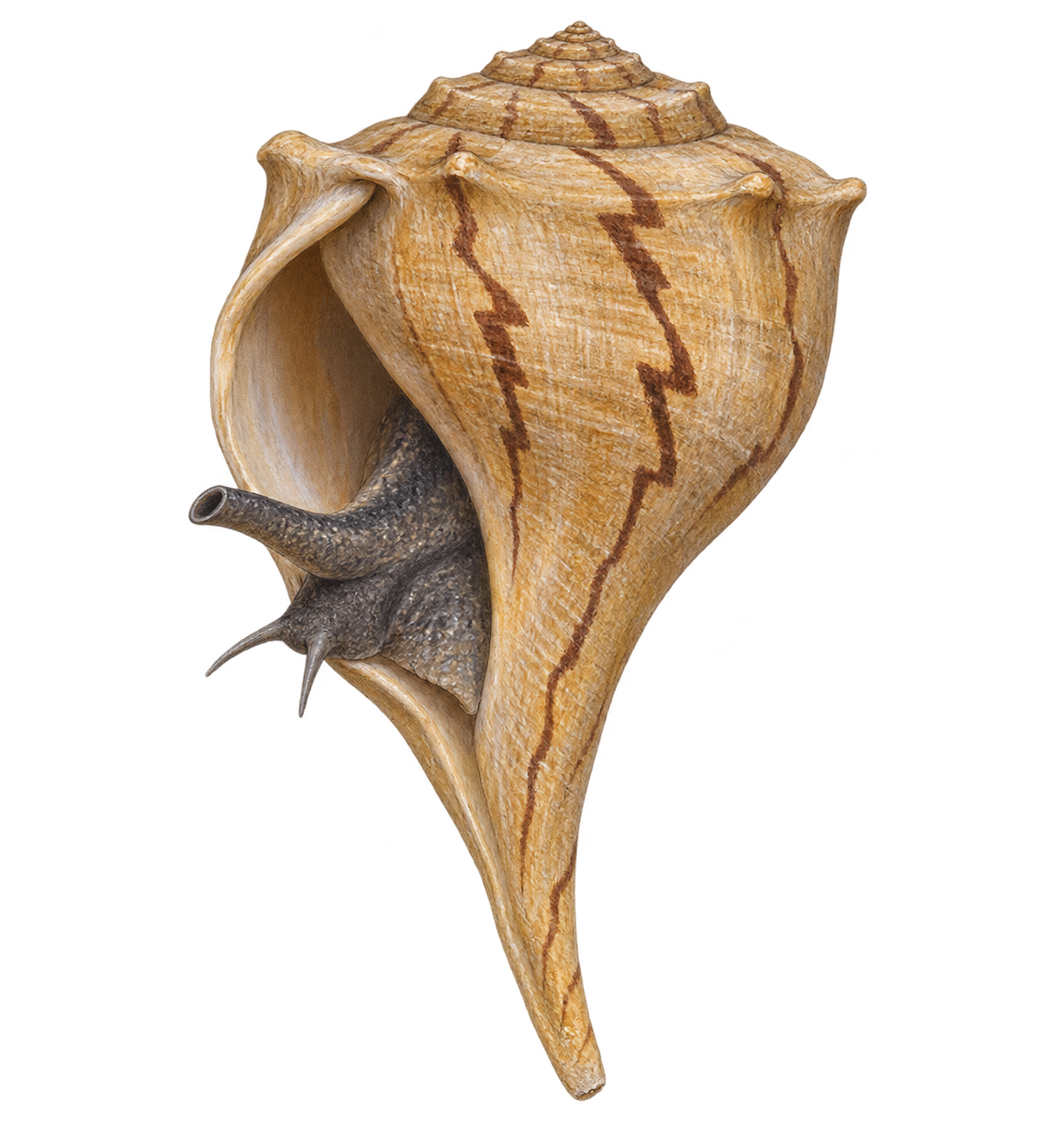
Size: Shells can reach about 38 cm; juveniles are much smaller.
With the spire pointing upward and the opening facing you, this whelk’s opening lies on the left.
Live-shell collection restrictions apply; not the queen-conch rule
Explore the lightning whelk guide →Lobiger souverbii
Shape not assigned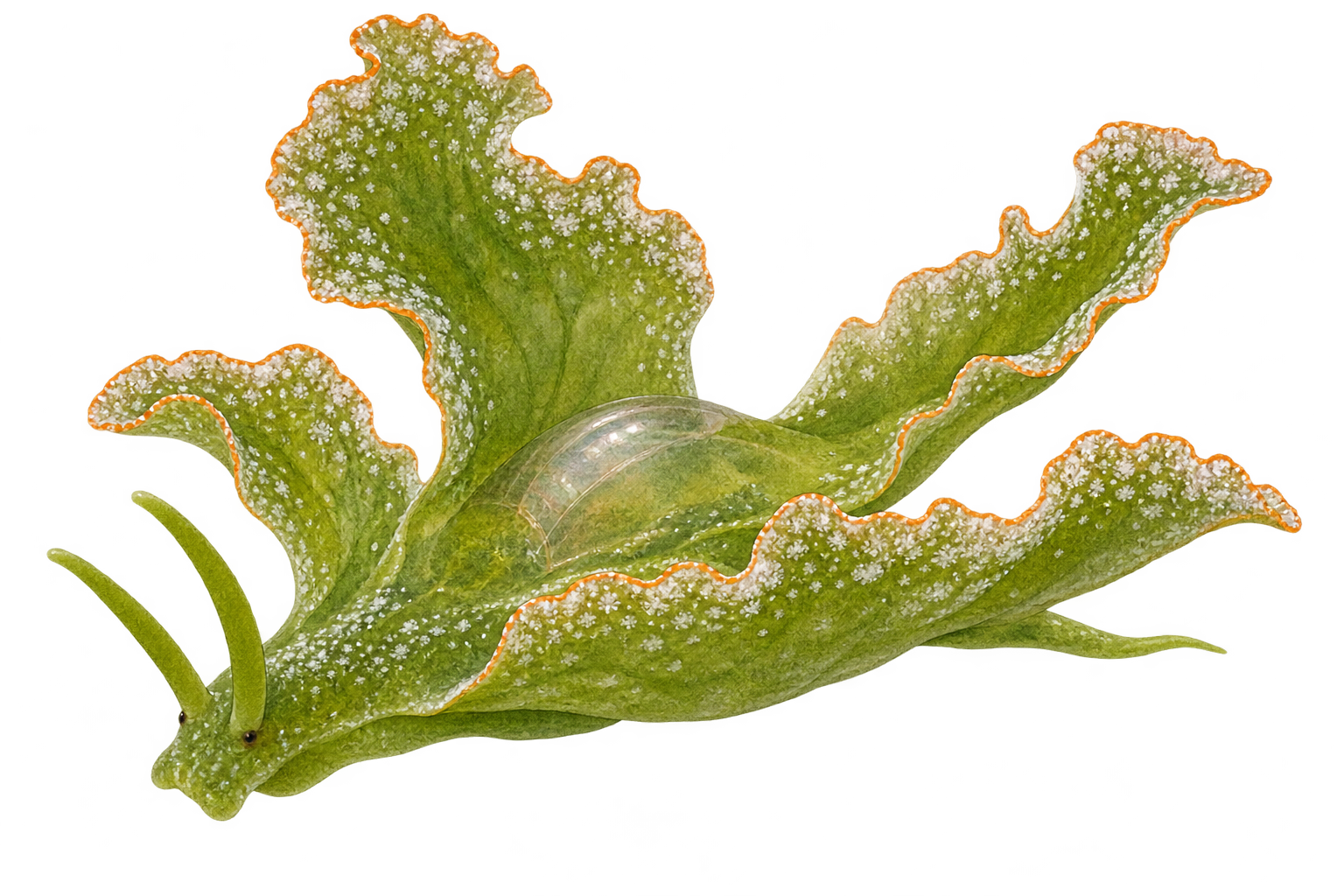
Size: A reliable numerical size with a defined measurement basis was not established from the accessed sources. Do not turn a photograph’s apparent scale or observation depth into body length.
The Caribbean guide describes a fragile translucent shell whose apex points backward and left. Each parapodium forms two slender leaflike projections with white marginal papillae. Short rolled rhinophores and a green mantle with longitudinal black lines and blue dots complete the described pattern; mantle markings show through the shell.
Read the guide’s location, season and eating cautions before acting.
Lomanotus vermiformis
Shape not assigned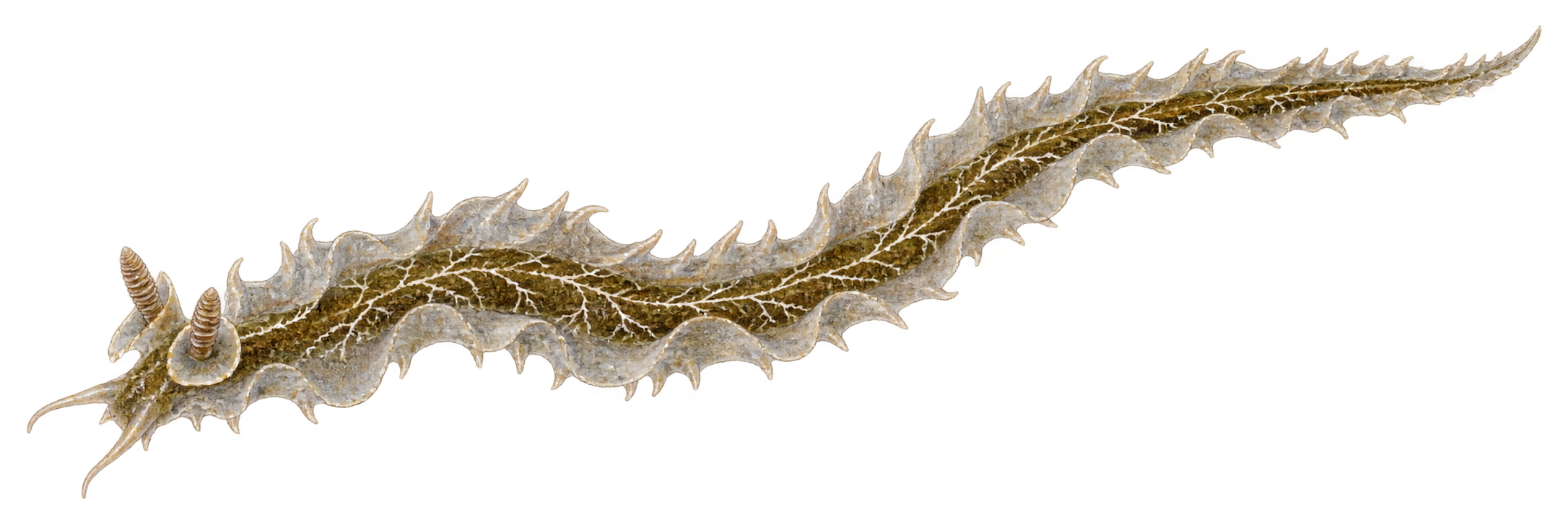
Size: The museum account says it seldom exceeds 25 mm in body length. This is a usual-size statement, not an absolute maximum.
This unusually slender nudibranch has wavy mantle ridges bearing short, pointed cerata.
Read the guide’s location, season and eating cautions before acting.
Marcus' aeolid
Soft-bodied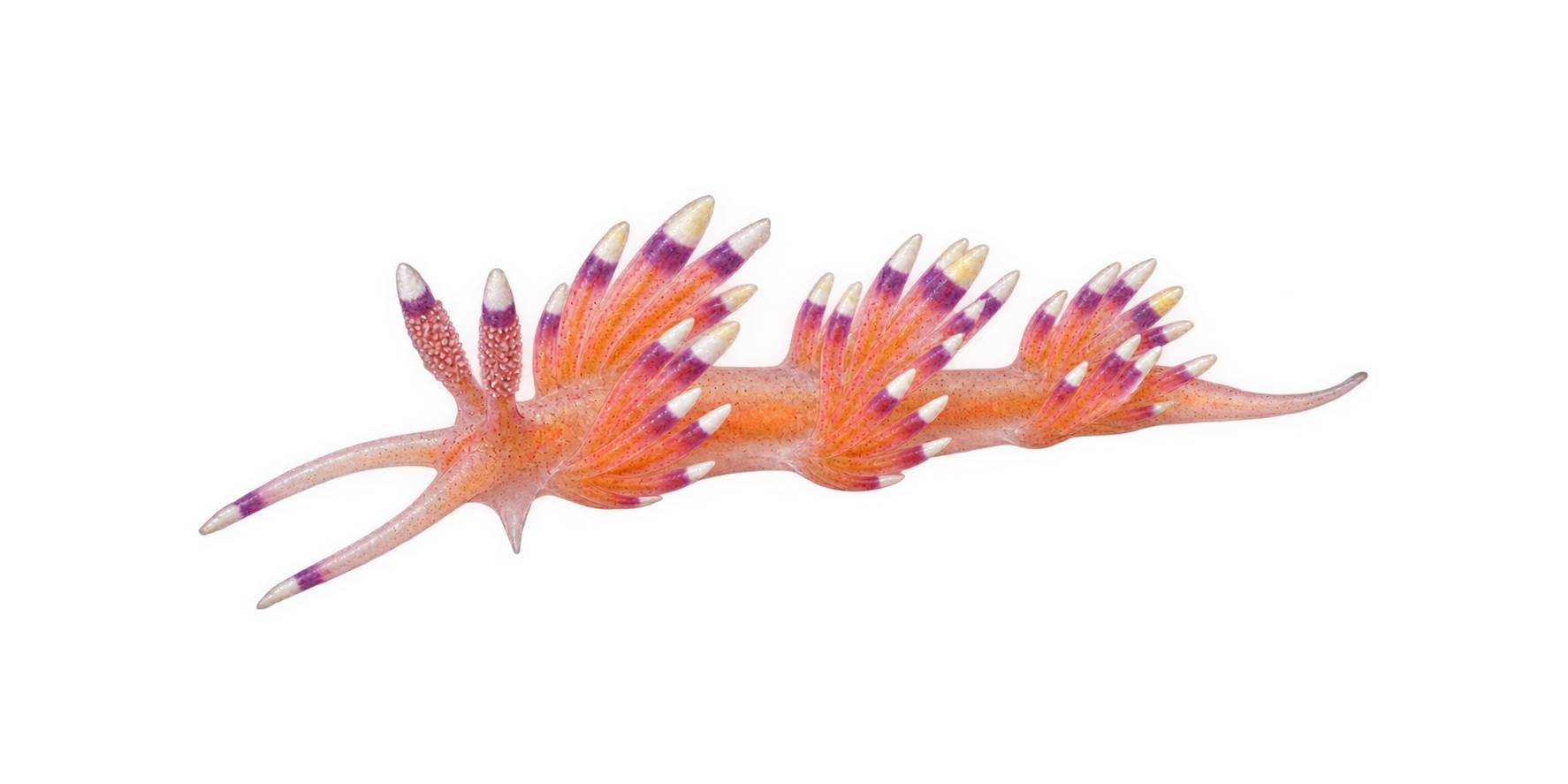
Size: Published upper length 25–30 mm; local photographed individual 6–10 mm.
Translucent pink-orange aeolid with repeated purple bands near pale appendage tips and papillae on the rear of the rhinophores.
Read the guide’s location, season and eating cautions before acting.
Mysterious aglaja
Shape not assigned
Size: A reliable numerical size with a defined measurement basis was not established from the accessed sources. Do not turn a photograph’s apparent scale or observation depth into body length.
An internal reduced shell, an elongate headshield and blue spots along the parapodial edge characterize the published account.
Read the guide’s location, season and eating cautions before acting.
Nakamigawaia felis
Shape not assigned
Size: The museum account cites living type-description animals of 8–12 mm and smaller Jamaican specimens. These are lengths of observed animals, not a complete growth range.
The original-description discussion describes velvet-black or dark reddish-brown animals, a substantial headshield and no long posterior flagellum.
Read the guide’s location, season and eating cautions before acting.
Petalifera ramosa
Shape not assigned
Size: The museum account cites animals 5–7 cm long in the original description. This is not a measured range for the Peanut Island population or a maturity threshold.
A sea hare with conspicuous conical bumps scattered across the body. Some larger bumps end in branching filaments; smaller ones can be pink with dark rings around their bases. The branching surface is more informative than a single brown or green color impression.
Read the guide’s location, season and eating cautions before acting.
Polycera herthae
Shape not assigned
Size: The original account describes living juveniles around 3 mm and a preserved 2.5 mm specimen. Neither value should be used as an adult maximum.
The original treatment describes small brown animals with pale and dark dots, short oral-veil projections and a rear gill cluster. The rhinophores and gills require a clear close view.
Read the guide’s location, season and eating cautions before acting.
Polycera odhneri
Shape not assigned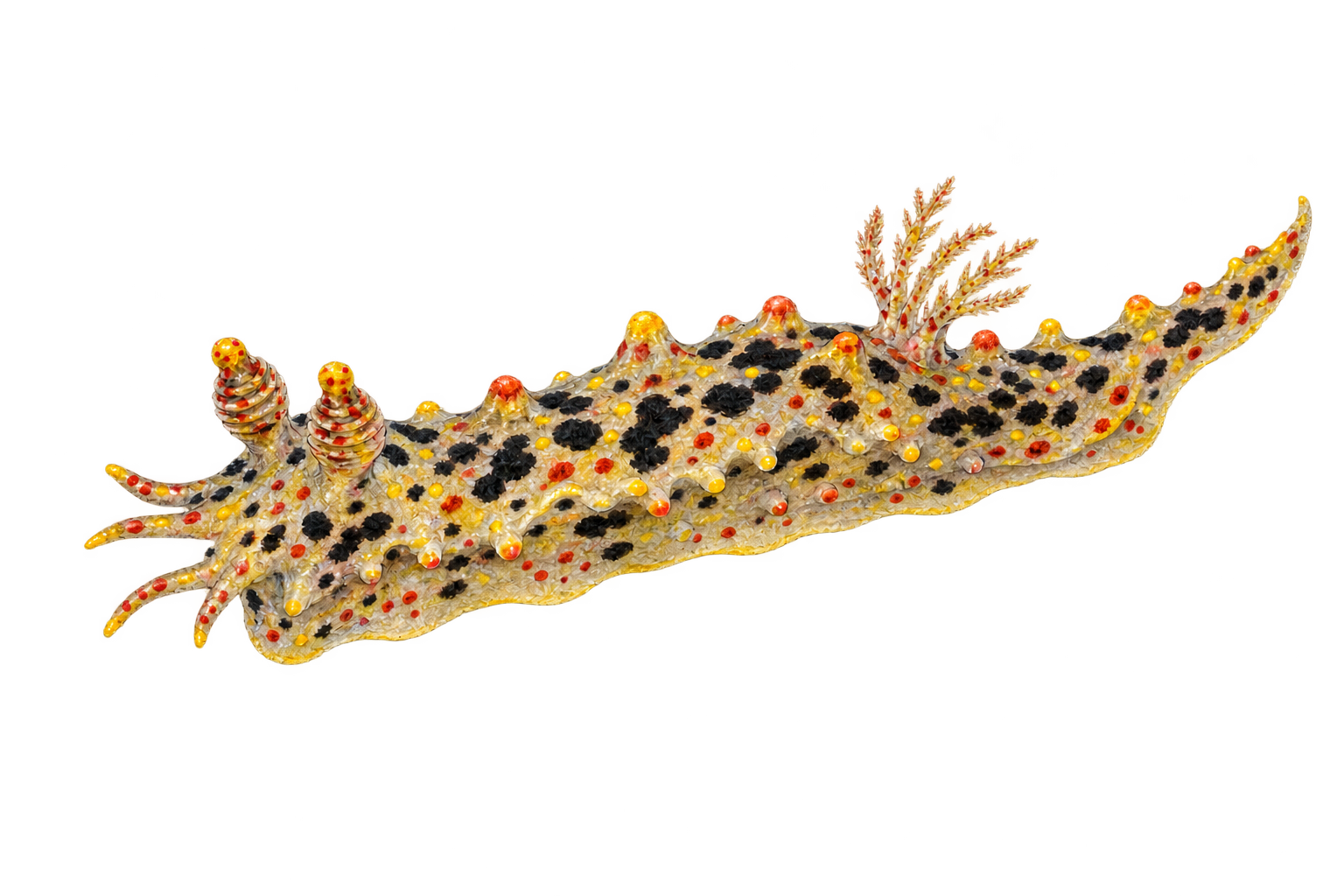
Size: The original Brazilian sample reached about 10 mm alive at the water surface and 7 mm preserved. The supplement reports three 18 mm adults near Ubatuba in September 1956. These are sample observations, not maximum lengths for the species.
Marcus describes a yellowish-gray body with irregular black patches and red and yellow dots, usually four slender anterior velar processes, swollen mantle-ridge papillae, small lateral tubercles and a tail crest. One original specimen had six velar processes. The adult supplement records more black pigmentation, up to seven gills and up to fifteen rhinophore lamellae.
Read the guide’s location, season and eating cautions before acting.
Polycera rycia
Shape not assigned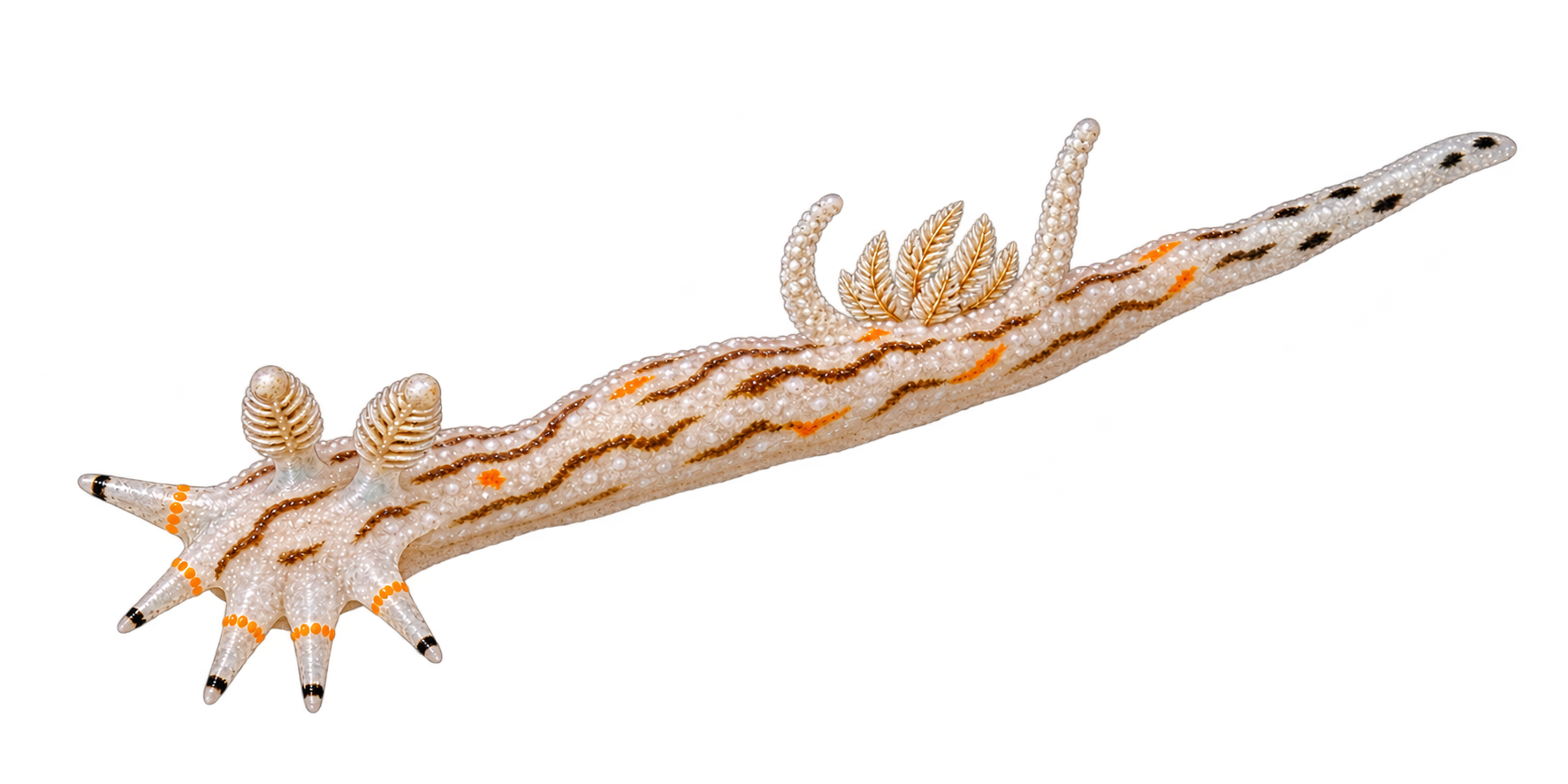
Size: The original Florida specimen was 5 mm long after preservation. This is not a live adult maximum.
The original treatment describes a generally white animal with brown and orange marks, five oral-veil processes, lamellate rhinophores and seven short gills. Papillae also occur on the two blunt extra-gill processes.
Read the guide’s location, season and eating cautions before acting.
Queen Conch
Coiled shells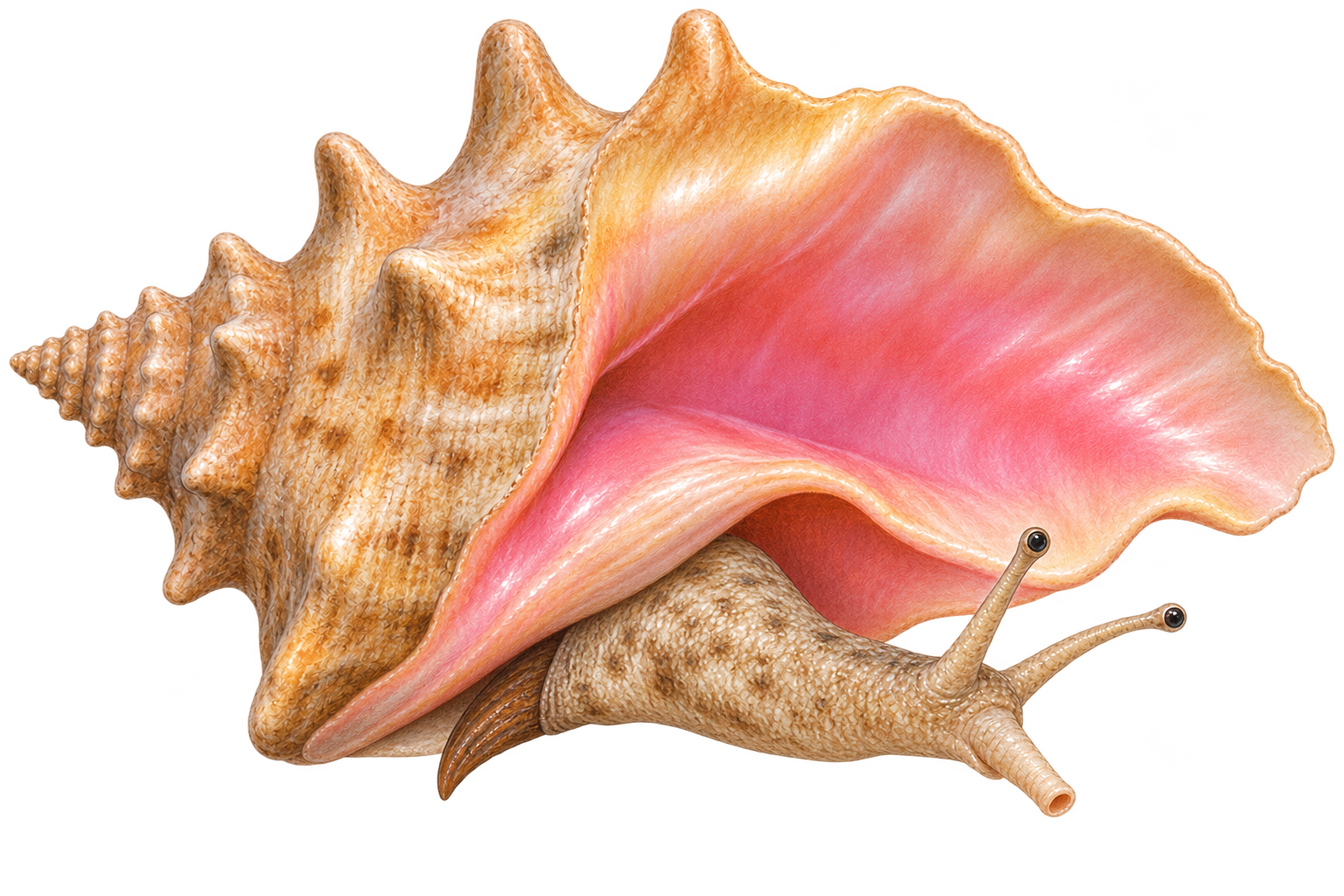
Size: Shell can reach about 30 cm; shell lip thickness is important to maturity.
The adult queen conch carries a heavy spiral shell with a broad flared lip and pink interior.
PROTECTED: no Florida recreational harvest; ESA threatened
Explore the queen conch guide →Rudmania grahami
Shape not assigned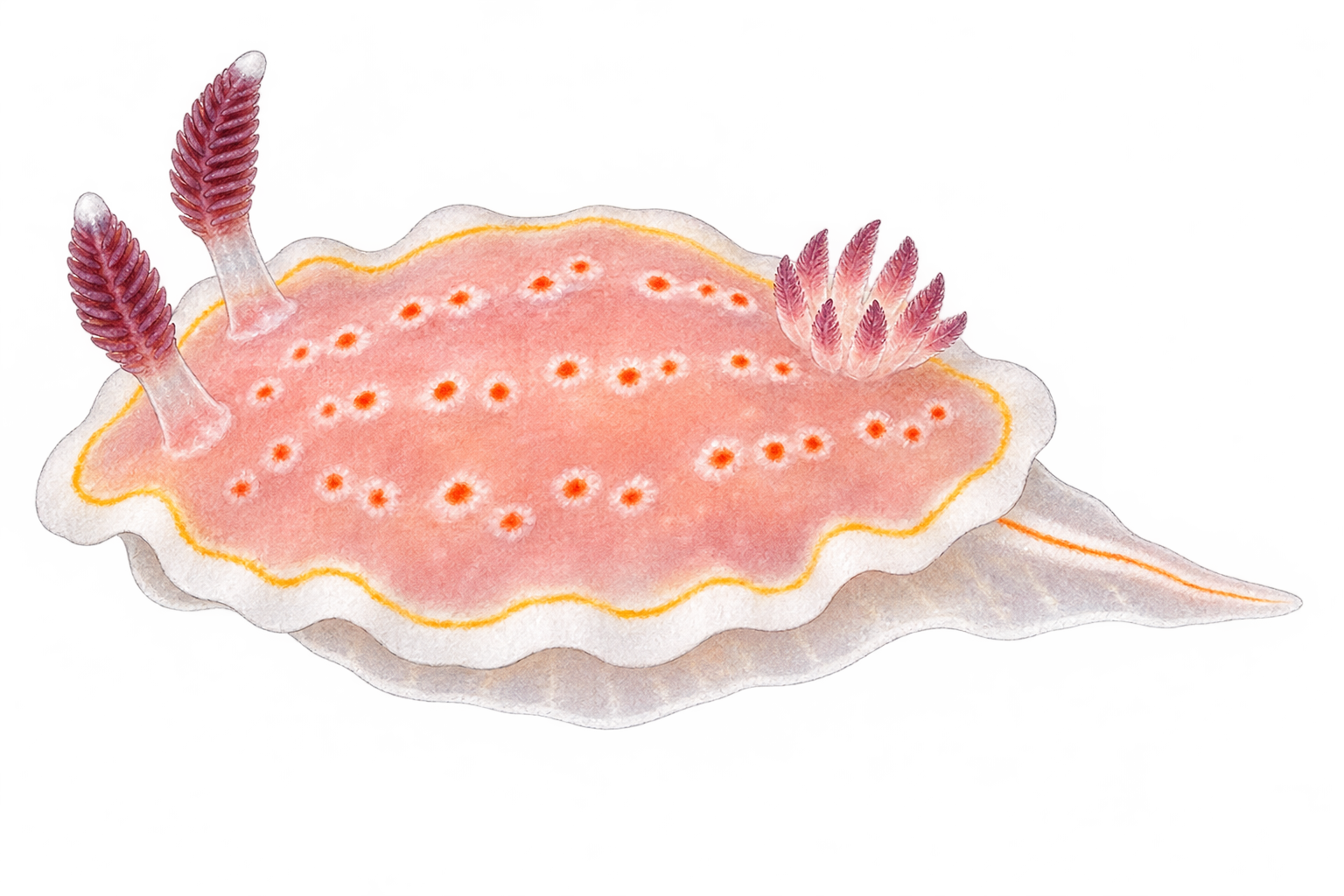
Size: The museum account reports approximately 20 mm body length. The exact local record is a juvenile estimated at about 7 mm; the two figures describe different life stages and are not conflicting maxima.
Look for a pinkish translucent mantle with orange-red spots arranged in three lengthwise rows, a pale marginal band and a thin yellow-orange line.
Read the guide’s location, season and eating cautions before acting.
Scotch bonnet
Coiled shells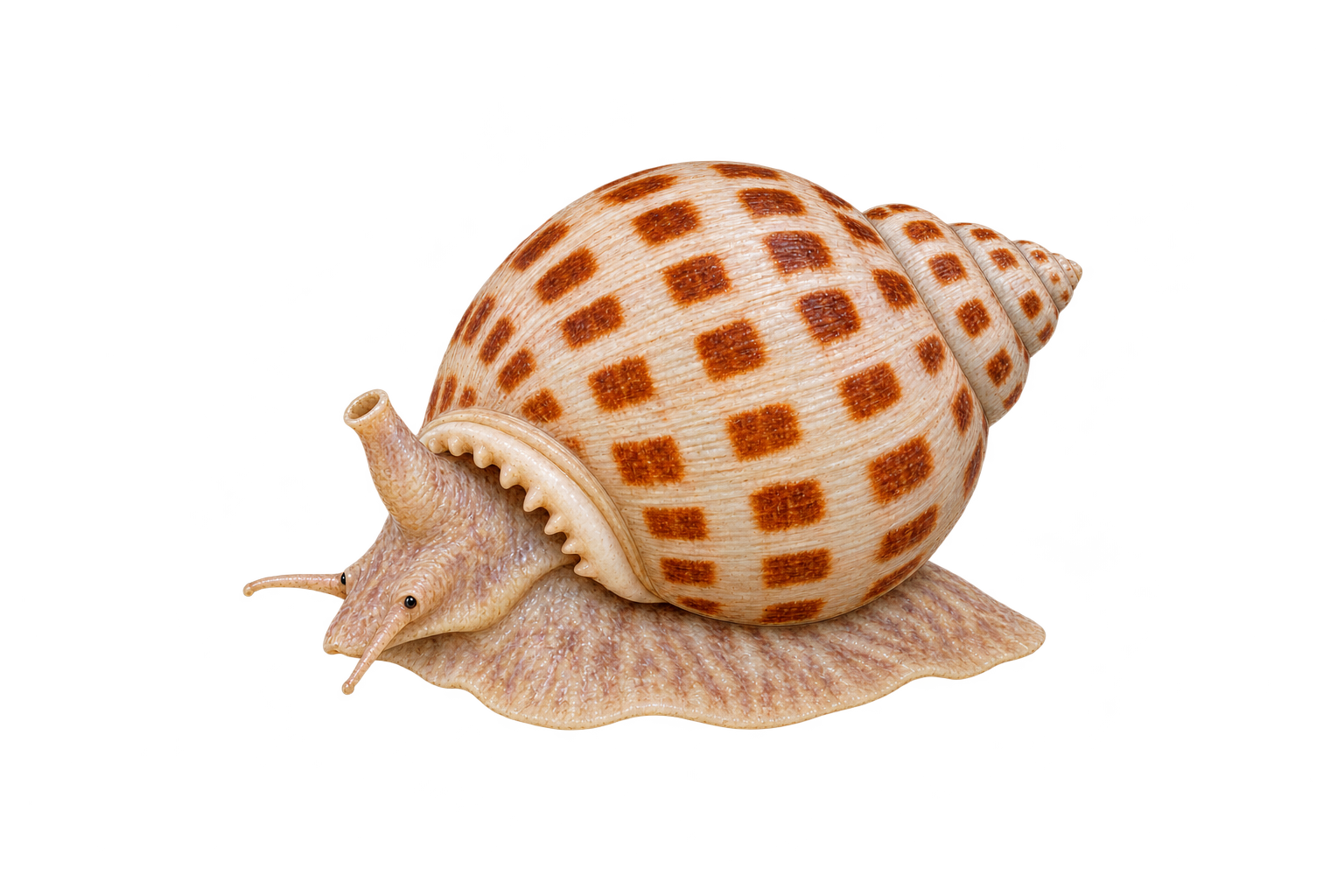
Size: Museum reports shell length to 90 mm; other references give larger figures.
Rounded pale shell with rectangular brown spots, fine spiral grooves, a thickened toothed outer lip and a short upturned canal.
Read the guide’s location, season and eating cautions before acting.
Spotted Sea Hare
Soft-bodied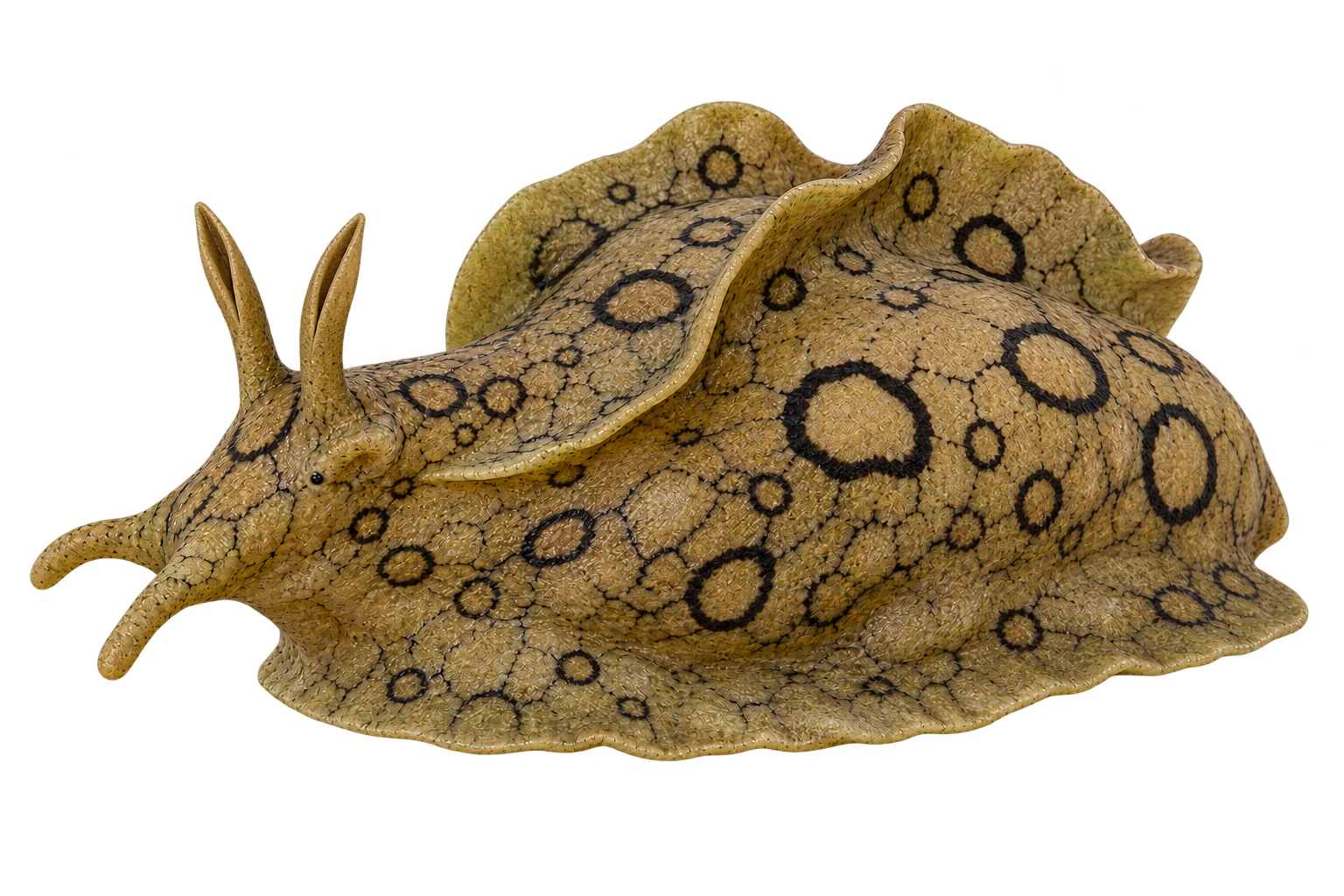
Size: Around15 cm(6 in) extended body length in Bermuda account; thin shell internal.
Olive or tan sea hare with black rings, rolled rhinophores and broad folded side flaps.
Read the guide’s location, season and eating cautions before acting.
Spurilla dupontae
Shape not assigned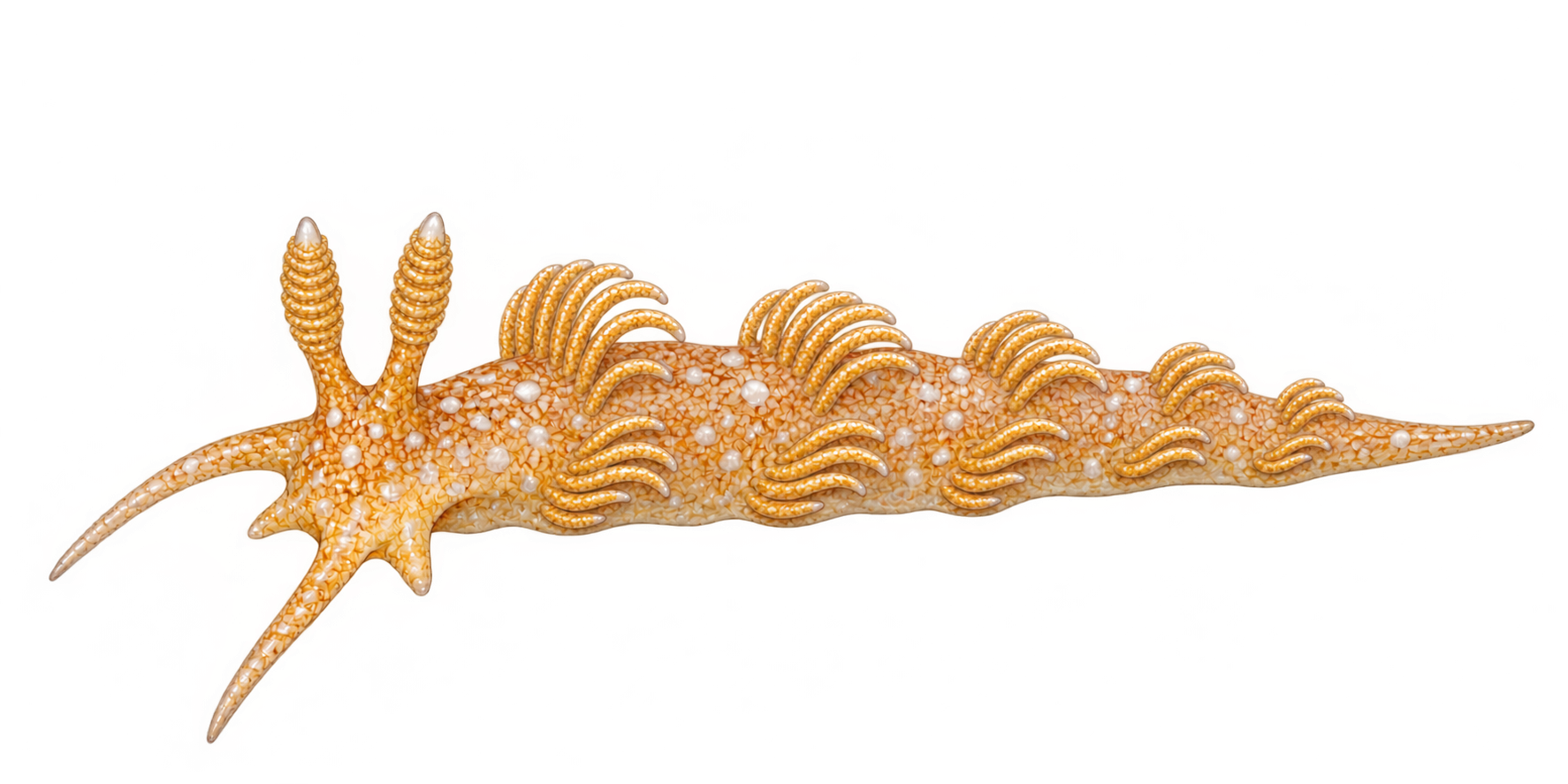
Size: A reliable numerical size with a defined measurement basis was not established from the accessed sources. Do not turn a photograph’s apparent scale or observation depth into body length.
The published account describes an elongate aeolid with a pale translucent body, a brownish reticulate pattern and white spotting. Rhinophores are lamellate rather than smooth.
Read the guide’s location, season and eating cautions before acting.
Swallowtail aglaja
Shape not assigned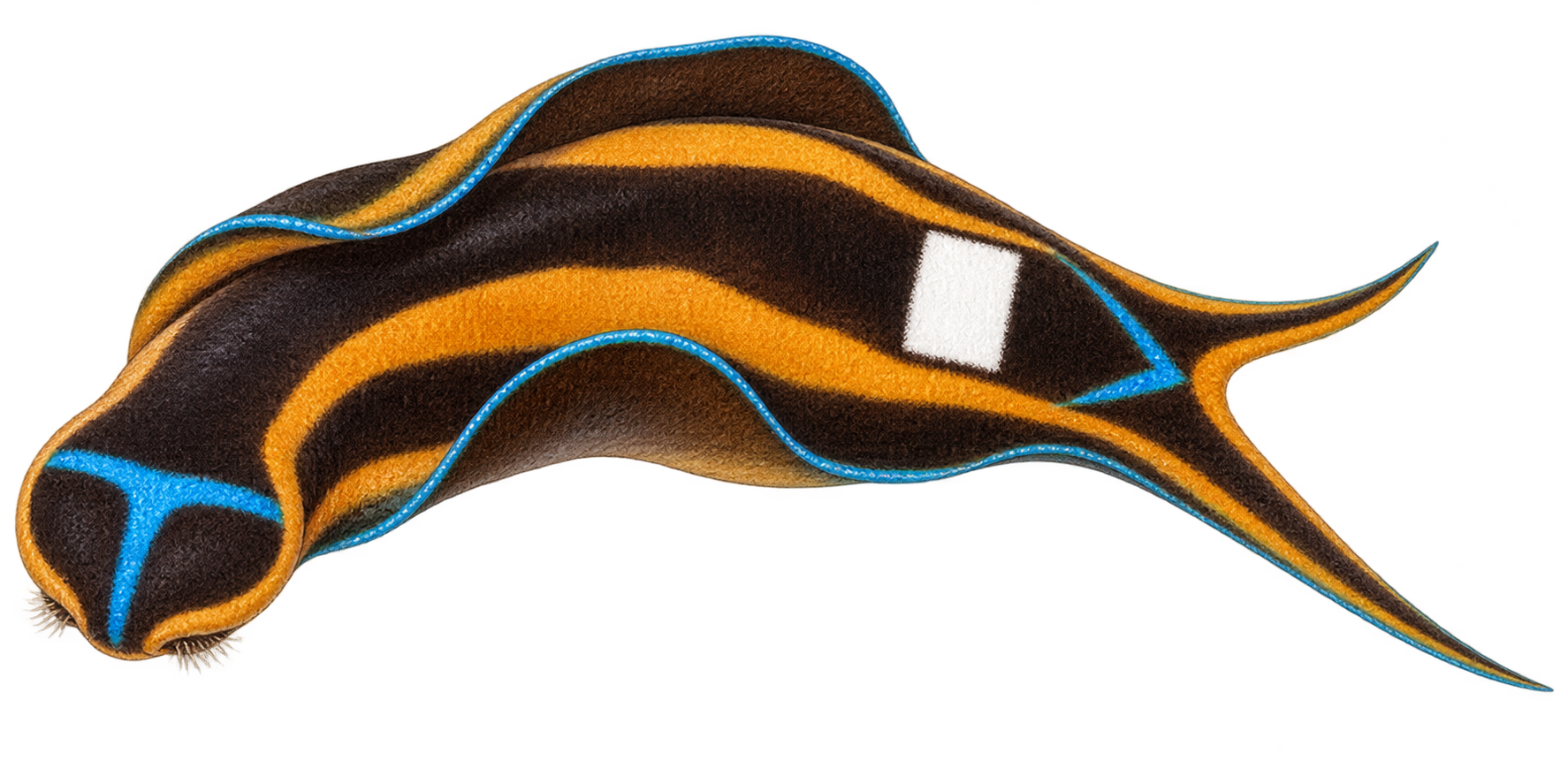
Size: The museum account says living animals usually remain below 40 mm body length. The local photo caption estimates about 22 mm for its particular animal.
Brazilian specimens in the modern treatment have a blue T-shaped head marking, blue parapodial edging, a V-shaped blue tail mark and a white posterior-shield rectangle. These reported pattern traits do not independently identify every Caribbean photograph.
Read the guide’s location, season and eating cautions before acting.
Tenellia maua
Shape not assigned
Size: The Florida holotype is a preserved animal 5 mm long. The separate local photographer estimated about 4 mm for a living individual; neither is a maximum.
The modern treatment describes a broad body, smooth rhinophores and short finger-like cerata in continuous rows. The rounded front of the foot lacks projecting corners; Florida observations show white pigment near the ceratal tips.
Read the guide’s location, season and eating cautions before acting.
True Tulip
Shelled
Size: Shell length to20 cm(about8 in), excluding extended soft body.
Smooth spindle shell with many fine brown spiral lines, variable blotches and a red-orange foot.
Read the guide’s location, season and eating cautions before acting.
Umbraculum umbraculum
Shape not assigned
Size: The museum illustrates animals 12–14 cm long, but those examples are not a maximum size or measurements of the Florida photographs. No life-stage series is verified here.
An umbrella-like external shell sits on a broad, rounded body covered in large bumps. The shell can carry encrusting growth, making it look like part of the surrounding bottom. Tubular head tentacles emerge beneath the shell and help reveal the animal’s orientation.
Read the guide’s location, season and eating cautions before acting.
Warty sidegill slug
Soft-bodied
Size: Up to 150 mm in a published guide; local photo estimate about 100 mm.
Broad oval slug with polygonal bumps, rolled rhinophores and a gill hidden beneath the right mantle edge; color varies.
Read the guide’s location, season and eating cautions before acting.
Lettered Olive
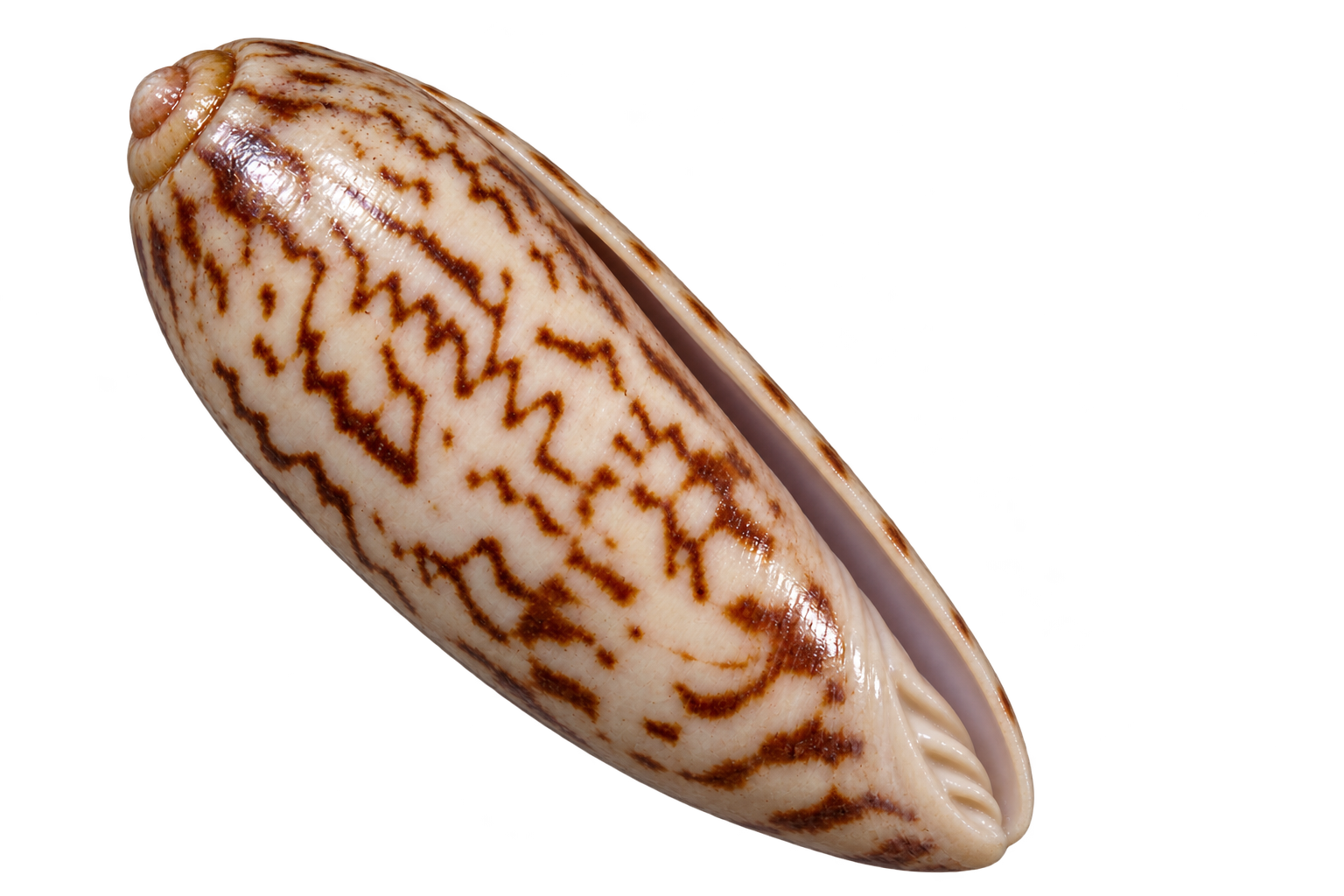
A glossy cylindrical shell with a short spire, narrow opening and irregular brown markings.
Verify current species, gear, area and jurisdiction rules. Identification is not harvest permission or food-safety clearance.
Explore the lettered olive guide →Crown Conch
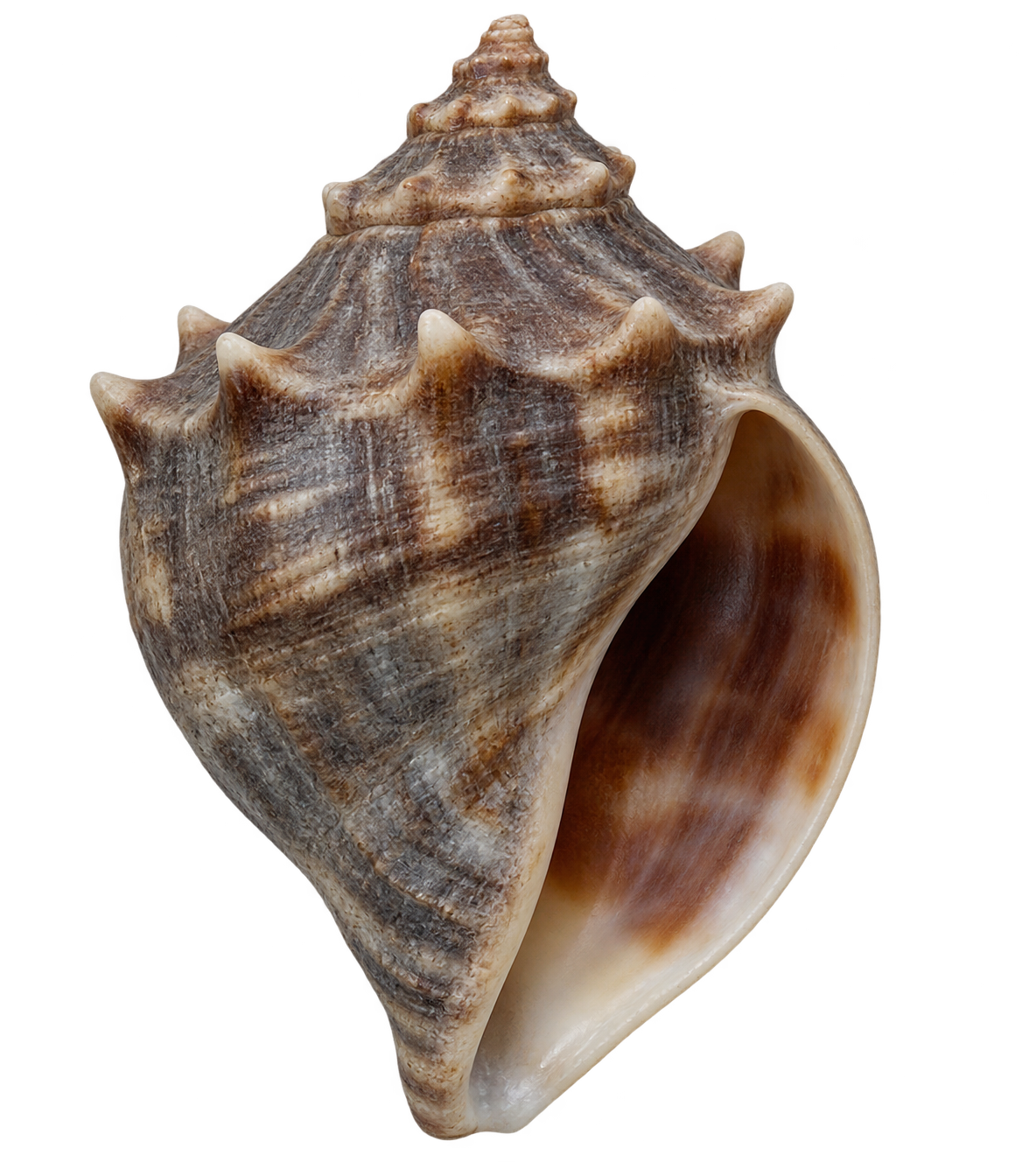
A stout banded shell with crownlike shoulder spines, associated with estuarine and shallow coastal habitats.
Verify current species, gear, area and jurisdiction rules. Identification is not harvest permission or food-safety clearance.
Explore the crown conch guide →Common Atlantic Slipper Snail
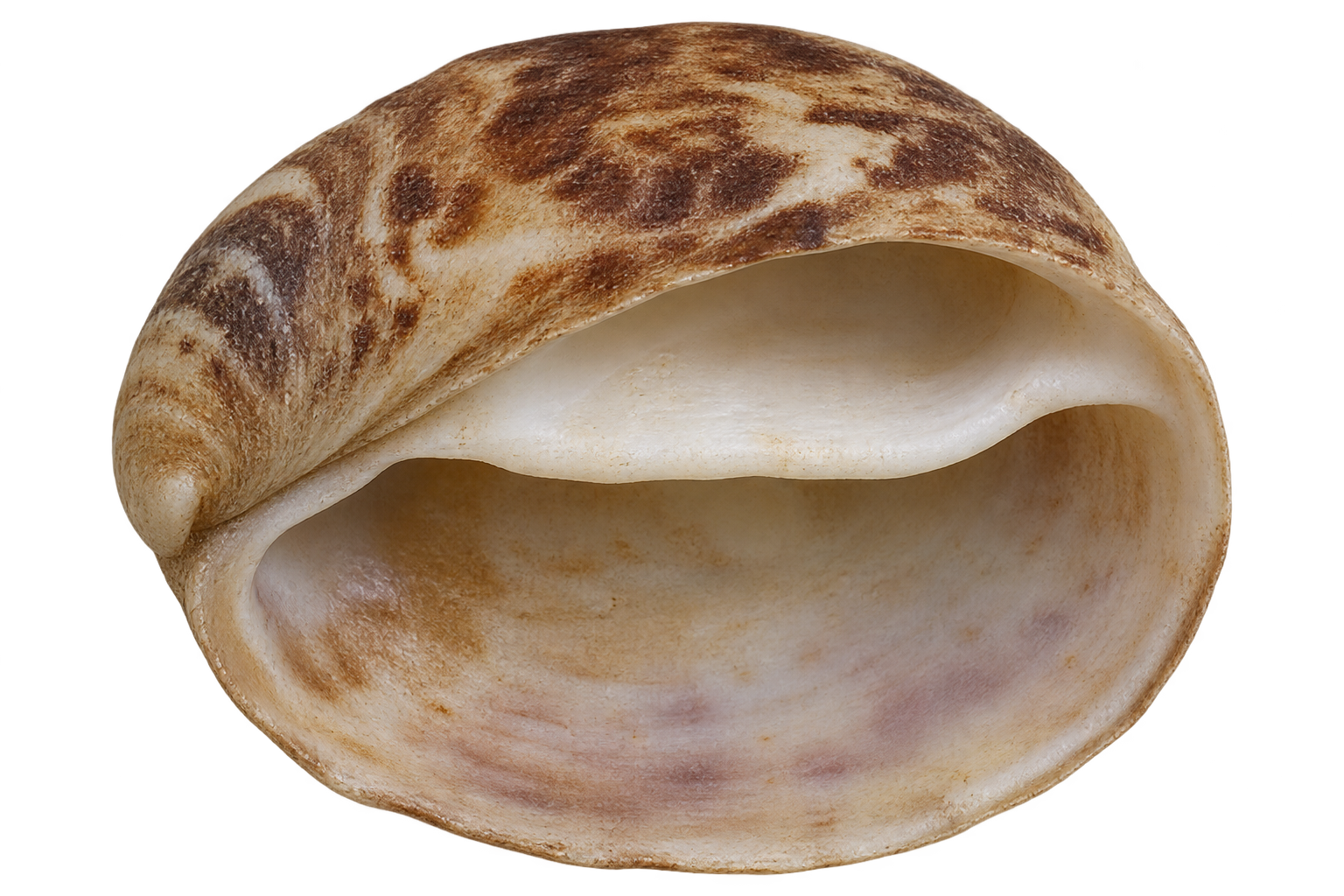
Oval caplike shell with a curved apex and a white interior shelf; living animals may form stacks.
Verify current species, gear, area and jurisdiction rules. Identification is not harvest permission or food-safety clearance.
Explore the common atlantic slipper snail guide →Shark Eye
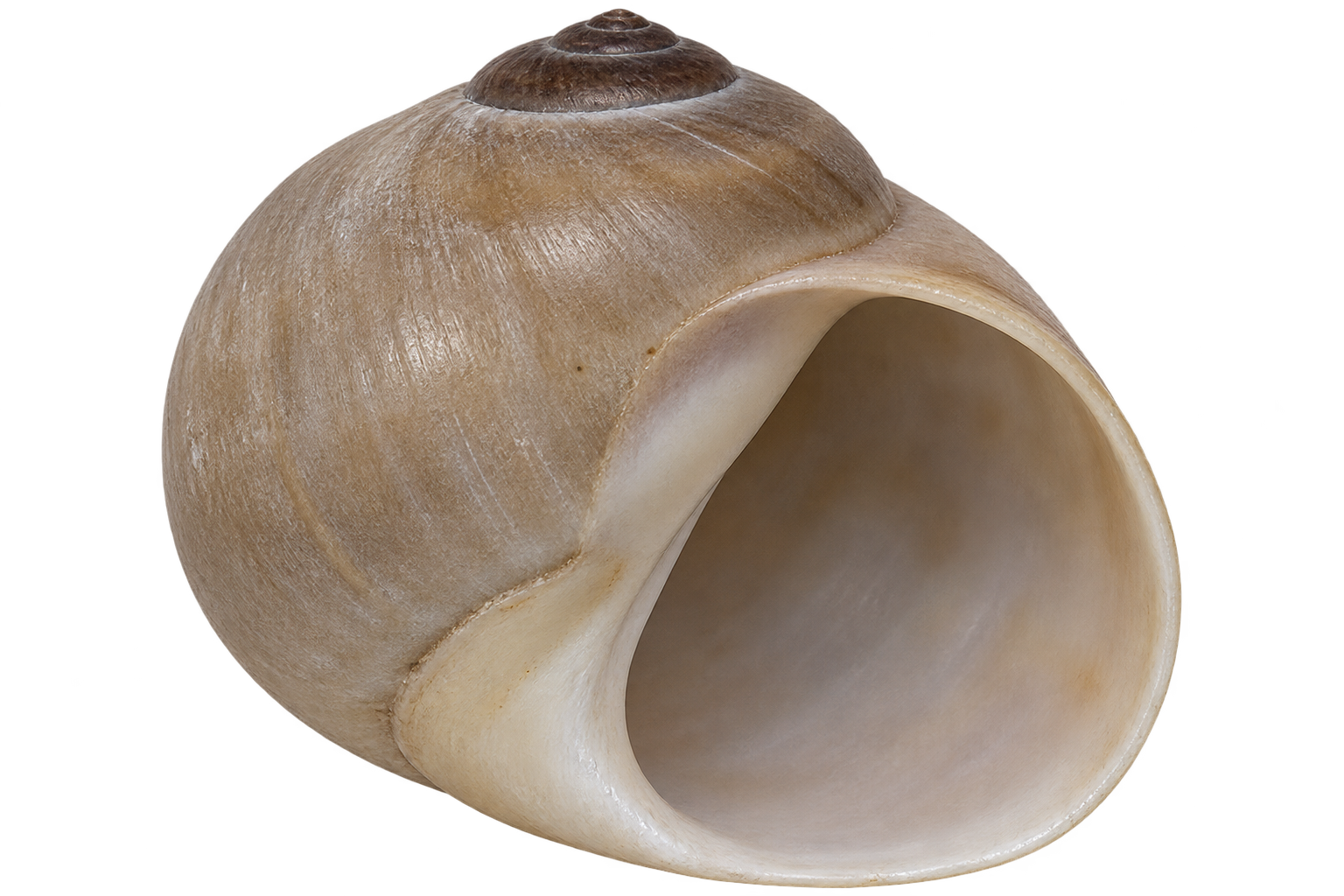
Smooth globose moon-snail shell with a low spire and broad final whorl.
Verify current species, gear, area and jurisdiction rules. Identification is not harvest permission or food-safety clearance.
Explore the shark eye guide →Dark Cerith
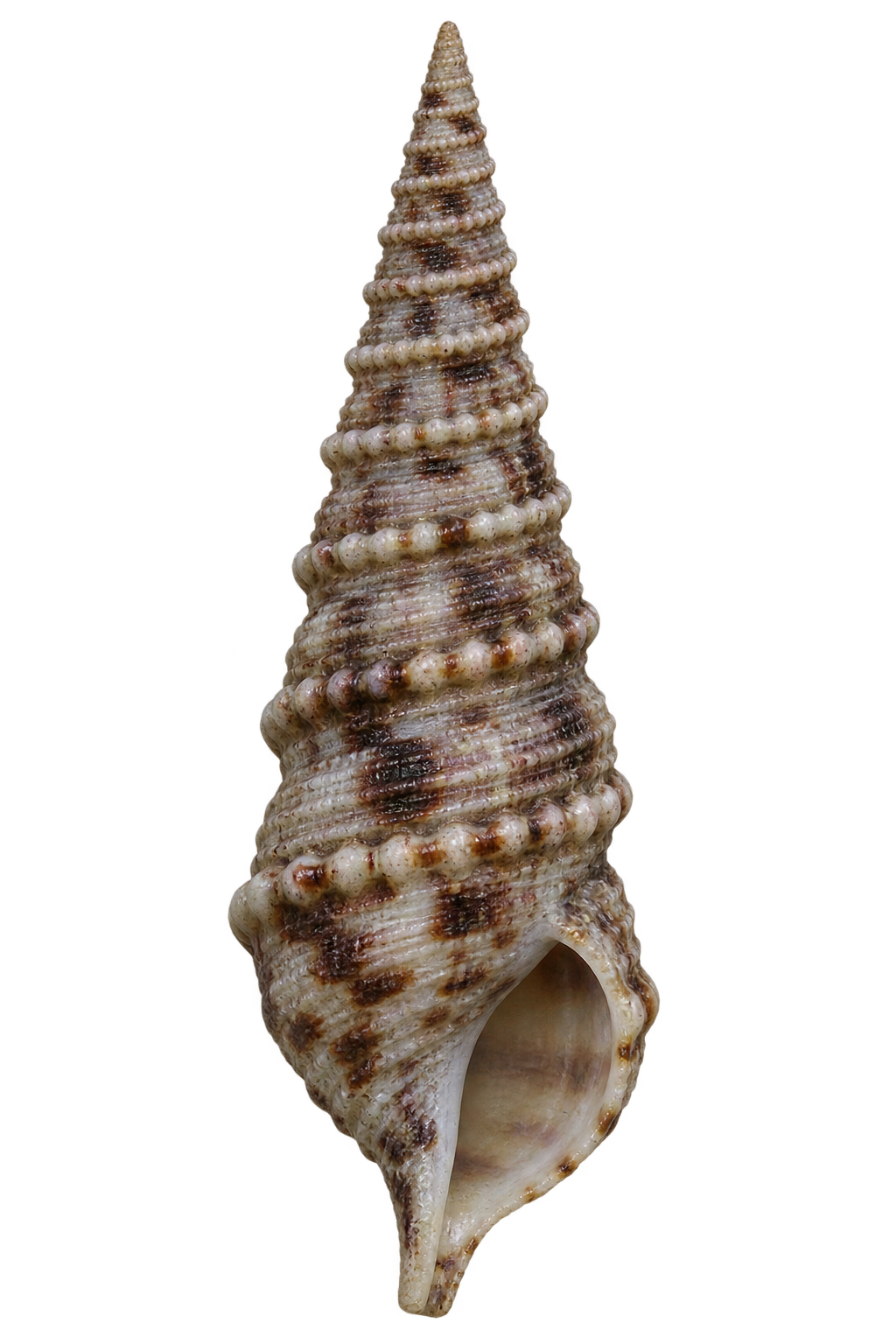
Narrow turret shell with beaded spiral cords and irregular brown-gray markings.
Verify current species, gear, area and jurisdiction rules. Identification is not harvest permission or food-safety clearance.
Explore the dark cerith guide →Ragged Sea Hare
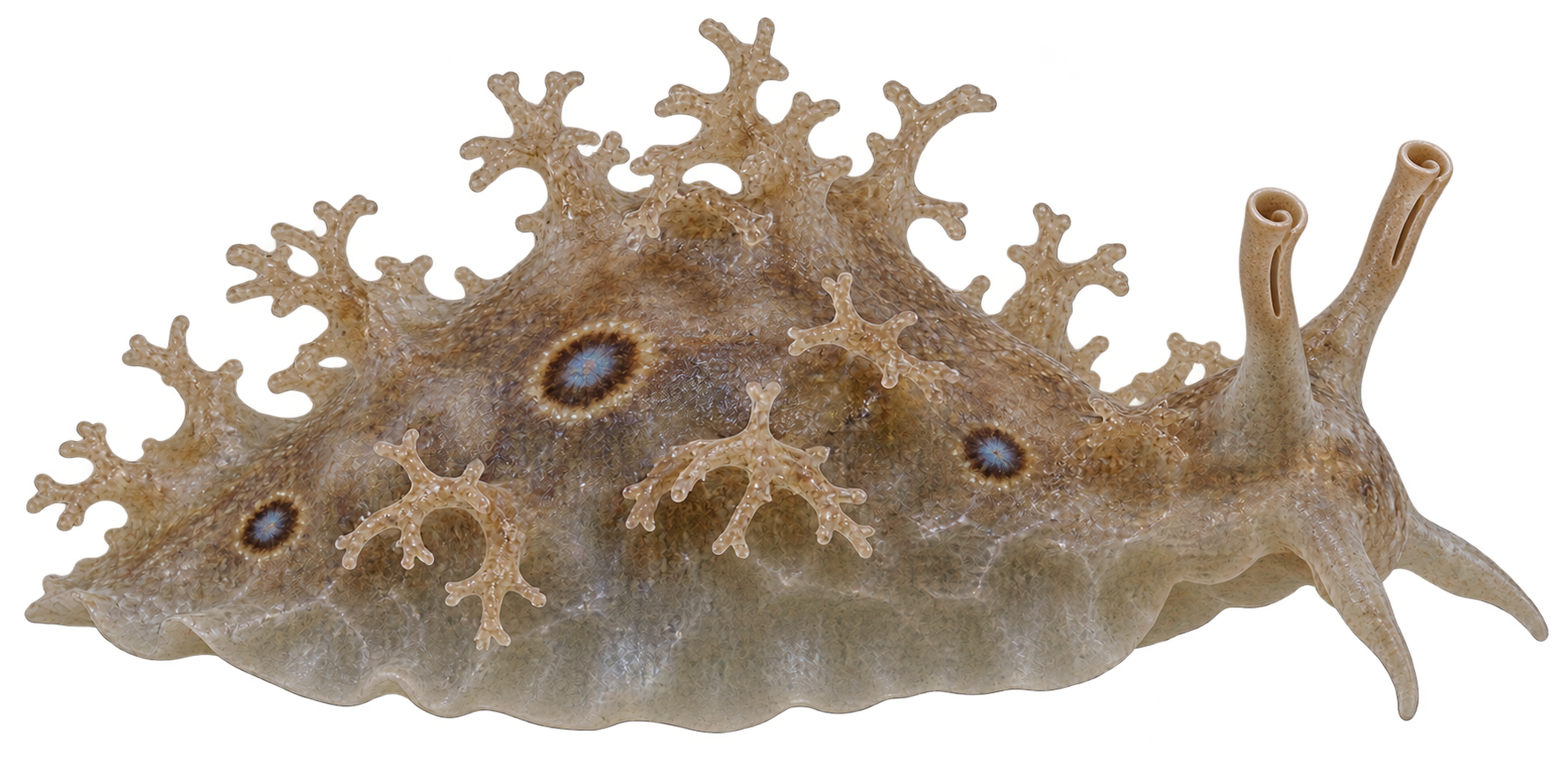
Branching fleshy papillae and blue-centered markings distinguish this shaggy sea slug.
Verify current species, gear, area and jurisdiction rules. Identification is not harvest permission or food-safety clearance.
Explore the ragged sea hare guide →Lettuce Sea Slug
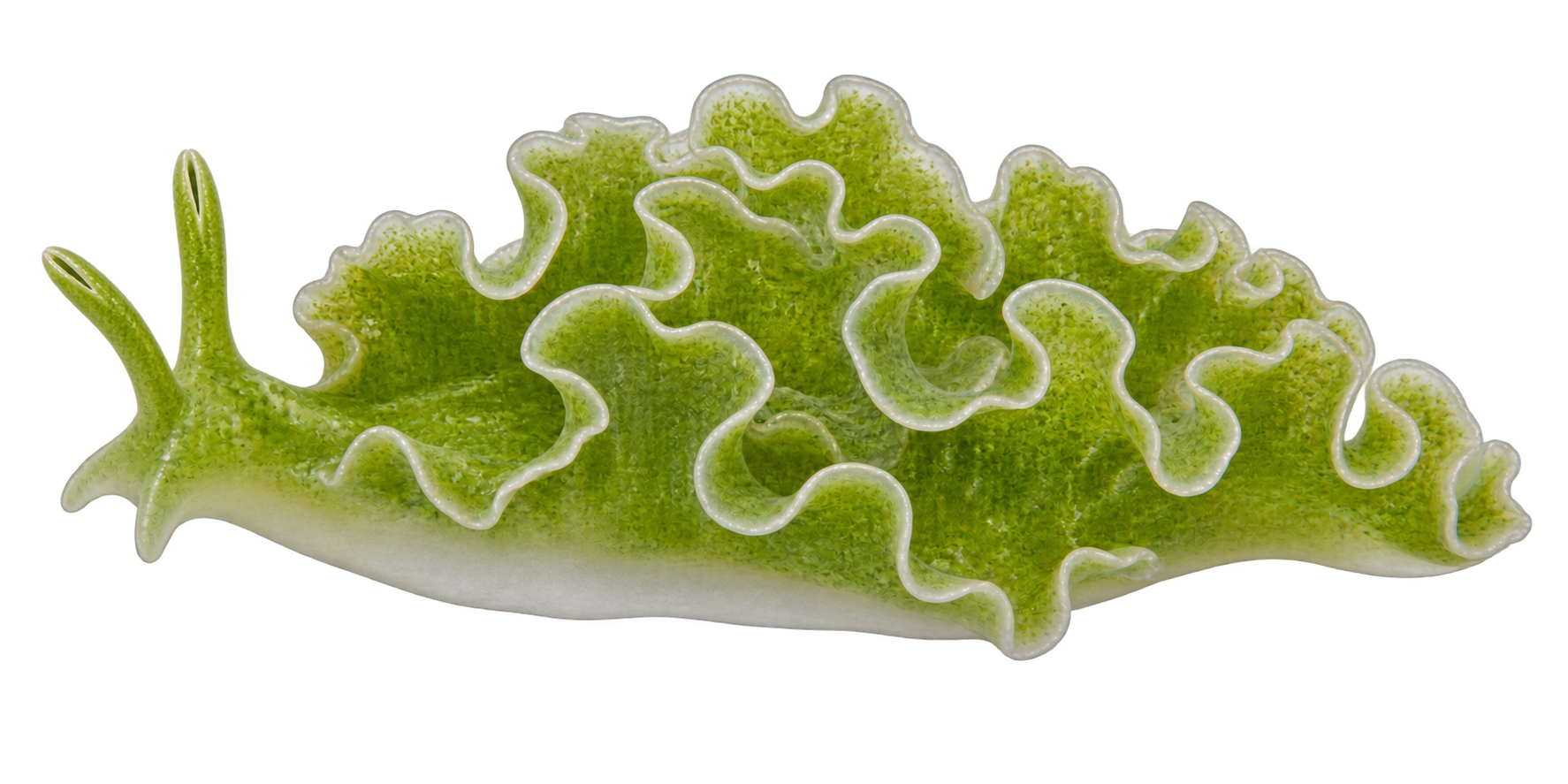
Broad ruffled body flaps resemble lettuce leaves; variable color alone does not establish identification.
Verify current species, gear, area and jurisdiction rules. Identification is not harvest permission or food-safety clearance.
Explore the lettuce sea slug guide →Caribbean Helmet
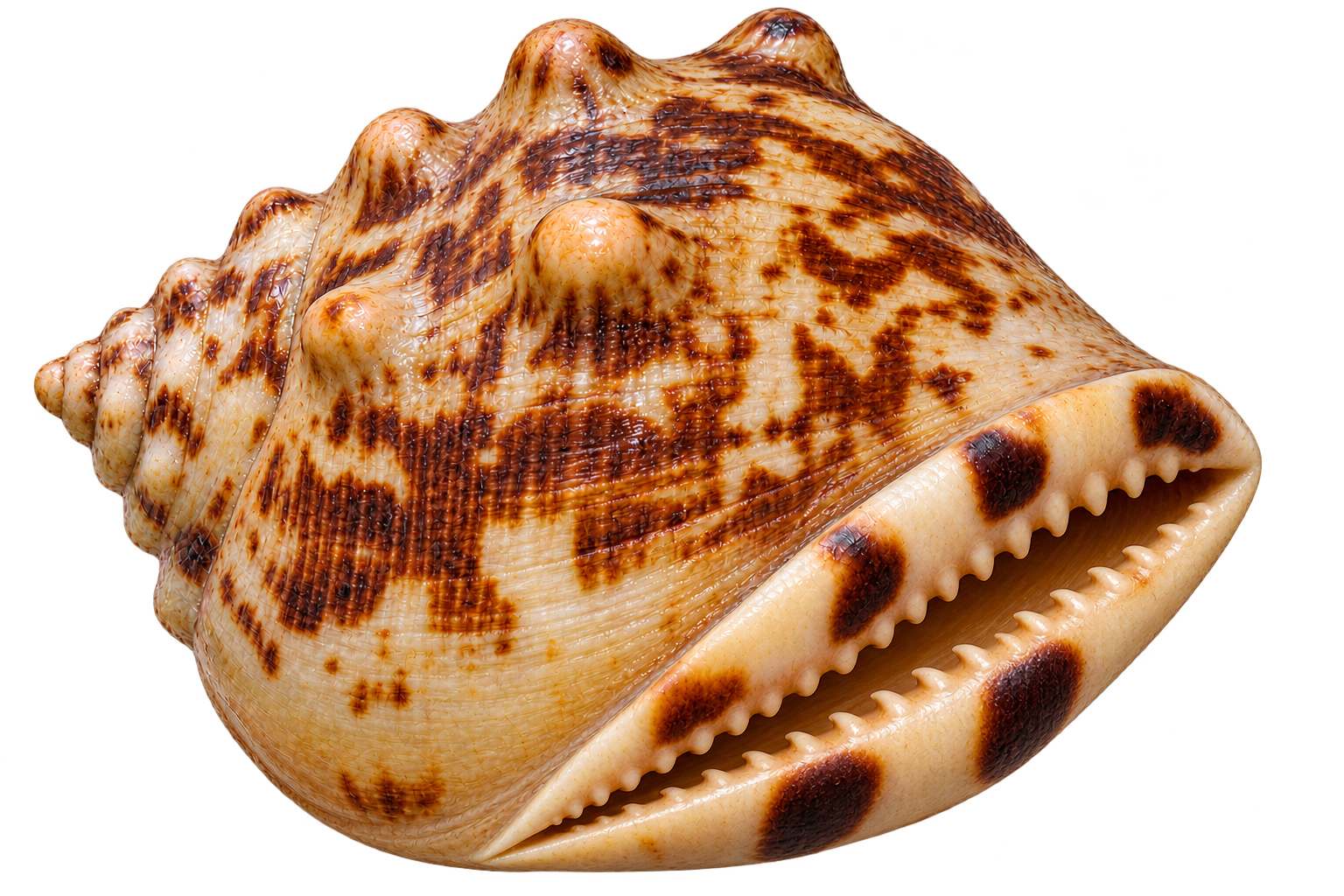
Heavy patterned shell with a thick toothed lip and triangular opening; a helmet snail, not a true conch.
Verify current species, gear, area and jurisdiction rules. Identification is not harvest permission or food-safety clearance.
Explore the caribbean helmet guide →Sponges
Black-Ball Sponge
Shape not assigned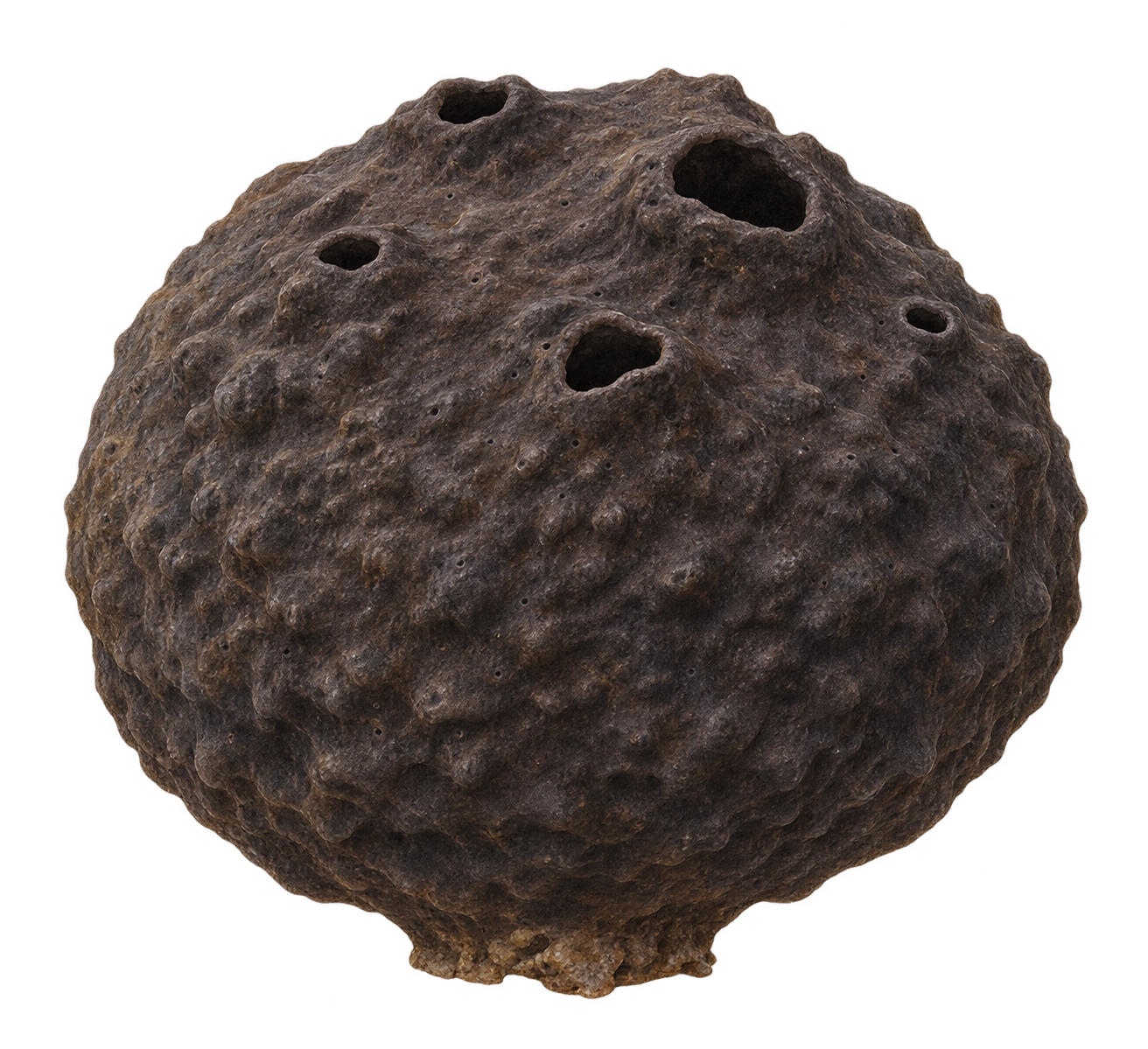
Size: The field guide reports 1 to 2 ft. (30 to 60 cm). Its measurement axis and sampling scope are not specified, so this is not presented as a verified maximum or life-stage range.
A dark, rounded mass with prominent conical bumps, often linked by ridges. Large openings cluster in a depression on top.
Read the guide’s location, season and eating cautions before acting.
Brown Clustered Tube Sponge
Shape not assigned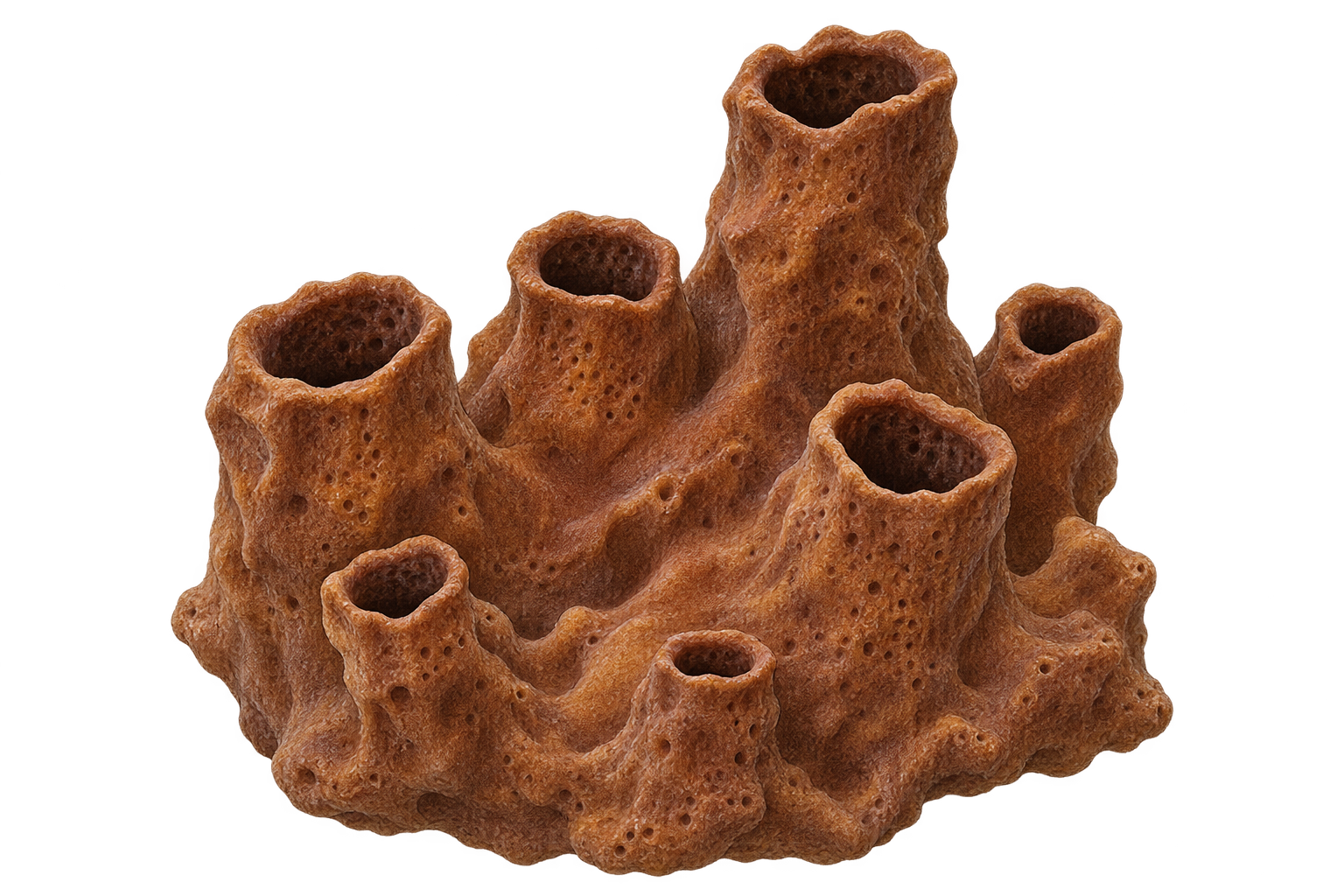
Size: The field guide reports Tubes 1 to 3 in. (2.5 to 7 cm). Its measurement axis and sampling scope are not specified, so this is not presented as a verified maximum or life-stage range.
Brown tubes rise in clusters from a base that fills crevices. Color and clustered construction are useful first clues.
Read the guide’s location, season and eating cautions before acting.
Brown Encrusting Octopus Sponge
Shape not assigned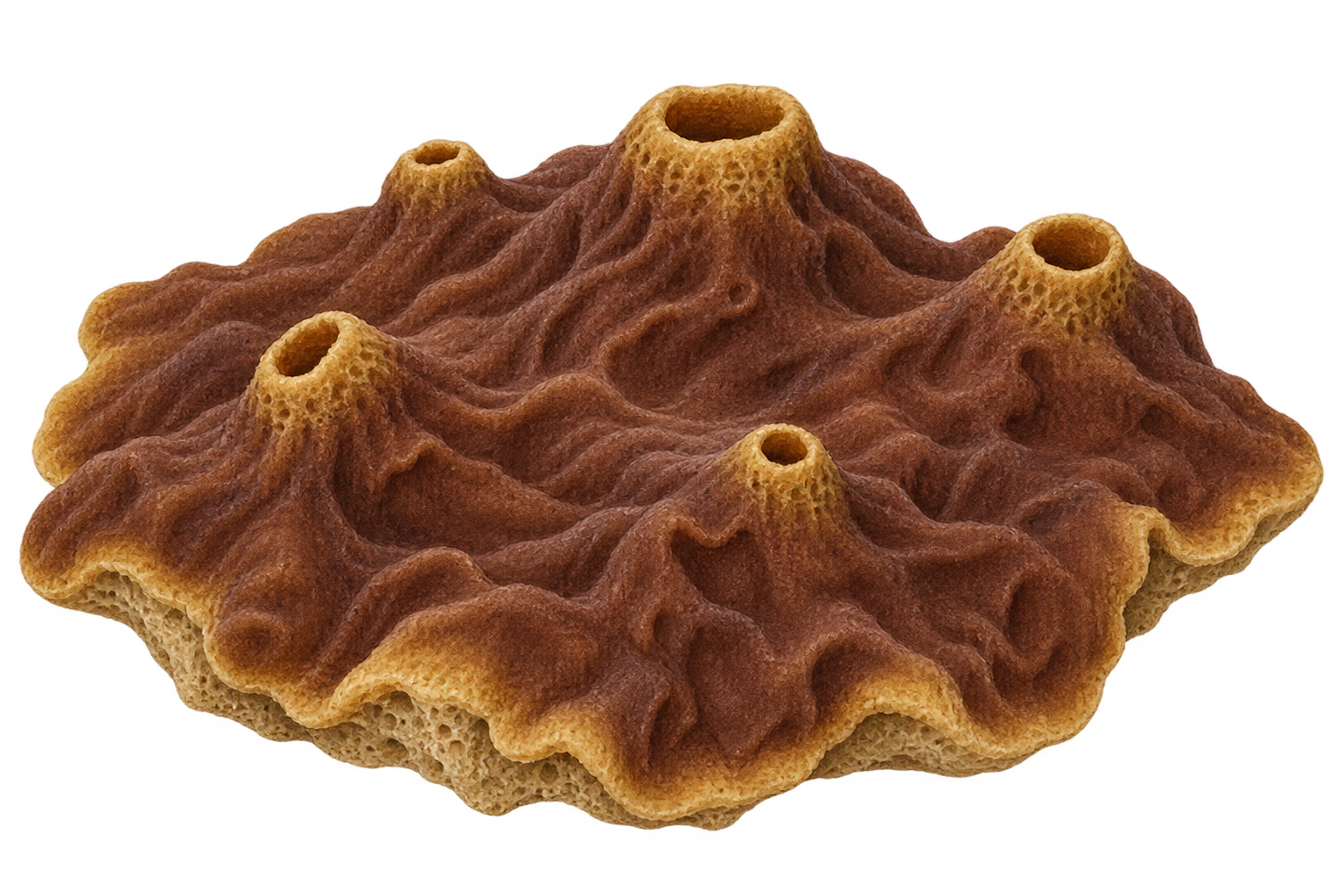
Size: The field guide reports 6 to 16 in. (15 to 40 cm). Its measurement axis and sampling scope are not specified, so this is not presented as a verified maximum or life-stage range.
Growth form varies; specialists combine color, consistency and microscopic spicules rather than relying on an octopus-like outline.
Read the guide’s location, season and eating cautions before acting.
Giant Barrel Sponge
Shape not assigned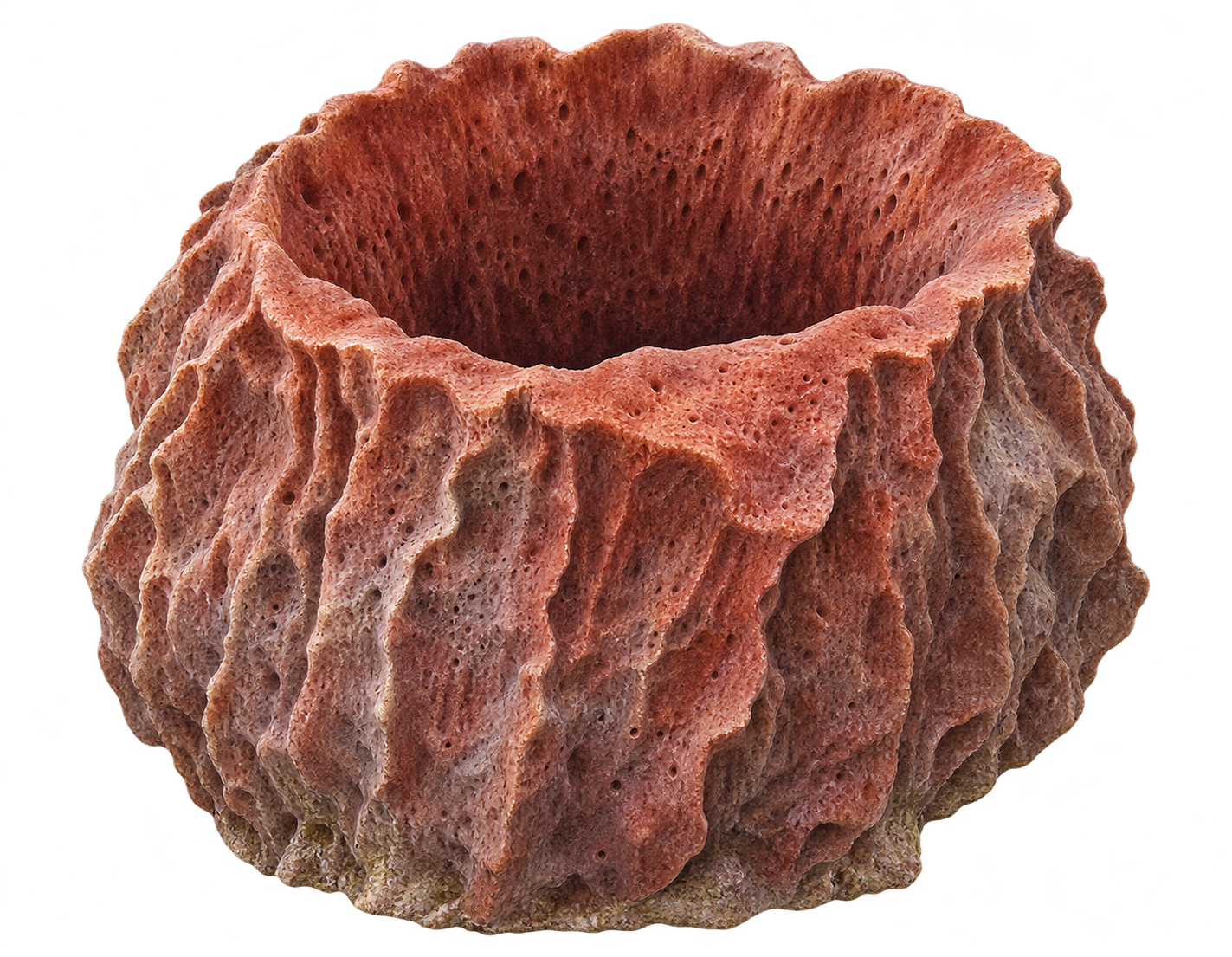
Size: The field guide reports 2 to 6 ft. (60 cm to 1.8 m). Its measurement axis and sampling scope are not specified, so this is not presented as a verified maximum or life-stage range.
A large brown barrel with a central cavity. The outer surface may be fairly even or carry irregular finger-like, pointed or plate-like projections.
Read the guide’s location, season and eating cautions before acting.
Lumpy Overgrowing Sponge
Shape not assigned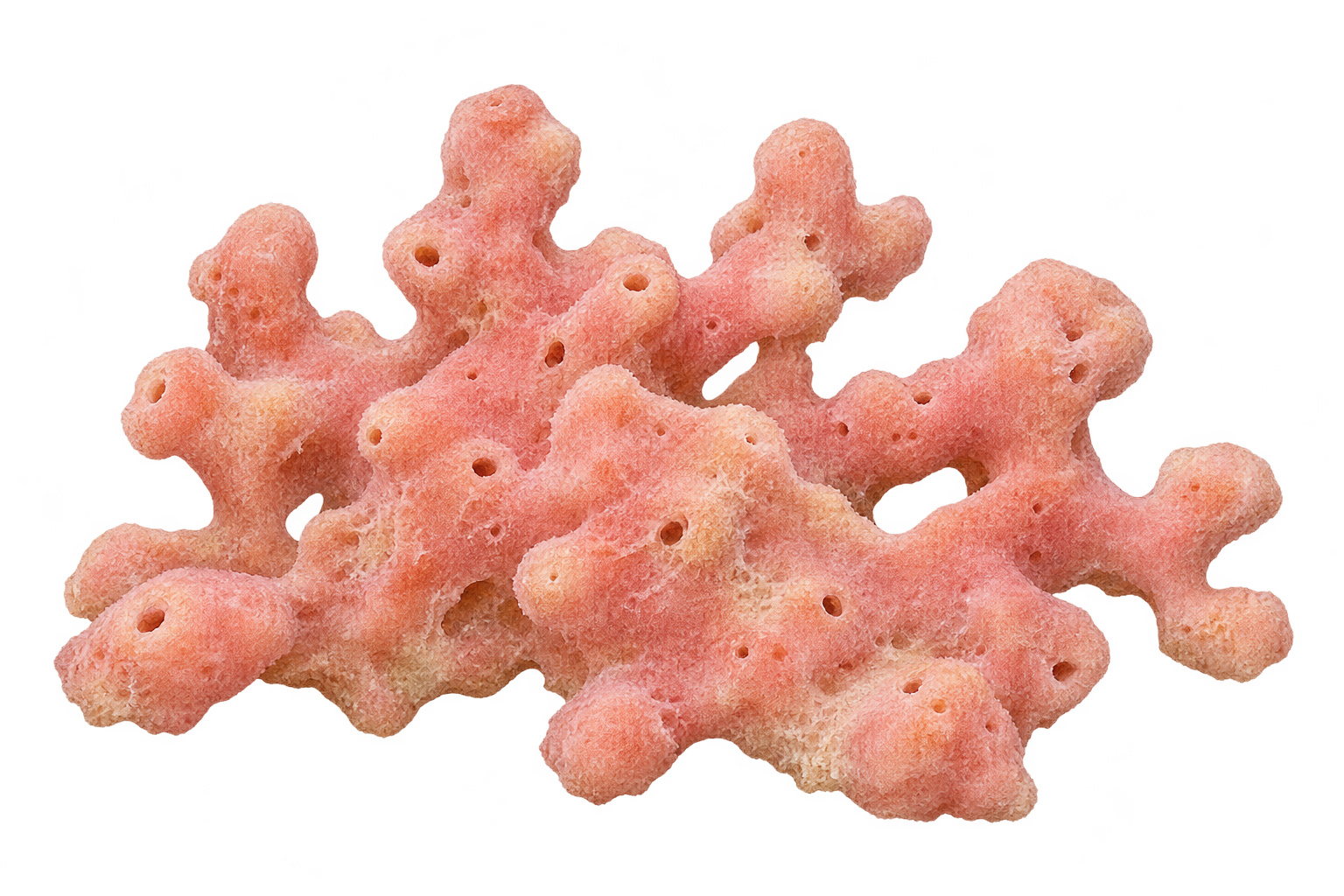
Size: The field guide reports 4 to 16 in. (10 to 40 cm). Its measurement axis and sampling scope are not specified, so this is not presented as a verified maximum or life-stage range.
A pale pink mass, sometimes branched, with scattered openings commonly raised on little mounds. Pale outer skin contrasts with orange internal tissue.
Read the guide’s location, season and eating cautions before acting.
Pink Lumpy Sponge
Shape not assigned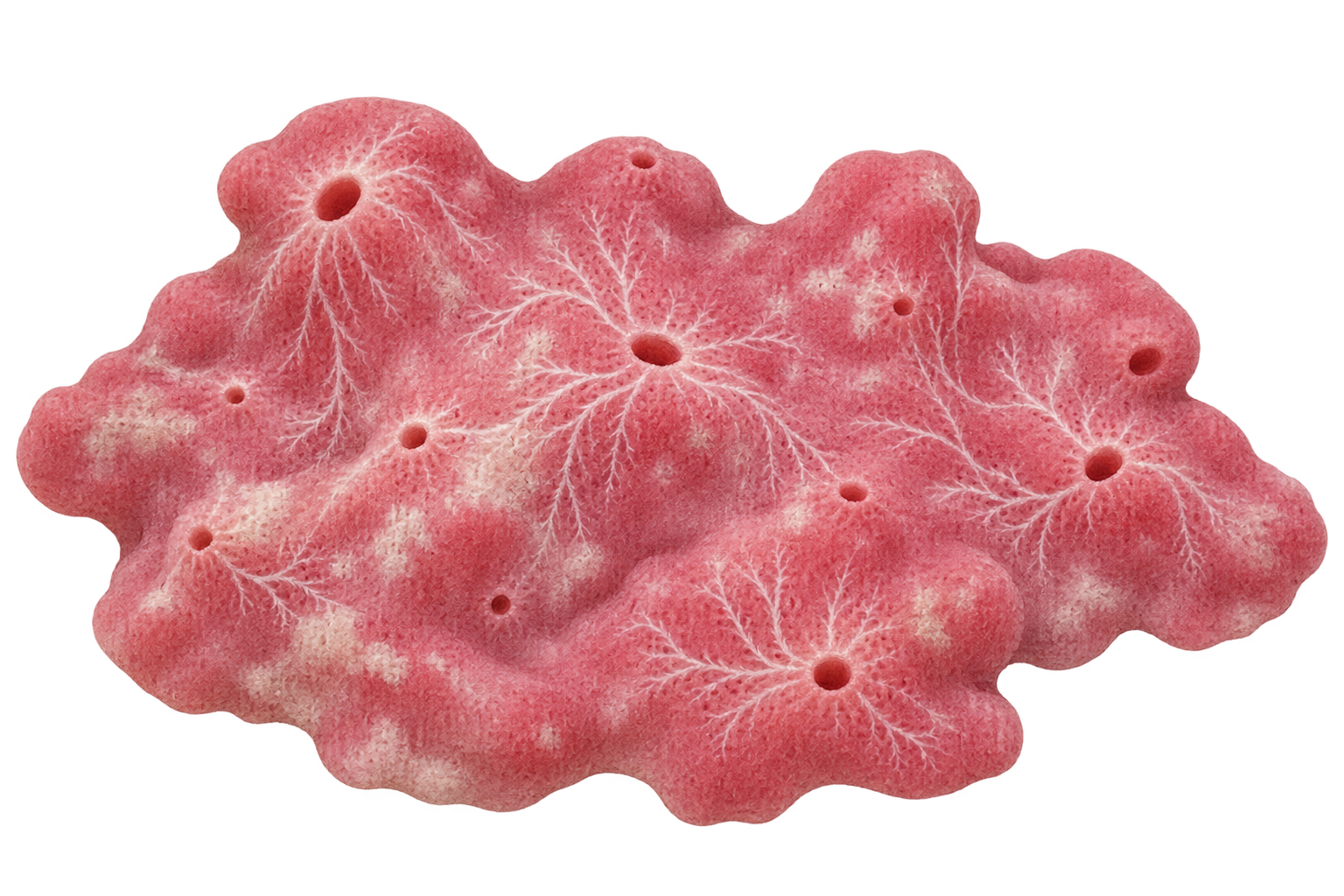
Size: The field guide reports 4 to 16 in. (10 to 40 cm). Its measurement axis and sampling scope are not specified, so this is not presented as a verified maximum or life-stage range.
Scarlet crusts or bushy growths may show white-rimmed openings and star-like channel patterns. Those patterns can be faint or absent.
Read the guide’s location, season and eating cautions before acting.
Pink Purple Octopus Sponge
Shape not assigned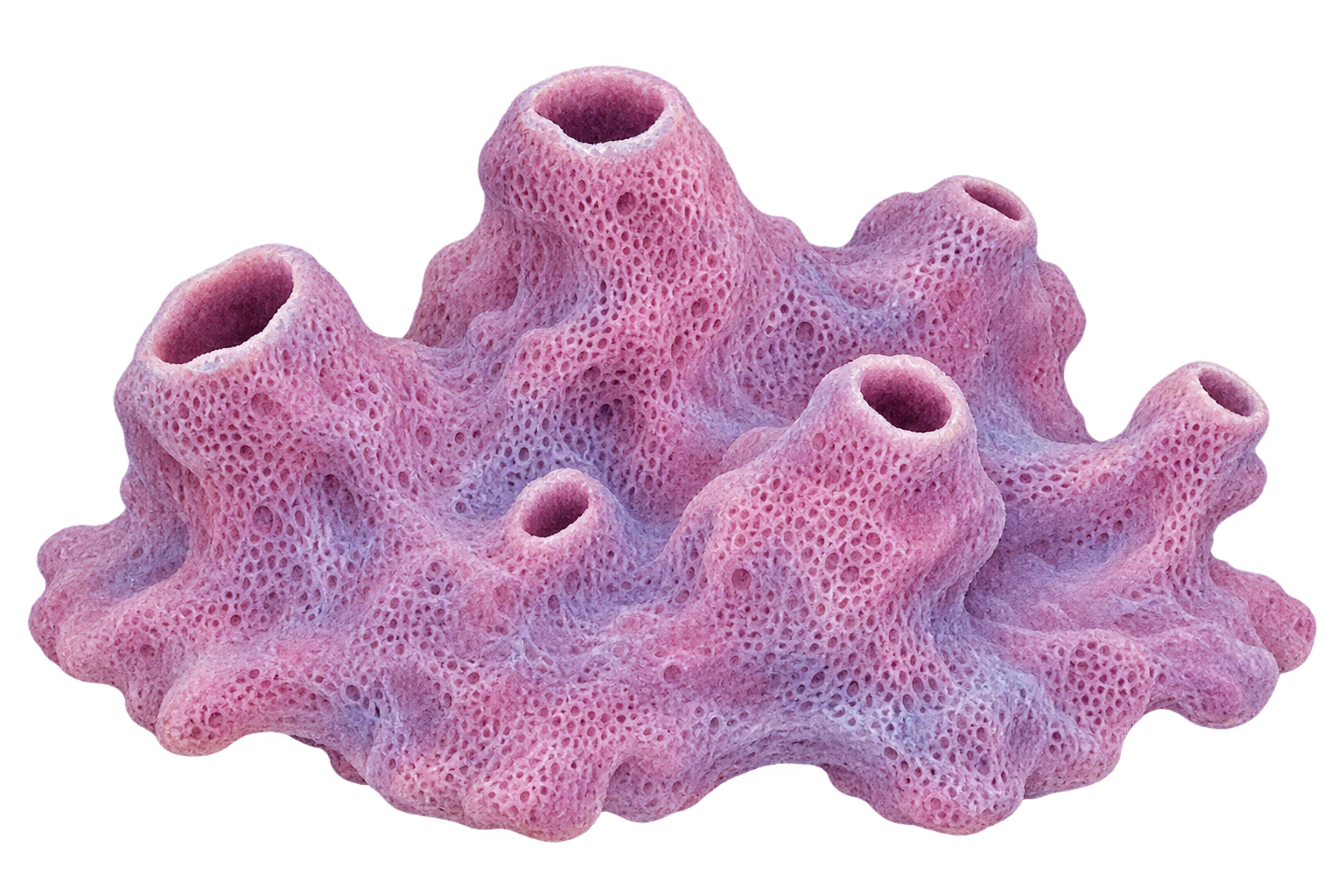
Size: A species-specific measured size range was not established in the recovered evidence.
Low clusters of pinkish or bluish tubes are typical, but the sponge can also form a thick crust or a mass with raised openings.
Read the guide’s location, season and eating cautions before acting.
Red Boring Sponge
Shape not assigned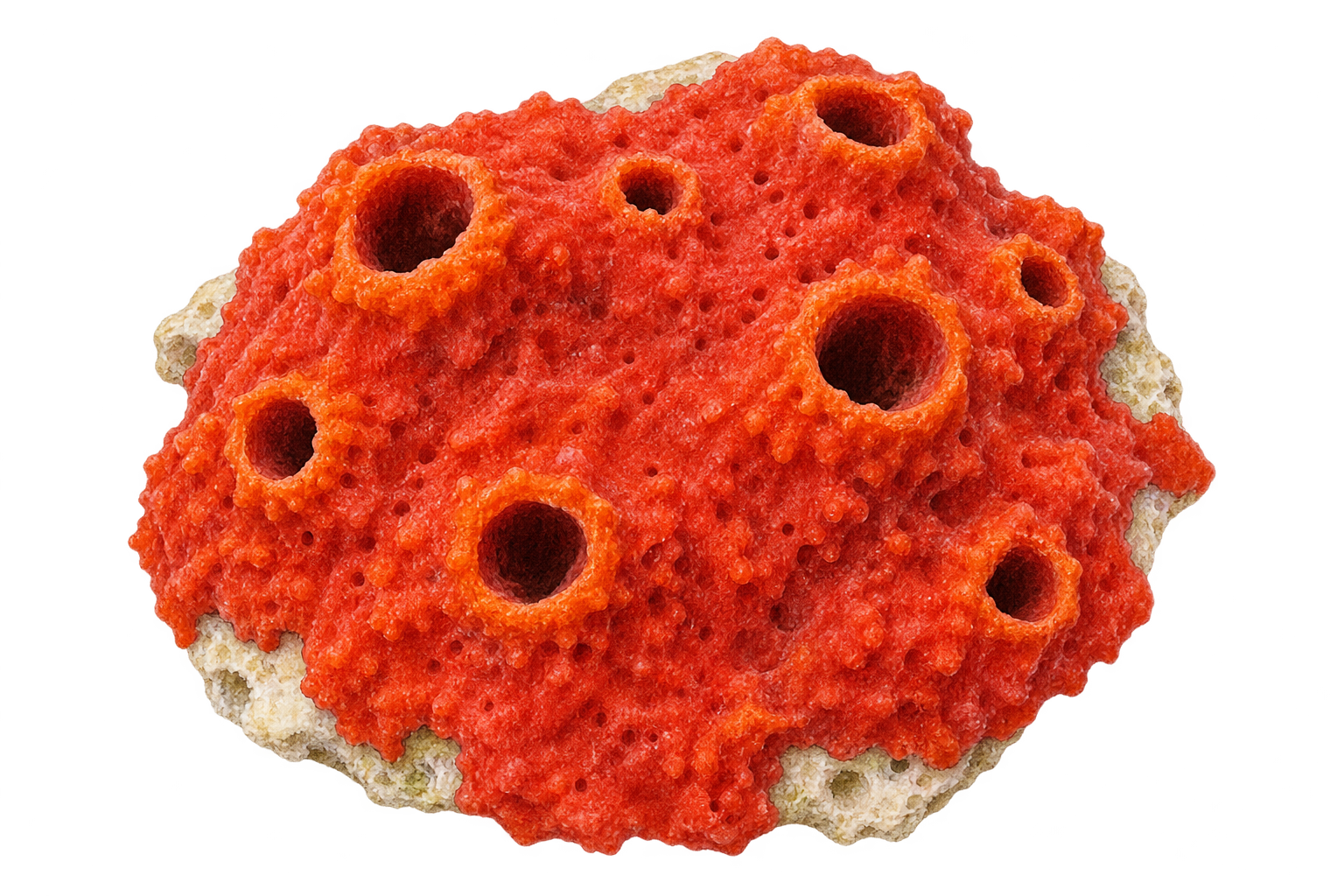
Size: The field guide reports 6 to 12 in. (15 to 30 cm). Its measurement axis and sampling scope are not specified, so this is not presented as a verified maximum or life-stage range.
A red-orange excavating sponge appearing as separate papillae or a more continuous crust. The internal galleries are inside the hard substrate.
Read the guide’s location, season and eating cautions before acting.
Urchins and sea stars
Cushion Sea Star
Star-shaped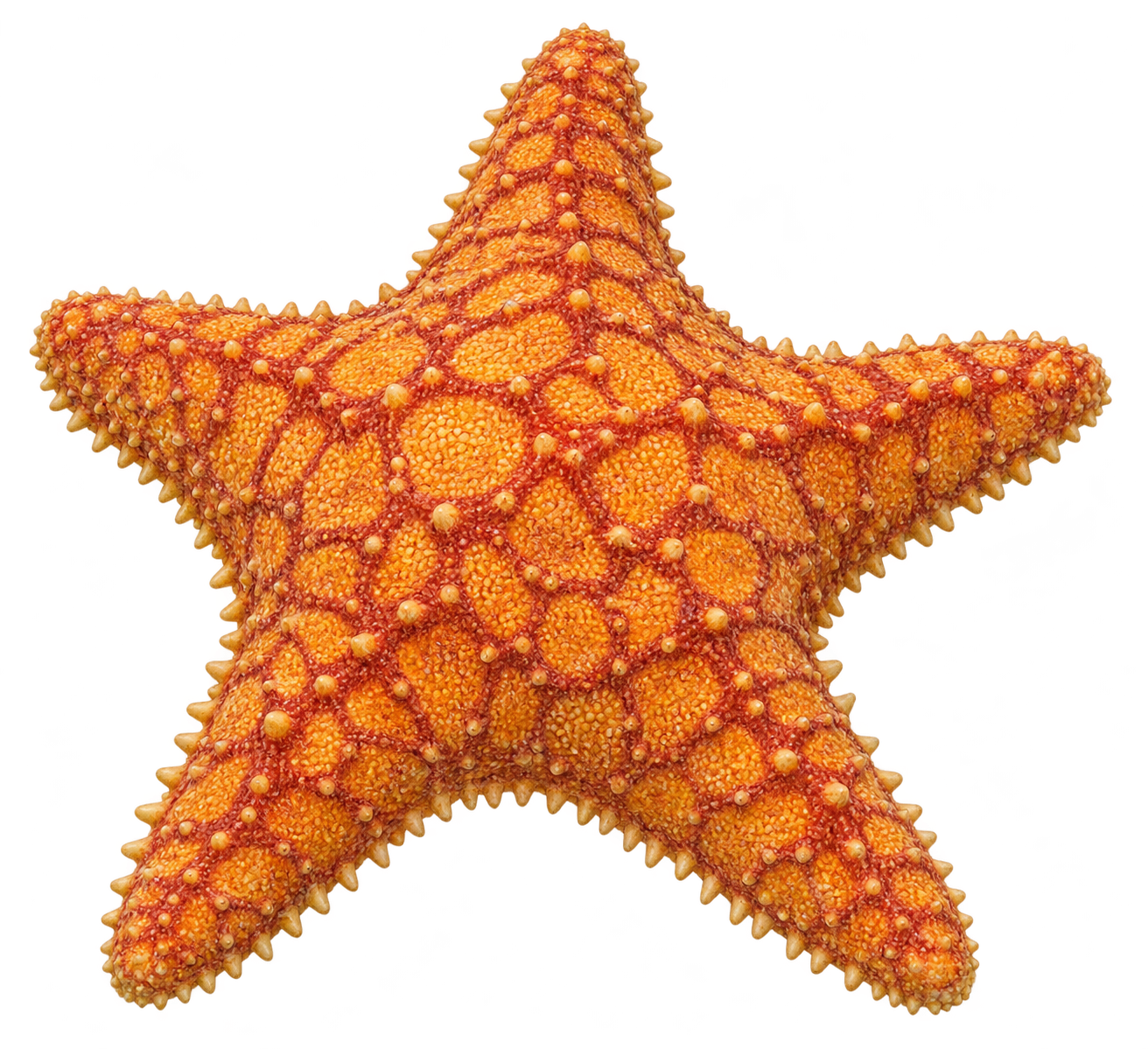
Size: Usually about 20–35 cm across; large animals may approach 50 cm arm-tip span.
A broad, raised central disc and five thick, tapering arms give this sea star its cushioned appearance.
PROTECTED: recreational harvest prohibited in Florida
Explore the cushion sea star guide →Florida Sea Cucumber
Elongated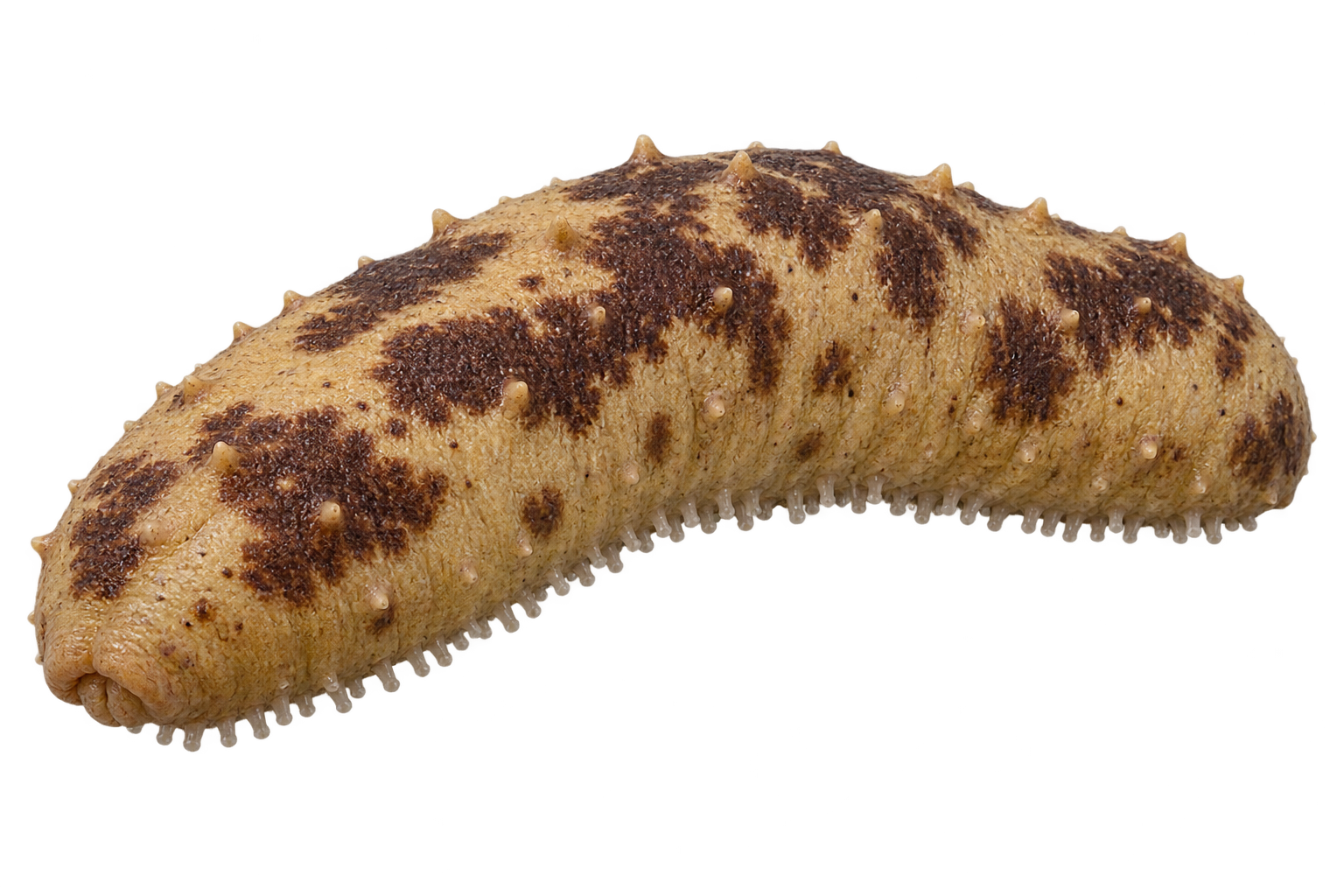
Size: Often7–20 cm relaxed body length; flexible body contracts and larger specimens occur.
Soft tan-and-brown blotched cylinder with small papillae; similar species and hybrids require caution.
Read the guide’s location, season and eating cautions before acting.
Long-spined Sea Urchin
Spiny and round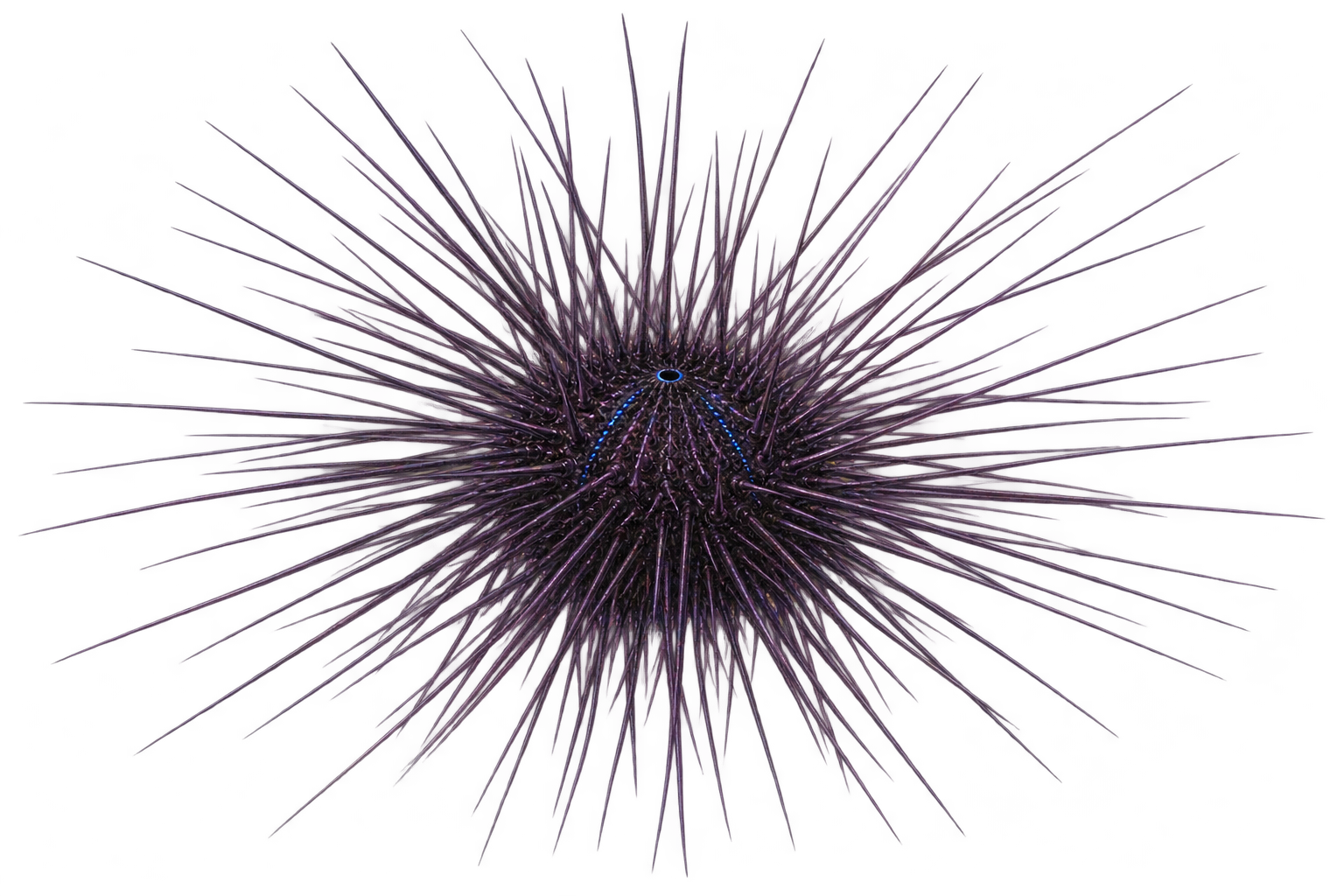
Size: Test can approach 10 cm diameter; the long spines greatly increase total span.
Extremely long, slender spines radiate from a relatively small rounded body.
PROTECTED: recreational harvest prohibited in Florida
Explore the long-spined sea urchin guide →Nine-armed Sea Star
Star-shaped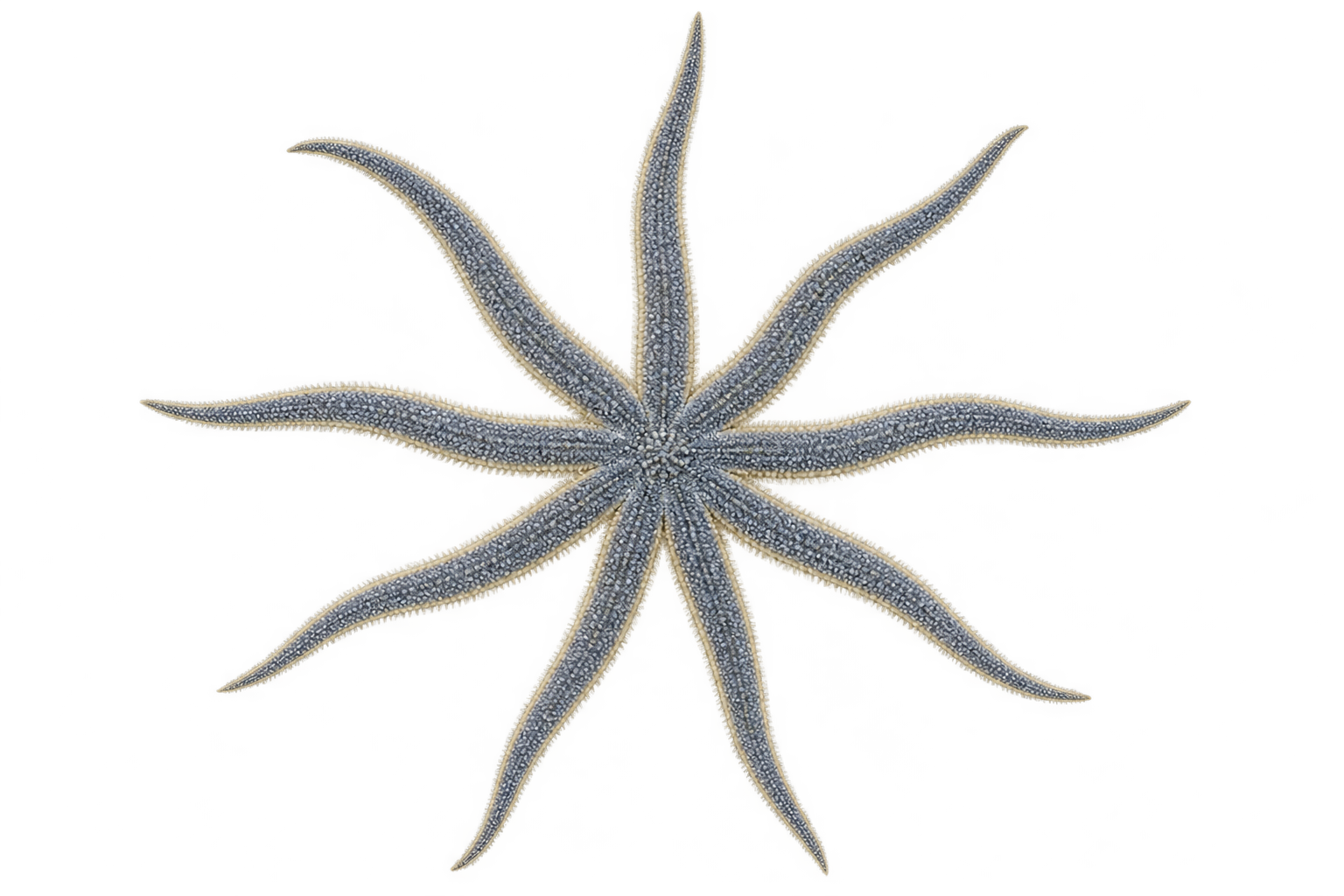
Size: Adult arms commonly12.5–15 cm long; this is not total tip-to-tip diameter.
Usually nine long slender gray arms with pale margins around a small disc.
Read the guide’s location, season and eating cautions before acting.
Reef Urchin
Spiny
Size: Field-guide size approximately2–8 cm; distinguish test from total spiny span.
Small dark reef urchin with pale rings at spine bases and darker tips.
Read the guide’s location, season and eating cautions before acting.
Royal sea star
Star-shaped
Size: No reliable whole-animal maximum established in this review; size filter left unassigned.
Five tapering arms, a flattened body and a conspicuous border of plates and spines give the characteristic outline.
Read the guide’s location, season and eating cautions before acting.
Slate Pencil Urchin
Shape not assigned
Size: The local identification guide lists 1 to 2 in. (2 to 5 cm). Its measurement axis and life-stage basis are not stated, so this is a guide value rather than a verified maximum, test diameter, arm span or harvest size.
The Gulf survey describes a round test and stout primary spines bearing rounded wartlike projections and crown-shaped tips. Colour can be uniform or banded. Spine length varies; some banded specimens had spines longer than the test diameter.
Read the guide’s location, season and eating cautions before acting.
Three-Rowed Sea Cucumber
Shape not assigned
Size: The local identification guide lists 10 to 16 in. (25 to 40 cm). Its measurement axis and life-stage basis are not stated, so this is a guide value rather than a verified maximum, test diameter, arm span or harvest size.
The 2024 revision describes a firm, loaf-shaped body, wartlike dorsal papillae, a stout lateral fringe, twenty shield-shaped tentacles and three longitudinal rows of ventral tube feet. Colour varies from spotted or reticulated to uniform and black-and-yellow forms; spots alone are not diagnostic.
Read the guide’s location, season and eating cautions before acting.
Two-spined sea star
Shape not assigned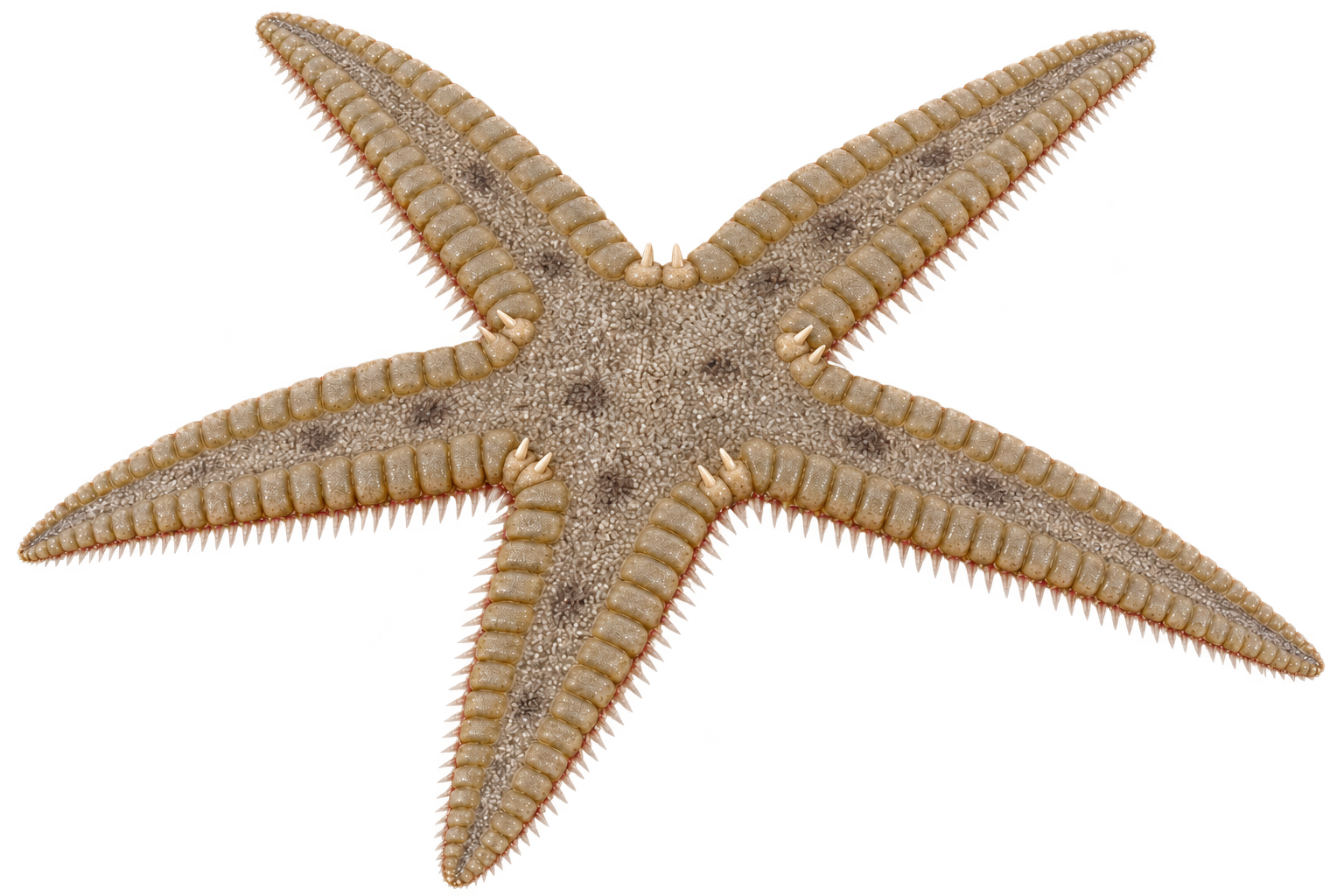
Size: The local identification guide lists 5 to 8 in. (12 to 20 cm). Its measurement axis and life-stage basis are not stated, so this is a guide value rather than a verified maximum, test diameter, arm span or harvest size.
A five-armed sea star with tapering arms. The two upper marginal plates in each space between the arms bear a stout spine near the inner edge; neighboring plates may also bear one. Spines can be worn.
Read the guide’s location, season and eating cautions before acting.
Variegated Sea Urchin
Spiny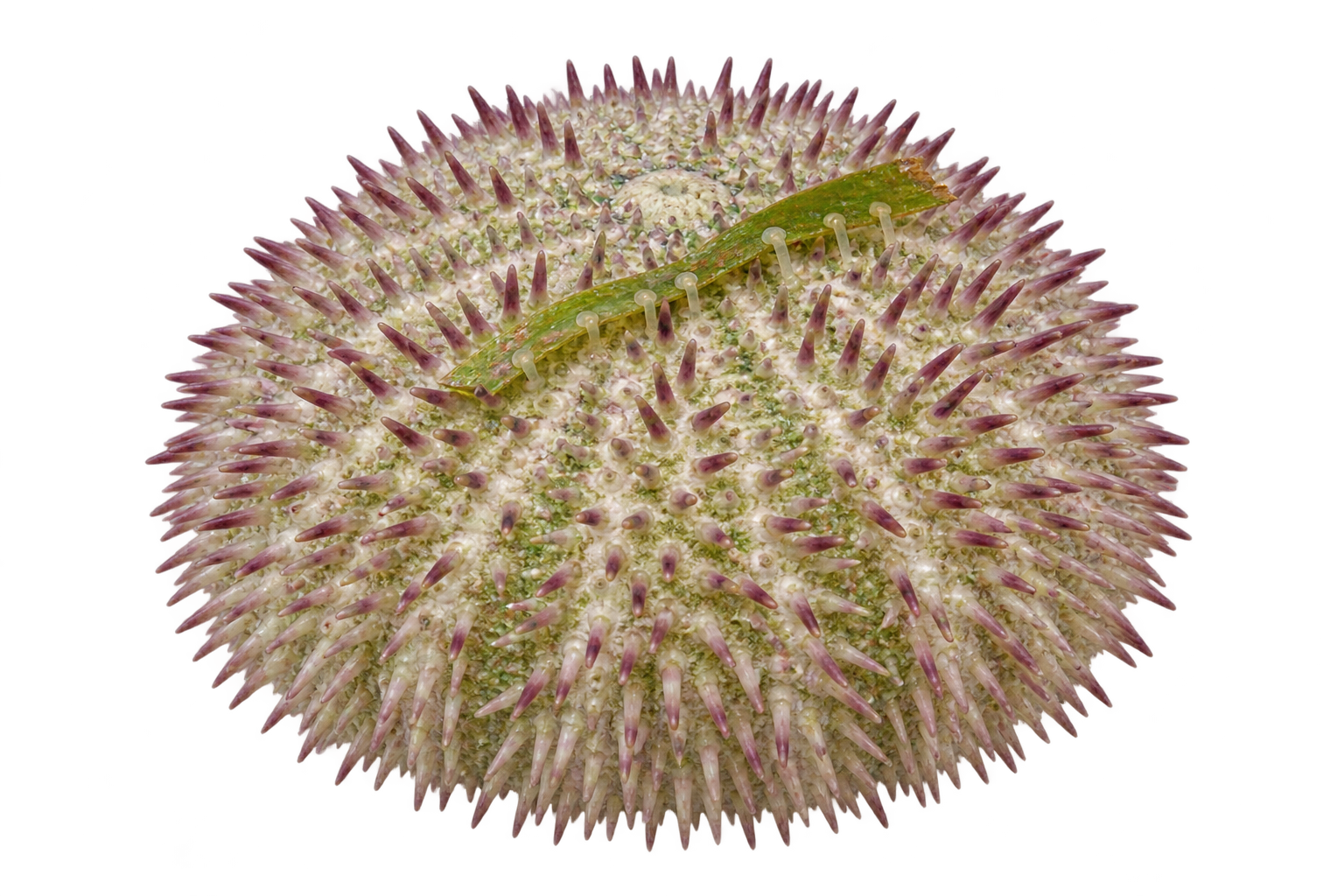
Size: Adults around9 cm across including spines in Smithsonian Florida Keys account.
Short-spined variable-colored urchin often carrying shells or seagrass.
Read the guide’s location, season and eating cautions before acting.
West Indian Sea Egg
Spiny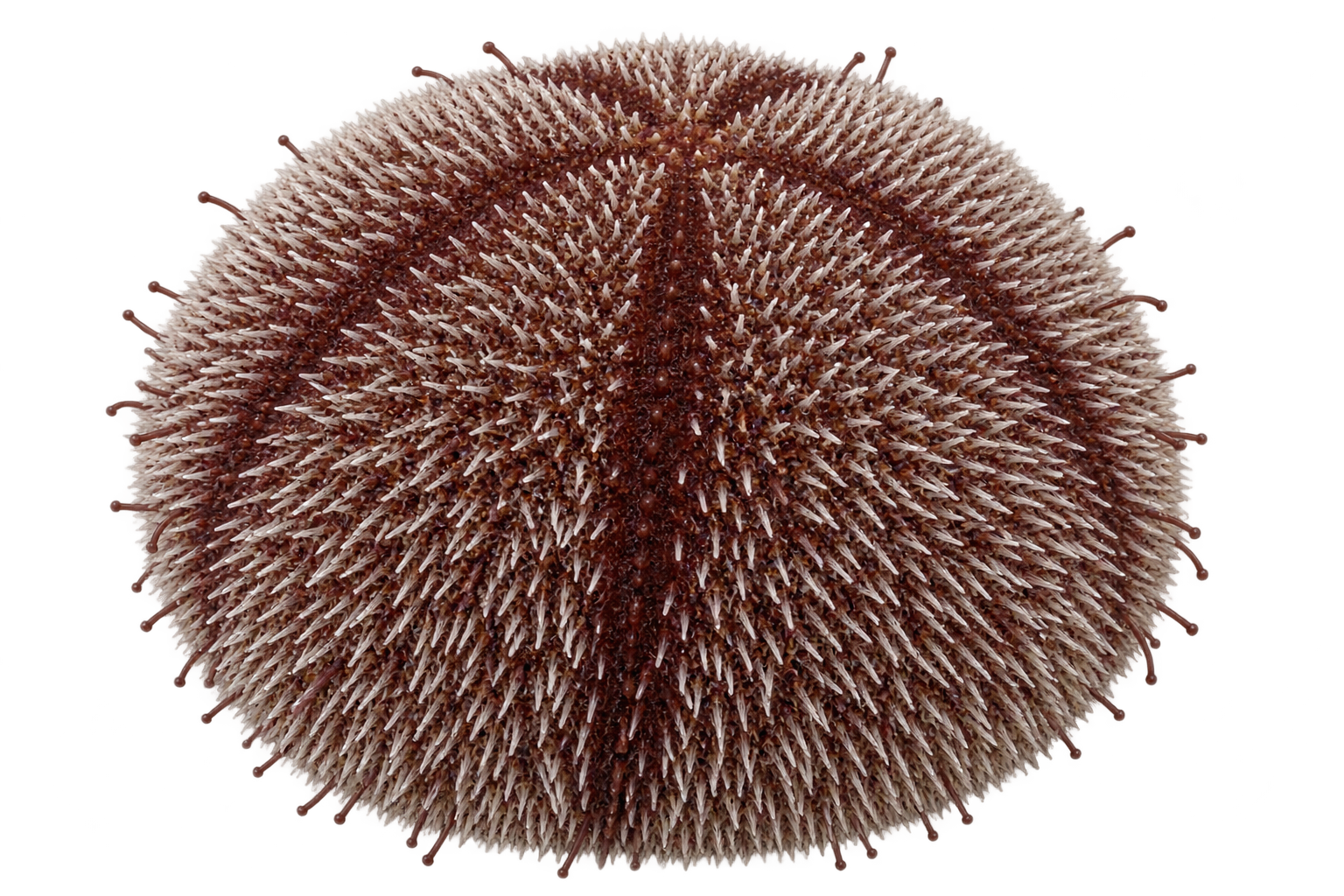
Size: Adult test about11 cm(4.3 in) diameter in Smithsonian account; spines add span.
Large rounded brown urchin with a dense covering of short white spines.
Read the guide’s location, season and eating cautions before acting.
Rock-boring Urchin
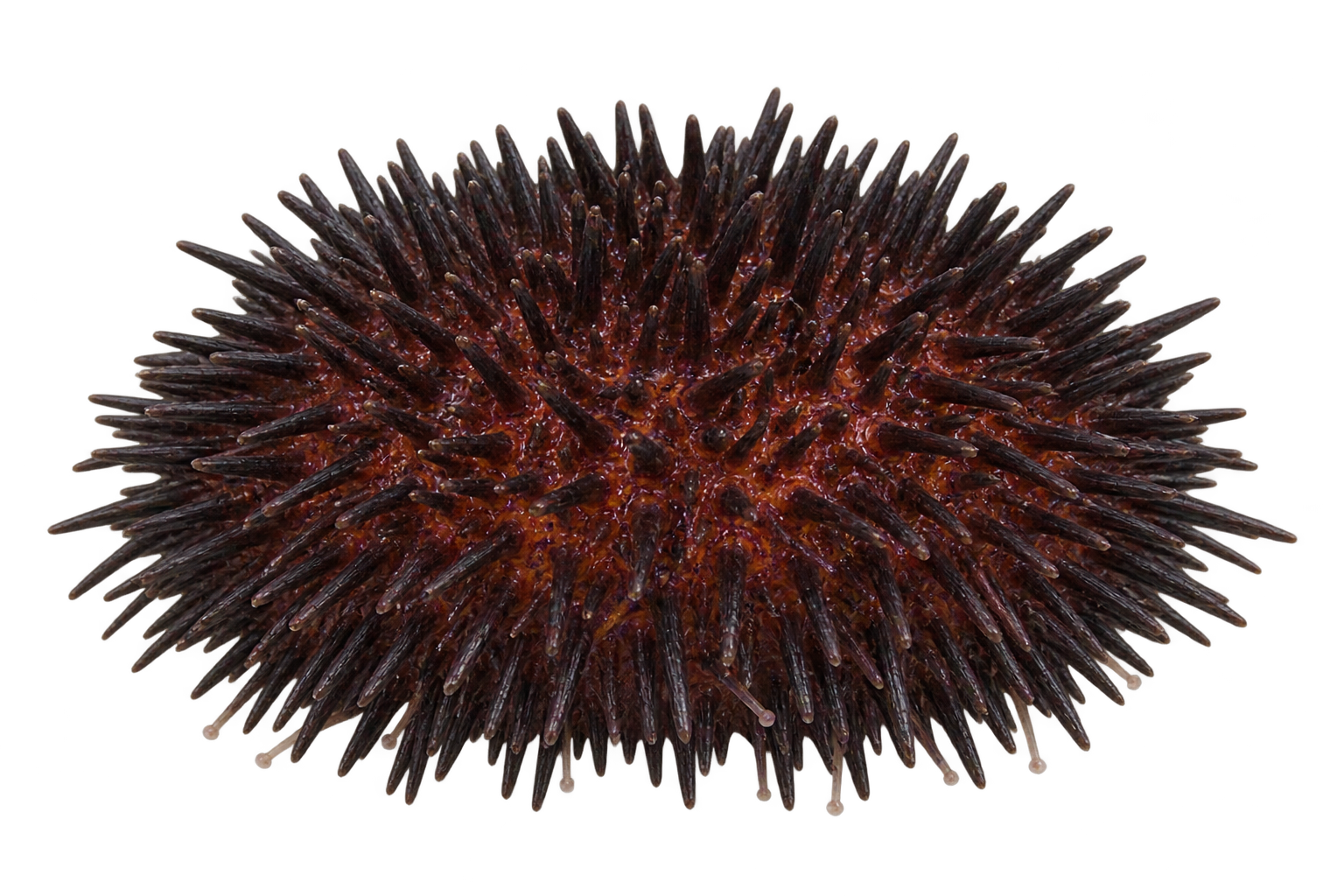
Oval test with short pointed spines, often tightly sheltered within a rock crevice.
Verify current species, gear, area and jurisdiction rules. Identification is not harvest permission or food-safety clearance.
Explore the rock-boring urchin guide →Worms and other invertebrates
Atlantic horseshoe crab
Shelled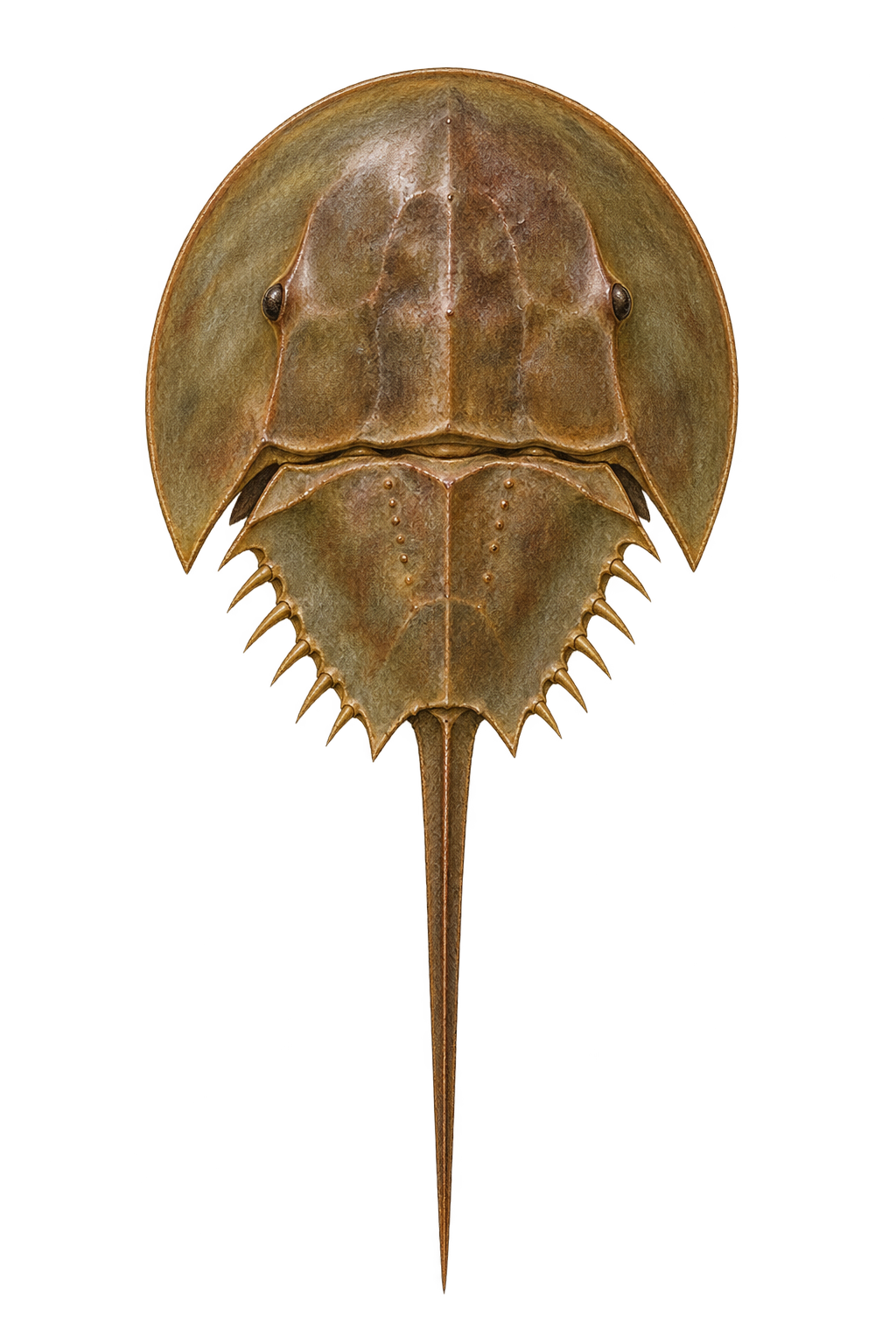
Size: No reliable whole-animal maximum established in this review; size filter left unassigned.
A broad, rounded front shield, smaller spiny rear shield and long pointed tail make a distinctive outline.
Read the guide’s location, season and eating cautions before acting.
Bearded fireworm
Elongated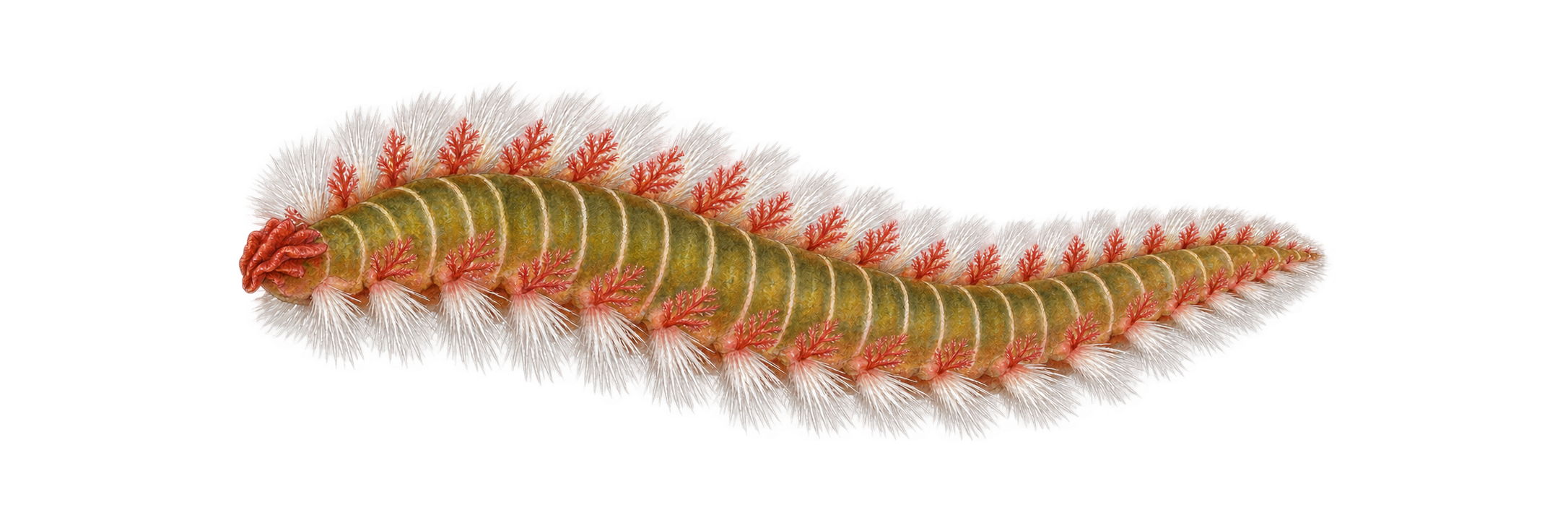
Size: Reported upper size 25 cm; measurement basis is described in the profile, not a typical local size.
Look for a stout segmented worm bordered by conspicuous white bristle bundles, reddish branched gills and a folded, beard-like structure behind the head.
Read the guide’s location, season and eating cautions before acting.
Black-Spotted Feather Duster
Shape not assigned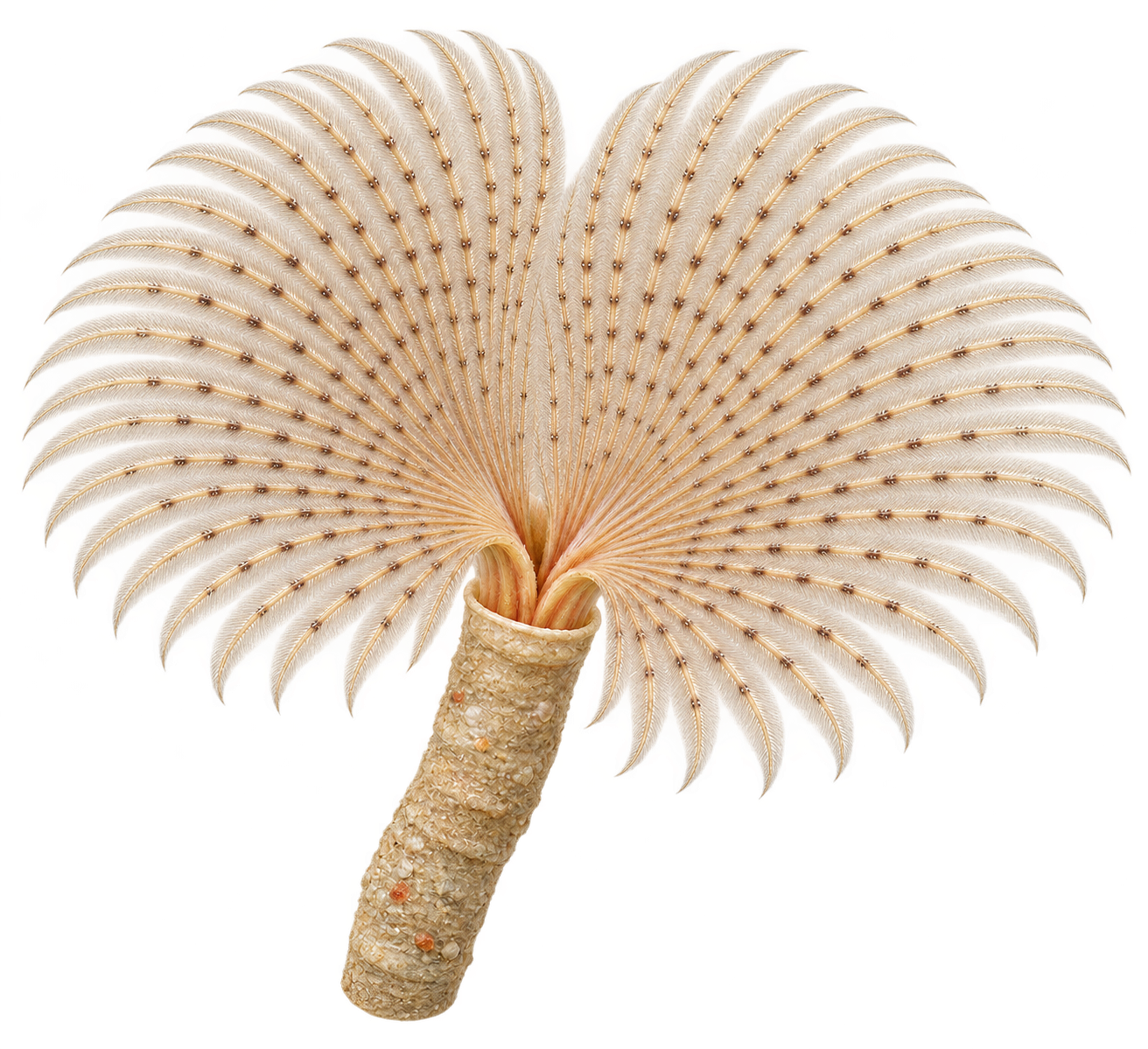
Size: The field guide reports 0.75 to 1 in. (1.8 to 2.5 cm). Its measurement axis and sampling scope are not specified, so this is not presented as a verified maximum or life-stage range.
A feather-duster worm whose species diagnosis uses tiny projections on the crown branches and microscopic hooks. Longer crown projections are about twice the length of neighboring projections.
Read the guide’s location, season and eating cautions before acting.
Cannonball Jelly
Shape not assigned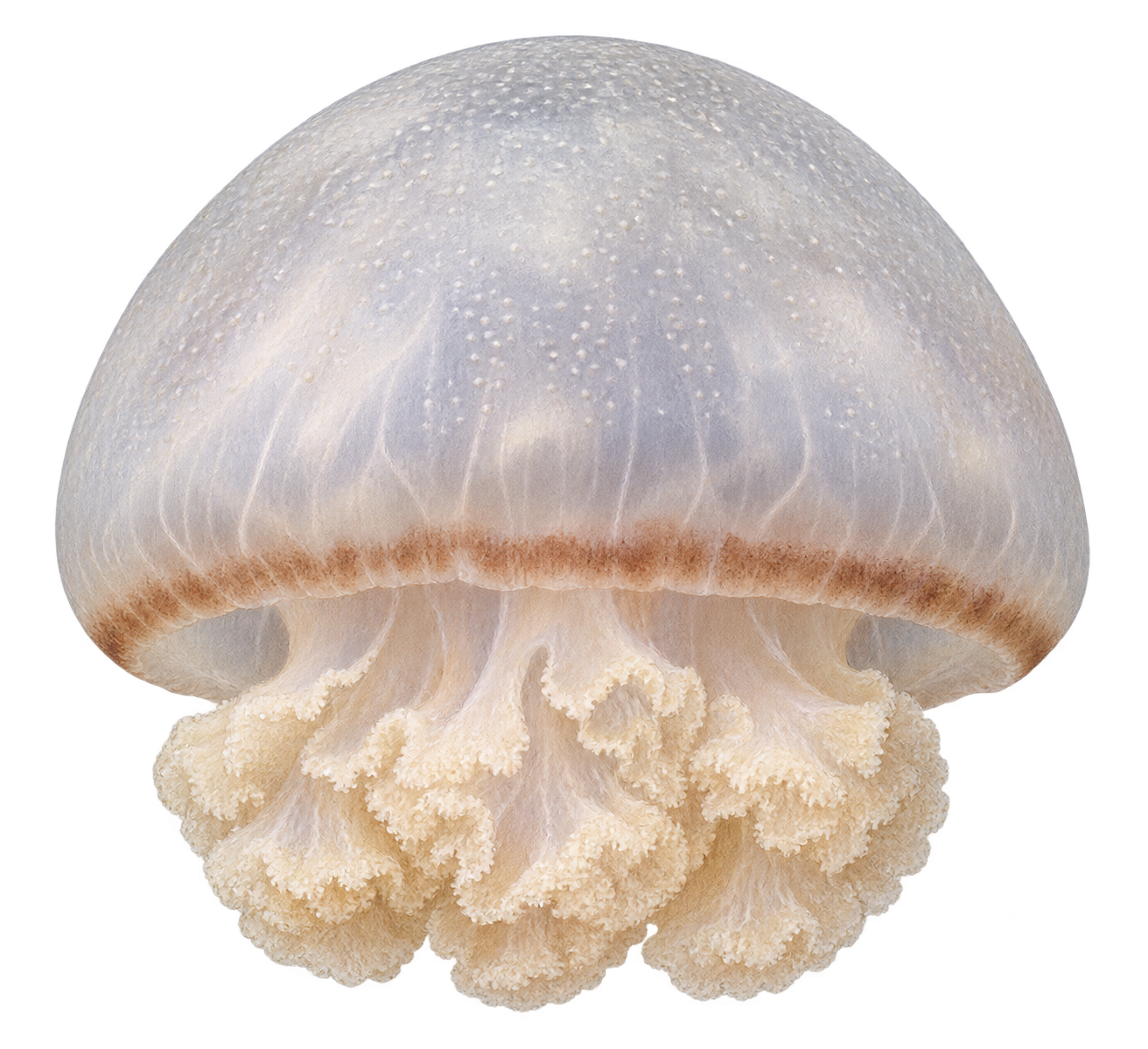
Size: The Georgia biology account reports bell diameter up to 25 cm; this is not a tentacle or total-body measurement.
A firm rounded jellyfish with a hemispherical bell, often pale with a brown edge. Long trailing tentacles are absent.
Read the guide’s location, season and eating cautions before acting.
Collared sand anemone
Soft-bodied and tentacled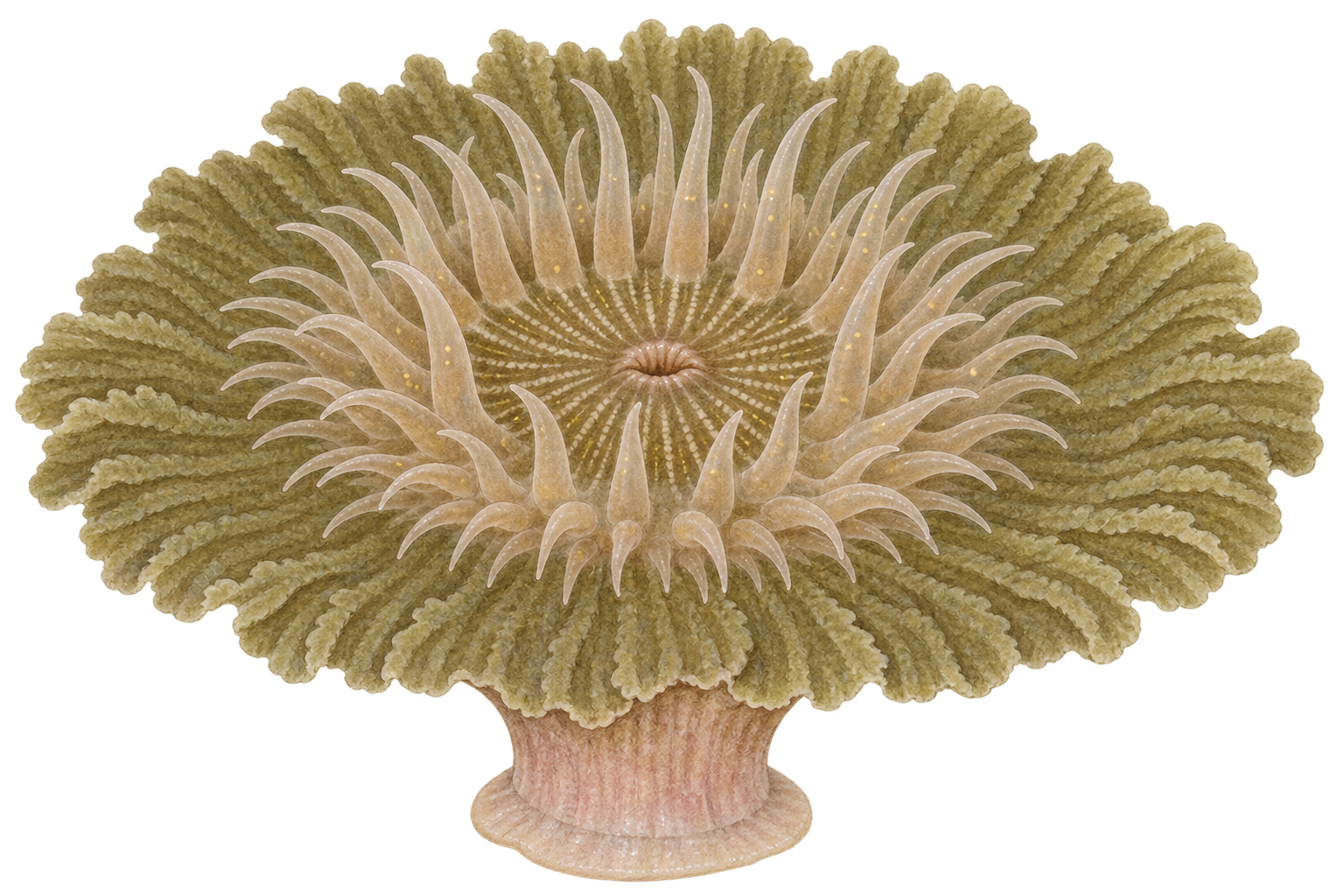
Size: No reliable whole-animal maximum established in this review; size filter left unassigned.
A conspicuous frilly collar surrounds the central disc and its tentacles.
Read the guide’s location, season and eating cautions before acting.
Giant Tunicate
Shape not assigned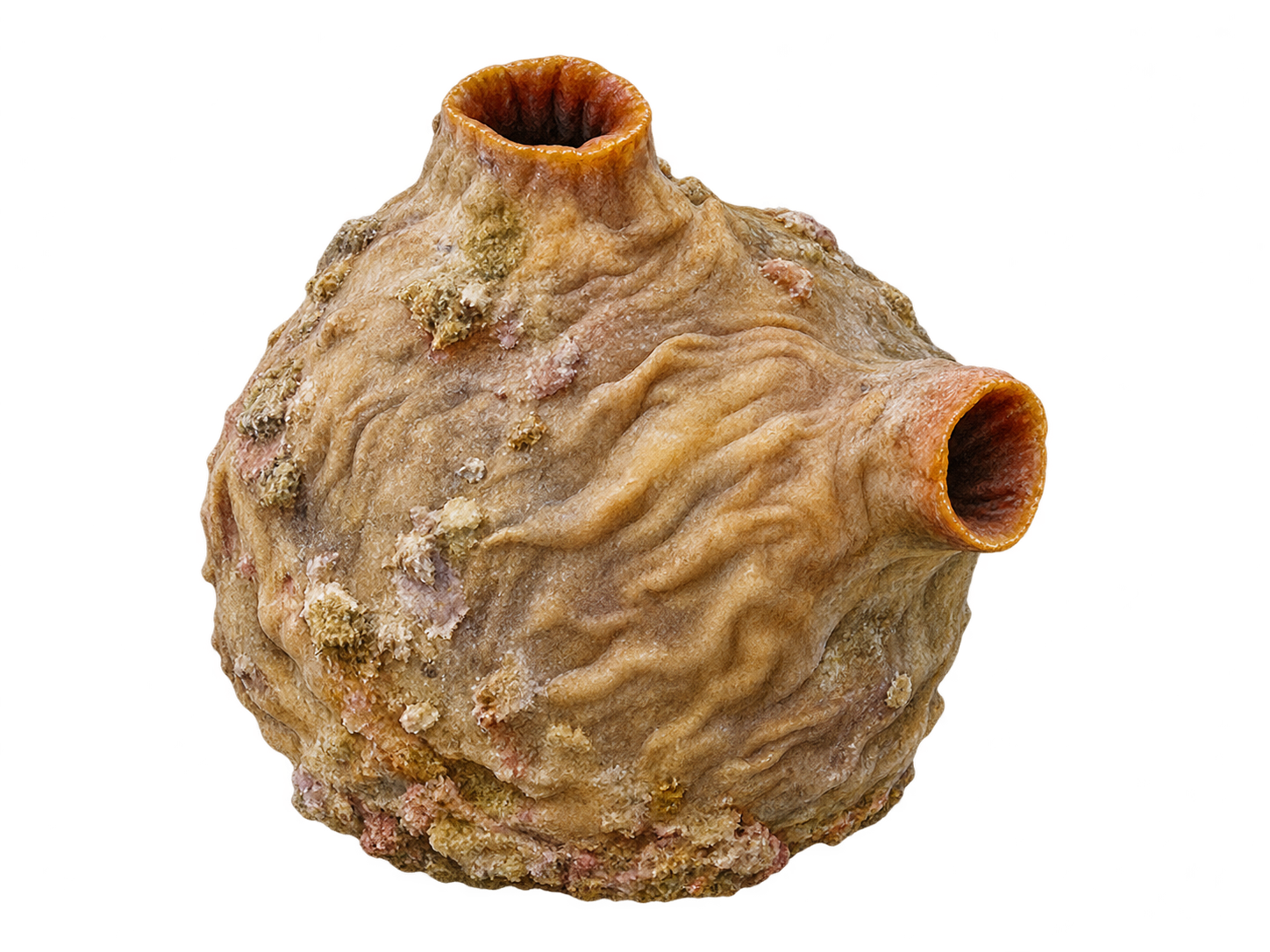
Size: The field guide reports 3 to 4 in. (8 to 10 cm). Its measurement axis and sampling scope are not specified, so this is not presented as a verified maximum or life-stage range.
The Bocas del Toro identification account describes a large usually brown tunicate with conspicuous open siphons.
Read the guide’s location, season and eating cautions before acting.
Hydroid Zoanthid
Shape not assigned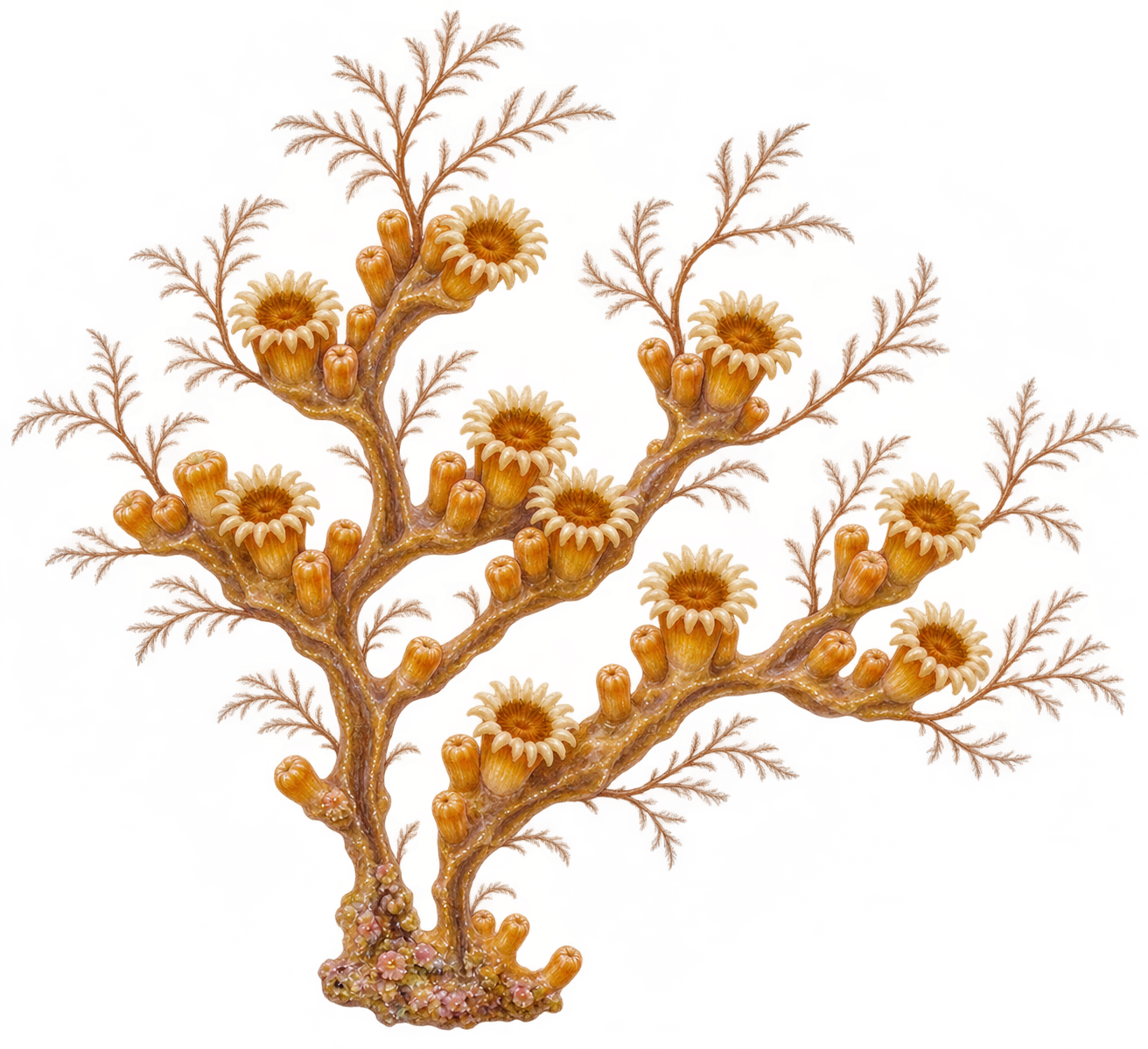
Size: A numerical size range is withheld because the cited field guide gives inconsistent imperial and metric values. No silent conversion or replacement with a different measurement axis is made.
A small zoantharian associated with hydroids; the host and attached polyps are different animals.
Read the guide’s location, season and eating cautions before acting.
Magnificent Feather Duster
Fan-crowned worms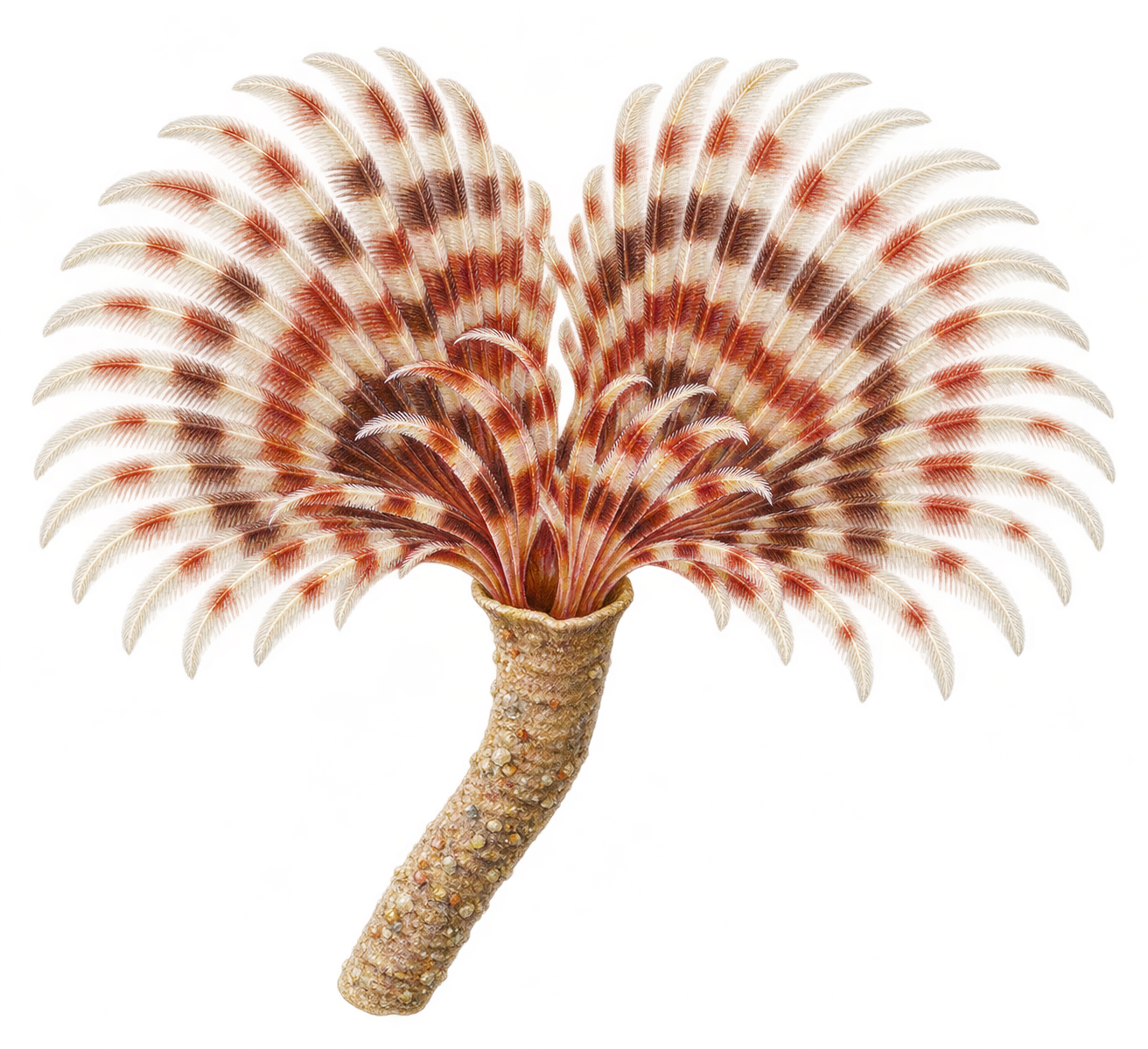
Size: The exposed crown may approach 10 cm across; the worm’s body remains inside its tube.
A broad double crown of fine, feathery radioles emerges from a flexible tube.
Restricted marine life: live collection only; Blue Heron Bridge closed
Explore the magnificent feather duster guide →Mangrove upside-down jellyfish
Soft-bodied and tentacled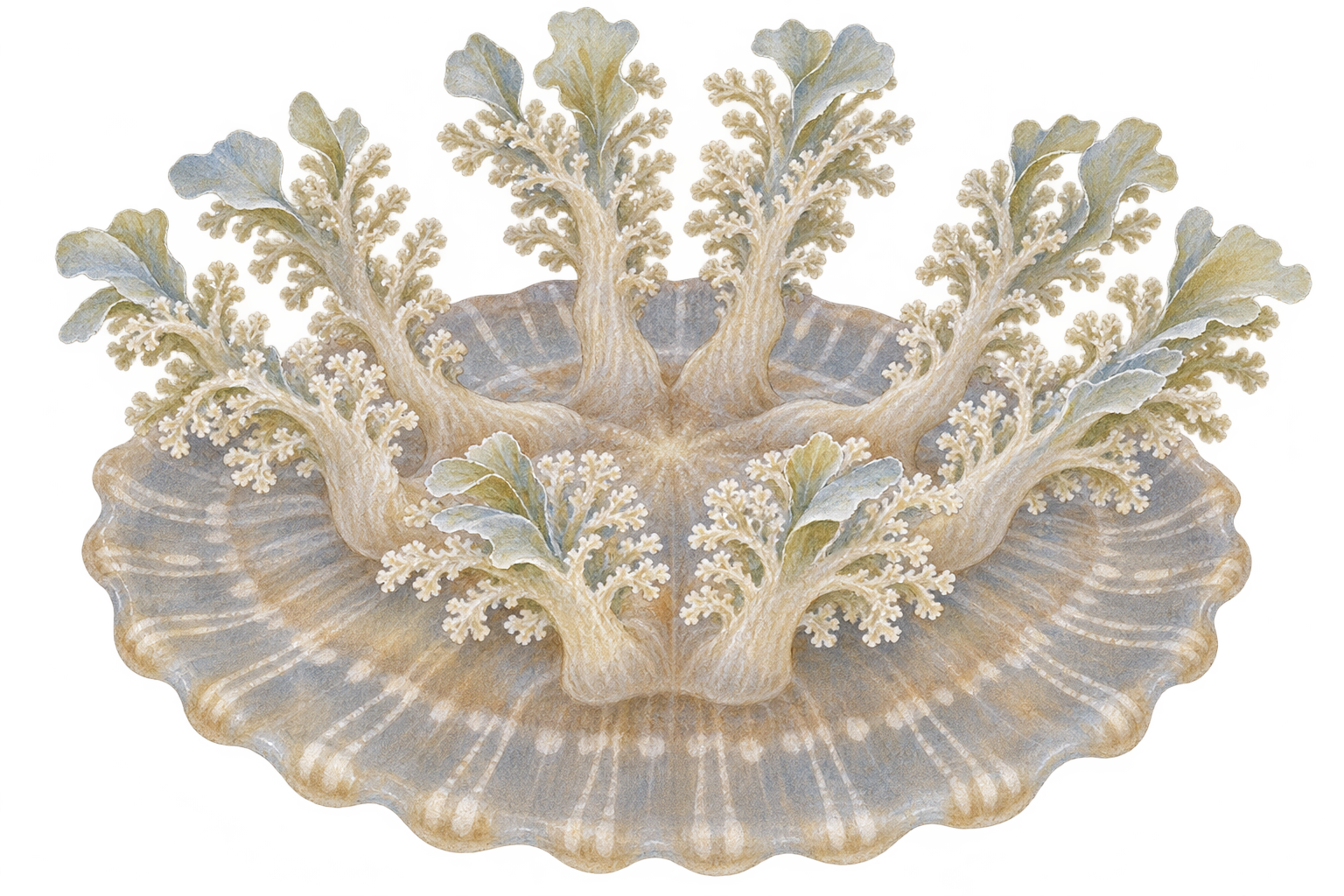
Size: No reliable whole-animal maximum established in this review; size filter left unassigned.
The bell rests against the bottom while the branching oral arms face upward.
Read the guide’s location, season and eating cautions before acting.
Orange Ball Corallimorph
Shape not assigned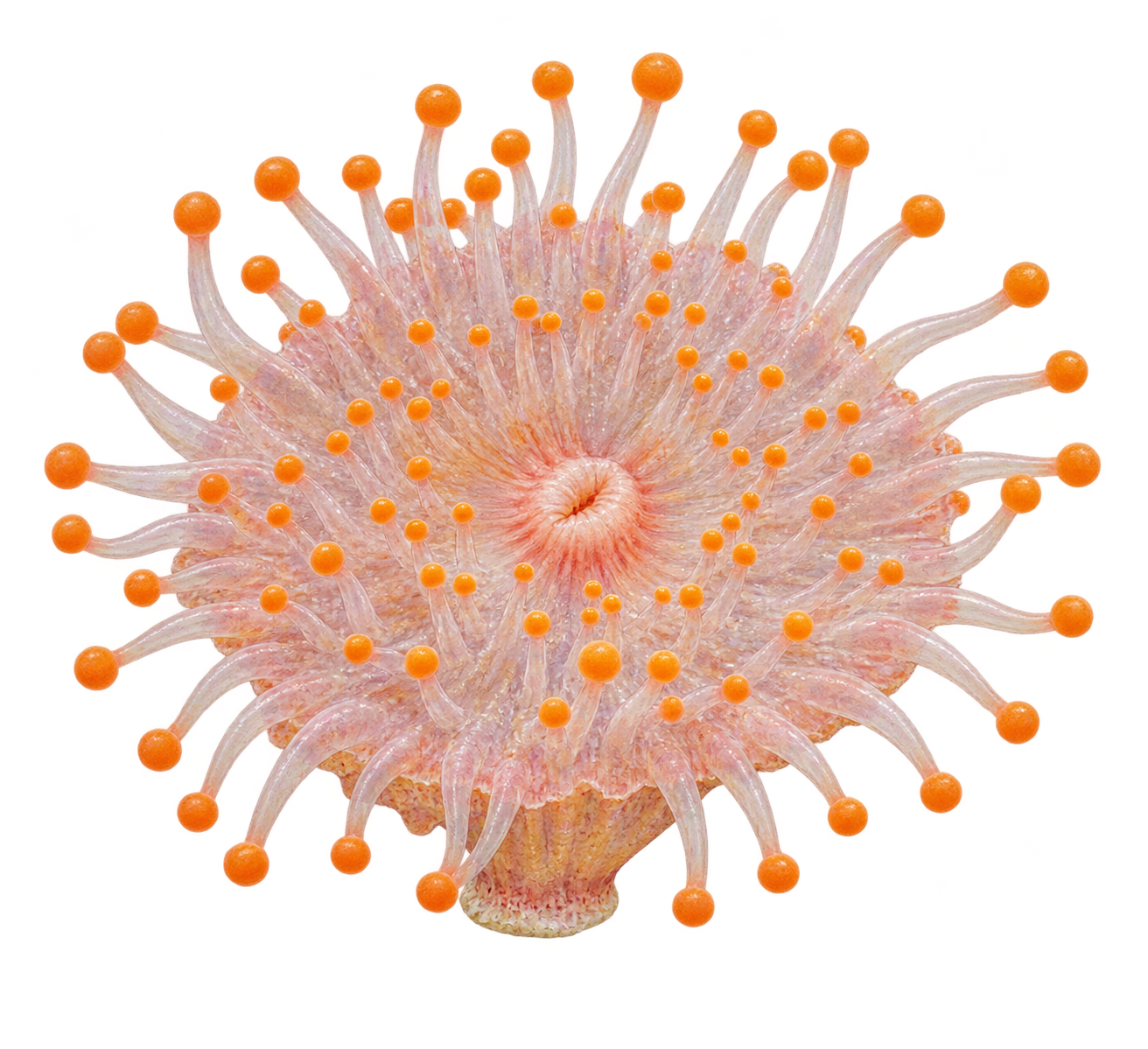
Size: The field guide reports 1 to 2 in. (2.5 to 5 cm). Its measurement axis and sampling scope are not specified, so this is not presented as a verified maximum or life-stage range.
An anemone-like corallimorph with conspicuous spherical tentacle tips. It has no hard coral skeleton.
Read the guide’s location, season and eating cautions before acting.
Split-Crown Feather Duster
Shape not assigned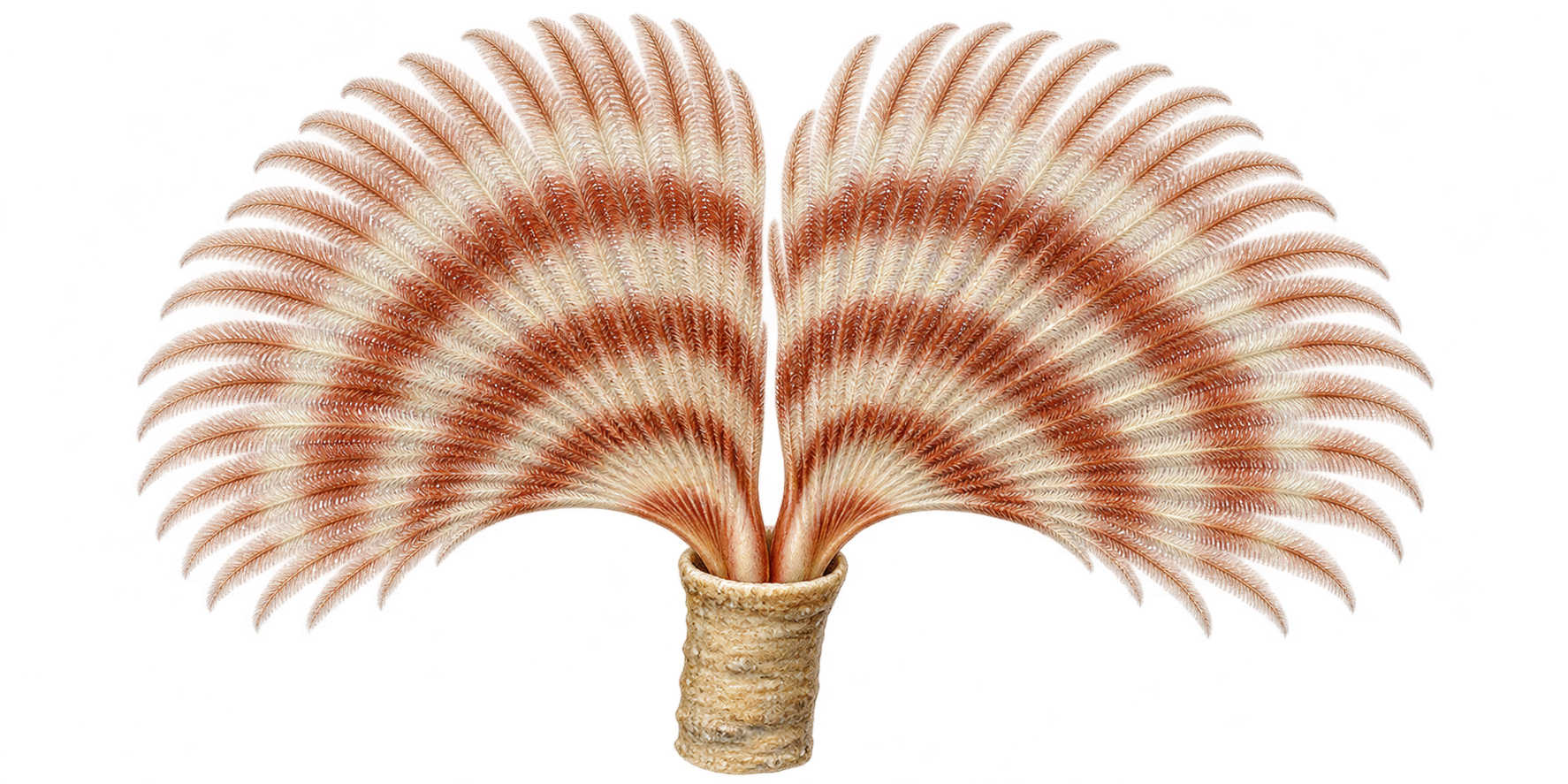
Size: The field guide reports 1 to 2 in. (2 to 5 cm). Its measurement axis and sampling scope are not specified, so this is not presented as a verified maximum or life-stage range.
A large colorful radiolar crown is conspicuous, but species identification depends on less visible structures near the crown base.
Read the guide’s location, season and eating cautions before acting.
Variegated Feather Duster
Shape not assigned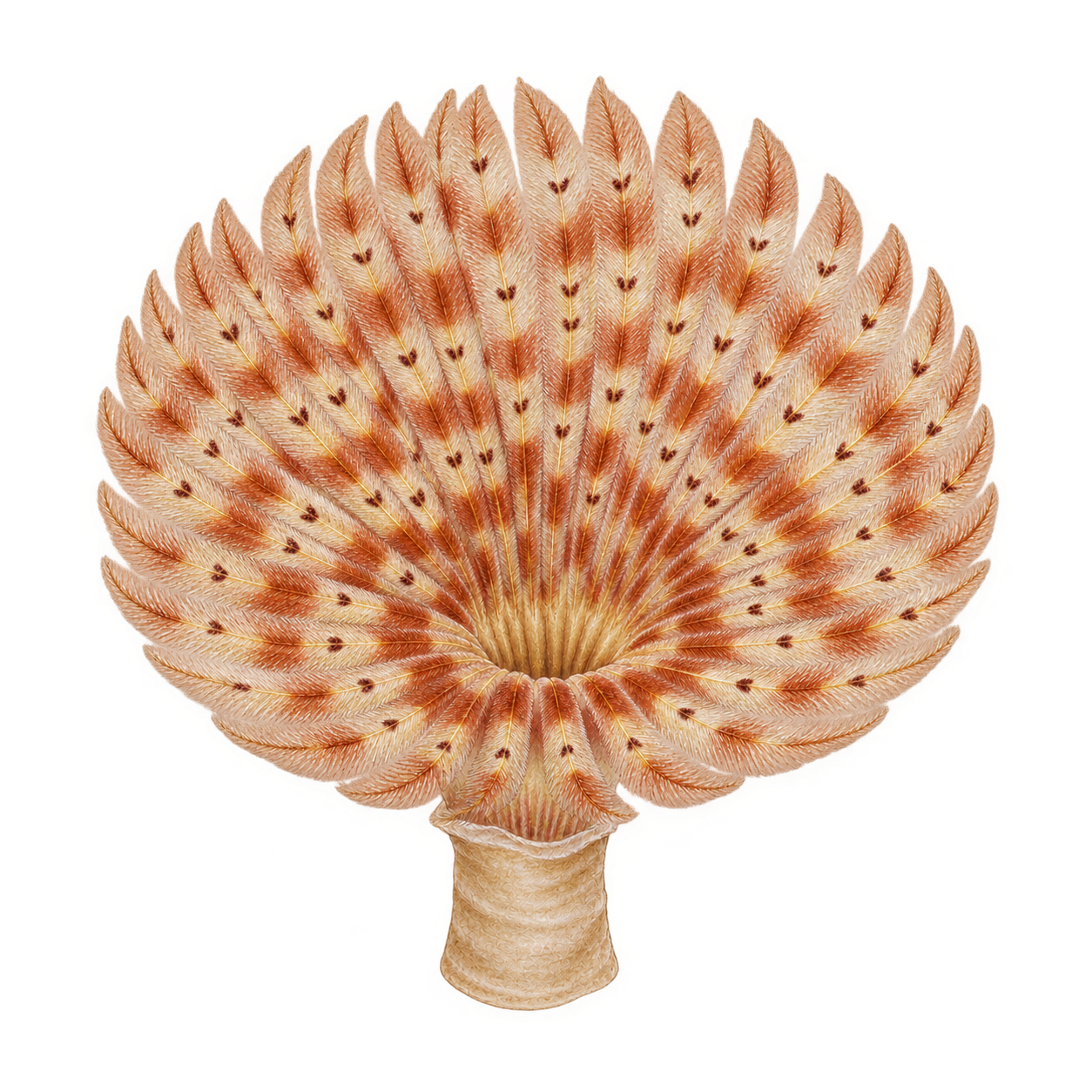
Size: The local identification guide lists 0.75 to 1.5 in. (1.8 to 3.8 cm). Its measurement axis and life-stage basis are not stated, so this is a guide value rather than a verified maximum, test diameter, arm span or harvest size.
Dean’s treatment of a Costa Rican specimen describes a thorax approximately as broad as long and paired eyespots on the crown filaments, or radioles. Crown colour alone does not confirm the species.
Read the guide’s location, season and eating cautions before acting.
Giant Caribbean Anemone
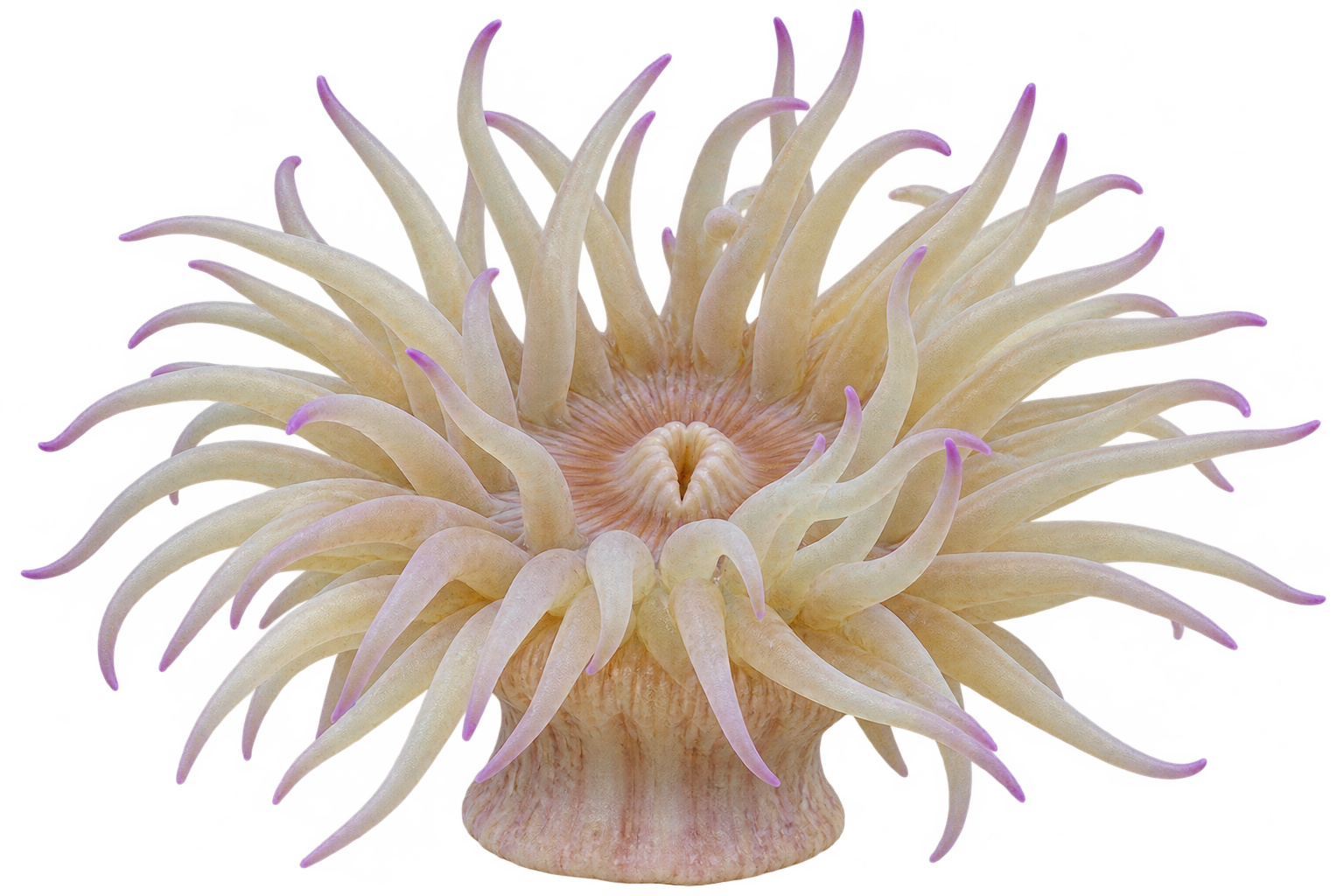
Long tapered tentacles with variable colored tips surround a central mouth; Florida harvest is prohibited.
Protected: no recreational harvest; observe without handling or disturbance.
Explore the giant caribbean anemone guide →Christmas Tree Worm
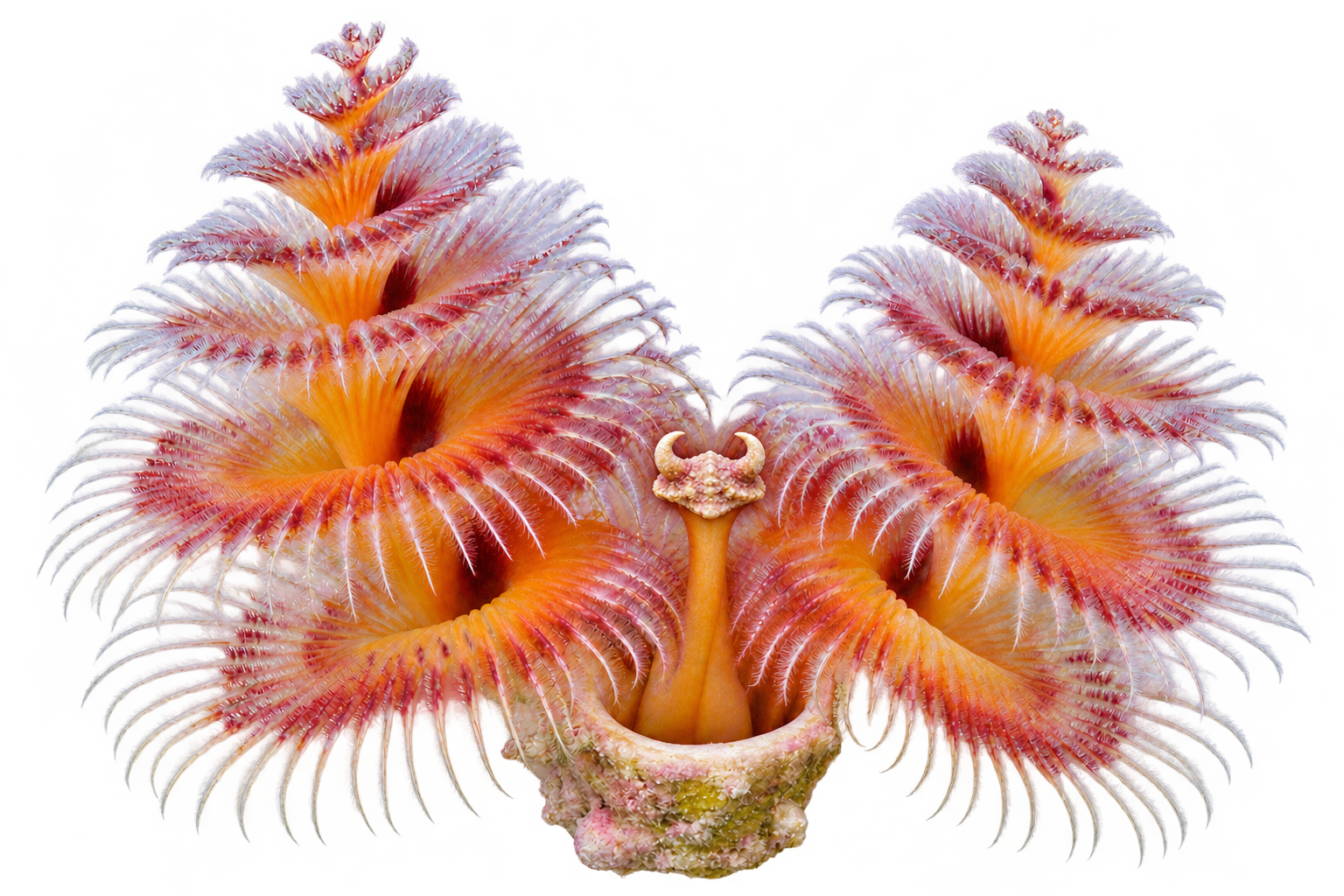
Paired spiral feeding crowns emerge from a hard tube; most of the worm remains concealed.
Verify current species, gear, area and jurisdiction rules. Identification is not harvest permission or food-safety clearance.
Explore the christmas tree worm guide →Clams, oysters and other mollusks
Atlantic Calico Scallop
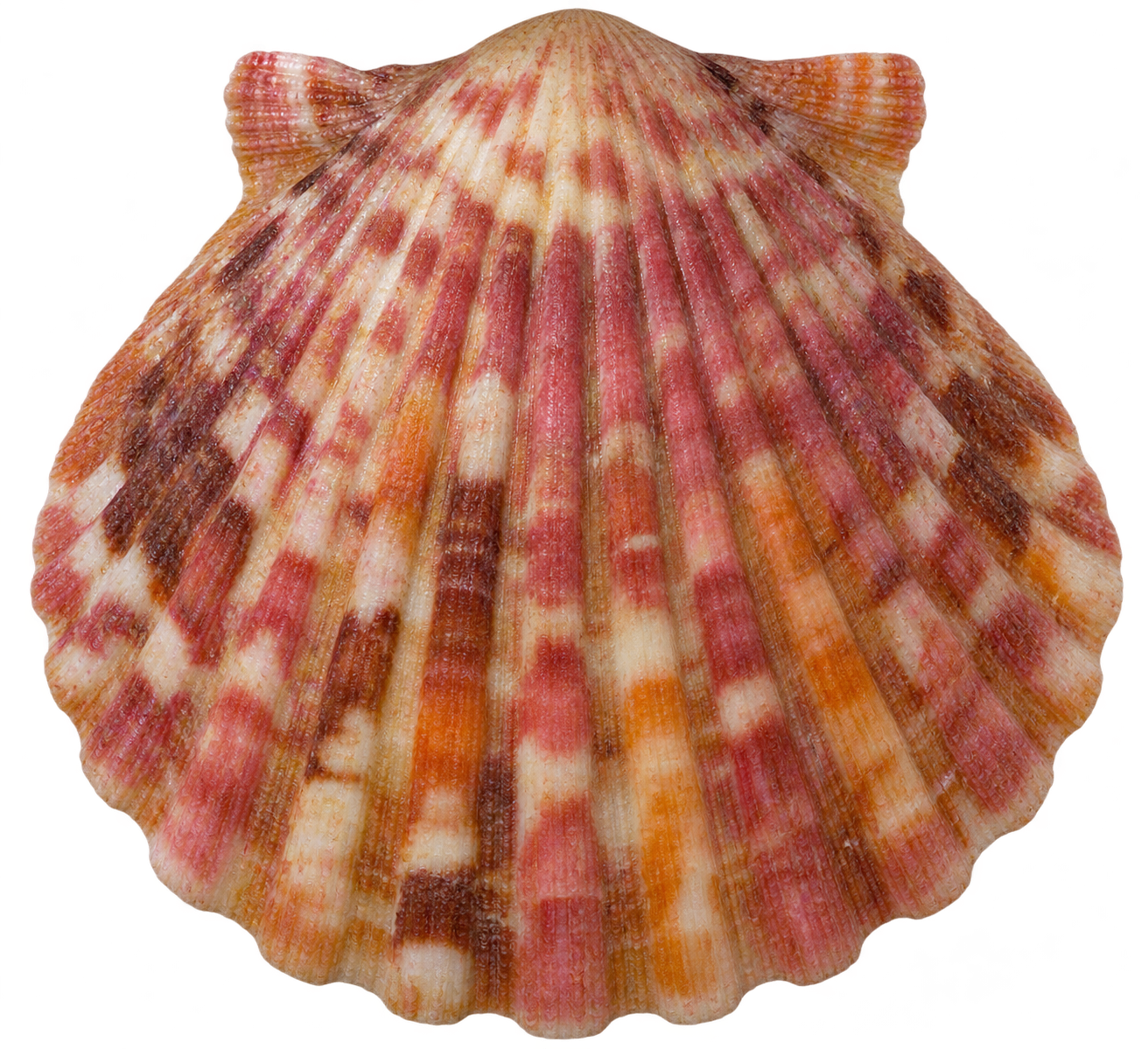
A rounded ribbed shell with small hinge ears and variable calico markings; an offshore-bottom scallop.
Verify current species, gear, area and jurisdiction rules. Identification is not harvest permission or food-safety clearance.
Explore the atlantic calico scallop guide →Northern Quahog
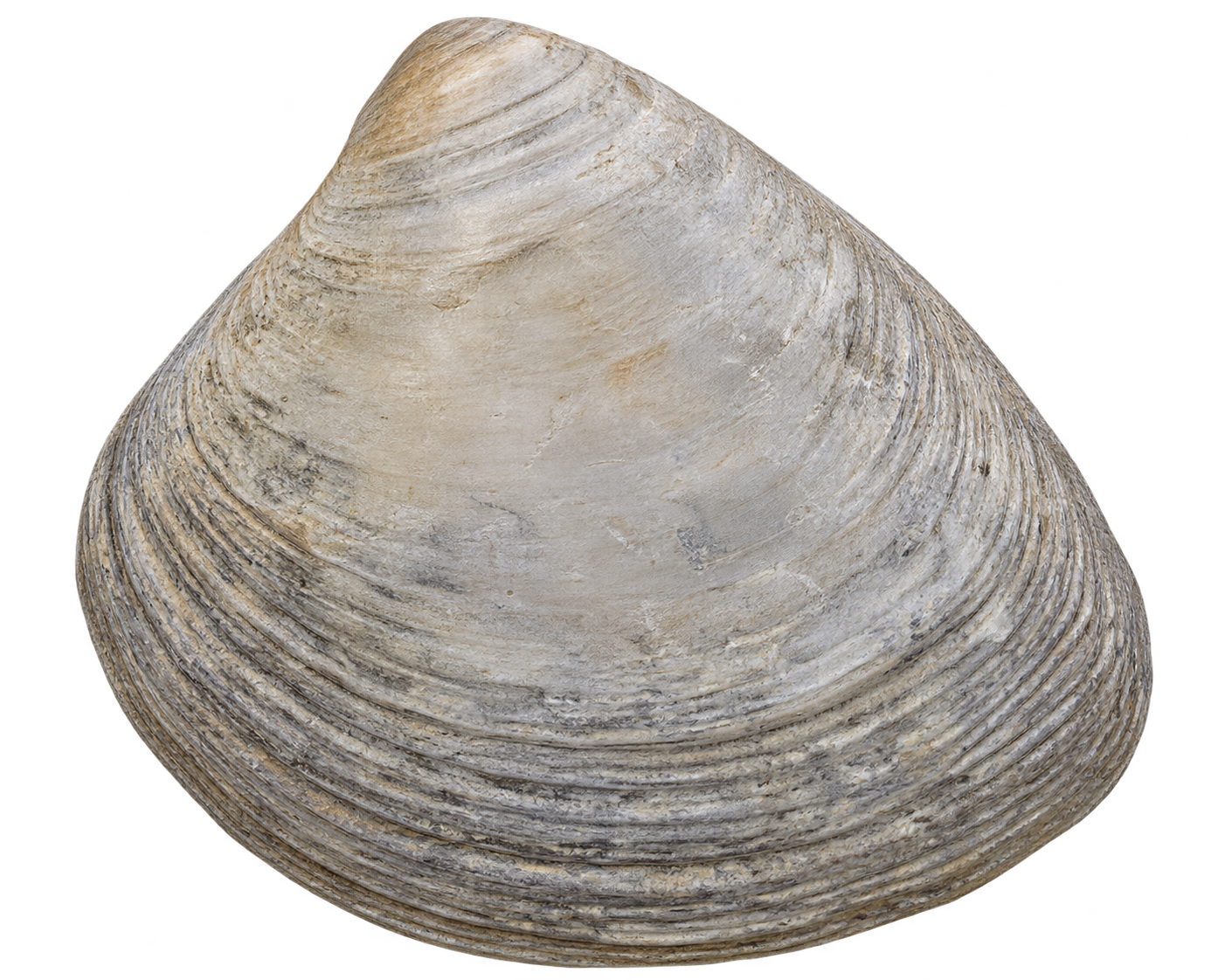
A thick hard-clam shell with concentric growth sculpture; shell traits can overlap with southern quahogs and hybrids.
Verify current species, gear, area and jurisdiction rules. Identification is not harvest permission or food-safety clearance.
Explore the northern quahog guide →Southern Quahog
A heavy hard-clam shell with pronounced concentric ridges; hybrids can prevent confident shell-only identification.
Verify current species, gear, area and jurisdiction rules. Identification is not harvest permission or food-safety clearance.
Explore the southern quahog guide →Eastern Oyster
Irregular layered shell attached to firm surfaces; lower valve usually more cupped than the upper.
Verify current species, gear, area and jurisdiction rules. Identification is not harvest permission or food-safety clearance.
Explore the eastern oyster guide →Sunray Venus
Elongated oval clam with a smooth glossy shell and darker radiating color bands.
Verify current species, gear, area and jurisdiction rules. Identification is not harvest permission or food-safety clearance.
Explore the sunray venus guide →Variable Coquina
Small wedge-shaped swash-zone clam with variable colors; shell structure matters more than color.
Verify current species, gear, area and jurisdiction rules. Identification is not harvest permission or food-safety clearance.
Explore the variable coquina guide →Stiff Pen Shell
Large triangular shell with raised ribs and spiny projections, often partly buried in sediment.
Verify current species, gear, area and jurisdiction rules. Identification is not harvest permission or food-safety clearance.
Explore the stiff pen shell guide →Flat Tree Oyster
Thin layered shell with a long straight hinge; attaches using byssal fibers.
Verify current species, gear, area and jurisdiction rules. Identification is not harvest permission or food-safety clearance.
Explore the flat tree oyster guide →West Indian Fuzzy Chiton
Eight overlapping plates and a broad girdle form a low armored outline; plate count alone does not confirm species.
Verify current species, gear, area and jurisdiction rules. Identification is not harvest permission or food-safety clearance.
Explore the west indian fuzzy chiton guide →Tiger Lucine
Rounded pale clam with fine crossing shell sculpture and a heart-shaped depression near the hinge.
Verify current species, gear, area and jurisdiction rules. Identification is not harvest permission or food-safety clearance.
Explore the tiger lucine guide →Staff Sea Creatures (Fictional Parody)
Benjamin Hadfield — The High-Pressure Tide King
Merman · Diveshopidae
Size: Large (parody scale) · Color: Red · Habitat: ALL.
Benjamin Hadfield is Stuart Scuba co-owner and technical instructor trainer who enjoys technical diving. In this parody, he patrols the deep with a red tail, a gold trident and enough clipped-on tech gear to make the fish ask whether they are cleared to dive.
Fictional staff parody; not real biology or harvest advice.
Explore the Benjamin Hadfield staff-merfolk guide →Nikki Hadfield — Architect of the Azure Court
Mermaid · Diveshopidae
Size: Large (parody scale) · Color: Red · Habitat: ALL.
Long dark hair, a coral crown and rolled plans mark this fictional mermaid; the reef court has been checked for square corners.
Fictional staff parody; not real biology or harvest advice.
Explore the Nikki Hadfield staff-merfolk guide →Matt Siegel — The Shorebound Gear Baron
Merman · Diveshopidae
Size: Large (parody scale) · Color: Red · Habitat: ALL.
Matt keeps the Stuart Scuba gear counter, schedules and logistics in order from dry land; the red tail is here mostly for the classification.
Fictional staff parody; not real biology or harvest advice.
Explore the Matt Siegel staff-merfolk guide →MJ Schatz — Siren of the Lionfish Ledger
Mermaid · Diveshopidae
Size: Large (parody scale) · Color: Red · Habitat: ALL.
MJ has more than five years of diving experience and a conservation interest on both sides of the waterline. Her imaginary lionfish ledger has a column for “where to look” and another for “who moved the schedule.”
Fictional staff parody; not real biology or harvest advice.
Explore the MJ Schatz staff-merfolk guide →Rand Beckman — Deputy of the Deep
Merman · Diveshopidae
Size: Large (parody scale) · Color: Red · Habitat: ALL.
Former New York deputy sheriff, now an aspiring Divemaster. The deputy star is for the costume; the fish still get due process and a chance to ask questions.
Fictional staff parody; not real biology or harvest advice.
Explore the Rand Beckman staff-merfolk guide →Darrell Barabash — The Bubble Auditor
Merman · Diveshopidae
Size: Large (parody scale) · Color: Red · Habitat: ALL.
Darrell’s wife jokingly calls him Sheldon because he does not cut corners on details. Even the bubbles are lined up for inspection.
Fictional staff parody; not real biology or harvest advice.
Explore the Darrell Barabash staff-merfolk guide →Nick Barrett — Cartographer of the Currents
Merman · Diveshopidae
Size: Large (parody scale) · Color: Red · Habitat: ALL.
Former Exxon executive, scuba instructor and dive travel coordinator. He has traded boardroom briefings for dive briefings; even the fish get the itinerary first.
Fictional staff parody; not real biology or harvest advice.
Explore the Nick Barrett staff-merfolk guide →Donna Barrett — Navigator of the Shoal
Mermaid · Diveshopidae
Size: Large (parody scale) · Color: Red · Habitat: ALL.
Married to fellow instructor and travel coordinator Nick, Donna makes sure the shoal has its itinerary before anyone asks what to pack.
Fictional staff parody; not real biology or harvest advice.
Explore the Donna Barrett staff-merfolk guide →Marc Capots — The Logbook Grouper
Fish · Diveshopidae
Size: Large (parody scale) · Color: Red · Habitat: ALL.
Marc is a Master Instructor who has taught since 2014, logged more than 2,000 dives and certified hundreds of students. The grouper body comes with a logbook strap; at this point, the dive log may need its own dive log.
Fictional staff parody; not real biology or harvest advice.
Explore Marc Capots’s staff Fish ID guide →Rodrigo Duran — The Bilingual Deep Scientist
Merman · Diveshopidae
Size: Large (parody scale) · Color: Red · Habitat: ALL.
Rodrigo is a technical scuba instructor with more than 25 years of professional teaching experience, about 1,000 first-dive students and 16 specialty ratings. He teaches in English and Spanish; the fish keep asking him to translate the slate.
Fictional staff parody; not real biology or harvest advice.
Explore Rodrigo Duran’s staff Fish ID guide →Su Hallenbeck — The Hammer of the Shoal
Mermaid · Diveshopidae
Size: Large (parody scale) · Color: Red · Habitat: ALL.
They call her “The Hammer,” and Su is a great teacher. She teaches Open Water, Advanced Adventure and refreshers, helping skills stick one clear practice at a time. The hammer in this field guide is a foam classroom prop; the lesson plan does the heavy lifting.
Fictional staff parody; not real biology or harvest advice.
Explore Su Hallenbeck’s staff Fish ID guide →Mitch Hushak — The Eight-Arm Engineer
Octopus · Diveshopidae
Size: Large (parody scale) · Color: Red · Habitat: ALL.
Mitch is an engineer and SDI and NAUI instructor who started diving in 2010 and brought his enthusiasm from the Midwest to Florida. He has enough arms to check the gear, read the plan and still hold the slate.
Fictional staff parody; not real biology or harvest advice.
Explore Mitch Hushak’s staff Fish ID guide →Joseph Scaramuzzino — The Navy-Vet Voyager
Merman · Diveshopidae
Size: Large (parody scale) · Color: Red · Habitat: ALL.
Joe is a scuba instructor and Navy veteran. His underwater journey began near Ventotene, Italy, in 2005; five countries have been home, and he speaks two languages fluently. His anchor compass has a longer travel history than most fish.
Fictional staff parody; not real biology or harvest advice.
Explore Joseph Scaramuzzino’s staff Fish ID guide →Brandon — The Ripped Skipper
Merman · Diveshopidae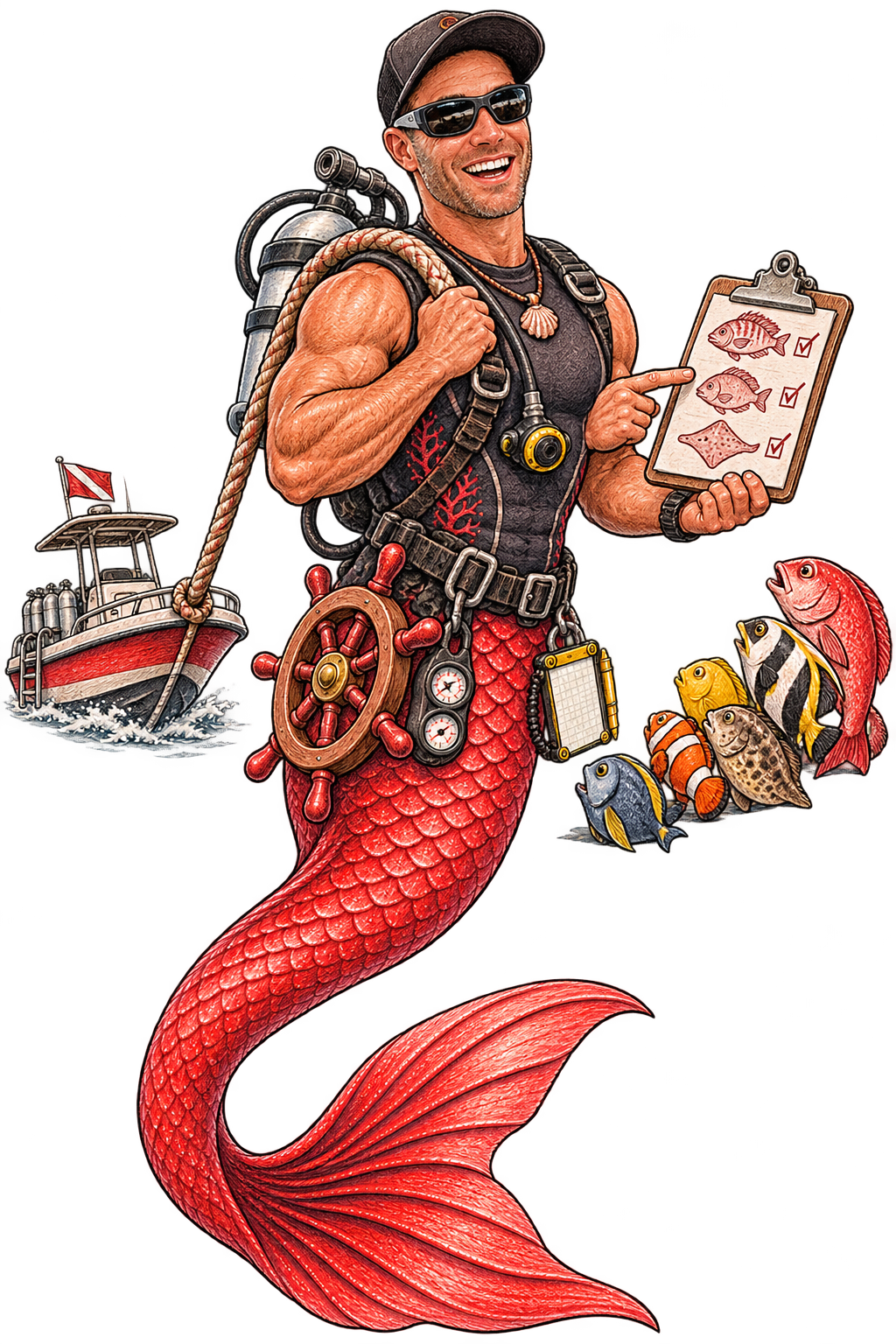
Size: Large (parody scale) · Color: Red · Habitat: ALL.
Captain Brandon is skipper of Little Deeper. Born and raised in Jupiter, he has spent his life on the water and has thousands of hours at sea. The picture makes him look ready to bench-press the boat; he still gives the safety briefing before anyone touches the wheel.
Fictional staff parody; not real biology or harvest advice.
Explore Brandon’s staff Fish ID guide →Christine Rain — Reef Ranger of the Spiny Invasion
Mermaid · Diveshopidae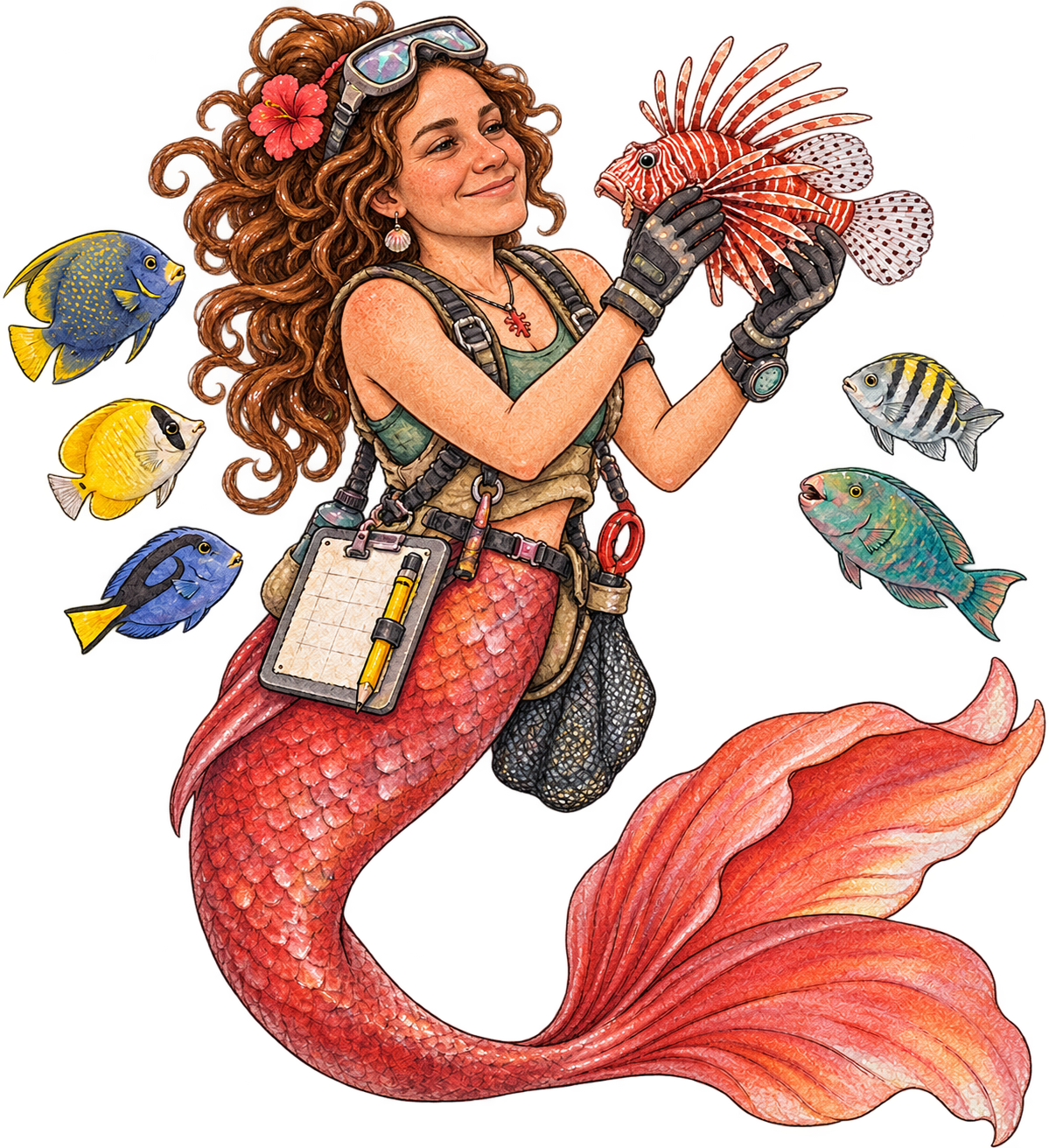
Size: Large (parody scale) · Color: Red · Habitat: ALL.
Christine is a Divemaster and reef defender. Her wildlife-ecology background and lionfish-management experience give her a practical angle on an invasive-fish problem. In this field guide the lionfish is handled carefully; the rest of the reef gets to carry on.
Fictional staff parody; not real biology or harvest advice.
Explore Christine Rain’s staff Fish ID guide →Christopher Robinson — The Fish-Formation Colonel
Merman · Diveshopidae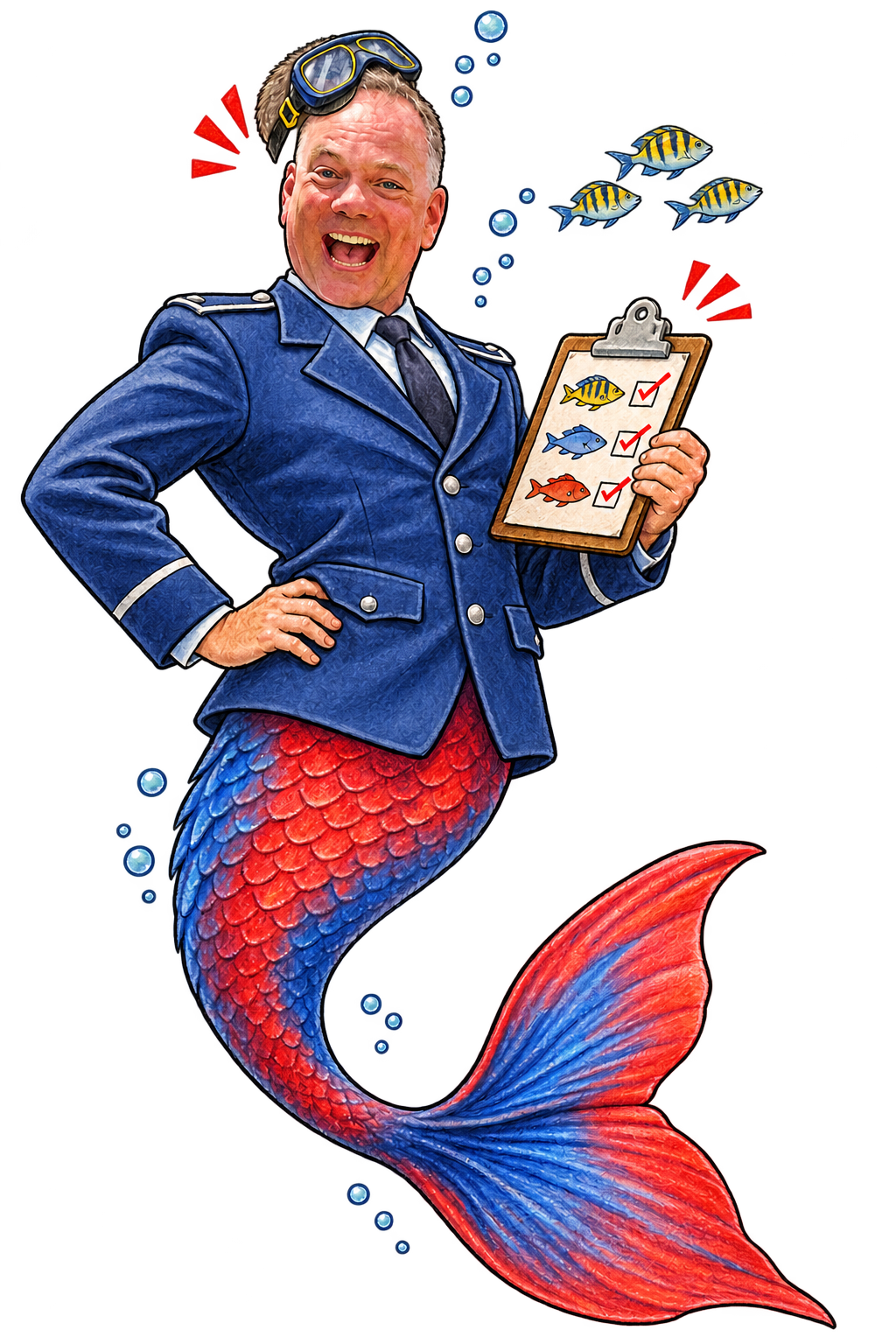
Size: Large (parody scale) · Color: Red · Habitat: ALL.
Christopher brings a commander’s eye to a dive briefing. The fish have been asked to hold formation; their response remains officially unconfirmed.
Fictional staff parody; not real biology or harvest advice.
Explore the Christopher Robinson staff-merfolk guide →Austin McKay — The Current-Riding Science Guide
Merman · Diveshopidae
Size: Large (parody scale) · Color: Red · Habitat: ALL.
Austin is a Divemaster with marine-science knowledge. He brings a calm, upbeat presence to local dives; the shoal may be drifting, but it is at least pretending to follow the slate.
Fictional staff parody; not real biology or harvest advice.
Explore Austin McKay’s staff Fish ID guide →No matching profiles yet. Clear a filter or try another name or feature.
This archive covers regional possibilities, not guaranteed sightings. Some animals are seasonal or uncommon, and a broad Florida range alone does not establish a West Palm Beach record. The lionfish page covers two visually similar species as one identification group.
Make your next dive happen
Dive With Us
Explore local charters and plan a dive suited to your experience.
View dive calendarTrain With Us
Build your fish identification, buoyancy and diving skills.
Explore trainingTravel With Us
Discover upcoming dive adventures and trip details.
Explore dive travelShop With Us
Browse equipment for your diving and ask our team for help choosing.
Explore dive gearReview current dates, availability, prices, inclusions and requirements on each listing before booking or buying.
Build a better underwater observation
- Notice the body outline and where the fish is swimming.
- Estimate size without moving closer or touching the animal.
- Look for distinct tail, fin and head markings.
- Record several clues after the dive. Allow for juvenile colors, poor visibility and lighting changes.
Keep a respectful distance from all marine life, including sharks. Follow your dive briefing and never chase, touch, feed or block an animal’s path.
Your surface-interval essentials
Questions for Stuart Scuba? info@stuartscuba.com
Check the Stuart Scuba Weather Center · Play scuba trivia
Weather and wildlife vary. Confirm current conditions, trip requirements and departure details with the operator.
Plan Your Next Dive with Stuart Scuba
Dive With Us
Explore upcoming local charters and choose a dive that fits your experience.
Before you book
Check the individual listing for departure time, requirements and availability.
Travel With Us
Find upcoming dive adventures and start planning your next trip.
Plan your trip
Review dates, inclusions and trip details on the travel calendar.
Stay Connected with Stuart Scuba
 Follow pageShare
YouTube
SubscribeWatch & shareFollow on InstagramView & share post
Follow company news, training updates, and dive stories.
Follow on LinkedInGoogle Reviews
See Stuart Scuba’s current Google rating and review count below. Open the listing in Google Maps to browse customer reviews.



