

Fish identification archive / Lettuce Sea Slug
Lettuce Sea Slug
Elysia crispata · Plakobranchidae
I saw this
Spotted this marine life? Share the guide with your dive buddies. Review your caption before posting.
For Instagram, copy the caption and link into your own post or message. Nothing is posted automatically and this does not record a verified sighting.
Identification overview
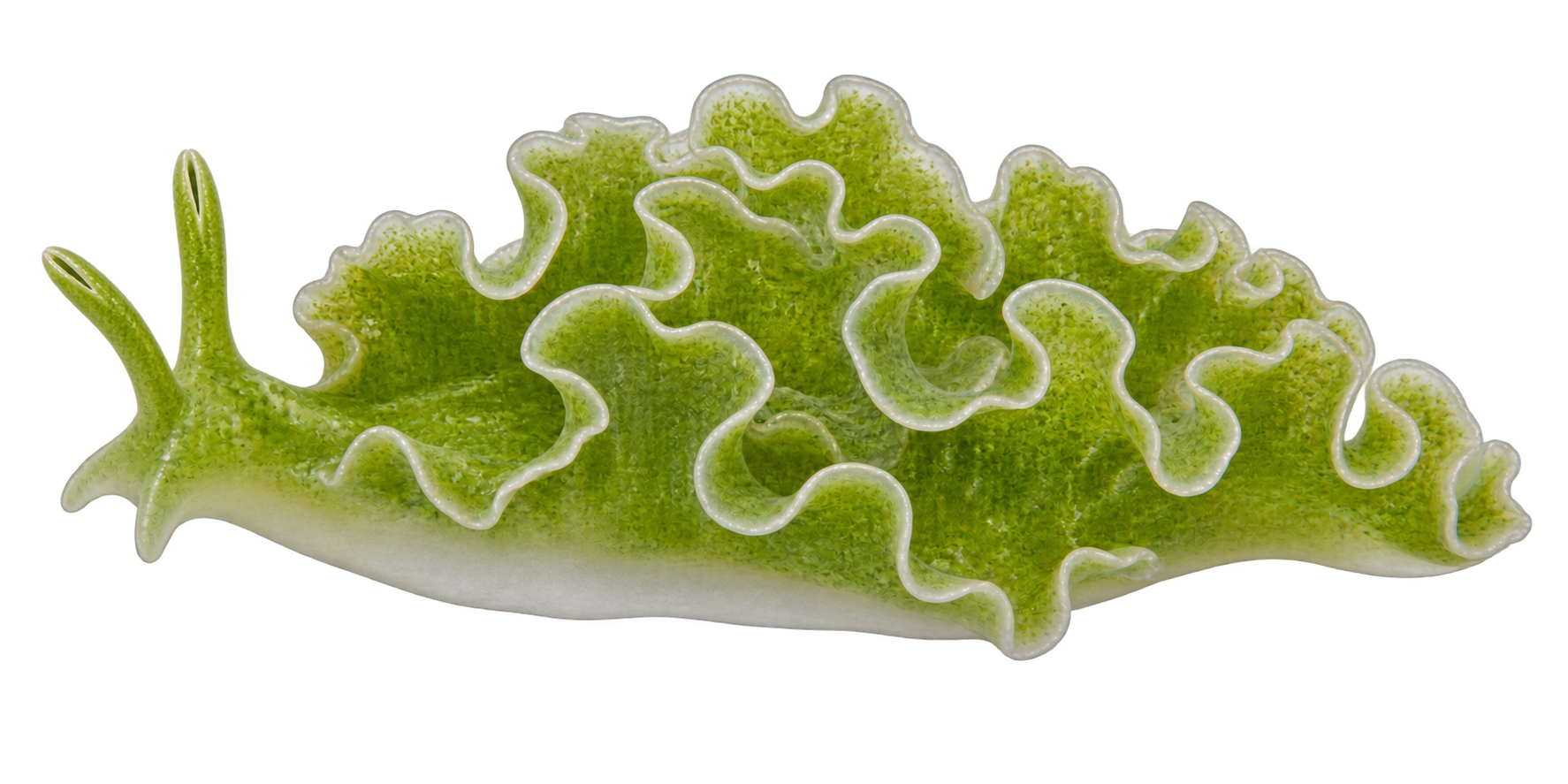
The lettuce sea slug is an animal whose folded body edges resemble a small leafy head of lettuce. Elysia crispata has broad, ruffled lateral flaps called parapodia. Green is a familiar color, but pale, blue or yellow details can alter its appearance. Look at the body shape and folded edges rather than expecting every individual to have identical colors.
This is a sea slug, not a piece of drifting algae. Photograph the head and the complete ruffled outline when possible. A close-up of one green fold can hide useful identification features. Observe the animal where it is crawling instead of lifting it onto a cleaner background.
A documented Key Largo reef resident
A peer-reviewed study published in 2026 explicitly describes collecting living Elysia crispata by scuba at Pickles Reef off Key Largo, at roughly five meters depth. This is direct local evidence, not an inference from the broad phrase “Florida Keys.” A University of Bergen field photograph also identifies an animal from Key Largo. Neither source promises a sighting on any particular trip or establishes occurrence throughout the entire Vero–Key Largo corridor.
The 2026 study discusses reef-associated and sheltered nearshore forms. Older references sometimes called the nearshore form Elysia clarki; current synonym treatment places that name under Elysia crispata. These names should lead to one species profile, not be counted as two new additions. Habitat and appearance can vary within the species.
Food and borrowed solar machinery
The slug feeds on green macroalgae and retains chloroplasts, the cellular structures that carry out photosynthesis. Retained chloroplasts remain functional within the slug’s digestive tissues. This process, called kleptoplasty, gives “solar-powered sea slug” a basis in biology, but does not turn the animal into a plant or justify assuming it can live indefinitely on light alone.
Reproduction and responsible watching
The species is hermaphroditic, with both male and female reproductive functions, and reproduction includes cross-fertilization and egg development. The reviewed modern study describes limited dispersal associated with a short, nonfeeding early developmental stage. It does not establish a local spawning season for visiting divers.
Its ruffled body, retained chloroplasts and changing scientific-name history provide three good reasons to look closely. Keep fins clear of the bottom and do not handle the slug to expose its underside. Treat this page as an identification guide, not permission to collect aquarium animals. Consult current FWC marine-life rules and the regulations for the precise sanctuary, park or access point before considering removal.
References
Current Florida collection cautions
Reviewed November 12, 2026. FWC regulates sea slugs as marine life. Licensing, gear, live-condition requirements, limits and site closures apply. Confirm the exact park or sanctuary rules before collection. Observe without removal; an occurrence record does not authorize harvest. Official FWC marine-life collection rules
Make your next dive happen
Dive With Us
Explore local charters and plan a dive suited to your experience.
View dive calendarTrain With Us
Build your fish identification, buoyancy and diving skills.
Explore trainingTravel With Us
Discover upcoming dive adventures and trip details.
Explore dive travelShop With Us
Browse equipment for your diving and ask our team for help choosing.
Explore dive gearReview current dates, availability, prices, inclusions and requirements on each listing before booking or buying.
Call us now
Ask about fish identification training
Reef Fish Identification
Ask about dates, prerequisites or your next step. An inquiry does not reserve a place. Please provide your own contact details; do not include medical, payment or a child's personal information.
We use these details to respond to your inquiry. This form does not sign you up for marketing.
Explore more with Stuart Scuba
Open Water course options · Advanced Adventure training · Technical training · Professional training · All courses · Local dives · Dive trips · Facebook · Instagram · YouTube
Your surface-interval essentials
Questions for Stuart Scuba? info@stuartscuba.com
Check the Stuart Scuba Weather Center · Play scuba trivia
Weather and wildlife vary. Confirm current conditions, trip requirements and departure details with the operator.
Plan Your Next Dive with Stuart Scuba
Dive With Us
Explore upcoming local charters and choose a dive that fits your experience.
Before you book
Check the individual listing for departure time, requirements and availability.
Travel With Us
Find upcoming dive adventures and start planning your next trip.
Plan your trip
Review dates, inclusions and trip details on the travel calendar.
Stay Connected with Stuart Scuba
 Follow pageShare
YouTube
SubscribeWatch & shareFollow on InstagramView & share post
Follow company news, training updates, and dive stories.
Follow on LinkedInGoogle Reviews
See Stuart Scuba’s current Google rating and review count below. Open the listing in Google Maps to browse customer reviews.



