

ERDI ERD Dry Suit Ops Training in Stuart, Florida
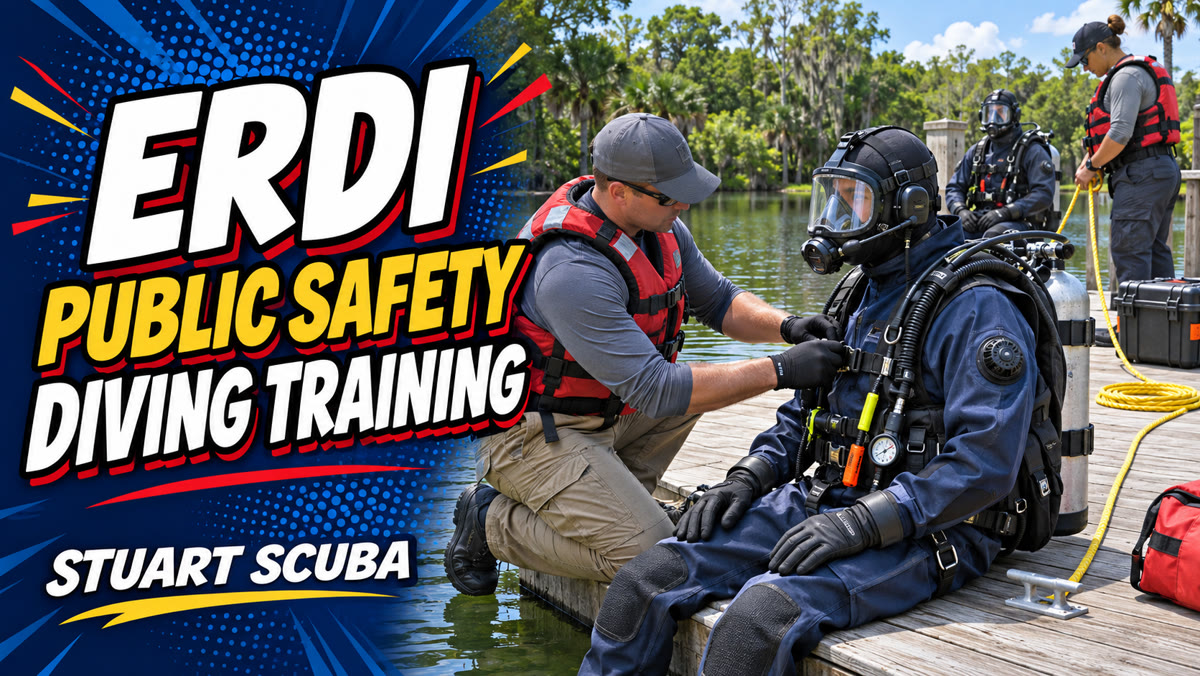
ERDI • Public Safety Training
A dry suit changes more than what a diver wears. Public safety divers need to manage suit buoyancy, recognize equipment problems and work within the team’s exposure-control plan. ERD Dry Suit Ops develops those skills for the public safety environment.
Who this course is for
- Minimum age 18.
- ERDI certification or an accepted equivalent appropriate to the course.
- Current CPR, first aid and oxygen administration qualifications.
- A suitable dry suit, compatible diving equipment and review of medical fitness.
Course structure
The course includes approximately three hours of classroom work, confined-water practice and two open-water training dives. Training addresses suit selection, preparation, buoyancy and emergency procedures. When combined with ERD I, these two dives are additional to the ERD I dives.
What you will work on
- Dry suit selection, inspection, care and preparation.
- Weighting, inflation, venting, trim and controlled buoyancy.
- Dry suit emergency procedures and alternate responses.
- Working in the suit while maintaining team communications and situational awareness.
Scope and safety
This is ERDI public safety dry suit training. It is separate from the SDI recreational Dry Suit Diver course. A dry suit alone does not establish protection against every contaminant or authorize hazardous-material diving.
Plan your course with Stuart Scuba
We confirm candidate eligibility, the equipment plan, course schedule and a written quote before enrollment. Public safety teams serving Stuart, Port St. Lucie, Palm City, Hobe Sound, Jupiter, West Palm Beach and Vero Beach can contact us to discuss training logistics.
Call (772) 600-8288 or ask about ERDI ERD Dry Suit Ops.
Frequently asked questions
Is this the SDI Dry Suit Diver course?
No. ERD Dry Suit Ops is the ERDI public safety program; SDI Dry Suit Diver is a recreational course.
How many dives are required?
Two open-water training dives are required, with confined-water practice and academics.
Can I combine this with ERD I?
Yes, when arranged with appropriately qualified instruction. Two additional dives are required for the dry suit component.
Does a dry suit make contaminated water safe?
No. Exposure protection must be selected through a hazard assessment, equipment compatibility and the team’s procedures. A dry suit is only one part of that system.
Where is the course organized?
Contact Stuart Scuba in Stuart, Florida. We confirm the classroom, practical training sites and meeting details before you enroll.
Can our team arrange a group course?
Yes. Tell us your team size, existing qualifications, equipment and training goals so we can review the course plan.
Is a particular course date guaranteed?
Course dates, instructor availability and suitable training conditions are confirmed before booking.
How much does the course cost?
Request a course quote. We will confirm tuition, materials, equipment arrangements and any site or charter costs before you commit.
Is rental equipment included?
Equipment arrangements are confirmed in the course quote. Tell us what you own and what you need before enrollment.
Can I use my own equipment?
Bring your equipment list for review. Equipment must suit the course, fit properly and be maintained for its intended use.
Is certification automatic after attending?
No. Certification requires completion of the required knowledge, practical work and performance evaluations.
Can another agency’s certification meet a prerequisite?
An equivalent may be accepted where the current course standard permits it. Send your certification details for review.
What if I need more practice?
Tell the instructor where you need help. Additional practice and scheduling are discussed before certification decisions are made.
What should I send with an inquiry?
Send the course name, your certifications, relevant experience, equipment and preferred dates. Teams should include the number of candidates.
Can weather change the training schedule?
Yes. Conditions and site suitability determine when practical training can proceed. The schedule is confirmed with the instructor.
How is the dry suit selected?
The instructor reviews suit suitability, fit and compatibility with the planned training. Operational exposure protection must also follow the team’s hazard assessment.
Will this certify our entire agency?
Individual course completion does not certify an entire agency or guarantee compliance with every operational requirement.
Are current first response qualifications important?
Yes. Required CPR, first aid and oxygen qualifications must be current where specified by the course standard.
When is the equipment plan confirmed?
We review the equipment list and course arrangements before enrollment. Tell us what you own and what you need to arrange.
How do I start?
Call (772) 600-8288 or use our contact page. We will review prerequisites and outline the next steps.
Related training
Explore ERDI Public Safety • FRTI CPR, first aid and oxygen training


