

Fish Identification for South Florida
Know the fish you meet on a dive. Start with body shape, narrow by approximate size, then compare the species.
This growing guide focuses on fish a diver may encounter in South Florida. Begin with lionfish, blacktip shark and queen angelfish. More profiles will be added as this guide grows.
1. Choose a body shape
Shapes are practical visual clues, not scientific family groups. Compare fin position, markings, habitat and behavior too. Do not approach wildlife to measure it.
Fan-finned & spiny
2. Narrow by approximate size
Medium: 6–18 inches; some adults exceed 18 inches
3. Compare the species
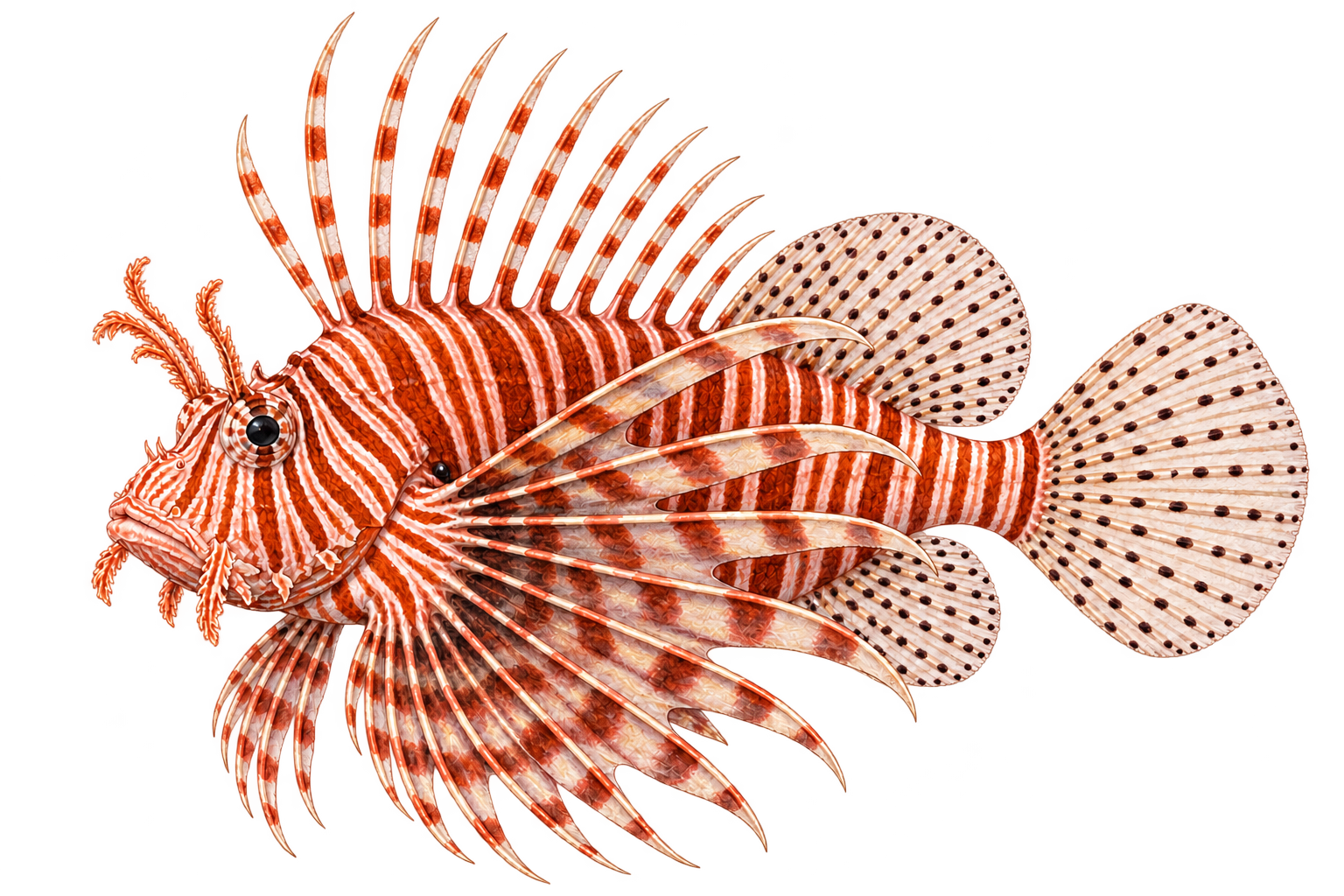
Lionfish
I spread my fins to corner small prey. Original AI-assisted illustration, not a photograph.
Sharks
2. Narrow by approximate size
Large: over 18 inches
3. Compare the species
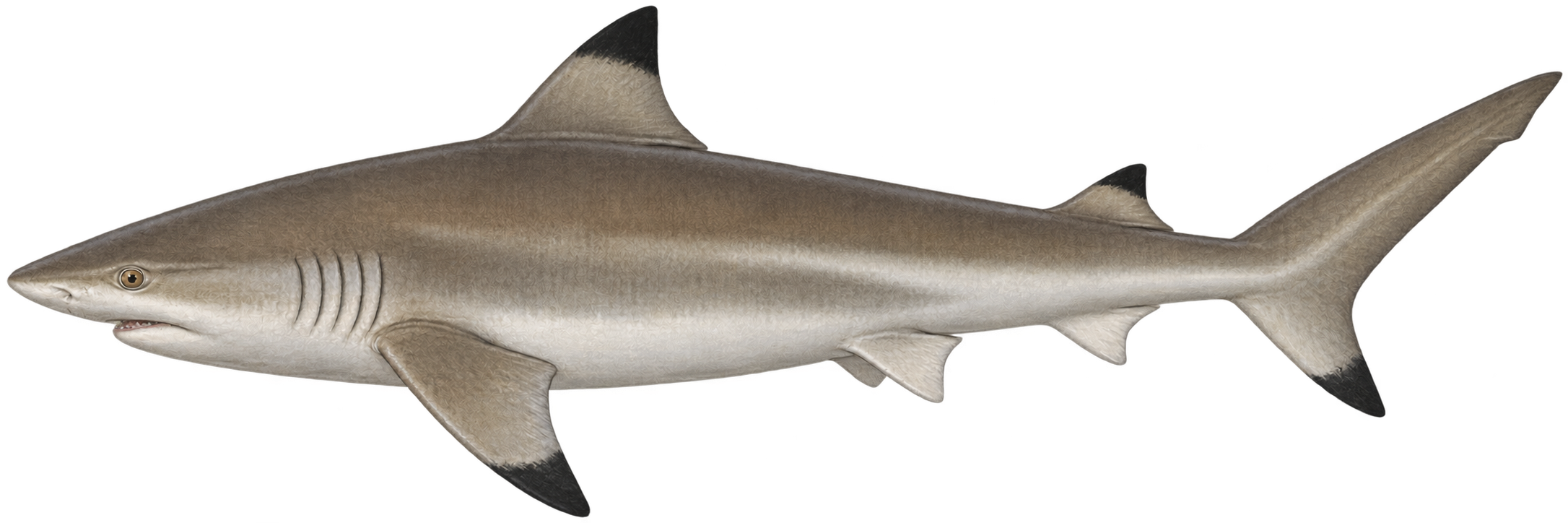
Blacktip Shark
I sometimes leap and spin while feeding. Original AI-assisted illustration, not a photograph.
Deep-bodied & oval
Tall, flattened from side to side. Start here for the queen angelfish.
2. Narrow by approximate size
Small: under 6 inches · Medium: 6–18 inches · Large: over 18 inches. Use the size of the fish you saw; young fish can belong in a smaller band than adults.
Medium · 6–18 inches
3. Compare the species
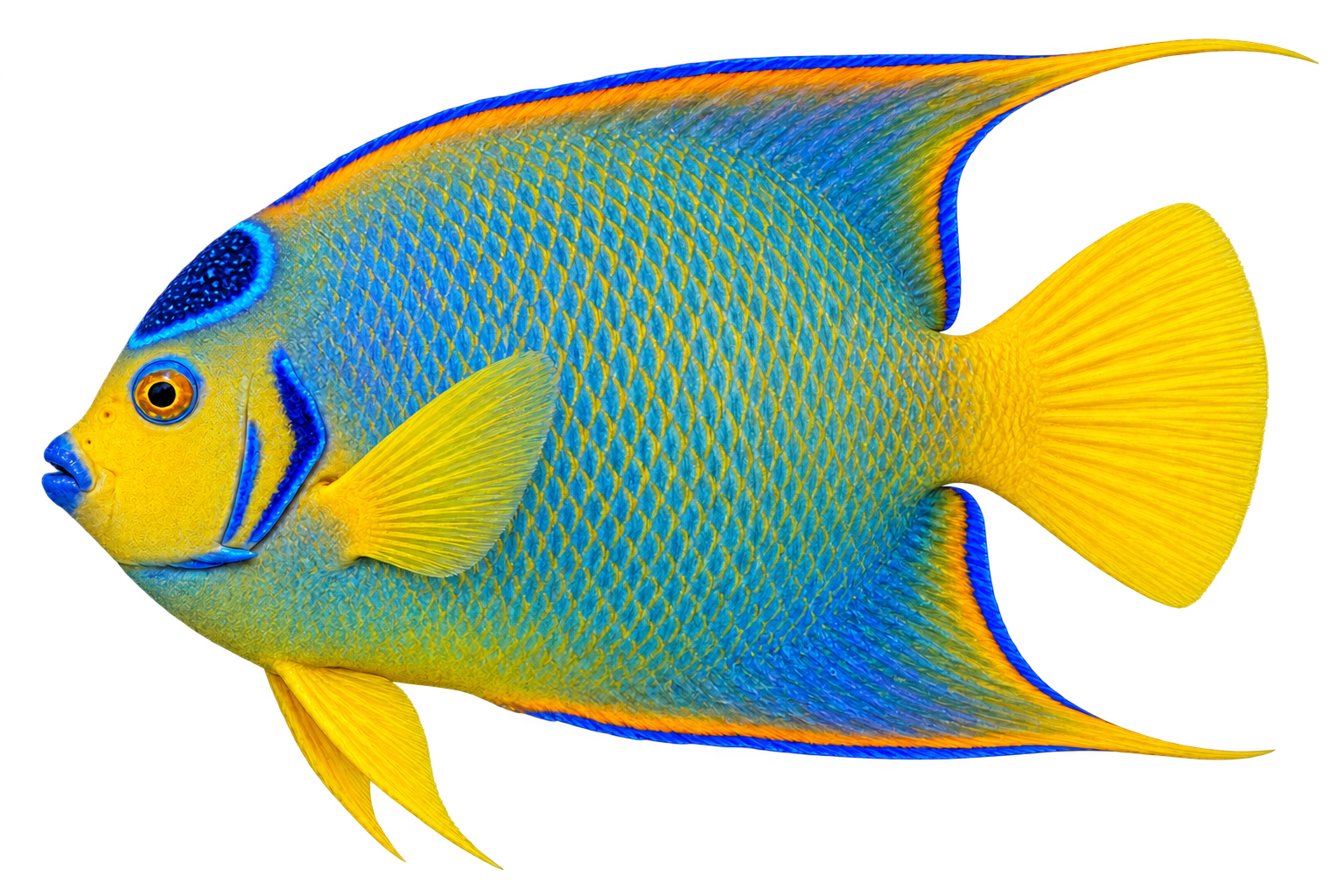
Queen angelfish
Holacanthus ciliaris · Usually 8–14 inches, maximum about 18 inches. Look for the blue-ringed forehead crown and all-yellow tail.
Original AI-assisted educational illustration, not an underwater photograph.
Small and large deep-bodied species profiles are coming. More deep-bodied profiles are being developed.
Streamlined & torpedo-shaped
Longer than tall, often built for efficient swimming. More profiles are coming.
Size step: note whether the fish is under 6 inches, 6–18 inches or over 18 inches, then record distinguishing features. Species comparisons for this group are not yet available.
Long & eel-like
Very elongated bodies, sometimes hiding in cracks. More profiles are coming.
Size step: note whether the fish is under 6 inches, 6–18 inches or over 18 inches, then record distinguishing features. Species comparisons for this group are not yet available.
Flattened & bottom-associated
Broad, flattened shapes associated with the seabed, including rays. More profiles are coming.
Size step: note whether the fish is under 6 inches, 6–18 inches or over 18 inches, then record distinguishing features. Species comparisons for this group are not yet available.
Build a better underwater observation
- Notice the body outline and where the fish is swimming.
- Estimate size without moving closer or touching the animal.
- Look for distinct tail, fin and head markings.
- Record several clues after the dive. Allow for juvenile colors, poor visibility and lighting changes.
Keep a respectful distance from all marine life, including sharks. Follow your dive briefing and never chase, touch, feed or block an animal’s path.
Your surface-interval essentials
Questions for Stuart Scuba? info@stuartscuba.com
Check the Stuart Scuba Weather Center · Play scuba trivia
Weather and wildlife vary. Confirm current conditions, trip requirements and departure details with the operator.
Plan Your Next Dive with Stuart Scuba
Dive With Us
Explore upcoming local charters and choose a dive that fits your experience.
Before you book
Check the individual listing for departure time, requirements and availability.
Travel With Us
Find upcoming dive adventures and start planning your next trip.
Plan your trip
Review dates, inclusions and trip details on the travel calendar.
Stay Connected with Stuart Scuba
 Follow pageShare
YouTube
SubscribeWatch & shareFollow on InstagramView & share post
Follow company news, training updates, and dive stories.
Follow on LinkedInGoogle Reviews
See Stuart Scuba’s current Google rating and review count below. Open the listing in Google Maps to browse customer reviews.


