

Fish identification archive / Rock-boring Urchin
Rock-boring Urchin
Echinometra lucunter · Echinometridae
I saw this
Spotted this marine life? Share the guide with your dive buddies. Review your caption before posting.
For Instagram, copy the caption and link into your own post or message. Nothing is posted automatically and this does not record a verified sighting.
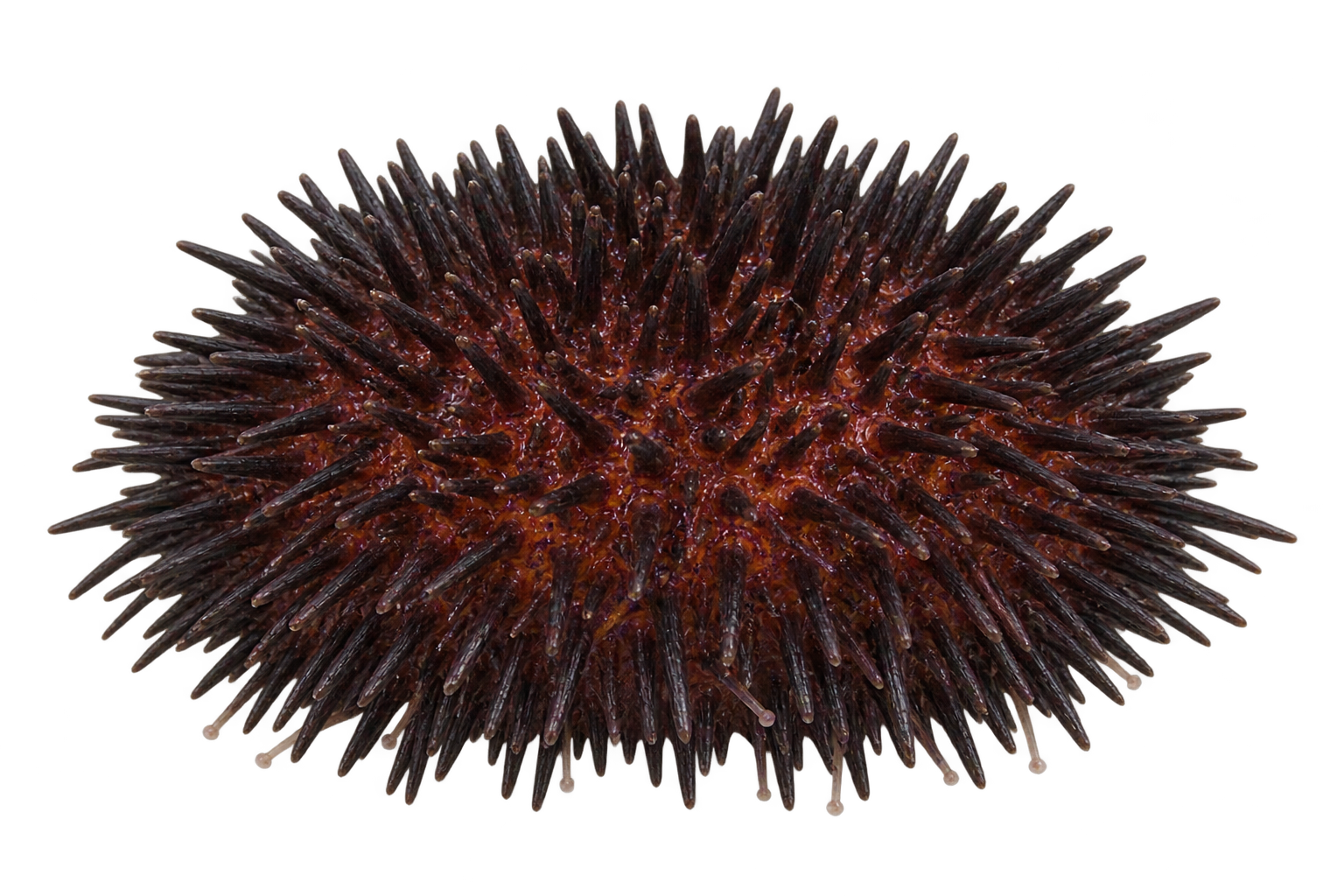
A dark urchin wedged tightly into rock may be a rock-boring urchin, Echinometra lucunter. Its body is oval rather than perfectly round, with pointed spines surrounding the hard test. Dark brown, black and reddish tones occur. A photograph of color alone is not enough to separate it confidently from other Florida urchins, particularly when most of the animal is hidden.
Where the local evidence leads
The 2014 St. Lucie Inlet Preserve State Park management plan lists the rock-boring urchin in its animal inventory, using the apparent genus spelling error “Echinometre.” The scientific and common names together support the intended Echinometra lucunter identification. This is useful historical evidence within the Stuart portion of the Vero–Key Largo corridor, not a claim that every nearby reef currently holds the species.
Broader biological accounts associate it with shallow rocky shores, crevices and wave-exposed habitats. It can also occur on shallow reefs. The appropriate search image is a sheltered animal within hard substrate, not an exposed sand dollar or a seagrass-covered round urchin. Do not translate broad regional habitat descriptions into an exact dive-site promise.
Feeding and shelter
Rock-boring urchins feed largely on algae. Their five-toothed jaw apparatus, known as Aristotle’s lantern, is used in feeding. They shelter in cavities and hold firmly with tube feet and spines. Some movement out of shelter occurs at night, although many individuals remain close to their holes. This combination of feeding and attachment helps explain why a casual daytime glance can miss them.
The species can defend access to shelter and food. Those observations describe interactions among urchins, not aggression toward divers. Its pointed spines still make a hands-off approach important. Never place a hand inside a crevice to test whether an animal is firmly attached.
Reproduction and identification
Males and females release reproductive cells into the water, where fertilization occurs. The resulting larvae drift in the plankton before developing into bottom-dwelling juveniles. Published studies report differing reproductive patterns among regions; this page does not turn a Brazilian or Caribbean breeding season into a Florida schedule.
The similarly named reef urchin, Echinometra viridis, is a separate species already represented in this guide. Specialists use additional skeletal and microscopic characters when distinguishing close relatives. A poorly exposed field photograph may warrant a tentative identification rather than an overly confident label.
Leave the animal and surrounding rock intact. For any proposed collection, check current FWC marine-life rules and the specific park or sanctuary restrictions. Local occurrence is not permission to collect, and this profile is designed for observation.
References
Collection and habitat protection
Urchins fall under FWC marine-life rules. Verify current species limits, licensing and local closures; never pry animals from rock for identification. Current FWC marine-life guidance. Guidance reviewed November 12, 2026. No location-specific collection clearance is given.
Make your next dive happen
Dive With Us
Explore local charters and plan a dive suited to your experience.
View dive calendarTrain With Us
Build your fish identification, buoyancy and diving skills.
Explore trainingTravel With Us
Discover upcoming dive adventures and trip details.
Explore dive travelShop With Us
Browse equipment for your diving and ask our team for help choosing.
Explore dive gearReview current dates, availability, prices, inclusions and requirements on each listing before booking or buying.
Call us now
Ask about fish identification training
Reef Fish Identification
Ask about dates, prerequisites or your next step. An inquiry does not reserve a place. Please provide your own contact details; do not include medical, payment or a child's personal information.
We use these details to respond to your inquiry. This form does not sign you up for marketing.
Explore more with Stuart Scuba
Open Water course options · Advanced Adventure training · Technical training · Professional training · All courses · Local dives · Dive trips · Facebook · Instagram · YouTube
Your surface-interval essentials
Questions for Stuart Scuba? info@stuartscuba.com
Check the Stuart Scuba Weather Center · Play scuba trivia
Weather and wildlife vary. Confirm current conditions, trip requirements and departure details with the operator.
Plan Your Next Dive with Stuart Scuba
Dive With Us
Explore upcoming local charters and choose a dive that fits your experience.
Before you book
Check the individual listing for departure time, requirements and availability.
Travel With Us
Find upcoming dive adventures and start planning your next trip.
Plan your trip
Review dates, inclusions and trip details on the travel calendar.
Stay Connected with Stuart Scuba
 Follow pageShare
YouTube
SubscribeWatch & shareFollow on InstagramView & share post
Follow company news, training updates, and dive stories.
Follow on LinkedInGoogle Reviews
See Stuart Scuba’s current Google rating and review count below. Open the listing in Google Maps to browse customer reviews.



