

Fish identification archive / Mangrove Rivulus
Mangrove Rivulus
Kryptolebias marmoratus · Rivulidae
I saw this
Spotted this fish? Share the guide with your dive buddies. Review your caption before posting.
For Instagram, copy the caption and link into your own post or message. Nothing is posted automatically and this does not record a verified sighting.
A fish of the mangrove edge
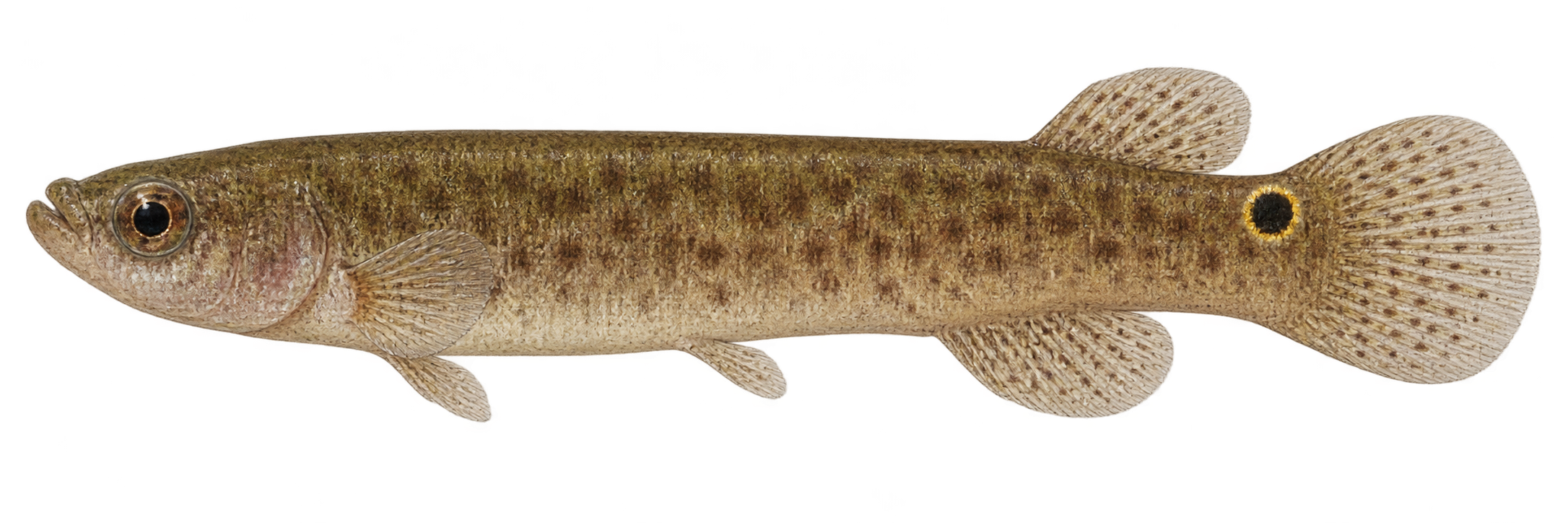
The mangrove rivulus belongs in a coastal field guide even though a reef dive is not the usual place to look for it. This small fish uses mangrove-associated pools, crab burrows and damp refuges. FWC’s current species profile places its Atlantic Florida range from the Keys north to Volusia County, covering the wider region of this guide without establishing a particular local sighting.
Identification and size
Look for a slender, somewhat flattened body, rounded tail and small fins set toward the rear. Brownish or olive coloration and dark speckling blend with sediment and leaf litter. Some individuals have an eye-like marking near the upper tail base, while males can look different. FWC reports a body length up to 6.1 cm. Do not use an isolated color or tail spot as proof of identification.
Feeding and amphibious habits
Small invertebrates supply its food, including aquatic prey and insects. Mangrove rivulus can use moist shelters outside open water and exchange gases through their skin. The Florida Museum account describes crab burrows as refuges during difficult conditions. These habits explain why healthy mangrove margins matter even where an observer sees little standing water.
Reproduction
Self-fertilizing hermaphrodites occur: an individual can produce eggs and sperm and fertilize its own eggs. Males also occur. This is sexual reproduction involving gametes, not ordinary asexual cloning. The unusual breeding system helps make this small fish scientifically interesting, but does not justify disturbing its refuge to obtain a specimen.
Conservation and observation
FWC removed the species from Florida’s Endangered and Threatened Species List on January 11, 2017, while retaining it in the Imperiled Species Management Plan. Delisting does not establish collection permission. FWC conservation account
Leave logs, leaf litter and crab burrows intact. Stay on permitted access routes and avoid trampling mangrove roots. Do not drain pools, dismantle shelters or move a fish into a photogenic setting. This profile offers no harvest allowance or eating recommendation.
Quick quiz
- Must it always remain in open water? No, moist refuges are part of its habitat.
- Does every individual require a separate mate? Self-fertilizing individuals occur.
- Does delisting remove the need to protect habitat? No.
Make your next dive happen
Dive With Us
Explore local charters and plan a dive suited to your experience.
View dive calendarTrain With Us
Build your fish identification, buoyancy and diving skills.
Explore trainingTravel With Us
Discover upcoming dive adventures and trip details.
Explore dive travelShop With Us
Browse equipment for your diving and ask our team for help choosing.
Explore dive gearReview current dates, availability, prices, inclusions and requirements on each listing before booking or buying.
Call us now
Ask about fish identification training
Reef Fish Identification
Ask about dates, prerequisites or your next step. An inquiry does not reserve a place. Please provide your own contact details; do not include medical, payment or a child's personal information.
We use these details to respond to your inquiry. This form does not sign you up for marketing.
Explore more with Stuart Scuba
Open Water course options · Advanced Adventure training · Technical training · Professional training · All courses · Local dives · Dive trips · Facebook · Instagram · YouTube
Your surface-interval essentials
Questions for Stuart Scuba? info@stuartscuba.com
Check the Stuart Scuba Weather Center · Play scuba trivia
Weather and wildlife vary. Confirm current conditions, trip requirements and departure details with the operator.
Plan Your Next Dive with Stuart Scuba
Dive With Us
Explore upcoming local charters and choose a dive that fits your experience.
Before you book
Check the individual listing for departure time, requirements and availability.
Travel With Us
Find upcoming dive adventures and start planning your next trip.
Plan your trip
Review dates, inclusions and trip details on the travel calendar.
Stay Connected with Stuart Scuba
 Follow pageShare
YouTube
SubscribeWatch & shareFollow on InstagramView & share post
Follow company news, training updates, and dive stories.
Follow on LinkedInGoogle Reviews
See Stuart Scuba’s current Google rating and review count below. Open the listing in Google Maps to browse customer reviews.



