

Fish identification archive / Orange Cup Coral
Orange Cup Coral
Tubastraea coccinea · Dendrophylliidae
I saw this
Spotted this marine life? Share the guide with your dive buddies. Review your caption before posting.
For Instagram, copy the caption and link into your own post or message. Nothing is posted automatically and this does not record a verified sighting.
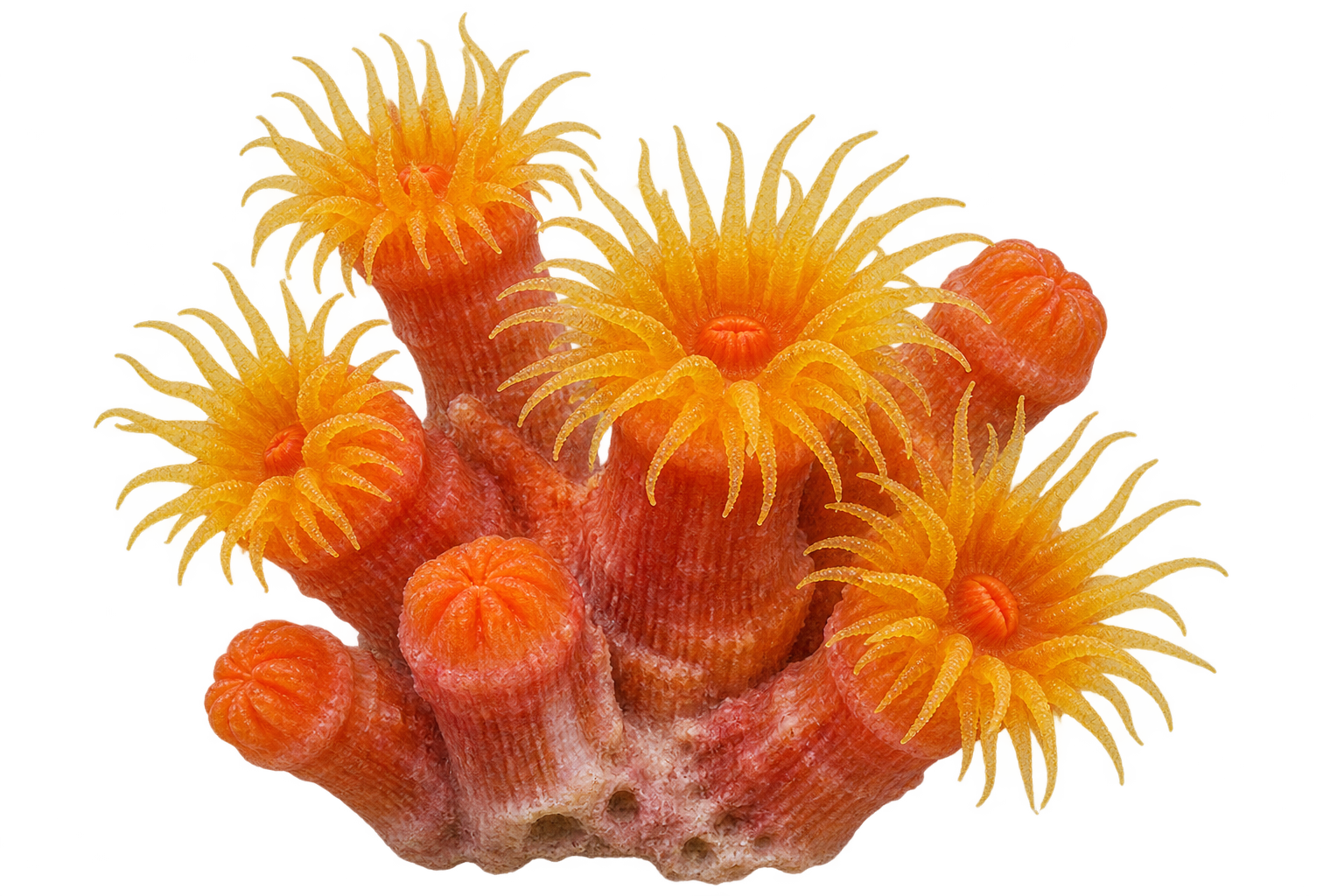
Orange cup coral, Tubastraea coccinea, forms clusters of individual skeletal cups with orange or reddish tissue and conspicuous yellow-orange tentacles. It is an animal colony, not a sponge. The vivid appearance is memorable, but orange coloration alone is not a reliable identification: a useful photograph should also show the arrangement of the cups and the surrounding substrate.
Documented South Florida history
Smithsonian’s NEMESIS account traces an Atlantic Florida record to a shipwreck off Key Largo in 1999 and describes subsequent records on artificial structures extending north to Palm Beach Inlet. This is unusually relevant evidence for the southern portion of the Vero–Key Largo corridor. It supports a wreck and artificial-reef context without establishing occurrence at Vero Beach or every natural reef between the named places.
These historical records should not be read as a current survey of any particular wreck. A reef guide can explain what an animal is and why it matters, while a recent local observation is still needed to say that a specific colony remains present today.
Food without photosynthetic partners
Unlike many familiar shallow-water reef-building corals, this species lacks the symbiotic algae that supply photosynthetic energy. It captures zooplankton with its tentacles. Shaded surfaces can therefore provide suitable feeding habitat even when they would offer poor light for a strongly photosynthesis-dependent coral. It produces a hard skeleton, but its colonies do not build reefs in the same way as the large framework-building species.
Growth and reproduction
New polyps can develop by budding. The species also reproduces through larvae, including larvae produced asexually, and its reproductive flexibility contributes to establishment in new places. The Global Invasive Species Database describes tissue extensions that can lead to new polyps away from an existing cluster. A photograph of neighboring cups cannot tell whether they originated from one clone or separate arrivals.
Why careful reporting matters
This coral is introduced in Atlantic Florida. Its presence deserves attention because introduced colonies can compete with native benthic animals. That is a reason to document a suspected occurrence accurately, not an invitation to conduct an improvised removal. Record the date, approximate location, depth and type of substrate, and retain clear photographs for identification by an appropriate marine resource authority.
Do not break, scrape or transport the colony. FWC’s current marine-life page lists stony-coral harvest as prohibited; a nonnative label does not create a recreational exception. If unsure, leave the animal undisturbed. Presenting this species in an identification guide helps divers recognize an ecological concern without encouraging collecting or promising a particular control method.
References
Collection and habitat protection
FWC prohibits stony-coral harvest. Nonnative status does not authorize recreational removal. Photograph suspected colonies without breaking, scraping or transporting them. Current FWC marine-life guidance. Guidance reviewed November 12, 2026. No location-specific collection clearance is given.
Make your next dive happen
Dive With Us
Explore local charters and plan a dive suited to your experience.
View dive calendarTrain With Us
Build your fish identification, buoyancy and diving skills.
Explore trainingTravel With Us
Discover upcoming dive adventures and trip details.
Explore dive travelShop With Us
Browse equipment for your diving and ask our team for help choosing.
Explore dive gearReview current dates, availability, prices, inclusions and requirements on each listing before booking or buying.
Call us now
Ask about fish identification training
Reef Fish Identification
Ask about dates, prerequisites or your next step. An inquiry does not reserve a place. Please provide your own contact details; do not include medical, payment or a child's personal information.
We use these details to respond to your inquiry. This form does not sign you up for marketing.
Explore more with Stuart Scuba
Open Water course options · Advanced Adventure training · Technical training · Professional training · All courses · Local dives · Dive trips · Facebook · Instagram · YouTube
Your surface-interval essentials
Questions for Stuart Scuba? info@stuartscuba.com
Check the Stuart Scuba Weather Center · Play scuba trivia
Weather and wildlife vary. Confirm current conditions, trip requirements and departure details with the operator.
Plan Your Next Dive with Stuart Scuba
Dive With Us
Explore upcoming local charters and choose a dive that fits your experience.
Before you book
Check the individual listing for departure time, requirements and availability.
Travel With Us
Find upcoming dive adventures and start planning your next trip.
Plan your trip
Review dates, inclusions and trip details on the travel calendar.
Stay Connected with Stuart Scuba
 Follow pageShare
YouTube
SubscribeWatch & shareFollow on InstagramView & share post
Follow company news, training updates, and dive stories.
Follow on LinkedInGoogle Reviews
See Stuart Scuba’s current Google rating and review count below. Open the listing in Google Maps to browse customer reviews.



