

Fish identification archive / Variable Coquina
Variable Coquina
Donax variabilis · Donacidae
I saw this
Spotted this marine life? Share the guide with your dive buddies. Review your caption before posting.
For Instagram, copy the caption and link into your own post or message. Nothing is posted automatically and this does not record a verified sighting.
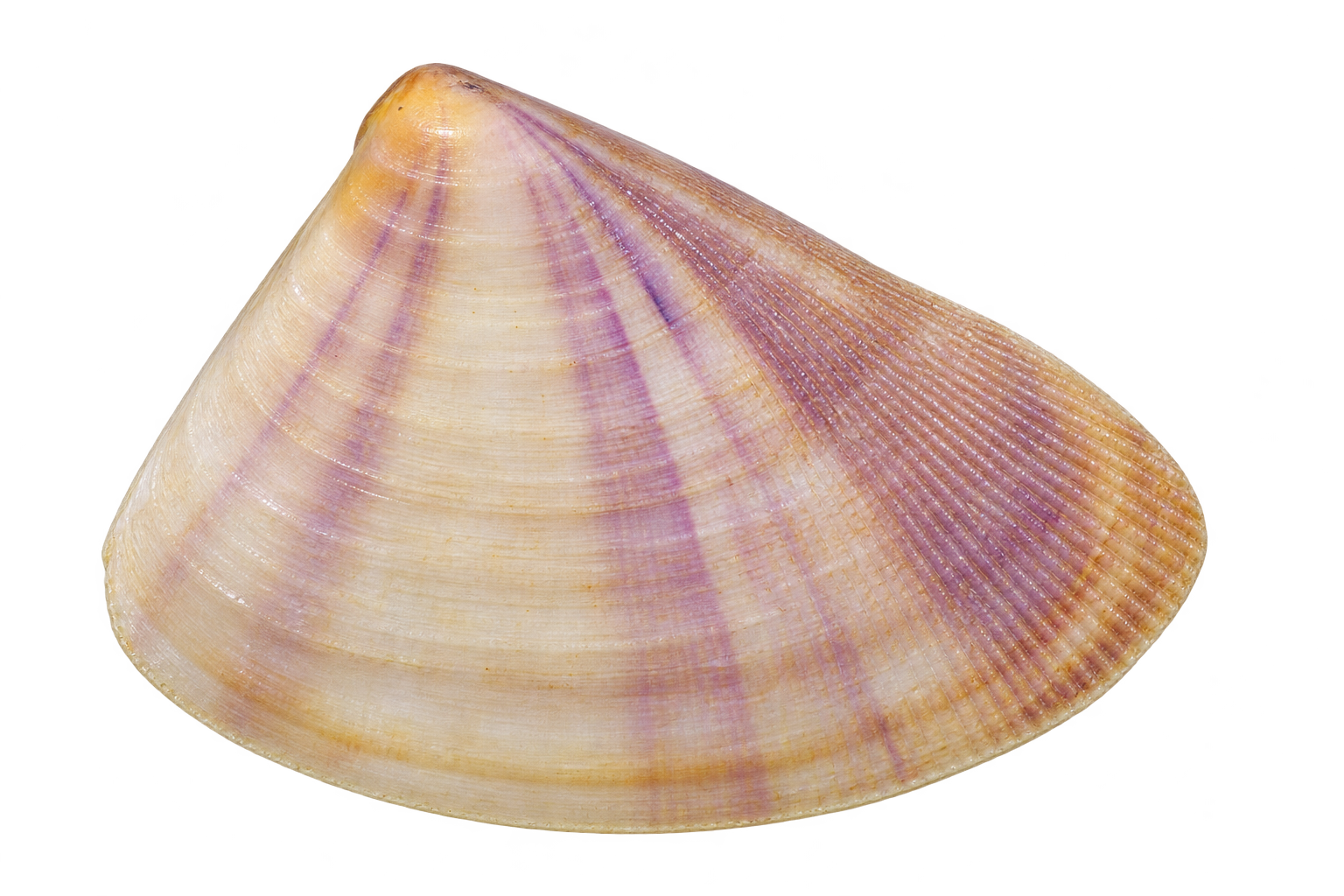
Identification overview
The variable coquina, Donax variabilis, is a small, wedge-shaped clam associated with sandy shorelines. Its shell can carry many colors and patterns, which makes a beach collection visually striking but makes color a poor identification shortcut. Look for the compact outline and shell sculpture rather than assuming each color represents a different species.
Shoreline habitat, not a reef sighting
Coquinas are part of Florida’s wave-washed beach fauna. A living animal may appear briefly in wet sand as a wave retreats, then disappear again. This is a shoreline encounter for a coastal marine-life guide, not a species to promise on a Palm Beach or Key Largo reef dive.
For an Atlantic Florida record, identify the actual clam rather than applying the name to every tiny bivalve in the swash. Research on southeastern United States Donax emphasizes that similar species have often been confused. Florida DEP’s 2014 St. Lucie Inlet Preserve plan names variable coquinas in its shoreline habitat description.
How it makes a living
The clam uses a muscular foot to burrow quickly. Waves can help reposition it within the active swash zone, while burial provides access to flowing water without remaining fully exposed. Short siphons support feeding on small suspended particles, including microscopic algae and other organic material.
This behavior rewards patience. Watch one patch of wet sand through several waves instead of scooping animals into a bucket. If the shell is visible only for an instant, a short video may document the burrowing action better than a handled close-up.
Reproduction and identification
Male and female coquinas release reproductive cells into the water. Free-swimming larvae develop before settling to the bottom. The parents do not guard the young after spawning. A shell’s vivid color is therefore an identification feature to record, not evidence of sex, age or reproductive condition.
Compare the outline, sculpture and hinge features against a specialist reference when a species-level identification matters. Closely related Donax species are not safely separated by a distant photograph of color alone. Labeling an uncertain observation “coquina clam” preserves useful information without inventing certainty.
Leave the beach functioning
Do not remove living clusters merely to arrange their colors for a photograph. Avoid digging up large patches of swash-zone habitat and return naturally exposed animals to undisturbed observation rather than handling them. Shellfish collection and food safety are separate questions governed by current official rules and local restrictions. This profile supports identification and appreciation; it does not establish that a beach is open to harvest or that its clams are safe to eat.
References
Current Florida collection cautions
Reviewed November 12, 2026. Collecting a shell containing a living organism generally requires a Florida recreational saltwater fishing license. Species rules and park, refuge or sanctuary restrictions apply independently of identification. Leave occupied shells and their habitat undisturbed. FWC requires clams, oysters and mussels to come only from designated approved or conditionally approved shellfish areas that FDACS currently lists as open. Closed waters cannot be harvested. Check the exact area map and daily status; no location is cleared by this profile. This guide gives no harvest permission or assurance that an animal is safe to eat. Official FWC live-shell collection guidance Official FWC oyster and clam rules Official FDACS shellfish classification and status
Make your next dive happen
Dive With Us
Explore local charters and plan a dive suited to your experience.
View dive calendarTrain With Us
Build your fish identification, buoyancy and diving skills.
Explore trainingTravel With Us
Discover upcoming dive adventures and trip details.
Explore dive travelShop With Us
Browse equipment for your diving and ask our team for help choosing.
Explore dive gearReview current dates, availability, prices, inclusions and requirements on each listing before booking or buying.
Call us now
Ask about fish identification training
Reef Fish Identification
Ask about dates, prerequisites or your next step. An inquiry does not reserve a place. Please provide your own contact details; do not include medical, payment or a child's personal information.
We use these details to respond to your inquiry. This form does not sign you up for marketing.
Explore more with Stuart Scuba
Open Water course options · Advanced Adventure training · Technical training · Professional training · All courses · Local dives · Dive trips · Facebook · Instagram · YouTube
Your surface-interval essentials
Questions for Stuart Scuba? info@stuartscuba.com
Check the Stuart Scuba Weather Center · Play scuba trivia
Weather and wildlife vary. Confirm current conditions, trip requirements and departure details with the operator.
Plan Your Next Dive with Stuart Scuba
Dive With Us
Explore upcoming local charters and choose a dive that fits your experience.
Before you book
Check the individual listing for departure time, requirements and availability.
Travel With Us
Find upcoming dive adventures and start planning your next trip.
Plan your trip
Review dates, inclusions and trip details on the travel calendar.
Stay Connected with Stuart Scuba
 Follow pageShare
YouTube
SubscribeWatch & shareFollow on InstagramView & share post
Follow company news, training updates, and dive stories.
Follow on LinkedInGoogle Reviews
See Stuart Scuba’s current Google rating and review count below. Open the listing in Google Maps to browse customer reviews.



