

Fish identification archive / Shark Eye
Shark Eye
Neverita duplicata · Naticidae
I saw this
Spotted this marine life? Share the guide with your dive buddies. Review your caption before posting.
For Instagram, copy the caption and link into your own post or message. Nothing is posted automatically and this does not record a verified sighting.
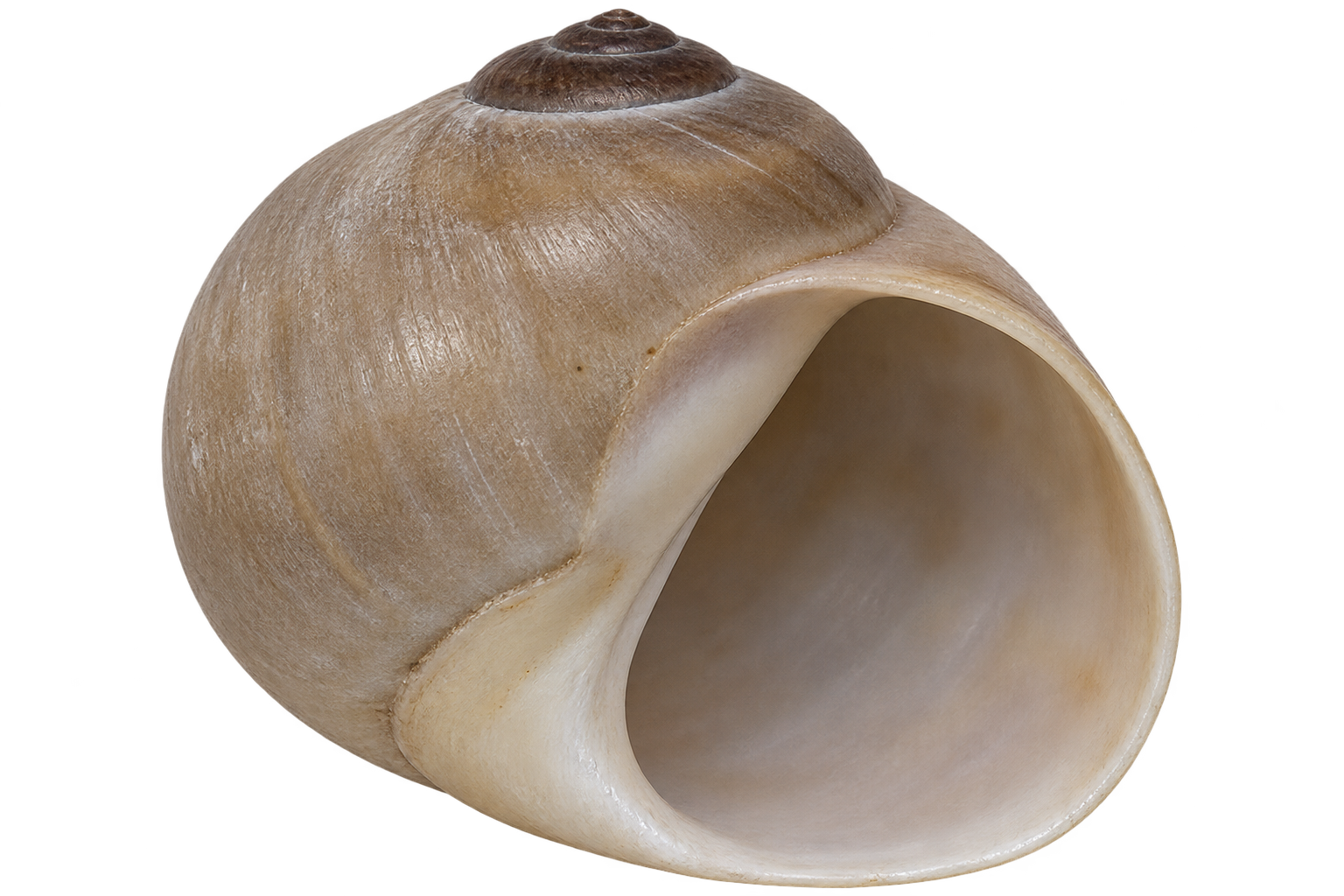
The shark eye, Neverita duplicata, is a moon snail with a smooth, rounded shell and a low spire. Darker early whorls surrounded by paler shell can create an eye-like appearance. The broad final whorl and semicircular opening are useful clues, but a shell viewed only from above may hide features needed to separate similar moon snails.
Atlantic Florida context
Florida DEP’s 2014 St. Lucie Inlet Preserve animal inventory lists the shark eye under the older name Polinices duplicatus. That is a dated local occurrence record within the regional coastline, not a claim that living animals are abundant there now. Its natural setting is sand and other suitable shallow-bottom habitat, rather than an animal perched conspicuously on coral.
A washed-up shell may be far easier to find than its living maker. Record whether an encounter involves a live snail, an empty shell or a hermit crab using the shell. Those observations are biologically different and should not be combined into a single unquestioned sighting.
Feeding and movement
A large muscular foot helps the snail move through sediment and handle prey. Shark eyes can attack smaller shelled mollusks by boring a hole and feeding through it. A neat hole in an empty clam shell is evidence of a predatory interaction, but it does not by itself identify which individual or species made it.
Avoid describing every moon snail as having an identical, exclusive diet. Studies of feeding and isotope evidence have added complexity to older accounts, and similar-looking species have also been confused. This guide emphasizes well-supported shell-boring behavior without claiming that it describes every meal.
Sand collars
The egg structure is a flexible collar made from mucus, sand and eggs. It can look like an artificial fragment until its regular curved shape is recognized. A Florida photographic record documents such a collar at Vilano Beach; that northeastern locality supports the reproductive example, not a separate claim about a Palm Beach spawning season.
Leave collars undisturbed rather than testing their strength. Photograph their position and shape without removing them from the habitat.
Compare carefully
The false shark eye, Neverita delessertiana, is an important lookalike. Spire form and the underside around the umbilicus need attention; a casual color match is insufficient. Use a reliable shell reference and accept a tentative moon-snail identification when the necessary features are concealed.
Current live-shell and protected-area rules apply independently of identification. Do not excavate animals or collect egg collars merely to complete a photograph.
References
Collection and seafood safety
Identification is not permission to collect. FWC distinguishes empty shells from shells containing living animals; a recreational saltwater fishing license is generally required for live-shell harvest. Species rules and park or sanctuary restrictions must also be checked. Leave animals undisturbed while identifying them. Current FWC guidance. Guidance reviewed November 12, 2026. No location-specific harvest or sanitation clearance is given.
Make your next dive happen
Dive With Us
Explore local charters and plan a dive suited to your experience.
View dive calendarTrain With Us
Build your fish identification, buoyancy and diving skills.
Explore trainingTravel With Us
Discover upcoming dive adventures and trip details.
Explore dive travelShop With Us
Browse equipment for your diving and ask our team for help choosing.
Explore dive gearReview current dates, availability, prices, inclusions and requirements on each listing before booking or buying.
Call us now
Ask about fish identification training
Reef Fish Identification
Ask about dates, prerequisites or your next step. An inquiry does not reserve a place. Please provide your own contact details; do not include medical, payment or a child's personal information.
We use these details to respond to your inquiry. This form does not sign you up for marketing.
Explore more with Stuart Scuba
Open Water course options · Advanced Adventure training · Technical training · Professional training · All courses · Local dives · Dive trips · Facebook · Instagram · YouTube
Your surface-interval essentials
Questions for Stuart Scuba? info@stuartscuba.com
Check the Stuart Scuba Weather Center · Play scuba trivia
Weather and wildlife vary. Confirm current conditions, trip requirements and departure details with the operator.
Plan Your Next Dive with Stuart Scuba
Dive With Us
Explore upcoming local charters and choose a dive that fits your experience.
Before you book
Check the individual listing for departure time, requirements and availability.
Travel With Us
Find upcoming dive adventures and start planning your next trip.
Plan your trip
Review dates, inclusions and trip details on the travel calendar.
Stay Connected with Stuart Scuba
 Follow pageShare
YouTube
SubscribeWatch & shareFollow on InstagramView & share post
Follow company news, training updates, and dive stories.
Follow on LinkedInGoogle Reviews
See Stuart Scuba’s current Google rating and review count below. Open the listing in Google Maps to browse customer reviews.



