

Fish identification archive / Tiger Lucine
Tiger Lucine
Codakia orbicularis · Lucinidae
I saw this
Spotted this marine life? Share the guide with your dive buddies. Review your caption before posting.
For Instagram, copy the caption and link into your own post or message. Nothing is posted automatically and this does not record a verified sighting.
Identification overview
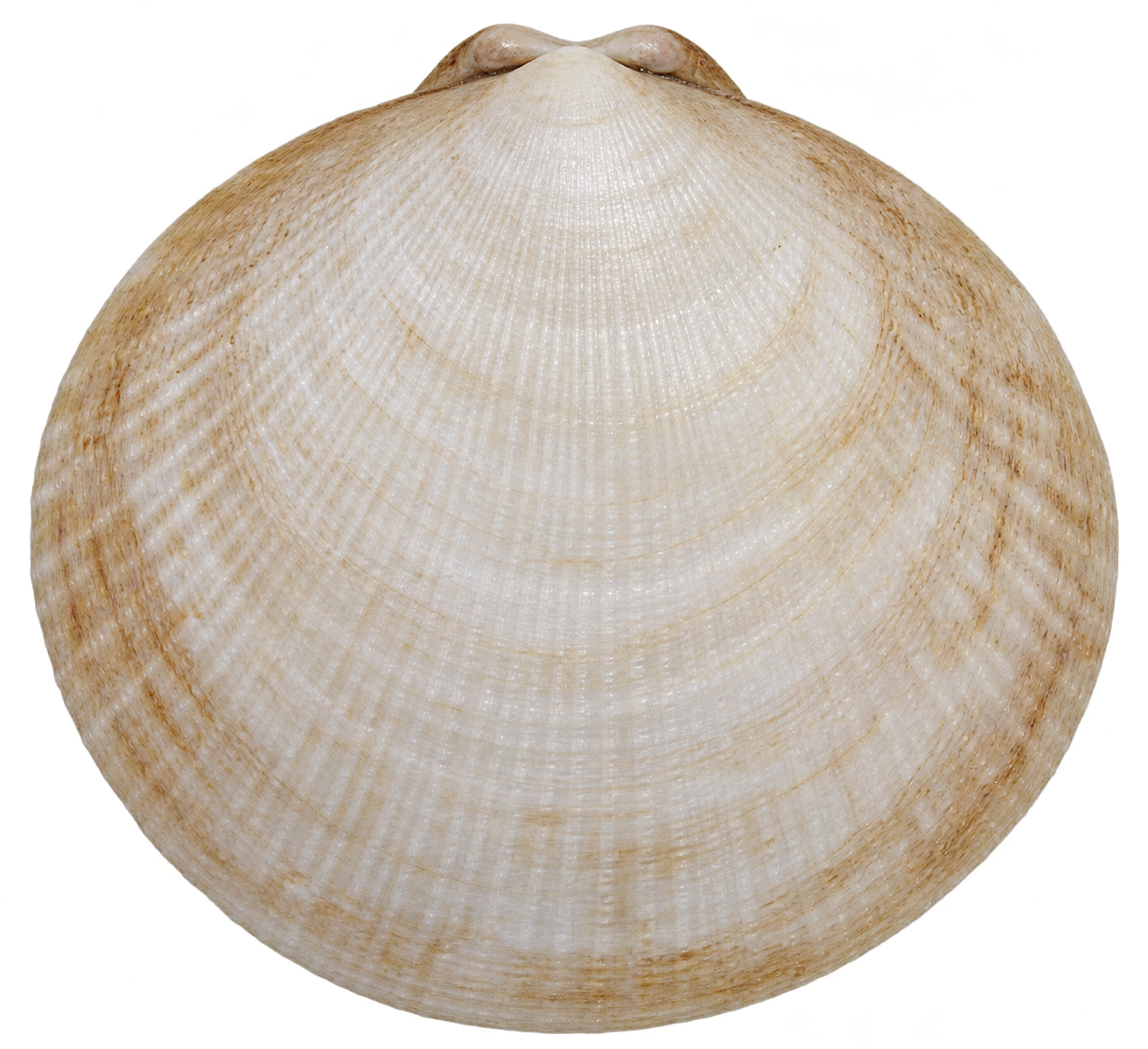
The tiger lucine, Codakia orbicularis, has a rounded, somewhat flattened shell. Fine radial sculpture crosses concentric lines, producing a delicate textured surface rather than the heavy, widely spaced ribs of many cockles. The shell is generally white and may show pink inside. A heart-shaped depression near the hinge, called the lunule, is another useful identification feature in a shell that is already exposed.
A photograph of a naturally visible shell should show its outline and surface sculpture together. A worn white valve by itself can be difficult to identify, and an empty beach shell is not evidence that the species is living at that exact location. Avoid digging up a clam simply to inspect its hinge or interior. Numeric maximum size is omitted here because reviewed sources use differing limits.
Living records in the local corridor
This species has stronger local support than a shell-only beach report. A reproduction study published in 1984 sampled living tiger lucines at Key Biscayne, Florida, as well as in the Bahamas. Biscayne National Park also includes the species in its official mollusk inventory. These records establish a place in the Vero–Key Largo region without claiming that every seagrass meadow presently supports it.
Think of sediment and seagrass habitat rather than a conspicuous animal perched on an offshore coral head. Because a buried clam is not always visible, absence from a casual dive photograph is not a useful population assessment.
How it obtains nutrition
Tiger lucines maintain sulfur-oxidizing bacteria in their gills. Research has demonstrated that these partners fix carbon and can also fix nitrogen. The relationship helps explain how a clam can make use of chemical processes occurring in its habitat. The bacteria are acquired from the environment rather than inherited inside the eggs, an important distinction from an earlier hypothesis about larval nutrition.
Reproduction
The Key Biscayne and Bahamas study found separate sexes. Eggs developed within individual capsules before veliger larvae emerged and later transformed into young clams. Those observations describe the life cycle; laboratory development times should not be treated as a countdown for every wild Florida animal.
Three details to remember are its crosshatched shell sculpture, documented living Key Biscayne population and bacterial partners. Protect the seagrass setting as carefully as the animal: maintain buoyancy, avoid stirring sediment and leave buried clams undisturbed. This is an identification profile, not shellfish-harvest advice. Current FWC rules, site restrictions and any applicable public-health closures need separate review before collection.
References
Current Florida collection cautions
Reviewed November 12, 2026. A living animal in a shell is not an empty-shell souvenir: applicable licensing, species rules and protected-area restrictions must be checked before removal. Leave attached animals and surrounding habitat undisturbed. This guide offers no collection permission or food-safety assurance. As a clam, it may be taken only from a designated approved or conditionally approved shellfish area currently open under FDACS status; that condition alone is not full harvest clearance. Official FWC live-shell collection guidance
Make your next dive happen
Dive With Us
Explore local charters and plan a dive suited to your experience.
View dive calendarTrain With Us
Build your fish identification, buoyancy and diving skills.
Explore trainingTravel With Us
Discover upcoming dive adventures and trip details.
Explore dive travelShop With Us
Browse equipment for your diving and ask our team for help choosing.
Explore dive gearReview current dates, availability, prices, inclusions and requirements on each listing before booking or buying.
Call us now
Ask about fish identification training
Reef Fish Identification
Ask about dates, prerequisites or your next step. An inquiry does not reserve a place. Please provide your own contact details; do not include medical, payment or a child's personal information.
We use these details to respond to your inquiry. This form does not sign you up for marketing.
Explore more with Stuart Scuba
Open Water course options · Advanced Adventure training · Technical training · Professional training · All courses · Local dives · Dive trips · Facebook · Instagram · YouTube
Your surface-interval essentials
Questions for Stuart Scuba? info@stuartscuba.com
Check the Stuart Scuba Weather Center · Play scuba trivia
Weather and wildlife vary. Confirm current conditions, trip requirements and departure details with the operator.
Plan Your Next Dive with Stuart Scuba
Dive With Us
Explore upcoming local charters and choose a dive that fits your experience.
Before you book
Check the individual listing for departure time, requirements and availability.
Travel With Us
Find upcoming dive adventures and start planning your next trip.
Plan your trip
Review dates, inclusions and trip details on the travel calendar.
Stay Connected with Stuart Scuba
 Follow pageShare
YouTube
SubscribeWatch & shareFollow on InstagramView & share post
Follow company news, training updates, and dive stories.
Follow on LinkedInGoogle Reviews
See Stuart Scuba’s current Google rating and review count below. Open the listing in Google Maps to browse customer reviews.



