

Fish identification archive / Atlantic Croaker
Atlantic Croaker
Micropogonias undulatus · Sciaenidae
I saw this
Spotted this fish? Share the guide with your dive buddies. Review your caption before posting.
For Instagram, copy the caption and link into your own post or message. Nothing is posted automatically and this does not record a verified sighting.
Identification
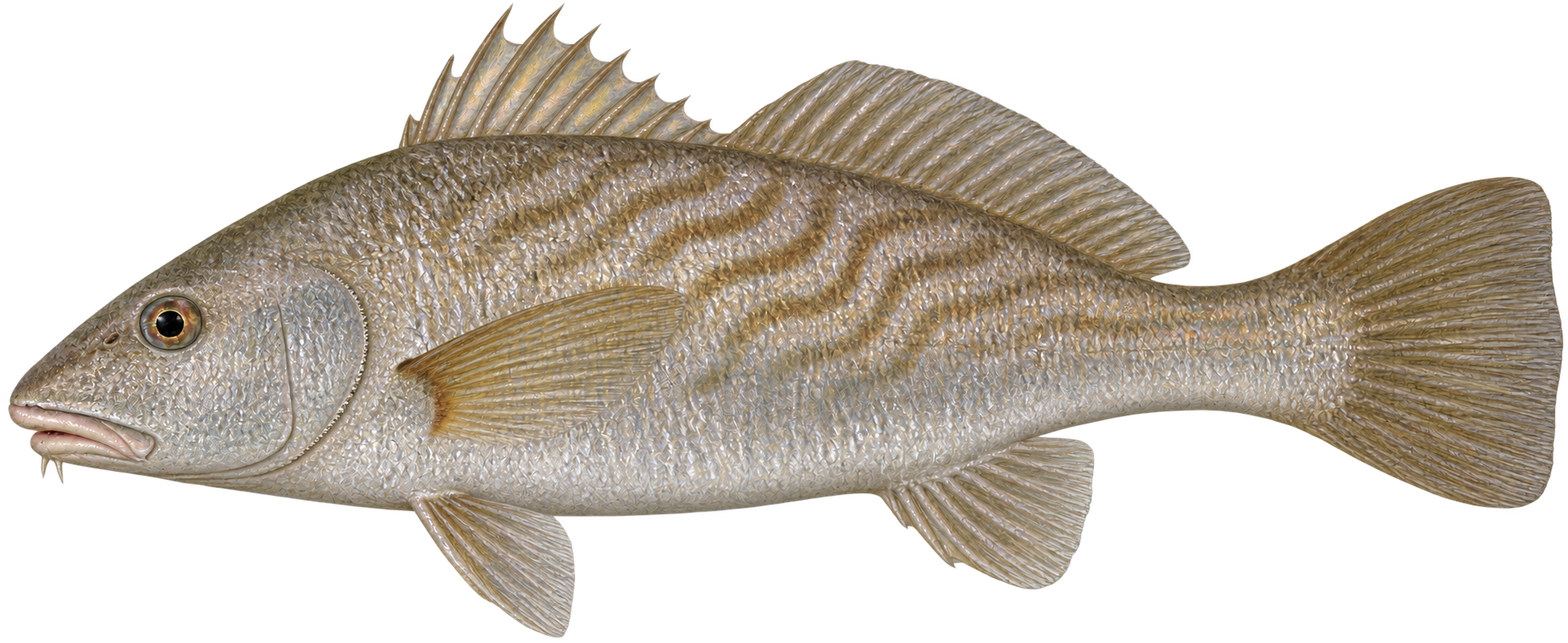
Atlantic croaker have a silvery or bronze body, indistinct wavy markings on the upper sides and small barbels beneath the jaw. The cheek bone has a strongly serrated edge. Spot can look similar, but their forked tail and dark shoulder mark are useful comparison features. Avoid identifying a small bronze fish from color alone. FWC Atlantic croaker profile
Photograph the whole side, with the chin, shoulder and tail visible if possible. Do not rub the cheek or lift the gill cover to inspect anatomy. An uncertain photograph is better recorded as an unidentified drum than confidently assigned the wrong species.
Corridor evidence and habitat
FWC describes the usual Atlantic Florida distribution as mainly north of Cape Canaveral, but also records a catch near St. Lucie. The National Park Service lists Atlantic croaker among fishes reported in Biscayne National Park. These sources establish occurrence within the wider corridor without justifying a claim that croaker are common throughout Palm Beach waters. Biscayne reported fish list
Young croaker use estuaries. Older fish move between coastal bays and deeper offshore habitat seasonally. Protecting those connected habitats matters even when the fish itself is only an occasional subject on a local dive.
Food, reproduction and size
Croaker eat fishes and invertebrates. FWC describes offshore fall spawning and a bronze or yellow appearance during reproduction. Its short size account reaches 20 inches but does not specify total or fork length; the same page gives a record weight larger than the approximate weight in its summary. This guide does not turn those figures into a universal maximum.
The Atlantic States Marine Fisheries Commission explains that the name comes from sounds produced during spawning. Its assessment page also documents substantial uncertainty in population estimates, so a familiar name should not be mistaken for proof of a secure population. ASMFC Atlantic croaker overview
Three memorable details
- Croaker is an acoustic name, referring to reproductive sounds.
- The small chin barbels help distinguish it from look-alike drums without barbels.
- A St. Lucie record can establish presence without proving everyday abundance.
Observation and harvest caution
Observe without chasing fish over the bottom or stirring sediment in nursery habitat.
Rules checked November 11, 2026: FWC lists 50 Atlantic croaker per person daily in Atlantic state waters from Nassau through Miami-Dade, excluding Monroe. Monroe follows the Gulf-state category of 100 pounds per person. The page lists no minimum size and year-round seasons. Licenses, gear and local closures still require checking before harvest. FWC spot and croaker regulations
Blue Heron Bridge report
REEF’s Blue Heron Bridge / Phil Foster Park survey report includes Atlantic Croaker among species reported at this site. The cumulative volunteer survey record is not a guarantee of a sighting or evidence of current abundance. Blue Heron Bridge (BHB) is a Riviera Beach dive site at Phil Foster Park. Blue Heron Bridge species observation source.
Make your next dive happen
Dive With Us
Explore local charters and plan a dive suited to your experience.
View dive calendarTrain With Us
Build your fish identification, buoyancy and diving skills.
Explore trainingTravel With Us
Discover upcoming dive adventures and trip details.
Explore dive travelShop With Us
Browse equipment for your diving and ask our team for help choosing.
Explore dive gearReview current dates, availability, prices, inclusions and requirements on each listing before booking or buying.
Call us now
Ask about fish identification training
Reef Fish Identification
Ask about dates, prerequisites or your next step. An inquiry does not reserve a place. Please provide your own contact details; do not include medical, payment or a child's personal information.
We use these details to respond to your inquiry. This form does not sign you up for marketing.
Explore more with Stuart Scuba
Open Water course options · Advanced Adventure training · Technical training · Professional training · All courses · Local dives · Dive trips · Facebook · Instagram · YouTube
Your surface-interval essentials
Questions for Stuart Scuba? info@stuartscuba.com
Check the Stuart Scuba Weather Center · Play scuba trivia
Weather and wildlife vary. Confirm current conditions, trip requirements and departure details with the operator.
Plan Your Next Dive with Stuart Scuba
Dive With Us
Explore upcoming local charters and choose a dive that fits your experience.
Before you book
Check the individual listing for departure time, requirements and availability.
Travel With Us
Find upcoming dive adventures and start planning your next trip.
Plan your trip
Review dates, inclusions and trip details on the travel calendar.
Stay Connected with Stuart Scuba
 Follow pageShare
YouTube
SubscribeWatch & shareFollow on InstagramView & share post
Follow company news, training updates, and dive stories.
Follow on LinkedInGoogle Reviews
See Stuart Scuba’s current Google rating and review count below. Open the listing in Google Maps to browse customer reviews.



