

Fish identification archive / Stiff Pen Shell
Stiff Pen Shell
Atrina rigida · Pinnidae
I saw this
Spotted this marine life? Share the guide with your dive buddies. Review your caption before posting.
For Instagram, copy the caption and link into your own post or message. Nothing is posted automatically and this does not record a verified sighting.
Identification overview
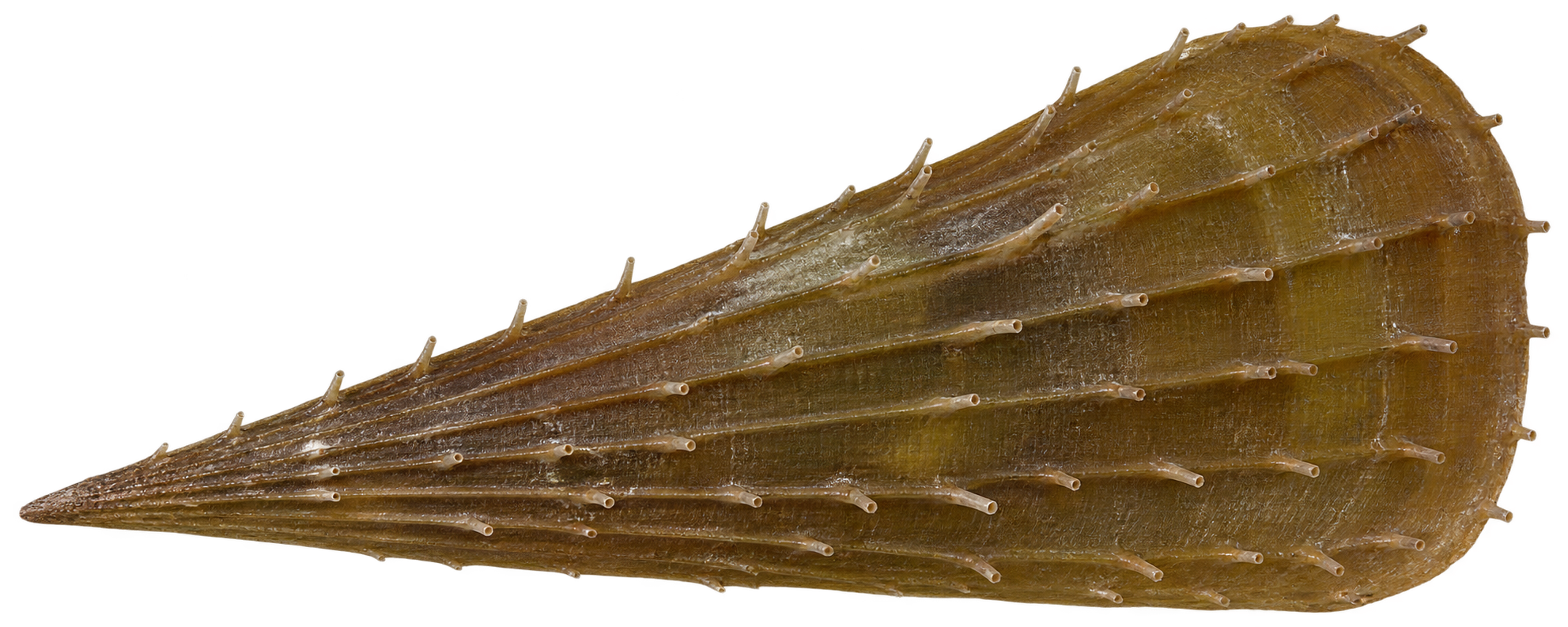
The stiff pen shell, Atrina rigida, has a large triangular shell that broadens away from a narrow pointed end. Raised ribs carry spiny projections, and the exterior is often olive-brown. Much of the shell can be buried, so the visible portion above the sediment may give a poor impression of the animal’s full size.
Atlantic Florida habitat
FWC describes living pen shells in shallow Florida waters, particularly around seagrass. The 2014 St. Lucie Inlet Preserve animal inventory specifically lists Atrina rigida, providing a dated Atlantic-coast record. This supports a regional profile without implying that every seagrass patch between Vero Beach and Key Largo currently supports the species.
Think of a partly buried, bottom-associated animal rather than a shell lying loose on an exposed coral reef. The surrounding sediment and vegetation are part of the identification context. Record that setting before taking a closer photograph, and never pull up a living pen shell to reveal the portion hidden below ground.
Feeding and ecological connections
A pen shell is a filter feeder. Water passing across its feeding structures supplies suspended food while the animal remains in place. The exposed opening allows interaction with the water above the bottom while most of the shell stays protected within the sediment.
The shell can remain useful after the original bivalve dies. Research in St. Joseph Bay on Florida’s Gulf coast found fish and other animals using empty pen shells as shelters or nesting sites. That study explains an ecological role; it is not a count of animals at an Atlantic dive site. A shell that looks vacant from one angle may still shelter another occupant.
Compare other pen shells
The half-naked pen shell, Atrina seminuda, is a close comparison. Museum descriptions emphasize differences in rib distribution and the position of the muscle scar inside an empty valve. An orange mantle or triangular outline alone does not settle every identification. Examine naturally available features rather than opening or damaging a live shell.
This profile does not assign a precise maximum size or local spawning calendar. Published size summaries differ, and species-specific reproduction was not adequately established in the reviewed sources. Leaving those details unstated is more useful than copying a generic bivalve timetable.
Protect the whole structure
Maintain buoyancy over seagrass and avoid kicking sediment onto an exposed opening. Leave both living animals and old shells in place when they form habitat. Before any collection, consult current Florida rules and the restrictions of the specific park or waterbody. An identification guide cannot authorize disturbing a shell, its occupants or its surrounding vegetation.
References
Current Florida collection cautions
Reviewed November 12, 2026. Collecting a shell containing a living organism generally requires a Florida recreational saltwater fishing license. Species rules and park, refuge or sanctuary restrictions apply independently of identification. Leave occupied shells and their habitat undisturbed. Bivalve collection also raises shellfish-sanitation questions: consult FDACS classification and current area status rather than assuming a living bed is suitable for harvest. This guide gives no harvest permission or assurance that an animal is safe to eat. Official FWC live-shell collection guidance Official FDACS shellfish classification and status
Make your next dive happen
Dive With Us
Explore local charters and plan a dive suited to your experience.
View dive calendarTrain With Us
Build your fish identification, buoyancy and diving skills.
Explore trainingTravel With Us
Discover upcoming dive adventures and trip details.
Explore dive travelShop With Us
Browse equipment for your diving and ask our team for help choosing.
Explore dive gearReview current dates, availability, prices, inclusions and requirements on each listing before booking or buying.
Call us now
Ask about fish identification training
Reef Fish Identification
Ask about dates, prerequisites or your next step. An inquiry does not reserve a place. Please provide your own contact details; do not include medical, payment or a child's personal information.
We use these details to respond to your inquiry. This form does not sign you up for marketing.
Explore more with Stuart Scuba
Open Water course options · Advanced Adventure training · Technical training · Professional training · All courses · Local dives · Dive trips · Facebook · Instagram · YouTube
Your surface-interval essentials
Questions for Stuart Scuba? info@stuartscuba.com
Check the Stuart Scuba Weather Center · Play scuba trivia
Weather and wildlife vary. Confirm current conditions, trip requirements and departure details with the operator.
Plan Your Next Dive with Stuart Scuba
Dive With Us
Explore upcoming local charters and choose a dive that fits your experience.
Before you book
Check the individual listing for departure time, requirements and availability.
Travel With Us
Find upcoming dive adventures and start planning your next trip.
Plan your trip
Review dates, inclusions and trip details on the travel calendar.
Stay Connected with Stuart Scuba
 Follow pageShare
YouTube
SubscribeWatch & shareFollow on InstagramView & share post
Follow company news, training updates, and dive stories.
Follow on LinkedInGoogle Reviews
See Stuart Scuba’s current Google rating and review count below. Open the listing in Google Maps to browse customer reviews.



