

Fish identification archive / Giant Caribbean Anemone
Giant Caribbean Anemone
Condylactis gigantea · Actiniidae
I saw this
Spotted this marine life? Share the guide with your dive buddies. Review your caption before posting.
For Instagram, copy the caption and link into your own post or message. Nothing is posted automatically and this does not record a verified sighting.
Identification overview
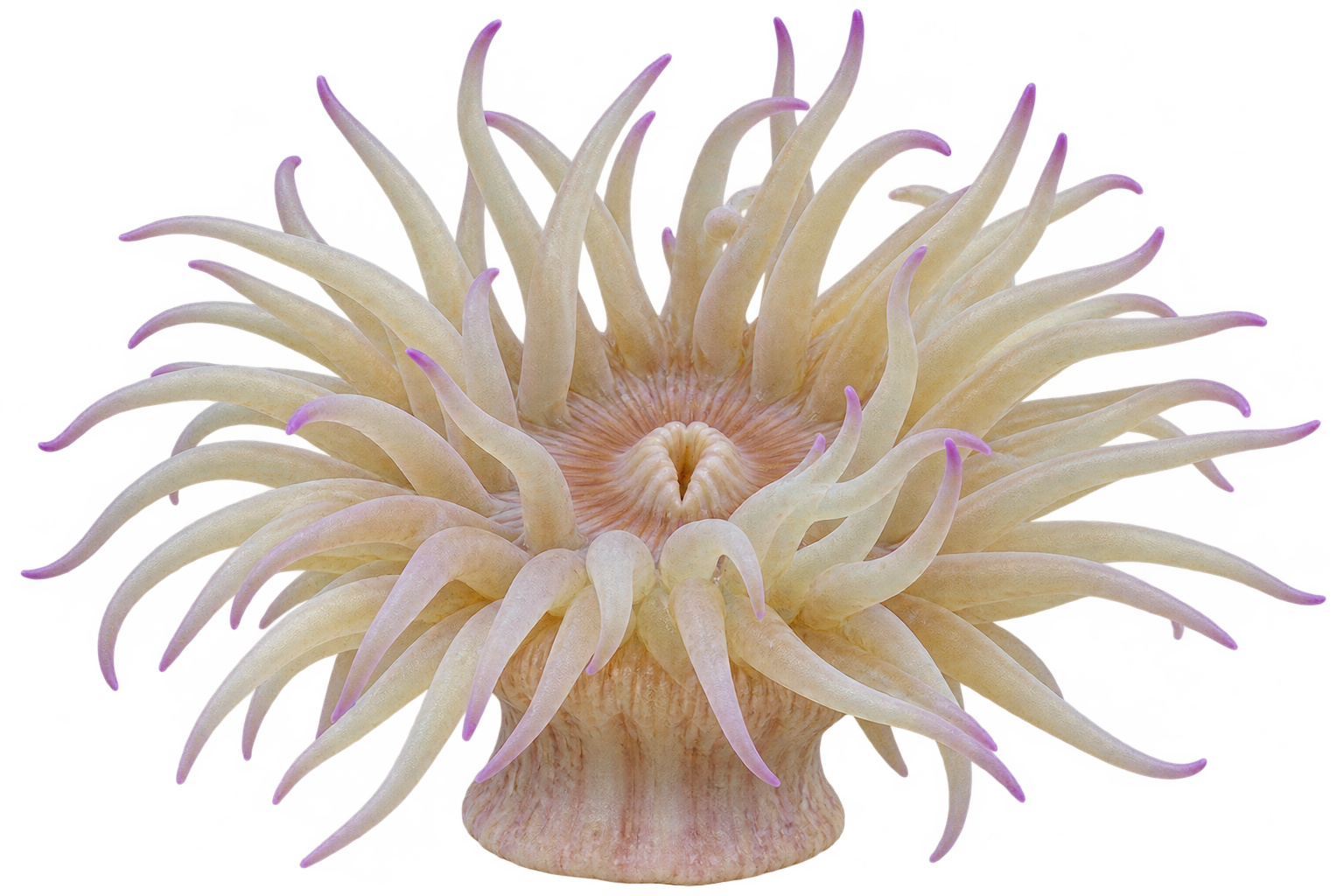
The giant Caribbean anemone, Condylactis gigantea, is a fleshy marine animal with long, tapering tentacles arranged around a central mouth. Contrasting tentacle tips can appear pink, purple, blue or green, but colors vary. The anchored base and extended tentacles create the flowerlike appearance; the animal is not a plant.
South Florida habitat
Species accounts place it in southern Florida and the Keys, including shallow reef, lagoon and seagrass-associated settings where a firm attachment surface is available. These are regional range statements, not a verified Upper Keys or Key Largo occurrence. The Key West reproductive study supports biology at its Lower Keys study location; it does not establish a northern range boundary or a sighting elsewhere.
The attachment site is an important part of the observation. Look at where the base disappears into the substrate without lifting, pulling or probing around it. Several anemones near one another are separate individuals rather than one colonial coral structure.
Feeding
Tentacles contain stinging cells used to capture animal prey and bring it toward the mouth. A feeding animal is best watched from a respectful distance. Do not offer food, touch the tentacles to test their response or place a small animal onto the anemone for a photograph.
Reproduction
A primary study of sea anemones from Key West found separate male and female Condylactis gigantea. It described egg production followed by a planktonic larval stage supported by yolk reserves. That is different from the reproductive strategies of some other anemones, so a general statement that all anemones divide into clones would be inappropriate here.
The study supports the basic developmental pattern, not a guaranteed spawning event on a particular dive. Sex and reproductive condition cannot be reliably inferred from a casual photograph of tentacle color.
Identification cautions
Long tentacles with colored tips are useful clues but do not replace comparison with a confirmed reference. Record the full tentacle arrangement, visible body and habitat when possible. This profile omits a numerical maximum because one reviewed secondary account gives inconsistent dimensions; that uncertainty is preferable to a misleading size claim.
Protected observation
FWC’s recreational marine-life rules explicitly prohibit harvest of Condylactis gigantea. Leave the animal attached and undisturbed. The restriction is not lifted because a specimen looks abundant, occurs outside a particular reef or would fit in an aquarium.
Maintain buoyancy, keep fins and equipment away from the animal and avoid bracing against its surroundings. A useful encounter leaves both the anemone and its attachment habitat intact. Current official rules should always be consulted, but this species’ prohibition must not be diluted into a generic “check before collecting” statement.
References
Current Florida collection cautions
Reviewed November 12, 2026. FWC explicitly prohibits harvest of the giant anemone Condylactis gigantea. Leave the animal attached and undisturbed; aquarium use, apparent abundance or a general marine-life bag limit does not create an exception. Do not touch its tentacles or remove its attachment substrate. This identification page gives no permission to harvest and no assurance of safe consumption. Official FWC anemone harvest prohibition
Make your next dive happen
Dive With Us
Explore local charters and plan a dive suited to your experience.
View dive calendarTrain With Us
Build your fish identification, buoyancy and diving skills.
Explore trainingTravel With Us
Discover upcoming dive adventures and trip details.
Explore dive travelShop With Us
Browse equipment for your diving and ask our team for help choosing.
Explore dive gearReview current dates, availability, prices, inclusions and requirements on each listing before booking or buying.
Call us now
Ask about fish identification training
Reef Fish Identification
Ask about dates, prerequisites or your next step. An inquiry does not reserve a place. Please provide your own contact details; do not include medical, payment or a child's personal information.
We use these details to respond to your inquiry. This form does not sign you up for marketing.
Explore more with Stuart Scuba
Open Water course options · Advanced Adventure training · Technical training · Professional training · All courses · Local dives · Dive trips · Facebook · Instagram · YouTube
Your surface-interval essentials
Questions for Stuart Scuba? info@stuartscuba.com
Check the Stuart Scuba Weather Center · Play scuba trivia
Weather and wildlife vary. Confirm current conditions, trip requirements and departure details with the operator.
Plan Your Next Dive with Stuart Scuba
Dive With Us
Explore upcoming local charters and choose a dive that fits your experience.
Before you book
Check the individual listing for departure time, requirements and availability.
Travel With Us
Find upcoming dive adventures and start planning your next trip.
Plan your trip
Review dates, inclusions and trip details on the travel calendar.
Stay Connected with Stuart Scuba
 Follow pageShare
YouTube
SubscribeWatch & shareFollow on InstagramView & share post
Follow company news, training updates, and dive stories.
Follow on LinkedInGoogle Reviews
See Stuart Scuba’s current Google rating and review count below. Open the listing in Google Maps to browse customer reviews.



