

Fish identification archive / Oyster Toadfish
Oyster Toadfish
Opsanus tau · Batrachoididae
I saw this
Spotted this fish? Share the guide with your dive buddies. Review your caption before posting.
For Instagram, copy the caption and link into your own post or message. Nothing is posted automatically and this does not record a verified sighting.
Identification and comparisons
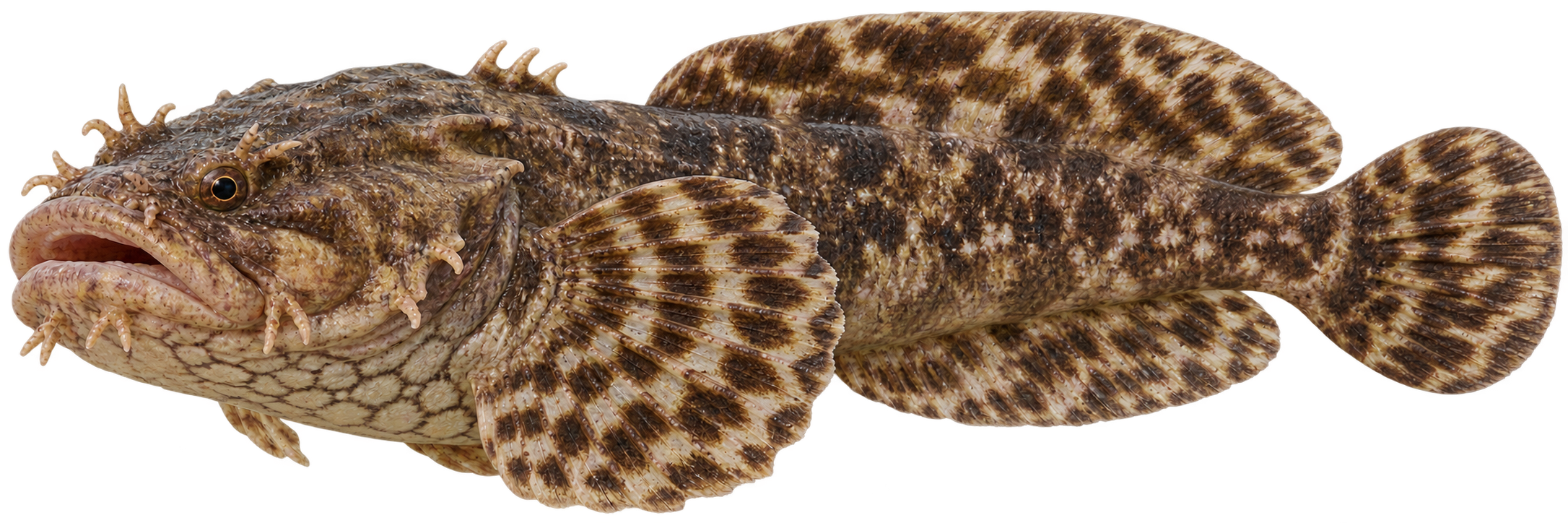
A broad flattened head, wide mouth, fleshy head appendages and strongly patterned fins give this bottom fish an unmistakable toadfish appearance. Identifying which toadfish requires more care. Oyster toadfish have barred pectoral fins and mottled or netlike markings on the belly. Compare these with a species reference rather than assuming that every toadfish in Florida is the Gulf toadfish. Smithsonian identification.
Atlantic Florida occurrence
The National Park Service lists this species among fishes reported in Biscayne National Park. That supplies specific Atlantic South Florida occurrence evidence. The historical list does not establish current abundance, a particular reef location or guaranteed sightings on a trip. Biscayne reported-fish list.
Biology and size
Oyster reefs and other secluded hard-bottom shelters provide cover. Crabs and other crustaceans are important prey, with mollusks and small fishes also taken. Males prepare sheltered nests and call to attract females. Eggs attach to the nest roof; the male guards them and fans away debris. Chesapeake nesting dates in the reference are not a demonstrated South Florida breeding calendar. VIMS biology.
VIMS gives a maximum of 381 millimeters standard length. Standard length ends at the base of the tail fin, unlike total length, which includes that fin. Keeping the measurement label matters more than presenting a large number without context. Body proportions and markings are usually more useful than an underwater size estimate.
Three things worth noticing
- This is a fish, not an amphibian, despite its toad-like appearance.
- The male does substantial nest-guarding work.
- Standard length leaves the tail fin out of the measurement.
Observation and harvest caution
This fish falls within Florida’s marine-life collection framework. Review FWC marine-life rules for licensing, live-condition requirements, limits and closed areas before considering collection. Blue Heron Bridge is closed to marine-life harvest. A Biscayne occurrence record does not create permission to collect inside the park.
Observe without chasing, touching, feeding or moving the animal. Leave shelter and attached organisms in place, keep fins and equipment clear of the bottom, and let the fish choose its distance. For a useful record, retain the date, location, depth and original photographs. If the distinguishing features are hidden, an uncertain identification is better than a confident but unsupported name.
Current observation and collection guidance
Checked November 12, 2026: Florida includes toadfishes in its regulated marine-life fish list. Collection is subject to licensing, permitted gear, live-condition and life-support requirements, and applicable limits. The Blue Heron Bridge dive site is closed to marine-life harvest within its designated boundaries. Check park, sanctuary and other local restrictions before any collection; an occurrence record is not permission to remove an animal. Biscayne National Park fish checklist FWC marine-life collection regulations
Make your next dive happen
Dive With Us
Explore local charters and plan a dive suited to your experience.
View dive calendarTrain With Us
Build your fish identification, buoyancy and diving skills.
Explore trainingTravel With Us
Discover upcoming dive adventures and trip details.
Explore dive travelShop With Us
Browse equipment for your diving and ask our team for help choosing.
Explore dive gearReview current dates, availability, prices, inclusions and requirements on each listing before booking or buying.
Call us now
Ask about fish identification training
Reef Fish Identification
Ask about dates, prerequisites or your next step. An inquiry does not reserve a place. Please provide your own contact details; do not include medical, payment or a child's personal information.
We use these details to respond to your inquiry. This form does not sign you up for marketing.
Explore more with Stuart Scuba
Open Water course options · Advanced Adventure training · Technical training · Professional training · All courses · Local dives · Dive trips · Facebook · Instagram · YouTube
Your surface-interval essentials
Questions for Stuart Scuba? info@stuartscuba.com
Check the Stuart Scuba Weather Center · Play scuba trivia
Weather and wildlife vary. Confirm current conditions, trip requirements and departure details with the operator.
Plan Your Next Dive with Stuart Scuba
Dive With Us
Explore upcoming local charters and choose a dive that fits your experience.
Before you book
Check the individual listing for departure time, requirements and availability.
Travel With Us
Find upcoming dive adventures and start planning your next trip.
Plan your trip
Review dates, inclusions and trip details on the travel calendar.
Stay Connected with Stuart Scuba
 Follow pageShare
YouTube
SubscribeWatch & shareFollow on InstagramView & share post
Follow company news, training updates, and dive stories.
Follow on LinkedInGoogle Reviews
See Stuart Scuba’s current Google rating and review count below. Open the listing in Google Maps to browse customer reviews.



