

Fish identification archive / Atlantic Ghost Crab
Atlantic Ghost Crab
Ocypode quadrata · Ocypodidae
I saw this
Spotted this marine life? Share the guide with your dive buddies. Review your caption before posting.
For Instagram, copy the caption and link into your own post or message. Nothing is posted automatically and this does not record a verified sighting.
Identification overview
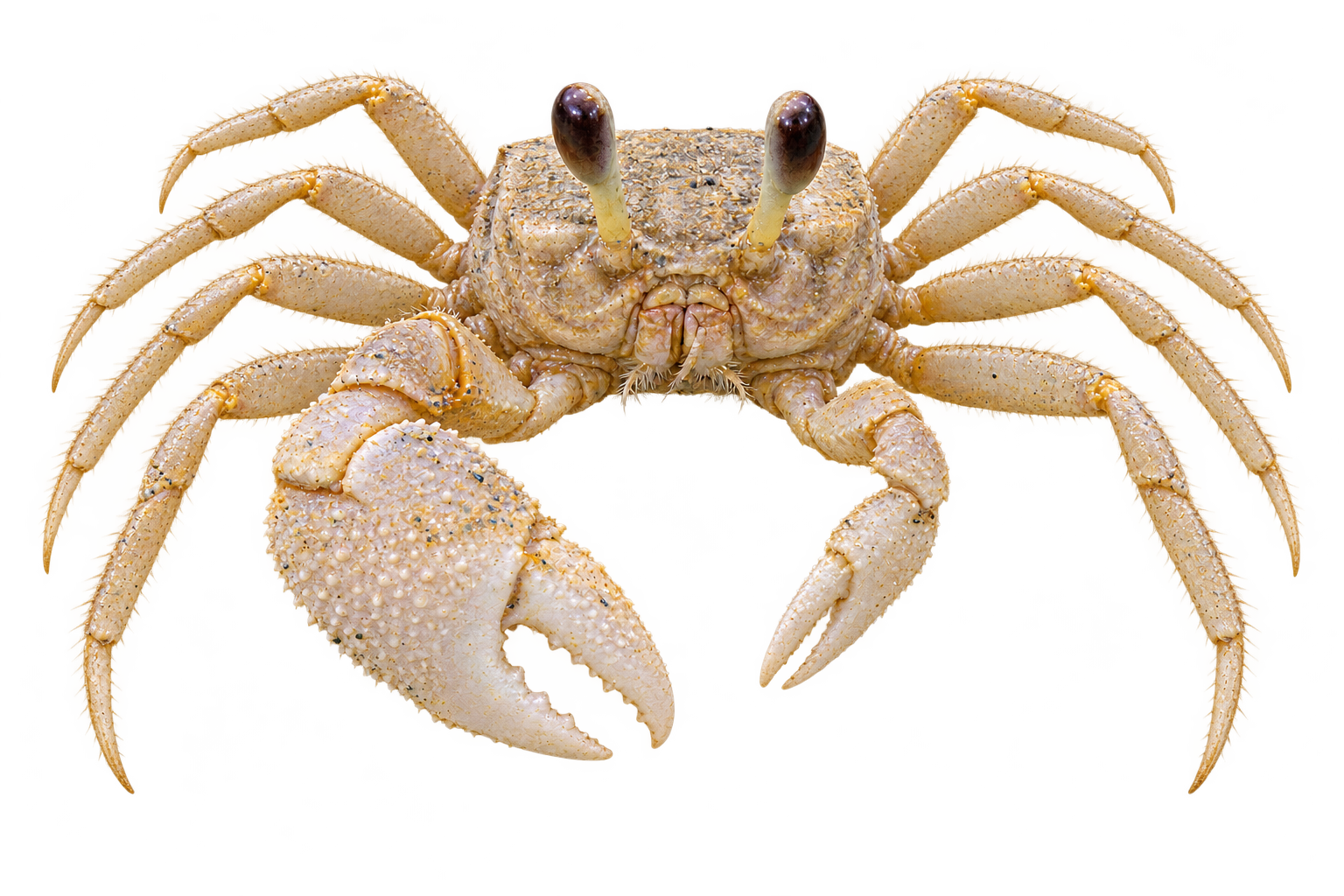
The Atlantic ghost crab, Ocypode quadrata, is a shoreline animal rather than an underwater reef resident. Its pale, roughly square carapace blends with beach sand. Raised eyes, long walking legs and unequal claws complete the familiar outline. A clear photograph should show this combination instead of relying on pale color alone.
Florida beach context
National Park Service accounts document living ghost crabs on Florida Atlantic beaches at Fort Matanzas as well as at Gulf Islands National Seashore. The species belongs in the beach-and-shoreline portion of a regional marine-life directory. Florida DEP’s 2014 St. Lucie Inlet Preserve plan also describes this crab among local beach predators.
Often the first sign is not a crab but a burrow opening with tracks nearby. The tracks resemble spaced commas in the sand. A burrow is an active shelter, not a hole to probe with a stick or flood to force out its occupant.
What it eats
Ghost crabs are opportunistic predators and scavengers. Coquina clams, mole crabs and other small beach animals provide food, while a washed-up dead fish can also attract attention. They may eat shorebird or sea-turtle eggs and hatchlings. This is part of their role in the shoreline food web; an observer should not intervene in a natural feeding event or stage one with bait.
Living out of water
Adults spend substantial time on land but still need moisture for their gills. They visit wet sand and the surf zone, and egg-bearing females also need to keep their egg masses moist. Activity is often easier to observe around dusk or after dark than during the heat of the day.
Burrows provide refuge from weather and predators. Stay far enough away that the animal can emerge or retreat without being cornered. If beach wildlife rules limit nighttime access or lighting, follow those rules rather than treating a nocturnal species as a reason to ignore them.
Identification and care
A swimming crab with paddle-shaped rear legs is built differently from this open-beach runner. For ghost-crab identification, record the square body, eyes, claws and habitat together. Sand camouflage can obscure detail, so a distant image may support only a general crab record.
Leave burrows, dune plants and nearby nests undisturbed. Avoid driving over beach habitat and never handle wildlife simply to improve a photograph. Current park and locality rules govern any collection; this guide grants no permission to remove crabs. An encounter that leaves the animal behaving normally is the most useful observation.
References
Current Florida collection cautions
Reviewed November 12, 2026. No species-specific recreational harvest allowance is established by this profile. Before any collection, verify applicable FWC requirements and the rules of the particular beach, park or refuge. Do not disturb burrows, dune vegetation or protected nests; local nighttime access and lighting restrictions still apply. This identification page gives no permission to harvest and no assurance of safe consumption. Official FWC recreational rules
Make your next dive happen
Dive With Us
Explore local charters and plan a dive suited to your experience.
View dive calendarTrain With Us
Build your fish identification, buoyancy and diving skills.
Explore trainingTravel With Us
Discover upcoming dive adventures and trip details.
Explore dive travelShop With Us
Browse equipment for your diving and ask our team for help choosing.
Explore dive gearReview current dates, availability, prices, inclusions and requirements on each listing before booking or buying.
Call us now
Ask about fish identification training
Reef Fish Identification
Ask about dates, prerequisites or your next step. An inquiry does not reserve a place. Please provide your own contact details; do not include medical, payment or a child's personal information.
We use these details to respond to your inquiry. This form does not sign you up for marketing.
Explore more with Stuart Scuba
Open Water course options · Advanced Adventure training · Technical training · Professional training · All courses · Local dives · Dive trips · Facebook · Instagram · YouTube
Your surface-interval essentials
Questions for Stuart Scuba? info@stuartscuba.com
Check the Stuart Scuba Weather Center · Play scuba trivia
Weather and wildlife vary. Confirm current conditions, trip requirements and departure details with the operator.
Plan Your Next Dive with Stuart Scuba
Dive With Us
Explore upcoming local charters and choose a dive that fits your experience.
Before you book
Check the individual listing for departure time, requirements and availability.
Travel With Us
Find upcoming dive adventures and start planning your next trip.
Plan your trip
Review dates, inclusions and trip details on the travel calendar.
Stay Connected with Stuart Scuba
 Follow pageShare
YouTube
SubscribeWatch & shareFollow on InstagramView & share post
Follow company news, training updates, and dive stories.
Follow on LinkedInGoogle Reviews
See Stuart Scuba’s current Google rating and review count below. Open the listing in Google Maps to browse customer reviews.



