

Fish identification archive / Yellowtail Snapper
Yellowtail Snapper
Ocyurus chrysurus
I saw this
Spotted this marine animal? Share the guide with your dive buddies. Review your caption before posting.
For Instagram, copy the caption and link into your own post or message. Nothing is posted automatically and this does not record a verified sighting.
Fun facts for your next surface interval
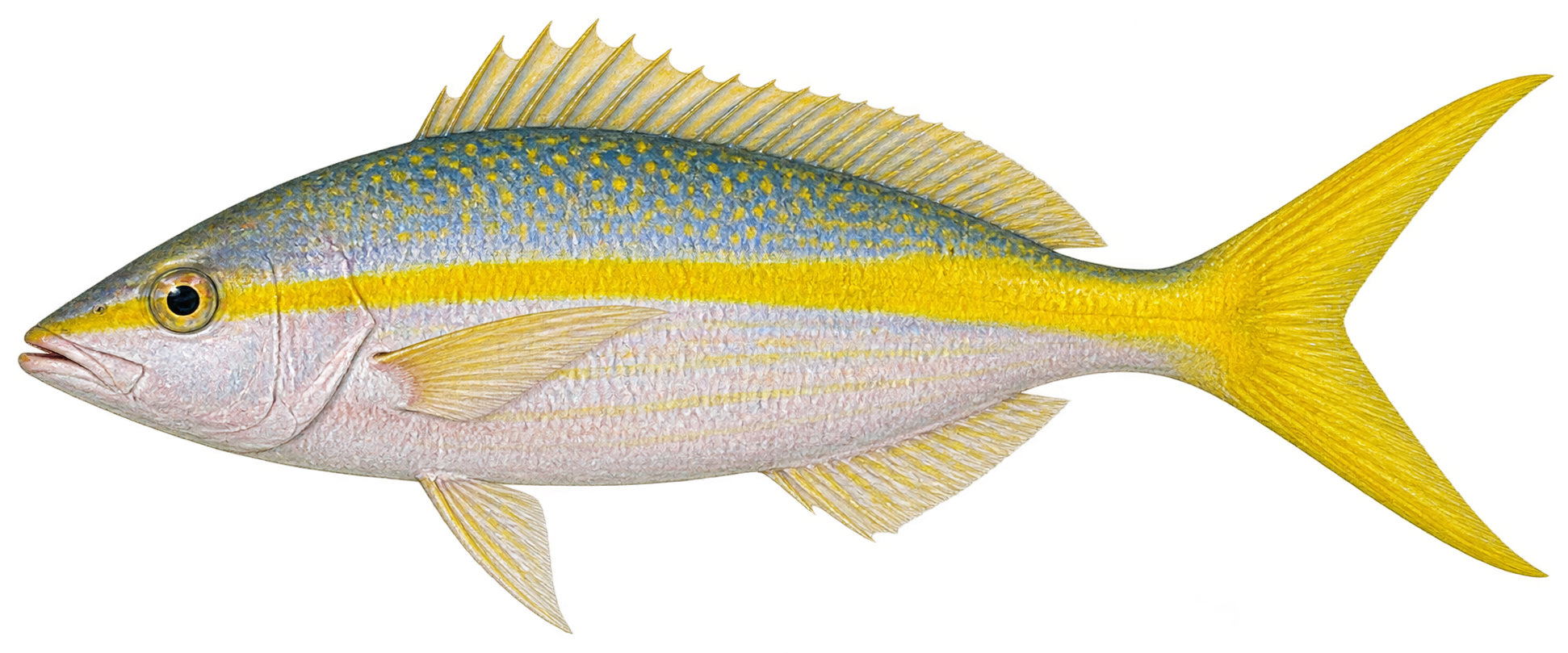
- Its yellow stripe widens as though someone used a bigger brush near the tail.
- Unlike several other snappers, yellowtail snapper do not have a dark side spot.
- Young fish use seagrass nurseries before joining the more obvious reef-dwelling adults.
Florida and local context
Florida marine waters; broader Florida scope: NOAA documents the species in South Florida and the Florida Keys. The Lake Worth Lagoon list does not mark it verified; no local frequency claim is made.
Documented regional presence is not a guarantee of an encounter or a measure of how common this animal is at your dive site.
How to recognize this animal
A yellow stripe begins on the head, broadens along the side and runs into a deeply forked yellow tail. That clean yellow pathway is the best first clue. The back is olive or bluish with yellow spots, the lower body pale, and the head and mouth relatively small for a snapper. This species does not carry a dark lateral body spot.
Size and life stages
A large yellowtail snapper can reach approximately 30 inches, or 75 centimeters, in total length. Many reef observations involve smaller fish. The sharply forked tail contributes noticeably to the silhouette, so do not compare a total-length estimate directly with a measurement ending at the fork. A photograph of the full profile records both the stripe and the distinctive tail.
Habitat and where to look
Adults often swim above reefs and nearby sandy or hard bottoms, while juveniles use sheltered seagrass nursery habitat. Looking slightly above the reef can be as productive as searching the reef face itself. A school may occupy the water column rather than resting beside a ledge. Keep awareness of your depth and buddy while watching fish overhead.
Range and local context
Yellowtail snapper occurs in the western Atlantic, including Florida, the Bahamas, the Caribbean and the Gulf region. This entry uses a Florida-wide scope. The Lake Worth Lagoon checklist does not mark yellowtail verified, even though it includes the species. Its prominence in South Florida fisheries should not be mistaken for proof of a particular Palm Beach sighting or a timetable for finding a school.
What is on the menu?
The menu changes with growth. Juveniles take small planktonic food; adults eat animals including shrimp, crabs, worms, cephalopods and fishes. A daytime school above the reef may therefore show resting or routine movement rather than an obvious feeding event. Record an actual strike separately from simply seeing the fish near another animal that might be potential prey.
Daily habits and behavior
Yellowtails commonly occur in groups, and established adults can remain associated with an area for extended periods. Their narrow profile and long tail lobes give schooling fish a different impression from heavier-bodied snappers. Watch the group from outside its path instead of swimming through the middle. The fish's natural spacing and synchronized turns are often the best part of the encounter.
Mating and the next generation
Spawning takes place in aggregations, with eggs released into open water. The eggs and early larvae drift before young fish settle into protective nursery habitat. Spawning activity varies geographically and seasonally, so a general biological account should not be turned into a precise Palm Beach viewing calendar. Seeing a school alone does not prove that it is a spawning aggregation.
Look-alikes and identification traps
A yellow tail by itself is not enough: several unrelated reef fishes have one. Look for the widening yellow side stripe, small head and deeply forked tail together. Yellowtail goatfish have chin barbels, and many other snappers have a less deeply forked tail or a dark side mark. A clear side view resolves more than a retreating glimpse.
Observe without disturbing
Avoid baiting or hand-feeding fish to bring the school closer. Remain where you can hold position comfortably without touching reef structure or drifting into boat traffic. If taking photographs, include a whole fish rather than only the tail. The separate seafood section explains why a popular food fish still needs current harvest checks and sensible, qualified eating guidance.
Harvest, protection and eating safety
Regulated food fish: size and combined snapper limits apply
Can it be hunted or harvested?
Florida state waters on both coasts and adjacent Gulf and South Atlantic federal waters: minimum 12 inches total length; up to ten per person daily within the applicable ten-snapper aggregate, not ten in addition to other snappers. Biscayne National Park raises the yellowtail minimum to 14 inches total length and includes it in the park’s ten-fish aggregate. Keep fish identifiable and obey applicable license and reef-fish gear requirements.
Florida seasons and areas
No regular recreational seasonal closure is listed for yellowtail snapper in Florida state waters or adjacent federal waters. Current fishery notices, protected areas and emergency closures can override this annual pattern. Local closures still apply, including Biscayne National Park’s mapped bonefish pre-spawning area, closed to fishing and fish possession March 1–May 31 with a properly stowed continuous-transit exception. Check Florida Keys sanctuary zones before fishing. Western Dry Rocks’ designated one-square-mile area is closed to all fishing April 1–July 31 annually.
Can it be speared?
Allowed only where spearfishing is lawful and the fish meets all size, bag and seasonal rules. Florida exclusions include within 100 yards of public swimming beaches, fishing piers and bridges open to fishing, the specified jetty buffer, state-park waters, and Monroe County from Long Key north to the Miami-Dade line. Florida prohibits powerheads and rebreathers under its spearing rules. Check sanctuary and other site restrictions before entering the water. South Atlantic federal spearfishing gear may not be used with rebreathers.
Is it safe to eat?
Edible when legally retained, but not automatically safe. Check Florida DOH fish advisories for the catch location and consumer group, especially for children and anyone pregnant or breastfeeding. Reef-fish ciguatoxin is not removed by cooking or freezing and cannot be detected by taste or smell. Do not eat reef-fish heads, liver, intestines or roe, or reef fish from an area under a ciguatera advisory. Chill promptly and cook to 145°F; cooking does not remove mercury. Florida DOH specifically lists yellowtail snapper in its coastal mercury-consumption advice.
Before you act: This recreational overview is not permission to collect or spear at your dive site. Confirm the species, date, management area, state or federal waters, gear, licenses and current local closures. Identification artwork cannot establish an identification or guarantee seafood safety.
Official rules and health guidance
- FWC snapper recreational limits
- South Atlantic Council yellowtail snapper federal rules
- 50 CFR 622.37: Gulf federal minimum sizes
- 50 CFR 622.38: Gulf federal bag and aggregate limits
- FWC Biscayne National Park limits and closed areas
- FWC recreational saltwater licenses and exemptions
- NOAA Gulf seasonal and current fishery closures
- NOAA Florida Keys sanctuary zones
- FWC species and location restrictions on spearing
- Florida DOH advisory booklet currently linked from its seafood page
- Florida DOH seafood-consumption guidance
- Florida DOH location-specific fish-advisory search
- Florida DOH ciguatera and other seafood poisoning
- FDA safe seafood handling and cooking
- FDA/EPA questions about mercury and fish preparation
- FWC Western Dry Rocks seasonal closure
Reviewed 2026-11-10. Rules and advisories can change; check the linked authorities before harvesting or eating.
Sources and review
Reviewed 2026-11-10.
- Florida occurrence evidence
- Florida Museum: Yellowtail Snapper
- Species biology, taxonomy or Florida occurrence reference
- Species biology, taxonomy or Florida occurrence reference
- Florida Museum: Lake Worth Lagoon checklist, verified marks distinguished from listed species
- Reviewed taxonomy and former scientific names
Make your next dive happen
Dive With Us
Explore local charters and plan a dive suited to your experience.
View dive calendarTrain With Us
Build your fish identification, buoyancy and diving skills.
Explore trainingTravel With Us
Discover upcoming dive adventures and trip details.
Explore dive travelShop With Us
Browse equipment for your diving and ask our team for help choosing.
Explore dive gearReview current dates, availability, prices, inclusions and requirements on each listing before booking or buying.
Call us now
Ask about marine life identification
Marine Life Identification
Ask about dates, prerequisites or your next step. An inquiry does not reserve a place. Please provide your own contact details; do not include medical, payment or a child's personal information.
We use these details to respond to your inquiry. This form does not sign you up for marketing.
Explore more with Stuart Scuba
Open Water course options · Advanced Adventure training · Technical training · Professional training · All courses · Local dives · Dive trips · Facebook · Instagram · YouTube
Your surface-interval essentials
Questions for Stuart Scuba? info@stuartscuba.com
Check the Stuart Scuba Weather Center · Play scuba trivia
Weather and wildlife vary. Confirm current conditions, trip requirements and departure details with the operator.
Plan Your Next Dive with Stuart Scuba
Dive With Us
Explore upcoming local charters and choose a dive that fits your experience.
Before you book
Check the individual listing for departure time, requirements and availability.
Travel With Us
Find upcoming dive adventures and start planning your next trip.
Plan your trip
Review dates, inclusions and trip details on the travel calendar.
Stay Connected with Stuart Scuba
 Follow pageShare
YouTube
SubscribeWatch & shareFollow on InstagramView & share post
Follow company news, training updates, and dive stories.
Follow on LinkedInGoogle Reviews
See Stuart Scuba’s current Google rating and review count below. Open the listing in Google Maps to browse customer reviews.



