

Fish identification archive / Rough Cactus Coral
Rough Cactus Coral
Mycetophyllia ferox
Fun facts for your next surface interval
Florida and local context
Florent Charpin’s individual photograph page identifies Mycetophyllia ferox and explicitly places that photograph at Key Largo, Florida.
A documented past record does not establish present abundance or guarantee an encounter.
How to recognize this animal
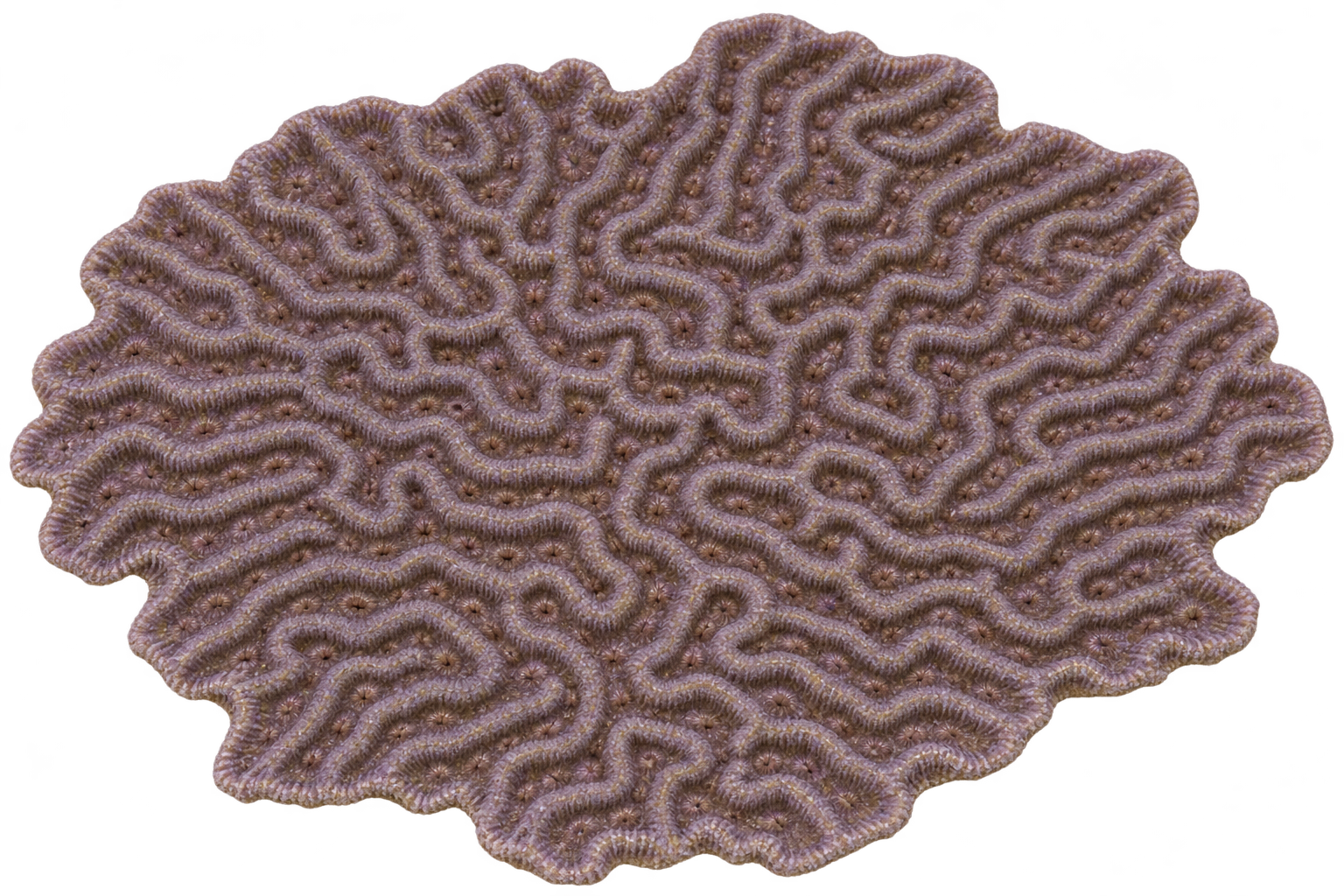
An encrusting plate made of many polyps. NOAA describes grey and brown colonies, with reddish or green individuals also possible.
Size and life stages
NOAA reports a maximum colony size of 50 cm. The local guide instead lists 30–60 cm without a clear measurement axis. These figures are retained as different source claims, not silently reconciled.
Habitat and where to look
NOAA reports reef habitats, most commonly at 10–20 m depth within a broader range. The exact local evidence is a Key Largo photograph.
Sources: Biology reference for Mycetophyllia ferox; Local occurrence record: Key Largo, Florida
Range and local context
Corridor inclusion is based on Key Largo, Florida. Florent Charpin’s individual photograph page identifies Mycetophyllia ferox and explicitly places that photograph at Key Largo, Florida. This is a documented occurrence, not a guarantee of a present-day encounter.
What is on the menu?
Photosynthetic symbionts supply nutrition, and polyp tentacles also capture plankton.
Daily habits and behavior
Loss of the symbiotic algae during bleaching can leave a colony vulnerable to starvation and disease.
Mating and the next generation
Colonies produce eggs and sperm, brood fertilized eggs internally, then release larvae that can settle on hard surfaces. No local release date is inferred.
Look-alikes and identification traps
NOAA cautions that this uncommon coral can be difficult to separate from other Mycetophyllia. Use ridge and valley structure, not colour alone.
Sources: Biology reference for Mycetophyllia ferox; WoRMS: accepted identity
Observe without disturbing
Photograph the animal where it lives. Maintain buoyancy and keep fins, hands, lights and equipment clear of it and its substrate. Do not touch, feed, uncover, detach or reposition it. These observation practices do not grant permission to collect.
Harvest, protection and eating safety
Protected: no recreational take
Verified stony-coral harvest protection, not food clearance.
This color is a qualified summary, not permission to collect or a guarantee that a particular animal is safe to eat.
Can it be hunted or harvested?
Mycetophyllia ferox is a stony coral (Scleractinia), a group whose recreational harvest FWC prohibits. Research or aquaculture authorizations are not ordinary recreational permission. Federal South Atlantic prohibited-coral and live-rock rules also apply where relevant. NOAA separately lists Mycetophyllia ferox as ESA threatened throughout its range. This status is distinct from the state harvest prohibition; critical habitat alone is not a closed area.
Florida seasons and areas
No recreational take. Blue Heron Bridge mapped dive-site waters are closed to marine-life harvest; nearby Peanut Island records do not establish that exact location. Biscayne ornamental collection requires a superintendent permit. Its separate mapped fishing/possession closure is March 1–May 31, effective March 2026, with properly stowed continuous transit excepted. Key Largo Management Area prohibits collection of these invertebrates; lobster and commercial trap exceptions do not authorize their collection. Sanctuary Preservation Areas prohibit collecting. Check exact boundaries and current park requirements, including Pennekamp, before any take. General state rules do not override these areas.
Can it be speared?
Do not spear this protected organism. State and federal jurisdictions differ. FWC location restrictions and NOAA Key Largo spearfishing prohibition must be checked independently. Pennekamp is not a spearfishing allowance.
Is it safe to eat?
No exact-species food-safety clearance, meal frequency, or dated species-matched local menu evidence was verified. Recipes remain disabled. Collection legality is not evidence of edibility.
Mycetophyllia ferox is a stony coral (Scleractinia), a group whose recreational harvest FWC prohibits. Research or aquaculture authorizations are not ordinary recreational permission. Federal South Atlantic prohibited-coral and live-rock rules also apply where relevant. NOAA separately lists Mycetophyllia ferox as ESA threatened throughout its range. This status is distinct from the state harvest prohibition; critical habitat alone is not a closed area.
This review covers the Vero Beach–Key Largo Atlantic corridor: Indian River, St. Lucie, Martin, Palm Beach, Broward, Miami-Dade and Monroe counties. Florida Atlantic state waters and South Atlantic federal waters are distinct jurisdictions. Do not extend a state-water season tag to federal waters or transfer Atlantic rules to Gulf-side Keys waters. Park and sanctuary boundaries can override a species allowance. FWC expressly states that its marine-life regulations apply in federal waters; this does not erase independent federal restrictions.
Before you act: Confirm the species, date, exact management area, state or federal waters, gear, licenses and current local closures. A local occurrence record never grants permission to take an animal.
Official rules and health guidance
- FWC recreational marine-life groups, live landing, limits, federal application and Blue Heron Bridge closure
- FAC current adopted-rule landing page; body not exposed; development notices not treated as adopted law
- FWC coral and live-rock restrictions
- FWC gear and location restrictions
- NOAA Key Largo Management Area rules
- NOAA Sanctuary Preservation Area rules
- NPS Biscayne ornamental collection permit restriction
- FWC Biscayne mapped seasonal closure
- Current federal South Atlantic prohibited coral and wild live-rock rule
- NOAA exact-species ESA threatened status
Reviewed 2026-11-11. Rules and advisories can change; check the linked authorities before acting.
Identification and source cautions
- Historical occurrence does not establish current abundance, colony survival, or a guaranteed sighting.
- No original profile, harvest/legal review, artwork, or publishing has been completed for this candidate.
- Observation date was not supplied. Identification follows the named photographer; the specimen was not independently reidentified.
- A named diving area is given, not a particular reef or exact dive site.
- The exact local photograph is attributed to its source and has not been independently reidentified for this draft.
- Biological source access varies: some records were accessible only as an abstract or indexed passage. Independent claim review is required.
- No cited photograph is reproduced or licensed by this draft.
Sources and review
Reviewed 2026-11-11; biological claims and this representative illustration independently checked. Photographs on cited sites are reference material and are not reproduced here.
Make your next dive happen
Dive With Us
Explore local charters and plan a dive suited to your experience.
View dive calendarTrain With Us
Build your fish identification, buoyancy and diving skills.
Explore trainingTravel With Us
Discover upcoming dive adventures and trip details.
Explore dive travelShop With Us
Browse equipment for your diving and ask our team for help choosing.
Explore dive gearReview current dates, availability, prices, inclusions and requirements on each listing before booking or buying.
Call us now
Ask about marine life identification
Marine Life Identification
Ask about dates, prerequisites or your next step. An inquiry does not reserve a place. Please provide your own contact details; do not include medical, payment or a child's personal information.
We use these details to respond to your inquiry. This form does not sign you up for marketing.
Explore more with Stuart Scuba
Open Water course options · Advanced Adventure training · Technical training · Professional training · All courses · Local dives · Dive trips · Facebook · Instagram · YouTube
Your surface-interval essentials
Questions for Stuart Scuba? info@stuartscuba.com
Check the Stuart Scuba Weather Center · Play scuba trivia
Weather and wildlife vary. Confirm current conditions, trip requirements and departure details with the operator.
Plan Your Next Dive with Stuart Scuba
Dive With Us
Explore upcoming local charters and choose a dive that fits your experience.
Before you book
Check the individual listing for departure time, requirements and availability.
Travel With Us
Find upcoming dive adventures and start planning your next trip.
Plan your trip
Review dates, inclusions and trip details on the travel calendar.
Stay Connected with Stuart Scuba
 Follow pageShare
YouTube
SubscribeWatch & shareFollow on InstagramView & share post
Follow company news, training updates, and dive stories.
Follow on LinkedInGoogle Reviews
See Stuart Scuba’s current Google rating and review count below. Open the listing in Google Maps to browse customer reviews.



