

Fish identification archive / Chain Dogfish
Chain Dogfish
Scyliorhinus retifer · Scyliorhinidae
I saw this
Spotted this fish? Share the guide with your dive buddies. Review your caption before posting.
For Instagram, copy the caption and link into your own post or message. Nothing is posted automatically and this does not record a verified sighting.
Identification and comparisons
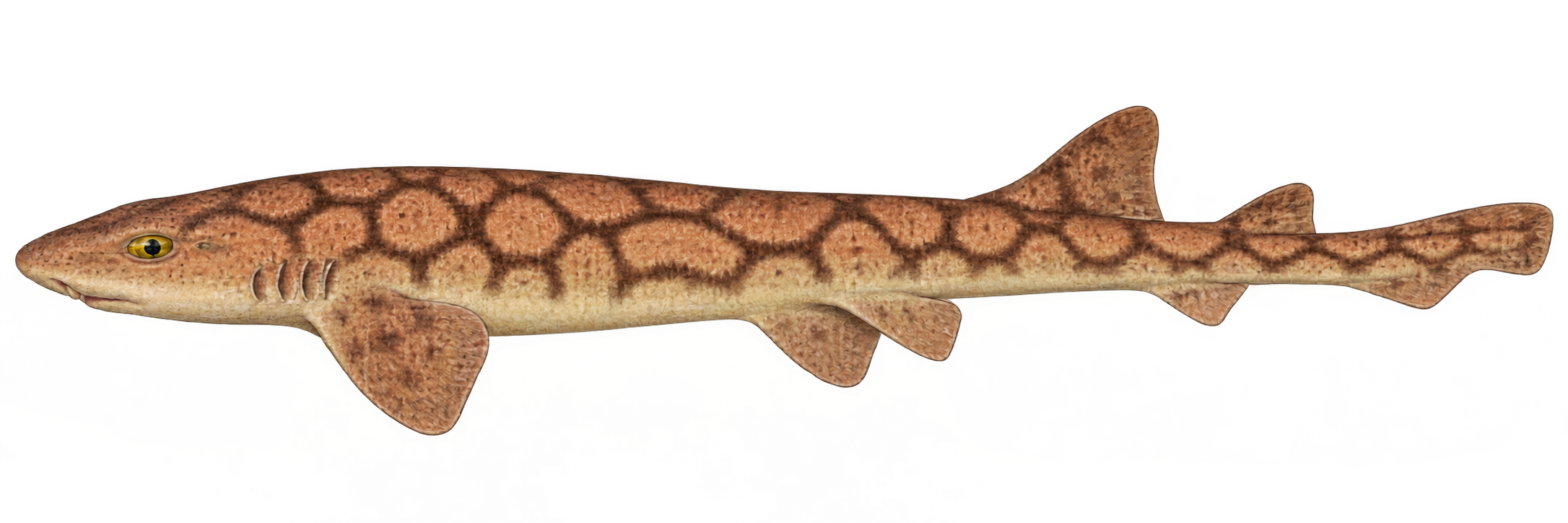
A dark network of chain-like lines crosses the body of this small catshark. The eyes are horizontally oval, the body slender, and the second dorsal fin smaller than the first. The first dorsal sits well back, just behind the pelvic-fin attachment. Compare the complete pattern and fin arrangement rather than naming every patterned bottom shark a chain dogfish. Chain catshark is another common name for the same species, not a separate addition to the directory. Smithsonian species identification.
Atlantic Florida context
NOAA’s distribution review specifically includes the Atlantic shelf and slope south around Florida into the Straits. It also notes that animals south of Cape Hatteras generally occupy deeper water than northern populations. That is meaningful offshore-corridor evidence, but not a suggestion that a recreational reef dive will encounter this shark. Deepwater observations and research collections should never be converted into shallow dive-site sightings. NOAA chain-dogfish distribution, Map 37.
Feeding, breeding and size
Crustaceans, worms, squid and small fishes are recorded prey. Unlike the live-bearing smooth dogfish, chain dogfish lay eggs. Smithsonian reports a small species reaching approximately 59 centimeters, while the IUCN assessment identifies that measurement as total length, including the tail. Regional studies differ in their maturity measurements; a Florida breeding season or fixed maturity age is not established here. Smithsonian biology and IUCN species assessment.
Three things worth noticing
- Its chain pattern is a network of lines, not a row of white spots.
- Dogfish and catshark can both refer to this one species.
- Some sharks lay eggs, while others give birth to live pups.
Observation and harvest caution
This page does not establish permission to harvest or collect chain dogfish. Florida shark regulations and federal rules require attention to the actual species, location and fishing activity. An animal omitted from a short public summary is not automatically unrestricted. Review Florida shark requirements before planning any collection, and obtain a species-specific regulatory determination if needed.
Leave animals and egg cases where they are. Do not move a resting shark to improve a photograph, or approach beyond the depth and conditions covered by your training. For documentary images, retain the original location and depth information. A genuinely deepwater species deserves accurate context rather than an exaggerated promise of an easy encounter.
Current recreational retention rules
Checked November 12, 2026: this profile does not establish a species-specific harvest or collection allowance for chain dogfish (Scyliorhinus retifer). Florida’s shark rules have broad size, bag, gear and possession requirements; omission from a short public species list is not an exemption. Do not apply smoothhound or spiny-dogfish rules based on the shared common name. Confirm the species and applicable state, federal and landing rules with the responsible agency before any collection. Official FWC shark rules Florida rule text (Cornell LII) Florida rule text (Cornell LII) Federal rule text
Make your next dive happen
Dive With Us
Explore local charters and plan a dive suited to your experience.
View dive calendarTrain With Us
Build your fish identification, buoyancy and diving skills.
Explore trainingTravel With Us
Discover upcoming dive adventures and trip details.
Explore dive travelShop With Us
Browse equipment for your diving and ask our team for help choosing.
Explore dive gearReview current dates, availability, prices, inclusions and requirements on each listing before booking or buying.
Call us now
Ask about fish identification training
Reef Fish Identification
Ask about dates, prerequisites or your next step. An inquiry does not reserve a place. Please provide your own contact details; do not include medical, payment or a child's personal information.
We use these details to respond to your inquiry. This form does not sign you up for marketing.
Explore more with Stuart Scuba
Open Water course options · Advanced Adventure training · Technical training · Professional training · All courses · Local dives · Dive trips · Facebook · Instagram · YouTube
Your surface-interval essentials
Questions for Stuart Scuba? info@stuartscuba.com
Check the Stuart Scuba Weather Center · Play scuba trivia
Weather and wildlife vary. Confirm current conditions, trip requirements and departure details with the operator.
Plan Your Next Dive with Stuart Scuba
Dive With Us
Explore upcoming local charters and choose a dive that fits your experience.
Before you book
Check the individual listing for departure time, requirements and availability.
Travel With Us
Find upcoming dive adventures and start planning your next trip.
Plan your trip
Review dates, inclusions and trip details on the travel calendar.
Stay Connected with Stuart Scuba
 Follow pageShare
YouTube
SubscribeWatch & shareFollow on InstagramView & share post
Follow company news, training updates, and dive stories.
Follow on LinkedInGoogle Reviews
See Stuart Scuba’s current Google rating and review count below. Open the listing in Google Maps to browse customer reviews.



