

Fish identification archive / West Indian Fuzzy Chiton
West Indian Fuzzy Chiton
Acanthopleura granulata · Chitonidae
I saw this
Spotted this marine life? Share the guide with your dive buddies. Review your caption before posting.
For Instagram, copy the caption and link into your own post or message. Nothing is posted automatically and this does not record a verified sighting.
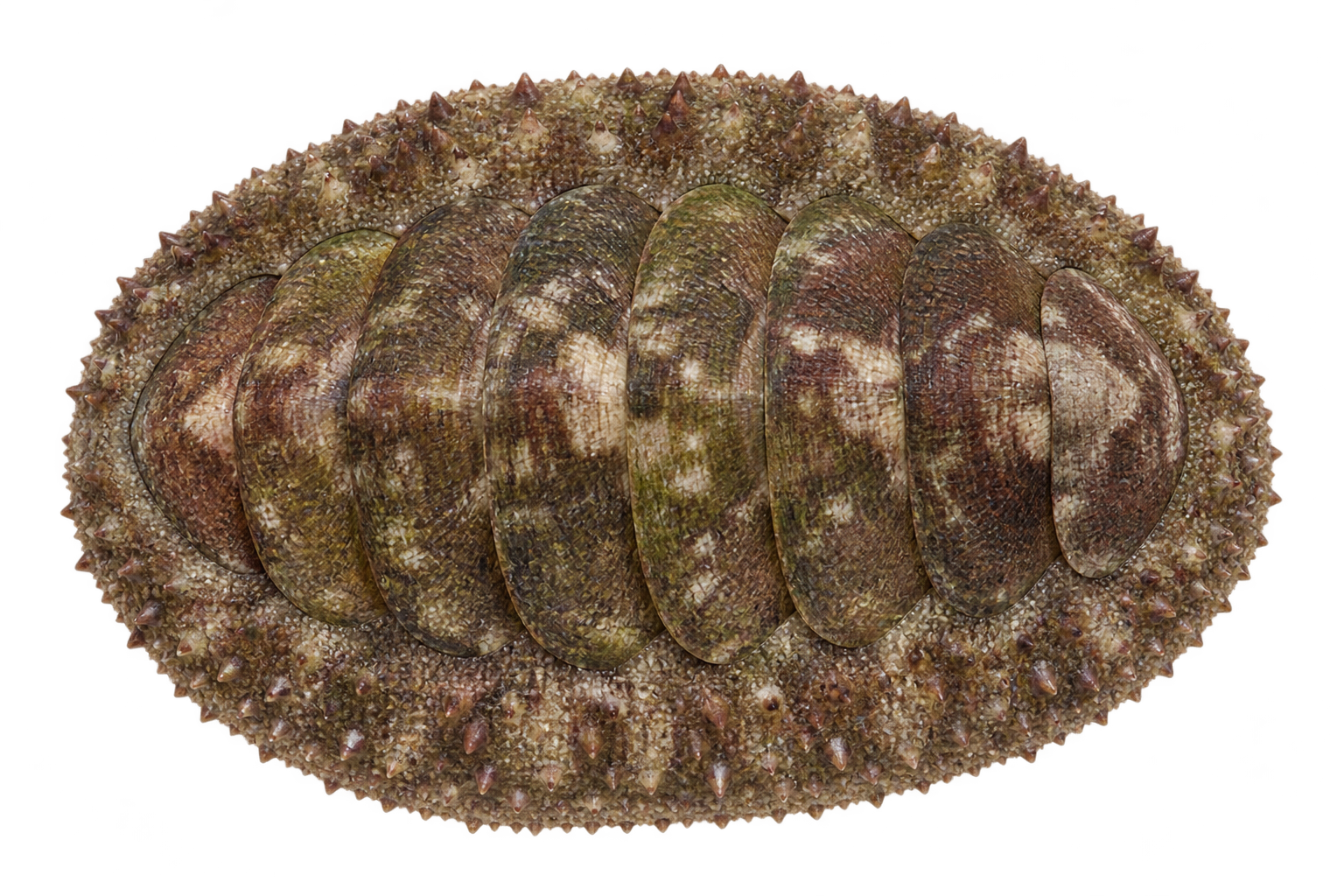
Identification overview
A chiton is a mollusk, but its back does not resemble a coiled snail shell or a clam’s paired valves. Acanthopleura granulata carries eight overlapping shell plates surrounded by a fleshy girdle. This arrangement gives the animal a low, armored outline against rock. Counting the plates is a useful first step toward recognizing a chiton, although the number alone does not establish its species.
For identification photographs, include the whole outline, the plate surfaces and the surrounding girdle. Surface wear, attached growth and lighting can make a single close crop misleading. Use identified reference images to check the complete combination of features rather than treating any eight-plated animal as this species. Do not pry a chiton off its attachment surface to photograph the underside.
A shoreline animal in South Florida
Biscayne National Park includes Acanthopleura granulata in its official mollusk inventory. That provides local support within the southern portion of the Vero–Key Largo corridor. It does not demonstrate occurrence at every intermediate beach or offshore reef, nor does it give a current population estimate.
This profile is primarily about rocky shoreline habitat, not a typical offshore reef encounter. Smithsonian research on Caribbean chitons placed this species relatively high in the intertidal zone compared with Chiton tuberculatus. Those detailed ecological observations came from Puerto Rico and Panama, so they should not be converted into an exact Florida tidal-height rule.
Grazing and reproduction
The Smithsonian study documented grazing on algae and cyanobacteria on rock, using the radula, a feeding structure bearing rows of teeth. Much feeding occurred at night. The same research examined the release of eggs and sperm and patterns of spawning associated with lunar timing. These results explain the animal’s biology, but they are not a dependable local spawning forecast for a Florida visit.
Armor that also senses light
Research highlighted by MIT found image-forming eyes embedded in this species’ armor. Their lenses are made of aragonite, a calcium-carbonate mineral. The animal therefore combines a protective shell with a visual system; it is not simply wearing an inert roof. Eight movable plates, nighttime grazing and mineral-lens eyes are three details that make a quiet shoreline sighting memorable.
Observe from a stable position and avoid stepping on neighboring animals or slippery growth. Leave the chiton attached where you found it. This identification guide does not authorize harvest. Check current FWC guidance and the particular park or shoreline rules before collecting marine life.
References
Current Florida collection cautions
Reviewed November 12, 2026. A living animal in a shell is not an empty-shell souvenir: applicable licensing, species rules and protected-area restrictions must be checked before removal. Leave attached animals and surrounding habitat undisturbed. This guide offers no collection permission or food-safety assurance. Official FWC live-shell collection guidance
Make your next dive happen
Dive With Us
Explore local charters and plan a dive suited to your experience.
View dive calendarTrain With Us
Build your fish identification, buoyancy and diving skills.
Explore trainingTravel With Us
Discover upcoming dive adventures and trip details.
Explore dive travelShop With Us
Browse equipment for your diving and ask our team for help choosing.
Explore dive gearReview current dates, availability, prices, inclusions and requirements on each listing before booking or buying.
Call us now
Ask about fish identification training
Reef Fish Identification
Ask about dates, prerequisites or your next step. An inquiry does not reserve a place. Please provide your own contact details; do not include medical, payment or a child's personal information.
We use these details to respond to your inquiry. This form does not sign you up for marketing.
Explore more with Stuart Scuba
Open Water course options · Advanced Adventure training · Technical training · Professional training · All courses · Local dives · Dive trips · Facebook · Instagram · YouTube
Your surface-interval essentials
Questions for Stuart Scuba? info@stuartscuba.com
Check the Stuart Scuba Weather Center · Play scuba trivia
Weather and wildlife vary. Confirm current conditions, trip requirements and departure details with the operator.
Plan Your Next Dive with Stuart Scuba
Dive With Us
Explore upcoming local charters and choose a dive that fits your experience.
Before you book
Check the individual listing for departure time, requirements and availability.
Travel With Us
Find upcoming dive adventures and start planning your next trip.
Plan your trip
Review dates, inclusions and trip details on the travel calendar.
Stay Connected with Stuart Scuba
 Follow pageShare
YouTube
SubscribeWatch & shareFollow on InstagramView & share post
Follow company news, training updates, and dive stories.
Follow on LinkedInGoogle Reviews
See Stuart Scuba’s current Google rating and review count below. Open the listing in Google Maps to browse customer reviews.



