

Fish identification archive / White Shrimp
White Shrimp
Litopenaeus setiferus · Penaeidae
I saw this
Spotted this marine life? Share the guide with your dive buddies. Review your caption before posting.
For Instagram, copy the caption and link into your own post or message. Nothing is posted automatically and this does not record a verified sighting.
Identification overview
The white shrimp, Litopenaeus setiferus, has an important geographic qualification in a South Florida guide. NOAA places the southern end of its Atlantic range at St. Lucie Inlet. It should not be described as common throughout Palm Beach, Biscayne or the Florida Keys. Within a Vero Beach–Key Largo directory, it belongs with a clearly labeled northern-corridor range limit.
Identification clues
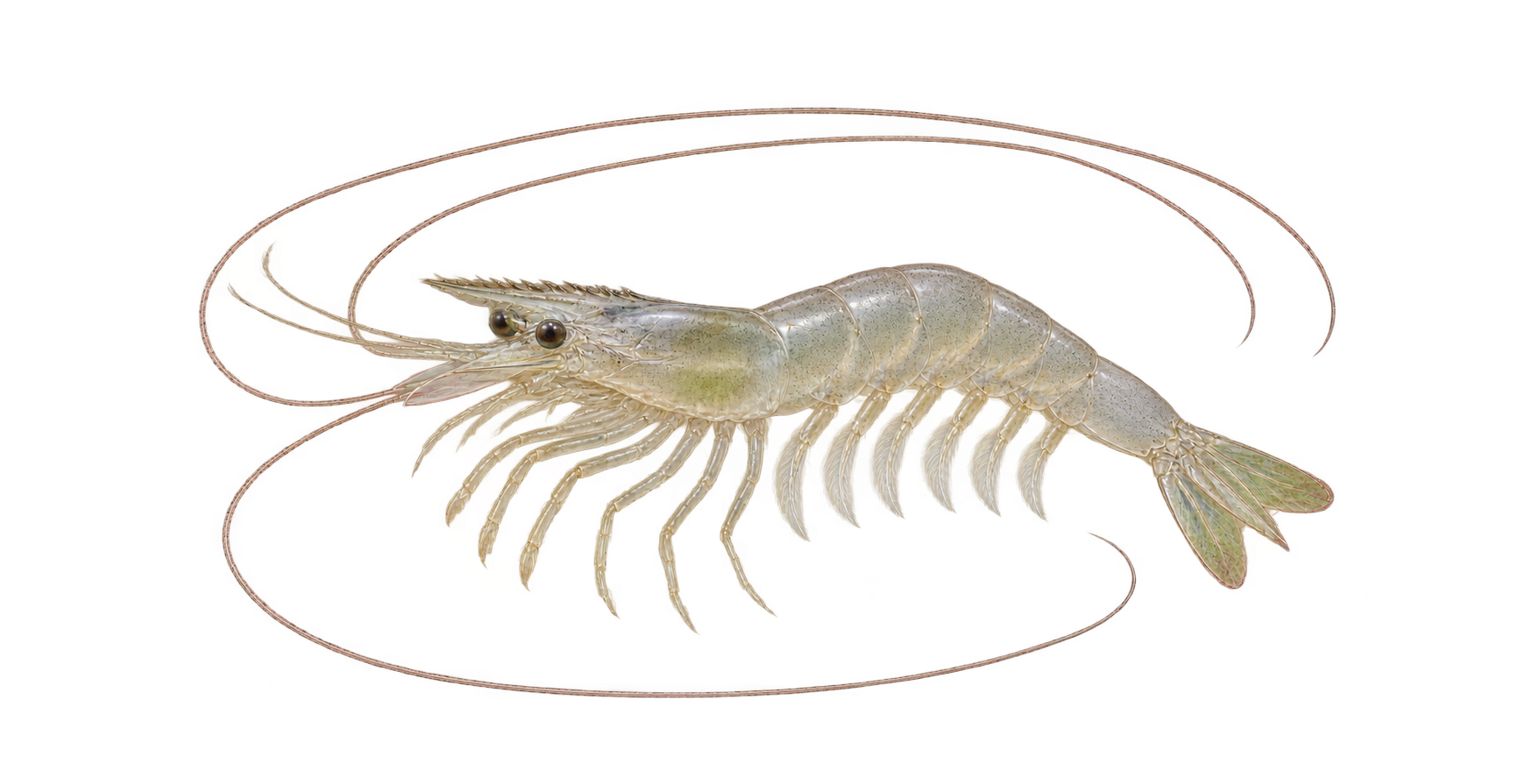
The carapace lacks the grooves seen in brown and pink shrimp. Long antennae, a pale gray body and greenish tail coloration provide additional clues, while a toothed rostrum extends forward near the eyes. Antennae can reach several times body length, so an impressive overall span is not a measurement of the shrimp’s body.
Pink and brown shrimp can share a similar general silhouette. Compare the smooth carapace with their grooved shells, then check antenna length and any abdominal spot. No single color patch should decide the identification. A shrimp photographed well south of the documented Atlantic limit deserves particularly careful review rather than an automatic white-shrimp label.
Habitat and feeding
FWC associates white shrimp with muddier, shallower and less salty water than the main pink- and brown-shrimp habitats. Estuaries provide nursery habitat; the life cycle also includes coastal and offshore water. This is a sediment-associated animal, not a coral-reef cleaning specialist.
Larvae feed on plankton. Larger animals take food from the bottom, including small organisms and organic material. Their role links productive estuarine habitat with the wider coastal food web, where many larger animals consume shrimp.
Reproduction
Females release eggs near the seabed, and fertilization occurs during release. Young shrimp develop through early stages before using estuarine nursery areas. Spawning schedules reported for the Carolinas or Gulf should not be copied as a precise St. Lucie timetable. The range boundary is the more useful fact for this regional identification page.
A careful field record
Photograph visible shell features and the full antennae only when the animal can remain undisturbed. Record the location, habitat and date; a market specimen or bait bucket does not establish a wild population at the place where it was photographed. Do not move shrimp between waterways or release a purchased animal to create a sighting.
Collection requires a separate check of current Florida shrimp rules, area closures and local protected-site restrictions. This profile does not authorize harvest. Its main purpose is to help distinguish similar shrimp while preventing a northern-range species from being incorrectly presented as routine wildlife across all of South Florida.
References
Current Florida collection cautions
Reviewed November 12, 2026. Florida recreational shrimping requires the appropriate license unless exempt, and species, gear, vessel limits and local closures must be checked. In state waters outside the Big Bend region, FWC lists a five-gallon heads-on daily limit per harvester or vessel, with no more than five gallons aboard a vessel at any time. That limit does not override protected-area restrictions or authorize collection at a particular site. This identification page gives no permission to harvest and no assurance of safe consumption. Official FWC recreational shrimp rules
Make your next dive happen
Dive With Us
Explore local charters and plan a dive suited to your experience.
View dive calendarTrain With Us
Build your fish identification, buoyancy and diving skills.
Explore trainingTravel With Us
Discover upcoming dive adventures and trip details.
Explore dive travelShop With Us
Browse equipment for your diving and ask our team for help choosing.
Explore dive gearReview current dates, availability, prices, inclusions and requirements on each listing before booking or buying.
Call us now
Ask about fish identification training
Reef Fish Identification
Ask about dates, prerequisites or your next step. An inquiry does not reserve a place. Please provide your own contact details; do not include medical, payment or a child's personal information.
We use these details to respond to your inquiry. This form does not sign you up for marketing.
Explore more with Stuart Scuba
Open Water course options · Advanced Adventure training · Technical training · Professional training · All courses · Local dives · Dive trips · Facebook · Instagram · YouTube
Your surface-interval essentials
Questions for Stuart Scuba? info@stuartscuba.com
Check the Stuart Scuba Weather Center · Play scuba trivia
Weather and wildlife vary. Confirm current conditions, trip requirements and departure details with the operator.
Plan Your Next Dive with Stuart Scuba
Dive With Us
Explore upcoming local charters and choose a dive that fits your experience.
Before you book
Check the individual listing for departure time, requirements and availability.
Travel With Us
Find upcoming dive adventures and start planning your next trip.
Plan your trip
Review dates, inclusions and trip details on the travel calendar.
Stay Connected with Stuart Scuba
 Follow pageShare
YouTube
SubscribeWatch & shareFollow on InstagramView & share post
Follow company news, training updates, and dive stories.
Follow on LinkedInGoogle Reviews
See Stuart Scuba’s current Google rating and review count below. Open the listing in Google Maps to browse customer reviews.



