

Fish identification archive / Flamingo Tongue
Flamingo Tongue
Cyphoma gibbosum
I saw this
Spotted this marine animal? Share the guide with your dive buddies. Review your caption before posting.
For Instagram, copy the caption and link into your own post or message. Nothing is posted automatically and this does not record a verified sighting.
Fun facts for your next surface interval
- The polka-dot outfit is living skin, not permanent shell decoration.
- Its favorite dining room is a sea fan, where the furniture is also food.
- The sea fan doubles as a nursery: females deposit egg capsules on their gorgonian hosts.
Florida and local context
South Florida reefs, including Pompano Beach and the Florida Keys: Documented Florida observations support regional occurrence; Pompano Beach is Broward County, not Palm Beach.
Documented regional presence is not a guarantee of an encounter or a measure of how common this animal is at your dive site.
How to recognize this animal
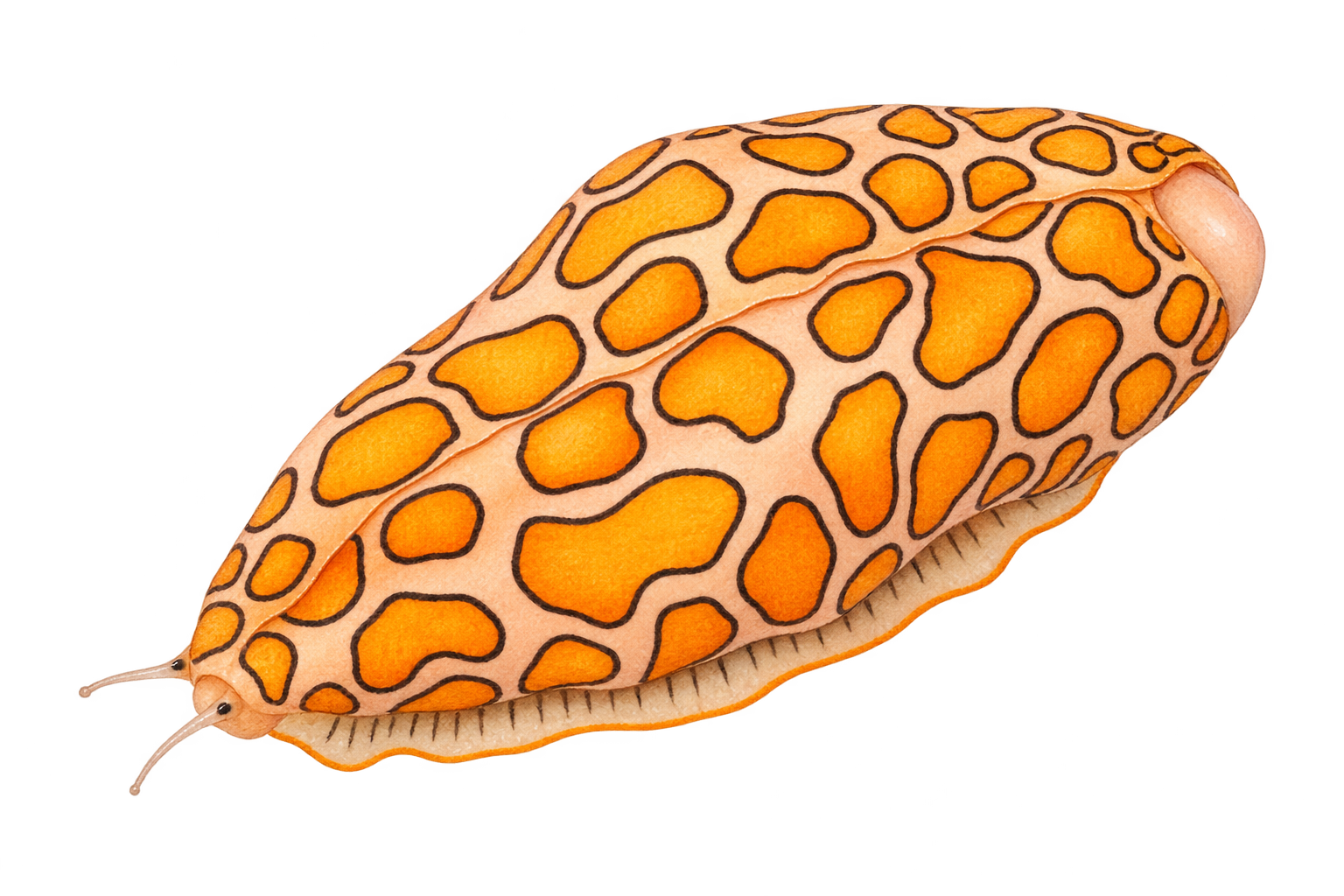
Cream, orange and black markings make the flamingo tongue look like a tiny decorated shell. The striking pattern actually belongs to the living mantle spread over the shell. When the mantle retracts, the underlying shell is much plainer than the animal first appeared.
Size and life stages
The shell is generally about 2–3 centimeters long. Its compact oval form can be overlooked against a busy sea fan. A close photograph should still be made from a stable position that avoids touching the host colony with hands, fins, camera arms or dangling equipment.
Habitat and where to look
Look on sea fans, sea whips and other gorgonian octocorals. These colonies provide food as well as a surface to crawl along. The relationship explains why a careful scan of branches is more productive than searching only open sand for brightly colored snails.
Range and local context
The species inhabits Florida and other tropical western Atlantic reefs. Research in the Florida Keys and photographed eggs off Pompano Beach document Florida occurrence. Those records do not establish a particular Palm Beach site or imply that every gorgonian colony will host a snail.
What is on the menu?
Flamingo tongues feed on gorgonian tissue. Studies of their diet explore how the snails cope with the chemical defenses of their prey. Their appealing appearance does not make the feeding harmless, but neither is ordinary predation a reason for divers to remove them. A gorgonian is an animal colony rather than a plant, so this colorful snail is feeding on other animals. Its diet brings it into contact with defensive chemicals produced by the host. Research on its detoxification mechanisms helps explain how a small, apparently delicate gastropod can use food that is chemically challenging to many other reef consumers.
Daily habits and behavior
The mantle can fold back over the shell, changing what the observer sees. More than one snail may occur on the same host.
Mating and the next generation
Females attach egg capsules to gorgonian colonies, placing the next generation on the same kind of living host used by feeding adults. A photographed egg-laying record from Pompano Beach documents this behavior in Florida. The capsule deposits add another layer of activity to a sea fan that already serves as food and a crawling surface.
Look-alikes and identification traps
Small cowries also spread a mantle over their shells, but shell shape, mantle pattern and host association differ. Closely related forms have undergone taxonomic revision, so avoid naming a second species simply because spots or markings differ from a familiar illustration.
Observe without disturbing
Watch their positions and feeding traces without touching a colony or moving individuals together to create a more attractive composition. Do not scrape or clean unfamiliar spots from the host while attempting to frame a photograph. Never remove a flamingo tongue in expectation of keeping its beautiful pattern on a souvenir shell. Keep it on the living host and photograph without handling. The snail and its coral food source both deserve space, and collecting rules are separate from photographic identification. Dive with Stuart Scuba to explore Florida marine life with an emphasis on careful observation. Ask about current conditions and an appropriate dive plan; wildlife sightings remain unpredictable.
Harvest, protection and eating safety
Live-shell collection restrictions apply; not the queen-conch rule
Can it be hunted or harvested?
Flamingo tongue is not queen conch and is not listed in the reviewed restricted marine-life species schedule. Where lawful, general recreational limits apply: 100 pounds or two individuals of the species per person per day, whichever is greater. A saltwater license is required for a shell containing a live animal, including collection from shore, unless a statutory exemption applies. A genuinely empty shell is different, but a hermit crab or other occupant makes it living wildlife. Hand collection must not damage protected coral or live rock. Leaving the animal in place is the preferred dive practice.
Florida seasons and areas
No species-specific statewide recreational closed season or minimum size was identified in the reviewed rules. Lee County prohibits collecting these live shells; Manatee County allows no more than two live shells of any one species per person per day. Empty shells and protected sites have separate rules. The Blue Heron Bridge area prohibits designated ornamental marine life collection; do not use this profile as permission to collect at the bridge. Park, refuge and Florida Keys sanctuary zones can prohibit collection even where general state rules allow it. Check the exact site and current boundaries before any take. The Lee rule also restricts possession in county waters seaward of mean high water; Manatee’s two-animal restriction applies to possession in those waters as well as daily harvest. Empty shells must not be obtained by killing, mutilating or removing the living mollusk.
Can it be speared?
No species-specific statewide spearing ban was identified in the reviewed rules. Spearing is still prohibited in restricted areas, including within 100 yards of public swimming beaches, public fishing piers and bridge sections where public fishing is allowed. Hand collection or an appropriate lawful net is the practical choice for this animal; do not damage coral or live rock.
Is it safe to eat?
No unconditional safe-to-eat designation is made for this species. Legal shell collection is not food-safety approval, and this archive does not recommend it as a food target. Florida DOH warns that marine gastropods such as conchs and whelks can carry red-tide toxins acquired through their food. Do not harvest or eat them from red-tide-affected or closed areas. Cooking, heating and freezing do not remove these toxins; taste and smell are not reliable tests.
Before you act: This recreational overview is not permission to collect or spear at your dive site. Confirm the species, date, management area, state or federal waters, gear, licenses and current local closures. Identification artwork cannot establish an identification or guarantee seafood safety.
Official rules and health guidance
- FWC: Recreational Sea Shell Collecting
- Florida Administrative Code: Marine Life, Chapter 68B-42
- FAC 68B-42.001: restricted-species definitions (LII reproduction; current effective date checked against official FAC index)
- FWC: Recreational Marine Life
- FWC: Saltwater Recreational Licenses and Permits
- NOAA: Florida Keys Sanctuary Marine Zones
- FWC: Spearing and Restricted Areas
- FWC: Unregulated Species and Default Limits
- Florida Department of Health: Seafood Poisoning
- FDA: Selecting and Serving Seafood Safely
- Florida Administrative Code: Southwest Florida Shells, Chapter 68B-26
- FAC 68B-26.002: live shellfish definition (LII reproduction)
- FAC 68B-26.004: Lee and Manatee restrictions (LII reproduction)
Reviewed 2026-11-10. Rules and advisories can change; check the linked authorities before harvesting or eating.
Sources and review
Reviewed 2026-11-10.
Make your next dive happen
Dive With Us
Explore local charters and plan a dive suited to your experience.
View dive calendarTrain With Us
Build your fish identification, buoyancy and diving skills.
Explore trainingTravel With Us
Discover upcoming dive adventures and trip details.
Explore dive travelShop With Us
Browse equipment for your diving and ask our team for help choosing.
Explore dive gearReview current dates, availability, prices, inclusions and requirements on each listing before booking or buying.
Call us now
Ask about marine life identification
Marine Life Identification
Ask about dates, prerequisites or your next step. An inquiry does not reserve a place. Please provide your own contact details; do not include medical, payment or a child's personal information.
We use these details to respond to your inquiry. This form does not sign you up for marketing.
Explore more with Stuart Scuba
Open Water course options · Advanced Adventure training · Technical training · Professional training · All courses · Local dives · Dive trips · Facebook · Instagram · YouTube
Your surface-interval essentials
Questions for Stuart Scuba? info@stuartscuba.com
Check the Stuart Scuba Weather Center · Play scuba trivia
Weather and wildlife vary. Confirm current conditions, trip requirements and departure details with the operator.
Plan Your Next Dive with Stuart Scuba
Dive With Us
Explore upcoming local charters and choose a dive that fits your experience.
Before you book
Check the individual listing for departure time, requirements and availability.
Travel With Us
Find upcoming dive adventures and start planning your next trip.
Plan your trip
Review dates, inclusions and trip details on the travel calendar.
Stay Connected with Stuart Scuba
 Follow pageShare
YouTube
SubscribeWatch & shareFollow on InstagramView & share post
Follow company news, training updates, and dive stories.
Follow on LinkedInGoogle Reviews
See Stuart Scuba’s current Google rating and review count below. Open the listing in Google Maps to browse customer reviews.



