

Fish identification archive / Common Atlantic Slipper Snail
Common Atlantic Slipper Snail
Crepidula fornicata · Calyptraeidae
I saw this
Spotted this marine life? Share the guide with your dive buddies. Review your caption before posting.
For Instagram, copy the caption and link into your own post or message. Nothing is posted automatically and this does not record a verified sighting.
Identification overview
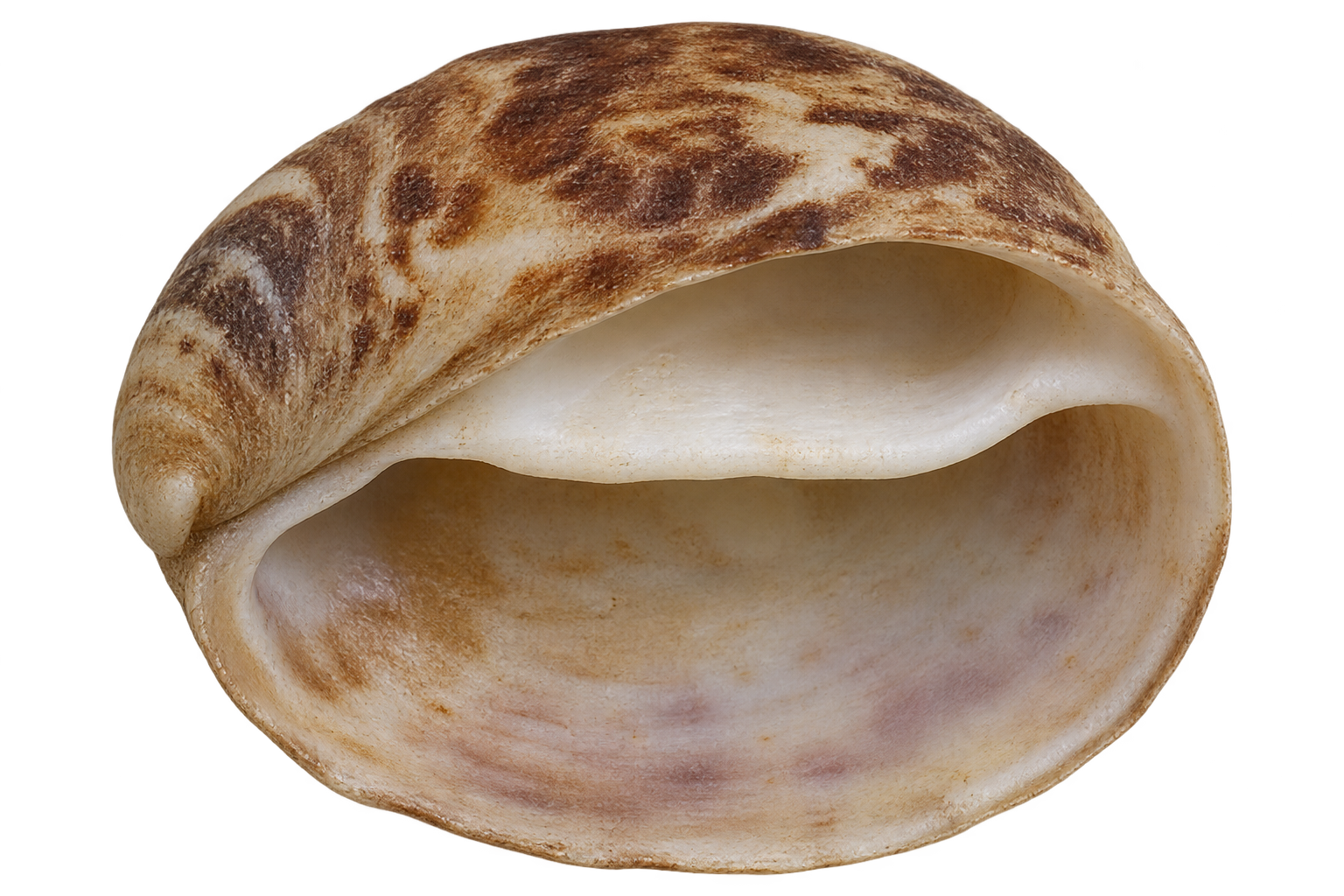
The common Atlantic slipper snail, Crepidula fornicata, has an oval, caplike shell rather than the tall spiral familiar from many sea snails. A white shelf occupies part of the interior opening, giving an empty shell a slipperlike appearance. The apex turns toward one side, and the exterior can show brown markings on a pale background.
Biscayne Bay context
The species appears in the animal inventory of the Biscayne Bay Aquatic Preserve draft management plan circulated in 2025. That is useful regional inventory evidence, but the document is a draft and the entry does not provide a current population estimate or a named dive-site observation. It should not be confused with the separate Biscayne National Park list, which includes other slipper-snail species.
Slipper snails use hard surfaces, including rocks and other shells. Individuals may grow in stacks. Photograph the attachment surface and the whole group when possible; the arrangement can be more informative than a close-up of one indistinct shell.
Feeding and life history
Unlike many grazing or predatory snails, this species filters suspended food. Material captured by its gills is carried toward the mouth, allowing a sedentary animal to feed without roaming over the bottom. Small suspended algae and organic particles form part of that food supply.
Individuals begin reproductive life as males and later become females. In a stack, larger older females commonly occupy lower positions while younger males occur above them. The timing of the change varies, so the arrangement should not be treated as a precise age chart.
Eggs develop in capsules and hatch into swimming larvae before settlement. A local spawning season cannot be inferred from a timetable measured in a European population or a laboratory at a different temperature. This profile therefore describes the developmental sequence without promising seasonal behavior in Biscayne Bay.
Lookalikes and uncertainty
Other Florida Crepidula can look similar, particularly as small juveniles. Smithsonian’s account notes confusion involving Crepidula convexa and also identifies the Florida–Caribbean species Crepidula maculosa as a comparison. A cap-shaped shell alone is not enough for a definitive identification.
Do not pull apart a living stack to inspect the white interior shelf. An already empty shell can provide that view, while an intact group supplies attachment and habitat information. Record the distinction in any photograph submitted for identification.
Leave attached animals and their support undisturbed. Current FWC shell-collection guidance and local preserve or park restrictions must be checked separately from identification. A species inventory is evidence of occurrence, not permission to collect.
References
Current Florida collection cautions
Reviewed November 12, 2026. Collecting a shell containing a living organism generally requires a Florida recreational saltwater fishing license. Species rules and park, refuge or sanctuary restrictions apply independently of identification. Leave occupied shells and their habitat undisturbed. This guide gives no harvest permission or assurance that an animal is safe to eat. Official FWC live-shell collection guidance
Make your next dive happen
Dive With Us
Explore local charters and plan a dive suited to your experience.
View dive calendarTrain With Us
Build your fish identification, buoyancy and diving skills.
Explore trainingTravel With Us
Discover upcoming dive adventures and trip details.
Explore dive travelShop With Us
Browse equipment for your diving and ask our team for help choosing.
Explore dive gearReview current dates, availability, prices, inclusions and requirements on each listing before booking or buying.
Call us now
Ask about fish identification training
Reef Fish Identification
Ask about dates, prerequisites or your next step. An inquiry does not reserve a place. Please provide your own contact details; do not include medical, payment or a child's personal information.
We use these details to respond to your inquiry. This form does not sign you up for marketing.
Explore more with Stuart Scuba
Open Water course options · Advanced Adventure training · Technical training · Professional training · All courses · Local dives · Dive trips · Facebook · Instagram · YouTube
Your surface-interval essentials
Questions for Stuart Scuba? info@stuartscuba.com
Check the Stuart Scuba Weather Center · Play scuba trivia
Weather and wildlife vary. Confirm current conditions, trip requirements and departure details with the operator.
Plan Your Next Dive with Stuart Scuba
Dive With Us
Explore upcoming local charters and choose a dive that fits your experience.
Before you book
Check the individual listing for departure time, requirements and availability.
Travel With Us
Find upcoming dive adventures and start planning your next trip.
Plan your trip
Review dates, inclusions and trip details on the travel calendar.
Stay Connected with Stuart Scuba
 Follow pageShare
YouTube
SubscribeWatch & shareFollow on InstagramView & share post
Follow company news, training updates, and dive stories.
Follow on LinkedInGoogle Reviews
See Stuart Scuba’s current Google rating and review count below. Open the listing in Google Maps to browse customer reviews.



