

Fish identification archive / Flat Tree Oyster
Flat Tree Oyster
Isognomon alatus · Isognomonidae
I saw this
Spotted this marine life? Share the guide with your dive buddies. Review your caption before posting.
For Instagram, copy the caption and link into your own post or message. Nothing is posted automatically and this does not record a verified sighting.
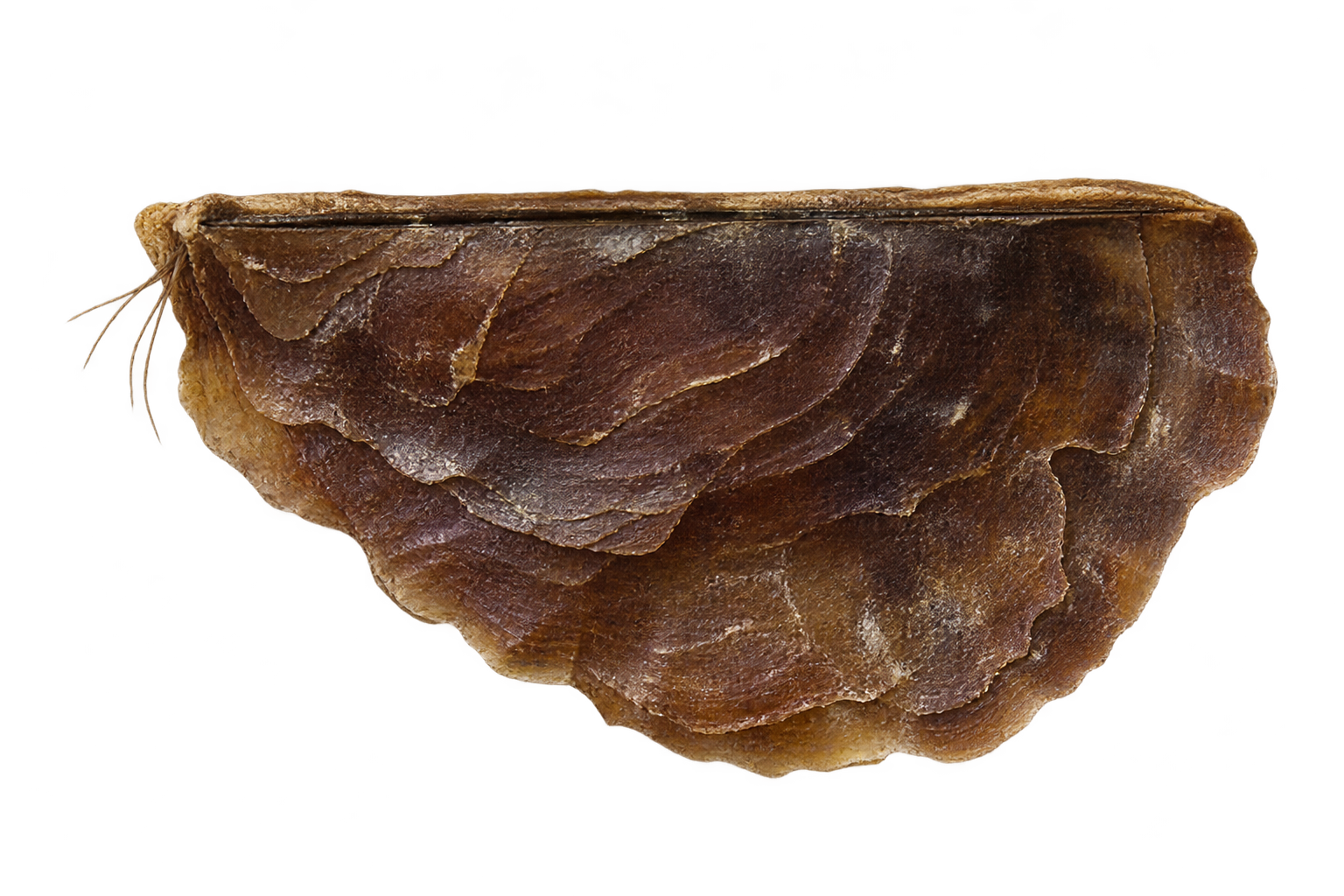
The flat tree oyster, Isognomon alatus, is an attached bivalve with thin, flattened, irregular valves. Look for a long, relatively straight hinge and an animal held to its support by fibrous threads called a byssus. Its common name can mislead: it is not an eastern oyster, and the “tree” refers especially to its association with mangrove roots rather than a life in dry forest.
Where it belongs in South Florida
FWC explicitly places this species along southern Atlantic Florida and describes living animals on mangroves, oyster reefs, docks and pilings. The Biscayne National Park mollusk inventory also lists the species. These are strong reasons to include it in an Atlantic South Florida directory, especially in the mangrove and sheltered-shoreline sections.
The habitat label matters. A tree oyster on a red-mangrove root is a different encounter from a reef fish offshore. Its regional distribution does not guarantee a sighting at every stop between Vero Beach and Key Largo. Photograph the support and surrounding habitat as well as the shell so the record shows where the animal actually lived.
Feeding and life cycle
The animal filters plankton and other small suspended organic particles from seawater. Remaining attached is compatible with feeding because moving water delivers the meal. Several individuals may form a cluster on a suitable root or other firm surface.
A university species account describes external fertilization followed by planktonic larvae. After settlement, young animals secure themselves using attachment fibers. A precise Florida spawning season is not established by the references used here, so this profile does not assign one.
Distinguishing it from true oysters
Eastern oysters cement their shells to the substrate and often form heavy, irregular reef clusters. The flat tree oyster’s thinner, flatter appearance and byssal attachment offer a different combination of clues. Neither the word “oyster” nor the presence of a mangrove root settles the identification by itself. Other bivalves can occupy the same setting.
Observe without detaching
Do not peel an animal away from a root or piling to inspect its underside. A photograph showing the shell outline, hinge region and attachment context is more useful and less disruptive. Leave mangrove roots, attached neighbors and any accumulated habitat intact.
Collection rules are separate from field identification. Check current Florida live-shell guidance and the rules of the particular park, sanctuary or waterway before collecting anything. An identification page should never be read as permission to remove an attached animal or as a statement that it is safe to eat.
Florida DEP’s 2014 St. Lucie Inlet Preserve animal inventory provides an additional dated local record.
References
Collection and seafood safety
FWC states that live oysters, clams and mussels may be harvested only from designated approved or conditionally approved shellfish areas that are open. Species identification does not establish sanitation status or that an animal is safe to eat. Verify species, exact area, licenses and protected-site restrictions before any collection. Current FWC guidance. Guidance reviewed November 12, 2026. No location-specific harvest or sanitation clearance is given.
Make your next dive happen
Dive With Us
Explore local charters and plan a dive suited to your experience.
View dive calendarTrain With Us
Build your fish identification, buoyancy and diving skills.
Explore trainingTravel With Us
Discover upcoming dive adventures and trip details.
Explore dive travelShop With Us
Browse equipment for your diving and ask our team for help choosing.
Explore dive gearReview current dates, availability, prices, inclusions and requirements on each listing before booking or buying.
Call us now
Ask about fish identification training
Reef Fish Identification
Ask about dates, prerequisites or your next step. An inquiry does not reserve a place. Please provide your own contact details; do not include medical, payment or a child's personal information.
We use these details to respond to your inquiry. This form does not sign you up for marketing.
Explore more with Stuart Scuba
Open Water course options · Advanced Adventure training · Technical training · Professional training · All courses · Local dives · Dive trips · Facebook · Instagram · YouTube
Your surface-interval essentials
Questions for Stuart Scuba? info@stuartscuba.com
Check the Stuart Scuba Weather Center · Play scuba trivia
Weather and wildlife vary. Confirm current conditions, trip requirements and departure details with the operator.
Plan Your Next Dive with Stuart Scuba
Dive With Us
Explore upcoming local charters and choose a dive that fits your experience.
Before you book
Check the individual listing for departure time, requirements and availability.
Travel With Us
Find upcoming dive adventures and start planning your next trip.
Plan your trip
Review dates, inclusions and trip details on the travel calendar.
Stay Connected with Stuart Scuba
 Follow pageShare
YouTube
SubscribeWatch & shareFollow on InstagramView & share post
Follow company news, training updates, and dive stories.
Follow on LinkedInGoogle Reviews
See Stuart Scuba’s current Google rating and review count below. Open the listing in Google Maps to browse customer reviews.



