You don’t need to know what kind of diver you’ll be before you call. Whether you’re new to scuba, returning after an injury, or exploring what support would make diving work for you, we’ll start with a conversation. Then we’ll discuss the right training, medical screening, access and buddy support before anyone pays or gets in the water.
Tell us your goal, a good way to reach you, and any practical access needs you want to discuss. Please don’t send medical records, diagnoses, a DD-214, Social Security numbers, or VA documents through the general contact form.
Meet the diver where they are
Benjamin Hadfield, Stuart Scuba co-owner, retired U.S. Marine and adaptive diving instructor trainer, wrote about why adaptive diving starts with listening. We talk directly with the diver, ask how you prefer to learn and what help you want, and build the plan together. The training standards don’t change. How we teach, communicate or set up the equipment can.
And if your goal is simply to get comfortable breathing underwater in a pool, that’s a good goal. The ocean will still be there next week. Read Benjamin’s Meeting Every Diver Where They Are for the philosophy behind the program.
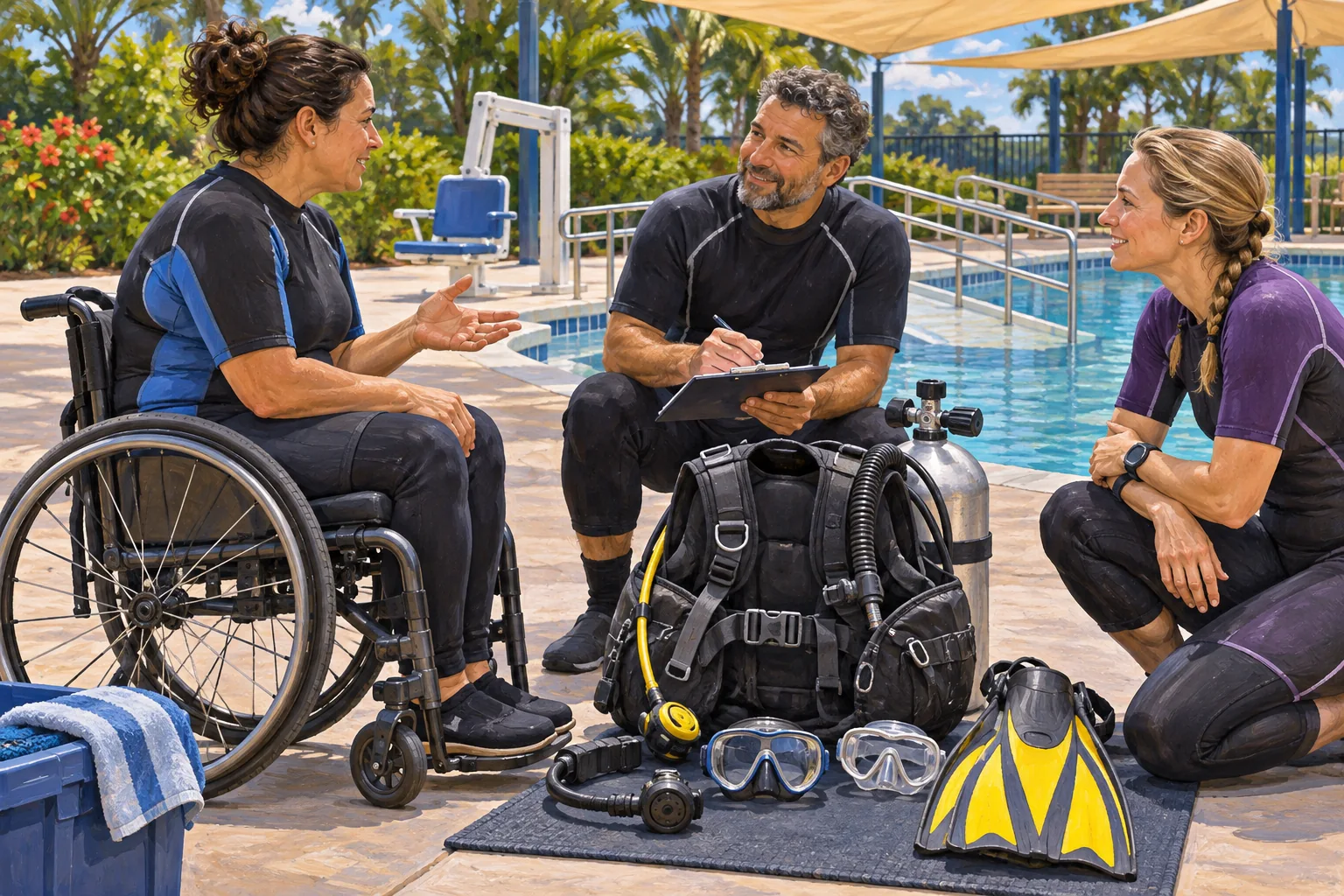
Training illustration. Actual venue, access and support arrangements are confirmed individually.
Choose the path that fits you
Work toward certification
Scubility is SDI’s adaptive training pathway. Training can include knowledge development, confined-water practice and open-water assessment. The goal is consistent performance and the right support, not rushing to a card on a fixed weekend.
If you already have a certification, tell us when and where you last dived and what has changed. Ask about a refresher or an adaptive pool assessment before booking a charter. Bring prior certifications and your logbook if available.
It describes the support a diver needs to dive safely within their training. SDI uses skill performance, including how the diver responds to a problem and supports a teammate, to determine the applicable certification and buddy requirements. It is not a rating of somebody’s disability or potential. Some divers continue with a trained team; others work toward standard Open Water certification if they later demonstrate all applicable requirements. Standard Open Water still means diving with a buddy and within the limits of training and experience.
From the first conversation to the first dive
Tell us what you want to do. Try a pool, earn certification, return after time away or dive with a partner. Tell us what’s worked for you before and how you prefer to communicate.
Complete the diving medical screening. We’ll explain which form to complete and how to return it appropriately. If the screening or program requires physician clearance, get it before any in-water activity, even the pool. When needed, consult a physician familiar with diving medicine. The instructor cannot medically clear you.
Review the venue and gear beforehand. We’ll confirm where to meet, the entry and exit options, any assistance you want, the equipment plan and what happens if we need to stop. Let us know before you travel if you need a particular access feature.
Start in confined water. Practice with the instructor at a pace that lets you pause, repeat a skill or change the setup. Agree on how to signal for help, how the team will respond and what happens if the planned exit can’t be used.
Move to open water when ready. Open-water training depends on skill readiness, staffing, access, site conditions and the standard for the course. If conditions change, we can change the plan, use another suitable site, or reschedule. Nobody has to finish because the clock says so.
Leave with a clear next step. Review skills completed, any support or limits that apply, what to practice next and how to build or find the right buddy team for future dives.
Access, equipment and communication
Getting there and getting in
Ask about parking, the route from the car to the briefing area, restrooms, changing space, pool access and safe transfers. For a boat, ask about dock approach, deck space, boarding and water recovery. A destination listing does not guarantee a lift, accessible vessel or accessible entry on your date.
Equipment that fits the diver
Tell us if you already use specific equipment or a positioning aid. Before buying gear, let the instructor review what may help and what needs fitting or supervised practice. Confirm which equipment is provided, what’s available to rent and whether you need to bring anything personal.
A briefing you can use
Ask for the information in the format that works for you. We can discuss written steps, demonstrations, a quieter space, repeated practice or another agreed way to communicate. The team rehearses how to give and receive signals before relying on them underwater.
A dive buddy might help with equipment, access, agreed signals or specific emergency responses. The instructor and diver identify the support needed, who is qualified to provide it, and what the team will do if conditions change. Nobody should improvise a transfer or rely on a stranger on the boat to fill a planned safety role.
A spouse, friend or caregiver is welcome to ask about coming along. Being supportive on land is different from being qualified to provide in-water assistance. SDI’s Dive Buddy course has prerequisites for certified divers. Ask the instructor to verify your certification, experience and the current requirements. People who don’t dive can ask whether surface support is an option.
Ask for the full quote before enrolling. We’ll explain instructor time, materials, pool/site or boat costs, gear, any buddy training and how added sessions are handled. Confirm inclusions and availability for your path rather than assuming a standard class price applies.
Ask about Stuart Scuba’s developing Disabled Veterans initiative. Supported training and volunteer buddy participation depend on staffing, funding, course fit and confirmed eligibility. An inquiry is not a reservation or a guarantee of a free seat. We’ll tell you what’s available before asking you to commit.
Verify benefits before paying. A service-connected disability rating, a veteran course listing, or a qualifying GI Bill benefit by itself does not establish reimbursement for this course. Benefit and test approval, documentation and covered fees are separate issues. Confirm the exact course or test and your eligibility with VA. Do not pay expecting an automatic reimbursement.
Ask about changes and cancellation. Talk through what happens if medical clearance, instructor availability, weather or access changes the training plan. Read the Stuart Scuba refund and cancellation policy before you enroll.
Stuart Scuba Scholarship Fund
Limited adaptive scuba training scholarships for U.S. military veterans who received the Purple Heart. You must apply to be considered. Awards depend on available funding, instructor and buddy availability, and a training plan that fits. Applying does not guarantee an award or reserve a class seat. If selected, we’ll explain what your award covers before you commit.
Photo and interview participation is required for scholarship recipients. Stuart Scuba may use photos, video and interview excerpts from the program in its general marketing, including its website, social channels and newsletters. We’ll review a separate written media release with you before any recording or publicity. You don’t need to share medical details or how you received your Purple Heart. Adaptive training inquiries are welcome whether or not you apply for a scholarship.
Apply for a Purple Heart veteran scholarship
Tell us how to reach you and what you’d like to accomplish through adaptive scuba training. Please don’t send medical information, a DD-214, Purple Heart documentation, a Social Security number or VA records through this form. If we need to verify eligibility, we’ll discuss how to do so directly.
Need help applying? Call (772) 600-8288 and ask about the scholarship.
Frequently asked questions
Do I need prior diving experience?
Not to ask about a beginner or introductory path. If you’re returning to diving or asking to become a Scubility Dive Buddy, tell us your existing credentials and recent experience so we can recommend the right route.
Does my disability automatically disqualify me?
No decision is made from a label alone. We consider medical screening, the environments available, the skills you can demonstrate and the level of support you need. In some situations the safest option may be to postpone scuba or discuss a different activity.
Can I ask about PTSD, hearing loss, a limb difference, or a mobility aid?
Yes. Tell us what would help you participate and what you want to discuss privately. Diving is not treatment for PTSD or any other condition; questions about medical fitness belong with a qualified physician.
Will I need a medical signature?
Complete the participant screening and follow your instructor’s instructions. If the screening or course requires it, physician clearance must be in place before any in-water activity. We cannot clear you over the phone.
Can my buddy come to the first session?
Ask us when we set up the appointment. We’ll discuss what your buddy can observe or do and what training is required before they take an in-water support role.
Do I have to buy equipment first?
No purchase is needed to start the conversation. Ask us to confirm what is included, what can be fitted or rented and what personal equipment you need before you spend money.
How long does it take?
It depends on your starting point, the pathway you choose, your skill progress, support needs and the schedule. We’ll discuss a realistic plan and talk through any extra sessions and their cost first.
Is it free for disabled veterans or covered by the GI Bill?
Ask about any supported seats currently available. No free seat or VA reimbursement is promised. Confirm the exact opportunity, fees and eligibility before paying.
Will I dive from a boat or at Blue Heron Bridge?
Not necessarily. We choose water that fits your skills, planned support and day-of conditions. Your instructor confirms the venue, access and entry and exit plan before the session.
Can I stop or restart on another day?
You can call a pause or stop a session. Tell us early if you’re unsure or uncomfortable. We’ll discuss what to repeat or adjust and any scheduling or cost implications.
What should I bring to the first conversation?
Your goal, any previous certification and recent diving history, availability, and practical access or communication preferences. Ask us how to share required paperwork securely.
What if I’m not ready for certification training yet?
A conversation, equipment fitting or supervised confined-water introduction may be a better first step. You don’t have to decide on your first phone call.
Start with a conversation, not a checkout page
Tell us what you’d like to try and what would make the first session work for you. We’ll explain the next step, who you’ll work with and what to confirm before you commit.