
Cayman Brac group dive travel
Explore the March 27–April 3, 2027 trip at Cayman Brac Beach Resort. Check the trip page for current details and availability.
Explore Cayman Brac →

Stuart Scuba
Recreational & technical dive classes · Dive charters · Gear & service · Worldwide dive travel
TOP PERFORMING SDI/TDI DIVE SHOP · 2015–2026


STUART SCUBA · SCUBA EQUIPMENT & FITTING
Waterproof is worth a try if you want the suit to feel shaped around you rather than pulled over you. At Stuart Scuba in Stuart, Florida, we can help sort out what matters: a thin suit for warm reef days, a thicker suit with better control of water exchange, or a semi-dry if you are tired of that first cold rush down your back. Start with fit, then choose thickness and entry style.
Get help with fit & availabilityVisit our Stuart dive shopCall (772) 600-8288Start with the choices that suit the dives you do most. Models shown are a guide to the range; ask us to confirm your size, version and current availability.
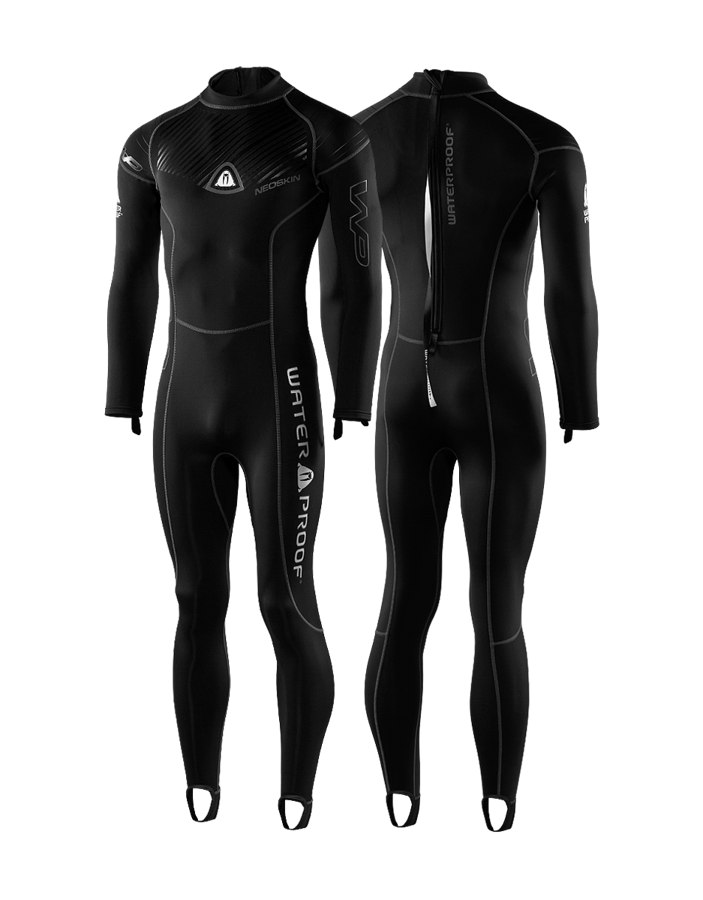
A thin stretch-neoprene full suit with a back zip, flatlock seams and thumb and foot loops. It adds coverage without asking you to climb into a heavy suit.
Why buy it? Try it for very warm travel and for divers who want full arms and legs without much bulk. Pick more insulation if you chill early, spend a long time underwater or are doing several dives in a row.
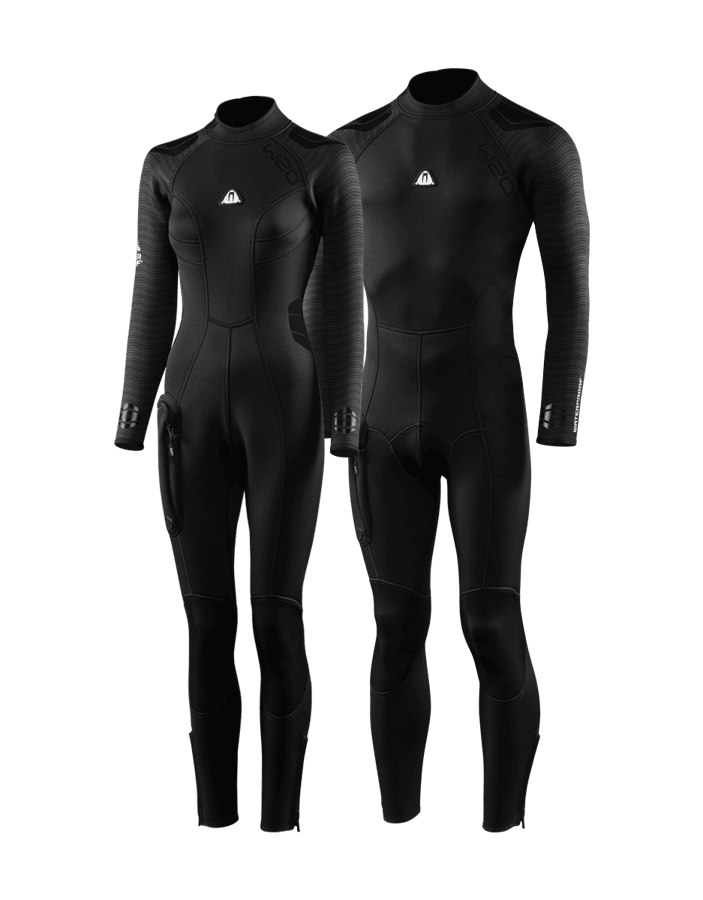
A flexible warm-water design with zippers at the legs, reinforced knees and an integrated draining hip pocket on the full suit. Waterproof also documents a W20 shorty.
Why buy it? Choose the full suit if you like a thin travel suit but still want knee and leg coverage. Choose a shorty only if less coverage suits the dive and you know you stay comfortable in it.
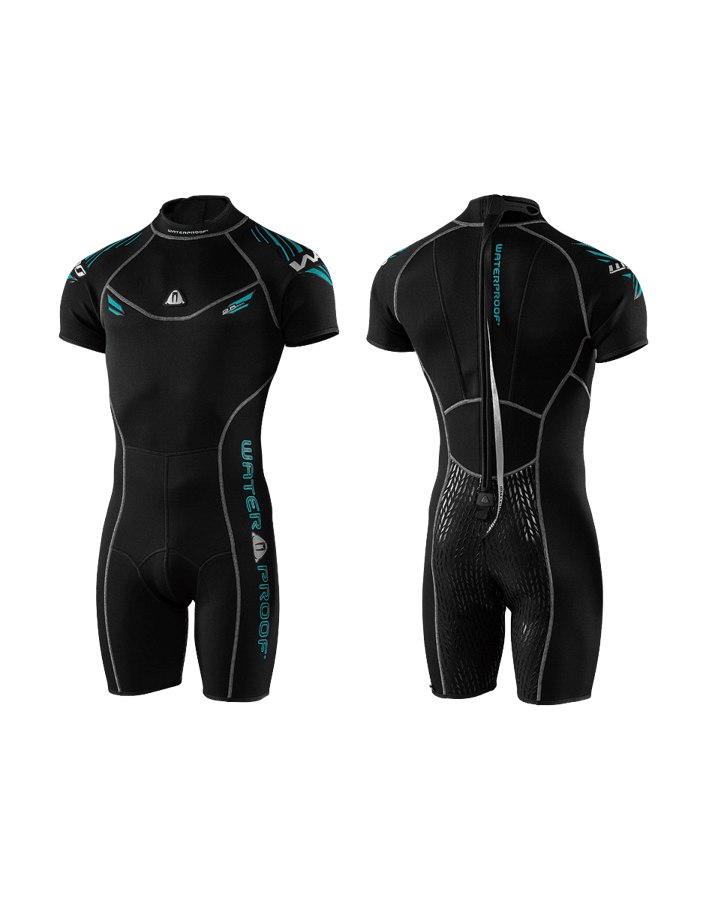
A shorter-sleeve and shorter-leg warm-water suit with a back zip, flatlock seams and reinforcement at the shoulders and seat.
Why buy it? A less bulky option for warm days when you mainly want torso coverage. If you want calf, knee and forearm coverage, compare a full suit of similar thickness.
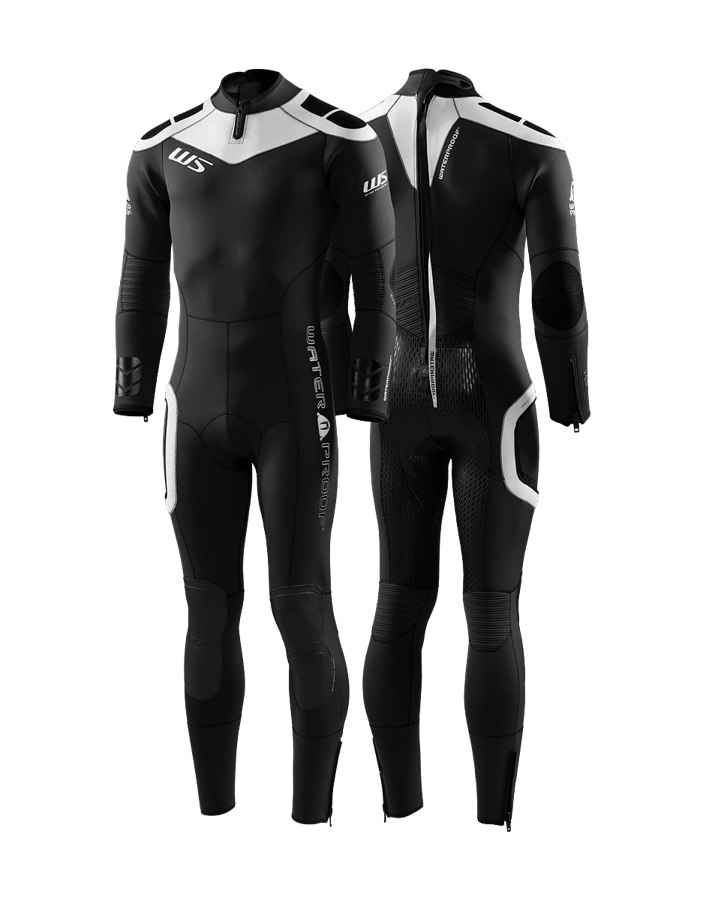
A 3.5 mm neoprene wetsuit with a shaped cut and model-specific size options, including certain tall and fuller sizes.
Why buy it? A useful one to compare when a very thin skin feels too light but 5 mm seems like more suit than you want to wear most weekends.
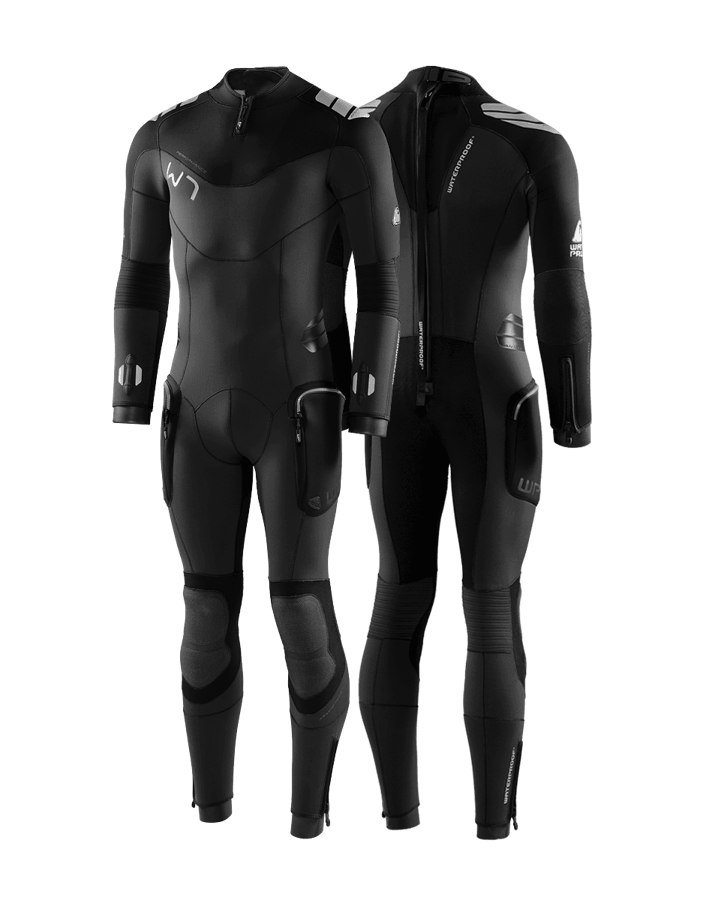
Stretch neoprene, a rear entry zipper with an internal double seal, zippered wrist and ankle seals, thermal lining, two integrated hip pockets and reinforced high-wear areas. A detachable neck seal is optional.
Why buy it? Try it for regular boat diving when you want pockets and better control of flushing. Compare the 5 mm for flexibility with the 7 mm when warmth is the bigger priority and the conditions support a wetsuit.
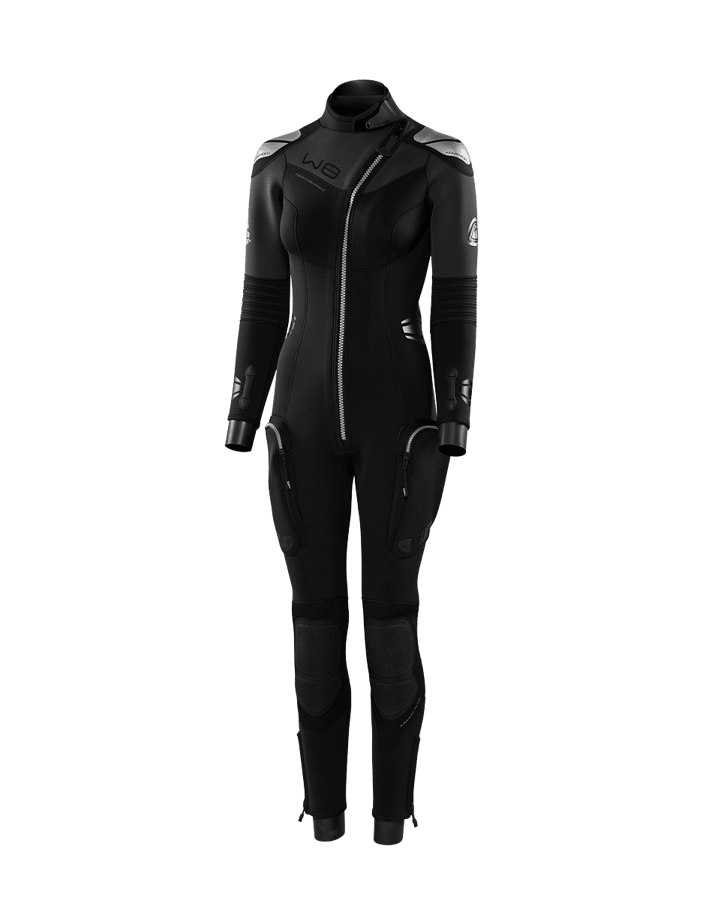
A close relative of the W7 with a front-entry zipper, double seals at wrists and ankles, thermal lining and integrated hip pockets. Available thicknesses and cuts vary by market and supplier.
Why buy it? Start here if you like the W7 concept but prefer reaching your zipper from the front. Compare zipper position under your BCD and see which one is easier for you to get on and off.
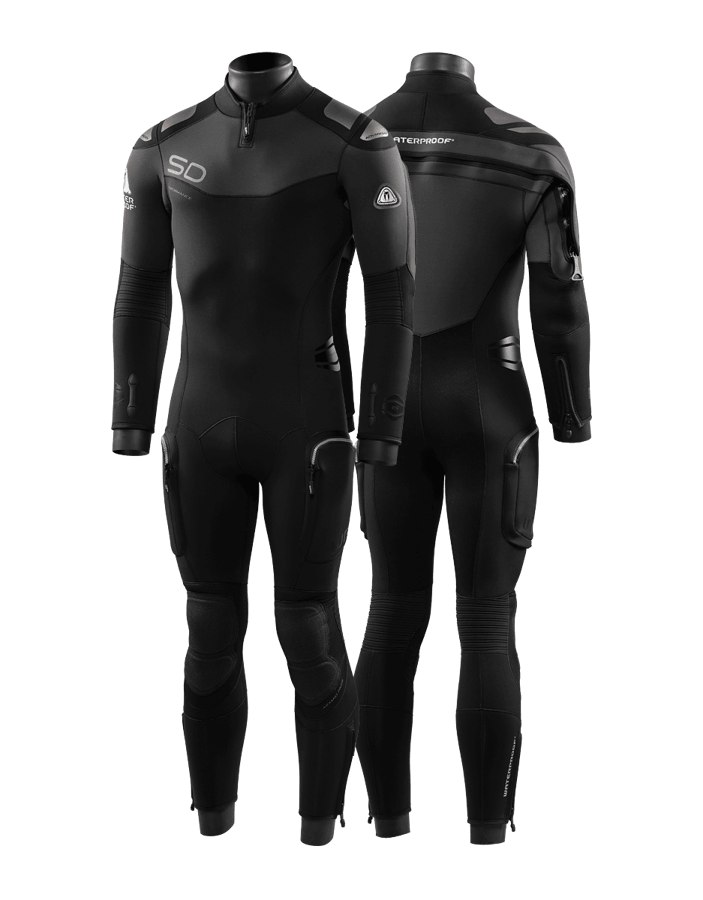
A thick stretch-neoprene semi-dry with a thermal lining and seals designed to limit flushing. It is not a drysuit or a substitute for drysuit training.
Why buy it? Compare it when conventional wetsuit flushing is your main complaint and you still want a snug, wetsuit-style fit. For recurring cold-water diving, take drysuit training and compare complete suit and undergarment systems.
The name is the brand. Its wetsuits and semi-dry suits can still admit water. A properly fitted drysuit is a separate system with seals, a dry zipper and valves.
W7 is rear entry and W8 is front entry. Both are offered in 5 mm and 7 mm and have features aimed at reducing flushing. Try the two layouts with your own shoulder mobility and BC fit in mind.
Neither is a year-round answer. Tell us when you dive, the conditions you expect, how long you stay down, and whether you get cold on the second dive. A snug W5 3.5 mm and a thicker W7 or W8 are useful side-by-side fitting examples.
Waterproof lists the detachable W7 neck seal as a separate accessory. Confirm the package before placing an order.
If shoulders and torso feel pulled down but the chest fits, ask about a taller cut. If the overall length is right but your chest or hips are squeezed, try another body cut. Suit options vary with model.
A semi-dry aims to reduce water exchange with closer seals and a more protective zipper. It still fits and insulates more like a wetsuit than a drysuit. It doesn’t use a drysuit inflator or exhaust valve.
Rinse in fresh water after saltwater use and clear sand and salt from the zipper. Follow the exact zipper care instructions, air-dry out of the sun, and store it without hard folds. Use an extra-wide suit hanger if you hang it.
Don’t assume the old weights are right after changing thickness or adding layers. Arrange a buoyancy check in a controlled setting with your complete kit and get an instructor’s help if you are new to the setup.
Yes. Ask the Stuart shop about model, size, fit appointments and what can be ordered. Tell us your dive plans and your measurements so we can narrow the choices before you come in.

Want to spend less of your dive thinking about your gear? Learn new skills with Stuart Scuba.
Explore classes
Take your setup out on a Stuart Scuba charter suited to your training and experience.
Dive with us
Have a zipper, seal or seam problem? Ask our service team what it can assess and which repairs are available.
Service & repair
Packing for somewhere new? Pick a trip and ask us what exposure protection we’d bring.
Group dive travelBring your measurements and tell us where you actually dive. If you use your own BCD, boots, or thermal layers, bring those too. We’ll help you compare fit, options, and current availability before you buy.
Get help with fit & availabilityVisit our Stuart dive shopCall (772) 600-8288
Explore the beauty of the underwater world with the most versatile Scuba Education Center on the Treasure Coast!
Check-in for most departures at:
Riviera Beach City Marina
200 E 13th Street, Riviera Beach, FL 33404
**For Online Orders please allow 8-10 business days for receipt of product**
Florida Seller of Travel License - Registration No.: ST45820
State of Florida Department of Agriculture and Consumer Services Division of Consumer Services 2005 Apalachee Pkwy Tallahassee, Florida 32399-6500


Explore the March 27–April 3, 2027 trip at Cayman Brac Beach Resort. Check the trip page for current details and availability.
Explore Cayman Brac →
Explore local dive charters and find a dive that fits your plans. Review the individual listing for requirements and departure details.
Explore local diving →Prepare for your trip with scuba training · Browse upcoming adventures · See past adventures
Call (772) 600-8288 or email travel@stuartscuba.com.
Ask about dates, availability, diving requirements or your plans. An inquiry does not reserve a place or confirm availability. Please provide your own contact details. Do not include medical, payment, passport or a child's personal information.
We use these details to respond to your travel inquiry. This form does not sign you up for marketing.
Florida Seller of Travel Registration No. ST45820. Review the individual trip's travel agreement, inclusions, exclusions and cancellation terms before booking.