


If your regulator is still in the dive bag on Monday after a weekend of diving, congratulations: you’re running a very small saltwater aquarium. Unfortunately, the only thing growing in it is your future service bill, along with some other growth opportunities that you probably really shouldn’t be breathing into your lungs.
Here’s the routine I want you to take home after a dive: rinse with fresh water, protect the first-stage inlet, air-dry everything, and store it indoors. Then make sure your dive is in your logbook. Remember, a regulator is life-support equipment, and it deserves better than a wet bag and good intentions.
How to rinse a scuba regulator after a dive
- Protect the first stage. If you disconnect it after depressurizing, make sure the inlet and the inside of the manufacturer-supplied yoke dust cap or DIN protector are clean and dry before you fit it securely. Never submerge a bare first stage. Some caps are only dust covers, so don’t assume a fitted cap makes yours safe to soak. Follow the manual for your exact model. If you’re not sure, gently rinse the exterior with the inlet protected and out of the water.
- Rinse with clean fresh water after every dive day. Gently rinse away salt, sand and pool residue from the first-stage exterior, hoses, second stages and alternate. Skip the pressure nozzle. Use your manufacturer’s rinsing or soaking instructions, especially for whether the regulator should be attached to a cylinder and pressurized.
- Leave the purge button alone whenever the regulator is not pressurized. Pressing it during a rinse or soak can let water reach the hose or first stage. If you suspect water got in, or you rinsed it with the inlet open, set it aside and call the service team before diving it. Don’t try to dry it by blasting air through it.
Hang it to dry, then give it a better home than the garage
Hang the set securely or lay it out in a shaded, ventilated spot. Support the first stage so its weight isn’t pulling on a hose. Let it air-dry completely before zipping it into a bag. Don’t speed things up with a hair dryer or leave it baking in the sun.
Store it clean and dry in a climate-controlled room, loosely coiled without sharp bends or heavy gear on top. Keep it away from fumes, solvents and heat. A Florida garage is where I keep things that don’t mind pretending they’re in a slow cooker. Your regulator is not one of those things.
How often should I have my regulator inspected or serviced?
Stuart Scuba recommends a professional check every 12 months or 50 dives, whichever comes first. A check and a full service are different jobs. The check helps find problems and tells you whether more work is due. Full service follows the interval and procedures for your exact model, use and warranty.
| What | When |
|---|---|
| Professional check | Every 1 year or 50 dives, whichever comes first. Follow any stricter requirement for your model or use. |
| Full manufacturer service | Examples to ask us about: 1 year or 50 dives, or 2 years or 100 dives. In each case, the earlier limit wins. Not a universal rule: some models have different schedules or count dive hours rather than dives. |
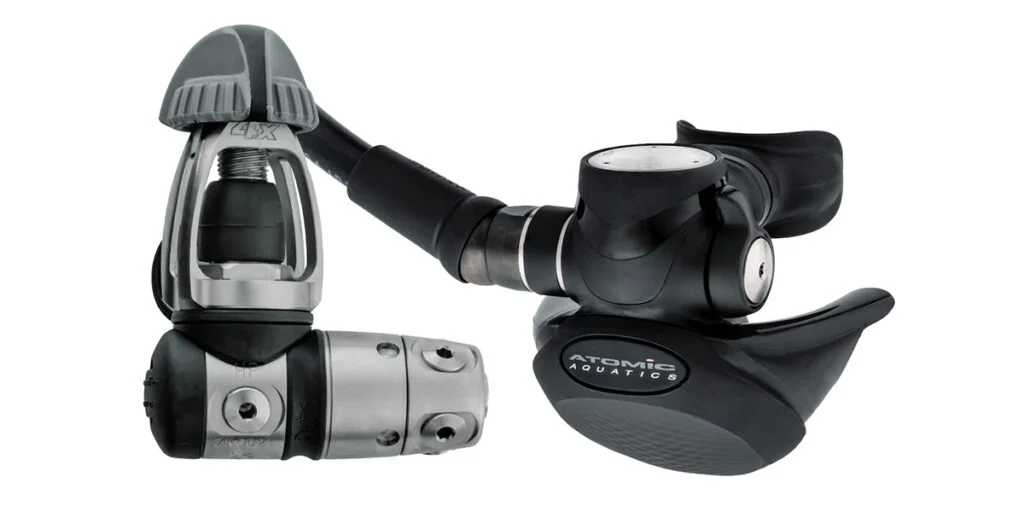
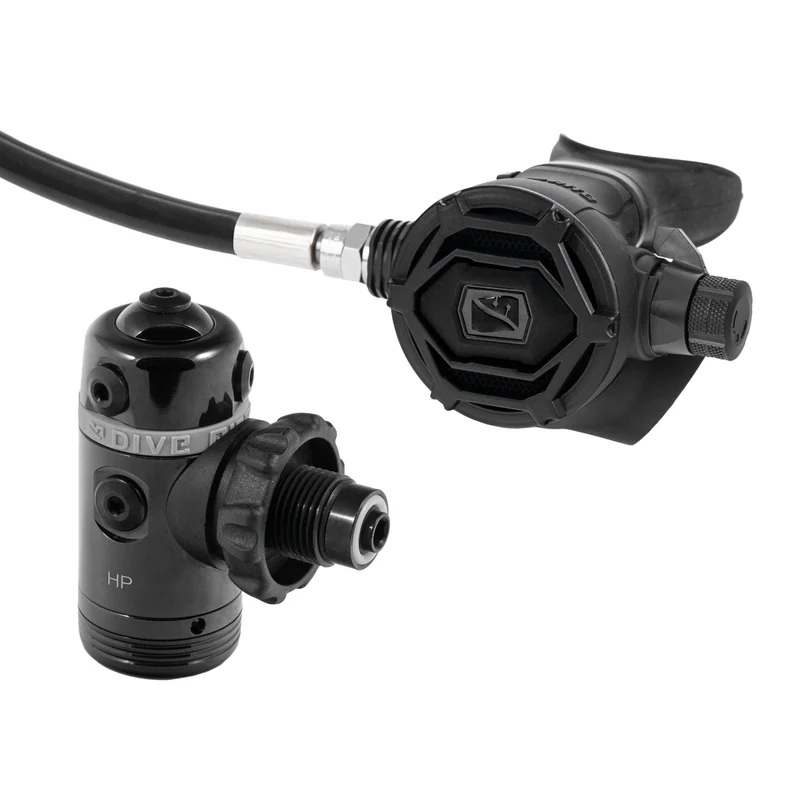
For example, Dive Rite publishes a two-year/100-dive interval in its regulator manuals; Atomic’s B2x product guidance lists two years or 300 dives. Use the instructions and warranty terms for your actual model rather than borrowing the schedule from your buddy’s gear. Rental, instructional, unusually heavy use or long storage may change what your equipment needs. Log both the date and the dive count after each check or service.
Why is my scuba regulator free-flowing or bubbling?
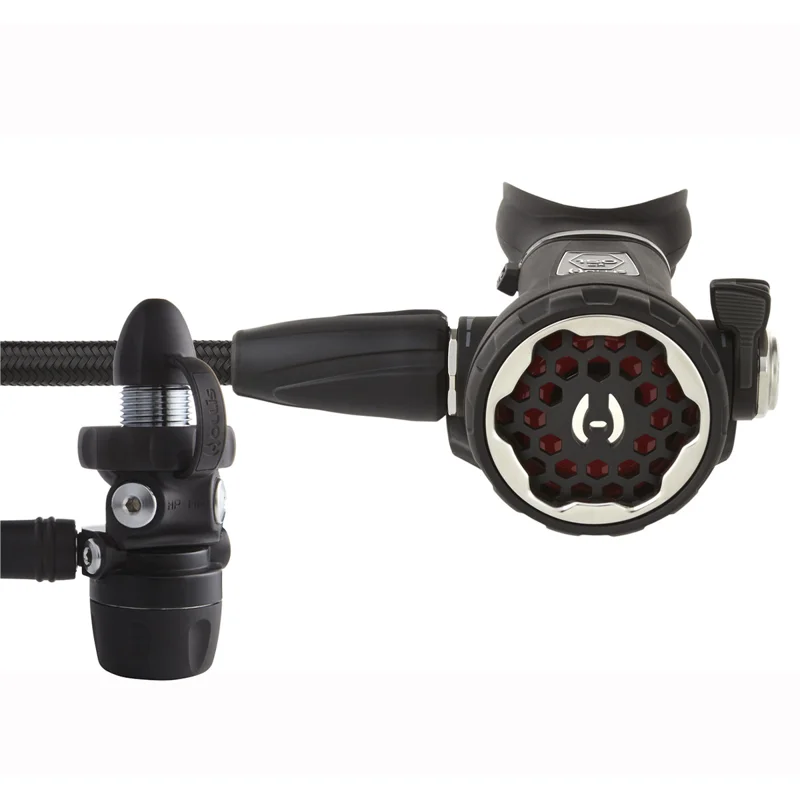
Bubbles tell you where the air is coming out, not necessarily where the problem started. If a second stage keeps leaking or free-flowing when it shouldn’t, the issue can be in that second stage, at a fitting, or upstream in the first stage. For example, a first stage that lets intermediate pressure creep up can make a second stage vent. Bring in the whole set so a technician can check both stages rather than guessing from the bubbles.
Don’t turn up the cracking pressure to hide a leak. Cracking pressure is the initial effort it takes to open the second stage when you inhale, not the pressure the first stage delivers. An external breathing adjustment is for comfort as your manual describes. It isn’t a repair, and internal adjustments belong on the service bench. If you notice an unexplained hiss, repeated bubbles, unexpected free-flow, or a change in how it breathes, sit out the dive until a qualified technician checks it. A hiss is not your regulator’s way of saying “ready when you are.”
My pre-dive regulator ritual: fittings, hoses, mouthpieces
- Look at the connections before pressurizing. Make sure the hose fittings look secure and nothing is visibly loose, crooked or damaged. On a DIN setup, check the visible O-ring and threads, then seat the cylinder connection by hand as your manual directs. If the DIN connector itself is loose at the first-stage body, that’s different from screwing it onto the tank. Don’t reach for an Allen key to snug up a connection on the boat. Overtightening can damage threads or seals, and you should never tighten or loosen a fitting under pressure.
- Follow every hose end to end. Look for cracks, cuts, abrasion, kinks and blisters or bulges, including near the metal crimps. After pressurizing according to your training, listen for a hiss and look for leaking air where you can check safely. A blister in the hose or a stream of bubbles around a fitting is a reason to stop, not a little bonus aeration.
- Check both mouthpieces. Look for torn bite tabs, splits and a loose retaining tie. Make sure the mouthpiece is secure on both your primary and your alternate.
- Breathe from both before you get in. With the cylinder valve open as trained, confirm adequate gas pressure and take a few easy breaths from each second stage while watching the pressure gauge. If breathing feels wrong, the gauge drops unexpectedly with each breath, or you spot a leak, stop and get it checked. Make this part of your buddy check, not a replacement for it.
Same rule if the set took a hard hit, may have water inside, or came to you used with no service history: have it checked before diving it. Request regulator service and tell us where you noticed the bubbles, which stage was involved, and when it happened.
Who will service my regulator near Stuart, Florida?
Start with the Stuart Scuba Service Department. We handle regulator service requests for first stages, primary and alternate second stages, hoses and gauges. Tell us the brand and model, any symptoms, the last service date or approximate dive count, and when you plan to get back in the water. We’ll confirm what we can do for that specific equipment, including parts, manufacturer requirements, the recommended work and current turnaround, before you drop it off or ship it.
If you’re buying a regulator, I’d ask who will support it before handing over the card. The features matter, but so does being able to talk to the people who’ll look after it after the sale.
Request Regulator ServiceMeet Our Service DepartmentCompare Scuba RegulatorsTake better care of all your dive gear
Want to get comfortable with everyday gear checks, care and recognizing when it’s time to bring something to the bench? Take our SDI Equipment Specialist course. It’s about becoming a more informed owner, not learning to rebuild your own regulator.
Explore Equipment SpecialistRegulator care FAQ
Do I need an overhaul every year?
Not every model requires one annually. Get a professional check every year or 50 dives, whichever comes first, and follow your own manufacturer’s schedule for full service.
Can I soak a disconnected regulator with the cap on?
Only if your manufacturer allows it with the specific protector fitted correctly. Never submerge a bare inlet, and don’t press the purge while the regulator is unpressurized.
Should I store it in the dive bag?
A clean bag is fine once everything is completely dry. Keep it indoors in a climate-controlled room, with hoses loosely coiled and nothing heavy on top.
What should I tell the service desk?
Have your brand and model, what you noticed, your service history and the date of your next dive or trip. Start with a service request so we can talk through the right next step.
See you on the boat,
Benjamin
Keep diving with Stuart Scuba
Local dive charters
Explore South Florida reefs and wrecks, and find a trip that fits your experience.
Browse Dive ChartersInternational dive travel
See where the Stuart Scuba crew is heading next and compare upcoming group trips.
Explore International TripsScuba education
Find your next class, from Open Water to specialties and technical training.
Browse Scuba ClassesWant hands-on gear care? Explore SDI Equipment Specialist.




