
Stuart Scuba Fish ID • Philippines
Tomato Clownfish
Amphiprion frenatus · Tomato anemonefish · Damselfish family (Pomacentridae)
Before you start counting white bars, check the fish’s size and what it does around its anemone. Young tomato clownfish can look like an entirely different species.
Tomato clownfish: juvenile to adult
Original field illustrations show representative patterns, not fixed ages or a common scale.
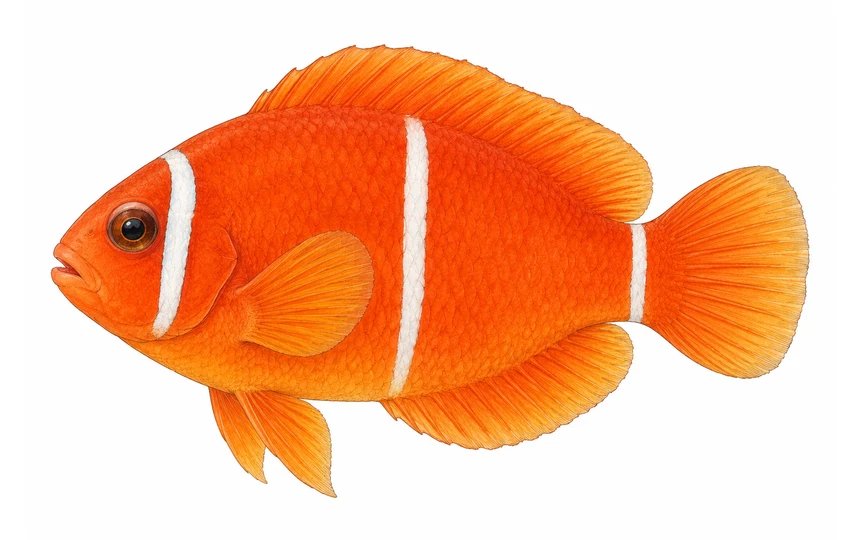
Juvenile
Look for two or three pale bars. This plate shows a three-bar juvenile, a pattern that can resemble an Ocellaris at first glance.
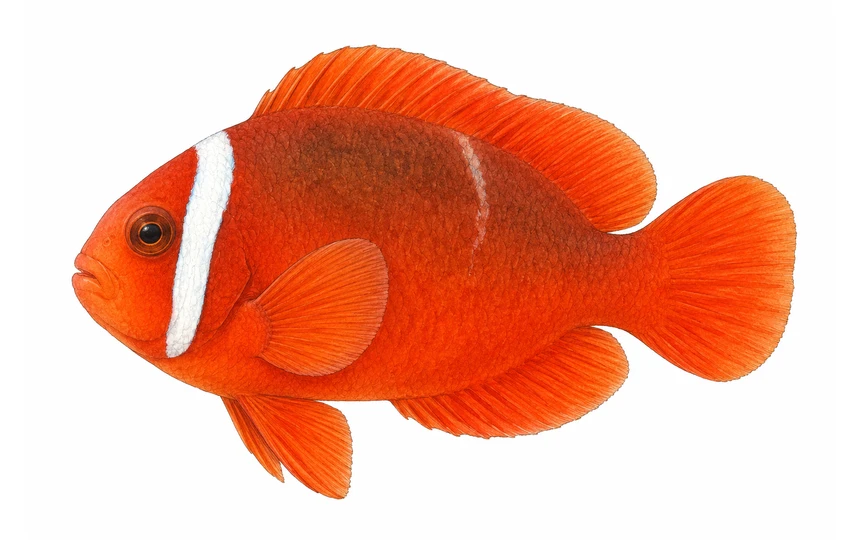
Growing fish
The extra bars fade as the fish matures. Here the tail bar is gone and a faint trace remains on the flank. The timing and appearance vary.
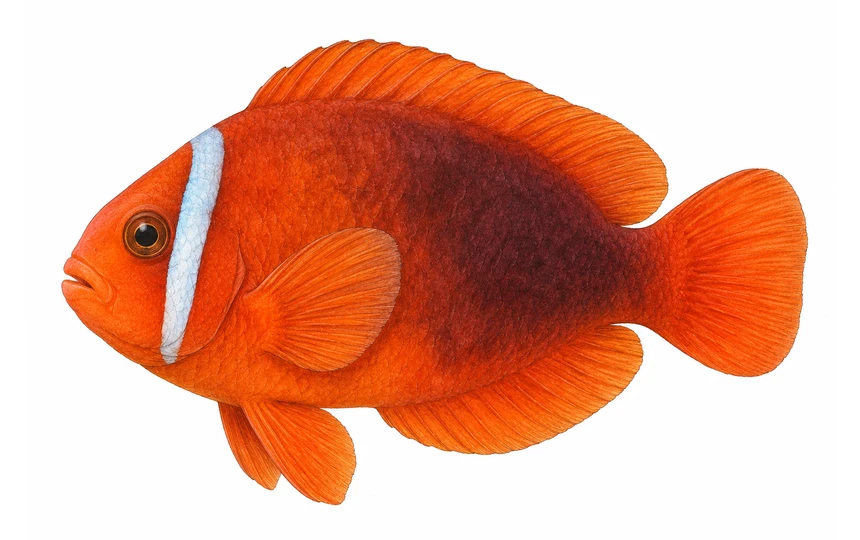
Adult
A single pale bar just behind the eye is the adult field mark. The body is orange-red; larger individuals can have a dark flank.
Where to look in the Philippines
Tomato clownfish have been documented around Apo Island and on the Dauin coast near Dumaguete. Look around host anemones on the reef. The bubble-tip anemone is a known host. An occupied anemone may look quiet at first; watch from a little distance and the fish may come into view. Sightings vary by site.
A field mark that changes with age
Young tomato clownfish develop extra white bars that tend to disappear as they grow. Adult Ocellaris anemonefish keep three bars, so a photo of the flank is more useful than a quick count from the front. Give the fish room and leave its anemone undisturbed.
Keep exploring with Stuart Scuba
Philippines group dive trip · International Group Dive Travel · SDI Reef Fish Identification · Underwater Photography
Gear, group travel & local charters


Follow Stuart Scuba

YouTube