


Fish identification archive / Raja Ampat
Ocellaris Anemonefish
Amphiprion ocellaris
Raja Ampat field guide
Two things to tell your dive buddy
- The breeding female is the largest fish in the group, with the breeding male next in size.
- The name ocellaris refers to an eyespot that the living fish does not possess; a preserved specimen apparently misled its describer.
How to identify it
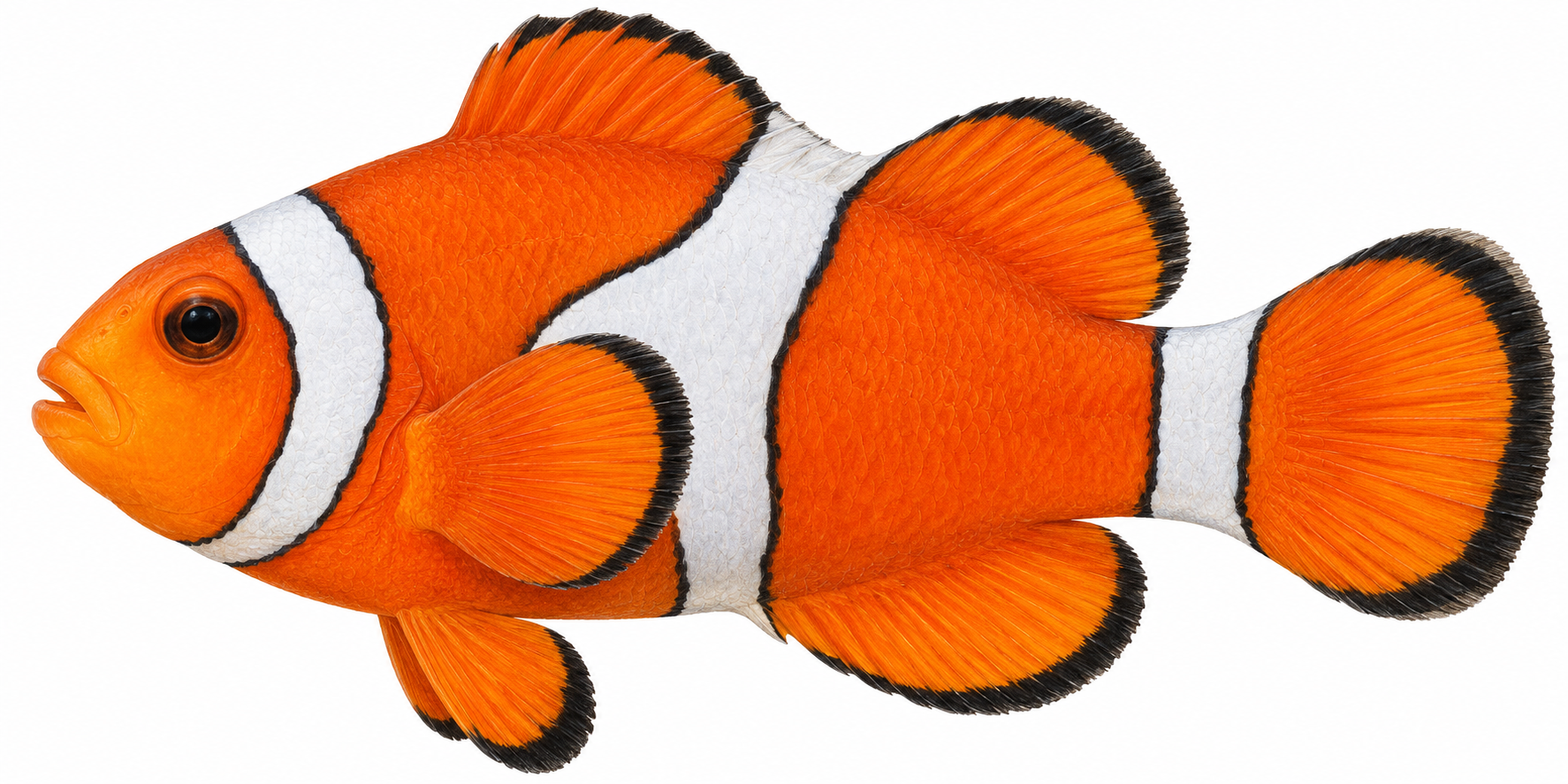
Orange to brownish anemonefish with three white bars and a relatively tall spiny dorsal fin.
Habitat and where to look
Inshore and offshore reefs and lagoons, with suitable host anemones.
Daily habits and behavior
Lives in small groups with a breeding pair and non-breeders.
What is on the menu?
Zooplankton, small bottom-dwelling invertebrates and algae.
Mating and the next generation
If the female disappears, the breeding male can become female and the largest non-breeder becomes the breeding male.
Look-alikes and identification traps
Percula anemonefish is very similar. Ocellaris usually has 11 dorsal spines rather than 10 and a taller dorsal fin; colour alone is insufficient.
Try this observation
Observe the group’s different sizes without making any individual defend or abandon its host.
Raja Ampat occurrence
Recorded in Raja Ampat; regional occurrence does not promise a sighting on a particular dive. This guide does not imply that every site, itinerary or season offers the same chance of an encounter.
Observe, do not disturb
Keep a respectful distance, leave the animal an unobstructed route and follow your dive guide. Do not touch, feed, chase or collect wildlife. Identification does not establish permission to harvest or food safety; Florida harvest labels do not apply to this Indonesian guide.
Count the bars before trusting the orange
Look for three white bars, including the one just ahead of the tail. An orange body alone does not settle the ID: the similar percula can be orange too. The usually narrow dark borders on ocellaris are a clue, not a rule.
SDI Reef Fish Identification course: Compare the bars and fin outlines from a side view rather than judging from color alone.
Sources and review
Reviewed November 18, 2026.
Make your next dive happen
Dive With UsTrain With UsExplore the Raja Ampat tripShop With Us
Questions? (772) 600-8288 or info@stuartscuba.com.




