


Splitlure Frogfish
Antennarius scaber · Antennariidae · Southern Florida Fish ID
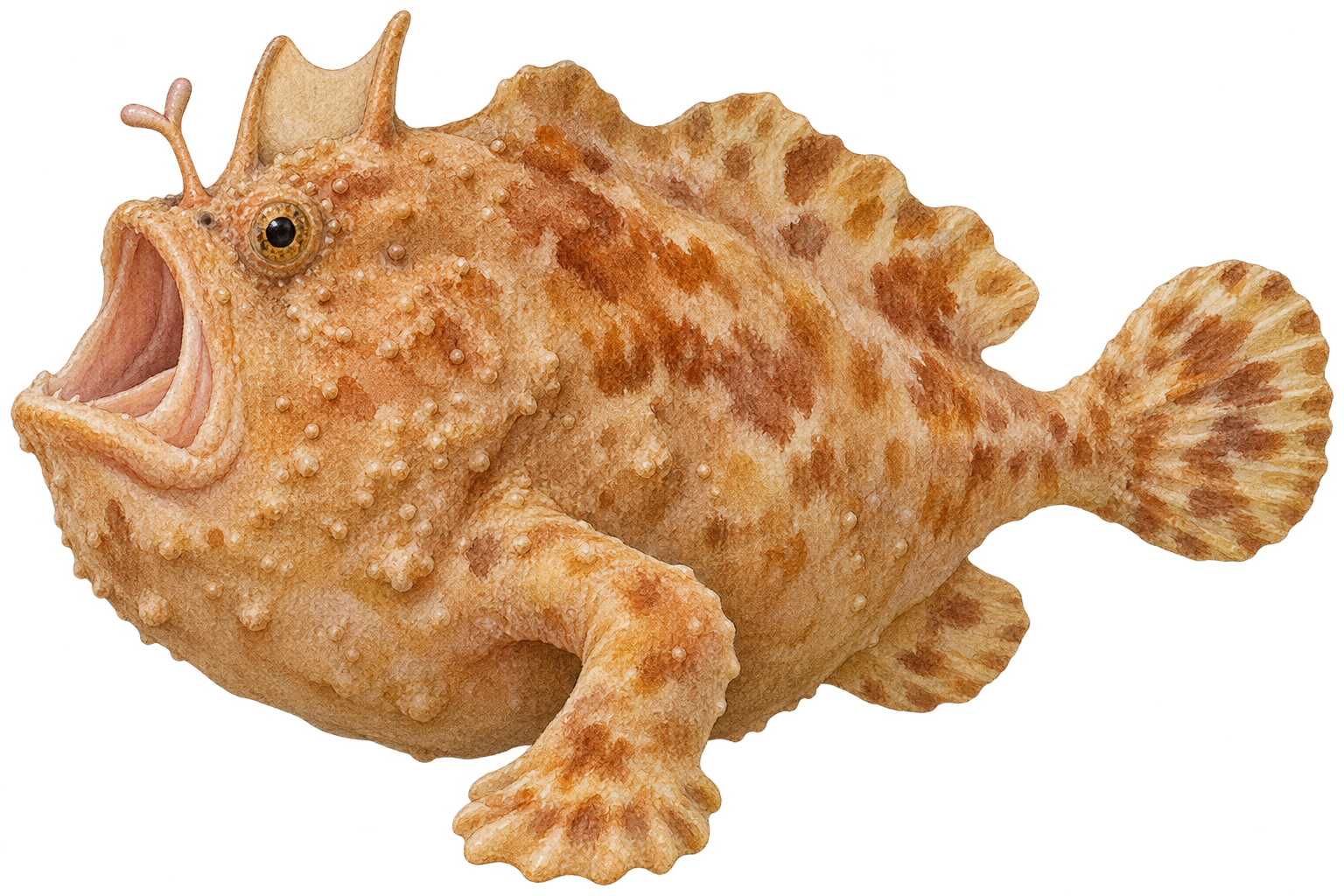
That bit of sponge with a mouth might be a frogfish. At Blue Heron Bridge, the best clue is the tiny fishing lure above its mouth. If it’s out, look for two short, wormlike tips.
How to recognize it
Start with the upturned mouth, chunky outline and arm-like pectoral fins. Broken dark bars can run across the body and radiate from the eye, but color and shaggy skin aren’t enough for a firm ID. Watch for the two short, cylindrical tips if the fish happens to extend its lure. The Underwater Photography course is a good place to practice holding steady and framing small details without moving the animal.
Where to look
Diver surveys have recorded Splitlure Frogfish at Blue Heron Bridge at Phil Foster Park. Look slowly around low growth, rubble and sandy edges. It’s easy to miss, even right in front of you, and a documented sighting isn’t a promise for your dive.
Six things to notice
- Its tiny fishing rod is a modified dorsal-fin spine.
- The lure’s two short tips look a little like worms. The fish uses the lure to draw prey within striking distance.
- Its broad pectoral fins have a bend like an elbow, giving it that propped-up look.
- Colors can range from yellow and orange to brown, gray or nearly white. Look for structure and markings, not one “correct” color.
- The splitlure can reach about 8 inches (21 cm). A little one is still worth a slow second look.
- Older South Florida guides often called it Striated Frogfish. The true Striated Frogfish found in the Philippines is a different species.
Keep exploring Southern Florida Fish ID.
 Shop dive gear
 Travel with us
 Dive with us




