


Philippines Reef Fish Field Notes 6: Juveniles and Adults
Learn to identify reef fish whose colors and markings change as they grow. These species have been documented by divers at Apo Island or off Dauin; sightings vary by site and conditions.
Browse all Philippines Fish ID entries · Explore the Atlantis Philippines dive trip · Compare Tomato Clownfish life stages
Black Damsel
Neoglyphidodon melas · Pomacentridae
How to recognize it: This is a fish for which the adult name can be misleading: the adults are blue-black, but young fish are pale bluish with a yellow back and yellow outer tail rays.
What to watch for: Look in coral-rich lagoons and on seaward reefs, including around soft corals. Use the color clues for the right life stage before ruling the species in or out.
Philippines records: Divers have recorded this species at Apo Island and off Dauin. Sightings vary by site and conditions.
Compare juvenile and adult
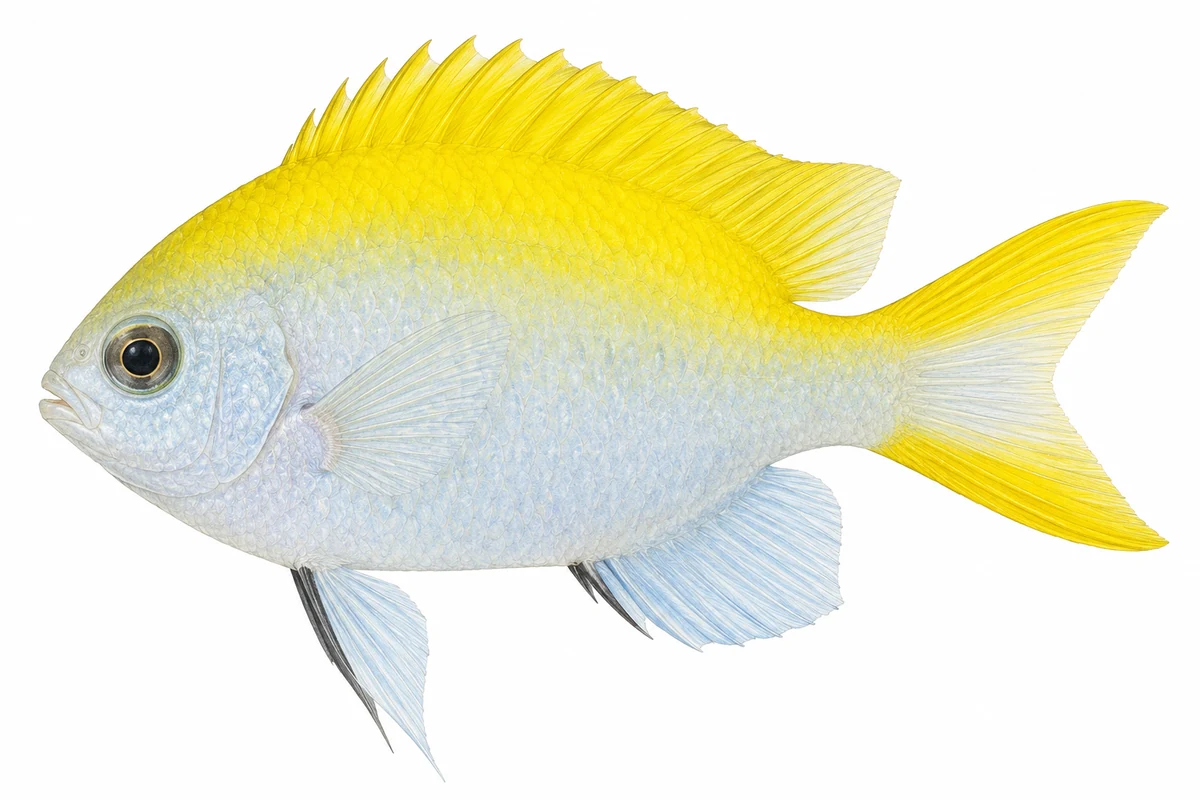
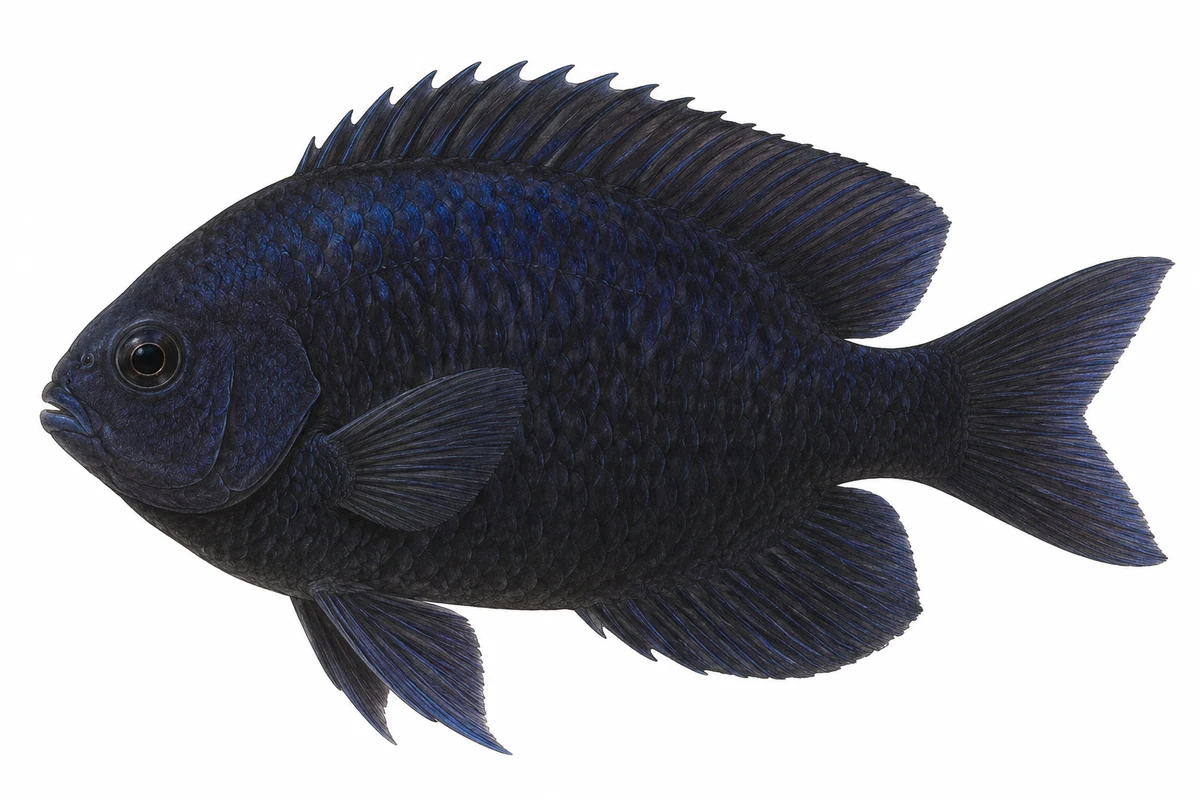
Original Stuart Scuba field illustrations. Not shown to the same scale.
Princess Damsel
Pomacentrus vaiuli · Pomacentridae
How to recognize it: Check for a black eyespot near the back of the dorsal fin and a small blue spot high on the gill cover. Young fish are yellow above and deep blue below.
What to watch for: It can be seen alone or in loose groups over mixed rubble and coral. Look for feeding at the substrate, where it takes filamentous algae and small invertebrates.
Philippines records: Divers have recorded this species at Apo Island and off Dauin. Sightings vary by site and conditions.
Compare juvenile and adult
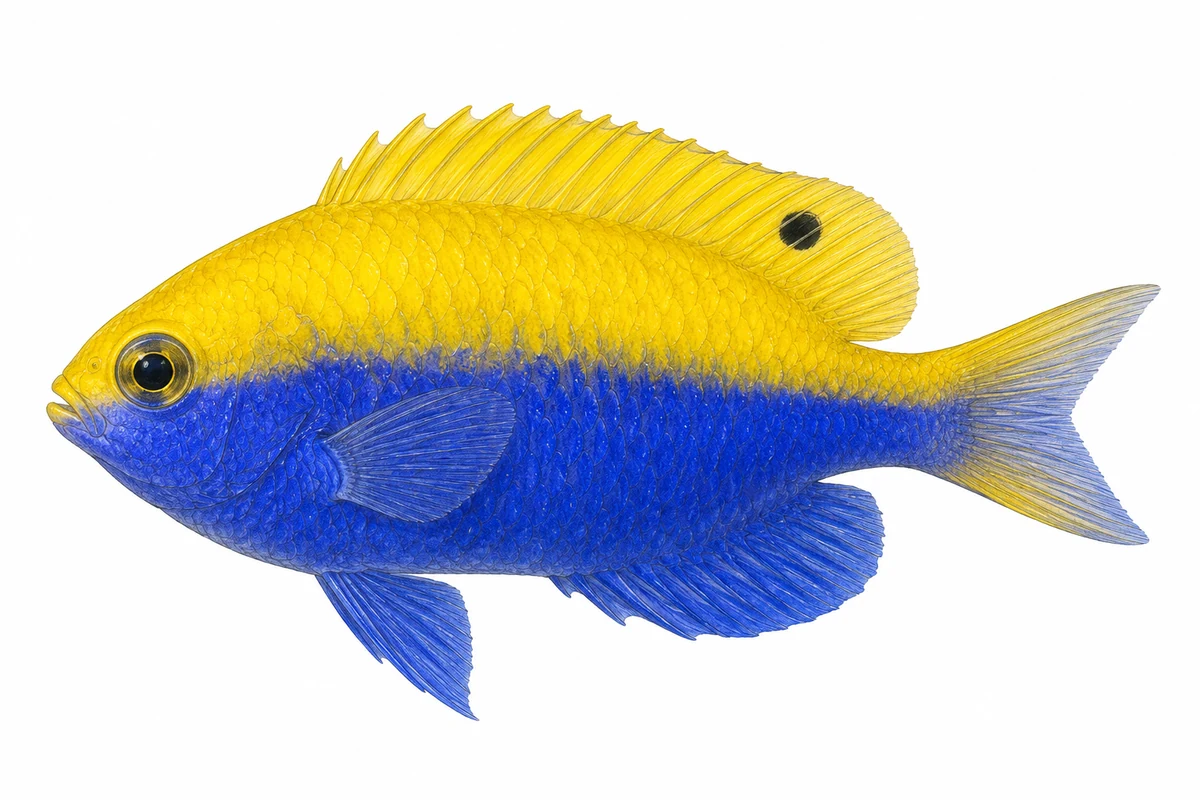
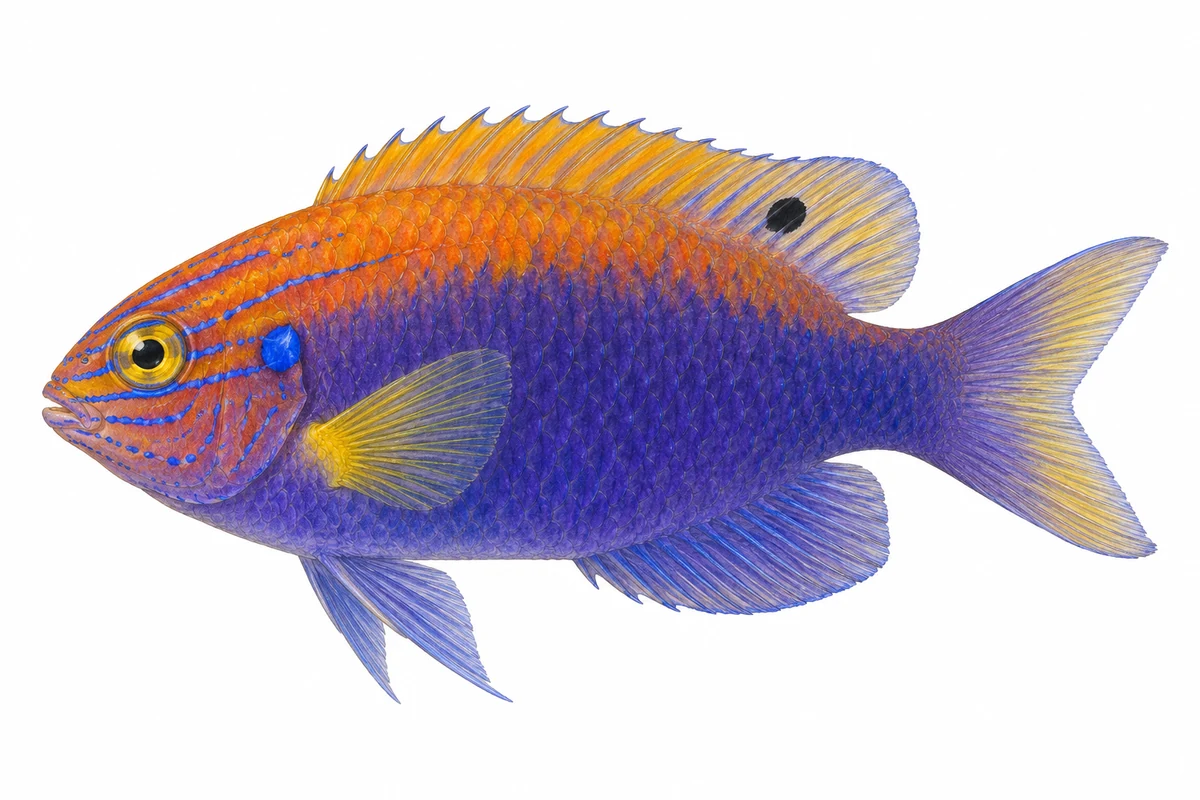
Original Stuart Scuba field illustrations. Not shown to the same scale.
Striped Eel Catfish
Plotosus lineatus · Plotosidae
How to recognize it: Four pairs of whiskerlike barbels surround the mouth, and an eel-shaped body tapers toward the tail. Pale lengthwise stripes are clearer on young fish and may fade on larger adults.
What to watch for: Juveniles can travel in tight balls across sand, while adults often tuck beneath ledges during the day. Give the school room and do not handle the fish: the dorsal and pectoral spines are venomous.
Philippines records: Divers have recorded this species at Apo Island and off Dauin. Sightings vary by site and conditions.
Compare juvenile and adult
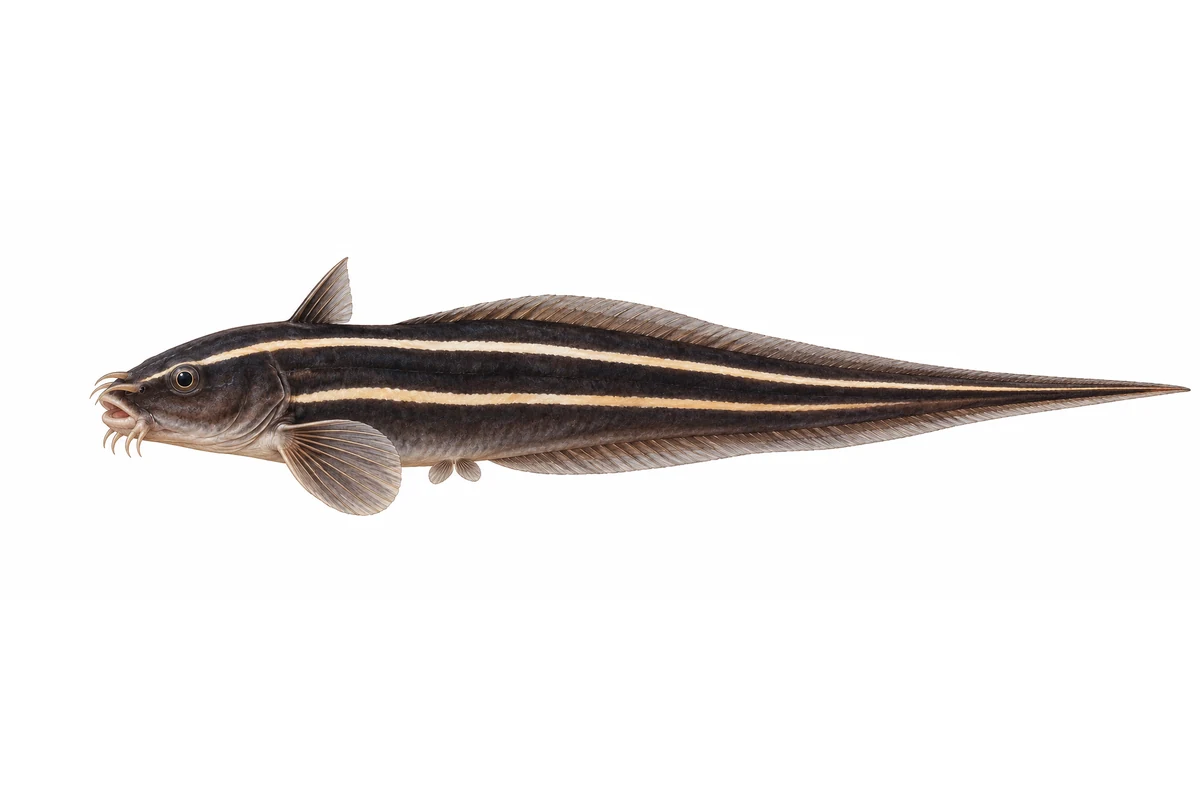
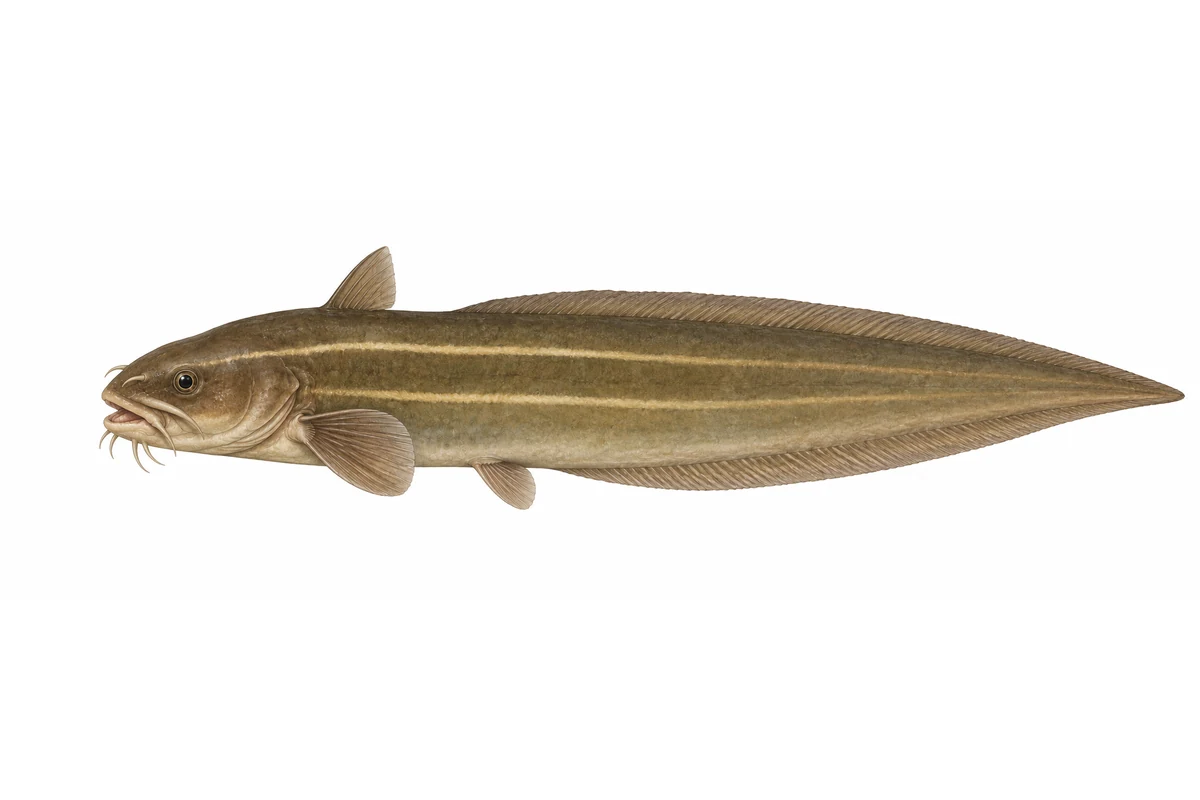
Original Stuart Scuba field illustrations. Not shown to the same scale.




