


Philippines Reef Fish Field Notes 2: Visayas and Dauin
Identify fish documented by divers at Apo Island or off Dauin. A record from a past survey does not guarantee what you’ll see on a given dive.
Browse all Philippines Fish ID entries · Explore the Atlantis Philippines dive trip · Meet the Tomato Clownfish
Indo-Pacific Sergeant
Abudefduf vaigiensis · Pomacentridae
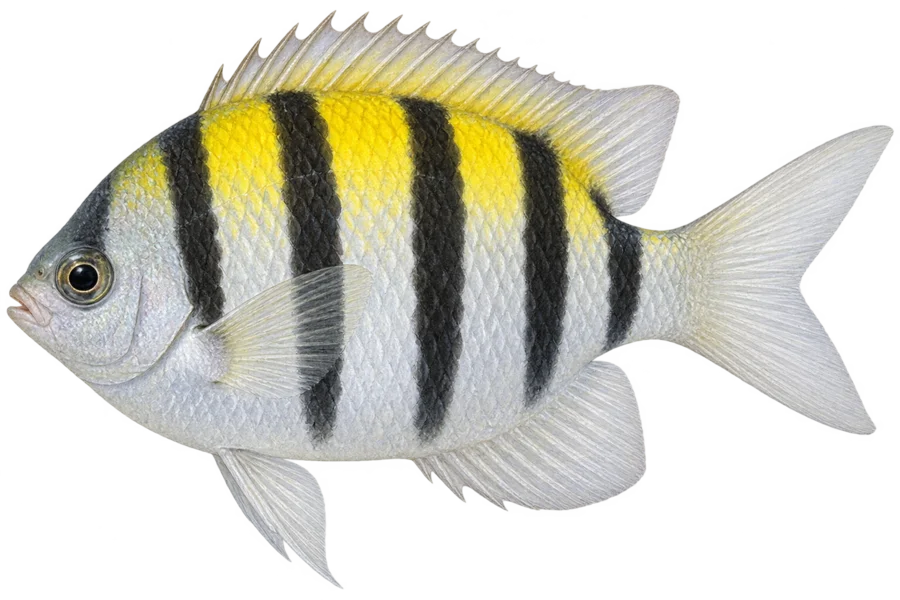
How to recognize it: Look for five broad dark bars on a silvery side, often with a yellow cast over the back. The forked tail lacks the long dark bands along the lobes of a scissortail sergeant.
What to watch for: Watch the upper edge of the reef. These fish take drifting plankton but can also feed on algae and small invertebrates near the bottom.
Philippines records: Divers have recorded this species at Apo Island and off Dauin. Sightings vary by site and conditions.
Yellow Chromis
Chromis analis · Pomacentridae
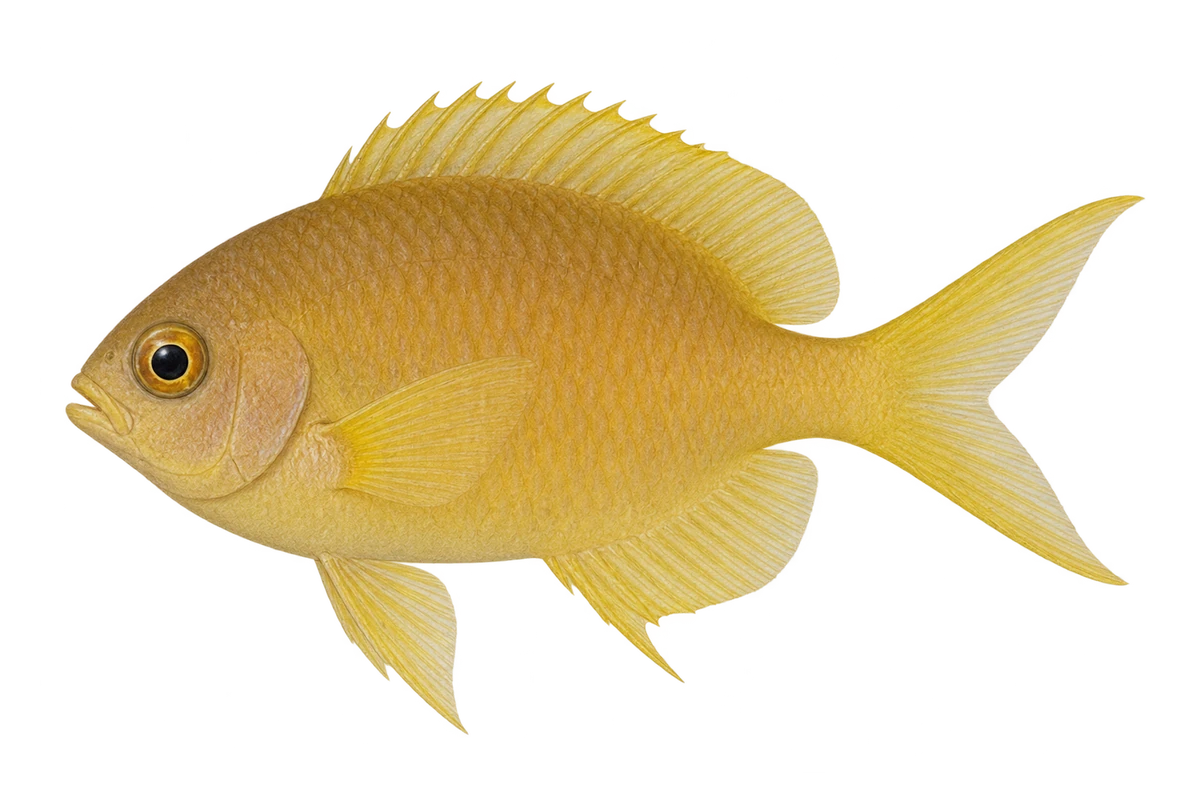
How to recognize it: Look below the eye for a silvery crescent. The body can be bright yellow or more brownish, and the pelvic fins on some fish are white.
What to watch for: Individuals or groups inhabit steep outer reef slopes, where they pick zooplankton from the water. Check just off the reef face rather than only among coral branches.
Philippines records: Divers have recorded this species at Apo Island and off Dauin. Sightings vary by site and conditions.
Epaulette Soldierfish
Myripristis kuntee · Holocentridae
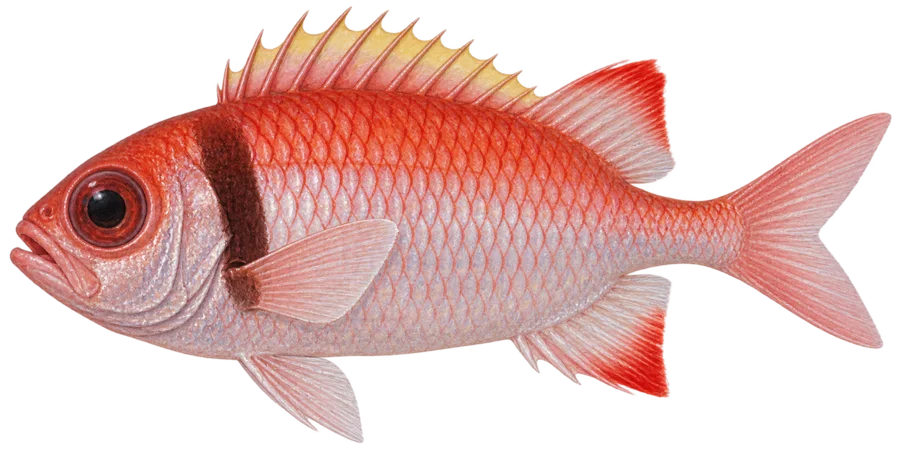
How to recognize it: Look for the broad shoulder bar running from the top of the gill opening down to the pectoral-fin base. Oversized eyes and a forked tail round out the silhouette.
What to watch for: By day this fish often shelters in reef crevices. At night it ventures into open water to feed. A fish deep in cover can be left unidentified rather than coaxed out.
Philippines records: Divers have recorded this species at Apo Island and off Dauin. Sightings vary by site and conditions.
Alexander’s Damsel
Pomacentrus alexanderae · Pomacentridae
How to recognize it: Check the pectoral-fin base for a large dark spot. Black tips on the front dorsal spines are a second clue on the otherwise pale gray fish.
What to watch for: This damsel inhabits coral reef lagoons. From the side, watch for the dark fin tips as it turns. It was originally described from a Philippine specimen.
Philippines records: Divers have recorded this species at Apo Island and off Dauin. Sightings vary by site and conditions.
Whitetail Chromis
Pycnochromis margaritifer · Pomacentridae
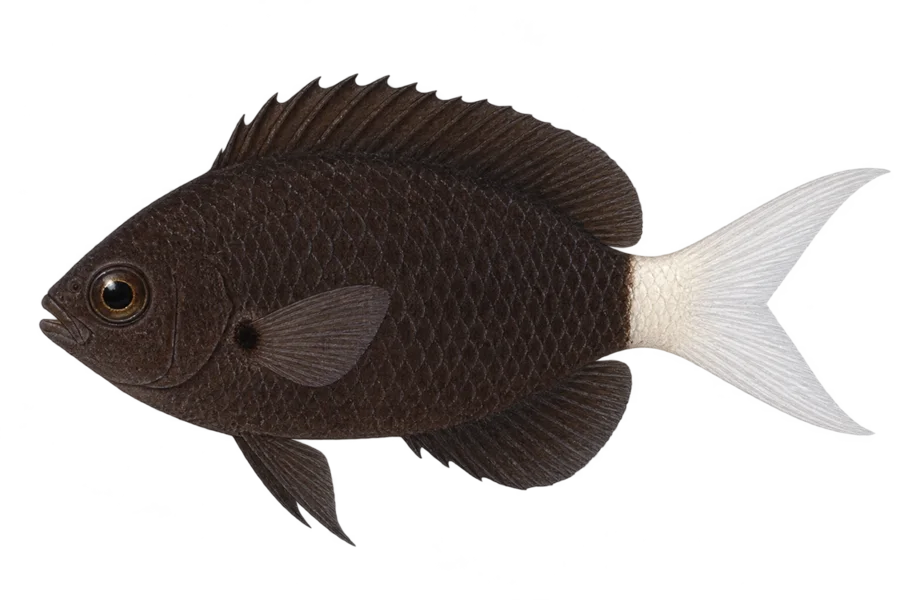
How to recognize it: The body turns sharply from sooty gray to white near the back. The pale area includes the tail base and rear edges of the dorsal and anal fins, not just the tail itself.
What to watch for: It can be found singly or in small groups on reefs. A clear side view may also show the dark pectoral-fin base and the fine extensions on the tail lobes.
Philippines records: Divers have recorded this species at Apo Island and off Dauin. Sightings vary by site and conditions.
Ringtail Cardinalfish
Ostorhinchus aureus · Apogonidae
How to recognize it: Find the black ring around the tail base. Then look for bright blue facial lines on a coppery or golden head. A ring alone is not enough to separate all the similar cardinalfish.
What to watch for: These cardinalfish shelter in reef holes or under ledges by day. Look along the edge of the shade without shining a light deep into the recess.
Philippines records: Divers have recorded this species at Apo Island and off Dauin. Sightings vary by site and conditions.
Tiger Cardinalfish
Cheilodipterus macrodon · Apogonidae
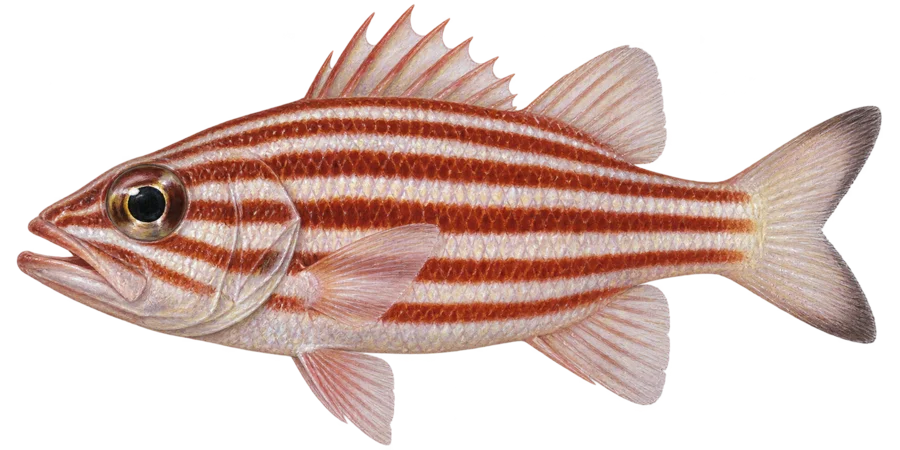
How to recognize it: Look for dark stripes running lengthwise and strong teeth. On an adult, the tail base lacks the conspicuous yellow patch seen on some other striped cardinalfish. Do not rely on the stripes alone.
What to watch for: Try to catch the side profile of a fish at the reef. Its large eye, long stripes and unobstructed tail base are more useful than a head-on glimpse.
Philippines records: Divers have recorded this species at Apo Island and off Dauin. Sightings vary by site and conditions.
Blackhead Filefish
Pervagor melanocephalus · Monacanthidae
How to recognize it: Look for a dark head and front half with orange farther back. The tail can show wavy dark tracks over orange-red, a useful detail to check before deciding between similar filefish.
What to watch for: Wait for a clear side view rather than relying on the dark head alone. Similar relatives have been misidentified, so check the orange rear and tail lines together.
Philippines records: Divers have recorded this species at Apo Island and off Dauin. Sightings vary by site and conditions.
Bluespotted Puffer
Arothron caeruleopunctatus · Tetraodontidae
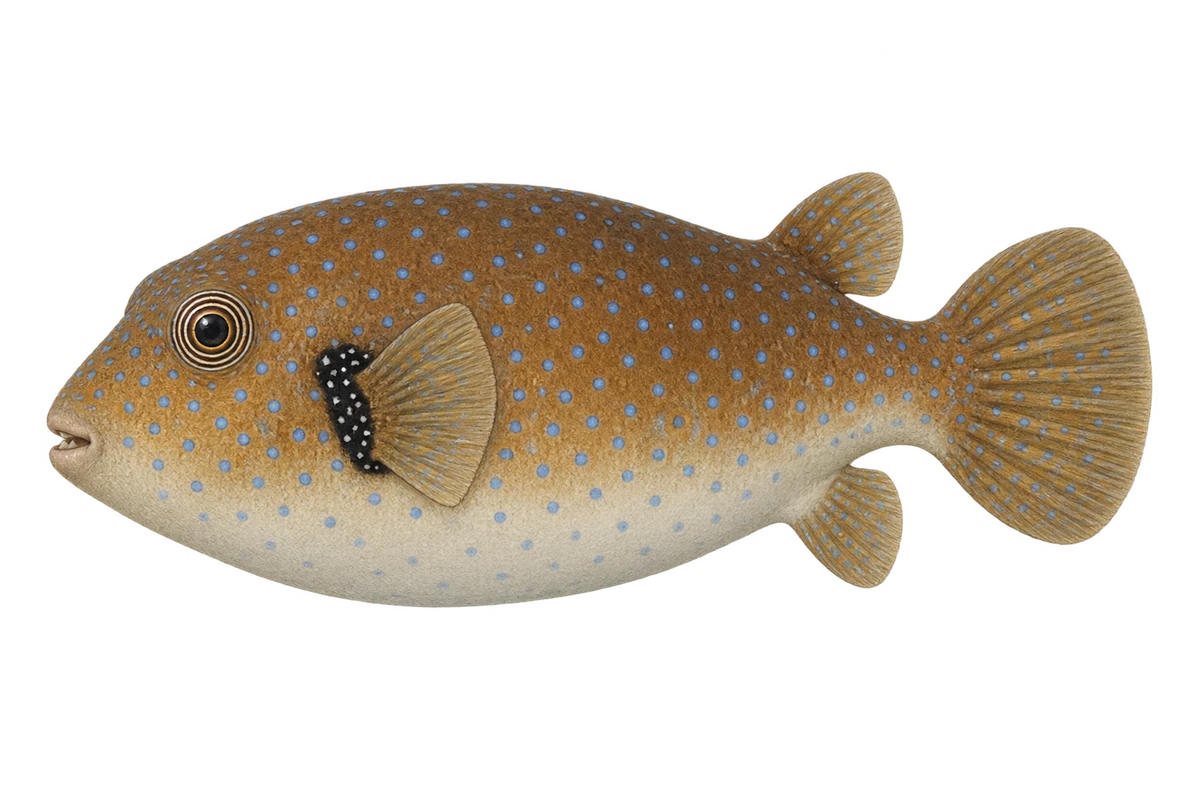
How to recognize it: Look for pale blue dots outlined in dark pigment on the body and fins, then check for alternating blue and brown rings around the eye. The belly is mostly pale, although it can show dark blotches.
What to watch for: Look along outer reef slopes. The related Starry Puffer has dark spots rather than blue spots with dark rims.
Philippines records: Divers have recorded this species at Apo Island and off Dauin. Sightings vary by site and conditions.
Staghorn Damselfish
Amblyglyphidodon curacao · Pomacentridae
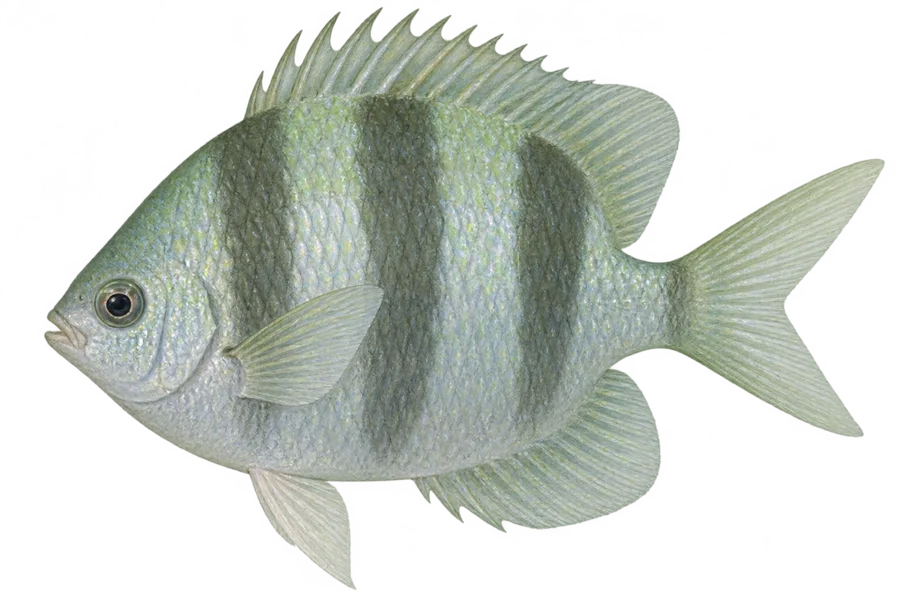
How to recognize it: Look for broad dusky bars on a silvery green body. Let the fish turn and watch the flank: the bands are easier to judge in a clear side view than on a fish silhouetted above you.
What to watch for: On a coral reef, check the water immediately above branching coral for this damselfish. Take a moment at a comfortable distance to see its full profile.
Philippines records: Divers have recorded this species at Apo Island. Sightings vary by site and conditions.
Doublebar Rabbitfish
Siganus virgatus · Siganidae
How to recognize it: Look for two dark slanting bars near the front, and scattered blue spots on the upper flank. The related Barred Rabbitfish has obvious narrow vertical blue lines instead, including on the tail base.
What to watch for: A clear side view is useful because most of this fish’s ID marks sit on the front half. Compare the flank pattern as well as the two dark bands.
Philippines records: Divers have recorded this species at Apo Island and off Dauin. Sightings vary by site and conditions.
Saw-jawed Monocle Bream
Scolopsis ciliata · Nemipteridae
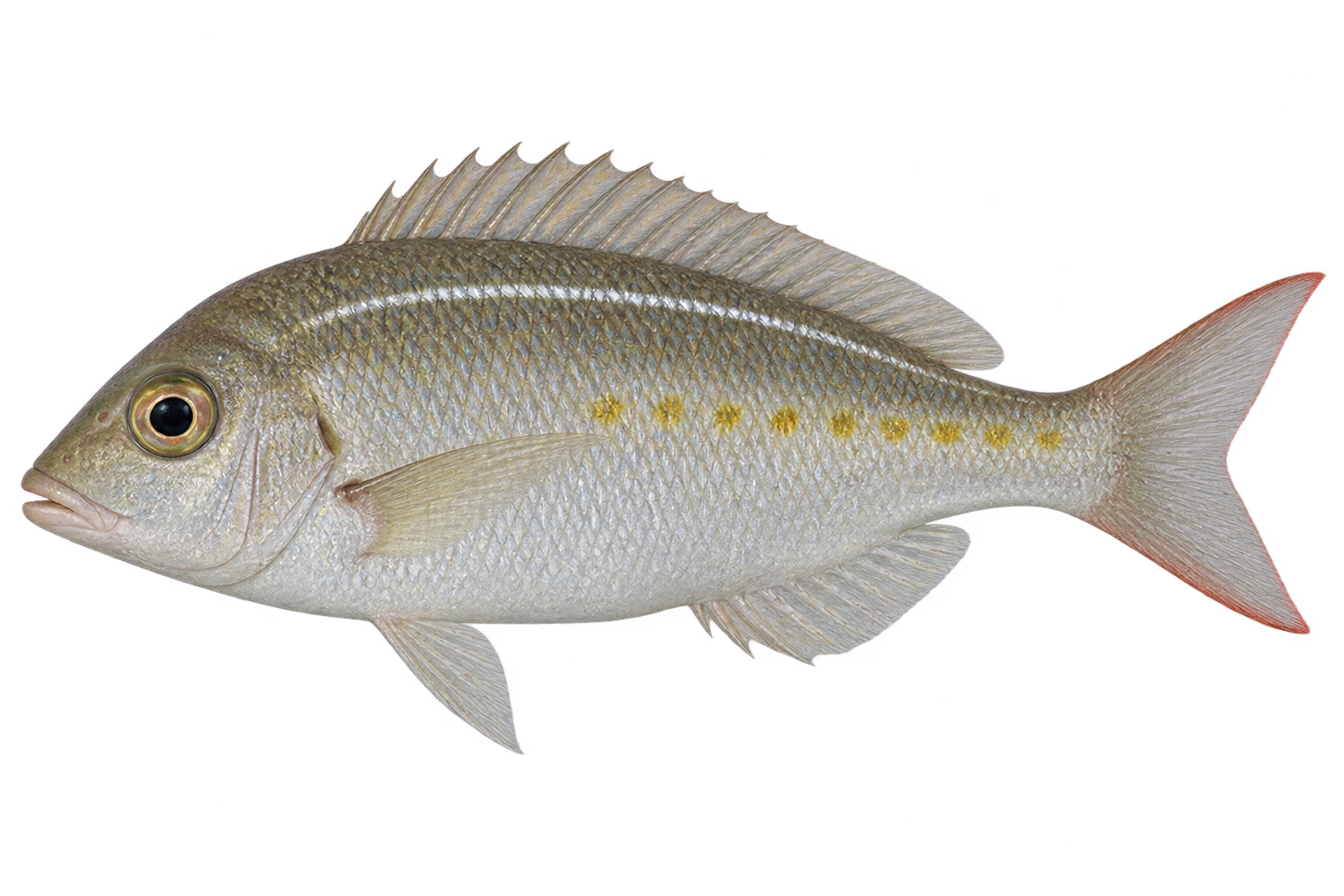
How to recognize it: The useful mark is a single bright stripe high on the side, directly below the dorsal fin. The back is olive-gray and the lower body silvery. This is a high stripe rather than a line through the eye.
What to watch for: Look over coastal sand or mud around coral reefs. It hunts small bottom-dwelling animals and fish.
Philippines records: Divers have recorded this species at Apo Island and off Dauin. Sightings vary by site and conditions.
Japan Surgeonfish
Acanthurus japonicus · Acanthuridae
How to recognize it: Follow the white face mark: it reaches from the lower edge of the eye to the upper lip. On a Goldrim Surgeonfish, the white mark stays as a smaller cheek patch below the eye.
What to watch for: Observe the fish from a distance while it grazes. The position and length of the white mark are more useful than the exact shade of brown.
Philippines records: Divers have recorded this species at Apo Island. Sightings vary by site and conditions.
Blackaxil Chromis
Chromis atripectoralis · Pomacentridae
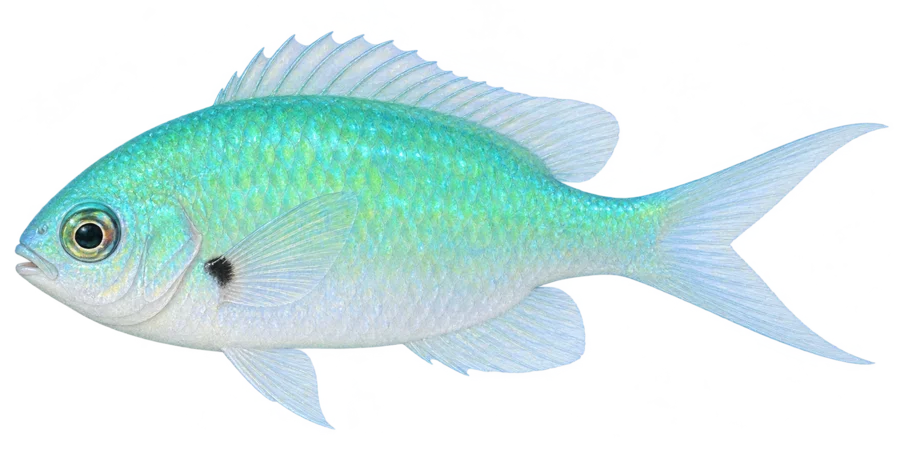
How to recognize it: Look for a black mark tucked into the base of the pectoral fin. It separates this pale blue-green fish from the similar Blue-green Chromis, which lacks that mark.
What to watch for: Feeding groups can hover above branching corals in clear reef water. A fish that turns with its pectoral fin extended may give you a better view of the small black patch.
Philippines records: Divers have recorded this species at Apo Island. Sightings vary by site and conditions.
Practice with the SDI Reef Fish Identification course · Explore International Group Dive Travel with Stuart Scuba




