
Stuart Scuba Fish ID • Central Philippines
Philippines Reef Fish Field Notes 1
Field marks and reef behavior for 19 fishes documented in the central Philippines. Regional records do not guarantee a sighting on any one dive.
Search the Philippines Fish ID · See illustrated Tomato Clownfish life stages
Yellow Longnose Butterflyfish
Forcipiger flavissimus · Chaetodontidae
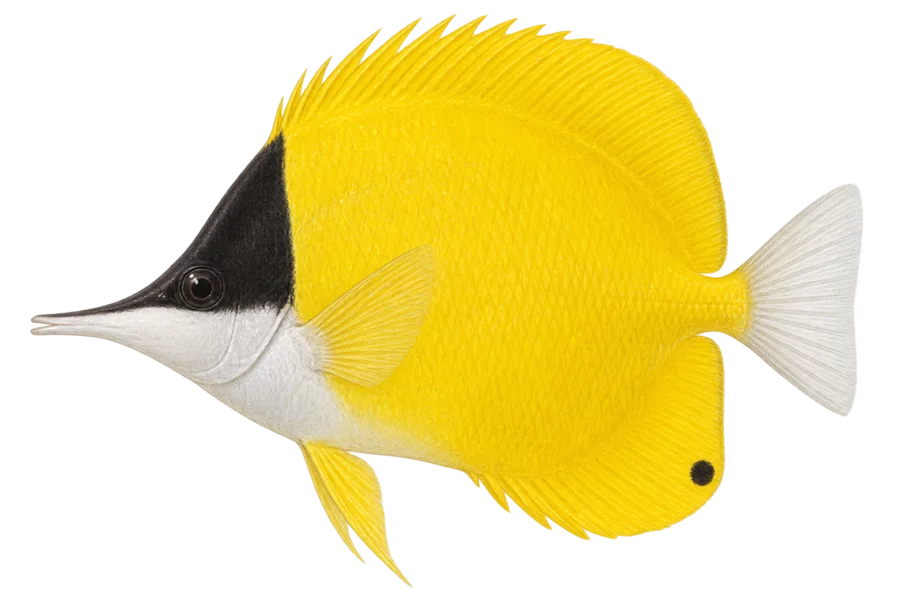
How to identify it: Find the little dark mark on the rear of the anal fin, beneath the tail base. The face is dark above and pale below and the snout is long and narrow.
What to watch for: Pairs can pick small prey from the reef. Watch how that narrow mouth reaches into small crevices.
Pacific Trumpetfish
Aulostomus chinensis · Aulostomidae
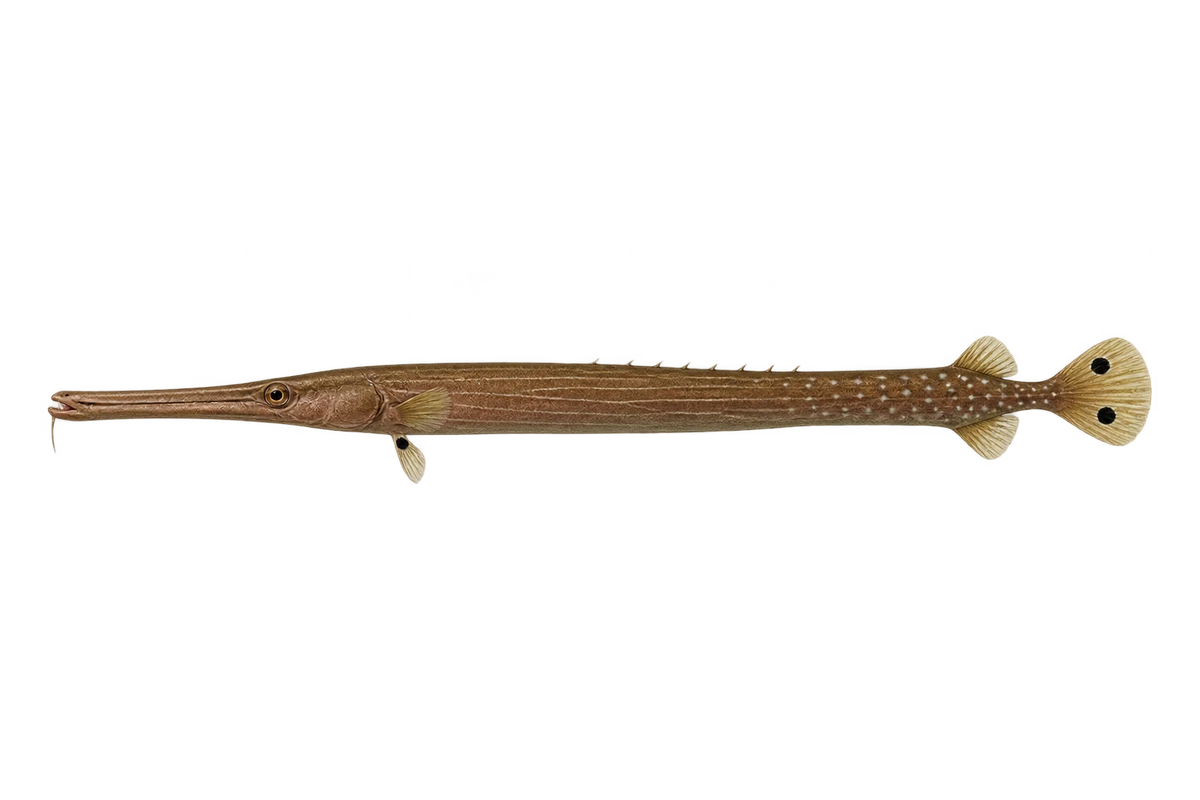
How to identify it: Look for a long tubular snout, small separate dorsal spines and dark tail markings. It lacks the thin tail filament of the Smooth Cornetfish.
What to watch for: A trumpetfish may hang head-down or follow another fish as it approaches prey. A short video captures that hunting posture.
One-spot Foxface
Siganus unimaculatus · Siganidae
How to identify it: Look for a dark patch high on the rear flank. The yellow body and front markings otherwise resemble a foxface rabbitfish.
What to watch for: Older fish often travel in pairs while grazing algae. A side view is best for checking the flank spot.
Threeband Bannerfish
Heniochus chrysostomus · Chaetodontidae
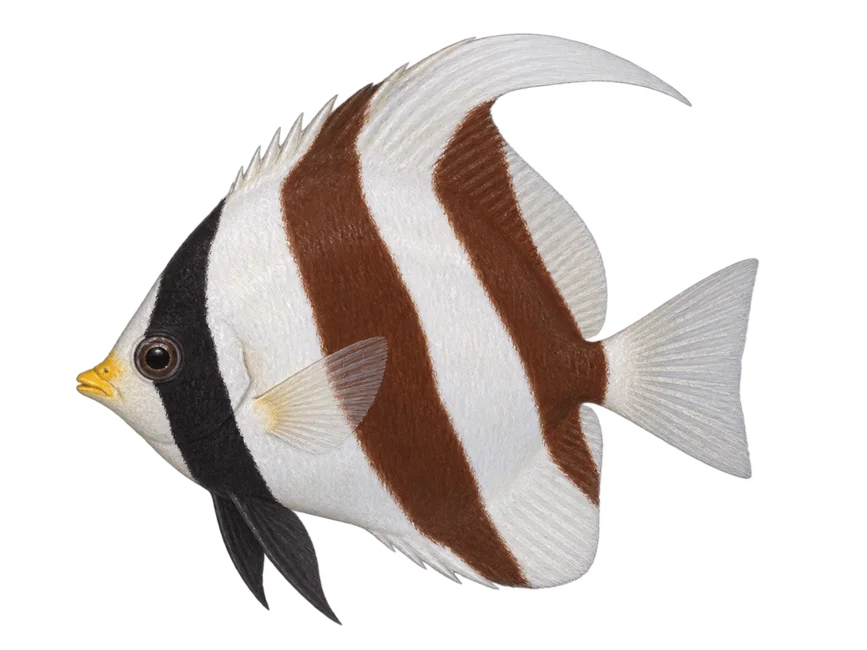
How to identify it: Look for three slanting dark bands, a yellow snout and a relatively short, broad pennant.
What to watch for: This species feeds mainly on coral polyps. Watch how it picks at the reef without getting too close.
Blue-green Chromis
Chromis viridis · Pomacentridae
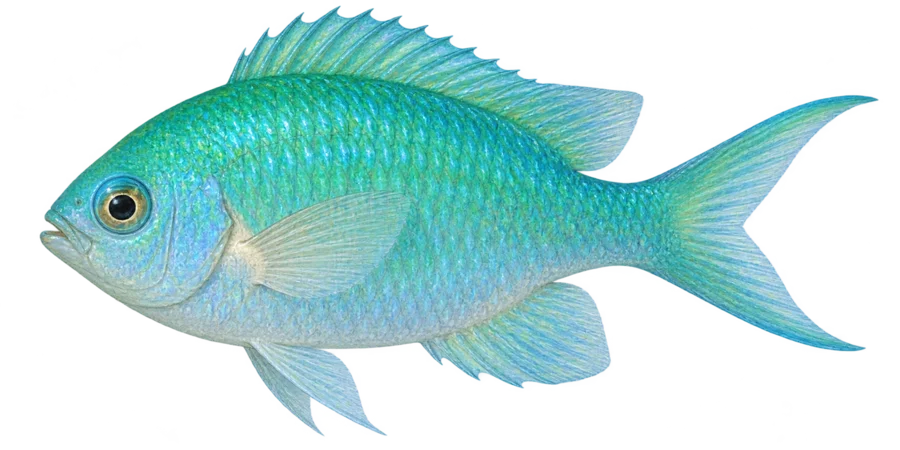
How to identify it: Small blue-green fish often gather above branching corals. The similar Blackaxil Chromis has a dark mark at the pectoral-fin base.
What to watch for: Watch just above the coral for a group picking plankton from the water.
Pyramid Butterflyfish
Hemitaurichthys polylepis · Chaetodontidae
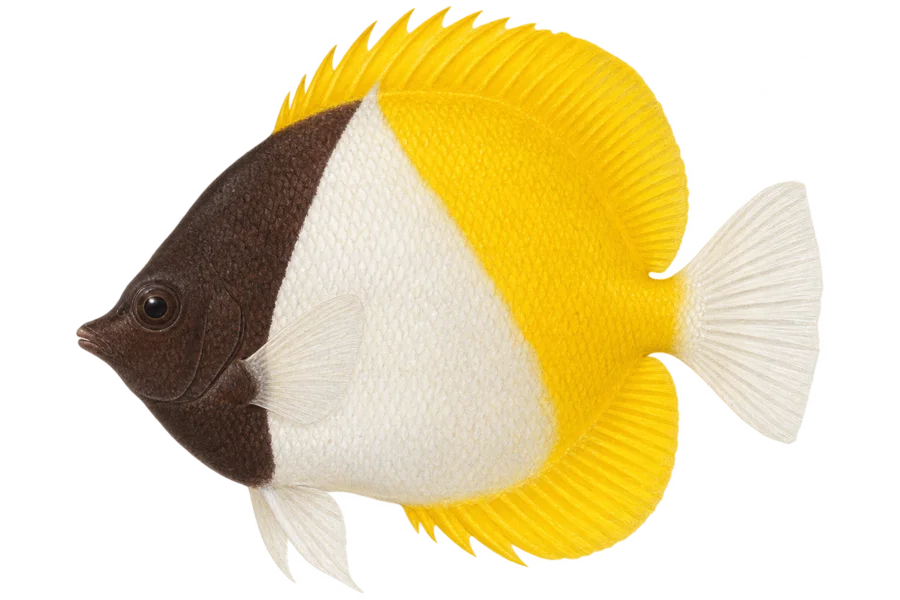
How to identify it: Look for a broad white wedge on the side, bordered by a brown head and bright yellow areas.
What to watch for: It feeds on zooplankton and can form feeding groups in the open water just off a reef slope.
Orange-lined Cardinalfish
Ostorhinchus cyanosoma · Apogonidae
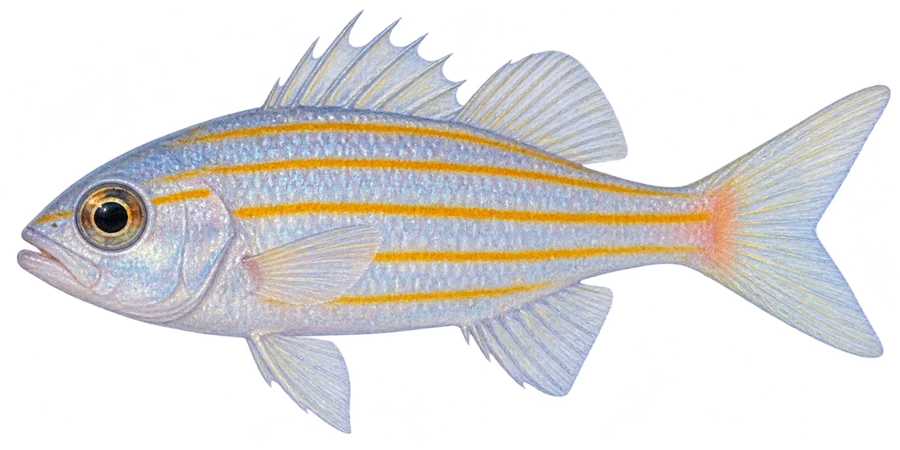
How to identify it: Look for thin orange-yellow lines on a silver body, including a short line behind the eye.
What to watch for: By day, it shelters near coral heads and ledges. Males carry developing eggs in their mouths.
Sharpnose Sandperch
Parapercis cylindrica · Pinguipedidae
How to identify it: Start with the dark mark descending below the eye. Then look for pale roundish areas separated by dark markings along the flank.
What to watch for: Look over sand, rubble or seagrass near shelter. A side view records the face and flank together.
Zebra Lionfish
Dendrochirus zebra · Scorpaenidae
How to identify it: Broad reddish-brown body bars, a dark eye band and a blotch low on the gill cover help separate it from similar lionfish.
What to watch for: Check the shadows under ledges from a safe distance. Never reach underneath to confirm a sighting.
Dwarf Hawkfish
Cirrhitichthys falco · Cirrhitidae
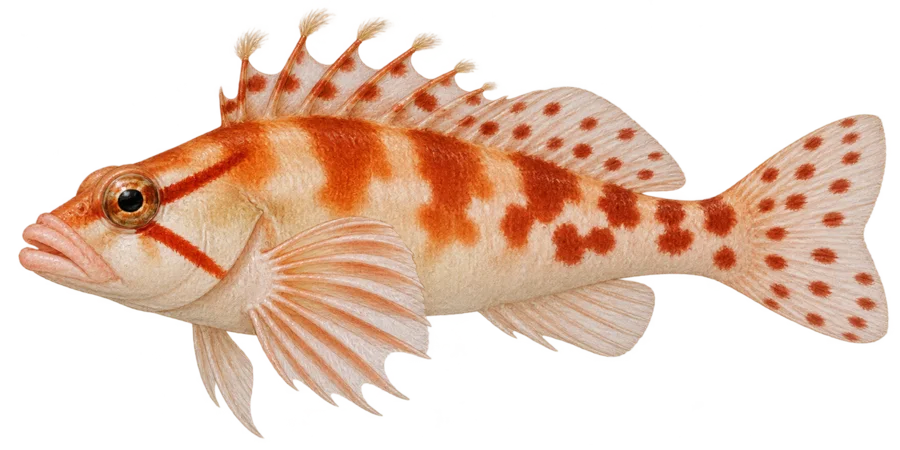
How to identify it: Look for tapering reddish-brown saddles on a whitish back and reddish bars radiating from the eye.
What to watch for: Look on coral heads for a fish holding still on its perch rather than swimming in open water.
Honeycomb Filefish
Cantherhines pardalis · Monacanthidae
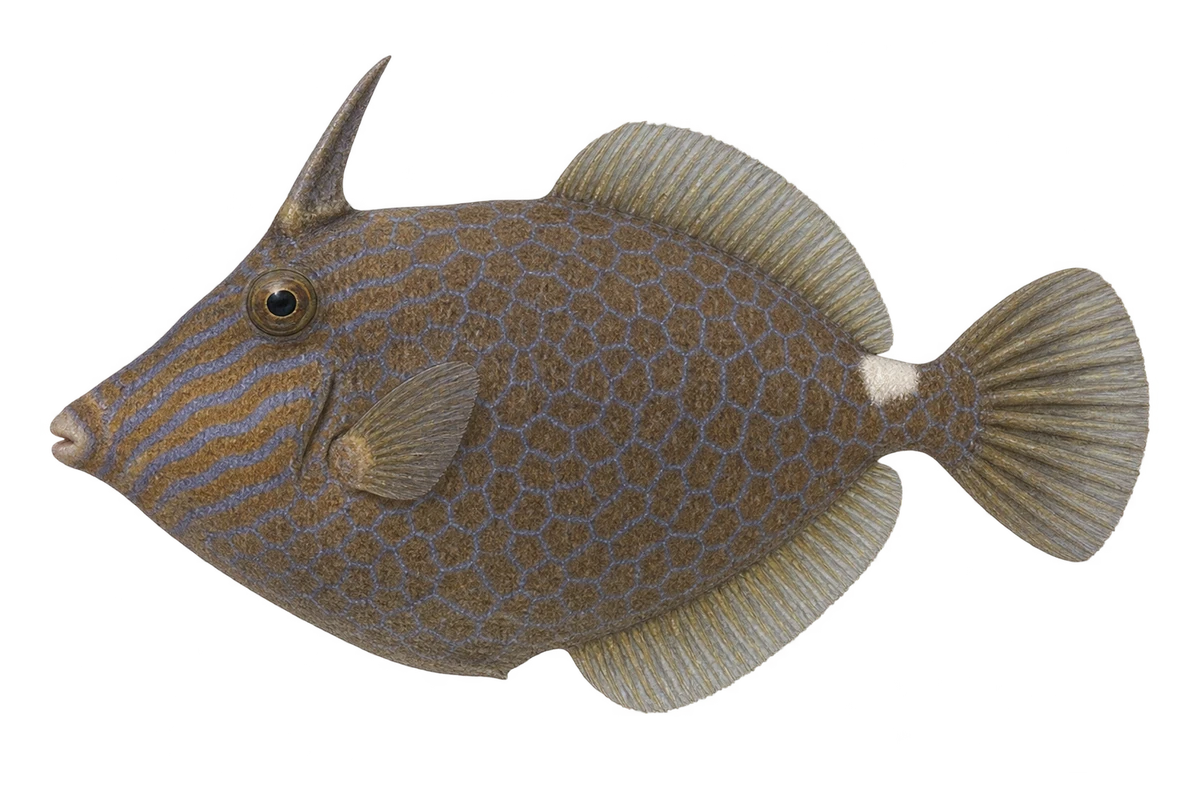
How to identify it: The honeycomb pattern varies. Check for a small white patch high on the tail base behind the dorsal fin.
What to watch for: This fish feeds on bottom-dwelling invertebrates and often retreats when approached. Staying still may reveal more of the pattern.
Stars-and-Stripes Puffer
Arothron hispidus · Tetraodontidae
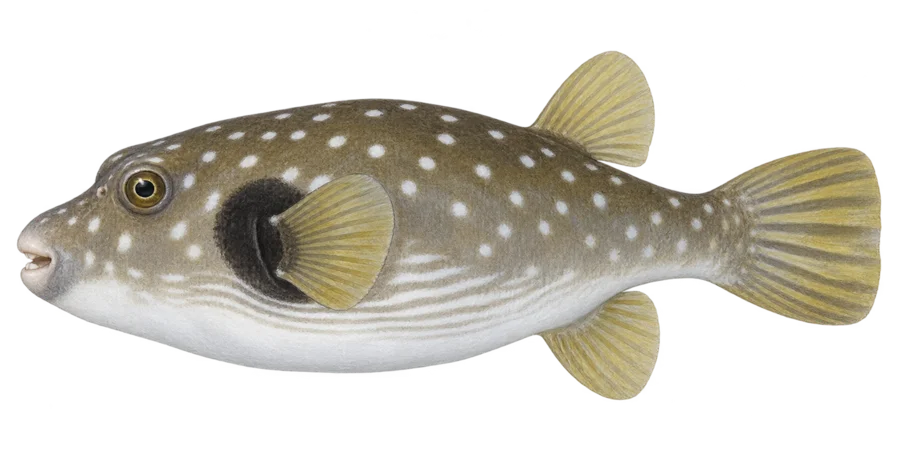
How to identify it: Look for pale belly lines and a dark halo around the gill opening and pectoral-fin base. The belly lines can fade with age.
What to watch for: Check reef rubble, seagrass and sand. A relaxed side view is enough; never make a puffer inflate.
Whitetail Dascyllus
Dascyllus aruanus · Pomacentridae
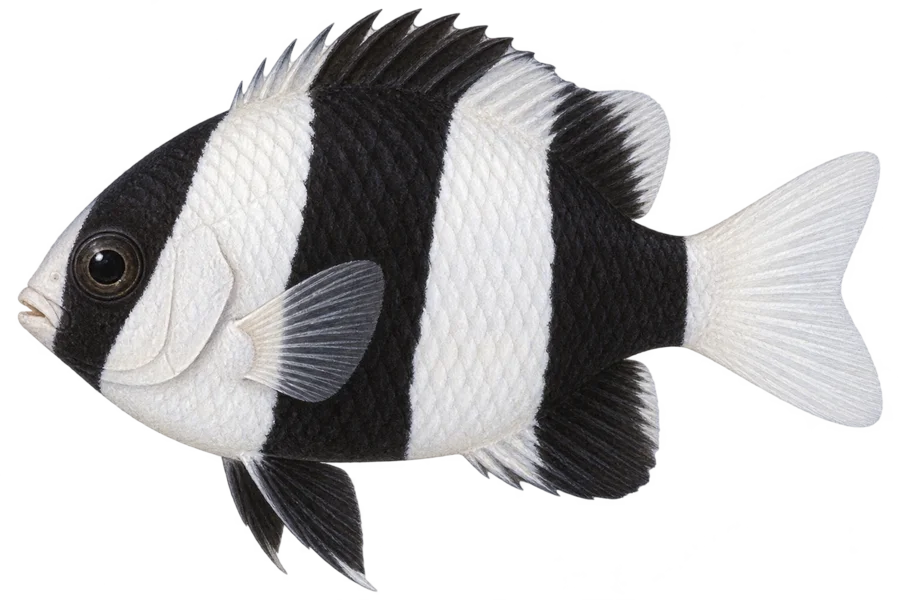
How to identify it: Three broad black bars cross a pale body. Unlike a blacktail dascyllus, its tail stays pale.
What to watch for: Watch a branching coral from a distance. These fish hover outside the branches and slip between them when disturbed.
Honeycomb Grouper
Epinephelus merra · Serranidae
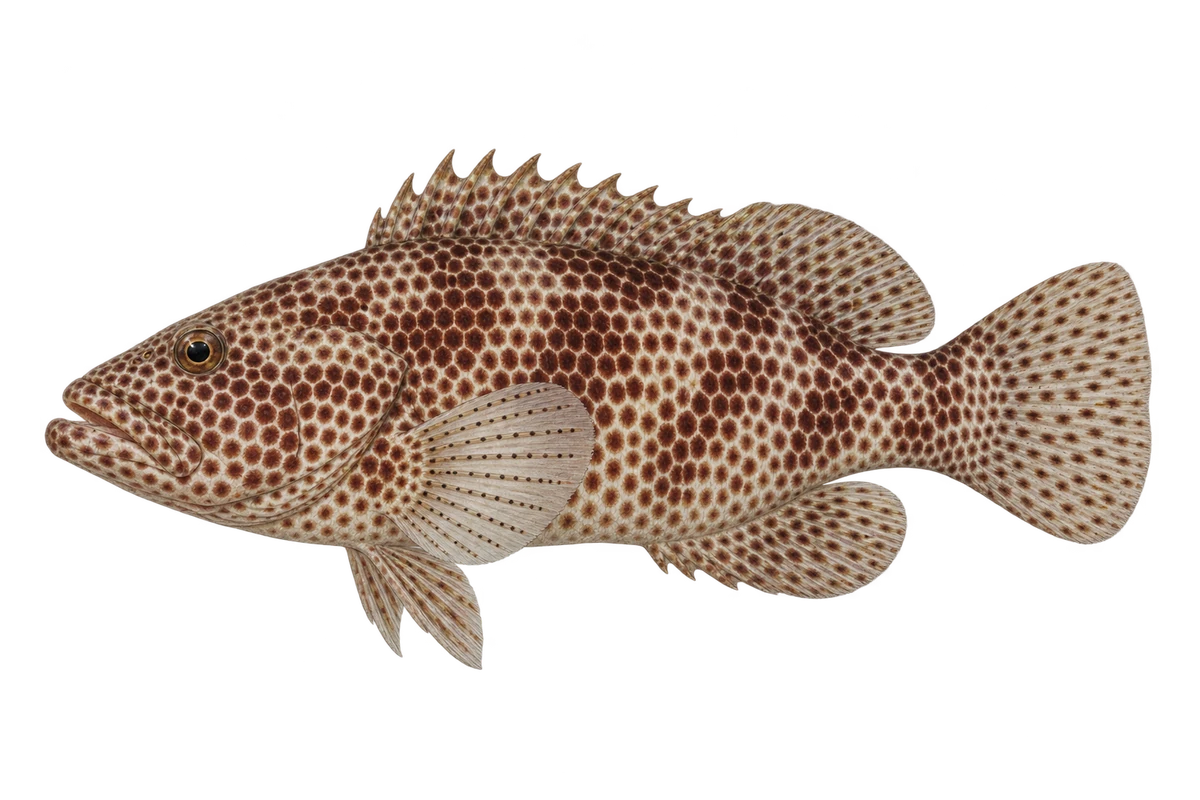
How to identify it: Look for brown spots forming a fine mesh with more space between them below, plus a rounded tail.
What to watch for: A patient look near the bottom can reveal the body shape without flushing it from cover.
Smooth Cornetfish
Fistularia commersonii · Fistulariidae
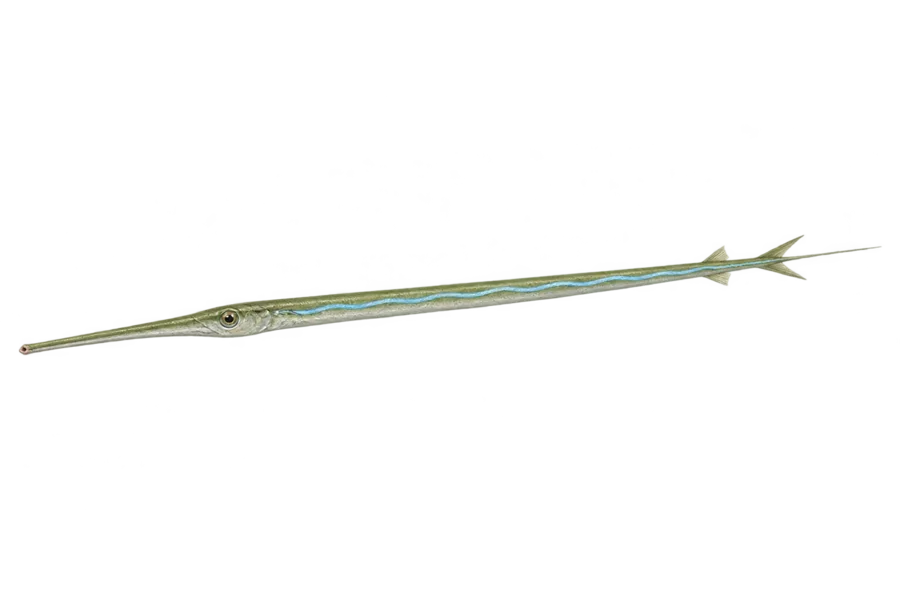
How to identify it: A fine pale filament projects from the middle of the forked tail. The small dorsal and anal fins sit far back.
What to watch for: It hunts small fish over reefs and seagrass. The tail filament helps separate it from a Pacific trumpetfish.
Jointed Razorfish
Aeoliscus strigatus · Centriscidae
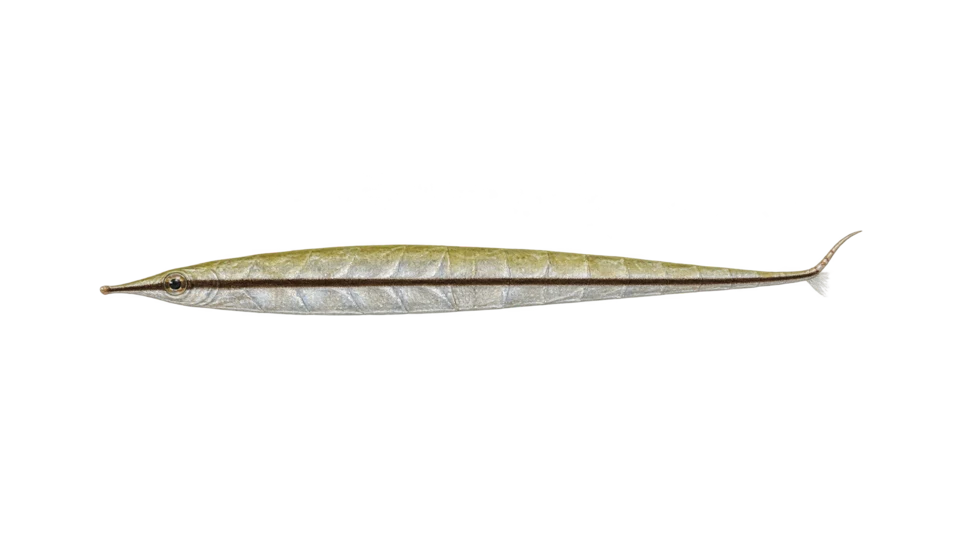
How to identify it: Look for a blade-thin armored body with a dark line from the pointed snout toward the tail. The long dorsal spine has a jointed tip.
What to watch for: Schools swim nose-down near branching coral or long-spined urchins. Don’t move cover to improve your view.
Convict Blenny
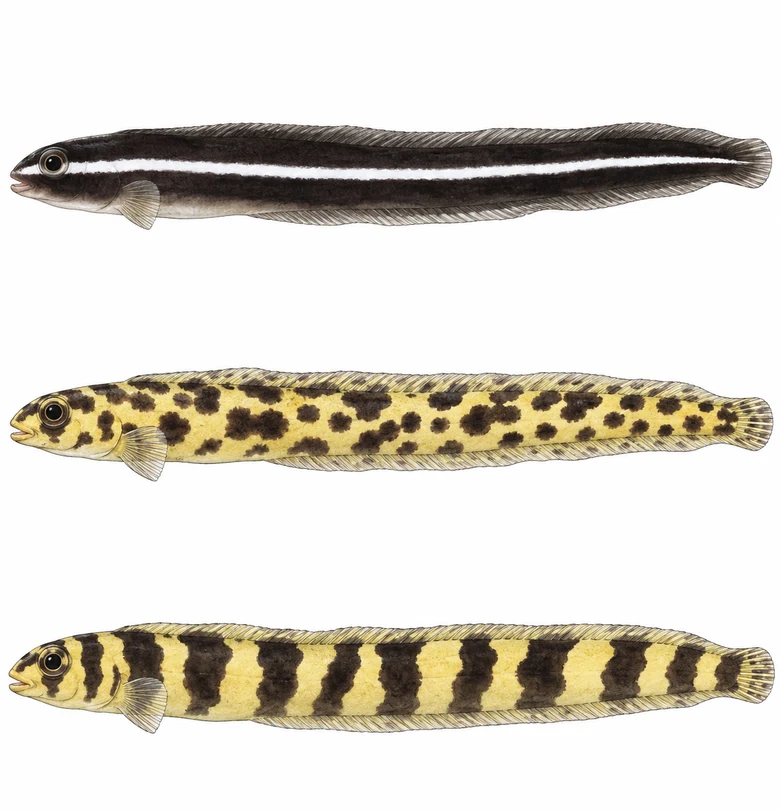
Pholidichthys leucotaenia · Pholidichthyidae
How to identify it: The slender juvenile shows a straight pale stripe on a dark body; adults have bold dark bars or blotches.
What to watch for: Watch quietly around reef shelter. Groups of striped juveniles may be visible near a burrow, but an individual’s color alone does not identify it.
Starry Puffer
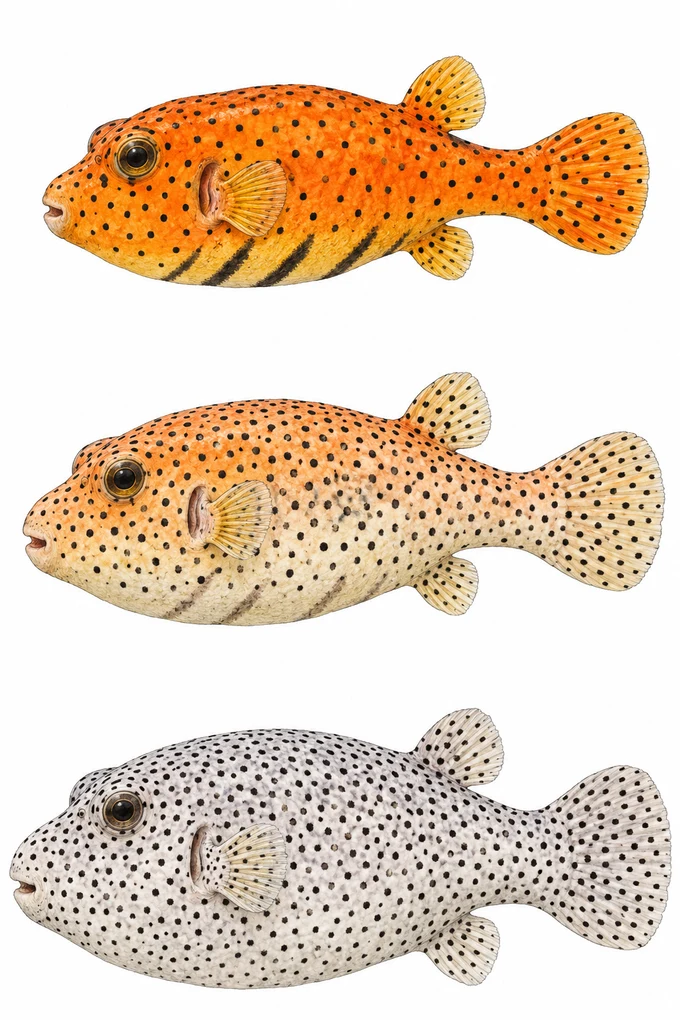
Arothron stellatus · Tetraodontidae
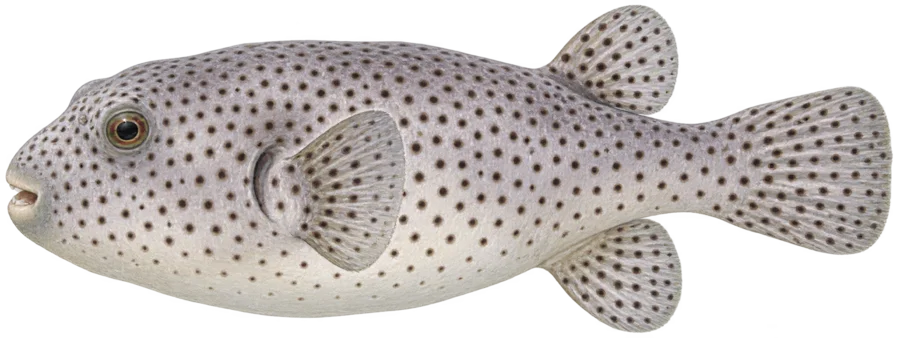
How to identify it: Adults are pale and covered in small black spots. Juveniles are more orange and have dark diagonal belly bands.
What to watch for: Look over lagoons and seaward reefs for a relaxed fish. The scales of the spots and degree of belly striping can change as it grows.
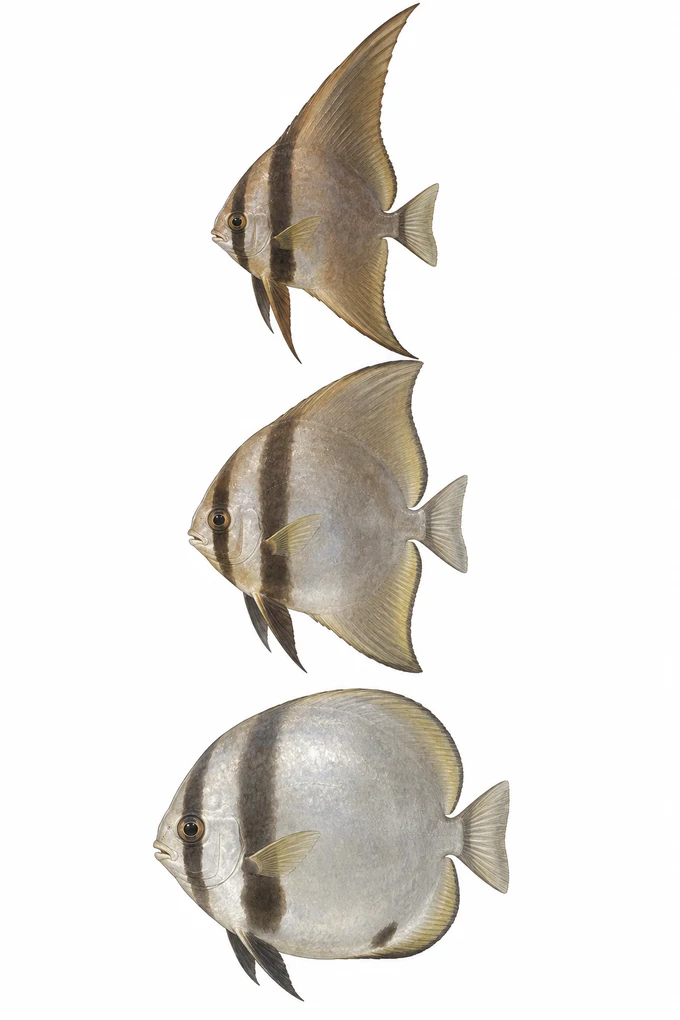
Teira Batfish
Platax teira · Ephippidae
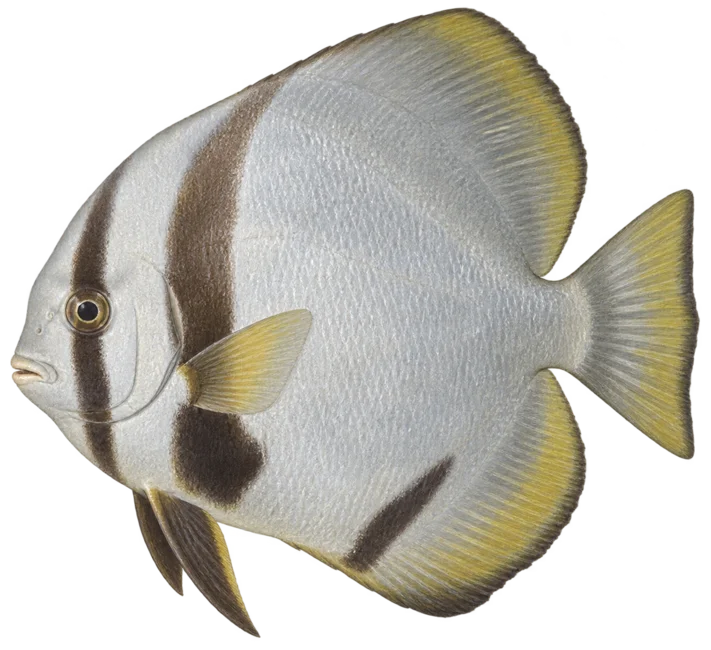
How to identify it: Juvenile fins give it a tall silhouette. Look for the dark mark under the pectoral fin as the body rounds and fins get proportionally shorter.
What to watch for: Juveniles can resemble leaves. Look for the band over the eye and another near the shoulder when it turns.
Keep exploring with Stuart Scuba
Philippines group dive trip · International Group Dive Travel · SDI Reef Fish Identification · Underwater Photography
Gear, group travel & local charters


Follow Stuart Scuba

YouTube