


Pavona chiriquiensis
Pavona chiriquiensis · Agariciidae · Colonial coral · Galápagos Islands Fish ID
How to identify it
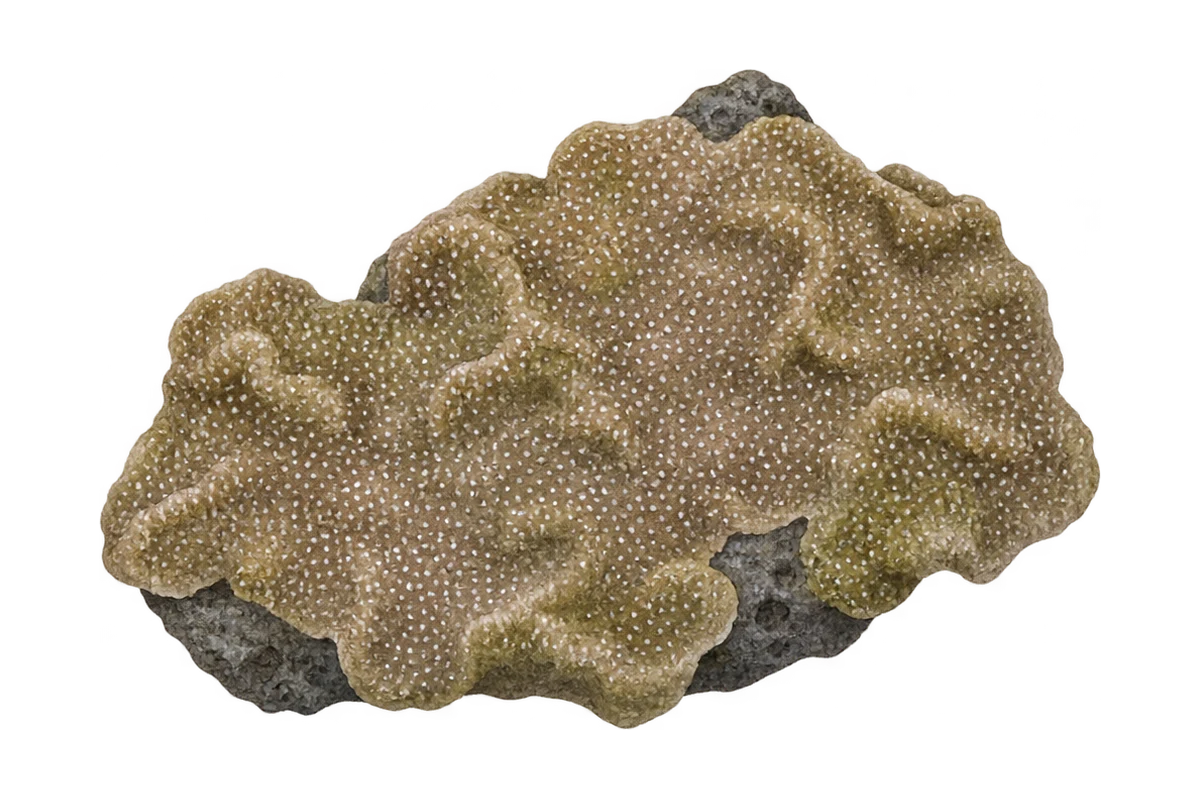
This crust-forming coral rewards a slow look: short ridges cross the surface and small pale centers can stand out against the living tissue.
Compare short ridges and pale mouths with exact local imagery. Pavona varians can show longer ridges and valleys. Color and ridge length can vary; field identification is provisional where cups cannot be seen.
Learn to observe reefs without touching
SDI Coral Conservation is the place to start if you want to learn about coral habitats and how to observe them responsibly.
Start with the colony’s outline and the pattern of its coral cups. Look from a position where you can keep your fins and camera clear of the colony.
- Keep your fins and camera clear: Advanced Buoyancy Control focuses on trim, weighting and hovering.
- Build a broader skill set: Advanced Adventure introduces several specialties, including deep diving and navigation, with opportunities to refine buoyancy.
- For deeper recreational dives already in your plans: Deep Diver focuses on planning depth and managing breathing gas. It’s not needed to identify coral on a shallow dive.
- Record the details: Underwater Photography covers lighting and still-image composition. Underwater Video covers framing and steady footage. Use either without resting gear on the reef.
Galápagos Islands records
Documented Galápagos record: Santa Cruz group (CDF entry 124); expedition photograph confirms archipelago. A record does not guarantee a sighting.
Fun facts
- The Charles Darwin Foundation names the Santa Cruz island group in its record.
- The Galápagos reef expedition photographed a living encrusting colony.
- In close-up, the surface can have short skeletal ridges rather than long valleys.
- Small raised knobs can interrupt those ridges.
- Pale polyp mouths and oral discs can contrast with the rest of the colony.
- Researchers measured individual skeletal cups to describe differences from similar coral species.




