


Rough Leptoseris Coral
Leptoseris scabra · Agariciidae · Colonial coral · Galápagos Islands Fish ID
How to identify it
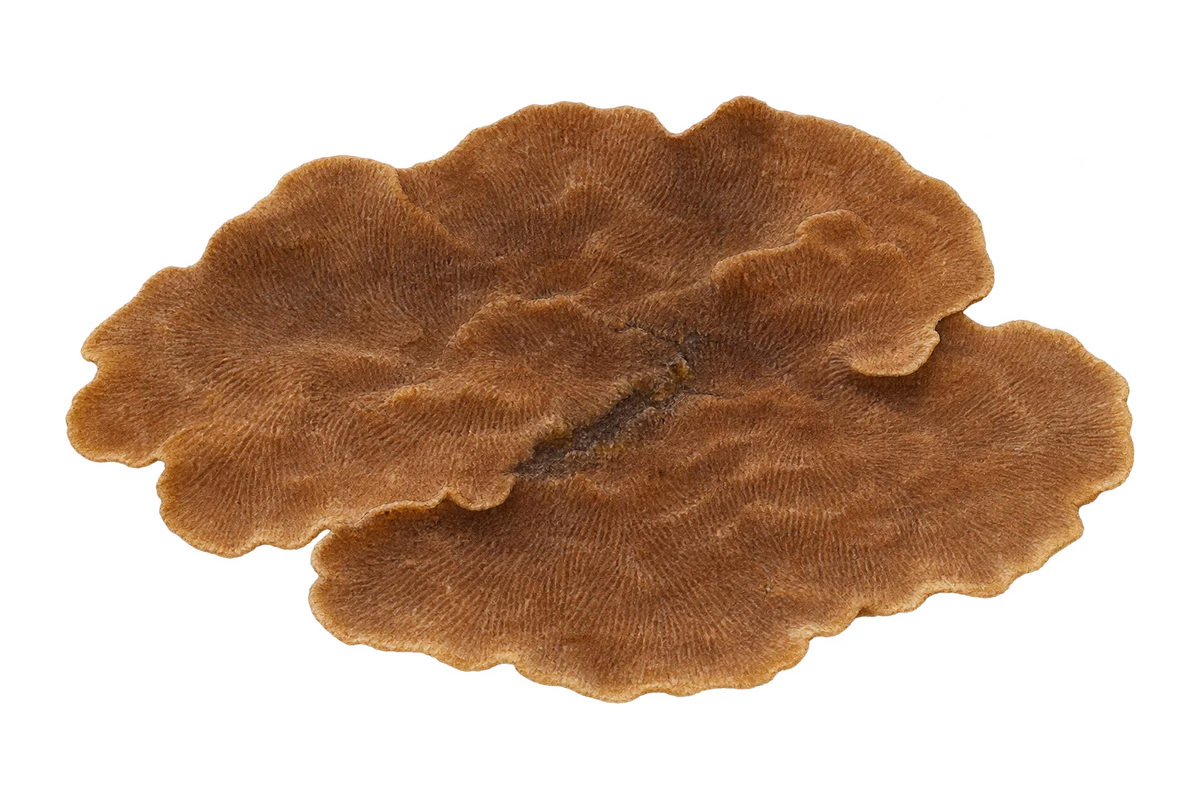
This living coral looks like a thin irregular sheet hugging the substrate. In the Galápagos report the colony is warm brown with broad, gently crinkled lobes and fine surface texture.
Learn to observe reefs without touching
SDI Coral Conservation is the place to start if you want to learn about coral habitats and how to observe them responsibly.
Start with the colony’s outline and the pattern of its coral cups. Look from a position where you can keep your fins and camera clear of the colony.
- Keep your fins and camera clear: Advanced Buoyancy Control focuses on trim, weighting and hovering.
- Build a broader skill set: Advanced Adventure introduces several specialties, including deep diving and navigation, with opportunities to refine buoyancy.
- For deeper recreational dives already in your plans: Deep Diver focuses on planning depth and managing breathing gas. It’s not needed to identify coral on a shallow dive.
- Record the details: Underwater Photography covers lighting and still-image composition. Underwater Video covers framing and steady footage. Use either without resting gear on the reef.
Galápagos Islands records
Documented Galápagos record: Darwin, Wolf. A record does not guarantee a sighting.
Fun facts
- CDF confines the documented Galápagos records to the northern islands Darwin and Wolf.
- The Galápagos expedition photographed it as a thin, irregular sheet.
- The upper surface has tiny ridges called septo-costae which alternate markedly in size in the taxonomic comparison.
- This is a colonial stony coral, not a single disk-shaped mushroom coral despite the low profile.
- Leptoseris columna is an older name listed under this species.
- Look for the small edges, lips and ripples: the colony does not always grow as one perfect tabletop.
Explore and learn
Compare the tiny skeletal pattern up close. The overall sheet form and brown color do not uniquely distinguish other Leptoseris or thin Pavona.




