


Giant Oceanic Manta Ray
Mobula birostris · Mobulidae · Ray · Galápagos Islands Fish ID
How to identify it
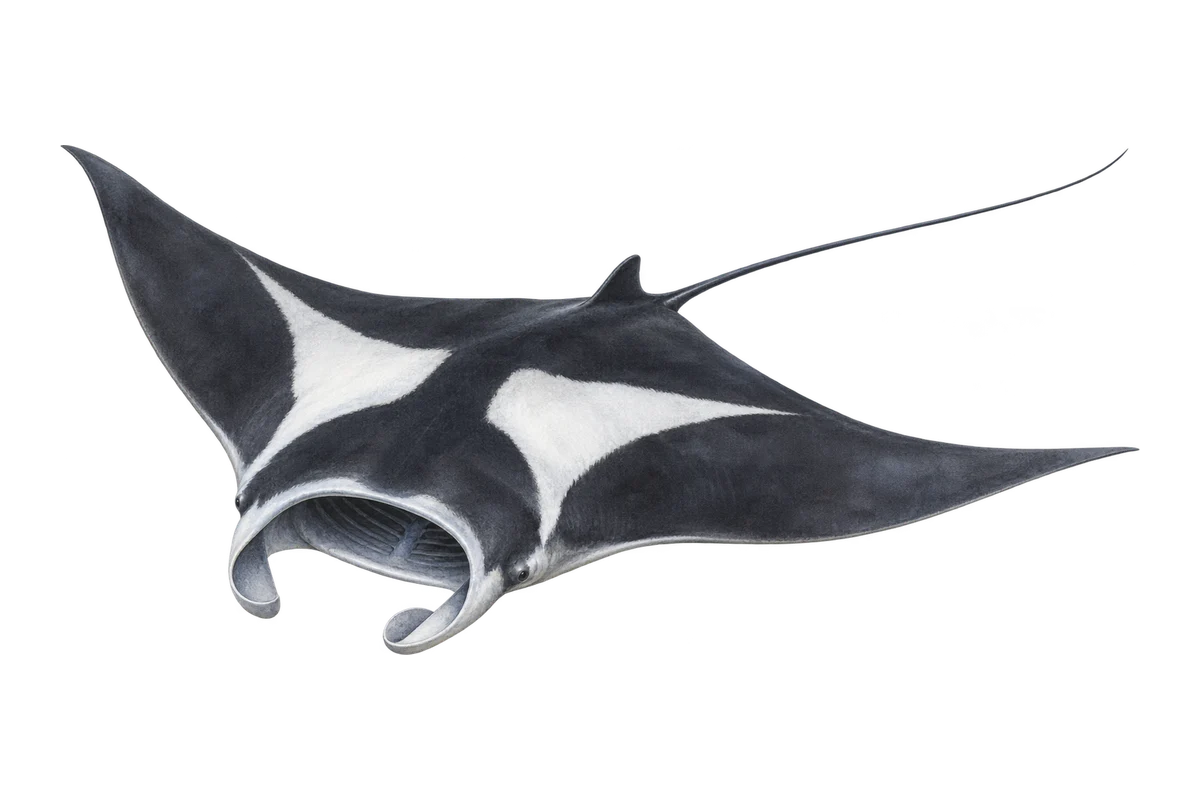
A wide pair of wings and two curled lobes give this giant ray its unmistakable silhouette. Researchers recognize individuals in the Galápagos by the pattern of spots on the underside.
Reef mantas and other mantas overlap in color and silhouette; devil rays generally have a mouth beneath the snout. Use more than one visible clue and do not crowd, chase, touch, or deliberately pass beneath a ray to get a photo.
Galápagos Islands records
Documented Galápagos record: Isabela, Santa Cruz and San Cristóbal (study area). A record does not guarantee a sighting.
Fun facts
- Its paired head lobes guide water toward the wide mouth while it feeds.
- Despite its size, it feeds by filtering zooplankton.
- Individual belly patterns remain recognizable and are useful for photo identification.
- A published study included Galápagos photo records separately from Peru.
- Some individuals are nearly black, so the bright shoulder patches are not universal.
- Both reef mantas and giant mantas have head lobes; those alone do not identify the species.
Explore and learn
If a ray passes at a natural distance, look for a wide, forward-facing mouth and broad triangular wings. Many giant mantas show sharply defined pale shoulder triangles and belly spots concentrated toward the rear.




