


Galápagos Shark
Carcharhinus galapagensis · Carcharhinidae · Shark · Galápagos Islands Fish ID
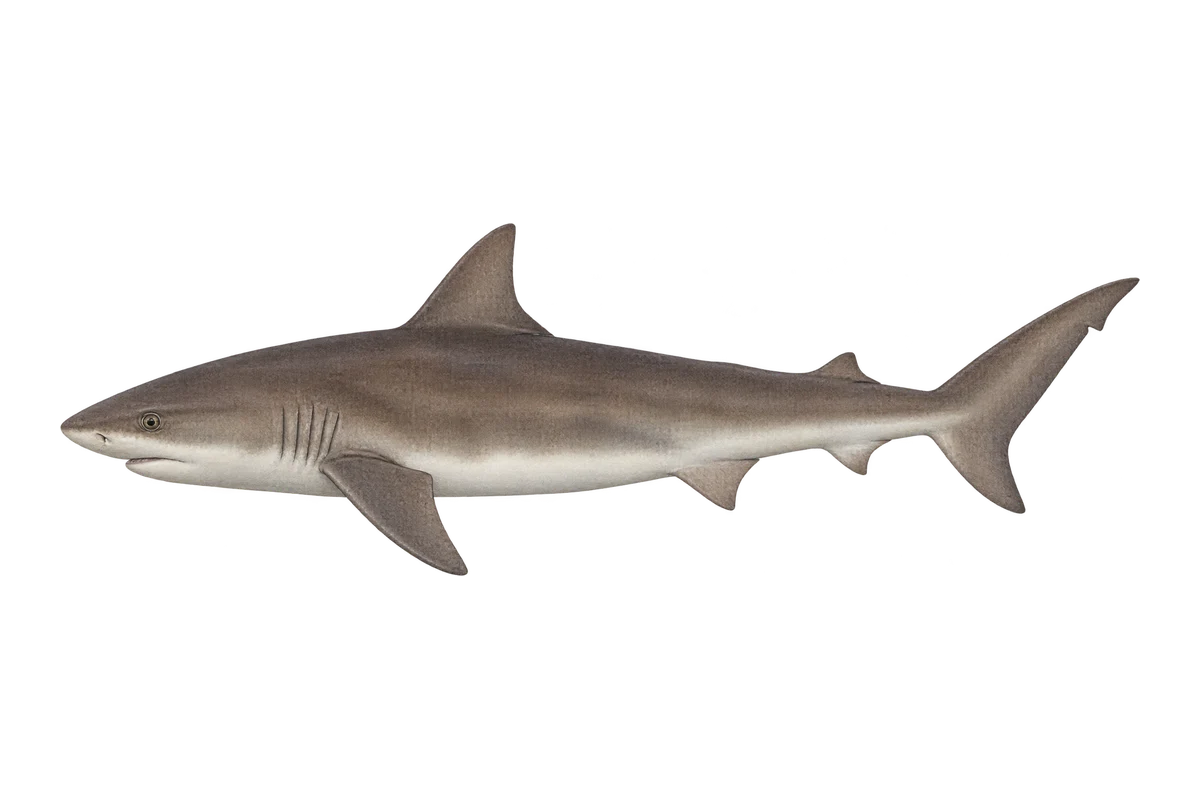
How to identify it
The Galápagos shark carries the islands’ name, but it is not restricted to them. Its clean gray profile is better appreciated as a combination of fin positions than as a single “shark shape.”
It is particularly easy to confuse with the dusky shark; a distant silhouette or fin color is not enough. Leave difficult sightings unidentified rather than approach for another view.
Galápagos Islands records
Documented Galápagos record: Santa Cruz group per CDF. A record does not guarantee a sighting.
Fun facts
- Named for the islands, not confined to them: The original specimens were from the Galápagos Islands, but the species lives around oceanic islands in several oceans.
- At home above rock and coral: It often lives in clear water around rocky or coral habitats, including places with strong currents.
- The bottom is a feeding ground: Bottom-associated fishes such as eels and groupers are documented prey, along with squid and octopus.
- Open water is not always a barrier: Although associated with island coasts, the species has been reported crossing open water between islands.
- The Santa Cruz island group is documented; that is not a guarantee at a particular dive site.
- A live-bearing shark: Young are born live; one reference reports litters of four to 16 pups.
Build your shark ID skills
In SDI Shark Awareness, learn why a gray shark can be difficult to name from a single angle. SDI Advanced Adventure introduces a range of dive skills; if a specific reef dive is already planned at greater recreational depth, Stuart Scuba’s Deep Diver Specialty covers that planning separately.
Explore and learn
If the broadside is clear, the first dorsal fin begins above the rear half of the pectoral fin’s inner edge, rather than beyond its free tip. The pelvic fins sit well behind that first dorsal.




