


Marine Mammal · SOUTH FL • coastal/estuarine
Tamanend’s Bottlenose Dolphin
Tursiops erebennus · Delphinidae
This is the coastal Atlantic bottlenose dolphin recognized separately in current NOAA stock assessments. It occurs in Florida's Indian River Lagoon and is the more relevant bottlenose profile for local estuary sightings.
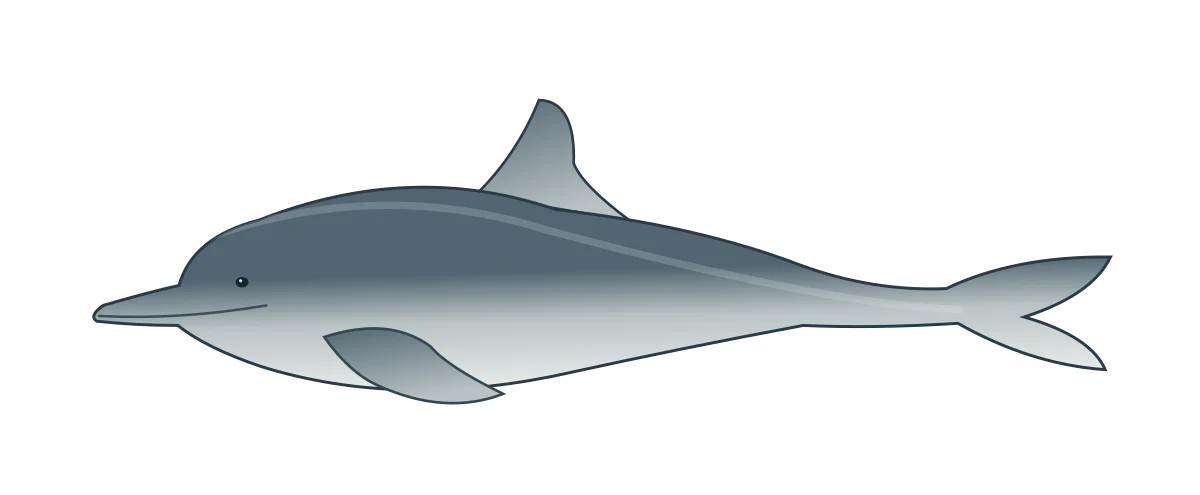
Fun fact: An Indian River Lagoon resident belongs to the coastal form; even so, details of an unidentified individual should not be inferred from where it was seen alone.
How to identify it
- Gray, short broad beak, rounded forehead and curved dorsal fin
- body proportions overlap with Common Bottlenose Dolphin.
Size
Roughly 7–10 feet for many adults; size by itself is not diagnostic.
Habitat and Florida records
Atlantic Florida coastal and estuarine waters, including the Indian River Lagoon. NOAA assigns offshore Atlantic stocks separately.
Diet
Mostly fish; prey availability varies across the estuary and coastal habitat.
Behavior
Animals may forage along channels and travel in small groups; group membership can change.
Reproduction
One calf is typical; calves nurse and remain with their mothers.
Look-alikes
Common Bottlenose Dolphin can look nearly identical from a boat. Record location and submit photos rather than forcing a species ID.
Observe only
Protected marine mammal. Watch from a distance; do not approach, touch, feed, chase or collect.



