


Marine Mammal · SOUTH FL • offshore
Common Bottlenose Dolphin
Tursiops truncatus · Delphinidae
Common bottlenose dolphins inspire the popular “Flipper” image, but that nickname is not a species identification. Current NOAA assessments separate offshore Atlantic common bottlenose dolphins from coastal Tamanend’s bottlenose dolphins.
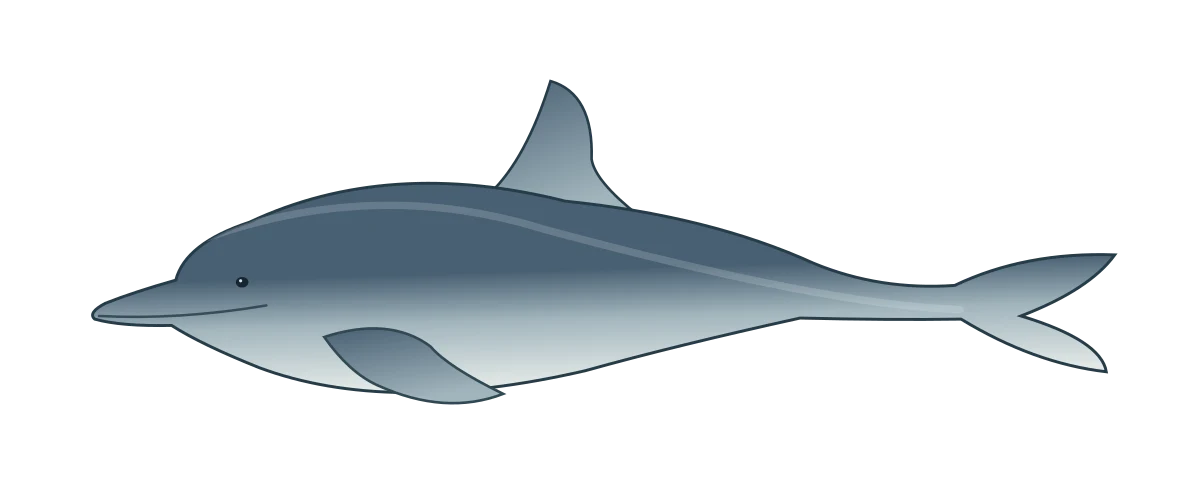
Fun fact: Common bottlenose dolphins can produce individually distinctive signature whistles.
How to identify it
- Robust body
- broad, short beak with a clear crease where it meets the forehead
- tall, falcate dorsal fin
- gray back and paler belly.
Size
Up to roughly 13 feet; substantial regional variation.
Habitat and Florida records
Documented over the southeast Florida shelf and farther offshore. Use the Tamanend’s profile for coastal and estuarine Atlantic animals; location alone is not diagnostic.
Diet
Fish and squid, varying with the prey available.
Behavior
Pods surface to breathe, sometimes follow boats and may spend much of a sighting underwater.
Reproduction
One calf is typical; calves nurse and stay close to their mothers.
Look-alikes
Tamanend’s is externally very similar. Do not identify an unknown dolphin to either species from an isolated fin image.
Observe only
Protected marine mammal. Watch from a distance; do not approach, touch, feed, chase or collect.



