


Are Octopuses Really Secret Little Aliens of the Sea? | Benjamin Answers
Benjamin Hadfield Nov 22, 2026
Benjamin Answers · Ocean Questions, Answered Here
Are Octopuses Really Secret Little Aliens of the Sea?
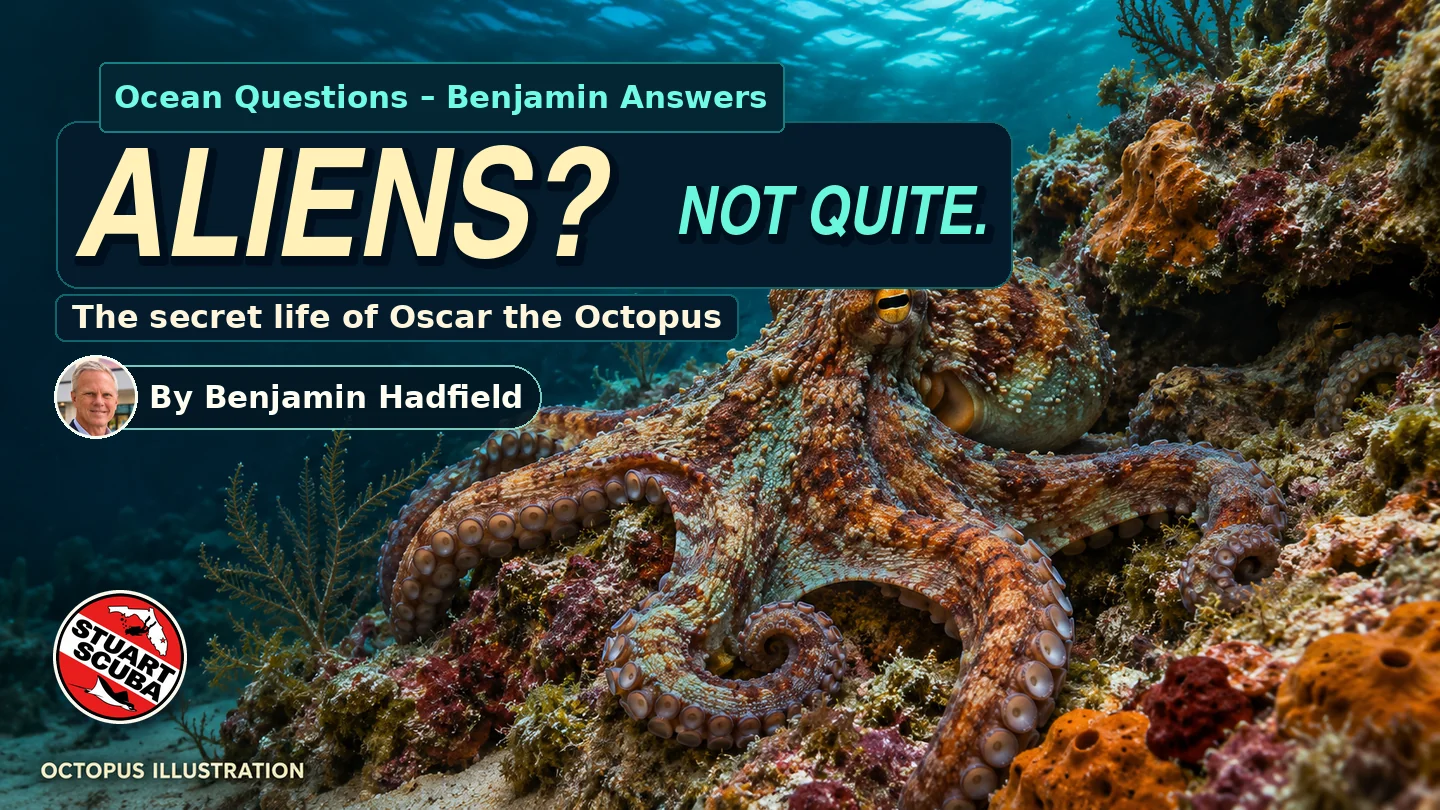
Are octopuses aliens? No. Are they some of the smartest invertebrates we know? Absolutely. They solve puzzles, taste with their suckers, and can change both the pattern and the texture of their skin. I can’t even get my computer to recognize the printer.
Meet Oscar and Bob Explore Fish ID
How smart is an octopus, really?
In one lab study, common octopuses figured out how to open a food container, then had to work out how to get it through a hole as the researchers made the puzzle harder. The octopus never asked to speak to the manager. If you’ve ever watched somebody wrestle with a pickle jar, you’ll appreciate the distinction.
Are they smarter than apes, dolphins, or crows? There’s no honest way to put all those animals on one leaderboard. A chimp is brilliant at being a chimp. An octopus has to find a crab it can’t see, investigate a crack with an arm, and disappear before something bigger eats it. The impressive part is how differently it solves its problems.
How do octopuses change color and texture?
Tiny pigment sacs called chromatophores expand and shrink under muscle control. Other cells reflect or scatter light. Put the two together and a plain-looking octopus can flash stripes, patches, and surprisingly bright colors in a hurry. It can also raise little bumps called papillae to make smooth skin look rough. The reef has a dress code, and apparently the octopus wrote it.
Camouflage helps an octopus hide from predators or get close to prey. But not every color change means “I’m hiding,” and there’s no universal color chart that tells a diver what an octopus is feeling. Watch what else it’s doing before you try to read its mind. If you’d like to bring those changes back on camera, our Underwater Video class is a good place to work on steady framing without crowding the subject.
Five things that make the alien story tempting
1. It can taste the reef with its arms
In a study of California two-spot octopuses, scientists found receptors in the suckers that pick up chemicals on contact. One arm can explore a dark crevice and get information about what it touches. Imagine reading the menu by shaking hands with dinner.
2. It has one brain, not nine little executives
An octopus has a central brain and a lot of nerve cells in its arms. Those arm circuits can handle some sensing and movement locally. “Nine brains” is a catchy shortcut, but the arms don’t each have a separate brain making its own life plans. Eight arms, one animal, no committee meeting.
3. One species carries its own roof
Researchers watched veined octopuses in Indonesia carry discarded coconut shell halves and assemble them to hide inside later. Carrying the pieces wasn’t much help while they were on the move. The payoff came when they stopped and set up shelter. That’s packing ahead, and it’s a lot more organized than how I pack for a boat day.
4. Sometimes it goes hunting with fish
In the Red Sea, scientists filmed day octopuses hunting alongside fish. Goatfish helped explore where to go, while the octopus often determined whether the group moved on. Researchers even recorded octopuses jabbing some fish with an arm. Please don’t use that last part as advice for managing your dive buddies.
5. It can change patterns in its sleep
Researchers have watched sleeping octopuses cycle between quiet periods and active ones, when the eyes move and the skin changes color and texture. Does that mean they dream? We don’t know. If they do, I hope the crabs in their dreams put up less of a fight.
Meet Oscar and Bob, our local reef changelings
Oscar and Bob are the names our crew gave two reported Caribbean reef octopus encounters at Breakers Reef off West Palm Beach. They’re our local examples, not the octopuses in the experiments above. And those names don’t mean we can recognize individuals every time we see one. The illustrations on their Fish ID profile show what to look for; they aren’t photographs of the encounters.
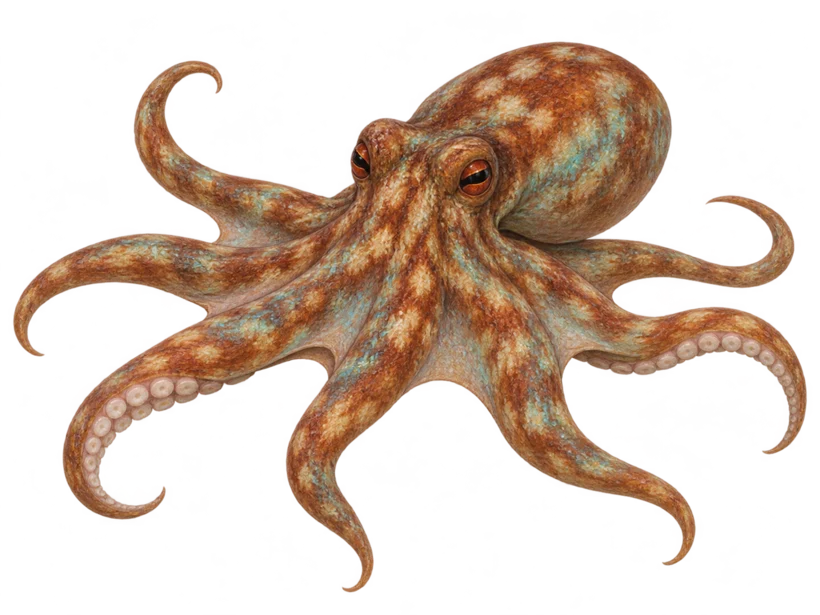
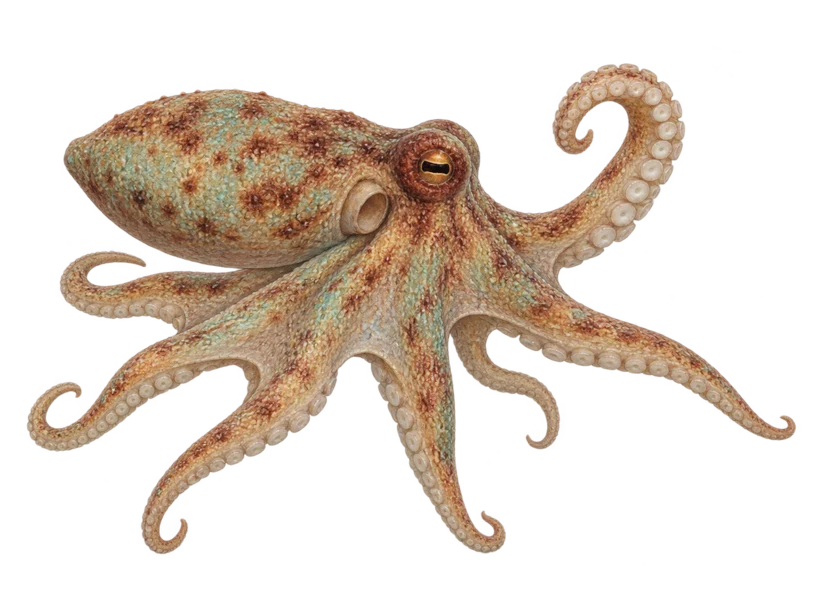
If you go looking, try spotting an eye, a row of suckers, or a patch of “reef” that moves. Don’t reach into a den, move rocks, feed the animal, or chase it for a photo. Settle your buoyancy, give it an exit, and let it decide whether to come out. If you get a picture, check it against the Stuart Scuba Fish ID guide and use the profile’s share button to show your buddy what they swam past.
DO NOT HUNT. They might rise up against us some day! Planet of the Octopus. That’s Stuart Scuba’s look-don’t-take recommendation, not a statement of fishing law.
Get better at seeing what everybody swims past
In Advanced Buoyancy Control, we work on hovering without stirring up the bottom or putting a fin into the reef. Underwater Photography helps you bring back one useful photograph instead of twelve blurry ones. And if you’d like to recognize more of the other animals on that dive, start with SDI Reef Fish Identification. For a boat day, check our West Palm Beach dive charters and tell the crew what you’re hoping to see. Nobody can book an octopus. We have asked.
Want another oddball from the reef? Read Benjamin Answers: What’s the difference between a sea slug and a nudibranch?
Octopus questions divers ask
Is an octopus a fish?
No. It’s a cephalopod mollusk, related to squid and cuttlefish. We keep them in Fish ID because “Fish and All the Other Cool Stuff You Pointed At” didn’t fit in the menu.
Does an octopus really have three hearts?
Yes. Two pump blood to the gills. The third pumps oxygenated blood to the rest of the body. Its blood can look blue because it uses a copper-containing protein called hemocyanin to carry oxygen.
Can an octopus recognize people?
In one aquarium experiment, giant Pacific octopuses responded differently to two handlers who treated them differently. That’s evidence they can distinguish people under those conditions, not permission to put your fingers in the den because you’re “old friends.”
Can I see an octopus on a South Florida dive?
Yes, but never count on a sighting. Check crevices and ledges from a respectful distance. They’re so good at hiding that sometimes the best clue is your buddy pointing at a rock with far more enthusiasm than a rock usually deserves.
Follow Stuart Scuba
Ask us questions here!
What did you see underwater that made you stop and point? Tell me what you’re curious about. You might give me the next “Benjamin Answers.”
Don’t include medical or payment information. This is for questions, not bookings or emergencies.




