


Yellowcheek Wrasse
Halichoeres cyanocephalus · Labridae · Wrasse · Cayman Islands Fish ID
How to identify it
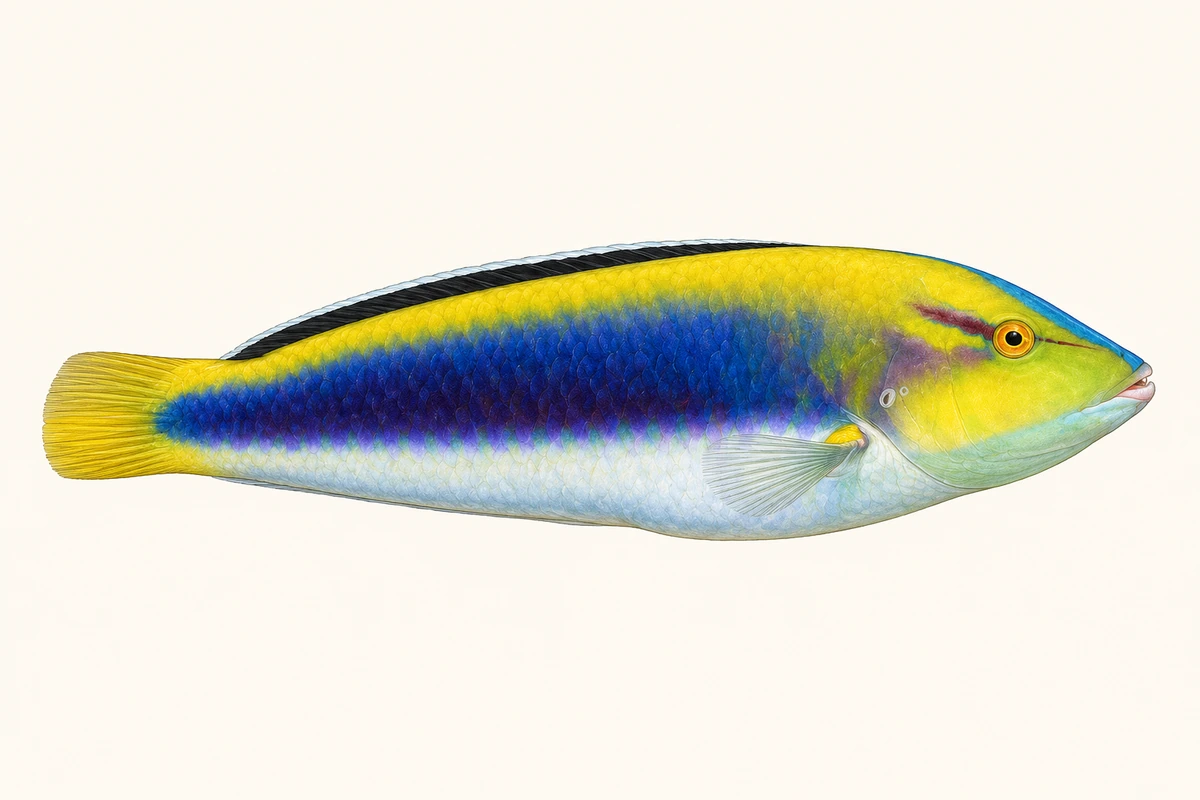
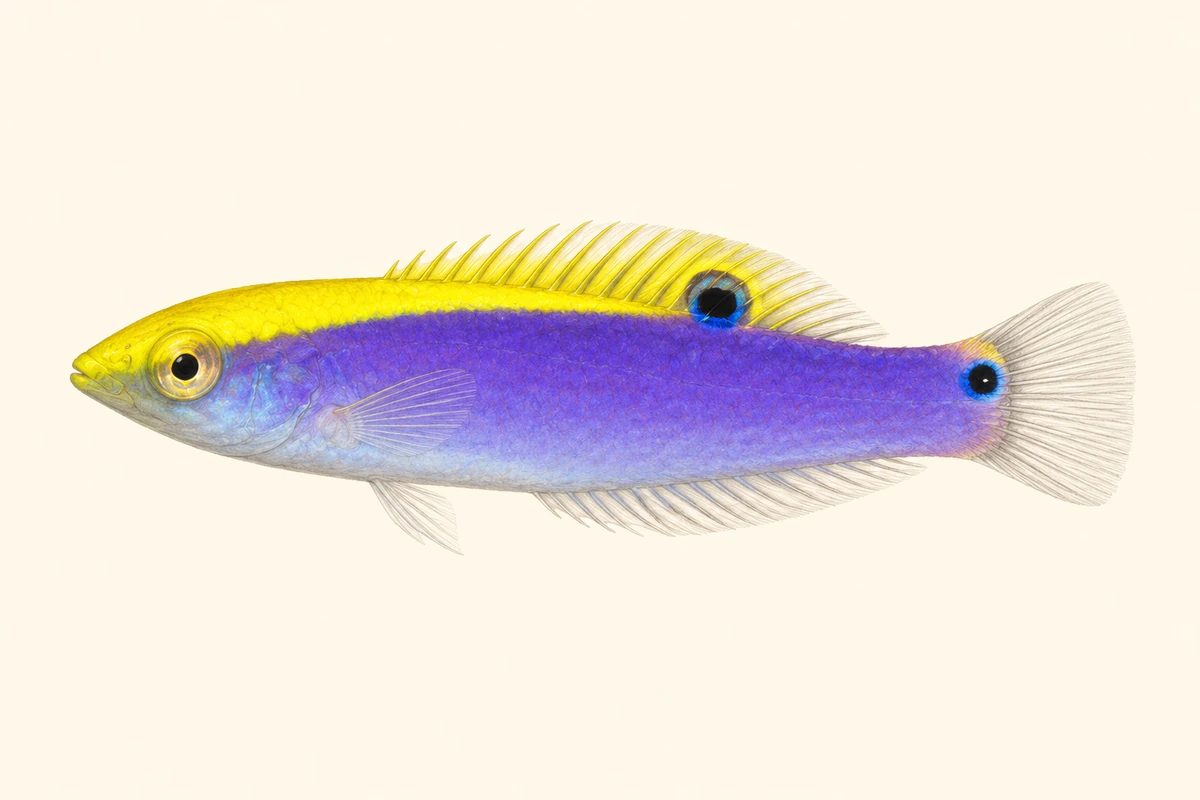
Check the stage before you check the markings. A young yellowcheek can have two dark eyespots. A large terminal-phase adult replaces that look with a yellow upper head and tail and a broad dark blue side stripe.
A juvenile yellowhead wrasse can also look yellow and blue. Look for both eyespot positions and compare the head and tail before making the species call. The Brazilian H. dimidiatus is a separate look-alike, not a Cayman synonym.
Cayman Islands records
Tarpon Reef, Cayman Brac, in pooled REEF diver surveys.
A documented record does not guarantee an encounter on your dive.
What changes as it grows?
Check the spots and tail before naming the fish. The juvenile and terminal-phase adult are illustrated here; the initial adult phase is described below.
Fun facts
- A youngster can have a black-centered spot on its tail base and another near the rear base of the dorsal fin.
- In the initial adult phase the tail is mostly dark blue, framed in yellow. In the terminal phase that balance flips: yellow dominates and blue is concentrated at the base.
- In the terminal phase a thin blue stripe runs up the snout and a short dark reddish stripe leads back from the eye.
- The line of sensory pores bends abruptly down behind the dorsal fin.
- Along with visible front teeth, it has grinding plates farther back in the throat.
- DNA and color-pattern study helped separate the Caribbean fish from a very similar species off Brazil.
See more on your next dive
Keep all of the dorsal fin and tail base in your photo so the early-life spots, or the adult tail colors, are visible.
SDI Reef Fish Identification · Explore Stuart Scuba group dive trips




