


Fish identification archive / Raja Ampat
Yellowbanded Sweetlips
Plectorhinchus lineatus
Raja Ampat field guide
Two things to tell your dive buddy
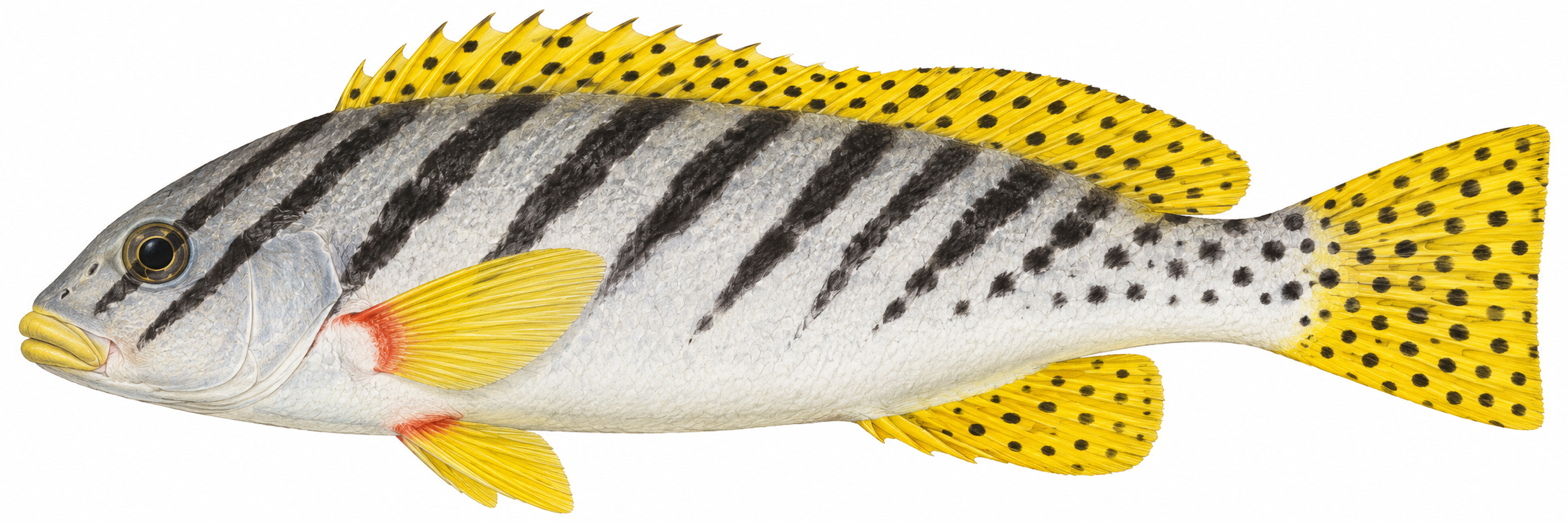
- Juvenile stripes become increasingly diagonal as the fish grows.
- A resting daytime group does not reveal the full story of this nocturnal hunter.
How to identify it
Pale-bodied adult with diagonal black upper-body stripes, yellow lips and yellow fins bearing black spots.
Habitat and where to look
Coastal reefs, lagoons and seaward reefs; feeding excursions include adjacent sand and seagrass.
Daily habits and behavior
Rests in small groups during daylight and becomes active at night.
What is on the menu?
Bottom-dwelling invertebrates.
Look-alikes and identification traps
Adult oriental sweetlips has more horizontal body stripes; compare stripe direction and the spotted yellow fins.
Try this observation
Compare stripe angles on differently sized fish without moving into the group.
Raja Ampat occurrence
Recorded in Raja Ampat; regional occurrence does not promise a sighting on a particular dive. This guide does not imply that every site, itinerary or season offers the same chance of an encounter.
Observe, do not disturb
Keep a respectful distance, leave the animal an unobstructed route and follow your dive guide. Do not touch, feed, chase or collect wildlife. Identification does not establish permission to harvest or food safety; Florida harvest labels do not apply to this Indonesian guide.
Sources and review
Reviewed November 18, 2026.
Make your next dive happen
Dive With UsTrain With UsExplore the Raja Ampat tripShop With Us
Questions? (772) 600-8288 or info@stuartscuba.com.




