


Yellow Pencil Coral
Madracis auretenra
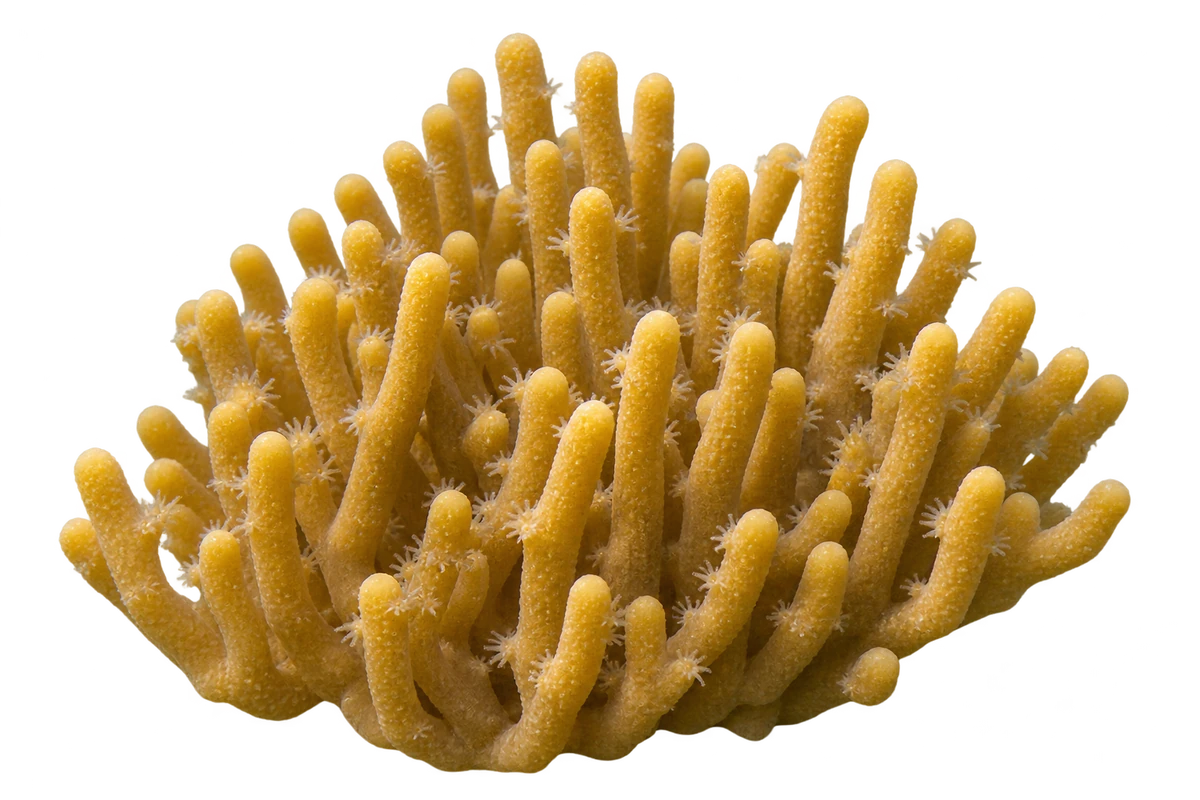
Look sideways at the colony. The fine branches are packed together, with blunt, rounded tips. When the tiny polyps are out, the colony can look fuzzy. That combination is more useful than yellow color alone.
Where divers have documented it
In Cozumel, the reef restoration team documented yellow pencil coral at Villa Blanca Reef during its 2022 photo and video survey. In Florida, a Palm Beach County field report recorded a separate patch off Boynton Beach. These are two documented locations, not a promise that you’ll see this coral on any particular dive.
Six things worth noticing
- Most branches are narrower than your little finger. Individual branches are generally under one centimeter across and grow roughly parallel to their neighbors.
- The fuzz is alive. Tiny extended polyps soften the outline, especially around the outer branch tips.
- The base can look different from the tips. Older, lower parts of the branches can lose their polyps and show bare skeleton.
- Small branches can build a big colony. Many closely packed branches together can make a colony more than a meter wide.
- It isn’t restricted to deep reefs. It occurs on outer reefs and in clear deeper water, but it can also grow in some shallower places.
- Compare the tips before naming it. Pointed pencil coral has more tapered branches. With yellow pencil coral, look for rounded tips on a compact cluster. If you only have color or a distant view, leave the ID open.
Learn to spot and photograph corals without touching them
Start with SDI Coral Conservation for responsible reef observation and Advanced Buoyancy Control to practice holding position without brushing a colony. With Underwater Photographer, you can work on a still frame that shows both the whole colony and its rounded tips. Underwater Video Diver gives you a chance to practice filming a steady pass with room to spare.
Advanced Adventure Diver introduces several kinds of diving. If deeper reef sites are part of your plans, ask about Deep Diver for planning and skills specific to those dives. You don’t need to go deeper to look for this species.




