


Whitespotted Combtooth Blenny
Ecsenius trilineatus
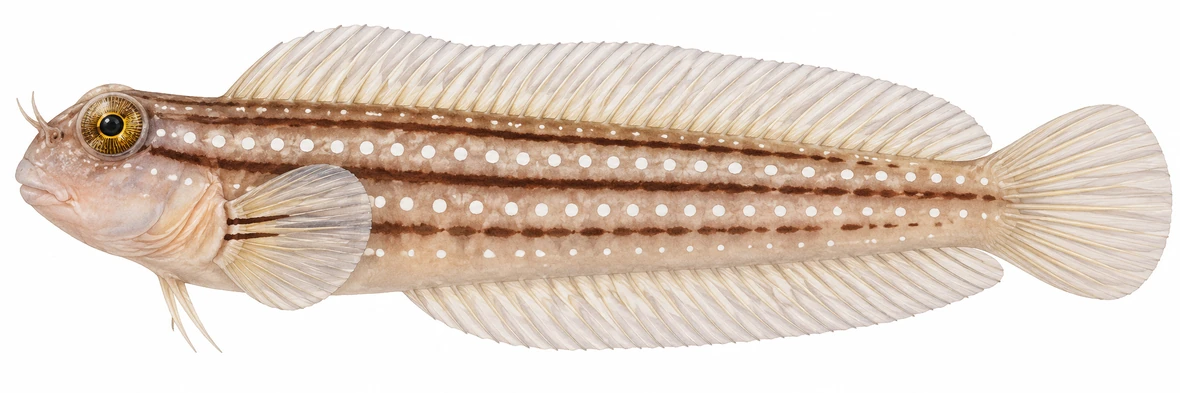
Two details worth remembering
- The name trilineatus refers to three lines.
- The eye itself carries useful information: the tiny radial markings can matter more than the overall brown-and-white impression.
How to identify it
Three slender dark body stripes, often broken toward the rear, separated by bright white spots. Two dark lines cross the pectoral base; the gold iris has a fine spoke-like pattern.
Where to look
Shallow coastal fringing reefs and lagoons, typically perched on coral outcrops or reef crests. The museum account places it at 2–10 m and about 3 cm total length.
Natural history
Individuals or small groups use elevated perches. This is a patient-observation fish, not a chase subject.
Look-alikes
Schroeder’s Combtooth Blenny has finer stripes and lacks the white spots between the first two. Fourline Combtooth Blenny has an additional stripe and lacks the same spotting and eye spokes.
What to watch for underwater
Take a sharp side view that includes the eye and pectoral base without resting equipment on the reef.
Recorded in Raja Ampat
This species has a published Raja Ampat record. A regional record does not guarantee a sighting on a particular dive.
Sources: birdsheadseascape.com species reference · fishesofaustralia.net.au species reference · Regional survey record
I saw this and want to share
Back to Raja Ampat Fish ID · Dive Raja Ampat with Stuart Scuba




