


Whitebarred Goby
Amblygobius phalaena
Two details worth remembering
- The feeding mouth is also a sediment-processing tool.
- Pair formation and male egg care have been studied specifically in this species; they are not merely assumptions based on the goby family.
How to identify it
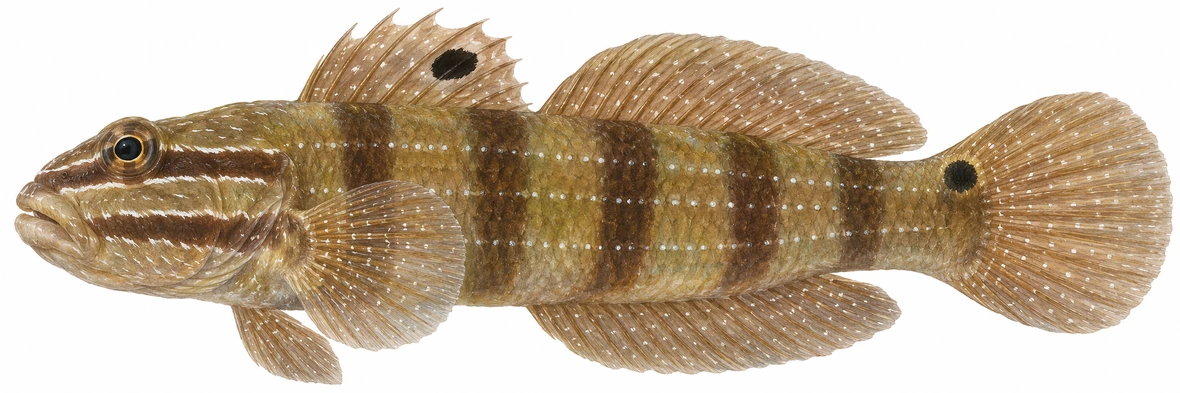
Greenish-brown, with five dark body bars, pale-edged stripes through the eye and cheek, rows of small white body spots, and dark spots on the first dorsal fin and upper tail base.
Where to look
Sandy and rubble patches on coastal reefs and in lagoons; individuals and pairs occur.
Natural history
Scoops and processes sediment rather than simply pecking at visible prey. Look for repeated mouthfuls and sediment passing away from the head.
Small invertebrates, organic material and algae sifted from sand.
Males and females form pairs. Eggs are deposited in burrows and normally tended by the male.
Look-alikes
Compare the tail-base spot, head stripes and white spotting, not body bars alone. This is not the identically patterned color form of every other sand-sifting goby.
What to watch for underwater
Watch a complete feeding cycle, then look for a second fish nearby without approaching their burrow.
Recorded in Raja Ampat
This species has a published Raja Ampat record. A regional record does not guarantee a sighting on a particular dive.
Sources: birdsheadseascape.com species reference · fishesofaustralia.net.au species reference · Regional survey record
I saw this and want to share
Back to Raja Ampat Fish ID · Dive Raja Ampat with Stuart Scuba




