


← Back to South Florida Fish ID
West Indian Top Shell
Cittarium pica · Tegulidae
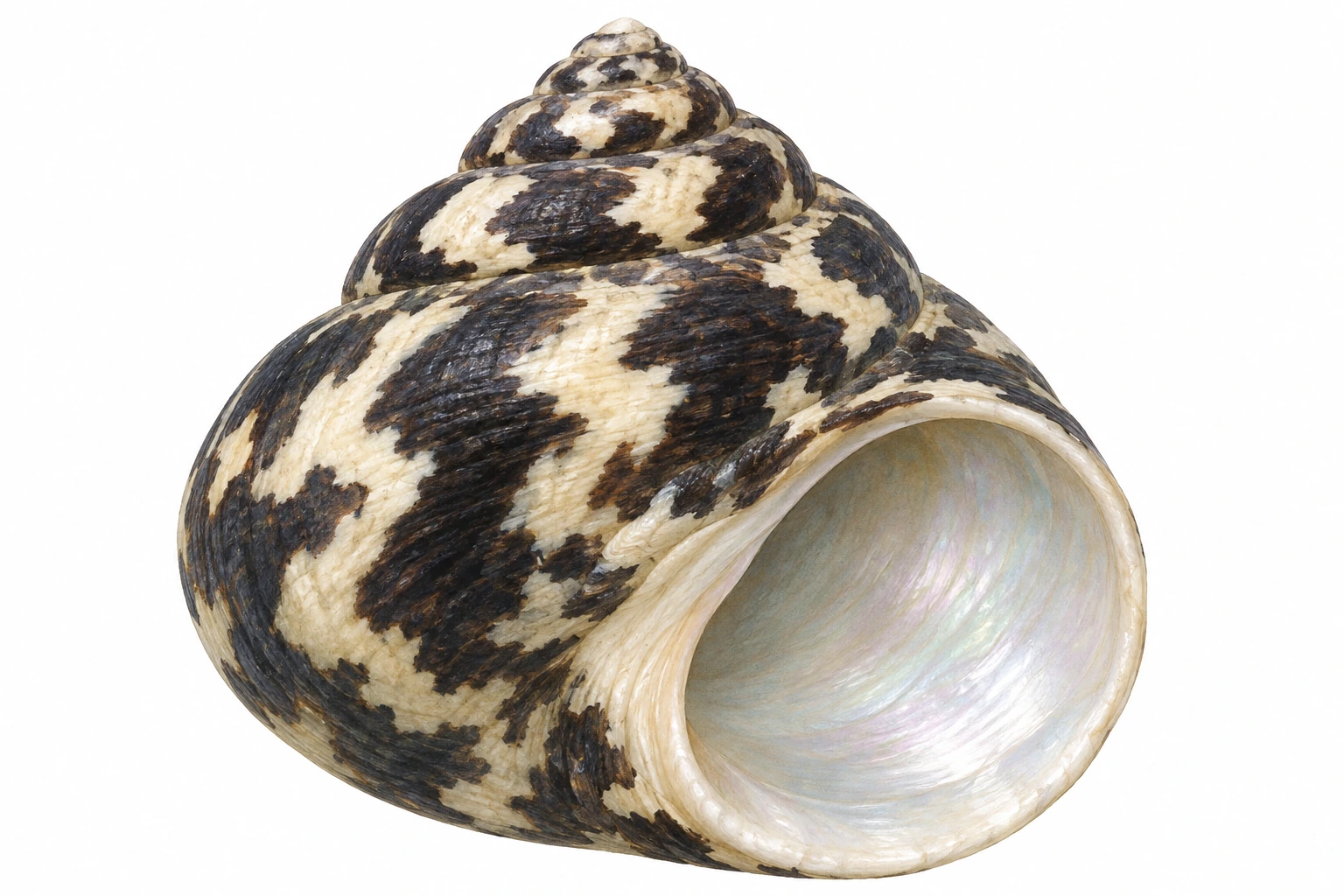
A broad, spinning-top shape and bold patches of black and ivory make this shore grazer look different from the small rounded nerites beside it.
One fun thing to know
A published southeast Florida survey documented live adults at Marathon in 2019, which is stronger evidence than a beach-worn shell alone.
I saw this and want to share
To share this guide with a dive buddy, copy the page link.
How to identify it
- Broad triangular outline with a low, stout apex
- Uneven black-and-cream patches often arranged in spiral zones
- Roomy opening with a pearly interior on fresh shells
Where to look
Published live record at Marathon; a separate field photo shows the species at Lighthouse Point in Broward County. Suitable wave-washed rock occurs patchily.
Size
Up to 10 cm (3.9 in) in the FAO identification account.
What it eats
Grazes algae on rocky shores.
Behavior
Often feeds after dark; retreats into crevices or shaded rock at other times.
Reproduction
Early larvae drift in the plankton before settling on suitable rock.
Look-alikes
Nerites are rounded rather than triangular. West Indian star snails show a distinct keel and coarser projecting ridges.
Can you collect or eat it?
Observation profile, not a harvest or edibility recommendation. Leave living animals and occupied shells in place; follow site rules.
Check current species and site rules before collecting. This guide does not establish permission to collect.
Make your next dive happen
Dive with Stuart Scuba · Train with us · Travel with us · Shop with us



