


Wellington’s Solitary Coral
Rhizopsammia wellingtoni · Dendrophylliidae · Solitary coral · Galápagos Islands Fish ID
How to identify it
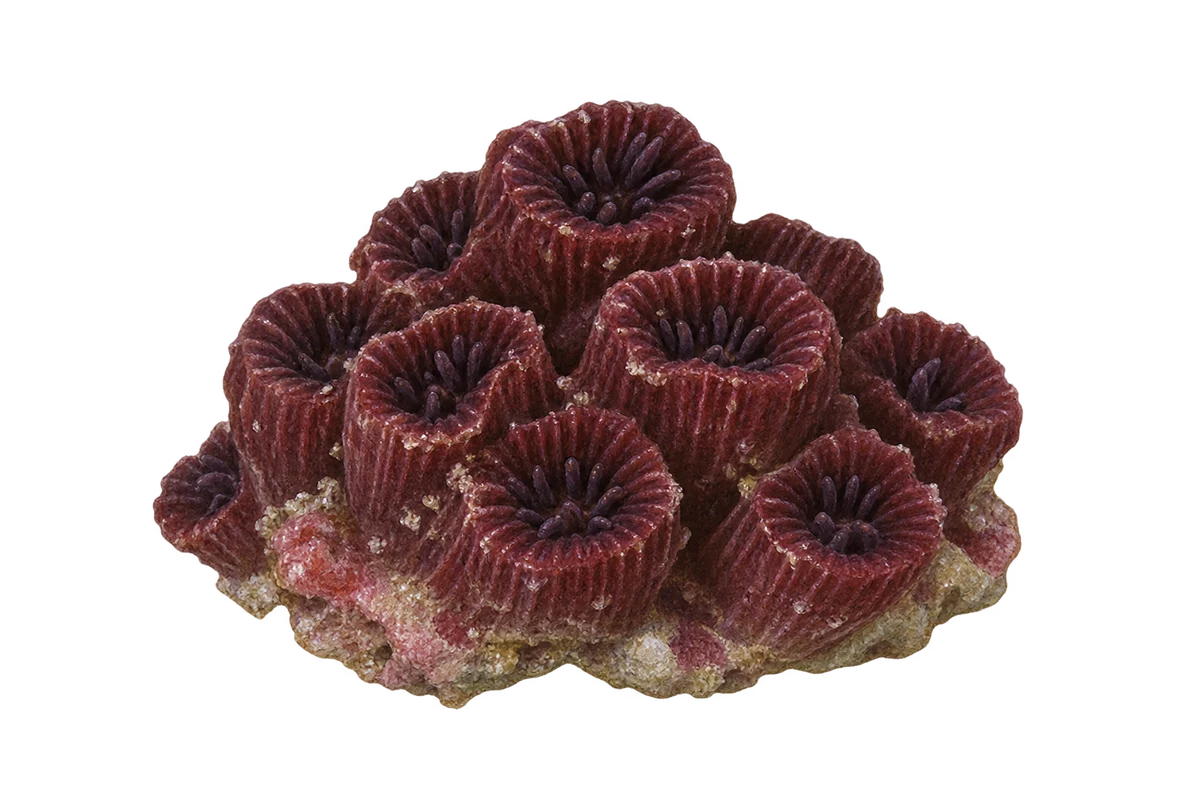
Wellington’s solitary coral grows in little dark cups tucked together on rock. Look for purple-black polyps, not the bright orange of a typical orange cup coral. Researchers rediscovered it in the Galápagos after a long gap in confirmed sightings.
Learn to observe reefs without touching
SDI Coral Conservation is the place to start if you want to learn about coral habitats and how to observe them responsibly.
Start with the colony’s outline and the pattern of its coral cups. Look from a position where you can keep your fins and camera clear of the colony.
- Keep your fins and camera clear: Advanced Buoyancy Control focuses on trim, weighting and hovering.
- Build a broader skill set: Advanced Adventure introduces several specialties, including deep diving and navigation, with opportunities to refine buoyancy.
- For deeper recreational dives already in your plans: Deep Diver focuses on planning depth and managing breathing gas. It’s not needed to identify coral on a shallow dive.
- Record the details: Underwater Photography covers lighting and still-image composition. Underwater Video covers framing and steady footage. Use either without resting gear on the reef.
Galápagos Islands records
Documented Galápagos record: Western Galápagos; Isabela and Fernandina. A record does not guarantee a sighting.
Fun facts
- This coral is known only from the Galápagos.
- Individual cups can sit close together in a patch, despite the name “solitary.”
- Some colonies have black cups; others show both red and black.
- Both known color forms have dark purple-black polyps.
- The individual cups are small, roughly half a centimeter to under one centimeter across.
- Research teams documented it again in 2024 after more than two decades without confirmed survey sightings.
Explore and learn
Treat it as a rare conservation observation. Never touch or collect it or go deeper looking for it.




