


← Back to South Florida Fish ID
Warsaw Grouper
Hyporthodus nigritus · Epinephelidae
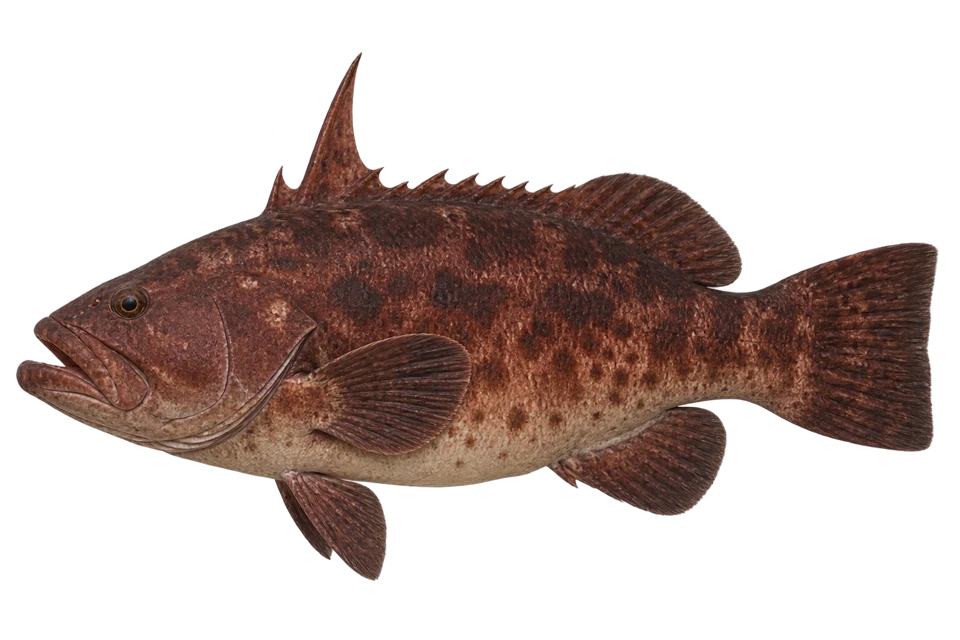
An outsized second dorsal spine and square-ended tail distinguish this big dark grouper.
One fun thing to know
The South Atlantic council identifies it as the only grouper in its regional group with ten dorsal spines instead of eleven.
How to identify it
- The second dorsal spine is much taller than the third.
- Adult bodies are dark reddish brown or gray-brown, with a paler belly. The tail ends in a squared outline.
- Young fish often have a yellowish tail and dark mark on the tail base; adults are less distinctly patterned.
Where to look
Adults live mostly on deep rocky ledges, drop-offs and the continental shelf break. Young fish can occur inshore, a different setting from the main adult habitat.
Size
90.0 in (228.6 cm). FWC reported maximum; equivalent to 90 in.
What it eats
Eats fish and crustaceans.
Behavior
Expect adults at depths well beyond normal recreational dives. If you see a similar young grouper inshore, get a full-body photo and compare spine height before naming it.
Reproduction
The South Atlantic Fishery Management Council describes the species as female-first, with some fish changing to males later. The timing of the transition is not settled.
Look-alikes
Goliath Grouper lacks that sharply raised second dorsal spine; Snowy Grouper juveniles often have conspicuous vertical rows of white spots.
Can you collect or eat it?
Enjoy watching it and leave it in the water. This guide does not verify species-specific harvest or food-safety rules. Check the current rules for the exact location, species and method before taking anything, and never collect where prohibited.
Check Florida’s current saltwater rules
Field references
- REEF field survey reference 1
- Florida Fish and Wildlife Conservation Commission reference 2
- South Atlantic Fishery Management Council reference 3
- South Atlantic Fishery Management Council reference 4
- marinespecies.org reference 5
I saw this and want to share
Make your next dive happen
Dive with Stuart Scuba · Train with us · Travel with us · Shop with us



