


Variable Pavona
Pavona varians · Agariciidae · Colonial coral · Galápagos Islands Fish ID
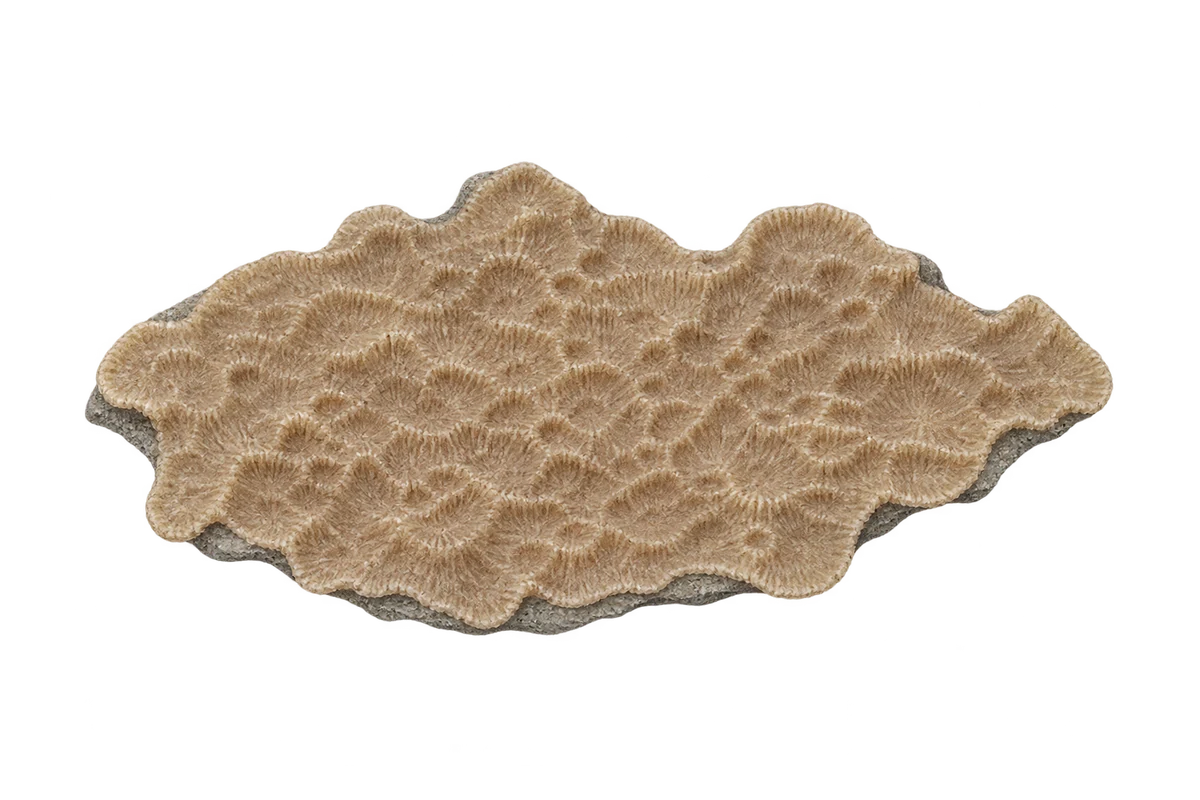
How to identify it
From a few feet away, this coral can look like a change in the color of the rock. Move to an angle that shows whether its colony clings to the boulder as a thin crust. Take a close photograph of the texture as well as the full patch.
Other encrusting Pavona and even some noncoral crusts look similar from a distance. A flat growth pattern is a starting point, not a species diagnosis.
Learn to observe reefs without touching
SDI Coral Conservation is the place to start if you want to learn about coral habitats and how to observe them responsibly.
Start with the colony’s outline and the pattern of its coral cups. Look from a position where you can keep your fins and camera clear of the colony.
- Keep your fins and camera clear: Advanced Buoyancy Control focuses on trim, weighting and hovering.
- Build a broader skill set: Advanced Adventure introduces several specialties, including deep diving and navigation, with opportunities to refine buoyancy.
- For deeper recreational dives already in your plans: Deep Diver focuses on planning depth and managing breathing gas. It’s not needed to identify coral on a shallow dive.
- Record the details: Underwater Photography covers lighting and still-image composition. Underwater Video covers framing and steady footage. Use either without resting gear on the reef.
Galápagos Islands records
Documented Galápagos record: Wellington Reef, Darwin Island. A record does not guarantee a sighting.
Fun facts
- This was the main Pavona reported forming thin crusts over basalt boulders in the expedition’s Wolf Island survey.
- The exact species has also been recorded on Wellington Reef at Darwin Island.
- At Wolf it grew alongside massive lobed Pavona species, making one locality useful for comparing growth shapes.
- The Galápagos coral monitoring manual pairs a close image with a distant one because each reveals a different characteristic.
- The colony can take the contours of the rock beneath it, so a flat textbook plate is misleading.
- WoRMS treats the older name Pavona repens as part of this species.




