


Fish identification archive / Raja Ampat
Twinspot Goby
Signigobius biocellatus
Raja Ampat field guide
Two things to tell your dive buddy
- A mouthful of sand is not a meal in itself. The goby sifts out tiny invertebrates living among the grains.
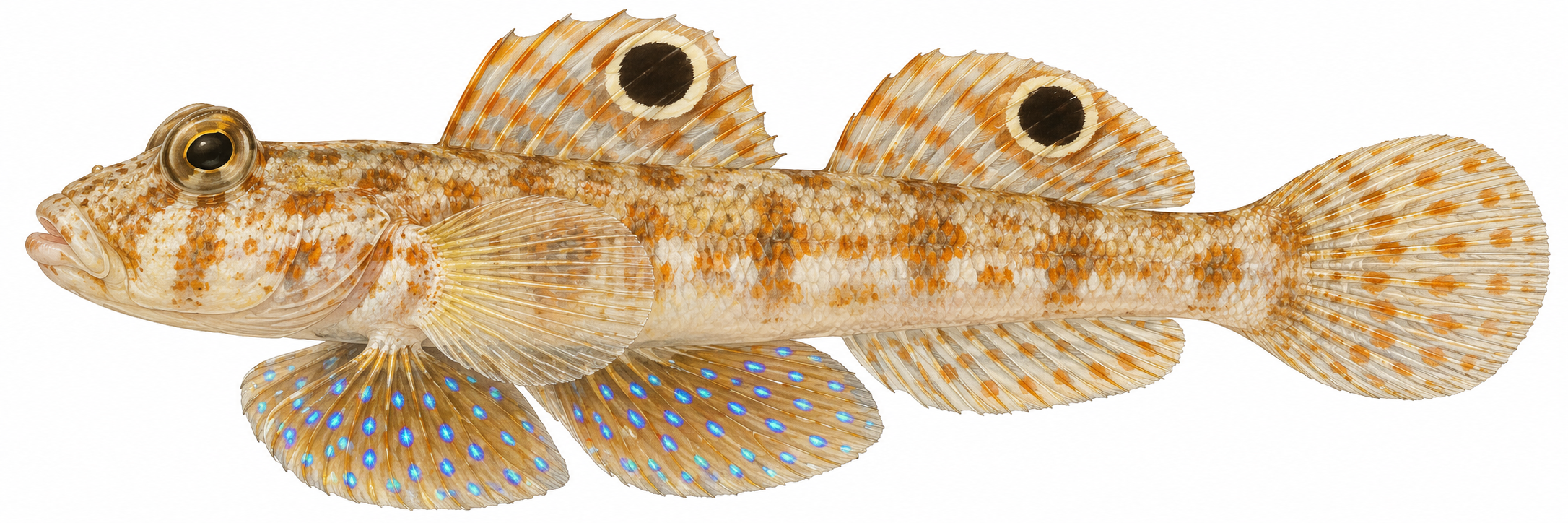
- Pairs build burrows and can form monogamous partnerships. Those famous two spots are dorsal-fin markings, not extra eyes.
How to identify it
A conspicuous dark eyespot on each dorsal fin; large lower fins carry blue spots.
Habitat and where to look
Sand, silt and rubble near corals in lagoons and coastal bays.
Daily habits and behavior
Individuals or pairs construct burrows and sift mouthfuls of sand.
What is on the menu?
Tiny invertebrates living between sand grains.
Mating and the next generation
Forms monogamous pairs.
Look-alikes and identification traps
The two prominent dorsal eyespots distinguish it from many other sand-sifting gobies.
Try this observation
Hover clear of the bottom and watch a pair sift sand without blocking its burrow.
Raja Ampat occurrence
Recorded in Raja Ampat; regional occurrence is not an itinerary-specific sighting promise. This guide does not imply that every site, itinerary or season offers the same chance of an encounter.
Observe, do not disturb
Keep a respectful distance, leave the animal an unobstructed route and follow your dive guide. Do not touch, feed, chase or collect wildlife. Identification does not establish permission to harvest or food safety; Florida harvest labels do not apply to this Indonesian guide.
Sources and review
Reviewed November 18, 2026.
Make your next dive happen
Dive With UsTrain With UsExplore the Raja Ampat tripShop With Us
Questions? (772) 600-8288 or info@stuartscuba.com.




