


Wasp Pygmygoby
Trimma flavatrum · Gobiidae · Palau Fish ID
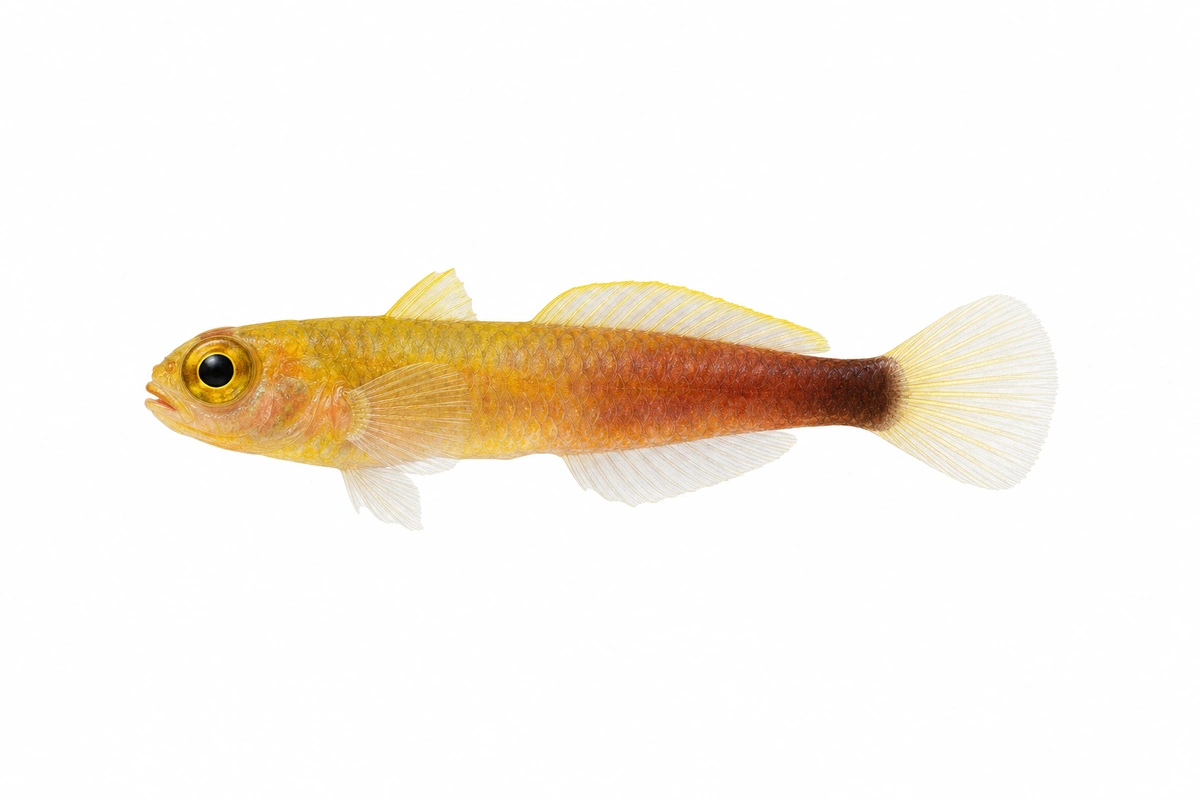
Look for the dark stalk behind the body and a distinctly pale tail fin. A short first dorsal is another good clue.
Meet the Wasp Pygmygoby
This little goby combines a warm yellow body with a dark tail stalk. Resist the temptation to stop at the color: the transparent tail beyond that dark stalk is the important finishing detail.
Dark stalk, pale tail
The identification key specifies a dark posterior caudal peduncle and a light-yellow to white caudal fin. In plain language, the narrow base is dark; the tail fan is pale.
A shorter first dorsal
The first dorsal-fin spines do not reach the beginning of the second dorsal. Compare that with Randall’s Pygmygoby, whose elongated second spine reaches farther back.
Palau means Helen Reef here
The illustrated Palau specimen is from Helen Reef in the southwest islands. That is a specific remote locality, not evidence that this fish is a routine sighting near Koror.
Small, but not a size limit
The illustrated Helen Reef female measured 15.5 mm standard length, excluding the tail fin. The species’ male holotype came from Japan, not Palau.
A useful two-part comparison
Randall’s Pygmygoby has a dark tail fin and a longer dorsal spine. Check both features rather than choosing between these fishes from yellow body color alone.
Six things to notice
- Palau adult reference is about 15.5 mm to base of tail.
- The type itself came from the Japanese Ryukyus, not Palau.
- Dark patch sits on the rear tail stalk.
- The tail fin beyond that stalk is pale yellow to white.
- The first dorsal spines do not reach the leading edge of the second dorsal.
- Randall’s pygmygoby has a dark tail fin and longer second spine; compare both in one view.
Bring back a better ID photo
Hold steady and leave the animal where it is. A side-on photo can show the features you might miss underwater. If you want to practice framing small subjects and getting the light right, try SDI Underwater Photography.
Keep looking through Palau Fish ID or explore international group dive travel.




